36) Two boys, Joe and Sam, who are searching for buried treasure start underneath the same tree.
Joe walks 12 m east and then 12 m north, while Sam walks 15 m west and then 10 m south. Both
boys then stop. Find the magnitude and direction of the vector from Sam to Joe. Express the
direction of this vector by specifying the angle it makes with the west-to-east direction.
37) An airplane undergoes the following displacements, all at the same altitude: First, it flies
in a direction 30.0° east of north. Next, it flies due south. Finally, it flies
30.0° north of west. Use components to determine how far the airplane ends up from its starting
point.
A) 71.5 km
B) 73.0 km
C) 74.4 km
D) 70.1 km
E) 68.7 km
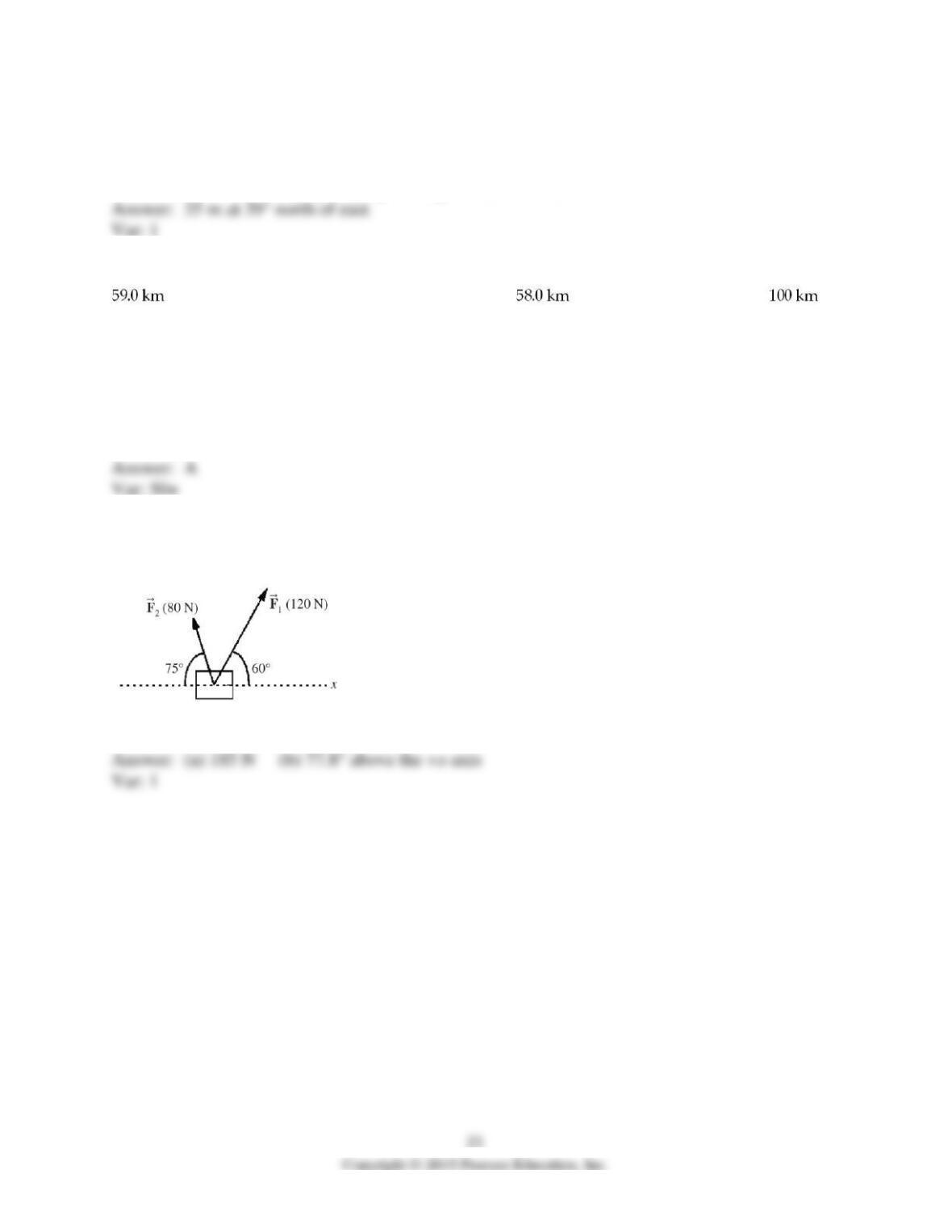
38) Two forces are acting on an object as shown in the figure. Assume that all the quantities
shown are accurate to three significant figures.
(a) What is the magnitude of the resultant force on the object?
(b) What is the direction of the resultant force?
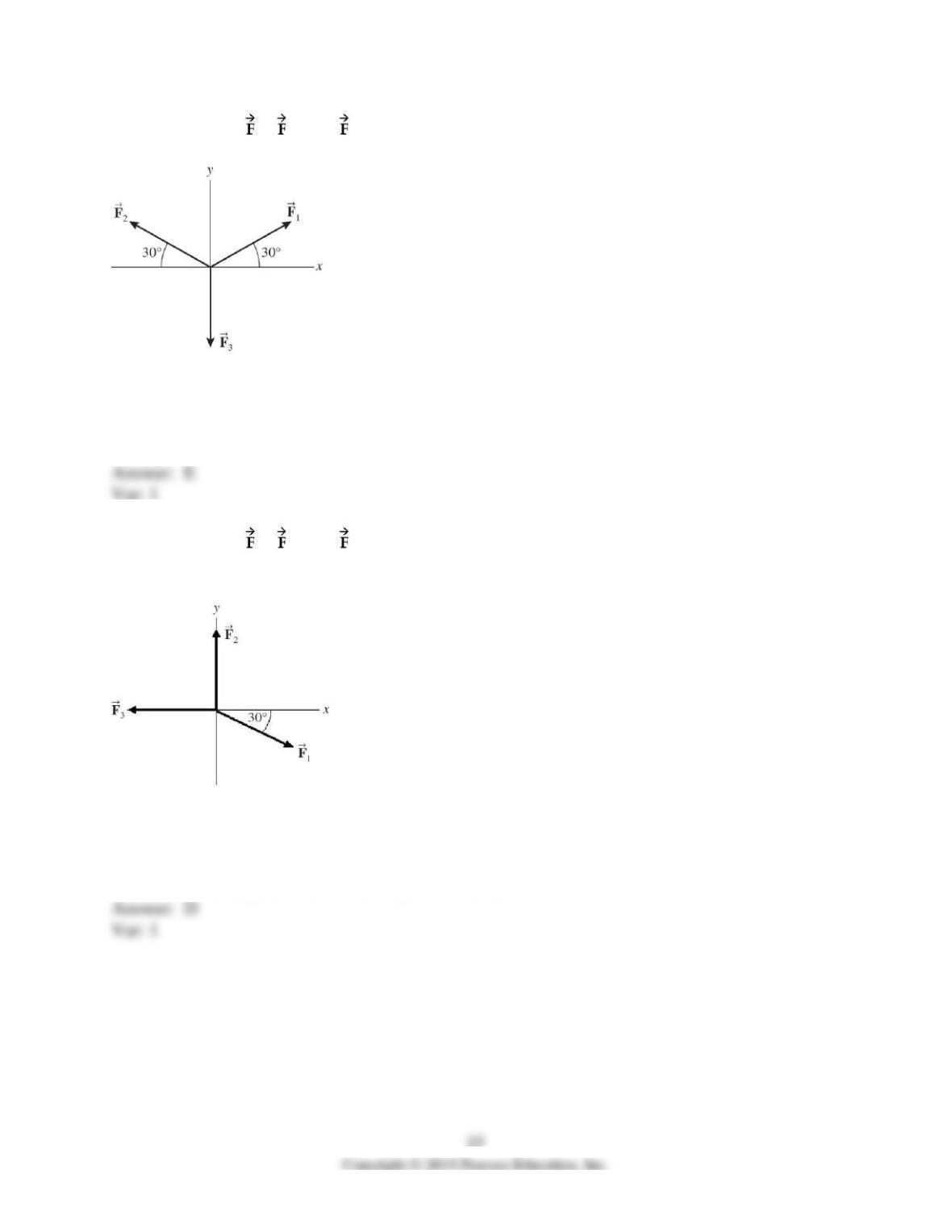
39) Three forces, 1, 2, and 3, each of magnitude 70 N, all act on an object as shown in the
figure. The magnitude of the resultant force acting on the object is
A) 35 N.
B) 70 N.
C) 140 N.
D) 210 N.
E) 0 N.
40) Three forces, 1, 2, and 3, all act on an object, as shown in the figure. The magnitudes of
the forces are: F1 = 80.0 N, F2 = 60.0 N, and F3 = 40.0 N. The resultant force acting on the
object is given by
A) 180 N at an angle of 60.0° with respect to +x-axis.
B) 60.0 N at an angle of 90.0° with respect to +x-axis.
C) 20.0 N at an angle of 34.3° with respect to +x-axis.
D) 35.5 N at an angle of 34.3° with respect to +x-axis.
E) 40.0 N at an angle of 60.0° with respect to +x-axis.
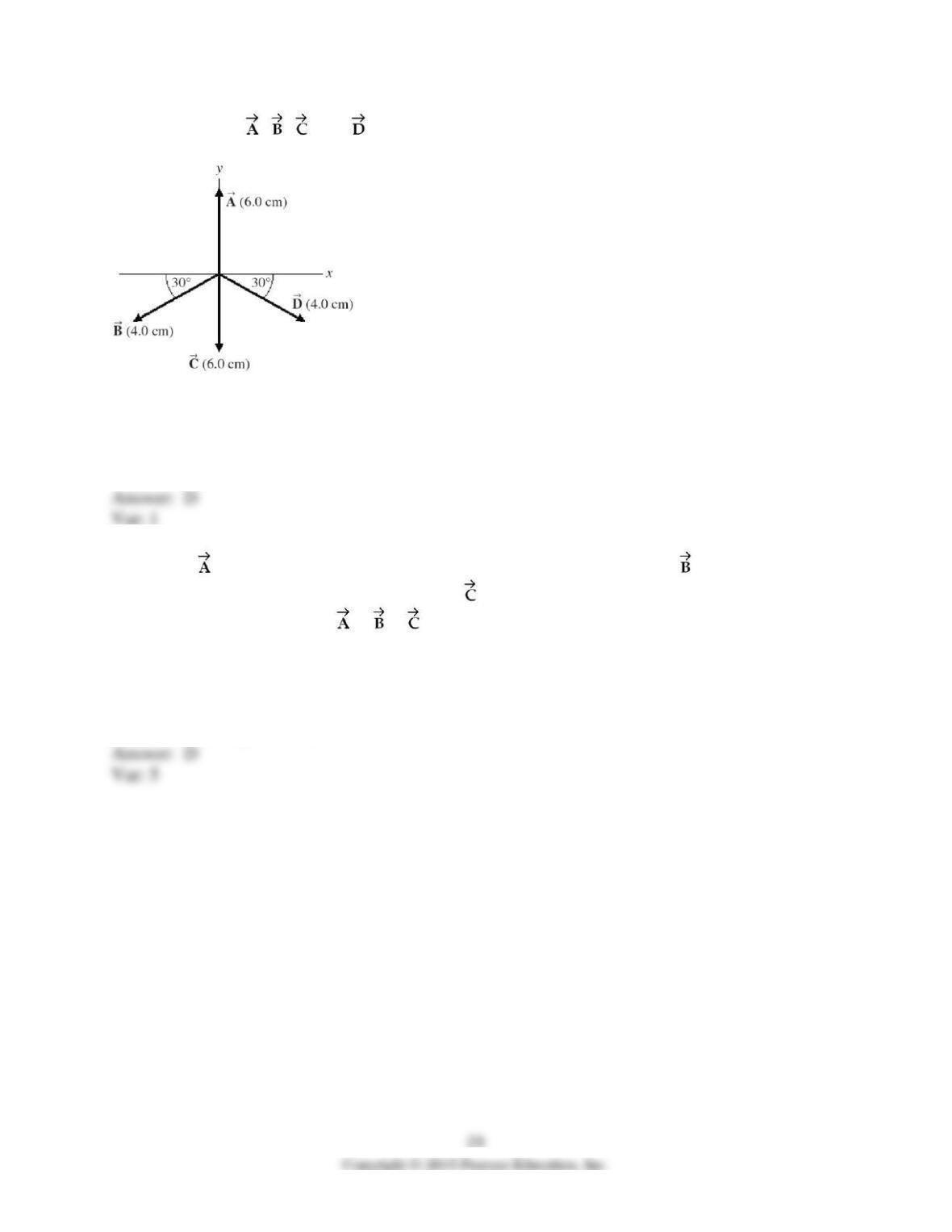
41) Four vectors, , , , and , are shown in the figure. The sum of these four vectors is a
vector having magnitude and direction
A) 4.0 cm, along +x-axis.
B) 4.0 cm, along –x-axis.
C) 4.0 cm, along +y-axis.
D) 4.0 cm, along –y-axis.
E) 4.0 cm, 45° above +x-axis.
42) Vector has a magnitude of 8.0 m and points 30° north of east; vector has a magnitude of
6.0 m and points 30° west of north; and vector has a magnitude of 5.0 m and points 30° west
of south. The resultant vector + + is given by
A) 2.7 m at an angle 74° north of east.
B) 5.9 m at an angle 74° north of east.
C) 4.8 m at an angle 74° east of north.
D) 5.1 m at an angle 74° north of east.
E) 2.1 m at an angle 66° east of north.
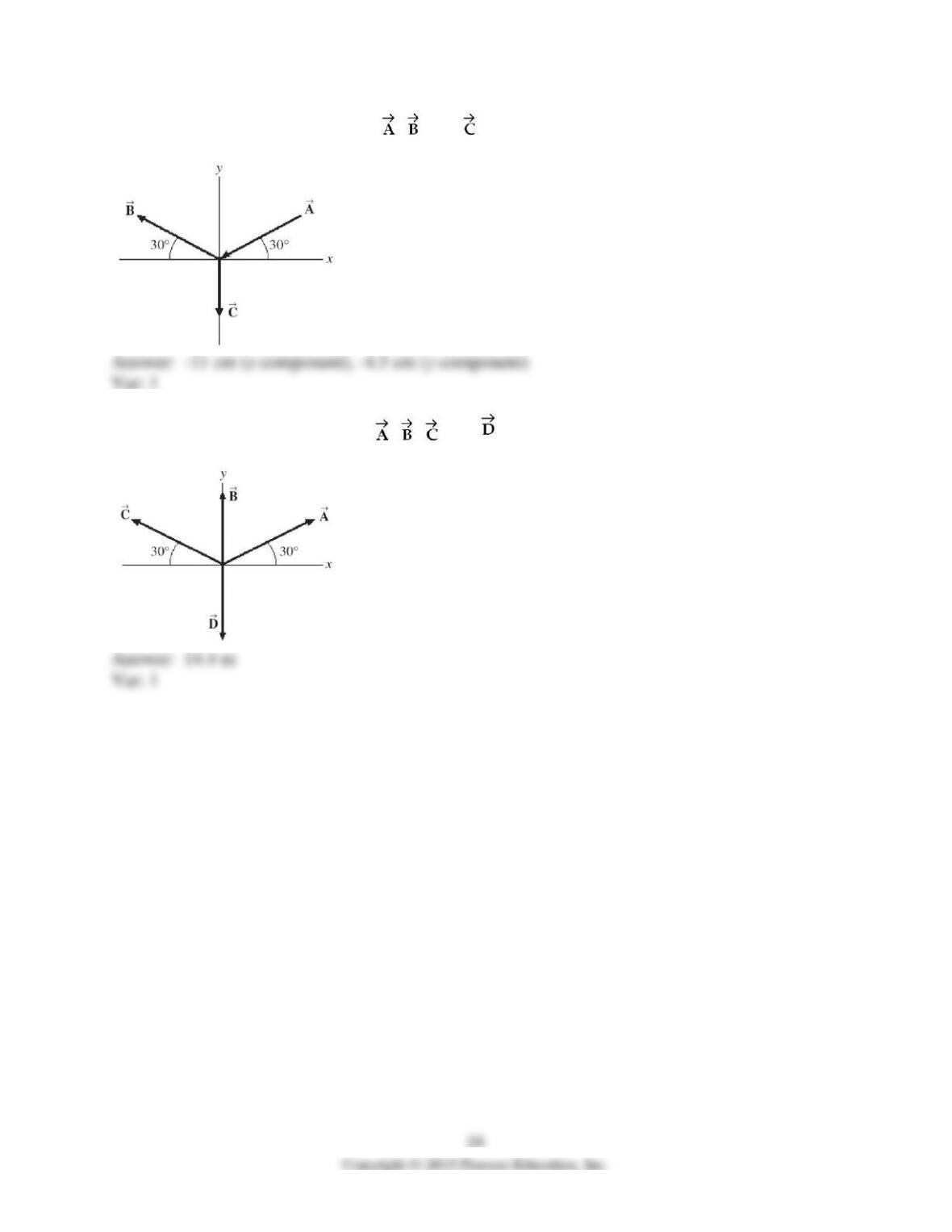
43) The figure shows three vectors, , , and , having magnitudes 7.0 cm, 6.0 cm, and 4.0
cm, respectively. Find the x and y components of the resultant of these three vectors.
44) The figure shows four vectors, , , , and , having magnitudes 10.0 m, 8.00 m, 6.00 m,
and 2.00 m, respectively. Find the magnitude of the sum of these four vectors.
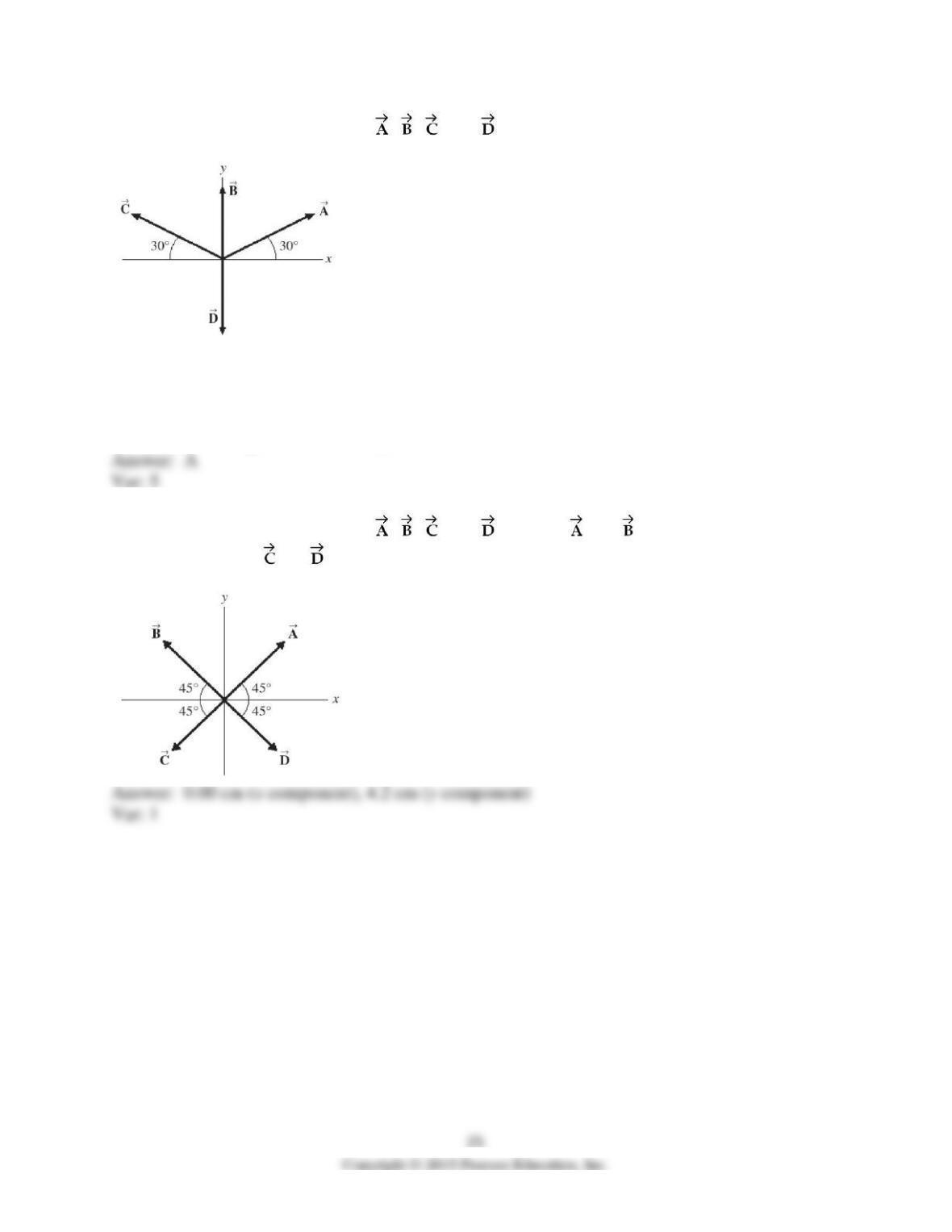
45) The figure shows four vectors, , , , and , having magnitudes 12.0 m, 10.0 m, 8.0 m,
and 4.0 m, respectively. The sum of these four vectors is
A) 16.4 m at an angle 77.8° with respect to +x-axis.
B) 16.4 m at an angle 12.3° with respect to +x-axis.
C) 19.5 m at an angle 77.8° with respect to +x-axis.
D) 19.5 m at an angle 12.3° with respect to +x-axis.
E) 8.20 m at an angle 77.8° with respect to +x–axis.
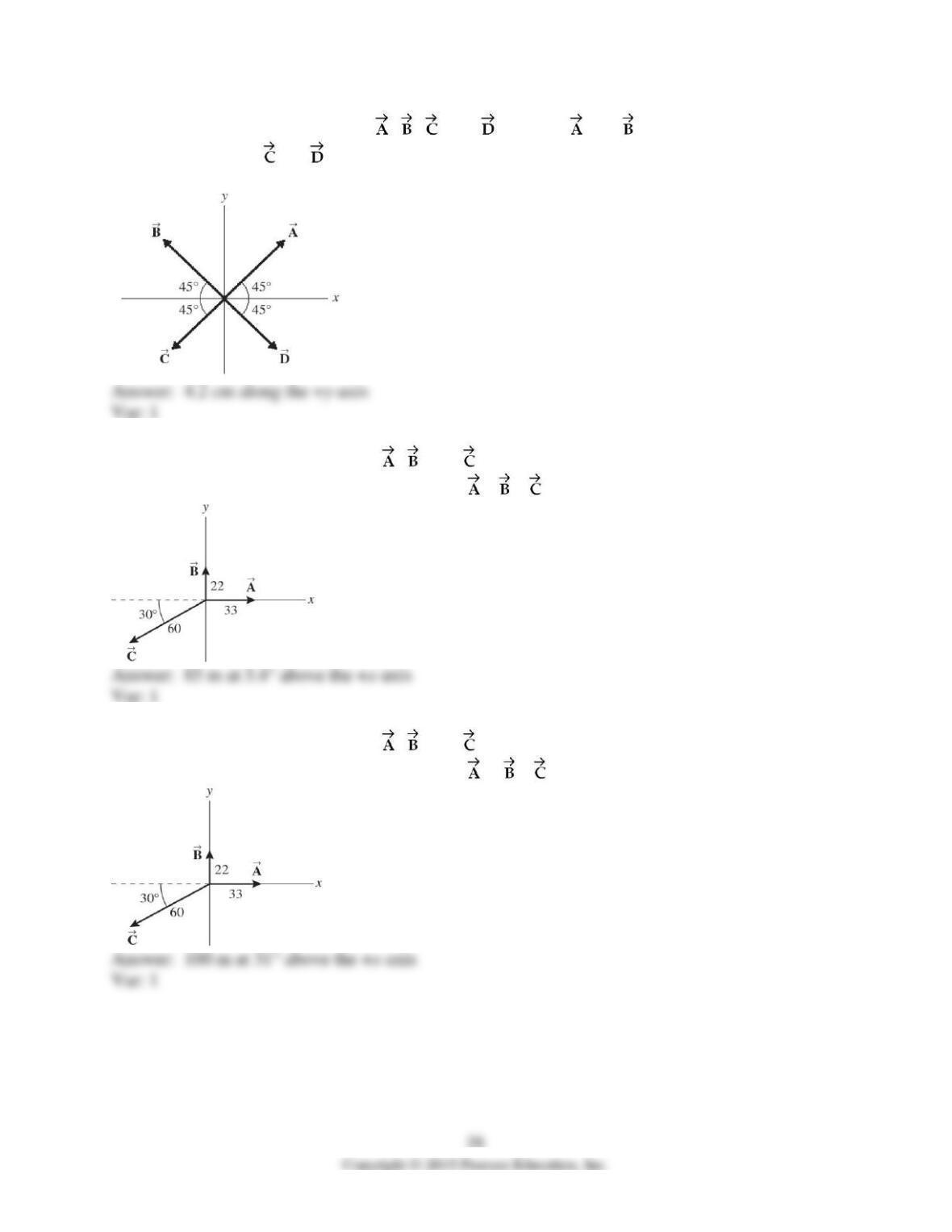
46) The figure shows four vectors, , , , and . Vectors and each have a magnitude of
7.0 cm, and vectors and each have a magnitude of 4.0 cm. Find the x and y components of
the sum of these four vectors.
47) The figure shows four vectors, , , , and . Vectors and both have a magnitude of
7.0 cm, and vectors and both have a magnitude of 4.0 cm. Find the magnitude and direction
of the sum of these four vectors.
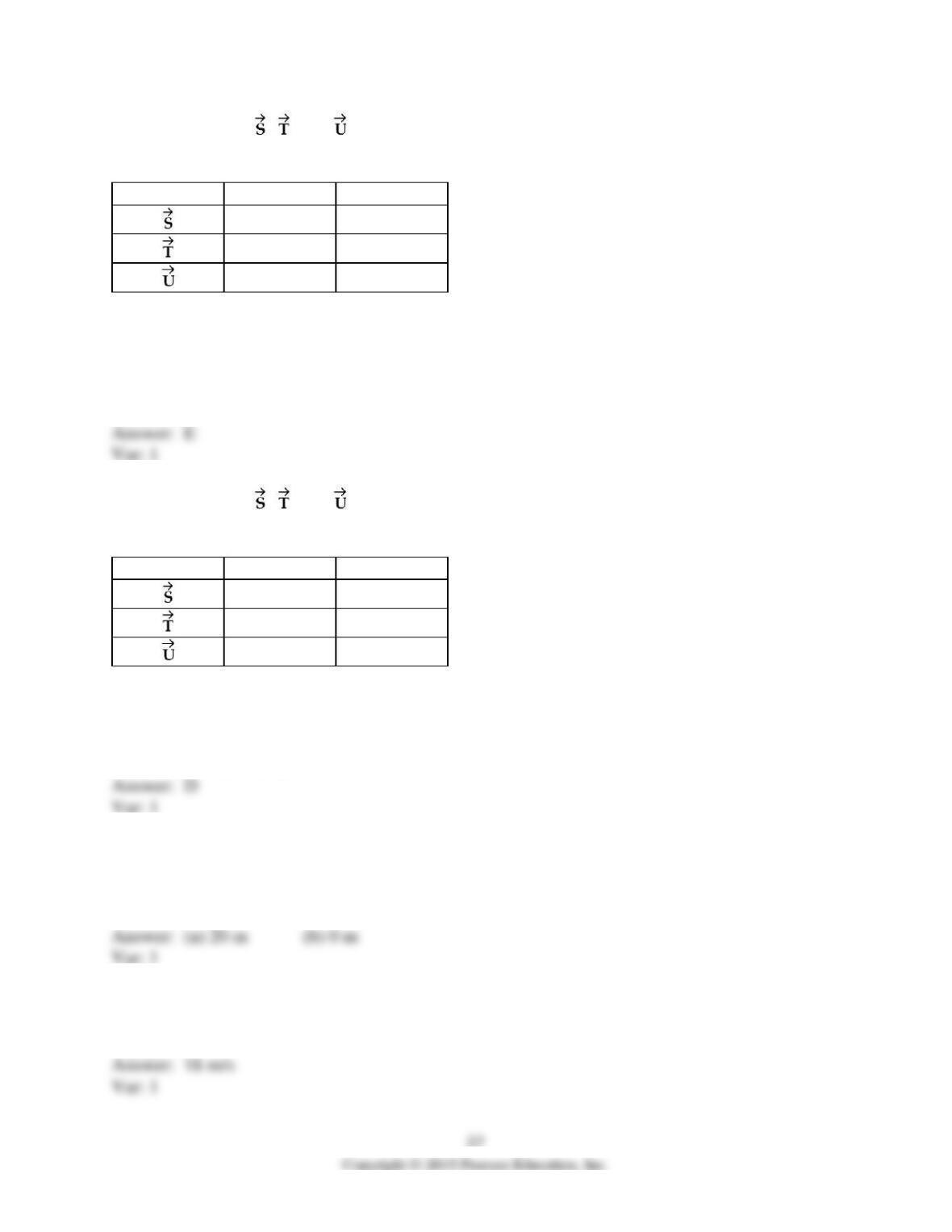
48) The figure shows three vectors, , , and , along with their magnitudes. Determine the
magnitude and direction of the vector given by – – .
49) The figure shows three vectors, , , and , along with their magnitudes. Determine the
magnitude and direction of the vector given by + – .
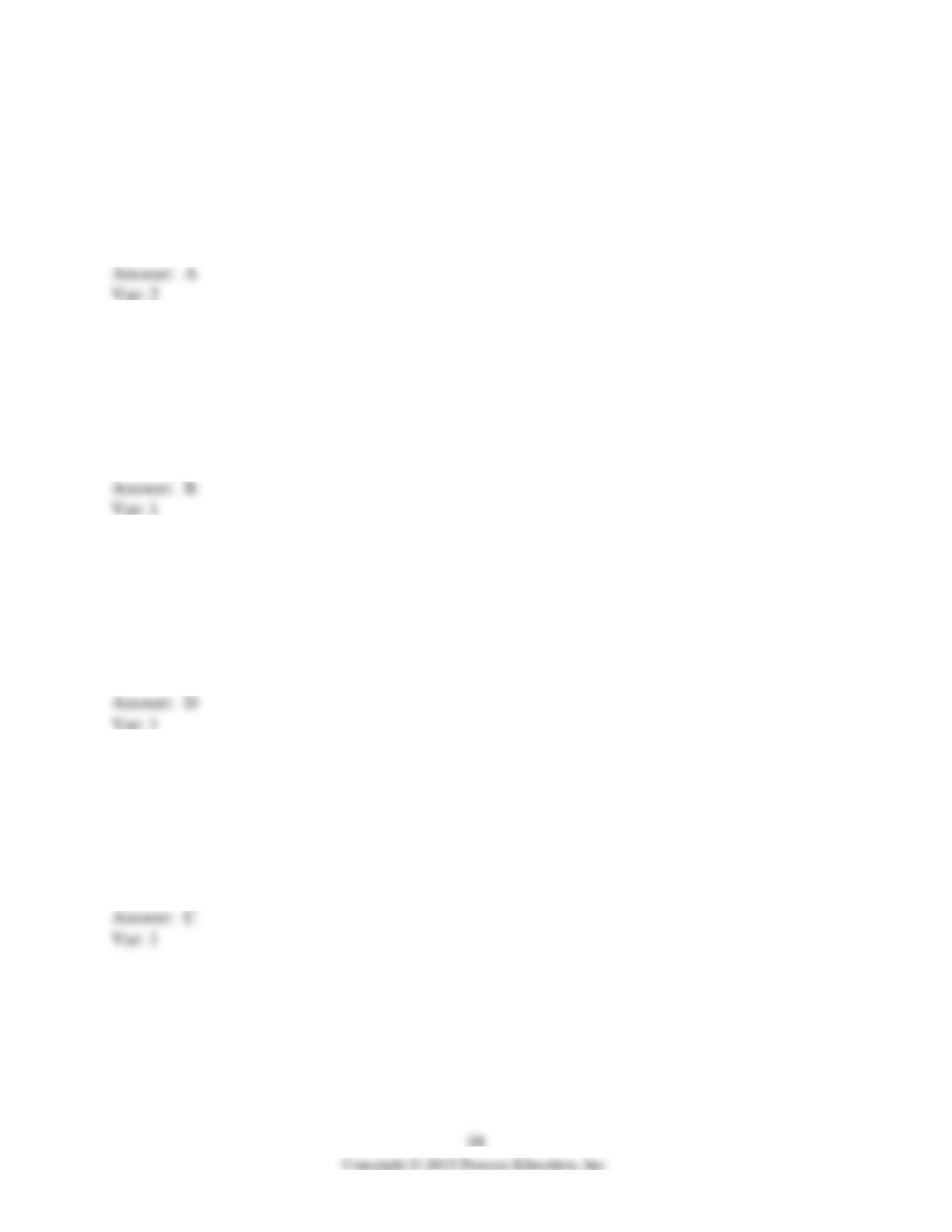
50) Three vectors, , , and , have the components shown in the table. What is the magnitude
of the resultant of these three vectors?
x component
y component
3.50 m
-4.50 m
2.00 m
0.00 m
-5.50 m
2.50 m
A) 5.50 m
B) 13.0 m
C) 11.1 m
D) 7.00 m
E) 2.00 m
51) Three vectors, , , and , have the components shown in the table. What angle does the
resultant of these three vectors make with the +x-axis?
x component
y component
-3.5 m
4.5 m
0.00 m
-6.5 m
5.5 m
-2.5 m
A) 24° above the +x-axis
B) 24° below the +x-axis
C) 66° above the +x-axis
D) 66° below the +x-axis
52) A runner runs on a circular path of radius 10 m. What is the magnitude of the displacement
of the jogger if he runs
(a) half-way around the track?
(b) all the way around the track?
53) A player hits a tennis ball into the air with an initial velocity of 32 m/s at 35° from the
vertical. How fast is the ball moving at the highest point in its trajectory if air resistance is
negligible?
54) A ball is thrown with an initial velocity of 20 m/s at an angle of 60° above the horizontal. If
we can neglect air resistance, what is the horizontal component of its instantaneous velocity at
the exact top of its trajectory?
A) 10 m/s
B) 17 m/s
C) 20 m/s
D) zero
55) A ball is thrown at an original speed of 8.0 m/s at an angle of 35° above the horizontal. If
there is no air resistance, what is the speed of the ball when it returns to the same horizontal
level?
A) 4.0 m/s
B) 8.0 m/s
C) 16 m/s
D) 9.8 m/s
56) A stone is thrown horizontally with an initial speed of 10 m/s from the edge of a cliff. A
stopwatch measures the stone’s trajectory time from the top of the cliff to the bottom to be 4.3 s.
What is the height of the cliff if air resistance is negligibly small?
A) 22 m
B) 43 m
C) 77 m
D) 91 m
57) A girl throws a rock horizontally, with a velocity of 10 m/s, from a bridge. It falls 20 m to
the water below. How far does the rock travel horizontally before striking the water, assuming
negligible air resistance?
A) 14 m
B) 16 m
C) 20 m
D) 24 m
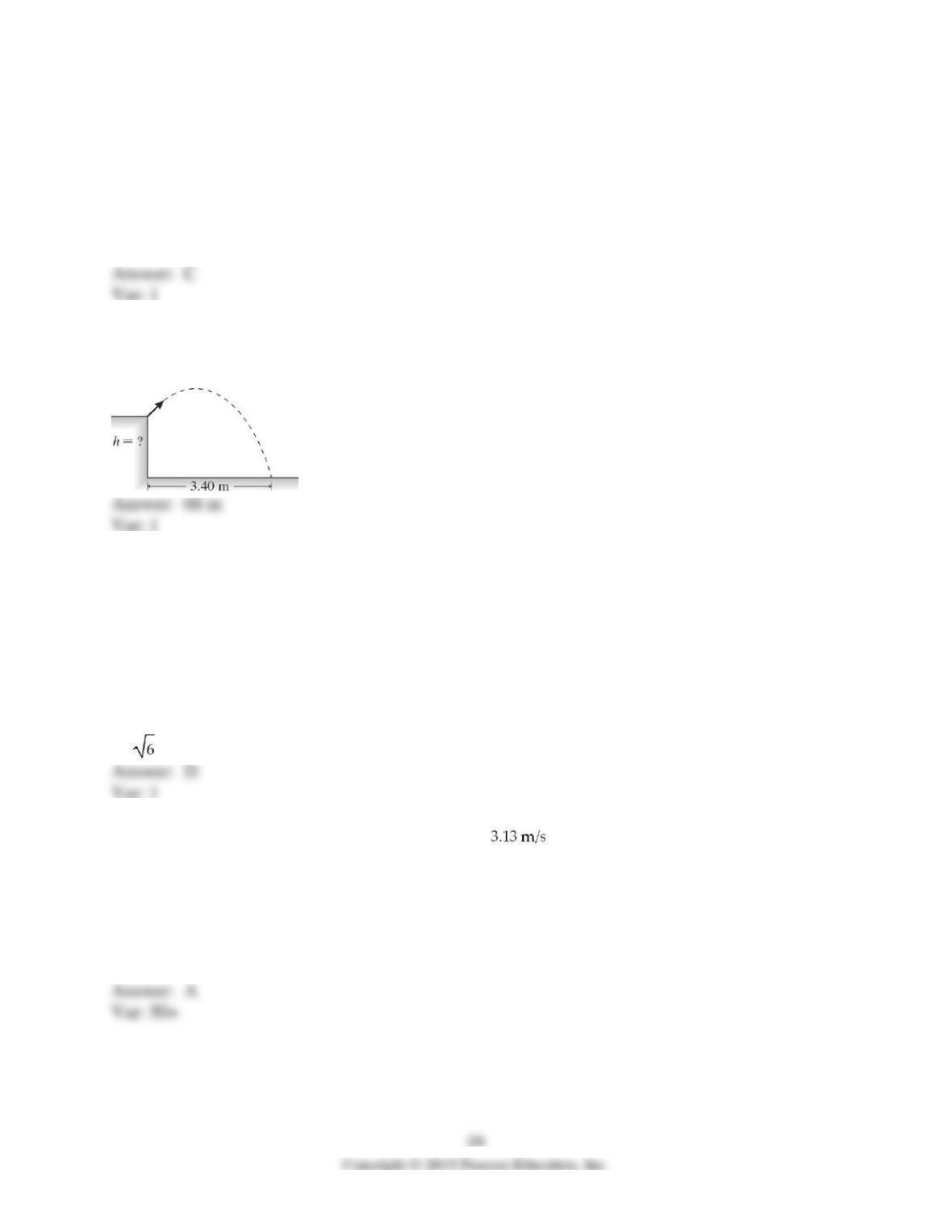
58) A ball thrown horizontally from a point 24 m above the ground, strikes the ground after
traveling horizontally a distance of 18 m. With what speed was it thrown, assuming negligible
air resistance?
A) 6.1 m/s
B) 7.4 m/s
C) 8.1 m/s
D) 8.9 m/s
59) As shown in the figure, a heavy rock is shot upward from the edge of a vertical cliff. It leaves
the edge of the cliff with an initial velocity of 15 m/s directed at 25° from the vertical and
experiences no appreciable air resistance as it travels. How high is the cliff?
60) The acceleration due to gravity on the Moon is only one-sixth of that on Earth, and the Moon
has no atmosphere. If you hit a baseball on the Moon with the same effort (and therefore at the
speed and angle) as on Earth, how far would the ball would travel on the Moon compared to on
Earth? Neglect air resistance on Earth.
A) 1/6 as far as on Earth
B) 36 times as far as on Earth
C) the same distance as on Earth
D) 6 times as far as on Earth
E) as far as on Earth
61) A boy throws a rock with an initial velocity of at 30.0° above the horizontal. How
long does it take for the rock to reach the maximum height of its trajectory if air resistance is
negligibly small and g = 9.80 m/s2?
A) 0.160 s
B) 0.282 s
C) 0.313 s
D) 0.441 s

62) A cat leaps to try to catch a bird. If the cat’s jump was at 60° off the ground and its initial
velocity was what is the highest point of its trajectory, neglecting air resistance?
A) 0.29 m
B) 0.58 m
C) 10.96 m
D) 0.19 m
63) A fisherman casts his bait toward the river at an angle of 25° above the horizontal. As the
line unravels, he notices that the bait and hook reach a maximum height of What was the
initial velocity he launched the bait with? Assume that the line exerts no appreciable drag force
on the bait and hook and that air resistance is negligible.
A) 18 m/s
B) 7.9 m/s
C) 7.6 m/s
D) 6.3 m/s
64) A football kicker is attempting a field goal from out. The ball is kicked and just clears
the lower bar with a time of flight of If the angle of the kick was 45°, what was the initial
speed of the ball, assuming no air resistance?
A) 21.5 m/s
B) 19.7 m/s
C) 2.2 m/s
D) 39 m/s
65) You throw a rock horizontally off a cliff with a speed of 20 m/s and no significant air
resistance. After 2.0 s, the magnitude of the velocity of the rock is closest to
A) 28 m/s
B) 20 m/s
C) 40 m/s
D) 37 m/s
66) A shell is launched with a velocity of 100 m/s at an angle of 30.0° above horizontal from a
point on a cliff 50.0 m above a level plain below. How far from the base of the cliff does the
shell strike the ground? There is no appreciable air resistance, and g = 9.80 m/s2 at the location
of the cliff.
67) At target practice, a rifle bullet is fired at an angle of 30° below the horizontal with an initial
velocity of 800 m/s from the top of a cliff 80 m high. How far from the base of the cliff does it
strike the level ground below if air resistance is negligible?
68) A batter hits a home run in which the ball travels 110 m horizontally with no appreciable air
resistance. If the ball left the bat at 50° above the horizontal just above ground level, how fast
was it hit?
69) A marble moving 1.48 m/s rolls off the top edge of a 125-cm high table in a room where
there is no appreciable air resistance and the acceleration due to gravity is 9.80 m/s2.
(a) How far from the base of the table will it strike the floor?
(b) How long will it be in the air?
70) A hunter points a rifle horizontally and holds it 3.30 m above the ground. The bullet leaves
the barrel at 325 m/s and experiences no significant air resistance. The acceleration due to
gravity at this location is 9.80 m/s2.
(a) How long does it take for the bullet to strike the ground?
(b) How far horizontally does it travel?
71) A girl throws a rock horizontally with a speed of 12 m/s from a bridge. It falls 2.28 s before
hitting the water below. Neglect air resistance.
(a) How high is the bridge from the water below?
(b) How far horizontally does the rock travel before striking the water?
72) A celebrating student throws a water balloon horizontally from a dormitory window that is
50 m above the ground. It hits the ground at a point 60 m from the building without appreciable
air resistance.
(a) What will be the horizontal component of the velocity of the balloon just before it hits the
ground?
(b) What will be the magnitude of the vertical velocity of the balloon just before it hits the
ground?
73) Enzo throws a rock horizontally with a speed of 12 m/s from a bridge. It falls for 2.28 s
before reaching the water below with no appreciable air resistance. Just as the rock reaches the
water, find
(a) the horizontal component of its velocity.
(b) the speed with which it is moving.
74) A ball rolls over the edge of a platform with a horizontal velocity of magnitude v. The height
of the platform is 1.6 m and the horizontal range of the ball from the base of the platform is 20
m. What is the magnitude of v if air resistance is negligibly small?
75) A hockey puck slides off the edge of a platform with an initial velocity of 20 m/s
horizontally. The height of the platform above the ground is 2.0 m. What is the magnitude of the
velocity of the puck just before it touches the ground? You can neglect air resistance.
A) 21 m/s
B) 22 m/s
C) 24 m/s
D) 25 m/s
E) 6.3 m/s
76) A hockey puck slides off the edge of a horizontal platform with an initial velocity of 20 m/s
horizontally and experiences no significant air resistance. The height of the platform above the
ground is 2.0 m. What is the magnitude of the vertical component of the velocity of the puck just
before it hits the ground?
A) 20 m/s
B) 6.3 m/s
C) 13 m/s
D) 15 m/s
E) 21 m/s
77) A hockey puck slides off the edge of a horizontal platform with an initial velocity of 28.0
m/shorizontally in a city where the acceleration due to gravity is 9.81 m/s2. The puck
experiences no significant air resistance as it falls. The height of the platform above the ground is
2.00 m. What is the angle below the horizontal of the velocity of the puck just before it hits the
ground?
A) 77.2°
B) 72.6°
C) 12.8°
D) 12.6°
E) 31.8°
78) A plane flying horizontally at a speed of 50 m/s and at an elevation of 160 m drops a
package, and 2.0 s later it drops a second package. How far apart will the two packages land on
the ground if air resistance is negligible?
A) 100 m
B) 160 m
C) 180 m
D) 320 m
79) In a room where g = 9.81 m/s2, a hockey puck slides off the edge of a platform with an
initial velocity of 28.0 m/s horizontally. The height of the platform above the ground is 2.00 m.
What is the speed of the puck just before it hits the ground? The air resistance is negligibly
small.
A) 48.2 m/s
B) 28.7 m/s
C) 28.0 m/s
D) 26.3 m/s
E) 6.26 m/s
80) A ball rolls over the edge of a platform with only a horizontal velocity. The height of the
platform is 1.6 m and the horizontal range of the ball from the base of the platform is 20 m. What
is the horizontal velocity of the ball just before it touches the ground? Neglect air resistance.
A) 35 m/s
B) 9.8 m/s
C) 20 m/s
D) 4.9 m/s
E) 70 m/s
81) A projectile is shot horizontally at 23.4 m/s from the roof of a building 55 m tall and
experiences negligible air resistance.
(a) Determine the time necessary for the projectile to reach the ground below.
(b) Determine the distance from the base of the building that the projectile lands.
(c) Determine the horizontal and vertical components of the velocity just before the projectile
reaches the ground.
82) A person throws a ball horizontally from the top of a building that is 24.0 m above the
ground level. The ball lands 100 m down range from the base of the building. What was the
initial velocity of the ball? Neglect air resistance and use g = 9.81 m/s2.
A) 202 m/s
B) 9.80 m/s
C) 19.6 m/s
D) 45.2 m/s
E) 94.4°
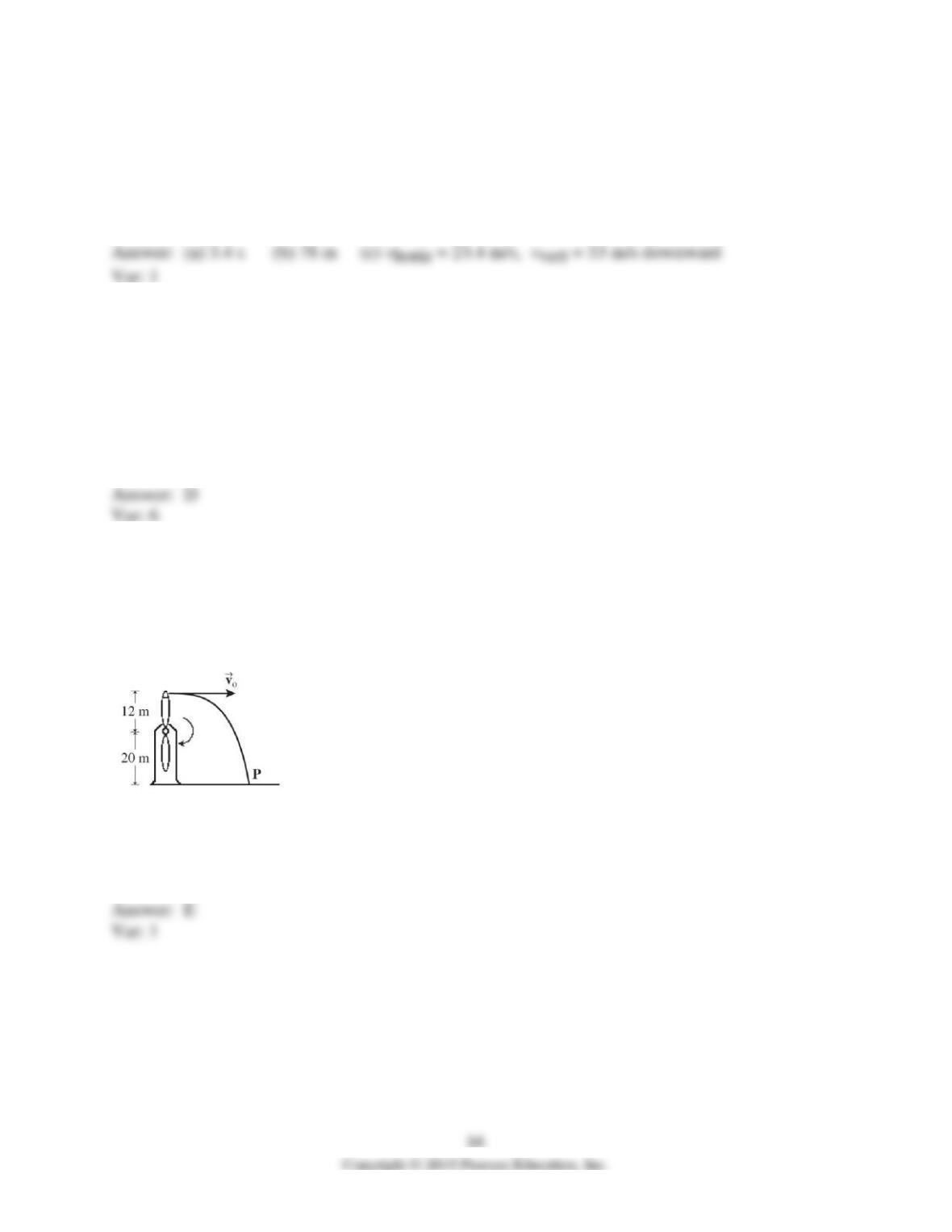
83) A wind farm generator uses a two-bladed propeller mounted on a pylon at a height of 20 m,
as shown in the figure. The width of the pylon is very narrow, and the length of each propeller
blade is 12 m. A tip of the propeller breaks off just when the propeller is vertical. The fragment
flies off horizontally, falls, and strikes the ground at point P with negligible air resistance. Just
before the fragment broke off, the propeller was turning uniformly, taking 1.2 s for each rotation.
How far is point P from the base of the pylon?
A) 120 m
B) 130 m
C) 140 m
D) 150 m
E) 160 m