Exam
Name___________________________________
MULTIPLE CHOICE. Choose the one alternative that best completes the statement or answers the question.
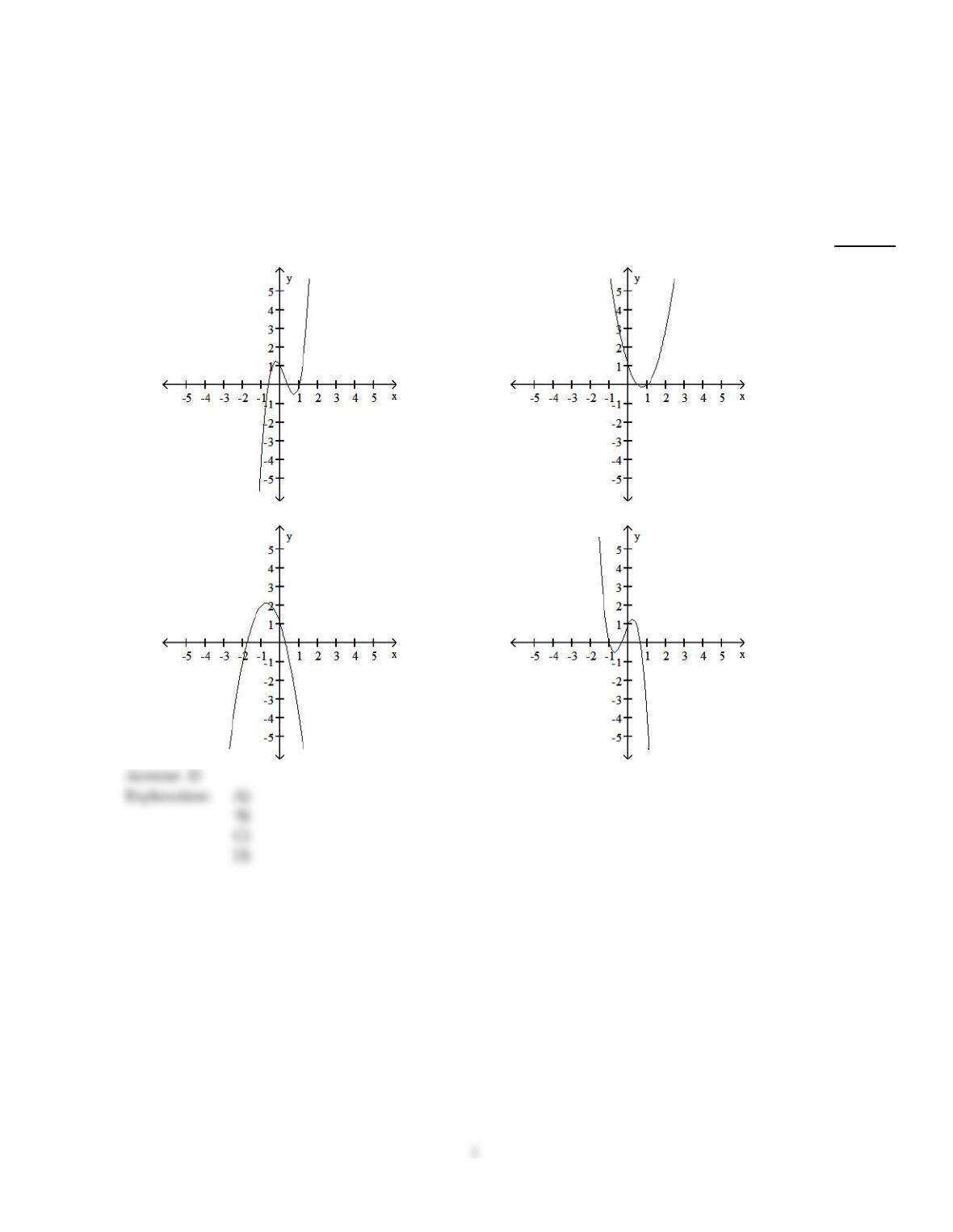
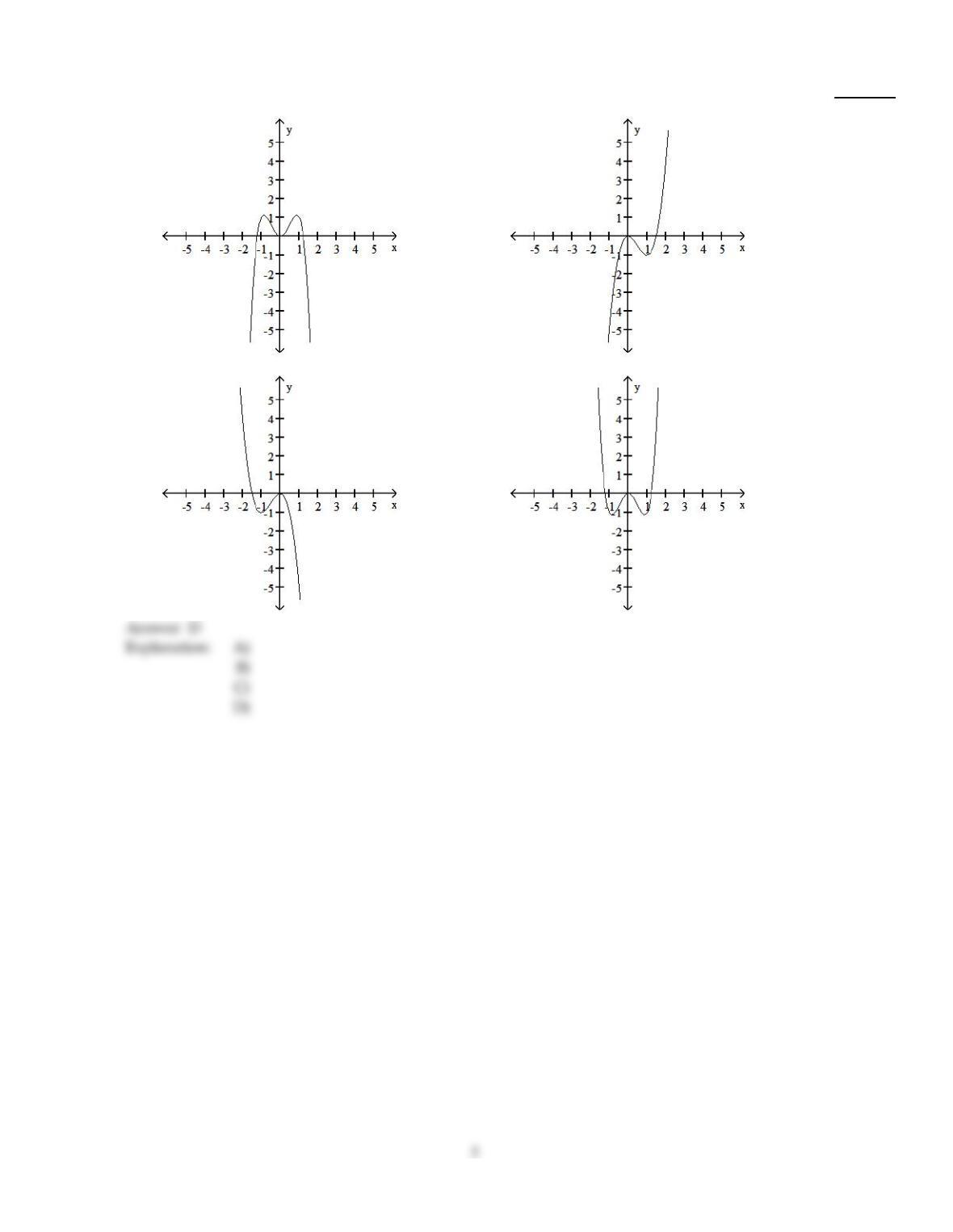
Use the Leading Coefficient Test to determine the end behavior of the polynomial function. Then use this end behavior
to match the function with its graph.
1)
f(x) = – 4x3– 3x2+ 2x + 1
1)
A)
falls to the left and rises to the right
B)
rises to the left and rises to the right
C)
falls to the left and falls to the right
D)
rises to the left and falls to the right
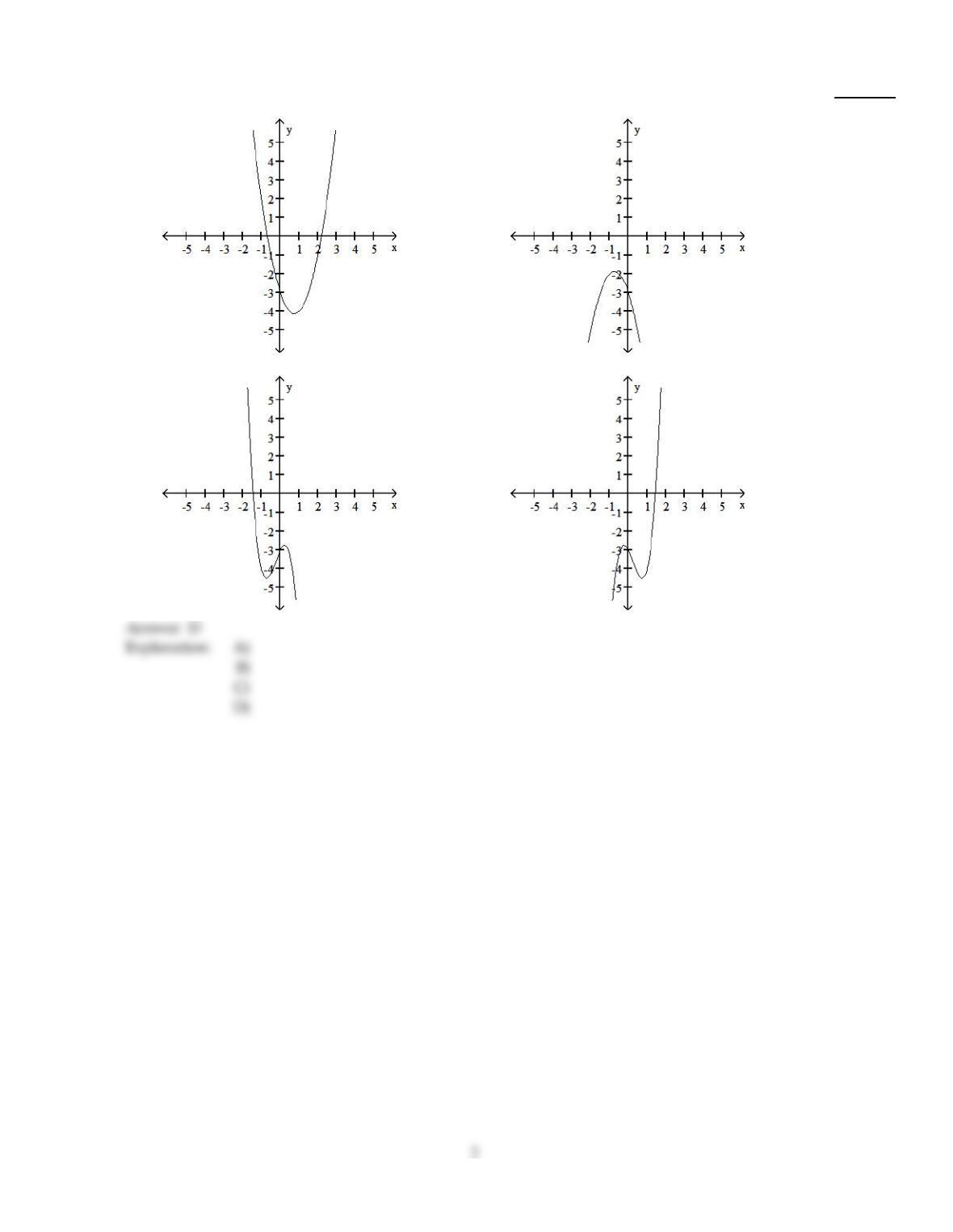
2)
f(x) =4x3– 3x2– 2x – 3
2)
A)
rises to the left and rises to the right
B)
falls to the left and falls to the right
C)
rises to the left and falls to the right
D)
falls to the left and rises to the right
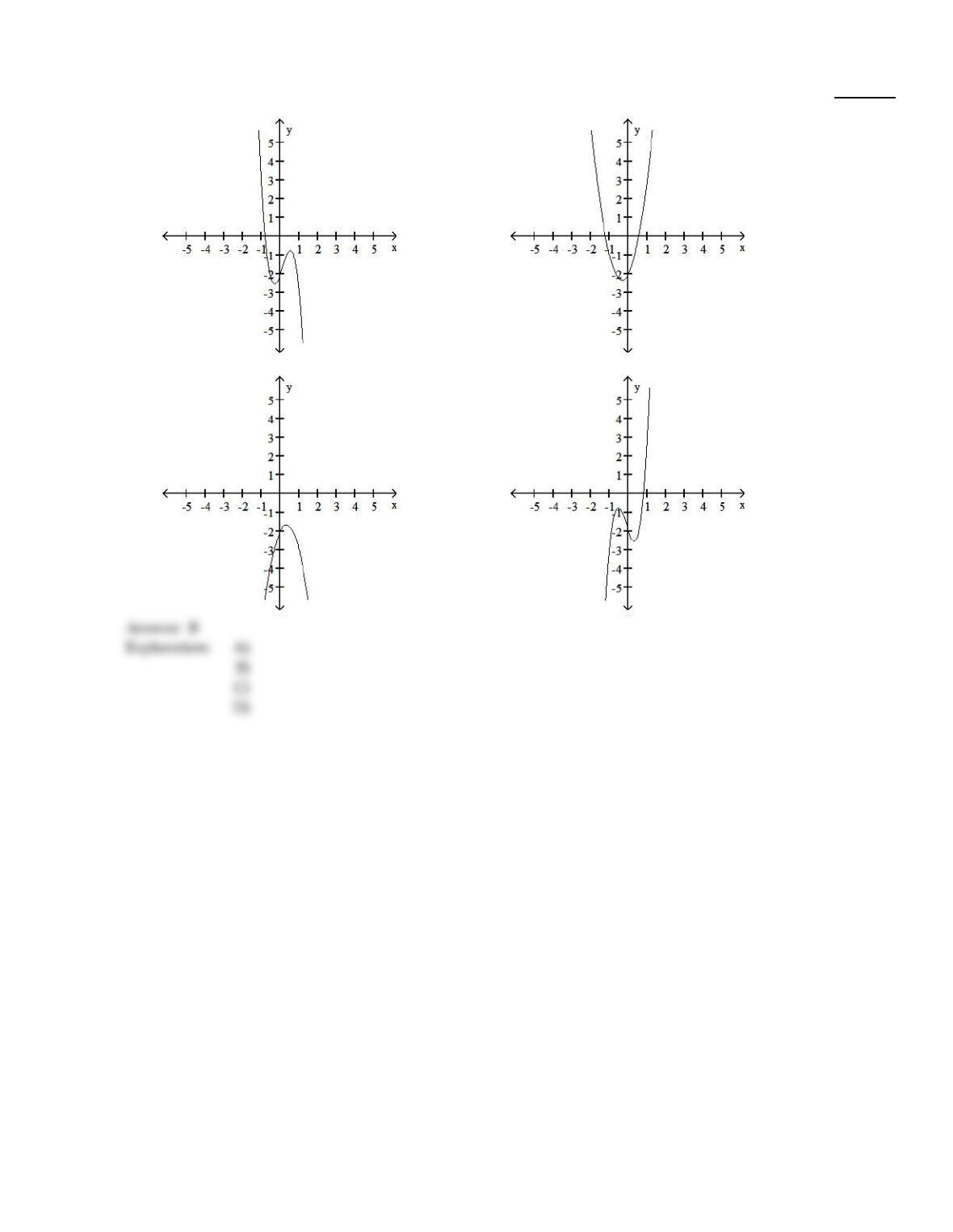
3)
f(x) =3x2+ 2x – 2
3)
A)
rises to the left and falls to the right
B)
rises to the left and rises to the right
C)
falls to the left and falls to the right
D)
falls to the left and rises to the right
3
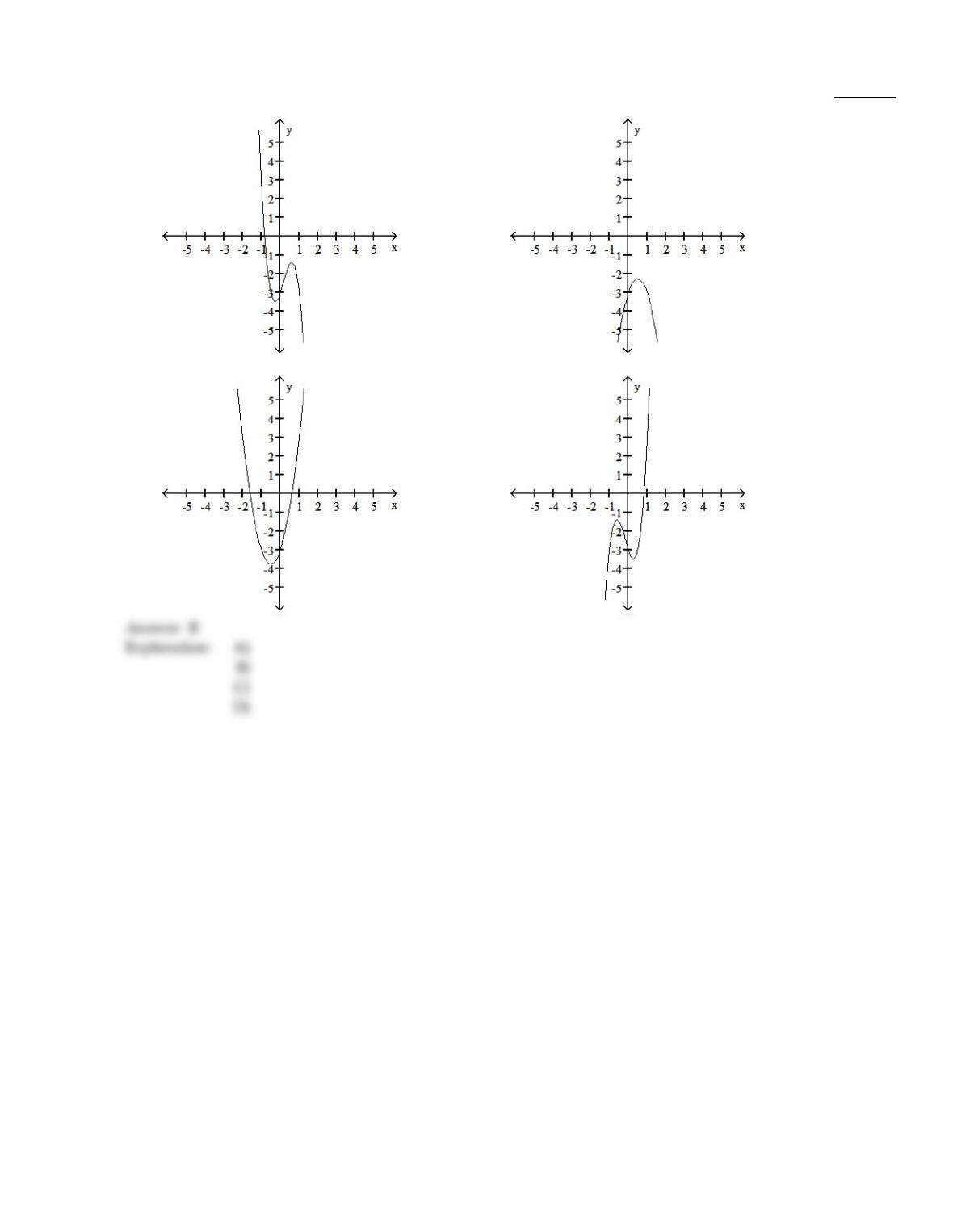
4)
f(x) = – 3x2+ 3x – 3
4)
A)
rises to the left and falls to the right
B)
falls to the left and falls to the right
C)
rises to the left and rises to the right
D)
falls to the left and rises to the right
4
5)
f(x) =2x4–3x2
5)
A)
falls to the left and falls to the right
B)
falls to the left and rises to the right
C)
rises to the left and falls to the right
D)
rises to the left and rises to the right
Solve.
6)
The profits (in millions) for a company for 8 years were as follows:
Year, x Profits, P
1993, 1
1994, 2
1995, 3
1996, 4
1997, 5
1998, 6
1999, 7
2000, 8
1.1
1.7
2.0
1.4
1.3
1.5
1.8
2.1
Which of the following polynomials is the best model for this data?
6)
A)
P(x) = – 0.08x3+7x2+ 1.3x – 0.18
B)
P(x) =0.03x3–0.3x2+ 1.3x + 0.17
C)
P(x) =0.05x2– 0.8x + 6
D)
P(x) = – 0.03x4–0.3x2+ 1.3x + 0.17
SHORT ANSWER. Write the word or phrase that best completes each statement or answers the question.
Complete the following:
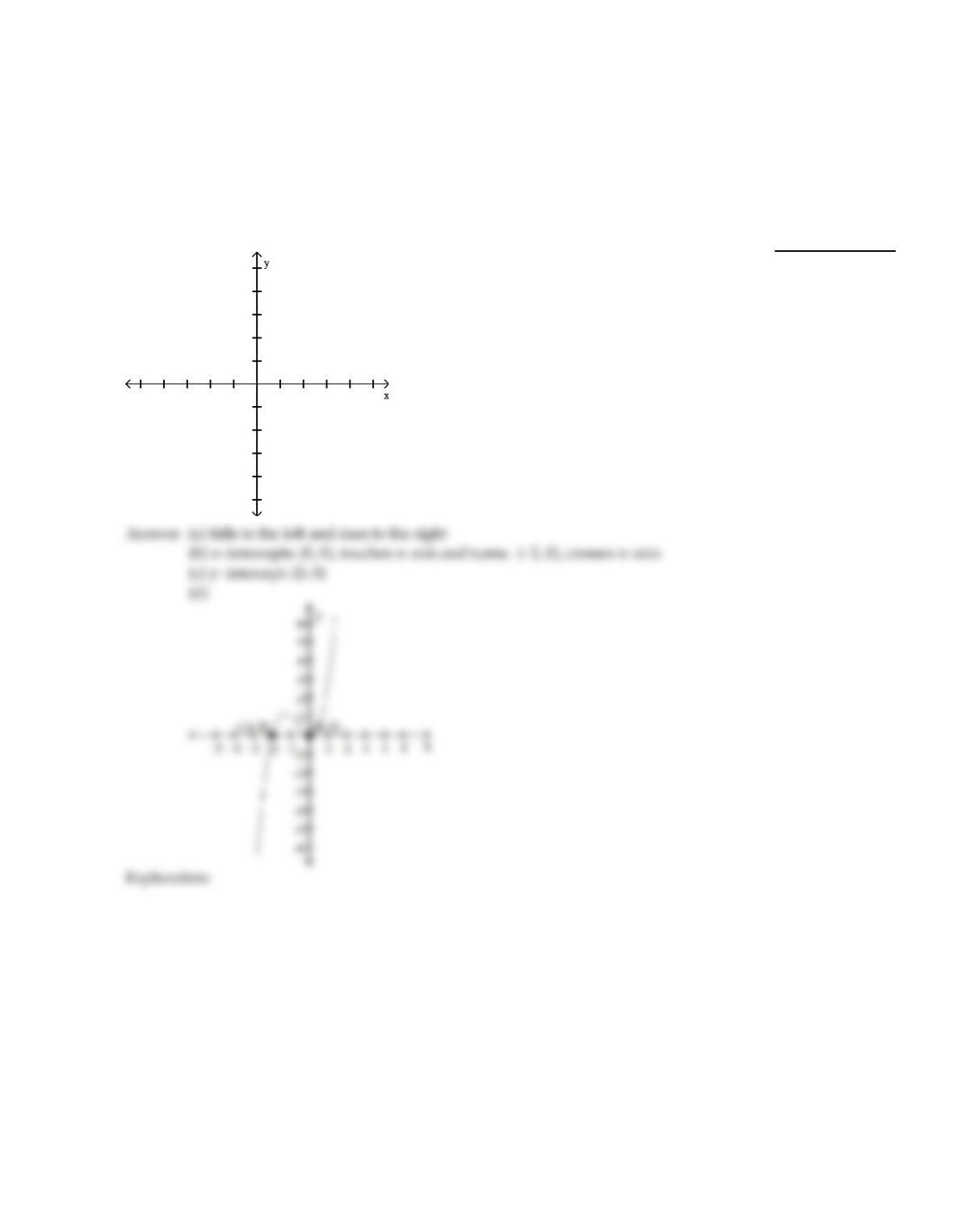
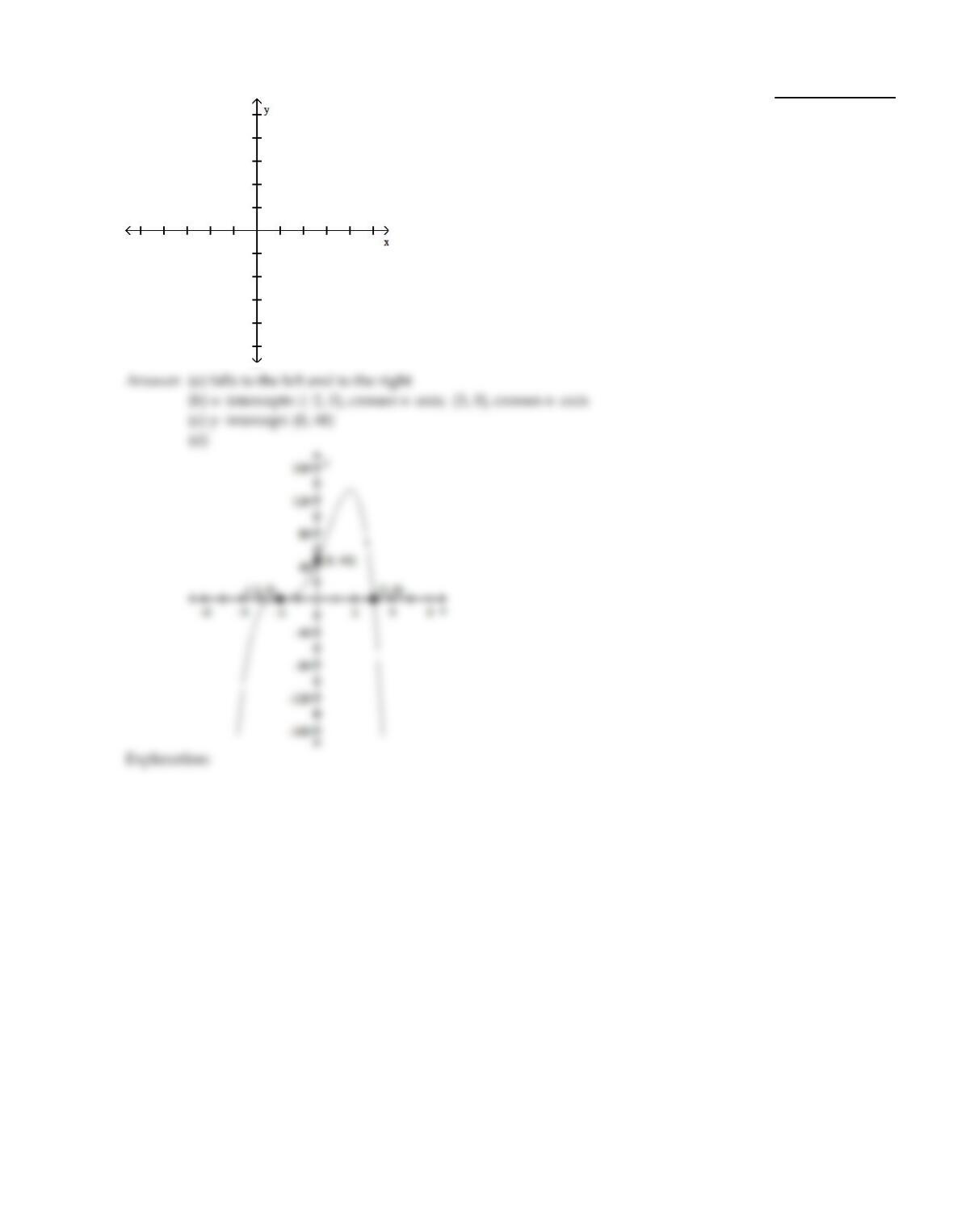
(a) Use the Leading Coefficient Test to determine the graph’s end behavior.
(b) Find the x–intercepts. State whether the graph crosses the x–axis or touches the x–axis and turns around at each
intercept.
(c) Find the y–intercept.
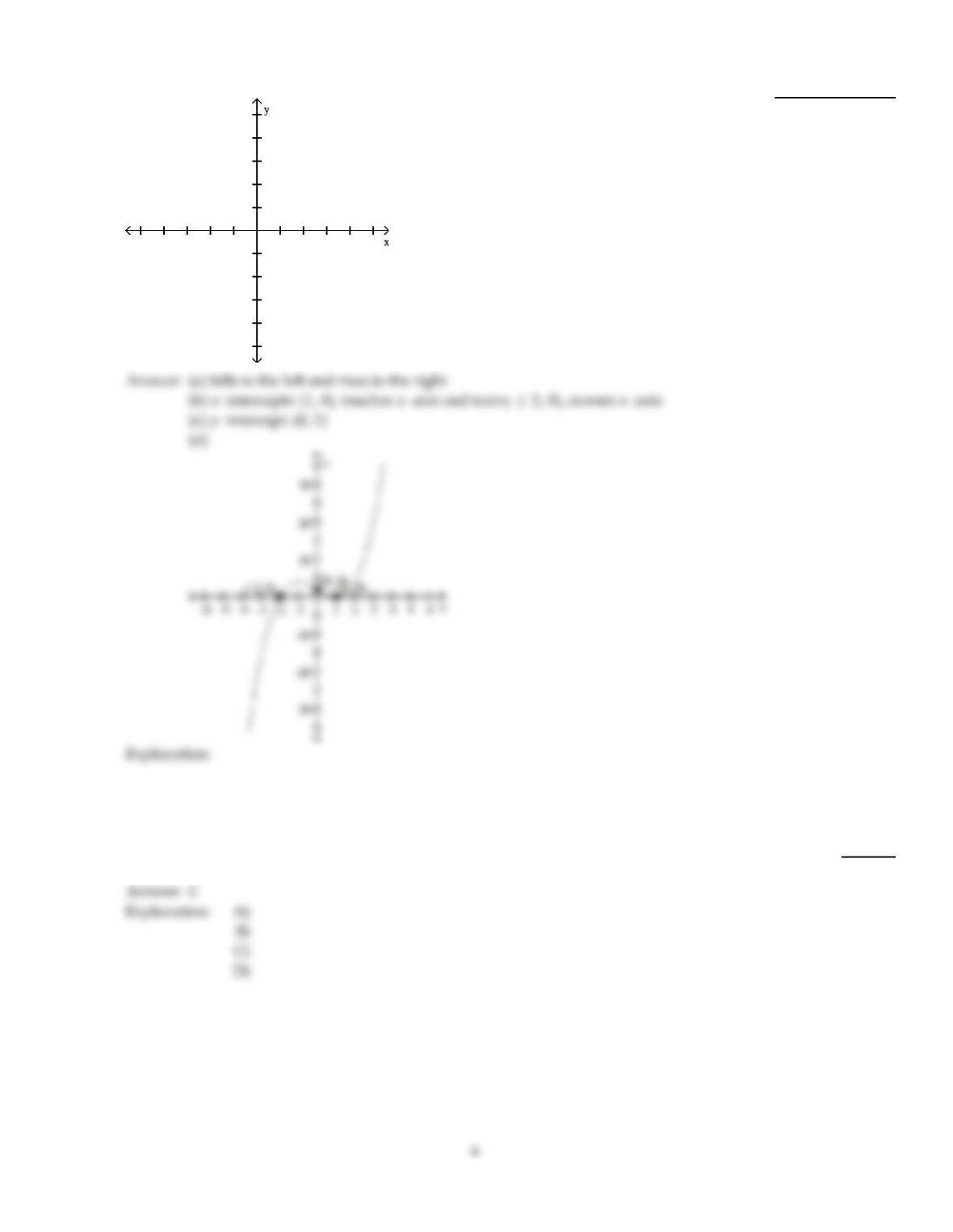
(d) Graph the function.
7)
f(x) =x2(x +2)
7)
7
8)
f(x) = – 2(x –3)(x +2)3
8)
8
9)
f(x) = (x +2)(x –1)2
9)
MULTIPLE CHOICE. Choose the one alternative that best completes the statement or answers the question.
Solve the problem.
10)
y varies directly as z and y =270 when z =15. Find y when z =14.
10)
A)
196
B)
225
C)
252
D)
324
Use Descartes’s Rule of Signs to determine the possible number of positive and negative real zeros for the given function.
11)
f(x) = – 6x9+x5–x2+8
11)
A)
3 or 1 positive zeros, 3 or 1 negative zeros
B)
2 or 0 positive zeros, 2 or 0 negative zeros
C)
3 or 1 positive zeros, 2 or 0 negative zeros
D)
2 or 0 positive zeros, 3 or 1 negative zeros
Solve the problem.
12)
f varies jointly as q2 and h, and f =54 when q =3 and h =2. Find h when f =288 and q =4.
12)
A)
h =3
B)
h =6
C)
h =4
D)
h =2
B
Write an equation that expresses the relationship. Use k as the constant of variation.
13)
s varies directly as the square of t.
13)
A)
s= k t
B)
s= kt2
C)
s=k
t2
D)
s=k
t
B
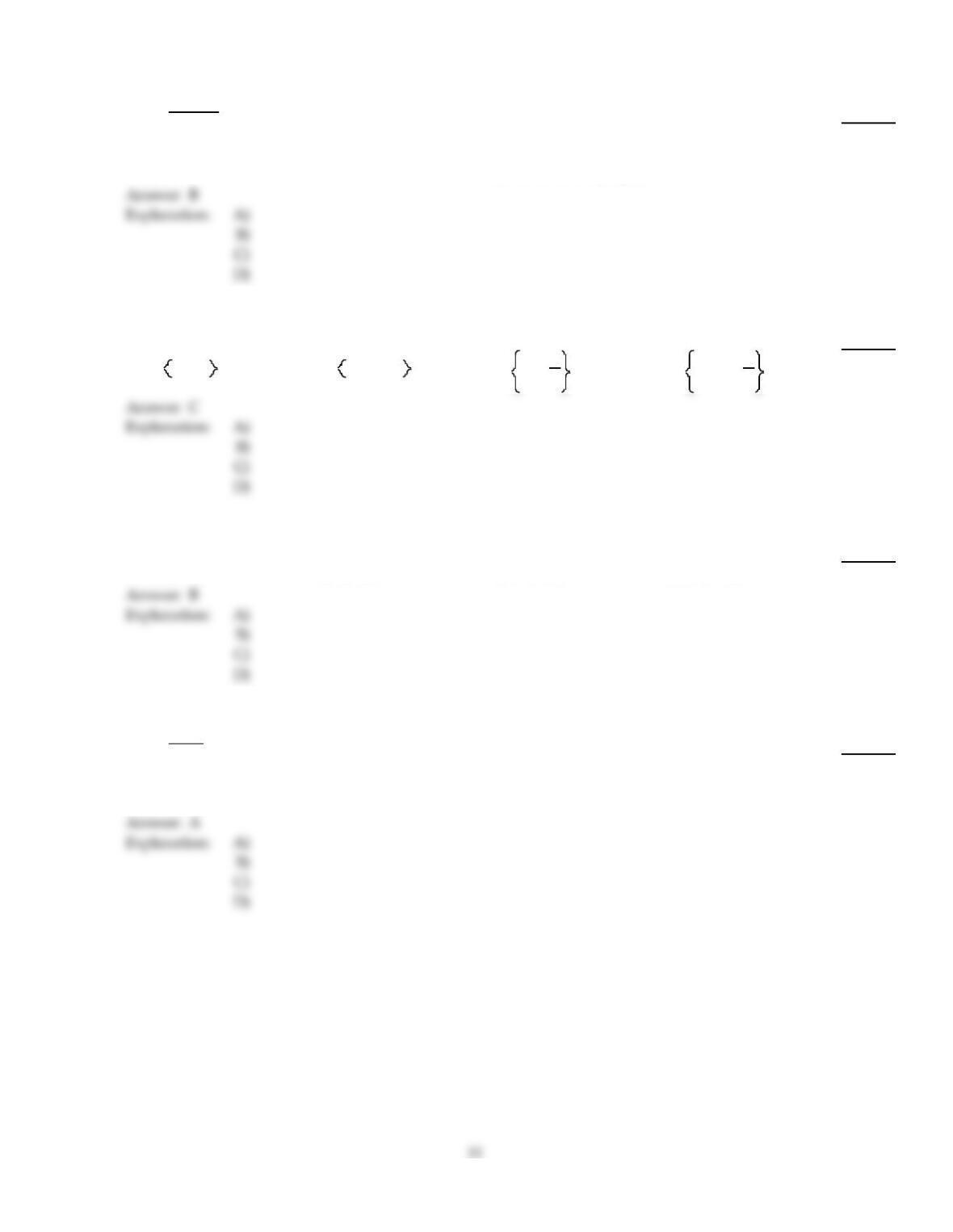
Solve the rational inequality and graph the solution set on a real number line. Express the solution set in interval
notation.
14)
3x +5
4–2x
0
14)
A)
–5
3, 2
B)
–5
3,
C)
–5
3, 2
D)
–, –5
3or (2, )
C
C
Find the vertical asymptotes, if any, of the graph of the rational function.
15)
g(x) =x
x2– 25
15)
A)
x =5, x = – 5, x = 0
B)
x =5, x = – 5
C)
x =5
D)
no vertical asymptote
Solve the problem.
16)
Solve the equation 3x3– 31x2+ 82x – 24 = 0 given that 4 is a zero of f(x) =3x3– 31x2+ 82x – 24.
16)
A)
4, 1, 2
B)
4, –1, – 2
C)
4, 6, 1
3
D)
4, –6, –1
3
Find the coordinates of the vertex for the parabola defined by the given quadratic function.
17)
f(x) = – x2+ 8x – 4
17)
A)
(8, –4)
B)
(4, 12)
C)
(–4, –20)
D)
(–4, –52)
Find the vertical asymptotes, if any, of the graph of the rational function.
18)
g(x) =x
x + 3
18)
A)
x = – 3
B)
x = 0 and x =3
C)
x = 0 and x = – 3
D)
no vertical asymptote
Divide using long division.
19)
x4+16
x –2
19)
A)
x3–2x2+4x –8+32
x –2
B)
x3+2x2+4x +8+32
x –2
C)
x3+2x2+4x +8+16
x –2
D)
x3+2x2+4x +8
Find the degree of the polynomial function.
20)
f(x) = – 2x +6x4
20)
A)
6
B)
–2
C)
1
D)
4
Find the zeros of the polynomial function.
21)
f(x) =x3+5x2– x –5
21)
A)
x =25
B)
x = 1, x = – 5, x =5
C)
x = – 1, x = 1, x = – 5
D)
x = – 5, x =5
Use Descartes’s Rule of Signs to determine the possible number of positive and negative real zeros for the given function.
22)
f(x) = – 4x5–10x4–5x3+3x2+ x +20
22)
A)
1 positive zero, 3 or 1 negative zeros
B)
1 positive zero, 2 or 0 negative zeros
C)
1 positive zero, 4, 3 or 1 negative zeros
D)
1 positive zero, 4 or 2 negative zeros
12
Divide using long division.
23)
–15x3+ 37x2– 8x – 6
3x – 5
23)
A)
–5x2+ 4x + 4
B)
–5x2+ 4x + 4 +17
3x – 5
C)
x2+ 4 +4
3x – 5
D)
–5x2+ 4x + 4 +14
3x – 5
Determine whether the function is a polynomial function.
24)
f(x) =x2–3
x4
24)
A)
Yes
B)
No
Determine the constant of variation for the stated condition.
25)
z varies directly as x and inversely as y, and z=5 when x=55 and y=25.
25)
A)
k =5
B)
k =11
25
C)
k =25
D)
k =25
11
Solve the problem.
26)
The owner of a video store has determined that the cost C, in dollars, of operating the store is
approximately given by C(x) = 2x2–28x +740, where x is the number of videos rented daily. Find
the lowest cost to the nearest dollar.
26)
A)
$544
B)
$642
C)
$348
D)
$838
Divide using synthetic division.
27)
x4– 3x3+x2+ 4x – 5
x – 1
27)
A)
x3– 2x2– x + 3 –2
x – 1
B)
x3+ 2x2– x + 5 –2
x – 1
C)
x3– 2x2+ x + 5 +4
x – 1
D)
x3– 2x2+ x + 3 +4
x – 1
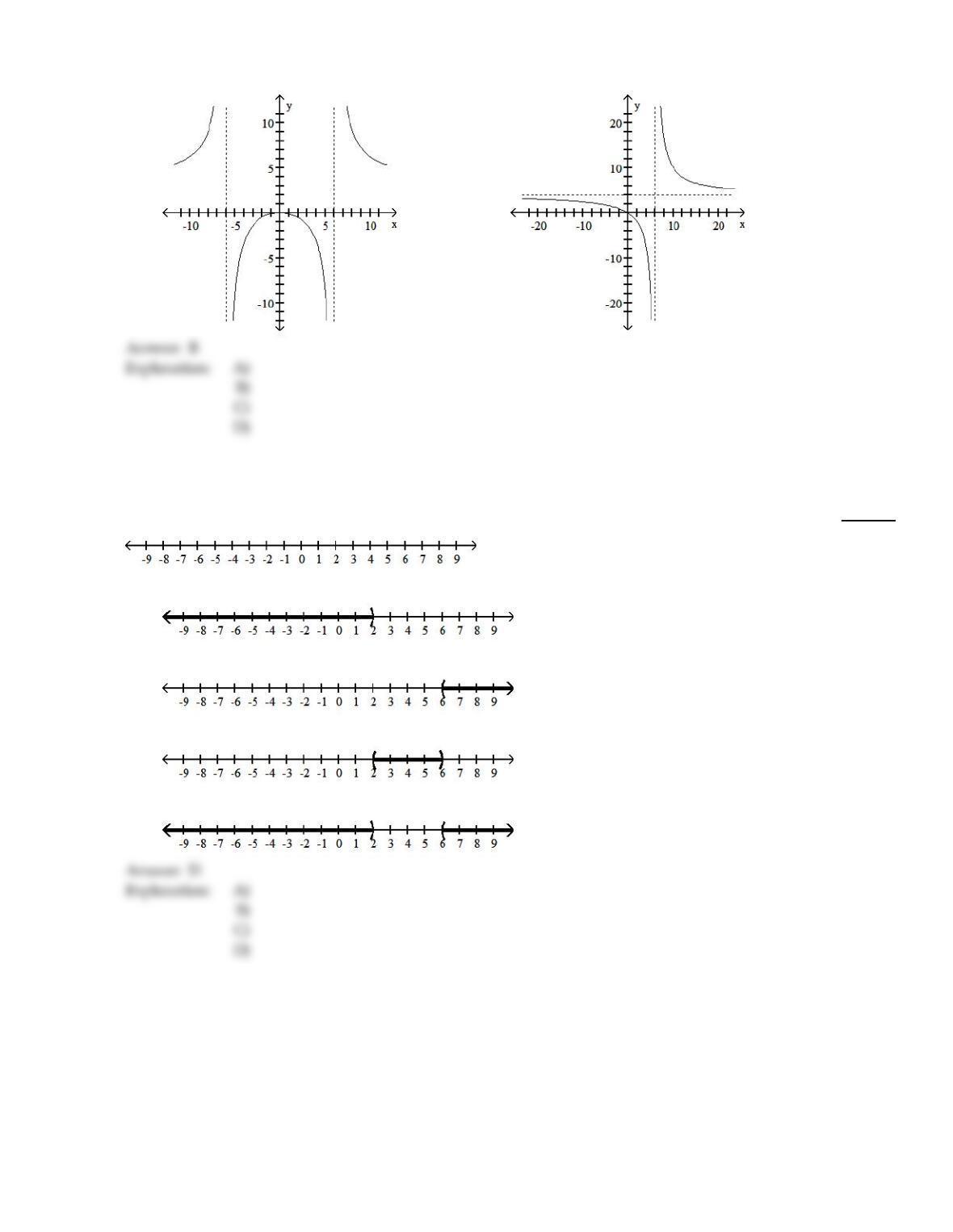
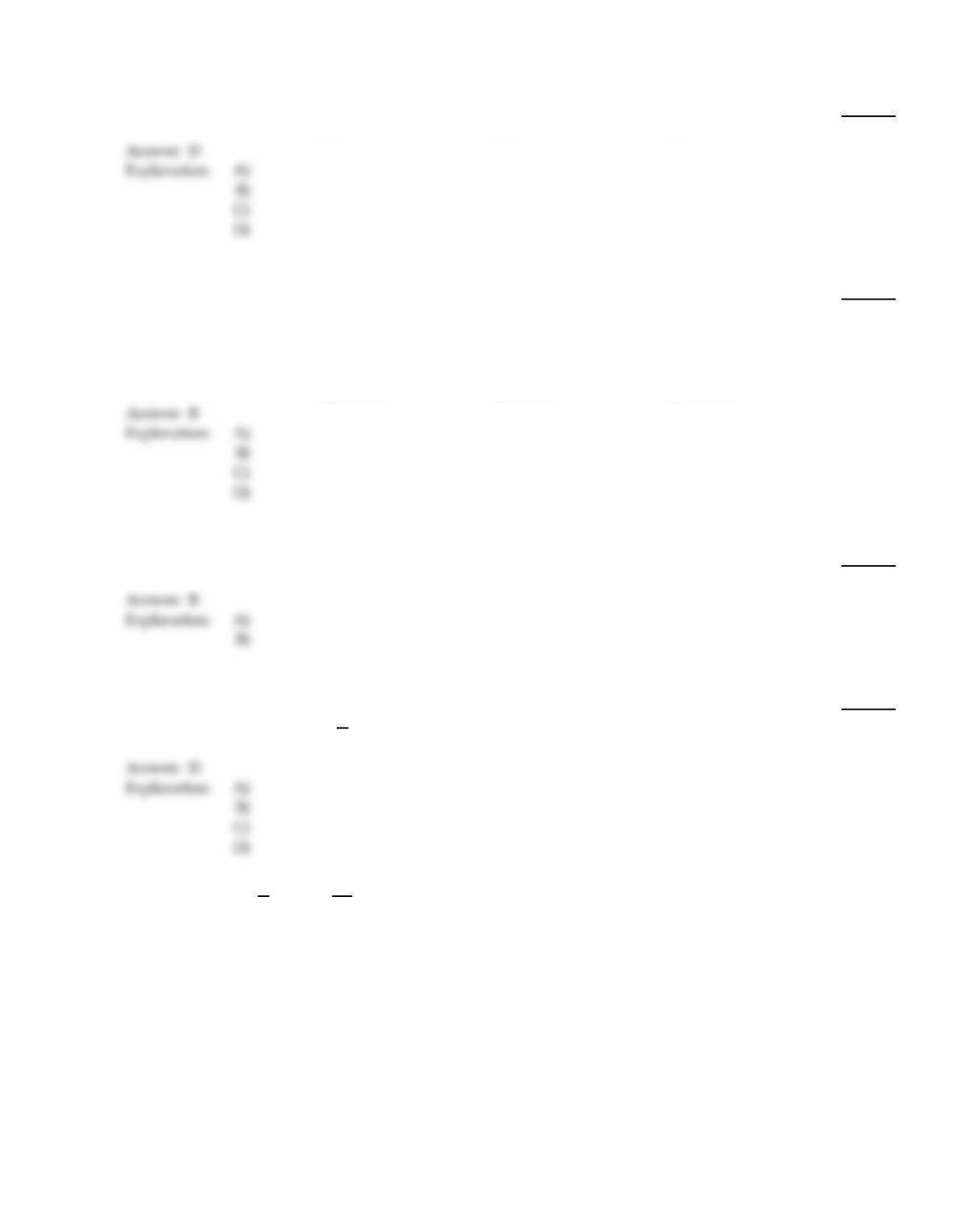
Graph the rational function.
28)
f(x) =4x
x2– 36
28)
A)
B)
14
C)
D)
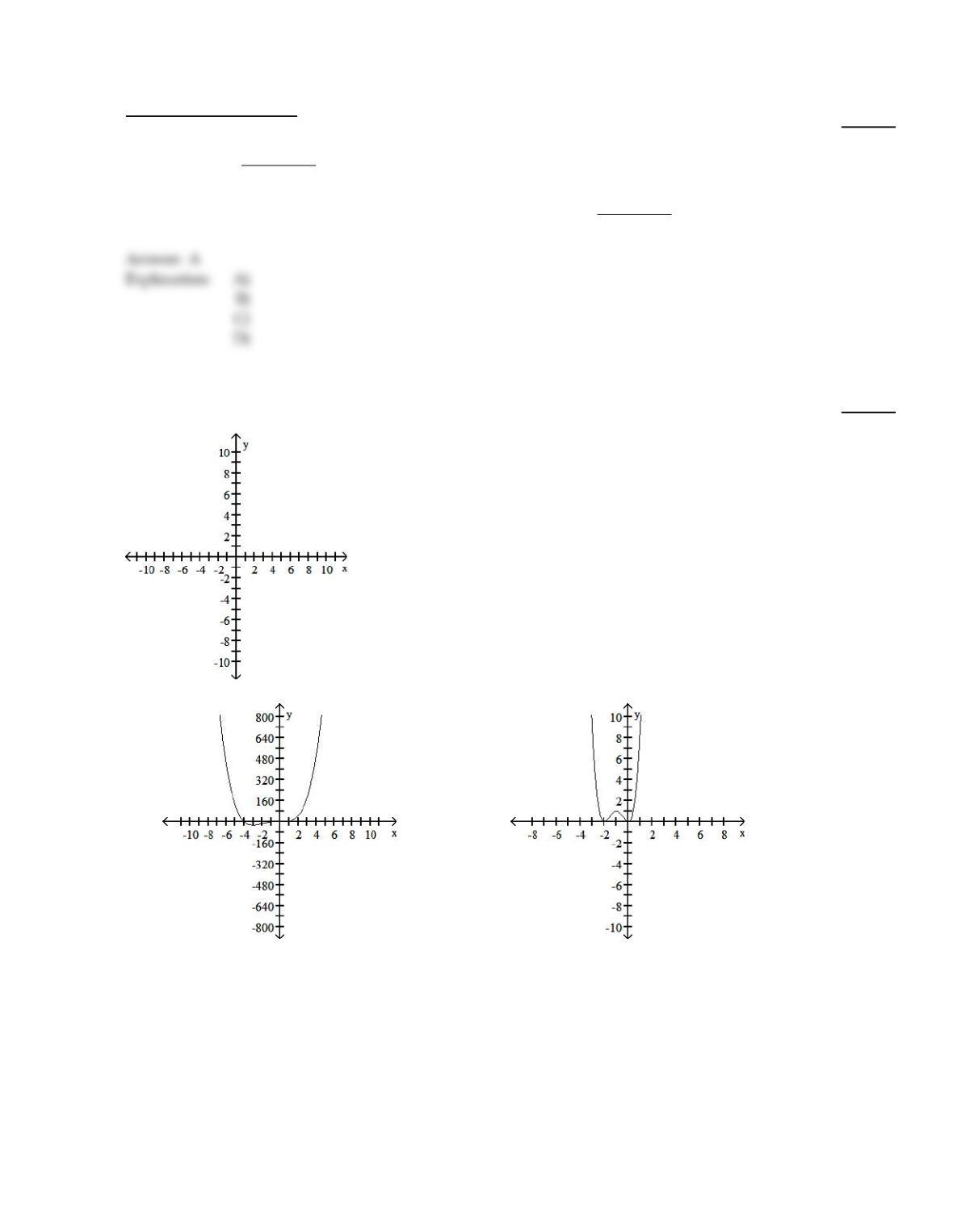
Solve the polynomial inequality and graph the solution set on a number line. Express the solution set in interval
notation.
29)
x2– 8x + 12 > 0
29)
A)
(–, 2)
B)
(6, )
C)
(2, 6)
D)
(–, 2)
(6, )
15
Divide using long division.
30)
x4– 2x3– 10x2+ 5x + 36
x2– 3x – 4
30)
A)
x2+ x – 3 +24
x2– 3x – 4
B)
x2– 6x + 4
C)
x2+ x – 3
D)
x2– 6x + 4 +8x – 28
x2– 3x – 4
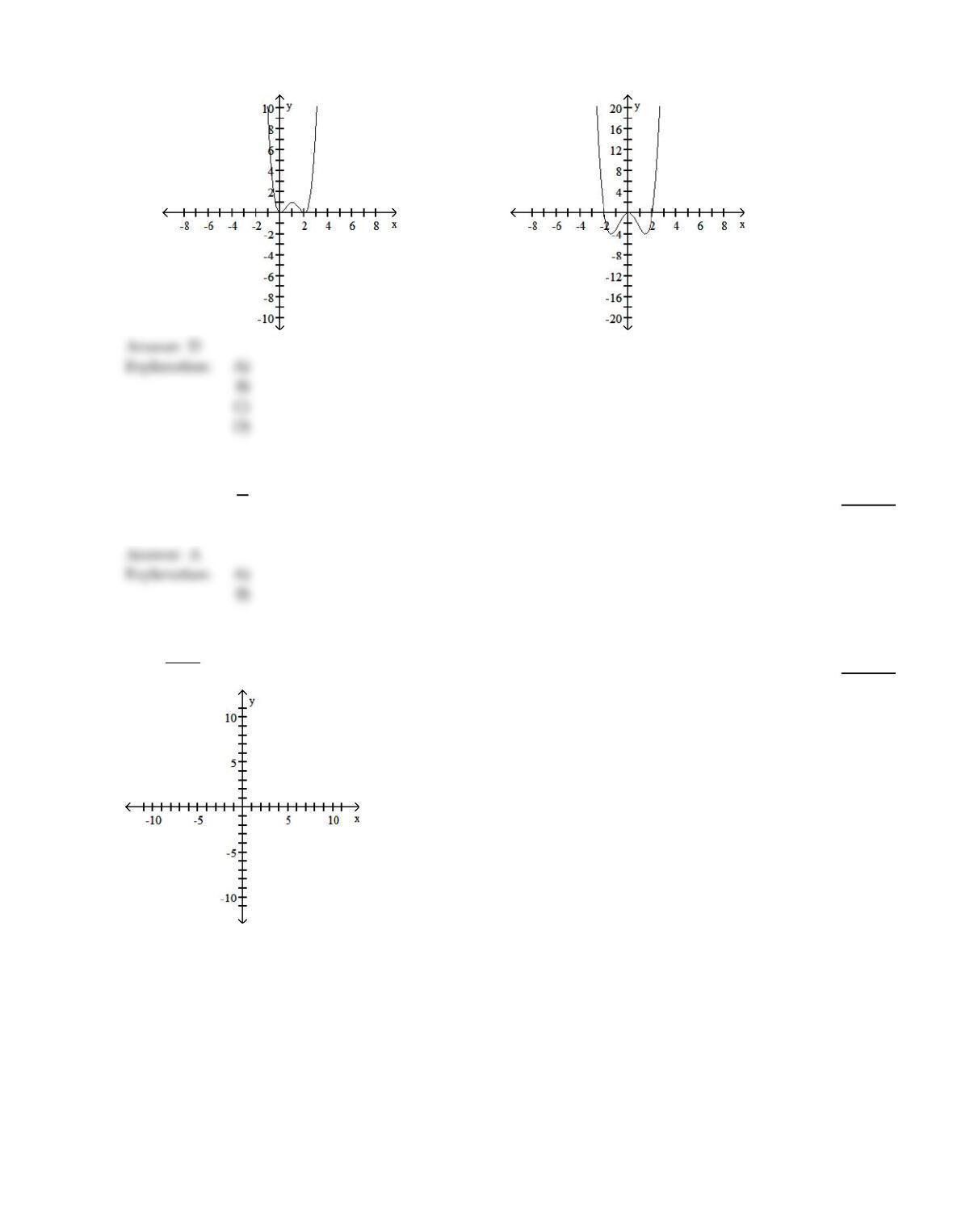
Graph the polynomial function.
31)
f(x) =x4– 4x2
31)
A)
B)
16
C)
D)
Determine whether the function is a polynomial function.
32)
f(x) = 5x7–x4+3
2x
32)
A)
Yes
B)
No
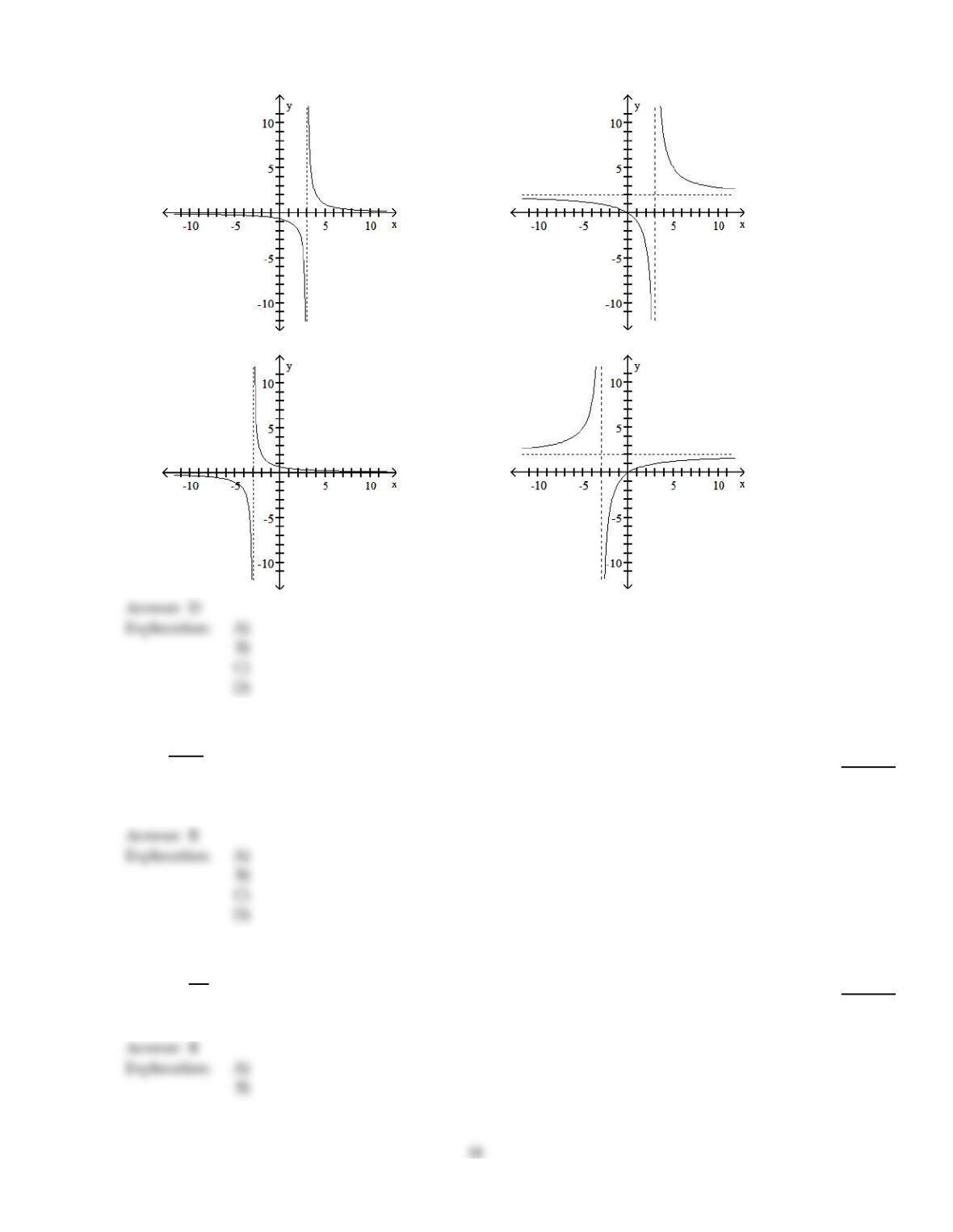
Graph the rational function.
33)
f(x) =2x
x + 3
33)
17
A)
B)
C)
D)
Find the domain of the rational function.
34)
g(x) =2x
x – 1
34)
A)
all real numbers
B)
{x|x 1}
C)
{x|x
0}
D)
{x|x –1}
Determine whether the function is a polynomial function.
35)
f(x) =3–3
x2
35)
A)
Yes
B)
No
Determine the maximum possible number of turning points for the graph of the function.
36)
f(x) = – x2– 8x + 15
36)
A)
3
B)
2
C)
0
D)
1
Solve the problem.
37)
The voltage across a resistor is jointly proportional to the resistance of the resistor and the current
flowing through the resistor. If the voltage across a resistor is 12 volts for a resistor whose
resistance is 2 ohms and when the current flowing through the resistor is 6 amperes, find the
voltage across a resistor whose resistance is 5 ohms and when the current flowing through the
resistor is 4 amperes.
37)
A)
24 volts
B)
20 volts
C)
8 volts
D)
30 volts
Determine whether the function is a polynomial function.
38)
f(x) =x3– 2x2– 1
38)
A)
No
B)
Yes
Solve the problem.
39)
If y varies directly as x, and y =2 when x =4, find y when x =32.
39)
A)
4
B)
1
4
C)
64
D)
16
Use transformations of f(x) =1
x or f(x) =1
x2 to graph the rational function.
19
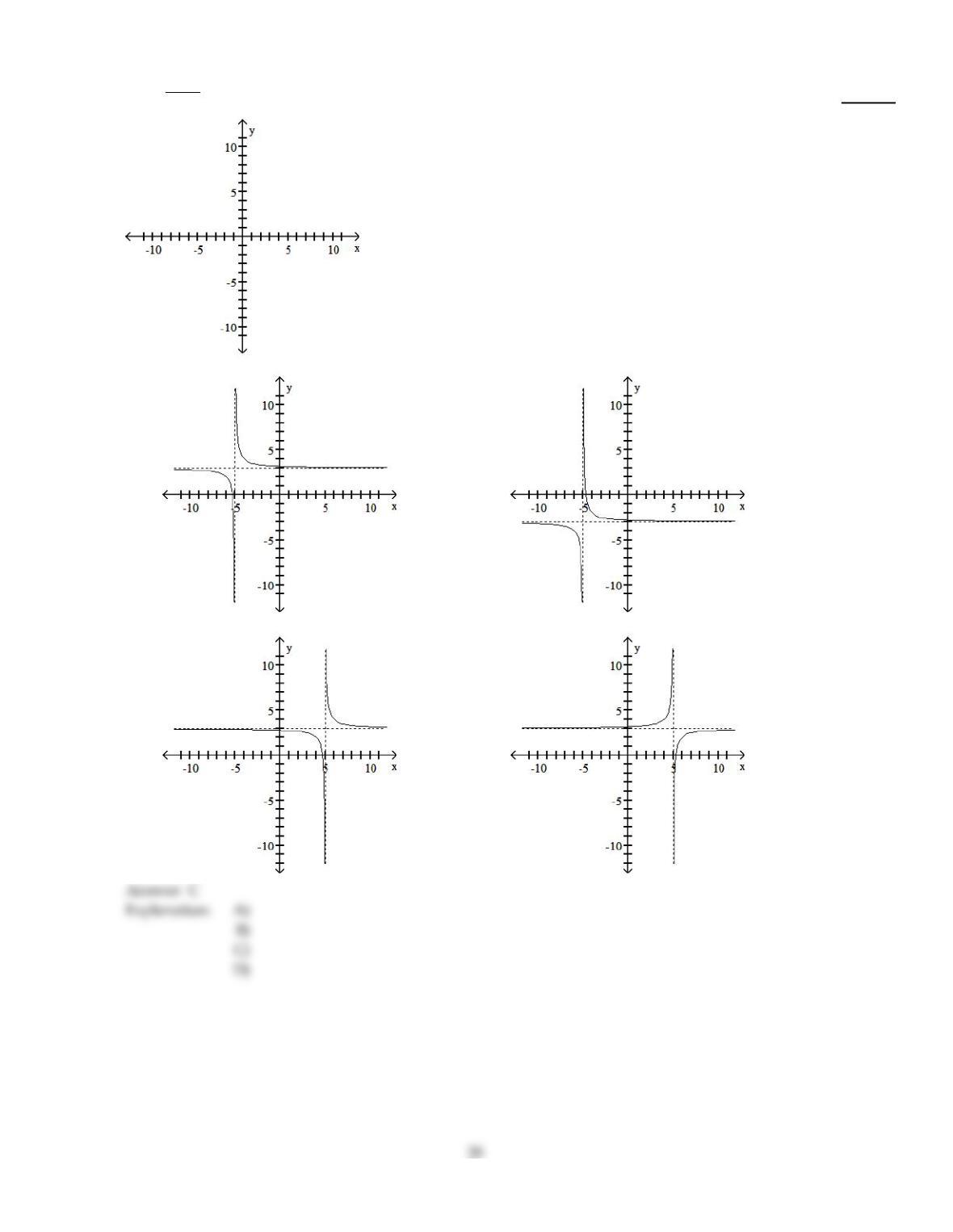
40)
f(x) =1
x – 5 +3
40)
A)
B)
C)
D)