
Elements of Ecology, 9e (Smith)
Chapter 27 The Ecology of Climate Change
27.1 Short Answer Questions
1) Over the past century, the Earth’s climate has ________ by an estimated 0.74°C.
2) Increases in temperatures have been associated with ________ in the body size of
endothermic animals.
3) The timing of seasonal activities of plants and animals is called ________.
4) Trees in the Arctic are predicted to move ________ in response to warming trends.
5) Differential changes in phenology can result in a ________ of timing between herbivores and
their resource.
6) Plant species in the Santa Catalina Mountains have moved to higher ________ due to the
effects of climate change.
7) Satellite-based measures of absorbed photosynthetically active radiation (APAR) can be used
to estimate terrestrial ________.

8) CH4, CFCs, and CO2 are all considered ________ gasses.
9) Global change predictions are often made using general circulation ________.
10) Carbon dioxide that dissolves into the ocean forms ________ acid.
27.2 Multiple-Choice Questions
1) The wobble of the Earth is not causing the current warming trend because it takes place on a
scale of
A) 410 years.
B) 4100 years.
C) 41,000 years.
D) 410,000 years.
2) Which part of the Earth is warming the most quickly?
A) the Arctic
B) the tropics
C) the Northern Hemisphere
D) All parts of the Earth are warming equally.
3) How far has the global sea level risen over the past 100 years?
A) 0 mm
B) 15 mm
C) 150 mm
D) 15 cm

4) What is the main cause of sea level rise?
A) reduced summer sea ice
B) warm water expanding
C) sinking land
D) reduced snow cover
5) Which region has seen the largest increase in ectotherm metabolic rate?
A) Arctic
B) north temperate
C) tropical
D) south temperate
6) In North America, what is the greatest risk of warming to trees?
A) reduced growing season
B) reduced water availability
C) less variable precipitation
D) Most species live near their thermal maximum.
7) What is the great risk of warming to tropical marine species?
A) reduced growing season
B) reduced water availability
C) less variable precipitation
D) Most species live near their thermal maximum.
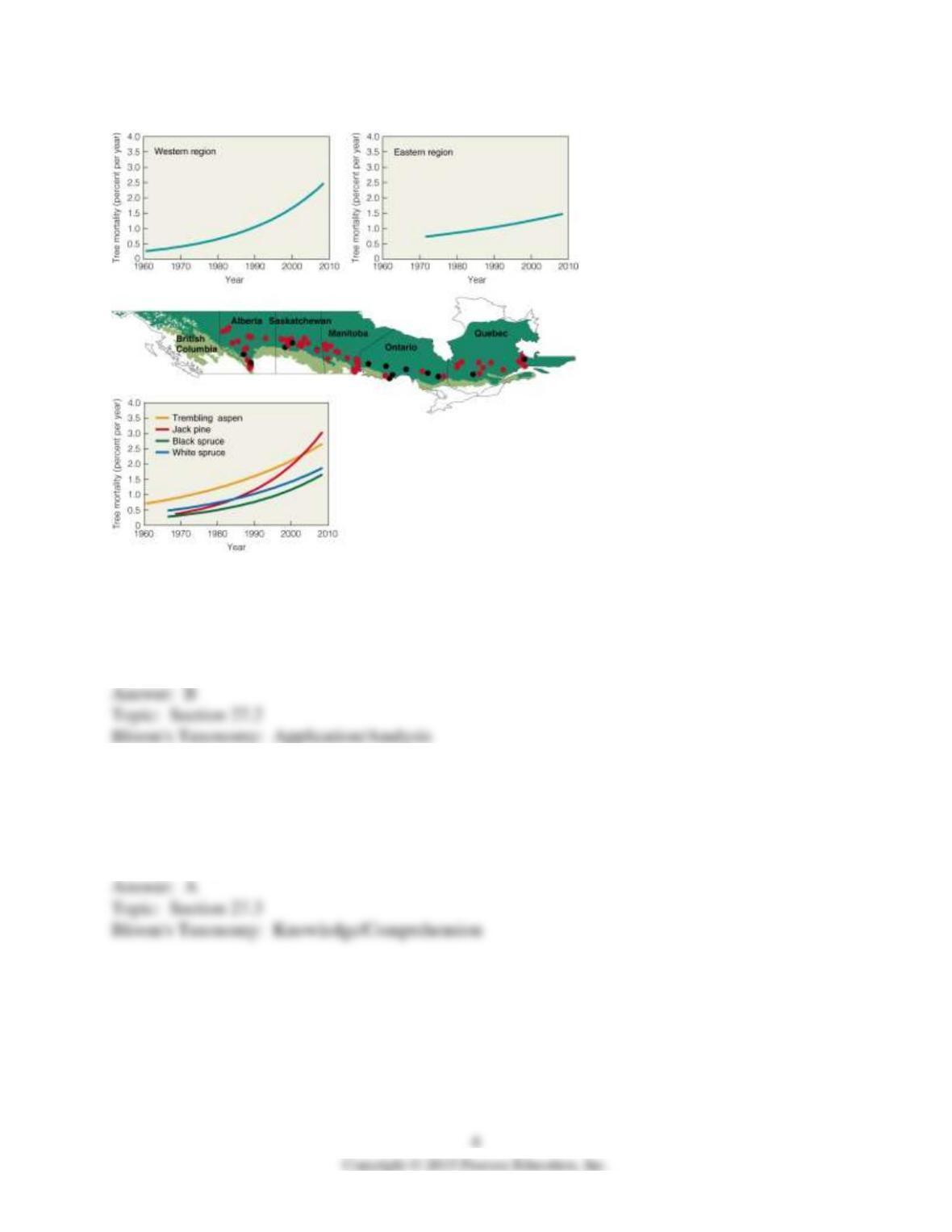
8)
Which tree species is suffering the largest current tree mortality?
A) trembing aspen
B) jack pine
C) black spruce
D) white spruce
9) In great tits, increased warming has resulted in
A) earlier egg laying.
B) earlier migration schedules.
C) greater mortality.
D) larger body size.

10) What effect is warming predicted to have on migration behavior?
A) Birds will depart for migration earlier and return later.
B) Birds will depart for migration later and return later.
C) Birds will depart for migration earlier and return earlier.
D) Birds will depart for migration later and return earlier.
11) In which group of organisms has the timing of spring events changed the most in response to
climate change?
A) birds
B) butterflies
C) amphibians
D) trees
12) In some regions, butterflies are emerging earlier than the flowering of herbaceous plants.
This is an issue because
A) butterflies rely on the flowers for food.
B) butterflies rely on the flowers for shelter.
C) butterflies rely on the flowers to deposit eggs.
D) herbaceous plants rely on butterflies for food.
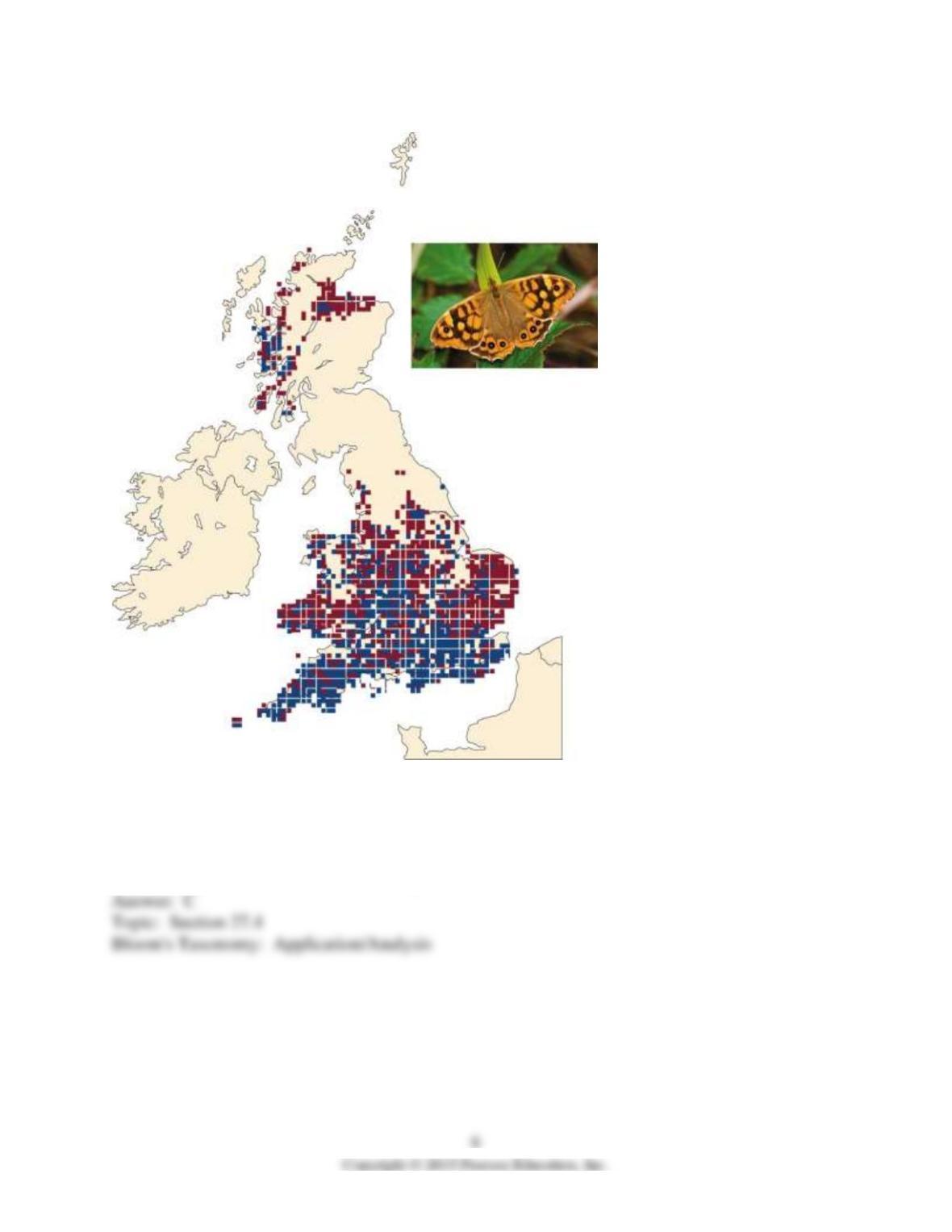
13)
Data in this figure suggest
A) butterfly populations are declining.
B) butterfly habitat is degrading over time.
C) butterflies are moving north over time.
D) two species of butterflies are evolving over time.

14) Plant species in California’s Santa Rosa Mountains are seen to be
A) moving southward.
B) growing larger in size.
C) moving to higher elevation.
D) unaffected by climate change.
15) How are the majority tree species responding to climate change in terms of distribution?
A) moving north
B) moving south
C) contracting in range
D) no change in distribution
16) Why is the Arctic fox declining in numbers?
A) Red fox are outcompeting them as they expand north.
B) Resource availability is lacking.
C) They are up against their thermal maximum with increased global temperatures.
D) Melting ice reduces suitable habitat.
17) How has climate change altered the mountain pine beetle?
A) They are being outcompeted by the prairie pine beetle.
B) They now have two generations per year.
C) They have decreased the average elevation of their distribution.
D) Their abundance has increased through lack of predators due to mismatched phenology.
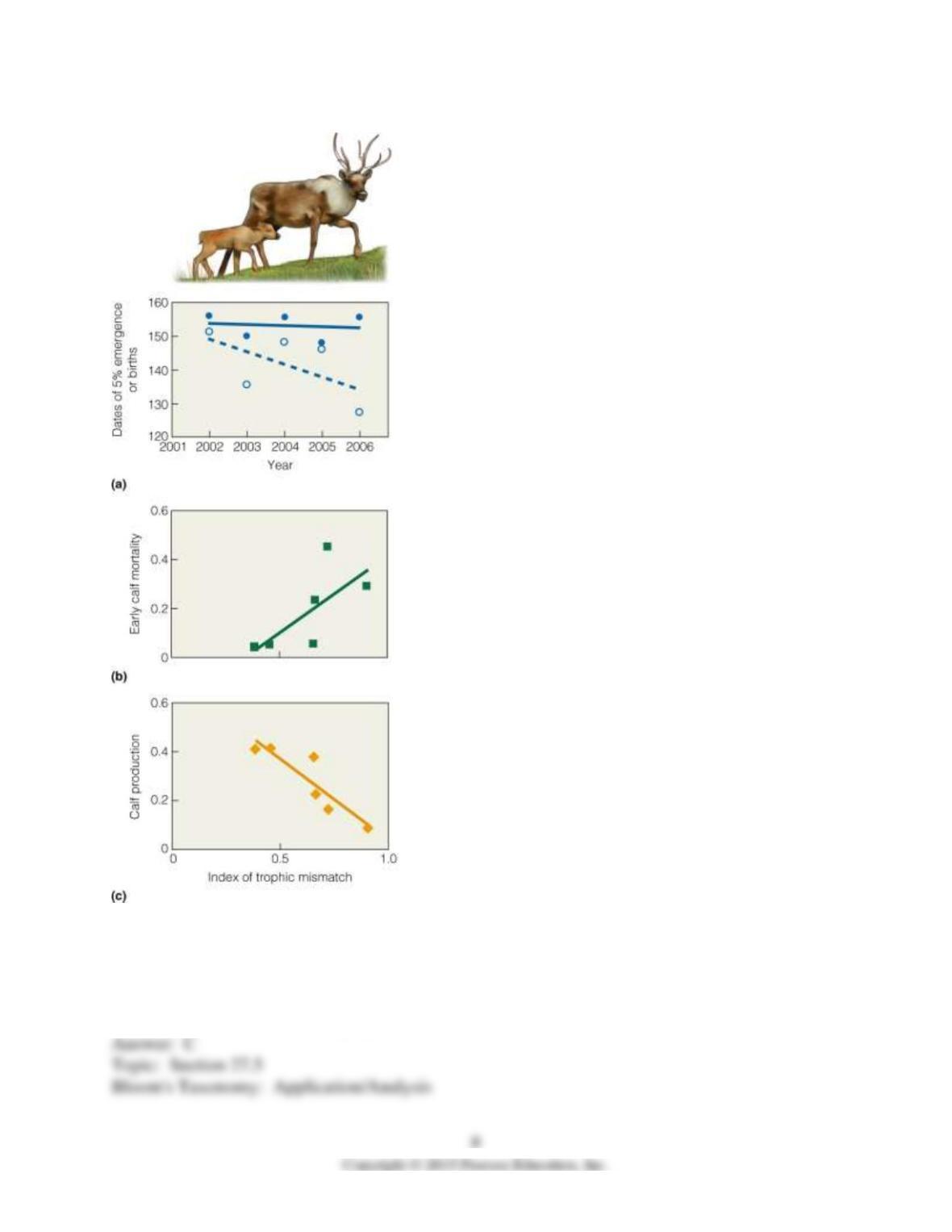
18)
What does the figure show regarding the emergence of caribou calves and their forage?
A) Calves and forage are emerging earlier.
B) Calves are emerging earlier but forage is not.
C) Forage is emerging earlier but calves are not.
D) Forage and calves are emerging later.
19) During the last 40 years, warmer-water plankton have moved
A) 1° in latitude north.
B) 10° in latitude north.
C) 1° in latitude south.
D) 10° in latitude south.
20) Due to global warming what occurred in fish in the North and Celtic seas?
A) Species richness increased.
B) Species richness declined.
C) Fewer deep-water species were present.
D) Fewer shallow-water species were present.
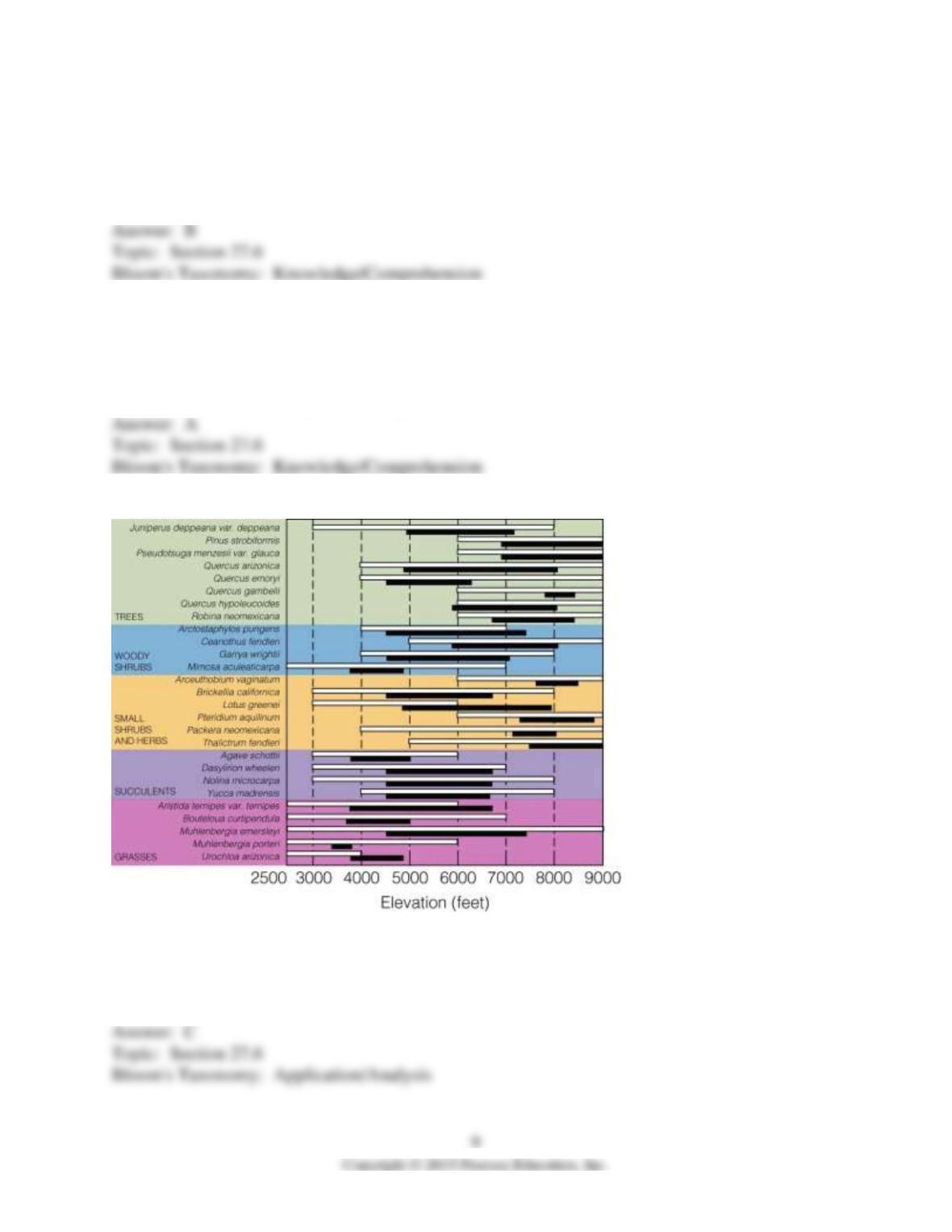
21)
What does this figure indicate?
A) Species abundances have dramatically declined.
B) Species richness has dramatically declined.
C) Species have moved higher in elevation over time.
D) Species have moved lower in elevation over time.
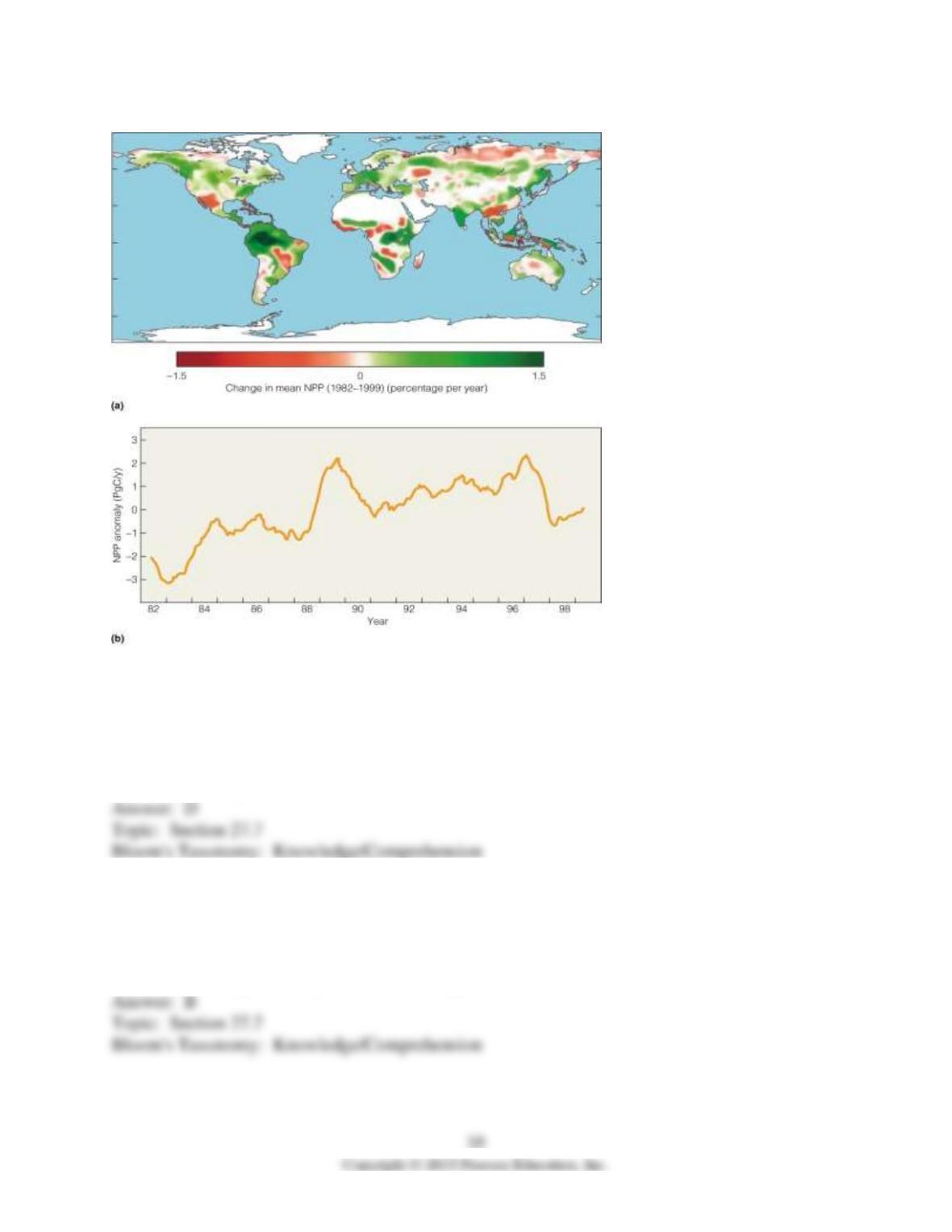
22)
According to the figure, which area is seen as exhibiting only increases in NPP due to climate
change?
A) South America
B) Africa
C) Australia
D) Western Europe
23) Overall, what is the net trend of NPP due to climate change?
A) It is increasing.
B) It is decreasing.
C) It is not affected.
D) It is decreasing currently, but will soon begin to increase.

24) Which part of the globe is responsible for the largest increase in NPP?
A) the Arctic
B) the United States
C) the Amazon rain forest
D) North Africa
25) Which of the following is not a greenhouse gas?
A) N2O
B) CO2
C) CH4
D) N2
26) Warming is predicted to be greatest
A) during winter months.
B) during summer months.
C) in the Southern Hemisphere.
D) in the Pacific Ocean.
27) What is a GCM?
A) general climate model
B) geographic climate model
C) general circulation model
D) geothermal climate model
28) The International Tundra Experiment provides evidence that
A) the Arctic has risen in temperature by 1-3°C.
B) species diversity will increase in the Arctic due to climate change.
C) shrubs in the Arctic will have decreased height due to climate change.
D) there will be less cover by lichens and mosses due to climate change.
29) The Network of Ecosystem Warming Studies provides evidence that as a result of climate
change
A) net nitrogen mineralization has increased.
B) soil respiration has decreased.
C) plant productivity has decreased.
D) their sites have warmed by at least 7°C.
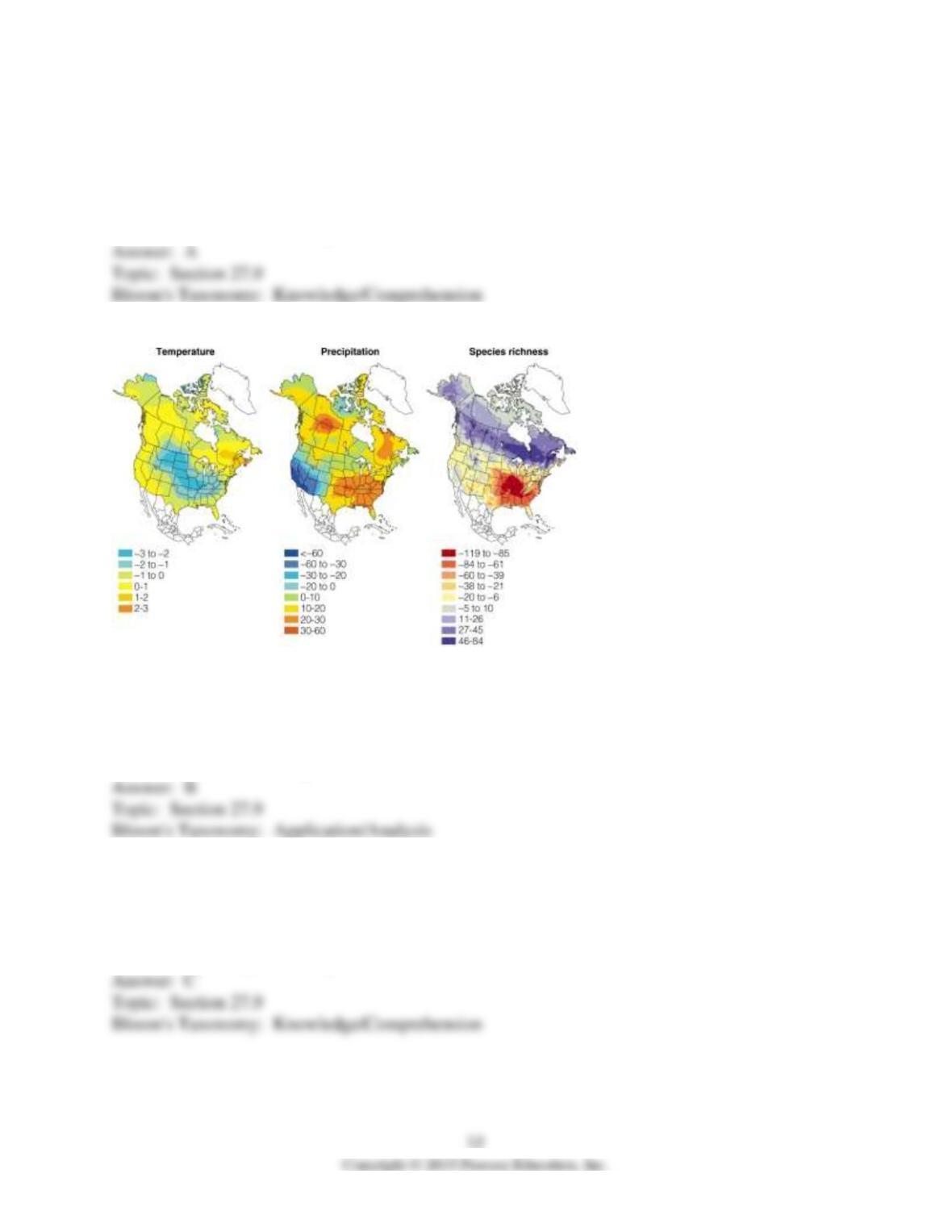
30)
According to the figure, California is predicted to have
A) reduced temperatures.
B) reduced precipitation.
C) massive increases in species richness.
D) massive decreases in species richness.
31) What is the bioclimatic envelope model approach also known as?
A) forest inventory and analysis
B) general circulation model
C) ecological niche model
D) net ecosystem productivity model

32) What percentage of carbon emissions remain in the atmosphere?
A) 5 percent
B) 15 percent
C) 50 percent
D) 90 percent
33) The formation of carbonic acid in the oceans directly results in
A) increased sea surface temperatures.
B) inhibition of shell growth in marine animals.
C) increased marine biodiversity.
D) increased pH.
34) Which of the following would contribute to a negative feedback loop that would reduce
atmospheric CO2?
A) increased terrestrial NPP
B) decreased terrestrial NPP
C) increased CO2 emissions
D) decreased oceanic NPP
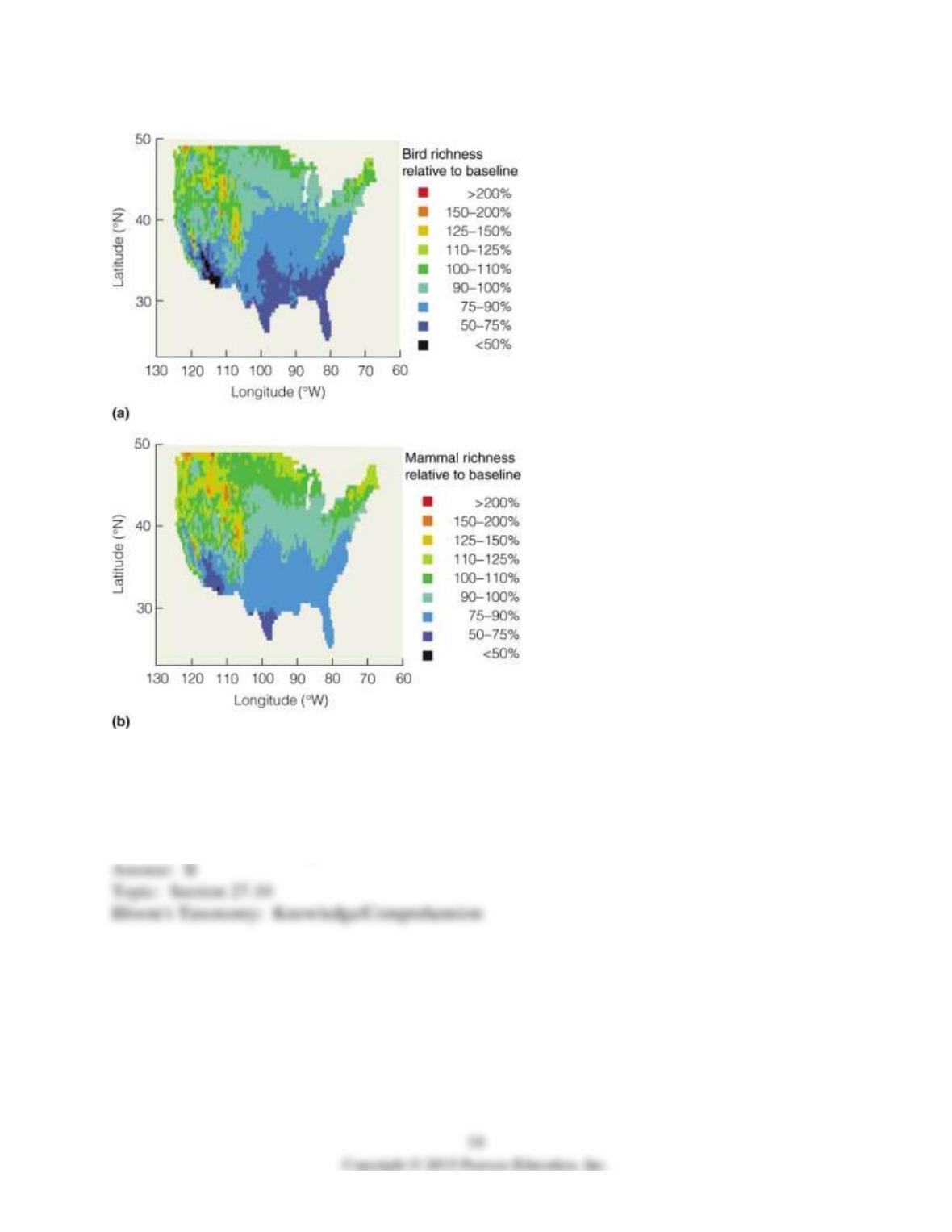
35)
According to the figure most of the South in the United States is predicted to have
A) large increases in bird and mammal richness.
B) large decreases in bird and mammal richness.
C) no effect in bird and mammal richness.
D) no effect in bird but large decreases in mammal richness.

27.3 True/False Questions
1) The “wobble” of the Earth’s tilt is responsible for previous ice ages.
2) The current warming trend on the Earth is due solely to natural fluctuations.
3) Change in temperature has been the greatest in the tropics.
4) Changes in climate have mostly delayed the spring behaviors of plants and animals.
5) Changes in climate have shifted the distribution of most species farther north.
6) Herbivores are tracking phenological changes in their resource in response to climate change.
7) There are no long-term data to support the idea that the community structure of aquatic
species has changed due to climate change.
8) There is currently a drying trend due to global warming in the Southern Hemisphere.

9) By the end of this century, it is estimated that the emission of CO2 will be double that of
preindustrial levels.
10) Current methodologies and understanding allow us to make precise predictions regarding the
impacts of climate change on the current abundance and distribution of species.
27.4 Essay Questions
1) Provide an argument, including three lines of evidence from Northern Hemisphere data, to
support the argument that global climate change is occurring.
2) Outline the differences between ecotherm and endotherm responses to climate change.
3) Explain how changes in climate might alter the phenology of three different organisms in a
forest ecosystem.
4) Provide an example of consumers not tracking a change in their resource phenology, and
explain how different cues for each organism are responsible for this mismatch.
5) Explain why net primary productivity is increasing in some areas while decreasing in others.
Provide examples of each.

6) Provide evidence that humans are the cause of increased CO2 emissions.