214)
Which of the following is NOT a likely market solution to the lemons problem?
214)
A)
industry standard
B)
product warranty
C)
average cost pricing
D)
product certification
215)
Without any regulation, the natural monopolist will
215)
A)
not produce any output.
B)
produce to the point at which P = ATC.
C)
have an upward–shifting average cost curve.
D)
produce less output than it would if the industry was purely competitive.
216)
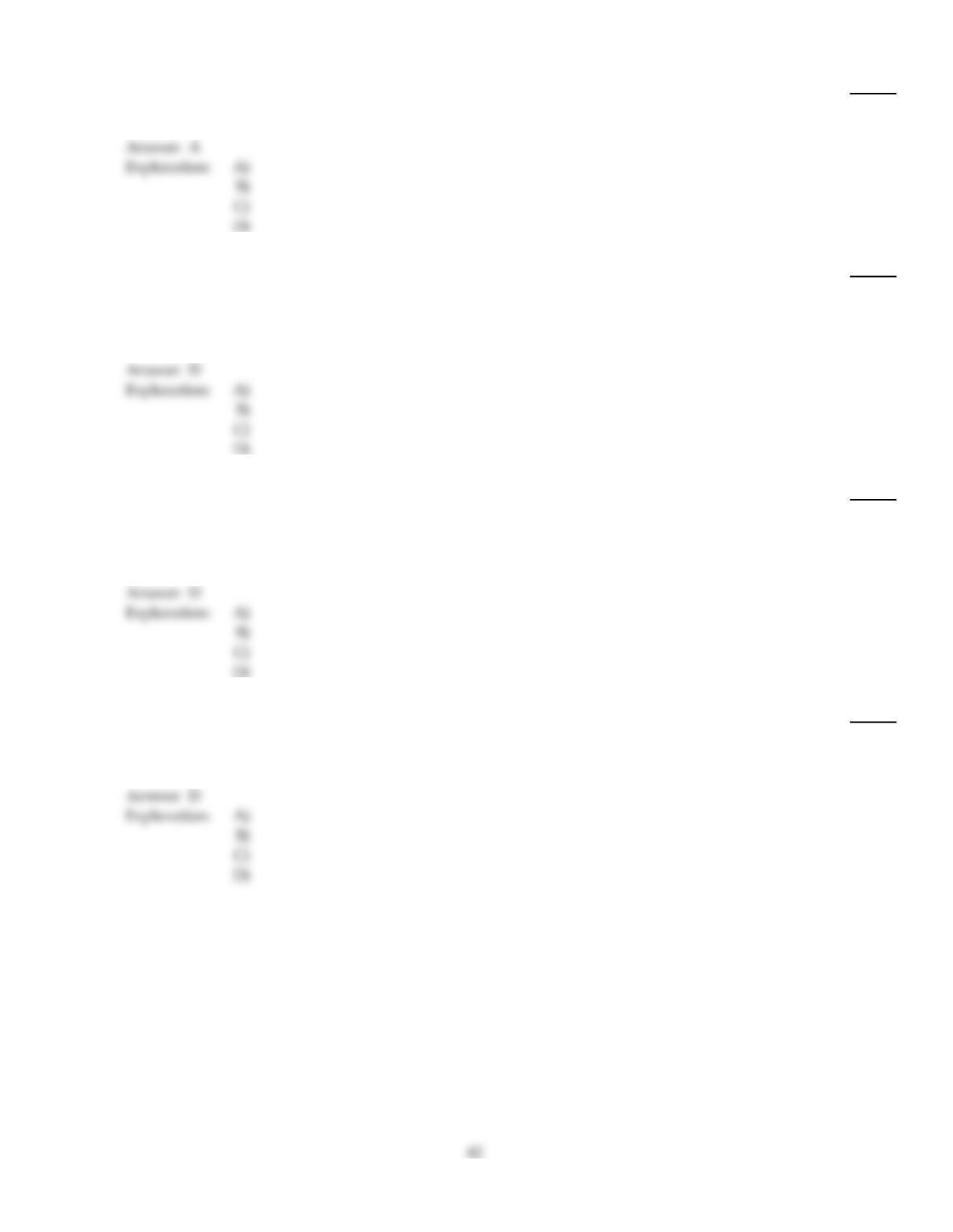
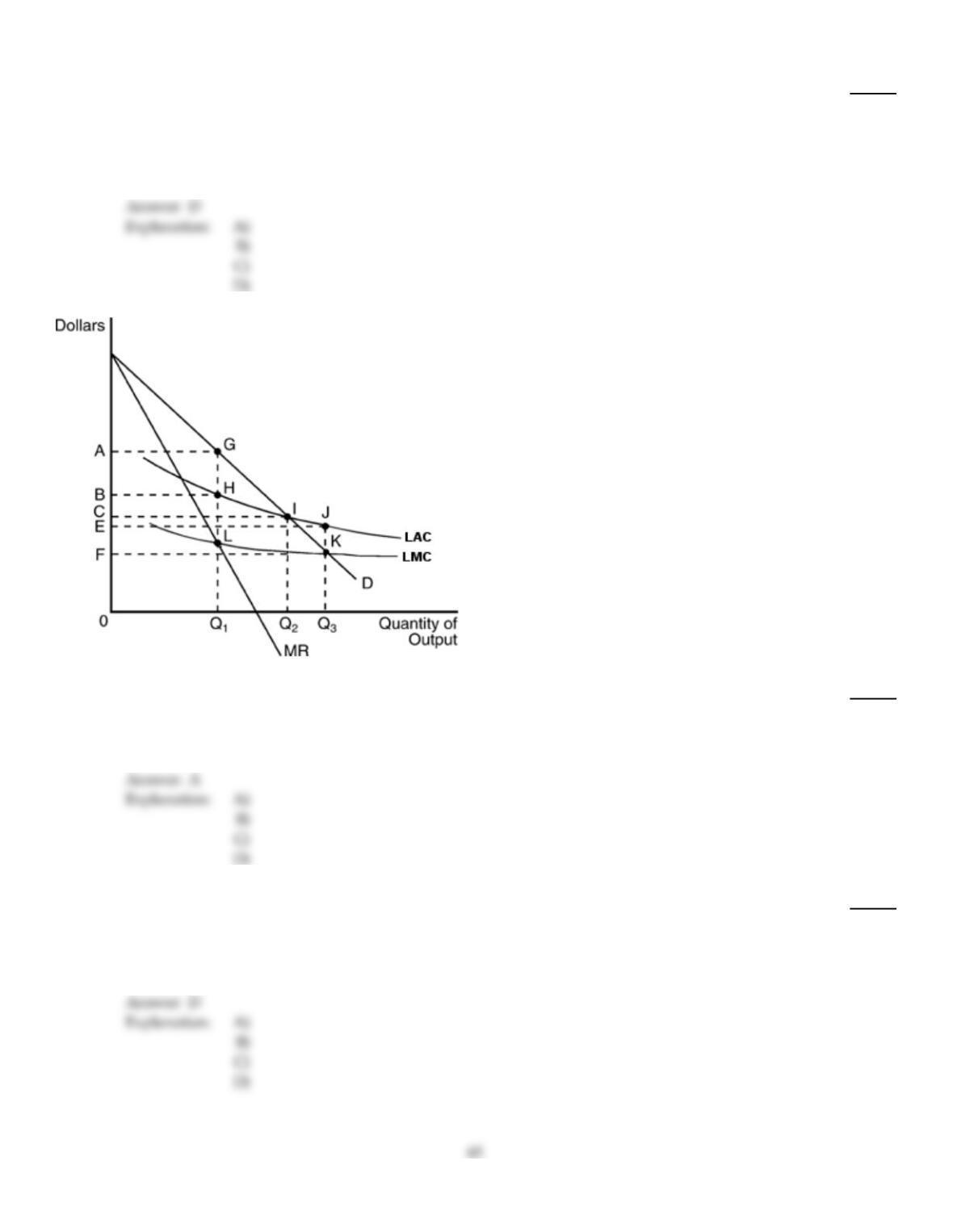
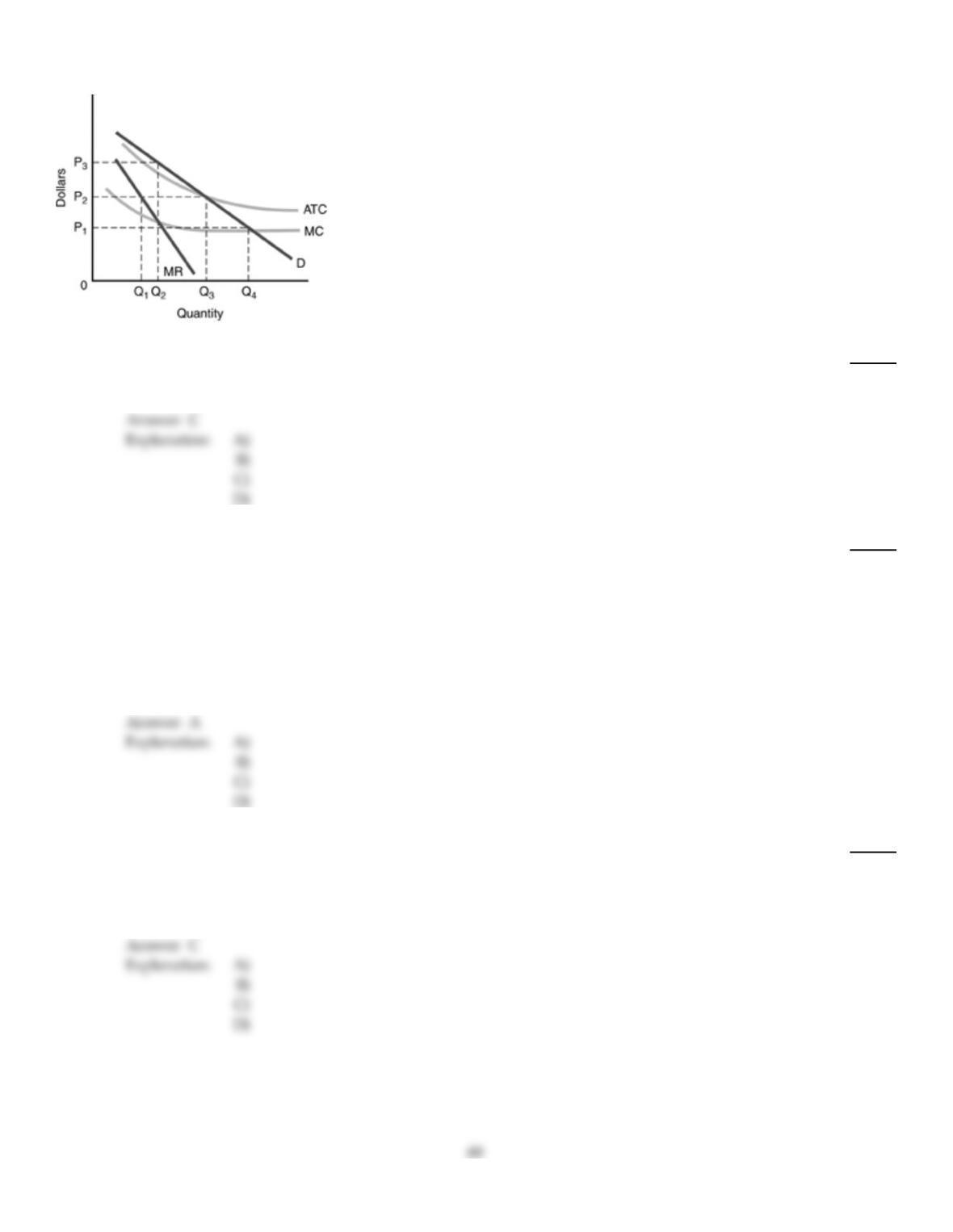
In the above figure, what would be the profit or loss at the profit–maximizing output for this
natural monopolist?
216)
A)
–$1,200
B)
$2,100
C)
$2,700
D)
–$300
217)
In the above figure, what would be the profit–maximizing output and price for this natural
monopolist?
217)
A)
700; $10
B)
700; $7
C)
900; $7
D)
1,200; $3
218)
An agency that regulates product markets is the
218)
A)
Equal Employment Opportunity Commission.
B)
Occupational Safety and Health Administration.
C)
Environmental Protection Agency.
D)
Federal Trade Commission.
219)
The Sherman Act
219)
A)
provided for the regulation of natural monopolies.
B)
prohibited railroads from transporting explosives.
C)
prohibited banks from crossing states lines.
D)
declared that monopolization and restraint of trade were illegal.
220)
A theory of regulatory behavior, which states that regulators must take into account the preferences
of legislators, producers, and consumers, is the
220)
A)
capture theory.
B)
general interests theory.
C)
public interest theory.
D)
share–the–gains, share–the–pains theory.
221)
If bottled water, soft drinks and juices are included in the definition of the beverage market, then
the relevant definition of the market is defined by
221)
A)
the low degrees of substitution between products in the market.
B)
a low level of competition among firms producing those products.
C)
the high degrees of substitution between products in the market.
D)
the locations of products that are produced.
222)
The FTC is
222)
A)
the agency set up to regulate hospitals.
B)
the commission that investigates unfair competitive practices such as misleading advertising.
C)
the act that prevents producers from driving out smaller competitors by means of selected
discriminatory price cuts.
D)
an agency which has been set up to regulate the federal government.
223)
According to the capture hypothesis of regulation
223)
A)
regulation eventually favors producers over consumers because the producers have more at
stake than individual consumers.
B)
regulation favors producers over consumers because the producers were able to pay off the
regulators.
C)
regulation benefits the consumers over producers because the number of consumers is greater
than the number of producers, giving the consumers more political clout.
D)
regulation benefits the regulators and the legislators who support the regulation by enabling
them to obtain favors from both producers and consumers.
224)
All of the following are possible criticisms of social regulation EXCEPT
224)
A)
that social regulation may create anticompetitive effects.
B)
that the costs may outweigh the benefits.
C)
that the regulations have not resulted in safer working conditions.
D)
that the regulations lead to higher production costs.
225)
In the United States, antitrust enforcement focuses on
225)
A)
the profitability of the leading firms in an industry.
B)
the price–cost margin of an industry.
C)
the average level of prices charged by firms.
D)
the degree of market concentration within a market.
226)
The price charged by a monopolist is socially inefficient because the price
226)
A)
exceeds the true marginal cost of the resources used.
B)
is less than the opportunity cost of the resources used.
C)
is too low.
D)
puts the monopolist into a higher tax bracket.
227)
The reason an unregulated natural monopolist will produce at an economically inefficient quantity
is
227)
A)
due to the fact that the monopolist will equate marginal cost with price to determine the
output level.
B)
that the price does not equal the true marginal cost of producing the good.
C)
that the monopolist will produce a quantity greater than the minimum of the average total
cost curve.
D)
due to the fact that the monopolist will equate average total cost with price to determine the
output level.
228)
It is illegal to price discriminate except in cases in which the price differences are due to actual cost
differences. This situation is due to which antitrust act?
228)
A)
Clayton Act
B)
Federal Trade Commission Act
C)
Contestable Market Act
D)
Sherman Antitrust Act
229)
The Supreme Court has defined the offense of monopolization as involving all of the following
elements EXCEPT
229)
A)
the maintenance of monopoly power.
B)
the possession of monopoly power in the relevant market.
C)
the willful acquisition of monopoly power.
D)
the ability to grow a business as a consequence of a superior product.
230)
In the above figure, if this natural monopolist were regulated and allowed to earn a “fair” rate of
return, it would produce
230)
A)
at Q2 output rate.
B)
at Q1 output rate.
C)
at Q3 output rate.
D)
past the Q3 output rate.
231)
The cost of complying with regulation
231)
A)
shifts the MC curve downward.
B)
shifts the demand curve to the right.
C)
increases the products’ price elasticity of demand.
D)
shifts the ATC curve upward.
232)
A natural monopoly that is not regulated will choose to produce at the
232)
A)
point at which the demand curve intersects the long–run average cost curve.
B)
point at which marginal cost is above average total cost.
C)
point at which marginal revenue equals marginal cost.
D)
minimum point of the long–run average cost curve.
233)
When the fox is guarding the henhouse, that is an example of the
233)
A)
capture hypothesis.
B)
regulatory hypothesis.
C)
share–the–gains, share–the–pains theory.
D)
creative theory.
234)
An agency that regulates labor markets is the
234)
A)
Equal Employment Opportunity Commission.
B)
Federal Trade Commission.
C)
Environmental Protection Agency.
D)
Consumer Product Safety Commission.
235)
The “capture” in the capture hypothesis occurs because
235)
A)
regulators always know what is in society’s best interest.
B)
regulators usually have been or will be associated with the industries they regulate.
C)
regulators try to promote everyone’s best interest.
D)
society doesn’t care for regulatory agencies.
236)
The theory that regulators‘ behavior will eventually be compromised by the special interests they
regulate is known as the
236)
A)
capitulation hypothesis.
B)
capture hypothesis.
C)
creative hypothesis.
D)
captive hypothesis.
237)
Cost–of–service–regulation sets prices by considering
237)
A)
the actual average cost of providing the service to the customer.
B)
the actual marginal cost of providing the service to the customer.
C)
the actual total cost of providing the service to the customer.
D)
the actual variable cost of providing the service to the customer.
238)
The U.S. antitrust enforcers will likely block a merger if
238)
A)
the degree of concentration declines as a result of the merger.
B)
the merging firms already earn excessive profits.
C)
the merging firms are in different markets.
D)
the merger will substantially increase market power.
D
239)
The statement “Every contract, combination in the form of a trust or otherwise, or conspiracy, in
restraint of trade or commerce . . .” is found in the
239)
A)
Interstate Commerce Commission Act.
B)
Clayton Antitrust Act.
C)
Sherman Antitrust Act.
D)
Robinson–Patman Act.
C
240)
Suppose that a regulated industry experiences an increase in the price of inputs used to produce
the good. According to the share–the–gains, share–the–pain theory, we would expect
240)
A)
no increase in price.
B)
prices to increase by a little immediately and profits to decrease by a lot.
C)
there will be some increase in price but not immediately.
D)
a quick increase in price maintains profits in the industry.
C
A
241)
A creative response to regulations can be described as
241)
A)
conforming to the letter of the law but undermining its spirit.
B)
completely ignoring the law.
C)
totally conforming to the law.
D)
none of the above.
242)
Which of the following statements about natural monopoly is correct?
242)
A)
Governments regulate natural monopolies in order to ensure that the firm earns a normal
profit.
B)
Governments regulate natural monopolies in order to prevent them from making profits.
C)
Governments regulate natural monopolies in order to keep their workers from earning wages
that are too high.
D)
Governments regulate natural monopolies in order to ensure that costs of production are
minimized.
A
243)
Suppose that a regulated industry experiences an increase in the price of inputs used to produce
the good. Which of the following statements is TRUE?
243)
A)
An increase in price will occur quicker in the share–the gains, share–the–pain theory than the
capture theory.
B)
Under both the capture theory and the share–the–gains, share–the–pain theory profits will
decrease.
C)
In the capture theory there will be an increase in price but not in the share–the–gains,
share–the–pain theory.
D)
An increase in price will occur quicker in the capture theory than the share–the–gains,
share–the–pain theory.
D
A
244)
Use the above figure. If a commission regulates the above monopoly using marginal cost pricing,
then the industry‘s output will be ________ and the product’s price will be ________.
244)
A)
Q2; P1
B)
Q3; P2
C)
Q4; P1
D)
Q2; P3
245)
Suppose a dangerous workplace is made safer through the installation of guards and other
equipment that reduce the physical hazards of the work environment. If we observe no reduction
in injuries, we might conclude that
245)
A)
workers responded to the safer environment by not exercising as much care themselves,
generating more injuries than if they had not changed their behavior.
B)
the firm has responded by lowering wages and hiring less capable people who are more
likely to be injured.
C)
the safety equipment isn’t adequate and better equipment should be installed.
D)
the injury rate before installation of the safety equipment had been underreported.
A
246)
One weakness of the Sherman Act is that
246)
A)
it applies only to foreign monopolies.
B)
it applies only to the steel and railroad industries.
C)
it fails to clearly define restraint of trade.
D)
none of the above.
C
C
247)
The two basic types of government regulation are
247)
A)
labor and environmental regulation.
B)
monopoly and oligopoly regulation.
C)
economic and social regulation.
D)
federal and state industrial regulation.
248)
Since 1970, federal expenditures by regulatory agencies have
248)
A)
remained constant.
B)
increased dramatically.
C)
decreased slightly.
D)
increased slightly.
249)
Which of the following is NOT an objective of economic regulation?
249)
A)
to fix prices so that they are never allowed to rise
B)
to prevent monopoly profits
C)
to keep rates of return in an industry at a competitive level
D)
to regulate the prices enterprises are allowed to charge
250)
All of the following are regulatory agencies EXCEPT
250)
A)
the Occupational Safety and Health Administration.
B)
the National Rifle Association.
C)
the Environmental Protection Agency.
D)
the Food and Drug Administration.
251)
According to your text, the annual cost of regulation (federal, state and local) in the United States is
estimated to exceed ________ per year.
251)
A)
$500 million
B)
$900 million
C)
$50 billion
D)
$1 trillion
252)
Which of the following is the outcome of the lemons problem in the used–car market?
252)
A)
Only low–quality cars will be traded in the market.
B)
No cars will be traded in the market.
C)
Only high–quality cars will be traded in the market.
D)
Both low–quality and high–quality cars will be traded in the market.
253)
The lemons problem occurs mainly because of
253)
A)
negative externality.
B)
a market failure.
C)
a monopoly.
D)
asymmetric information.
254)
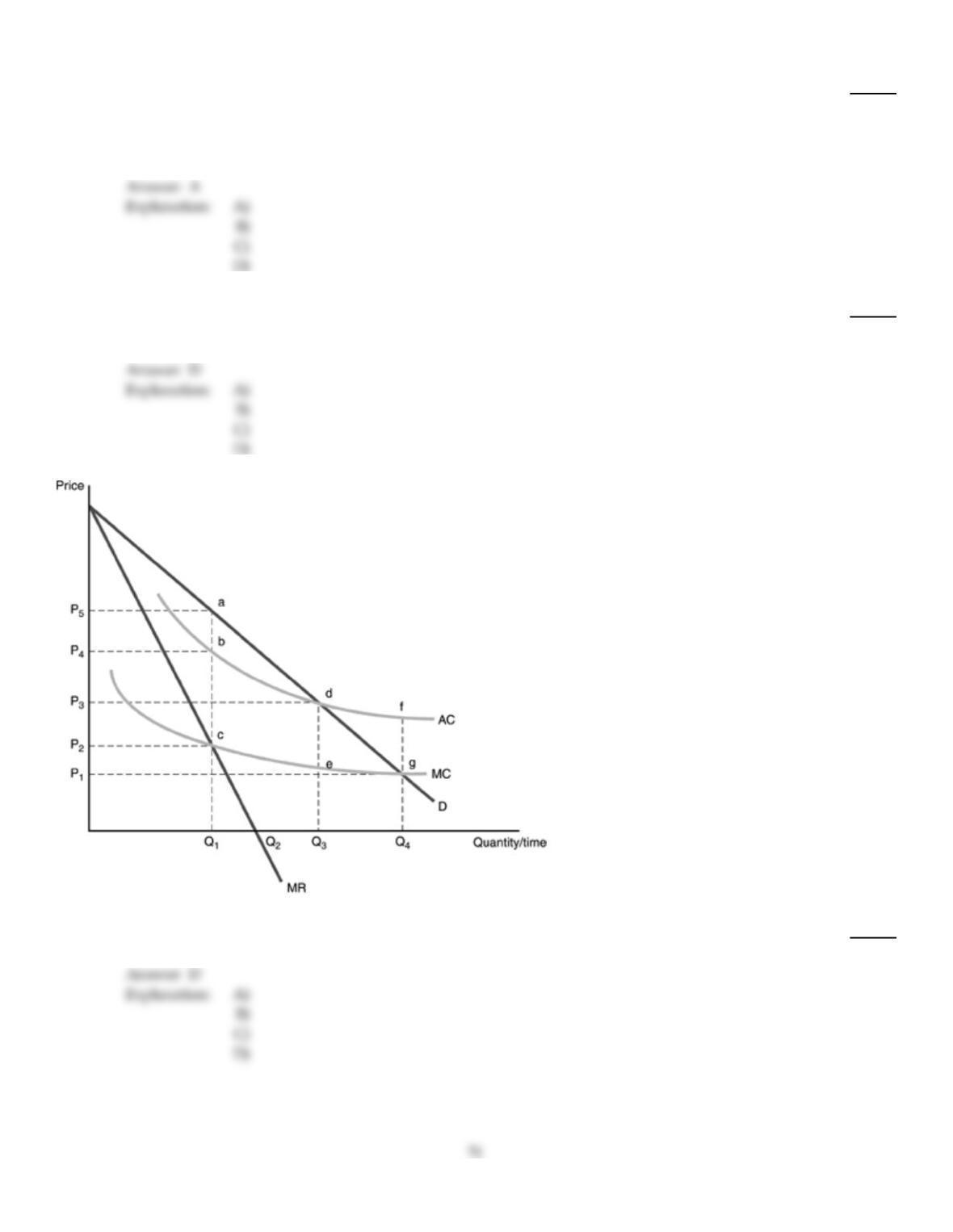
Refer to the above figure. From the standpoint of society, the optimal output is
254)
A)
Q1
B)
Q2
C)
Q3
D)
Q4
255)
Which of the following is concerned with social regulation?
255)
A)
Food and Drug Administration
B)
Sherman Commission
C)
Board of Education
D)
Federal Reserve Board
256)
Another name for the “Chain Store Act” is
256)
A)
the Robinson–Patman Act of 1936.
B)
the Sherman Antitrust Act of 1890.
C)
the Clayton Act of 1914.
D)
the Federal Trade Commission Act of 1914.
257)
Which of the following defines monopoly?
257)
A)
Federal Trade Commission Act
B)
Sherman Act
C)
Clayton Act
D)
none of the above
258)
The theory of regulatory behavior that predicts that the “regulators” eventually will become
controlled by the “regulated” is called
258)
A)
the asymmetric information hypothesis.
B)
the market failure hypothesis.
C)
the the share–the–gains, share–the–pains hypothesis.
D)
the capture hypothesis.
259)
The difference between cost–of–service regulation and rate–of–return regulation is that
259)
A)
the former sets prices based on actual costs, and the latter focuses on setting prices such that
the firm earns a normal rate of return.
B)
the former uses average cost pricing and the latter uses marginal cost pricing.
C)
the former uses marginal cost pricing and the latter uses average cost pricing.
D)
the latter sets prices first, and then the firm must keep costs in line if it wants to earn a profit,
and the former sets price high enough to cover costs.
260)
The primary antitrust statute in the United States is the
260)
A)
SEC Act of 1933.
B)
Federal Reserve Act of 1913.
C)
NLRA of 1935.
D)
Sherman Antitrust Act of 1890.
261)
One of the elements of monopolization is
261)
A)
wanting to be a monopoly and wanting to earn monopoly profits.
B)
monopoly pricing.
C)
having a monopoly.
D)
the willful acquisition of monopoly power.
262)
The law passed by Congress in 1914 that was designed to sharpen or define further the vagueness
of the Sherman Act is called
262)
A)
the Robinson–Patman Act.
B)
the Wheeler–Lea Act.
C)
the Federal Trade Commission Act.
D)
the Clayton Act.
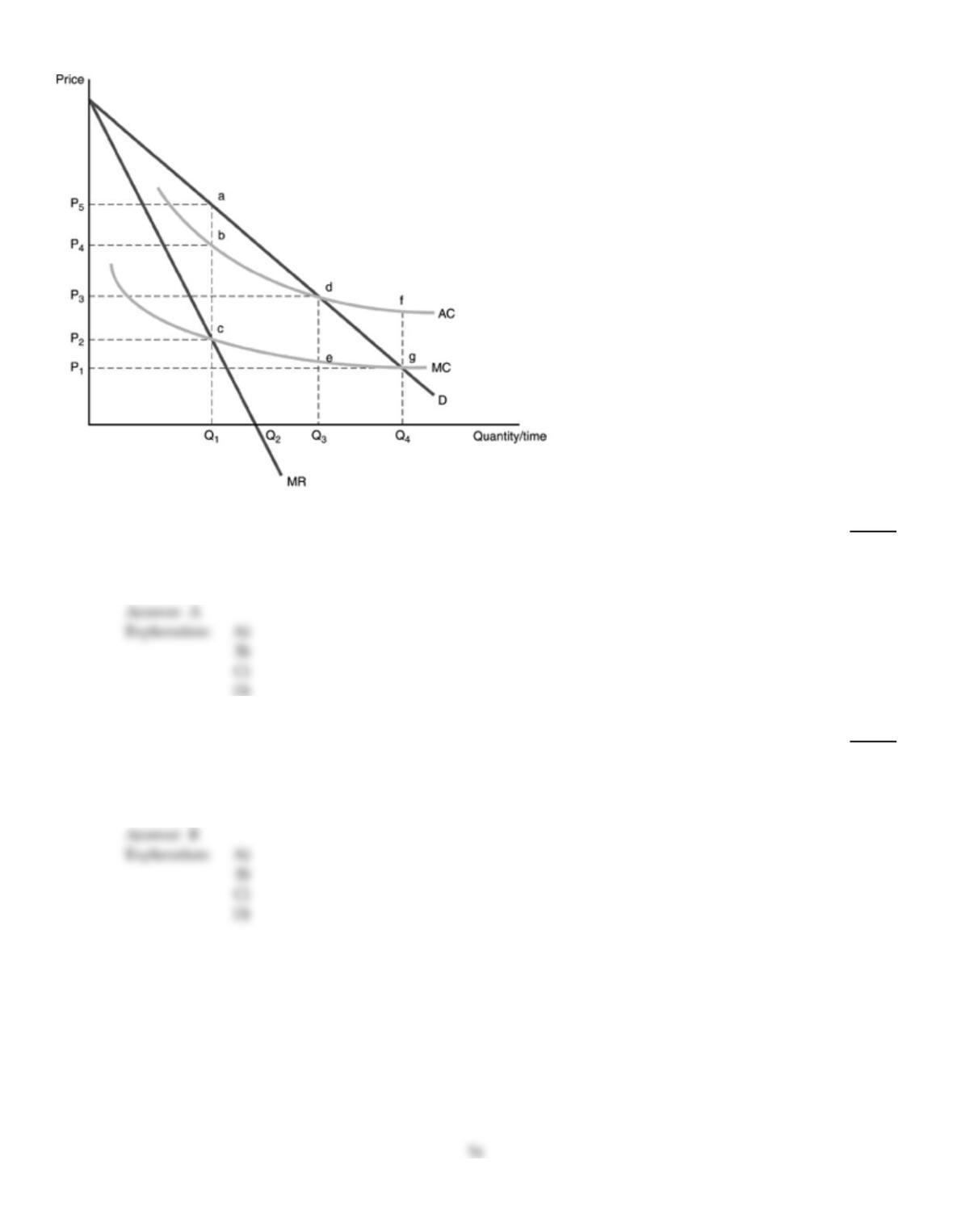
263)
Refer to the above figure. If the government requires the natural monopolist to charge the efficient
price, it will charge price
263)
A)
P1 and sell Q4 units.
B)
P5 and sell Q1 units.
C)
P3 and sell Q3 units.
D)
P2 and sell Q1 units.
264)
The two most important rationales for government intervention in non–monopolistic markets are
264)
A)
job creation and income maintenance.
B)
market failure and asymmetric information.
C)
unfair pricing and usury.
D)
substandard products and job creation for public employees.
265)
One undesirable effect of social regulation is that it
265)
A)
raises prices of goods to consumers, while lowering prices to business and special interest
groups.
B)
reduces the effectiveness of economic regulation.
C)
affects smaller firms disproportionately, creating anticompetitive effects.
D)
destroys incentives for firms to engage in marginal cost pricing.
266)
The potential for asymmetric information to bring about a general decline in product quality in an
industry is known as the ________ problem.
266)
A)
capture
B)
moral hazard
C)
lemons
D)
liability
C
267)
The Securities and Exchange Commission and the Federal Aviation Administration are examples of
agencies engaged in
267)
A)
social regulation.
B)
the regulation of natural monopolies.
C)
the regulation of nonmonopolistic industries.
D)
health and safety regulation.
C
268)
Regulation that is based on allowing prices to reflect only the actual operating cost of production is
known as
268)
A)
rate–of–return regulation.
B)
marginal cost regulation.
C)
cost–of–service regulation.
D)
average cost regulation.
C
C
269)
When a regulator allows a monopolist to set its price equal to long–run average cost, the regulator
is practicing
269)
A)
average cost pricing.
B)
marginal cost pricing.
C)
optimal cost pricing.
D)
operating cost pricing.
270)
The Federal Trade Commission Act was designed to
270)
A)
increase foreign trade.
B)
limit company profits from foreign sales.
C)
prohibit cutthroat pricing.
D)
prohibit bundling.
271)
Which antitrust act was passed to protect independent retailers from “unfair discrimination” by
chain stores?
271)
A)
Robinson–Patman Act
B)
Federal Trade Commission Act
C)
Wheeler–Lea Act
D)
Sherman Act
272)
Regulation that keeps the rate of return in the industry competitive is known as
272)
A)
social regulation.
B)
deregulation.
C)
rate–of–return regulation.
D)
cost–of–service regulation.
273)
Which of the following is a possible market solution to the lemons problem?
273)
A)
Producers might be required to meet certain legal standards to obtain licenses granting the
right to sell their products.
B)
Liability laws might be established to ensure that firms selling certain products must face
penalties in the event the products function poorly.
C)
Producers might offer product guarantees and warranties.
D)
Government agencies might be charged with directly overseeing production and distribution
of certain products.
274)
Which of the following federal agencies is NOT engaged in economic regulation?
274)
A)
Food and Drug Administration
B)
the Federal Reserve
C)
Federal Aviation Administration
D)
Federal Deposit Insurance Corporation
275)
The idea behind antitrust legislation is to
275)
A)
create larger firms.
B)
justify deregulation of industries.
C)
promote competition in the market.
D)
implement contestable markets.
276)
Suppose that in an industry, firm X has 50 percent market share, firm Y has 35 percent market
share, and firm Z has 10 percent market share. Which of the following mergers is NOT likely to be
challenged by the Federal Trade Commission?
276)
A)
a merger between firms X and Z
B)
a merger between firms Y and Z
C)
a merger between firms X and Y
D)
Any merger of two firms among those firms is likely to be challenged.
277)
The United States as a whole would be inappropriate as the relevant geographic market when an
antitrust case involved
277)
A)
two auto producers.
B)
ABC and NBC.
C)
two concrete producers.
D)
two steel producers.