Chapter 25 – Evolution of Development
Clarify Question
•
What is the key concept addressed by the question?
•
What type of thinking is required?
•
What key words does the question contain and what do they mean?
Gather Content
•
What do you already know about heterochrony?
Consider Possibilities
•
Consider the different answer options. Which can you rule out?
Choose Answer
•
Given what you now know, what information and/or problem solving approach is most
likely to produce the correct answer?
Reflect on Process
•
Did your problem-solving process lead you to the correct answer? If not, where did the
process break down or lead you astray? How can you revise your approach to produce a
more desirable result?
Chapter 25 – Evolution of Development
Check All That Apply Questions
33. Choose the true statements about the initiation of limb development in tetrapods.
34. A new mutation disrupts the expression of Distal-less in one individual of a butterfly
species. This individual will likely
35. Choose the true statements about the evolution of flower symmetry.
Chapter 25 – Evolution of Development
36.
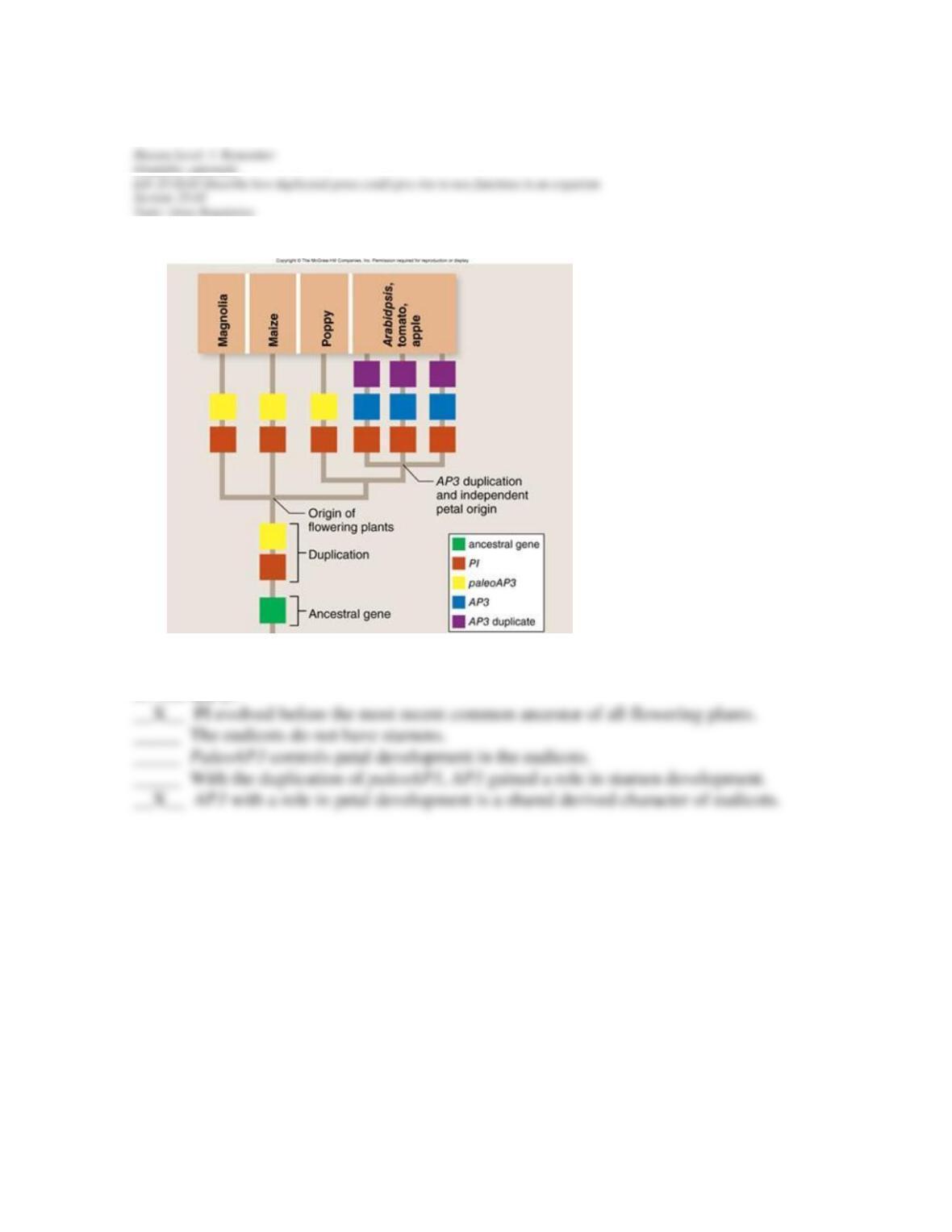
Use the figure shown, and what you learned from the text, to choose the true statements about
the evolution of flower development. Arabidopsis, tomato, and apple are the eudicots. (choose
all that apply)
Chapter 25 – Evolution of Development
Clarify Question
•
What is the key concept addressed by the question?
•
What type of thinking is required?
•
What key words does the question contain and what do they mean?
Gather Content
•
What do you already know about the evolution of flower development genes?
Consider Possibilities
•
Consider the different answer options. Which can you rule out?
Choose Answer
•
Given what you now know, what information and/or problem solving approach is most
likely to produce the correct answer?
Reflect on Process
•
Did your problem-solving process lead you to the correct answer? If not, where did the
process break down or lead you astray? How can you revise your approach to produce a
more desirable result?
Chapter 25 – Evolution of Development
Multiple Choice Questions
37. AGAMOUS is a gene that has been implicated in the regulation of stamen formation in
Arabidopsis flowers. If this is true, a mutant with a functional AP3 gene but a nonfunctional
AGAMOUS gene would
Clarify Question
•
What is the key concept addressed by the question?
•
What type of thinking is required?
•
What key words does the question contain and what do they mean?
Gather Content
•
What do you already know about the evolution of flower development genes?
Consider Possibilities
Chapter 25 – Evolution of Development
•
Consider the different answer options. Which can you rule out?
Choose Answer
•
Given what you now know, what information and/or problem solving approach is most
likely to produce the correct answer?
Reflect on Process
•
Did your problem-solving process lead you to the correct answer? If not, where did the
process break down or lead you astray? How can you revise your approach to produce a
more desirable result?
Check All That Apply Questions
38. Choose the true statements about the roles of AP3 and PI in petal development in the
eudicots.
Chapter 25 – Evolution of Development
39. Which two experiments best demonstrate that the gene AP3 is important for flower
development? (Choose two)
Chapter 25 – Evolution of Development
Clarify Question
•
What is the key concept addressed by the question?
•
What type of thinking is required?
Gather Content
•
What do you already know about the flower development genes?
Consider Possibilities
•
Consider the different answer options. Which can you rule out?
Choose Answer
•
Given what you now know, what information and/or problem solving approach is most
likely to produce the correct answer?
Reflect on Process
•
Did your problem-solving process lead you to the correct answer? If not, where did the
process break down or lead you astray? How can you revise your approach to produce a
more desirable result?
Chapter 25 – Evolution of Development
Multiple Choice Questions
40. Which animal is likely to have the lowest expression level of a Pax6-like gene?
Chapter 25 – Evolution of Development
Clarify Question
•
What is the key concept addressed by the question?
•
What type of thinking is required?
•
What key words does the question contain and what do they mean?
Gather Content
• What do you already know about the gene Pax6?
Consider Possibilities
•
Consider the different answer options. Which can you rule out?
Choose Answer
•
Given what you now know, what information and/or problem solving approach is most
likely to produce the correct answer?
Reflect on Process
•
Did your problem-solving process lead you to the correct answer? If not, where did the
process break down or lead you astray? How can you revise your approach to produce a
more desirable result?
Chapter 25 – Evolution of Development
Check All That Apply Questions
41. Choose the true statements about the evolution of eyes in mice and fruit flies.
42. Choose the observations supporting the hypothesis that the initiation of eye development
in animals occurred only once.

Chapter 25 – Evolution of Development
43. Choose the evidence supporting the argument that a small number of changes in
developmental regulatory genes can result in large phenotypic changes.(choose all that
apply)
Chapter 25 – Evolution of Development
Clarify Question
•
What is the key concept addressed by the question?
•
What type of thinking is required?
•
What key words does the question contain and what do they mean?
Gather Content
•
What do you already know about developmental regulatory genes?
Consider Possibilities
•
Consider the different answer options. Which can you rule out?
Choose Answer
•
Given what you now know, what information and/or problem solving approach is most
likely to produce the correct answer?
Reflect on Process
•
Did your problem-solving process lead you to the correct answer? If not, where did the
process break down or lead you astray? How can you revise your approach to produce a
more desirable result?
44. Choose the true statements about the cichlid fish of Lake Malawi.
45. Choose the true statements about MADS box genes.
Multiple Choice Questions
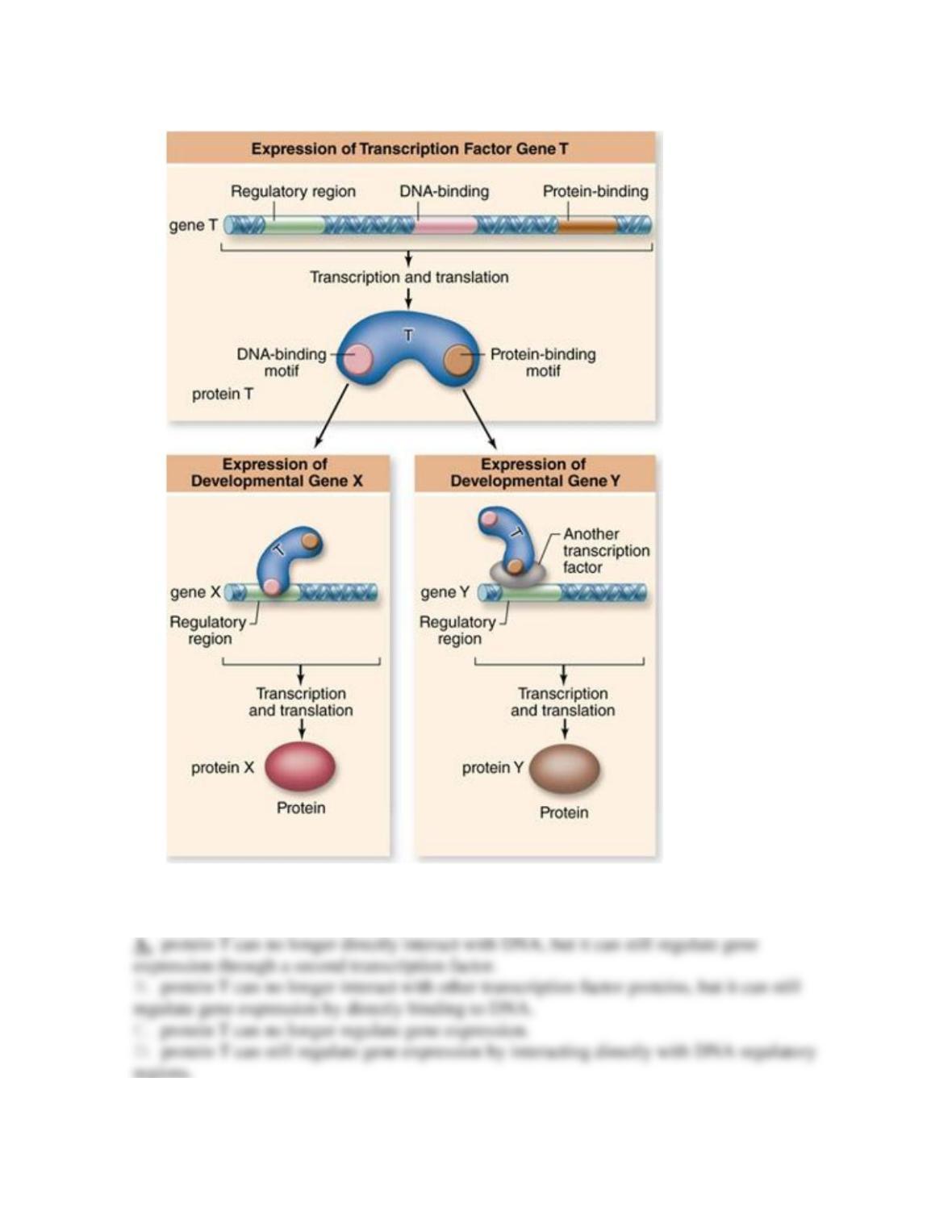
Chapter 25 – Evolution of Development
46.
A mutation in the transcription factor protein shown, protein T, disrupts the function of its
DNA-binding motif. The most likely result of this mutation would be that
Chapter 25 – Evolution of Development
Clarify Question
•
What is the key concept addressed by the question?
•
What type of thinking is required?
•
What key words does the question contain and what do they mean?
Gather Content
•
What do you already know about transcription factors?
Consider Possibilities
•
Consider the different answer options. Which can you rule out?
Choose Answer
•
Given what you now know, what information and/or problem solving approach is most
likely to produce the correct answer?
Chapter 25 – Evolution of Development
Reflect on Process
•
Did your problem-solving process lead you to the correct answer? If not, where did the
process break down or lead you astray? How can you revise your approach to produce a
more desirable result?
Check All That Apply Questions
47. The reduced-bony-armor allele of the Eda gene is present in only about 1% of marine
populations, but is predominant in freshwater populations of stickleback fish. What can we
conclude?
Chapter 25 – Evolution of Development
Clarify Question
•
What is the key concept addressed by the question?
•
What type of thinking is required?
•
What key words does the question contain and what do they mean?
Gather Content
•
What do you already know about stickleback evolution?
Consider Possibilities
•
Consider the different answer options. Which can you rule out?
Choose Answer
•
Given what you now know, what information and/or problem solving approach is most
likely to produce the correct answer?
Reflect on Process
•
Did your problem-solving process lead you to the correct answer? If not, where did the
process break down or lead you astray? How can you revise your approach to produce a
more desirable result?

Chapter 25 – Evolution of Development
48. Are bat wings and bird wings homologous or homoplastic structures?
Chapter 25 – Evolution of Development
Clarify Question
•
What is the key concept addressed by the question?
•
What type of thinking is required?
•
What key words does the question contain and what do they mean?
Gather Content
•
What do you already know about homology?
Consider Possibilities
•
What other information is related to the question? Which information is most useful?
Choose Answer
•
Given what you now know, what information and/or problem solving approach is most
Reflect on Process
•
Did your problem-solving process lead you to the correct answer? If not, where did the
process break down or lead you astray? How can you revise your approach to produce a
more desirable result?