Hall: Guyton and Hall Textbook of Medical Physiology, 12th Edition
Chapter 25: The Body Fluid Compartments: Extracellular and Intracellular Fluids; Edema and
Chapter 26: Urine Formation by the Kidneys: I. Glomerular Filtration, Renal Blood Flow, and Their
Control and Chapter 27: Urine Formation by the Kidneys: II. Tubular Reabsorption and Secretion
and Chapter 28: Urine Concentration and Dilution; Regulation of Extracellular Fluid Osmolarity
and Sodium Concentration and Chapter 29: Renal Regulation of Potassium, Calcium, Phosphate,
and Magnesium; Integration of Renal Mechanisms for Control of Blood Volume and Extracellular
Fluid Volume and Chapter 30: Acid-Base Regulation and Chapter 31: Diuretics, Kidney Diseases
Test Bank
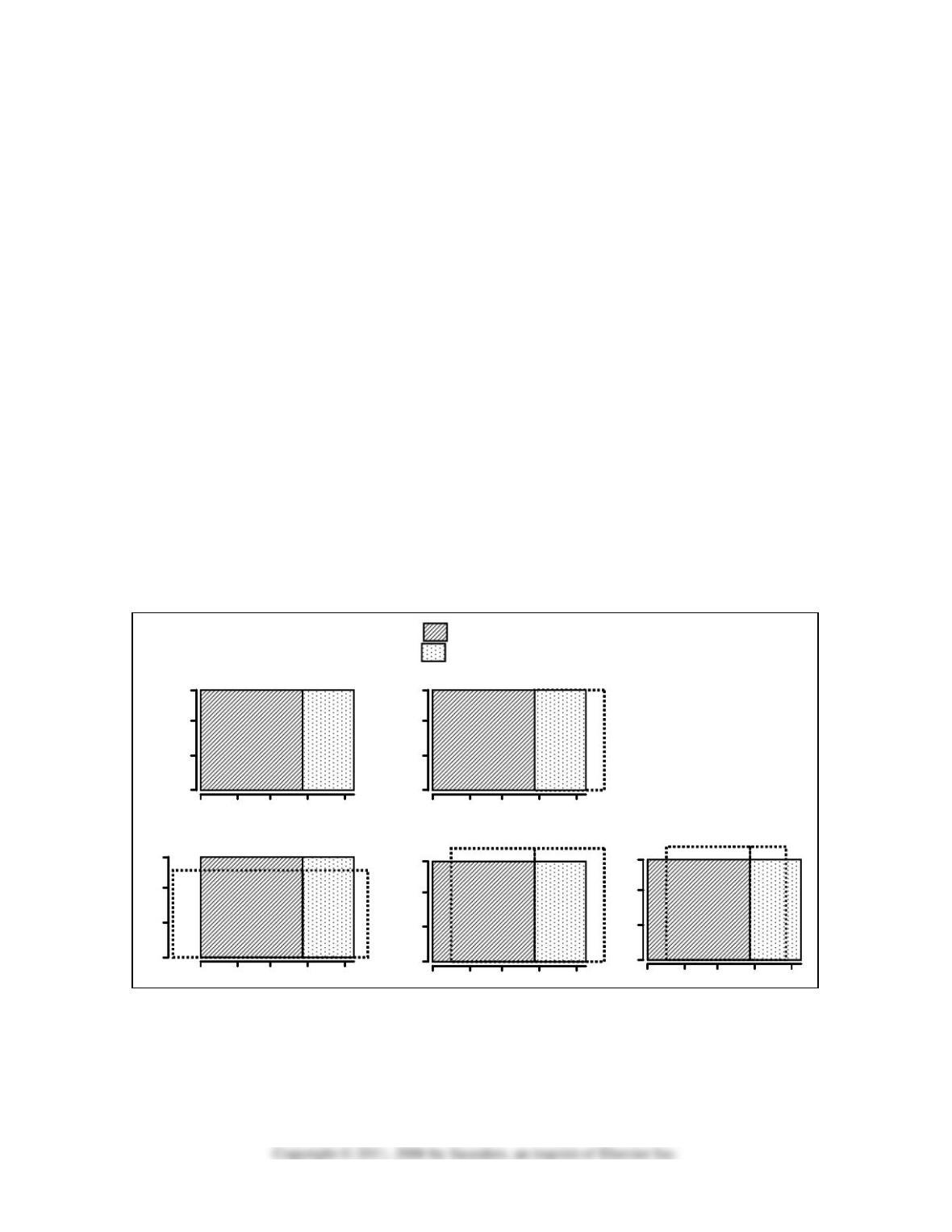
Questions 1-3: The diagrams represent various states of abnormal hydration. In each diagram, the
normal state (solid lines) is superimposed on the abnormal state (dashed lines) to illustrate the
shifts in the volumes (width of rectangles) and total osmolarities (height of rectangles) of the
extracellular fluid and intracellular fluid compartments.
Intracellular fluid
Extracellular fluid
B. C.
A.
Osmolarity
Volume (liters)
Normal State
10 20 30 40
0
100
200
300
D.
Intracellular fluid
Extracellular fluid
B. C.
A.
Osmolarity
Volume (liters)
Normal State
10 20 30 40
0
100
200
300
B. C. C.
A.
Osmolarity
Volume (liters)
Normal State
10 20 30 40
0
100
200
300
D. D.

1. Which of the diagrams represents the changes (after osmotic equilibrium) in extracellular and
intracellular fluid volumes and osmolarities after infusion of a 2% solution of glucose (molecular
weight of glucose = 180 g/mol)?
A.
B.
C.
D.
2. Which of the diagrams represents the changes (after osmotic equilibrium) in extracellular and
intracellular fluid volumes and osmolarities in a patient with inappropriate secretion of
antidiuretic hormone syndrome (i.e., excessive secretion of ADH)?
A.
B.
C.
D.
3. Which of the diagrams shown above would represent the changes (after osmotic equilibrium) in
extracellular and intracellular fluid volumes and osmolarities after infusion of 4.0% dextrose
(molecular weight of dextrose = 180 g/mol)?
A.
B.
C.
D.

Test Bank
25–31-3
4. A 22-year-old male runs a 10 km race on a 90 °F day. If he loses three liters of sweat and also
drinks 3 liters of water during the race, which of the following changes would you expect,
compared to normal, after absorption of the water?
Intracellular Intracellular Extracellular Extracellular
Volume Osmolarity Volume Osmolarity
A.
B.
C.
D.
E.
5. A 60-year-old female patient appears to be dehydrated, with a hematocrit of 0.55 (55%) and a
plasma protein concentration of 8.8 g percent (normal ~ 7.0). After obtaining a plasma sample,
you find that she has hyponatremia, with a plasma sodium concentration of 110 mmol/L and a
plasma osmolarity of 240 mOsm/L. You decide to administer 2.0 L of 3% sodium chloride. Her
body weight was 80 kg before giving the fluid. Assume that:
intracellular fluid volume = 40% of body weight before fluid administration
extracellular fluid volume = 20% of body weight before fluid administration
molecular weight of NaCl = 58.5 g/mol
no excretion of water or electrolytes
Calculate her approximate plasma osmolarity after administration of the NaCl solution and after
osmotic equilibrium.
A. 240 mOsm/L
B. 251 mOsm/L
C. 265 mOsm/L

Test Bank
25–31-4
D. 271 mOsm/L
E. 286 mOsm/L
6. Calculate the approximate intracellular fluid volume in the patient in question 3 after
administration of the 3% NaCl solution and after osmotic equilibrium.
A. 16.0 L
B. 19.6 L
C. 22.7 L
D. 28.3 L
E. 30.6 L
F. 34.0 L
7. A 55-year-old woman arrives at your office complaining that she has recently experienced rapid
weight gain and marked fluid retention. Her lab values reveal a plasma protein concentration of
3.3 g percent (normal = 7.0) and her blood pressure is 110/70. She has 4+ protein in her urine.
Which of the following changes would you expect to find, compared with normal?
Thoracic Interstitial Capillary Interstitial Fluid Lymph Flow
Fluid Hydrostatic Fluid Protein Concentration
Pressure Filtration
A.
B.
C.
D.
E.

Test Bank
25–31-5
8. If a person has a kidney transport maximum for glucose of 150 mg/min, a glomerular filtration
rate (GFR) of 100 mL/min, a plasma glucose level of 250 mg/100 mL, and a urine flow rate of 2.0
mL/min, what would be the approximate rate of glucose excretion, assuming normal kidneys?
A. Glucose excretion rate cannot be estimated from this data
B. 0 mg/min
C. 50 mg/min
D. 100 mg/min
E. 150 mg/min
F. 250 mg/min
9. You wish to evaluate kidney function in a 55-year-old, obese man with type II diabetes, and you
ask him to collect his urine over a 24 hour period. He returns to you 4,320 mL of urine, which
was collected over the preceding 24 hours. The clinical laboratory returns the following results
from analysis of his urine and plasma samples:
Plasma creatinine = 3.0 mg/100 mL
Urine creatinine = 40 mg/100 mL
Plasma potassium = 5.0 mmol/L
Urine potassium = 20 mmol/L
What is his approximate GFR, assuming that he collected all of his urine in the 24 hour period?
A. 10 mL/min
B. 20 mL/min
C. 30 mL/min
D. 40 mL/min
E. 80 mL/min

Test Bank
25–31-6
10. What is the net renal tubular reabsorption rate of potassium in the patient described in
question 7?
A. 0.280 mmol/min
B. 0.140 mmol/min
C. 0.060 mmol/min
D. 0.030 mmol/min
E. Potassium is not reabsorbed in this example.
11. A 22-year-old female patient complaining of headaches presents to your office. An examination
reveals that her blood pressure is 180/118 mmHg, and laboratory tests give the following
results:
Plasma renin activity = 14.5 (normal = 1.0)
Plasma Na+ = 142 mmol/L
Plasma K+ = mmol/L
Magnetic resonance imaging of the kidneys suggests that she has a renin-secreting tumor in her
left kidney. Compared with normal, which one of the following sets of conditions would you
expect?
Renal Glomerular Capillary Filtration Peritubular Capillary
Blood Flow Hydrostatic Pressure Fraction Hydrostatic Pressure
A.
B.
C.
D.
E.
12. Which of the following substances would be filtered most readily by the glomerular capillaries?
A. Neutral dextran with a molecular weight of 25,000
Test Bank
25–31-7
B. Polycationic dextran with a molecular weight of 25,000
C. Polyanionic dextran with a molecular weight of 25,000
D. Albumin in plasma
E. Red blood cells
13. Compared with normal conditions, which one of the following sets of changes would you expect
to find in a patient with acute proximal tubular necrosis and marked reduction of proximal tubular
sodium chloride reabsorption?
Loop of Henle GFR AfferentArteriolar Renal Blood
Sodium Reabsorption Resistance Flow
A.
B.
C.
D.
E.
14. If the average hydrostatic pressure in the glomerular capillaries is 55 mmHg, the hydrostatic
pressure in Bowman’s space is 15 mmHg, the average colloid osmotic pressure in the glomerular
capillaries is 30 mmHg, and there is no protein in the glomerular ultrafiltrate, what is the net
pressure driving glomerular filtration in this example?
A. 0 mmHg
B. 5 mmHg
C. 10 mmHg
D. 15 mmHg
E. 25 mmHg
F. 45 mmHg

15. Which of the following changes would you expect to find after administration of a vasodilator
that selectively reduced AFFERENT arteriolar resistance
Renal GFR Glomerular Peritubular
Blood Flow Capillary Capillary
Hydrostatic Hydrostatic
Pressure Pressure
A.
B.
C.
D.
E.
F.
16. Which of the following changes would you expect to find in a newly diagnosed 12-year-old
patient with type I diabetes and uncontrolled hyperglycemia (plasma glucose = 400 mg/dL).
Afferent Arteriolar Thirst Urine
Resistance GFR (Water Intake) Volume
A.
B.
C.
D.
E.
F.
Questions 17 to19: Choose the appropriate nephron site in the diagram.
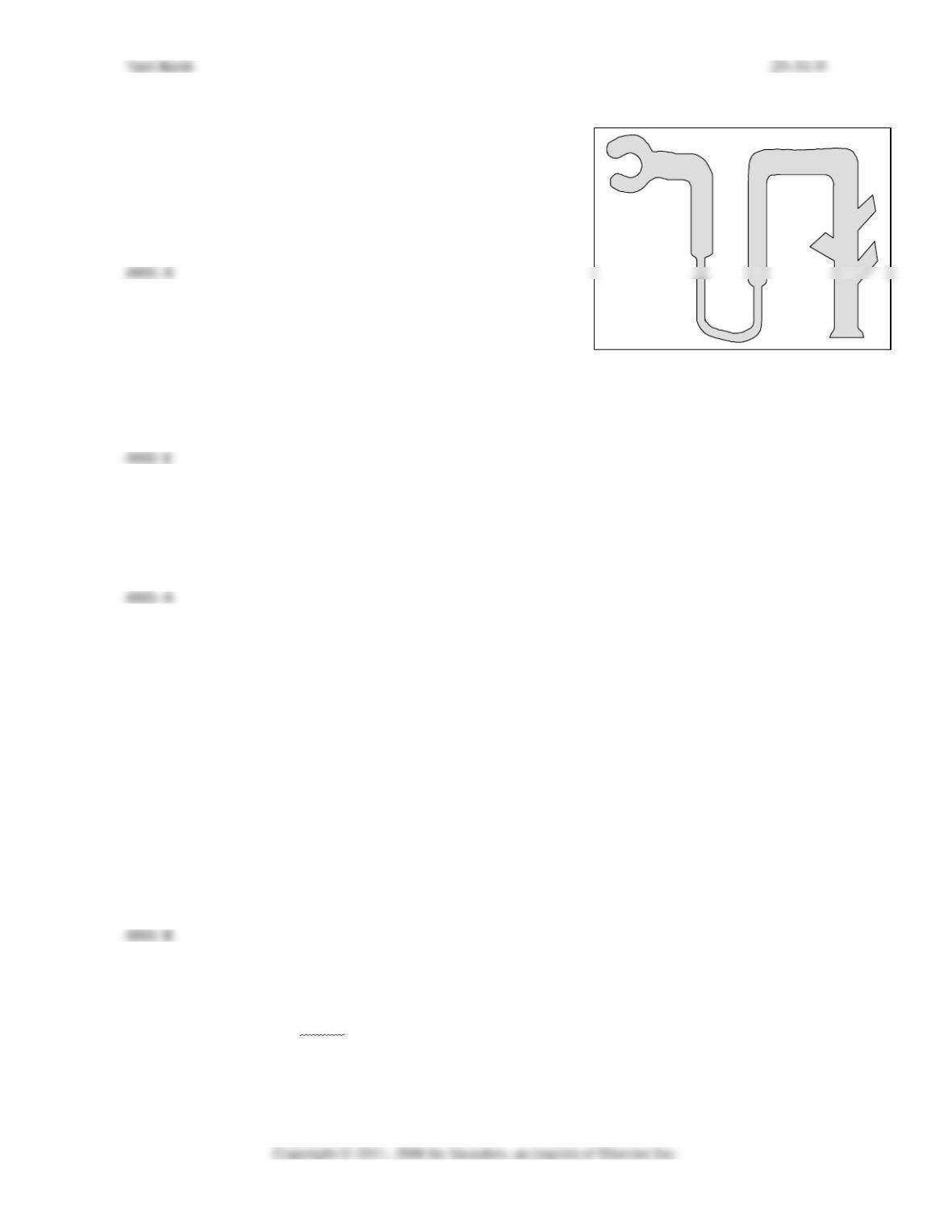
17. In a person on a very low (20 mmol/day) potassium diet,
which part of the nephron would be expected to reabsorb
the most potassium?
18. In a patient with severe “central” diabetes insipidus, caused
by lack of ADH secretion, which part of the tubule would have the lowest tubular fluid
osmolarity?
19. Which part of the nephron normally reabsorbs the most urea?
20. If the tubular fluid/plasma creatinine concentration ratio in the collecting duct is 100, what is
the approximate percentage of the filtered water that remains at that point?
A. 0%
B. 1%
C. 10%
D. 50%
E. 100%
21. You are following a patient in your nephrology clinic whose serum creatinine concentration has
risen from 1.0 to 4.0 mg/dLover a period of five years. Which of the following additional
changes, compared with normal, would you expect to find in this patient? Assume steady-state
conditions and that he has maintained the same diet.
A. Decreased filtered load of creatinine
D
E
A
B
C

Test Bank
25–31–10
B. Decreased renal sodium excretion
C. Decreased maximal urine concentrating ability
D. Alkalosis
E. Increased renal blood flow
22. Given the following measurements, calculate the filtration fraction: glomerular capillary
hydrostatic pressure = 50 mmHg; Bowman’s space hydrostatic pressure = 10 mmHg; colloid
osmotic pressure in the glomerular capillaries = 30 mmHg; glomerular capillary filtration
coefficient (Kf) = 8 mL/min/mmHg; renal plasma flow = 500 mL/min.
A. 0.16
B. 0.20
C. 0.25
D. 0.30
E. 0.35
F. 0.40
23. Which of the following changes would tend to REDUCE glomerular filtration rate?
A. Decreased afferent arteriolar resistance
B. Increased glomerular capillary filtration coefficient
C. Increased proximal tubular sodium reabsorption
D. Decreased efferent arteriolar resistance
E. Increased collecting tubule sodium reabsorption
24. You begin treatment of a hypertensive patient with a large dose of a powerful diuretic (Lasix) that
inhibits tubular reabsorption of NaCl by the loop of Henle. He returns to your office for a follow-
up examination two weeks later. Compared with the patient’s status before treatment, which one
of the following sets of conditions would you expect to find?
Urine Na+ Arterial Extracellular Plasma

Test Bank
25–31–11
Excretion Pressure Fluid Volume Renin Concentration
A.
B.
C.
D.
E.
F.
25. Which of the following would cause the greatest degree of hypokalemia?
A. Chronic treatment with a diuretic such as spironolactone that inhibits the action of
aldosterone
B. Chronic treatment with a diuretic such as amiloride that inhibits sodium reabsorption in the
late collecting ducts
C. Chronic treatment with a diuretic such as furosemide that inhibits loop of Henle Na+-2Cl−– K+
co-transport
D. An increase in sodium intake from 150 to 300 mmol/day
E. A reduction in potassium intake from 160 to 80 mmol/day in a person with normal kidneys
and normal aldosterone system
26. Which of the following statements is correct?
A. Urea reabsorption in the inner medullary collecting tubule is less than in the distal
convoluted tubule during antidiuresis
B. Urea concentration in the interstitial fluid of the renal cortex is greater than in the
interstitial fluid of the renal medulla during antidiuresis
C. The thick ascending limb of Henle’s loop reabsorbs more urea than the inner medullary
collecting tubule during antidiuresis
D. A chronic low protein diet tends to increase urine-concentrating ability

Test Bank
25–31–12
E. The inner medullary collecting duct is more permeable to urea than is the cortical collecting
tubule
27. Evaluation of kidney function in a 46-year-old obese male with type II diabetes reveals the
following:
Urine volume = 5760 mL of urine, collected over the preceding 24 hours
Plasma creatinine = 3 mg/100 mL
Urine creatinine = 30 mg/100 mL
Plasma potassium = 4.0 mmol/L
Urine potassium = 20 mmol/L
What is his approximate glomerular filtration rate (GFR), assuming that he collected all of his
urine in the 24 hour period?
A. 10 mL/min
B. 20 mL/min
C. 30 mL/min
D. 40 mL/min
E. 80 mL/min
28. What is the net renal tubular reabsorption rate of potassium in the patient described in
question 27?
A. 0.080 mmol/min
B. 0.100 mmol/min
C. 0.200 mmol/min
D. 0.030 mmol/min
E. 0.040 mmol/min
F. Potassium is not reabsorbed in this example
Test Bank
25–31–13
29. Which of the following would tend to cause hyperkalemia by shifting potassium from the
intracellular fluid into the extracellular fluid?
A. Aldosterone excess
B. Acidosis
C. Beta-adrenergic stimulation
D. Increased insulin
E. Decreased extracellular fluid osmolarity
Questions 30 to 32: Match each of the patients in questions 30 to 32 with the correct set of blood
values in the table. The same values may be used for more than one patient.
HCO3− pCO2 Na+ Cl−
pH (mmol/L) (mmHg) (mmol/L) (mmol/L)
A. 7.07 14 50 144 102
B. 7.29 14 30 143 117
C. 7.25 12 28 142 102
D. 7.52 38 48 146 100
E. 7.66 22 20 143 111
30. Which patient has diabetic ketoacidosis and normal lungs?
31. Which patient has an aspirin overdose and emphysema?
32. Which patient has renal tubular acidosis?
33. The clinical laboratory returns the following arterial blood values for a patient: pH = 7.2; plasma
HCO3− = 29 mmol/L; plasma pCO2 = 75 mmHg. What is this patient’s acid-base disorder?
A. Acute respiratory acidosis without renal compensation
B. Respiratory acidosis with partial renal compensation
C. Acute metabolic acidosis without respiratory compensation
D. Metabolic acidosis with partial respiratory compensation
34. In the patient described in question 33, compared with normal, which of the following laboratory
values are you likely to find?
Urine Excretion New Renal Urine Excretion Urine pH
of NH4+ HCO3 Produced of HCO3
A.
B.
C.
D.
E.
35. A patient’s urine was collected for four hours and the total volume was 960 mL during this time.
Her urine osmolarity was 140 mOsm/L and her plasma osmolarity was 280 mOsm/L. What was
her “free water clearance”?
A. +4.0 mL/min
Test Bank
25–31–15
B. +2.0 mL/min
C. 0.0 mL/min
D. –2.0 mL/min
E. –4.0 mL/min
F. None of the above
36. Metabolic alkalosis tends to intracellular K+ concentration and K+
secretion by the cortical collecting tubules.
A. Increase, increase
B. Increase, decrease
C. Decrease, increase
D. Decrease, decrease
E. Cause no change in, increase
F. Cause no change in, cause no change in
37. In a patient with chronic excess aldosterone secretion (i.e., primary aldosteronism), you would
expect to find which one of the following sets of conditions (compared with normal) under
steady-state conditions, assuming that intake of electrolytes remained constant?
Arterial Urine K+ Plasma K+ Plasma Urine Na+
Pressure Excretion Conc. Renin Excretion
Rate Conc. Rate
A.
B.
C.
D.
E.

Test Bank
25–31–16
F.
38. Which one of the following sets of changes, compared with normal, would you expect to find in
a patient with diabetes insipidus due to lack of ADH secretion and who has free access to plenty
of water to drink?
Plasma Plasma Na+ Plasma Urine Water
Osmolarity Conc. Protein Conc. Volume Intake
A.
B.
C.
D.
E.
39. Potassium secretion:
A. Increases during acute acidosis
B. Increases markedly when sodium intake is increased
C. Is decreased by aldosterone
D. Is decreased when plasma potassium concentration is increased
E. Is increased when tubular sodium delivery to the collecting tubule is increased
F. None of the above
40. A patient has the following laboratory values:
Arterial pH = 7.55

Test Bank
25–31–17
Plasma HCO3– = 40 mEq/L
Plasma chloride concentration = 101 mEq/L
Arterial pCO2 = 48 mmHg
Plasma sodium = 150 mEq/L
What is the most likely cause for his abnormal acid-base status?
A. Abnormal lung function (e.g., pneumonia)
B. Excessive aldosterone secretion
C. Impaired renal tubular HCO3– reabsorption
D. Chronic renal failure
E. Diarrhea
41. Which of the following diuretics inhibits NaCl co-transport in the distal tubules as its primary
action?
A. Thiazide diuretic
B. Furosemide
C. Carbonic anhydrase inhibitor
D. Osmotic diuretic
E. Amiloride
F. Spironolactone