264)
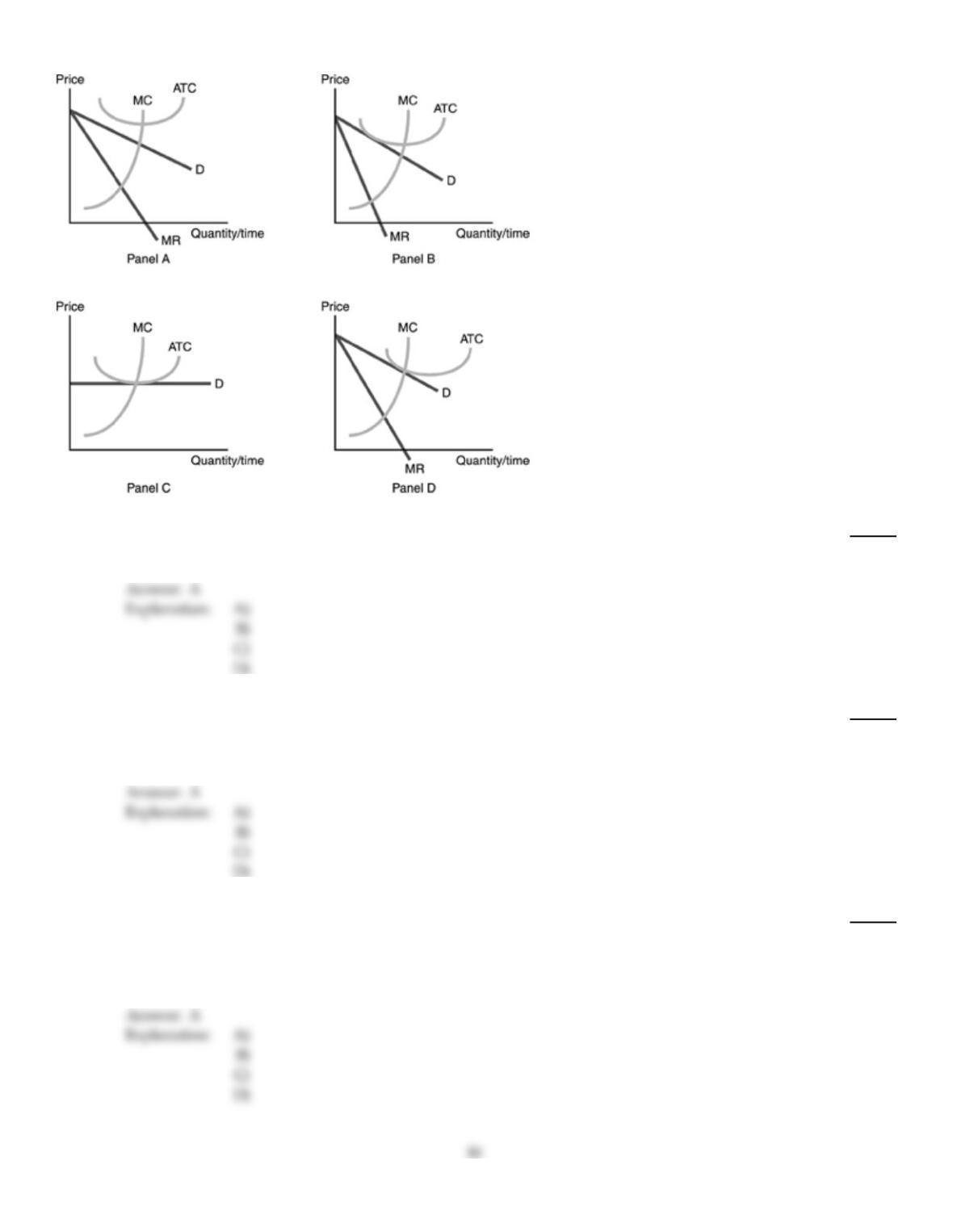
Refer to the above figure. Which panel shows a possible short–run equilibrium for monopolistic
competition, but is not also a long–run equilibrium?
264)
A)
Panel A
B)
Panel B
C)
Panel C
D)
Panel D
265)
In the long run, monopolistic competitive firms are considered to be operating inefficiently because
their
265)
A)
average total costs are not at a minimum.
B)
marginal costs are rising.
C)
economic profits are zero.
D)
economic profits are positive.
A
266)
Monopolistic competition is characterized by
266)
A)
relative ease of entry into the market.
B)
production at minimum average cost in the long run.
C)
a standard, undifferentiated product.
D)
persistent long–run economic profits.
A
A
267)
John has just tried on the most comfortable pair of pants that he has ever known. The pants are a(n)
267)
A)
experience good.
B)
credence good.
C)
logo good.
D)
information good.
268)
Mass marketing is
268)
A)
advertising targeted at specific consumers.
B)
advertising that targets a specific audience and allows the consumer to follow up directly by
placing direct product orders usually through television or radio.
C)
advertising that permits a consumer to follow up directly by searching for more information
and placing direct product orders.
D)
advertising intended to reach as many consumers as possible.
269)
Which of the following is the long–run outcome for monopolistic competition?
269)
A)
MR > MC.
B)
P = ATC.
C)
P > ATC > MC.
D)
P > ATC.
270)
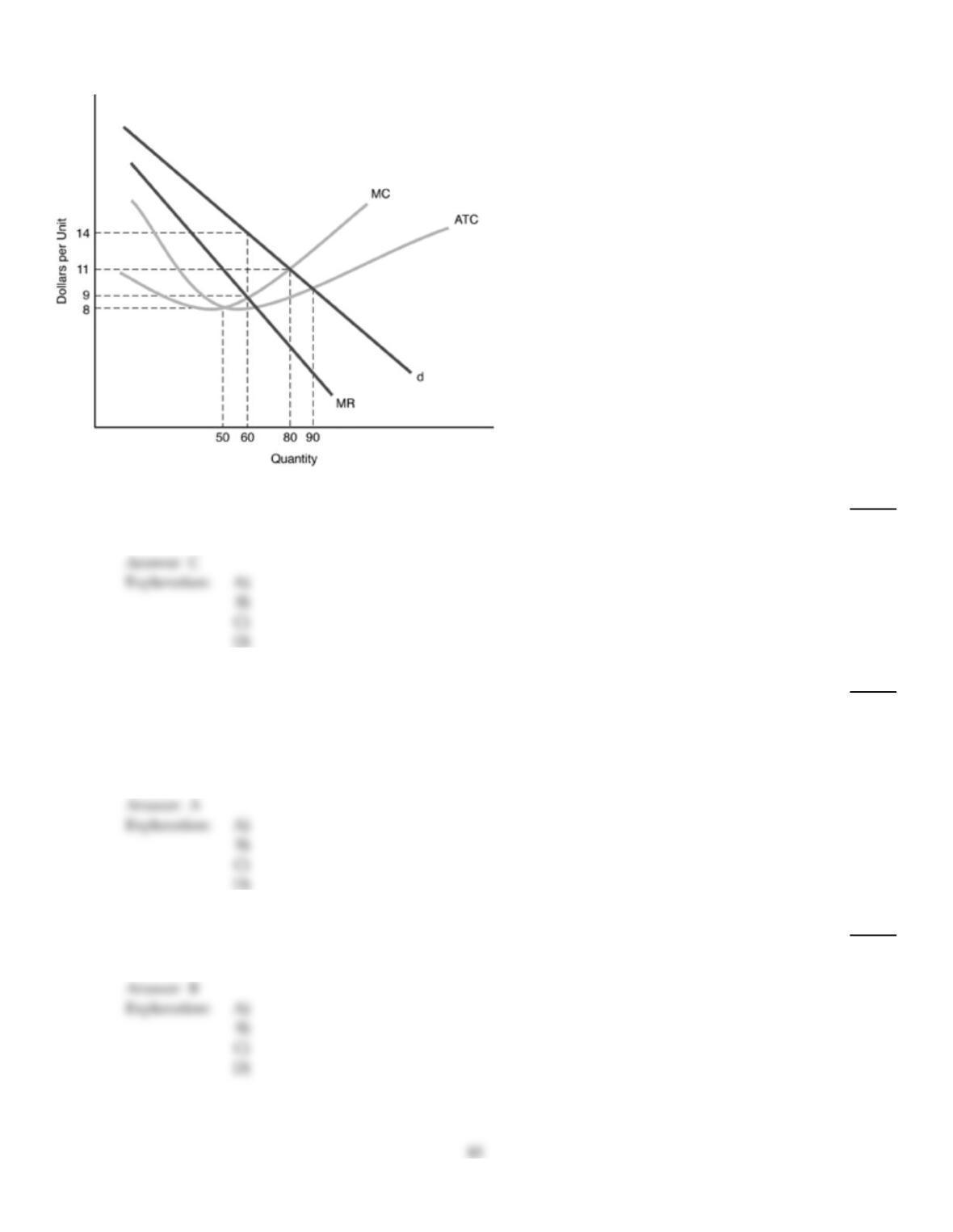
In the above figure for a monopolistically competitive firm, the total economic profit at the
profit–maximizing point is
270)
A)
$240.
B)
$0.
C)
$360.
D)
$300.
271)
If a monopolistically competitive firm selling an information product engages in marginal cost
pricing, it will
271)
A)
fail to earn sufficient revenues to cover its fixed costs.
B)
break even.
C)
lower costs.
D)
earn additional profits.
272)
The greater the product differentiation between monopolistically competitive firms
272)
A)
the lower the price elasticity of demand.
B)
the greater the price elasticity of demand.
C)
the higher the average variable costs.
D)
the lower the barriers to entry.
273)
Entry into a monopolistic competitive industry
273)
A)
requires governmental approval.
B)
is easy.
C)
requires collusion.
D)
is hard.
274)
Judy has just looked through her favorite catalog that came in the mail and has placed an order.
The catalog is an example of
274)
A)
mass marketing.
B)
direct marketing.
C)
indirect marketing.
D)
interactive marketing.
275)
All of the following are characteristics of a monopolistically competitive industry EXCEPT
275)
A)
many firms.
B)
sales promotion and advertising.
C)
low barriers to entry and exit.
D)
homogeneous products.
276)
To differentiate its product, a monopolistic competitive firm will engage in all of the following
advertising practices EXCEPT
276)
A)
mass marketing.
B)
indirect marketing.
C)
interactive marketing.
D)
direct marketing.
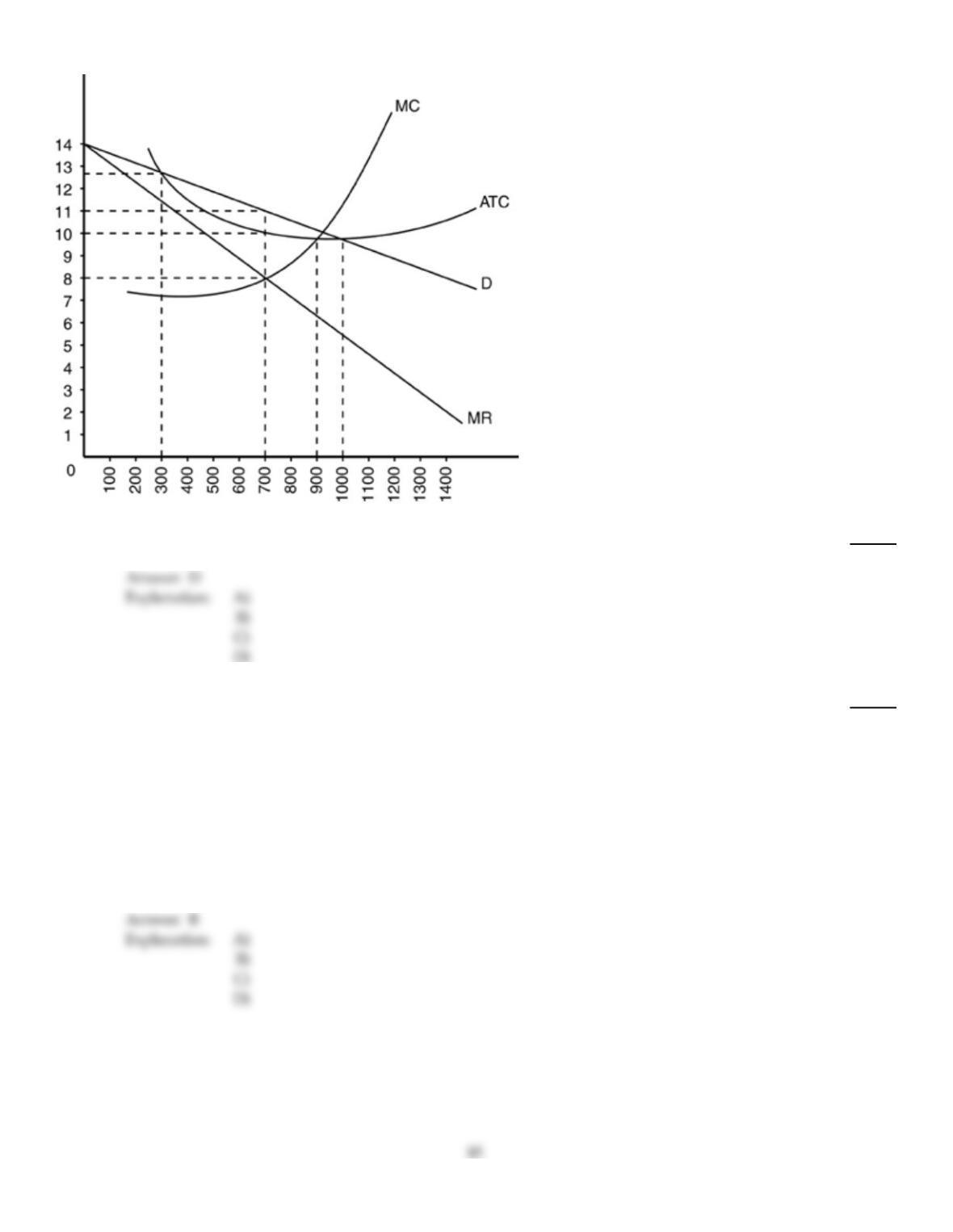
277)
At its profit–maximizing output, the firm in the above figure incurs a total cost of production of
277)
A)
$9,000.
B)
$6,300.
C)
$3,900.
D)
$7,000.
278)
The monopolistically competitive firm’s economic profits tend toward zero in the long run. Why is
this so?
278)
A)
Monopolistically competitive firm’s are rarely able to maintain the corporate discipline
necessary to sustain profits in the long run.
B)
In the long run, other firms will successfully offer substitutes for the profitable firm’s product,
and competition will eliminate economic profits.
C)
If a monopolistically competitive firm is profitable for more than 2 years, the Justice
Department orders a corporate restructuring to pull the company back to a normal rate of
return.
D)
Even though the monopolistically competitive firm can successfully maintain barriers to
entry, keeping competition at bay becomes very expensive.
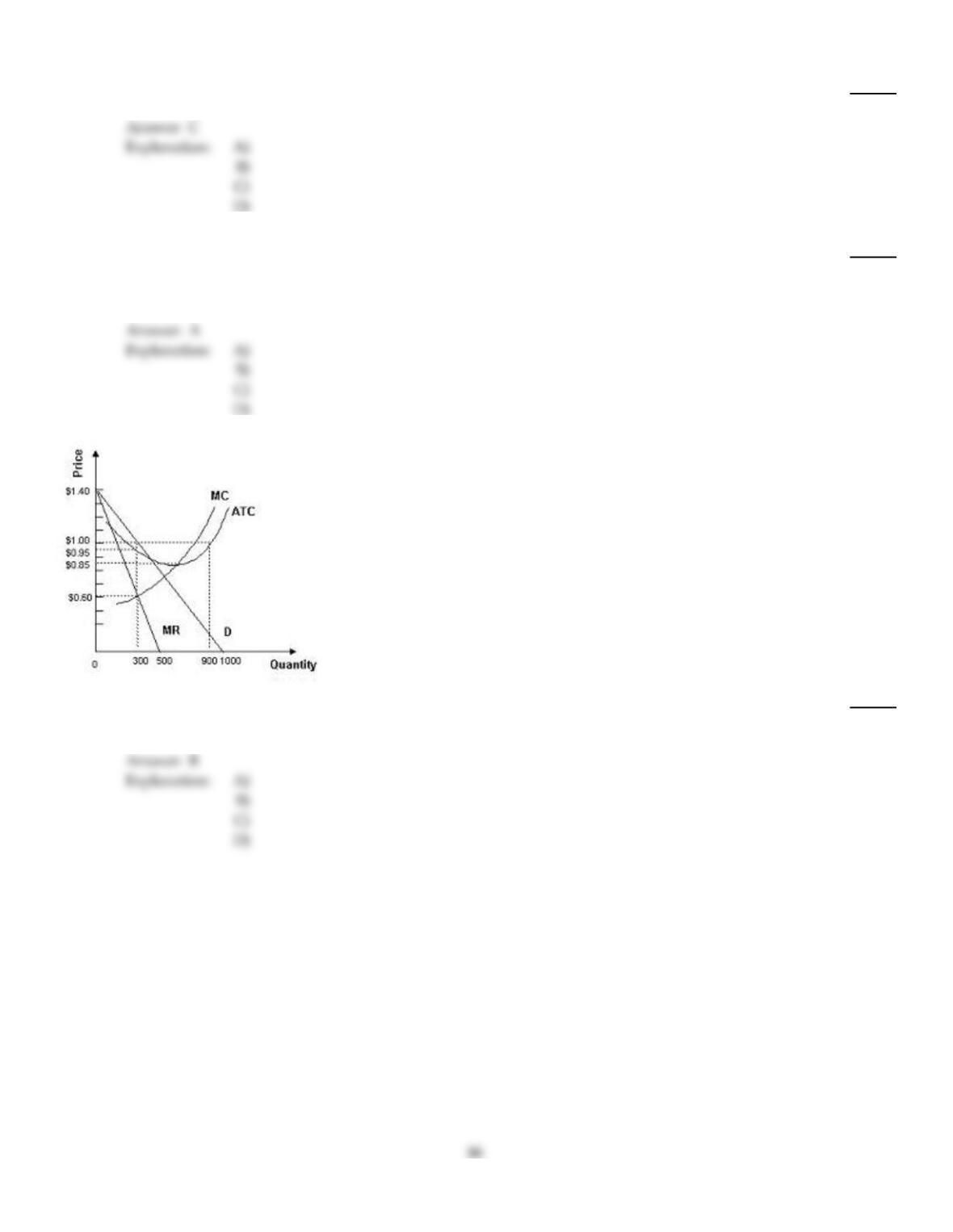
279)
Which of the following is TRUE for a monopolistically competitive firm?
279)
A)
MR > P
B)
MR = P
C)
MR < P
D)
MR = AFC
280)
A product that must be actually consumed before the quality of the product can be determined is
a(n)
280)
A)
experience good.
B)
consumption good.
C)
search good.
D)
consumable good.
281)
Use the above figure. The total cost of producing at the optimal level for the monopolistically
competitive firm is
281)
A)
$180.
B)
$285.
C)
$255.
D)
$300.
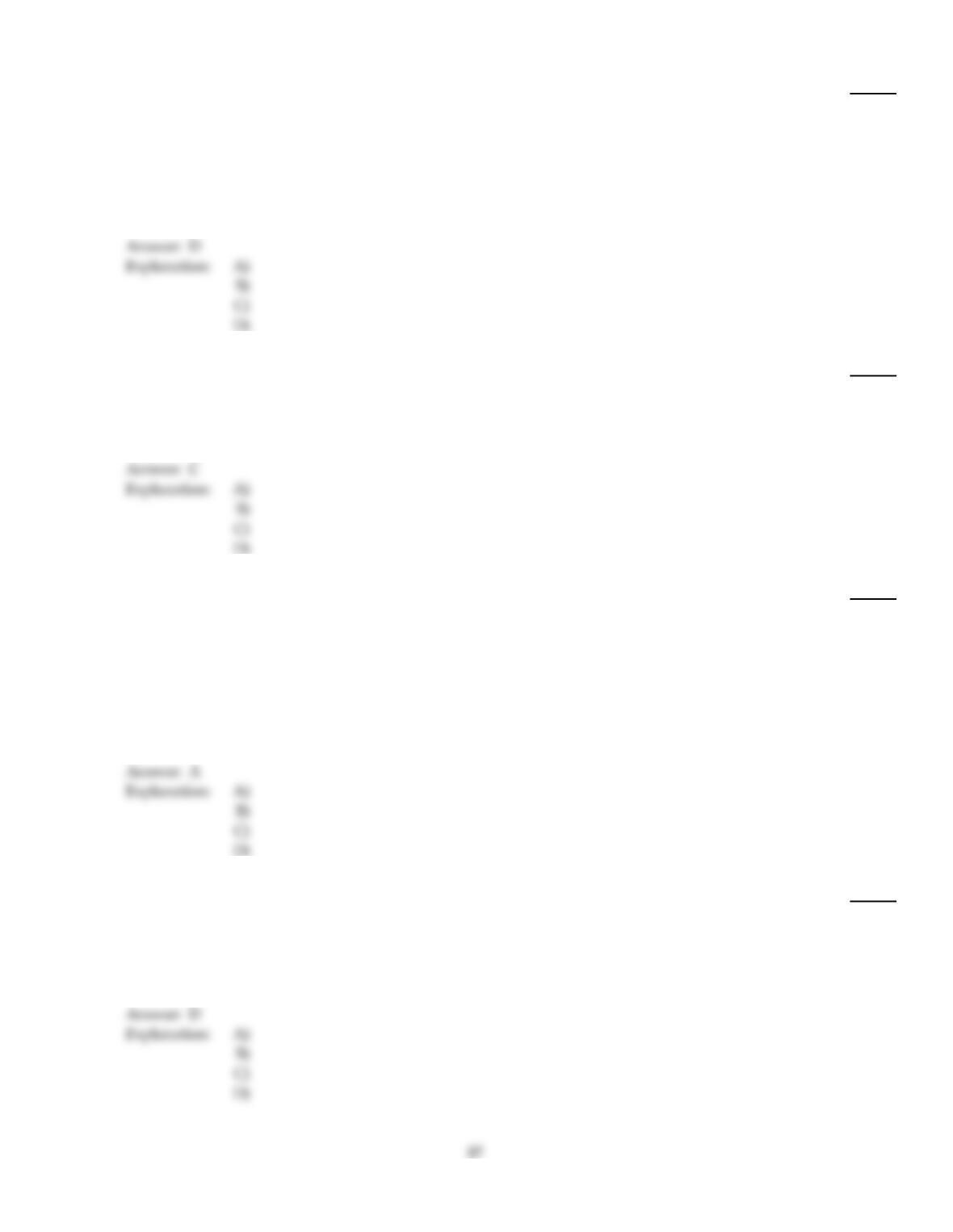
282)
Which of the following is FALSE with respect to brand names and advertising?
282)
A)
Because “differentness” has value to customers, monopolistically competitive firms regard
their brand names as valuable.
B)
There is considerable shifting over time in the market value rankings of various U.S. product
brands.
C)
Firms use trademarkswords, symbols, and logosto distinguish their product brands.
D)
Companies do not regard their brands as valuable private (intellectual) property because the
value cannot be quantified.
283)
Average variable cost for an information product would
283)
A)
first decrease and then increase as quantity increases.
B)
increase constantly as quantity increases.
C)
remain constant as quantity increases.
D)
decrease constantly as quantity increases.
284)
If firms in a monopolistically competitive industry are operating with positive economic profit,
over time we would see
284)
A)
some firms entering the industry, causing the demand curves of the existing firms to shift to
the left.
B)
firms alter their advertising rates until they made at least normal profits.
C)
some firms entering the industry, causing the market supply curve to shift to the right,
lowering price.
D)
some firms entering the industry, causing the demand curves of the existing firms to shift to
the right.
285)
A credence good is a product
285)
A)
that emphasizes the features of its product.
B)
with characteristics that enable an individual to evaluate the product’s quality in advance of a
purchase.
C)
that an individual must consume before the quality can be established.
D)
with qualities that consumers lack the expertise to assess without assistance.
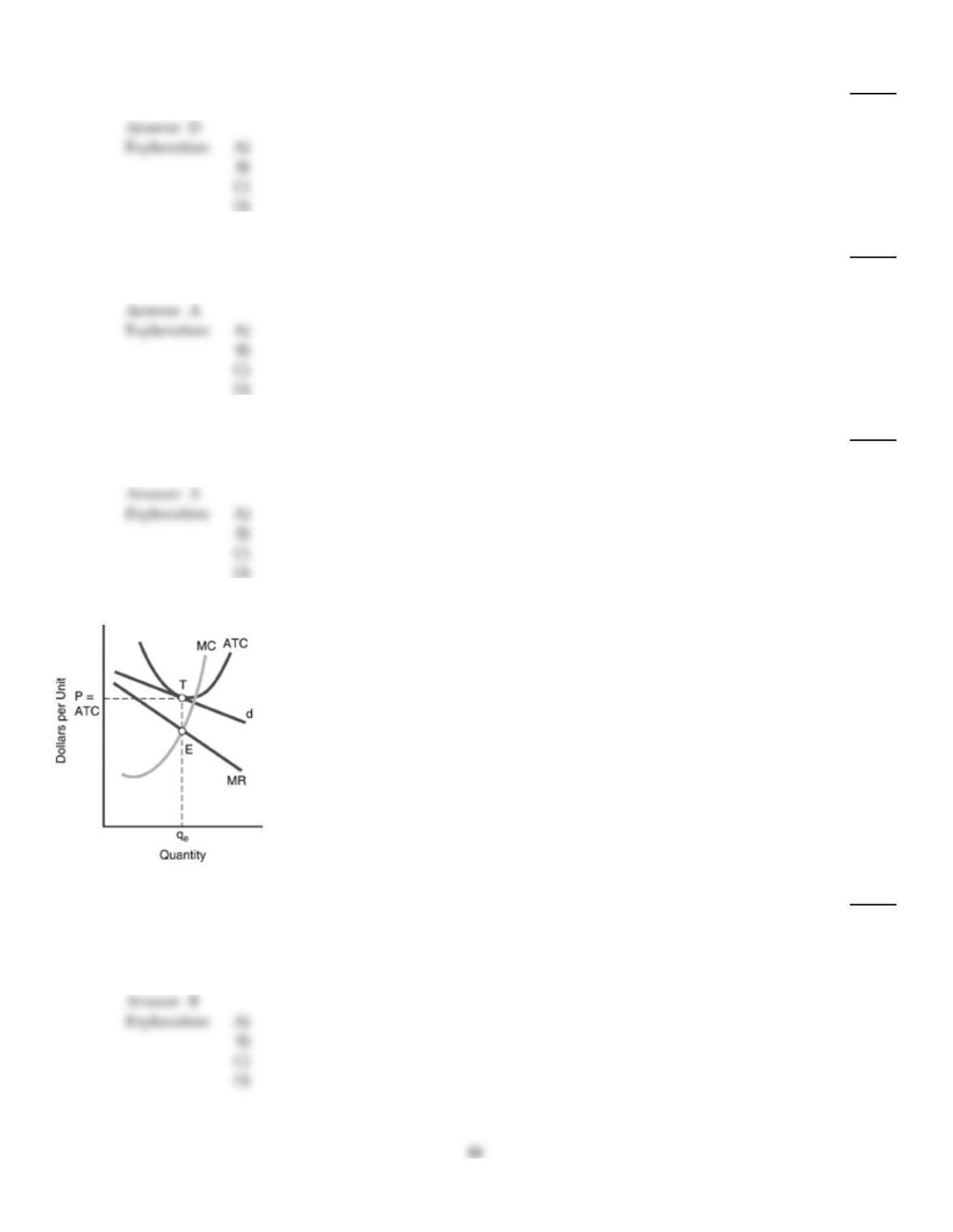
286)
Which of the following short–run outcomes for monopolistic competition is NOT possible?
286)
A)
P > MC > ATC.
B)
P > ATC.
C)
P = ATC.
D)
P = MR = MC.
287)
Which of the following statements is generally TRUE about information products?
287)
A)
high fixed costs and low marginal costs
B)
high fixed costs and high marginal costs
C)
low fixed costs and high marginal costs
D)
low fixed costs and low marginal costs
A
288)
Informational advertising is mostly used for
288)
A)
a search good.
B)
an experience good.
C)
a persuasive good.
D)
a logo good.
A
289)
Use the above figure. For this monopolistic competitor, which of the following is INCORRECT?
289)
A)
The profit–maximizing rate of output is at E, where MR intersects MC.
B)
The demand curve shows a direct relationship between price and quantity demanded.
C)
A downward sloping marginal revenue curve that is below the demand curve.
D)
The profit–maximizing rate of output is qe, and the profit–maximizing price is P.
B
D
290)
A monopolistic competitor in long–run equilibrium is like a perfect competitor in that
290)
A)
zero economic profits are made.
B)
both produce at the minimum points of their average total cost curves.
C)
price equals marginal cost.
D)
price is greater than marginal cost.
ESSAY. Write your answer in the space provided or on a separate sheet of paper.
291)
Explain the difference between informational advertising and persuasive advertising. Give an example of a
product that would be the subject of each type of advertising and explain why that type of advertising fits the
product.
292)
Why do firms in a monopolistically competitive industry advertise?
293)
Why would Sunkist incur substantial costs to advertise and establish a brand name when the quality of its
oranges can easily be evaluated by consumers?
294)
Why can’t a monopolistic competitor earn economic profits in the long run?
295)
Explain how information products are “special.”
296)
According to Edward Chamberlin, is the “differentness” of products a waste of resources? Explain.
297)
Is monopolistic competition efficient? Explain. What is Edward Chamberlin’s view about the efficiency of
monopolistic competition?
298)
For an information product, why is a profit–maximizing firm unable to practice marginal cost pricing? How is
its price determined in the long run?
299)
How does the short–run equilibrium of a monopolistic competitor differ from a monopolist? How does it differ
from a perfect competitor?
300)
How does an information product differ from a product such as a desk?
301)
How is monopolistic competition like perfect competition? How is it like monopoly?
302)
Explain how advertising can act as a signal.
303)
Why is it that a monopolistically competitive firm cannot earn positive economic profits in the long run?
304)
What is the most important characteristic of monopolistic competition? How do firms behave differently from
perfect competitors?
305)
Explain why the amount that firms spend on advertising depends on the characteristics of their products.
306)
What are the implications of there being a large number of firms in a monopolistically competitive market?
307)
Explain what will happen if firms in a monopolistically competitive industry are earning positive economic
profits.
Answer Key
Testname: C25
92
Answer Key
Testname: C25
Answer Key
Testname: C25
95
Answer Key
Testname: C25
96
Answer Key
Testname: C25
97
98
99