200)
In the long run, both monopolistically competitive and perfectly competitive firms attain
200)
A)
zero economic profits.
B)
productive efficiency.
C)
positive economic profits.
D)
lowest cost production.
201)
In a monopolistically competitive market, entry into the industry
201)
A)
is blocked.
B)
is difficult due to extensive government regulation.
C)
is relatively easy.
D)
is as difficult as entry into a monopoly.
202)
Informational advertising is the type of advertising that
202)
A)
is used to influence a consumer’s tastes and preferences.
B)
emphasizes the features of a product.
C)
is used exclusively on radio.
D)
is used exclusively on television.
203)
In a monopolistically competitive market, having a large number of firms in the market means that
203)
A)
firms will get together and collude because this will be the only way to earn monopoly
profits.
B)
no firm attempts to take into account the reaction of rival firms.
C)
firms will cooperate with each other to drive competitors out of the market.
D)
individual firms will have a large portion of the market giving them monopoly power.
204)
In the long run, the monopolistically competitive firm’s demand curve will
204)
A)
intersect the ATC at its minimum point.
B)
become tangent to the ATC curve somewhere to the left of its minimum point.
C)
become tangent to the ATC curve at its minimum point.
D)
intersect the ATC curve somewhere past the minimum point.
205)
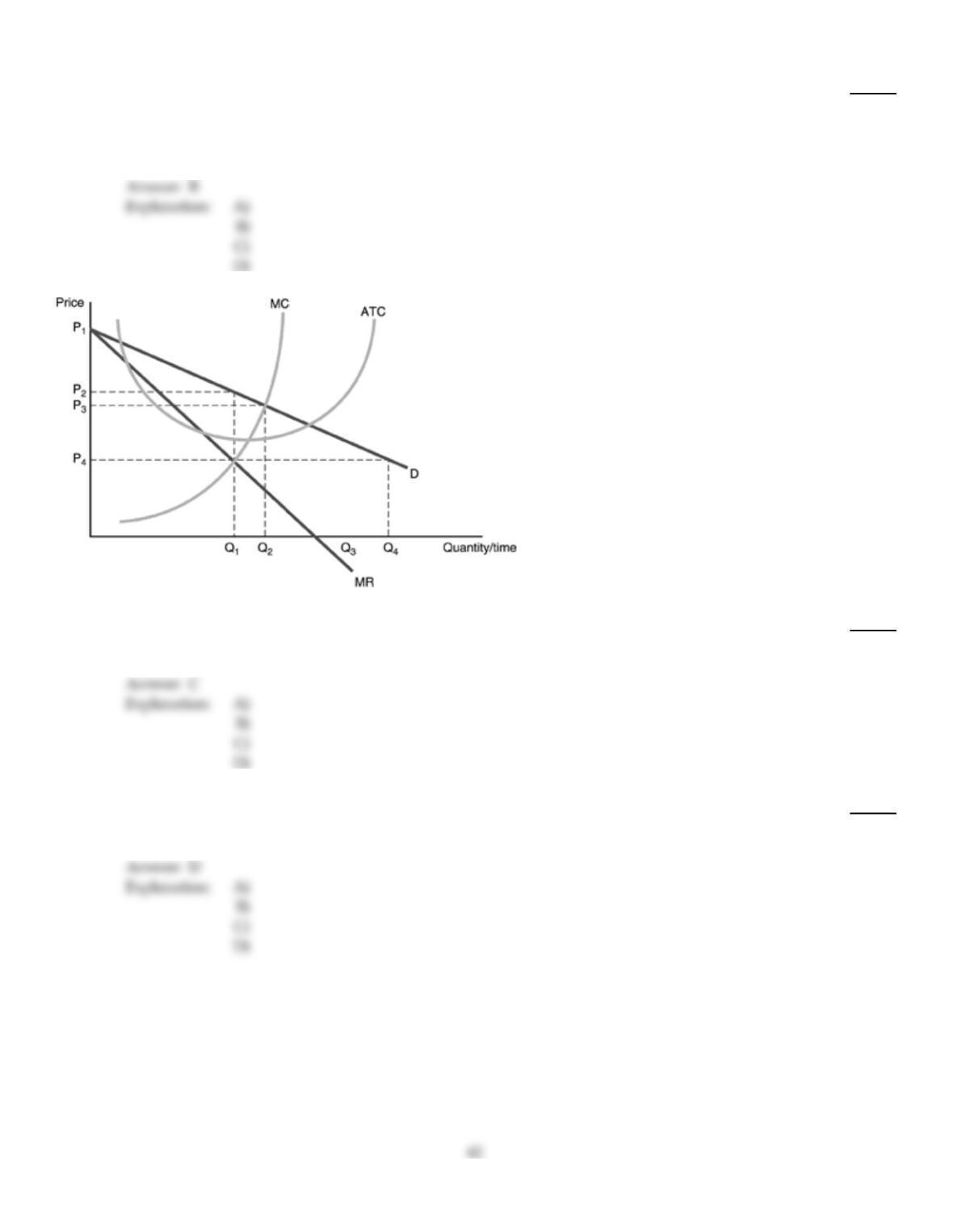
Refer to the above figure. Economic profits for this firm are
205)
A)
negative.
B)
zero.
C)
positive.
D)
undetermined without more information.
206)
Compared to perfect competition, a monopolistically competitive market will produce ________
output and charge a ________ price.
206)
A)
more; lower
B)
more; higher
C)
less; lower
D)
less; higher
207)
Monopolistically competitive firms advertise to attempt to
207)
A)
increase barriers to entry.
B)
lower their average variable costs.
C)
build brand loyalty.
D)
lower barriers to entry.
208)
Carol has just purchased a cereal she saw advertised on TV because of the health benefits contained
in the ad. The TV ad is an example of
208)
A)
mass marketing.
B)
direct marketing.
C)
indirect marketing.
D)
interactive marketing.
A
209)
Mass marketing involves
209)
A)
Internet ads only.
B)
lower–cost methods of advertising.
C)
using all types of media, such as television and radio, to reach as many consumers as
possible.
D)
using direct mailings only.
C
210)
A very high fixed cost and a relatively low marginal cost is associated with
210)
A)
every type of good or product.
B)
a persuasive good.
C)
an information product.
D)
an experience good.
C
211)
Which of the following describes monopolistic competition?
211)
A)
homogeneous products
B)
P = MR = MC
C)
There is only one seller in the industry.
D)
Advertising plays a key role.
D
C
212)
An example of direct marketing is
212)
A)
allowing the use of the product for 7 days before the consumer is billed for the product.
B)
charging customers who pay with cash a different price than those using credit cards.
C)
the use of coupons in newspapers.
D)
the use of personalized advertising by using mailing lists.
213)
In a monopolistically competitive market, a firm should advertise to the point at which
213)
A)
the additional revenue generated by one more dollar of advertising just equals the extra
dollar cost of advertising.
B)
it can raise price to the highest level possible.
C)
the extra revenue from an additional dollar spent on advertising just equals the marginal cost
of producing one more unit of the good.
D)
it is selling the most units it can possibly sell.
214)
Average fixed cost for an information product would
214)
A)
first decrease and then increase as quantity increases.
B)
decrease constantly as quantity increases.
C)
increase constantly as quantity increases.
D)
remain constant as quantity increases.
215)
If a firm that produces an information product uses marginal cost pricing, then the firm
215)
A)
will earn positive profits but could earn a higher profit by using a different method.
B)
will maximize profits.
C)
will earn profits equal to zero.
D)
will earn negative profits.
216)
The meaning of interdependence in a monopolistically competitive market is
216)
A)
that it is difficult for firms to get together to collude.
B)
that firms will not take into account the reaction of rival firms.
C)
that price rigging commonly occurs.
D)
that products produced by firms will be good substitutes.
217)
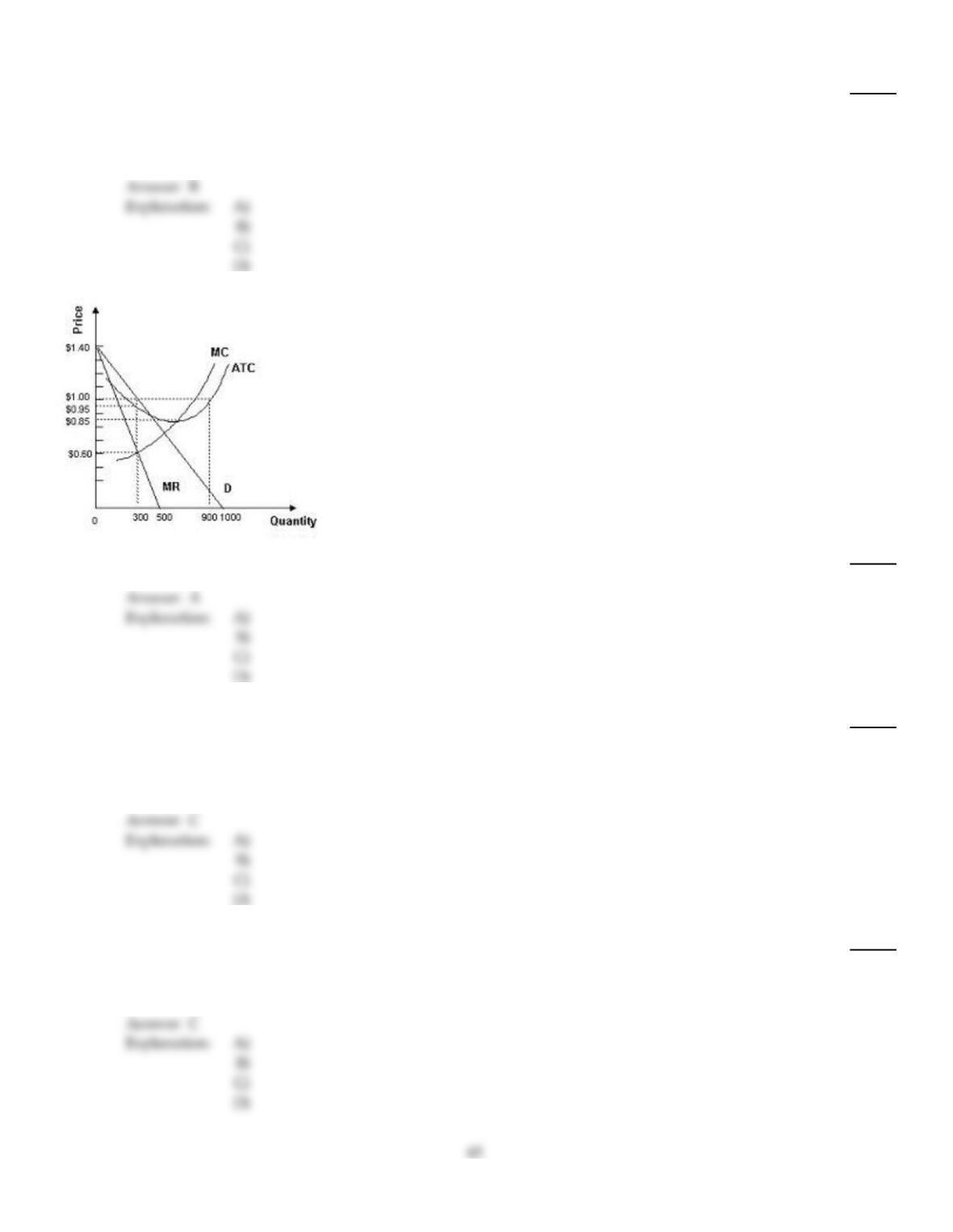
Use the above figure. The total profit earned by the monopolistically competitive firm is
217)
A)
+$15.
B)
$0.
C)
+$300.
D)
–$15.
A
218)
Monopolistic competitors advertise because
218)
A)
the demand curves they face are very elastic.
B)
they can earn long–run profits if they advertise.
C)
they produce goods that can be differentiated from the goods of other firms in the industry.
D)
they have downward sloping demand curves.
C
219)
A good that entails relatively high fixed costs associated with the use of knowledge and other
information–intensive inputs as key factors of production is
219)
A)
a persuasive good.
B)
a search good.
C)
an information product.
D)
a logo good.
C
B
220)
The long–run equilibrium of a monopolistic competitor differs from the long–run equilibrium of a
perfect competitor in that
220)
A)
the monopolistic competitor sets price equal to marginal cost.
B)
the monopolistic competitor charges a price that exceeds marginal cost.
C)
the monopolistic competitor makes economic profits.
D)
the monopolistic competitor produces at the minimum point of its average total cost curve.
221)
Advertising is used by firms in a monopolistic competitive industry to
221)
A)
increase demands for their individual products.
B)
differentiate their product from those of competitors.
C)
increase brand loyalty.
D)
all of the above.
222)
A market situation in which a large number of firms produce similar but not identical products is
222)
A)
monopolistic competition.
B)
an oligopoly.
C)
a monopoly.
D)
perfect competition.
223)
In the above figure for a monopolistically competitive firm, the total revenue at the
profit–maximizing point is
223)
A)
$400.
B)
$840.
C)
$540.
D)
$880.
224)
The long–run equilibrium for a firm in an information product industry exists at a point at which
224)
A)
the demand curve crosses the marginal cost curve.
B)
average total cost is minimized.
C)
marginal cost equals marginal revenue.
D)
the demand curve is tangent to the average total cost curve.
225)
Graphically, how does a monopolistically competitive firm determine its profit–maximizing price?
225)
A)
It accepts the price set by the industry–wide forces of supply and demand.
B)
Graphically, it finds the place where MR = MC and charges the price directly to the left of that
point.
C)
The firm determines its profit–maximizing output and then charges the price associated with
the point on its demand curve directly above that quantity.
D)
The firm’s pricing structure is set by government regulators.
226)
If firms in a monopolistically competitive industry experience short–run losses
226)
A)
some firms would like to exit the industry but find they cannot.
B)
firms increase advertising spending to increase demand, until they make at least a normal
return.
C)
firms increase prices further, until they make at least a normal return.
D)
some firms exit the industry, causing the demand curves for the remaining firms to shift to
the right until they earn a normal profit.
227)
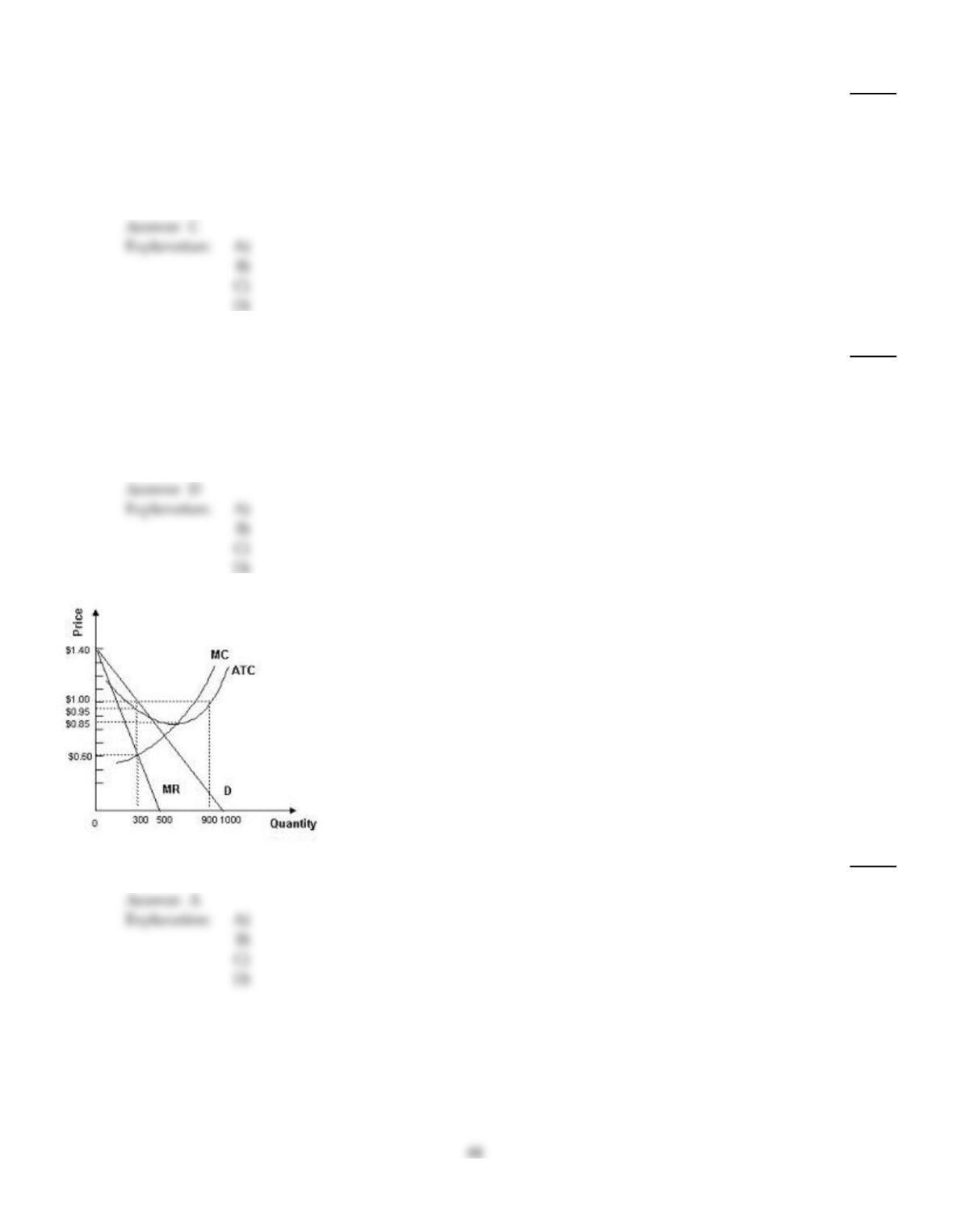
Use the above figure. The total revenue earned by the monopolistically competitive firm is
227)
A)
$300.
B)
$180.
C)
$285.
D)
$255.
228)
Long–run equilibrium for a monopolistic competitor is characterized by
228)
A)
a price exceeding marginal cost.
B)
too few firms in the industry.
C)
economic profits.
D)
marginal cost pricing.
229)
Information products (e.g., software)
229)
A)
have relatively low fixed costs and relatively low marginal and average variable costs.
B)
have relatively high fixed costs and relatively high marginal and average variable costs.
C)
have relatively high fixed costs but low marginal and average variable costs.
D)
have relatively low fixed costs but high marginal and average variable costs.
230)
Which of the following products would most likely be produced in a monopolistically competitive
market?
230)
A)
oil
B)
electricity
C)
corn
D)
pizza
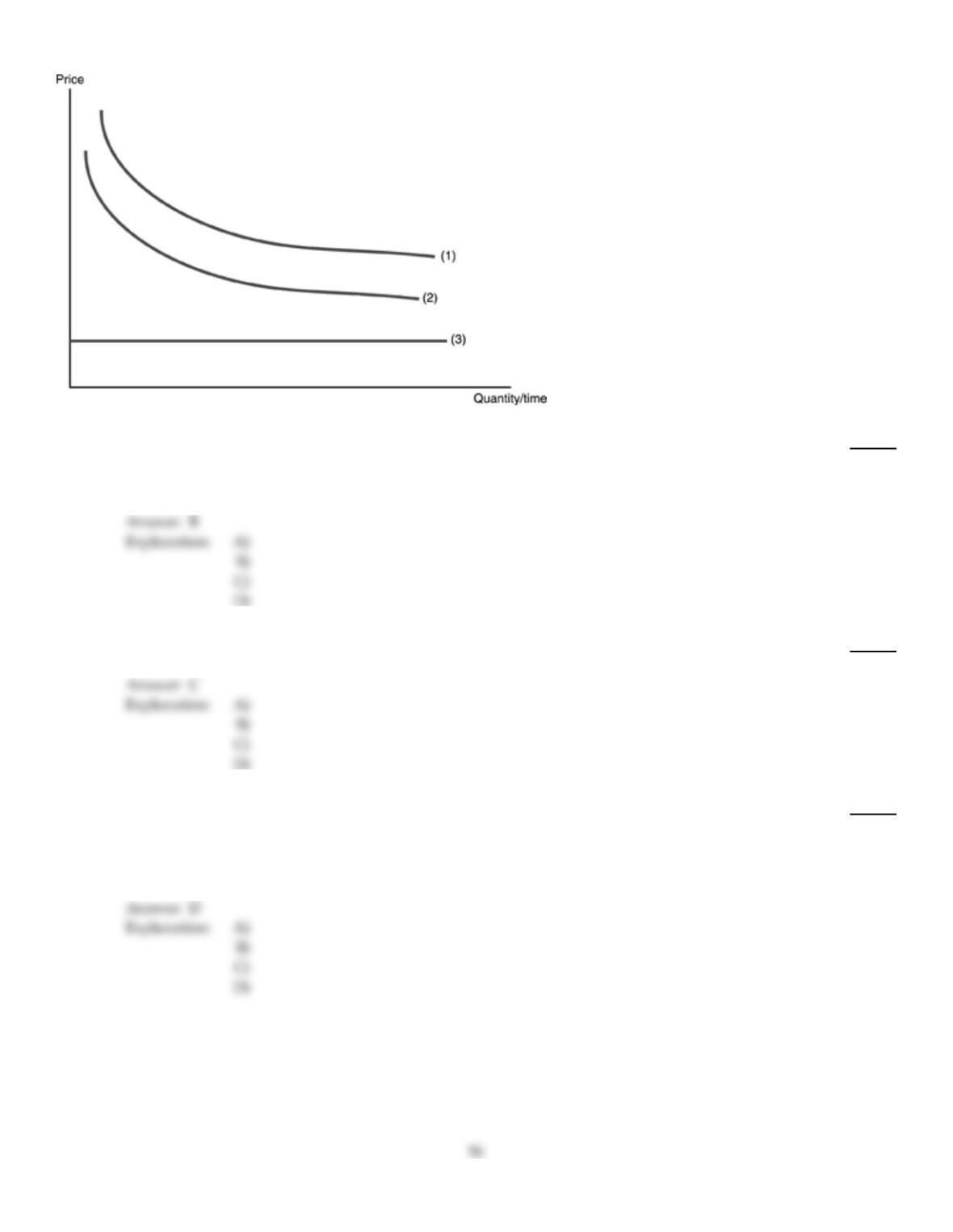
231)
Refer to the above figure. The above figure shows the cost structure of a firm producing an
information product. Which curve represents average fixed cost?
231)
A)
Curve 1
B)
Curve 2
C)
Curve 3
D)
Any of the 3 could be AFC.
232)
Which of the following statements is TRUE for a monopolistically competitive firm in the long run?
232)
A)
P > MC > ATC
B)
P = MC = MR
C)
P = ATC > MR
D)
MC > P > ATC
233)
The marginal revenue curve of a monopolistically competitive firm is
233)
A)
identical to the demand curve as there are many small firms in the market.
B)
perfectly elastic.
C)
downward sloping and above the demand curve.
D)
downward sloping and below the demand curve.
Price per Marginal
Output Book ($) Cost
08.00 0
17.00 1.00
26.00 2.00
35.00 3.00
44.00 4.00
234)
The above table depicts prices, quantities, and marginal costs faced by the campus bookstore. At
the profit–maximizing level of output, what is the total revenue earned by the store?
234)
A)
$12
B)
$15
C)
$6
D)
$5
235)
A good that has qualities that are easy for a consumer to assess in advance of a purchase is called
235)
A)
a search good.
B)
a credence good.
C)
an experience good.
D)
a persuasive good.
A
236)
The long–run equilibrium of a monopolistically competitive firm is characterized by
236)
A)
a tangency of the average total cost curve with the firm’s demand curve.
B)
production at the minimum point of the firm’s average variable cost curve.
C)
production at the minimum point of the firm‘s average total cost curve.
D)
price equal to marginal cost.
A
237)
Firms that produce an information product experience short–run economies of operation because
237)
A)
of the U–shaped nature of the average variable cost curve.
B)
the firm will always produce in the decreasing portion of the marginal cost curve.
C)
of the U–shaped nature of the average total cost curve.
D)
the average total cost of producing and selling the product declines as output increases.
D
B
238)
Products such as office supplies are examples of
238)
A)
search goods.
B)
experience goods.
C)
selective goods.
D)
simple goods.
239)
Compared with a firm in a perfectly competitive market, the demand curve faced by a
monopolistically competitive firm is
239)
A)
perfectly inelastic.
B)
more inelastic.
C)
perfectly elastic.
D)
more elastic.
240)
Advertising by monopolistically competitive firms can do all of the following EXCEPT
240)
A)
result in increased profits for the advertising firm.
B)
help differentiate a firm’s product.
C)
act as a signal to consumers that the company is serious about staying in business.
D)
lower the consumer’s purchase price.
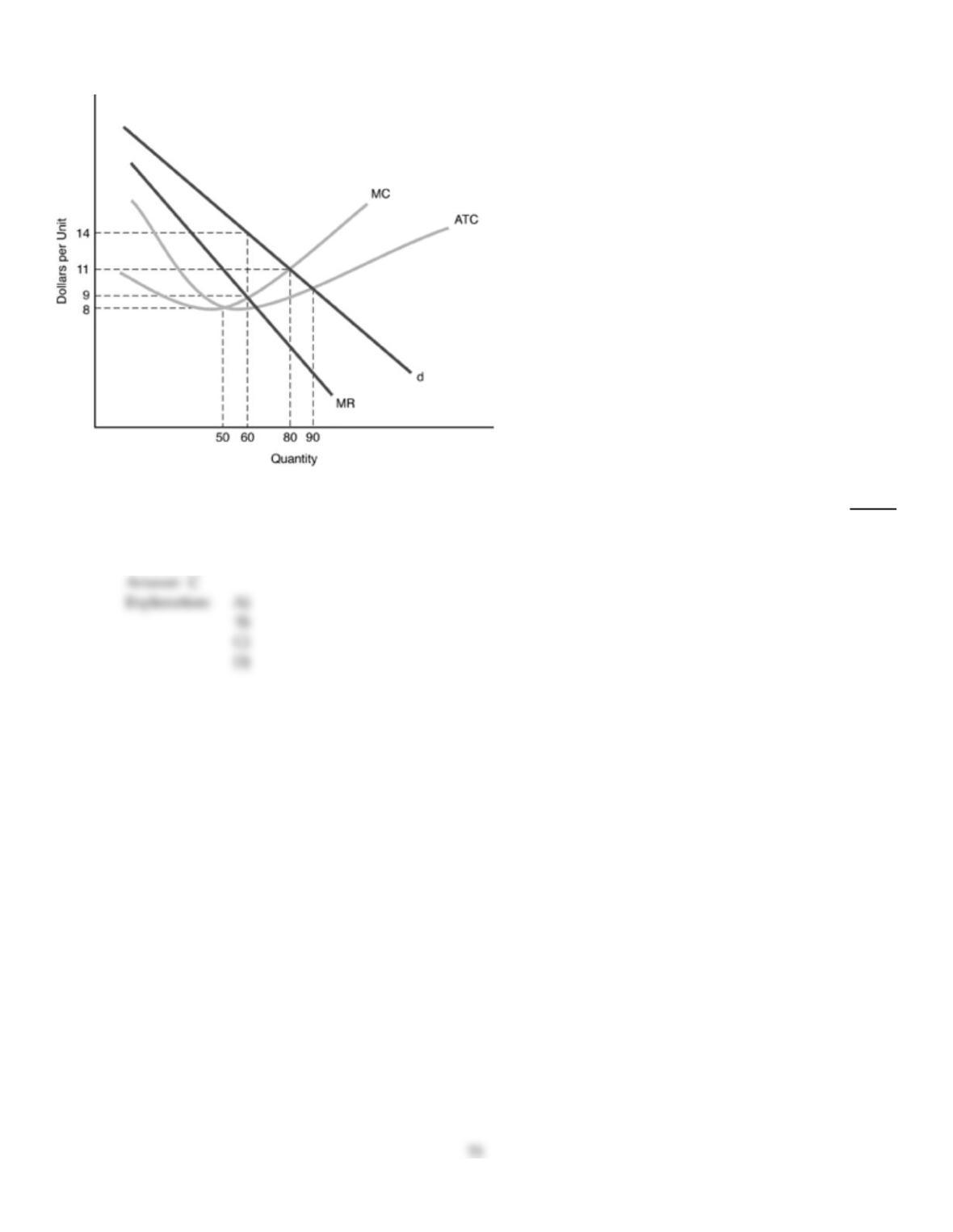
241)
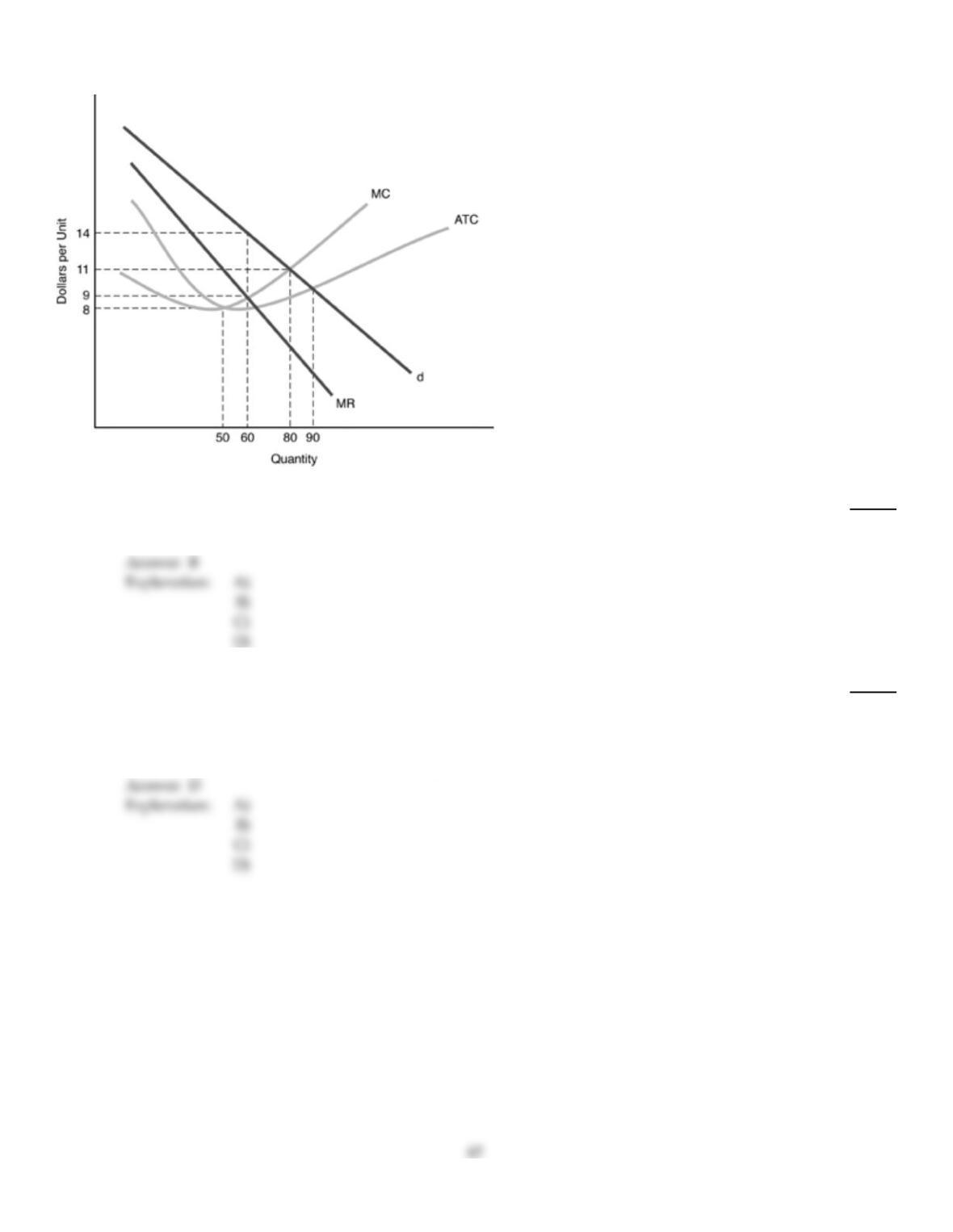
In the above figure for a monopolistically competitive firm, the profit–maximizing output and price
are respectively
241)
A)
50 units and $8.
B)
80 units and $11.
C)
60 units and $14.
D)
60 units and $9.
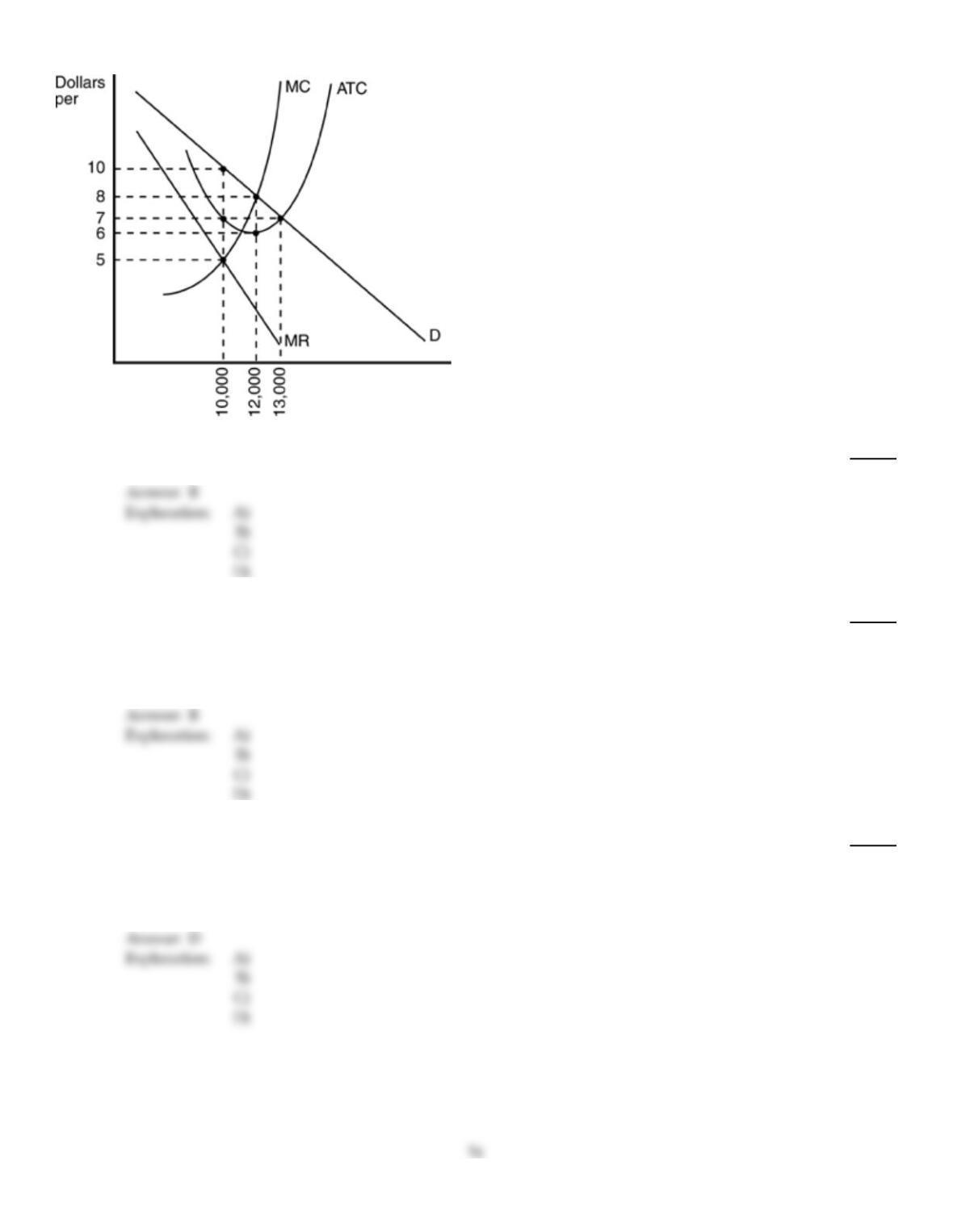
242)
In the above figure, total revenue for this profit–maximizing monopolistically competitive firm is
242)
A)
$96,000.
B)
$100,000.
C)
$91,000.
D)
$50,000.
243)
For a monopolistically competitive market, the number of firms in the market implies that
243)
A)
all firms will make losses.
B)
each firm acts independently of other firms.
C)
firms will collude to set monopoly price and output.
D)
each firm faces a perfectly elastic demand.
244)
In the long run, if some monopolistically competitive firms are earning economic losses then
244)
A)
they will increase production until marginal costs fall.
B)
new firms will enter the industry.
C)
raise prices until they earn economic profits.
D)
firms will leave the industry.
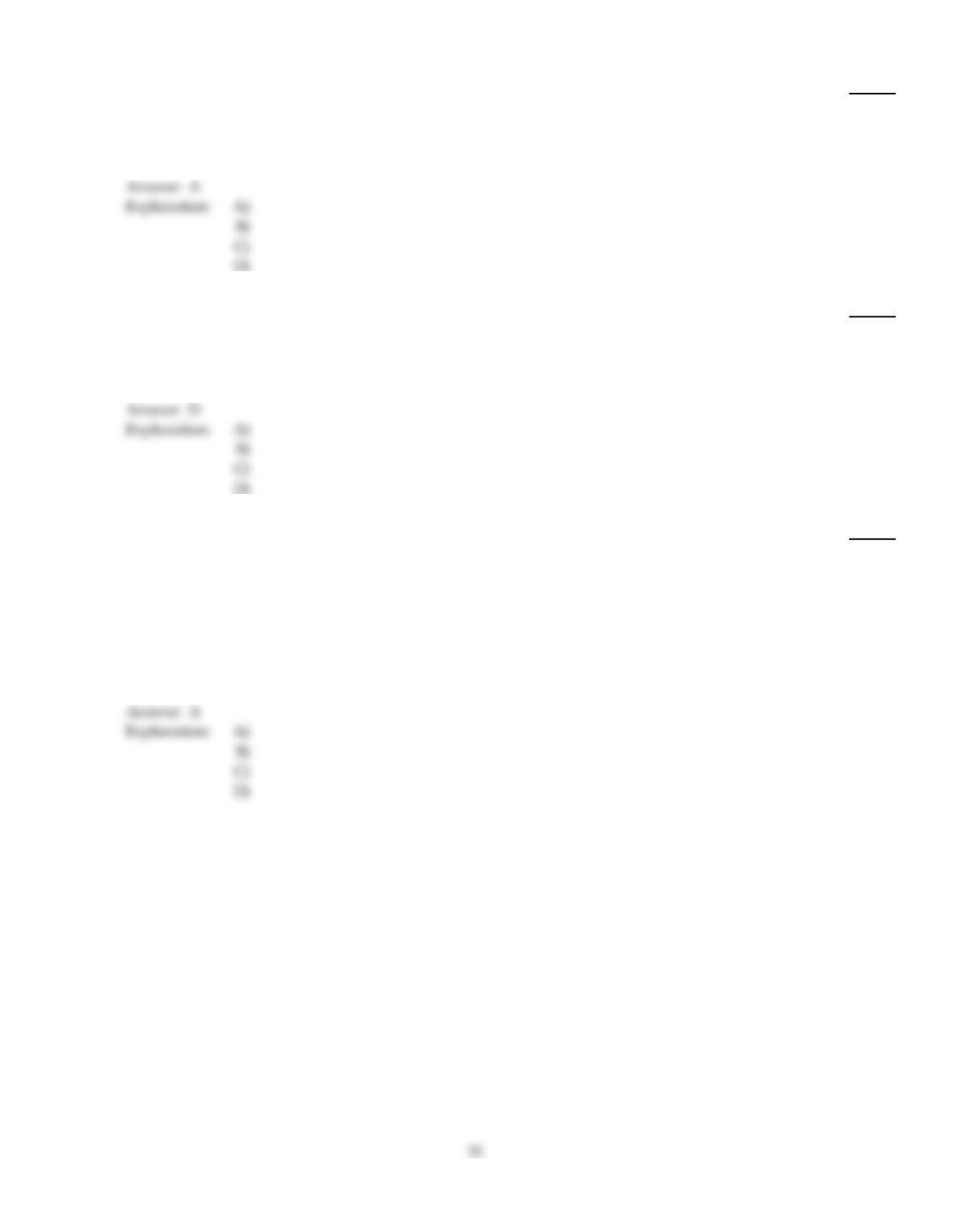
245)
Because the products of firms in a monopolistically competitive market are not homogeneous, the
245)
A)
demand curve for the firm’s product is downward sloping.
B)
demand curve for the firm’s product is horizontal.
C)
demand curve for the industry is the same for the firm.
D)
demand curve for the firm’s product is upward sloping.
246)
Which of the following is NOT a characteristic of monopolistic competition?
246)
A)
the existence of advertising
B)
differentiated products
C)
a large number of sellers in a highly competitive market
D)
marginal cost pricing in the long run
D
247)
The most significant difference between perfect competition and monopolistic competition is that
247)
A)
in a perfectly competitive market products are homogeneous, while in a monopolistically
competitive market products are differentiated.
B)
in a perfectly competitive market products are differentiated, while in a monopolistically
competitive market products are homogeneous.
C)
in a perfectly competitive market there is a small number of sellers, while in a
monopolistically competitive market there is a large number of sellers.
D)
in a perfectly competitive market there is a large number of sellers, while in a
monopolistically competitive market there is a small number of sellers.
A
A
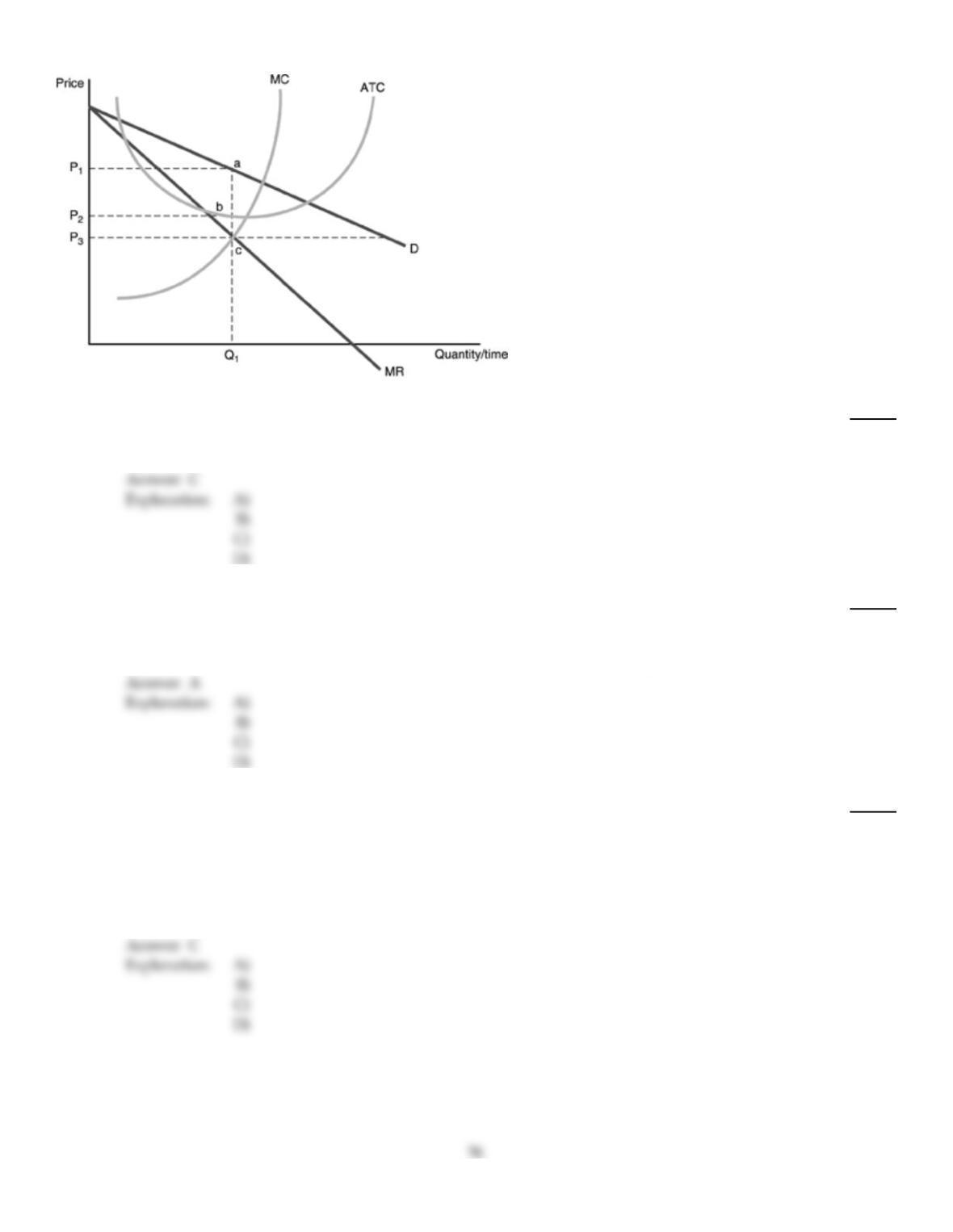
248)
Refer to the above figure. Economic profits for this firm are
248)
A)
positive and equal to P2bcP3.
B)
negative and equal to P2bcP3.
C)
positive and equal to P1abP2.
D)
negative and equal to P1bcP2.
249)
Bonnie has just purchased a crystal vase she saw advertised when she went on line to find her local
weather forecast. The Internet ad is an example of
249)
A)
mass marketing.
B)
direct marketing.
C)
indirect marketing.
D)
interactive marketing.
250)
If monopolistically competitive firms earn short–run economic profits, we expect to see
250)
A)
existing firms altering their scale of plant to try to capture larger profits. The combined effect
is to cause all firms to earn zero economic profits.
B)
new firms trying to enter the industry, but unable to do so because of barriers to entry.
C)
new firms enter the industry, which shifts the demand curves of the existing firms to the left
until firms earn zero economic profits.
D)
existing firms increasing prices to try to capture larger economic profits.
251)
The monopolistic competitive firm in short–run equilibrium may experience economic profits that
are
251)
A)
always positive.
B)
always negative.
C)
greater than, equal to, or less than zero.
D)
always zero.
252)
Products can be differentiated
252)
A)
by location and by brand name.
B)
only by brand name.
C)
if the buyers are homogeneous and their number increases.
D)
none of the above
A
253)
When a firm relies on radio and TV ads to reach potential customers, the firm is engaging in
253)
A)
interactive marketing.
B)
direct marketing.
C)
mass marketing.
D)
none of the above.
C
254)
The advertisement approach that allows a consumer to follow up directly to an advertising
message is known as
254)
A)
direct marketing.
B)
interactive marketing.
C)
indirect marketing.
D)
mass marketing.
B
C
255)
The model of perfect competition and the model of monopolistic competition differ in that
255)
A)
perfect competition assumes the product is homogeneous and monopolistic competition
assumes the product is differentiated.
B)
perfect competition assumes firms make zero profits in the long run and monopolistic
competition assumes firms make positive profits.
C)
perfect competition assumes easy entry of new firms while there are more significant barriers
to entry in monopolistic competition.
D)
perfect competition assumes many buyers and sellers while monopolistic competition
assumes many buyers but few sellers.
256)
In the short run, the monopolistic competitor is just like the perfect competitor in that
256)
A)
each equates marginal revenue and marginal cost in order to maximize profits, with the result
that price exceeds marginal revenue.
B)
equilibrium is determined by setting price equal to marginal cost.
C)
new firms enter in the short run when firms are making profits.
D)
either type of firm can earn economic profits, experience economic losses, or break even in the
short run.
D
257)
Persuasive advertising is mostly used for
257)
A)
a persuasive good.
B)
an experience good.
C)
a logo good.
D)
a search good.
B
258)
In the long run, monopolistically competitive firms will not earn economic profits because
258)
A)
new firms will enter the industry.
B)
production will not be at minimum average cost.
C)
average total cost will shift up to meet the demand curve.
D)
input prices will be bid up.
A
A
259)
The major similarity between monopolistic competition and perfect competition is
259)
A)
the shape of the demand curve.
B)
price equals marginal revenue in each.
C)
that both assume many buyers and sellers.
D)
both assume products are differentiated.
260)
The demand curve for the product of a monopolistically competitive firm
260)
A)
is perfectly inelastic.
B)
is downward sloping.
C)
is unitary elastic.
D)
is perfectly elastic.
261)
Advertising intended to reach as many consumers as possible, typically through television,
newspaper, or magazine ads is referred to as
261)
A)
interactive advertising.
B)
mass marketing.
C)
direct marketing.
D)
subliminal advertising.
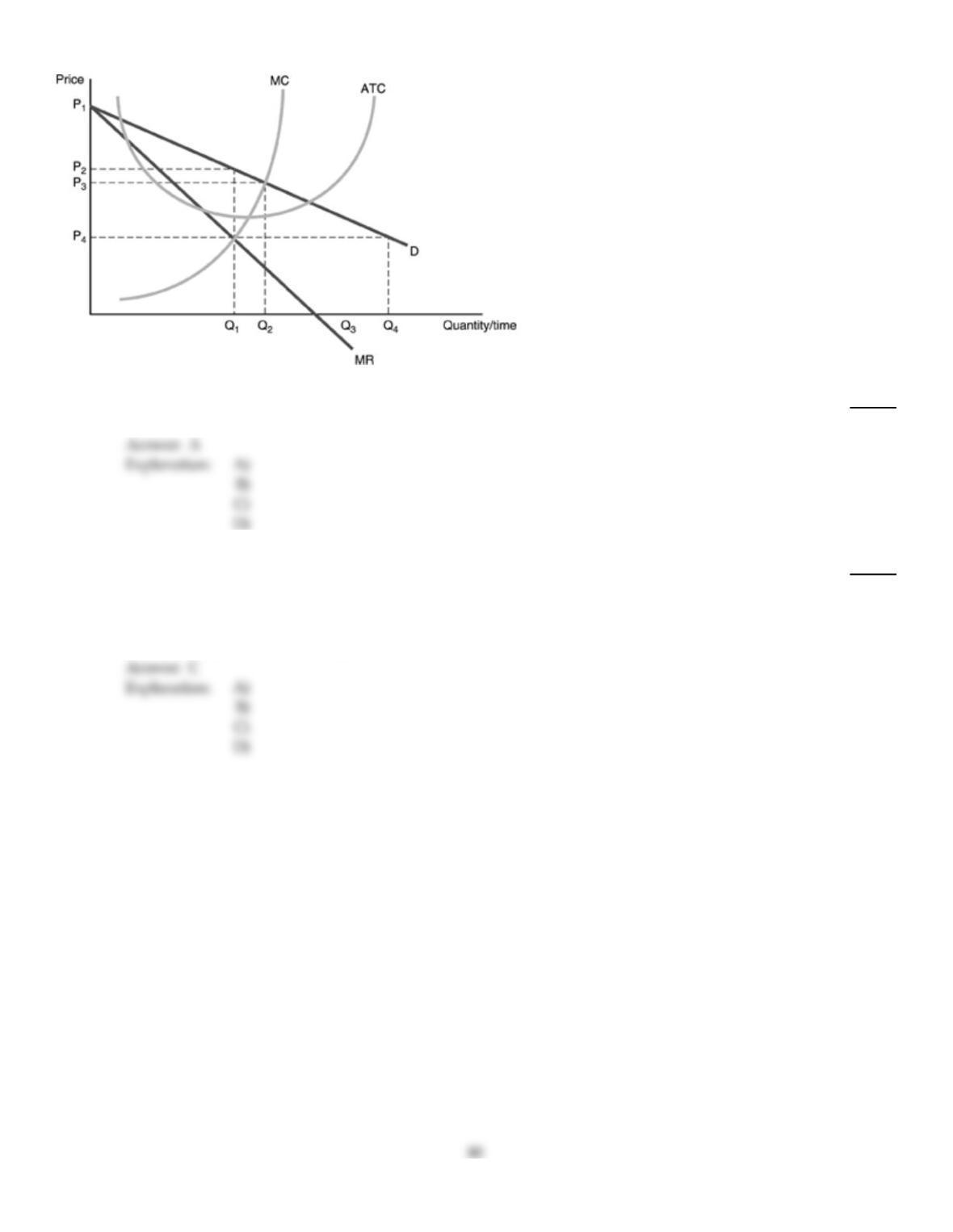
262)
Refer to the above figure. The profit maximizing quantity for a monopolistic competitor is
262)
A)
Q1.
B)
Q2.
C)
Q3.
D)
Q4.
263)
The goal of advertising is to
263)
A)
minimize cost curves for the firm.
B)
overwhelm the buyer so they buy a firm‘s product.
C)
differentiate a firm’s product.
D)
pay for public broadcasting.