
Chapter 24 – Genome Evolution
Chapter 24
Genome Evolution
Fill in the Blank Questions
1. Over long segments of chromosomes, the linear order of mouse and human genes is
preserved. This is called conserved ______________.
Multiple Choice Questions
2. The breast cancer gene BRCA1 has a very similar sequence in humans, mice, and gorillas,
due to its origination in a common ancestor. The BRCA1 genes in these species are examples
of __________________.
Chapter 24 – Genome Evolution
Clarify Question
• What is the key concept addressed by the question?
•
What type of thinking is required?
•
What key words does the question contain and what do they mean?
Gather Content
•
What do you already know about homology?
Consider Possibilities
•
Consider the different answer options. Which can you rule out?
Choose Answer
•
Given what you now know, what information and/or problem solving approach is most
likely to produce the correct answer?
Reflect on Process
•
Did your problem-solving process lead you to the correct answer? If not, where did the
process break down or lead you astray? How can you revise your approach to produce a
more desirable result?
Chapter 24 – Genome Evolution
Fill in the Blank Questions
3. Two genes within an organism that arose from the duplication of a single gene in an
ancestor are ________________.
4. Genes that have DNA sequences similar to functional genes but that do not appear to
produce any functional product are ________________.
Multiple Choice Questions
5. Except in rare cases, genes are usually passed from generation to generation within a
species. This process is called:
Fill in the Blank Questions
Chapter 24 – Genome Evolution
6. Many retroviral-like transposons found in the human genome may have been transferred
from viruses to mammals via ______ gene transfer.
7. Arabidopsis thaliana and the pufferfish (Fugu rubripes) are examples of
_________________ organisms whose genomes have been sequenced.
8. In plants, _________________ induces elimination of duplicated genes.
9. Duplication of individual chromosomes instead of whole genomes can occur by
________________.
Chapter 24 – Genome Evolution
10. The entire DNA sequence of a species is called its ________________.
Multiple Choice Questions
11. If a gene is found in different groups, it is said to be
12. Using the sequencing results for genomes from each of the kingdoms, it is currently
possible
Chapter 24 – Genome Evolution
13. Choose the true statement about the human genome and the tiger pufferfish genomes.
14. One of the ways that two species can be compared, and information about the genetic
basis of human diseases extracted, is by using their sequenced genomes and
15. One of the reasons that pufferfish are a good species to compare to humans is because
Chapter 24 – Genome Evolution
16. Comparisons of human and mouse genomes reveals
17. One of the unexpected findings to occur in comparing mouse and human genomes is
18. Genes are found in the same order for large stretches of the X chromosome in the rat and
mouse genomes, indicating
Chapter 24 – Genome Evolution
Clarify Question
•
What is the key concept addressed by the question?
•
What type of thinking is required?
Gather Content
•
What do you already know about synteny?
Consider Possibilities
•
Consider the different answer options. Which can you rule out?
Choose Answer
•
Given what you now know, what information and/or problem solving approach is most
likely to produce the correct answer?
Reflect on Process
•
Did your problem-solving process lead you to the correct answer? If not, where did the
process break down or lead you astray? How can you revise your approach to produce a
more desirable result?
Chapter 24 – Genome Evolution
19. The protein-coding gene sequences in humans and chimpanzees
20. The best explanation for the phenotypic differences between humans and chimps despite
the great similarities in their gene-coding sequences is
Chapter 24 – Genome Evolution
21. Genome sequencing of the parasitic protist Plasmodium falciparum has been completed.
One of the results is
22. The genomes of Arabidopsis thaliana, a small member of the mustard family of plants,
and rice, Oryza sativa, have been sequenced. The findings include
Check All That Apply Questions
23. When a segment of DNA duplicates, causing two copies of a gene to be present in the
chromosome, the duplicate copy could possibly (Check all that apply)
Chapter 24 – Genome Evolution
Clarify Question
•
What is the key concept addressed by the question?
•
What type of thinking is required?
•
What key words does the question contain and what do they mean?
Gather Content
• What do you already know about gene duplication?
Consider Possibilities
•
Consider the different answer options. Which can you rule out?
Choose Answer
•
Given what you now know, what information and/or problem solving approach is most
likely to produce the correct answer?
Reflect on Process
•
Did your problem-solving process lead you to the correct answer? If not, where did the
process break down or lead you astray? How can you revise your approach to produce a
more desirable result?
Chapter 24 – Genome Evolution
24. The types of human genes most likely to be duplicated, resulting in multiple copies, are
_____ genes controlling basic tissue development.
Multiple Choice Questions
25. Some of the olfactory receptor (OR) genes in humans
26. Many genes in the human genome are no longer expressed because mutations have
introduced stop codons within the coding sequence or transposons have disrupted gene
function. These genes are now considered
Chapter 24 – Genome Evolution
Clarify Question
•
What is the key concept addressed by the question?
•
What type of thinking is required?
•
What key words does the question contain and what do they mean?
Gather Content
•
What do you already know about pseudogenes?
Consider Possibilities
• Consider the different answer options. Which can you rule out?
Choose Answer
• Given what you now know, what information and/or problem solving approach is most
likely to produce the correct answer?
Reflect on Process
•
Did your problem-solving process lead you to the correct answer? If not, where did the
process break down or lead you astray? How can you revise your approach to produce a
more desirable result?
Chapter 24 – Genome Evolution
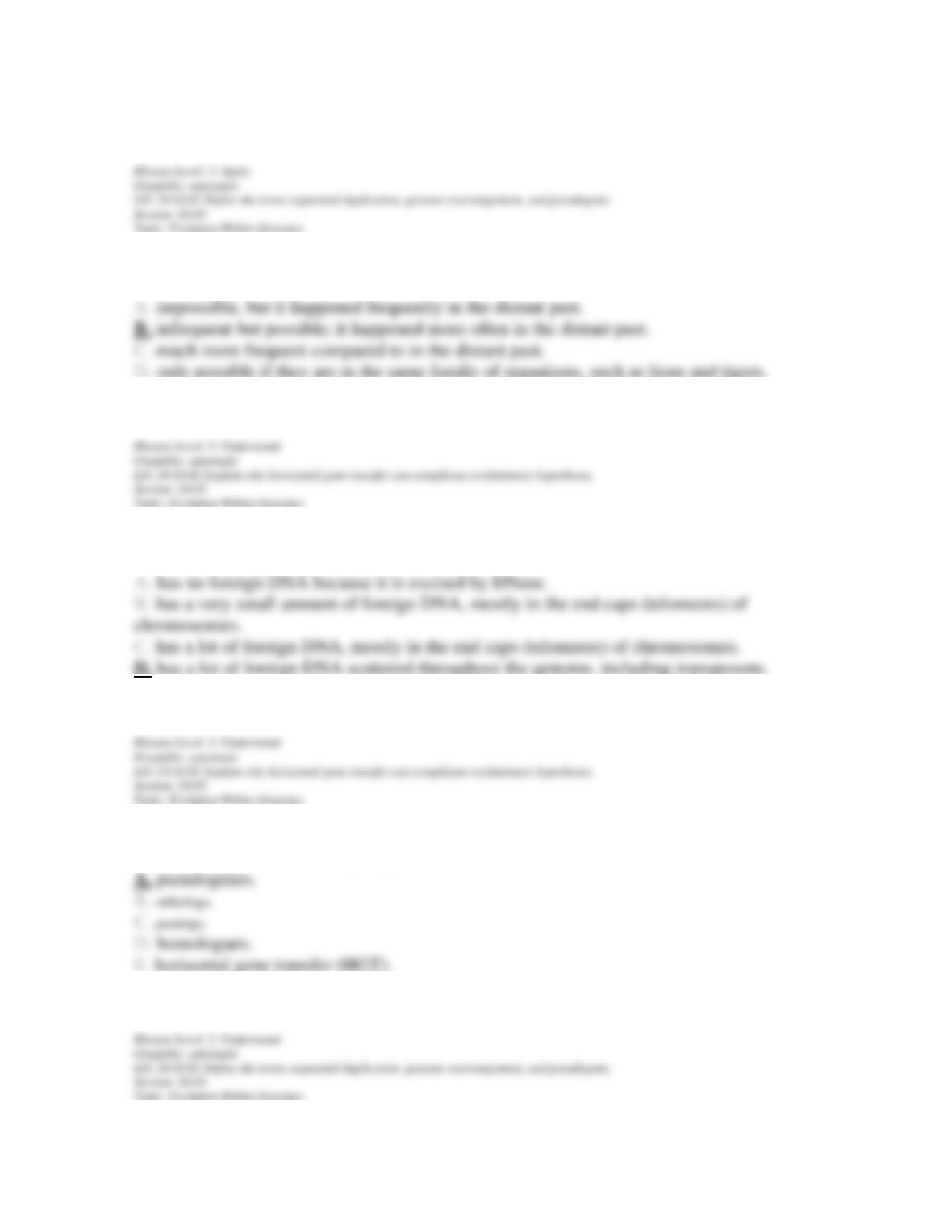
27. Today, gene swapping between two species is
28. The human genome
29. Gene inactivation is likely to produce
Chapter 24 – Genome Evolution
Check All That Apply Questions
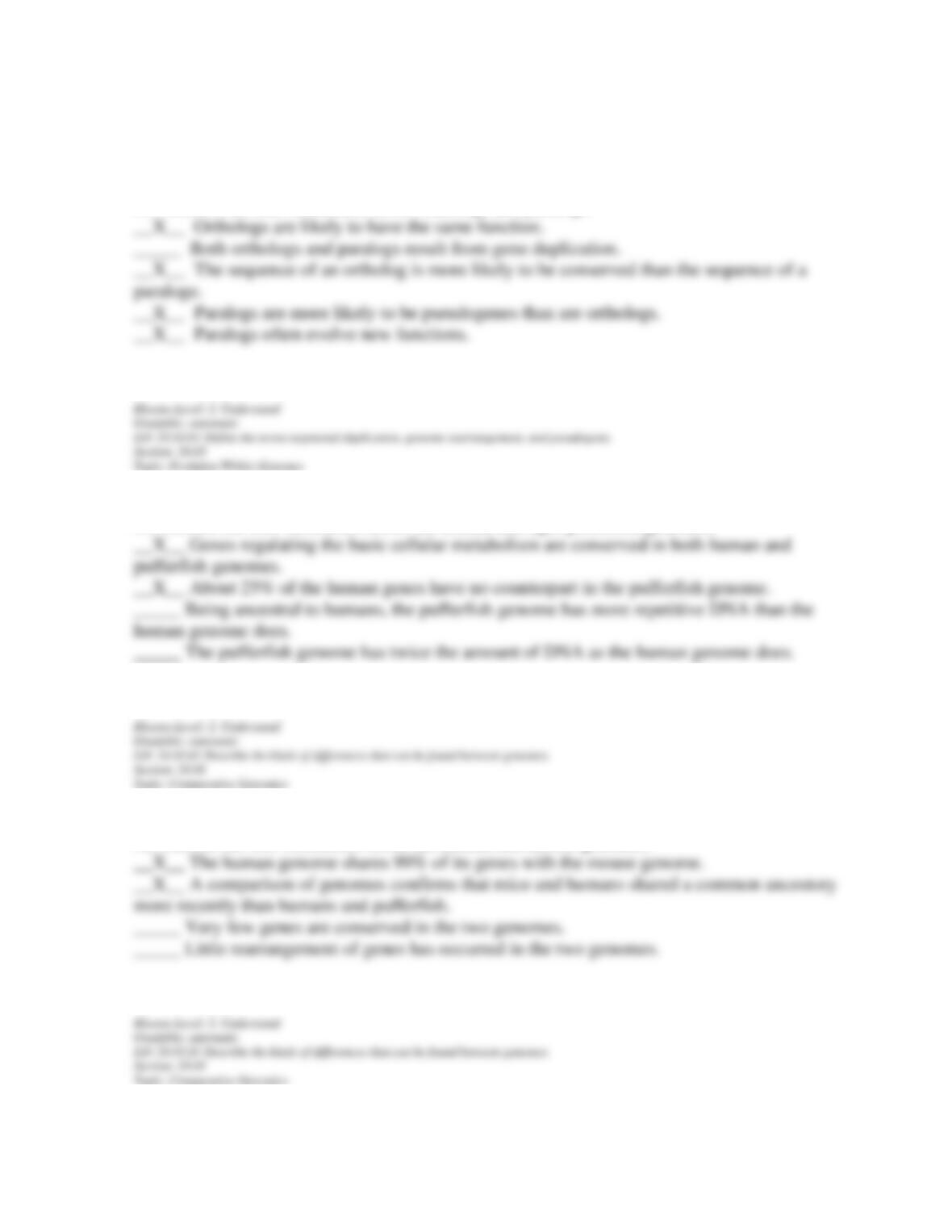
30. Choose the true statements about orthologs and paralogs.
31. Choose the true statements about the human and tiger pufferfish genomes.
32. Choose the true statements about the human and mouse genomes.
Chapter 24 – Genome Evolution
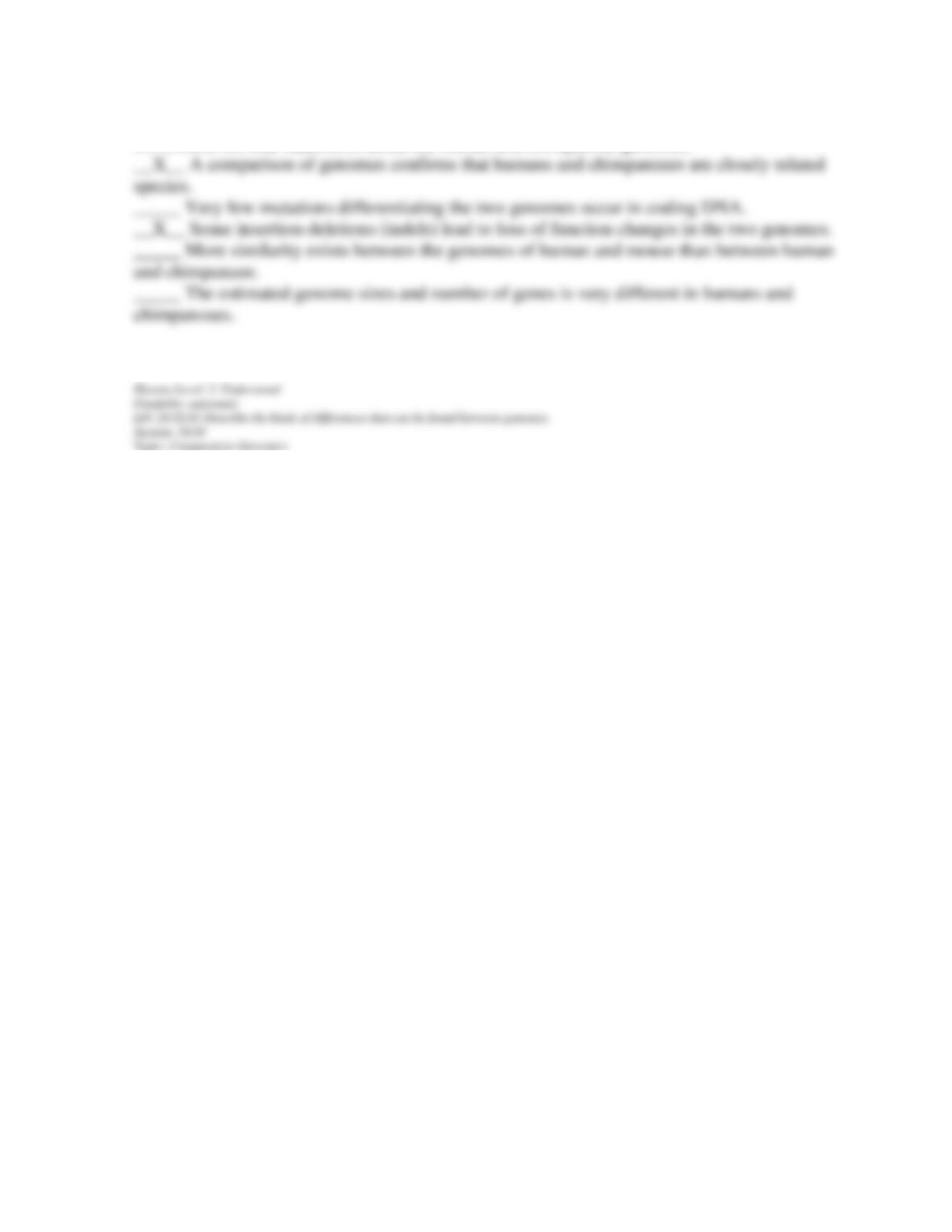
33. Choose the true statements about the human and chimpanzee genomes.
Chapter 24 – Genome Evolution
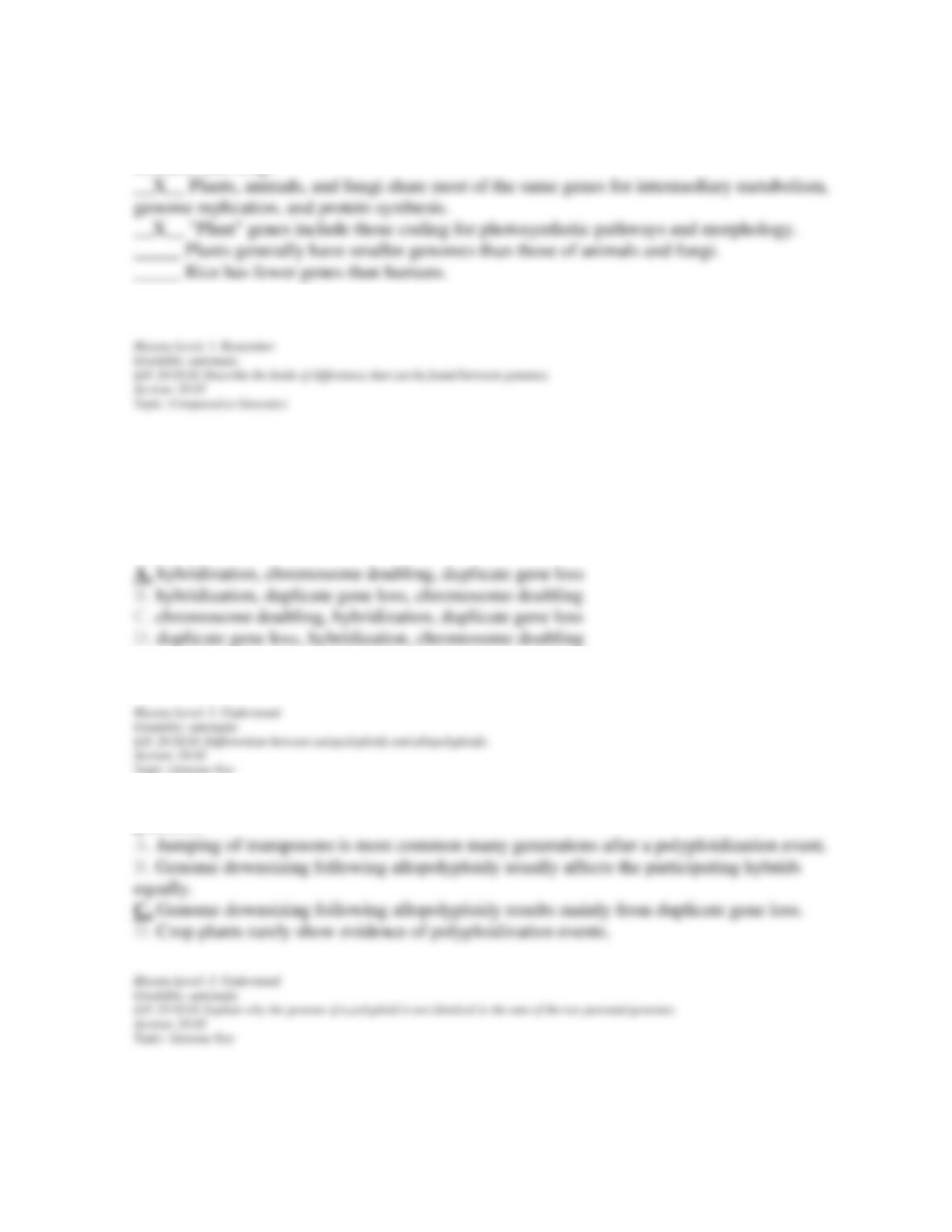
34. Choose the true statements about the genomes of plants (especially Arabidopsis and rice),
animals, and fungi.
Multiple Choice Questions
35. Choose the correct sequence of events involving allopolyploidy that gave rise to modern
tobacco.
36. Choose the true statement about the role of polyploidization in the evolution of plant
genomes.
Check All That Apply Questions
Chapter 24 – Genome Evolution
37. Choose the true statements about duplicate genes.
Multiple Choice Questions
38. Choose the most influential contributing factor to the reduced sense of smell in humans
compared with the other great apes.
39. Which one of the following statements about horizontal gene transfer is false?
Chapter 24 – Genome Evolution
40. Choose the true statement about foreign DNA in the human genome.
41. Choose the true statement about synteny.
Check All That Apply Questions
42. Choose the true statements about pseudogenes.
Multiple Choice Questions