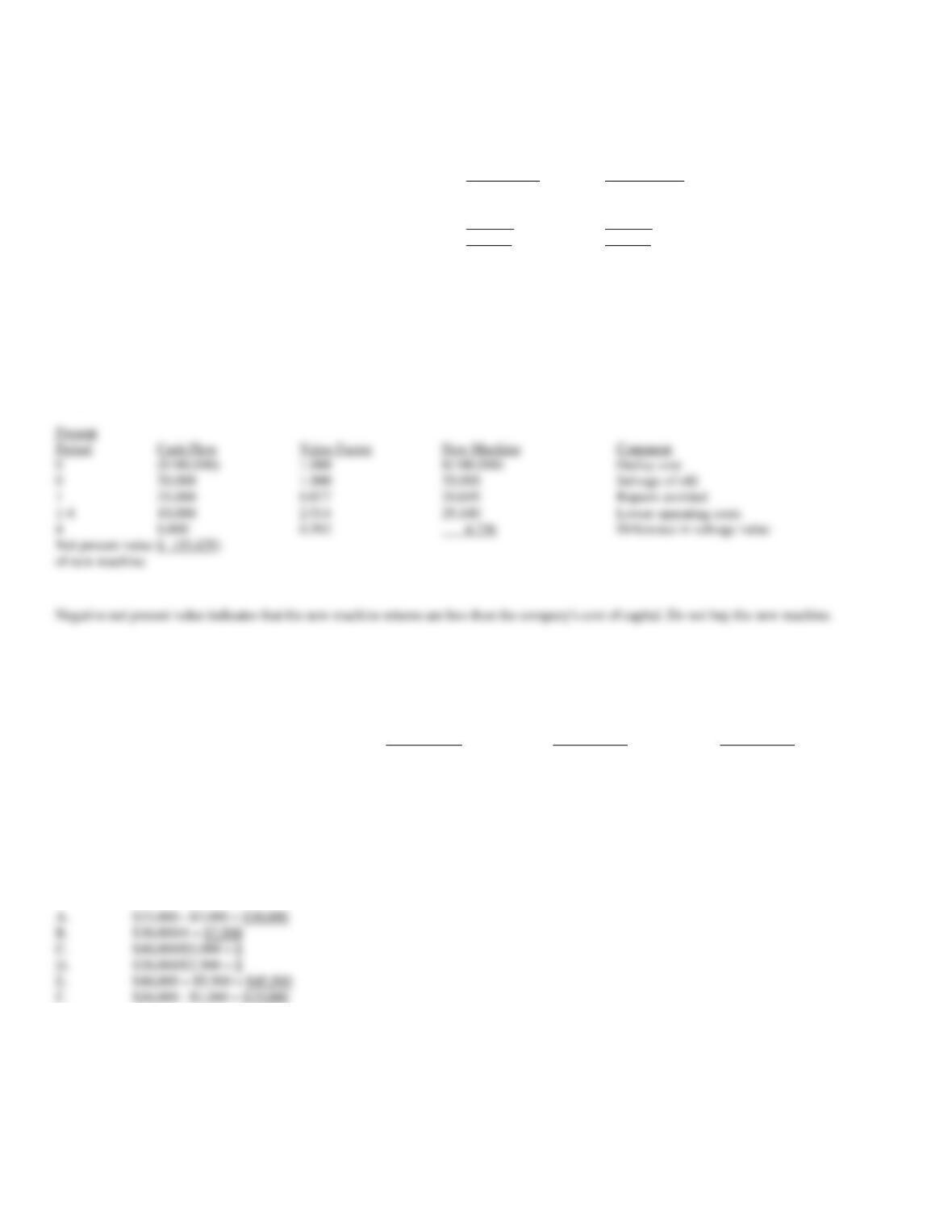
144. Dale Davis Company is evaluating a proposal to purchase a new machine that would cost $100,000 and
have a salvage value of $10,000 in four years. It would provide annual operating cash savings of $10,000, as
follows:
Old Machine
New Machine
Salaries
$40,000
$36,000
Supplies
7,000
5,000
Maintenance
9,000
5,000
Total
$56,000
$46,000
If the new machine is purchased, the old machine will be sold for its current salvage value of $20,000. If the new machine is not purchased, the old
machine will be disposed of in four years at a predicted salvage value of $2,000. The old machine’s present book value is $40,000. If kept, in one year
the old machine will require repairs predicted to cost $35,000.
Dale Davis’s cost of capital is 14 percent.
Required: Should the new machine be purchased? Why or why not?
145. Fill in the lettered blanks in the following table:
Investment A
Investment B
Investment C
Amount of investment
$40,000
(A)
$20,000
Economic life in years
10
5
8
Annual cash flow
$ 5,000
(B)
$ 2,500
Payback period in years
(C)
4
(D)
Present value of cash flows
(E)
$33,000
(F)
Net present value
$ 5,500
$ 3,000
($1,000)
$33,000 – $3,000 = $30,000
$30,000/4 = $7,500
$40,000/$5,000 = 8
$20,000/$2,500 = 8
$40,000 + $5,500 = $45,500
$20,000 – $1,000 = $19,000
Present
Period
Cash Flow
Value Factor
New Machine
Comment
0
($100,000)
1.000
$(100,000)
Outlay cost
0
20,000
1.000
20,000
Salvage of old
1
35,000
0.877
30,695
Repairs avoided
1-4
10,000
2.914
29,140
Lower operating costs
4
8,000
0.592
4,736
Difference in salvage value
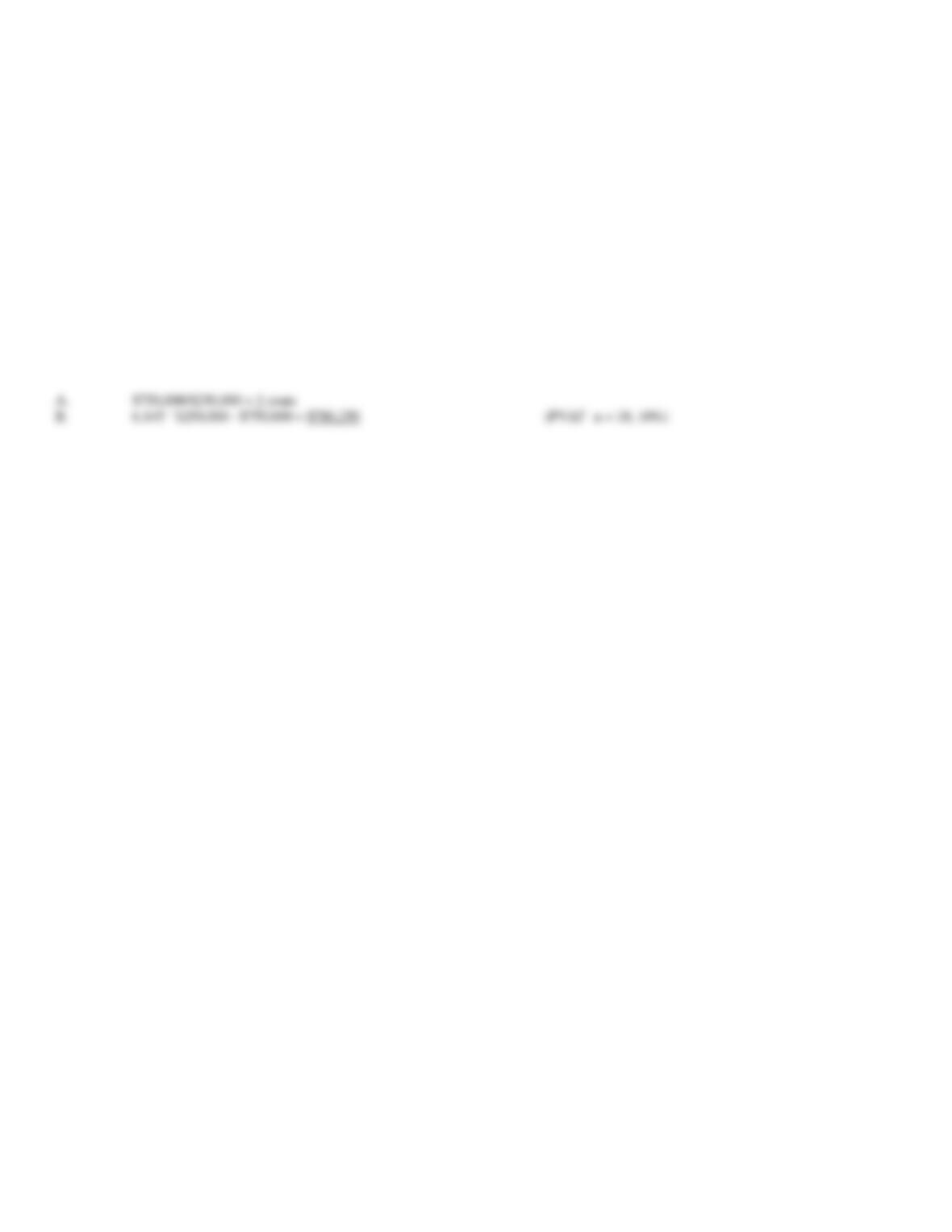
146. Barker Production Company is considering the purchase of a flexible manufacturing system. The annual
cash benefits/savings associated with the system are:
Decreased waste
$ 75,000
Increased quality
100,000
Decrease in operating costs
62,500
Increase in on-time deliveries
12,500
The system will cost $750,000 and will last ten years. The company’s cost of capital is 10 percent.
Required:
A.
What is the payback period for the flexible manufacturing system?
B.
What is the NPV for the flexible manufacturing system?
$750,000/$250,000 = 3 years
B.
6.145 ´ $250,000 – $750,000 = $786,250
(PVAF n = 10, 10%)
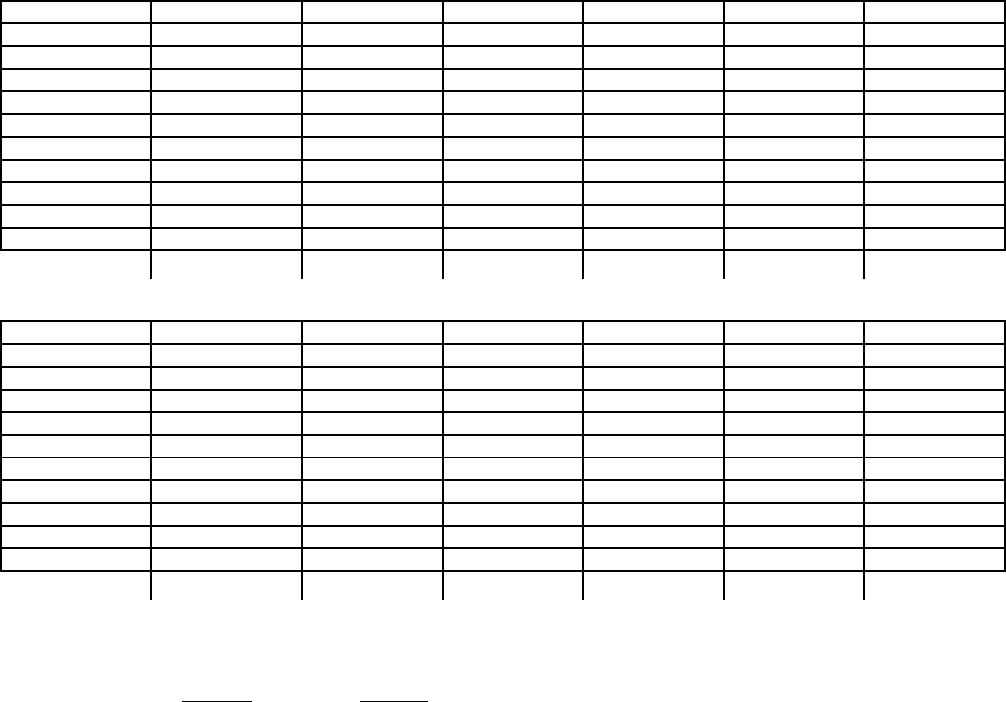
147. Figure 14-10.
Present value of $1
Periods
4%
6%
8%
10%
12%
14%
1
0.962
0.943
0.926
0.909
0.893
0.877
2
0.925
0.890
0.857
0.826
0.797
0.769
3
0.889
0.840
0.794
0.751
0.712
0.675
4
0.855
0.792
0.735
0.683
0.636
0.592
5
0.822
0.747
0.681
0.621
0.567
0.519
6
0.790
0.705
0.630
0.564
0.507
0.456
7
0.760
0.665
0.583
0.513
0.452
0.400
8
0.731
0.627
0.540
0.467
0.404
0.351
9
0.703
0.592
0.500
0.424
0.361
0.308
10
0.676
0.558
0.463
0.386
0.322
0.270
Present value of an Annuity of $1
Periods
4%
6%
8%
10%
12%
14%
1
0.962
0.943
0.926
0.909
0.893
0.877
2
1.886
1.833
1.783
1.736
1.690
1.647
3
2.775
2.673
2.577
2.487
2.402
2.322
4
3.630
3.465
3.312
3.170
3.037
2.914
5
4.452
4.212
3.993
3.791
3.605
3.433
6
5.242
4.917
4.623
4.355
4.111
3.889
7
6.002
5.582
5.206
4.868
4.564
4.288
8
6.733
6.210
5.747
5.335
4.968
4.639
9
7.435
6.802
6.247
5.759
5.328
4.946
10
8.111
7.360
6.710
6.145
5.650
5.216
Refer to Figure 14-10. Jimmy Reynolds is considering investing $12,000 in a project with the following cash revenues and expenses:
Revenues
Expenses
Year 1
$20,000
$18,000
Year 2
$22,000
$19,000
Year 3
$22,000
$20,000
Year 4
$22,000
$17,000
Year 5
$25,000
$17,000
Jimmy requires a minimum rate of return of 8 percent.
A.
Calculate the net cash inflows in each of the five years.
B.
What is the payback period?
C.
What is the net present value of the investment?
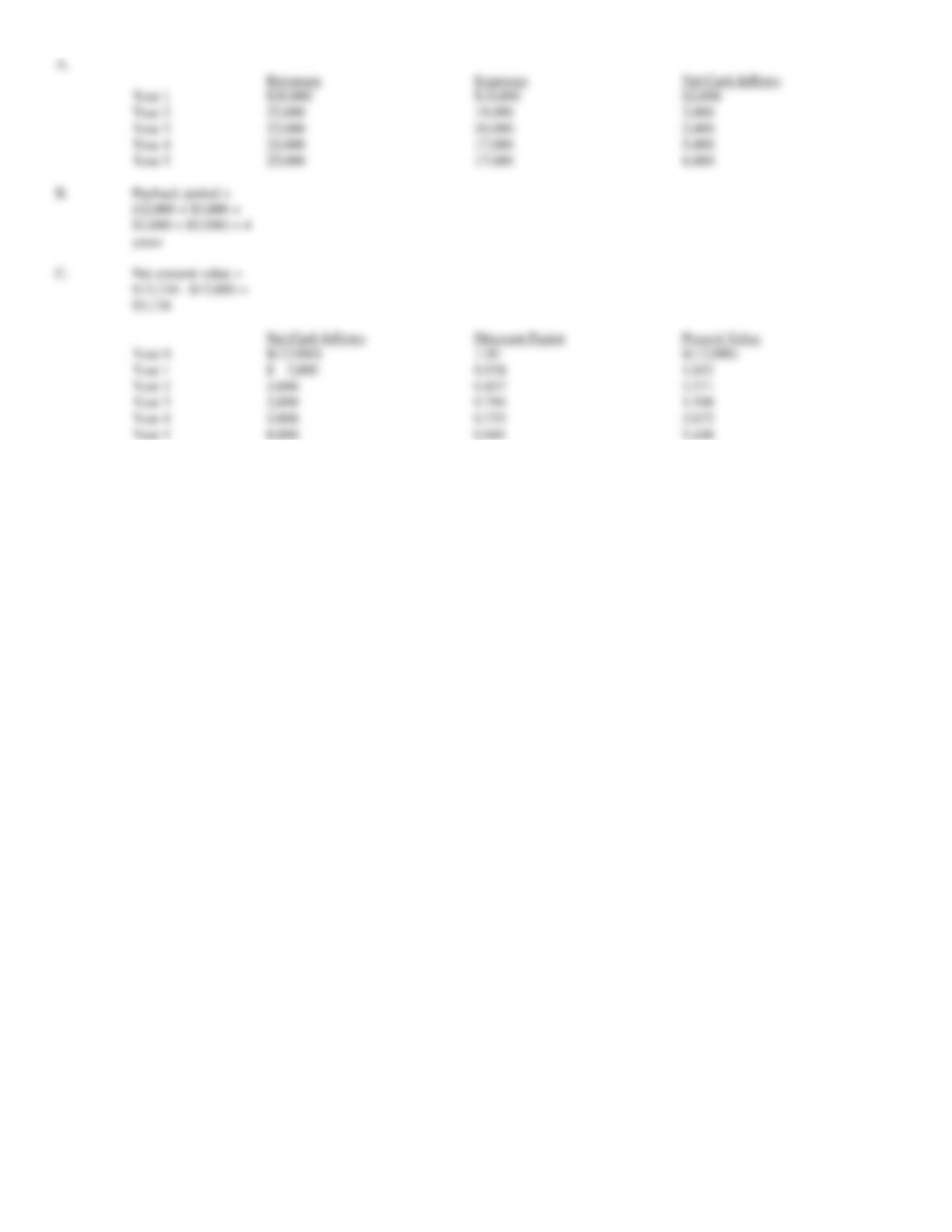
148. Figure 14-10.
Present value of $1
Periods
4%
6%
8%
10%
12%
14%
1
0.962
0.943
0.926
0.909
0.893
0.877
2
0.925
0.890
0.857
0.826
0.797
0.769
3
0.889
0.840
0.794
0.751
0.712
0.675
4
0.855
0.792
0.735
0.683
0.636
0.592
5
0.822
0.747
0.681
0.621
0.567
0.519
6
0.790
0.705
0.630
0.564
0.507
0.456
7
0.760
0.665
0.583
0.513
0.452
0.400
8
0.731
0.627
0.540
0.467
0.404
0.351
9
0.703
0.592
0.500
0.424
0.361
0.308
10
0.676
0.558
0.463
0.386
0.322
0.270
Present value of an Annuity of $1
Periods
4%
6%
8%
10%
12%
14%
1
0.962
0.943
0.926
0.909
0.893
0.877
2
1.886
1.833
1.783
1.736
1.690
1.647
3
2.775
2.673
2.577
2.487
2.402
2.322
4
3.630
3.465
3.312
3.170
3.037
2.914
5
4.452
4.212
3.993
3.791
3.605
3.433
6
5.242
4.917
4.623
4.355
4.111
3.889
7
6.002
5.582
5.206
4.868
4.564
4.288
8
6.733
6.210
5.747
5.335
4.968
4.639
9
7.435
6.802
6.247
5.759
5.328
4.946
10
8.111
7.360
6.710
6.145
5.650
5.216
Refer to Figure 14-10. Jasmine Company is considering an investment costing $20,000. The investment would return $8,000 per year in each of
three years. Jasmine requires a minimum rate of return of 6 percent.
A.
What is the payback period for the investment?
B.
What is the net present value of the investment?
C.
The internal rate of return is greater than __________________% and less than __________________%.
B.
Net present value
= $1,384
OR
149. Figure 14-10.
Present value of $1
Periods
4%
6%
8%
10%
12%
14%
1
0.962
0.943
0.926
0.909
0.893
0.877
2
0.925
0.890
0.857
0.826
0.797
0.769
3
0.889
0.840
0.794
0.751
0.712
0.675
4
0.855
0.792
0.735
0.683
0.636
0.592
5
0.822
0.747
0.681
0.621
0.567
0.519
6
0.790
0.705
0.630
0.564
0.507
0.456
7
0.760
0.665
0.583
0.513
0.452
0.400
8
0.731
0.627
0.540
0.467
0.404
0.351
9
0.703
0.592
0.500
0.424
0.361
0.308
10
0.676
0.558
0.463
0.386
0.322
0.270
Present value of an Annuity of $1
Periods
4%
6%
8%
10%
12%
14%
1
0.962
0.943
0.926
0.909
0.893
0.877
2
1.886
1.833
1.783
1.736
1.690
1.647
3
2.775
2.673
2.577
2.487
2.402
2.322
4
3.630
3.465
3.312
3.170
3.037
2.914
5
4.452
4.212
3.993
3.791
3.605
3.433
6
5.242
4.917
4.623
4.355
4.111
3.889
7
6.002
5.582
5.206
4.868
4.564
4.288
8
6.733
6.210
5.747
5.335
4.968
4.639
9
7.435
6.802
6.247
5.759
5.328
4.946
10
8.111
7.360
6.710
6.145
5.650
5.216
Refer to Figure 14-10. Geary Company is considering an investment costing $110,000. The investment would return $40,000 per year in each of
three years. Geary requires a minimum rate of return of 10%.
A.
What is the payback period for the investment?
B.
Using the Present Value of an Annuity of $1 table, calculate the net present value of the investment.
C.
The internal rate of return is greater than __________________% and less than __________________%.
D.
Now assume that the investment includes equipment that can be sold at the end of the third year for $10,000. What is the present
value of this investment?
Discount factor = $110,000/$40,000
= 2.75
D.
Net present value
= $40,000(0.909) + $40,000(0.826) + $50,000(0.751) –
150. Figure 14-10.
Present value of $1
Periods
4%
6%
8%
10%
12%
14%
1
0.962
0.943
0.926
0.909
0.893
0.877
2
0.925
0.890
0.857
0.826
0.797
0.769
3
0.889
0.840
0.794
0.751
0.712
0.675
4
0.855
0.792
0.735
0.683
0.636
0.592
5
0.822
0.747
0.681
0.621
0.567
0.519
6
0.790
0.705
0.630
0.564
0.507
0.456
7
0.760
0.665
0.583
0.513
0.452
0.400
8
0.731
0.627
0.540
0.467
0.404
0.351
9
0.703
0.592
0.500
0.424
0.361
0.308
10
0.676
0.558
0.463
0.386
0.322
0.270
Present value of an Annuity of $1
Periods
4%
6%
8%
10%
12%
14%
1
0.962
0.943
0.926
0.909
0.893
0.877
2
1.886
1.833
1.783
1.736
1.690
1.647
3
2.775
2.673
2.577
2.487
2.402
2.322
4
3.630
3.465
3.312
3.170
3.037
2.914
5
4.452
4.212
3.993
3.791
3.605
3.433
6
5.242
4.917
4.623
4.355
4.111
3.889
7
6.002
5.582
5.206
4.868
4.564
4.288
8
6.733
6.210
5.747
5.335
4.968
4.639
9
7.435
6.802
6.247
5.759
5.328
4.946
10
8.111
7.360
6.710
6.145
5.650
5.216
Refer to Figure 14-10. Howard-Parr Company is considering an investment that will have an initial cost of $500,000 and yield annual net cash
inflows of $130,000. Yearly depreciation will be $100,000. The equipment is expected to be useful for five years, at which point it will be scrapped
with no salvage value. Howard-Parr requires a minimum rate of return of 10 percent.
A.
What is the accounting rate of return?
B.
What is the net present value? Is the investment acceptable?
C.
Now suppose that Howard-Parr believes it can sell the equipment at the end of 5 years for $50,000. What is the net present value? Is
the investment acceptable?
D.
What can you say about the IRR in the first case (no salvage value) versus the IRR in the second case ($50,000 salvage value)?
ARR = ($130,000 – $100,000)/$500,000 = 0.06 or 6%
NPV = ($130,000 ´ 3.791) – $500,000 = ($7,170)
NPV = ($130,000 ´ 3.791) + ($50,000 ´ 0.621) – $500,000 = $23,880
Now the investment is acceptable because the NPV is positive.
In the first instance, the IRR must be lower than 10% but not by a great deal. We know this because the NPV in the first case is
negative. In the second instance, the IRR is higher than 10% because the NPV is positive.
151. Figure 14-10.
Present value of $1
Periods
4%
6%
8%
10%
12%
14%
1
0.962
0.943
0.926
0.909
0.893
0.877
2
0.925
0.890
0.857
0.826
0.797
0.769
3
0.889
0.840
0.794
0.751
0.712
0.675
4
0.855
0.792
0.735
0.683
0.636
0.592
5
0.822
0.747
0.681
0.621
0.567
0.519
6
0.790
0.705
0.630
0.564
0.507
0.456
7
0.760
0.665
0.583
0.513
0.452
0.400
8
0.731
0.627
0.540
0.467
0.404
0.351
9
0.703
0.592
0.500
0.424
0.361
0.308
10
0.676
0.558
0.463
0.386
0.322
0.270
Present value of an Annuity of $1
Periods
4%
6%
8%
10%
12%
14%
1
0.962
0.943
0.926
0.909
0.893
0.877
2
1.886
1.833
1.783
1.736
1.690
1.647
3
2.775
2.673
2.577
2.487
2.402
2.322
4
3.630
3.465
3.312
3.170
3.037
2.914
5
4.452
4.212
3.993
3.791
3.605
3.433
6
5.242
4.917
4.623
4.355
4.111
3.889
7
6.002
5.582
5.206
4.868
4.564
4.288
8
6.733
6.210
5.747
5.335
4.968
4.639
9
7.435
6.802
6.247
5.759
5.328
4.946
10
8.111
7.360
6.710
6.145
5.650
5.216
Refer to Figure 14-10. A company is considering two modifications to its current manufacturing process. The after-tax cash flows associated with
the two investments are:
Year
Project I
Project II
0
$(37,500)
$(150,000)
1
—
91,075
2
$50,460
91,075
The company’s cost of capital is 12 percent.
A.
Compute the net present value for each investment.
B.
Computer the internal rate of return for each investment.
C.
Which project is better? Explain your reasoning.
NPV Project I = ($50,460 ´ 0.797) – $37,500 = $2,717
NPV Project II = ($91,075 ´ 1.690) – $150,000 = $3,917
B.
IRR Project I: discount factor = $37,500/$50,460 = 0.743*
corresponding to IRR = 16%*
IRR Project II: discount factor = $150,000/$91,075 = 1.647
corresponding to IRR = 14%
152. Figure 14-10.
Present value of $1
Periods
4%
6%
8%
10%
12%
14%
1
0.962
0.943
0.926
0.909
0.893
0.877
2
0.925
0.890
0.857
0.826
0.797
0.769
3
0.889
0.840
0.794
0.751
0.712
0.675
4
0.855
0.792
0.735
0.683
0.636
0.592
5
0.822
0.747
0.681
0.621
0.567
0.519
6
0.790
0.705
0.630
0.564
0.507
0.456
7
0.760
0.665
0.583
0.513
0.452
0.400
8
0.731
0.627
0.540
0.467
0.404
0.351
9
0.703
0.592
0.500
0.424
0.361
0.308
10
0.676
0.558
0.463
0.386
0.322
0.270
Present value of an Annuity of $1
Periods
4%
6%
8%
10%
12%
14%
1
0.962
0.943
0.926
0.909
0.893
0.877
2
1.886
1.833
1.783
1.736
1.690
1.647
3
2.775
2.673
2.577
2.487
2.402
2.322
4
3.630
3.465
3.312
3.170
3.037
2.914
5
4.452
4.212
3.993
3.791
3.605
3.433
6
5.242
4.917
4.623
4.355
4.111
3.889
7
6.002
5.582
5.206
4.868
4.564
4.288
8
6.733
6.210
5.747
5.335
4.968
4.639
9
7.435
6.802
6.247
5.759
5.328
4.946
10
8.111
7.360
6.710
6.145
5.650
5.216
Refer to Figure 14-10. Ray Corporation is looking to invest in a new piece of equipment. Two manufacturers of this type of equipment are being
considered. After-tax inflows for the two competing projects are:
Year
Fallon Equipment Inc.
Toller Equipment Inc.
1
275,000
70,000
2
225,000
70,000
3
185,000
285,000
4
140,000
330,000
5
65,000
390,000
Both projects require an initial investment of $400,000. In both cases, assume that the equipment has a life of five years with no salvage value.
Required:
A. Assuming a discount rate of 8 percent, compute the net present value of each piece of equipment.
B. A third option is now available for a supplier outside of the country. The cost is also $400,000, but it will produce even cash flows over its five–
year life. What must the annual cash flow be for this equipment to be selected over the other two? Assume an 8 percent discount rate.
153. Figure 14-10.
Present value of $1
Periods
4%
6%
8%
10%
12%
14%
1
0.962
0.943
0.926
0.909
0.893
0.877
2
0.925
0.890
0.857
0.826
0.797
0.769
3
0.889
0.840
0.794
0.751
0.712
0.675
4
0.855
0.792
0.735
0.683
0.636
0.592
5
0.822
0.747
0.681
0.621
0.567
0.519
6
0.790
0.705
0.630
0.564
0.507
0.456
7
0.760
0.665
0.583
0.513
0.452
0.400
8
0.731
0.627
0.540
0.467
0.404
0.351
9
0.703
0.592
0.500
0.424
0.361
0.308
10
0.676
0.558
0.463
0.386
0.322
0.270
Present value of an Annuity of $1
Periods
4%
6%
8%
10%
12%
14%
1
0.962
0.943
0.926
0.909
0.893
0.877
2
1.886
1.833
1.783
1.736
1.690
1.647
3
2.775
2.673
2.577
2.487
2.402
2.322
4
3.630
3.465
3.312
3.170
3.037
2.914
5
4.452
4.212
3.993
3.791
3.605
3.433
6
5.242
4.917
4.623
4.355
4.111
3.889
7
6.002
5.582
5.206
4.868
4.564
4.288
8
6.733
6.210
5.747
5.335
4.968
4.639
9
7.435
6.802
6.247
5.759
5.328
4.946
10
8.111
7.360
6.710
6.145
5.650
5.216
Refer to Figure 14-10. Durrel Company is considering two different modifications to its current manufacturing process. The after-tax cash flows
associated with the two investments are as follows:
Year
Project A
Project B
0
(220,000)
(220,000)
1
–
88,500
2
–
88,500
3
285,000
88,500
Durrel’s cost of capital is 6 percent.
Required:
A. Compute the NPV for each investment and state which project should be chosen based on the NPV.
B. Compute the IRR for each investment and state which project should be chosen based on the IRR.
154. Figure 14-11.
Present value of an Annuity of $1 in Arrears
Periods
4%
6%
8%
10%
12%
14%
1
0.962
0.943
0.926
0.909
0.893
0.877
2
1.886
1.833
1.783
1.736
1.690
1.647
3
2.775
2.673
2.577
2.487
2.402
2.322
4
3.630
3.465
3.312
3.170
3.037
2.914
5
4.452
4.212
3.993
3.791
3.605
4.433
6
5.242
4.917
4.623
4.355
4.111
3.889
7
6.002
5.582
5.206
4.868
4.564
4.288
8
6.733
6.210
5.747
5.335
4.968
4.639
9
7.435
6.802
6.247
5.759
5.328
4.946
10
8.111
7.360
6.710
6.145
5.650
5.216
Refer to Figure 14-11. Aragon Company is considering an investment in equipment that will have an initial cost of $560,290 and yield annual net
cash inflows of $90,000. Yearly depreciation will be $56,000. The equipment is expected to be useful for 10 years and then it will be scrapped.
Aragon requires a minimum rate of return of 10 percent.
A.
What is the payback period?
B.
What is the accounting rate of return?
C.
What is the net present value?
D.
What is the approximate internal rate of return?
A.
Payback period = $560,290/$90,000 = 6.2 years
B.
ARR = ($90,000 – $56,000)/$560,290 = 0.06068 or 6.07%
C.
NPV = ($90,000 ´ 6.145) – $560,290 = ($7,240)
D.
Discount factor = $560,290/$90,000 = 6.225
corresponding to an IRR of slightly below 10%
155. Figure 14-11.
Present value of an Annuity of $1 in Arrears
Periods
4%
6%
8%
10%
12%
14%
1
0.962
0.943
0.926
0.909
0.893
0.877
2
1.886
1.833
1.783
1.736
1.690
1.647
3
2.775
2.673
2.577
2.487
2.402
2.322
4
3.630
3.465
3.312
3.170
3.037
2.914
5
4.452
4.212
3.993
3.791
3.605
4.433
6
5.242
4.917
4.623
4.355
4.111
3.889
7
6.002
5.582
5.206
4.868
4.564
4.288
8
6.733
6.210
5.747
5.335
4.968
4.639
9
7.435
6.802
6.247
5.759
5.328
4.946
10
8.111
7.360
6.710
6.145
5.650
5.216
Refer to Figure 14-11. Cleves Company is considering two projects.
Project X
Project Y
Initial investment
$500,000
$100,000
Annual cash flows
$ 88,500
$ 34,320
Life of the project
10 years
4 years
Depreciation per year
$ 50,000
$ 25,000
Cleves requires a minimum rate of return of 8 percent.
A.
What is the accounting rate of return for each project?
B.
What is the net present value for each project?
C.
What is the internal rate of return for each project?
D.
Given that only one project can be selected, which project should be chosen? Explain your reasoning.
A.
Project X, ARR = ($88,500 – $50,000)/$500,000 = 0.077 or 7.7%
Project Y, ARR = ($34,320 – $25,000)/$100,000 = 0.0932 or 9.32%
B.
Project X, NPV = ($88,500 ´ 6.71) – $500,000 = $93,835
Project Y, NPV = ($34,320 ´ 3.312) – $100,000 = $13,668
C.
Project X, Discount factor = $500,000/$88,500 = 5.650
corresponding to IRR of 12%
Project Y, Discount factor = $100,000/$34,320 = 2.914
corresponding to IRR of 14%
156. Figure 14-11.
Present value of an Annuity of $1 in Arrears
Periods
4%
6%
8%
10%
12%
14%
1
0.962
0.943
0.926
0.909
0.893
0.877
2
1.886
1.833
1.783
1.736
1.690
1.647
3
2.775
2.673
2.577
2.487
2.402
2.322
4
3.630
3.465
3.312
3.170
3.037
2.914
5
4.452
4.212
3.993
3.791
3.605
4.433
6
5.242
4.917
4.623
4.355
4.111
3.889
7
6.002
5.582
5.206
4.868
4.564
4.288
8
6.733
6.210
5.747
5.335
4.968
4.639
9
7.435
6.802
6.247
5.759
5.328
4.946
10
8.111
7.360
6.710
6.145
5.650
5.216
Refer to Figure 14-11. Lyster Company wants to buy a new machine that will be able to perform many of the steps in the manufacturing process
that they currently have to do manually. The hope is that it will reduce the amount of time it takes to create one unit and reduce the number of
defective units. The machine requires an investment of $750,000. The machine will last six years with no expected salvage value. The expected
after-tax cash flows associated with the project are as follows:
Year
Cash revenues
Cash expenses
1
825,000
510,000
2
825,000
510,000
3
825,000
510,000
4
825,000
510,000
5
825,000
510,000
6
825,000
510,000
Required:
A. Compute the payback period for the new machine.
B. Compute the new machine’s ARR.
C. Compute the investment’s NPV, assuming a required rate of return of 12 percent.
Payback period = original investment/annual cash inflow
$750,000/($825,000 – $510,000) = 2.38 years
Annual depreciation = $750,000/6 years = $125,000
ARR = average annual income/investment
($315,000 – $125,000)/$750,000 = 0.253 or 25.3%
$315,000 x 4.111 = $1,294,965 – $750,000 = $544,965
157. What is a capital investment decision? Give an example.
158. Name two nondiscounting capital investment models. What is meant by nondiscounting?
159. What are some reasons why firms use the payback period model in capital investment decision making?
Commonly cited reasons include:
160. Which model of capital investment decision making is most widely used? Why?
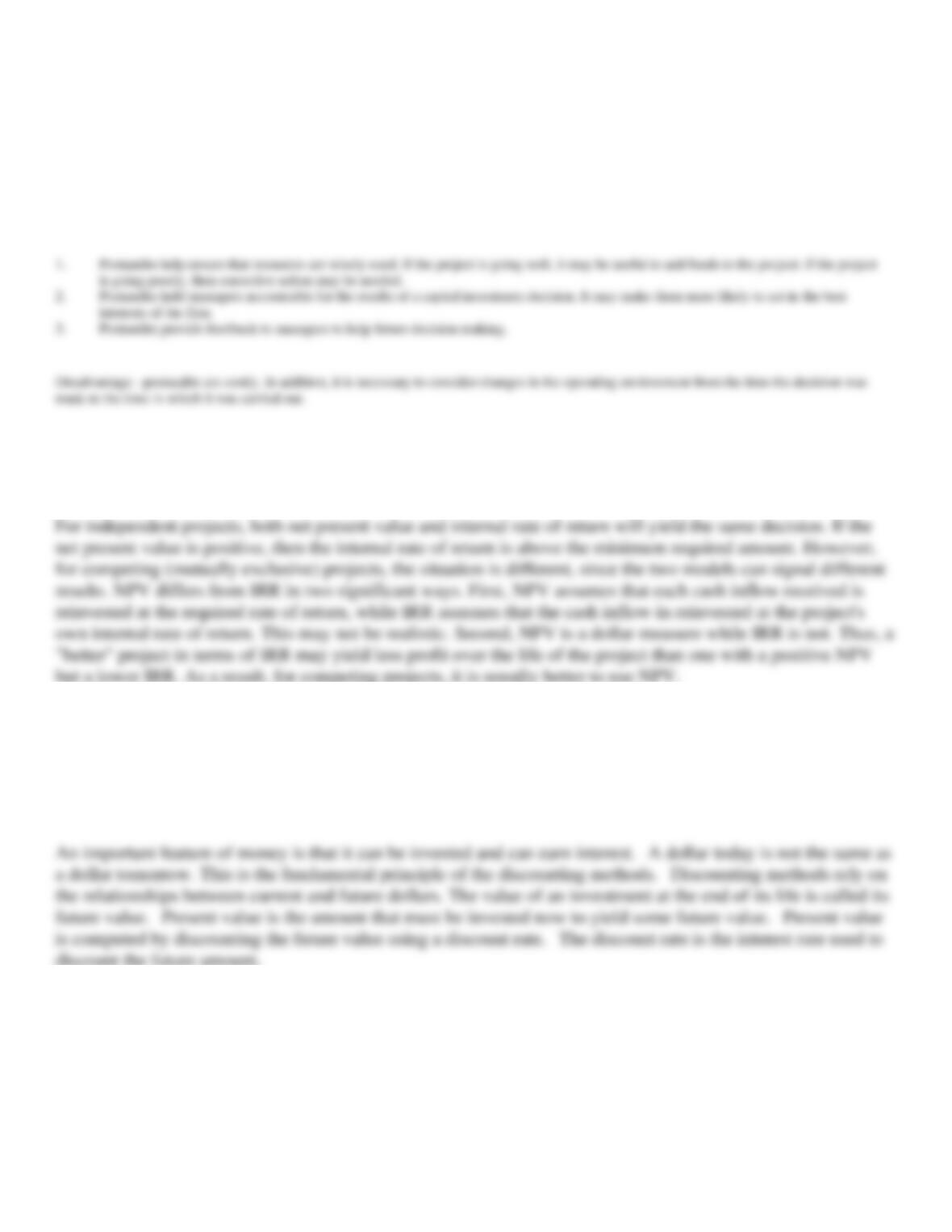
161. What is a postaudit? What are the advantages and disadvantages of the postaudit?
A postaudit compares the actual benefits with the estimated benefits and actual operating costs with the
estimated operating costs. It evaluates the overall outcome of the investment and proposes corrective action if
necessary.
Advantages:
162. Which model is better for independent projects – net present value or internal rate of return? For mutually
exclusive projects? Explain your reasoning for each case.
163. You decide
Explain the relationship between current and future dollars.
discount the future amount.