Chapter 23 – Systematics, Phylogenies, and Comparative Biology
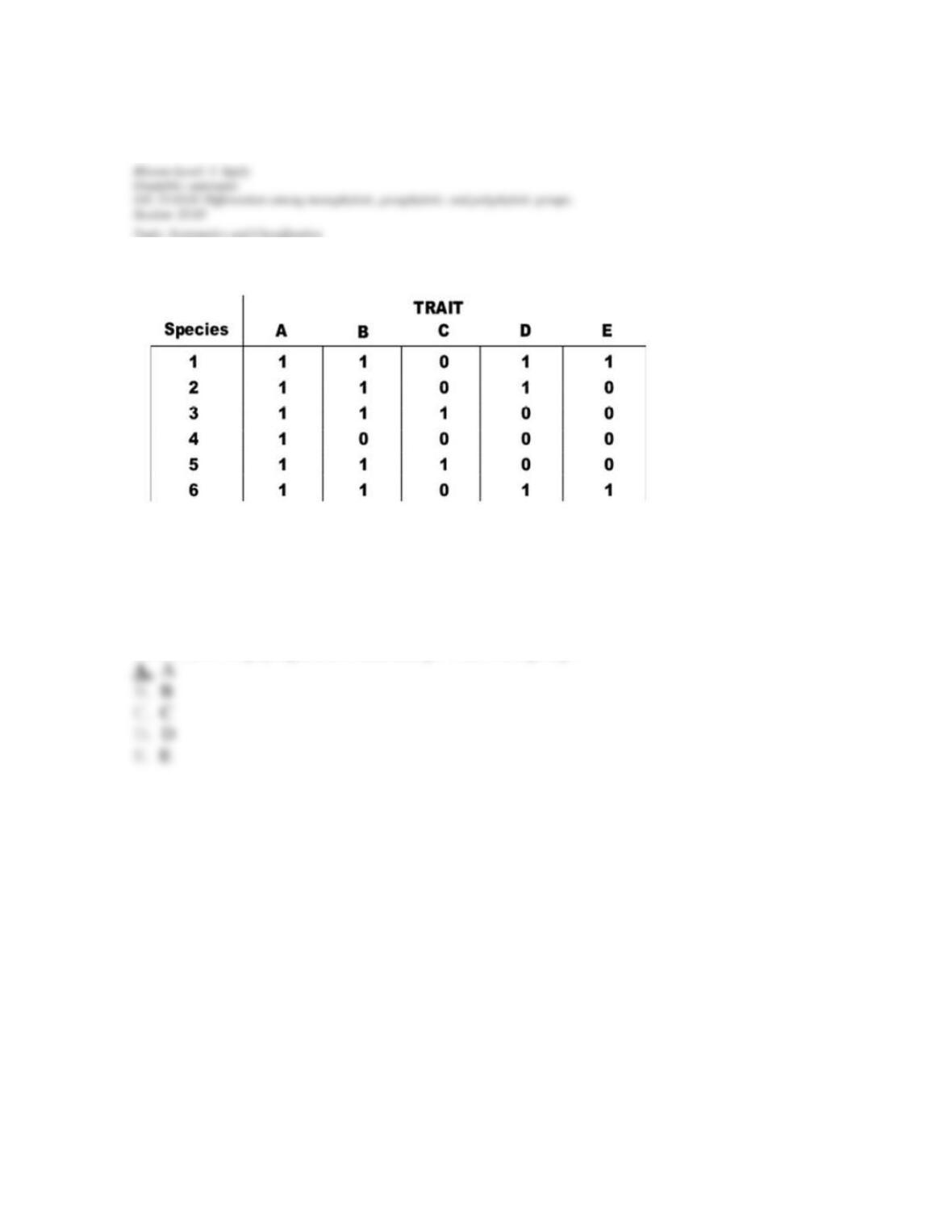
28. The table shows the distribution of traits (A-E) in six extant species (1-6). A “0” indicates
the ancestral condition, while “1” indicates the derived condition. Which trait is least
informative of phylogenetic relationships within the group?
Chapter 23 – Systematics, Phylogenies, and Comparative Biology
Clarify Question
•
What is the key concept addressed by the question?
•
What type of thinking is required?
•
What key words does the question contain and what do they mean?
Gather Content
•
What do you already know about cladistics?
Consider Possibilities
•
What other information is related to the question? Which information is most useful?
Choose Answer
•
Given what you now know, what information and/or problem solving approach is most
likely to produce the correct answer?
Reflect on Process
•
Did your problem-solving process lead you to the correct answer? If not, where did the
process break down or lead you astray? How can you revise your approach to produce a
more desirable result?
Chapter 23 – Systematics, Phylogenies, and Comparative Biology
29. The table shows the distribution of traits (A-E) in six extant species (1-6). A “0” indicates
the ancestral condition, while “1” indicates the derived condition. Based on this data, which
species would be considered the outgroup?
Chapter 23 – Systematics, Phylogenies, and Comparative Biology
Clarify Question
•
What is the key concept addressed by the question?
•
What type of thinking is required?
•
What key words does the question contain and what do they mean?
Gather Content
•
What do you already know about cladistics?
Consider Possibilities
•
What other information is related to the question? Which information is most useful?
Choose Answer
•
Given what you now know, what information and/or problem solving approach is most
likely to produce the correct answer?
Reflect on Process
Chapter 23 – Systematics, Phylogenies, and Comparative Biology
•
Did your problem-solving process lead you to the correct answer? If not, where did the
process break down or lead you astray? How can you revise your approach to produce a
more desirable result?
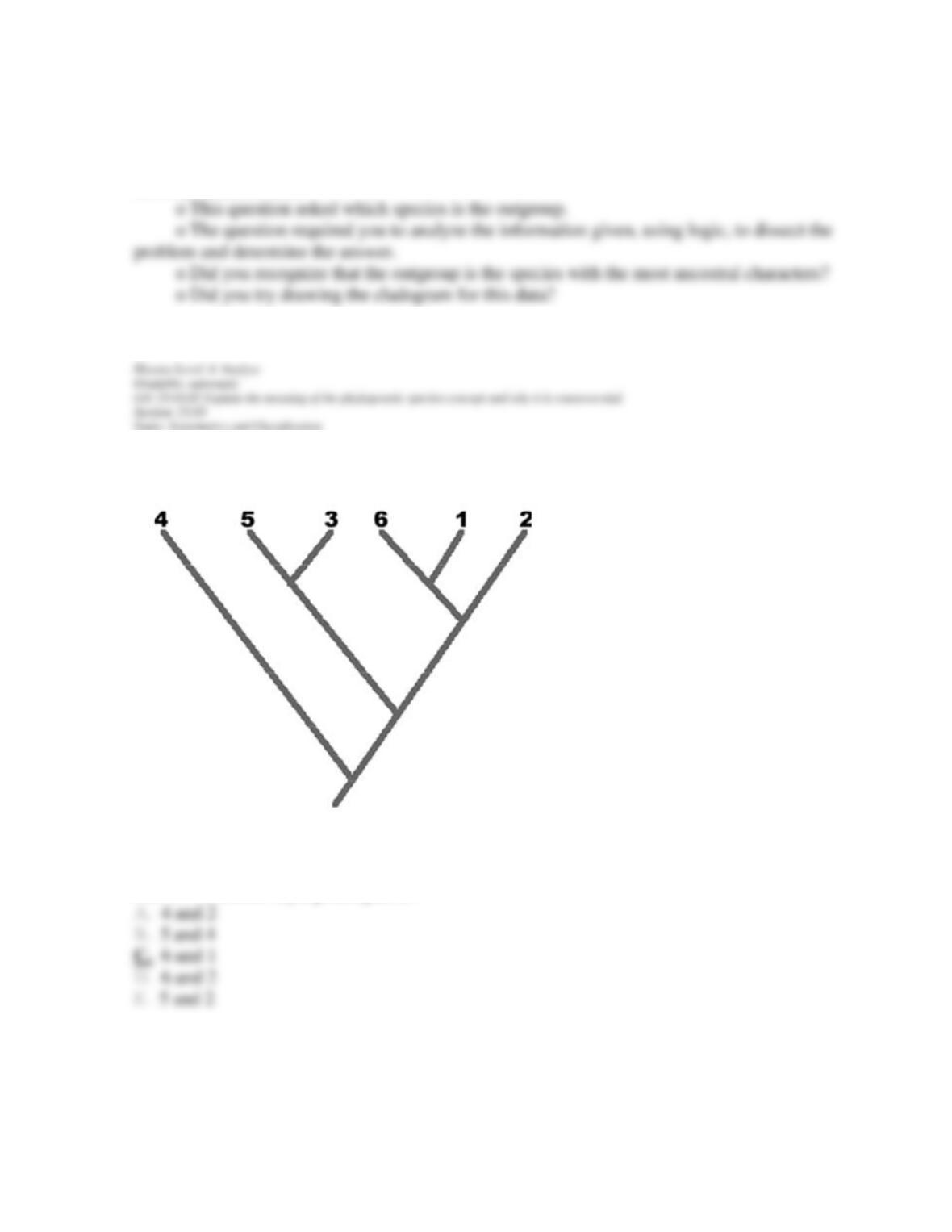
30. Consider the cladogram shown. Which pair of species shares the greatest number of
derived characters (synapomorphies)?
Chapter 23 – Systematics, Phylogenies, and Comparative Biology
Clarify Question
•
What is the key concept addressed by the question?
•
What type of thinking is required?
•
What key words does the question contain and what do they mean?
Gather Content
•
What do you already know about cladistics?
Consider Possibilities
•
What other information is related to the question? Which information is most useful?
Choose Answer
•
Given what you now know, what information and/or problem solving approach is most
likely to produce the correct answer?
Reflect on Process
•
Did your problem-solving process lead you to the correct answer? If not, where did the
process break down or lead you astray? How can you revise your approach to produce a
more desirable result?
Chapter 23 – Systematics, Phylogenies, and Comparative Biology
31. Consider the cladogram shown. Based on this cladogram, which species has the greatest
number of ancestral character states?
Chapter 23 – Systematics, Phylogenies, and Comparative Biology
Clarify Question
•
What is the key concept addressed by the question?
•
What type of thinking is required?
•
What key words does the question contain and what do they mean?
Gather Content
•
What do you already know about cladistics?
Consider Possibilities
•
What other information is related to the question? Which information is most useful?
Choose Answer
•
Given what you now know, what information and/or problem solving approach is most
Reflect on Process
•
Did your problem-solving process lead you to the correct answer? If not, where did the
process break down or lead you astray? How can you revise your approach to produce a
more desirable result?
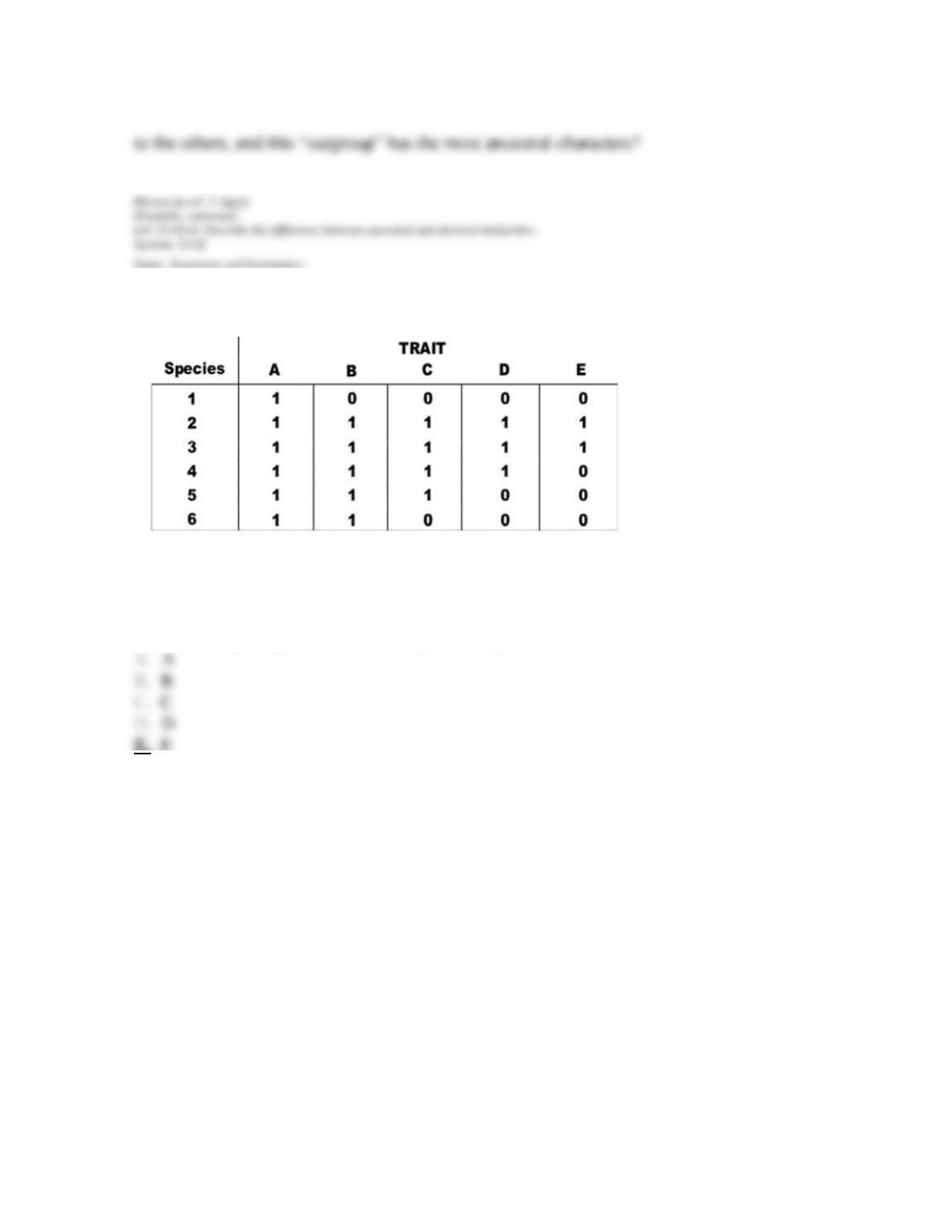
Chapter 23 – Systematics, Phylogenies, and Comparative Biology
32. The table shows the distribution of traits (A-E) in six extant species (1-6). A “0”
indicates the ancestral condition, while a “1” indicates the derived condition. Which trait is
represented by the greatest number of plesiomorphies?
Chapter 23 – Systematics, Phylogenies, and Comparative Biology
Clarify Question
•
What is the key concept addressed by the question?
•
What type of thinking is required?
•
What key words does the question contain and what do they mean?
Gather Content
•
What do you already know about cladistics?
Consider Possibilities
•
What other information is related to the question? Which information is most useful?
Choose Answer
•
Given what you now know, what information and/or problem solving approach is most
likely to produce the correct answer?
Reflect on Process
•
Did your problem-solving process lead you to the correct answer? If not, where did the
process break down or lead you astray? How can you revise your approach to produce a
more desirable result?
Chapter 23 – Systematics, Phylogenies, and Comparative Biology
33. The table shows the distribution of traits (A-E) in six extant species (1-6). A “0” indicates
the ancestral condition, while a “1” indicates the derived condition. Based on this data, which
pair of species diverged most recently?
Chapter 23 – Systematics, Phylogenies, and Comparative Biology
Clarify Question
•
What is the key concept addressed by the question?
•
What type of thinking is required?
•
What key words does the question contain and what do they mean?
Gather Content
•
What do you already know about cladistics?
Consider Possibilities
•
What other information is related to the question? Which information is most useful?
Choose Answer
•
Given what you now know, what information and/or problem solving approach is most
likely to produce the correct answer?
Reflect on Process
•
Did your problem-solving process lead you to the correct answer? If not, where did the
process break down or lead you astray? How can you revise your approach to produce a
more desirable result?
Chapter 23 – Systematics, Phylogenies, and Comparative Biology
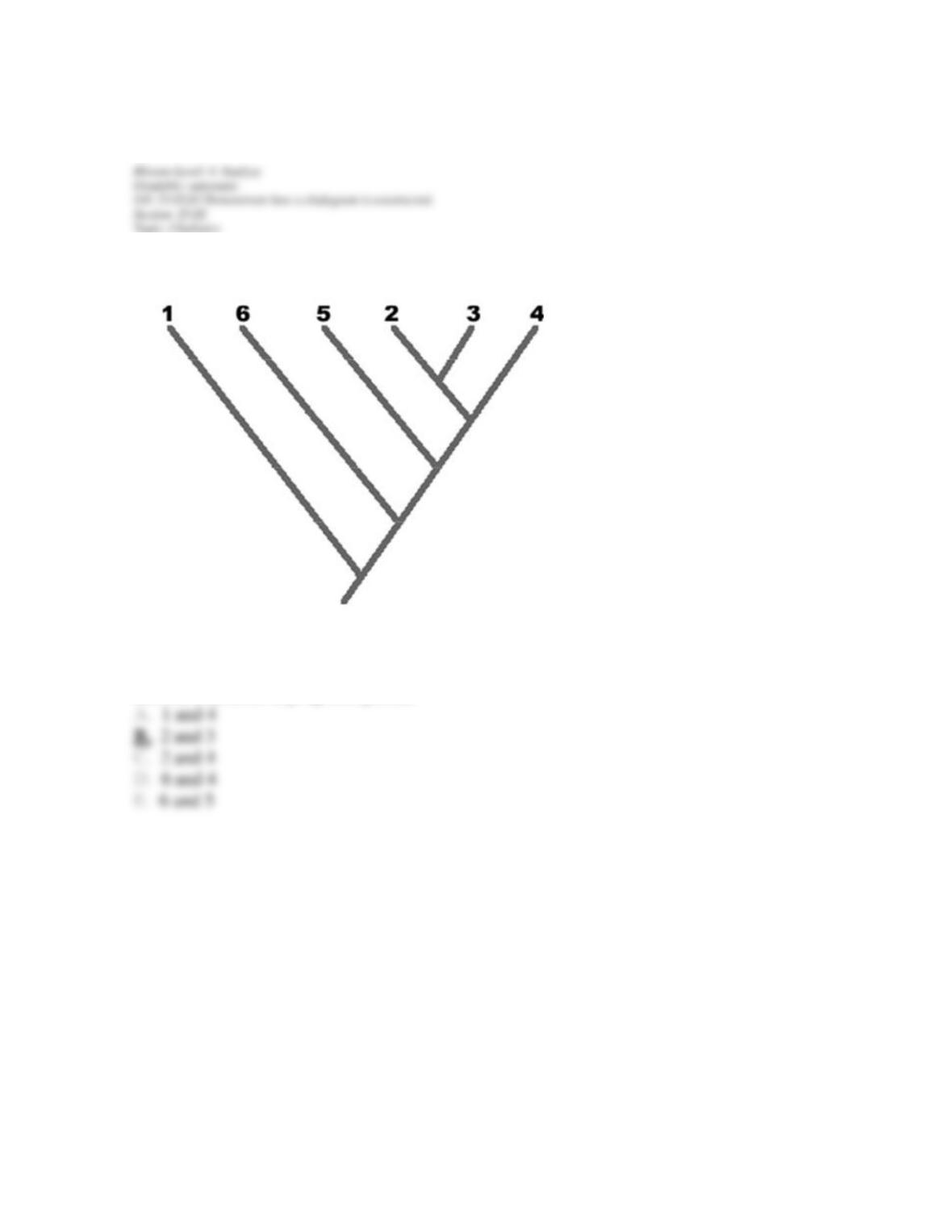
34. Consider the cladogram shown. Which pair of species shares the greatest number of
derived characters (synapomorphies)?
Chapter 23 – Systematics, Phylogenies, and Comparative Biology
Clarify Question
•
What is the key concept addressed by the question?
•
What type of thinking is required?
•
What key words does the question contain and what do they mean?
Gather Content
•
What do you already know about cladistics?
Consider Possibilities
•
What other information is related to the question? Which information is most useful?
Choose Answer
•
Given what you now know, what information and/or problem solving approach is most
likely to produce the correct answer?
Reflect on Process
Chapter 23 – Systematics, Phylogenies, and Comparative Biology
•
Did your problem-solving process lead you to the correct answer? If not, where did the
process break down or lead you astray? How can you revise your approach to produce a
more desirable result?
35. Consider the cladogram shown. If we designate species 1 as the outgroup, which species
has the greatest number of ancestral character states (pleisiomorphies)?
Chapter 23 – Systematics, Phylogenies, and Comparative Biology
Clarify Question
•
What is the key concept addressed by the question?
•
What type of thinking is required?
unfamiliar situation.
•
What key words does the question contain and what do they mean?
Gather Content
•
What do you already know about cladistics?
Consider Possibilities
•
What other information is related to the question? Which information is most useful?
Choose Answer
•
Given what you now know, what information and/or problem solving approach is most
likely to produce the correct answer?
Reflect on Process
•
Did your problem-solving process lead you to the correct answer? If not, where did the
process break down or lead you astray? How can you revise your approach to produce a
more desirable result?
Chapter 23 – Systematics, Phylogenies, and Comparative Biology
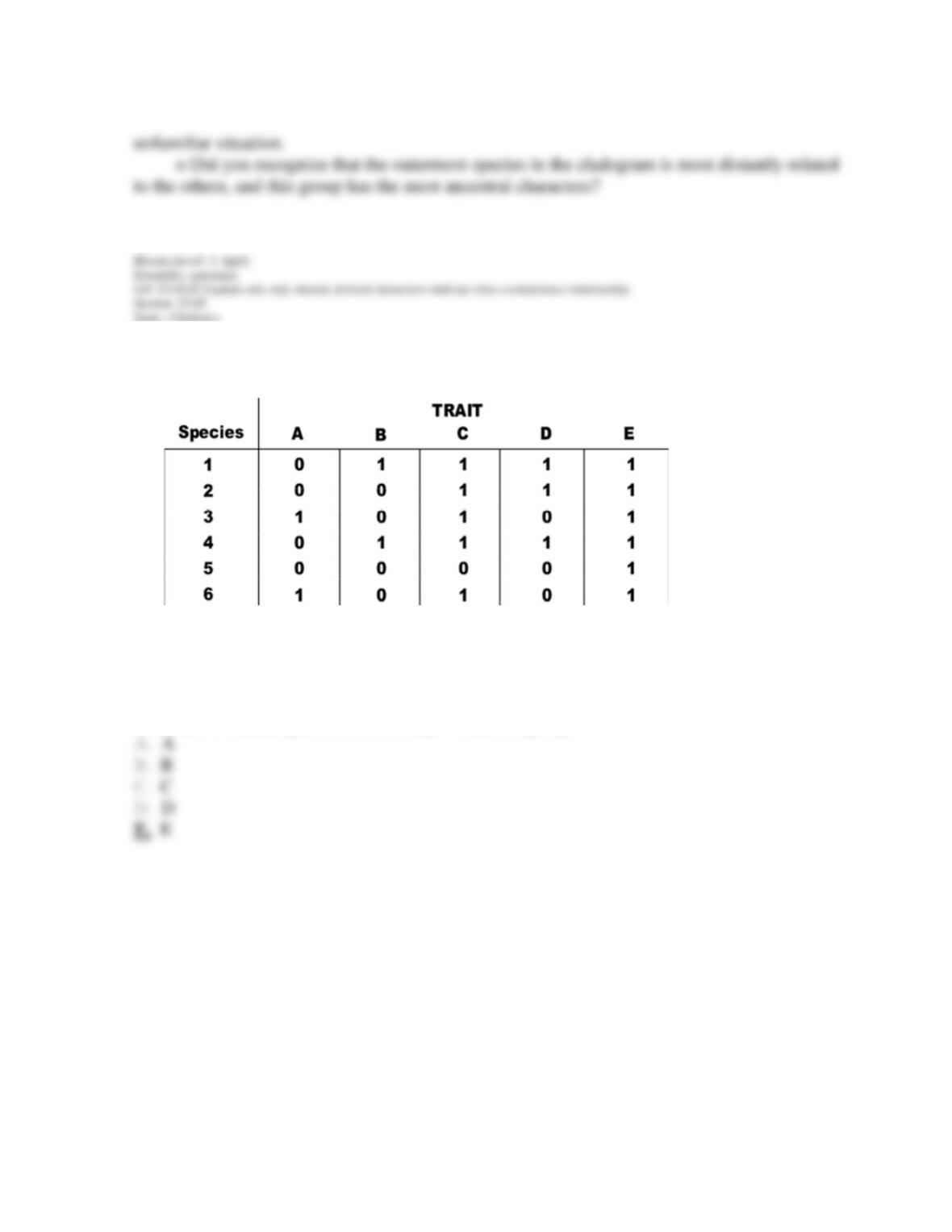
36. The table shows the distribution of traits (A-E) in six extant species (1-6). A “0” indicates
the ancestral condition, and a “1” indicates the derived condition. Which trait is least
informative of phylogenetic relationships within the group?
Chapter 23 – Systematics, Phylogenies, and Comparative Biology
Clarify Question
•
What is the key concept addressed by the question?
•
What type of thinking is required?
•
What key words does the question contain and what do they mean?
Gather Content
•
What do you already know about cladistics?
Consider Possibilities
•
What other information is related to the question? Which information is most useful?
Choose Answer
•
Given what you now know, what information and/or problem solving approach is most
likely to produce the correct answer?
to understand their relationships.
Reflect on Process
Chapter 23 – Systematics, Phylogenies, and Comparative Biology
•
Did your problem-solving process lead you to the correct answer? If not, where did the
process break down or lead you astray? How can you revise your approach to produce a
more desirable result?
37. The table shows the distribution of traits (A-E) in six extant species (1-6). A “0” indicates
the ancestral condition, and a “1” indicates the derived condition. Which species would you
designate as the outgroup?
Chapter 23 – Systematics, Phylogenies, and Comparative Biology
Clarify Question
•
What is the key concept addressed by the question?
•
What type of thinking is required?
•
What key words does the question contain and what do they mean?
Consider Possibilities
•
What other information is related to the question? Which information is most useful?
Choose Answer
•
Given what you now know, what information and/or problem solving approach is most
likely to produce the correct answer?
Reflect on Process
•
Did your problem-solving process lead you to the correct answer? If not, where did the
process break down or lead you astray? How can you revise your approach to produce a
more desirable result?