Chapter 23 – Systematics, Phylogenies, and Comparative Biology
48. A group is considered monophyletic if
49. A group is considered paraphyletic if
Chapter 23 – Systematics, Phylogenies, and Comparative Biology
50. A group is considered polyphyletic if
Check All That Apply Questions
51. Choose the true statements about molecular clocks.
Multiple Choice Questions
Chapter 23 – Systematics, Phylogenies, and Comparative Biology
52. The phylogenetic species concept (PSC) declares that a group is a species if it
53. Parental care in dinosaurs, crocodiles, and birds is an example of
54. The evolution of saber teeth in a number of groups of extinct carnivorous mammals is an
example of
Chapter 23 – Systematics, Phylogenies, and Comparative Biology
55. The evolution of conducting tubes (sieve tubes) in land plants and brown algae is an
example of
Check All That Apply Questions
56. Choose the true statements about the evolution of complex characters, such as powered
flight.
57. Choose the true statements about the evolution of larval dispersal in marine snails.
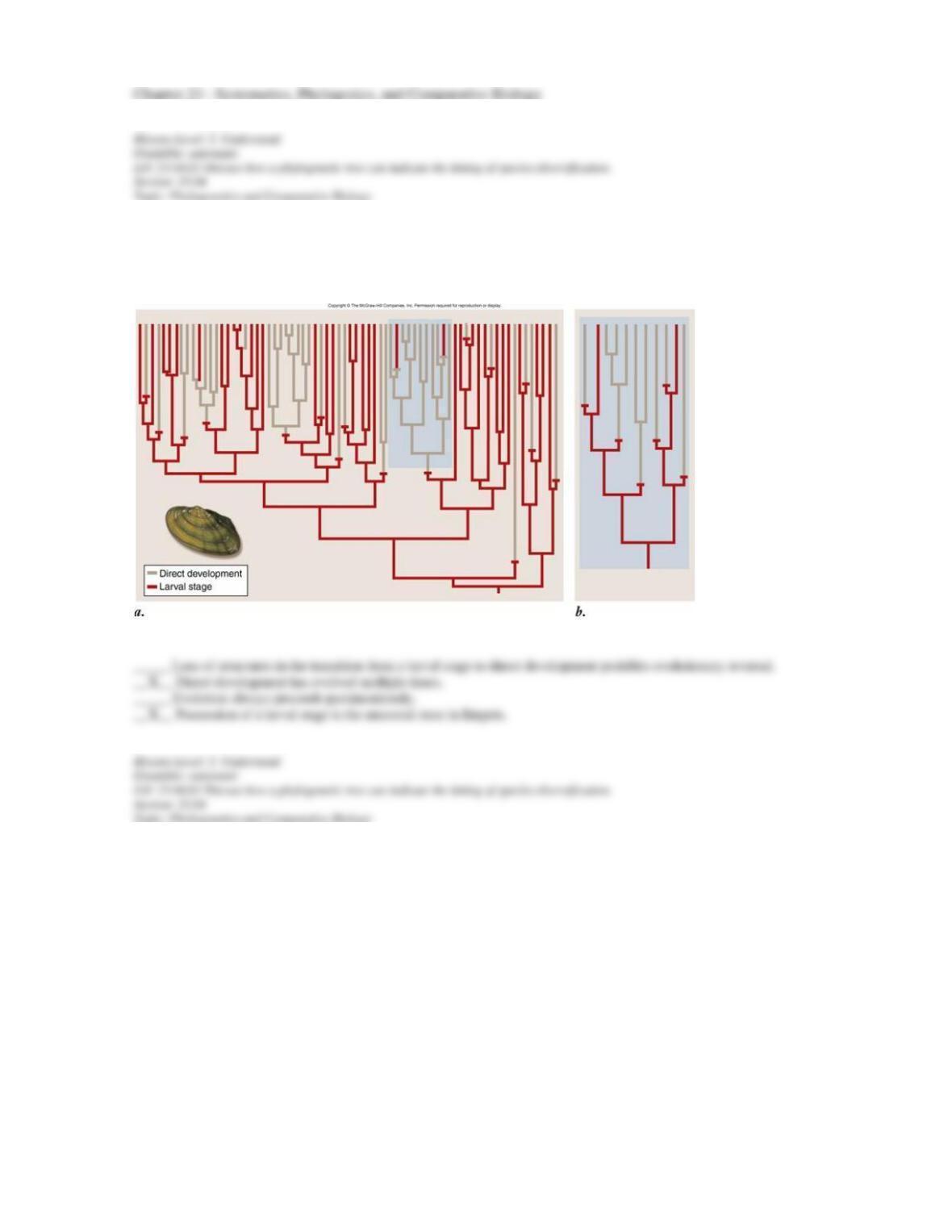
58. The figure shows a cladogram of direct development versus development of a larval stage. Choose the true statements
about the evolution of development in limpets.
Chapter 23 – Systematics, Phylogenies, and Comparative Biology
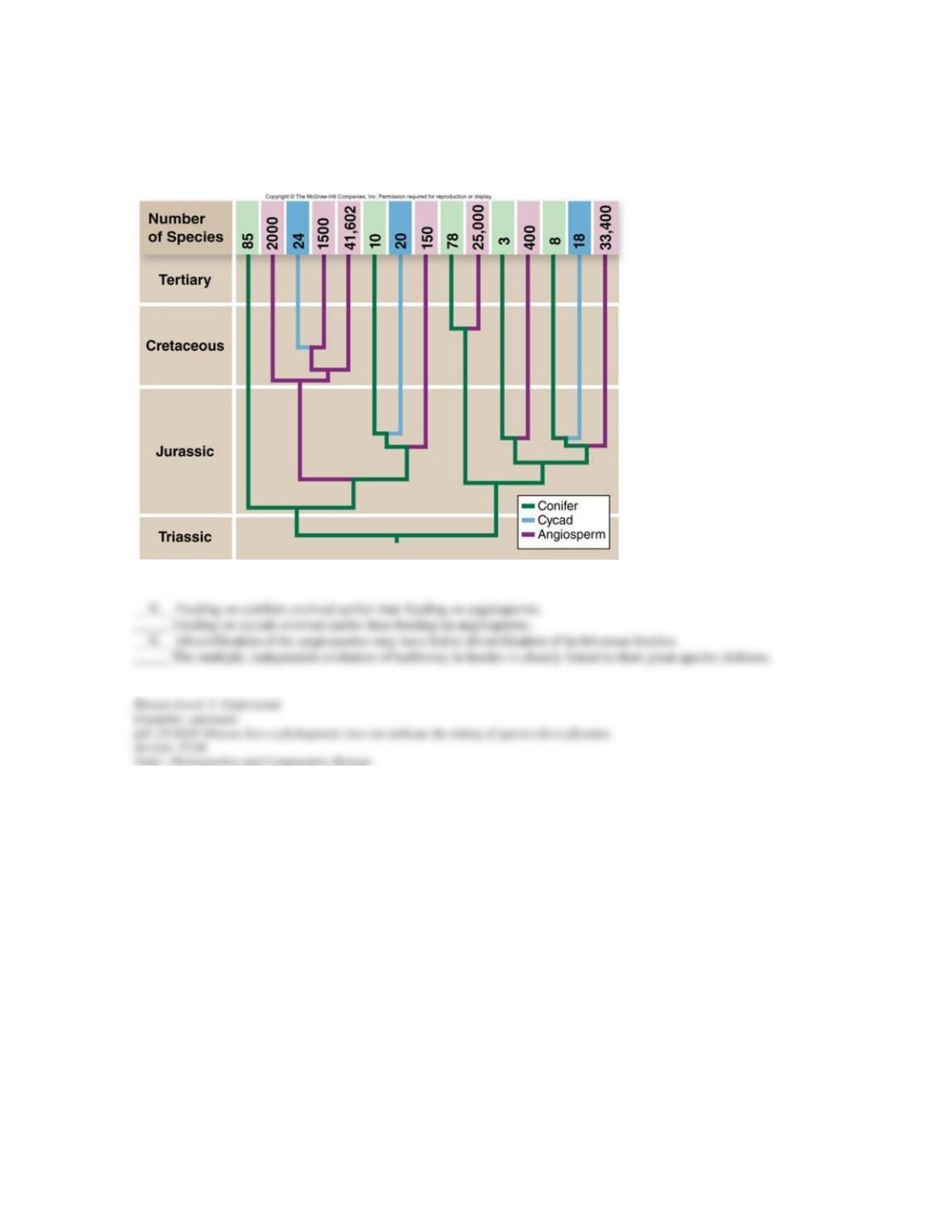
59. The figure shows the evolutionary diversification of the largest clade of herbivorous beetles with the group of plants on
which they specialize. Choose the true statements about the evolution of species richness in herbivorous beetles.
Chapter 23 – Systematics, Phylogenies, and Comparative Biology
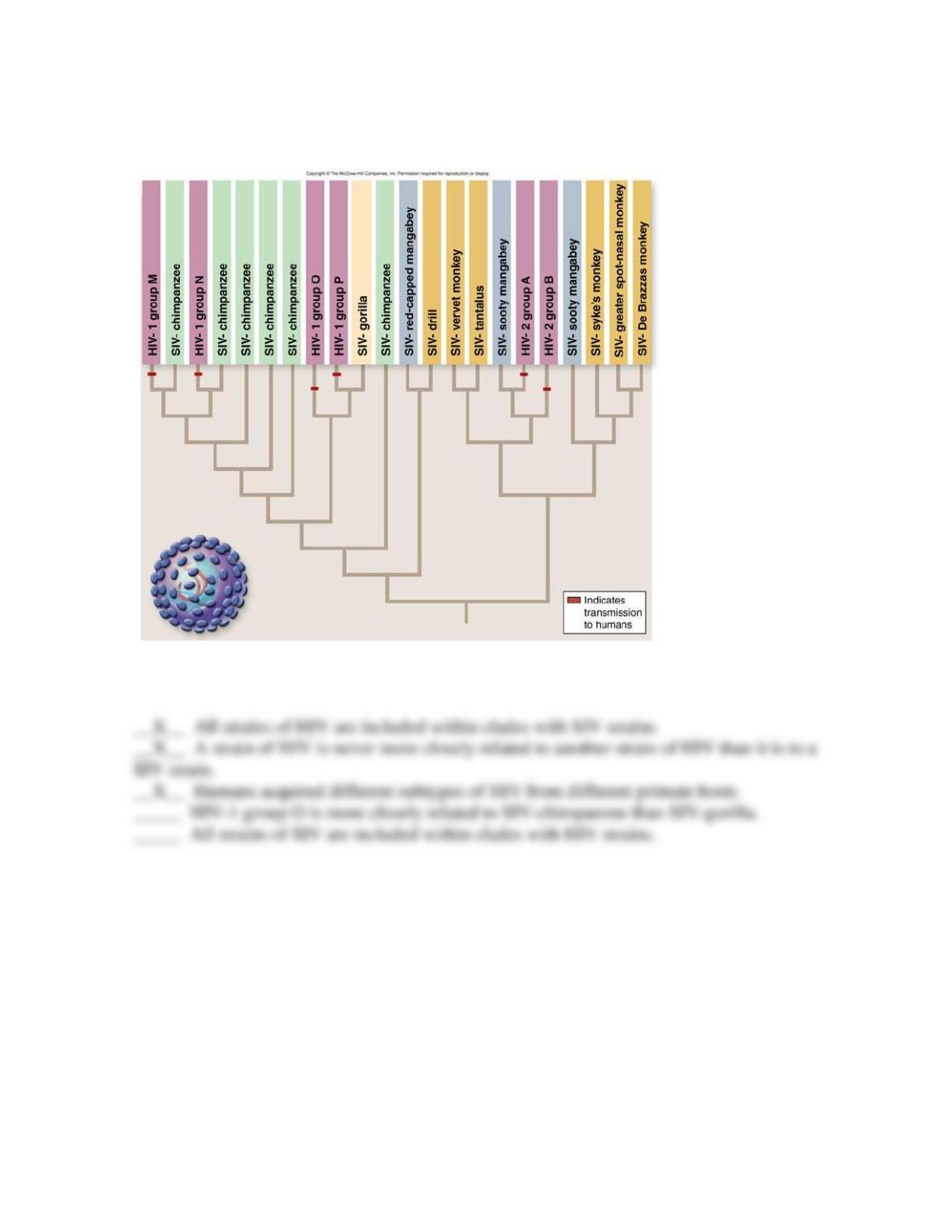
60. The figure shows the evolution of HIV and SIV. Choose the true statements about the
evolution of HIV (Select all that apply).

Chapter 23 – Systematics, Phylogenies, and Comparative Biology
Clarify Question
•
What is the key concept addressed by the question?
•
What type of thinking is required?
•
What key words does the question contain and what do they mean?
Gather Content
•
What do you already know about cladistics?
Consider Possibilities
•
Consider the different answer options. Which can you rule out?
Choose Answer
•
Given what you now know, what information and/or problem solving approach is most
likely to produce the correct answer?
Reflect on Process
•
Did your problem-solving process lead you to the correct answer? If not, where did the
process break down or lead you astray? How can you revise your approach to produce a
more desirable result?
Chapter 23 – Systematics, Phylogenies, and Comparative Biology
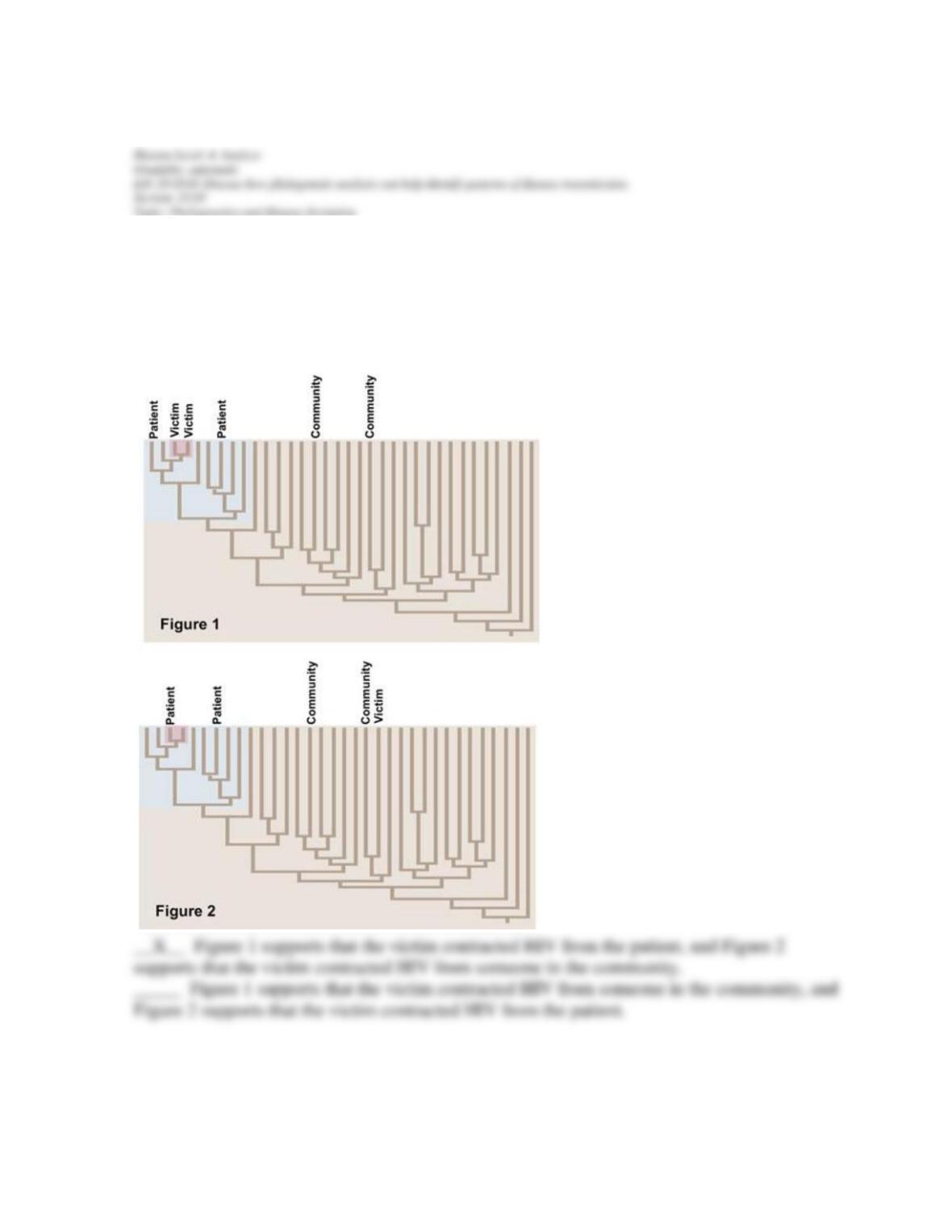
61. The figures show alternative phylogenies of HIV strains in a victim who was infected
with HIV+ blood and in potential sources of the blood (“Patient”) and HIV strains in
members of the community (“Community”). Choose the true statement(s) about the evolution
of this HIV strain (Select all that apply).
Chapter 23 – Systematics, Phylogenies, and Comparative Biology
Clarify Question
•
What is the key concept addressed by the question?
•
What type of thinking is required?
•
What key words does the question contain and what do they mean?
Gather Content
•
What do you already know about cladistics?
Consider Possibilities
•
Consider the different answer options. Which can you rule out?
Choose Answer
•
Given what you now know, what information and/or problem solving approach is most
likely to produce the correct answer?
Reflect on Process
•
Did your problem-solving process lead you to the correct answer? If not, where did the
process break down or lead you astray? How can you revise your approach to produce a
more desirable result?
Chapter 23 – Systematics, Phylogenies, and Comparative Biology
Multiple Choice Questions
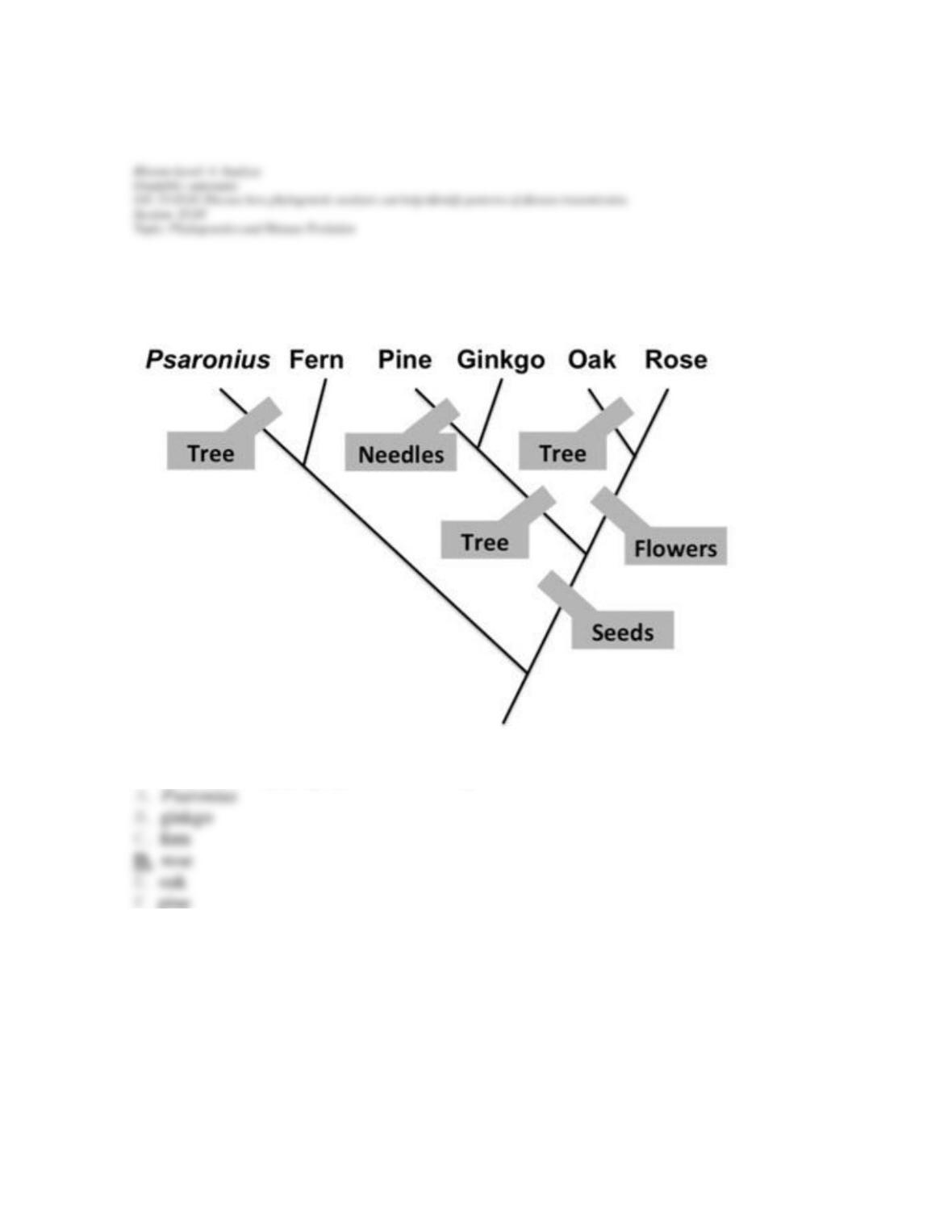
62. Based on the phylogeny shown, which species is not a tree but has seeds?
Chapter 23 – Systematics, Phylogenies, and Comparative Biology
Clarify Question
•
What is the key concept addressed by the question?
o This question addresses cladistics.
•
What type of thinking is required?
•
What key words does the question contain and what do they mean?
Gather Content
•
What do you already know about cladistics?
Consider Possibilities
•
What other information is related to the question? Which information is most useful?
Choose Answer
•
Given what you now know, what information and/or problem solving approach is most
likely to produce the correct answer?
Reflect on Process
•
Did your problem-solving process lead you to the correct answer? If not, where did the
process break down or lead you astray? How can you revise your approach to produce a
more desirable result?

Chapter 23 – Systematics, Phylogenies, and Comparative Biology
63. Based on the phylogeny shown, which characteristic is homoplastic?
Chapter 23 – Systematics, Phylogenies, and Comparative Biology
Clarify Question
•
What is the key concept addressed by the question?
•
What type of thinking is required?
•
What key words does the question contain and what do they mean?
Gather Content
•
What do you already know about cladistics?
Consider Possibilities
•
Consider the different answer options. Which can you rule out?
Choose Answer
•
Given what you now know, what information and/or problem solving approach is most
likely to produce the correct answer?
Reflect on Process
•
Did your problem-solving process lead you to the correct answer? If not, where did the
process break down or lead you astray? How can you revise your approach to produce a
more desirable result?

Chapter 23 – Systematics, Phylogenies, and Comparative Biology
64. Assume that the ancestor of this phylogeny had vascular tissue and chlorophyll. If this is
true, which answer lists all key traits of a ginkgo?