Chapter 23 – Systematics, Phylogenies, and Comparative Biology
Clarify Question
•
What is the key concept addressed by the question?
•
What type of thinking is required?
the problem and determine the answer.
•
What key words does the question contain and what do they mean?
Gather Content
•
What do you already know about cladistics?
Consider Possibilities
•
What other information is related to the question? Which information is most useful?
Choose Answer
•
Given what you now know, what information and/or problem solving approach is most
likely to produce the correct answer?
Reflect on Process
•
Did your problem-solving process lead you to the correct answer? If not, where did the
process break down or lead you astray? How can you revise your approach to produce a
more desirable result?

Chapter 23 – Systematics, Phylogenies, and Comparative Biology
Check All That Apply Questions
65. Based on the phylogeny shown, indicate the groups that are monophyletic (Select all that
apply).
Clarify Question
•
What is the key concept addressed by the question?
•
What type of thinking is required?
•
What key words does the question contain and what do they mean?
Gather Content
•
What do you already know about monophyly?
Consider Possibilities
•
Consider the different answer options. Which can you rule out?
Choose Answer
•
Given what you now know, what information and/or problem solving approach is most
likely to produce the correct answer?
Reflect on Process

Chapter 23 – Systematics, Phylogenies, and Comparative Biology
•
Did your problem-solving process lead you to the correct answer? If not, where did the
process break down or lead you astray? How can you revise your approach to produce a
more desirable result?
Multiple Choice Questions
66. Based on the phylogeny shown, choose the true statement about evolutionary
relationships.
Chapter 23 – Systematics, Phylogenies, and Comparative Biology
Clarify Question
•
What is the key concept addressed by the question?
•
What type of thinking is required?
•
What key words does the question contain and what do they mean?
Gather Content
•
What do you already know about cladistics?
Consider Possibilities
•
Consider the different answer options. Which can you rule out?
Choose Answer
•
Given what you now know, what information and/or problem solving approach is most
likely to produce the correct answer?
Reflect on Process
•
Did your problem-solving process lead you to the correct answer? If not, where did the
process break down or lead you astray? How can you revise your approach to produce a
more desirable result?
Chapter 23 – Systematics, Phylogenies, and Comparative Biology
Check All That Apply Questions

Chapter 23 – Systematics, Phylogenies, and Comparative Biology
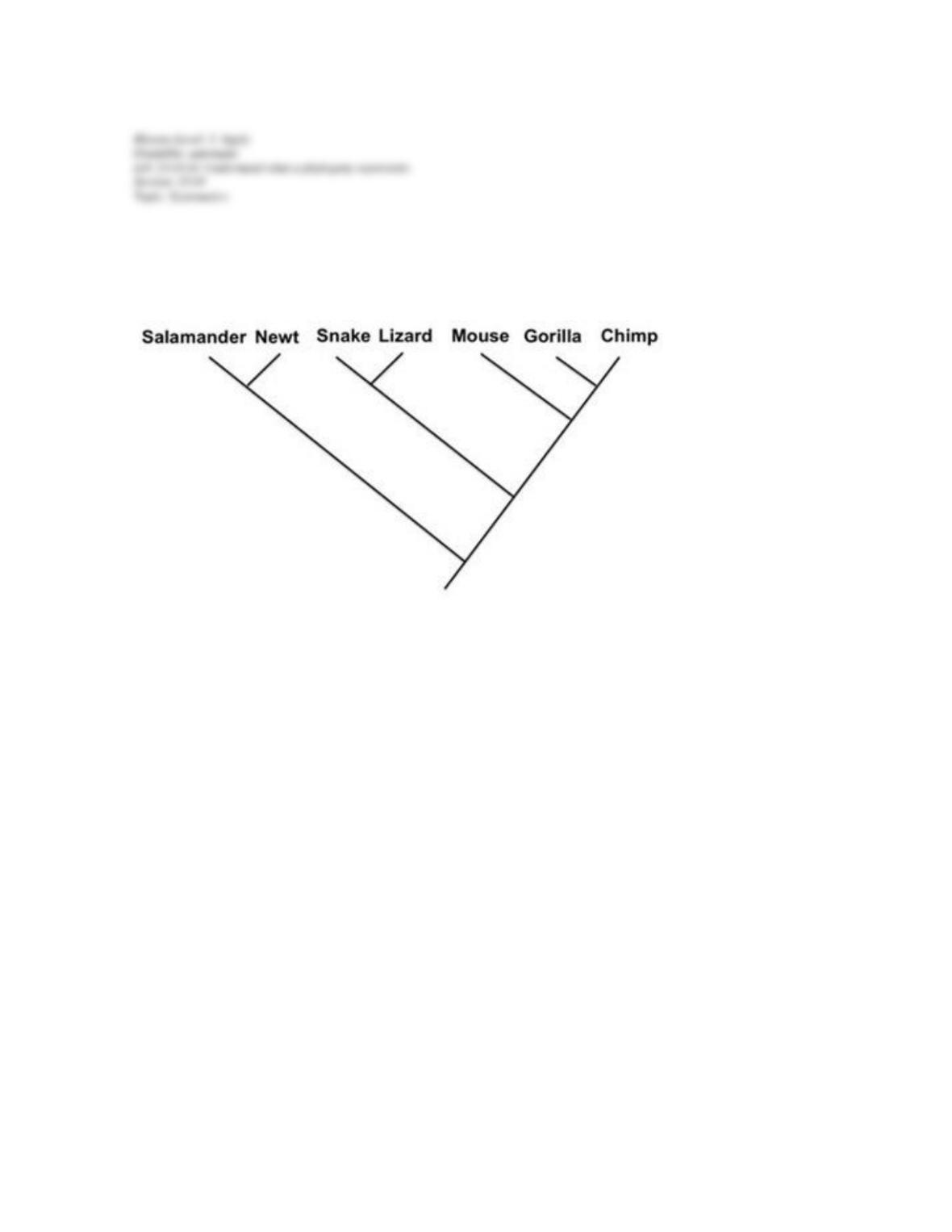
67. Based on the phylogeny shown, choose the true statements about evolutionary
relationships (Select all that apply).
Clarify Question
•
What is the key concept addressed by the question?
•
What type of thinking is required?
•
What key words does the question contain and what do they mean?
Gather Content
•
What do you already know about cladistics?
Consider Possibilities
•
Consider the different answer options. Which can you rule out?
Choose Answer
•
Given what you now know, what information and/or problem solving approach is most
likely to produce the correct answer?
clade.
Reflect on Process
•
Did your problem-solving process lead you to the correct answer? If not, where did the
process break down or lead you astray? How can you revise your approach to produce a
more desirable result?
Chapter 23 – Systematics, Phylogenies, and Comparative Biology
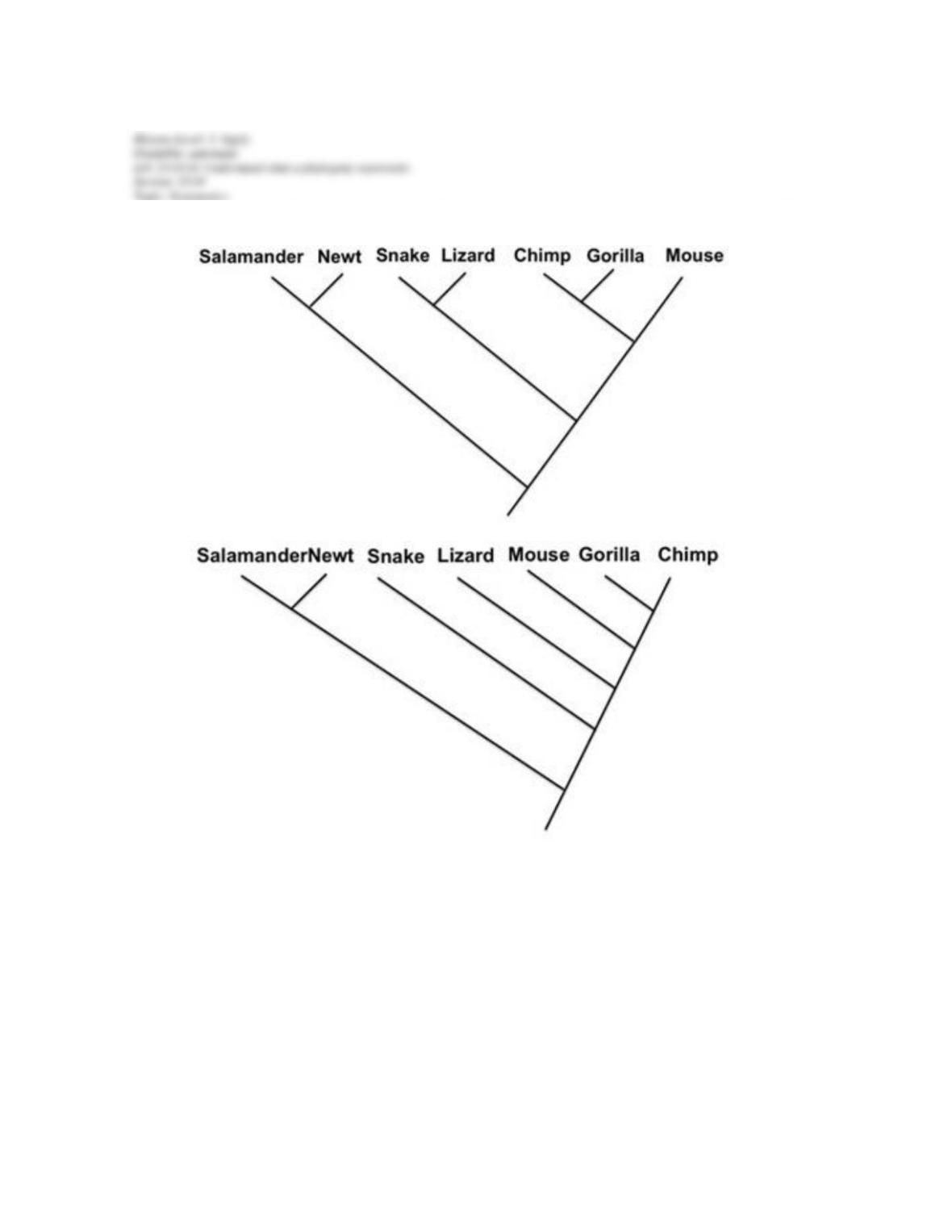
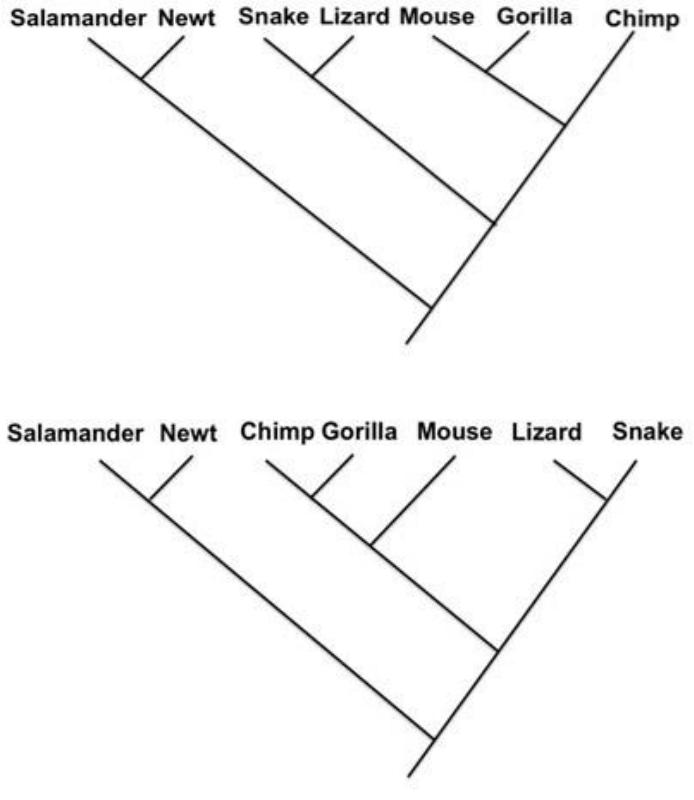
68. Indicate the phylogenies that show the same relationship as the phylogeny above (Select
all that apply).
__X__
_____
Chapter 23 – Systematics, Phylogenies, and Comparative Biology
_____
__X__

Chapter 23 – Systematics, Phylogenies, and Comparative Biology
Clarify Question
•
What is the key concept addressed by the question?
•
What type of thinking is required?
•
What key words does the question contain and what do they mean?
Gather Content
•
What do you already know about cladograms?
Consider Possibilities
•
What other information is related to the question? Which information is most useful?
Choose Answer
•
Given what you now know, what information and/or problem solving approach is most
likely to produce the correct answer?
Reflect on Process
•
Did your problem-solving process lead you to the correct answer? If not, where did the
process break down or lead you astray? How can you revise your approach to produce a
more desirable result?
Multiple Choice Questions
Chapter 23 – Systematics, Phylogenies, and Comparative Biology
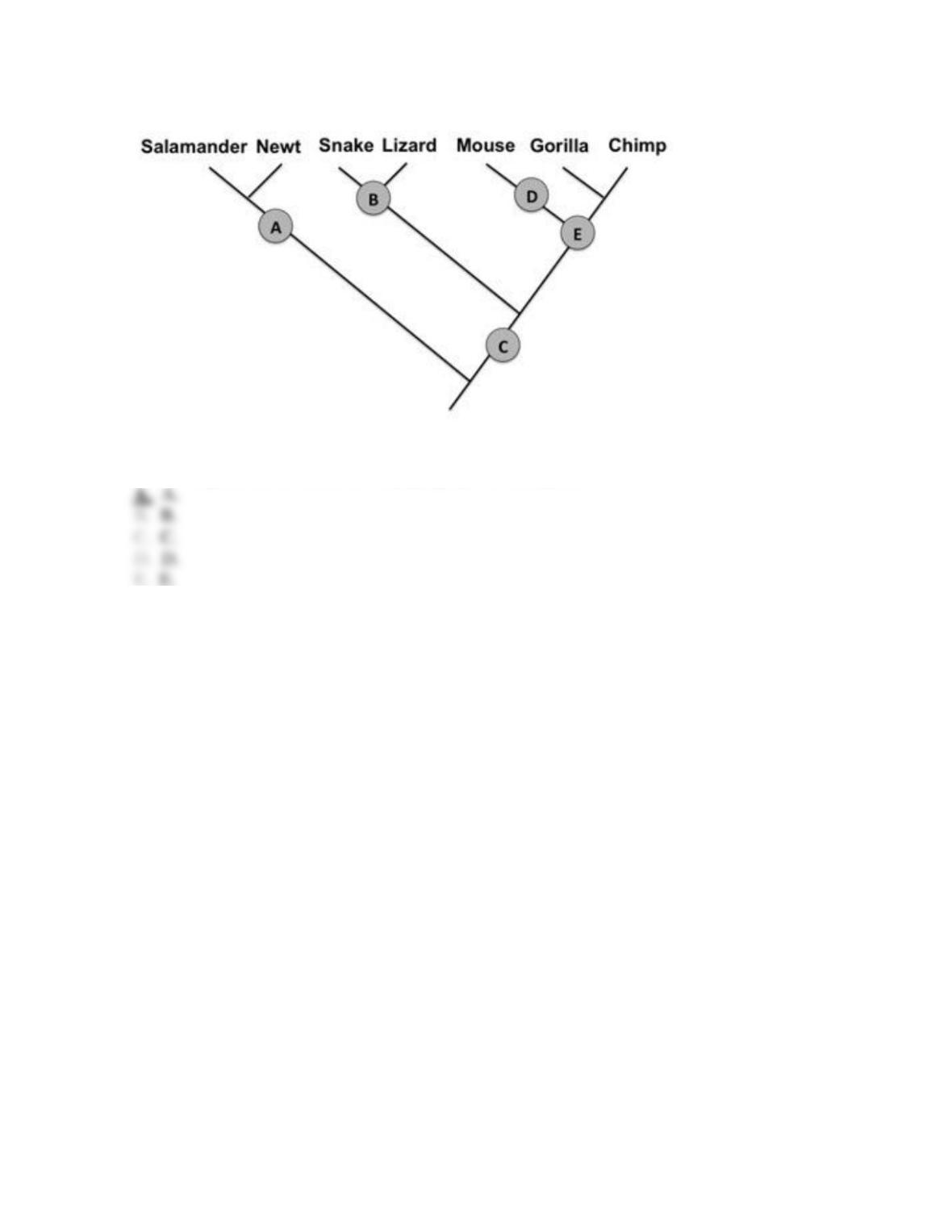
69. A frog should be added to the phylogeny above at point
Chapter 23 – Systematics, Phylogenies, and Comparative Biology
Clarify Question
•
What is the key concept addressed by the question?
•
What type of thinking is required?
•
What key words does the question contain and what do they mean?
Gather Content
•
What do you already know about cladistics?
Consider Possibilities
•
Consider the different answer options. Which can you rule out?
Choose Answer
•
Given what you now know, what information and/or problem solving approach is most
likely to produce the correct answer?
Reflect on Process
•
Did your problem-solving process lead you to the correct answer? If not, where did the
process break down or lead you astray? How can you revise your approach to produce a
more desirable result?

Chapter 23 – Systematics, Phylogenies, and Comparative Biology
70. The common ancestor shared by mouse and gorilla is at point ______ on the phylogeny
shown.
Chapter 23 – Systematics, Phylogenies, and Comparative Biology
Clarify Question
•
What is the key concept addressed by the question?
•
What type of thinking is required?
•
What key words does the question contain and what do they mean?
Gather Content
•
What do you already know about cladistics?
Consider Possibilities
•
Consider the different answer options. Which can you rule out?
No, because that branch did not give rise to gorillas.
Choose Answer
•
Given what you now know, what information and/or problem solving approach is most
likely to produce the correct answer?
Reflect on Process
•
Did your problem-solving process lead you to the correct answer? If not, where did the
process break down or lead you astray? How can you revise your approach to produce a

Chapter 23 – Systematics, Phylogenies, and Comparative Biology
more desirable result?