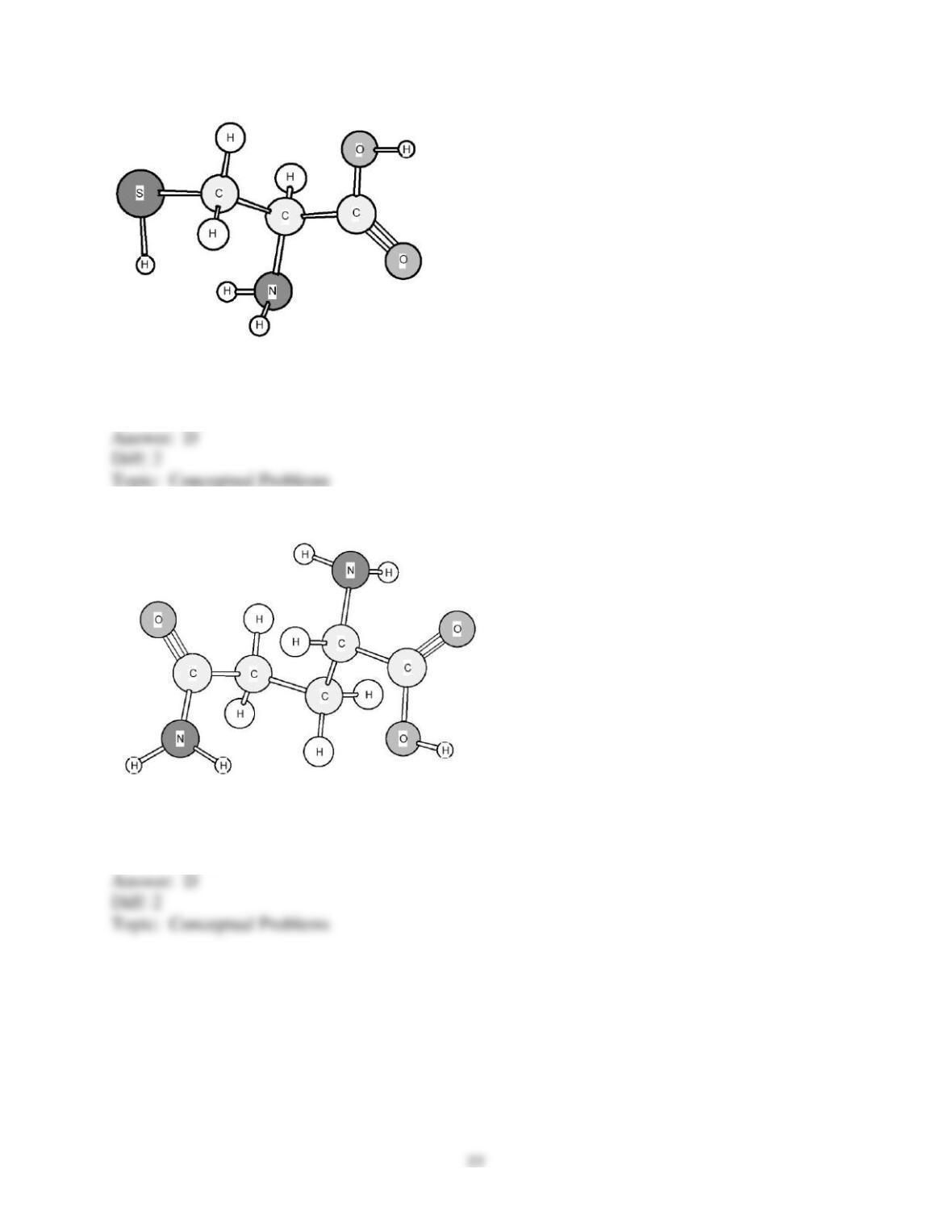
A) acidic.
B) basic.
C) neutral, non-polar.
D) neutral, polar.
227) Based on the structure of its side chains, the amino acid shown below can be classified as
A) acidic.
B) basic.
C) neutral, non-polar.
D) neutral, polar.
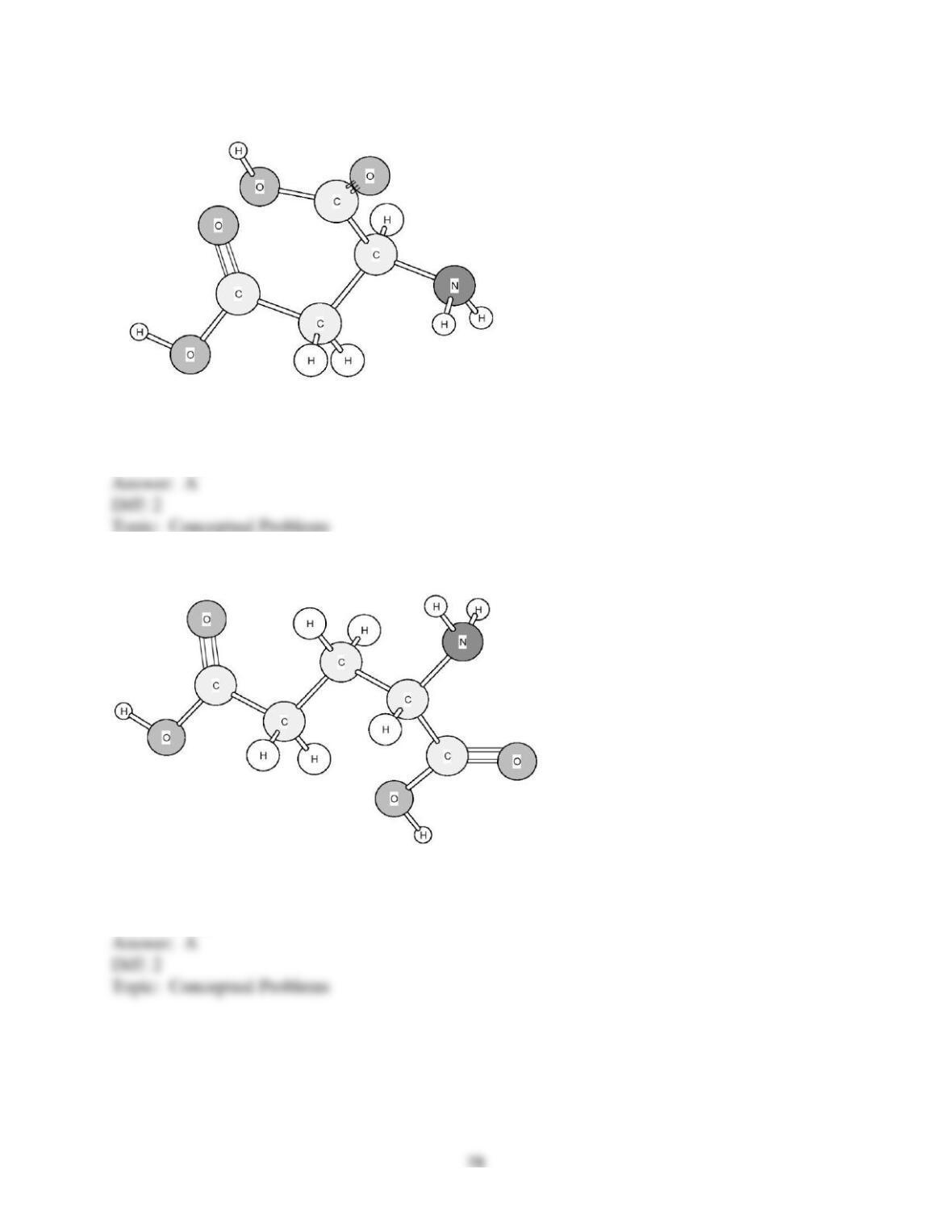
228) Based on the structure of its side chains, the amino acid shown below can be classified as
A) acidic.
B) basic.
C) neutral, non-polar.
D) neutral, polar.
229) Based on the structure of its side chains, the amino acid shown below can be classified as
A) acidic.
B) basic.
C) neutral, non-polar.
D) neutral, polar.
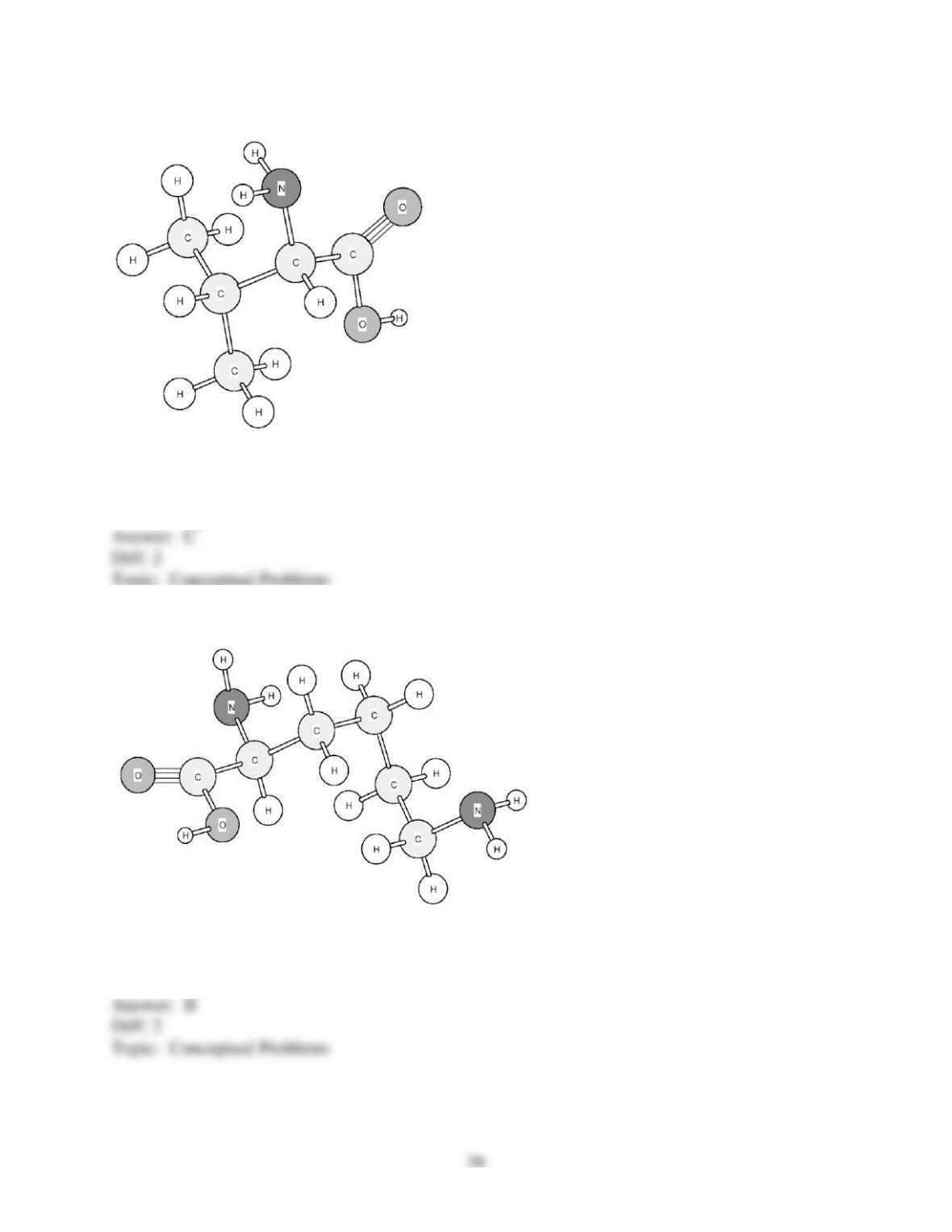
230) Based on the structure of its side chains, the amino acid shown below can be classified as
A) acidic.
B) basic.
C) neutral, non-polar.
D) neutral, polar.
231) Based on the structure of its side chains, the amino acid shown below can be classified as
A) acidic.
B) basic.
C) neutral, non-polar.
D) neutral, polar.
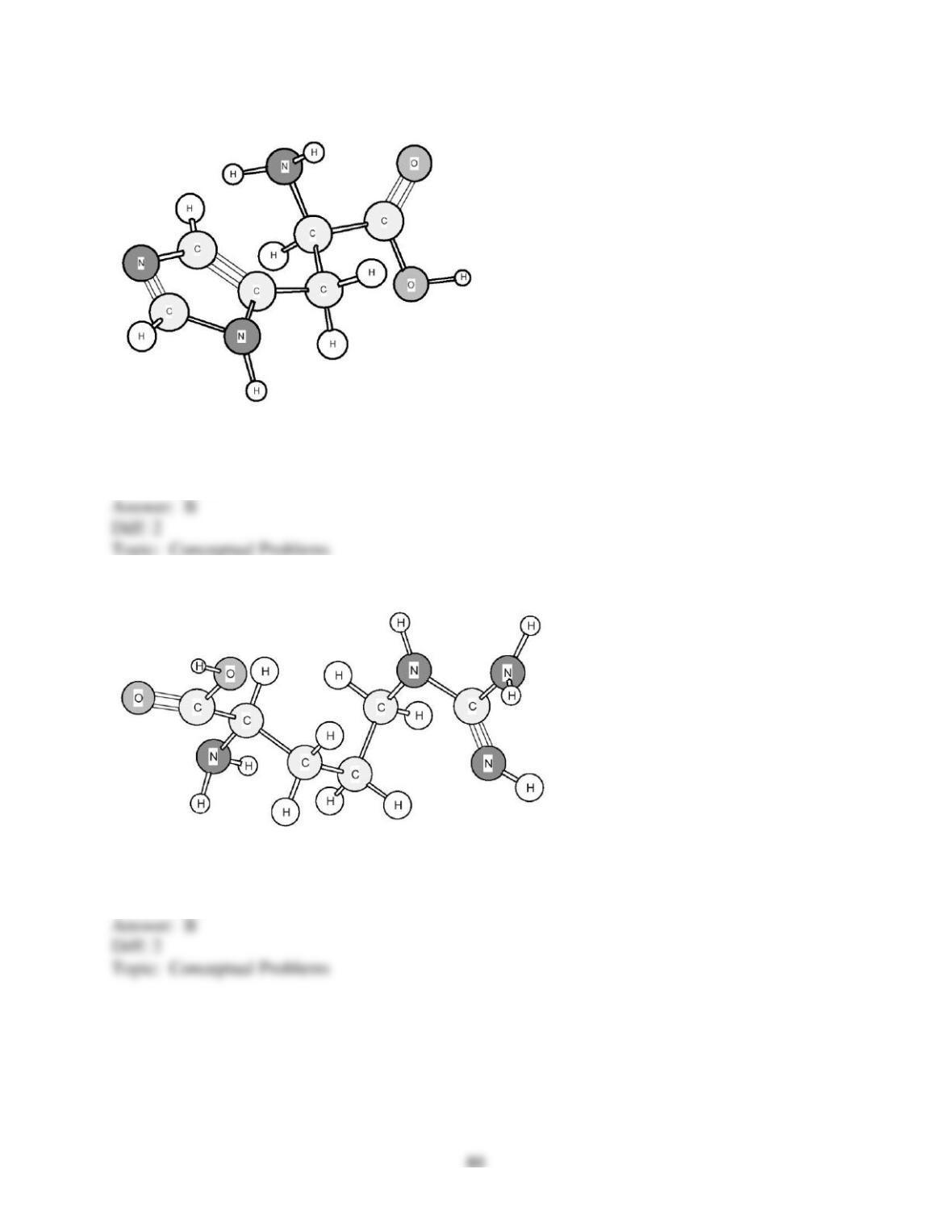
232) Based on the structure of its side chains, the amino acid shown below can be classified as
A) acidic.
B) basic.
C) neutral, non-polar.
D) neutral, polar.
233) Based on the structure of its side chains, the amino acid shown below can be classified as
A) acidic.
B) basic.
C) neutral, non-polar.
D) neutral, polar.
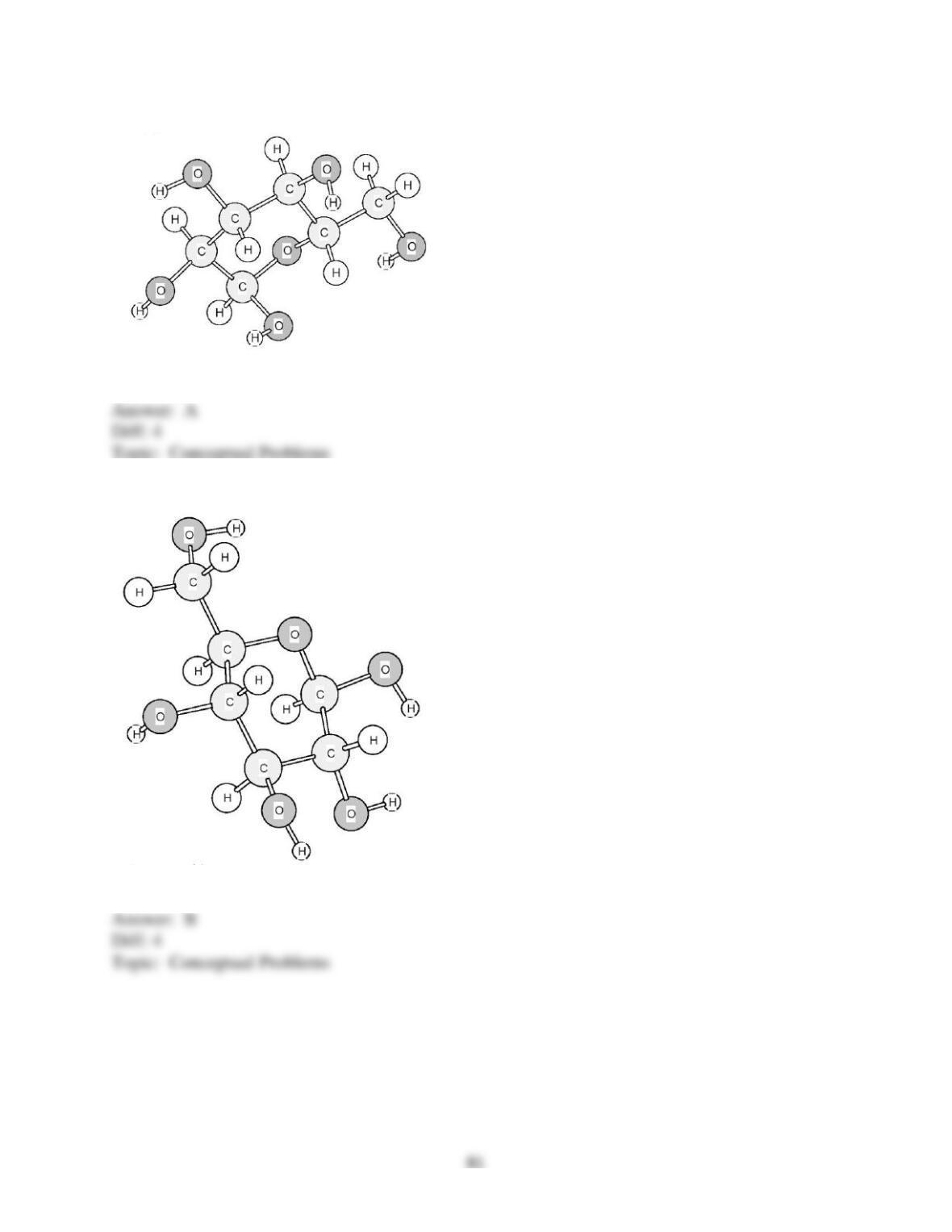
234) Is the following model of glucose in the α form or the β form?
A) α form
B) β form
235) Is the following model of glucose in the α form or the β form?
A) α form
B) β form
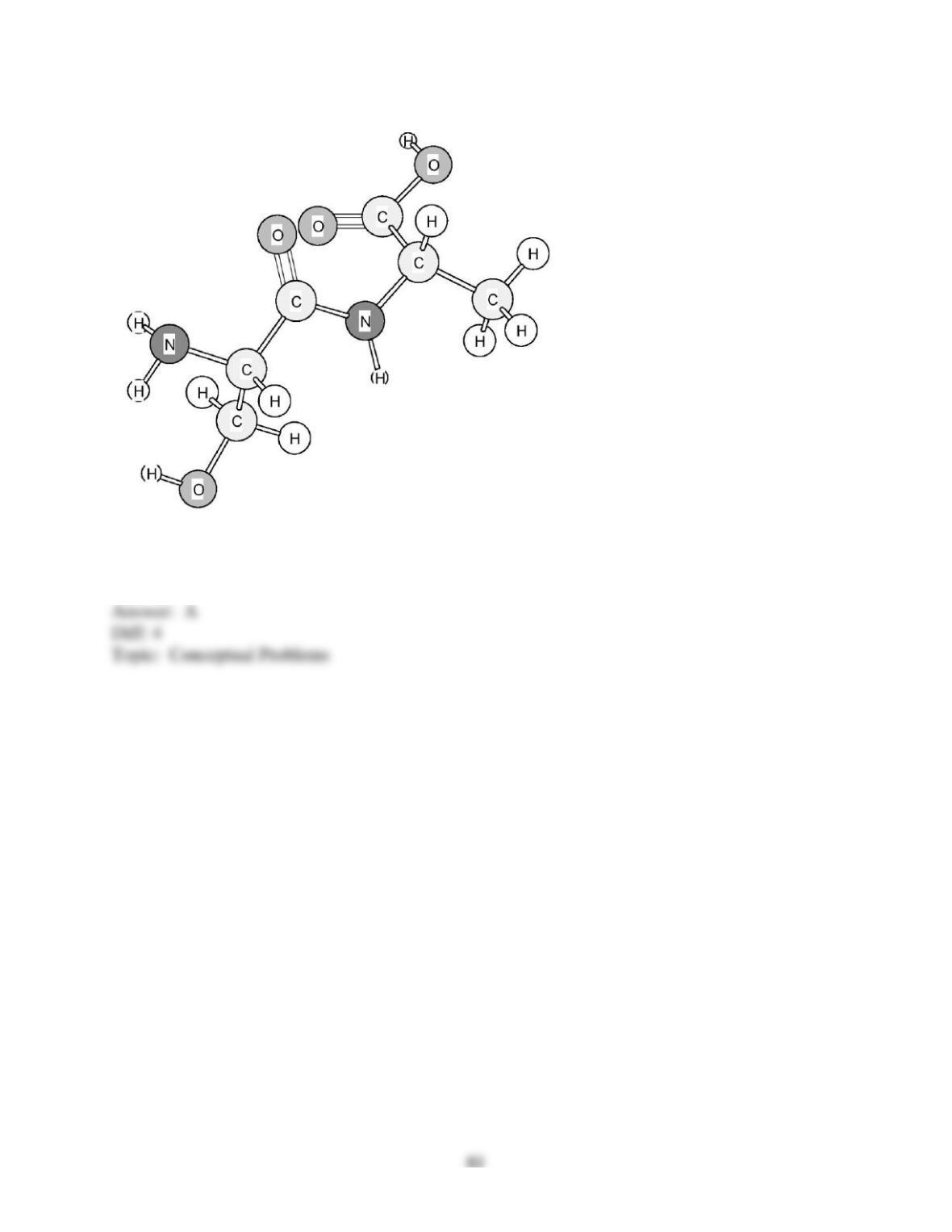
236) Identify the following dipeptide.
A) Ser-Ala
B) Ser-Leu
C) Ser-Phe
D) Ser-Val
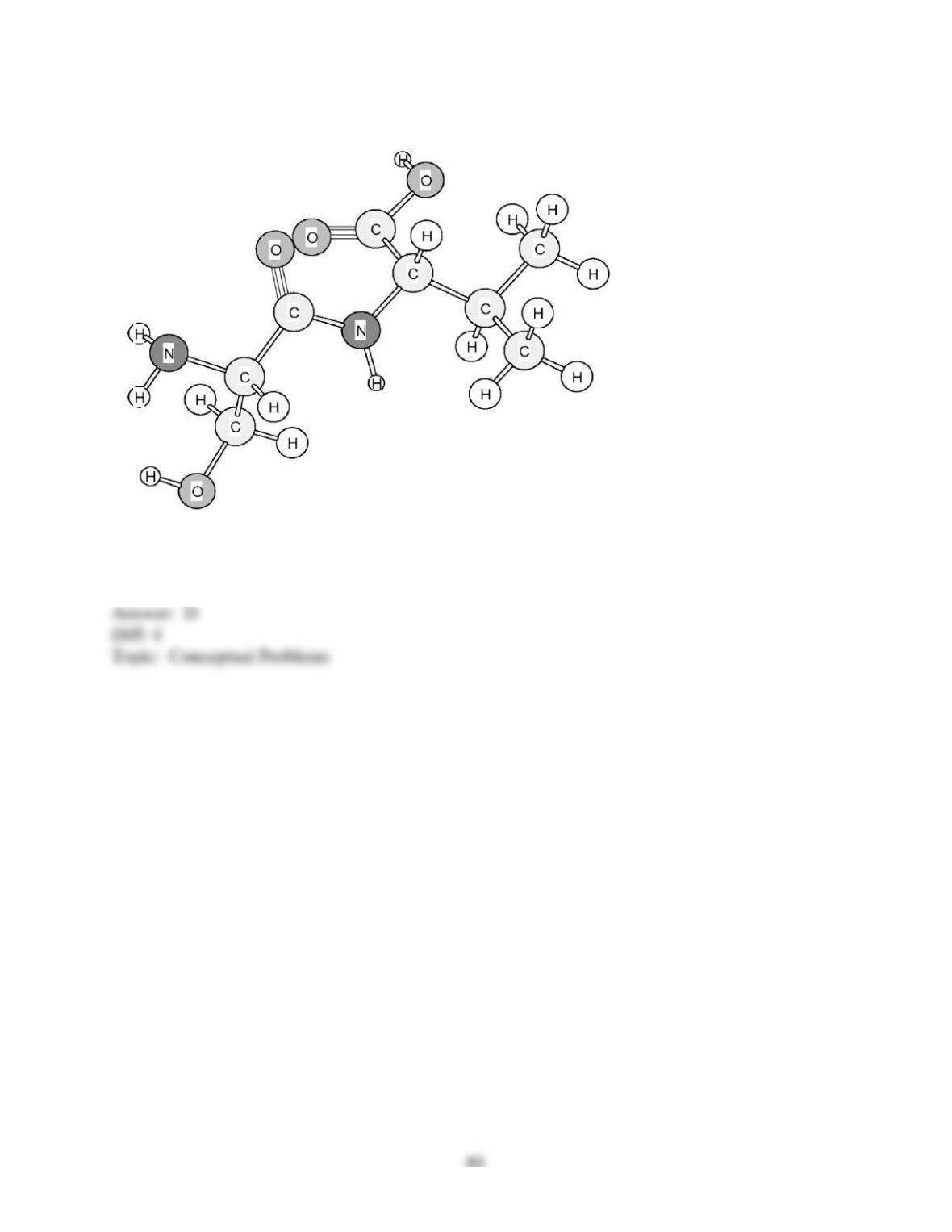
237) Identify the following dipeptide.
A) Ser-Ala
B) Ser-Leu
C) Ser-Phe
D) Ser-Val
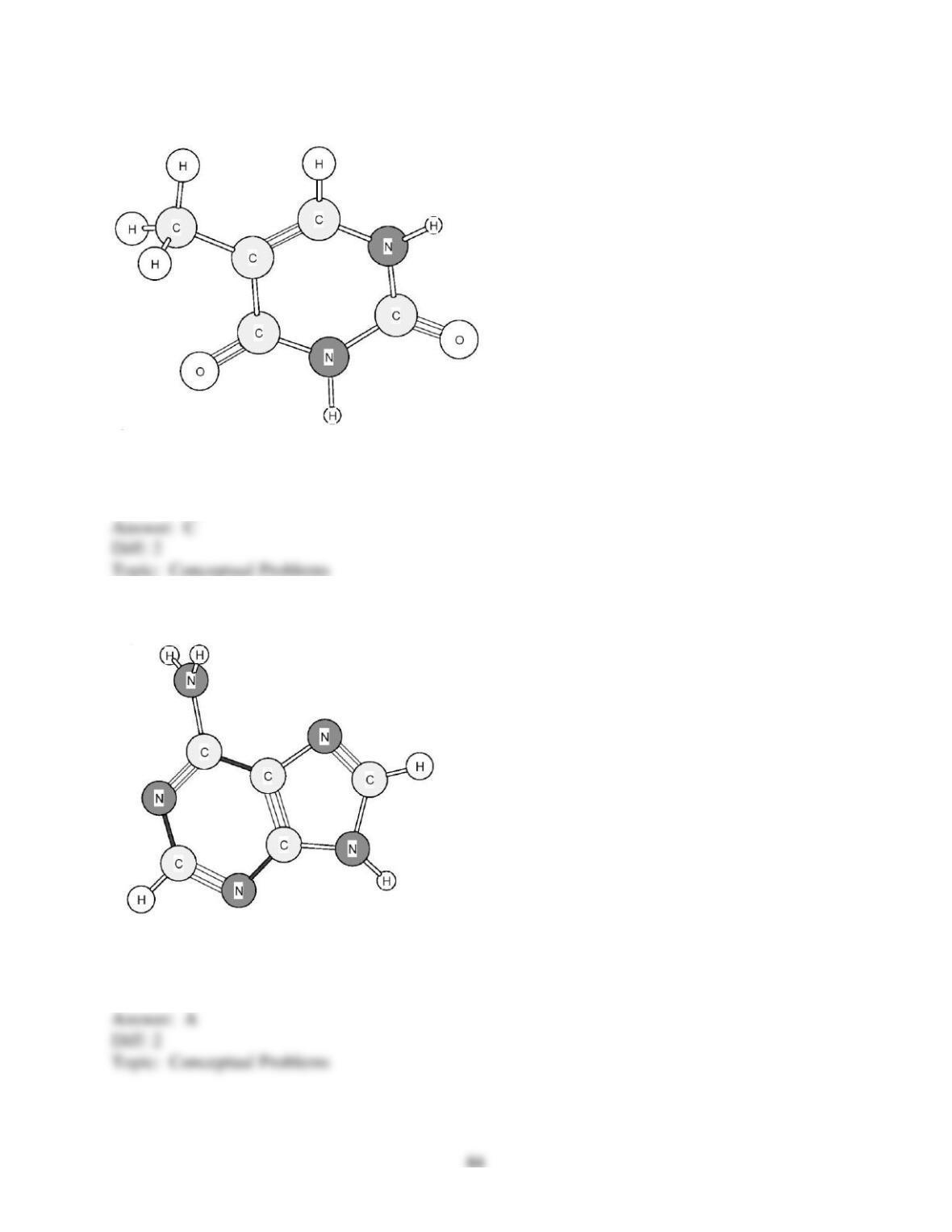
238) Identify the following amine base found in nucleic acids.
A) Adenine (A)
B) Cytosine (C)
C) Thymine (T)
D) Uracil (U)
239) Identify the following amine base found in nucleic acids.
A) Adenine (A)
B) Cytosine (C)
C) Thymine (T)
D) Uracil (U)
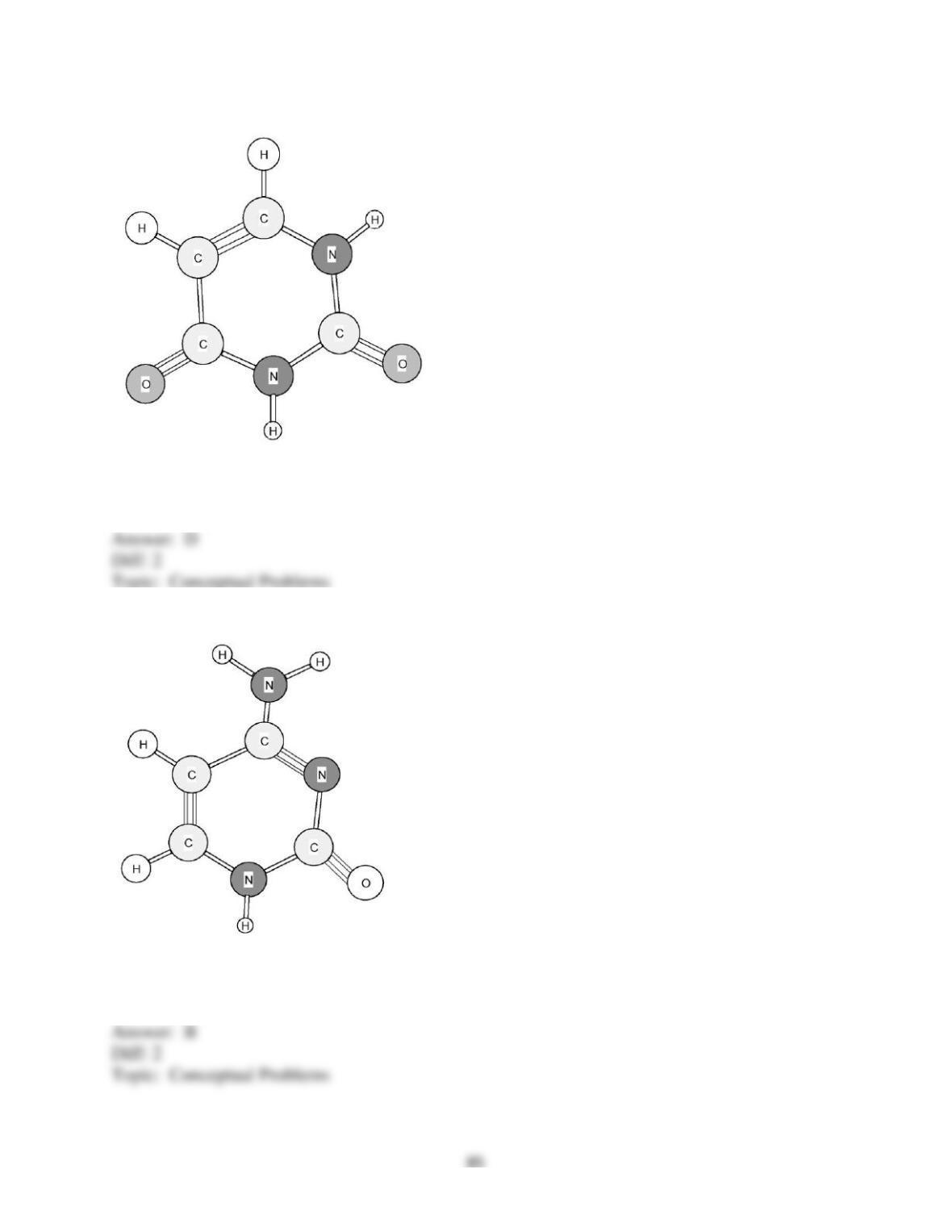
240) Identify the following amine base found in nucleic acids.
A) Adenine (A)
B) Cytosine (C)
C) Thymine (T)
D) Uracil (U)
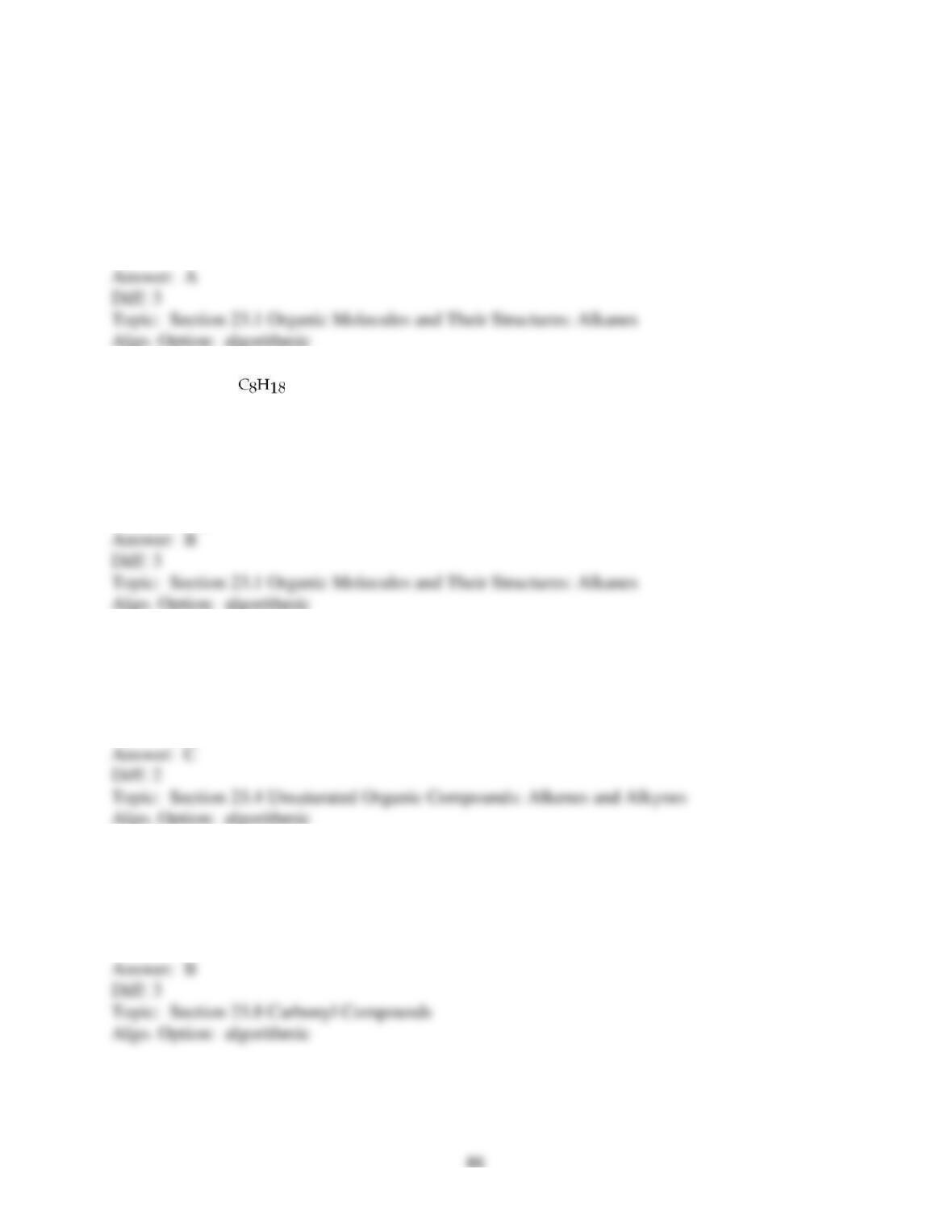
241) Identify the following amine base found in nucleic acids.
A) Adenine (A)
B) Cytosine (C)
C) Thymine (T)
D) Uracil (U)
23.2 Algorithmic Questions
1) How many isomers are there for C5H12 ?
A) 3
B) 4
C) 5
D) 6
2) When octane, , reacts with oxygen to produce carbon dioxide and water, 5070 kJ of heat
are released per mole of hydrocarbon. How many kJ of heat are released per gram of oxygen
used?
A) 6.34 kJ/g
B) 12.7 kJ/g
C) 1980 kJ/g
D) 3960 kJ/g
3) Which compound is not a saturated hydrocarbon?
A) 1-butyne
B) cycloheptene
C) 3-methylheptane
D) 2-heptyne
4) Which one of the following molecules is the most polar?
A) butane
B) butanoic acid
C) cyclohexane
D) ethanol
5) Which one of the following amino acids does not contain a basic side chain?
A) arginine
B) histidine
C) lysine
D) threonine
6) Which one of the following amino acids contains a polar side chain?
A) alanine
B) glycine
C) threonine
D) valine
7) Which one of the following amino acids contains a hydrophobic side chain?
A) valine
B) histidine
C) glutamine
D) glutamic acid
8) In the protein, His-Tyr-Val-Pro, which amino acid contains the N-terminal group?
A) valine
B) tyrosine
C) proline
D) histidine
9) In the protein, Arg-Pro-Leu-Gln, which amino acid contains the C-terminal group?
A) proline
B) leucine
C) glutamine
D) arginine
23.3 Short Answer Questions
1) In organic molecules the molecular geometry exhibited by carbon is ________ when carbon is
bonded to four atoms by four single bonds, ________ when carbon is bonded to three atoms by
one double bond and two single bonds, and ________ when carbon is bonded to two atoms by
one triple bond and one single bond.
2) Do the two condensed structures (1) and (2) below represent the same or different molecules?
CH3 CH3 CH3
| | |
CH3CHCH2CHCH3 CH3CHCH2CHCH3
|
CH3
(1) (2)
3) Do the condensed structures shown below represent the same or different molecules?
(1) CH3CH2CH2CH2CH(CH3)2
(2) CH3
|
CH3CHCH2CH2CH2CH3
4) Organic molecules containing only carbon and hydrogen and having only single bonds are
called ________ hydrocarbons, or ________.
5) The condensed structures for the two isomers of C4H10 are (1) ________ and (2) ________.
6) The alkane, 3-ethyl-3-methylhexane contains ________ carbon atoms and ________
hydrogen atoms.
7) What is the empirical and molecular formulas of 1-tert-butyl-2-methylcyclopropane?
8) The IUPAC name for the alkane shown below is ________.
CH3
|
CH3CHCH2CH2CH2CH3
9) In the dark the reaction of 2-pentene with chlorine will form how many different products?
10) The molecules CH3CH2CH2CH2CCH and CH3CH2CH2CH2CH=CH2, respectively,
belong to the ________ family and the ________ family of organic molecules.
11) The cycloalkane represented by a hexagon is named ________ and has the molecular
formula ________.
12) When toluene C6H5CH3 is reacted with Br2/FeBr3, the number of different products that
can be formed is ________.
13) The molecule H2NCH2CH2CH2OH contains an ________ functional group and an
________ functional group.
14) The condensed formula of the smallest molecule that contains the ether functional group is
________.
15) The molecule CH3CH2CO2CH2CO2H contains an ________ functional group and a
________ functional group.
16) In living cells reaction sequences that break molecules apart are known as ________, while
reaction sequences in which larger molecules are created are known as ________.
17) The amide bonds that form when two or more amino acids link together are called ________
bonds.
18) Individual amino acids that make up a protein are called ________.
19) Monosaccharides are classified as either ________ or ________.
20) Naturally occurring organic molecules that dissolve in nonpolar solvents are called ________
of which the most plentiful in nature are ________ and ________.
21) The four cyclic amine bases that occur in DNA are ________, ________, ________, and
________.
22) ________ is the means by which information in DNA is transferred to and decoded by RNA.
________ is the means by which RNA uses information to build proteins.