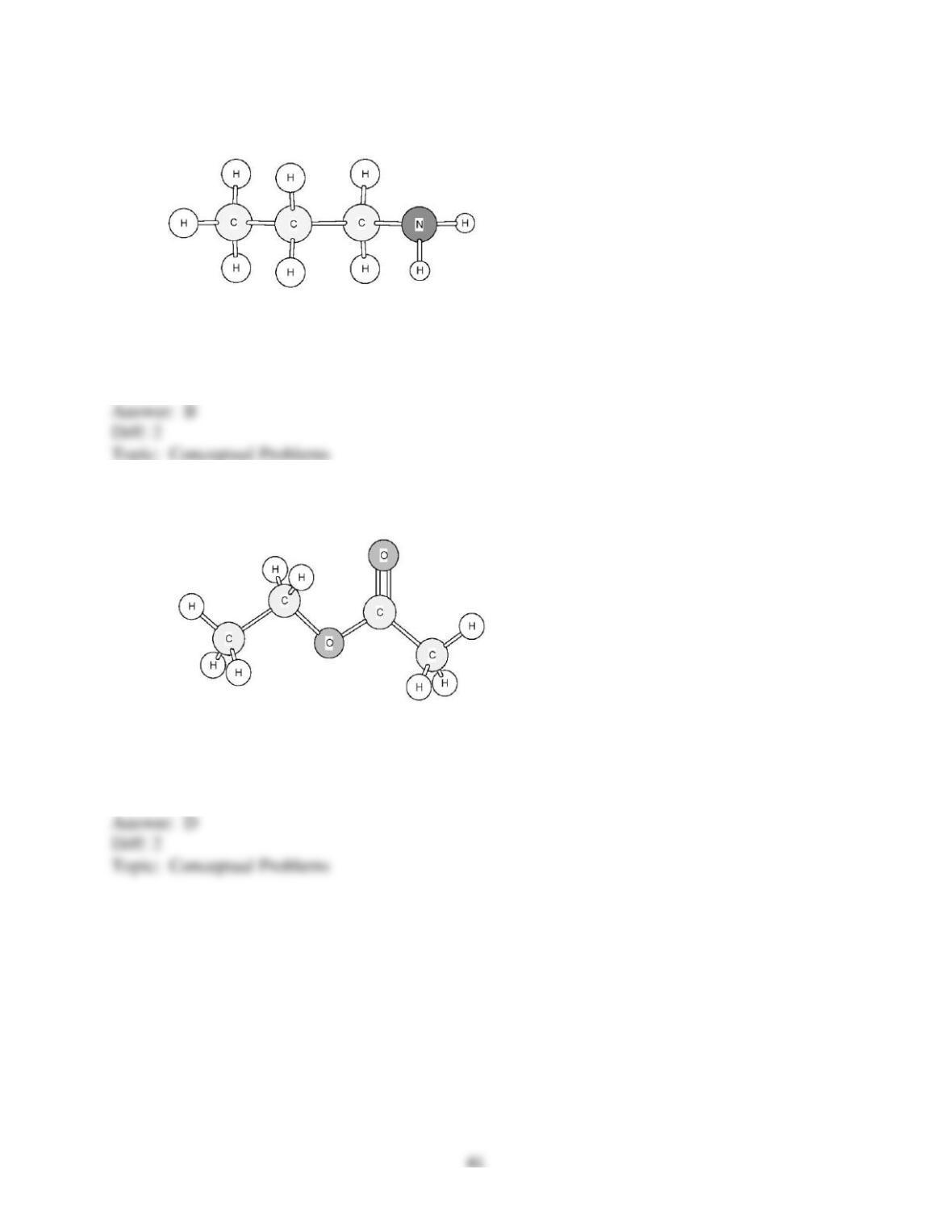
128) To which family does this organic compound belong?
A) amide
B) amine
C) carboxylic acid
D) ester
129) To which family does this organic compound belong?
A) amide
B) amine
C) carboxylic acid
D) ester
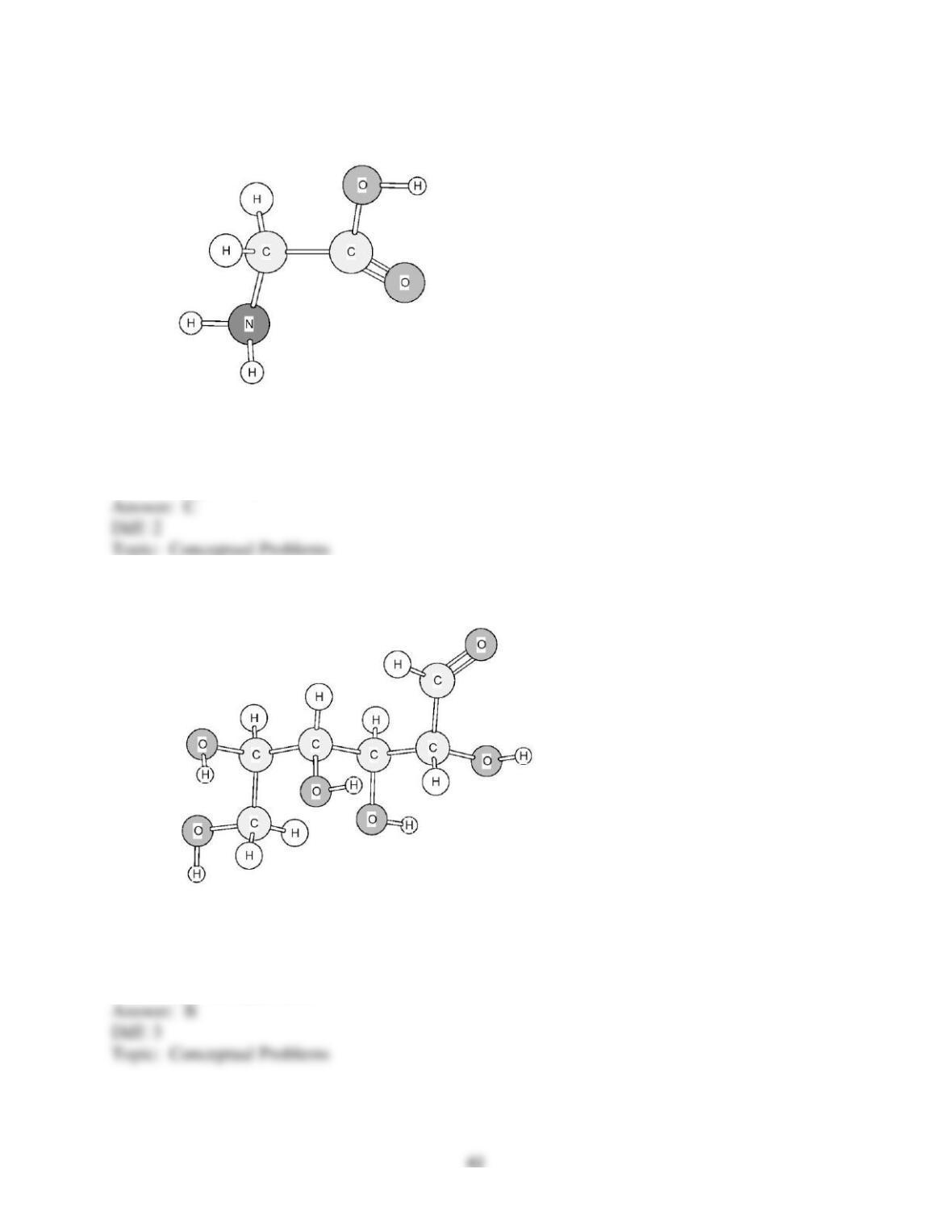
130) Identify the functional groups in the following compound.
A) alcohol and ketone
B) alcohol, amine, and ketone
C) amine and carboxylic acid
D) amine, hydroxide, and ketone
131) Identify the functional groups in the following compound.
A) alcohol
B) alcohol and aldehyde
C) alcohol and ketone
D) aldehyde and hydroxide
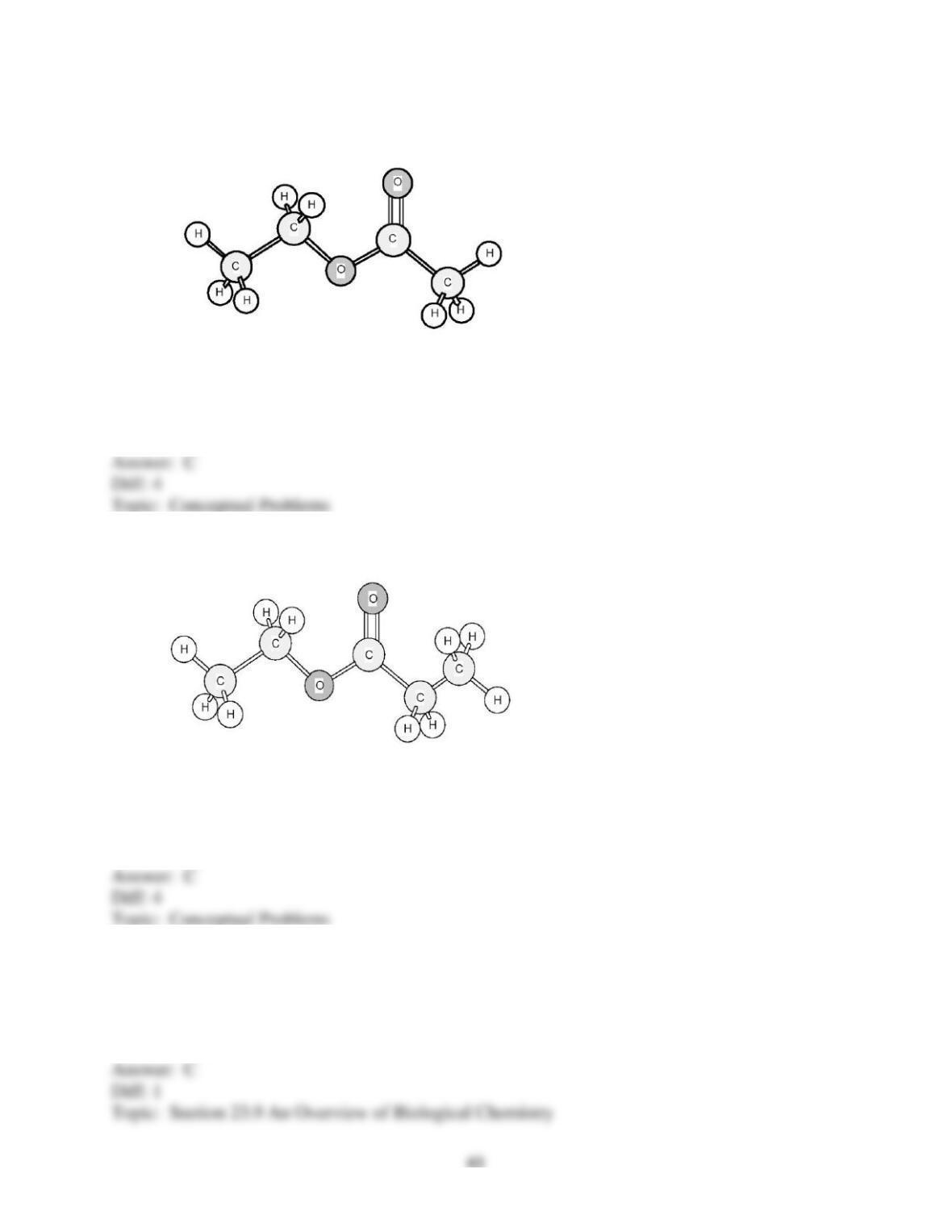
132) Identify the carboxylic acid and alcohol from which the following ester was made.
A) CH3CO2H and CH3OH
B) CH3CH2CO2H and CH3OH
C) CH3CO2H and CH3CH2OH
D) CH3CH2CO2H and CH3CH2OH
133) Identify the carboxylic acid and alcohol from which the following ester was made.
A) CH3CO2H and CH3CH2OH
B) CH3CO2H and CH3CH2CH2OH
C) CH3CH2CO2H and CH3CH2OH
D) CH3CH2CO2H and CH3CH2CH2OH
134) The sum of the many organic reactions that occur in the cell is called
A) anabolism.
B) catabolism.
C) metabolism.
D) none of these
135) The reactions that generally release energy that is used to power living organisms are called
A) anabolic reactions.
B) catabolic reactions.
C) metabolic reactions.
D) none of these
136) The major final product of the four stages of catabolism is
A) acetyl CoA.
B) ATP.
C) CO2.
D) fatty acids.
137) Which molecule is referred to as the “energy storehouse”?
A) acetyl CoA
B) ATP
C) CO2
D) fatty acids
138) Approximately what mass percent of a body’s dry weight consists of proteins?
A) 5%
B) 25%
C) 50%
D) 72%
139) In addition to an amine, which functional group do all amino acids contain?
A) an alcohol
B) an amide
C) a carboxylic acid
D) an oxyacid
45
140) A peptide bond links
A) an alcohol and a ketone.
B) an amide and an aldehyde.
C) an amine and a carboxylic acid.
D) ATP and acetyl CoA.
141) What does the term “alpha” amino acid mean?
A) The amino group attaches to the carbon in the carboxyl group.
B) The amino group attaches to the carbon next to the carboxylic acid group.
C) The amino acid contains only one carbon atom.
D) The amino acid contains only one carboxylic acid group.
142) How many alpha amino acids commonly make up the different proteins found in humans?
A) 4
B) 20
C) 100
D) millions
143) What does the term “essential” mean when referring to amino acids? These are the amino
acids which
A) are necessary for digestion.
B) are necessary for respiration.
C) are synthesized in our bodies.
D) we must obtain from our diet.
144) Which is an amino acid nonpolar neutral side chain?
A) –CH3
B) –CH2OH
C) –CH2CO2H
D) –CH2CH2CH2CH2NH2
145) Which is an amino acid polar neutral side chain?
46
A) –CH3
B) –CH2OH
C) –CH2CO2H
D) –CH2CH2CH2CH2NH2
146) Which is an amino acid basic side chain?
A) –CH3
B) –CH2OH
C) –CH2CO2H
D) –CH2CH2CH2CH2NH2
147) Which is an amino acid acidic side chain?
A) –CH3
B) –CH2OH
C) –CH2CO2H
D) –CH2CH2CH2CH2NH2
148) Which one of the following amino acids does not contain a basic side chain
A) arginine
B) histidine
C) lysine
D) serine
149) Which of the following amino acids is acidic?
A) alanine
B) aspartic
C) glycine
D) valine
150) Which one of the following amino acids contains a polar side chain?
A) alanine
B) glycine
C) serine
D) valine
151) Which of the following amino acids contains a benzyl group?
A) glycine
B) isoleucine
C) methionine
D) phenylalanine
152) Which one of the amino acids contains a double ring structure?
A) phenylalanine
B) proline
C) tryptophan
D) tyrosine
153) Which amino acid has the simplest structure?
A) alanine
B) glycine
C) leucine
D) valine
154) Which of the following amino acids contains a sulfur in its side chain?
A) aspartic acid
B) glutamic acid
C) methionine
D) threonine
48
155) What does the term “hydrophobic” mean?
A) water reactive
B) water repelling
C) water soluble
D) none of these
156) Which one of the following amino acids contains a hydrophobic side chain?
A) leucine
B) serine
C) threonine
D) tyrosine
157) All but one of the common amino acids contain a –NH2 amino group. Which one contains
an –NH– amino group as part of a ring structure?
A) phenylalanine
B) proline
C) tryptophan
D) tyrosine
158) Peptide bonds that link amino acids together in proteins contain the ________ functional
group.
A) amine
B) amide
C) ester
D) ketone
159) In the protein, Val-Tyr-His-Pro, which amino acid contains the N-terminal group?
A) histidine
B) proline
C) tyrosine
D) valine
160) In the protein, Asn-Phe-Cys-Lys, which amino acid contains the C-terminal group?
A) asparagine
B) cysteine
C) lysine
D) phenylalanine
161) How many possible tripeptides can be made with the amino acids: tyrosine, histidine, and
cysteine, each used only once?
A) 3
B) 4
C) 6
D) 9
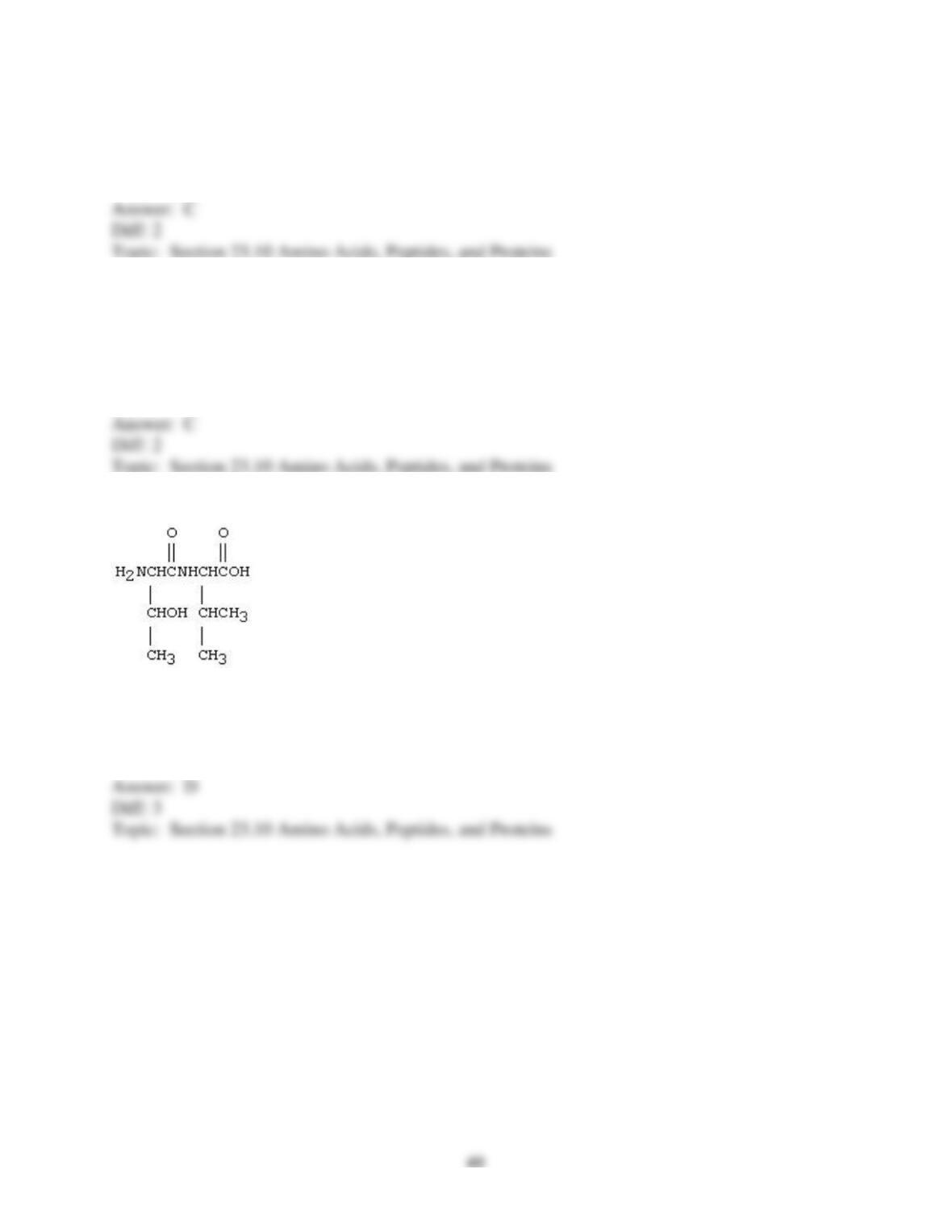
162) Which two amino acids form the dipeptide below?
A) asparagine and proline
B) glycine and cysteine
C) serine and alanine
D) threonine and valine
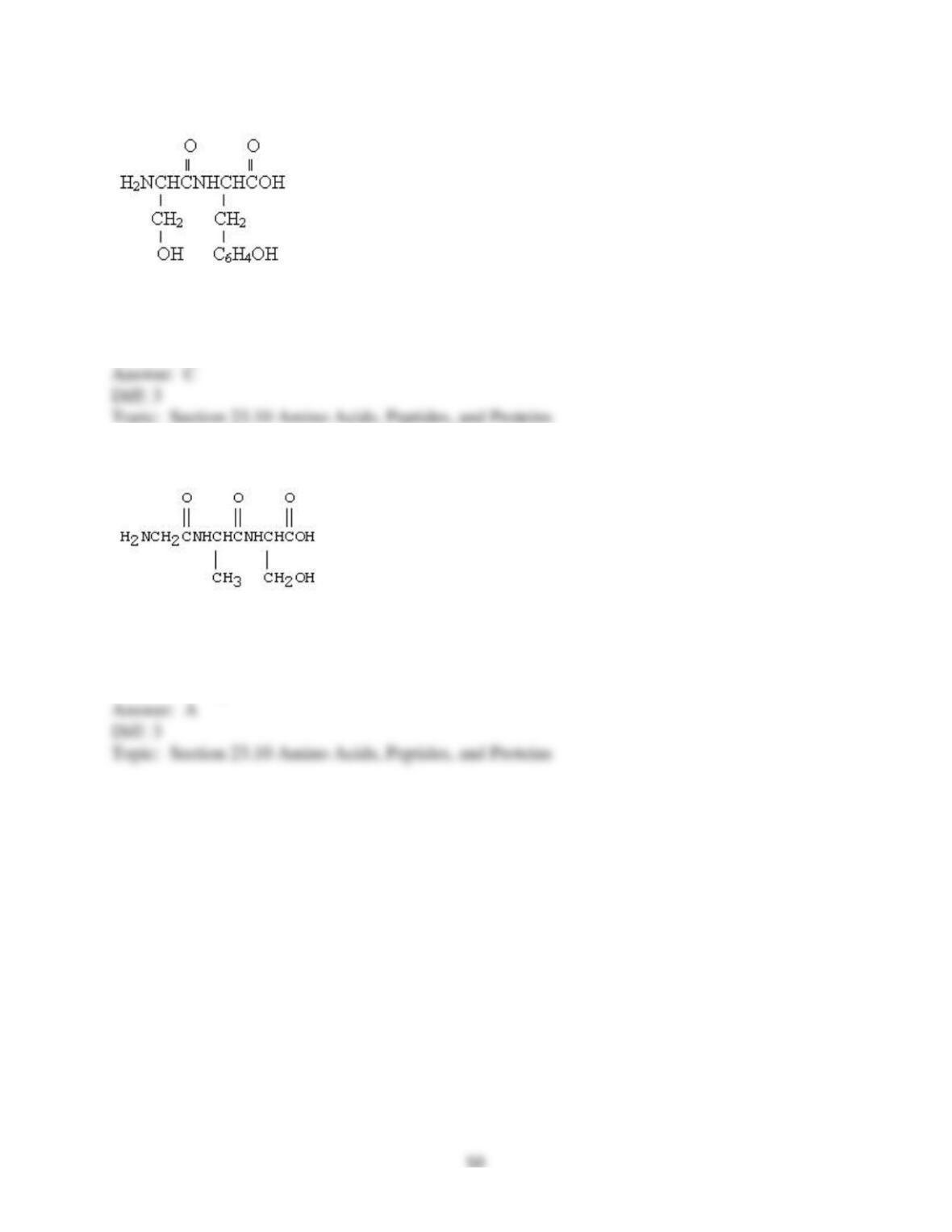
163) Which of the following notations represents the dipeptide shown below?
A) Phe-Thr
B) Thr-Phe
C) Ser-Tyr
D) Tyr-Ser
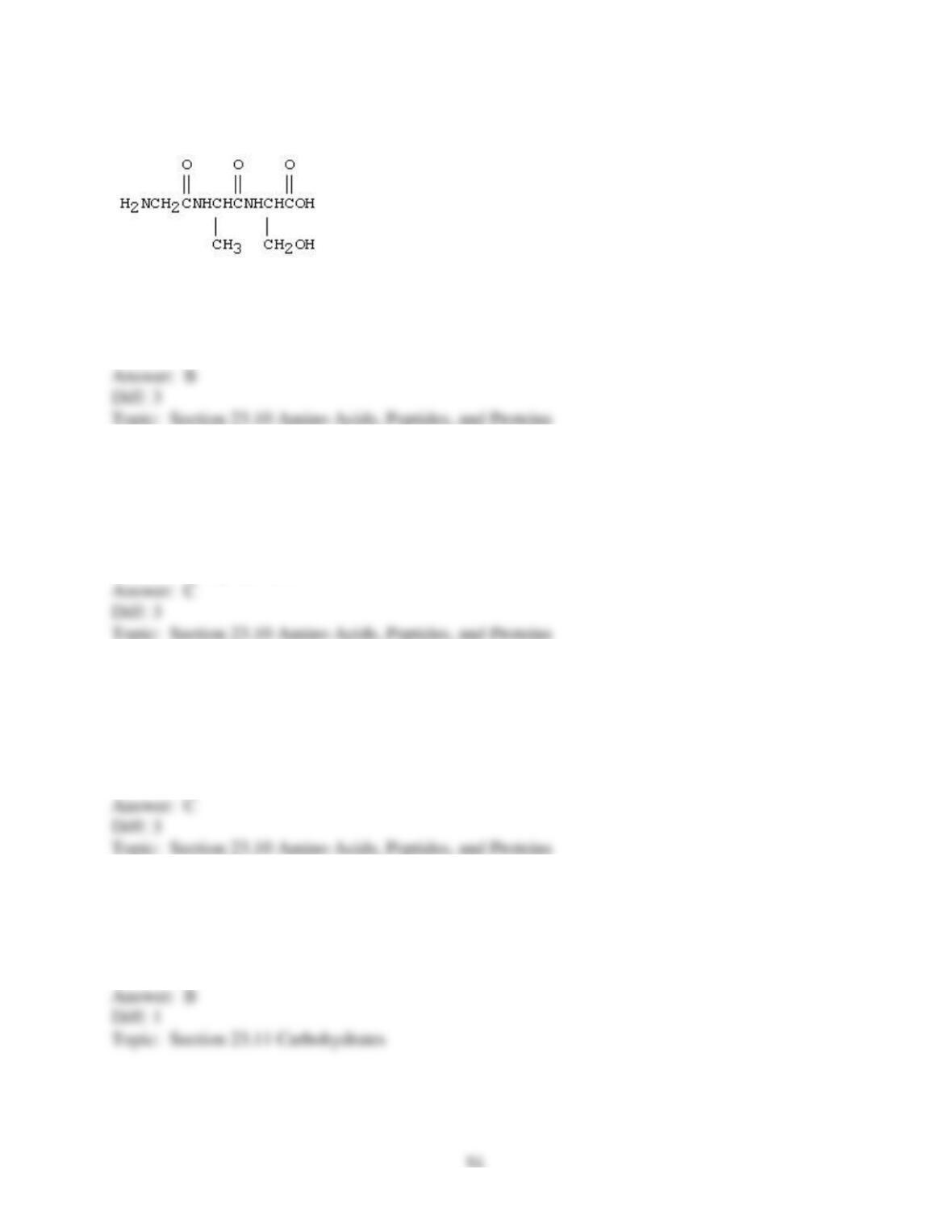
164) Which of the following notations represents the polypeptide shown below?
A) Gly-Ala-Ser
B) Gly-Val-Thr
C) Ser-Ala-Gly
D) Thr-Val-Gly
165) How many peptide bonds are present in the polypeptide shown below?
A) one
B) two
C) three
D) four
166) A partial hydrolysis of a protein yielded the following fragments: Ser-Gly, Gly-Ala, Gly-
Ala-Val, Val-Leu, Ala-Val. What is the sequence of amino acids in the polypeptide?
A) Gly-Leu-Ser-Ala-Val
B) Leu-Ala-Gly-Val-Ser
C) Ser-Gly-Ala-Val-Leu
D) Val-Ala-Gly-Ser-Leu
167) Hemoglobin is a protein molecule which contains 4 iron atoms. If the mass percent of iron
is 0.342%, what is the molar mass of hemoglobin?
A) 1020 g/mol
B) 16,300 g/mol
C) 65,300 g/mol
D) none of these
168) The term “carbohydrates” refers to a large class of polyhydroxylated
A) alcohols and carboxylic acids.
B) aldehydes and ketones.
C) amines and amides.
D) ethers and esters.
169) Which suffix on a ketone or aldehyde indicates a sugar?
A) -ane
B) -ene
C) -one
D) -ose
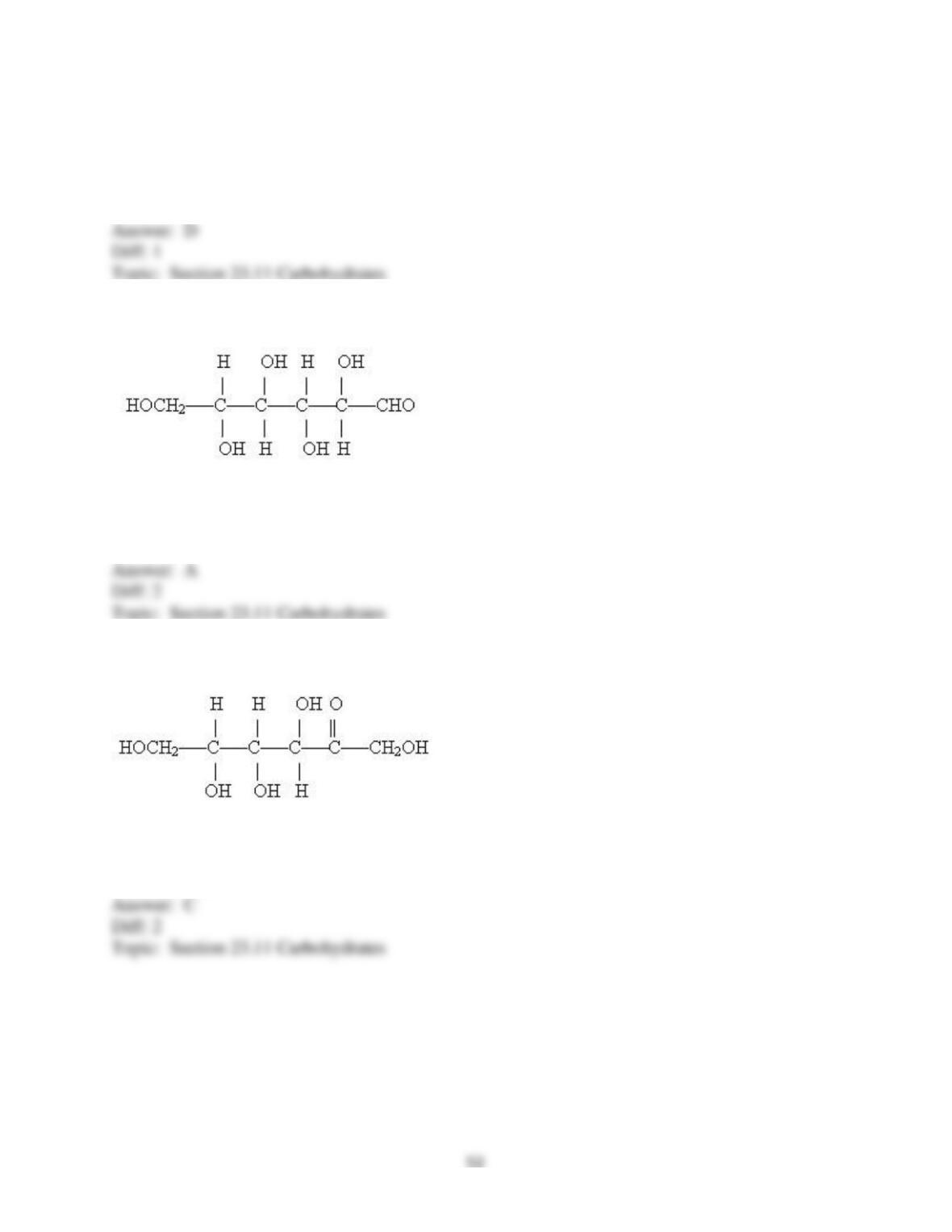
170) The monosaccharide shown below is a(n)
A) aldohexose.
B) aldopentose.
C) ketohexose.
D) ketopentose.
171) The monosaccharide shown below is a(n)
A) aldohexose.
B) aldopentose.
C) ketohexose.
D) ketopentose.
172) What class of compounds are cyclic?
A) DNA
B) lipids
C) monosaccharides
D) proteins
173) In water, which form of glucose predominates?
A) cyclic α
B) cyclic β
C) open chain
D) All three are equal in solution.
174) When crystallized, which form of glucose predominates?
A) cyclic α
B) cyclic β
C) open chain
D) All three are equal in crystals.
175) Sucrose, common table sugar, when hydrolyzed will form
A) amylose and glycogen.
B) cellulose and starch.
C) glucose and fructose.
D) lactose and maltose.
176) Cellulose is a polymer consisting of thousands of
A) α-glucose molecules.
B) β-glucose molecules.
C) long chain fatty acids.
D) amino acids.
177) Which substance is a monosaccharide?
A) cellulose
B) glucose
C) glycogen
D) starch
178) Lipids are characterized by what property?
A) chemical reactivity
B) chemical structure
C) refractive index
D) solubility
179) Which statement below regarding fatty acids is not correct? Fatty acids
A) are always liquids.
B) are long chain carboxylic acids.
C) are usually unbranched chains.
D) usually have an even number of carbon atoms.
180) All of the fatty acids below contain eighteen carbons and range from saturated to three
double bonds. Which has the highest melting point?
A) stearic acid (saturated)
B) oleic acid (one double bond)
C) linoleic acid (two double bonds)
D) linolenic acid (three double bonds)
181) What functional group is commonly found in fats?
A) –NH2
B) –OH
C) –C–O–C
D) O
–O–C–C–
182) Which one of the following amine bases does not appear in DNA?
A) adenine
B) cytosine
C) guanine
D) uracil
183) The one cyclic amine base that occurs in DNA but not in RNA is
A) cystine.
B) guanine.
C) thymine.
D) uracil.
184) Which of the following is not part of a nucleotide?
A) cyclic amine base
B) fatty acid
C) phosphoric acid
D) a sugar
185) The attractive force between the cylic amine bases in DNA is
A) disulfide bridges.
B) hydrogen bonding.
C) hydrophobic stacking.
D) ionic interactions of salt bridges.
186) What is the sugar component in RNA called?
A) fructose
B) galactose
C) glucose
D) ribose
187) What is the backbone of the nucleic acid constructed of?
A) alternating sugar phosphate groups
B) amine bases
C) glucose polymers
D) polyamides
188) The nucleotide sequence, T-A-G, stands for
A) threonine-alanine-glutamine.
B) thymine-adenine-guanine.
C) tyrosine-asparagine-glutamic acid.
D) None of these
189) Which of the following bases pairs with adenine in DNA?
A) cytosine
B) guanine
C) thymine
D) uracil
190) What is the complementary DNA sequence to ATATGGTC?
A) CGCGTTGA
B) GCGCAACT
C) TATACCAG
D) TUTUCCAG
191) What is the complementary mRNA sequence to GCTATACCGT?
A) ATCGCGTTAC
B) CGAUAUGGCA
C) TUGCGCUUTG
D) UTCGCGTTUC
192) The base sequences in mRNA that code for particular amino acids are Trp: UGG, Phe:
UUU, and Glu: GAA. What is the peptide that is produced from the DNA sequence:
CTTACCAAA?
A) Glu-Phe-Trp
B) Glu-Trp-Phe
C) Phe-Trp-Glu
D) Trp-Glu-Phe
193) The process of forming mRNA from DNA is called
A) metamorphosis.
B) replication.
C) transcription.
D) translation.
194) Transfer-RNA is involved in
A) replication.
B) transcription.
C) translation.
D) none of these
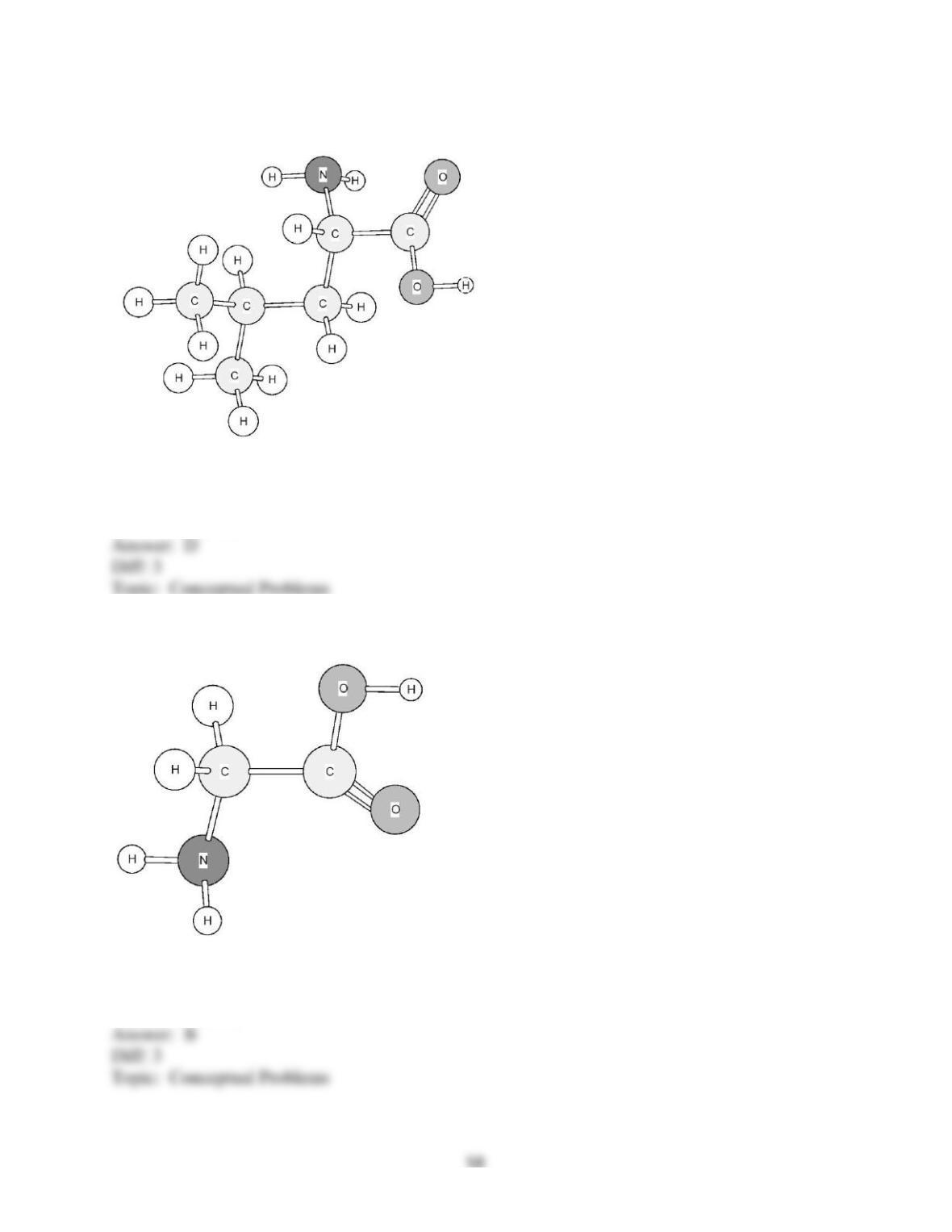
195) Identify the amino acid shown below.
A) Alanine (Ala)
B) Glycine (Gly)
C) Isoleucine (Ile)
D) Leucine (Leu)
196) Identify the amino acid shown below.
A) Alanine (Ala)
B) Glycine (Gly)
C) Isoleucine (Ile)
D) Leucine (Leu)
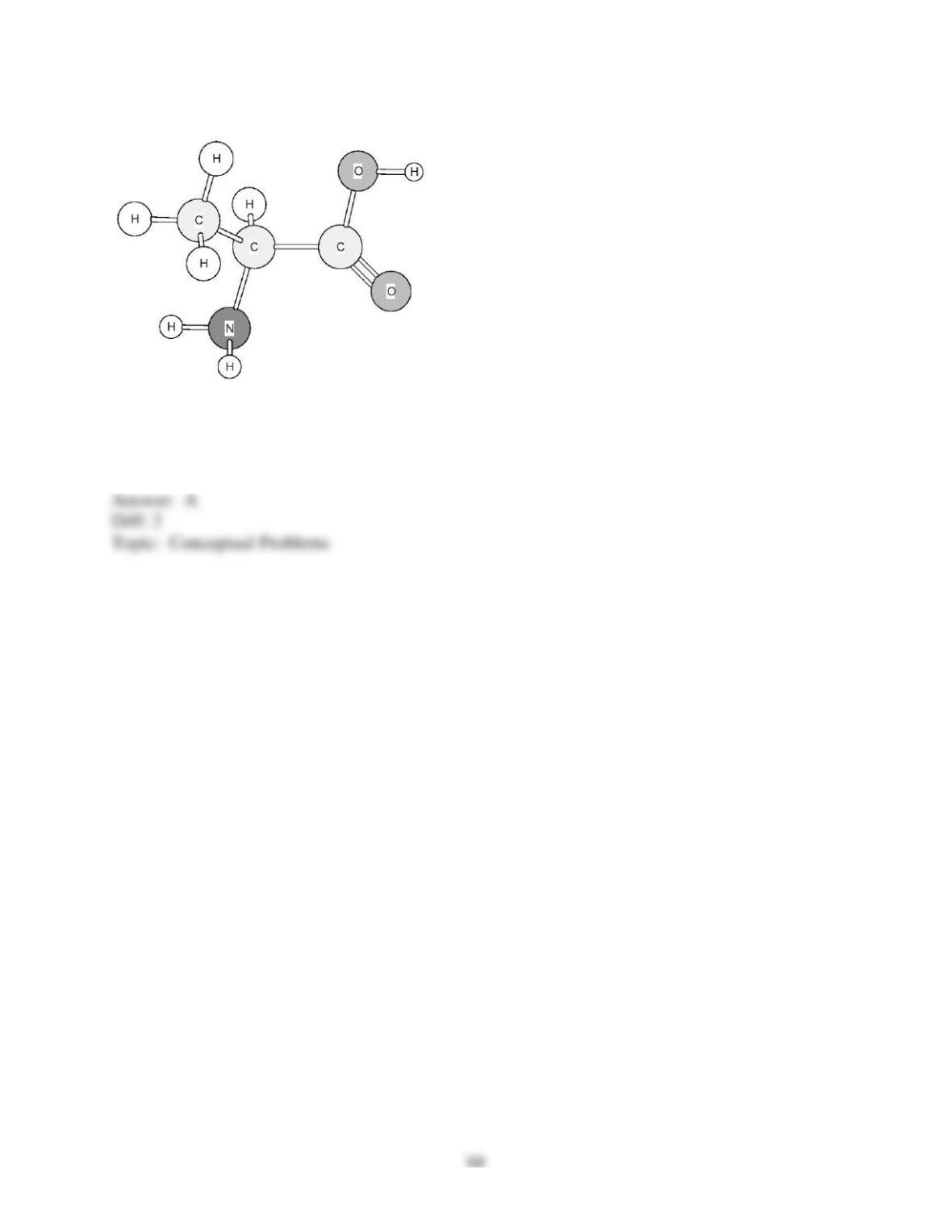
197) Identify the amino acid shown below.
A) Alanine (Ala)
B) Glycine (Gly)
C) Isoleucine (Ile)
D) Leucine (Leu)
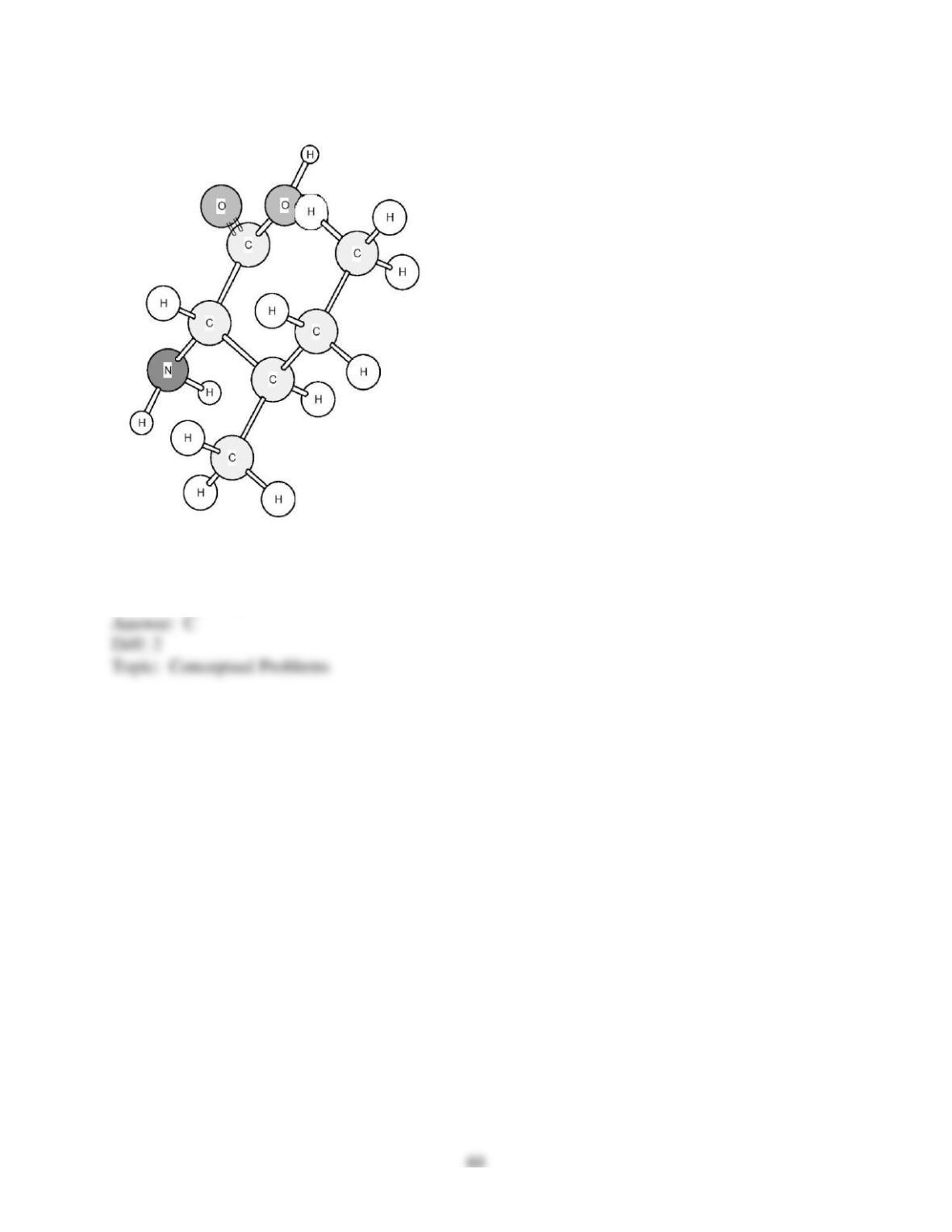
198) Identify the amino acid shown below.
A) Alanine (Ala)
B) Glycine (Gly)
C) Isoleucine (Ile)
D) Leucine (Leu)