70) “Wood alcohol” is the common name for
A) methanol.
B) ethanol.
C) 2-propanol.
D) 1, 2-ethanediol.
71) “Rubbing alcohol” is the common name for
A) methanol.
B) ethanol.
C) 2-propanol.
D) 1, 2-ethanediol.
72) “Glycerol” is the common name for
A) ethanol.
B) 2-propanol.
C) 1, 2-ethanediol.
D) 1, 2, 3-propanetriol.
73) Which of the following compounds is most soluble in water?
A) decanol
B) dimethyl ether
C) ethane
D) ethanol
74) How many ether isomers have the formula C4H10O?
A) 2
B) 3
C) 4
D) 5
75) What type of compound contains the –NH2 functional group?
A) alcohol
B) amine
C) carboxylic acid
D) ether
76) Which of the following is the most soluble in water?
A) trimethylammonium chloride
B) methane
C) trimethyl amine
D) dimethyl ether
77) What is the common name for benzeneamine?
A) aniline
B) toluene
C) xylene
D) phenol
78) The reaction of methylamine with HCl produces
A) methyl ammonium chloride.
B) dimethylamine and ammonium chloride.
C) methanol and ammonium chloride.
D) methanol and chloramine.
79) The C-C=O bond angle in acetic acid, shown below, is closest to
O
CH3C–OH
A) 90°.
B) 109.5°.
C) 120°.
D) 180°.
80) The H-C-H bond angles in acetic acid, shown below, are closest to
O
CH3C–OH
A) 90°.
B) 109.5°.
C) 120°.
D) 180°.
81) What is the common name for the simplest ketone, propanone?
A) acetal
B) acetone
C) carbanone
D) formalin
82) Which of the following molecules is the most highly oxidized?
A) acetaldehyde
B) acetic acid
C) ethanol
D) 1, 2-ethanediol
83) Which of the following does not contain a carbonyl group?
A) an alcohol
B) an aldehyde
C) an amide
D) an ester
84) Which one of the following does not contain a polar carbonyl group?
A) an amine
B) a carboxylic acid
C) an ester
D) a ketone
85) Which of the following pairs have the most similar chemical properties?
A) alkanes and carboxylic acids
B) alkenes and aromatics
C) amines and esters
D) ketones and aldehydes
86) Which one of the following behaves like an acid?
A) CH3COCH3
B) (CH3)2NH
C) C2H5OH
D) C2H5COOH
87) How many grams of Ca(OH)2 are needed to neutralize 5.00 g of 3-methylbutanoic acid?
A) 1.81 g
B) 2.10 g
C) 3.63 g
D) 4.20 g
88) What type of compound is formed when a carboxylic acid reacts with an alcohol?
A) an aldehyde
B) an amide
C) an aromatic
D) an ester
89) What is the name of the product formed by the reaction of propanoic acid with ethanol?
A) ethyl propanoate
B) pentanone
C) pentyl ester
D) ethylpropylketone
90) When propyl ethanoate is hydrolyzed the products are
A) 1-propanol and acetic acid.
B) propanone and ethanol.
C) 2-propanol and propanoic acid.
D) methanal and ethanol.
91) What are the products of a hydrolysis reaction of an ester?
A) an alcohol and an alkane
B) a carboxylic acid and an alcohol
C) an ether and an alkene
D) a ketone and an aldehyde
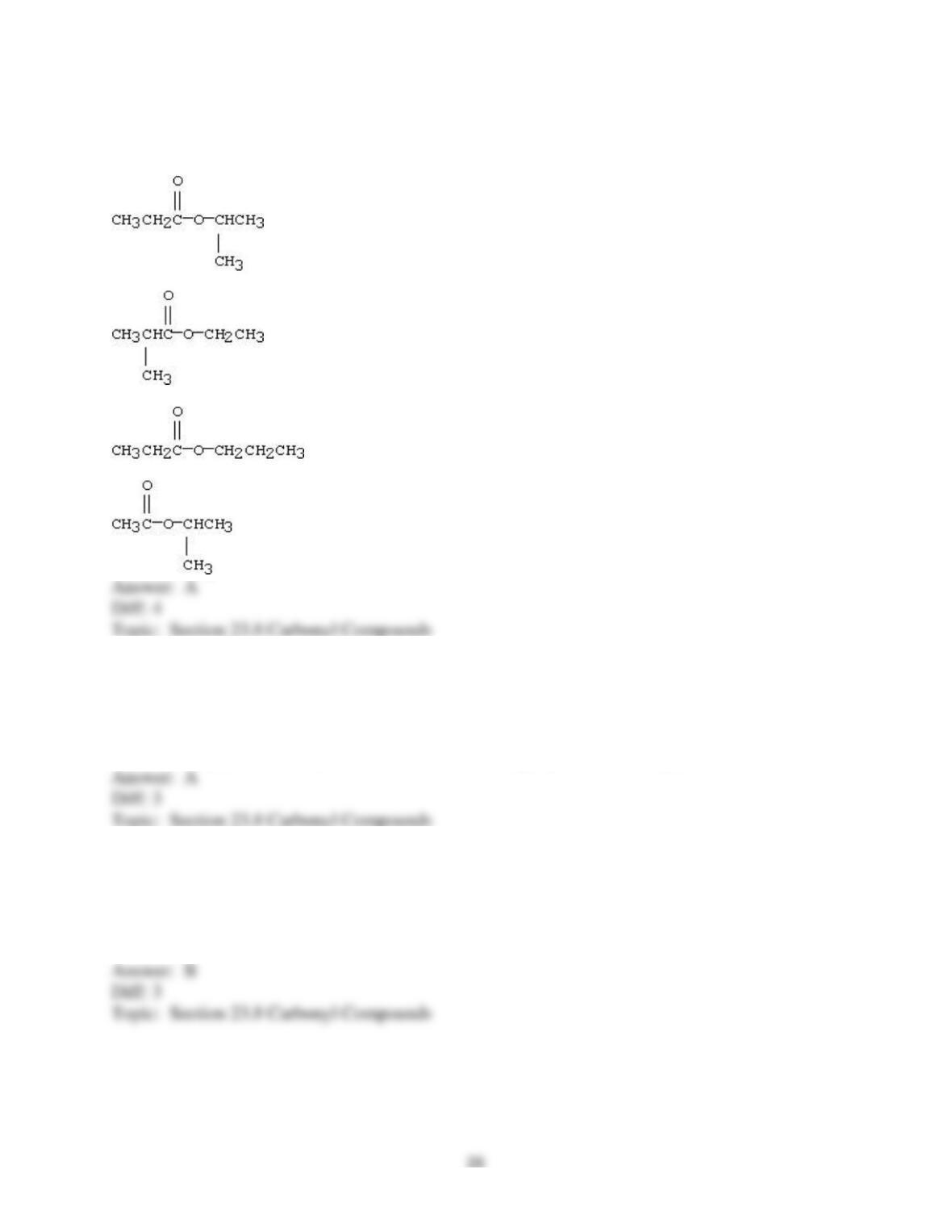
92) Which ester below formed propanoic acid and isopropyl alcohol by hydrolysis reaction with
water?
A)
B)
C)
D)
93) Which statement about the differences between an amine and an amide is not correct?
A) Amides act as proton acceptors while amines do not.
B) Amines are basic and amides are neutral.
C) Amines form ammonium salts when treated with acid; amides do not.
D) The lone pair of electrons on amides is held more tightly than the lone pair on an amine.
94) The reaction of an amine and a carboxylic acid produces what kind of compound?
A) alcohol
B) amide
C) ester
D) ketone
95) What is the name of the product formed by the reaction of butanoic acid with methylamine?
A) N-methylbutamide
B) N-methylbutanamide
C) pentanone
D) pentyl amine
96) Which one of the following behaves like a base?
A) CH3CONHCH3
B) (CH3)2NH
C) C2H5CONHCH3
D) All of the above are bases.
97) What are the products of acid-catalyzed hydrolysis reaction of amides and water?
A) an alcohol and an alkane
B) an amine and a ketone
C) a carboxylic acid and an amine salt
D) an ester and an ether
98) Which one of the following molecules is the most polar?
A) acetaldehyde
B) acetic acid
C) ethane
D) ethylene
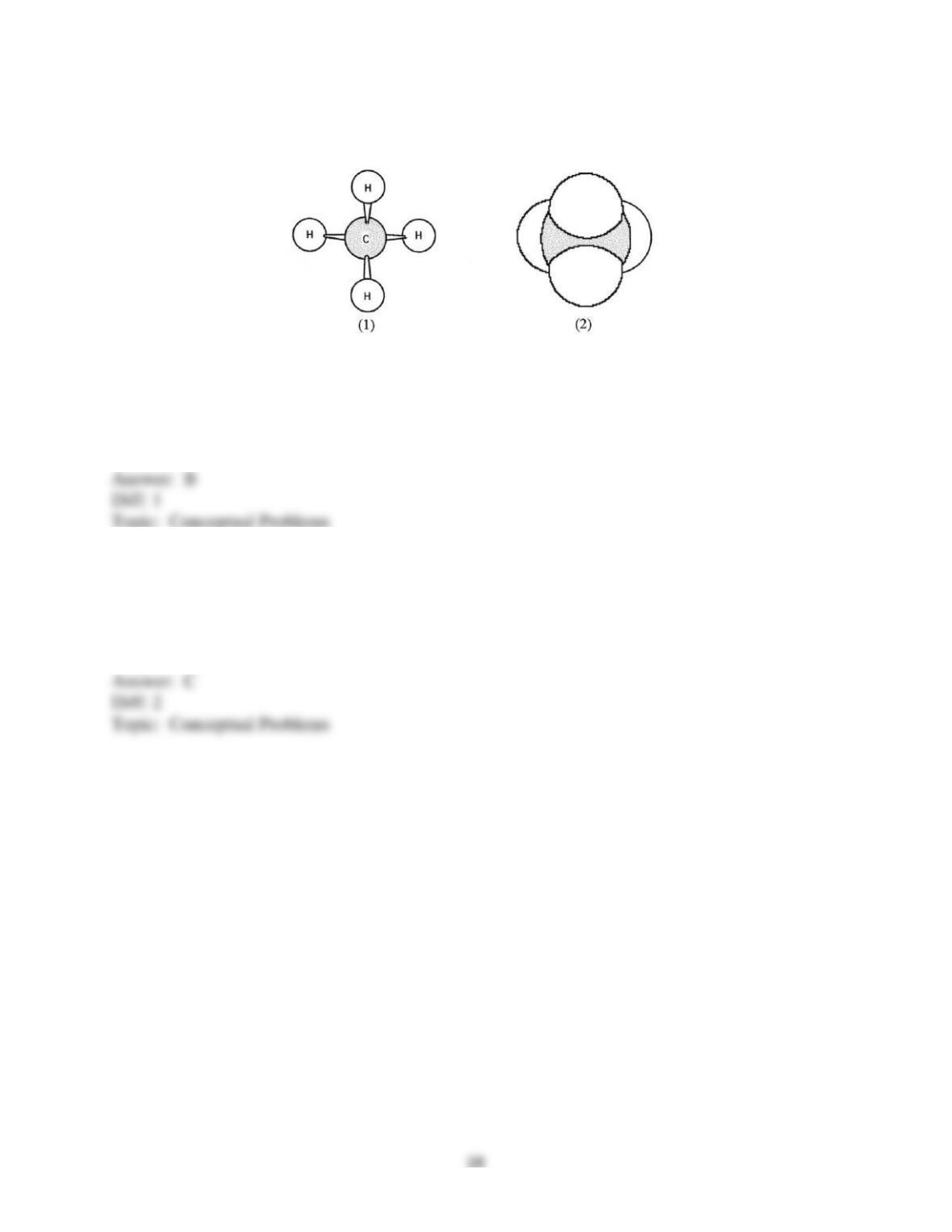
Shown are ball-and-stick (1) and space-filling (2) models of methane.
99) What is the H–C–H bond angle?
A) 90°
B) 109.5°
C) 120°
D) 180°
100) What hybrid orbitals are used by carbon to form covalent bonds with hydrogen?
A) sp
B) sp2
C) sp3
D) sp3d
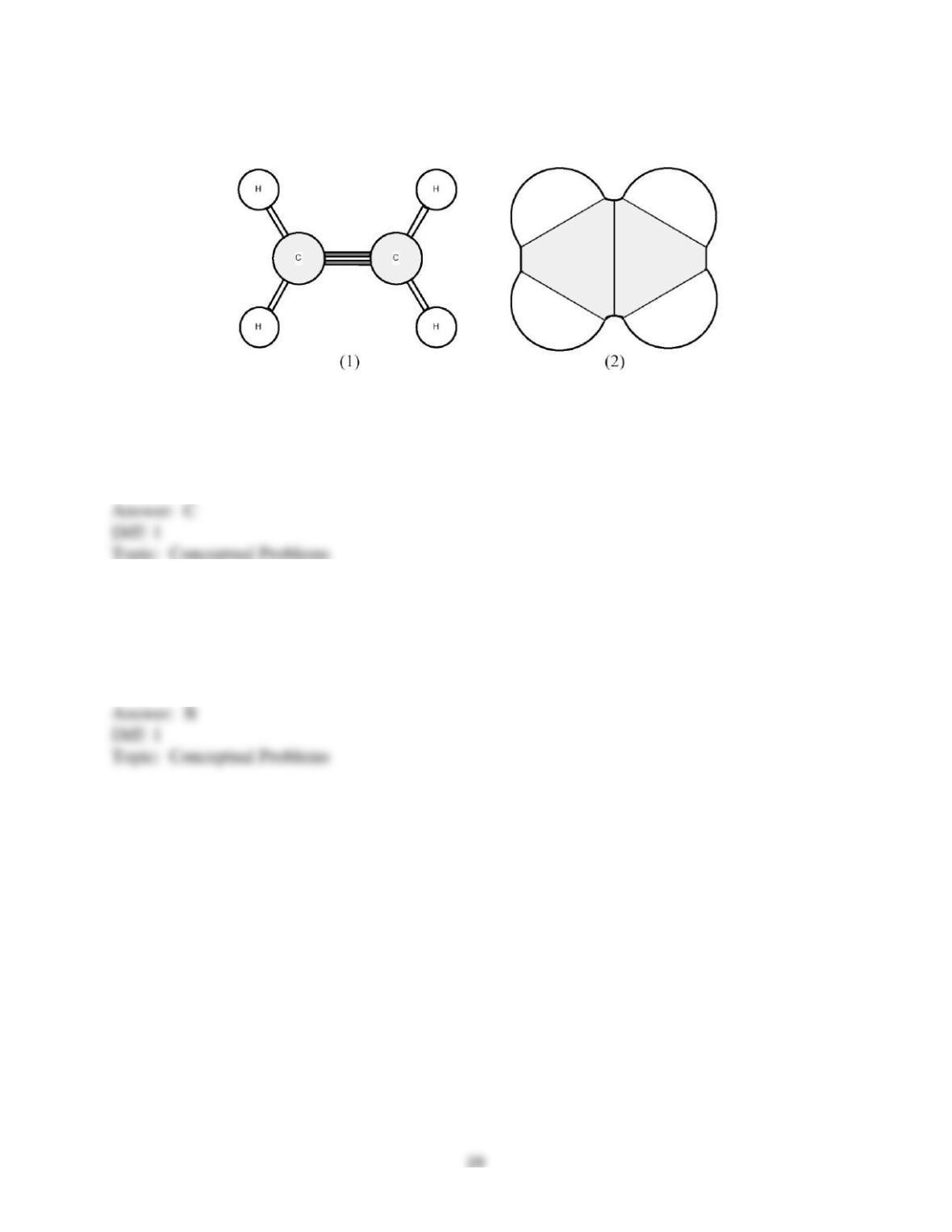
Shown are ball-and-stick (1) and space-filling (2) models of ethylene.
101) What is the H–C–H bond angle?
A) 90°
B) 109.5°
C) 120°
D) 180°
102) What hybrid orbitals are used by carbon to form covalent bonds with hydrogen?
A) sp
B) sp2
C) sp3
D) sp3d
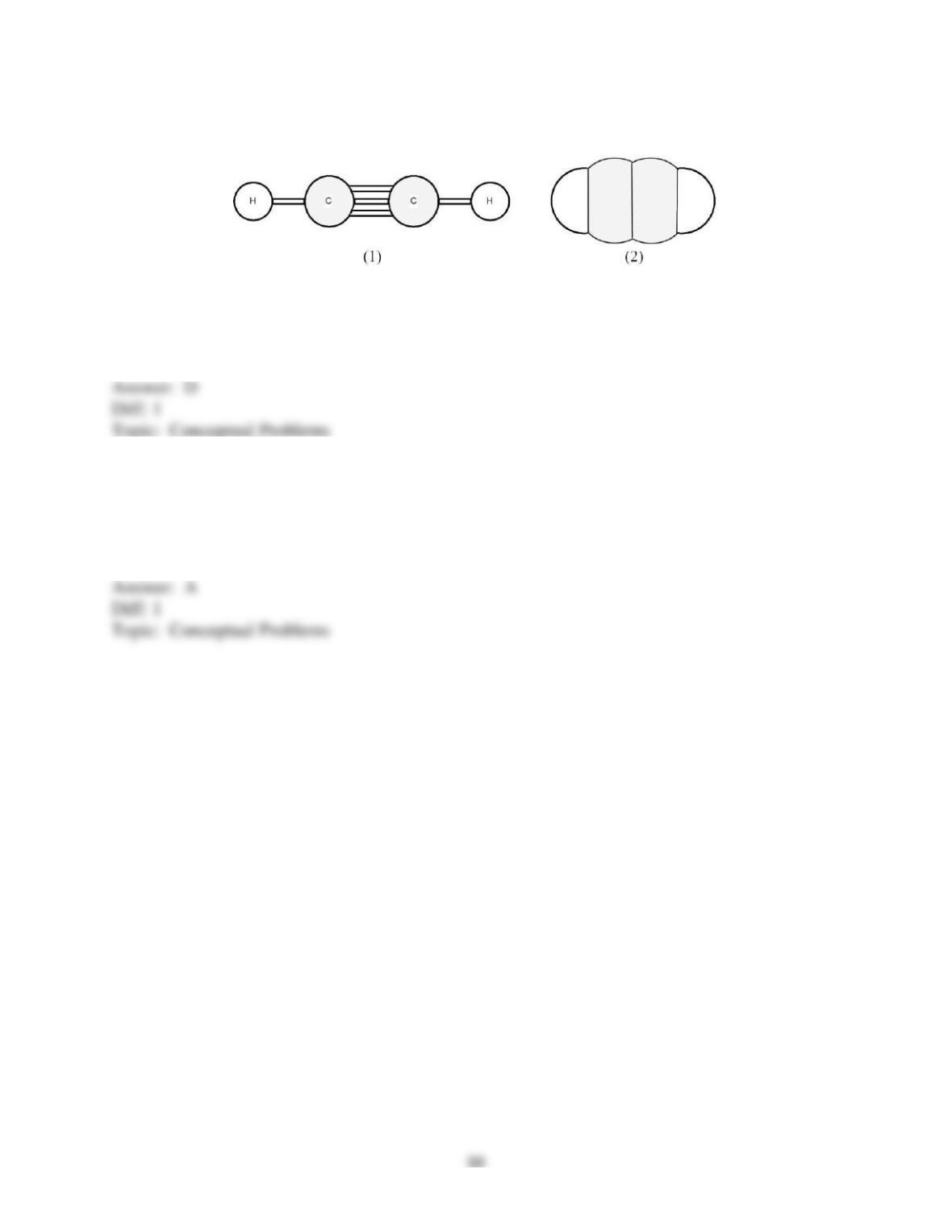
Shown are ball-and-stick (1) and space-filling (2) models of acetylene.
103) What is the H–C–C bond angle?
A) 90°
B) 109.5°
C) 120°
D) 180°
104) What hybrid orbitals are used by carbon to form covalent bonds with hydrogen?
A) sp
B) sp2
C) sp3
D) sp3d
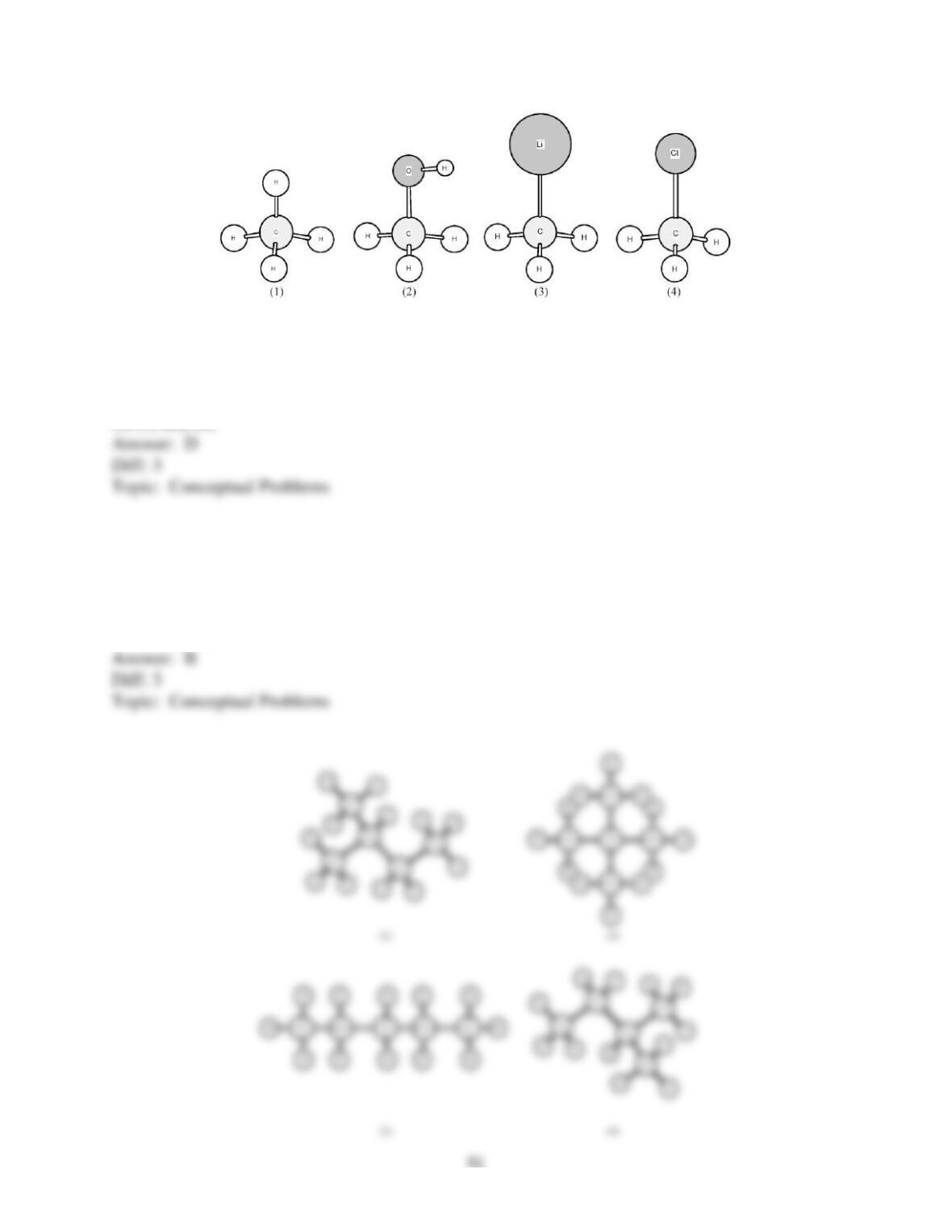
105) Which of these molecules above have a partial positive charge (δ+) on the carbon atom?
A) only (1)
B) only (3)
C) (1) and (3)
D) (2) and (4)
106) Which of these molecules above have a large partial negative charge (δ-) on the carbon
atom?
A) only (1)
B) only (3)
C) (1) and (3)
D) (2) and (4)
107) In the figure above, which structures are identical?
A) All are identical.
B) None are identical.
C) only (1) and (4)
D) only (1), (3), and (4)
108) In the figure above, which are isomers of compound (1)?
A) All are isomers of compound (1).
B) None are isomers of compound (1).
C) only (2) and (3)
D) only (4)
109) In the figure above, which are branched hydrocarbons?
A) All are branched hydrocarbons.
B) None are branched hydrocarbons.
C) only (1) and (4)
D) only (1), (2), and (4)
110) Which of the compounds shown above is correctly identified by the name pentane
according to the IUPAC system of naming compounds?
A) all
B) none
C) only (2)
D) only (3)
111) Which of the compounds shown above is correctly identified by the name 2-methylbutane?
A) All are 2-methylbutane.
B) none
C) only (1)
D) only (1) and (4)
112) Which of the compounds shown above is correctly identified by the name 3-methylbutane?
A) all
B) none
C) only (4)
D) only (1) and (4)
113) Which of the compounds shown above is correctly identified by the name 2, 2-
dimethylpropane?
A) all
B) none
C) only (2)
D) only (1), (2), and (4)
114) Which of the compounds shown above is correctly identified by the name 3, 3-
dimethylpropane?
A) all
B) none
C) only (4)
D) only (1) and (4)
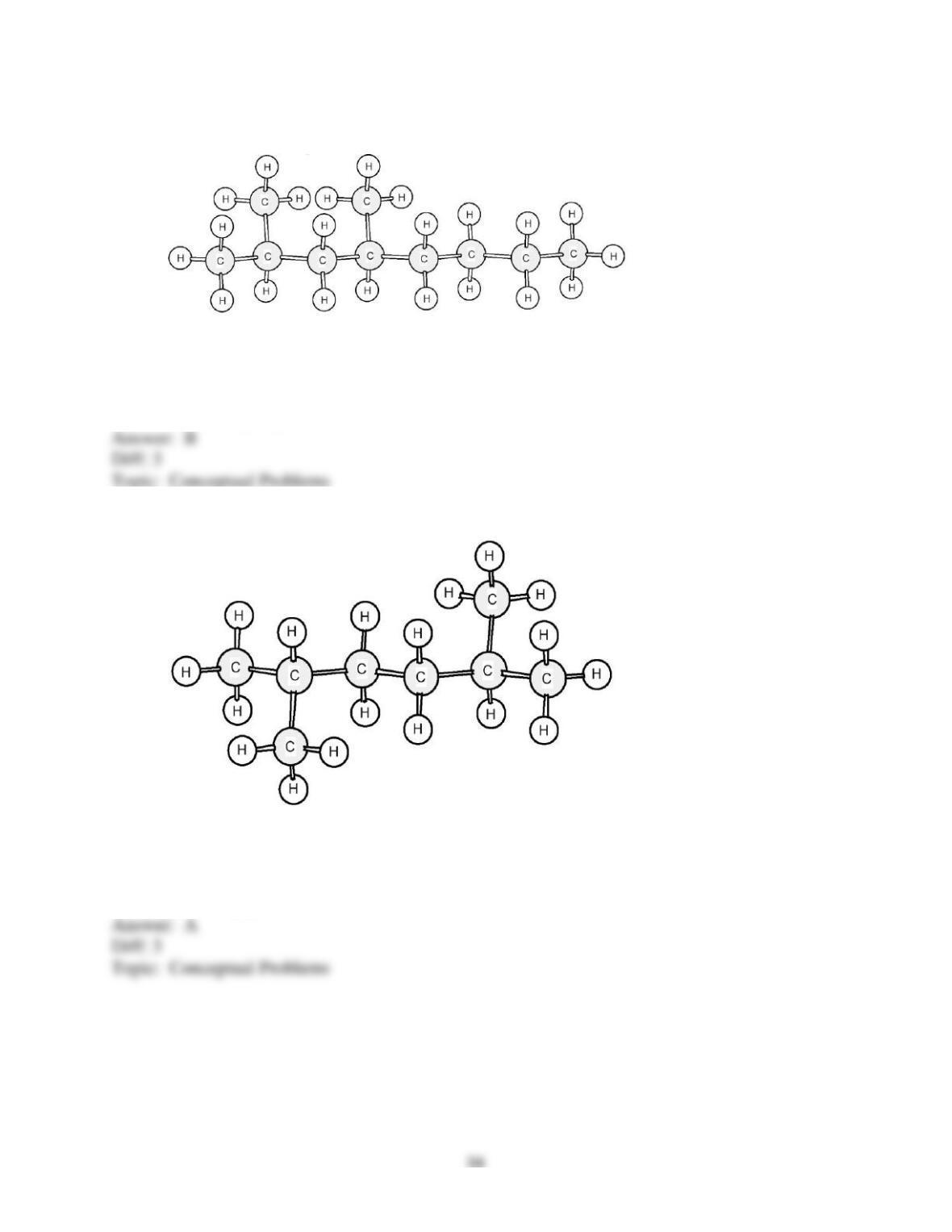
115) What is the IUPAC name of the following alkane?
A) decane
B) 2, 4-dimethyloctane
C) 5, 7-dimethyloctane
D) 1, 1, 3-trimethylheptane
116) What is the IUPAC name of the following alkane?
A) 2,5-dimethylhexane
B) octane
C) 1,1,4,4-tetramethylbutane
D) 1,1,4-trimethylpentane
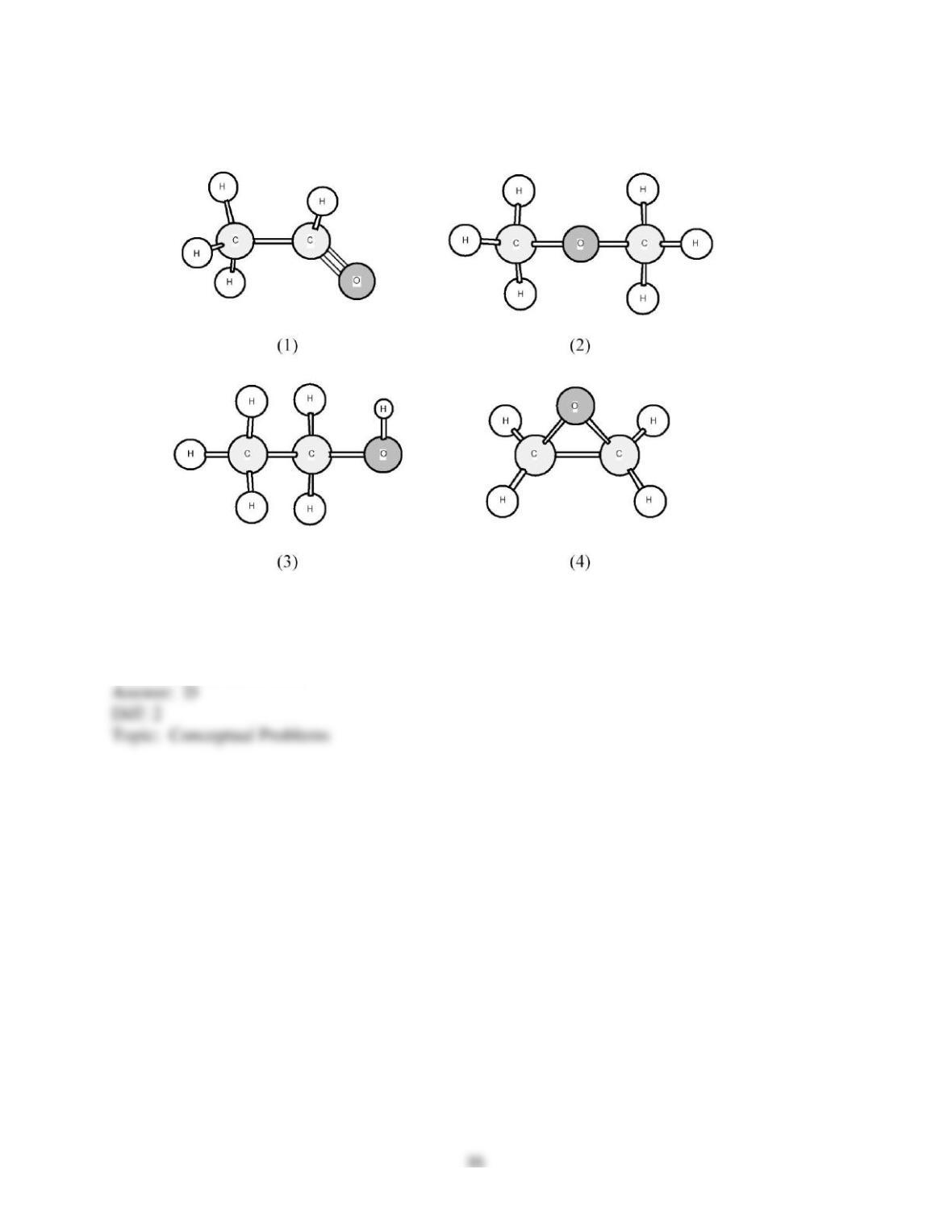
117) Which are isomers?
A) All are isomers.
B) (1) and (2); (3) and (4)
C) (1) and (3); (2) and (4)
D) (1) and (4); (2) and (3)
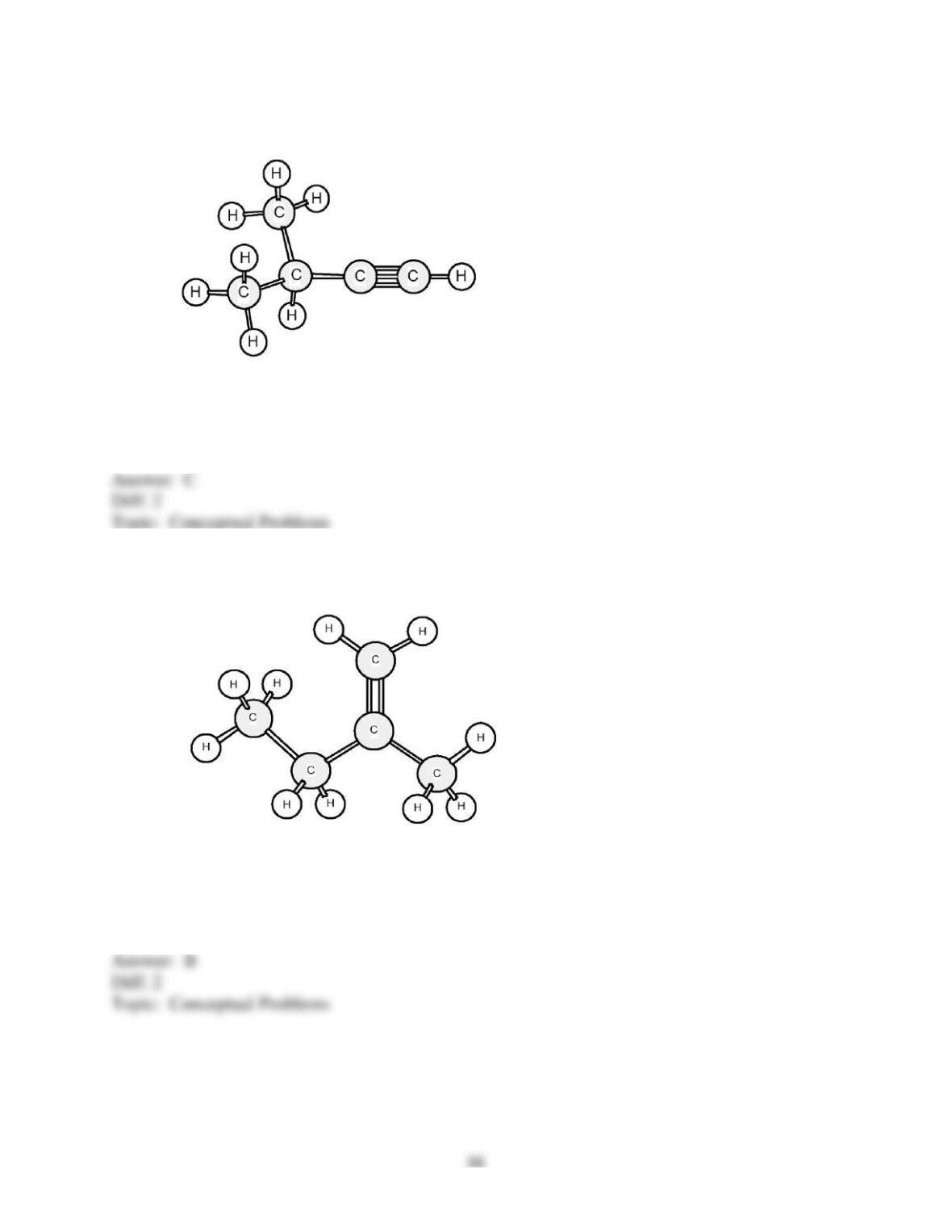
118) To which family does this organic compound belong?
A) alkane
B) alkene
C) alkyne
D) arene
119) To which family does this organic compound belong?
A) alkane
B) alkene
C) alkyne
D) arene
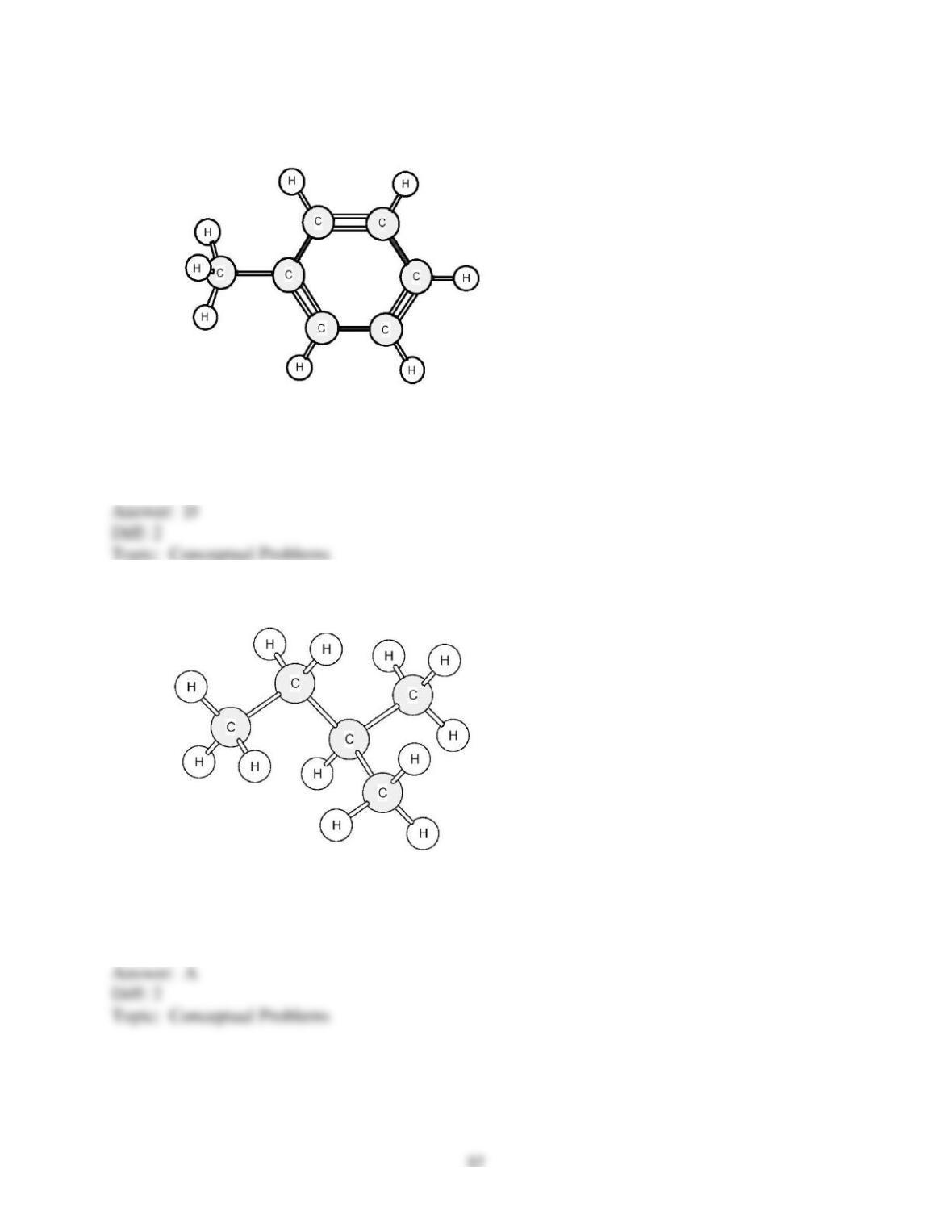
120) To which family does this organic compound belong?
A) alkane
B) alkene
C) alkyne
D) arene
121) To which family does this organic compound belong?
A) alkane
B) alkene
C) alkyne
D) arene
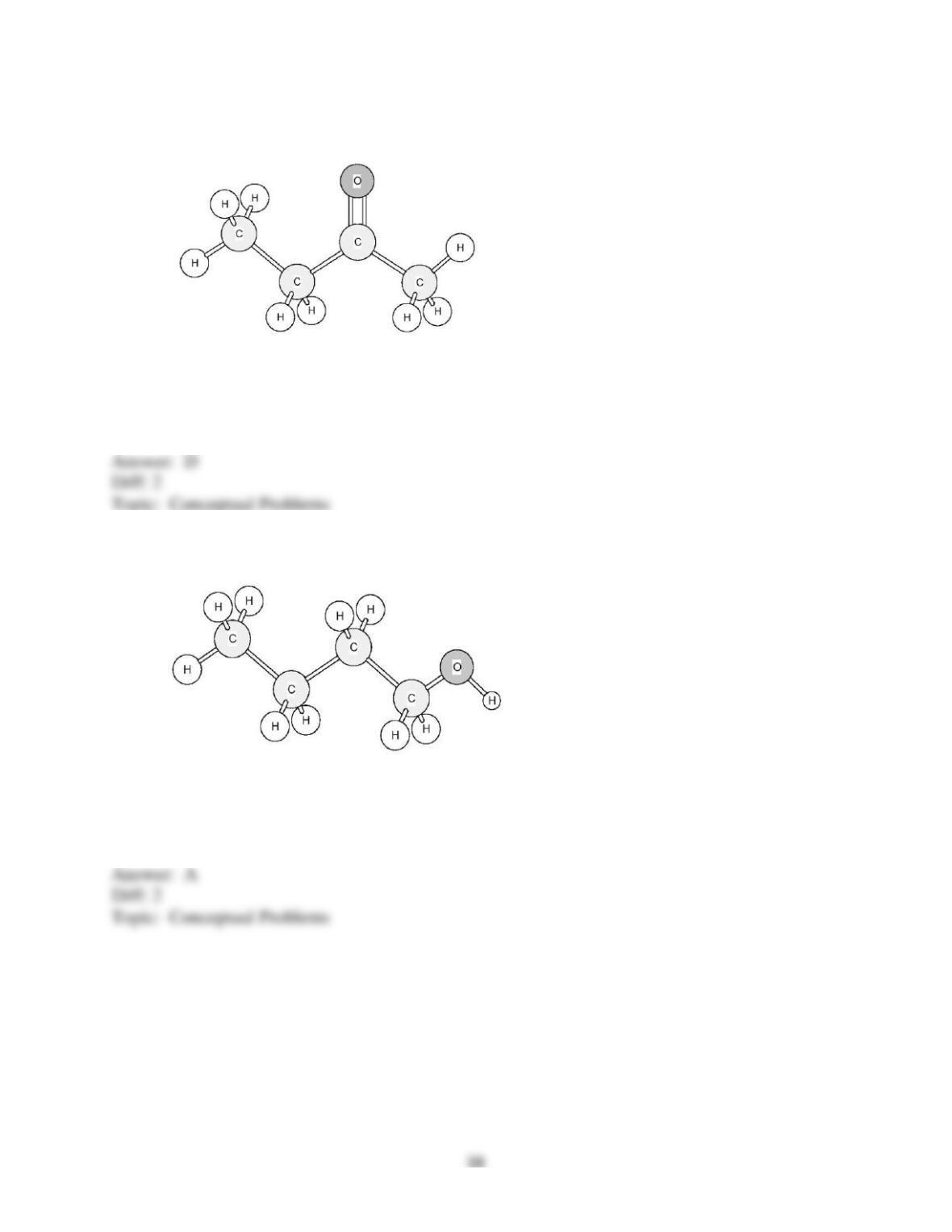
122) To which family does this organic compound belong?
A) alcohol
B) aldehyde
C) ether
D) ketone
123) To which family does this organic compound belong?
A) alcohol
B) aldehyde
C) ether
D) ketone
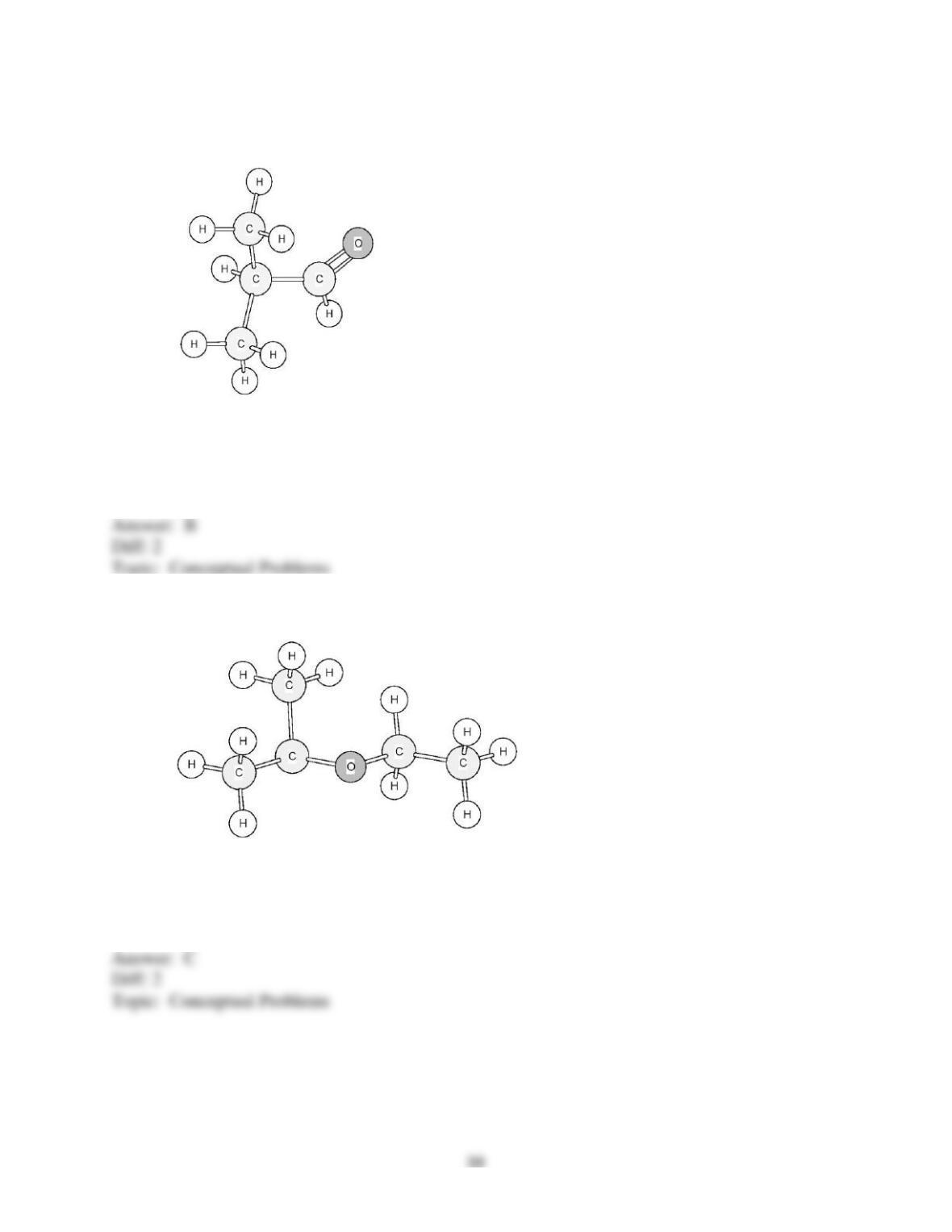
124) To which family does this organic compound belong?
A) alcohol
B) aldehyde
C) ether
D) ketone
125) To which family does this organic compound belong?
A) alcohol
B) aldehyde
C) ether
D) ketone
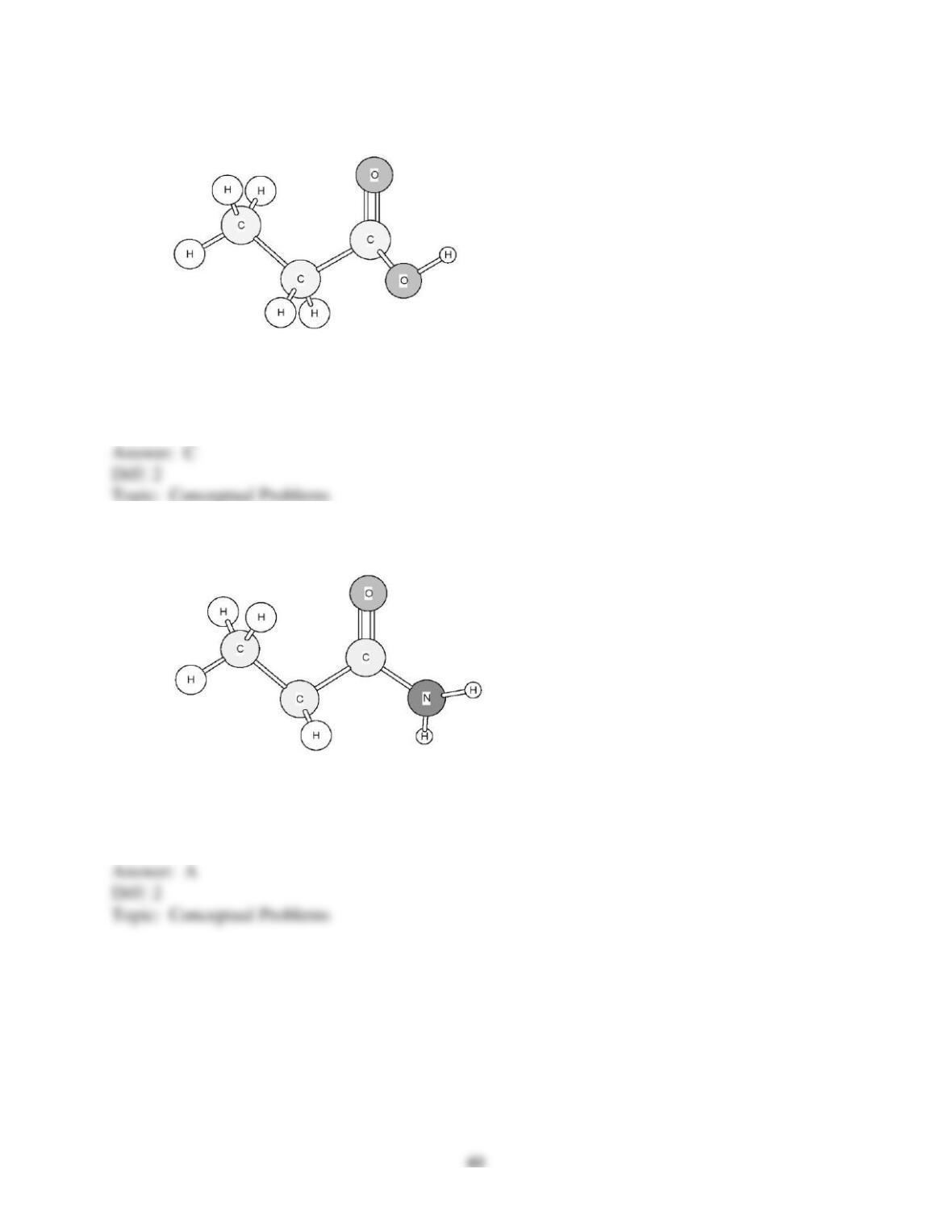
126) To which family does this organic compound belong?
A) amide
B) amine
C) carboxylic acid
D) ester
127) To which family does this organic compound belong?
A) amide
B) amine
C) carboxylic acid
D) ester