80) The C-C=O bond angle in acetic acid, shown below, is closest to
O
CH3C–OH
A) 90°.
B) 109.5°.
C) 120°.
D) 180°.
81) The H-C-H bond angles in acetic acid, shown below, are closest to
O
CH3C–OH
A) 90°.
B) 109.5°.
C) 120°.
D) 180°.
82) What compound is formed by the oxidation of 2-butanol?
A) butanal
B) butanoic acid
C) 2-butanone
D) 2-butene
83) What is the common name for the simplest ketone, propanone?
A) acetal
B) acetone
C) carbanone
D) formalin
22
84) Which of the following molecules is the most highly oxidized?
A) acetaldehyde
B) acetic acid
C) ethanol
D) 1, 2-ethanediol
85) Which of the following does not contain a carbonyl group?
A) an alcohol
B) an aldehyde
C) an amide
D) an ester
86) Which one of the following does not contain a polar carbonyl group?
A) an amine
B) a carboxylic acid
C) an ester
D) a ketone
87) Which of the following pairs have the most similar chemical properties?
A) alkanes and carboxylic acids
B) alkenes and aromatics
C) amines and esters
D) ketones and aldehydes
88) Which one of the following behaves like an acid?
A) CH3COCH3
B) (CH3)2NH
C) C2H5OH
D) C2H5COOH
89) How many grams of Ca(OH)2 are needed to neutralize 5.00 g of 3-methylbutanoic acid?
A) 1.81 g
B) 2.10 g
C) 3.63 g
D) 4.20 g
90) What type of compound is formed when a carboxylic acid reacts with an alcohol?
23
A) an aldehyde
B) an amide
C) an aromatic
D) an ester
91) What is the name of the product formed by the reaction of propanoic acid with ethanol?
A) ethyl propanoate
B) pentanone
C) pentyl ester
D) ethylpropylketone
92) What are the products of a hydrolysis reaction of an ester?
A) an alcohol and an alkane
B) a carboxylic acid and an alcohol
C) an ether and an alkene
D) a ketone and an aldehyde
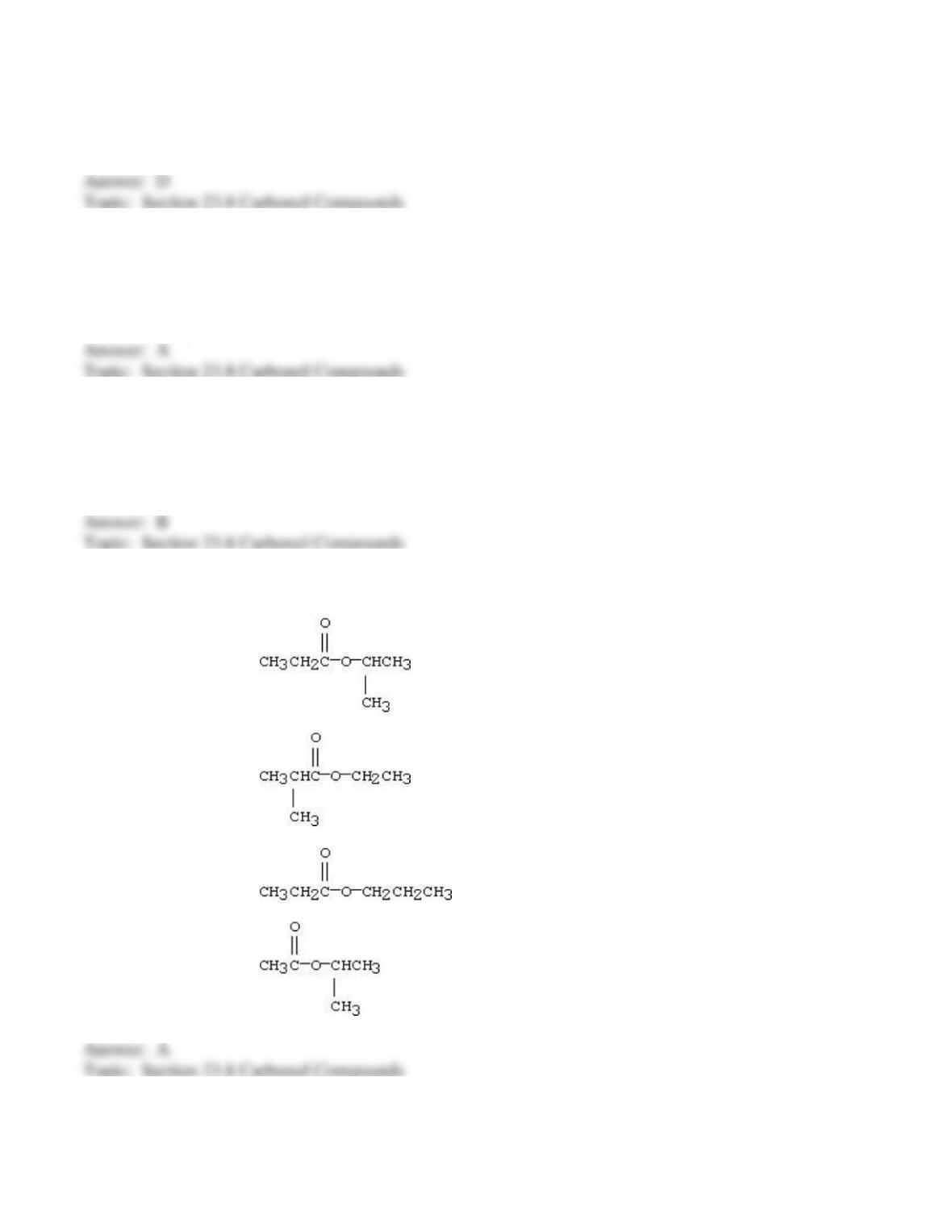
93) Which ester below formed propanoic acid and isopropyl alcohol by hydrolysis reaction with water?
A)
B)
C)
D)
94) Which statement about the differences between an amine and an amide is not correct?
A) Amides act as proton acceptors while amines do not.
B) Amines are basic and amides are neutral.
C) Amines form ammonium salts when treated with acid; amides do not.
D) The lone pair of electrons on amides is held more tightly than the lone pair on an amine.
95) The reaction of an amine and a carboxylic acid produces what kind of compound?
A) alcohol
B) amide
C) ester
D) ketone
96) What is the name of the product formed by the reaction of butanoic acid with methylamine?
A) N-methylbutamide
B) N-methylbutanamide
C) pentanone
D) pentyl amine
97) Which one of the following behaves like a base?
A) CH3CONHCH3
B) (CH3)2NH
C) C2H5CONHCH3
D) All of these are bases.
98) What are the products of acid-catalyzed hydrolysis reaction of amides and water?
A) an alcohol and an alkane
B) an amine and a ketone
C) a carboxylic acid and an amine salt
D) an ester and an ether
99) Which one of the following molecules is the most polar?
A) acetaldehyde
B) acetic acid
C) ethane
D) ethylene
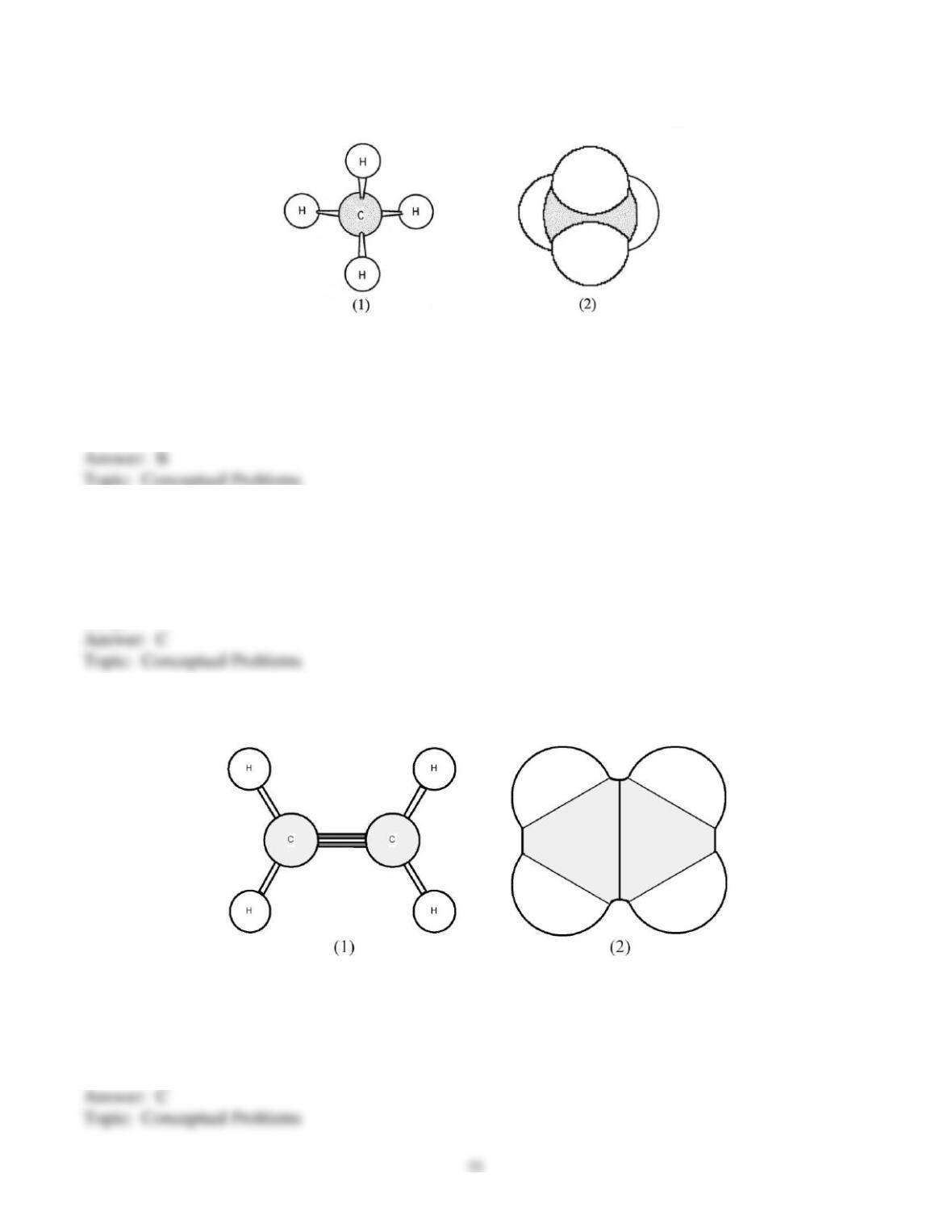
Shown are ball-and-stick (1) and space-filling (2) models of methane.
100) What is the H-C-H bond angle?
A) 90°
B) 109.5°
C) 120°
D) 180°
101) What hybrid orbitals are used by carbon to form covalent bonds with hydrogen?
A) sp
B) sp2
C) sp3
D) sp3d
Shown are ball-and-stick (1) and space-filling (2) models of ethylene.
102) What is the H-C-H bond angle?
A) 90°
B) 109.5°
C) 120°
D) 180°
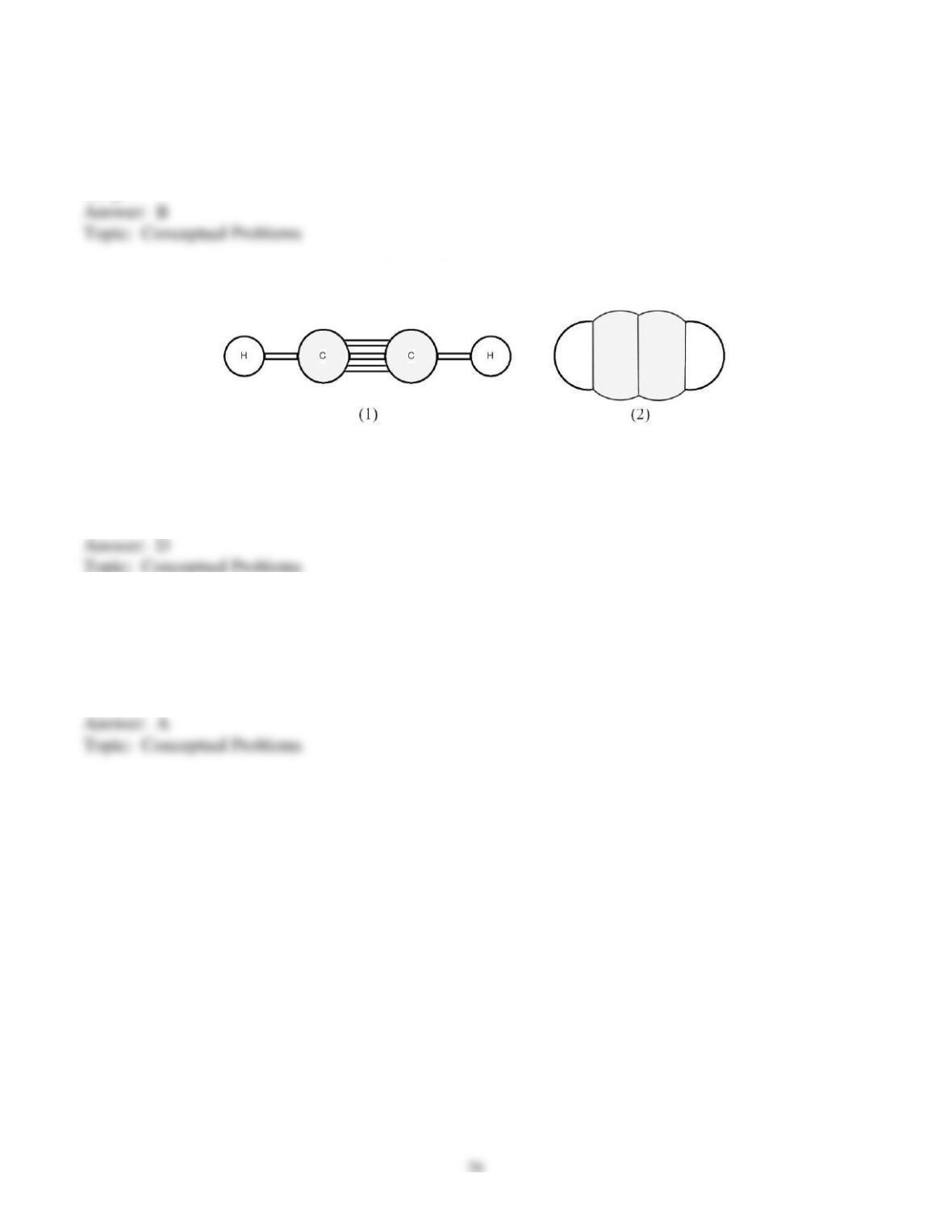
103) What hybrid orbitals are used by carbon to form covalent bonds with hydrogen?
A) sp
B) sp2
C) sp3
D) sp3d
Shown are ball-and-stick (1) and space-filling (2) models of acetylene.
104) What is the H-C-C bond angle?
A) 90°
B) 109.5°
C) 120°
D) 180°
105) What hybrid orbitals are used by carbon to form covalent bonds with hydrogen?
A) sp
B) sp2
C) sp3
D) sp3d
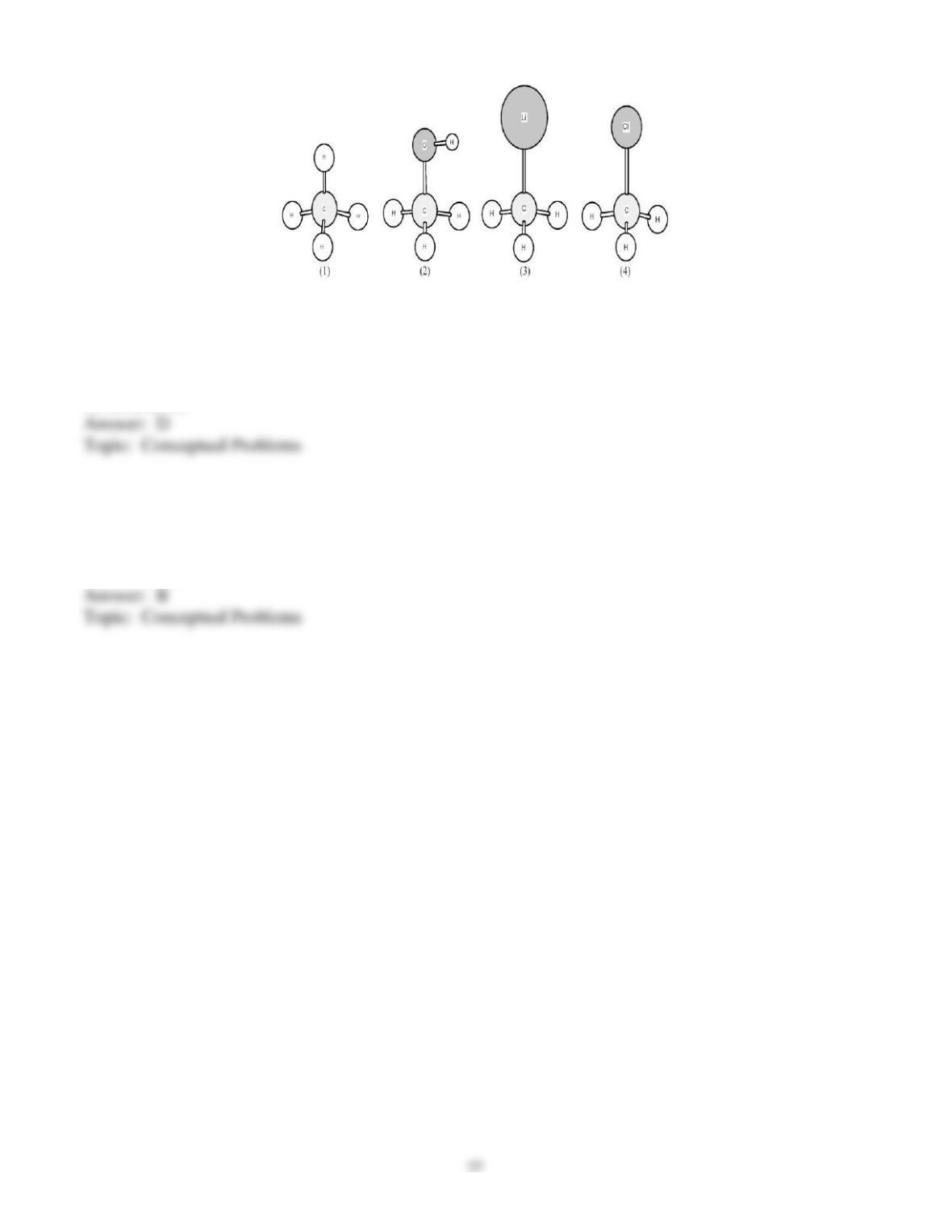
106) Which of these molecules above have a partial positive charge (δ+) on the carbon atom?
A) only (1)
B) only (3)
C) (1) and (3)
D) (2) and (4)
107) Which of these molecules above have a large partial negative charge (δ-) on the carbon atom?
A) only (1)
B) only (3)
C) (1) and (3)
D) (2) and (4)
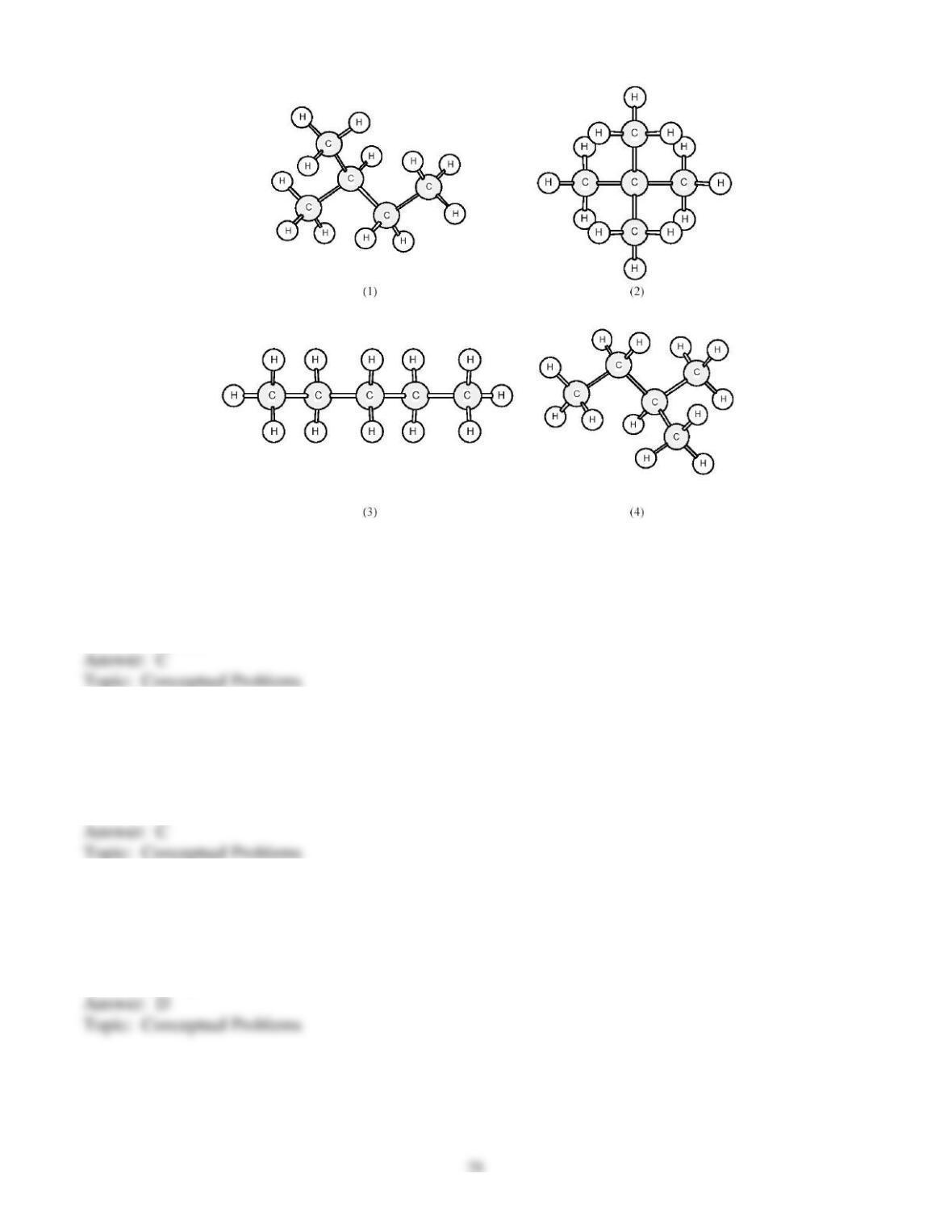
108) In the figure above, which structures are identical?
A) All are identical.
B) None are identical.
C) only (1) and (4)
D) only (1), (3), and (4)
109) In the figure above, which are isomers of compound (1)?
A) All are isomers of compound (1).
B) None are isomers of compound (1).
C) only (2) and (3)
D) only (4)
110) In the figure above, which are branched hydrocarbons?
A) All are branched hydrocarbons.
B) None are branched hydrocarbons.
C) only (1) and (4)
D) only (1), (2), and (4)
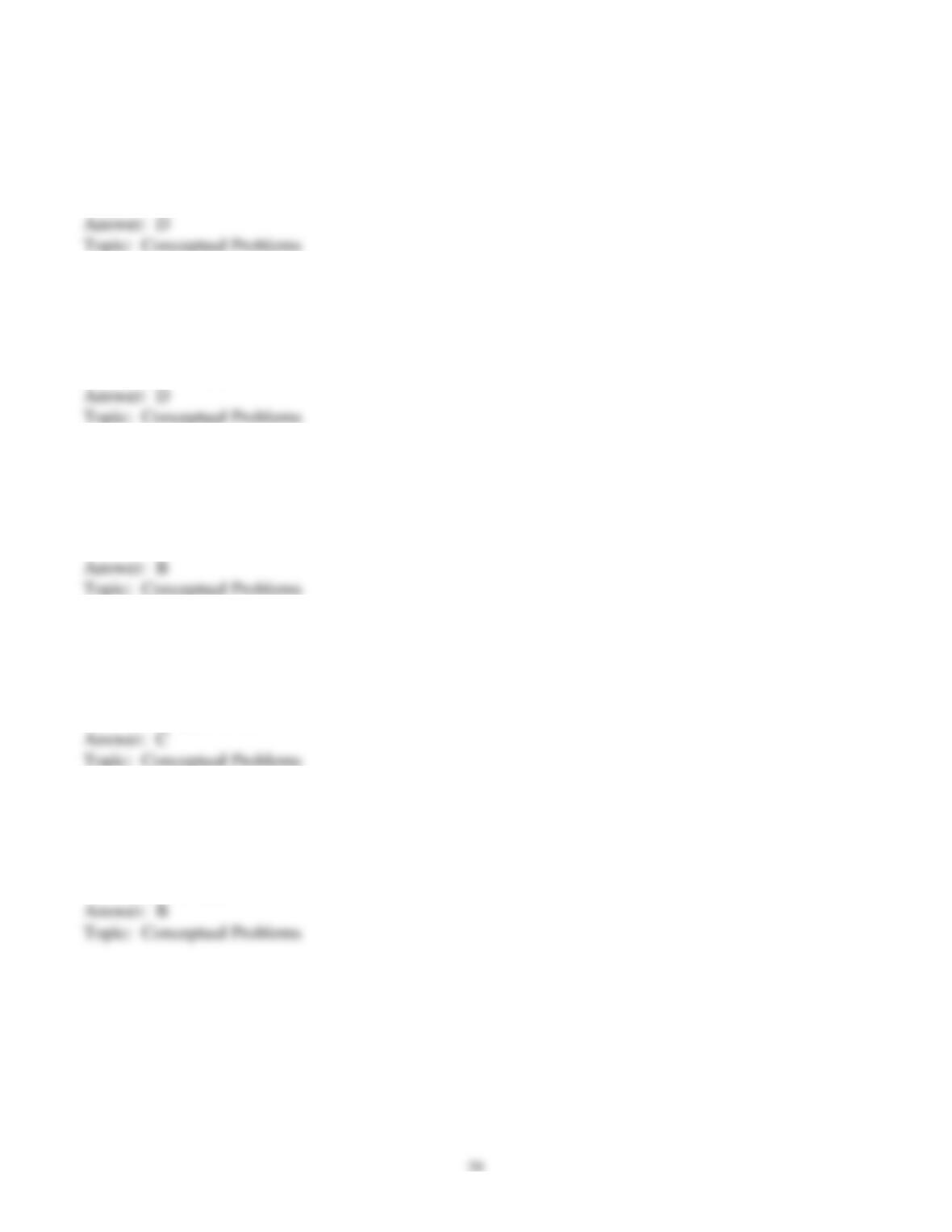
111) Which of the compounds shown above is correctly identified by the name pentane according to the
IUPAC system of naming compounds?
A) all
B) none
C) only (2)
D) only (3)
112) Which of the compounds shown above is correctly identified by the name 2-Methylbutane?
A) All are 2-Methylbutane.all
B) none
C) only (1)
D) only (1) and (4)
113) Which of the compounds shown above is correctly identified by the name 3-Methylbutane?
A) all
B) none
C) only (4)
D) only (1) and (4)
114) Which of the compounds shown above is correctly identified by the name 2, 2-Dimethylpropane?
A) all
B) none
C) only (2)
D) only (1), (2), and (4)
115) Which of the compounds shown above is correctly identified by the name 3, 3-Dimethylpropane?
A) all
B) none
C) only (4)
D) only (1) and (4)
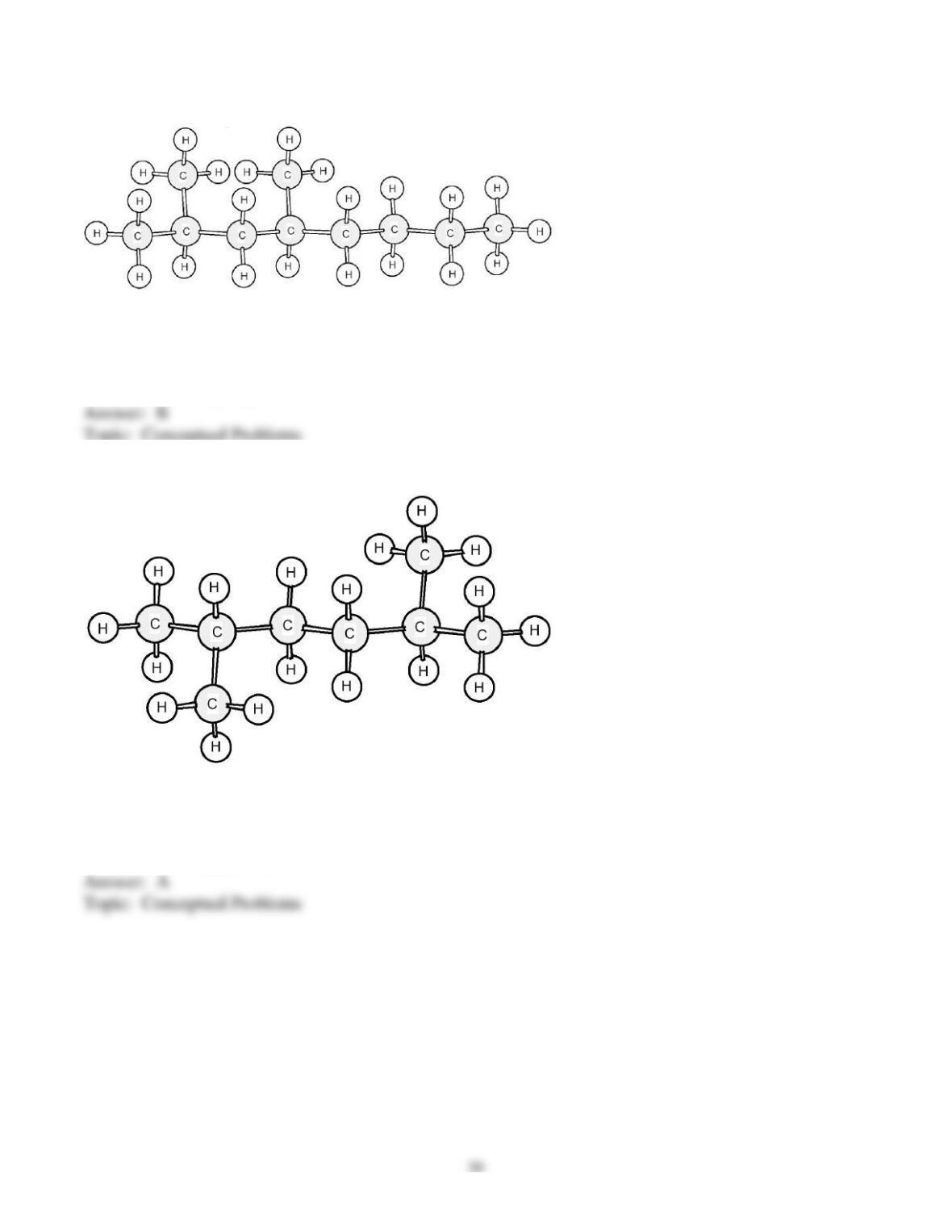
116) What is the IUPAC name of the following alkane?
A) decane
B) 2, 4-dimethyloctane
C) 5, 7-dimethyloctane
D) 1, 1, 3-trimethylheptane
117) What is the IUPAC name of the following alkane?
A) 2,5-dimethylhexane
B) octane
C) 1,1,4,4-tetramethylbutane
D) 1,1,4-trimethylpentane
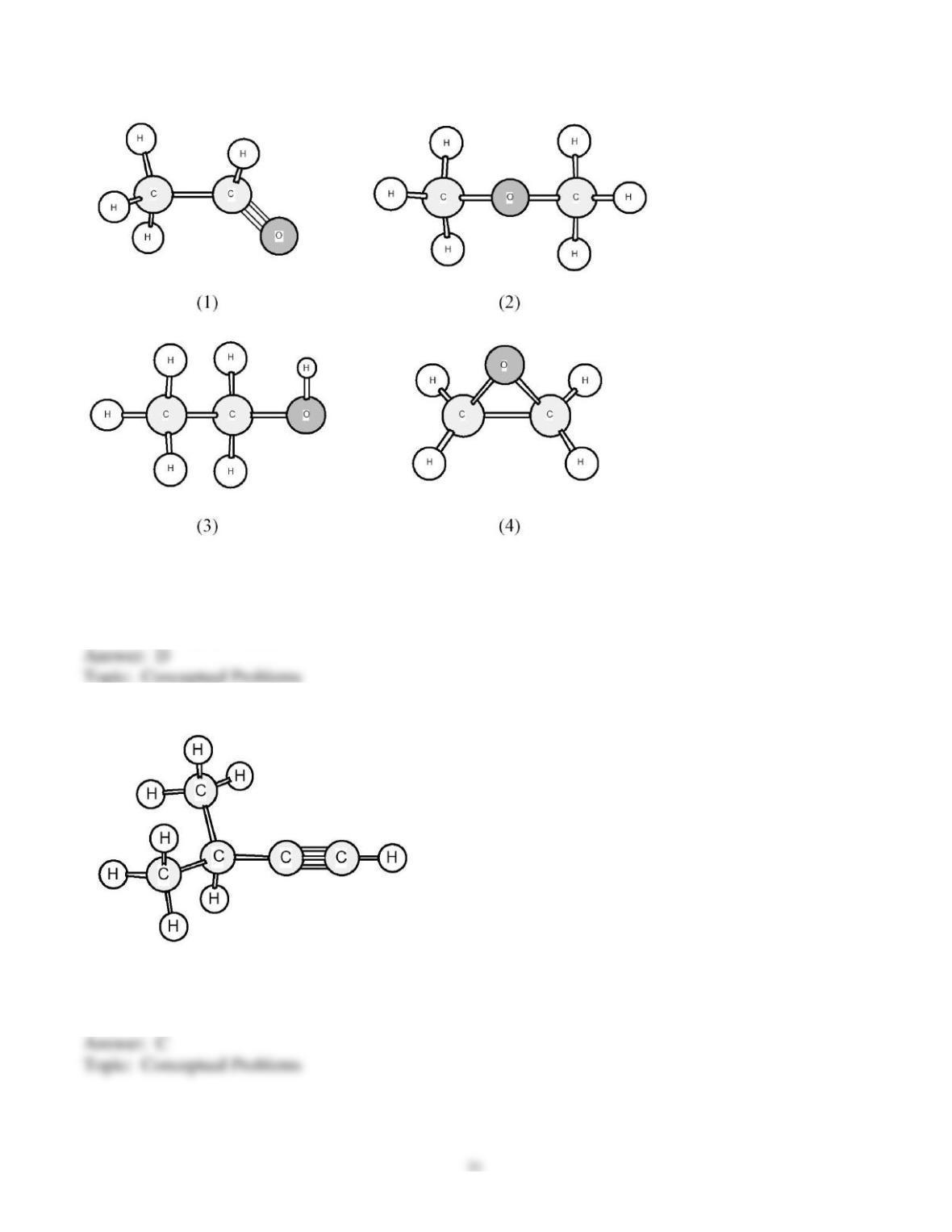
118) Which are isomers?
A) All are isomers.
B) (1) and (2); (3) and (4)
C) (1) and (3); (2) and (4)
D) (1) and (4); (2) and (3)
119) To which family does this organic compound belong?
A) alkane
B) alkene
C) alkyne
D) arene
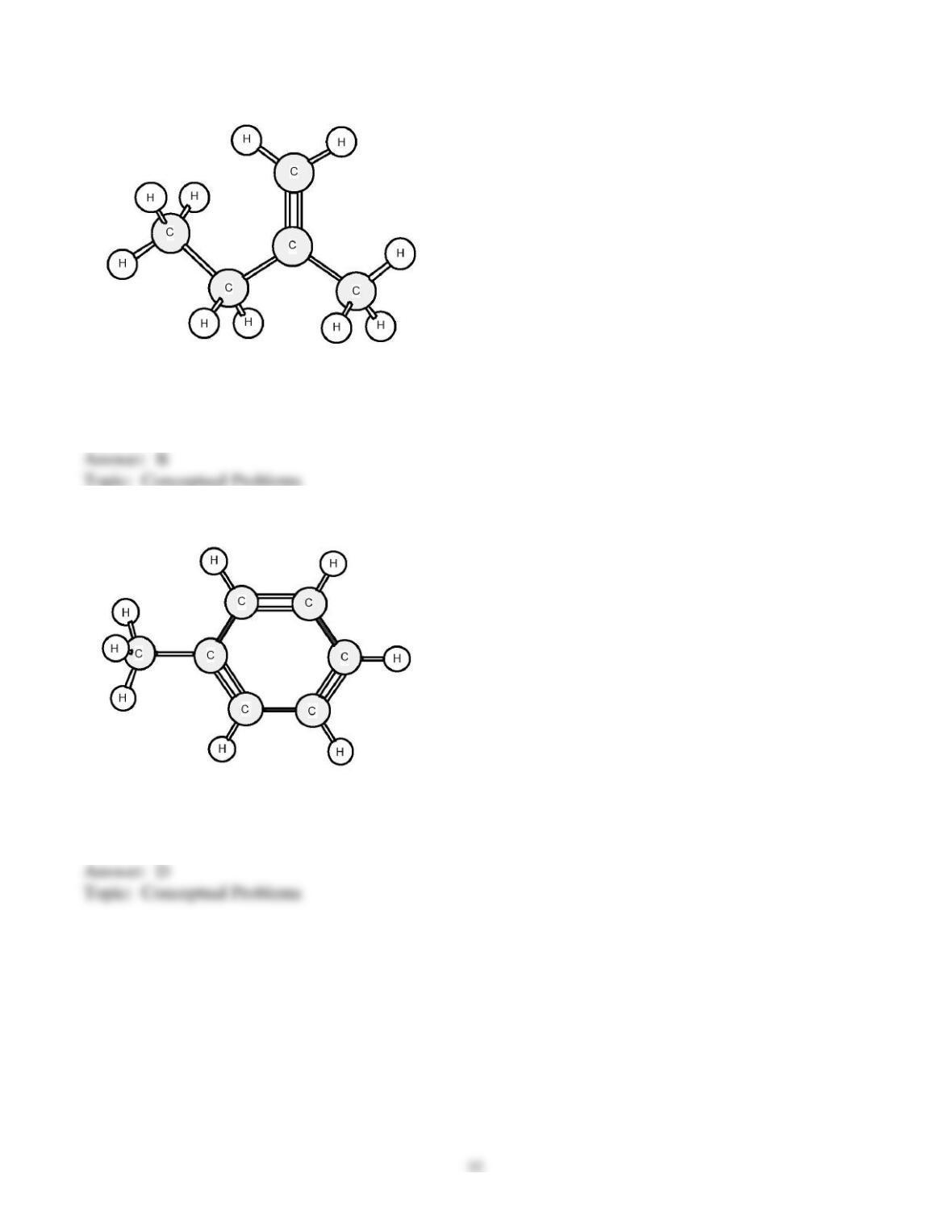
120) To which family does this organic compound belong?
A) alkane
B) alkene
C) alkyne
D) arene
121) To which family does this organic compound belong?
A) alkane
B) alkene
C) alkyne
D) arene
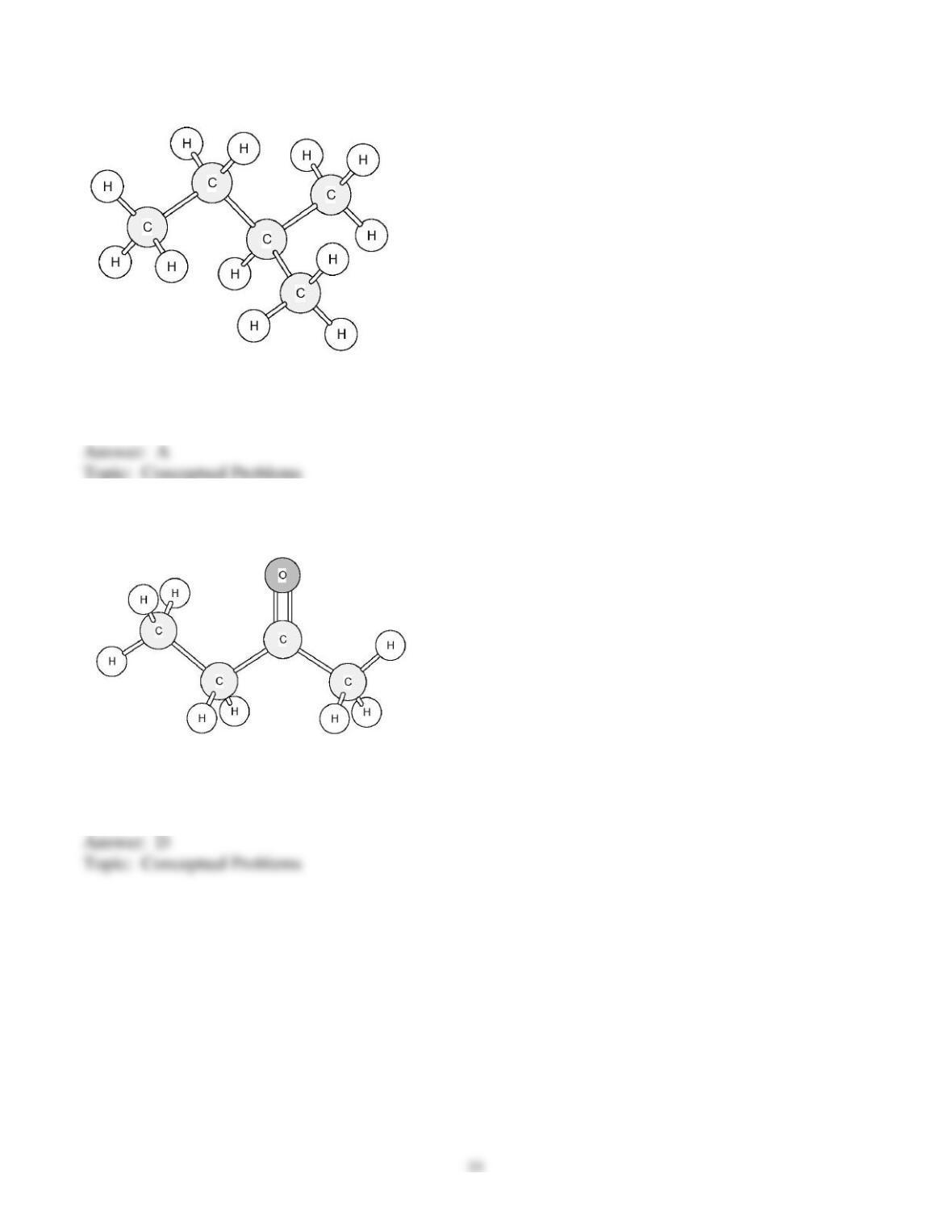
122) To which family does this organic compound belong?
A) alkane
B) alkene
C) alkyne
D) arene
123) To which family does this organic compound belong?
A) alcohol
B) aldehyde
C) ether
D) ketone
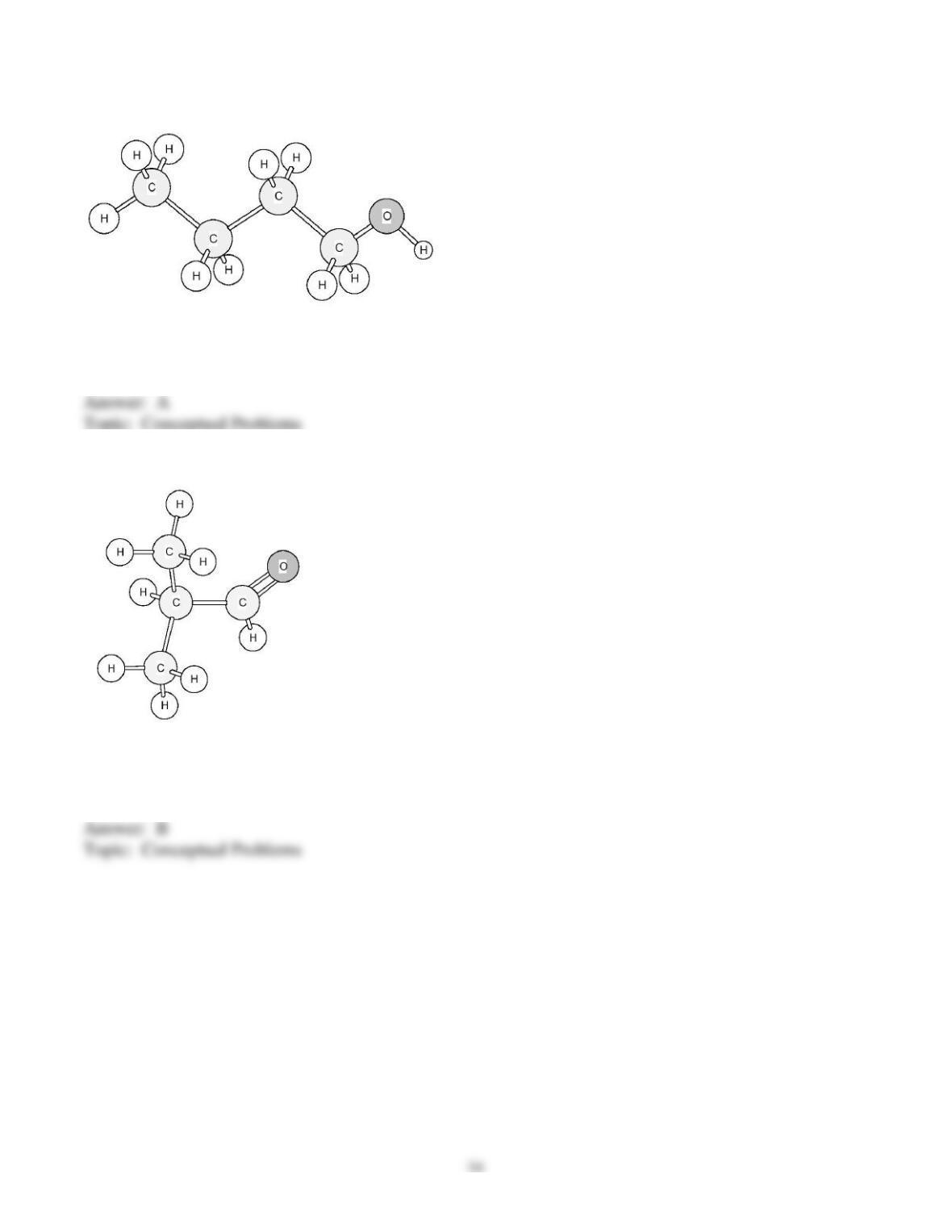
124) To which family does this organic compound belong?
A) alcohol
B) aldehyde
C) ether
D) ketone
125) To which family does this organic compound belong?
A) alcohol
B) aldehyde
C) ether
D) ketone
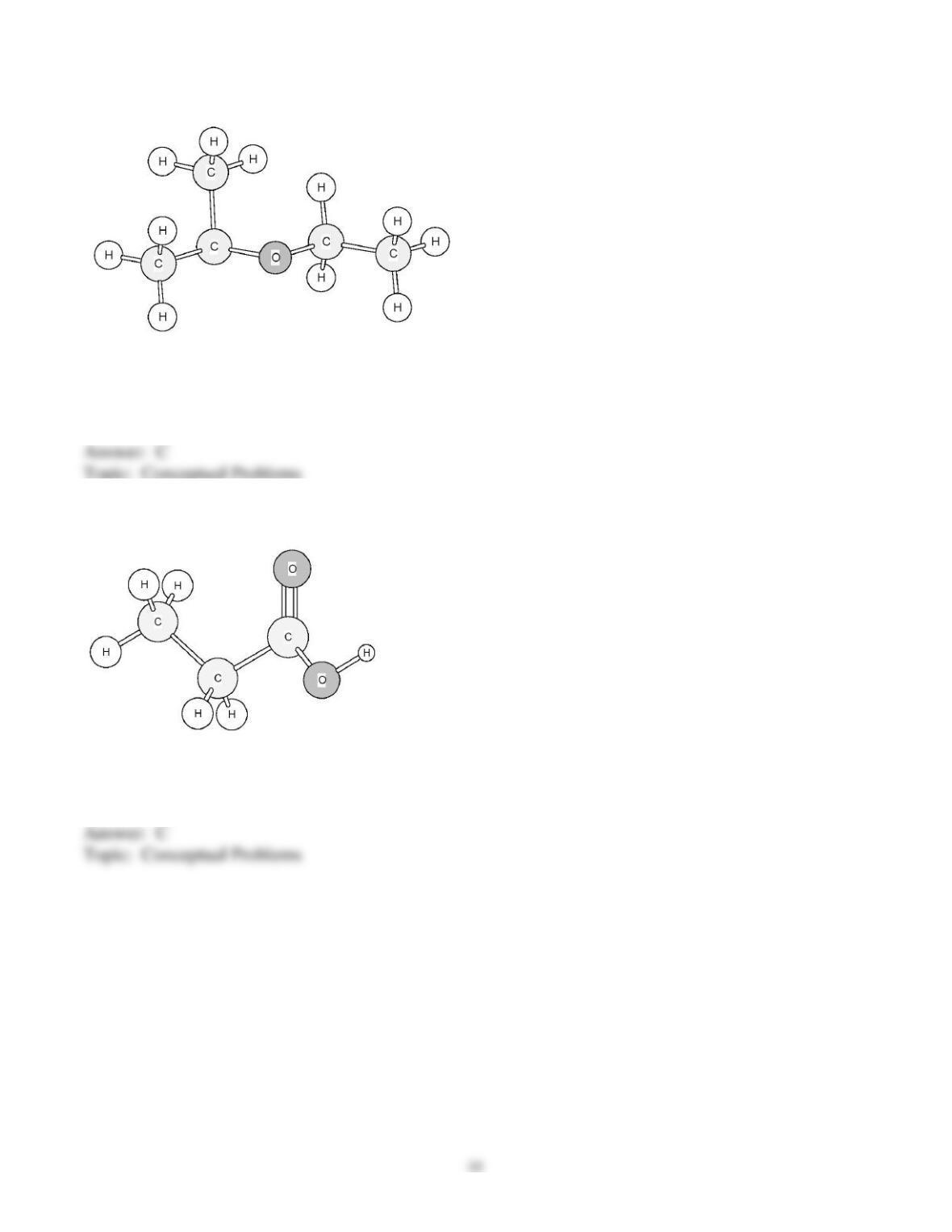
126) To which family does this organic compound belong?
A) alcohol
B) aldehyde
C) ether
D) ketone
127) To which family does this organic compound belong?
A) amide
B) amine
C) carboxylic acid
D) ester
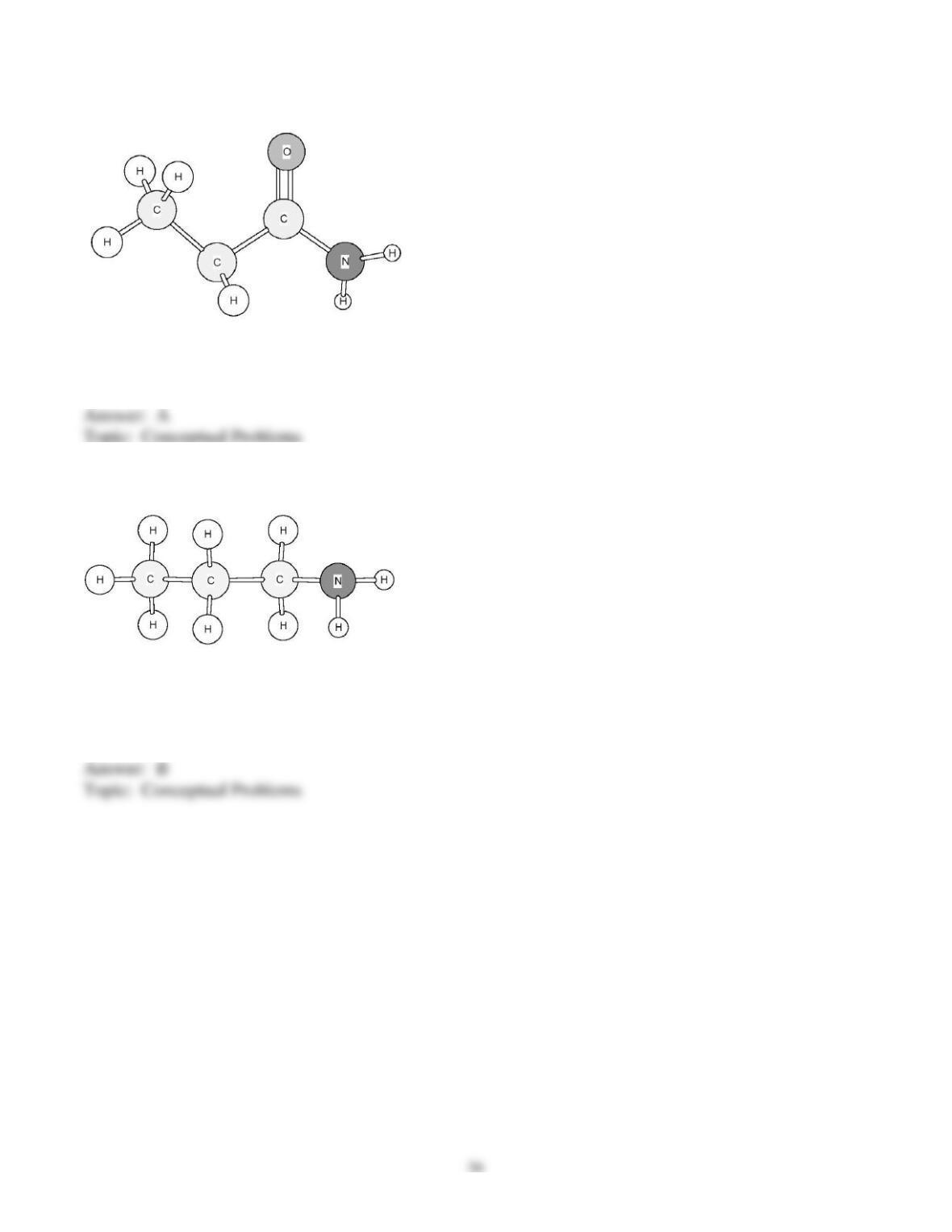
128) To which family does this organic compound belong?
A) amide
B) amine
C) carboxylic acid
D) ester
129) To which family does this organic compound belong?
A) amide
B) amine
C) carboxylic acid
D) ester
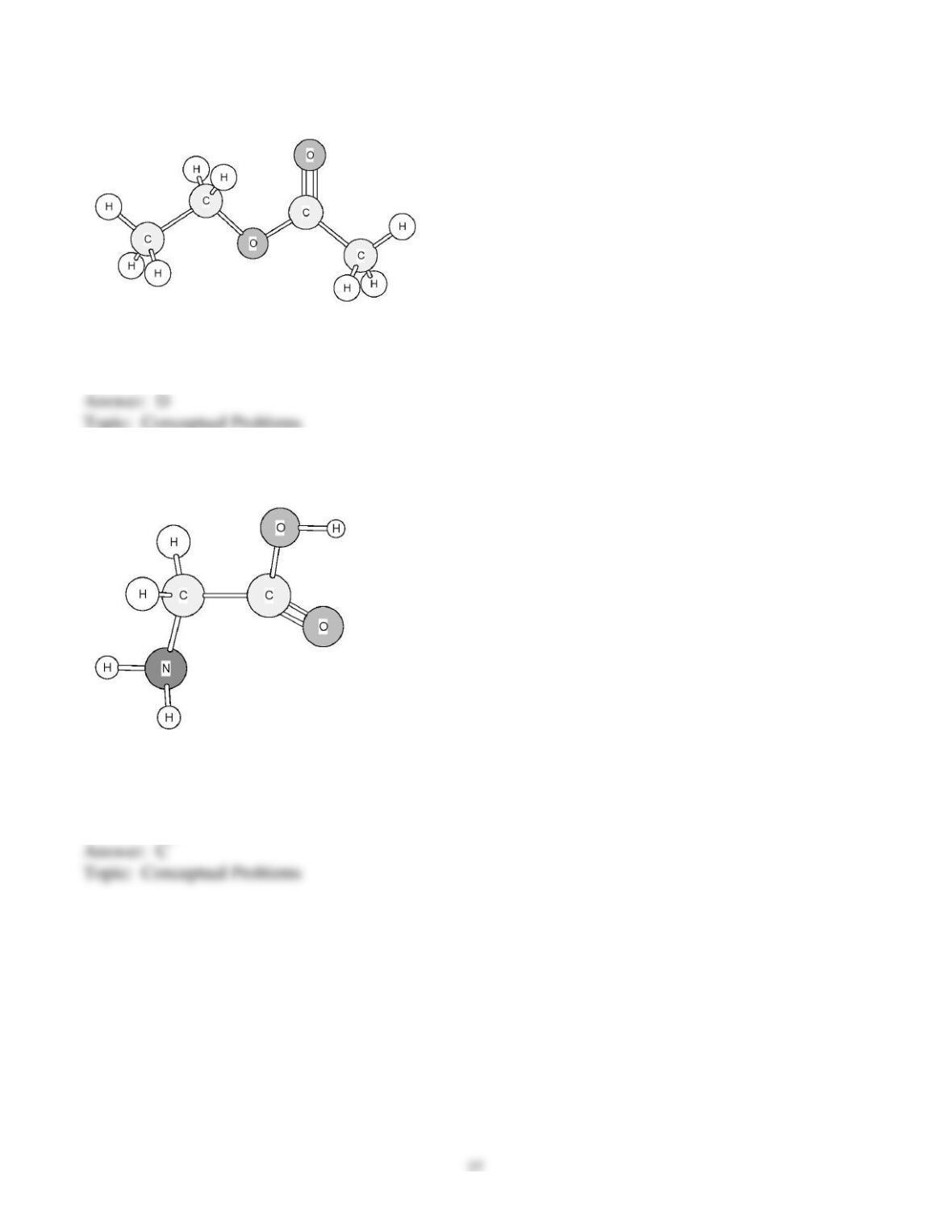
130) To which family does this organic compound belong?
A) amide
B) amine
C) carboxylic acid
D) ester
131) Identify the functional groups in the following compound.
A) alcohol and ketone
B) alcohol, amine, and ketone
C) amine and carboxylic acid
D) amine, hydroxide, and ketone
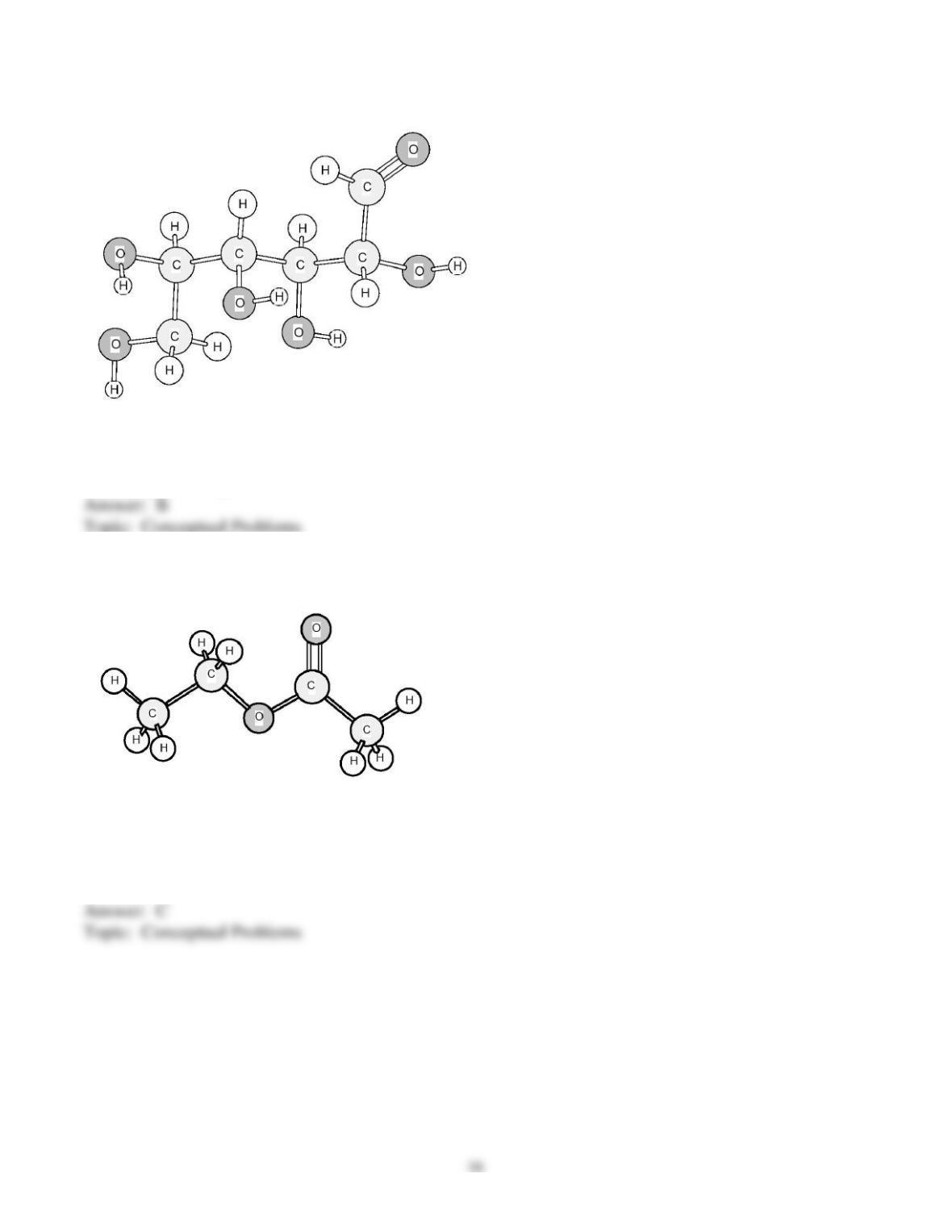
132) Identify the functional groups in the following compound.
A) alcohol
B) alcohol and aldehyde
C) alcohol and ketone
D) aldehyde and hydroxide
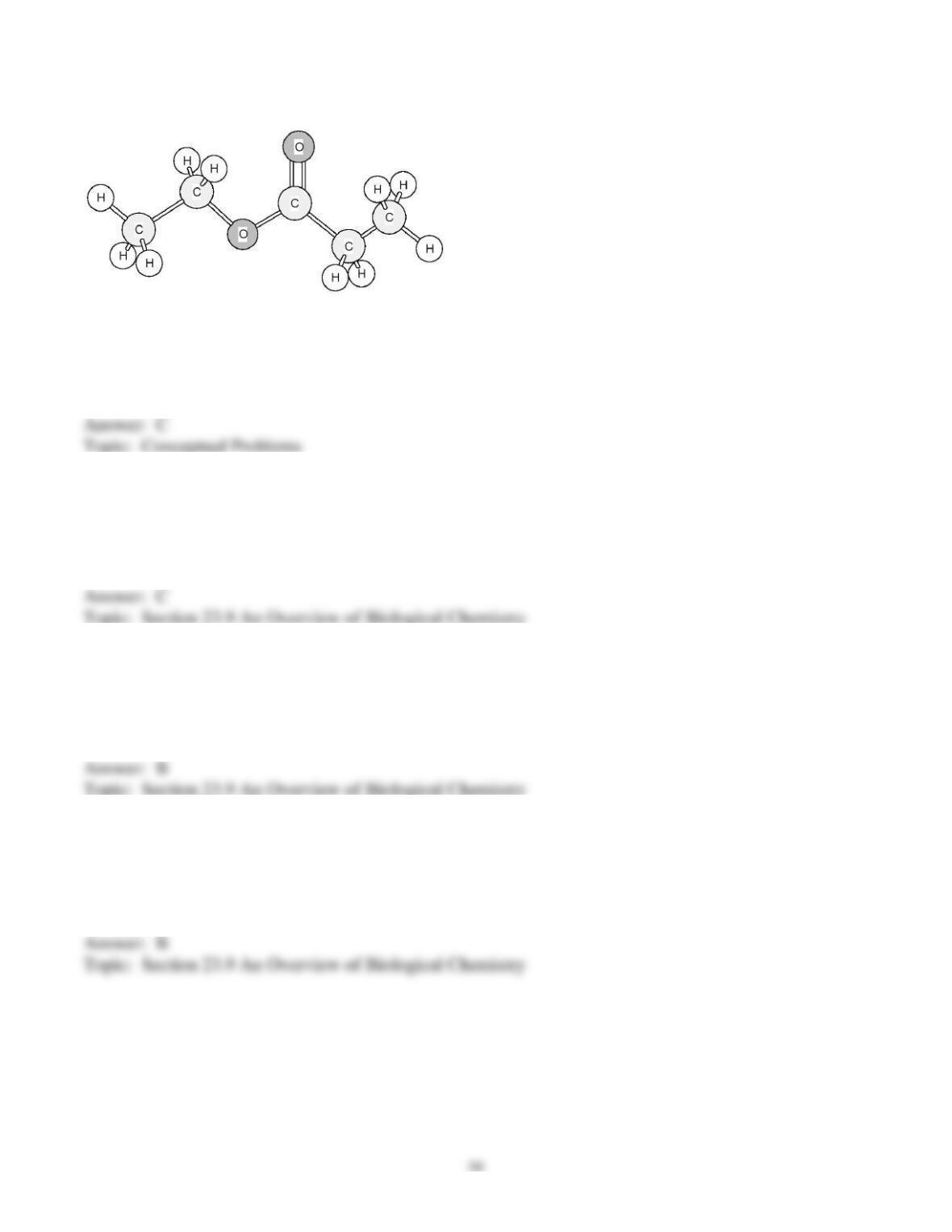
133) Identify the carboxylic acid and alcohol from which the following ester was made.
A) CH3CO2H and CH3OH
B) CH3CH2CO2H and CH3OH
C) CH3CO2H and CH3CH2OH
D) CH3CH2CO2H and CH3CH2OH
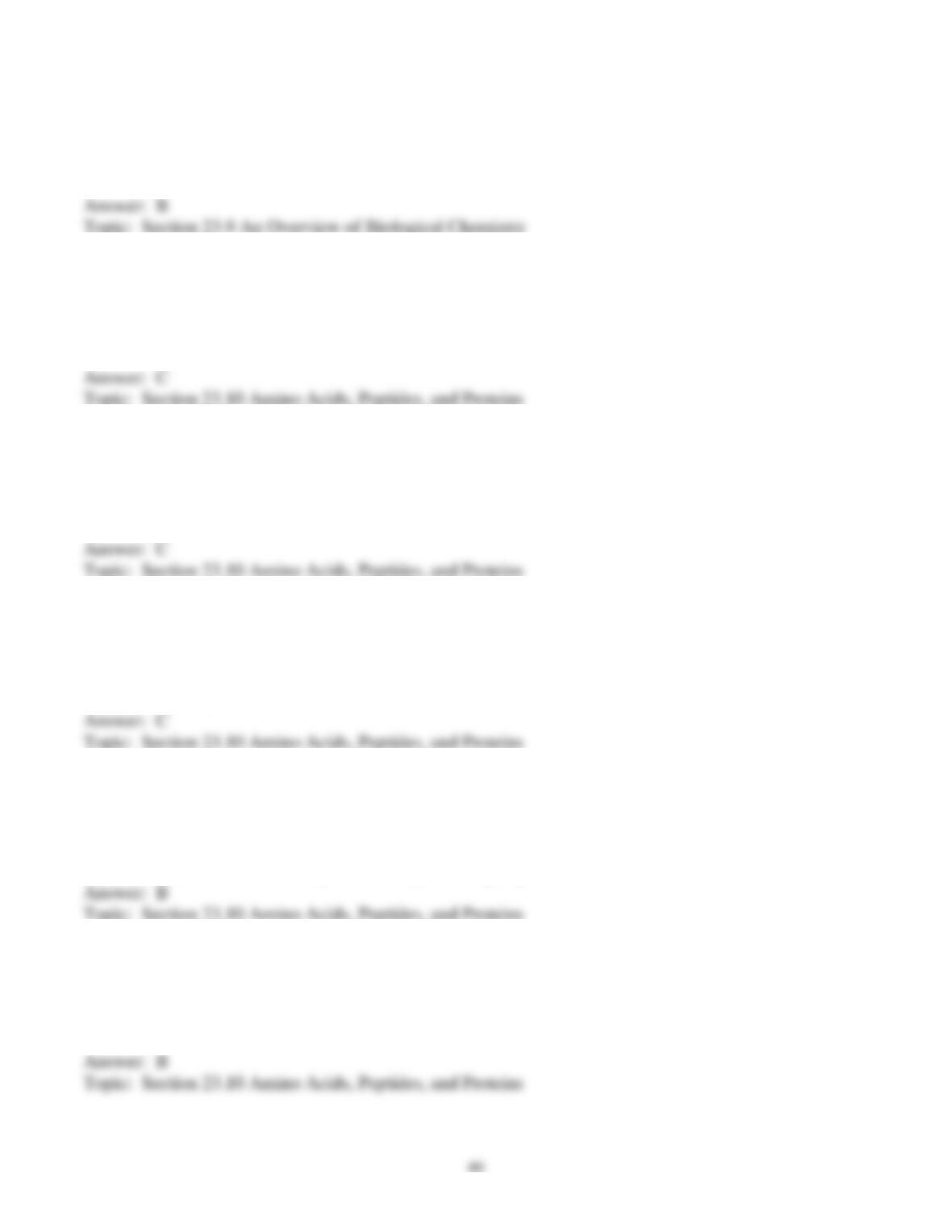
134) Identify the carboxylic acid and alcohol from which the following ester was made.
A) CH3CO2H and CH3CH2OH
B) CH3CO2H and CH3CH2CH2OH
C) CH3CH2CO2H and CH3CH2OH
D) CH3CH2CO2H and CH3CH2CH2OH
135) The sum of the many organic reactions that occur in the cell is called
A) anabolism.
B) catabolism.
C) metabolism.
D) none of these
136) The reactions that generally release energy that is used to power living organisms are called
A) anabolic reactions.
B) catabolic reactions.
C) metabolic reactions.
D) none of these
137) The major final product of the four stages of catabolism is
A) acetyl CoA.
B) ATP.
C) CO2.
D) fatty acids.
138) Which molecule is referred to as the “energy storehouse”?
A) acetyl CoA
B) ATP
C) CO2
D) fatty acids
139) Approximately what mass percent of a body’s dry weight consists of proteins?
A) 5%
B) 25%
C) 50%
D) 72%
140) In addition to an amine, which functional group do all amino acids contain?
A) an alcohol
B) an amide
C) a carboxylic acid
D) an oxyacid
141) A peptide bond links
A) an alcohol and a ketone.
B) an amide and an aldehyde.
C) an amine and a carboxylic acid.
D) ATP and acetyl CoA.
142) What does the term “alpha” amino acid mean?
A) The amino group attaches to the carbon in the carboxyl group.
B) The amino group attaches to the carbon next to the carboxylic acid group.
C) The amino acid contains only one carbon atom.
D) The amino acid contains only one carboxylic acid group.
143) How many alpha amino acids commonly make up the different proteins found in humans?
A) 4
B) 20
C) 100
D) millions