Chemistry: A Molecular Approach, 3e (Tro)
Chapter 23 Metals and Metallurgy
Multiple Choice Questions
1) Which of the following is NOT generally a property of a metal?
A) high resistivity
B) good conductor of heat
C) malleable
D) ductile
E) opaque
2) Identify the substances which are homogeneous, naturally occurring, crystalline inorganic solids.
A) slag
B) minerals
C) ores
D) gangue
E) alloy
3) Identify the substances which contains a high concentration of a specific mineral.
A) slag
B) minerals
C) ores
D) gangue
E) alloy
4) Which of the following describes gangue?
A) The undesirable product formed during smelting.
B) The undesirable portion of a metal-containing ore.
C) The volatile product formed during calcination.
D) A waste material that is the product of smelting a metal ore.
E) None of the above describe gangue.

5) Which of the following describes flux?
A) A waste material that is the product of smelting a metal ore.
B) An aqueous portion of the gangue separated from a metal ore.
C) A low density waste product, formed from the reaction of gangue with another substance, that can be
easily separated from the metal ore of interest.
D) A substance that reacts with the gangue to make a low density liquid compound that can be easily
separated from the metal of interest.
E) None of the above describe flux.
6) Which of the following describes slag?
A) A waste material that is the product of smelting a metal ore.
B) An aqueous portion of the gangue separated from a metal ore.
C) A low density waste product, formed from the reaction of gangue with another substance, that can be
easily separated from the metal ore of interest.
D) A substance that reacts with the gangue to make a low density liquid compound that can be easily
separated from the metal of interest.
E) None of the above describe slag.
7) What method is used to obtain pure aluminum metal from Al2O3?
A) smelting
B) powder metallurgy
C) Hall process
D) leaching
E) calcination
8) Which of the following is TRUE of powder metallurgy?
A) Machining is required after forming the component.
B) There is more waste than with casting the molten metal.
C) Iron powder from mill scrap makes a denser component than iron particles formed through water
atomization.
D) It is used to separate gangue from the rest of the metal ore.
E) It usually requires lower temperatures than casting the molten metal.
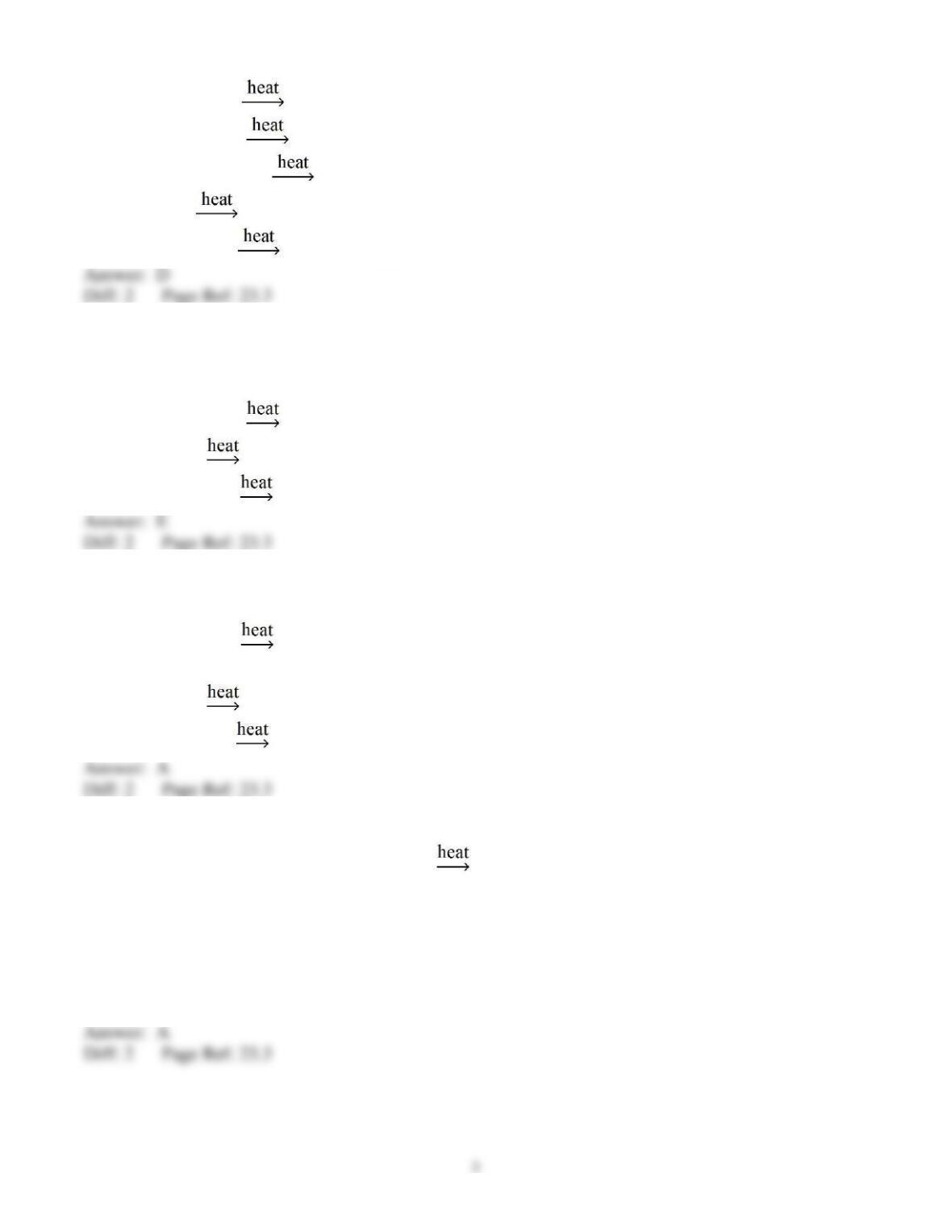
9) Which of the following is an example of calcination?
A) 2 CuS(s) + 3 O2 2 CuO(s) + 2 SO2(g)
B) SnO2(s) + 2 C(s) Sn(l) + 2 CO(g)
C) CaCO3(s) + SiO2(s) CaSiO3(l) + CO2(g)
D) MgCO3(s) MgO(s) + CO2(g)
E) PbO(s) + CO(g) Pb(l) + CO2(g)
10) Which of the following is an example of roasting?
A) CaCO3(s) → CaO(s) + CO2(g)
B) PbO(s) + CO(g) → Pb(l) + CO2(g)
C) SnO2(s) + 2 C(s) Sn(l) + 2 CO(g)
D) Ni(OH)2(s) NiO(s) + H2O(g)
E) 2 CuS(s) + 3 O2 2 CuO(s) + 2 SO2(g)
11) Which of the following is an example of smelting?
A) PbO(s) + CO(g) → Pb(l) + CO2(g)
B) 2 CuS(s) + 3 O2 2 CuO(s) + 2 SO2(g)
C) CaCO3(s) → CaO(s) + CO2(g)
D) Ni(OH)2(s) NiO(s) + H2O(g)
E) 2 Hg(l) + O2(g) 2 HgO(s)
12) Which compound in the following reaction is the slag?
2 Ca3(PO4)2(s) + 6 SiO2(s) + 10 C(s) P4(g) + 6 CaSiO3(l) + 10 CO(s)
A) CaSiO3
B) CO
C) P4
D) SiO2
E) Ca3(PO4)2
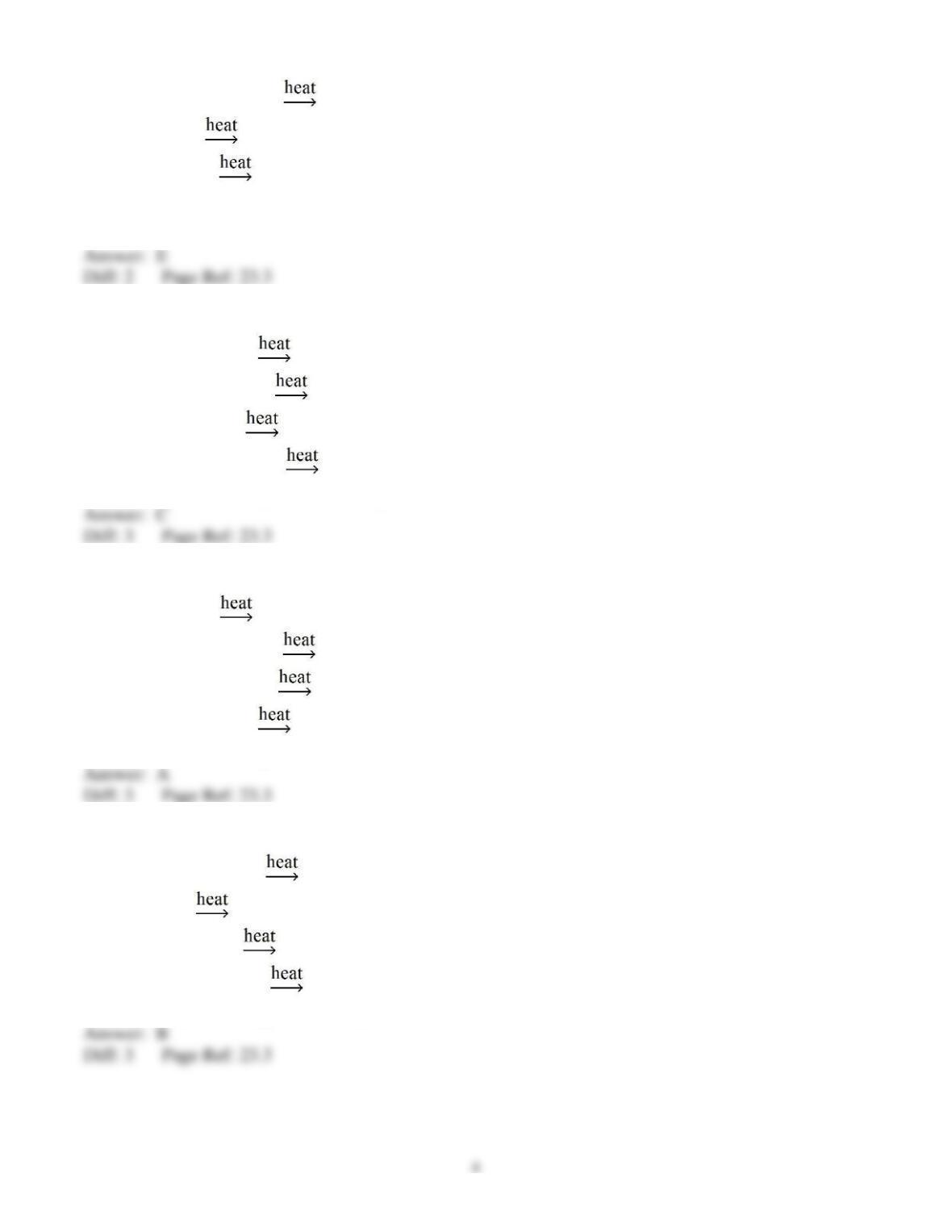
13) Which of the following is an example of a hydrometallurgical process?
A) Al(OH)3(s) + SiO2(s) AlSiO3(s) + 3 H2O(g)
B) Ni(OH)2(s) NiO(s) + H2O(g)
C) 2 Al(OH)3(s) Al2O3(s) + 3 H2O(g)
D) CuSO4∙5H2O(s) + H2O(l) → CuS(s) + H2SO4(aq) + 5 OH⁻(aq)
E) Al2O3∙nH2O(s) + 2 OH⁻(aq) + 2 H2O(l) → 2 Al(OH)4⁻(aq)
14) Write a balanced reaction for the smelting of SnO2 with carbon.
A) SnO2(s) + CO2(g) SnCO3(s)
B) SnO2(s) + CaCO3(s) SnC(s) + CaO(s) + O2(g)
C) SnO2(s) + 2 C(s) Sn(l) + 2 CO(g)
D) 2 SnO2(s) + 2 CaC2(s) 2 SnC2(s) + 2 CaO(s) + O2(g)
E) None of the above represent smelting.
15) Write a balanced equation for the calcination of Al(OH)3.
A) 2 Al(OH)3(s) Al2O3(s) + 3 H2O(g)
B) Al(OH)3(s) + SiO2(s) AlSiO3(s) + 3 H2O(g)
C) 2 Al(OH)3(s) + O2(g) Al2O3(s) + 3 H2O(g)
D) Al(OH)3(s) + C(s) Al2O3(s) + CO2(g) + H2O(g)
E) None of the above represent calcination.
16) Write a balanced equation for the calcination of NiCO3.
A) NiCO3(s) + CaO(s) NiO(s) + CaCO3(s)
B) NiCO3(s) NiO(s) + CO2(g)
C) NiCO3(s) + C(s) NiO(s) + 2 CO(g)
D) NiCO3(s) + SiO2(s) NiSiO3(s) + CO2(g)
E) None of the above represent calcination.

17) In a substitutional alloy,
A) one nonmetal substitutes for another nonmetal in a crystal structure.
B) small, usually nonmetallic atoms fit in between the metallic atoms of a crystal.
C) small metallic atoms fit in between the nonmetallic atoms of a crystal
D) one metal substitutes for another metal in a crystal structure.
E) one metal substitutes for a nonmetal in a crystal structure.
18) In an interstitial alloy,
A) one nonmetal substitutes for another nonmetal in a crystal structure.
B) small, usually nonmetallic atoms fit in between the metallic atoms of a crystal.
C) small metallic atoms fit in between the nonmetallic atoms of a crystal
D) one metal substitutes for another metal in a crystal structure.
E) one metal substitutes for a nonmetal in a crystal structure.
19) Which of the following is TRUE concerning substitutional alloys?
A) The metals involved must have similar radii.
B) One type of metal atom is inserted in between the metal atoms in the initial crystal structure of the
other metal.
C) The two metals must be miscible over the entire composition range.
D) Titanium carbide is an example of a substitutional alloy.
E) None of the above are true.
20) Why can’t chromium and nickel form a miscible solid solution over the entire composition range?
A) The lever rule says that these two metals can’t coexist in an alloy.
B) The two metals crystallize into different cubic structures in their pure forms.
C) The tetrahedral holes in the nickel crystal are not large enough to accommodate the chromium.
D) The octahedral holes in the chromium crystal are not large enough to accommodate the nickel.
E) None of the above are true.
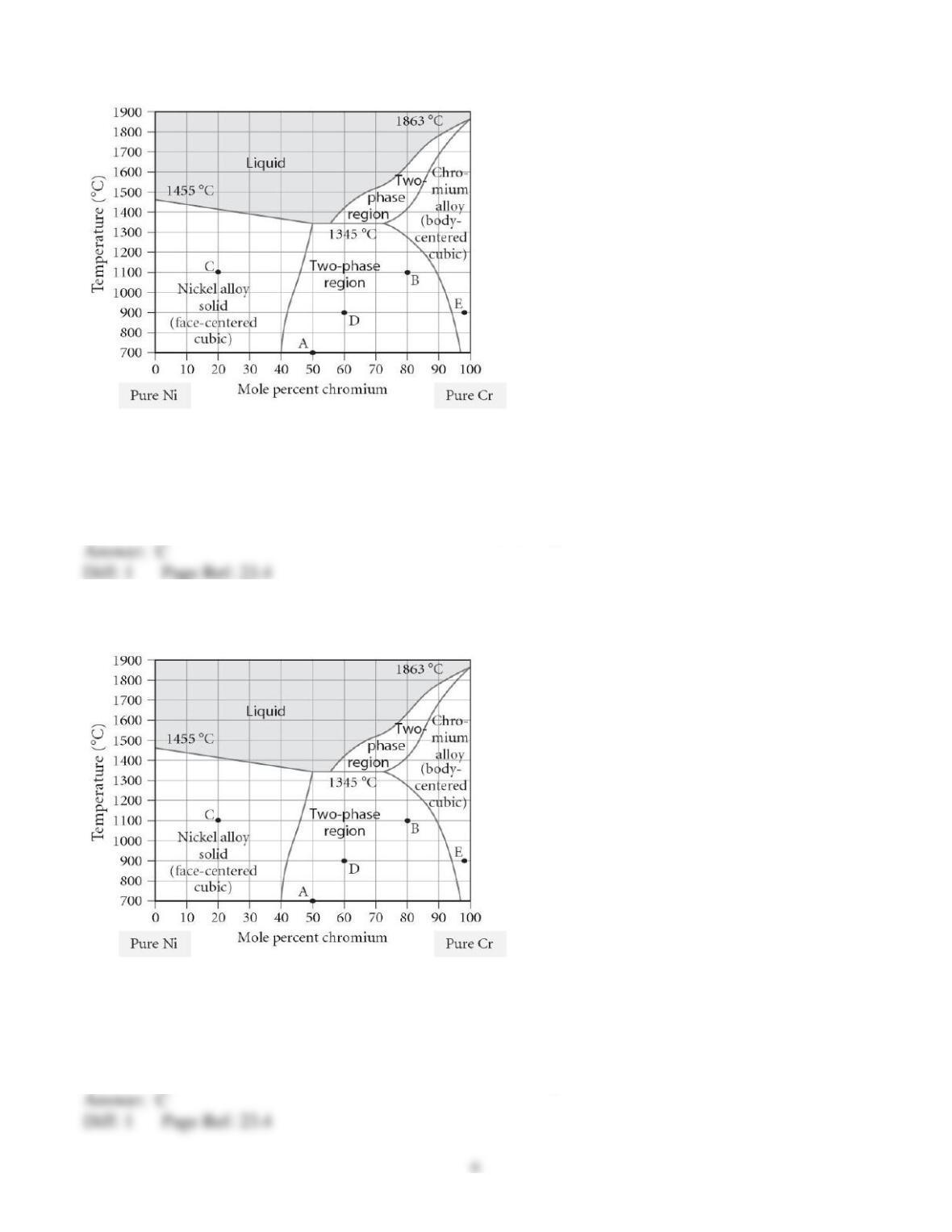
21) Which of the following is TRUE concerning point “D” on the figure?
A) The alloy is composed of the BCC structure.
B) The alloy is composed of the FCC structure.
C) The alloy is composed of both FCC and BCC phases, with a larger portion of FCC present.
D) The alloy is composed of both FCC and BCC phases, with a larger portion of BCC present.
E) None of the above can be determined from the information given.
22) Which of the following is TRUE concerning point “B” on the figure?
A) The alloy is composed of the BCC structure.
B) The alloy is composed of the FCC structure.
C) The alloy is composed of both FCC and BCC phases, with a larger portion of BCC present.
D) The alloy is composed of both FCC and BCC phases, with a larger portion of FCC present.
E) None of the above can be determined from the information given.

7
23) Which of the following is TRUE concerning interstitial alloys?
A) The metal takes on the properties of the foreign atoms once they are present.
B) Small atoms fit in between the metal atoms in the crystal structure.
C) Brass is an example of an interstitial alloy.
D) The foreign atoms present weaken the metallic structure.
E) None of the above are true.
24) An interstitial alloy contains nitrogen in half of the octahedral holes of a closest packed metal, M.
What is the formula of this alloy?
A) MN
B) MN2
C) M4N
D) M2N
E) MN4
25) An interstitial alloy contains hydrogen in half of the tetrahedral holes of a closest packed metal, M.
What is the formula of this alloy?
A) MH
B) MH4
C) MH2
D) M2H
E) M4H
26) An interstitial alloy contains carbon in one-fourth of the octahedral holes of a closest packed metal,
M. What is the formula of this alloy?
A) M4C
B) MC4
C) MC
D) M2C
E) MC2
27) Identify the metal used in jet engine parts.
A) titanium
B) gold
C) silver
D) lead
E) platinum
28) Give the highest oxidation number of chromium.

A) +3
B) +4
C) +5
D) +7
E) +6
29) Identify the metal that has the most brightly colored ions.
A) gold
B) silver
C) tin
D) chromium
E) lead
30) Give the highest oxidation number of manganese.
A) +3
B) +4
C) +5
D) +7
E) +6
31) Identify the ferromagnetic elements
A) cobalt
B) iron
C) nickel
D) all of the above
E) none of the above

9
Algorithmic Questions
1) Which substance is the best conductor of electricity?
A) arsenic
B) boron
C) silver
D) tellurium
2) Identify the metal that is a noble metal.
A) platinum
B) potassium
C) calcium
D) carbon
E) aluminum
3) Pyrometallurgy is the
A) refining of metal ores using reactions with aqueous solutions.
B) refining of metal ores using heat.
C) refining of metal ores using reduction reactions.
D) forming metal parts using heat and small crystals of metal.
E) forming metal parts using electricity.
4) Calcination is
A) heating an ore, in the presence of argon or another substance, in order to cause a chemical reaction
that drives off newly formed volatile compounds.
B) heating an ore, in the presence of helium or another substance, in order to purify the ore and obtain
the liquid metal.
C) selectively dissolving a metal in solution to separate it from its ore.
D) the process of heating an ore to drive off volatile compounds.
E) forming metal parts using heat and small crystals of metal.
5) Roasting is
A) forming metal parts using heat and small crystals of metal.
B) the process of heating an ore to drive off volatile compounds.
C) selectively dissolving a metal in strong acid to separate it from its ore.
D) heating an ore, in the presence of helium or another substance, in order to purify the ore and obtain
the liquid metal.
E) heating an ore, in the presence of oxygen or another substance, in order to cause a chemical reaction
that drives off newly formed volatile compounds.
6) Smelting is

A) heating an ore, in the presence of oxygen or another substance, in order to purify the ore and obtain
the liquid metal.
B) selectively dissolving a metal in strong acid to separate it from its ore.
C) the process of cooling an ore to drive off volatile compounds.
D) heating an ore, in the presence of oxygen or another substance, in order to cause a chemical reaction
that drives off newly formed volatile compounds.
E) forming metal parts using heat and small crystals of metal.
7) Hydrometallurgy is
A) refining of metal ores using oxidation reactions.
B) refining of metal ores using heat.
C) refining of metal ores using reactions with aqueous solutions.
D) forming metal parts using heat and small crystals of metal.
E) forming tiny metal crystals using heat and water spray.
8) Electrometallurgy is
A) refining of metal ores using cold.
B) forming metal parts using steam.
C) forming metal parts using cold and small crystals of metal.
D) refining of metal ores using oxidation/reduction reactions.
E) refining of metal ores using reactions with aqueous solutions.
9) Leaching is
A) melting an ore and separating it from the lower density gangue.
B) selectively dissolving a metal in solution to separate it from its ore.
C) the process of heating an ore to drive off volatile compounds.
D) heating an ore, in the presence of argon or another substance, in order to purify the ore and obtain the
liquid metal.
E) heating an ore, in the presence of argon or another substance, in order to cause a chemical reaction
that drives off newly formed volatile compounds.
10) Powder metallurgy is
A) refining of metal ores using reduction reactions.
B) refining of metal ores using cold.
C) forming metal parts using electricity.
D) refining of metal ores using reactions with basic solutions.
E) forming metal parts using heat and small crystals of metal.

11) Identify the normal crystal structure at room temperature for Cu.
A) face-centered cubic
B) trigonal planar
C) tetrahedral
D) hexagonal
E) hexagonal closest packed
12) Identify the normal crystal structure at room temperature for Co.
A) face-centered cubic
B) trigonal planar
C) octahedral
D) hexagonal
E) hexagonal closest packed
13) Identify the metal most commonly used for wires in the electrical industry.
A) copper
B) silver
C) zinc
D) platinum
E) lithium
14) Give the components of bronze.
A) copper and tin
B) lead and aluminum
C) nickel and zinc
D) copper and lead
E) zinc and lead
15) Give the components of brass.
A) copper and tin
B) lead and tin
C) nickel and gold
D) copper and zinc
E) zinc and lead

16) Identify the metal used as a coating for steel objects such as nails.
A) gold
B) silver
C) zinc
D) palladium
E) manganese
Matching Questions
Match the following.
A) rhodochrosite
B) galena
C) malachite
D) carnotite
E) rutile
F) sphalerite
G) cinnabar
1) Hg
Diff: 1 Page Ref: 23.2
2) Pb
Diff: 1 Page Ref: 23.2
3) V
Diff: 1 Page Ref: 23.2
4) Ti
Diff: 1 Page Ref: 23.2
5) Zn
Diff: 1 Page Ref: 23.2
6) Mn
Diff: 1 Page Ref: 23.5
7) Cu
Diff: 1 Page Ref: 23.5
Short Answer Questions
1) What is an advantage of hydrometallurgical processes over pyrometallurgical processes?
2) Why does a “two-phase” structure occur in a substitutional alloy?
3) Describe the difference between a substitutional alloy and an interstitial alloy.
4) What is the difference between ferromagnetism and paramagnetism?
5) Why is zinc used to coat steel objects?