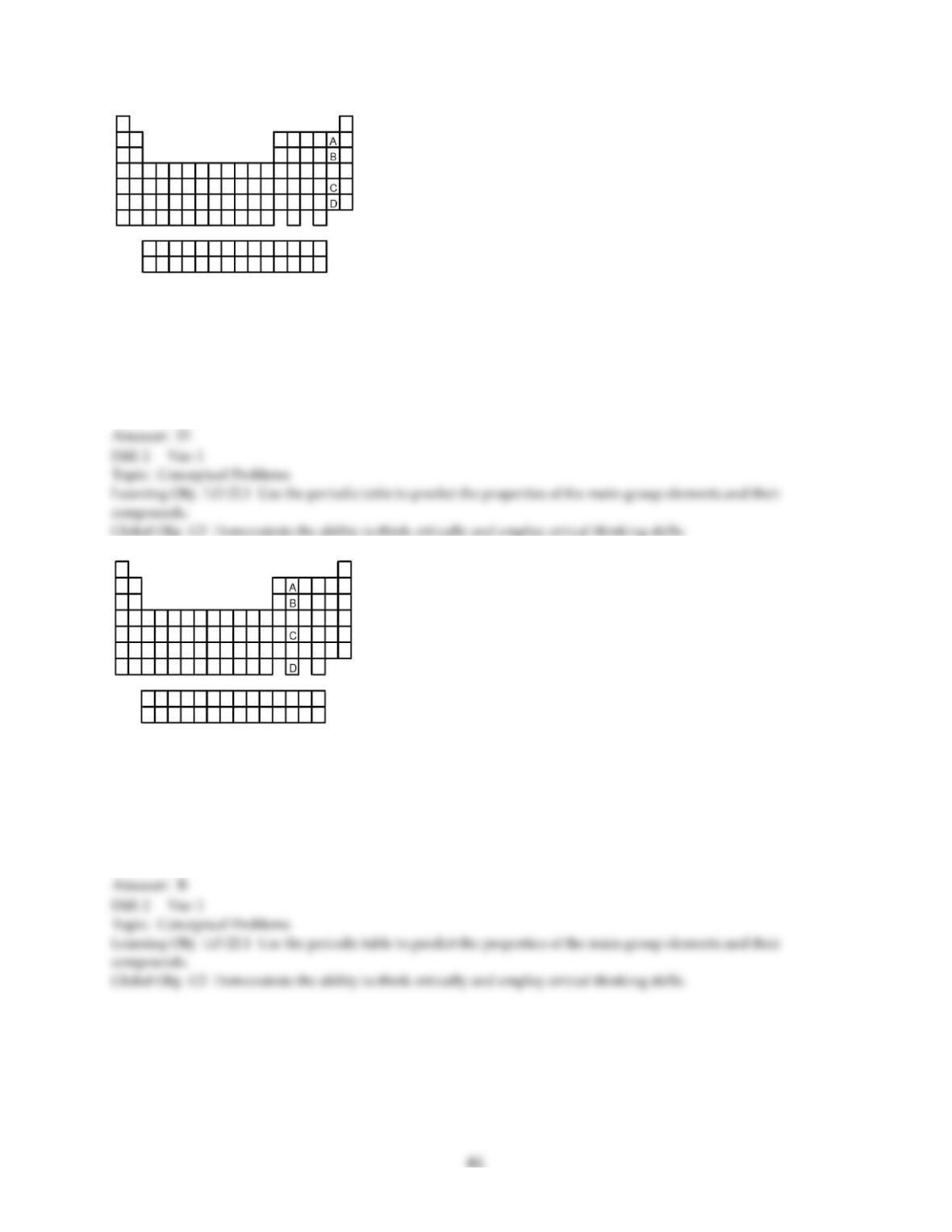
144) Which of the elements indicated on the above periodic table is the group 7A element with the largest
atomic radius?
A) element A
B) element B
C) element C
D) element D
145) Which of the elements indicated on the above periodic table is a group 4A element that is a
semiconductor?
A) element A
B) element B
C) element C
D) element D
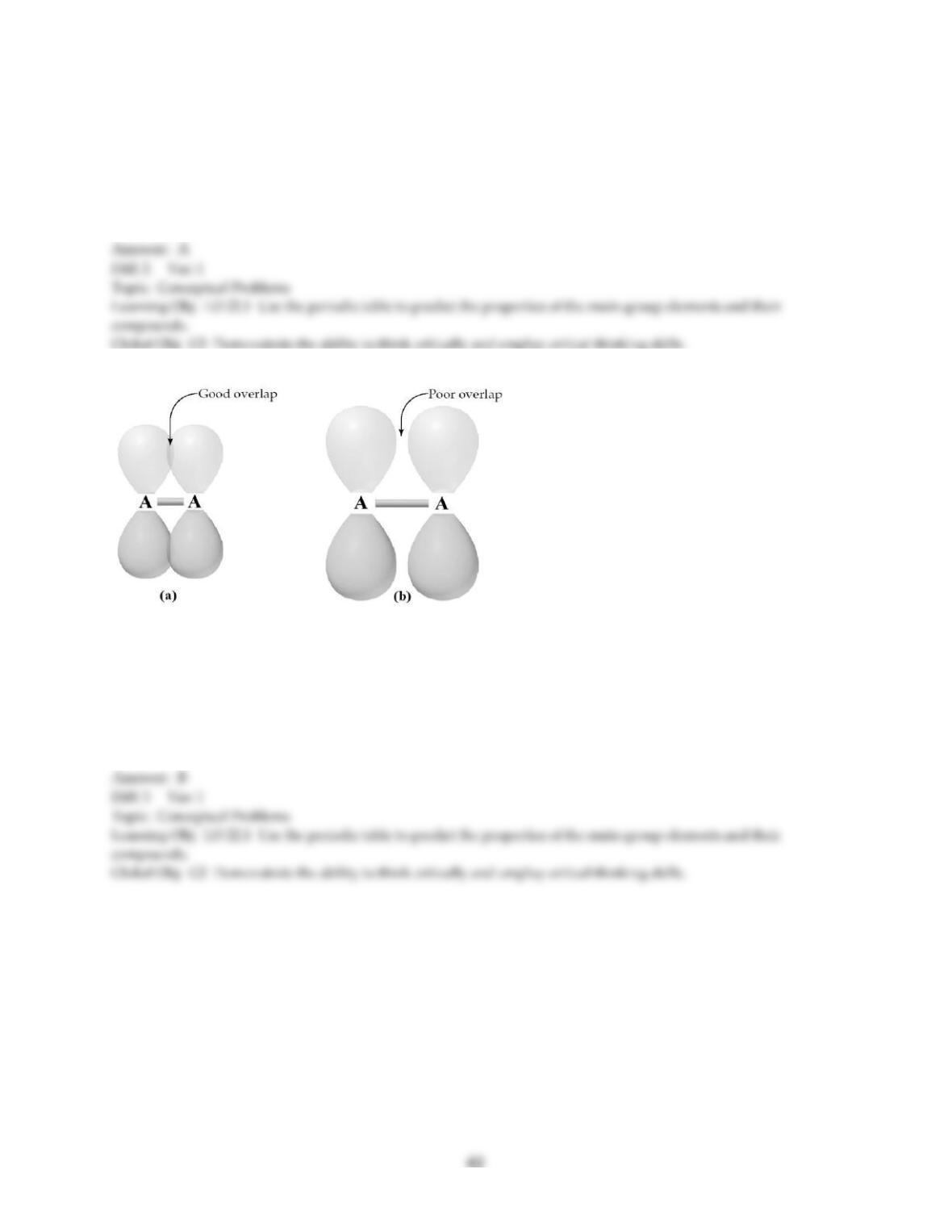
146) Which of the elements indicated on the above periodic table is a group 4A element that forms the
strongest π bonds?
A) element A
B) element B
C) element C
D) element D
147) Which of these molecules is most likely to contain good π overlap of p orbitals, as shown in figure
(a), rather than poor π overlap of p orbitals, as shown in figure (b)?
A) Cl2
B) O2
C) P4
D) S8
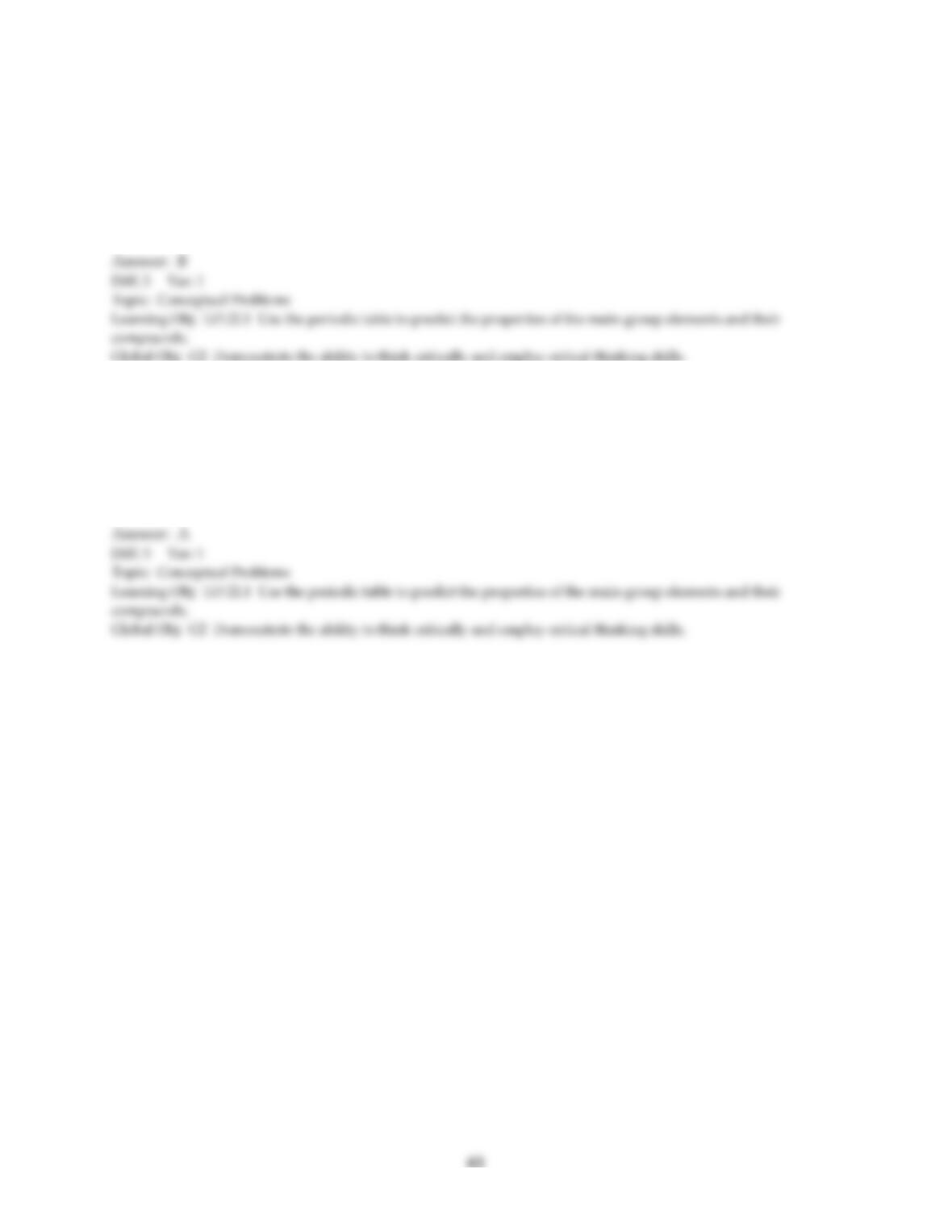
148) Which of these molecules is most likely to contain good π overlap of p orbitals, as shown in figure
(a), rather than poor π overlap of p orbitals, as shown in figure (b)?
A) Cl2
B) N2
C) P4
D) S8
149) Which of these molecules is most likely to contain good π overlap of p orbitals, as shown in figure
(a), rather than poor π overlap of p orbitals, as shown in figure (b)?
A) CO2
B) SiO2
C) GeO2
D) SnO2
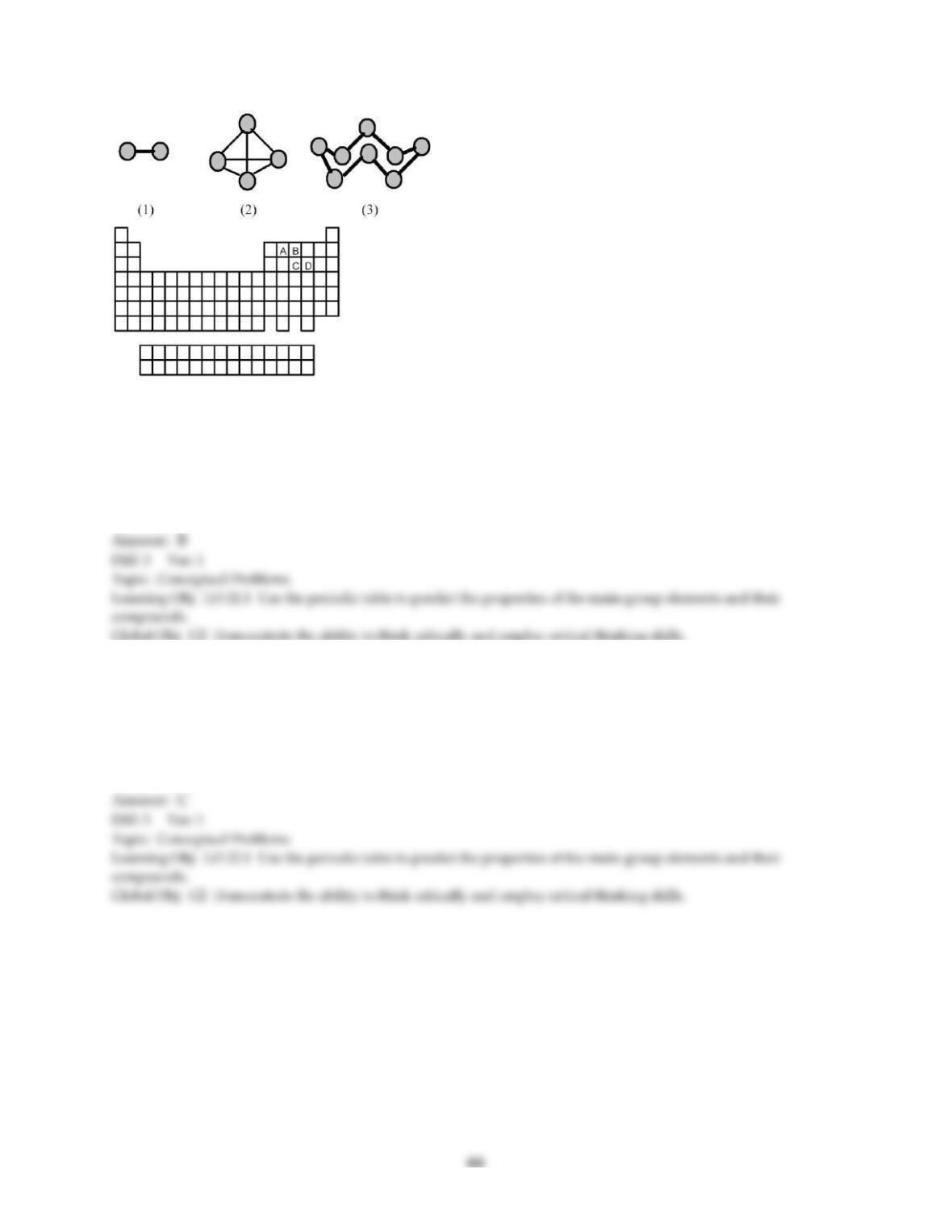
150) Which of the elements indicated on the above periodic table has a common allotrope stable at 25°C
having molecular structure (1)?
A) element A
B) element B
C) element C
D) element D
151) Which of the elements indicated on the above periodic table forms a common allotrope having
molecular structure (2)?
A) element A
B) element B
C) element C
D) element D
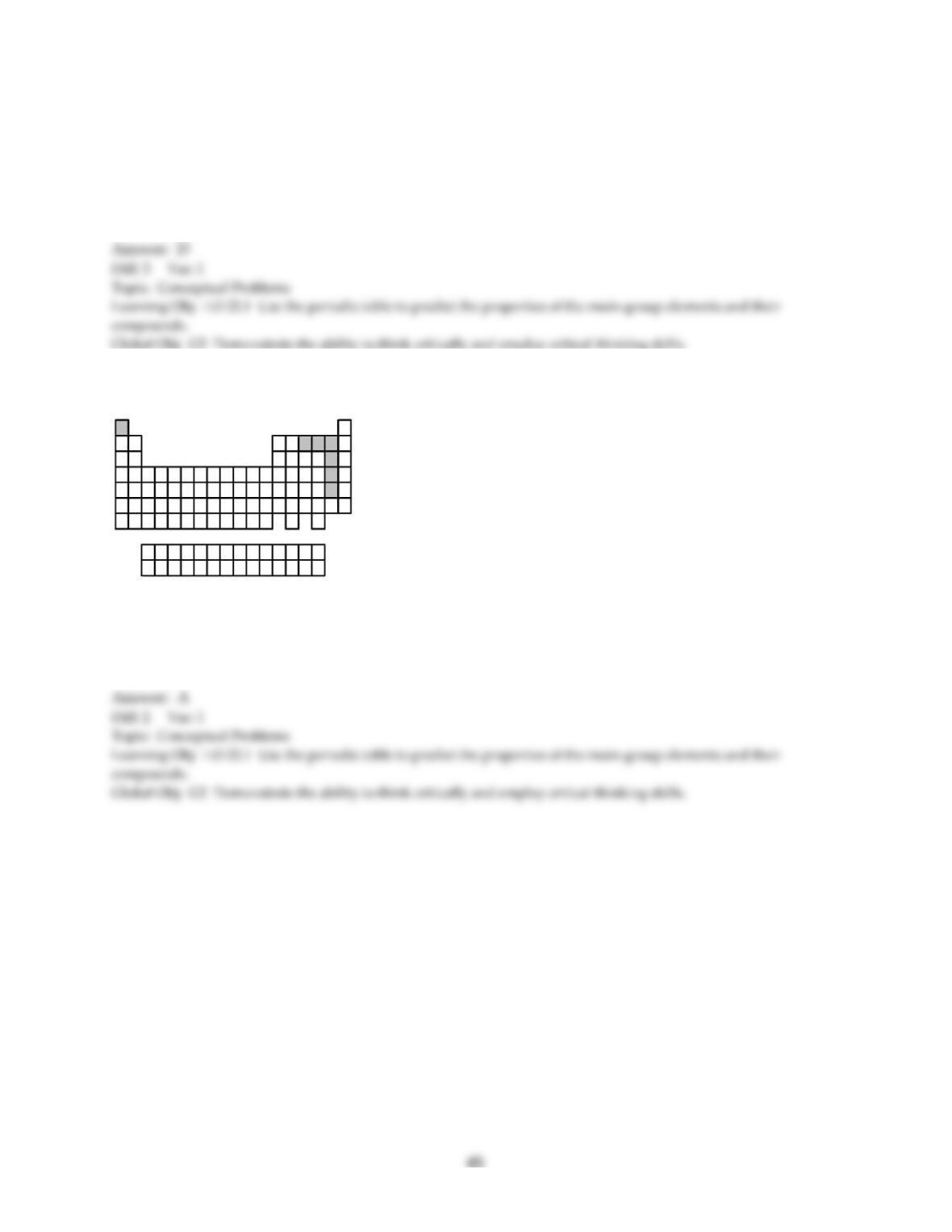
152) Which of the elements indicated on the above periodic table forms a common allotrope having
molecular structure (3)?
A) element A
B) element B
C) element C
D) element D
153) At 25°C the elements indicated by the shaded area in the following periodic table are all
A) diatomic molecules.
B) gases.
C) liquids.
D) solids.
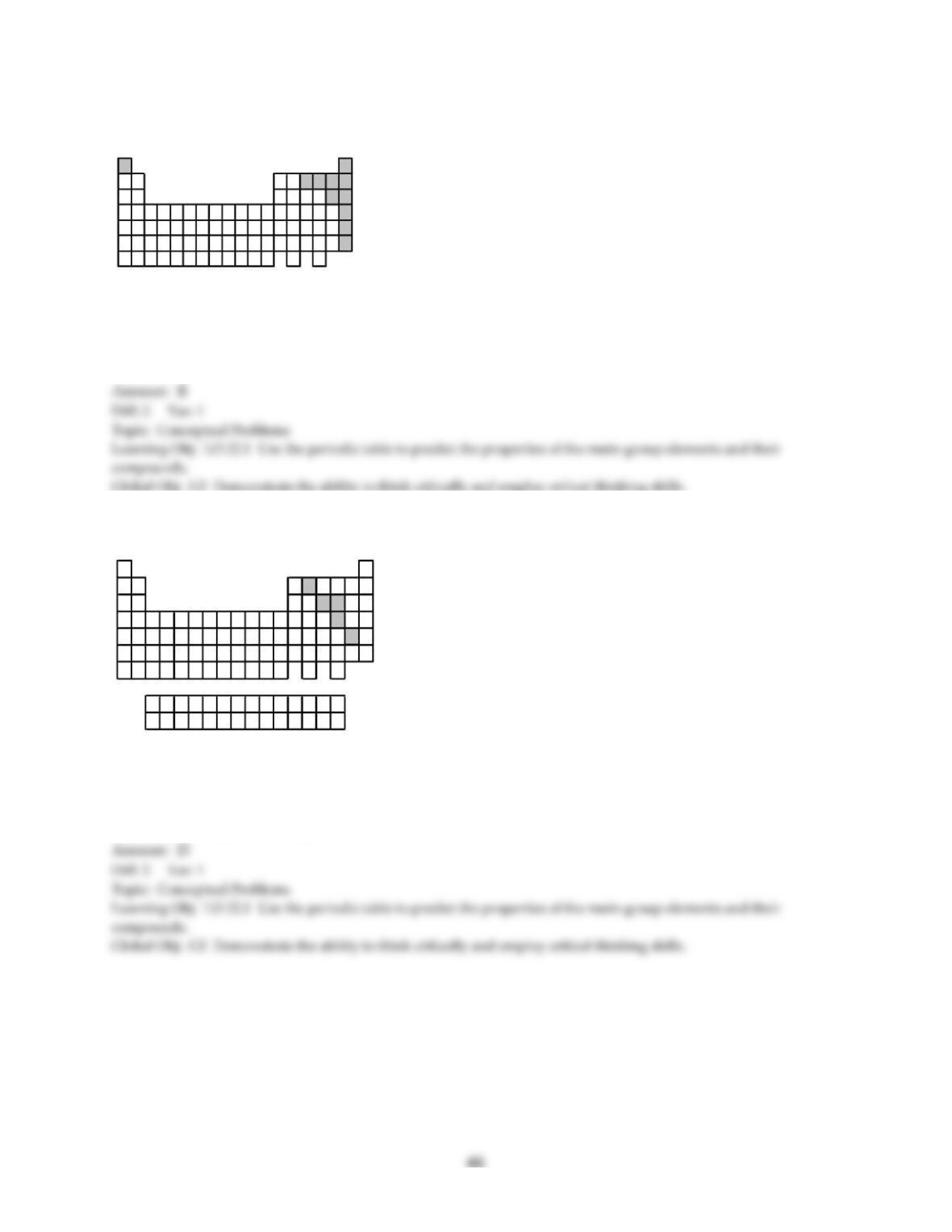
154) At 25°C the elements indicated by the shaded area in the following periodic table are all
A) diatomic molecules.
B) gases.
C) liquids.
D) solids.
155) At 25°C the elements indicated by the shaded area in the following periodic table are all
A) diatomic molecules.
B) gases.
C) liquids.
D) nonmetals that are solids.
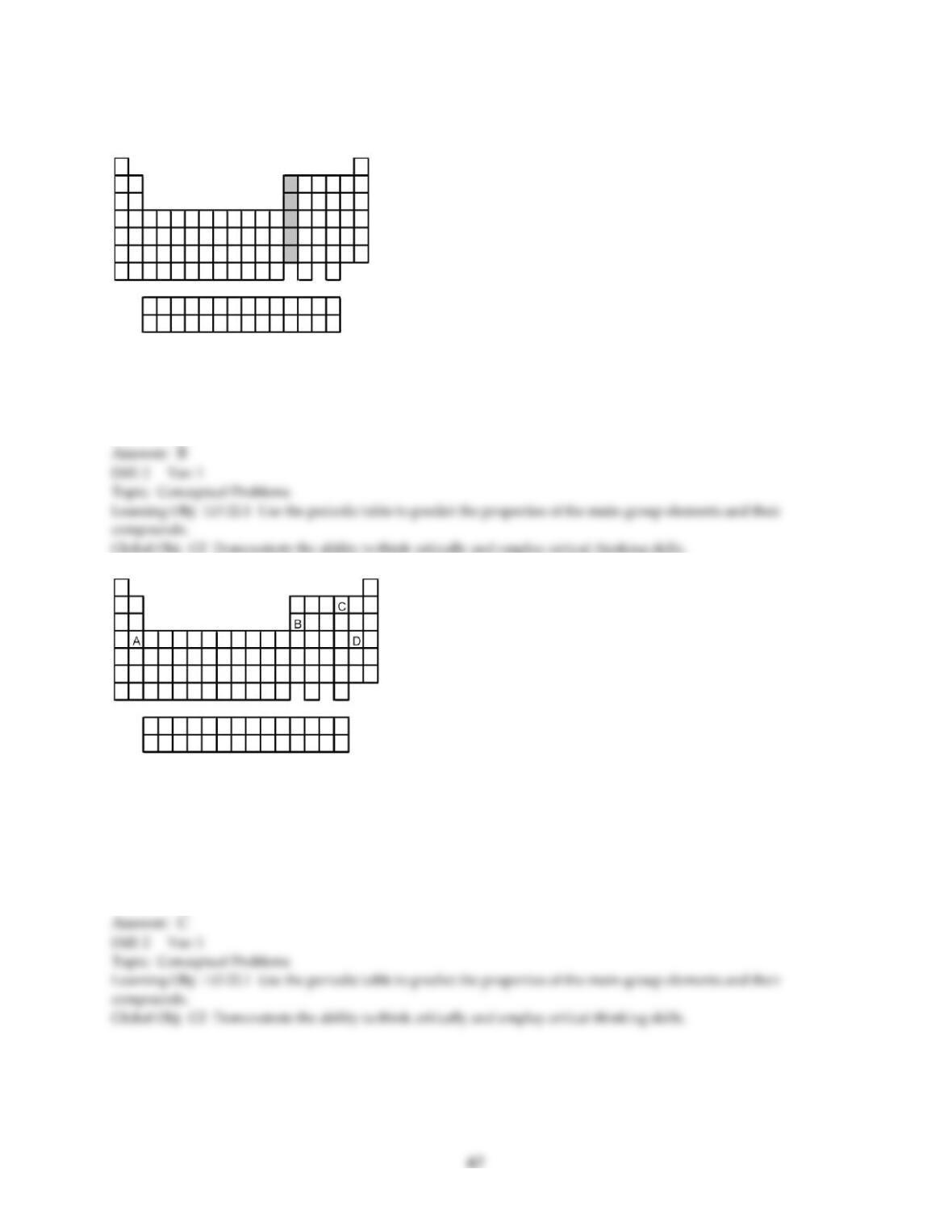
156) What is the name for the group of elements indicated by the shaded portion of the periodic table?
A) alkaline earth metals
B) group 3A elements
C) halogens
D) noble gases
157) What is the likely formula for the binary compound formed from the elements represented by letters
B and D on the periodic table above?
A) BD
B) B3D
C) BD3
D) B2D3
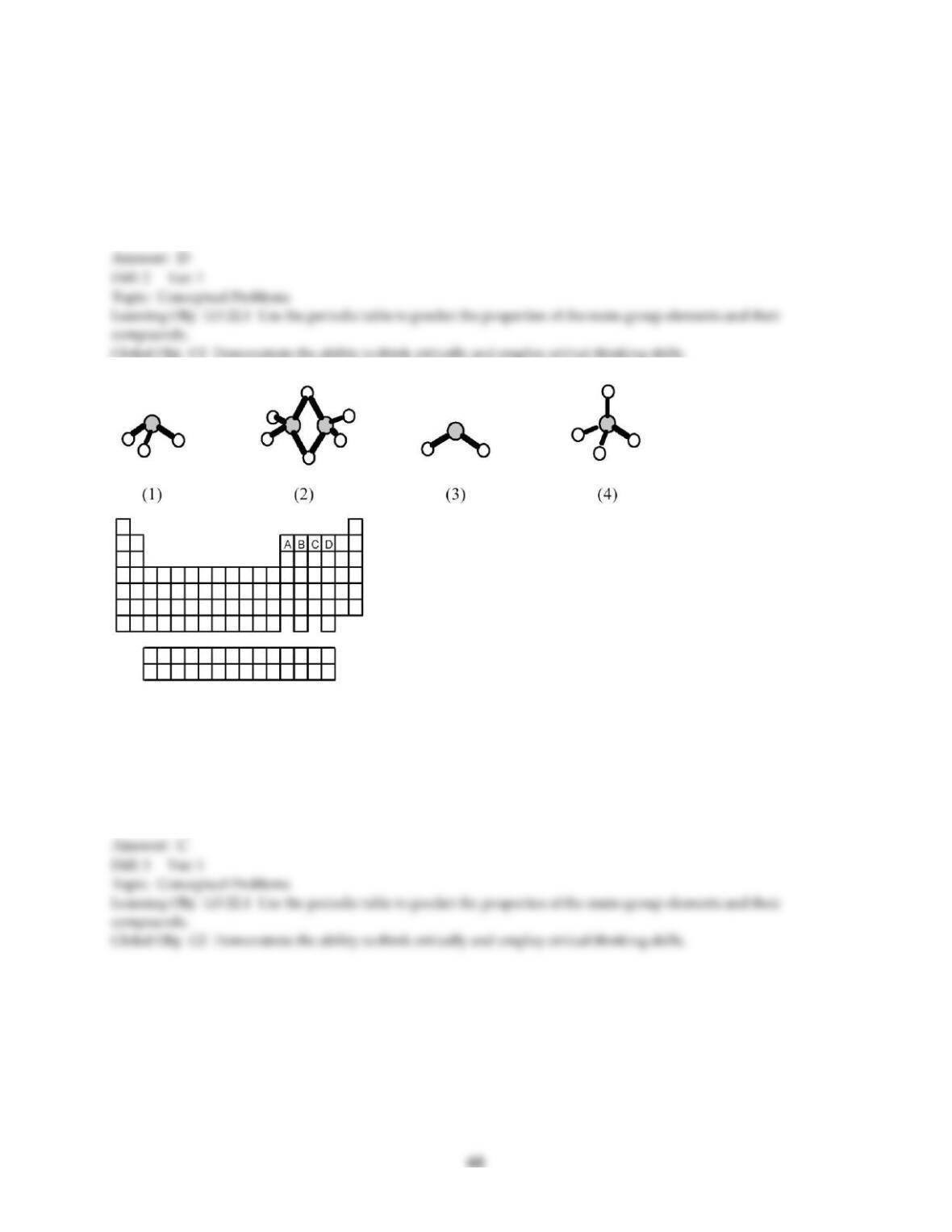
158) What is the likely formula for the binary compound formed from the elements represented by letters
B and C on the periodic table above?
A) BC
B) B3C
C) BC3
D) B2C3
159) Which element indicated on the above periodic table forms a binary hydride with molecular
structure (1) shown above?
A) element A
B) element B
C) element C
D) element D
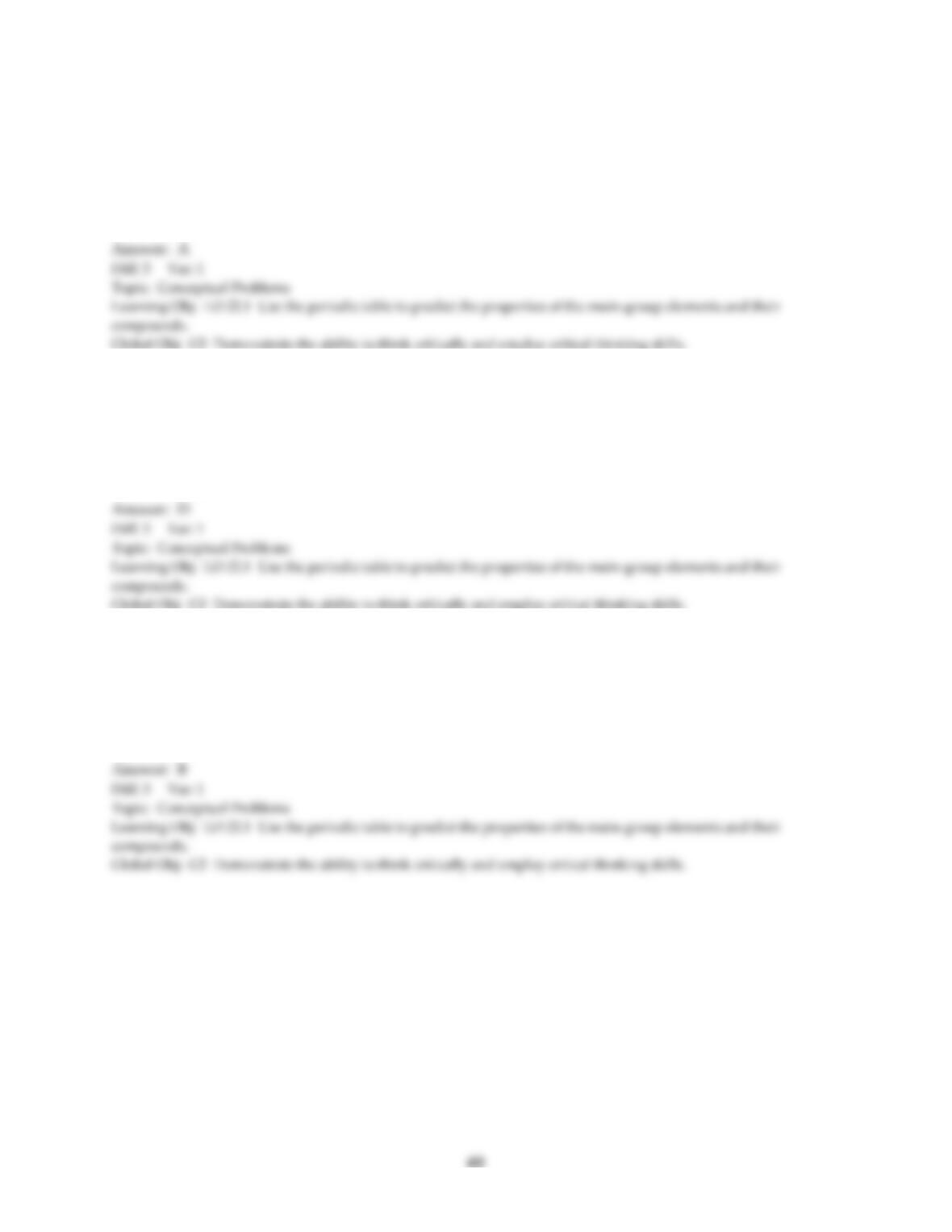
160) Which element indicated on the above periodic table forms a binary hydride with molecular
structure (2) shown above?
A) element A
B) element B
C) element C
D) element D
161) Which element indicated on the above periodic tableforms a binary hydride with molecular structure
(3) shown above?
A) element A
B) element B
C) element C
D) element D
162) Which element indicated on the above periodic table forms a binary hydride with molecular
structure (4) shown above?
A) element A
B) element B
C) element C
D) element D
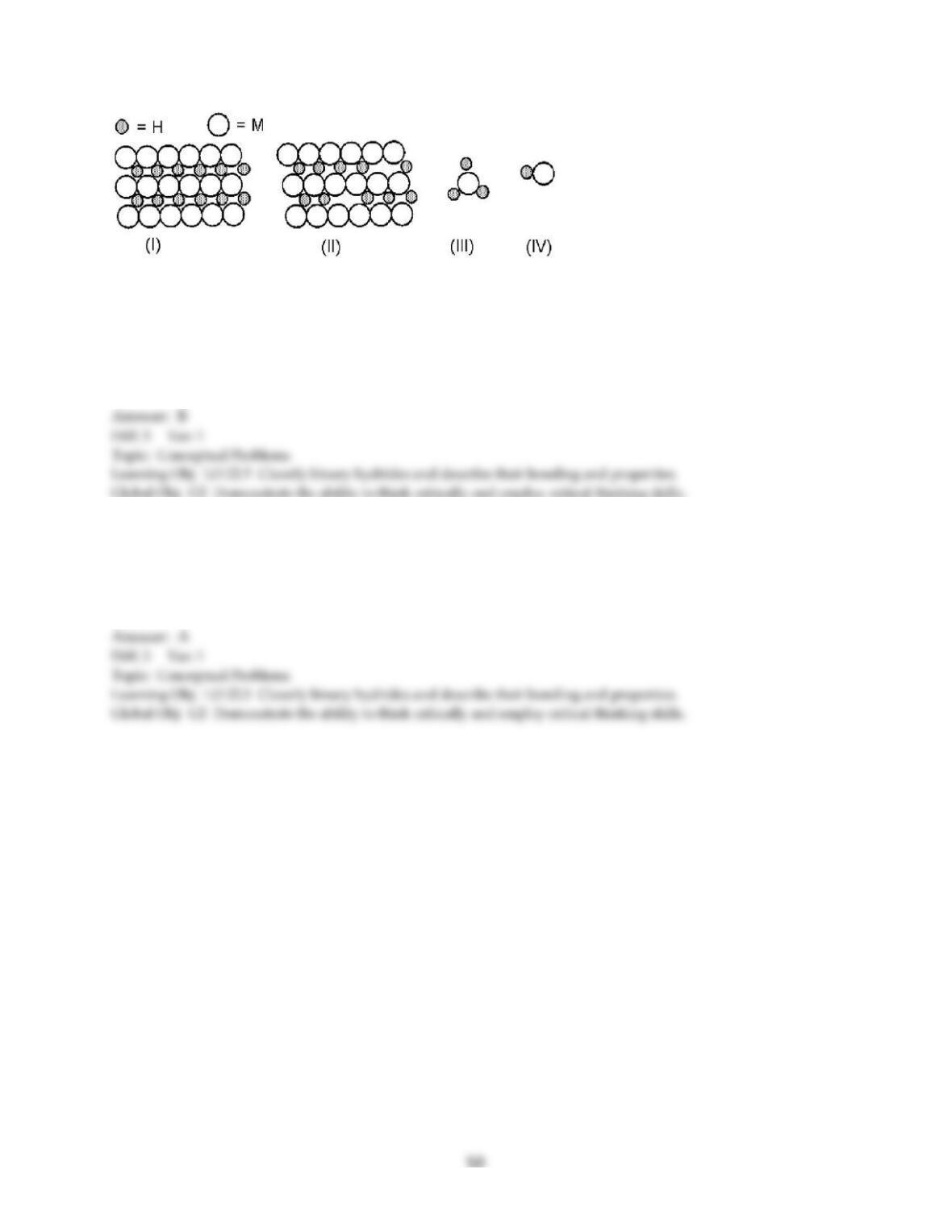
163) From the above models of hydrides, indicate the one most representative of an interstitial metallic
hydride.
A) I
B) II
C) III
D) IV
164) Using the above models of hydrides, indicate the one most representative of an ionic hydride.
A) I
B) II
C) III
D) IV
51
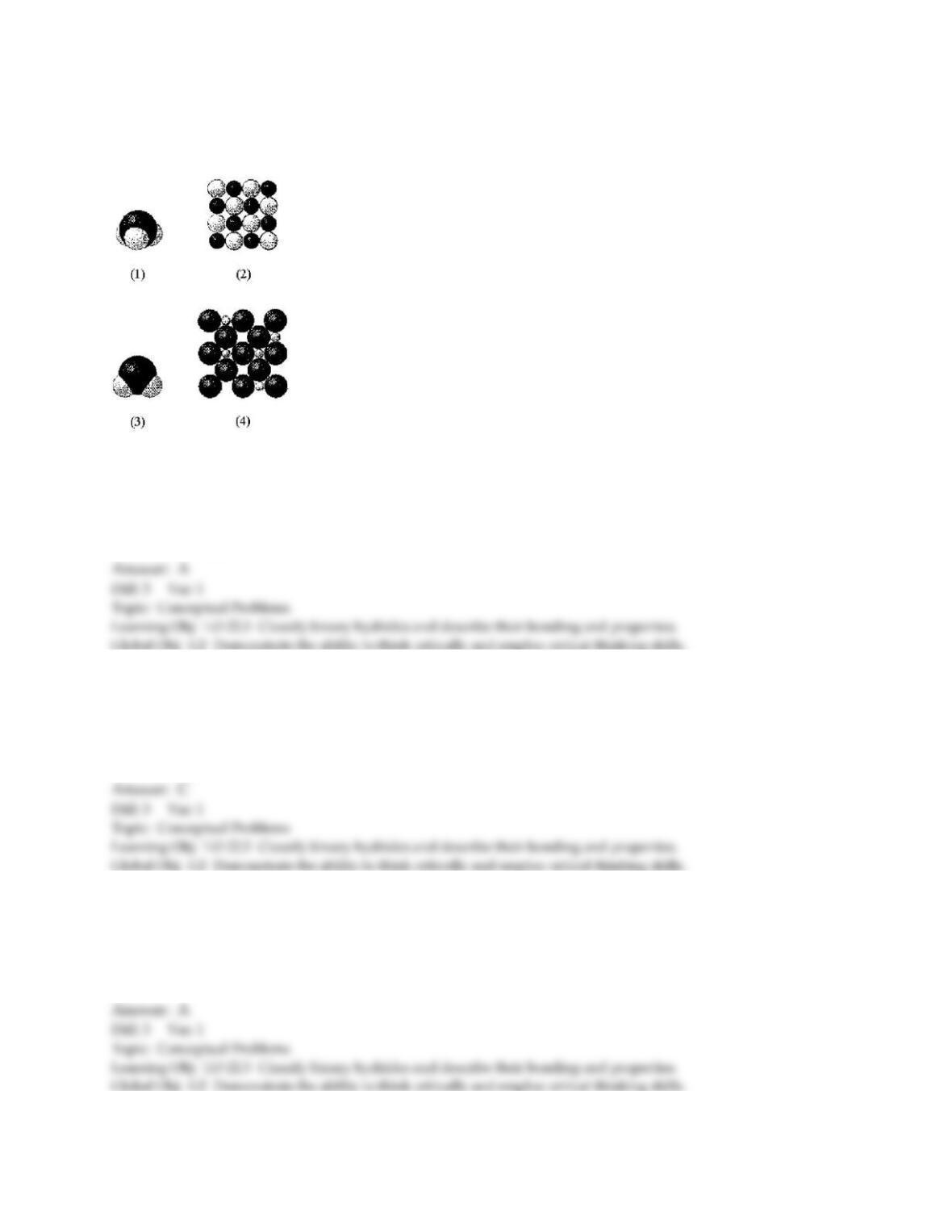
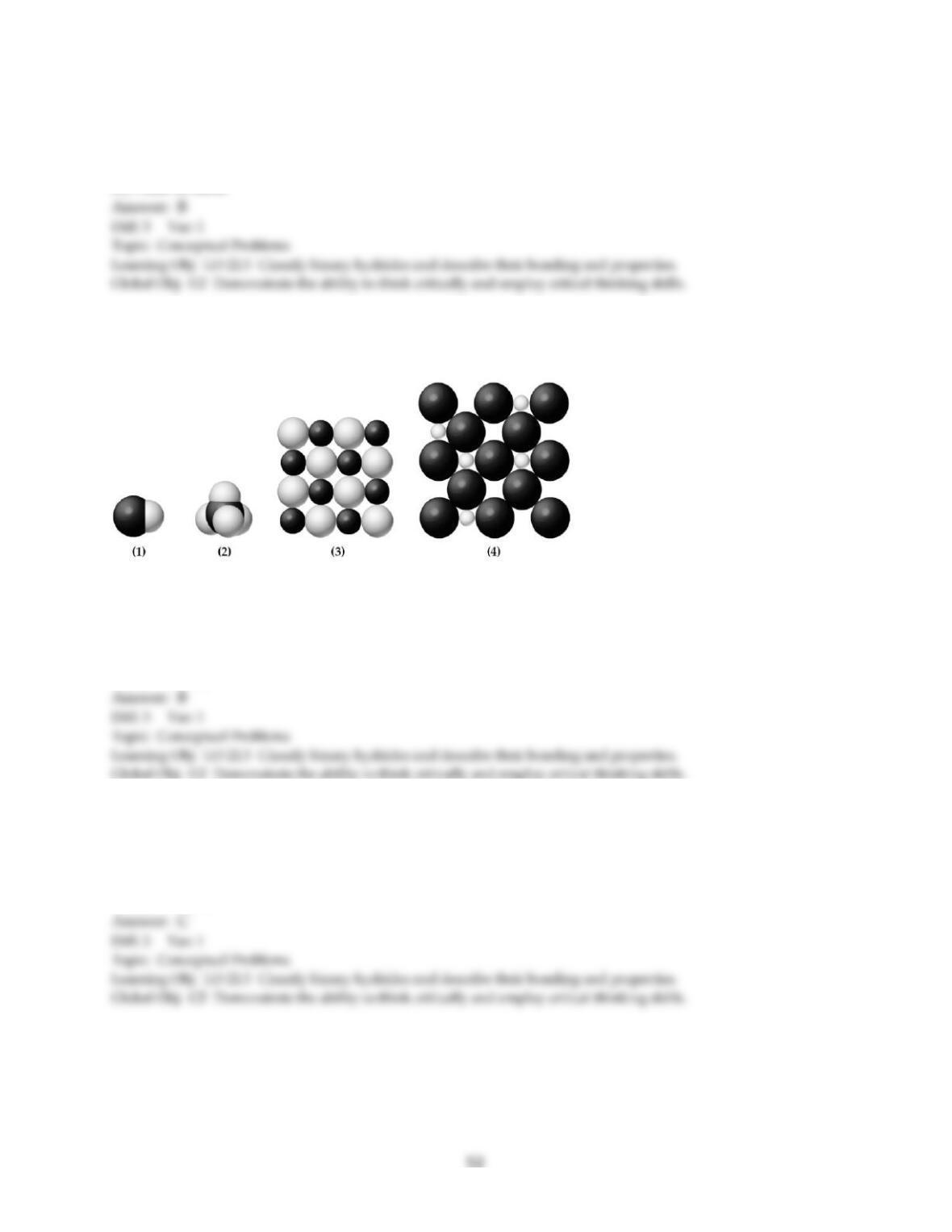
In the following pictures representing binary hydrides AHx, lightly-shaded spheres represent H atoms or
ions and darkly-shaded spheres represent atoms or ions of the other element, A.
165) The binary hydride shown in picture (1) is classified as
A) covalent.
B) interstitial (metallic).
C) ionic.
D) None of these
166) The binary hydride shown in picture (2) is classified as
A) covalent.
B) interstitial (metallic).
C) ionic.
D) None of these
167) The binary hydride shown in picture (3) is classified as
A) covalent.
B) interstitial (metallic).
C) ionic.
D) None of these
168) The binary hydride shown in picture (4) is classified as
A) covalent.
B) interstitial (metallic).
C) ionic.
D) None of these
The following pictures represent binary hydrides, AHx, where A = Na, Ti, C, or Cl. Lightly-shaded
spheres represent H atoms or ions and darkly-colored spheres represent atoms or ions of element A.
169) Which hydride has the lowest melting point?
A) hydride (1)
B) hydride (2)
C) hydride (3)
D) hydride (4)
170) Which hydride reacts with water at 25°C to give H2 gas and forms a basic solution?
A) hydride (1)
B) hydride (2)
C) hydride (3)
D) hydride (4)
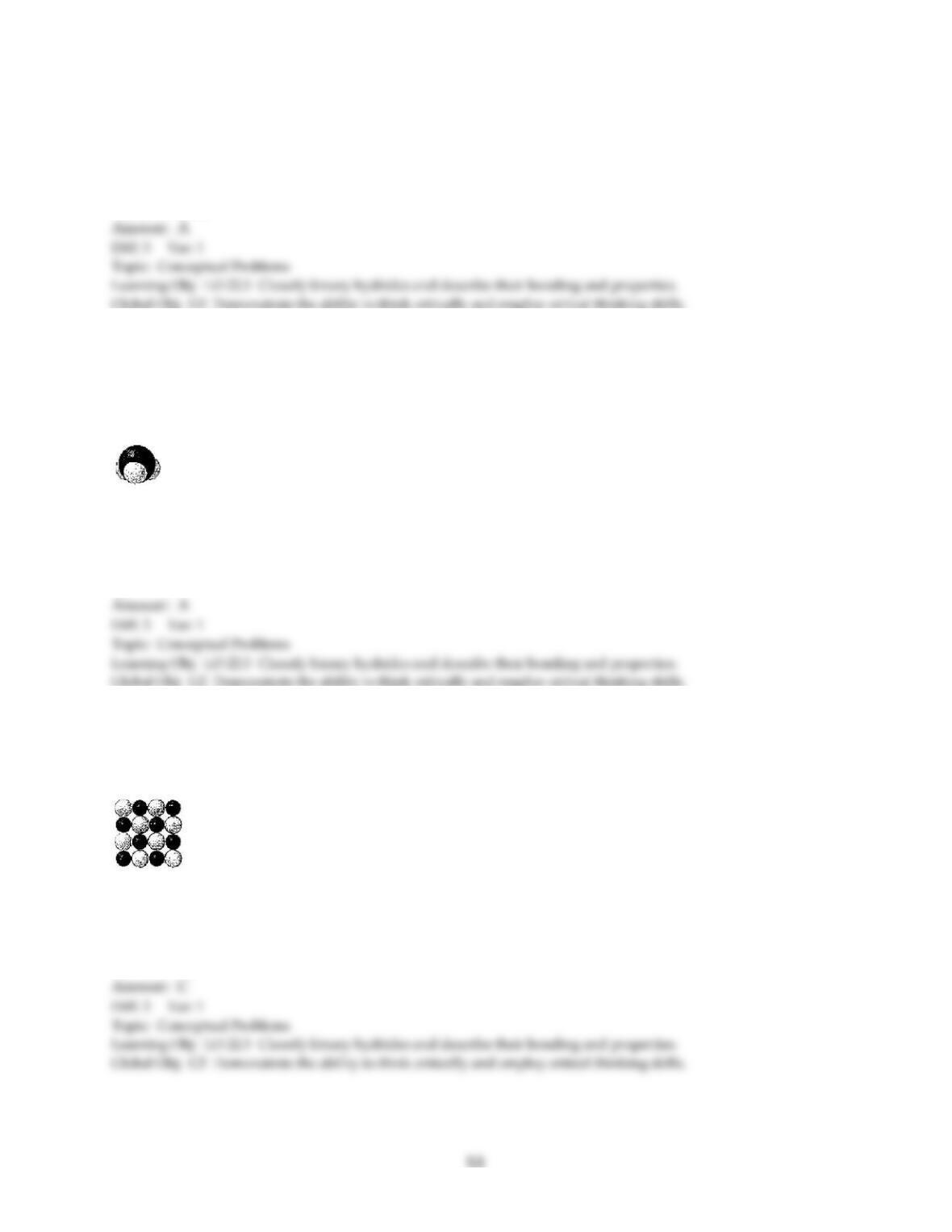
171) Which hydride dissolves in water to form an acidic solution?
A) hydride (1)
B) hydride (2)
C) hydride (3)
D) hydride (4)
172) In the picture representing binary hydride AHx, lightly-shaded spheres represent H atoms or ions
and darkly-shaded spheres represent atoms or ions of the other element, A. If A is a second-period
element, the oxidation state of hydrogen and the oxidation state of element A in the binary hydride
shown below are
A) +1 and –3.
B) +1 and –1.
C) -1 and +1.
D) -1 and +3.
173) In the picture representing binary hydride AHx, lightly-shaded spheres represent H atoms or ions
and darkly-shaded spheres represent atoms or ions of the other element, A. The oxidation state of
hydrogen and the oxidation state of element A in the binary hydride shown below are
A) +1 and –3.
B) +1 and –1.
C) -1 and +1.
D) -1 and +3.
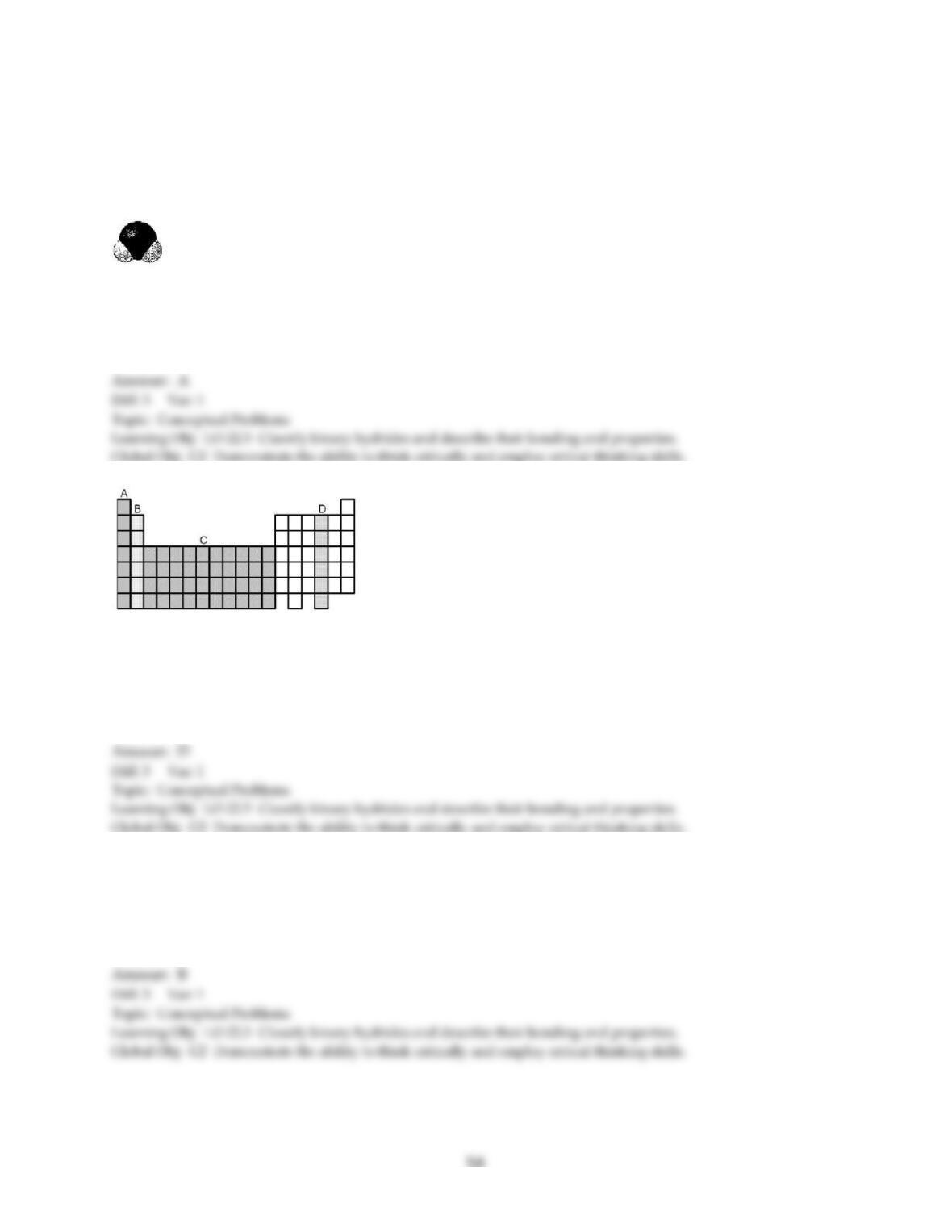
174) In the picture representing binary hydride AHx, lightly-shaded spheres represent H atoms or ions
and darkly-shaded spheres represent atoms or ions of the other element, A. If A is a second-period
element, the oxidation state of hydrogen and the oxidation state of element A in the binary hydride
shown below are
A) +1 and –2.
B) +1 and –1.
C) -1 and +1.
D) -1 and +3.
175) What group of elements is most likely to form covalent molecular hydrides?
A) A
B) B
C) C
D) D
176) What group of elements is most likely to from ionic hydrides of the type MH2?
A) A
B) B
C) C
D) D
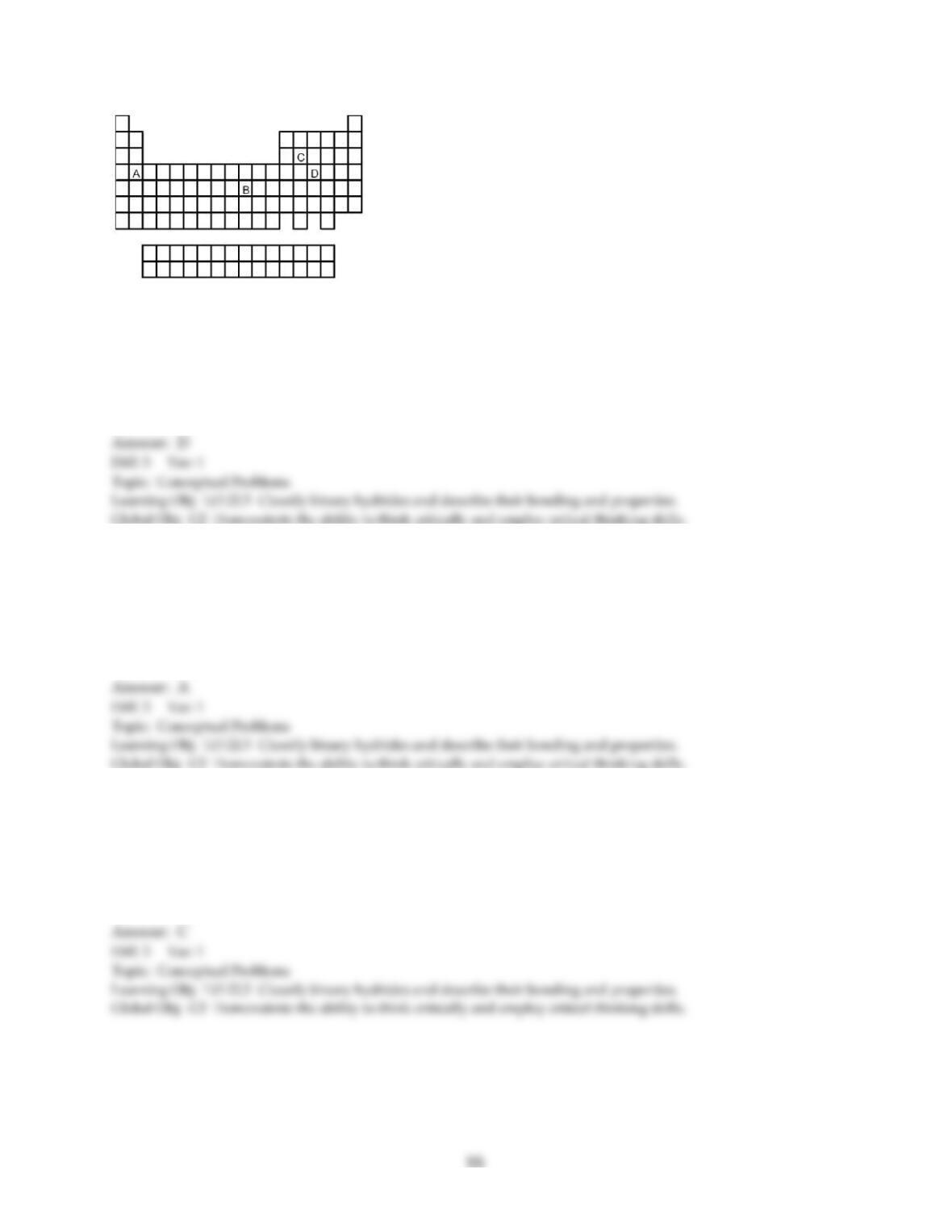
177) Which element shown on the periodic table above forms a covalent binary hydride with the formula
MX3?
A) element A
B) element B
C) element C
D) element D
178) Which element shown on the periodic table above forms an ionic binary hydride with the formula
MX2?
A) element A
B) element B
C) element C
D) element D
179) Which element shown on the periodic table above forms a covalent binary hydride with the formula
MX4?
A) element A
B) element B
C) element C
D) element D
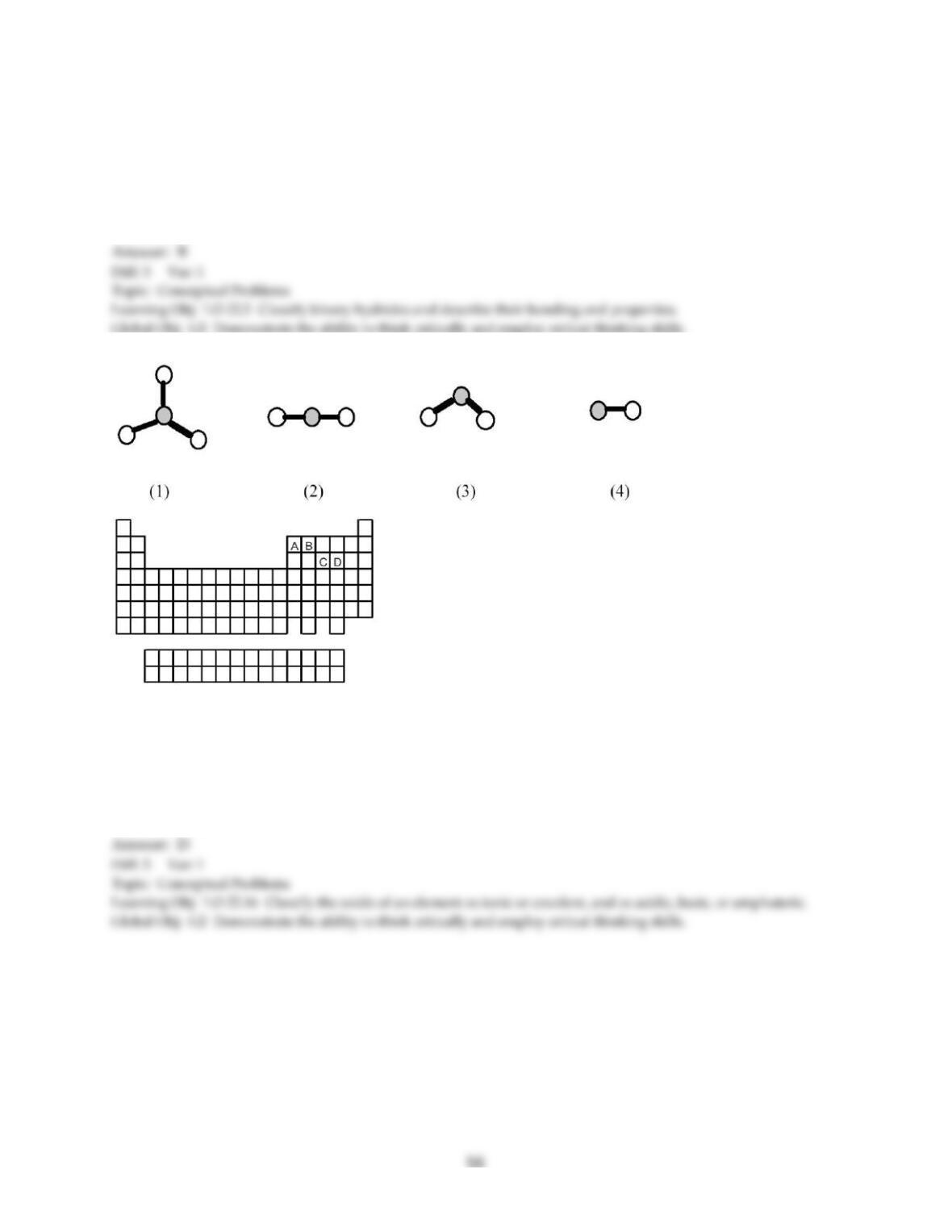
180) Which element shown on the periodic table above forms an interstitial binary hydride with the
formula MXx?
A) element A
B) element B
C) element C
D) element D
181) Which element indicated on the above periodic table forms a binary oxide with molecular structure
(1) shown above?
A) element A
B) element B
C) element C
D) element D
182) Which element indicated on the above periodic table forms a binary oxide with molecular structure
(2) shown above?
A) element A
B) element B
C) element C
D) element D
183) Which element indicated on the above periodic table forms a binary oxide with molecular structure
(3) shown above?
A) element A
B) element B
C) element C
D) element D
184) Which element indicated on the above periodic table forms a binary oxide with molecular structure
(4) shown above?
A) element A
B) element B
C) element C
D) element D
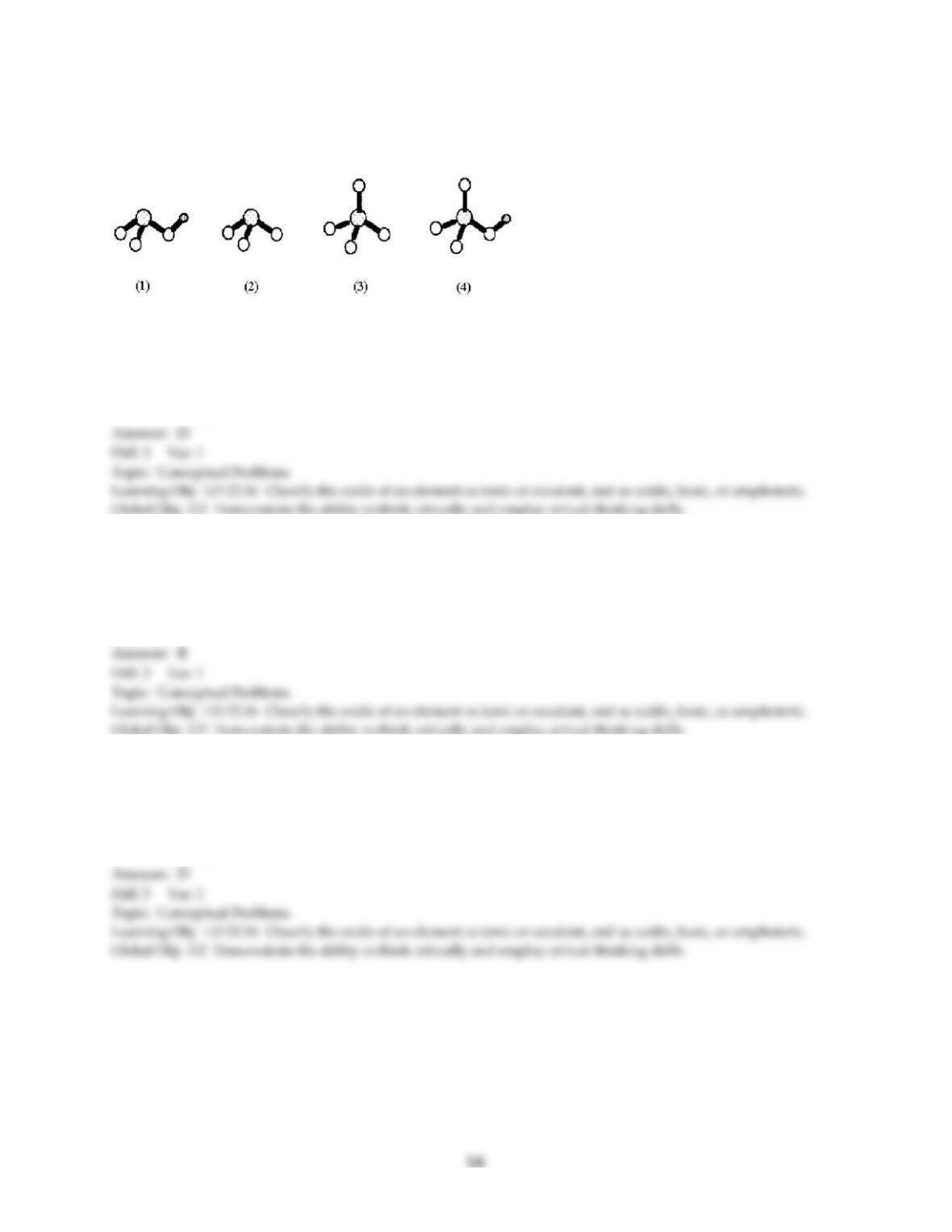
Shown below are four oxoanions of sulfur. Small gray spheres represent hydrogen, unshaded spheres
represent oxygen, and dotted spheres represent sulfur.
185) Which oxoanion is the strongest acid?
A) oxoanion (1)
B) oxoanion (2)
C) oxoanion (3)
D) oxoanion (4)
186) Which oxoanion is the strongest base?
A) oxoanion (1)
B) oxoanion (2)
C) oxoanion (3)
D) oxoanion (4)
187) Which oxoanion is the weakest base?
A) oxoanion (1)
B) oxoanion (2)
C) oxoanion (3)
D) oxoanion (4)
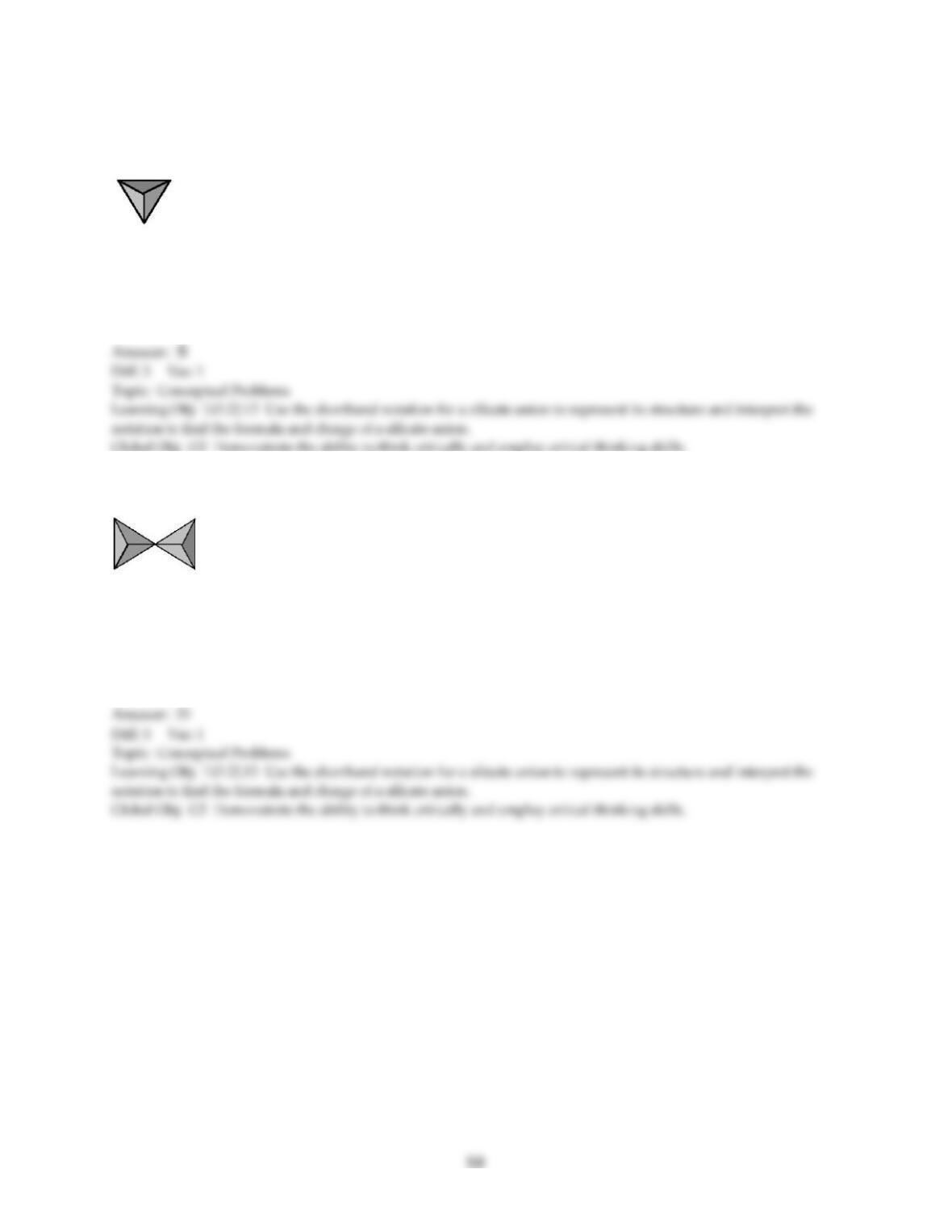
188) The silicate ion shown in the picture below combines with zirconium to form the mineral zircon.
What is the formula and charge of the silicate ion?
A) SiO32-
B) SiO44-
C) Si4O104-
D) Si4O116-
189) What is the formula and charge of the silicate anion represented by the picture below?
A) SiO32-
B) SiO44-
C) Si2O63-
D) Si2O76-
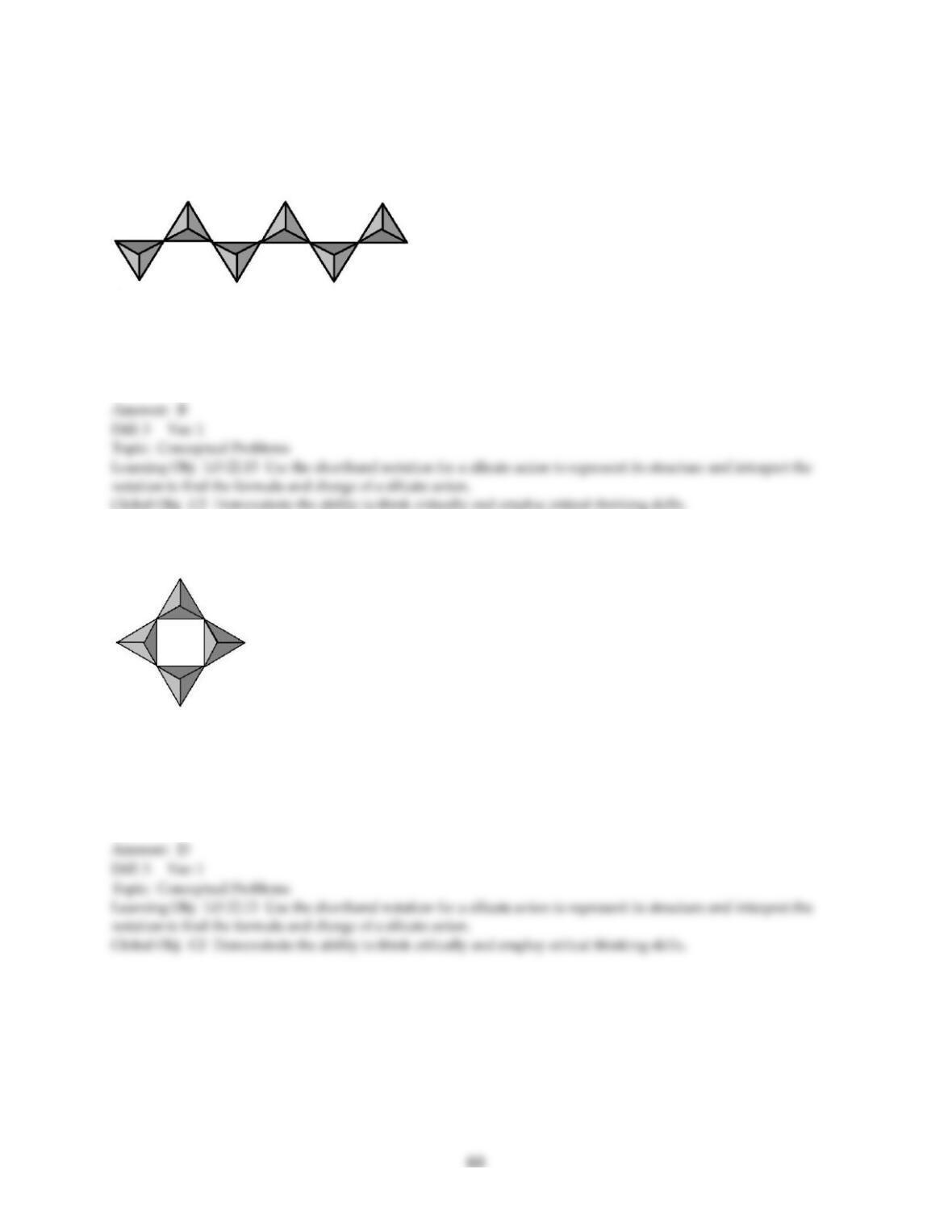
190) The infinitely extended silicate ion shown in the picture below combines with calcium and
magnesium to form the mineral diopside. What is the formula and charge of the repeating unit of the
silicate ion?
A) SiO32-
B) Si2O64-
C) Si3O108-
D) Si6O2424–
191) What is the formula and charge of the silicate anion represented by the picture below?
A) SiO22-
B) SiO32-
C) SiO44-
D) Si4O128-