C) The bonding in ceramics is highly nondirectional.
D) The localized bonding in ceramics is highly directional.
74) What substance has a rating of 10 on the Mohs hardness scale?
A) alumina
B) aluminum
C) diamond
D) talc
75) What is the name of the oxide ceramic BeO?
A) beryllia
B) beryllic
C) beryllium ceramic
D) beryllium oxide
76) What is not generally considered to be a ceramic?
A) indium, In
B) silica, SiO2
C) silicon nitride, Si3N4
D) zirconia, ZiO2
77) What is the coordination number of Si in SiC that has a diamond-like structure?
A) 1
B) 2
C) 4
D) 6
78) What is the sol-gel process?
A) a series of chemical steps that involves the isolation of CuS and then roasting with oxygen
B) a series of chemical steps that involves the isolation of SO3 and then treatment with H2SO4
C) a series of chemical steps that involves the synthesis of a metal oxide powder from a metal
alkoxide
D) a series of chemical steps that involves the thermal decomposition of fibers of
polyacrylonitrile
79) What is not part of the sol-gel process for the production of titania?
A) TiCl4 + 4 HOCH2CH3 + 4 NH3 → Ti(OCH2CH3)4 + 4 NH4Cl (in benzene)
B) Ti(OCH2CH3)4 + 4 H2O → Ti(OH)4 + 4 HOCH2CH3
C) (HO)3–Ti-OH + HO-Ti-(OH)3 → (HO)3–Ti-O-Ti(OH)3 + H2O
D) 4 Ti(OH)4 + heat → 2 Ti2O3 + 8 H2O + O2
80) Silica (SiO2) can be prepared from silicon ethoxide by the sol-gel process. Write a balanced
equation for the hydrolysis of silicon ethoxide.
A) SiCl4 + 4 HOCH2CH3 + 4 NH3 → Si(OCH2CH3)4 + 4 NH4Cl (in benzene)
B) Si(OCH2CH3)4 + 4 H2O → Si(OH)4 + 4 HOCH2CH3
C) Si(OCH2CH3)4 + 4 HOCH3 → Si(OCH3)4 + 4 HOCH2CH3
D) Si(OCH3)4 + 4 H2O → Si(OH)4 + 4 HOCH3
81) What is a cermet?
A) boron nitride/epoxy
B) ceramic-metal composite
C) ceramic-polymer composite
D) silicon carbide/graphite
82) Silicon nitride/zirconia is a example of a
A) ceramic-ceramic composite.
B) ceramic-metal composite.
C) ceramic-polymer composite.
D) superconductor.
83) Relative to a bulk sample of gold, nanoparticles of gold have
A) greater reactivity and higher melting point.
B) greater reactivity and lower melting point.
C) lower reactivity and higher melting point.
D) lower reactivity and lower melting point.
Look at the location of elements A, B, C, and D in the following periodic table.
84) Which of these elements is likely to be found in nature as a carbonate?
A) element A
B) element B
C) element C
D) element D
85) Which of these elements is likely to be found in nature as a free metal?
A) element A
B) element B
C) element C
D) element D
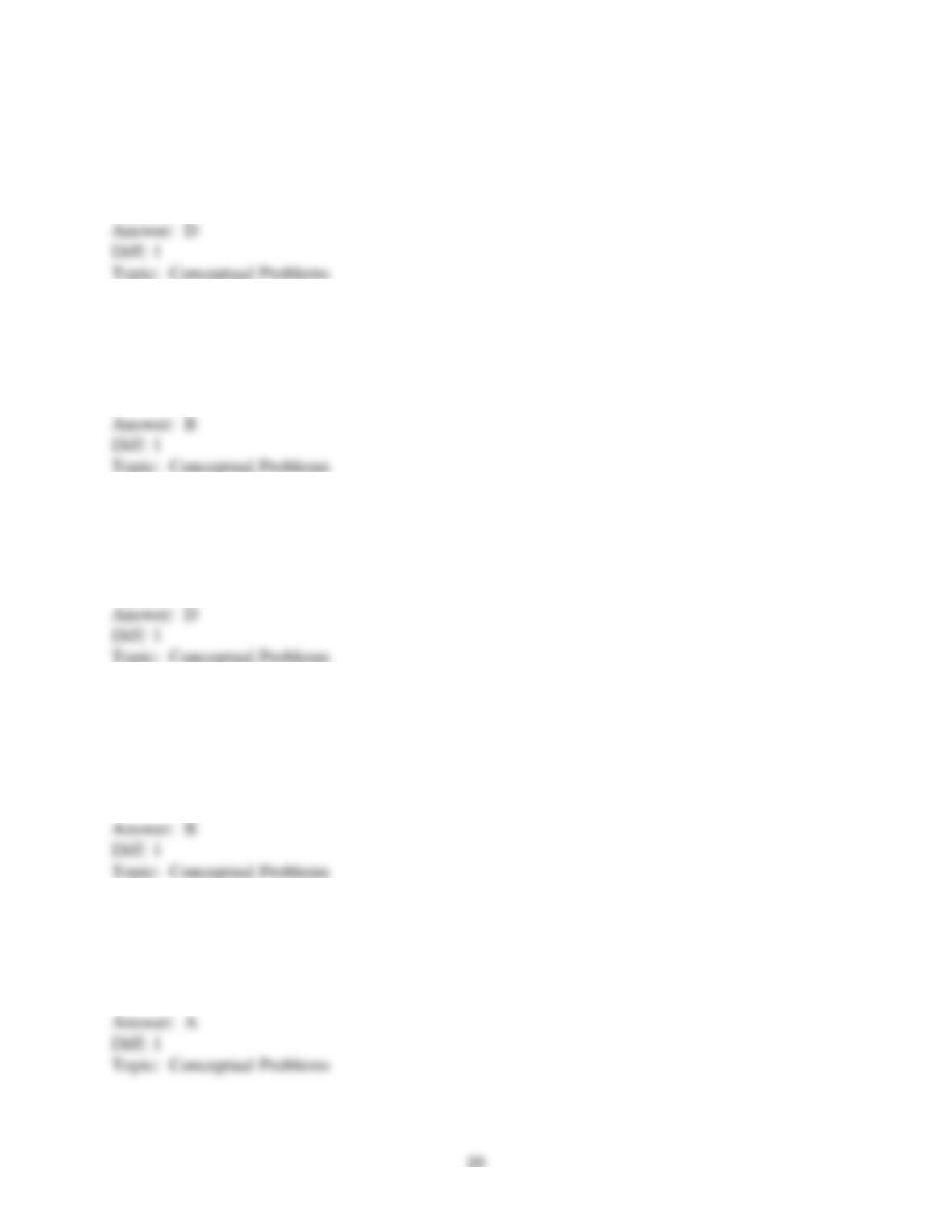
86) Which of these elements is likely to be found in nature as a sulfide?
A) element A
B) element B
C) element C
D) element D
87) Which of these elements is likely to be found in nature as an oxide?
A) element A
B) element B
C) element C
D) element D
88) Which of these elements is likely to be extracted from its ore by roasting of a metal sulfide?
A) element A
B) element B
C) element C
D) element D
89) Which of these elements is likely to be extracted from its ore by chemical reduction of a
metal oxide?
A) element A
B) element B
C) element C
D) element D
90) Which of these elements is likely to be extracted from its ore by electrolysis?
A) element A
B) element B
C) element C
D) element D
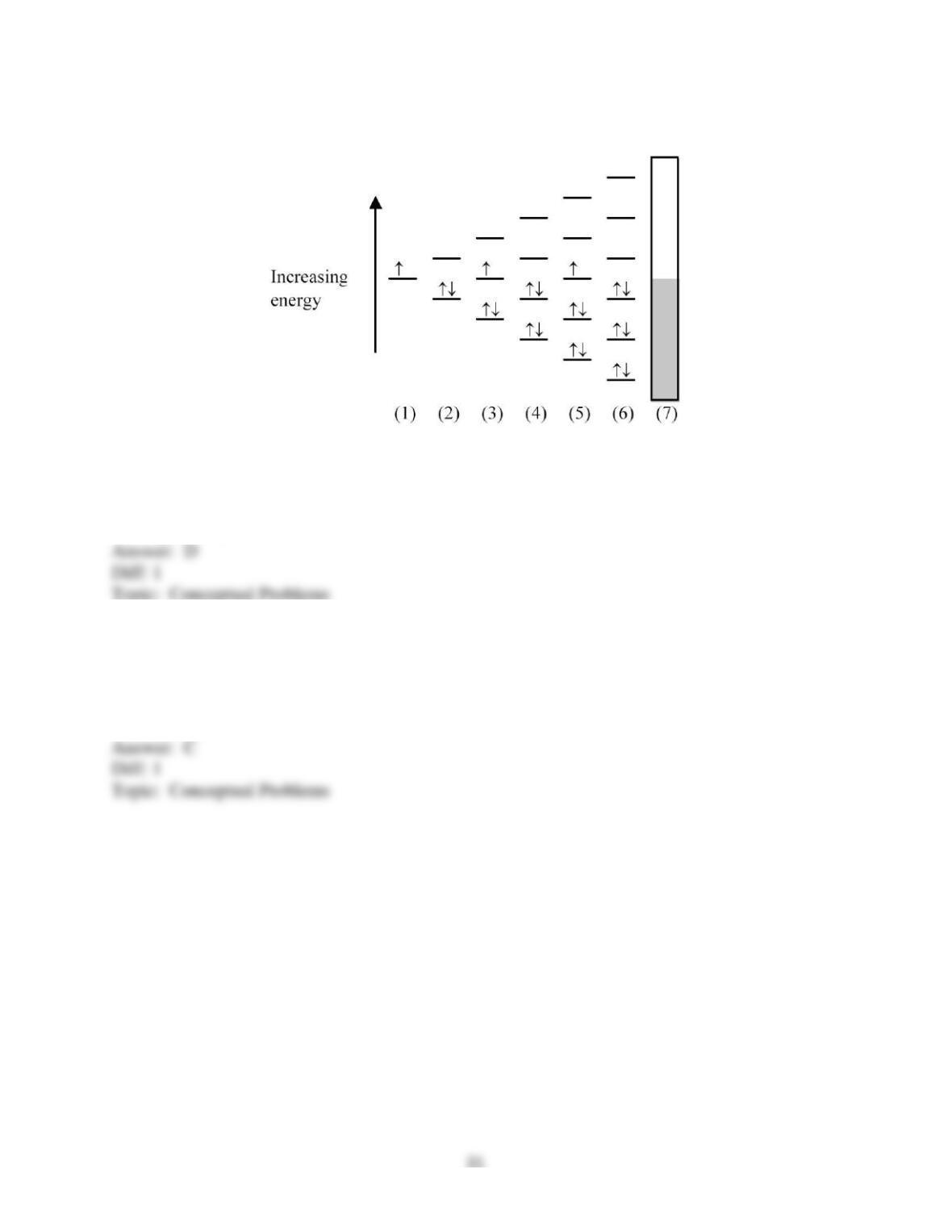
Use the picture below to answer the following questions.
91) What diagram would describe the molecular orbital picture for the species Na4?
A) diagram (1)
B) diagram (2)
C) diagram (3)
D) diagram (4)
92) Which diagram describes the molecular orbital picture for the species Na6?
A) diagram (4)
B) diagram (5)
C) diagram (6)
D) diagram (7)
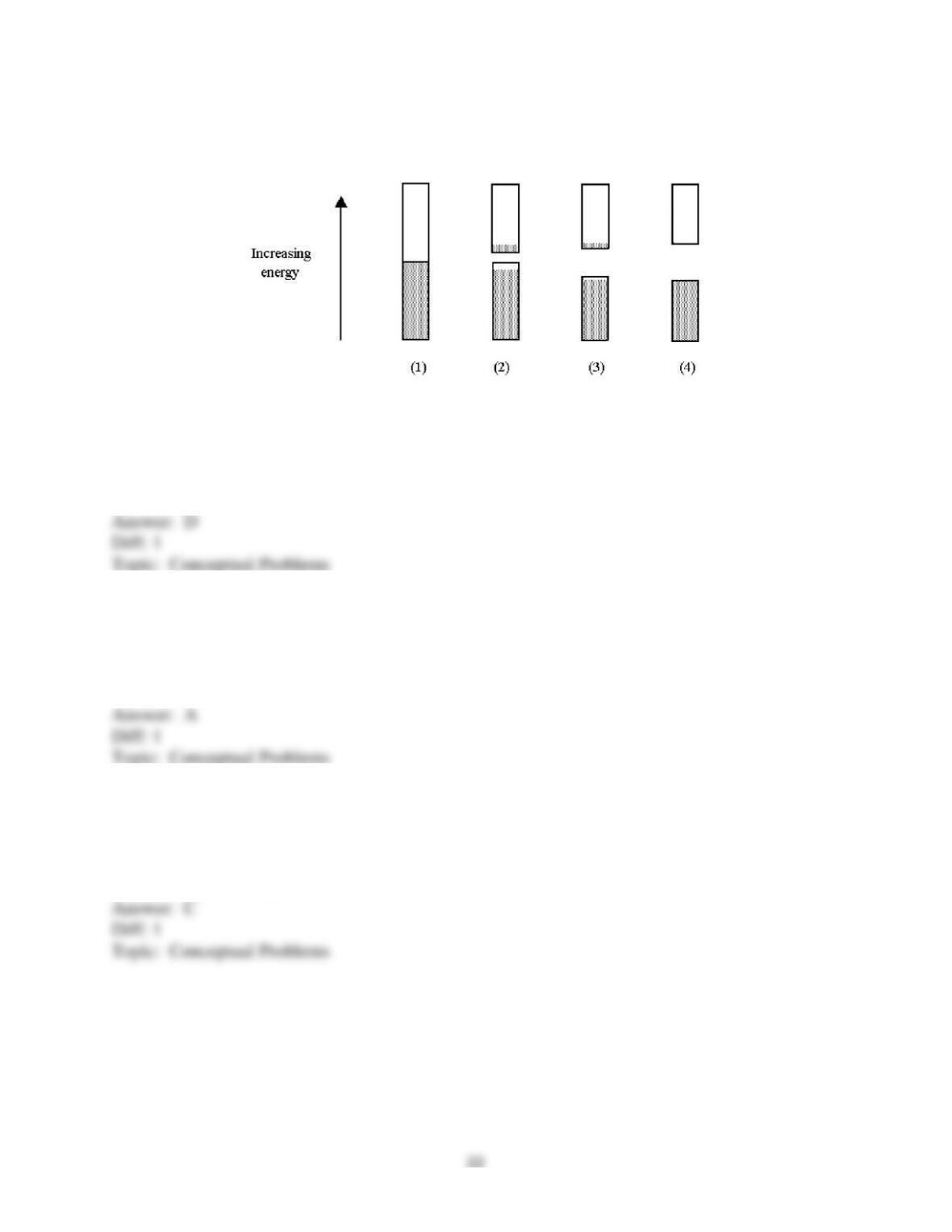
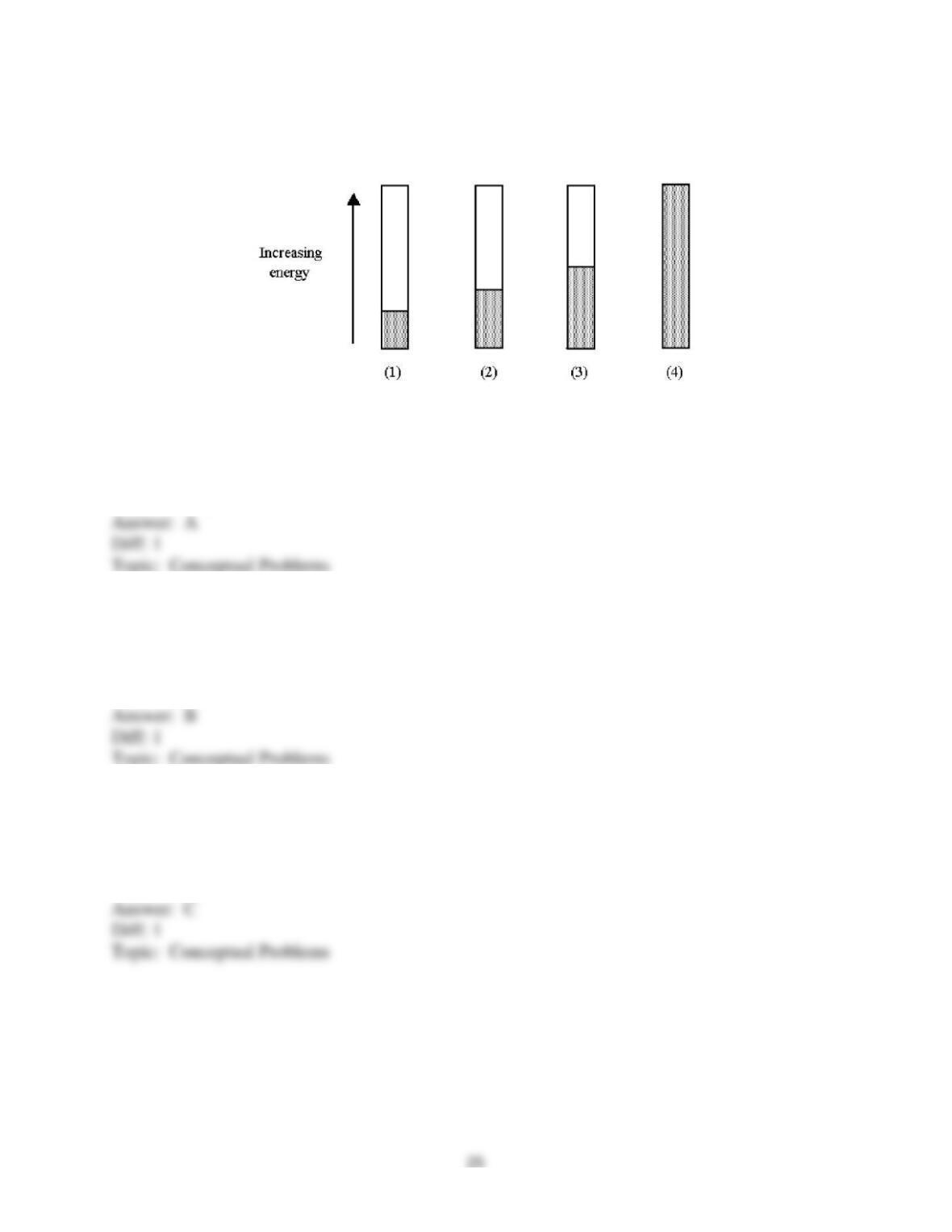
The following pictures show the electron population of the bands of MO energy levels for four
different materials.
93) Which of these materials is an insulator?
A) material (1)
B) material (2)
C) material (3)
D) material (4)
94) Which of these materials is a metal?
A) material (1)
B) material (2)
C) material (3)
D) material (4)
95) Which of these materials is a semiconductor?
A) materials (1) and (2)
B) materials (1) and (4)
C) materials (2) and (3)
D) materials (3) and (4)
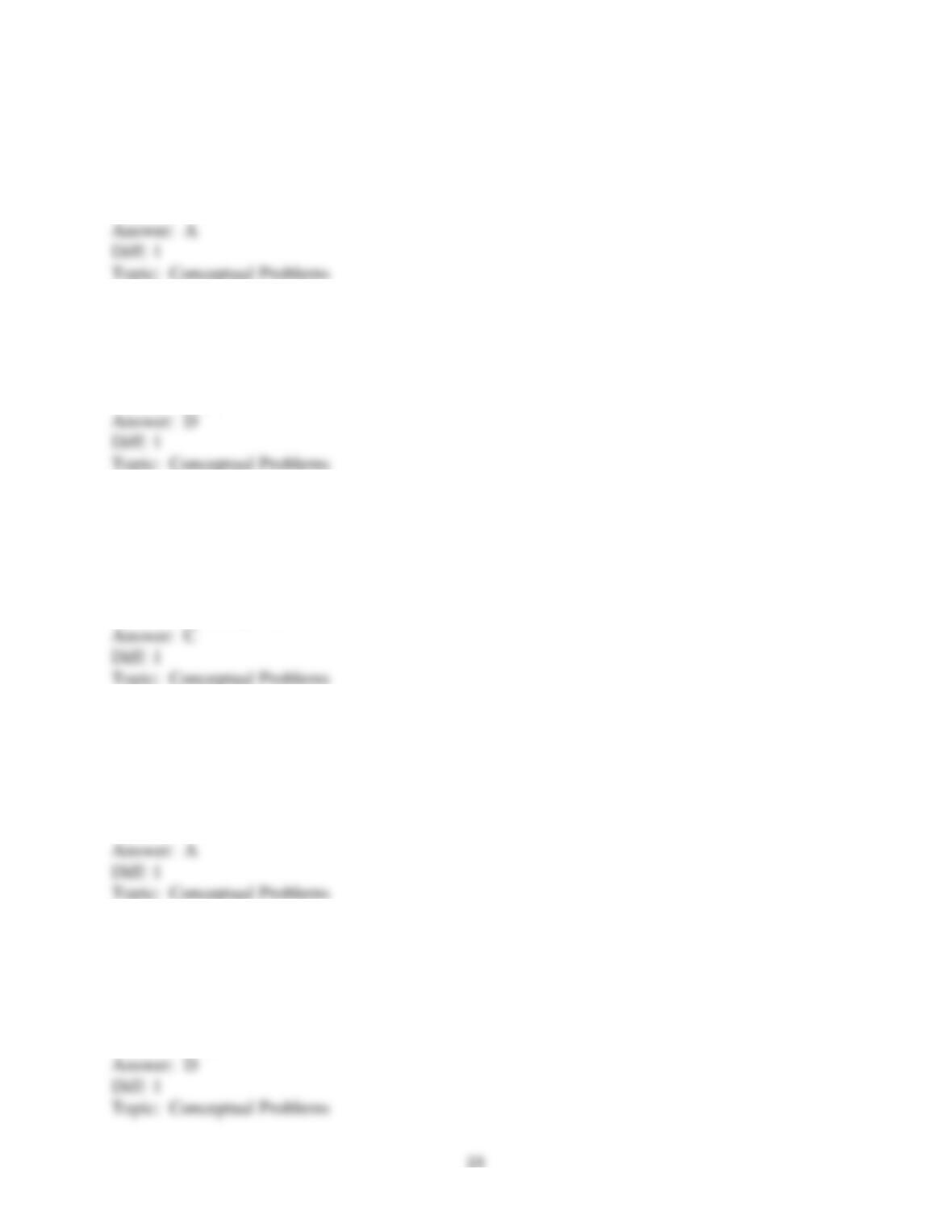
96) Which of these materials has the highest electrical conductivity?
A) material (1)
B) material (2)
C) material (3)
D) material (4)
97) Which of these materials has the lowest electrical conductivity?
A) material (1)
B) material (2)
C) material (3)
D) material (4)
98) Which of these materials has an electrical conductivity that increases with an increase in
temperature?
A) materials (1) and (2)
B) materials (1) and (4)
C) materials (2) and (3)
D) materials (3) and (4)
99) Which of these materials has an electrical conductivity that decreases with an increase in
temperature?
A) material (1)
B) material (2)
C) material (3)
D) material (4)
100) Which of these materials has an electrical conductivity that remains constant with an
increase in temperature?
A) material (1)
B) material (2)
C) material (3)
D) material (4)
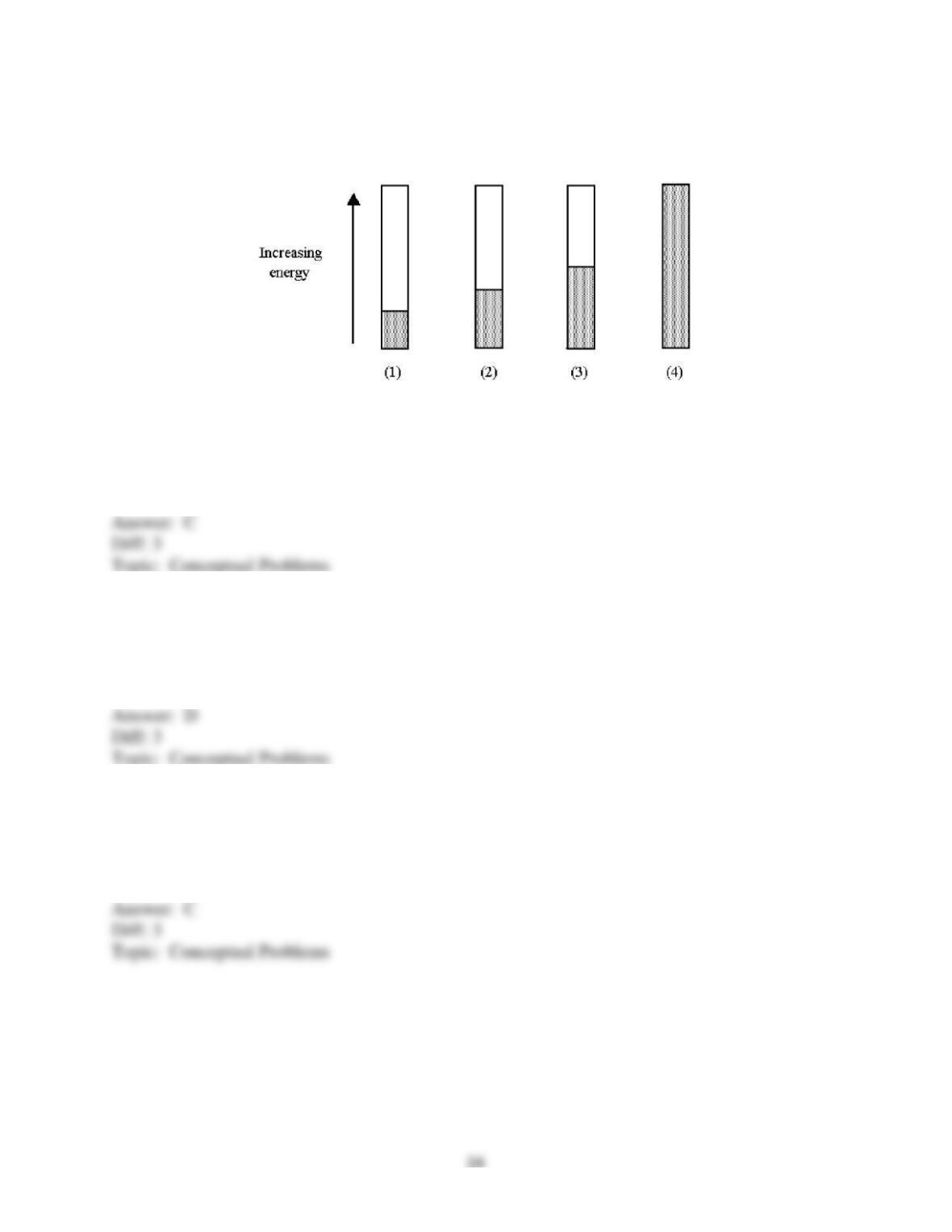
The following pictures show the electron populations of the composite s-d bands for four
different transition metals.
101) Which metal has the highest melting point?
A) metal (1)
B) metal (2)
C) metal (3)
D) metal (4)
102) Which metal has the lowest melting point?
A) metal (1)
B) metal (2)
C) metal (3)
D) metal (4)
103) Which is the hardest metal?
A) metal (1)
B) metal (2)
C) metal (3)
D) metal (4)
The following pictures show the electron populations of the composite s-d bands for Sc, Ti, V,
and Zn.
104) Which picture corresponds to Sc?
A) picture (1)
B) picture (2)
C) picture (3)
D) picture (4)
105) Which picture corresponds to Ti?
A) picture (1)
B) picture (2)
C) picture (3)
D) picture (4)
106) Which picture corresponds to V?
A) picture (1)
B) picture (2)
C) picture (3)
D) picture (4)
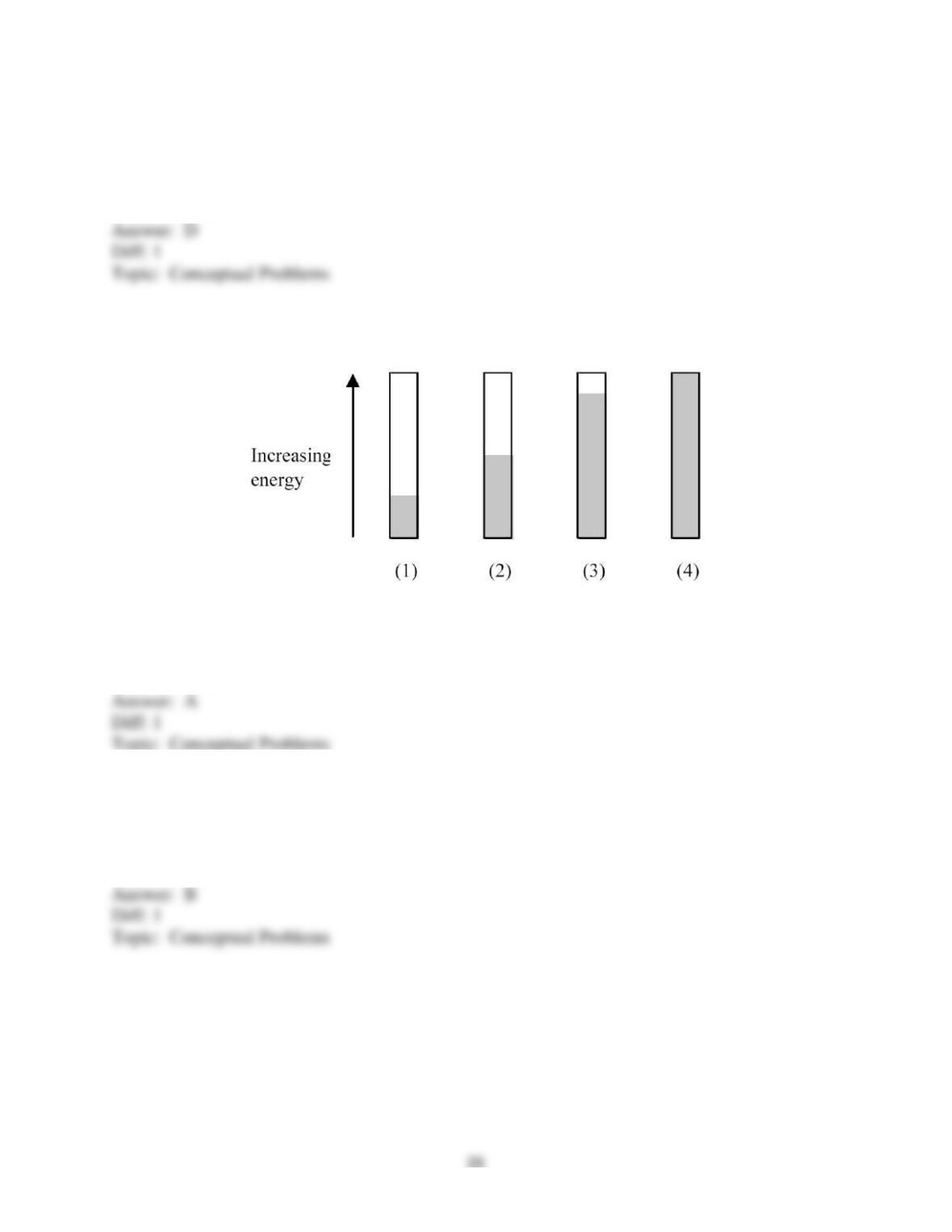
107) Which picture corresponds to Zn?
A) picture (1)
B) picture (2)
C) picture (3)
D) picture (4)
The following pictures show the electron populations of the composite s – d bands for Y, Mo,
Ag, and Cd.
108) Which picture corresponds to Y?
A) picture (1)
B) picture (2)
C) picture (3)
D) picture (4)
109) Which picture corresponds to Mo?
A) picture (1)
B) picture (2)
C) picture (3)
D) picture (4)
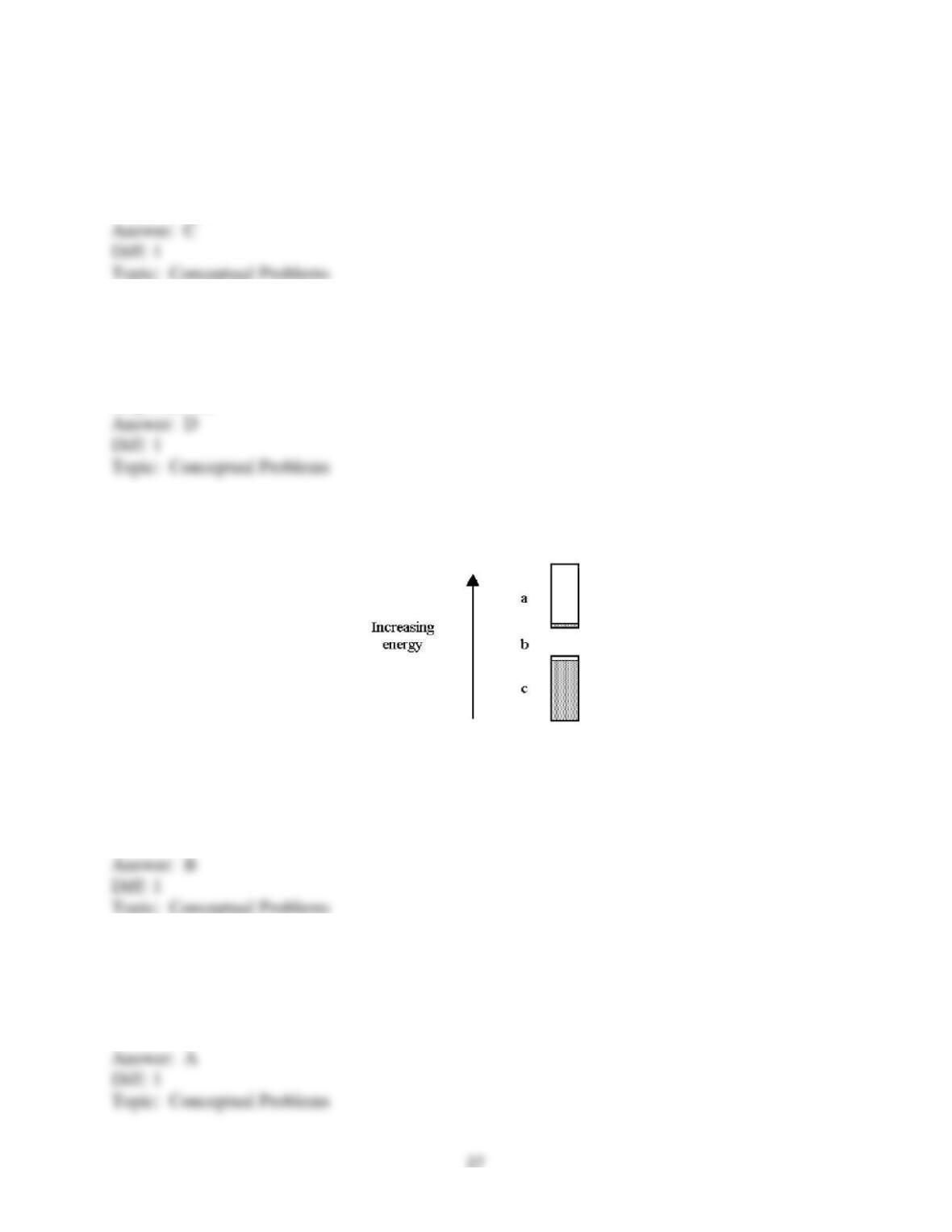
110) Which picture corresponds to Ag?
A) picture (1)
B) picture (2)
C) picture (3)
D) picture (4)
111) Which picture corresponds to Cd?
A) picture (1)
B) picture (2)
C) picture (3)
D) picture (4)
The following picture shows the electron populations of the bands of MO energy levels for
elementary silicon.
112) In this picture the band gap is given by letter(s)
A) a.
B) b.
C) c.
D) a and b.
113) In this picture the conduction band is given by letter(s)
A) a.
B) b.
C) c.
D) a and b.
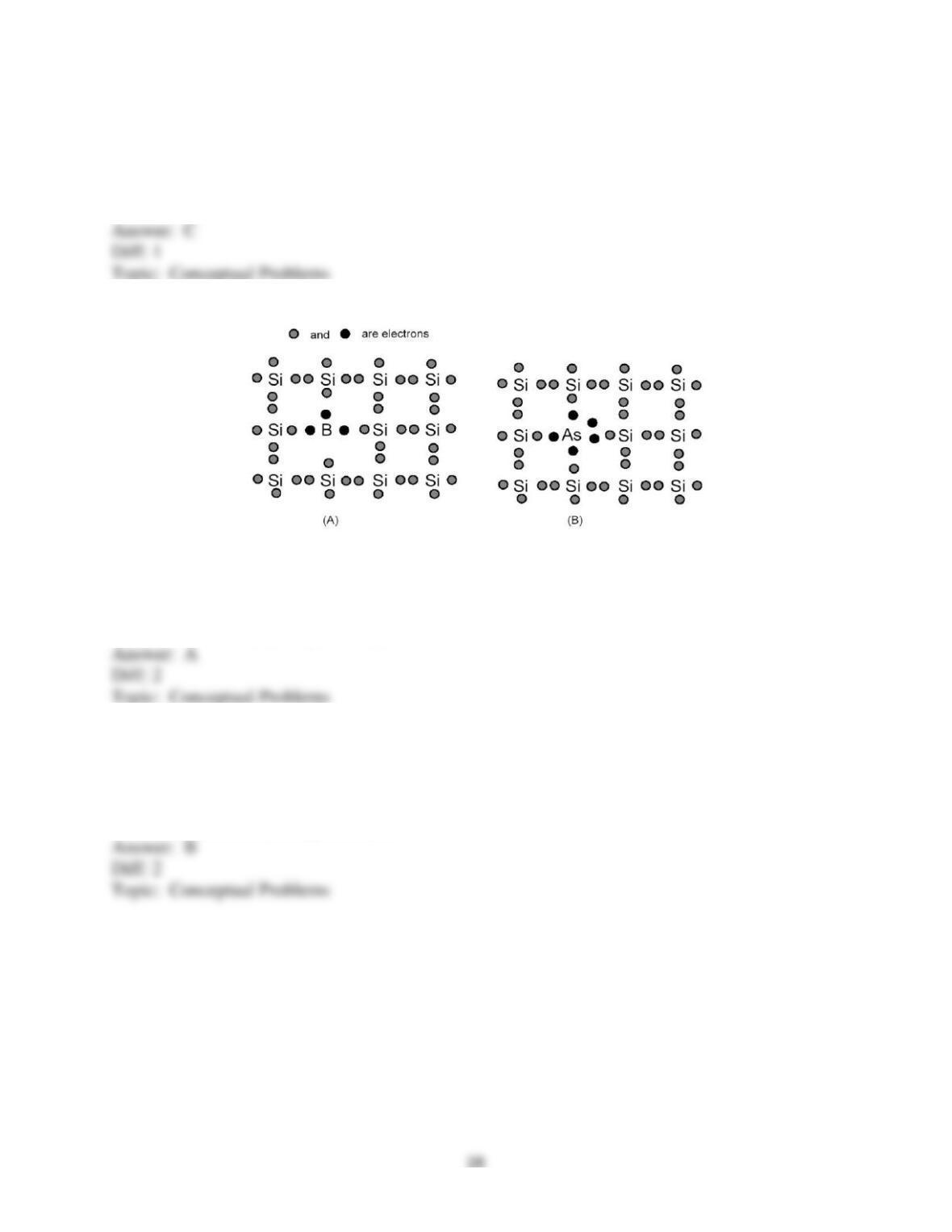
114) In this picture the valence band is given by letter(s)
A) a.
B) b.
C) c.
D) a and b.
115) Which picture represents a p-type Si semiconductor?
A) picture (A)
B) picture (B)
C) both picture (A) and picture (B)
D) neither picture (A) nor picture (B)
116) Which picture represents an n-type Si semiconductor?
A) picture (A)
B) picture (B)
C) both picture (A) and picture (B)
D) neither picture (A) nor picture (B)
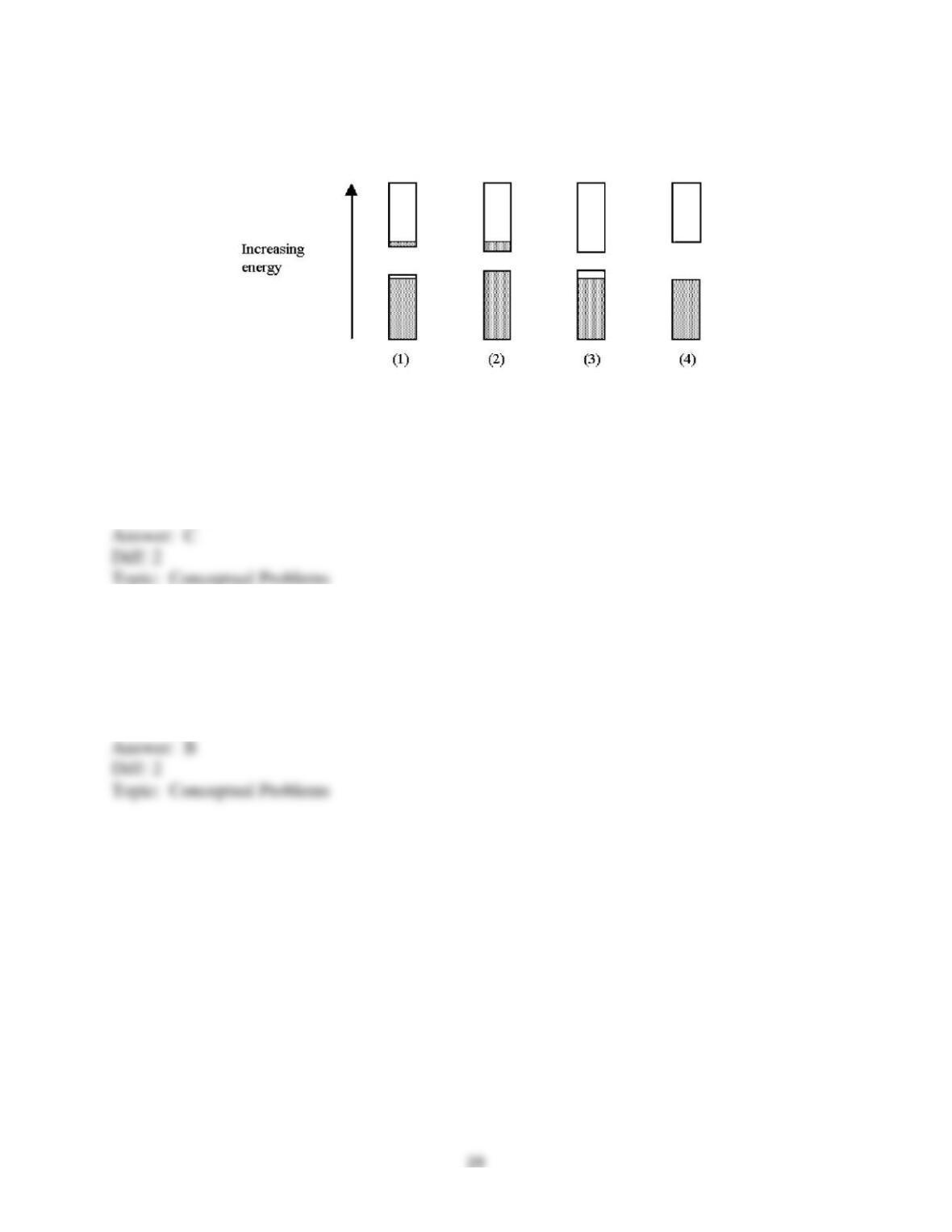
Picture (1) shows the electron populations of the bands of MO energy levels for elementary
silicon.
117) Which picture (1)-(4) shows the electron populations when the silicon is doped with
gallium?
A) picture (1)
B) picture (2)
C) picture (3)
D) picture (4)
118) Which picture (1)-(4) shows the electron populations when the silicon is doped with
arsenic?
A) picture (1)
B) picture (2)
C) picture (3)
D) picture (4)
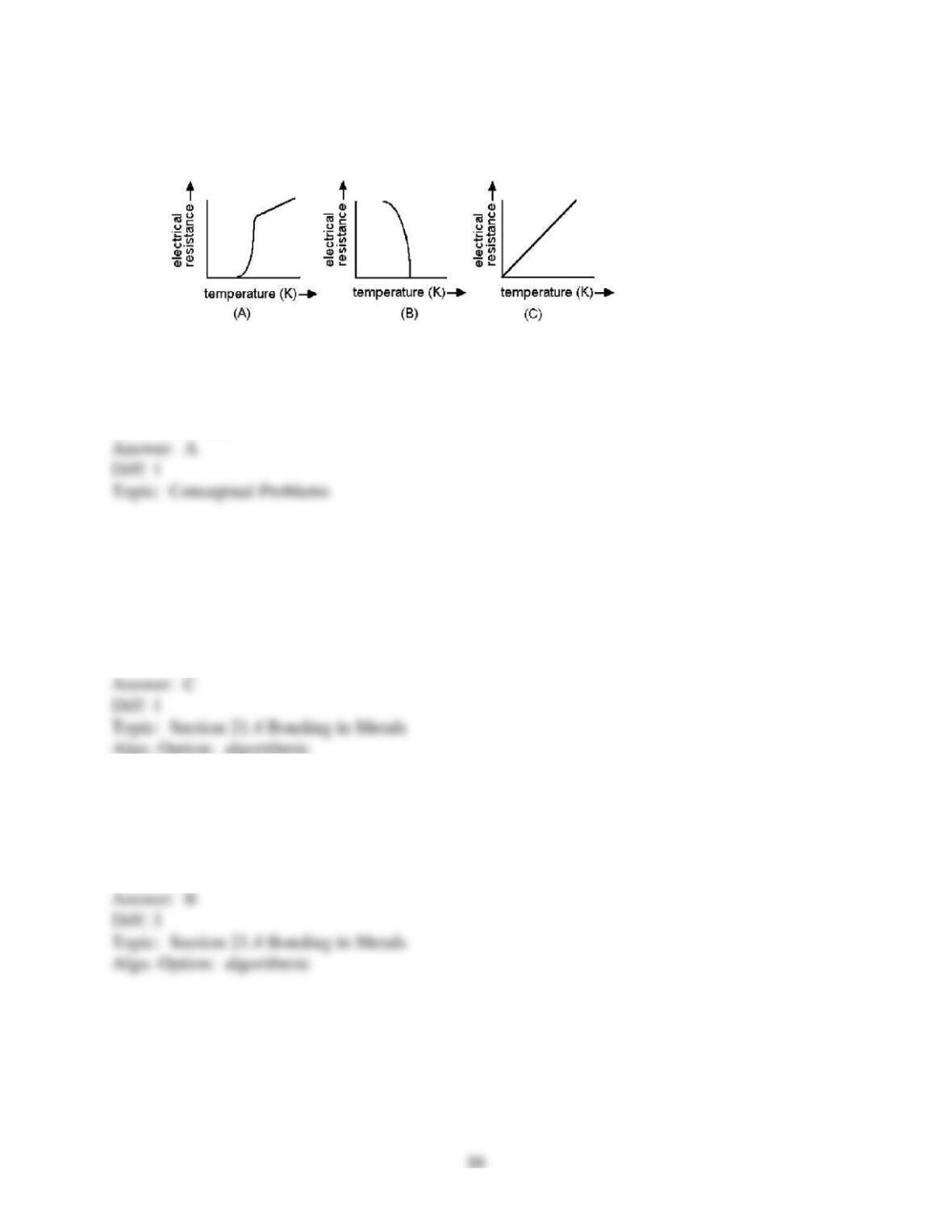
119) Which schematic best represents the electrical resistance versus temperature curve for a
superconductor?
A) A
B) B
C) C
D) none of these
21.2 Algorithmic Questions
1) Which substance is the best conductor of electricity?
A) arsenic
B) boron
C) silver
D) tellurium
2) Which one of the following metals is expected to have the highest melting point?
A) La
B) Nb
C) Hg
D) Pd
3) Which element has the smallest energy band gap?
A) B
B) I
C) K
D) S
4) Which one of the following is an electrical insulator?
A) phosphorus
B) platinum
C) potassium
D) ruthenium
21.3 Short Answer Questions
1) The principal source of chromium is chromite, FeCr2O4 in which chromium has an oxidation
state of ________ and iron has an oxidation state of ________.
2) The balanced chemical equation for the production of silver by roasting of its sulfide is
________.
3) During the production of iron, the formation of CaSiO3 (slag) from the reaction of CaO
(lime) and SiO2 (sand), shown below, facilitates the separation of the iron from the gangue.
CaO(s) + SiO2(s) → CaSiO3(l)
In this reaction the acidic oxide is ________ and the basic oxide is ________.
4) According to band theory, the element having all of its bonding molecular orbitals filled and
all of its antibonding orbitals empty in the 4s-3d composite band is ________.
5) Tin exists in two forms: gray tin and white tin. The electrical conductivity of gray tin
increases with an increase in temperature, whereas the electrical conductivity of white tin
decreases with an increase in temperature. The form of tin that is a semiconductor is ________
tin.
6) Light emitting diodes (LEDs) used in automobile brake lights illuminate 200 milliseconds
faster than conventional incandescent brake lights. The faster illumination gives the driver of a
trailing car an additional stopping distance of ________ feet at 55 mph.
7) The wavelength of light emitted by the GaP0.40As0.60 LED, which has a band gap of 181
kJ/mol, is ________ nm.
8) Nonoxide ceramics include silicon nitride, the formula of which is ________.
9) Composite materials can be classified as ceramic-ceramic, ceramic-metal, or ceramic-
polymer. Boron nitride/epoxy is classified as ________.
10) Because nanoparticles have a larger percentage of atoms on the surface of the nanoparticle
than on the surface of bulk material, nanoparticles have ________ melting points and ________
chemical reactivity than the bulk material.