Chapter 20: Accounting for Leases
Chapter 20: Accounting for Leases
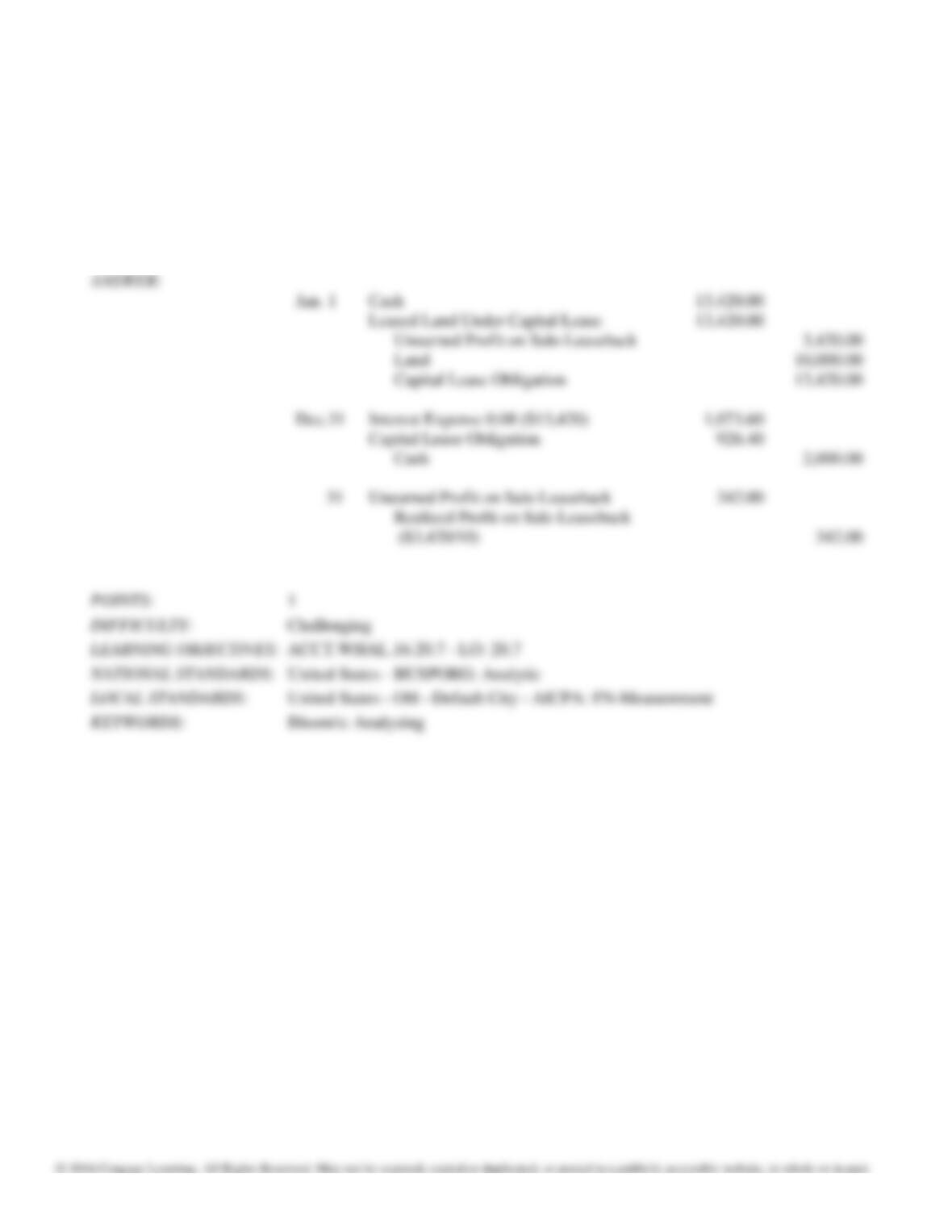
140. On January 1, 2016, Fiona sold some land to another company and immediately leased it back again. The sale price
was $13,420, and the leaseback requires $2,000 payments at the end of each of the next ten years. An interest rate of
8% was used. The cost of the land on Fiona’s books was $10,000. The title to the land will be transferred back to
Fiona at the end of the lease.
Required:
Prepare all 2016 journal entries on the books of Fiona.
Chapter 20: Accounting for Leases
141. Merchant Company found themselves in need of cash. In an effort to shore up their financial situation they sold land
to Natalie Company for $3.5 million and immediately leased it back.
1) The land was recorded on Merchant’s book at $1.5 million
2) The term of the noncancelable lease is 20 years.
3) The lease agreement requires equal rental payments of $439,518 at the end of each year.
4) The incremental borrowing rate of Merchant’s is 12% but the annual rental rate of 11% was
set by Natalie, and Merchant is aware of the rate.
5) Merchant pays all executory costs which amount to $11,500 per year which includes taxes
and insurance.
6) There are no important uncertainties surrounding the amount of unreimbursable costs yet to
be incurred by the lessor, and the collectability is reasonably assured.
7) The land’s fair value is $3.5 million.
8) Natalie provided Merchant with the option to purchase the land at the end of the 20 years for
$1,000.
Required:
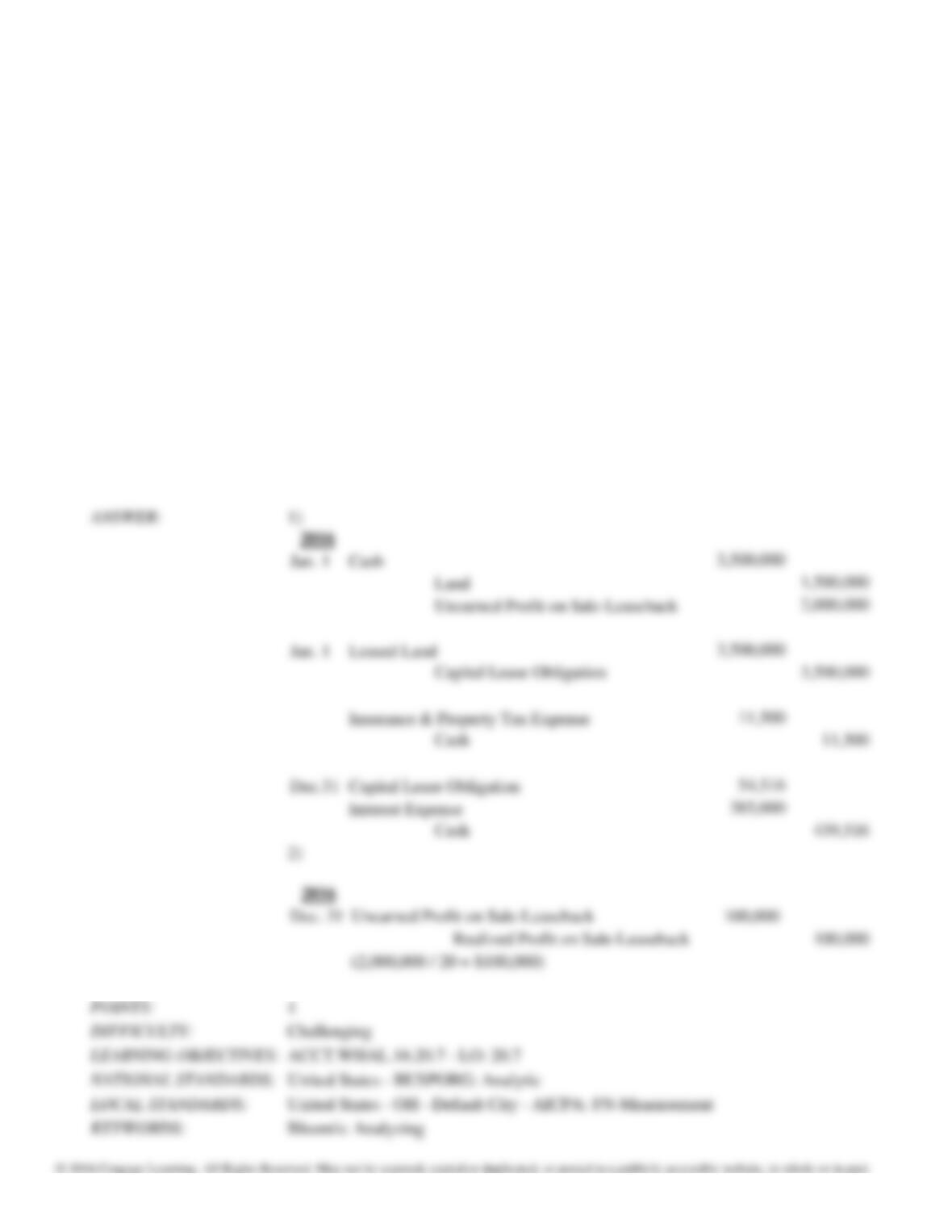
1) Prepare the seller-lessee journal entries for Merchant, for the 2016 sale and leaseback agreement. (Ignore the
bargain purchase option because it is immaterial)
2) Prepare any journal entry that Merchant should make related to the gain at the end of 2016.
1
Challenging
ACCT.WHAL.16.20.7 – LO: 20.7
United States – BUSPORG: Analytic
United States – OH – Default City – AICPA: FN-Measurement
Chapter 20: Accounting for Leases
142. Merchant Company found themselves in need of cash. In an effort to shore up their financial situation they sold land
to Natalie Company for $3.5 million and immediately leased it back.
1) The land was recorded on Merchant’s book at $1.5 million
2) The term of the noncancelable lease is 20 years.
3) The lease agreement requires equal rental payments of $439,516 at the end of each year.
4) The incremental borrowing rate of Merchant’s is 12% but the annual rental rate of 11% was
set by Natalie, and Merchant is aware of the rate.
5) Merchant pays all executory costs which amount to $11,500 per year which includes taxes
and insurance.
6) There are no important uncertainties surrounding the amount of unreimbursable costs yet to
be incurred by the lessor, and the collectability is reasonably assured.
7) The land’s fair value is $3.5 million.
8) Natalie provided Merchant with the option to purchase the land at the end of the 20 years for
$1,000.
Required:
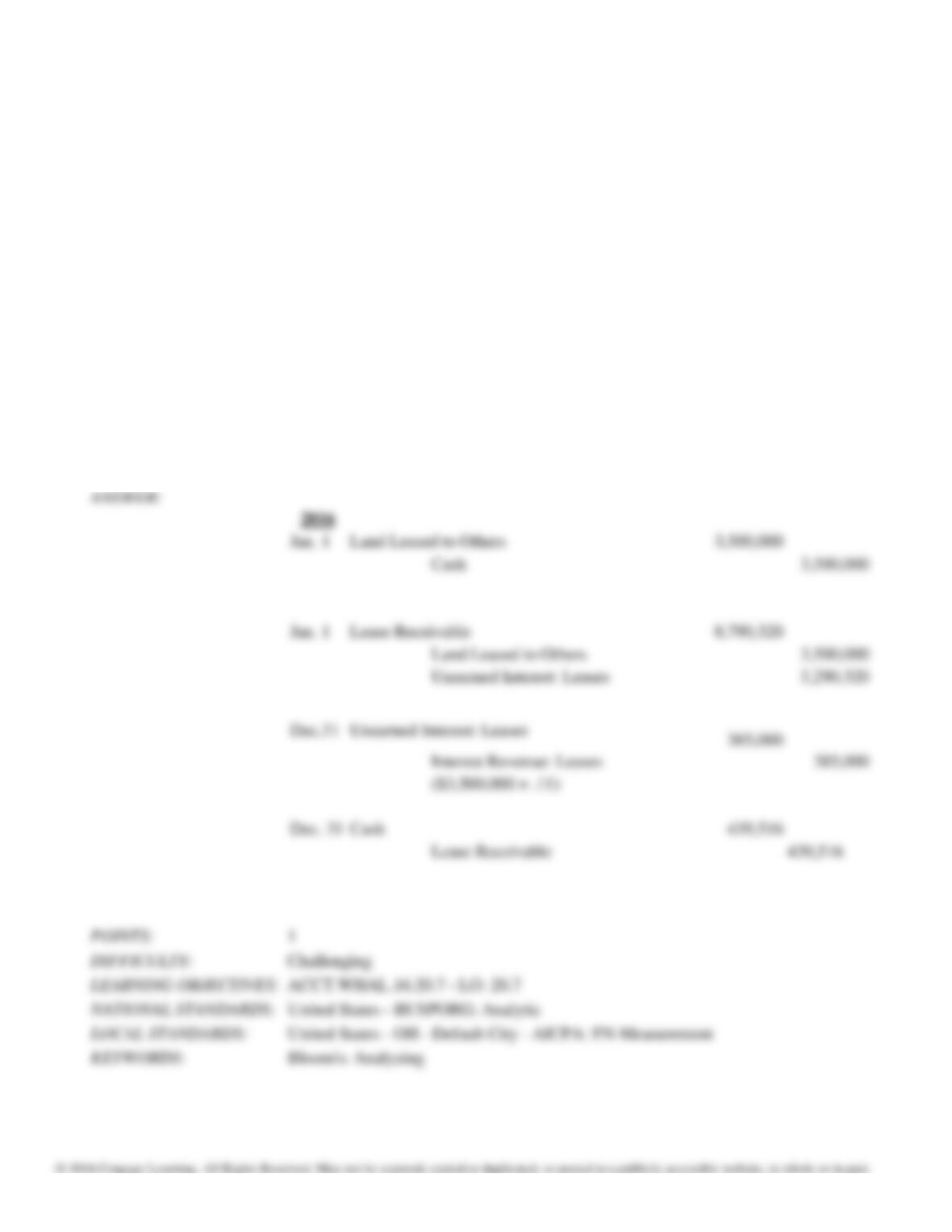
1) Prepare the purchaser-lessor journal entries for Natalie, for the 2016 sale and leaseback agreement. (Consider the
amount of the bargain purchase option to be immaterial)
1
Challenging
ACCT.WHAL.16.20.7 – LO: 20.7
United States – BUSPORG: Analytic
United States – OH – Default City – AICPA: FN-Measurement
Bloom’s: Analyzing
Chapter 20: Accounting for Leases
143. What are the four capitalization criteria evaluated to determine whether to record a lease as operating or capital
lease?
144. What items are included in the determination of minimum lease payment?
Chapter 20: Accounting for Leases
145. What are the five capitalization criteria under IFRS?
146. Under what four conditions can a lease be cancelable?
Chapter 20: Accounting for Leases
147. How is the present value of the minimum lease payment computed?
148. What are the disclosure requirements for lessee’s of operating leases and what two disclosures are required for all
leases?
149. In what three classifications can lessors categorize their leases?
Chapter 20: Accounting for Leases
150. What are the two components of net receivables for leases?
151. What are the disclosure requirements of direct financing and sales-type leases?
152. What three criteria must be met for the lessor to account for the lease of land as a sales-type lease?
Chapter 20: Accounting for Leases
153. Current GAAP requires a lessee to account for certain leases as capital leases.
Required:
What are the criteria and the rationale for requiring companies to account for leases as capital leases?
Chapter 20: Accounting for Leases
154. Lessees may classify a lease as one of two types: (1) capital lease, or (2) operating lease. Current GAAP provides the
criteria for determining which classification is appropriate.
Required:
Identify the criteria that a lessee uses to classify leases as either capital or operating leases.
155. In certain respects, IFRS provide more principles-based guidance in accounting for lease transactions. Describe the
differences between IFRS and GAAP in lease capitalization criteria that demonstrate the more principles-based
approach of the IFRS.
Chapter 20: Accounting for Leases
156. Lessees may try to avoid having a lease be classified as a capital lease. Explain why a lessee might want to avoid a
capital lease.
Chapter 20: Accounting for Leases
157. The Kimberly Equipment Company has had a flat pattern of sales revenue for the past five years. A consultant for the
company has stated that the company could experience an estimated 25% sales revenue growth if it permitted
customers to lease equipment in addition to its normal sales procedures.
Required:
a.
Describe the accounting procedures that should be used by the Kimberly Equipment
Company if the lease agreements were classified as “sales-type” leases.
b.
Customer receives 100% financing from the lessor, so no down payment is
1
United States – BUSPROG: Communication
Bloom’s: Evaluating
List two reasons why sales might increase if customers are permitted to lease the
equipment.