56. Garner Industries increased the size of inventory order quantities above the quantity determined by EOQ.
What is the impact on total annual carrying costs?
57. Exhibit 20-4
The Hanover Catalog Company has the following information available concerning one of its inventory items:
Cost of placing an order
$500.00
Unit carrying cost per year
$ 4.00
Annual quantity demanded
100,000
Safety stock
750
Average daily demand
380
Lead time in days
6
Refer to Exhibit 20-4. The EOQ for this inventory item is:
58. Exhibit 20-4
The Hanover Catalog Company has the following information available concerning one of its inventory items:
Cost of placing an order
$500.00
Unit carrying cost per year
$ 4.00
Annual quantity demanded
100,000
Safety stock
750
Average daily demand
380
Lead time in days
6
Refer to Exhibit 20-4. The reorder point with safety stock for this inventory item is:
59. Exhibit 20-4
The Hanover Catalog Company has the following information available concerning one of its inventory items:
Cost of placing an order
$500.00
Unit carrying cost per year
$ 4.00
Annual quantity demanded
100,000
Safety stock
750
Average daily demand
380
Lead time in days
6
Refer to Exhibit 20-4. If there is a delay in shipping the item, approximately how many days can be covered by the safety stock?
60. Creasly Company has an economic order quantity of 300 units for item B of inventory. The annual demand
for the product is 5,625 units, and the unit carrying cost is $4.00. What is the cost of placing an order?
61. Swanson Supplies has an economic order quantity of 100 units for item X of inventory. The annual demand
for the product is 1,400 units and the cost to place an order is $25. What is the unit carrying cost?
62. Which inventory costing method assigns fixed production costs to inventory so as to report the full cost of
creating inventory?
63. Which inventory costing method creates an incentive to build up excess inventory?
64. Which inventory costing method calculates contribution margin instead of gross margin?
65. Which inventory costing method calculates operating income?
66. Which inventory costing method expenses all selling and administrative expenses to the income statement in
the period in which these costs occurred?
67. What is the main difference between an absorption costing system and a variable costing system?
68. Which of the following is true regarding the variable inventory costing method?
69. Which inventory costing method is required by GAAP?
70. Which inventory costing method allows net income to be manipulated by changing production levels?
71. Which of the following is the income statement formula for the absorption costing method?
72. Which of the following is the income statement formula for the variable costing method?
73. Exhibit 20-5
Barron Company manufactured 150,000 units during the year but only sold 130,000 of these units. At the
beginning of the year, Barron had no beginning finished goods inventory. The following unit costs were
incurred during the year:
Variable manufacturing cost
$3.00
Variable selling cost
$0.50
Fixed manufacturing cost
$4.00
Fixed selling cost ($300,000 total)
$2.00
Refer to Exhibit 20-5. Using absorption costing, what is the value of Barron’s finished goods inventory at the end of the year?
74. Exhibit 20-5
Barron Company manufactured 150,000 units during the year but only sold 130,000 of these units. At the
beginning of the year, Barron had no beginning finished goods inventory. The following unit costs were
incurred during the year:
Variable manufacturing cost
$3.00
Variable selling cost
$0.50
Fixed manufacturing cost
$4.00
Fixed selling cost ($300,000 total)
$2.00
Refer to Exhibit 20-5. Using variable costing, what is the value of Barron’s finished goods inventory at the end of the year?
75. Exhibit 20-5
Barron Company manufactured 150,000 units during the year but only sold 130,000 of these units. At the
beginning of the year, Barron had no beginning finished goods inventory. The following unit costs were
incurred during the year:
Variable manufacturing cost
$3.00
Variable selling cost
$0.50
Fixed manufacturing cost
$4.00
Fixed selling cost ($300,000 total)
$2.00
Refer to Exhibit 20-5. If Barron Company sold each unit for $13, what is Barron’s net income for the year using absorption costing?
76. Exhibit 20-5
Barron Company manufactured 150,000 units during the year but only sold 130,000 of these units. At the
beginning of the year, Barron had no beginning finished goods inventory. The following unit costs were
incurred during the year:
Variable manufacturing cost
$3.00
Variable selling cost
$0.50
Fixed manufacturing cost
$4.00
Fixed selling cost ($300,000 total)
$2.00
Refer to Exhibit 20-5. If Barron Company sold each unit for $13, what is Barron’s net income for the year using variable costing?
77. Exhibit 20-6
Vilas Company manufactured 80,000 units during July but only sold 65,000 of these units at a price of $20
each. At the beginning of the month, Vilas had 5,000 units in finished goods inventory. The following unit costs
are known for June and July:
June
July
Variable manufacturing cost
$6
$6
Variable selling cost
$1
$1
Fixed manufacturing cost
$8
$6
Fixed selling cost ($240,000 total)
$3
$3
Vilas Company uses the first-in first-out (FIFO) method.
Refer to Exhibit 20-6. What is net income for July using the absorption costing method?
78. Exhibit 20-6
Vilas Company manufactured 80,000 units during July but only sold 65,000 of these units at a price of $20
each. At the beginning of the month, Vilas had 5,000 units in finished goods inventory. The following unit costs
are known for June and July:
June
July
Variable manufacturing cost
$6
$6
Variable selling cost
$1
$1
Fixed manufacturing cost
$8
$6
Fixed selling cost ($240,000 total)
$3
$3
Vilas Company uses the first-in first-out (FIFO) method.
Refer to Exhibit 20-6. What is net income for July using the variable costing method?
79. Last year, Racine Company’s income under absorption costing was $15,000 lower than its income under
variable costing. The company had total production costs of $24 per unit, of which $14 was variable costs. No
selling expenses were incurred this year. Racine sold 25,000 units during the year. How many units were
produced during the year?
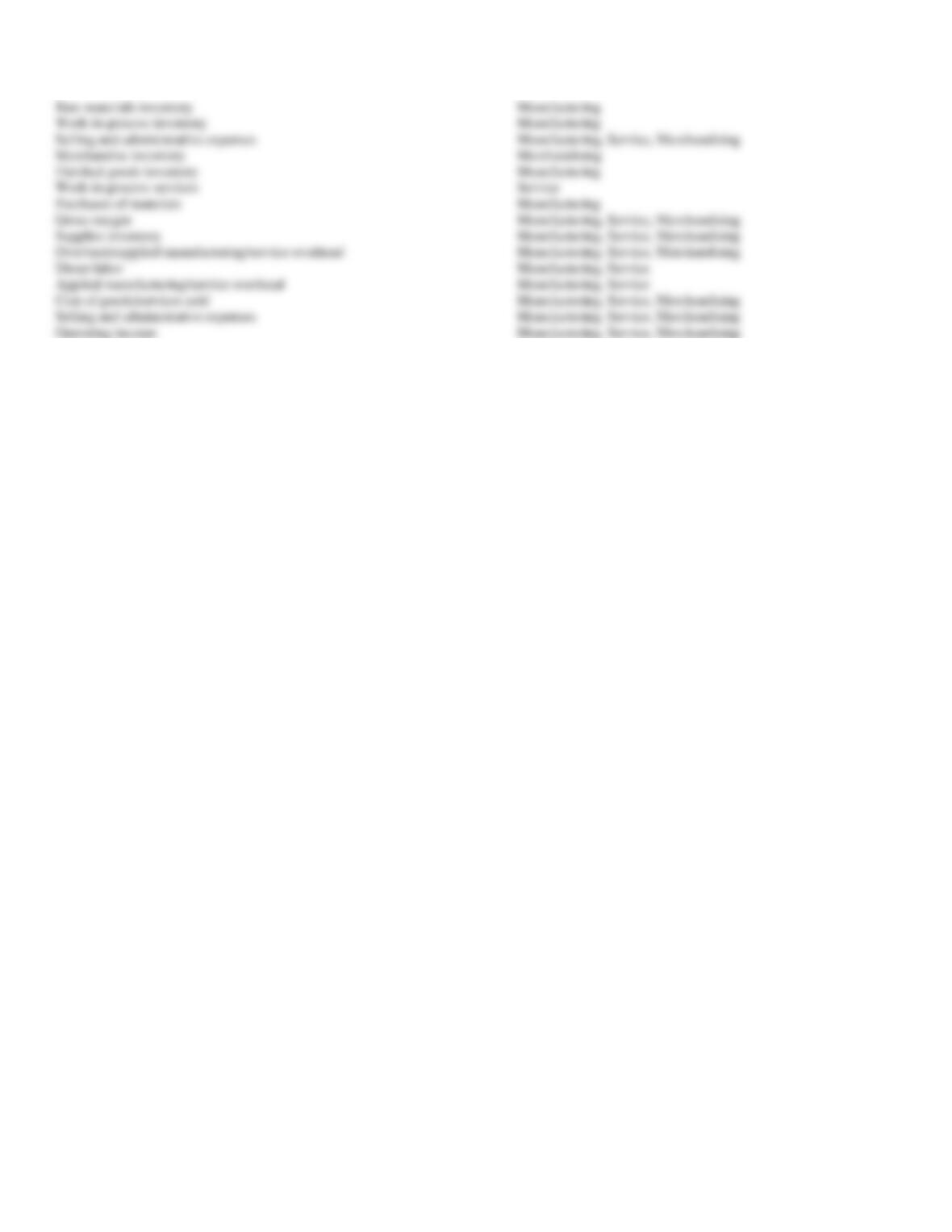
80. Complete the following table by listing the types of firms (manufacturing, service, or merchandising) that
would use each balance sheet or income statement item.
Raw materials inventory
Work-in-process inventory
Selling and administrative expenses
Merchandise inventory
Finished goods inventory
Work-in-process services
Purchases of materials
Gross margin
Supplies inventory
Over/underapplied manufacturing/service overhead
Direct labor
Applied manufacturing/service overhead
Cost of goods/services sold
Selling and administrative expenses
Operating income
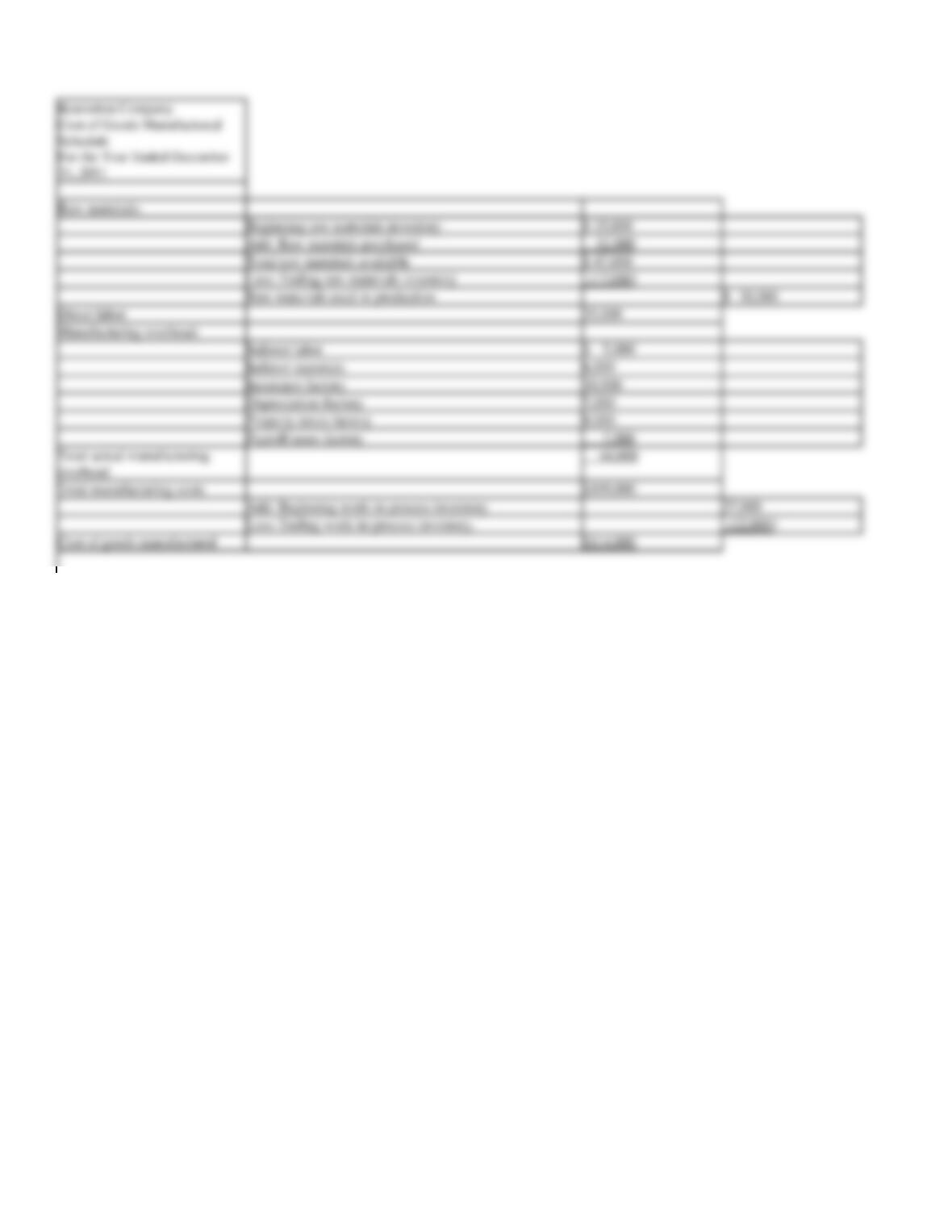
81. Use the following information to prepare a cost of goods manufactured schedule for Beaverton Company
for the year ended December 31, 2011:
Ending raw materials inventory
$17,000
Ending work-in-process inventory
22,000
Depreciation-factory
7,000
Direct labor
35,000
Indirect labor
5,000
Indirect materials
6,000
Insurance-factory
10,000
Beginning work-in-process inventory
27,000
Beginning raw materials inventory
15,000
Payroll taxes-factory
7,000
Property taxes-factory
9,000
Raw materials purchased
32,000
Raw materials inventory
Manufacturing
Selling and administrative expenses
Manufacturing, Service, Merchandising
Merchandise inventory
Merchandising
Finished goods inventory
Manufacturing
Service
Purchases of materials
Manufacturing
Gross margin
Manufacturing, Service, Merchandising
Supplies inventory
Manufacturing, Service, Merchandising
Over/underapplied manufacturing/service overhead
Manufacturing, Service, Merchandising
Direct labor
Manufacturing, Service
Applied manufacturing/service overhead
Manufacturing, Service
Cost of goods/services sold
Manufacturing, Service, Merchandising
Selling and administrative expenses
Manufacturing, Service, Merchandising
Operating income
Manufacturing, Service, Merchandising
82. The following end of year information is given for Ashland Company:
Raw materials used during the year
$1,150,000
Beginning raw materials inventory
112,000
Ending raw materials inventory
120,000
Applied manufacturing overhead
2,400,000
Direct labor costs
900,000
Beginning work-in-process inventory
400,000
Ending work-in-process inventory
360,000
Cost of goods sold
3,200,000
Beginning finished goods inventory
500,000
Ending finished goods inventory
440,000
Calculate the following items (assume a 365-day year):
a.
Raw materials inventory turnover.
b.
Number of days in raw materials inventory.
c.
Work-in-process inventory turnover.
d.
Number of days in work-in-process inventory.
e.
Finished goods inventory turnover.
f.
Number of days in finished goods inventory.
Raw materials:
Beginning raw materials inventory
$ 15,000
Add: Raw materials purchased
32,000
Total raw materials available
$ 47,000
Less: Ending raw materials inventory
(17,000)
Raw materials used in production
$ 30,000
Direct labor
35,000
Manufacturing overhead:
Indirect labor
$ 5,000
Indirect materials
6,000
Depreciation-factory
7,000
Property taxes-factory
9,000
Payroll taxes-factory
7,000
Total manufacturing costs
$109,000
Add: Beginning work-in-process inventory
27,000
Less: Ending work-in-process inventory.
(22,000)
Cost of goods manufactured
$114,000
83. Workman Industries had the following financial information for the years 2011 and 2012:
2012
2011
Revenues
$460,000
$420,000
Cost of goods sold
270,000
225,000
Gross margin
$190,000
$195,000
Inventories
$110,000
$130,000
84. Fiesta and Sierra both operate catalog sales firms. The following information is available for 2011 and 2012:
Fiesta
Sierra
Gross Margin:
2011
$175,000
$350,000
2012
150,000
380,000
Inventory:
December 31, 2011
$ 70,000
$280,000
December 31, 2012
60,000
300,000
a.
Calculate each company’s ROI in inventory for 2012.
b.
Which company manages inventory better? Explain your answer.
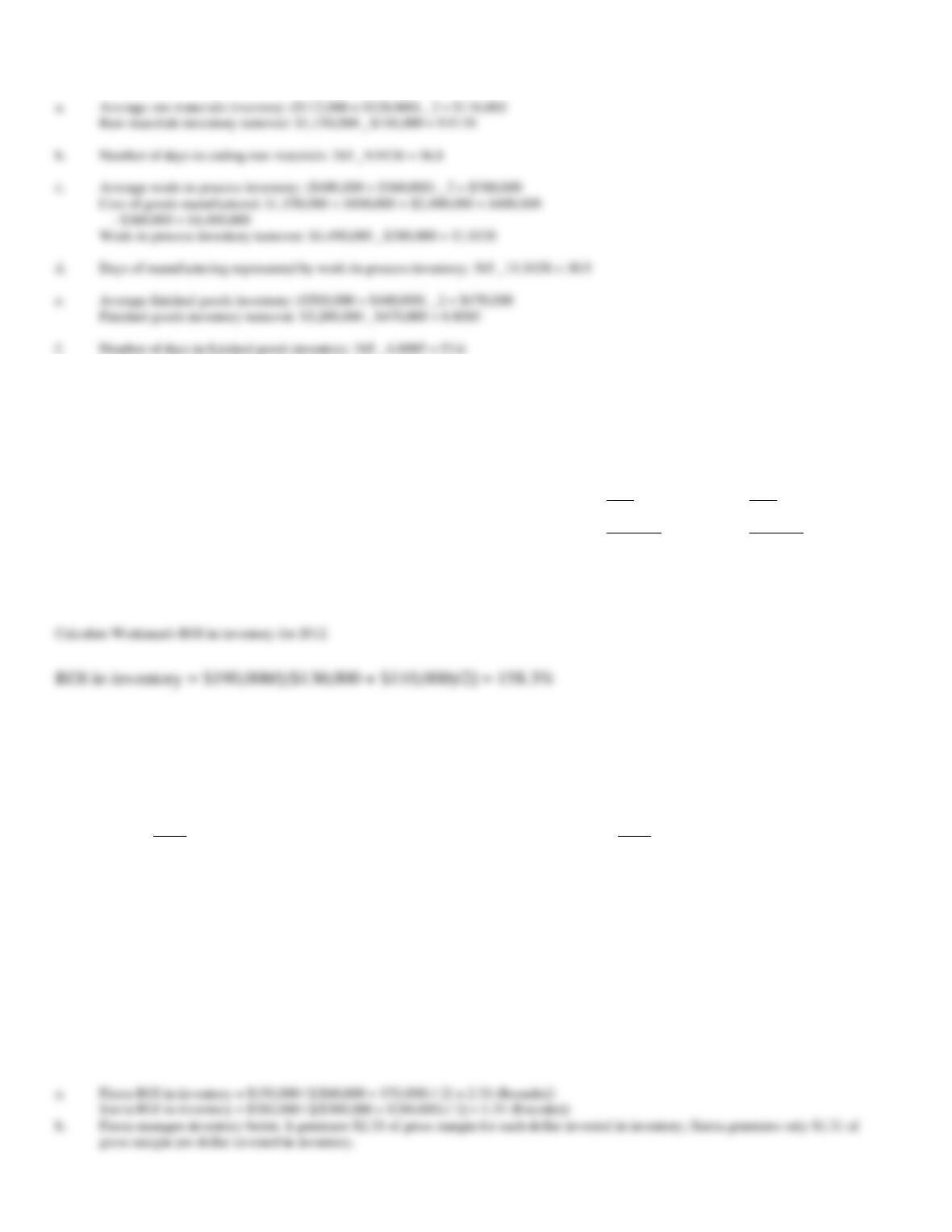
a.
Fiesta ROI in inventory = $150,000 / [($60,000 + $70,000) / 2] = 2.31 (Rounded)
a.
Average raw materials inventory: ($112,000 + $120,000) ¸ 2 = $116,000
b.
Number of days in ending raw materials: 365 ¸ 9.9138 = 36.8
c.
Average work-in-process inventory: ($400,000 + $360,000) ¸ 2 = $380,000
Cost of goods manufactured: $1,150,000 + $900,000 + $2,400,000 + $400,000
– $360,000 = $4,490,000
Days of manufacturing represented by work-in-process inventory: 365 ¸ 11.8158 = 30.9
e.
Average finished goods inventory: ($500,000 + $440,000) ¸ 2 = $470,000
Finished goods inventory turnover: $3,200,000 ¸ $470,000 = 6.8085
Number of days in finished goods inventory: 365 ¸ 6.8085 = 53.6
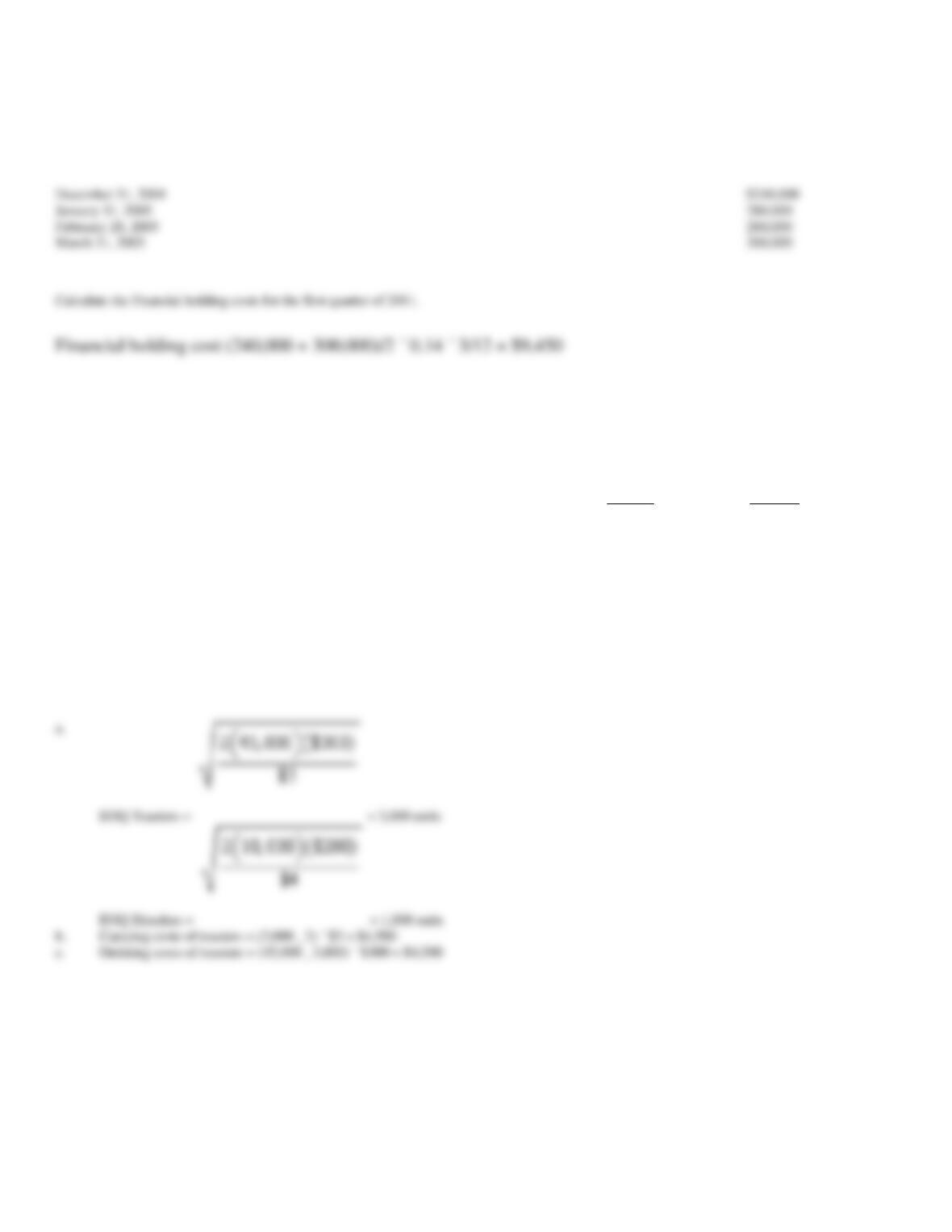
85. During the first quarter of 2011, Dewey Company had an annual rate of 14%. The inventory balances during
the quarter were:
86. Mosten’s Retail Outlet collected the following information regarding two of its inventory items:
Toasters
Blenders
Annual demand
45,000
10,000
Cost per unit
$ 12
$ 14
Annual carrying cost per unit
$ 3
$ 4
Ordering cost
$300
$200
a.
Calculate the economic order quantity (EOQ) for toasters and blenders.
b.
Calculate the total carrying costs for toasters.
c.
Calculate the total ordering costs for toasters.
EOQ Toasters = = 3,000 units
EOQ Blenders = = 1,000 units
b.
Carrying costs of toasters = (3,000 ¸ 2) ´ $3 = $4,500
c.
Ordering costs of toasters = (45,000 ¸ 3,000) ´ $300 = $4,500
December 31, 2004
$240,000
January 31, 2005
280,000
February 28, 2005
260,000
March 31, 2005
300,000
87. Abernathy Imports determined that its most popular product has average daily sales of 200 units and
maximum daily sales of 240 units. The lead time for this product is 5 days. Abernathy buys this product for $56
and sells it to customers for $99.
a.
If Abernathy carries no safety stock, calculate the reorder point for this product.
b.
If Abernathy carries safety stock, calculate the reorder point for this product.
88. Franklin Company manufactures picture frames. The following information is available for 2011:
Sales volume (in units)
150,000
Production volume (in units)
200,000
Total fixed selling and administrative expenses
$200,000
Variable selling expenses per unit
$ 1.50
Total fixed production costs
$650,000
Variable production cost per unit
$ 6.20
Beginning inventory
$ 0
Sales price per unit
$ 15
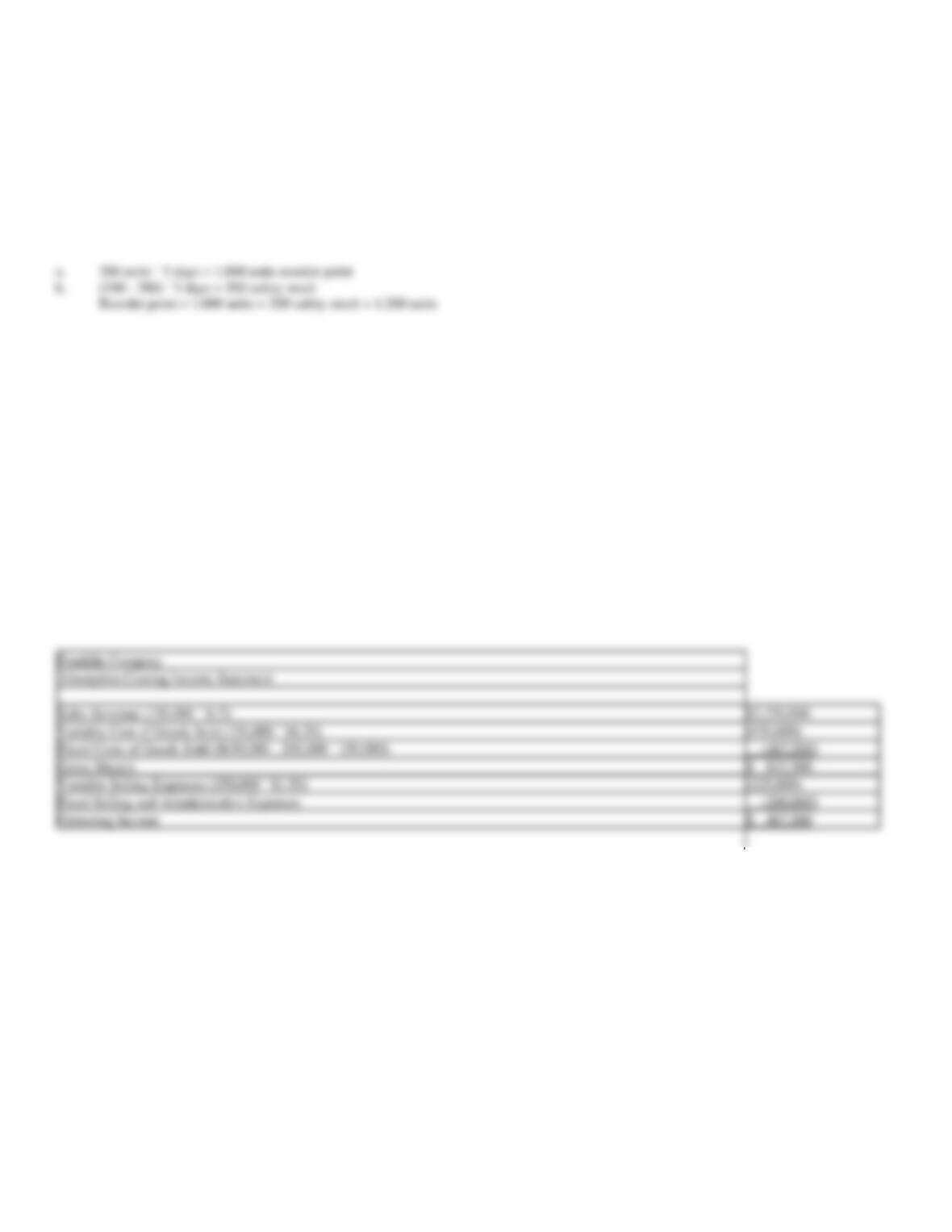
Create an income statement for Franklin Company using the absorption costing method.
Franklin Company
Absorption Costing Income Statement
Sales Revenue (150,000 ´ $15)
$2,250,000
Variable Cost of Goods Sold (150,000 ´ $6.20)
(930,000)
Fixed Costs of Goods Sold ($650,000 ¸ 200,000 ´ 150,000)
(487,500)
Gross Margin
$ 832,500
Variable Selling Expenses (150,000 ´ $1.50)
(225,000)
Fixed Selling and Administrative Expenses
(200,000)
Operating Income
$ 407,500
89. Franklin Company manufactures picture frames. The following information is available for 2011:
Sales volume (in units)
150,000
Production volume (in units)
200,000
Total fixed selling and administrative expenses
$200,000
Variable selling expenses per unit
$ 1.50
Total fixed production costs
$650,000
Variable production cost per unit
$ 6.20
Beginning inventory
$ 0
Sales price per unit
$ 15
200 units ´ 5 days = 1,000 units reorder point
b.
(240 – 200) ´ 5 days = 200 safety stock
Reorder point = 1,000 units + 200 safety stock = 1,200 units
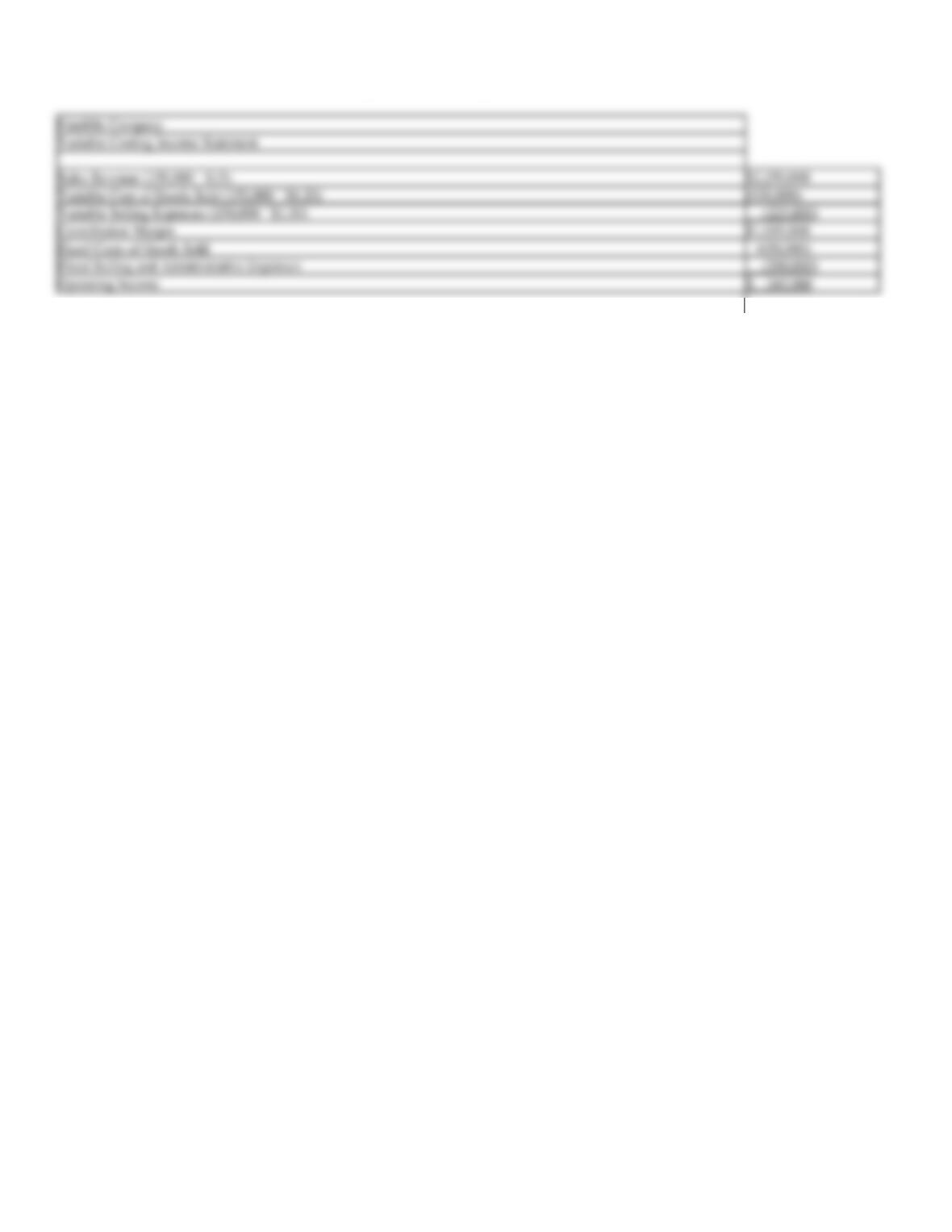
Create an income statement for Franklin Company using the variable costing method.