Hall: Guyton and Hall Textbook of Medical Physiology, 12th Edition
Chapter 20: Cardiac Output, Venous Return, and Their Regulation
Test Bank
DIRECTIONS: Choose the BEST answer.
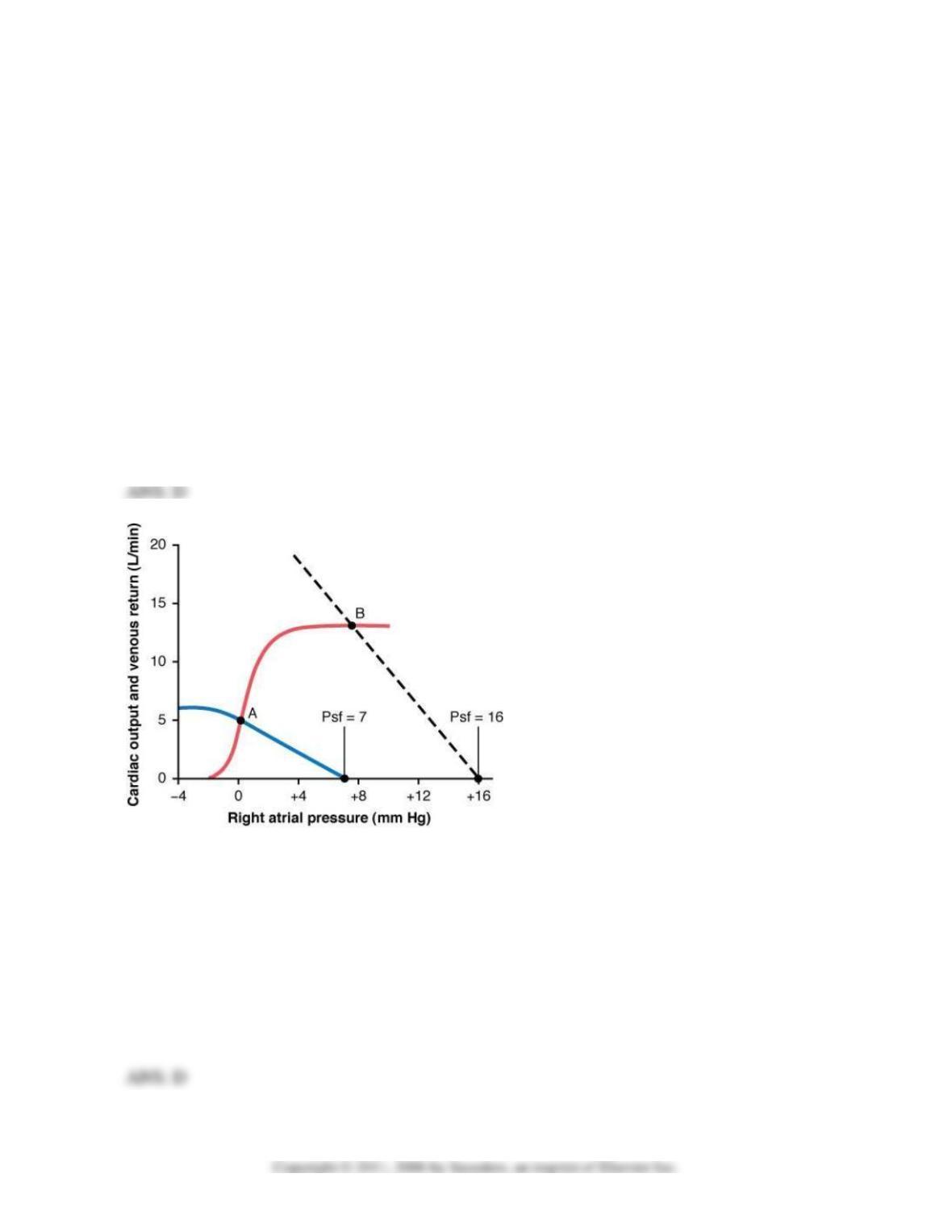
1. For the cardiac output curve defined by the solid line and the venous return curve defined
by the dashed line (with equilibrium at point B), what is the resistance to venous return in
units of mmHg/L/min?
A. 1.70
B. 1.40
C. 1.23
D. 0.65
E. 0.35
2. A 40-year-old woman is hospitalized and has a severe anemia. This patient has a cardiac
output of 12.5 L/min, oxygen consumption is 250 mL/min, and pulmonary artery oxygen
concentration is 160 mL/L of blood, what is the pulmonary vein oxygen concentration in
units of mL/L of blood?
A. 140
B. 150
C. 160
D. 180
E. 200

Test Bank
20-2
3. Which of the following will cause a leftward shift in the cardiac output curve?
A. Surgically opening the thoracic cage
B. Placing a patient on a mechanical ventilator
C. Cardiac tamponade
D. Decreasing intrapleural pressure to -6.0 mmHg
E. Positive pressure breathing
4. Which of the following is normally associated with a decreased resistance to venous
return?
A. Hyperthyroidism
B. Increased venous resistance
C. Increased arteriolar resistance
D. Increased sympathetic output
E. Obstruction of veins
5. A 60-year-old woman is in the intensive care unit of a hospital and has a large A-V
fistula. If this patient has a cardiac output of 10 L/min, oxygen consumption is 250
mL/min, and pulmonary vein oxygen concentration is 180 mL/L of blood, what is the
pulmonary artery oxygen concentration in units of mL/L of blood?
A. 145
B. 155
C. 165
D. 185
E. 205
6. Which of the following conditions is normally associated with an increased mean
systemic filling pressure?
A. Decreased blood volume
B. Increased venous compliance
C. Increased arterial compliance
D. Congestive heart failure
E. Hypothyroidism
7. Which of the following is normally associated with an increased cardiac output?
A. Cardiac tamponade
B. Increased venous compliance
C. Moderate anemia
D. Severe aortic stenosis

Test Bank
20-3
E. Surgically opening the chest
8. A patient with a resting cardiac output of 4 L/min is exercised maximally and cardiac
output increases to 8 L/min. What is the cardiac reserve?
A. 250%
B. 200%
C. 150%
D. 100%
E. 50%
9. Which of the following conditions would be expected to decrease mean systemic filling
pressure?
A. Norepinephrine administration
B. Increased blood volume
C. Increased sympathetic stimulation
D. Increased venous compliance
E. Skeletal muscle contraction
10. Which of the following will usually increase the plateau level of the cardiac output
curve?
A. Myocarditis
B. Severe cardiac tamponade
C. Decreased parasympathetic stimulation of the heart
D. Myocardial infarction
E. Mitral stenosis
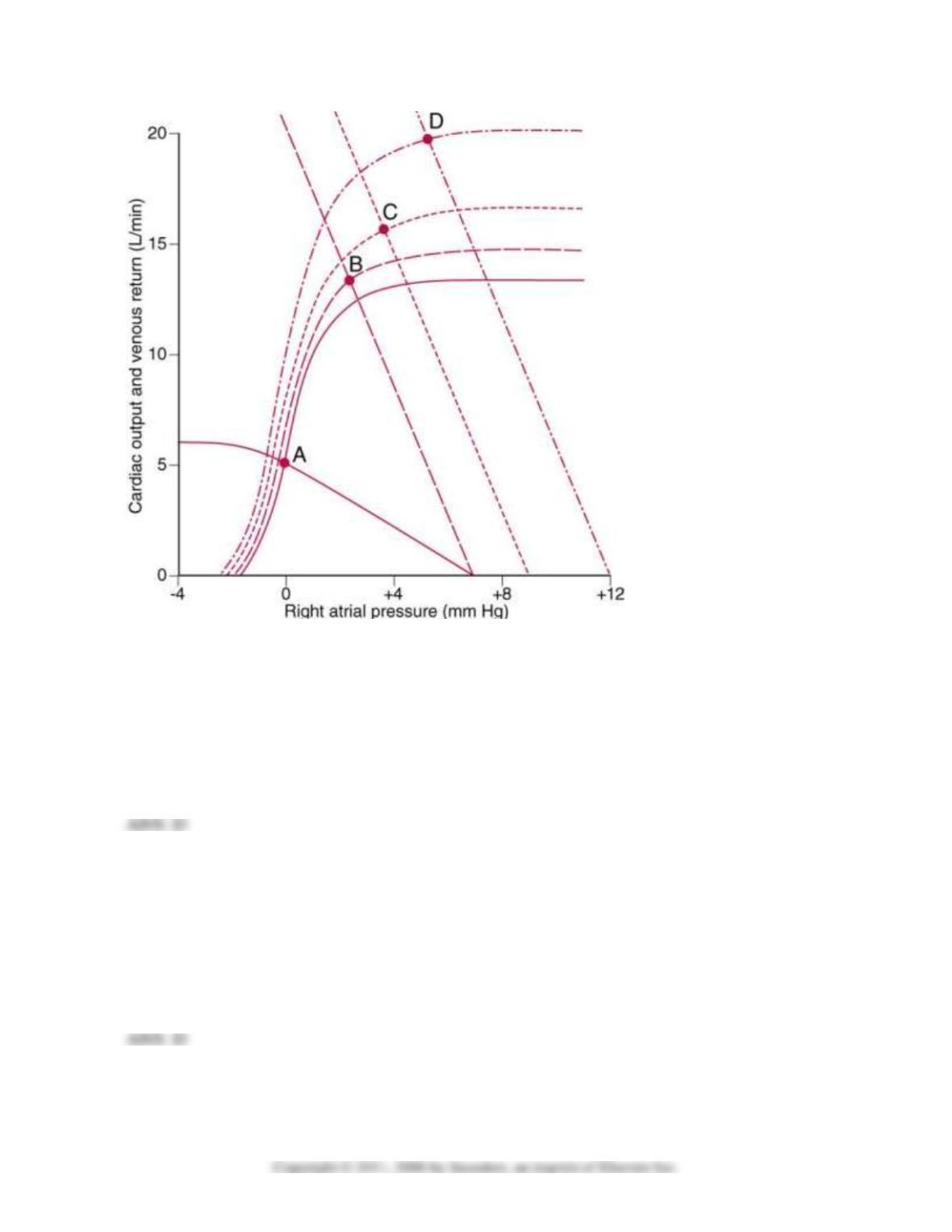
11. In the following graph, for the cardiac output and venous return curves defined by the
solid lines (with the equilibrium at A), which of the following is true?
A. Mean systemic filling pressure is 12 mmHg
B. Right atrial pressure is 2 mmHg
C. Resistance to venous return is 1.4 mmHg/L/min
D. Pulmonary arterial flow is approximately 7 L/min
E. Resistance to venous return is 0.71 mmHg/L/min
Test Bank
20-4
12. Which of the following will elevate the plateau of the cardiac output curve?
A. Surgically opening the thoracic cage
B. Placing a patient on a mechanical ventilator
C. Cardiac tamponade
D. Decreasing parasympathetic stimulation of the heart
E. Decreasing sympathetic stimulation of the heart
13. Which of the following normally cause the cardiac output curve to shift to the right along
the right atrial pressure axis?
A. Decreasing intrapleural pressure to -6 mmHg
B. Increasing mean systemic filling pressure
C. Taking a patient off a mechanical ventilator and allowing normal respiration
D. Surgically opening the chest
E. Breathing against a negative pressure