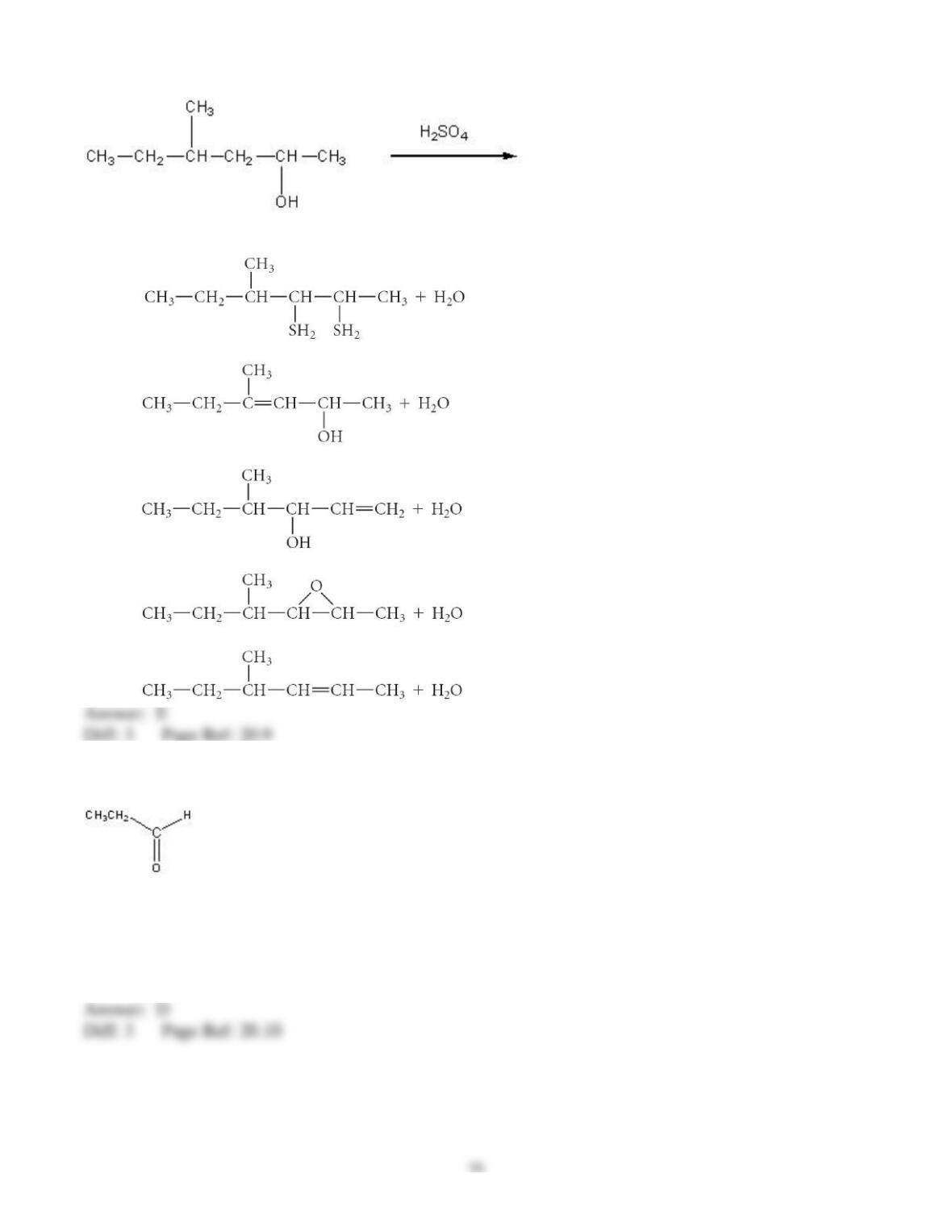
47) Determine the products of the following reaction:
A)
B)
C)
D)
E)
48) Give the product of the oxidation of the following compound.
A) CH3CH2CHO
B) CH3CH2CH2OH
C) CH3CH2CH3
D) CH3CH2COOH
E) CH3CH2OCH3
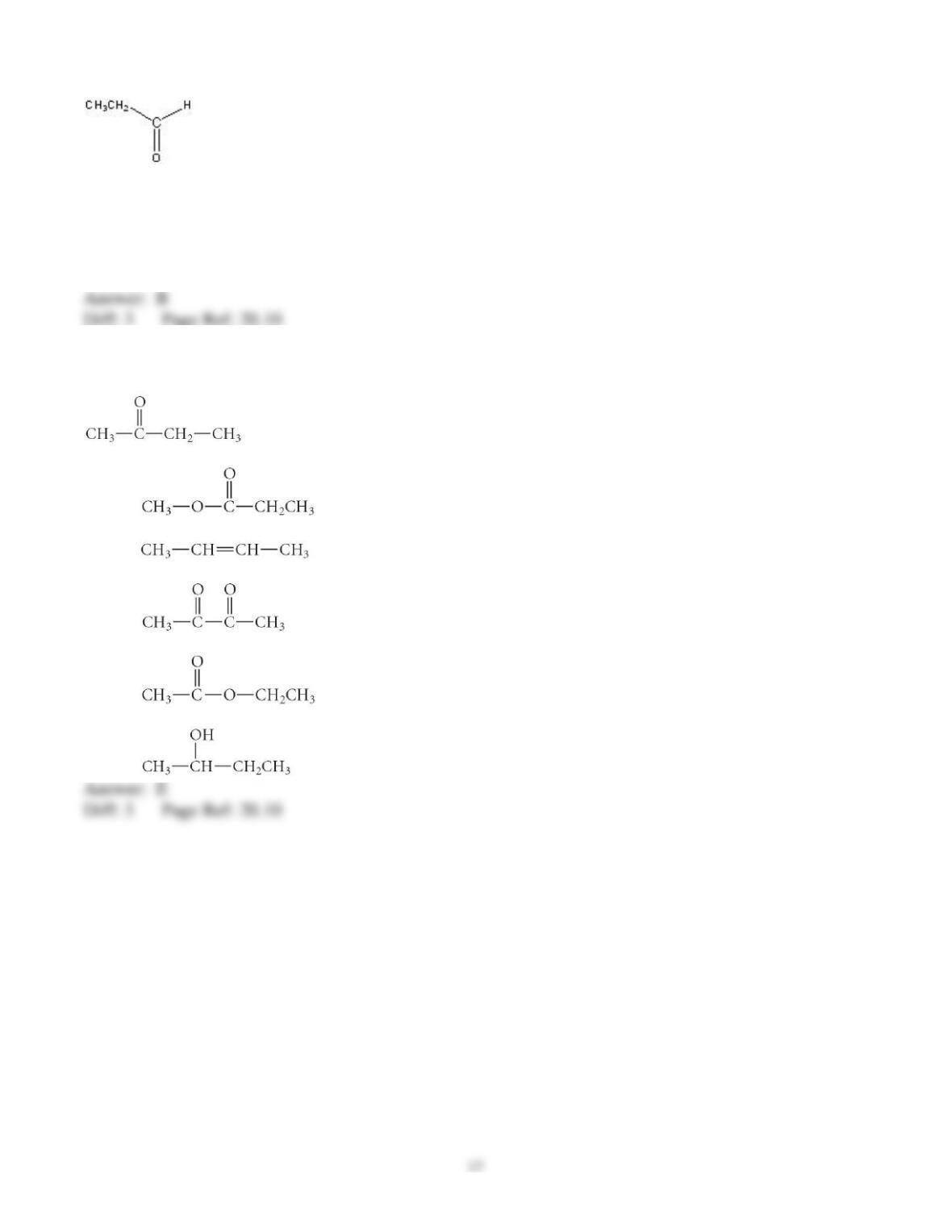
49) Give the product of the reduction of the following compound.
A) CH3CH2CHO
B) CH3CH2CH2OH
C) CH3CH2CH3
D) CH3CH2COOH
E) CH3CH2OCH3
50) Determine the product(s) of the reduction of the following compound:
A)
B)
C)
D)
E)
18
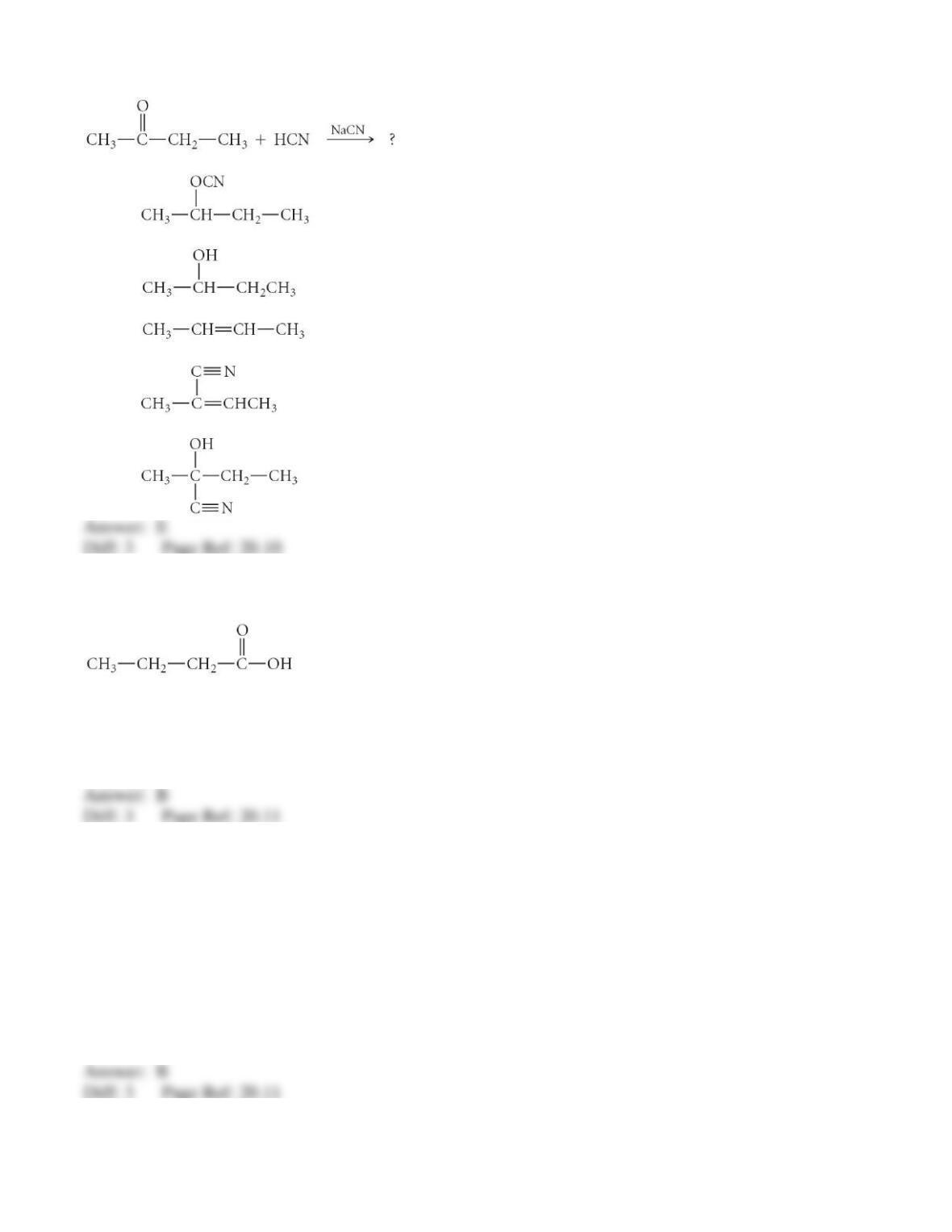
51) Determine the product(s) of the following reaction:
A)
B)
C)
D)
E)
52) Name the following compound.
A) propyl butanoate
B) butanoic acid
C) 1-butanal
D) 1-butanoate
E) propyl methanoate
53) Give the organic product for the following reaction in the presence of sulfuric acid.
CH3CH2COOH + CH3CH2CH2OH →
A) CH3CH2COOCH2CH3
B) CH3CH2COOCH2CH2CH3
C) CH3CH2CH2COOCH2CH3
D) CH3CH2COCH2CH2CH3
E) CH3CH2OCH2CH2CH3
54) A carboxylic acid reacts an alcohol to form ________.
A) an ether
B) an amine
C) an amide
D) an ester
E) an anhydride
55) A carboxylic acid reacts with itself to form ________.
A) an ether
B) an amine
C) an amide
D) an ester
E) an anhydride
56) Give the organic product for the following reaction.
CH3CH2CH2NH2 + HCl →
A) ClCH2CH2CH2NH2
B) CH3CHClCH2NH2
C) CH3CH2CHClNH2
D) CH3CH2CH2NHCl
E) CH3CH2CH2NH3+ Cl–
57) Give the organic product for the following reaction.
CH3CH2COOH + CH3CH2CH2NH2 →
A) CH3CH2NHCH2CH2CH3
B) CH3CH2CON(CH2CH2CH3)2
C) CH3CH2CH2CONHCH2CH3
D) CH3CH2CONHCH2CH2CH3
E) CH3CH2N(CH2CH2CH3)2
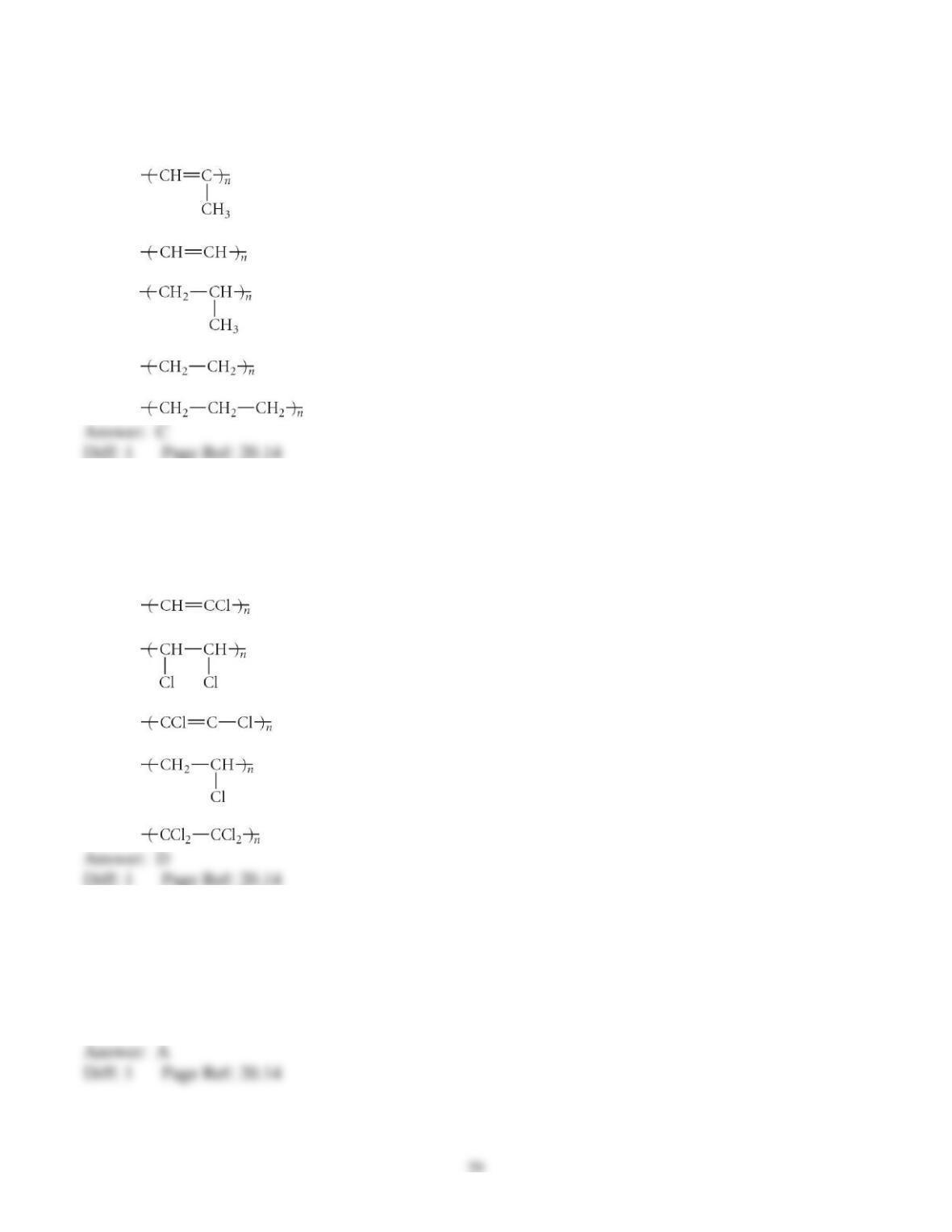
58) Which of the following represent the addition polymer formed from the compound below?
CH2=CH-CH3
A)
B)
C)
D)
E)
59) Which of the following represent the addition polymer formed from the compound below?
CH2=CHCl
A)
B)
C)
D)
E)
60) A common use of polyvinyl chloride is ________.
A) plumbing
B) plastic wrap
C) plastic bottles
D) styrofoam
E) nylon
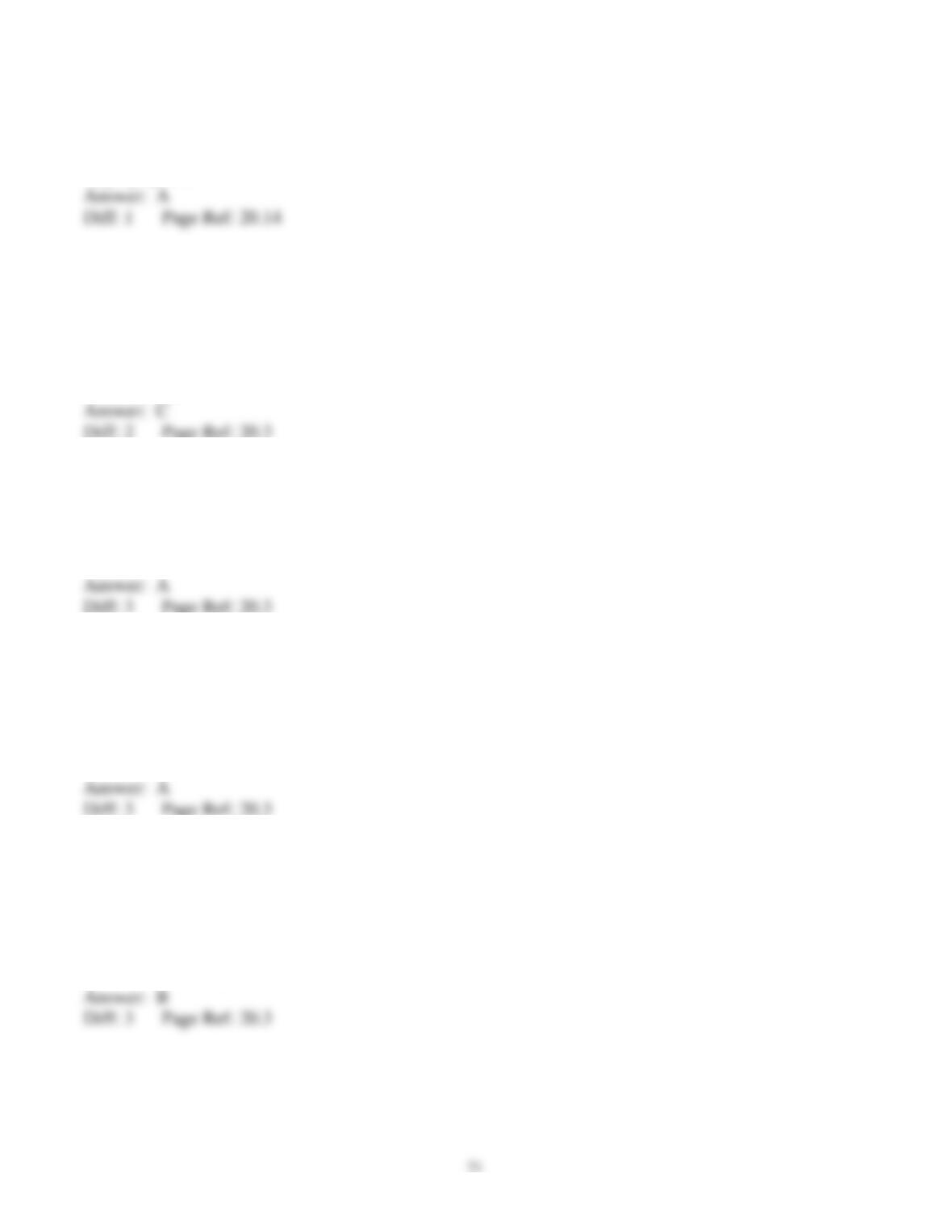
61) Identify the copolymer
A) nylon 6,6
B) polyvinyl chloride
C) polyethylene
D) polypropylene
E) polystyrene
Algorithmic Questions
1) Which compound is a saturated hydrocarbon?
A) 1-butyne
B) cycloheptene
C) 3-methylheptane
D) 2-heptyne
2) How many isomers are there for C5H12 ?
A) 3
B) 4
C) 5
D) 6
3) Which of the following compounds exhibit optical isomerism?
A) sec-butylbenzene
B) CH2Br2
C) CF2BrI
D) CHF2I
E) tert-butylbenzene
4) Which of the following compounds exhibits optical isomerism?
A) CH3–CH2–CH3
B) CH3–CH2-CHF-CH3
C) CH3-CHBr-CH3
D) CH3–CH2–CH2F
E) CH3–CH2–CBr2–CH3
5) Which of the following alkane names is correct?
A) 1,2-dimethylhexane
B) 1-propylnonane
C) 4,5-dipropylpentane
D) 2-methyl-3-ethylhexane
E) All of the above names are correct.
6) Which of the following alkane names is correct?
A) 2,3-dibutylpropane
B) 3-ethyl-4-methylbutane
C) 4-ethyl-5-butylheptane
D) 3,3-dibutylpentane
E) None of the above names are correct.
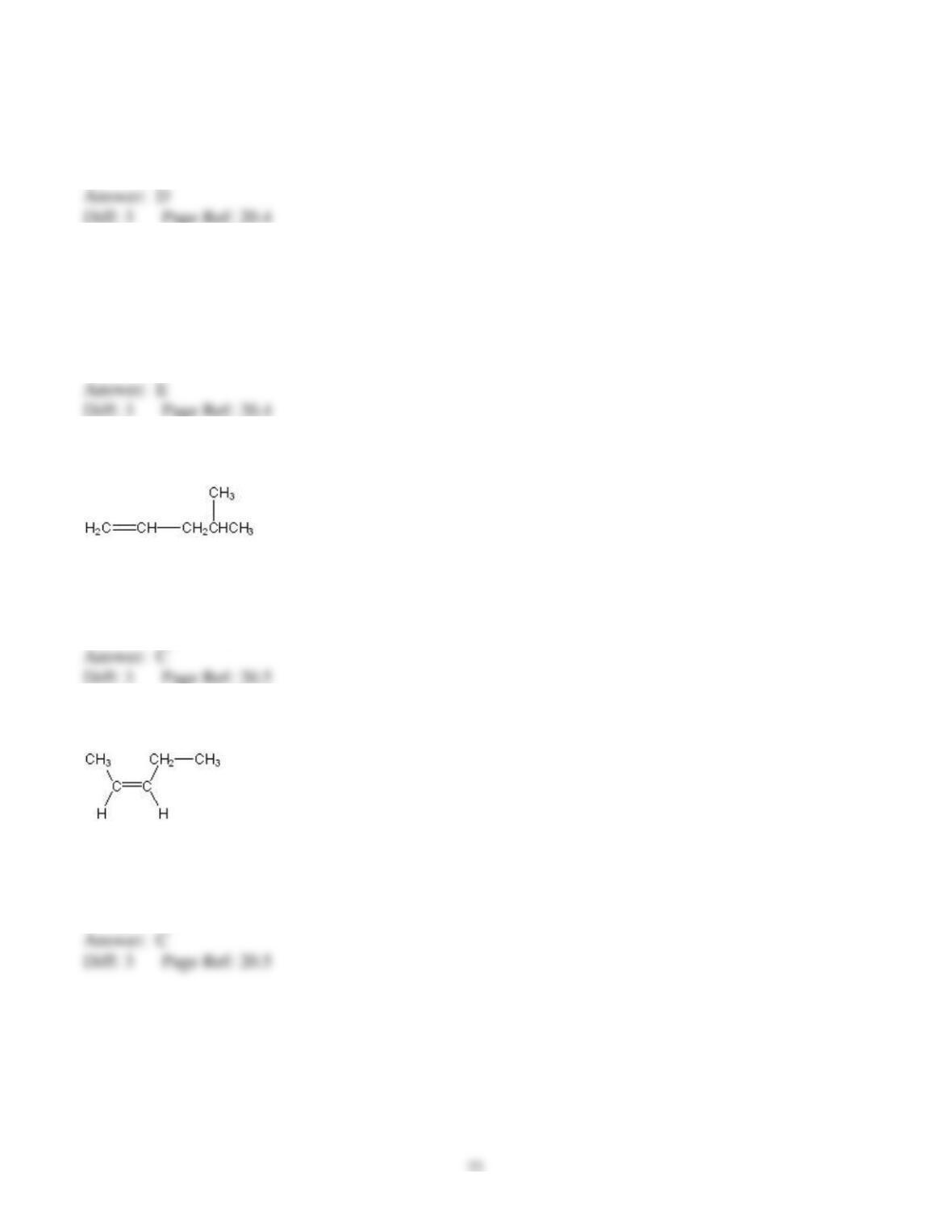
7) Name the following compound.
A) 2-methyl-4-pentene
B) 1,1-dimethyl-3-butane
C) 4-methyl-1-pentene
D) hexene
E) 2-methylpentene
8) Name the following compound.
A) trans-2-butane
B) cis-2-butene
C) cis-2-pentene
D) trans-3-pentene
E) 2-pentene
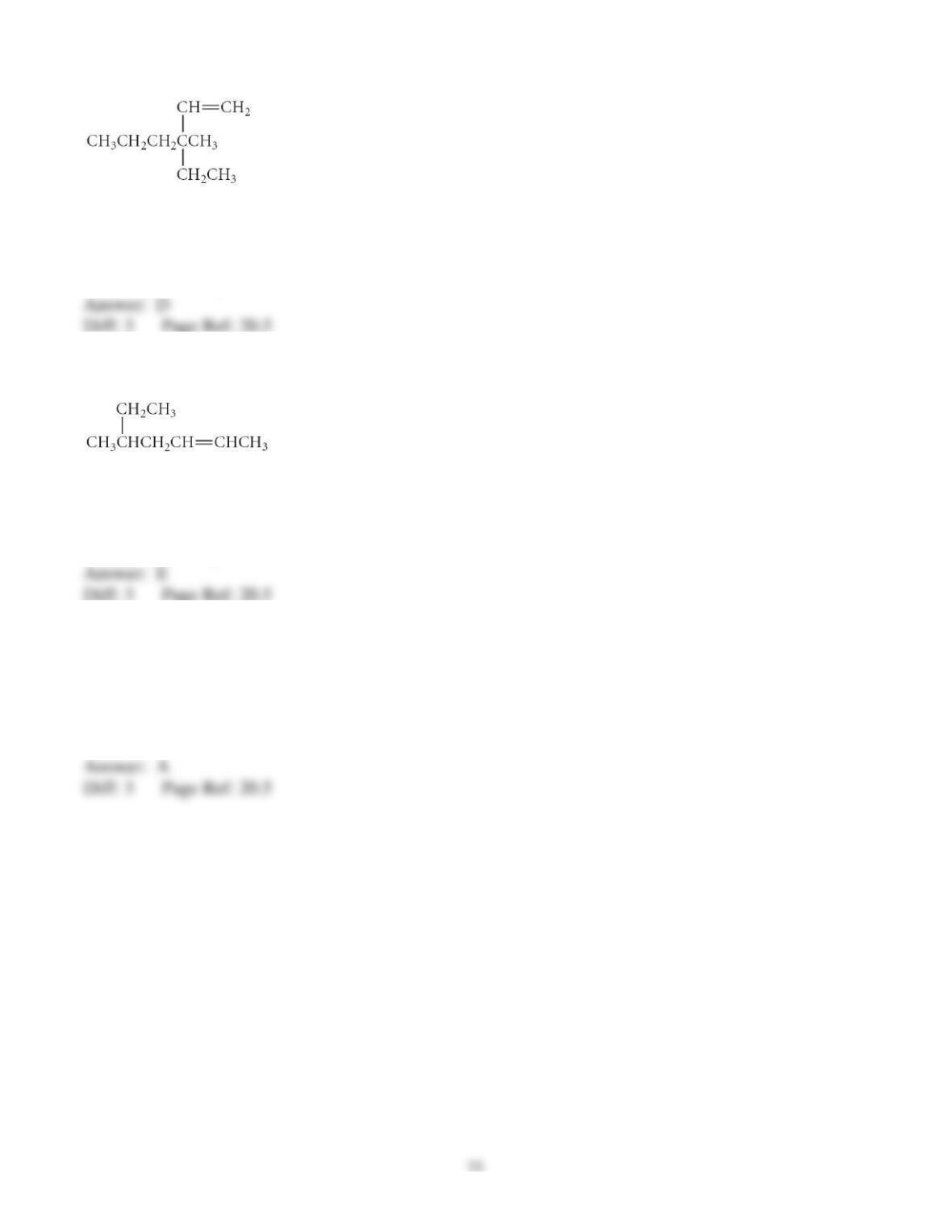
9) Name the following compound.
A) 2,2-diethylhexene
B) 2,2-diethyl1-hexene
C) 4-ethyl-4-methyl-5-hexane
D) 3-ethyl-3-methyl-1-hexene
E) 4-ethyl-4-methylhexene
10) Name the following compound.
A) 2-ethyl-4-hexane
B) 4-isobutyl-2-butene
C) 3-methyl-5-hexane
D) 4-isopropyl-2-butene
E) 5-methyl-2-heptene
11) Which of the following names is correct?
A) 2-methyl-1-butene
B) 3,3-diethyl-4-propene
C) 2-ethyl-3-pentene
D) 1-propyl-2-pentene
E) None of the above are correct.
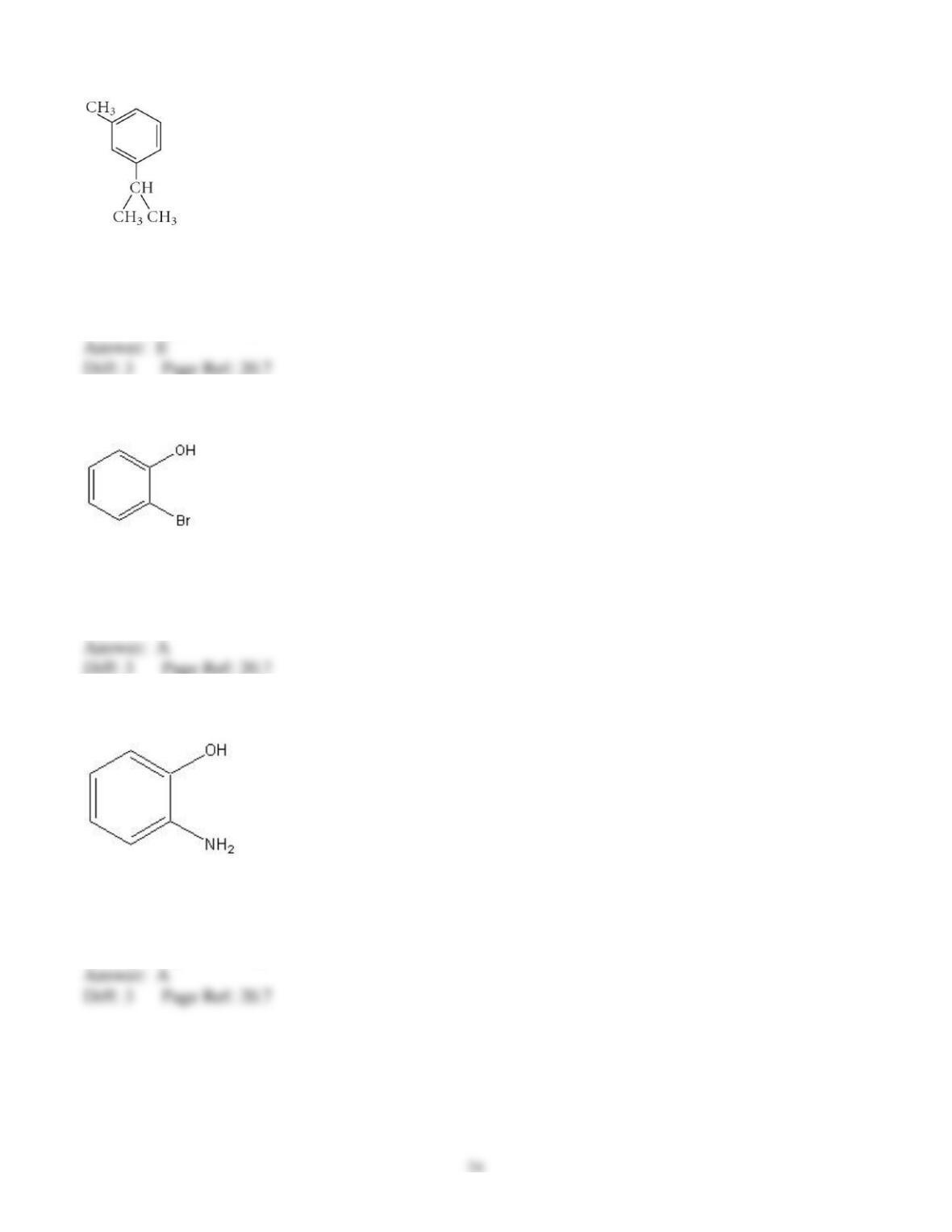
12) Name the following compound.
A) 1-methyl-3-isopropylhexene
B) 4-propyl-6-methylhexene
C) 4-isopropyl-6-methylbenzene
D) 1-butylcyclohexene
E) 1-isopropyl-3-methylbenzene
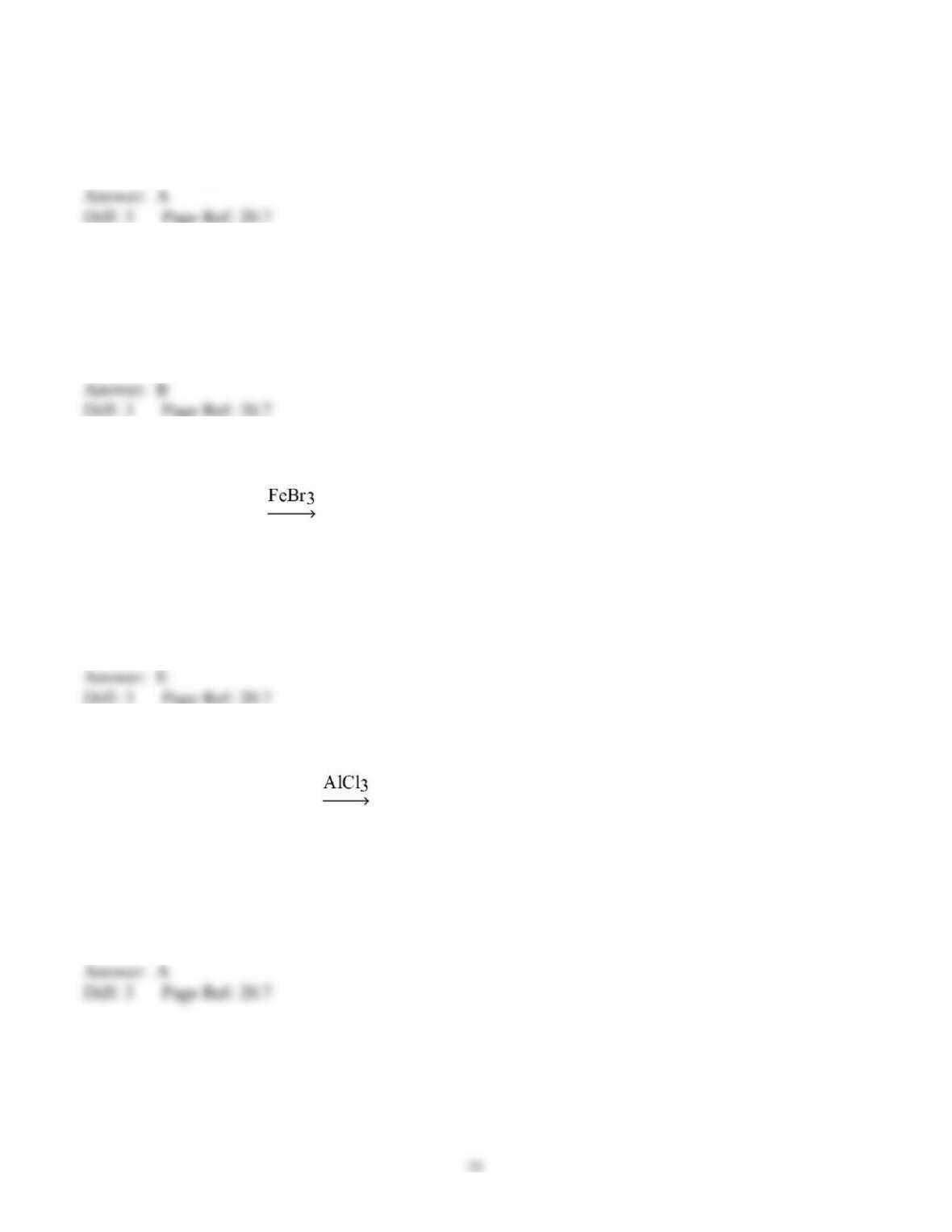
13) Name the following compound.
A) 2-bromophenol
B) 2-bromobenzaldehyde
C) 2-bromoanthracene
D) 1-bromotoluene
E) 1-bromoanisole
14) Name the following compound.
A) 2-aminophenol
B) 2-aminobenzoic acid
C) 2-aminoaniline
D) 2-methylphenol
E) 2-hydroxybenzaldehyde
15) Which of the following names is correct?
A) 1,2,4-trifluorobenzene
B) 1-methyl-3-isopropylhexene
C) 1,3,4-fluorobenzene
D) 4-isopropyl-6-methylbenzene
E) 2,5-dibromocyclohexene
16) Which of the following names are correct?
A) 4-bromo-2-methylbenzene
B) 1-chloro-3-propylbenzene
C) 3-bromo-4-chlorobenzene
D) 2,2-dibbromobenzene
E) 4-bromo-2-iodobenzene
17) Determine the products of the following reaction:
Benzene + Br2 ?
A) 1,2-dibromobenzene and Br2
B) 1,4-dibromobenzene and HBr
C) ferrobenzene and H2
D) perbromobenzene and HBr
E) bromobenzene and HBr
18) Determine the products of the following reaction:
Benzene + CH3CH2Cl ?
A) ethylbenzene and HCl
B) 1,2-dimethylbenzene and Cl2
C) dichlorobenzene and CH3CH2Cl
D) trichlorobenzene and CH3CH3
E) 1,4-diethylbenzene and Cl2
19) Which one of the following molecules is the most polar?
A) butane
B) butanoic acid
C) cyclohexane
D) ethanol
20) Which of the following compounds is an amine?
A) (CH3CH2)2NH
B) CH3CH2CH2CH2CO2CH3
C) CH3CH2CH2CH2Br
D) CH3COOH
E) CH3OCH3
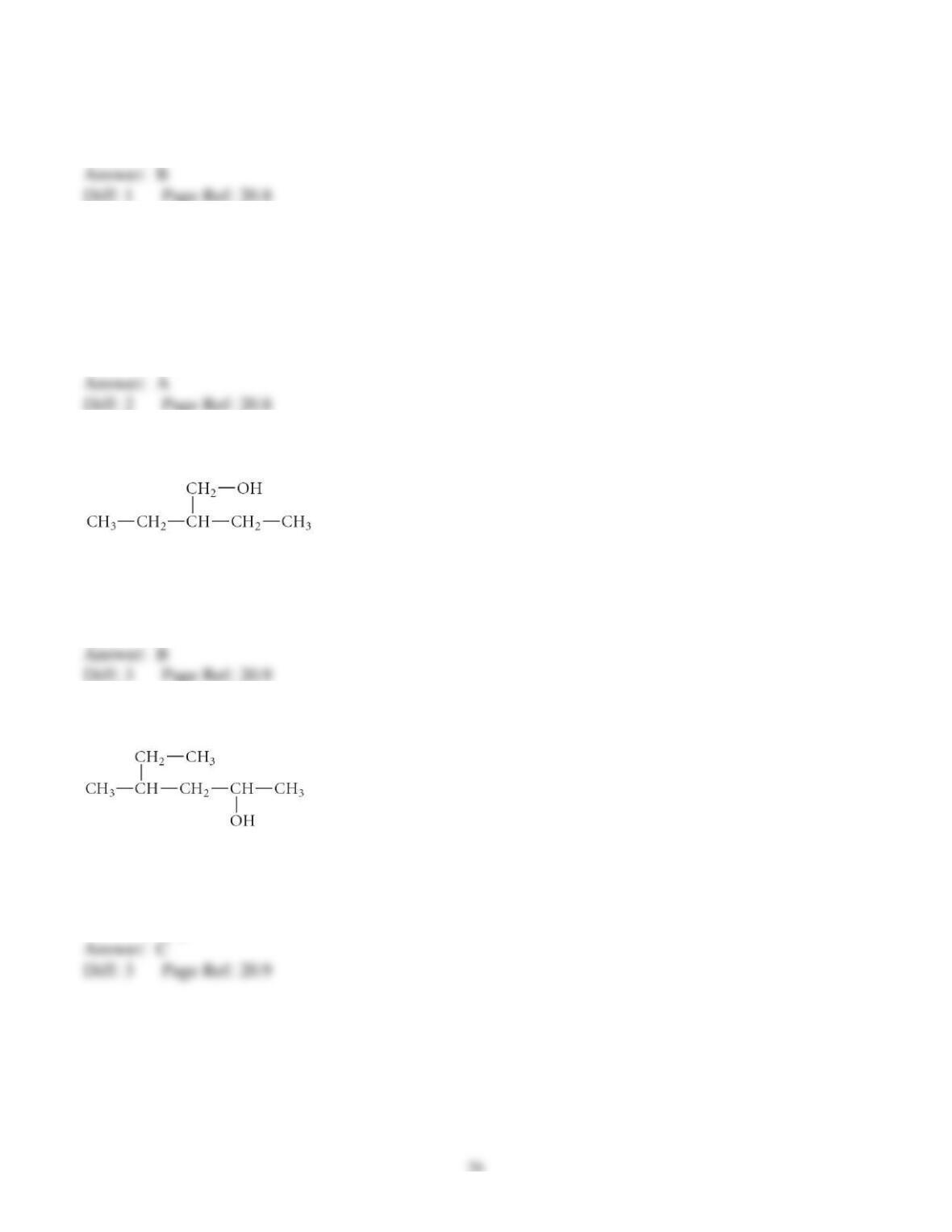
21) Name the following compound.
A) 3-pentenol
B) 2-ethyl-1-butanol
C) 3-methyl-3-pentenol
D) 2-propyl-1-propanol
E) hexenal
22) Name the following compound.
A) 3-methyl-5-hexanol
B) 2-heptenol
C) 4-methyl-2-hexanol
D) 2-ethyl-4-pentanol
E) 4-ethyl-2-pentenal
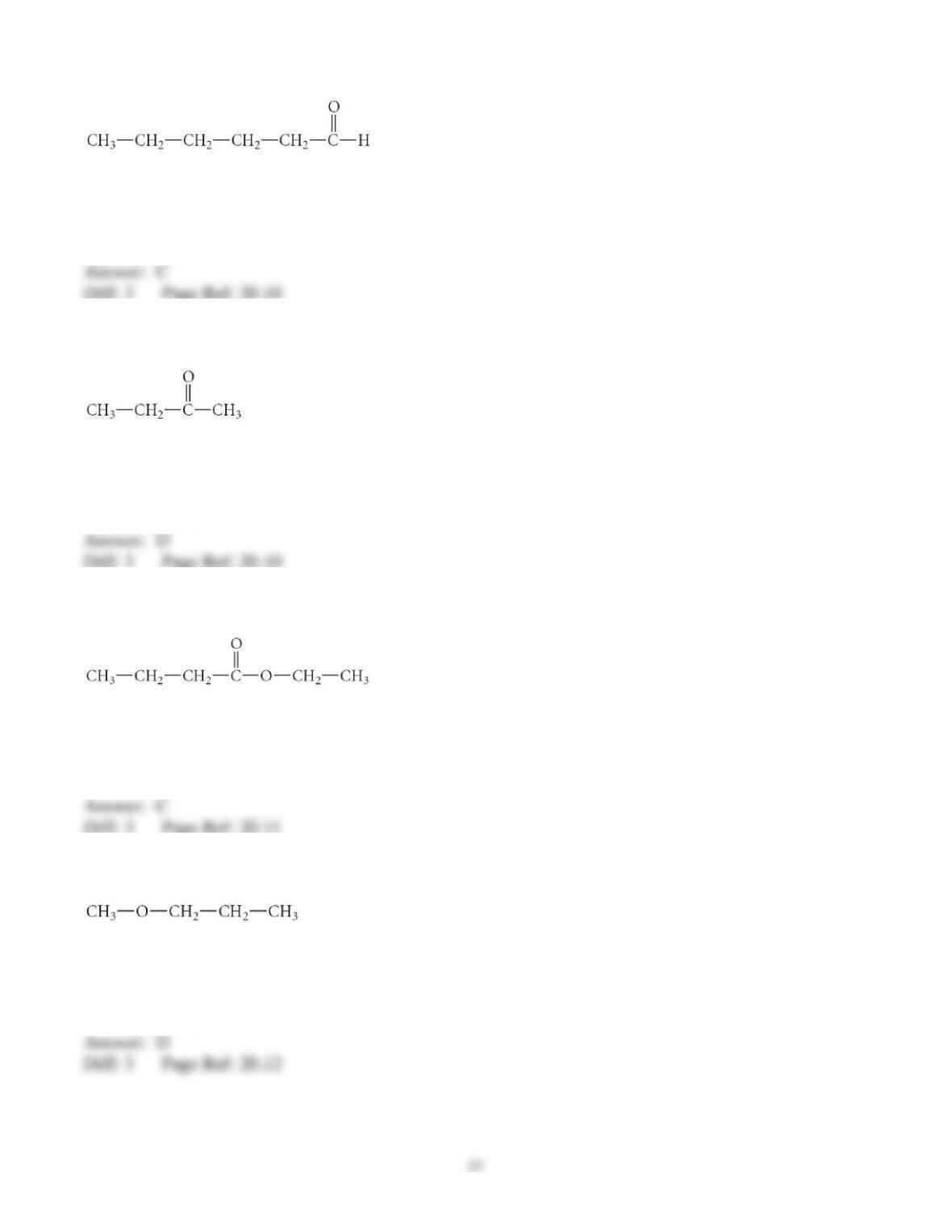
23) Name the following compound.
A) pentenel
B) 1-pentanal
C) hexanal
D) 1-pentanone
E) 1-hexenol
24) Name the following compound.
A) 2-butenal
B) 3-butenal
C) 2-methyl-2-ethylbutanone
D) 2-butanone
E) 2-methylbutanone
25) Name the following compound.
A) ethyl butyl ether
B) propyl propanoate
C) ethyl butanoate
D) hexanoic acid
E) 4-hexanone
26) Name the following compound.
A) ethyl propanoate
B) ethyl ethanoate
C) 2-butanal
D) methyl propyl ether
E) 1-butanoic acid
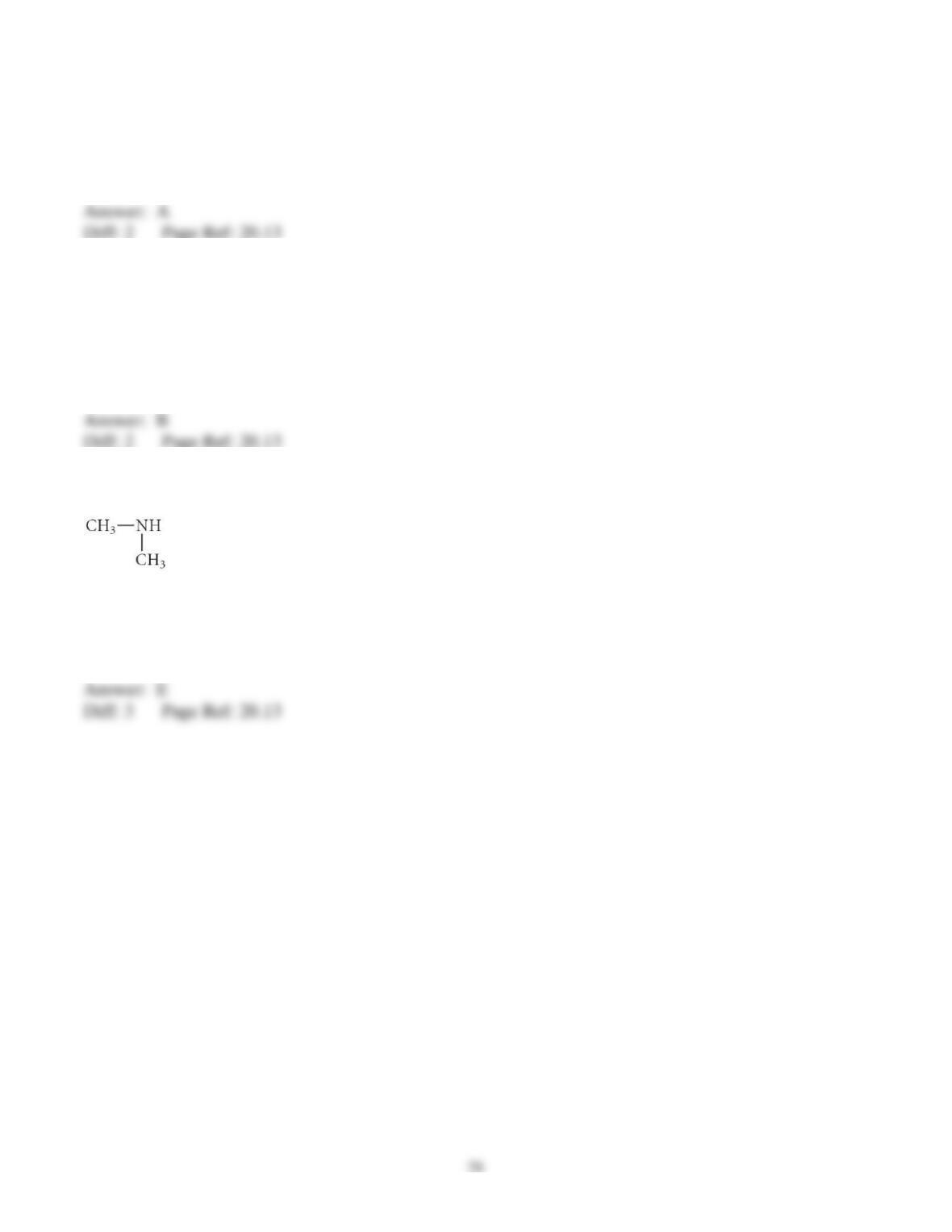
27) Choose the weak base from the compounds below.
A) (CH3)2NH
B) CH3COOH
C) CH3SCH3
D) CH3CH3
E) CH3CH2I
28) Choose the weak acid from the compounds below.
A) CH3CH2NH2
B) CH3CH2COOH
C) CH3CH2OCH3
D) CH3CH2I
E) CH3SeH
29) Name the following compound.
A) methyl amine
B) diethyl sulfide
C) propanol
D) 1-methanoate
E) dimethyl amine
29
Matching Questions
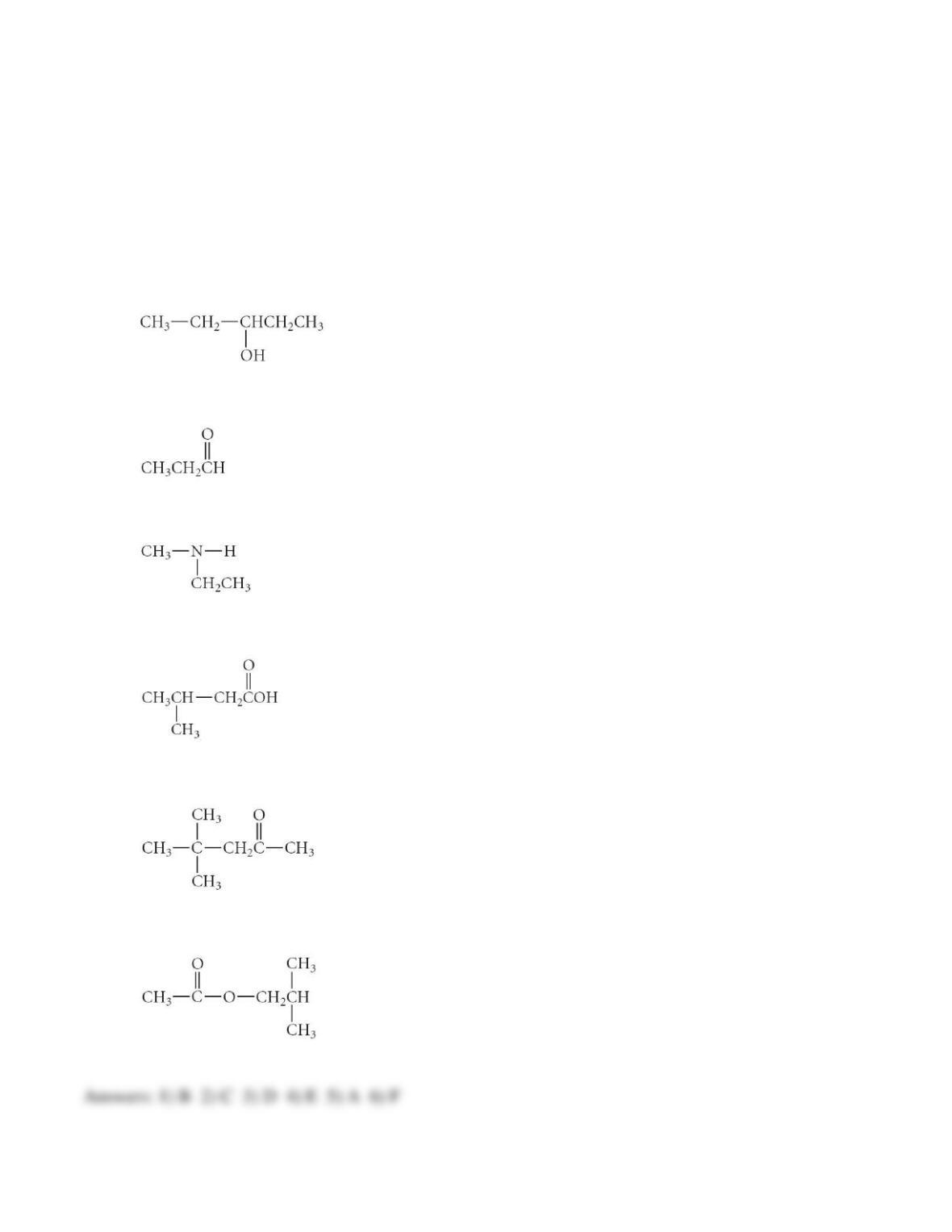
Match the following.
A) ketone
B) alcohol
C) aldehyde
D) amine
E) carboxylic acid
F) ester
1)
Diff: 1 Page Ref: 20.8
2)
Diff: 1 Page Ref: 20.8
3)
Diff: 1 Page Ref: 20.8
4)
Diff: 1 Page Ref: 20.8
5)
Diff: 1 Page Ref: 20.8
6)
Diff: 1 Page Ref: 20.8
Short Answer Questions
1) Why are there so many more carbon compounds than the number of compounds made up of all the
rest of the elements combined?
2) What is meant by the term “structural isomer”? Draw a structural isomer of CH3–CH2–CH2–CH3.
3) What does the term “racemic mixture” mean?
4) Why doesn’t benzene typically undergo addition reactions like the alkenes do?
5) Which part of HCN, the hydrogen or the cyano group, adds to the O in a C=O bond and why?
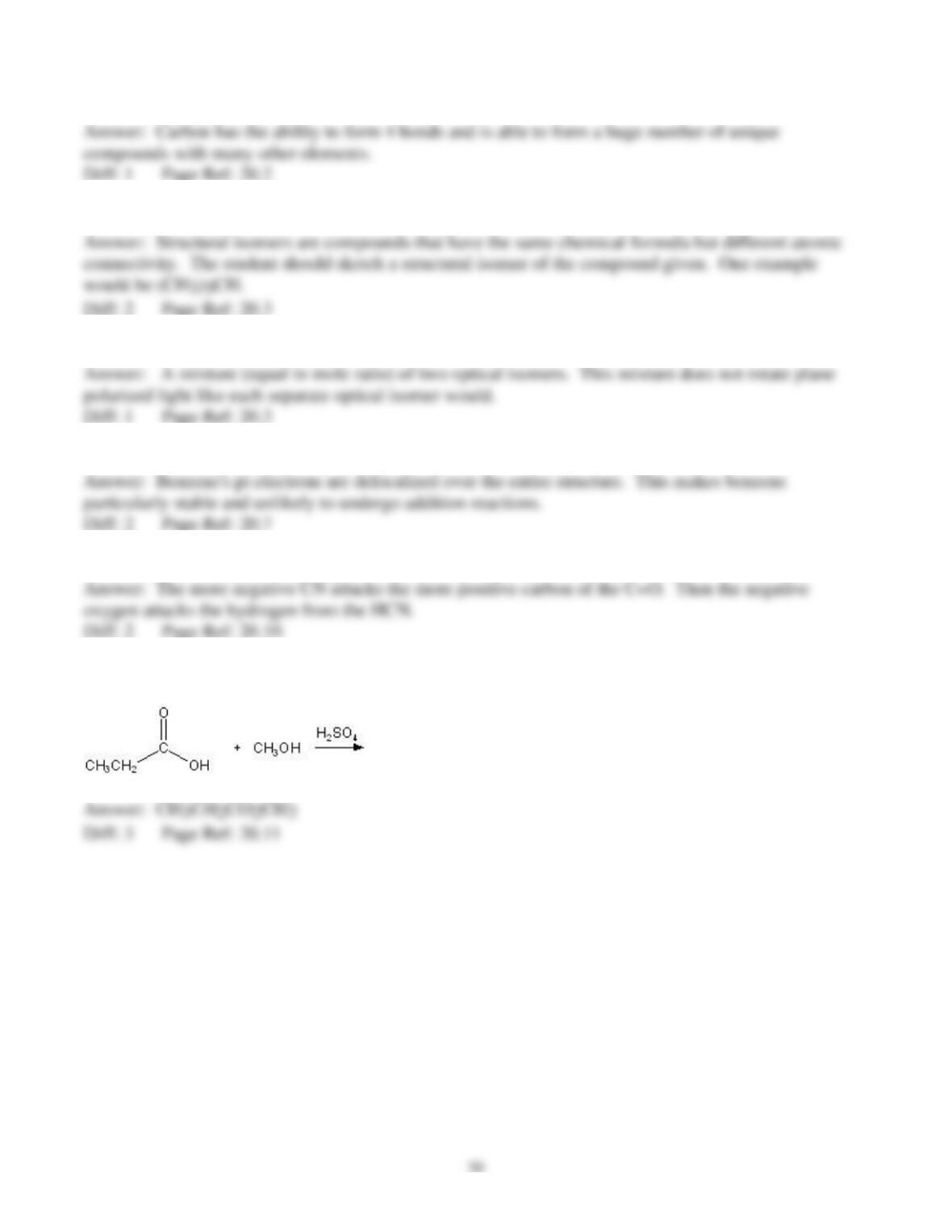
6) Give the organic product of the following reaction.