64)
Which of the following is FALSE about indifference curves?
64)
A)
They can shift.
B)
They intersect.
C)
They are convex to the origin.
D)
They are downward sloping.
65)
Juan and Sophia have decided to stop studying economics and get a bite to eat. Juan wants to go for
a pizza and Sophia wants a hamburger. They decide to go for pizza. What can we conclude from
this?
65)
A)
Juan always gets more utility from pizza than Sophia does.
B)
Sophia will get negative utility from the pizza.
C)
Sophia gets less utility from pizza than she could from a hamburger.
D)
Utility analysis does not work here since Sophia did not eat a hamburger.
Explanation:
66)
If you could pay for a product according to the marginal utility that you gain from additional
consumption, then as you consume more of a product the price you pay would
66)
A)
remain the same.
B)
decline.
C)
increase.
D)
be deferred.
Explanation:
67)
Assume that Jack has the preferences shown in the above table. Also assume that the price of a can
of Pepsi is $3.00 and that the price of a slice of pizza is $1.00. If he has $16 available to spend, what
combination of Pepsi and pizza will be his consumer optimum?
67)
A)
2 cans of Pepsi, 4 slices of pizza
B)
4 cans of Pepsi, 1 slice of pizza
C)
3 cans of Pepsi, 2 slices of pizza
D)
4 cans of Pepsi, 4 slices of pizza
Explanation:
Explanation:
68)
Assume that good X and good Y each have diminishing marginal utility for a consumer. In this
case,
68)
A)
an indifference curve linking the two goods will have a constant slope.
B)
the demand curves for these goods will be horizontal.
C)
an indifference curve will be convex to the origin.
D)
the demand curves for these goods will be positively sloped.
69)
Observations of violations of consumer optimum predicted by consumer choice theory could
provide support for
I. utility analysis
II. bounded rationality
III. behavioral economics
69)
A)
I only.
B)
III only.
C)
both I and II.
D)
both II and III.
70)
If your dinner guest said, “Every bite, including the last bite, tasted as good as the first,” then the
marginal utility for him
70)
A)
is constant.
B)
is increasing.
C)
is positive.
D)
is decreasing.
71)
As more of a product is consumed, total utility increases up to a point at which
71)
A)
marginal utility increases at a constant rate.
B)
marginal utility increases at an increasing rate.
C)
marginal utility decreases.
D)
marginal utility will initially decrease, then increase.
72)
Refer to the above table. Which of the four people have utility schedules characterized by the law of
diminishing marginal utility?
72)
A)
Michelle only
B)
Amy and Robert only
C)
Amy, Robert, and David only
D)
Michelle and David only
73)
Economists infer that a consumer receives more utility from one good than another by
73)
A)
means of introspection and speculation.
B)
observing the consumer’s behavior.
C)
the logic of the models used.
D)
giving consumers surveys about the utility they receive from the goods.
74)
Your annual review is given to you at your place of employment, and you get a raise of 3 percent
for the next year. On the subway home though, you read an article stating the price of homes in the
area you are looking to buy will increase by 6 percent during the coming year. You determine from
the article that if you buy in your favorite neighborhood
74)
A)
quantity demanded will increase.
B)
consumer optimum is reached.
C)
your real income actually increases.
D)
your purchasing power declines.
75)
At a ball game we can observe people eating hot dogs, chips, and burgers. If all are priced the same
and we observe Michelle eating a hot dog and David eating a hamburger, we can conclude that
75)
A)
Robert will be eating chips.
B)
Michelle derives the same amount of utility from eating a hot dog as David derives from
eating a hamburger.
C)
Michelle likes hot dogs better than David does and David likes hamburgers better than
Michelle does.
D)
at this time Michelle derives more utility from eating a hot dog than from eating either a
hamburger or chips, while David derives more utility from eating a hamburger than from
eating either a hot dog or chips.
76)
If the price of a good is zero, a rational consumer will
76)
A)
stop consuming the good when total utility is maximized.
B)
not consume the good at all since it must not be valuable if it has a zero price.
C)
consume the good up to the point where total utility is just below zero.
D)
buy all of the units available.
77)
Suppose Lois usually buys two cups of coffee for two dollars each and one scone for two dollars
each. If the price of scones falls to one dollar each and she now buys two cups of coffee and two
scones, this illustrates the
77)
A)
real–income effect.
B)
marginal rate of substitution.
C)
substitution effect.
D)
total utility effect.
78)
The price of good “a” is $5 and the price of good “b” is $15. If the marginal utility of good “a” is 20
then the marginal utility of good “b” must be ________ to have an optimum combination of goods
purchased.
78)
A)
4
B)
60
C)
20
D)
80
79)
According to the above table, Mary’s marginal utility from watching the 6th movie is
79)
A)
20 units of utility.
B)
190 units of utility.
C)
40 units of utility.
D)
10 units of utility.
80)
Carol is very hungry. She has just sat down to eat. Her first bite gives her a certain level of utility.
Her second bite increases her utility by more than the first bite. Her third bite increases her utility
by more than the second bite. Carol has 40 bites left before she finishes. Which of the following
statements is true about Carol?
80)
A)
Carol is being inconsistent with the law of diminishing marginal utility.
B)
Carol‘s marginal utility will be negative when she takes her last bite.
C)
Carol’s total utility decreases with each bite.
D)
Carol will eventually experience diminishing marginal utility by the time she finishes eating,
if her marginal utility begins to decline.
81)
Use the above figure. The consumer’s choice changes from YB to YA. Which of the following
statements about good Y is true?
81)
A)
price has decreased and the quantity demanded has risen..
B)
price has increased and the quantity demanded has risen..
C)
price has increased and the quantity demanded has fallen.
D)
price has decreased and the quantity demanded has fallen.
82)
In the above table, Bob experiences diminishing marginal utility after consuming how many beers?
82)
A)
2
B)
3
C)
1
D)
4
83)
The possible combinations of goods that can be purchased with a specific income are called the
83)
A)
income–consumption curve.
B)
marginal rate of substitution.
C)
budget constraint.
D)
indifference map.
84)
When Bonnie increases the consumption of Good A and decrease the consumption of Good B, her
marginal utility of
84)
A)
both A and B will increase.
B)
A increases and the marginal utility of B will fall.
C)
both A and B will decrease.
D)
A falls and the marginal utility of B will increase.
85)
Dr. Rodriguez is consuming beer and wine. At his current level of consumption, the marginal
utility per dollar is 30 units for beer and 15 units for wine. Dr. Rodriguez should
85)
A)
increase his consumption of beer relative to wine.
B)
consume twice as much beer as wine.
C)
consume twice as much wine as beer.
D)
increase his consumption of wine relative to beer.
86)
Refer to the above table. The marginal utility of the 5th movie for Michelle is
86)
A)
390 units of utility.
B)
60 units of utility.
C)
50 units of utility.
D)
40 units of utility.
87)
If a consumer is initially at an optimum, and then the price of Y increases, then
87)
A)
MUX/PX=MUY/PY.
B)
MUX/MUY>PY/PX.
C)
MUX/PX>MUY/PY.
D)
MUX/PX<MUY/PY.
88)
The analysis of consumer decision making based on utility maximization is known as
88)
A)
utility analysis.
B)
specialization analysis.
C)
consumption analysis.
D)
market analysis.
89)
The change in the total utility as a result of increasing consumption by one unit is known as
89)
A)
utils.
B)
average utility.
C)
proportional utility.
D)
marginal utility.
90)
If a college student stays home and watches a rented DVD for $5 rather than going out to a $10
movie, this is an example of the
90)
A)
substitution effect.
B)
value effect.
C)
income effect.
D)
utility effect.
91)
The price of hamburgers is $2 and the price of movies is $4. The consumer has $14 of income. The
consumer is purchasing 3 hamburgers and receiving 30 utils for the last hamburger. He is also
purchasing 2 movies and receiving 40 utils for the last movie. This set of goods
91)
A)
is not an optimum because the consumer has not spent all of his money.
B)
is an optimum since the entire income is spent and the marginal utility per dollar spent is the
same for the last unit of each good.
C)
is an optimum since the entire income is spent and total utility is maximized.
D)
is not an optimum because the marginal utility per dollar spent is greater for hamburgers
than for movies.
92)
The marginal rate of substitution is
92)
A)
positively related to the level of income.
B)
the change in the quantity of one good that just offsets a one unit change in the consumption
of another such that the total satisfaction remains constant.
C)
the additional satisfaction from consuming an additional unit of a good or service.
D)
the set of goods and services that are available to the consumer given his income.
93)
If an individual’s total utility from consuming two goods decreases, then there must be
93)
A)
an inward rotation of the individual’s indifference curve.
B)
an outward shift of the individual’s indifference curve.
C)
an inward shift of the individual’s indifference curve.
D)
a downward rotation of the individual’s indifference curve.
94)
Using the above table, what is the marginal utility of the 4th soda?
94)
A)
5
B)
10
C)
23.2
D)
15
95)
For good A and good B, the consumer maximizes personal satisfaction when
95)
A)
PA/MUA= PB/MUB.
B)
MUA/MUB= PA/PB.
C)
MUA/PA= PB/MUB.
D)
MUA/PA= MUB/PB.
96)
If a consumer is initially at an optimum, and then the price of Y falls, then
96)
A)
MUX/PX>MUY/PY.
B)
MUX/PX=MUY/PY.
C)
MUX/PX<MUY/PY.
D)
MUX/MUY>PY/PX.
97)
If the price of X is $3 and the price of Y is $5, then, in a consumer optimum,
97)
A)
the marginal utility of Y must be 67 percent more than the marginal utility of X.
B)
the quantity purchased of Y must be 60 percent of the quantity of X purchased.
C)
the marginal utility of X must equal 3 and the marginal utility of Y must equal 5.
D)
the quantity purchased of Y must be 67 percent of the quantity of X purchased.
98)
Suppose the price of pizza is $2 and the consumer optimum is reached when MU/P = 3. Tom’s
preferences for pizza are shown in the above table. How many slices will Tom buy?
98)
A)
3 slices
B)
1 slice
C)
2 slices
D)
4 slices
99)
The inverse relationship between quantity demanded and price of a good or service can be
explained, in part, by
99)
A)
diminishing marginal utility and the rule of equal marginal utilities per dollar.
B)
the real income effect.
C)
a shift in the demand curve.
D)
diminishing marginal utility only.
100)
Refer to the above table. What is the marginal utility for the 10th unit for Michelle and for Robert?
100)
A)
Michelle: 15; Robert: 20
B)
Michelle: 50; Robert: 50
C)
Michelle: –10; Robert: 10
D)
Michelle: 10; Robert: 10
101)
Refer to the above table. If the consumer‘s equilibrium consists of 4 magazines and 4 books, then we
know that
101)
A)
the price of a book is 5 times more than the price of a magazine.
B)
the price of a book is 3 times more than the price of a magazine.
C)
the price of a magazine is 5 times more than the price of a book.
D)
the price of a magazine is 6 times more than the price of a book.
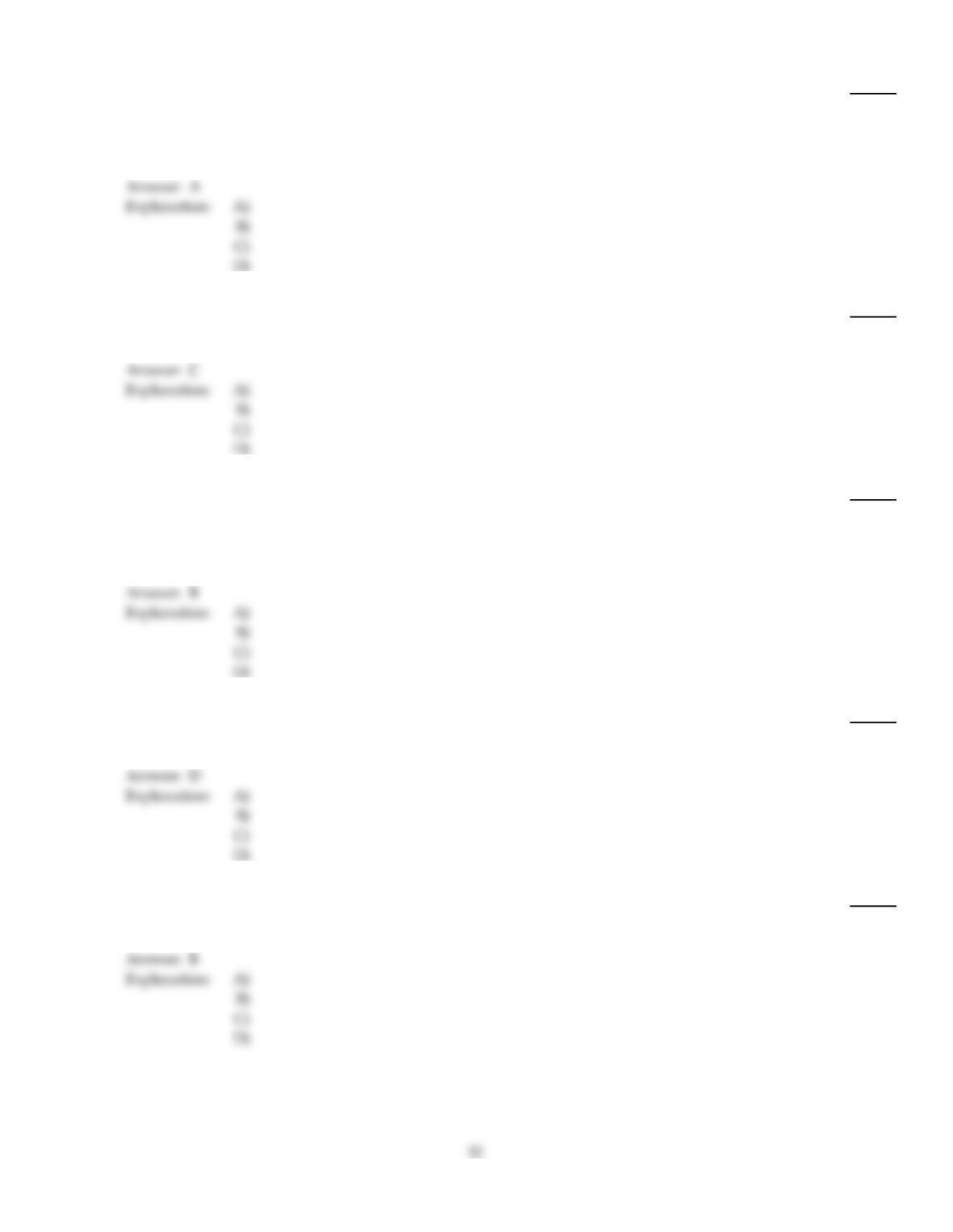
102)
Refer to the above figure. All of the following are true concerning the diamond–water paradox
EXCEPT
102)
A)
since the price of diamonds is high, demand is great.
B)
the demand for water exceeds the demand for diamonds.
C)
marginal utility of diamond consumption is relatively high.
D)
the price of diamonds exceeds the price of water.
103)
The concept of marginality is important in economics because
103)
A)
individuals make decisions at the margin.
B)
large expenditures are the only factor influencing consumption.
C)
individuals make decisions based on tastes only.
D)
marginal decisions indicate a lack of importance.
104)
Economists use what term to describe the want–satisfying power of a good?
104)
A)
Income elasticity
B)
Demand
C)
Utility
D)
Marginal propensity to consume
105)
The real–income effect of a price change is most significant when
105)
A)
the marginal utility per dollar spent on the last unit is high.
B)
the good under consideration constitutes a major portion of the consumer’s budget.
C)
the substitution effect is significant too.
D)
the substitution effect is insignificant.
106)
The total utility from consuming 8 units of a good is 155. The marginal utility of the 8th unit is 7
and the marginal utility of the 7th unit is 11. The total utility from consuming 6 units of the good is
106)
A)
130.
B)
144.
C)
173.
D)
137.
107)
When marginal utility is zero, total utility is
107)
A)
decreasing.
B)
at its maximum.
C)
increasing.
D)
at its minimum.