32.
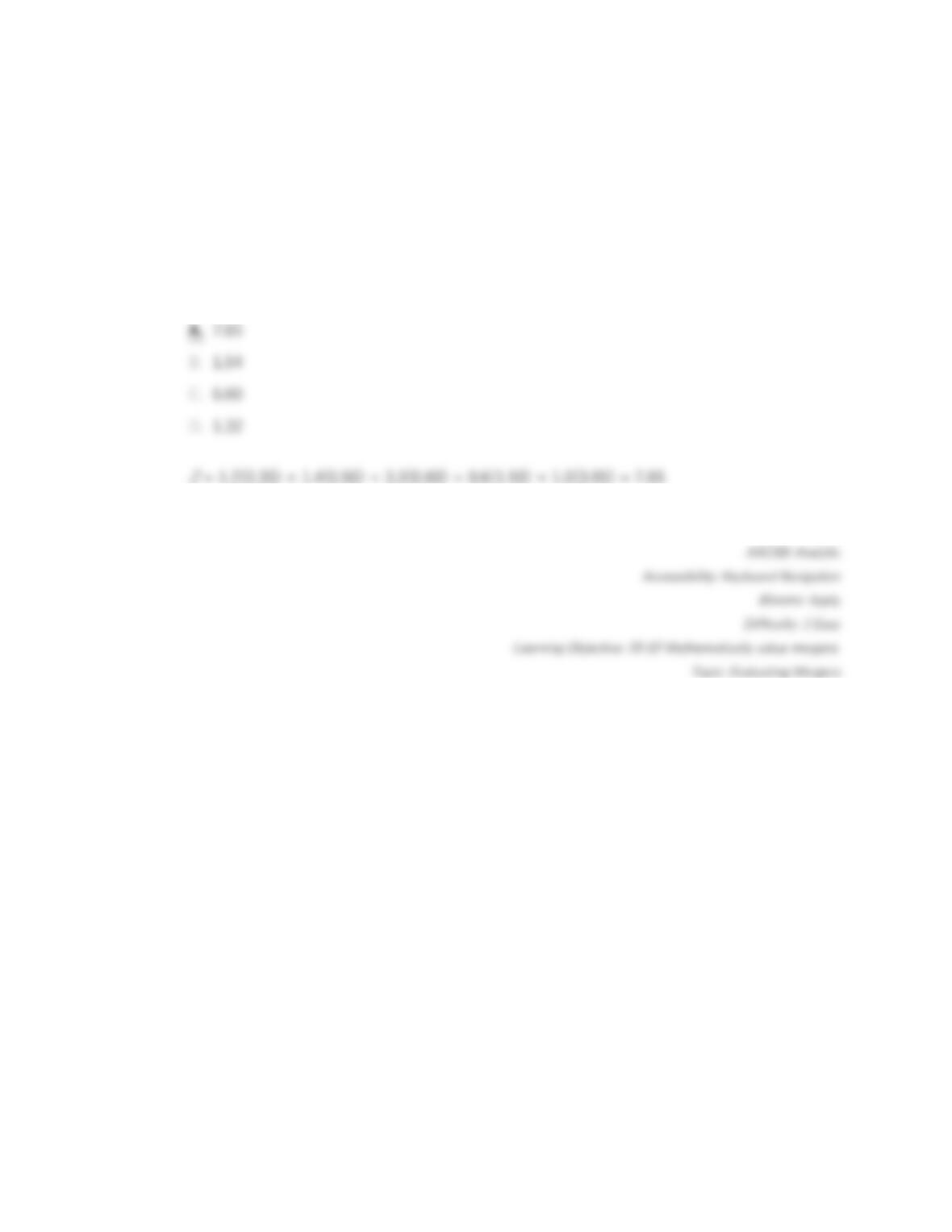
Calculation of Altman’s
Z
-Score: Suppose that the financial ratios of a potential
borrowing firm took the following values:
X1
= Net working capital/Total assets = 0.35,
X2
= Retained earnings/Total assets = 0.50,
X3
= Earnings before interest and taxes/Total
assets = 0.60,
X4
= Market value of equity/Book value of long-term debt = 1.50,
X5
=
Sales/Total assets ratio = 3.65. Calculate the Altman’s
Z
-score for this firm.
33.
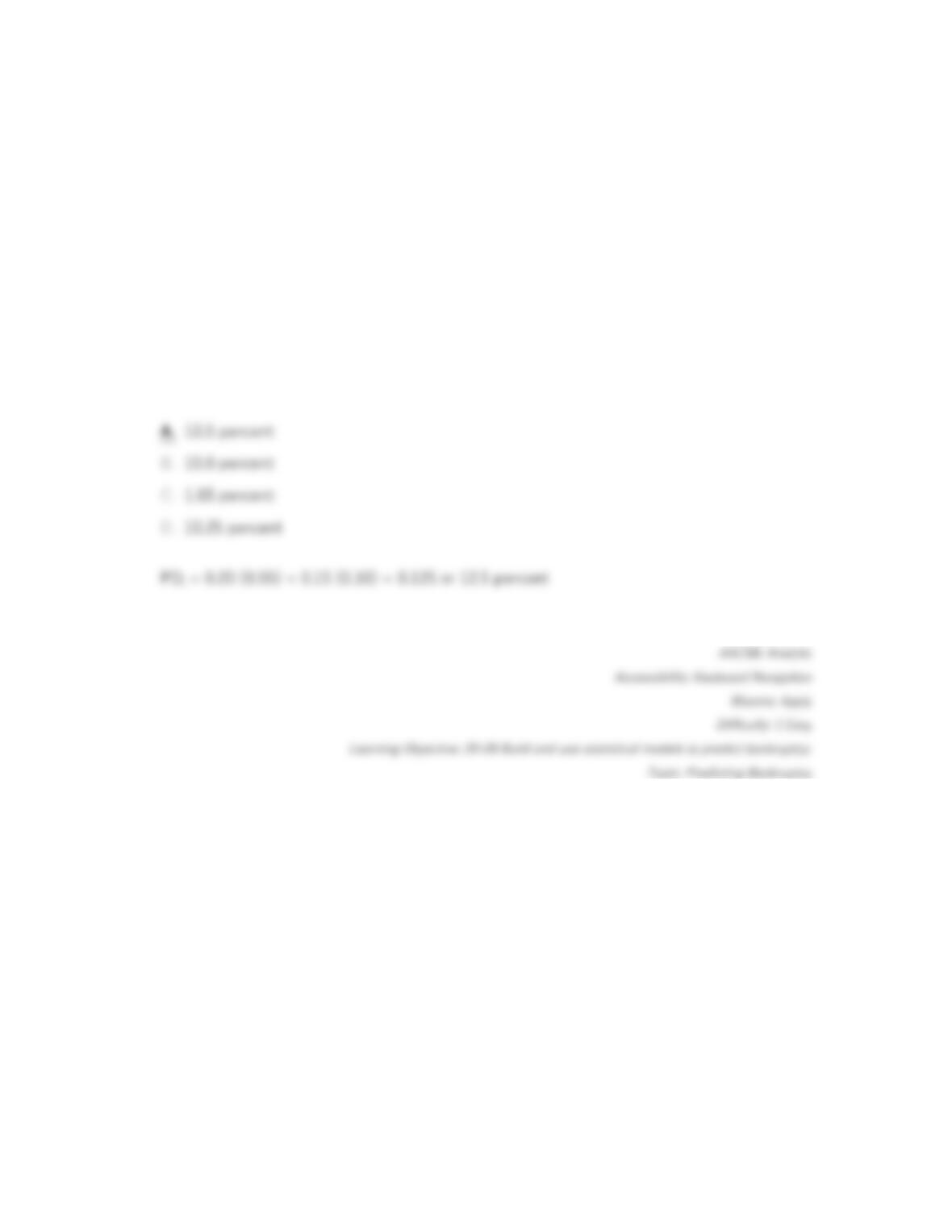
Calculation of Bankruptcy Probability Suppose a linear probability model you have
developed finds there are two factors influencing the past bankruptcy behavior of firms:
the debt ratio and the profit margin. Based on past bankruptcy experience, the linear
probability model is estimated as:
PDi = 0.20 (debt ratio) + 0.15 (profit margin)
A firm you are thinking of lending to has a debt ratio of 55 percent and a profit margin of
10 percent. Calculate the firm’s expected probability of default, or bankruptcy.
34.
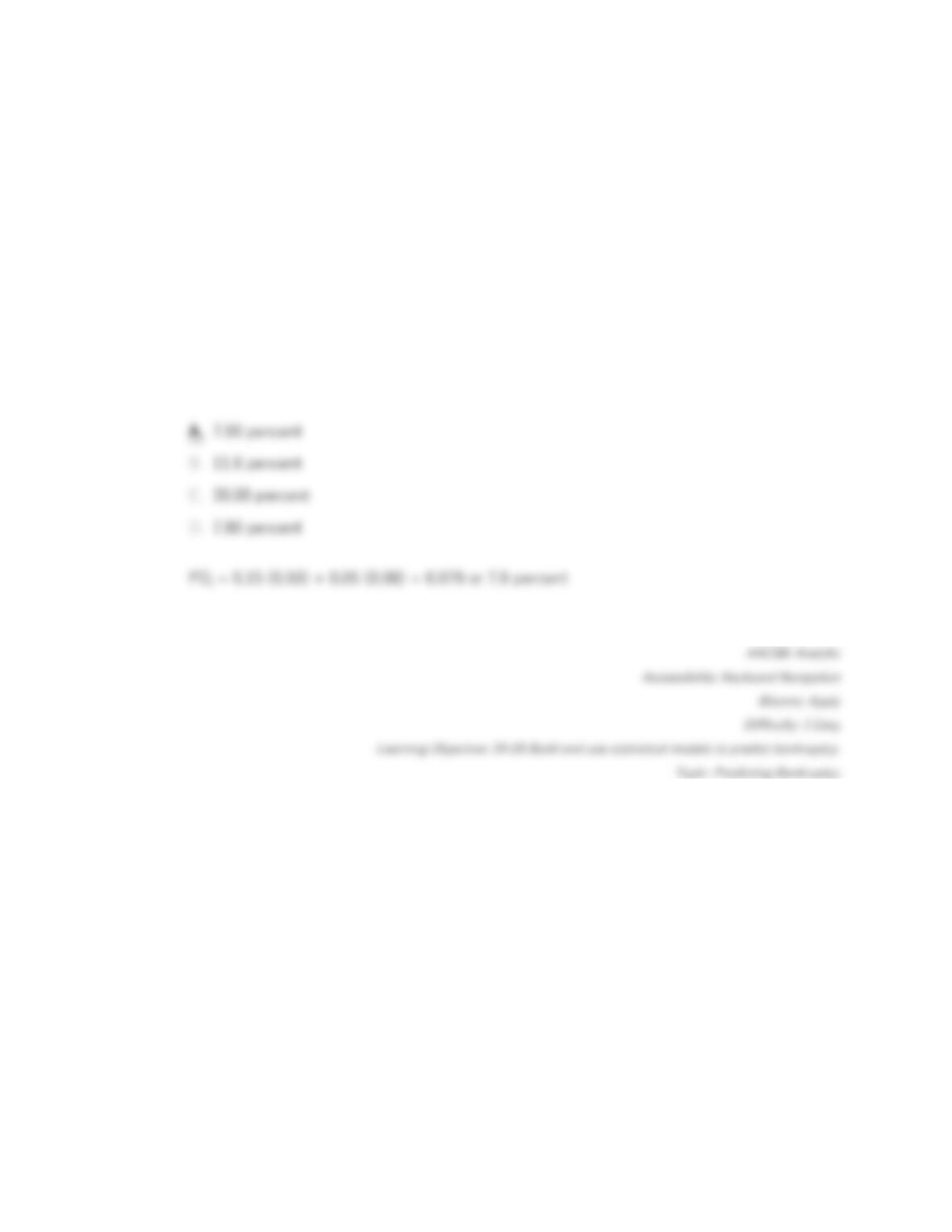
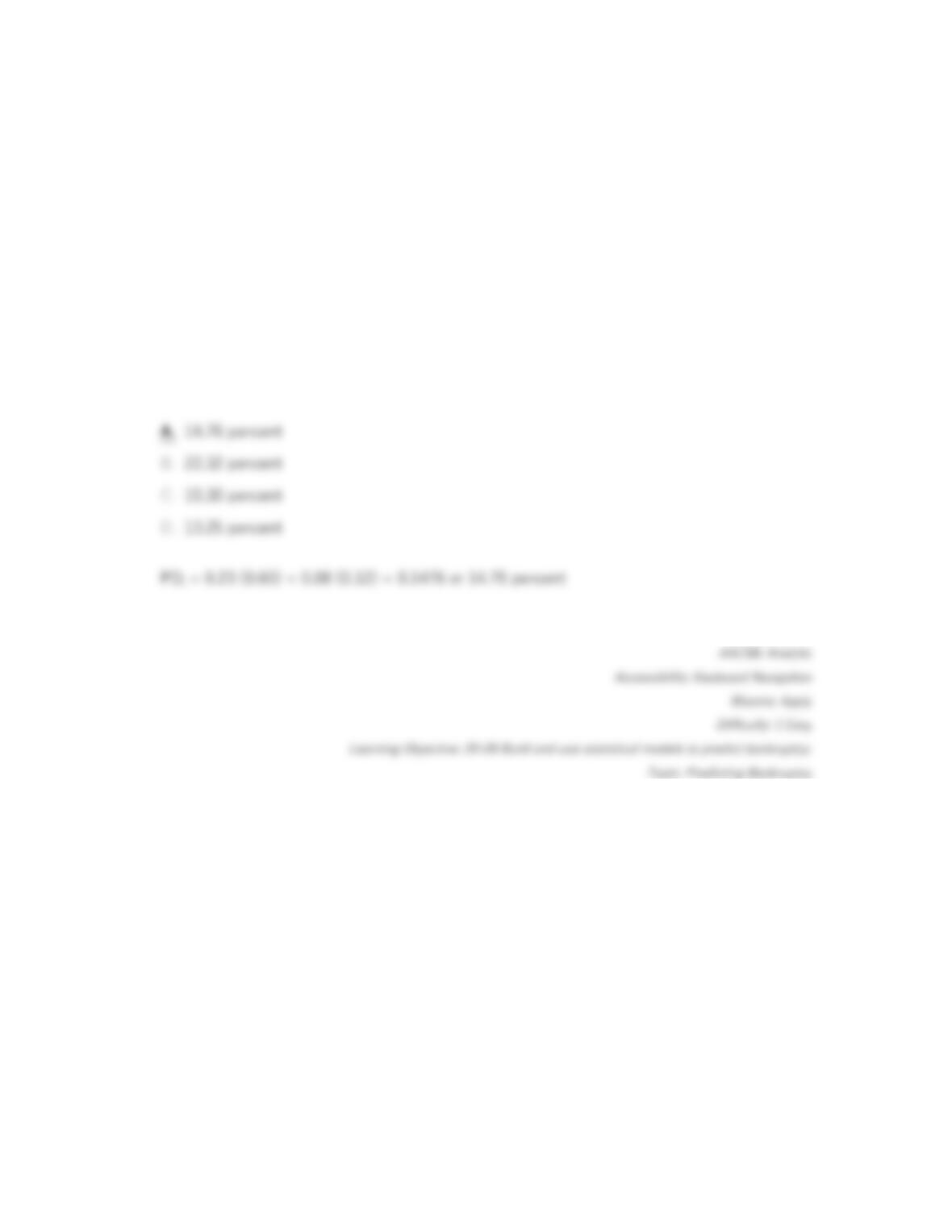
Calculation of Bankruptcy Probability Suppose a linear probability model you have
developed finds there are two factors influencing the past bankruptcy behavior of firms:
the debt ratio and the profit margin. Based on past bankruptcy experience, the linear
probability model is estimated as:
PDi = 0.15 (debt ratio) + 0.05 (profit margin)
A firm you are thinking of lending to has a debt ratio of 50 percent and a profit margin of 8
percent. Calculate the firm’s expected probability of default, or bankruptcy.
35.
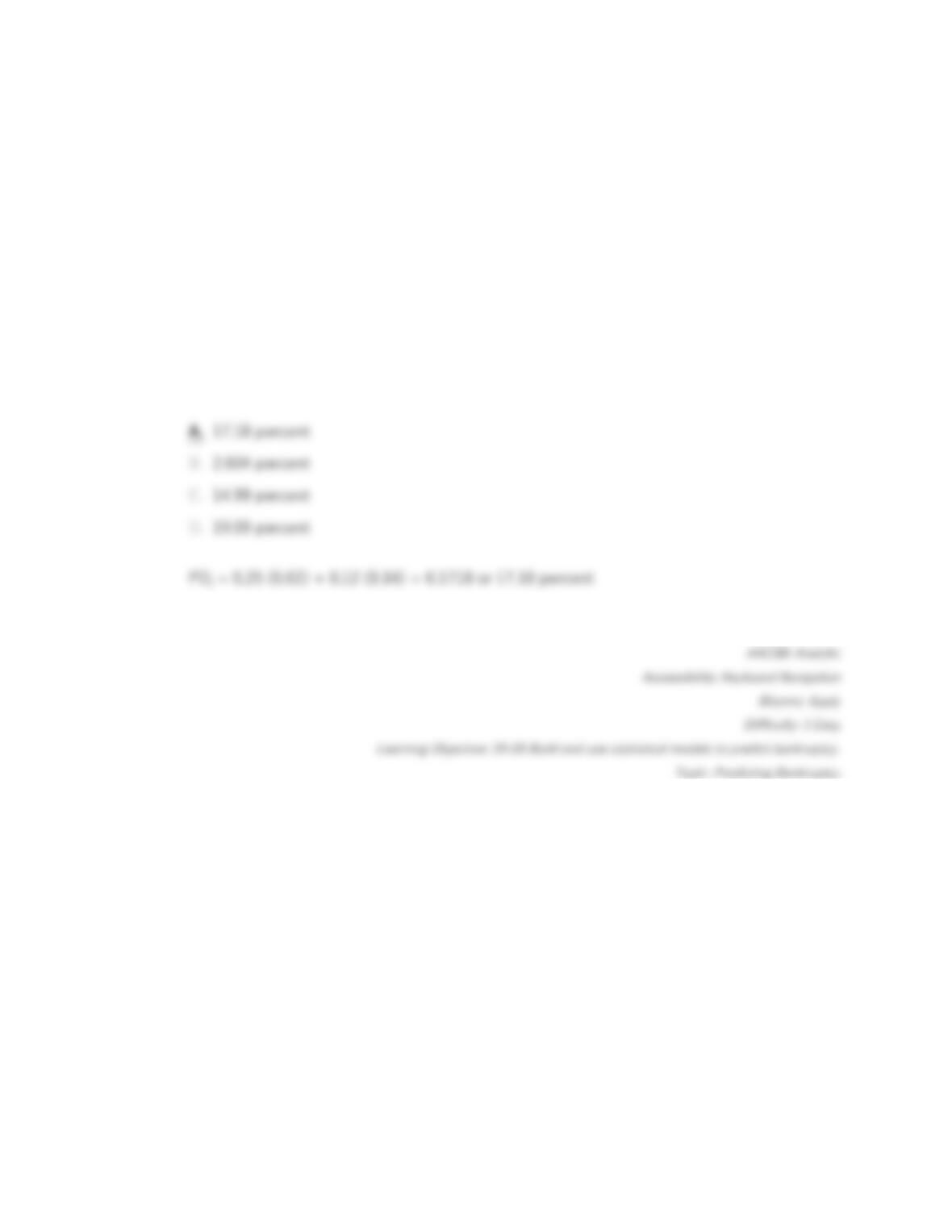
Calculation of Bankruptcy Probability Suppose a linear probability model you have
developed finds there are two factors influencing the past bankruptcy behavior of firms:
the debt ratio and the profit margin. Based on past bankruptcy experience, the linear
probability model is estimated as:
PDi = 0.23 (debt ratio) + 0.08 (profit margin)
A firm you are thinking of lending to has a debt ratio of 60 percent and a profit margin of
12 percent. Calculate the firm’s expected probability of default, or bankruptcy.
36.
Calculation of Bankruptcy Probability Suppose a linear probability model you have
developed finds there are two factors influencing the past bankruptcy behavior of firms:
the debt ratio and the profit margin. Based on past bankruptcy experience, the linear
probability model is estimated as:
PDi = 0.25 (debt ratio) + 0.12 (profit margin)
A firm you are thinking of lending to has a debt ratio of 62 percent and a profit margin of
14 percent. Calculate the firm’s expected probability of default, or bankruptcy.
37.
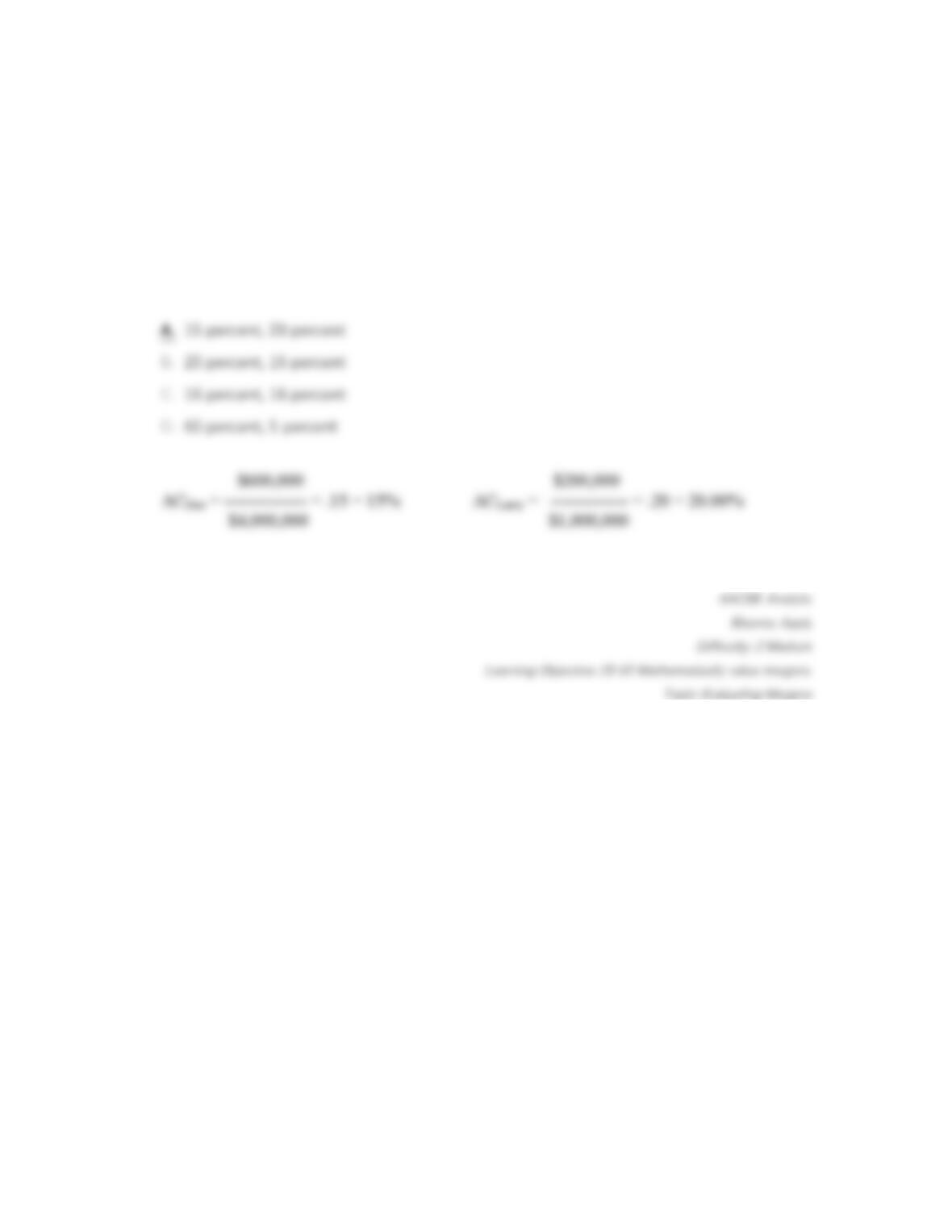
Calculation of Average Costs with Economies of Scope Dee’s Dry Cleaning is
considering a merger with Larry’s Laundry Supply Stores. Dee’s total operating costs of
producing services are $600,000 for sales volume of $4 million. Larry’s total operating
costs of producing services are $200,000 for a sales volume (J
P
) of $1 million. Calculate
the average cost of production for the Dee’s and Larry’s firms, respectively.
38.
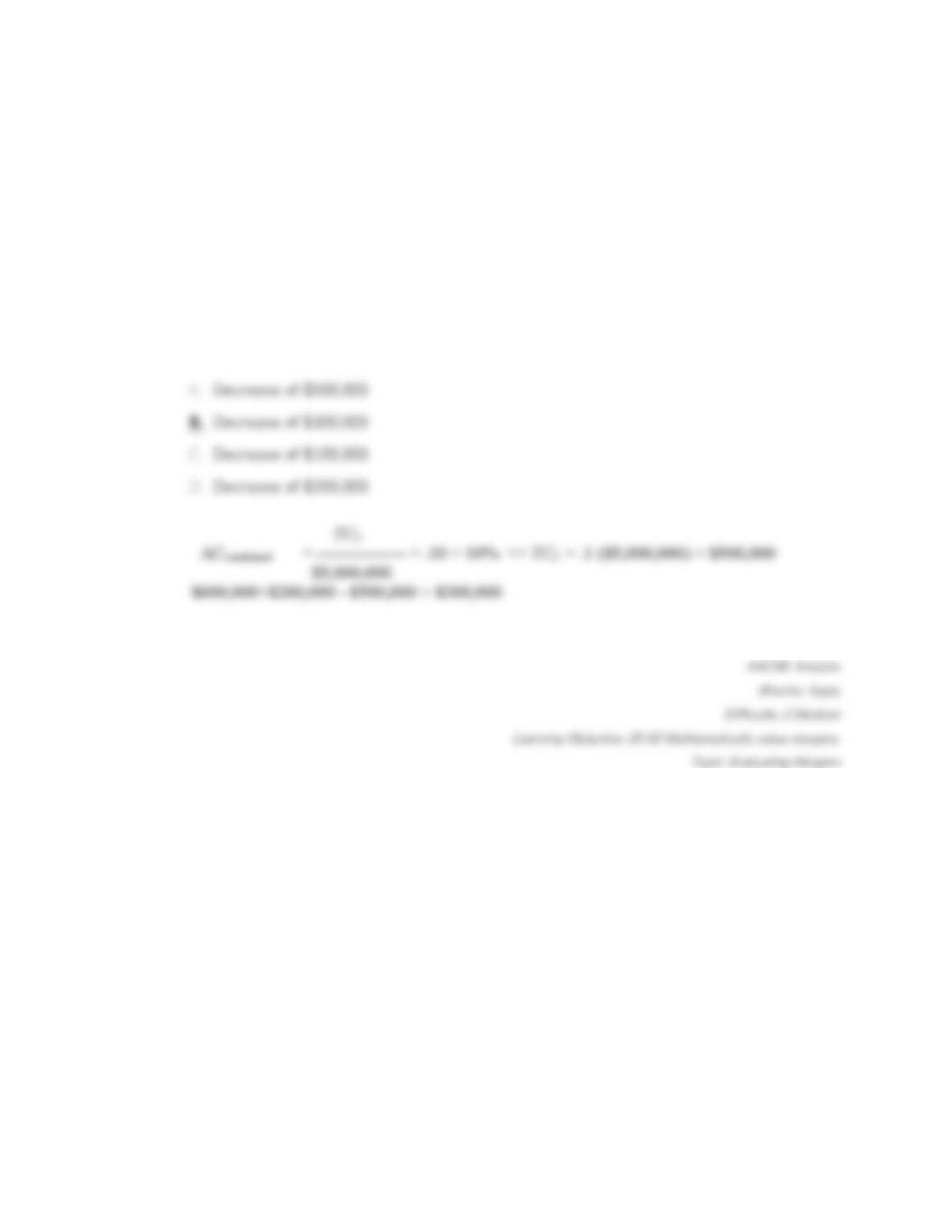
Calculation of Average Costs with Economies of Scope Dee’s Dry Cleaning is
considering a merger with Larry’s Laundry Supply Stores. Dee’s total operating costs of
producing services are $600,000 for sales volume of $4 million. Larry’s total operating
costs of producing services are $200,000 for a sales volume (J
P
) of $1 million. For a sales
volume of $5 million, calculate the reduction in production costs the merged firms need to
experience such that the total average cost (
TAC
) for the merged firms is equal to 10
percent.
39.
Calculation of Average Costs with Economies of Scope Blinds N Such is considering a
merger with Window Supply Stores. Blinds’ total operating costs of producing services are
$750,000 for sales volume of $6 million. Window’s total operating costs of producing
services are $100,000 for a sales volume (J
P
) of $1 million. Calculate the average cost of
production for the Blinds and Window firms, respectively.
40.
Calculation of Average Costs with Economies of Scope Blinds N Such is considering a
merger with Window Supply Stores. Blinds’ total operating costs of producing services are
$750,000 for sales volume of $6 million. Window’s total operating costs of producing
services are $100,000 for a sales volume (J
P
) of $1 million. For a sales volume of $7
million, calculate the reduction in production costs the merged firms need to experience
such that the total average cost (
TAC
) for the merged firms is equal to 12 percent.
41.
Calculation of Average Costs with Economies of Scope Jewelry Designs is considering a
merger with Beads Supply Stores. Jewelry’s total operating costs of producing services are
$300,000 for sales volume of $2 million. Beads’ total operating costs of producing services
are $125,000 for a sales volume (J
P
) of $2.25 million. Calculate the average cost of
production for the Jewelry and Beads firms, respectively.
42.
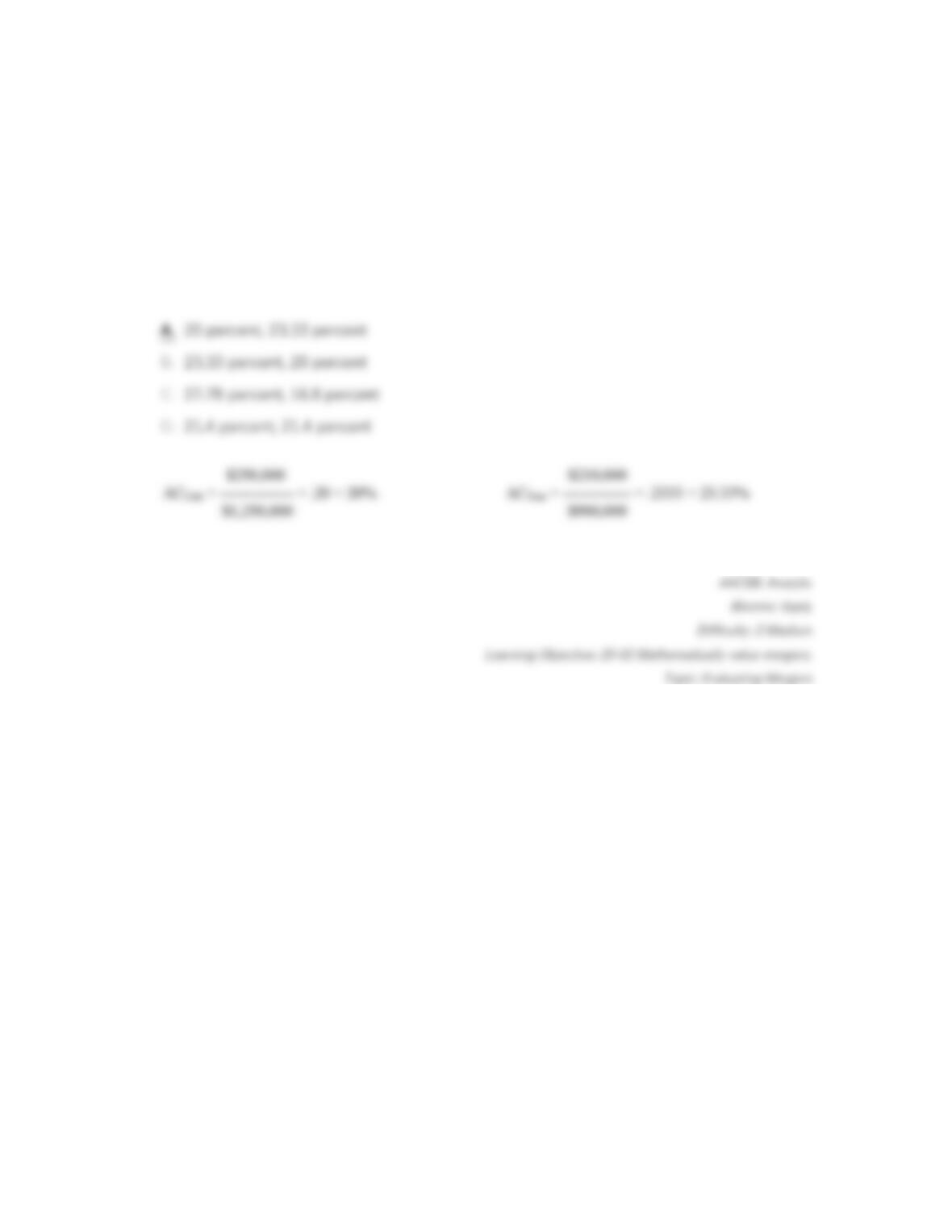
Calculation of Average Costs with Economies of Scope Jewelry Designs is considering a
merger with Beads Supply Stores. Jewelry’s total operating costs of producing services are
$300,000 for sales volume of $2 million. Beads’ total operating costs of producing services
are $125,000 for a sales volume (J
P
) of $2.25 million. For a sales volume of $4.25 million,
calculate the reduction in production costs the merged firms need to experience such that
the total average cost (
TAC
) for the merged firms is equal to 8 percent.
43.
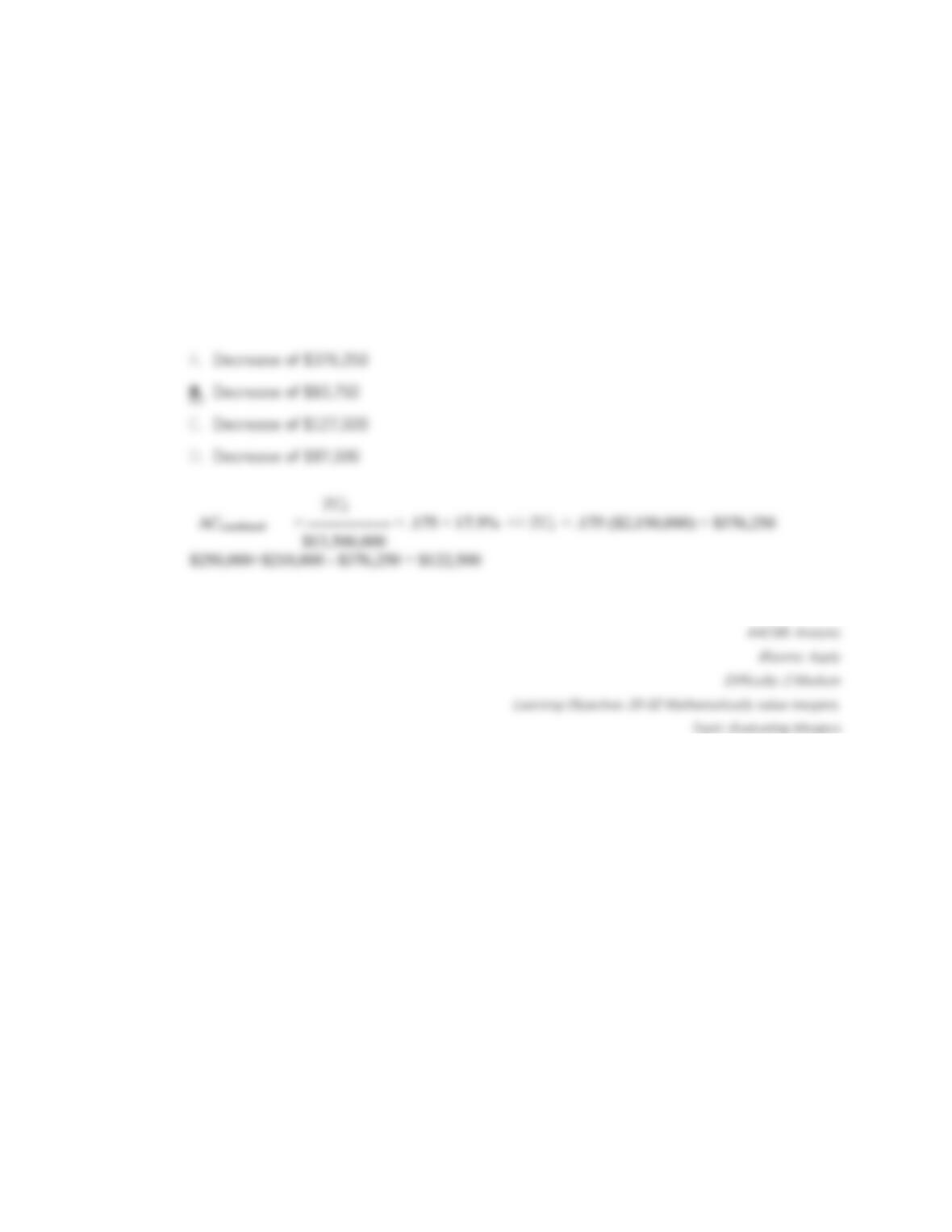
Calculation of Average Costs with Economies of Scope Crib World is considering a
merger with Tots Supply Stores. Crib’s total operating costs of producing services are
$250,000 for sales volume of $1.25 million. Tots’ total operating costs of producing
services are $210,000 for a sales volume (J
P
) of $900,000. Calculate the average cost of
production for the Crib and Tots firms, respectively.
44.
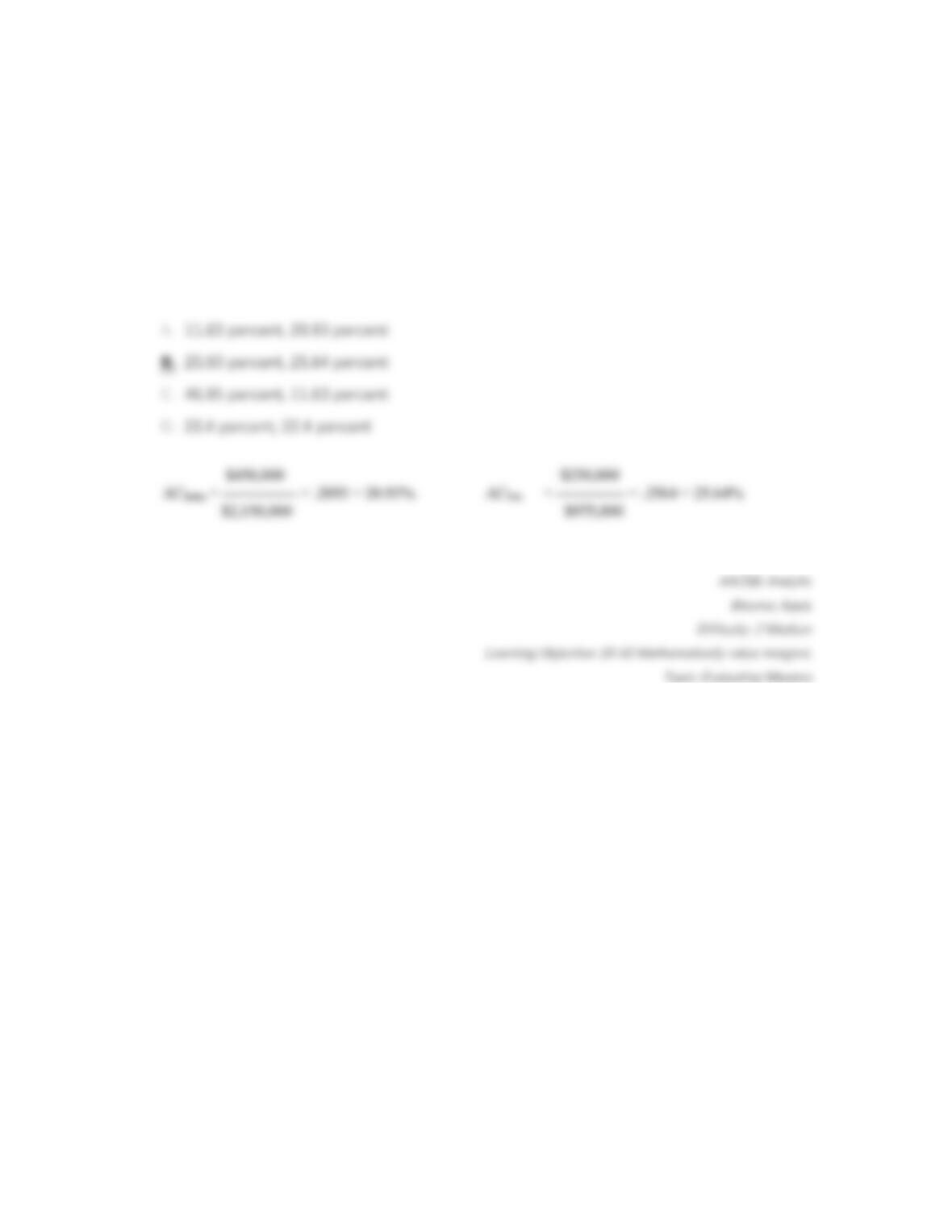
Calculation of Average Costs with Economies of Scope Crib World is considering a
merger with Tots Supply Stores. Crib’s total operating costs of producing services are
$250,000 for sales volume of $1.25 million. Tots’ total operating costs of producing
services are $210,000 for a sales volume (J
P
) of $900,000. For a sales volume of $2.15
million, calculate the reduction in production costs the merged firms need to experience
such that the total average cost (
TAC
) for the merged firms is equal to 17.5 percent.
45.
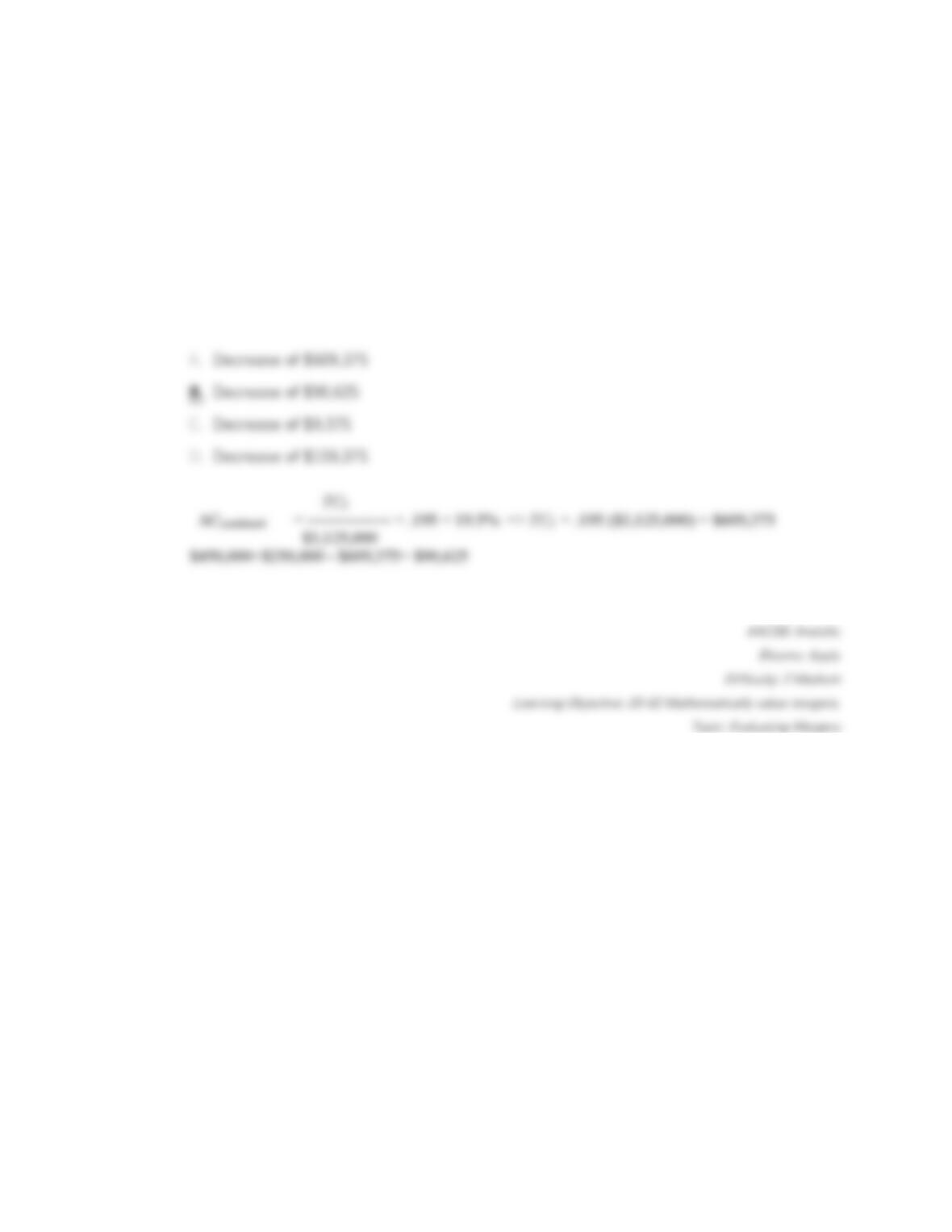
Calculation of Average Costs with Economies of Scope Baby Supplies is considering a
merger with Tot Toy Stores. Baby’s total operating costs of producing services are
$450,000 for sales volume of $2.15 million. Tot’s total operating costs of producing
services are $250,000 for a sales volume (J
P
) of $975,000. Calculate the average cost of
production for the Baby and Tot Toy firms, respectively.
46.
Calculation of Average Costs with Economies of Scope Baby Supplies is considering a
merger with Tot Toy Stores. Baby’s total operating costs of producing services are
$450,000 for sales volume of $2.15 million. Tot’s total operating costs of producing
services are $250,000 for a sales volume (J
P
) of $975,000. For a sales volume of $3.125
million, calculate the reduction in production costs the merged firms need to experience
such that the total average cost (
TAC
) for the merged firms is equal to 19.5 percent.
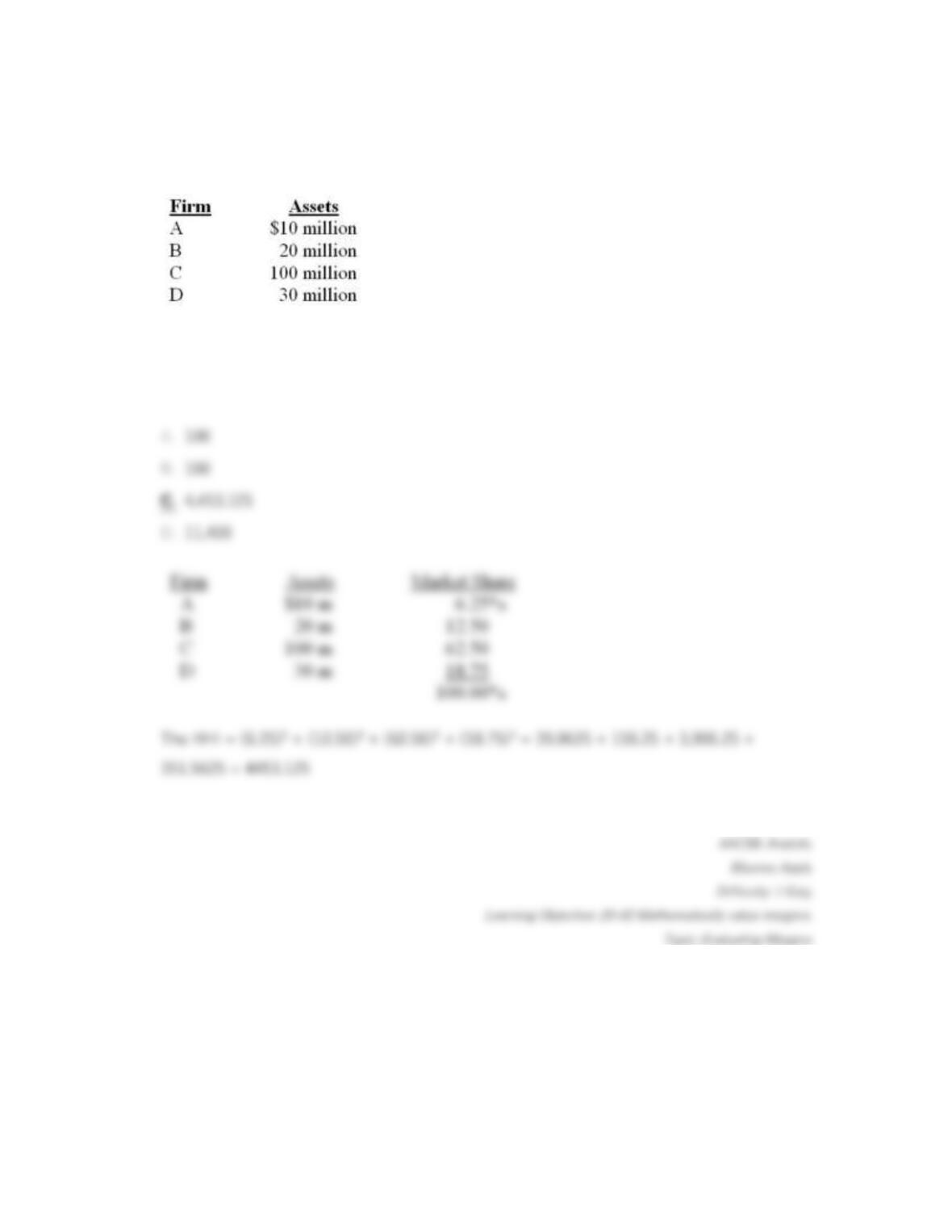
47.
Calculation of Change in the HHI Associated with a Merger The Justice Department
has been asked to review a merger request for a market with the following four firms.
What is the HHI for the existing market?
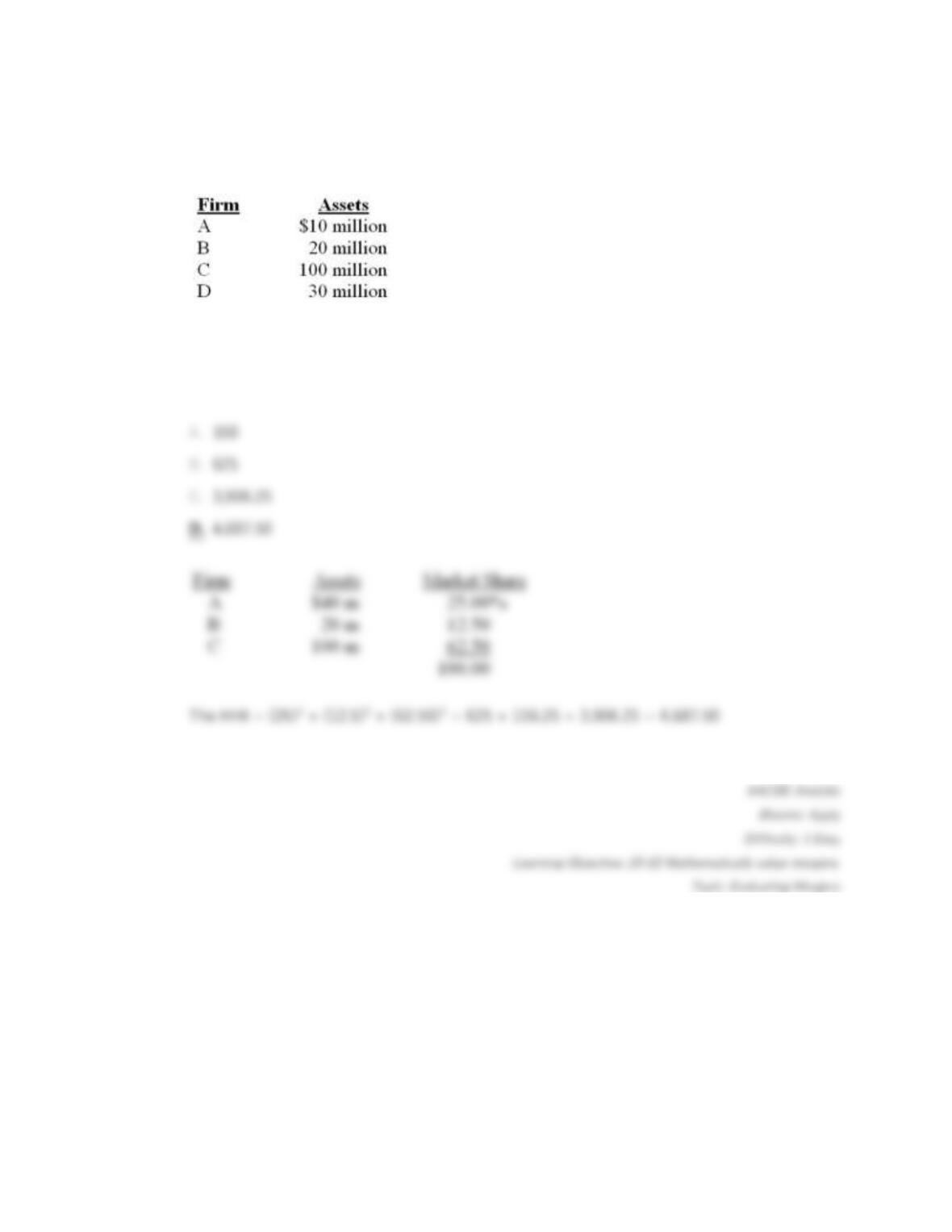
48.
Calculation of Change in the HHI Associated with a Merger The Justice Department
has been asked to review a merger request for a market with the following four firms.
If Firm A acquires Firm D, what is the HHI for the new market?
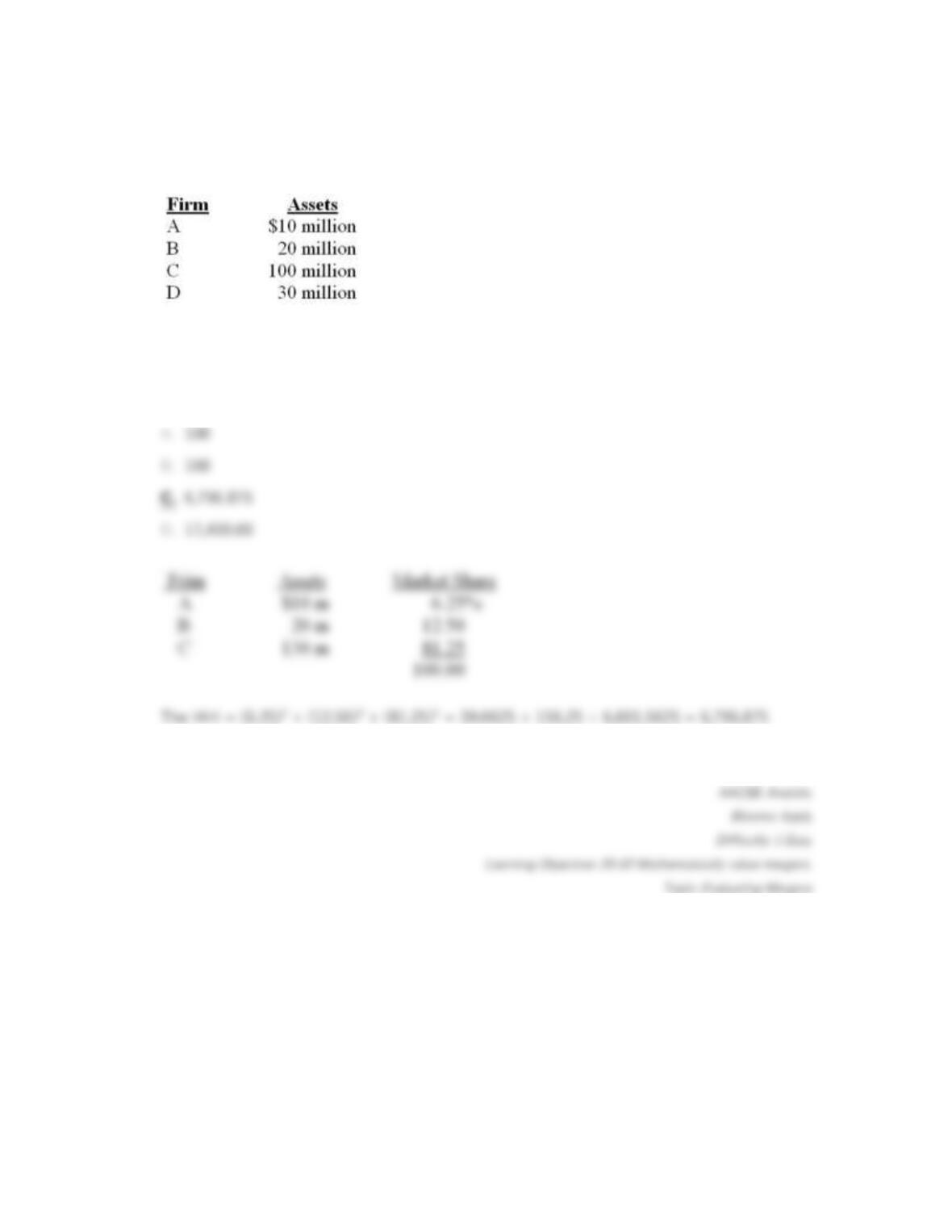
49.
Calculation of Change in the HHI Associated with a Merger The Justice Department
has been asked to review a merger request for a market with the following four firms.
If Firm C acquires Firm D, what is the HHI for the new market?
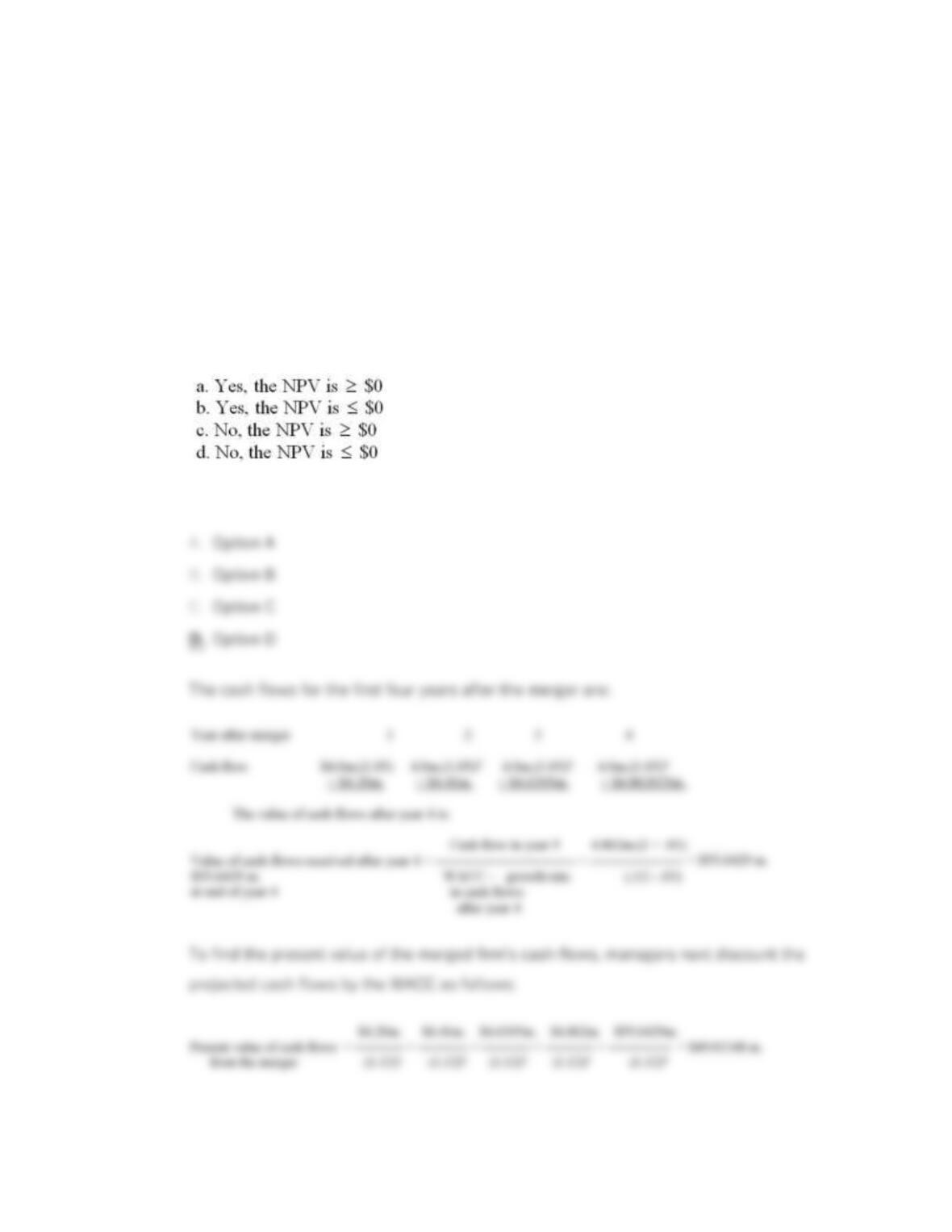
50.
Valuation of a Merger Tim’s Fix It Shop, Inc., is asking a price of $50 million to be
purchased by Taylor’s Tire Hut Corp. The two firms currently have cumulative total cash
flows of $4 million which are growing at 2 percent annually. Managers estimate that
because of synergies the merged firm’s cash flows will increase by an additional 5 percent
for the first four years following the merger. After the first four years cash flows will grow
at a rate of 3 percent. The WACC for the merged firms is 12 percent. Calculate the NPV of
the merger. Should Taylor’s Tire Hut Corporation agree to acquire Tim’s Fix It Shop, Inc.,
for the asking price of $50 million?