Exam
Name___________________________________
MULTIPLE CHOICE. Choose the one alternative that best completes the statement or answers the question.
1)
Based on the material presented in the chapter, can we conclude that people will consume goods
until the marginal utility of each good is zero?
1)
A)
No, because consumption is determined by the marginal utility/price ratio.
B)
No, because consumption is determined by total utility.
C)
Yes, because at that point marginal utility is minimum.
D)
Yes, because at that point total utility is maximum.
2)
One characteristic of indifference curves is that
2)
A)
they are straight lines.
B)
they cannot intersect.
C)
they must intersect at the origin.
D)
they have a positive slope.
3)
The reason that all–you–can–eat restaurants can make a profit is due to
3)
A)
the law of diminishing marginal utility.
B)
the law of diminishing marginal returns.
C)
the law of increasing relative costs.
D)
the law of demand.
4)
Suppose that the quantity of hamburgers is measured along the vertical axis and that the number of
bags of popcorn is measured along the horizontal axis. The budget constraint has a vertical
intercept of 10 hamburgers, and the slope of the line is –1. If the price of popcorn doubles, we know
that
4)
A)
the new equilibrium will have a marginal rate of substitution of –2.
B)
the vertical axis of the budget line shifts to 5 hamburgers.
C)
the new equilibrium will have a marginal rate of substitution of –0.5.
D)
the consumer will buy half as many bags of popcorn as before.
5)
Use the above figure. The consumer‘s choice changes from YA to YB. Which of the following
statements about good Y is true?
5)
A)
price has increased and the quantity demanded has risen..
B)
price has decreased and the quantity demanded has risen.
C)
price has increased and the quantity demanded has fallen.
D)
price has decreased and the quantity demanded has fallen.
6)
Mathematically the marginal rate of substitution is
6)
A)
always a positive number.
B)
always a negative number.
C)
sometimes a positive and sometimes a negative number.
D)
is equal to 1.
7)
The consumer optimum is defined as
7)
A)
the set of goods and services that maximizes marginal utility for each good.
B)
the set of goods and services, subject to the limited income of the consumer, that maximizes
the total utility of the consumer.
C)
the set of goods and services such that the marginal utility of each good equals zero.
D)
the set of goods and services that maximizes the marginal utility of each good consumed.
8)
Consumers do not buy as many units of each good as they want because
8)
A)
they do not know what they want in all situations.
B)
they have limited incomes.
C)
of the law of diminishing marginal utility.
D)
eventually marginal utility equals zero.
9)
When you tell your mother, “I’ll never be tired of your cooking,” you are saying the
9)
A)
total utility of her cooking to you is constant.
B)
marginal utility of her cooking to you is 0.
C)
total utility of her cooking to you is equal to 1.
D)
marginal utility of her cooking to you will never be 0.
10)
Use the above table. Adam has 3 apples and 3 oranges. Eve has 2 apples and 2 oranges. Eve asks
Adam to give her an apple in exchange for an orange. Should Eve go through with this exchange?
10)
A)
No. Adam likes apples more than oranges.
B)
Yes. This way she will have 3 apples, which will give her more total satisfaction.
C)
Yes. She is indifferent between consuming apples and oranges.
D)
No. She gives up more satisfaction than she gets.
D
11)
Adam has 3 apples and 3 oranges. Eve has 2 apples and 2 oranges. The marginal utilities for Adam
and Eve are summarized in the above table. Adam asks Eve to exchange one of her apples for an
orange.
11)
A)
Eve will be willing to make the exchange, because her total satisfaction will remain
unchanged.
B)
Eve will be unwilling to make the exchange, because she loses 5 utils of satisfaction.
C)
Eve will be unwilling to make the exchange, because she loses 15 utils of satisfaction.
D)
Eve will be willing to make the exchange, because her total satisfaction will increase.
D
D
12)
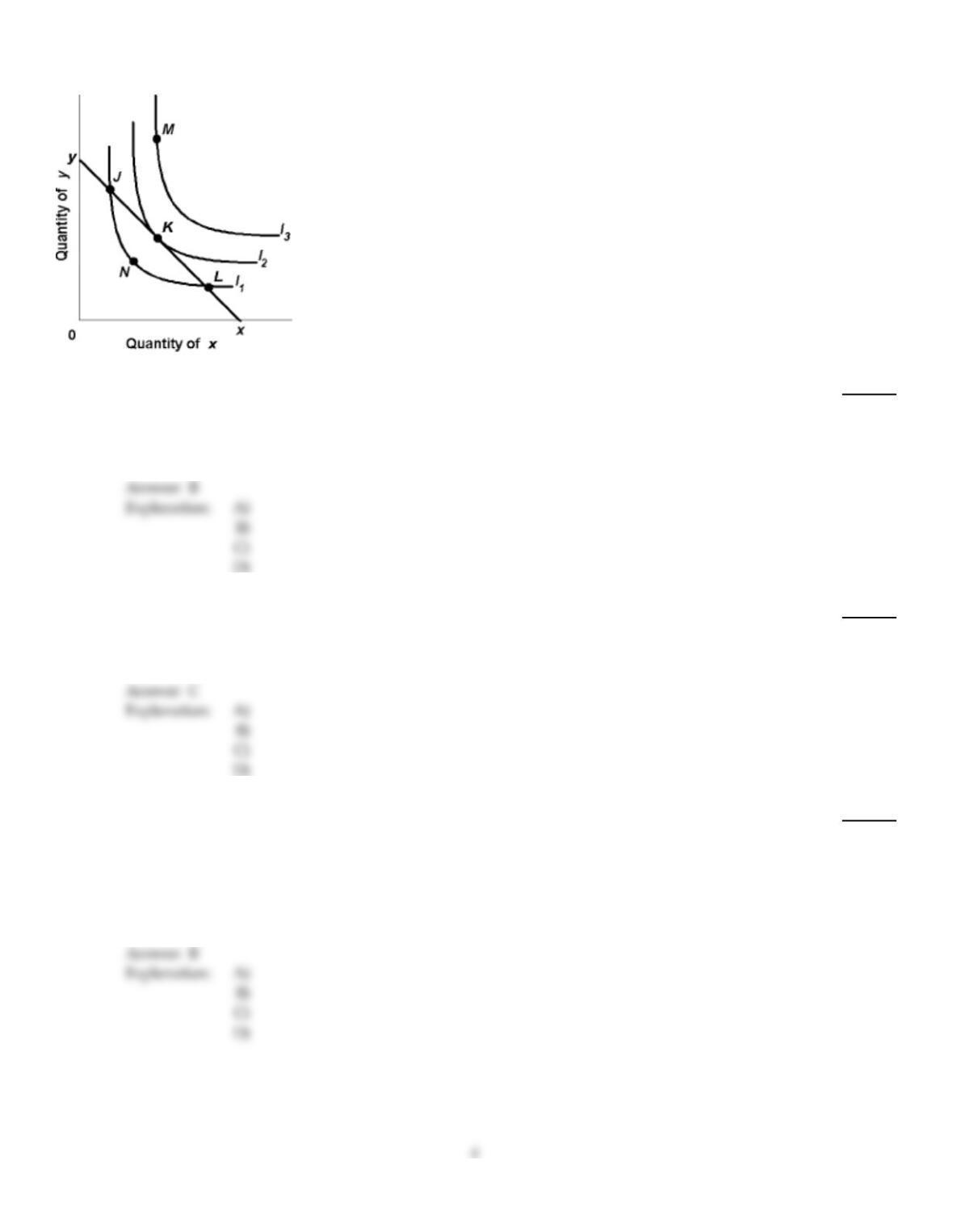
Using the above figure, we can conclude that
12)
A)
the consumer is indifferent between J and M.
B)
K is the optimal combination of goods.
C)
the consumer will purchase goods at combination M.
D)
L is preferred to K.
13)
Let the quantity of hamburgers be measured along the vertical axis and the quantity of movies be
measured along the horizontal axis. If the price of a hamburger is $1.50 and the price of a movie is
$6, then the slope of the budget line is
13)
A)
–0.25.
B)
–6.
C)
–4.
D)
–3.
14)
John is currently spending all of his income. For the last unit of Good A consumed John gets 20 utils
and for the last unit of Good B consumed he gets 10 utils. The price of Good A is $1. The price of
Good B is $10. If John wants to maximize his utility he should
14)
A)
decrease the consumption of Good A and increase the consumption of Good B.
B)
increase the consumption of Good A and decrease the consumption of Good B.
C)
decrease the consumption of Good A and decrease the consumption of Good B.
D)
continue to purchase the same amount of Good A and Good B.
15)
When a consumer shifts his purchases from product A to product B, the marginal utility of
15)
A)
both A and B will decrease.
B)
A falls and the marginal utility of B will increase.
C)
A increases and the marginal utility of B will fall.
D)
both A and B will increase.
16)
A consumer has spent all of his income on hamburgers and movies. The price of a hamburger is $1
and the price of a movie is $6. The marginal utility of the last hamburger is 5 and the marginal
utility of the last movie is 24. The consumer has
16)
A)
not maximized utility. He should cut back on movies and buy more hamburgers.
B)
maximized utility.
C)
not maximized utility. He should cut back consumption of each good.
D)
not maximized utility. He should cut back on hamburgers and buy more movies.
17)
If the budget line rotates, then we know that
17)
A)
the consumer was not maximizing their utility.
B)
the price of one of the goods had changed.
C)
income has changed.
D)
their has been a change in the consumer’s tastes.
18)
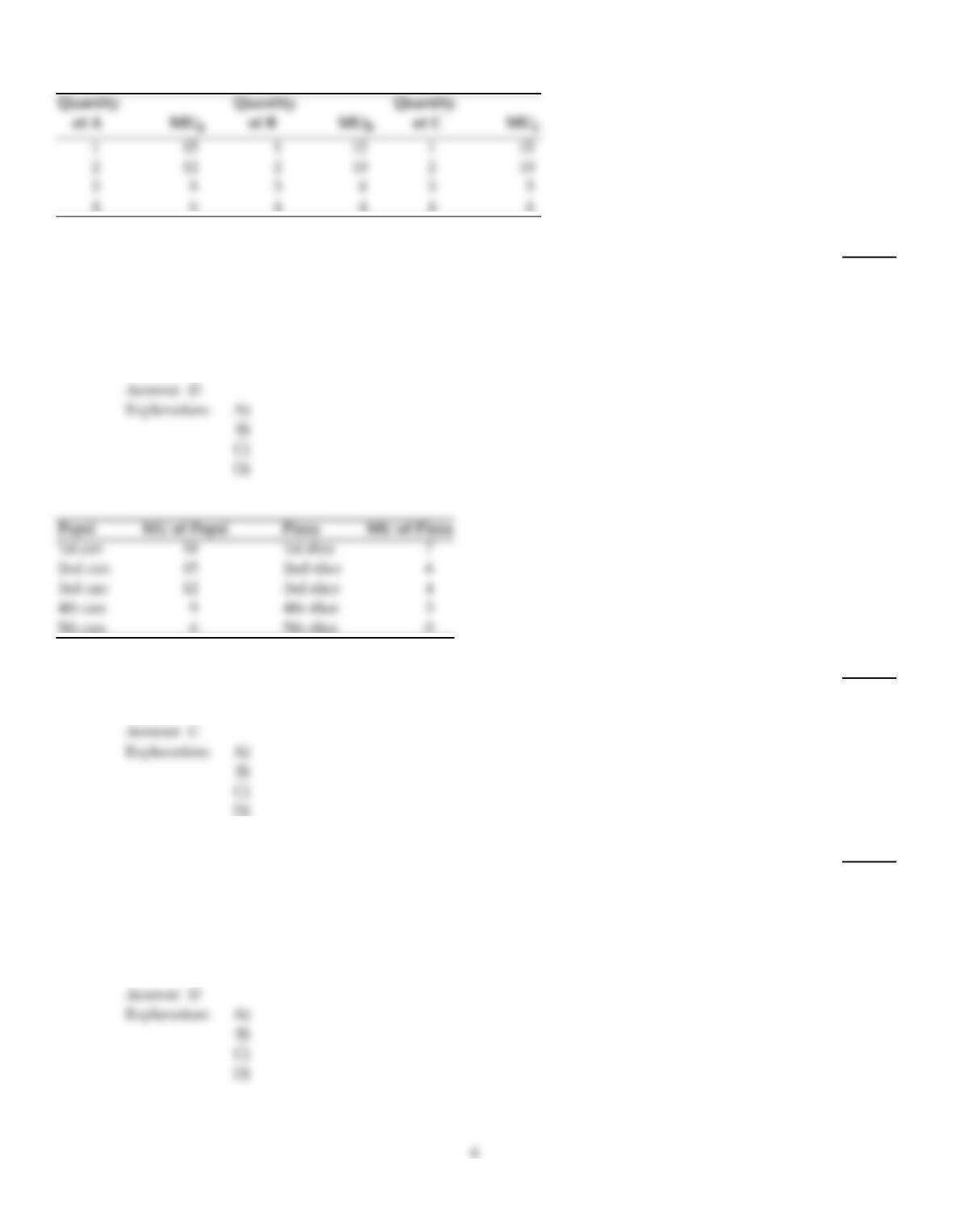
Based on the information in the above table, the price of A is $3, the price of B is $2, and the price of
C is $5. If Mary has $22 to spend, what combination of products A, B, and C should she buy in
order to maximize her satisfaction?
18)
A)
3 units of product A; 4 units of product B; 0 units of product C
B)
3 units of product A; 3 units of product B; 1 unit of product C
C)
2 units of product A; 1 unit of product B; 4 units of product C
D)
2 units of product A; 3 units of product B; 2 units of product C
19)
Using the above table, if the price of Pepsi is $3, how many cans of Pepsi would have to be
consumed in order to have a marginal utility to price ratio of 3?
19)
A)
two cans
B)
three cans
C)
four cans
D)
one can
20)
John is currently spending all of his income. For the last unit of Good A consumed John gets 20 utils
and for the last unit of Good B consumed he gets 10 utils. The price of Good A is $4. The price of
Good B is $1. If John wants to maximize his utility he should
20)
A)
continue to purchase the same amount of Good A and Good B.
B)
increase the consumption of Good A and decrease the consumption of Good B.
C)
decrease the consumption of Good A and decrease the consumption of Good B
D)
decrease the consumption of Good A and increase the consumption of Good B.
21)
Along a given indifference curve, a consumer reduces the quantity of one good in favor of more
units of the other. In this situation
21)
A)
Total utility rises.
B)
the marginal utility of the first rises and the marginal utility of the second good falls.
C)
the marginal rate of substitution falls.
D)
Both A and B are correct.
22)
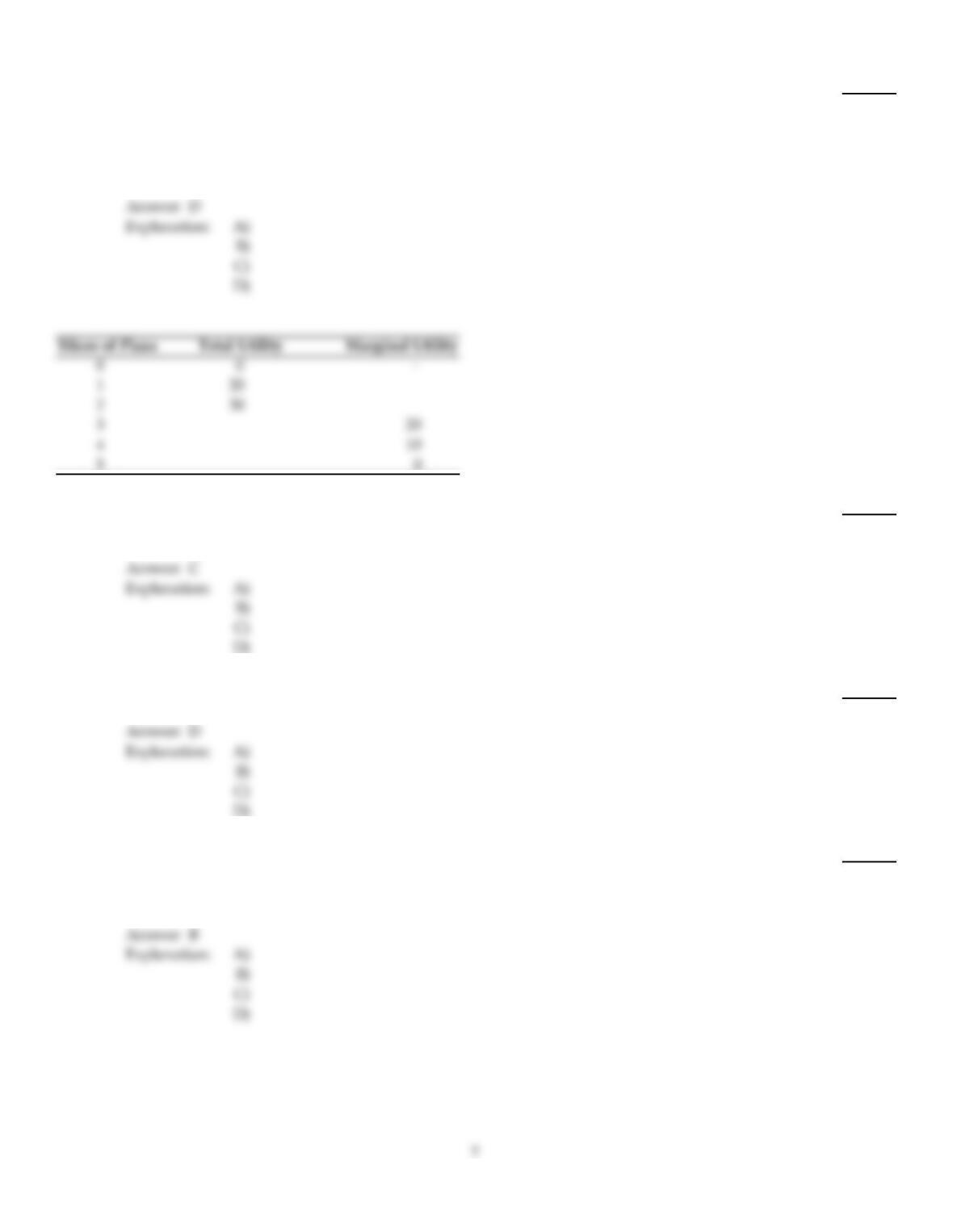
In the above table, marginal utility begins to diminish after consumption of the
22)
A)
fourth slice of pizza.
B)
fifth slice of pizza.
C)
second slice of pizza.
D)
third slice of pizza.
23)
In the above table, the marginal utility of the second slice of pizza is
23)
A)
20.
B)
50.
C)
10.
D)
30.
24)
In order for a consumer to choose between two different goods, he has to take into consideration
the
24)
A)
total utility divided by price.
B)
marginal utility divided by the price.
C)
marginal utility plus the price.
D)
marginal utility of production.
25)
If we are graphing total utility, then the total utility curve will
25)
A)
always be decreasing.
B)
be increasing as long as marginal utility is positive.
C)
be horizontal if marginal utility is positive.
D)
always be increasing.
26)
One piece of evidence that possibly supports the bounded–rationality assumption of behavioral
economics is that experiments appear to have shown that
26)
A)
people make the same decisions in calm situations than in situations in which emotions come
into play.
B)
total utility is maximized when marginal utility is equal to zero.
C)
total utility is declining when marginal utility is negative.
D)
people make different decisions in calm situations than in situations in which emotions come
into play.
D
27)
The slope of the budget line will change
27)
A)
when the total satisfaction changes.
B)
when the consumer‘s taste changes.
C)
when the price of one of the products changes.
D)
when the consumer’s income increases.
C
B
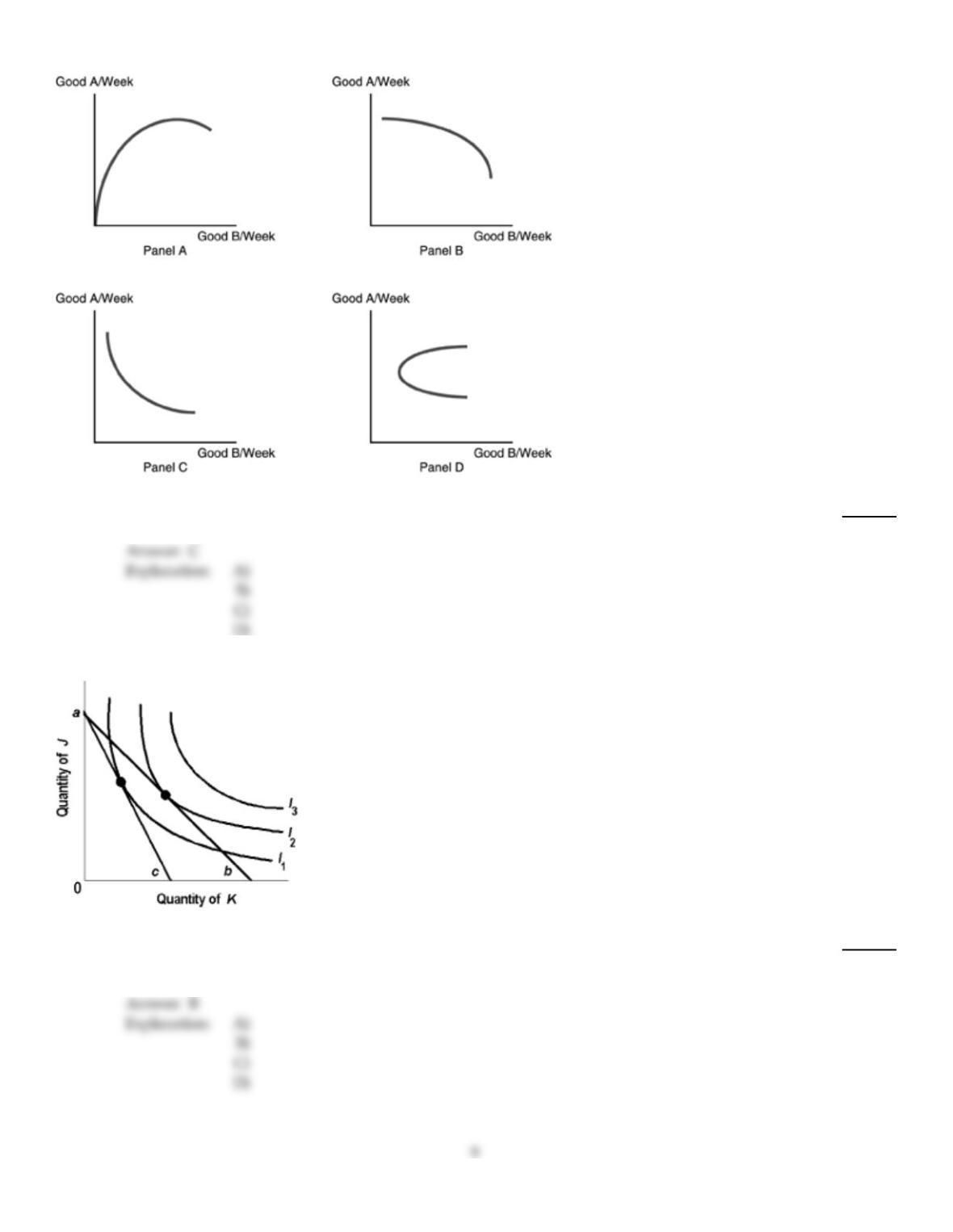
28)
Refer to the above figures. Which panel best represents an indifference curve?
28)
A)
Panel A.
B)
Panel B.
C)
Panel C.
D)
Panel D.
29)
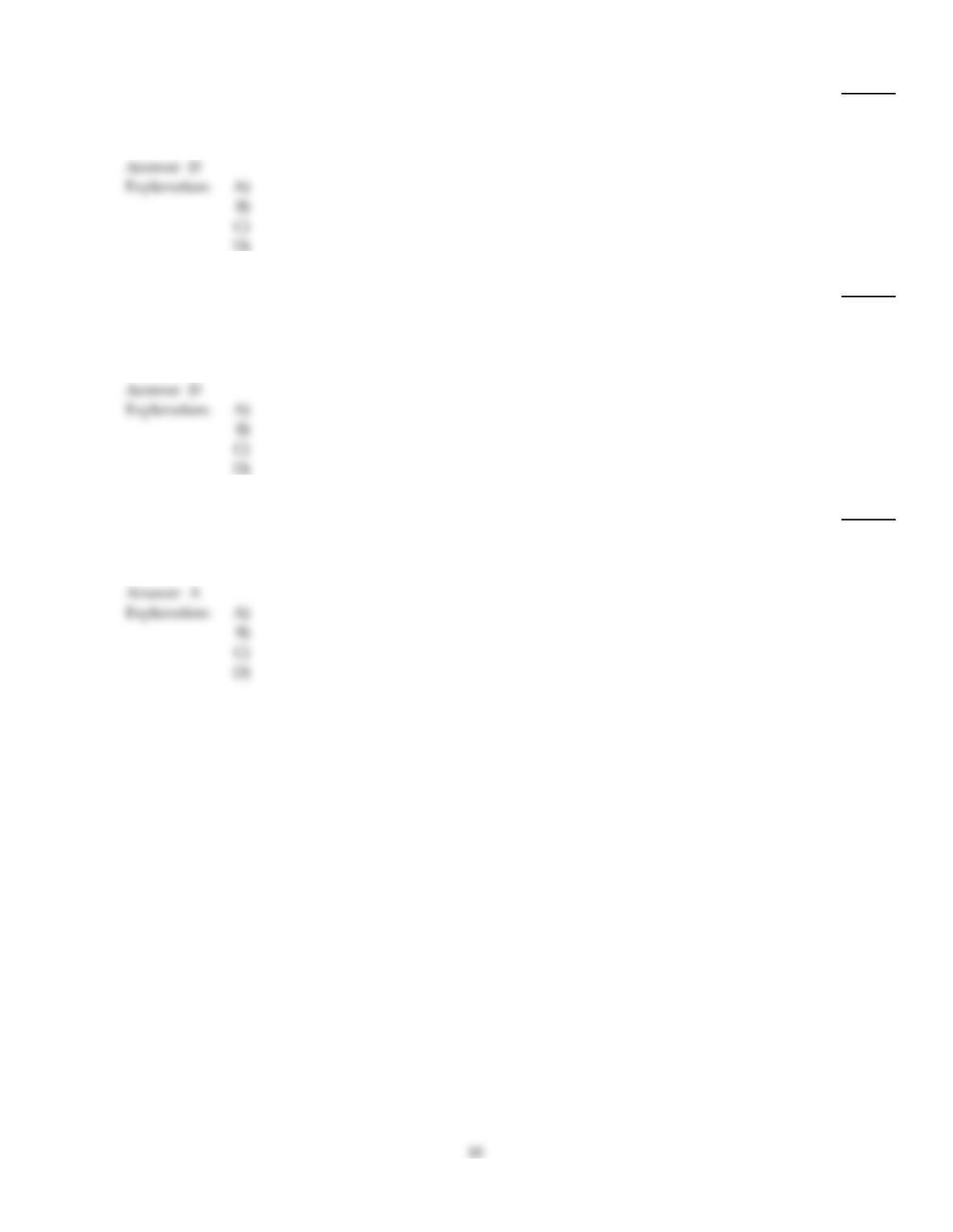
Use the above figure. When the budget line rotates from “b” to “c”
29)
A)
the price of product J increases.
B)
the price of product K increases.
C)
the price of product K decreases.
D)
the price of product J decreases.
30)
Increases in total utility from the consumption of a good decrease as more is consumed. This
statement is
30)
A)
false.
B)
the law of average utility.
C)
the consumer optimum.
D)
the law of diminishing marginal utility.
31)
Why are diamonds more expensive than water?
31)
A)
because water is a necessity
B)
because you get more total utility from diamonds
C)
because the last glass of water has higher marginal utility than the last diamond
D)
because the last diamond has higher marginal utility than the last glass of water
32)
The set of goods and services that maximizes the level of satisfaction for each consumer subject to
limited income is
32)
A)
the consumer optimum.
B)
substitution effect.
C)
diminishing marginal utility.
D)
increasing marginal utility.
33)
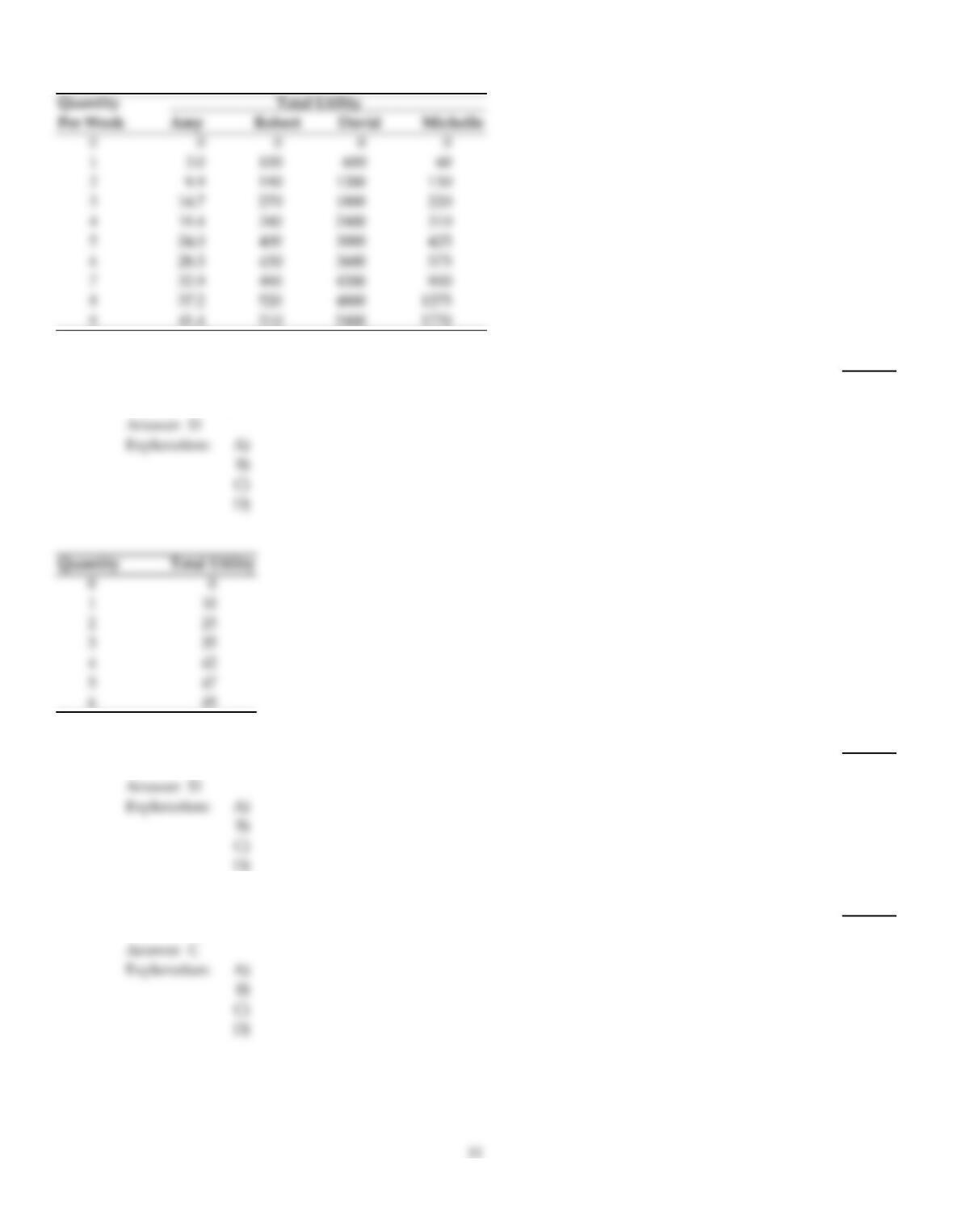
Refer to the above table. David’s utility schedule is characterized by
33)
A)
decreasing marginal utility.
B)
diminishing marginal utility.
C)
increasing marginal utility.
D)
constant marginal utility.
34)
Refer to the above table. At what quantity does diminishing marginal utility set in?
34)
A)
After 0.
B)
After 1.
C)
After 10.
D)
After 2.
35)
If total utility is decreasing, then marginal utility is
35)
A)
zero.
B)
positive.
C)
negative.
D)
increasing.
36)
The consumer optimum is found by using
36)
A)
marginal utility.
B)
total utils.
C)
total utility.
D)
total utility minus marginal utility.
37)
The consumption possibilities curve is the
37)
A)
demand curve.
B)
budget constraint.
C)
supply curve.
D)
indifference curve.
38)
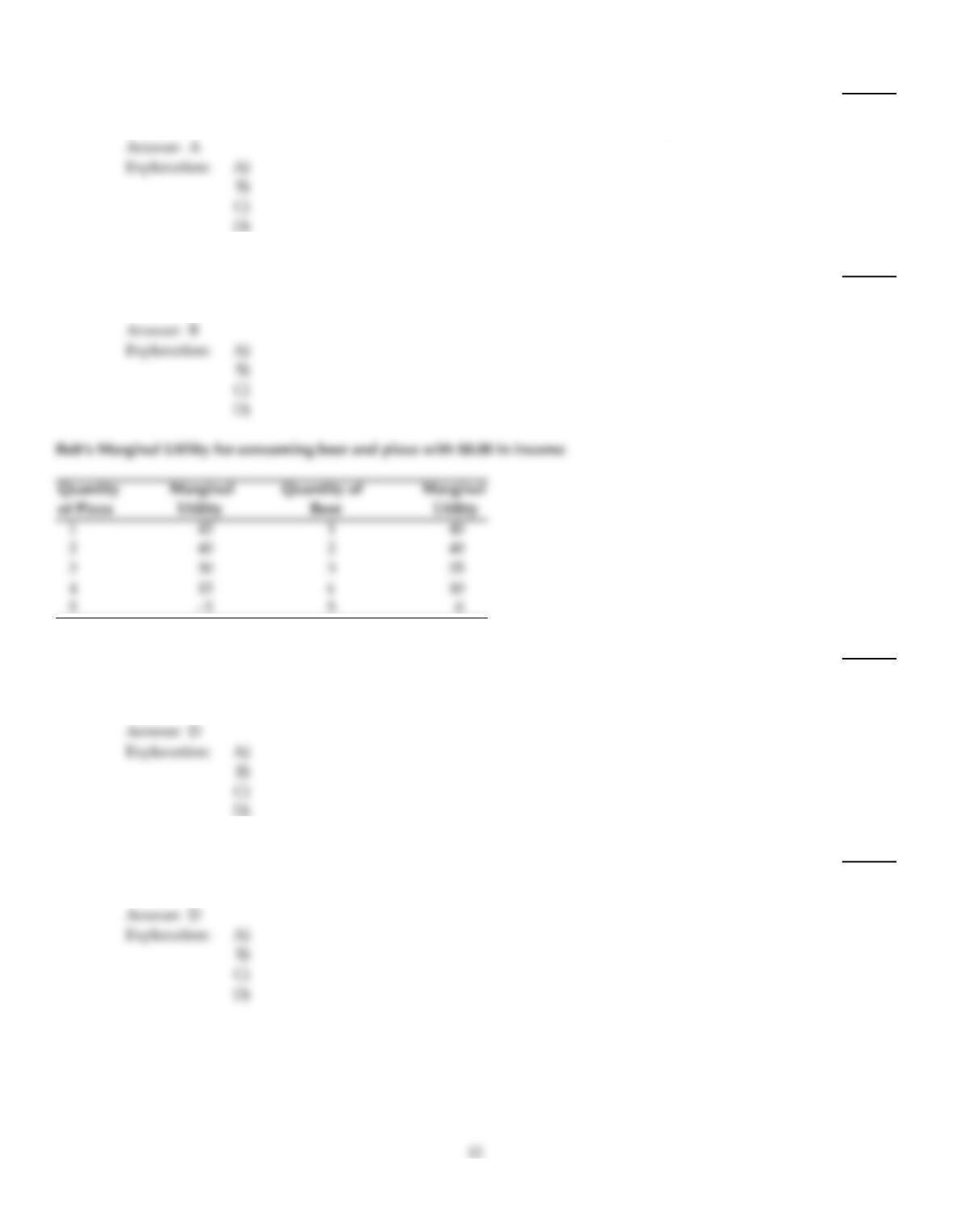
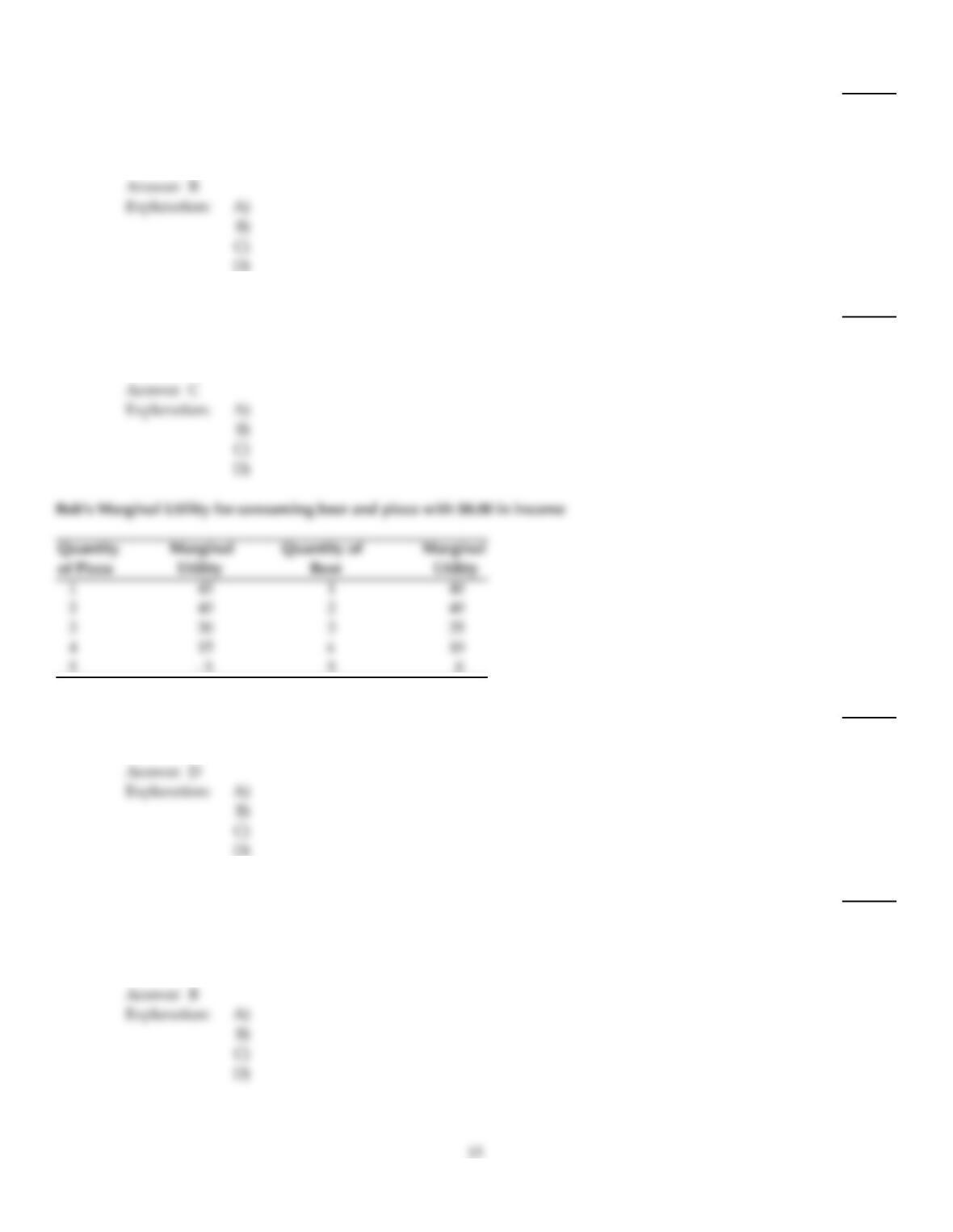
In the above table, how much beer and pizza will Bob consume if the price of a piece of pizza is
$2.00 and the price of a beer is $2.00?
38)
A)
1 piece of pizza and 3 beers
B)
2 pieces of pizza and 3 beers
C)
3 pieces of pizza and 1 beer
D)
2 pieces of pizza and 2 beers
39)
The principle that “as more of a good is consumed, its extra benefit declines” is known as
39)
A)
the law of comparative advantage.
B)
the law of demand.
C)
the law of diminishing marginal product.
D)
the law of diminishing marginal utility.
40)
Utility analysis is the analysis of
40)
A)
the formation of tastes and preferences.
B)
the consumption decisions of people based on utility maximization.
C)
the differences of tastes and preferences across individuals.
D)
how consumers determine the utility they receive from consumption.
41)
When you buy something, you do so because of the satisfaction you expect to receive from having
and using that good. Another term that can be used for satisfaction is
41)
A)
need.
B)
price elasticity.
C)
utility.
D)
purchasing power.
42)
In the above table, Bob experiences diminishing marginal utility after consuming how many pieces
of pizza?
42)
A)
2
B)
4
C)
3
D)
1
43)
Utility analysis is the analysis of
43)
A)
the formation of tastes and preferences.
B)
consumer decision making based on utility maximization.
C)
the psychology of decision making.
D)
how consumers decide how to spend their money.
44)
A rational individual will never consume a unit of a good if its
44)
A)
marginal utility is less than average utility.
B)
marginal utility is negative.
C)
marginal utility is increasing.
D)
marginal utility is diminishing.
45)
The price of a hamburger is $1, and the price of a movie is $6. The consumer has purchased 2
hamburgers and 2 movies, and her marginal utility from the second hamburger is 20 and from the
second movie is 120. The consumer has an income of $21. This combination of goods
45)
A)
maximizes utility because the marginal utility of the last dollar spent on each good is the
same, but it is not an equilibrium because marginal utility is not zero.
B)
maximizes utility and is an optimum because the marginal utility of the last dollar spent on
each good is the same.
C)
is not an optimum because the consumer has not spent all of her money.
D)
is not an optimum because the marginal utility of the last dollar spent on each good is not the
same.
46)
Holding all other prices and money income constant, if the price of food rises, then the consumer
will adjust her expenditures and
46)
A)
reach an optimum on a higher indifference curve.
B)
her level of satisfaction may go up or down.
C)
reach an optimum on the same indifference curve.
D)
reach an optimum on a lower indifference curve.
47)
A decrease in the price of a good causes
47)
A)
purchasing power of a person’s income to increase.
B)
the marginal utility of the good to decrease.
C)
the nominal wealth of a person to increase.
D)
the utility of the good to decrease.
48)
The marginal rate of substitution is the
48)
A)
change in the quantity of one good that changes the utility received by one unit.
B)
same thing as the marginal utility of a good.
C)
rate at which the consumer will give up one good for an additional unit of the other good,
such that total satisfaction is constant.
D)
rate at which the consumer can trade one good for the other in the marketplace.
49)
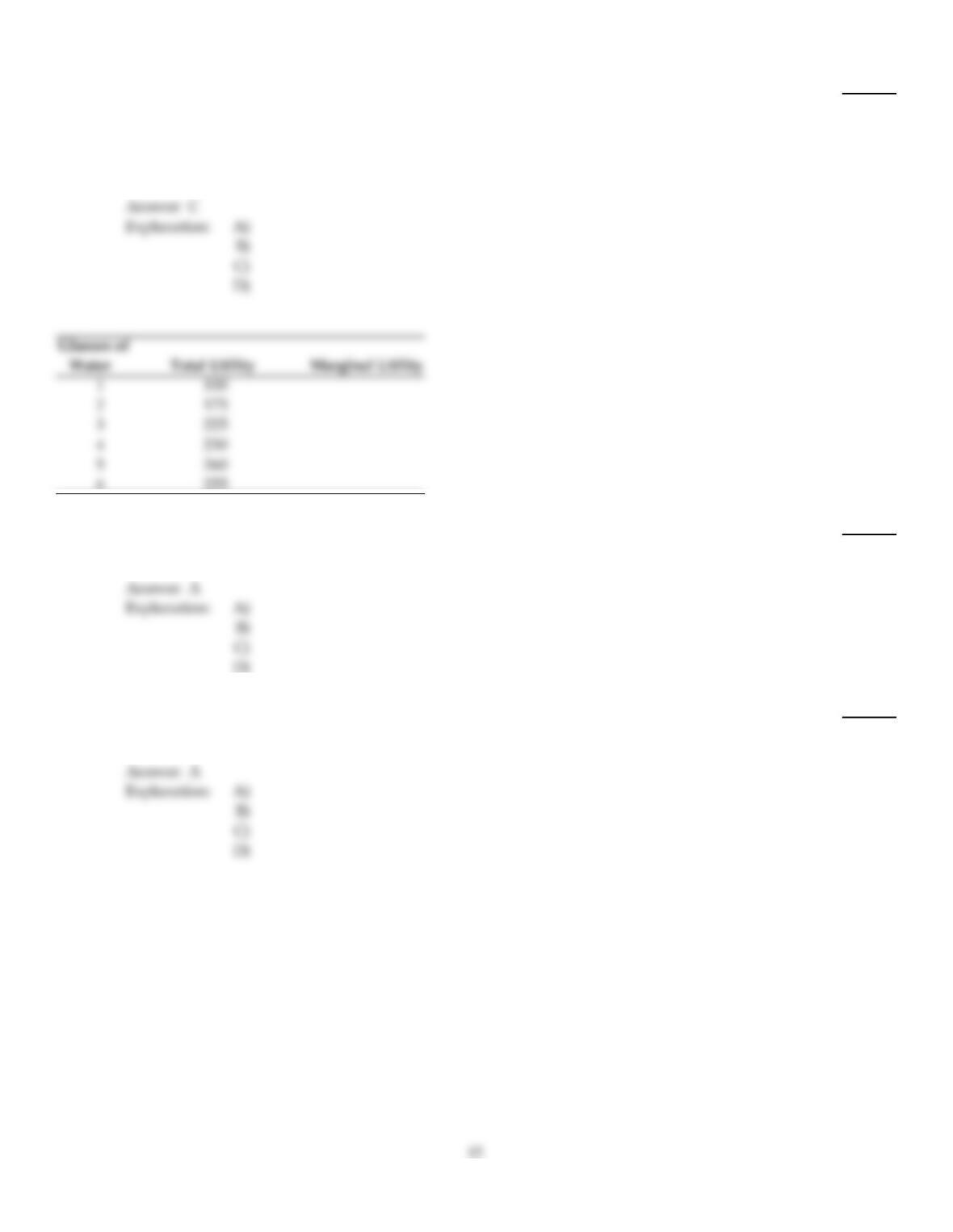
Using the above table, diminishing marginal utility begins after the ________ glass of water is
consumed.
49)
A)
1st
B)
6th
C)
2nd
D)
5th
A
50)
The marginal rate of substitution is measured along
50)
A)
a given indifference curve.
B)
the demand curve.
C)
a given budget line.
D)
the total utility curve.
A
C
51)
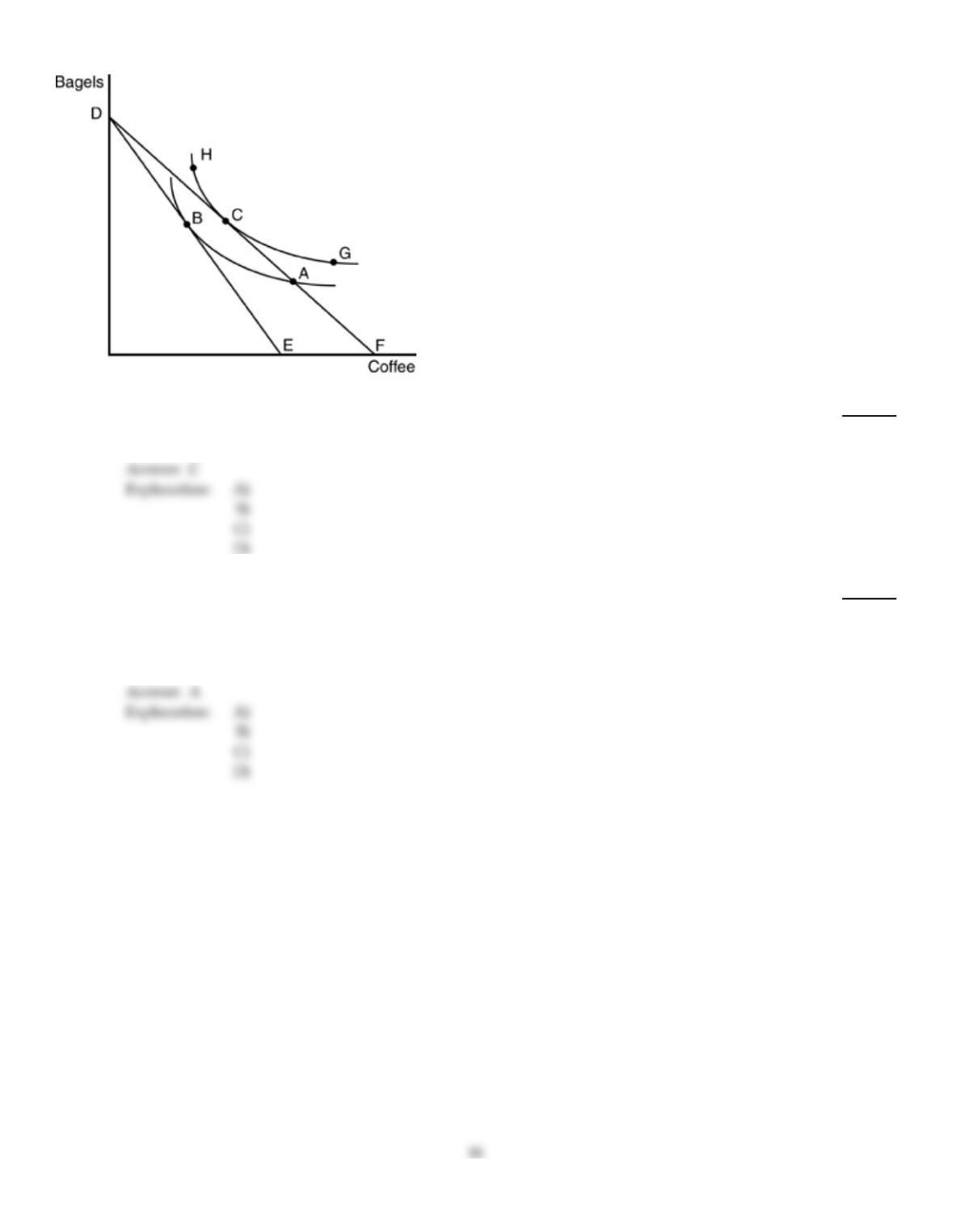
In the above figure, point C is
51)
A)
preferred to points G, A, and B.
B)
less preferred than point H.
C)
preferred to points A and B.
D)
less preferred than point G.
52)
The total utility of water is
52)
A)
higher than the total utility of diamonds, but the marginal utility of diamonds is higher.
B)
the same as the total utility of diamonds, but the marginal utilities are the same.
C)
lower than the total and marginal utility of diamonds.
D)
lower than the total utility of diamonds, but the marginal utility is higher.
53)
Refer to the above table. What is the marginal utility for the 10th unit for Mary and for John?
53)
A)
Mary: 10; John 10
B)
Mary: –10; John: 10
C)
Mary: 0; John: 0
D)
Mary: 220; John 450
54)
If marginal utility is positive but decreasing, total utility is
54)
A)
decreasing.
B)
constant.
C)
negative.
D)
increasing.
55)
The state of consumer optimum is reached when the consumer’s
55)
A)
marginal utility/price ratios for all items are equal.
B)
marginal utility for a product is zero.
C)
total utility/marginal utility ratio for all items is equal.
D)
total utility/price ratio for all items is equal.
56)
Suppose the price of pizza falls to $1 per slice. Assuming that Tom’s preferences continue to be
those shown in the above table, and assuming that MU/P = 3 is still the point at which his
consumer optimum is reached, how many slices will Tom now buy?
56)
A)
1 slice
B)
4 slices
C)
3 slices
D)
2 slices
57)
Refer to the above table. The marginal utility of the 6th movie for Michelle is
57)
A)
35 units of utility.
B)
25 units of utility.
C)
40 units of utility.
D)
30 units of utility.
58)
When Stephanie increases the consumption of pizza and decrease the consumption of soda, her
marginal utility of
58)
A)
both pizza and soda will increase.
B)
pizza increases and the marginal utility of soda will fall.
C)
pizza falls and the marginal utility of soda will increase.
D)
both pizza and soda will decrease.
59)
Refer to the above table. If the price of a hamburger is $2, the price of a Broadway Show is $60, and
the consumer has $190, what is the consumer optimum?
59)
A)
6 hamburgers and 0 Broadway shows.
B)
0 hamburgers and 6 Broadway shows.
C)
4 hamburgers and 2 Broadway shows.
D)
5 hamburgers and 3 Broadway shows.
60)
If the quantity of hamburgers is measured along the horizontal axis and the quantity of movies is
measured along the vertical axis, an increase in the price of a movie would be shown by
60)
A)
shifting the budget constraint out.
B)
shifting the budget constraint in towards the origin.
C)
making the budget constraint steeper.
D)
rotating the budget constraint around the horizontal intercept such that the new vertical
intercept is closer to the origin.
61)
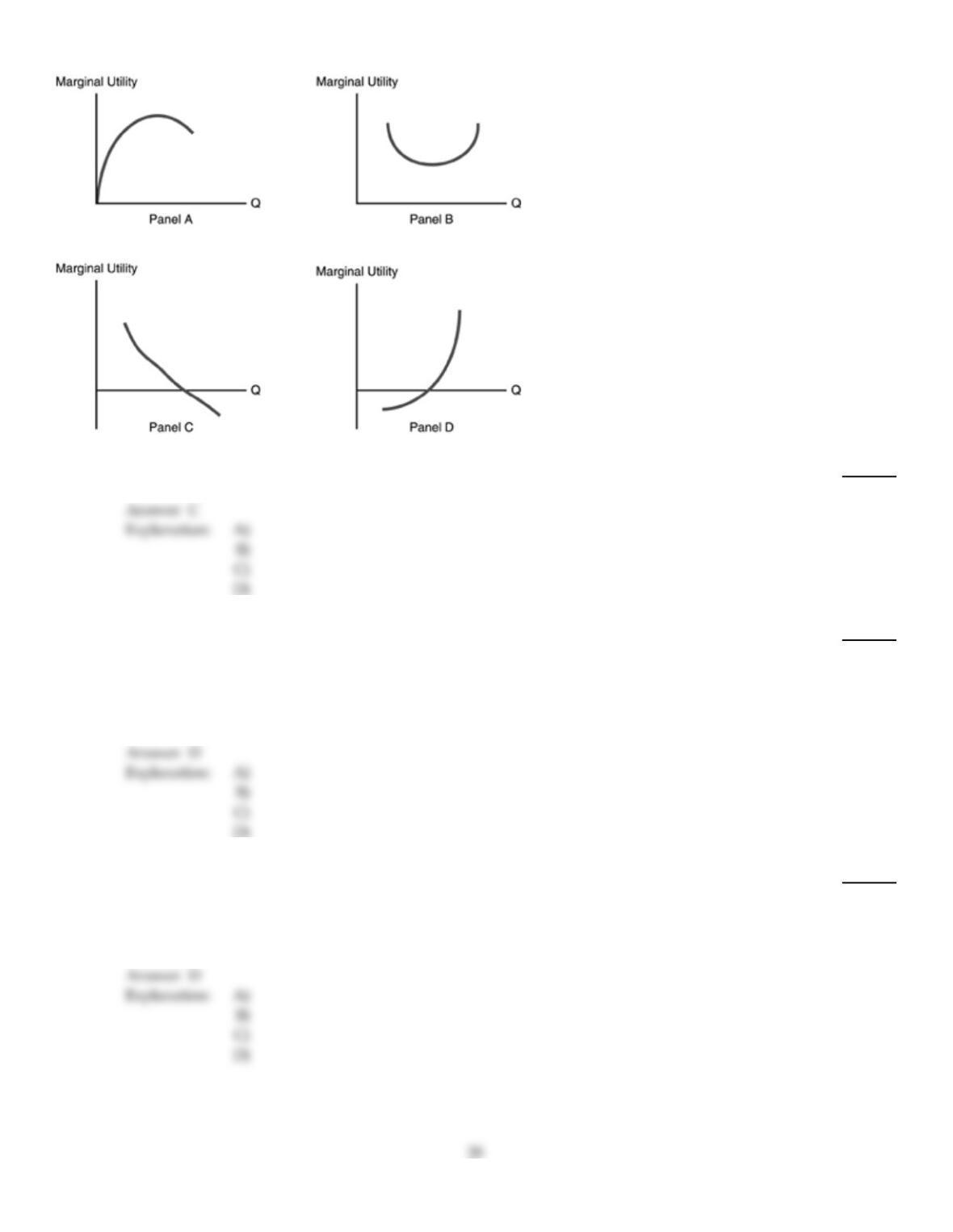
Refer to the above figures. Which panel best represents marginal utility?
61)
A)
Panel A.
B)
Panel B.
C)
Panel C.
D)
Panel D.
62)
The reason that diamonds cost more than water is
62)
A)
diamonds are more beautiful than water.
B)
water is a necessity.
C)
most consumers consume little water.
D)
the marginal utility of each diamond a consumer purchases is quite high due to the small
amount of diamonds that most consumers purchase.
63)
The real–income effect is typically small because
63)
A)
real–incomes are always rising.
B)
income has no relation to consumption.
C)
price changes tend to balance out over time.
D)
the change in price of one particular item has little effect on total purchasing power.