
CHAPTER 2
Innate Immunity
Questions
2–1
Explain why the type of innate immune response used by the host during an infection is
dependent upon the particular location in which the pathogen resides.
2–2
Explain three mechanisms by which pathogens exert damaging effects upon host cells
during the course of an infection, and provide an example of a pathogen for each effect.
2–3
Which of the following does not accurately describe complement components?
a. soluble proteins
b. made by the spleen
c. located in extracellular spaces
d. some function as proteases once activated
e. activated by a cascade of enzymatic reactions.
2–4
Explain why a genetic deficiency of C3 leads to a type of immunodeficiency
characterized by recurrent and severe infections.
2–5
The lectin pathway of complement activation is induced by:
a. C-reactive protein
b. antibodies bound to pathogens
c. mannose-binding lectin
d. C3Bb
e. terminal components of the complement pathway.
2–6
Which of the following is the membrane-bound form of C3 convertase of the alternative
pathway of complement activation?
a. iC3
b. C3a
c. C3b
d. iC3Bb
e. C3bBb.
2–7
2
Explain how the alternative C3 convertase on pathogen cell surfaces is (A) formed and
(B) stabilized.
2–8
Why is it important to expose the hydrophobic sites of C7 and C8 during the formation of
the membrane-attack complex?
2–9
The plasma proteins that counteract the activity of factor P by inactivating C3 convertase
through the cleavage of C3b are:
a. factor B and factor H
b. factor H and factor I
c. factor B and factor I
d. decay-accelerating factor and factor H
e. decay-accelerating factor and membrane cofactor protein.
2–10
The membrane-bound proteins on human cells that dissociate and inactivate alternative
C3 convertase to avoid complement activation are:
a. factor B and factor H
b. factor H and factor I
c. factor B and factor I
d. decay-accelerating factor and factor H
e. decay-accelerating factor and membrane cofactor protein.
2–11
Explain the similarities between MCP, factor H, and CR1 in terms of their complement
control properties.
2–12
Explain how the anaphylatoxins C3a and C5a contribute physiologically to inflammation
during complement activation.
2–13
Which of the following complement components is an opsonin that binds to complement
receptor 1 (CR1) on macrophages?
a. C3b
b. C3a
c. Bb
d. Ba
e. C3bBb.
2–14
Which of the following polymerizes to form a transmembrane channel that compromises
the integrity of cell membranes?
3
a. C5
b. C6
c. C7
d. C8
e. C9.
2–15
Which of the following are important in anchoring the membrane-attack complex to the
membrane?
a. C3 and C5
b. C5 and C6
c. C6 and C7
d. C7 and C8
e. C8 and C9.
2–16
Which of the following does not contain a glycosylphosphatidylinositol (GPI) lipid tail?
a. decay-accelerating factor (DAF)
b. homologous restriction factor (HRF)
c. membrane cofactor protein (MCP)
d. protectin (CD59)
e. all of the above contain a GPI tail.
2–17
The ligand for CR3 and CR4 formed by the cleavage of C3b by the combined action of
factors H and I is called:
a. C3bBb
b. C3a
c. C3b2Bb
d. iC3b
e. C5b.
2–18
Which of the following does not describe the actions of the coagulation system?
a. blood clot formation
b. enhancement of dissemination of microbes into lymphatics and bloodstream
c. decrease in blood loss and fluid into interstitial spaces in tissues
d. release of inflammatory mediators by platelets
e. wound healing.
2–19
Which of the following is not a characteristic of mannose-binding lectin? Select all the
correct answers.
a. acts as an opsonin by binding to mannose-containing carbohydrates of pathogens
b. synthesized by hepatocytes
c. induced by elevated IL-6
4
d. a member of the pentraxin family
e. triggers the alternative pathway of complement activation.
2–20
Which of the following is not a characteristic of C-reactive protein?
a. acts as an opsonin by binding to phosphocholine of pathogens
b. synthesized by spleen
c. induced by elevated IL-6
d. a member of the pentraxin family
e. triggers the classical pathway of complement activation.
2–21
Damage to tissues triggers a cascade of plasma proteins involving bradykinin and is
known as:
a. the alternative pathway of complement
b. the coagulation system
c. the kinin system
d. receptor-mediated endocytosis
e. the acute-phase response.
2–22
Which of the following does not describe defensins?
a. highly conserved with few variants
b. contain a large proportion of arginine residues
c. contain three intra-chain disulfide bonds
d. amphipathic, with hydrophobic and hydrophilic regions
e. disrupt pathogen membranes by penetrating and disrupting their integrity.
2–23
Describe the two different domains of TLRs and their respective functions.
2–24
Explain the consequence of engagement of the TLR4, CD14, and MD2 complex with
LPS in macrophages.
2–25
Which of the following TLRs do not use a signal transduction cascade involving
MyD88?
a. TLR1:TLR2
b. TLR3
c. TLR4
d. TLR2:TLR6
e. TRL7.
2–26
5
Which of the following TLR3 and TLR4 adaptor proteins participates in the activation
pathway that culminates in the synthesis of type I interferons?
a. C-reactive protein
b. MyD88
c. LPS-binding protein
d. TRIF and TRAM
e. NFB.
2–27
Explain specifically how the systemic release of TNF- by macrophages causes (A)
septic shock, (B) disseminated intravascular coagulation, (C) organ failure, and (D)
hemorrhaging during infection with blood-borne pathogens.
2–28
Which of the following is not a characteristic of septic shock?
a. organ failure
b. high mortality rate
c. compromised blood supply to vital organs
d. blood vessel constriction
e. disseminated intravascular coagulation.
2–29
Which of the following properties is common to macrophages and neutrophils?
a. life span
b. anatomical location
c. ability to phagocytose
d. morphology
e. formation of pus.
2–30
Which of the following best describes an endogenous pyrogen?
a. cytokines made by pathogens that decrease body temperature
b. pathogen products that decrease body temperature
c. pathogen products that increase body temperature
d. cytokines made by the host that decrease body temperature
e. cytokines made by the host that increase body temperature.
2–31
Which of the following is an acute-phase protein that enhances complement fixation?
a. TNF-
b. mannose-binding lectin
c. fibrinogen
d. LFA-1
e. CXCL8.
2–32
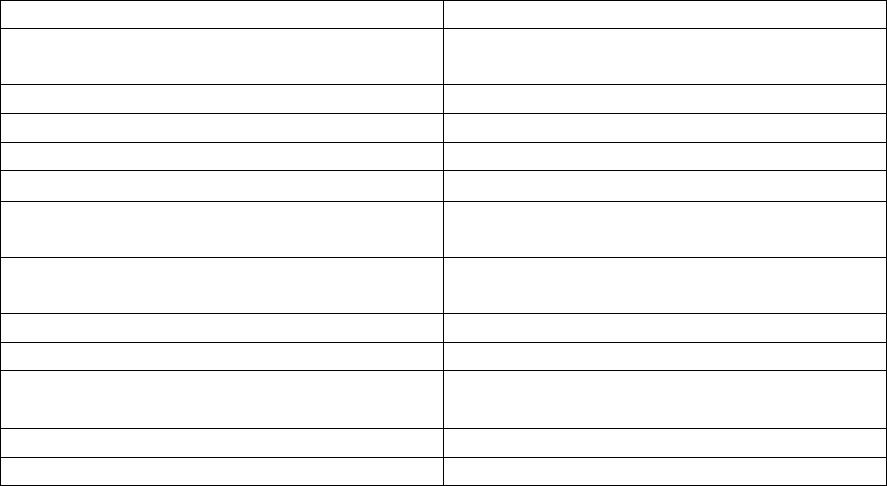
6
A. Using the table below, match the local and systemic effects in column A with the
appropriate cytokine in column B. Note that more than one answer in column B may be
used.
B. (i) Which of these cytokines are produced by macrophages? (ii) Which cells
produce the other(s)?
Column A
Column B
a. activation of blood-vessel
endothelium
1. IL-1
b. fever
2. IL-6
c. induction of IL-6 synthesis
3. CXCL8
d. increase in vascular permeability
4. IL-12
e. localized tissue destruction
5. TNF-
f. production of acute-phase proteins
by hepatocytes
6. type I interferons
g. induction of resistance to viral
replication
h. activation of NK cells
i. leukocyte chemotaxis
j. activation of binding by 2 integrins
(LFA-1, CR3)
k. septic shock
l. mobilization of metabolites
2–33
Describe in chronological order the four steps involved in the extravasation of neutrophils
to infected tissue sites during an innate immune response. Use the following terms in
your description: rolling adhesion, tight binding, diapedesis, migration, inflammatory
mediators, integrins, adhesion molecules, chemokines, Weibel–Palade bodies, P-selectin,
E-selectin, sialyl-Lewisx, and basement membrane protease.
2–34
During inflammation, host tissue may be damaged owing to the release of toxic oxygen
derivatives produced by activated macrophages and neutrophils. Explain what cellular
mechanisms limit these damaging bystander effects.
2–35
Describe the two structural types of NK-cell receptor.
Answers
8
9
10
11