2-81
165.
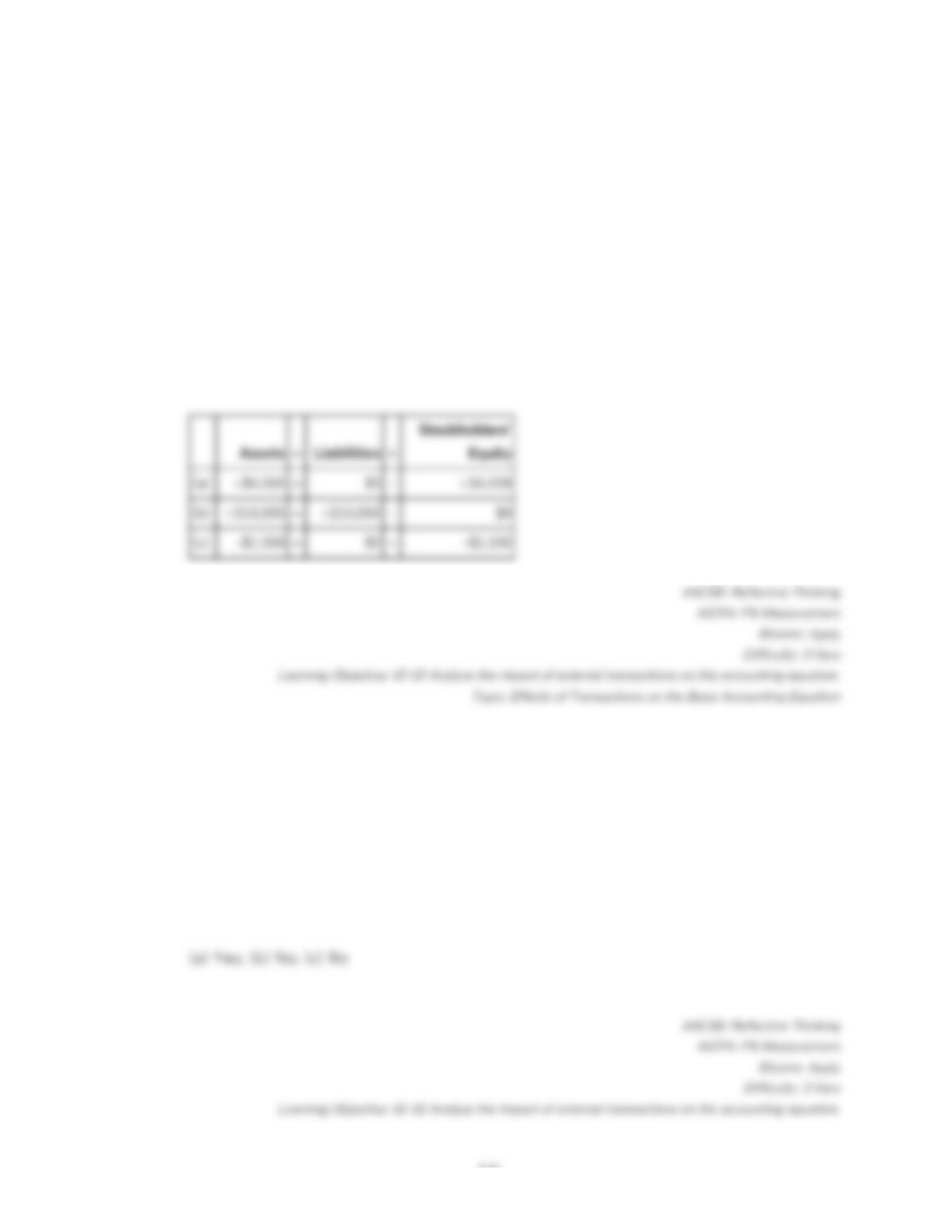
The following transactions occur for the Hamilton Manufacturers.
(a) Provide services to customers on account for $4,500.
(b) Purchase equipment by signing a note with the bank for $10,000.
(c) Pay advertising of $1,500 for the current month.
Analyze each transaction and indicate the amount of increases and decreases in the
accounting equation.
166.
Using the notion that the accounting equation (Assets = Liabilities + Stockholders’ Equity)
must remain in balance, indicate whether each of the following transactions is possible.
(a) Cash decreases; Accounts Payable decreases.
(b) Salaries Expense increases; Salaries Payable decreases.
(c) Accounts Receivable decreases; Service Revenue increases.
167.
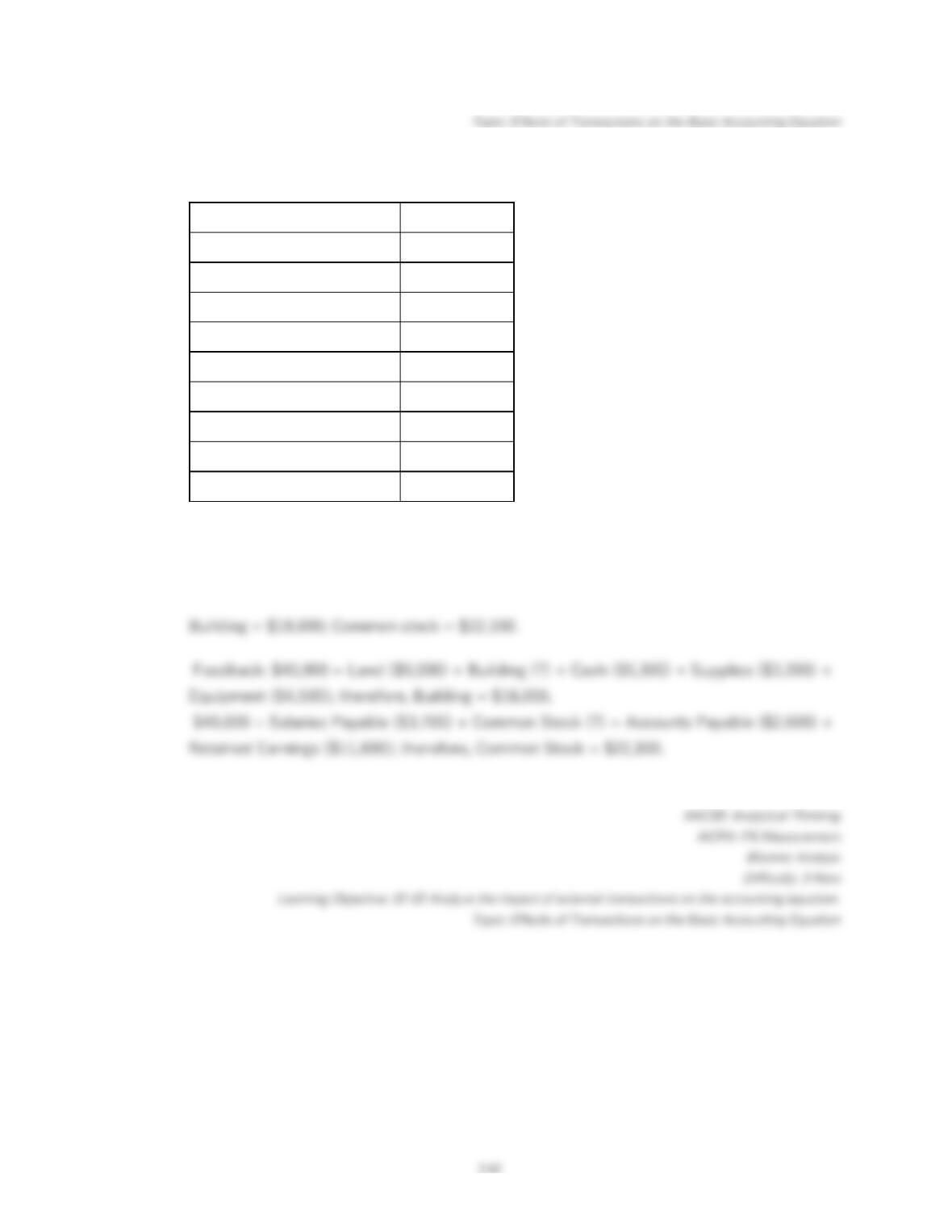
Suppose a company has the following balance sheet accounts:
Accounts
Balances
Land
$9,000
Building
?
Salaries payable
3,700
Common stock
?
Accounts payable
2,600
Cash
5,300
Retained earnings
11,600
Supplies
3,200
Equipment
4,500
Calculate the missing amounts assuming the company has total assets of $40,000.
168.
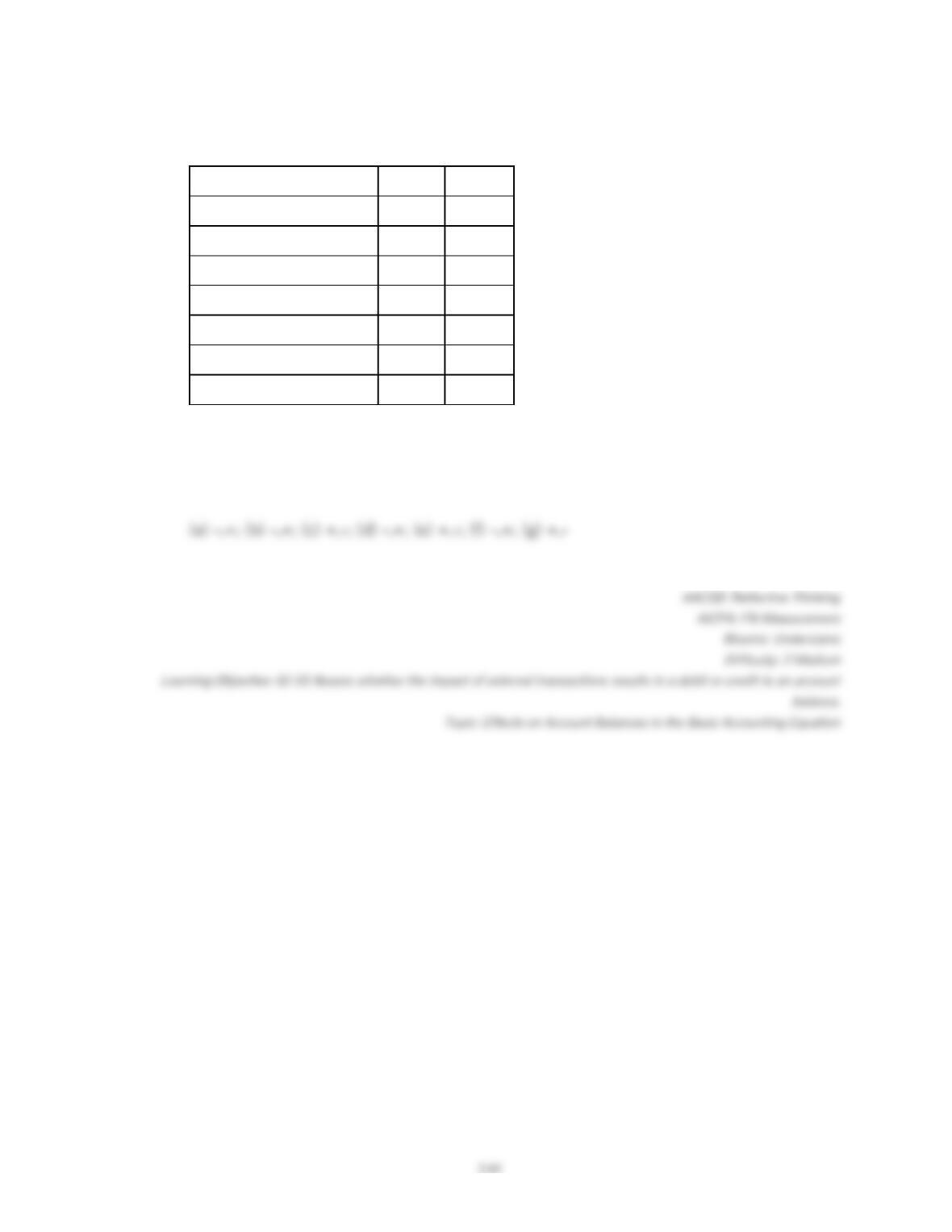
For each of the following accounts, indicate whether a debit or credit is used to increase
(+) or decrease (-) the balance of the account.
Account
Debit
Credit
(a) Common Stock
(b) Liability
(c) Asset
(d) Revenue
(e) Dividend
(f) Retained Earnings
(g) Expense
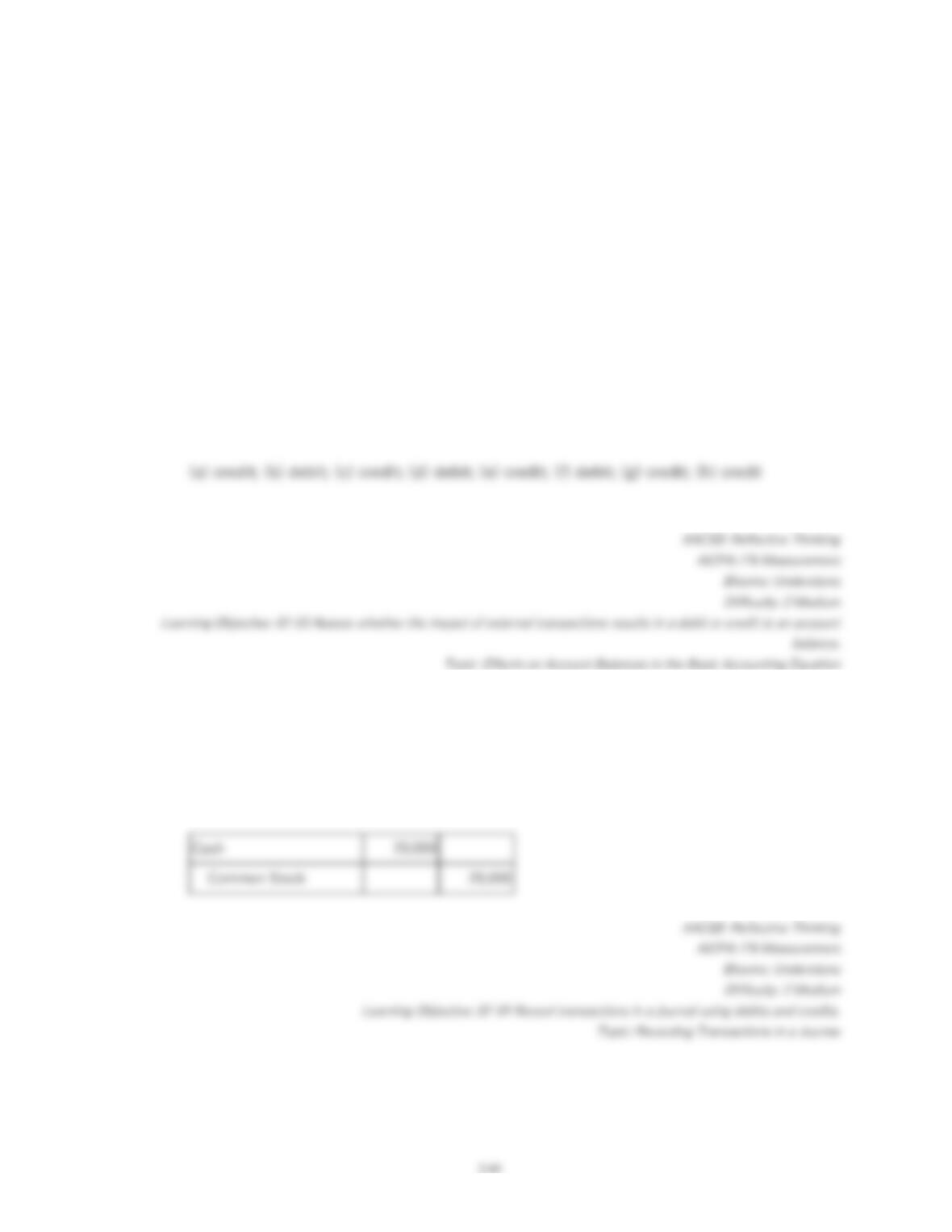
169.
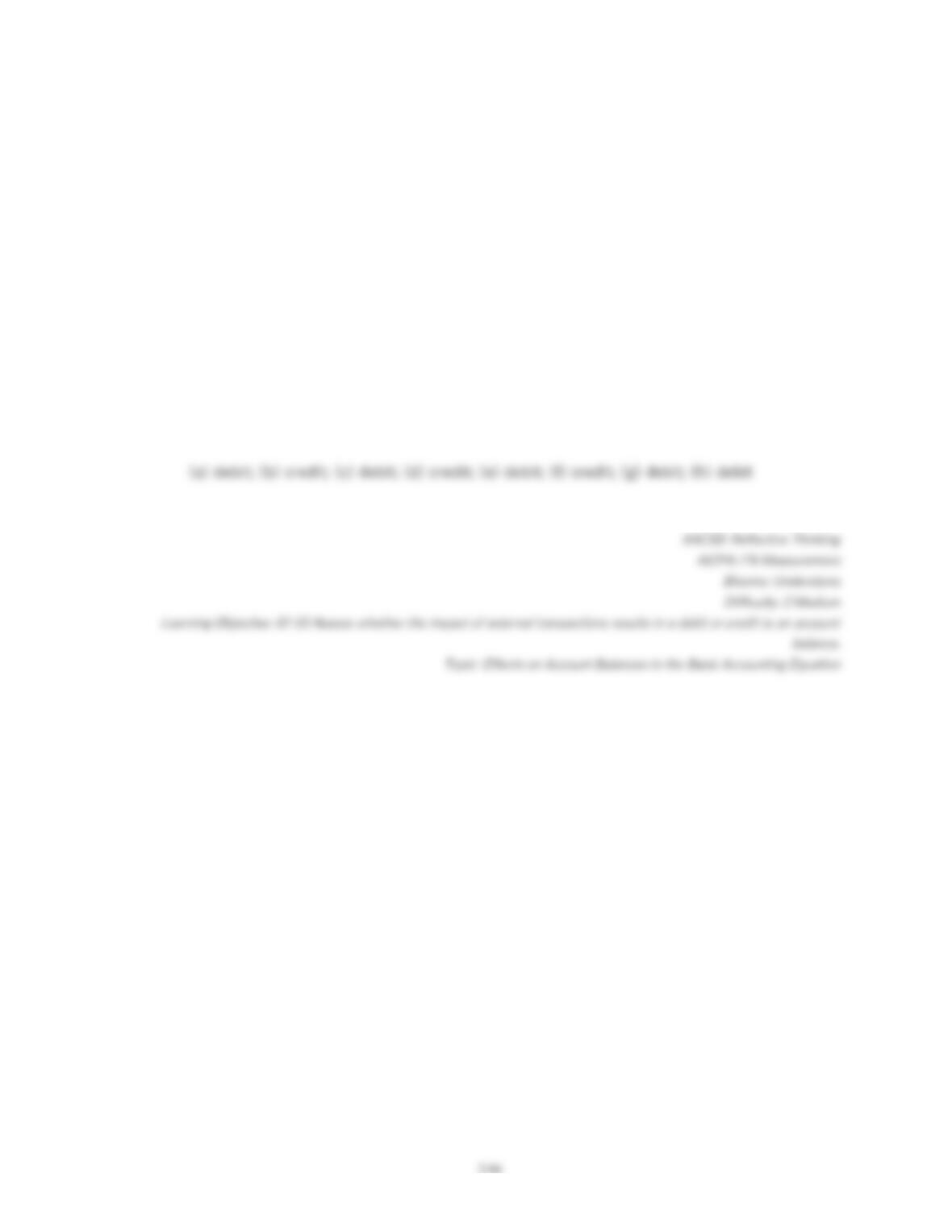
For each of the following accounts, indicate whether we use a debit or a credit to increase
the balance of the account.
(a) Accounts Receivable
(b) Accounts Payable
(c) Salaries Expense
(d) Service Revenue
(e) Supplies
(f) Common Stock
(g) Advertising Expense
(h) Dividends
170.
For each of the following accounts, indicate whether we use a debit or a credit to decrease
the balance of the account.
(a) Accounts Receivable
(b) Accounts Payable
(c) Salaries Expense
(d) Service Revenue
(e) Supplies
(f) Common Stock
(g) Advertising Expense
(h) Dividends
171.
A company sells common stock for $20,000 cash. Record the transaction.
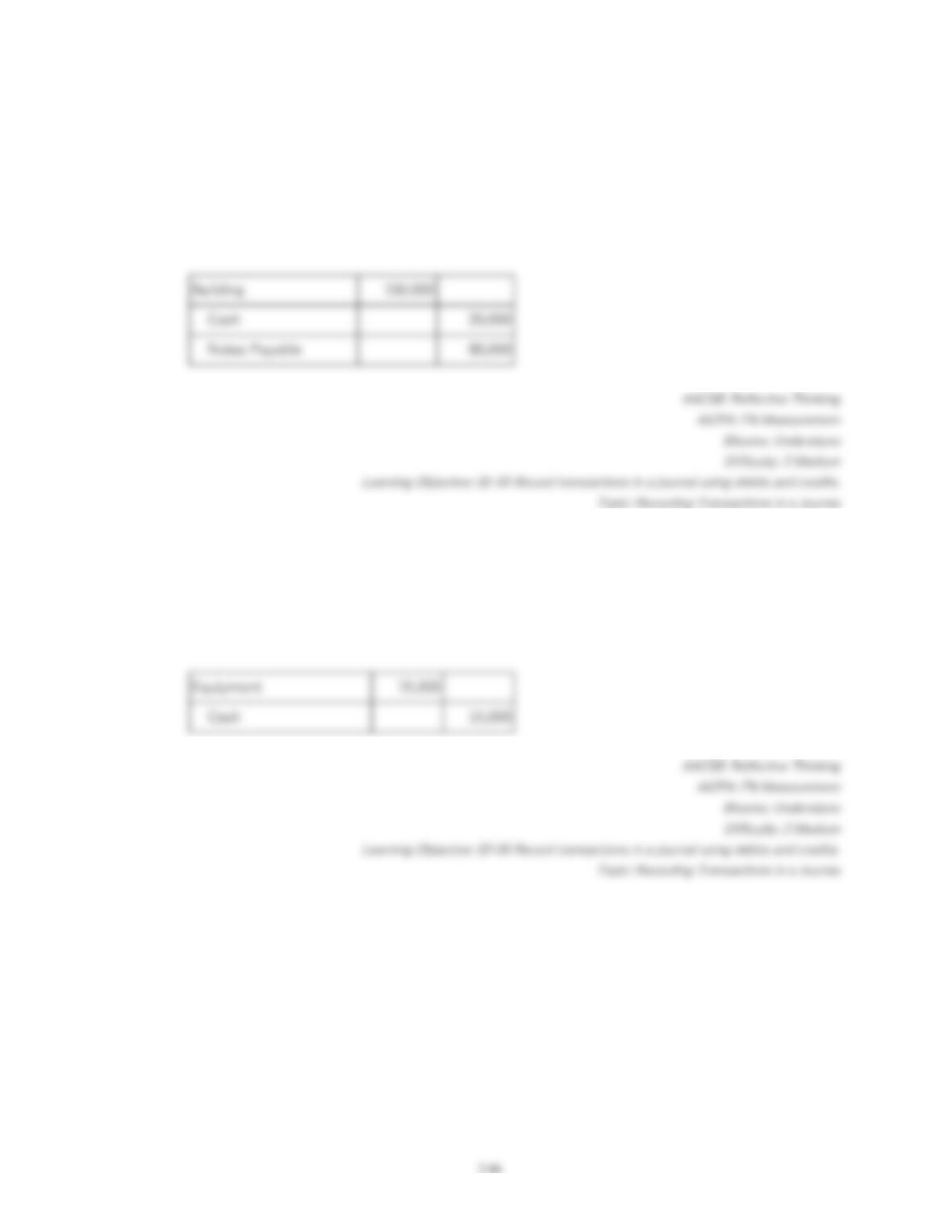
172.
A company purchases a building for $100,000, paying $20,000 cash and signing a note
payable for the remainder. Record the transaction.
173.
A company purchases machinery for $15,000 cash. Record the transaction.
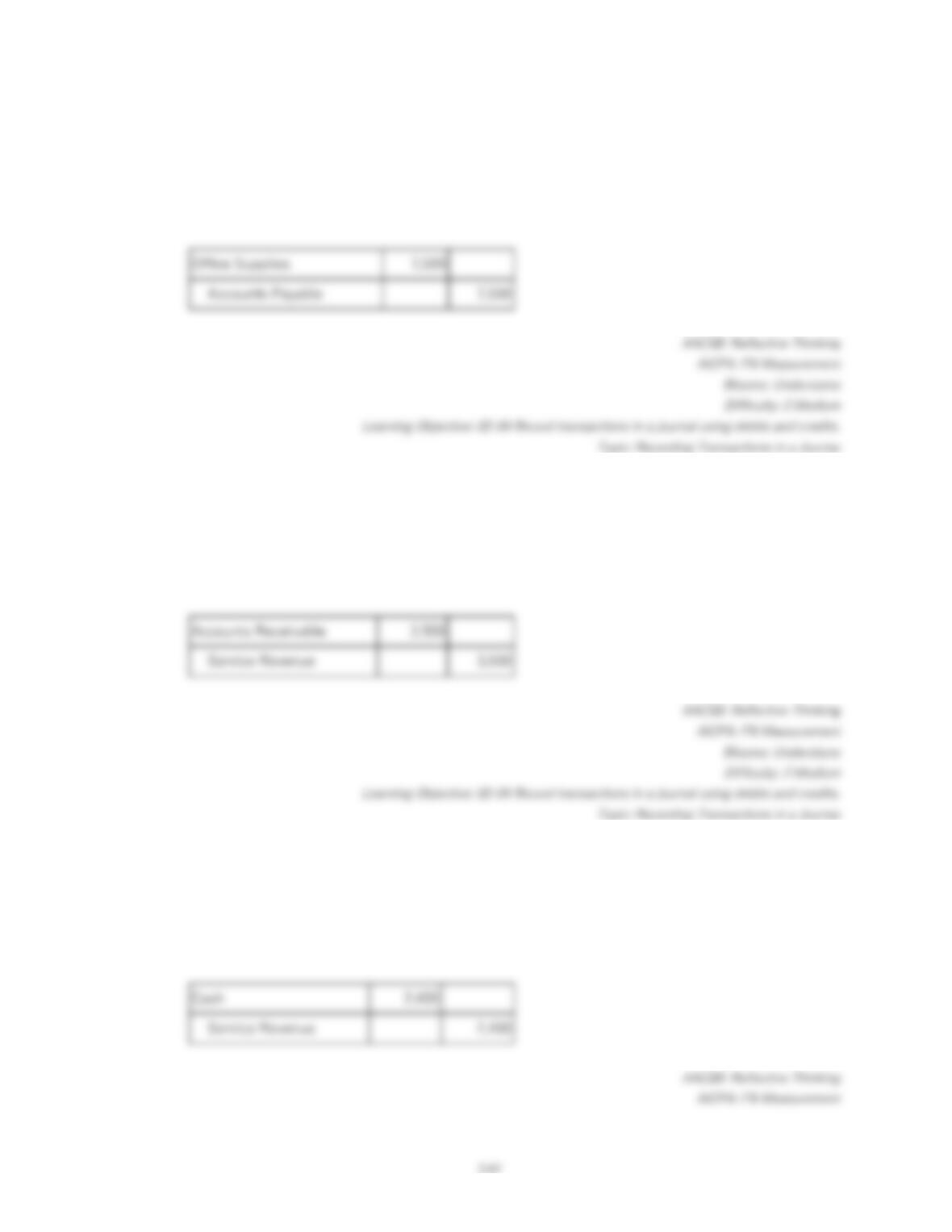
174.
A company purchases office supplies on account for $7,500. Record the transaction.
175.
A company provides services to customers on account, $3,500. Record the transaction.
176.
A company provides services to customers for $2,400 cash. Record the transaction.
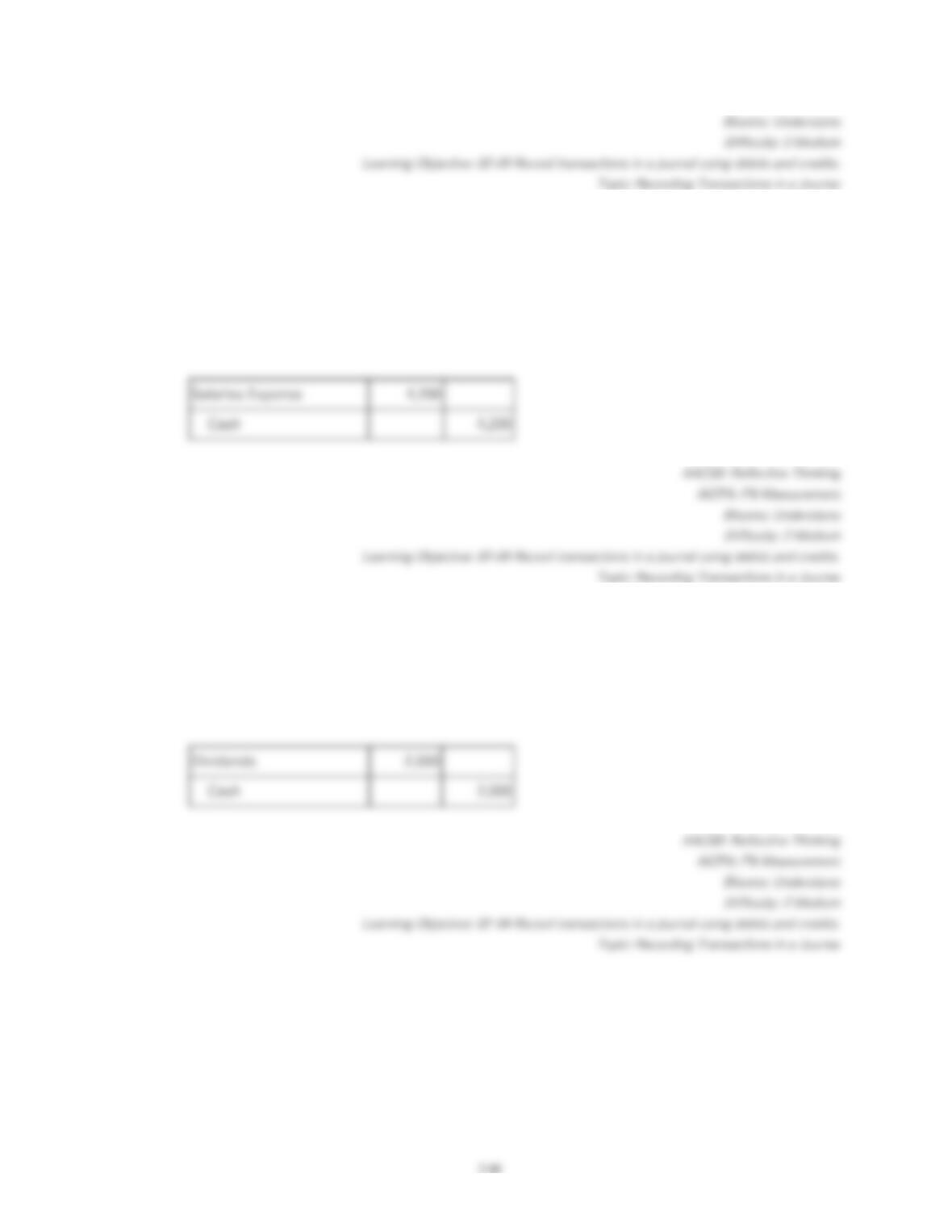
177.
A company pays employees’ salaries of $4,200 for the current period. Record the
transaction.
178.
A company pays $2,000 dividends to its stockholders. Record the transaction.
179.
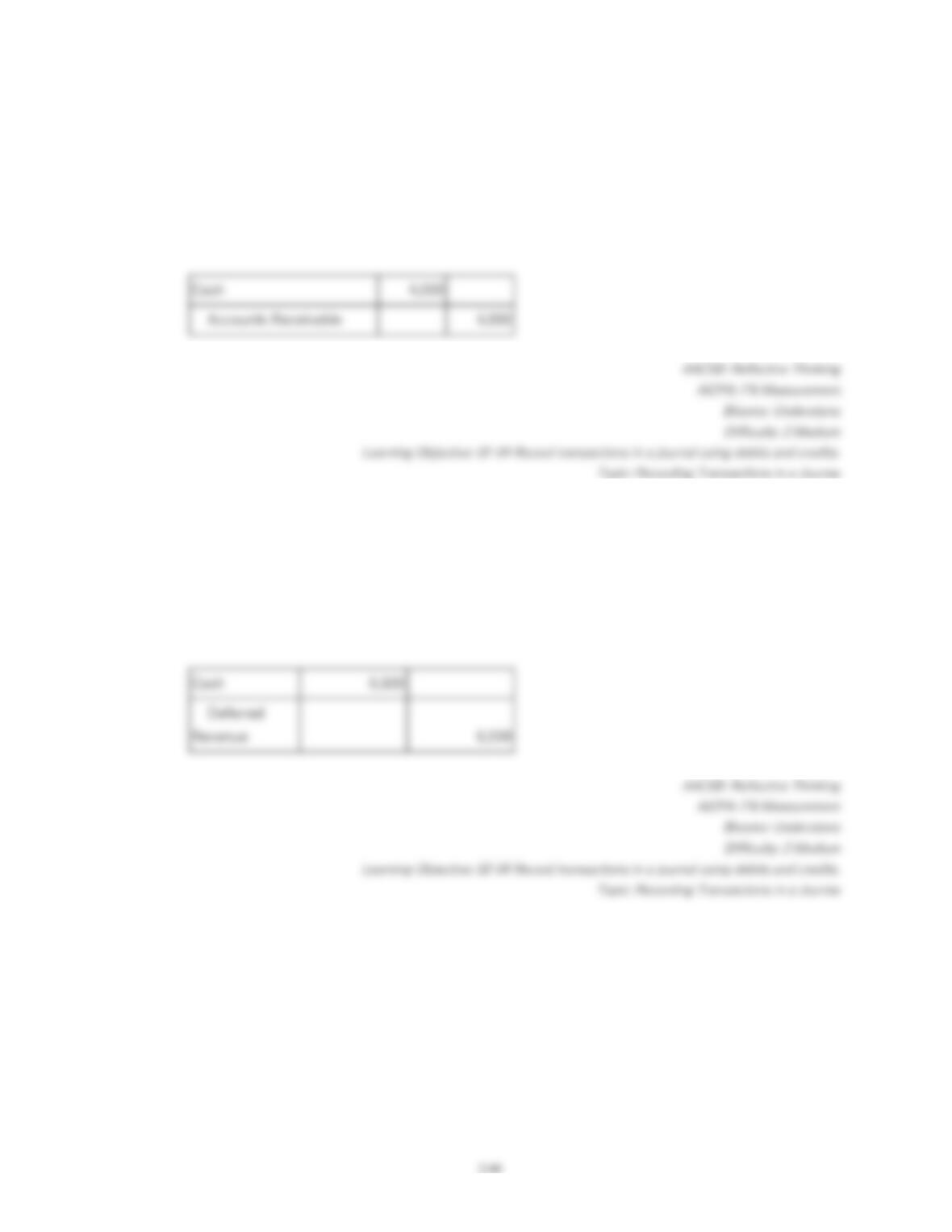
A company collects $4,000 cash from customers for services previously provided on
account. Record the transaction.
180.
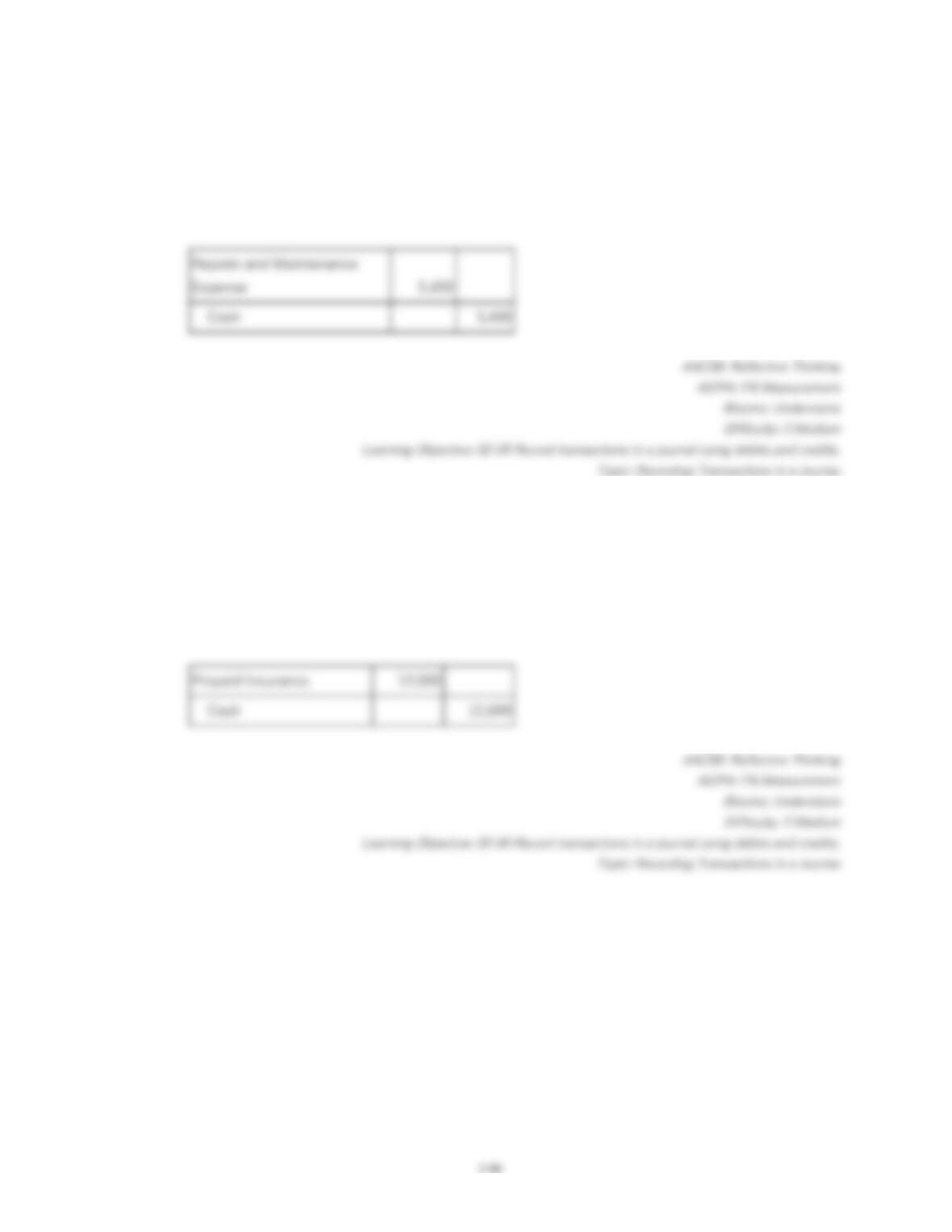
A company receives $6,500 cash in advance from customers for services to be provided
next year. Record the transaction.
181.
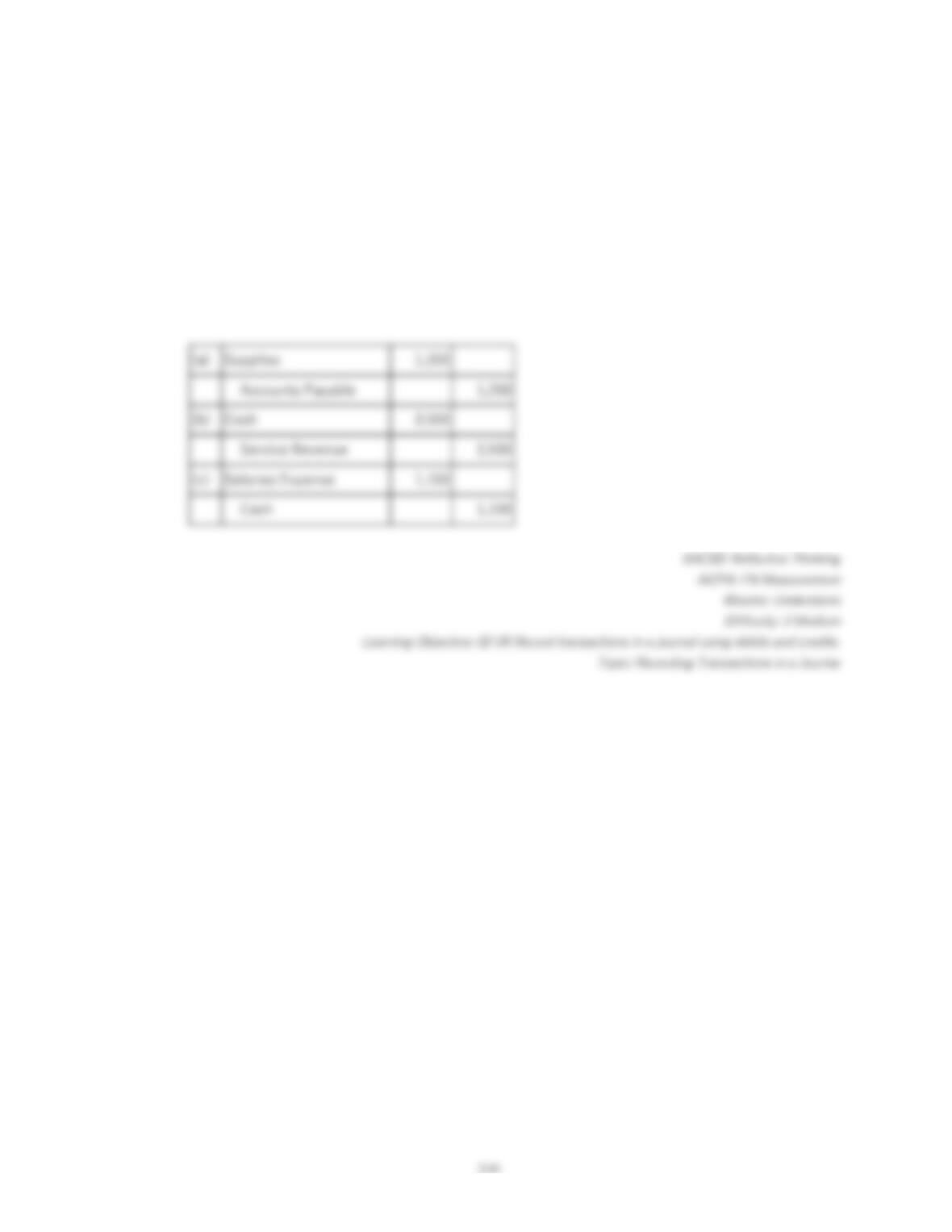
A company pays $5,400 for maintenance in the current period. Record the transaction.
182.
A company pays $12,000 to purchase a one-year insurance policy. Record the transaction.
183.
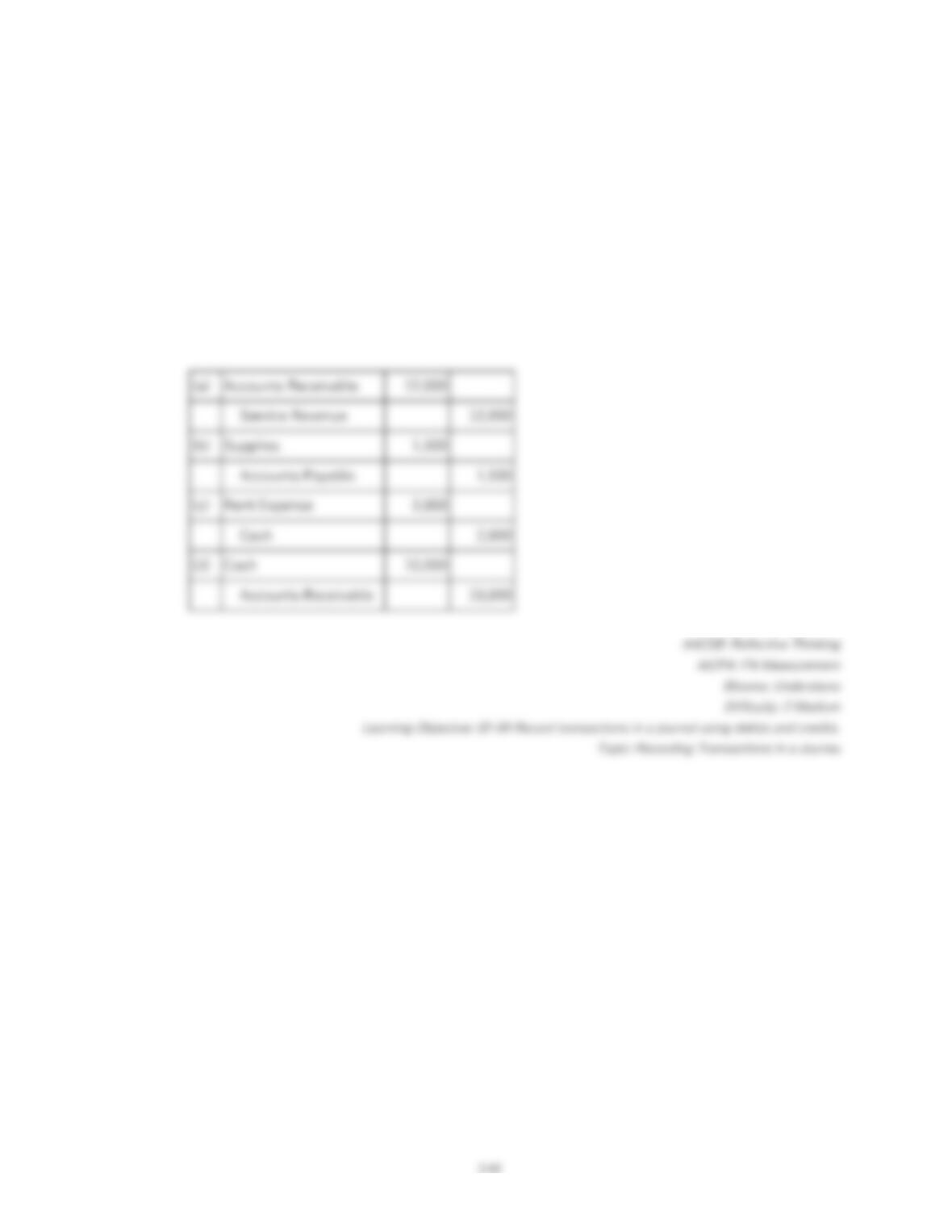
Record the following transactions for Acme Builders:
(a) Purchase office supplies on account, $1,200.
(b) Provide services to customers for cash, $2,500.
(c) Pay $1,100 in salaries for the current month.
184.
Record the following transactions for the Stroud Music Store:
(a) Provide music lessons to students for $12,000 on account.
(b) Purchase music supplies on account, $1,500.
(c) Pay rent for the current month, $2,000.
(d) Receive $10,000 cash from students in (a) above.
185.
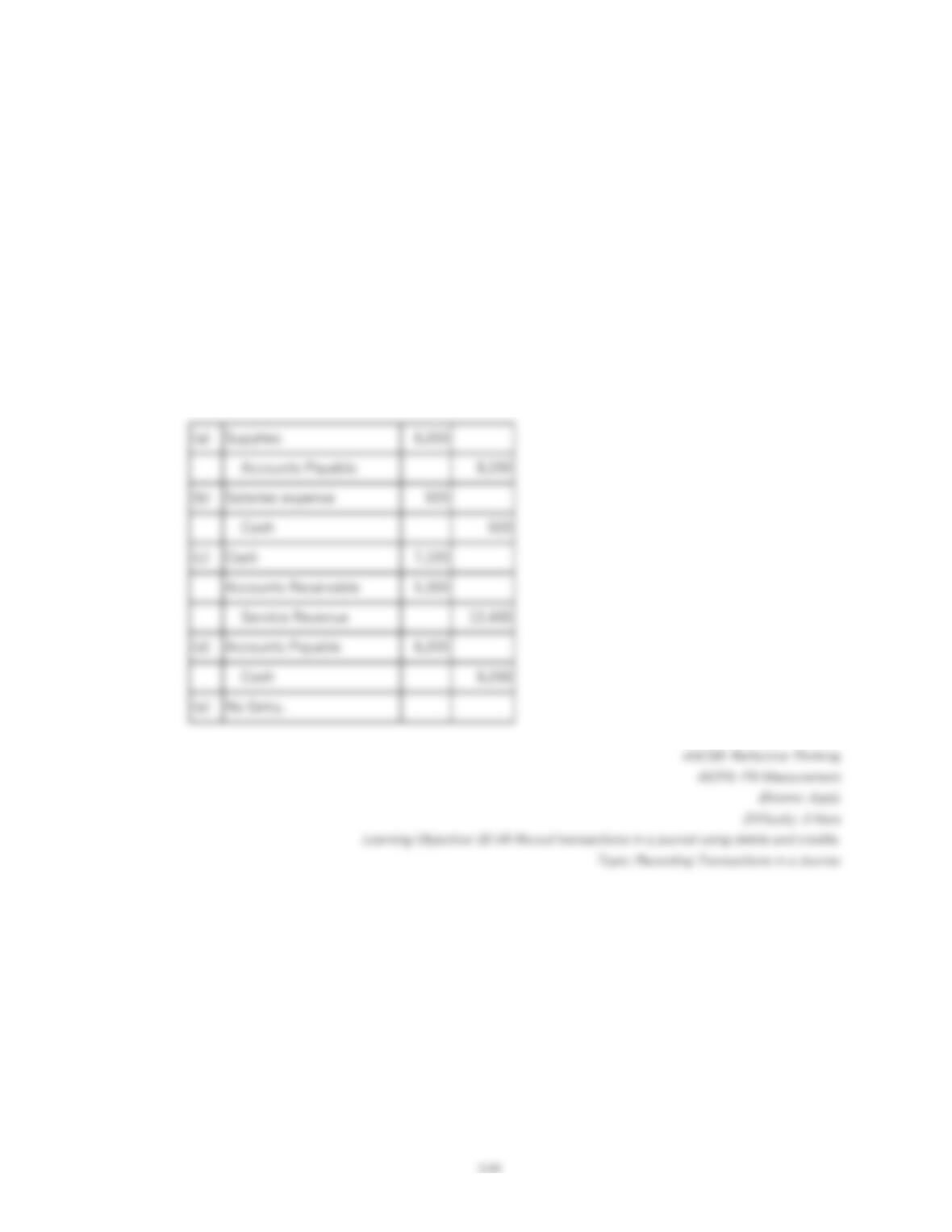
Rite Shoes was involved in the transactions described below. Record each transaction. If
an entry is not required, state “No Entry.”
(a) Purchased $8,200 of supplies on account.
(b) Paid weekly salaries, $920.
(c) Provide services to customers: Cash: $7,100; On account: $5,300.
(d) Paid for supplies purchased in (a) above.
(e) Placed an order for $6,200 of supplies.
2-94
186.
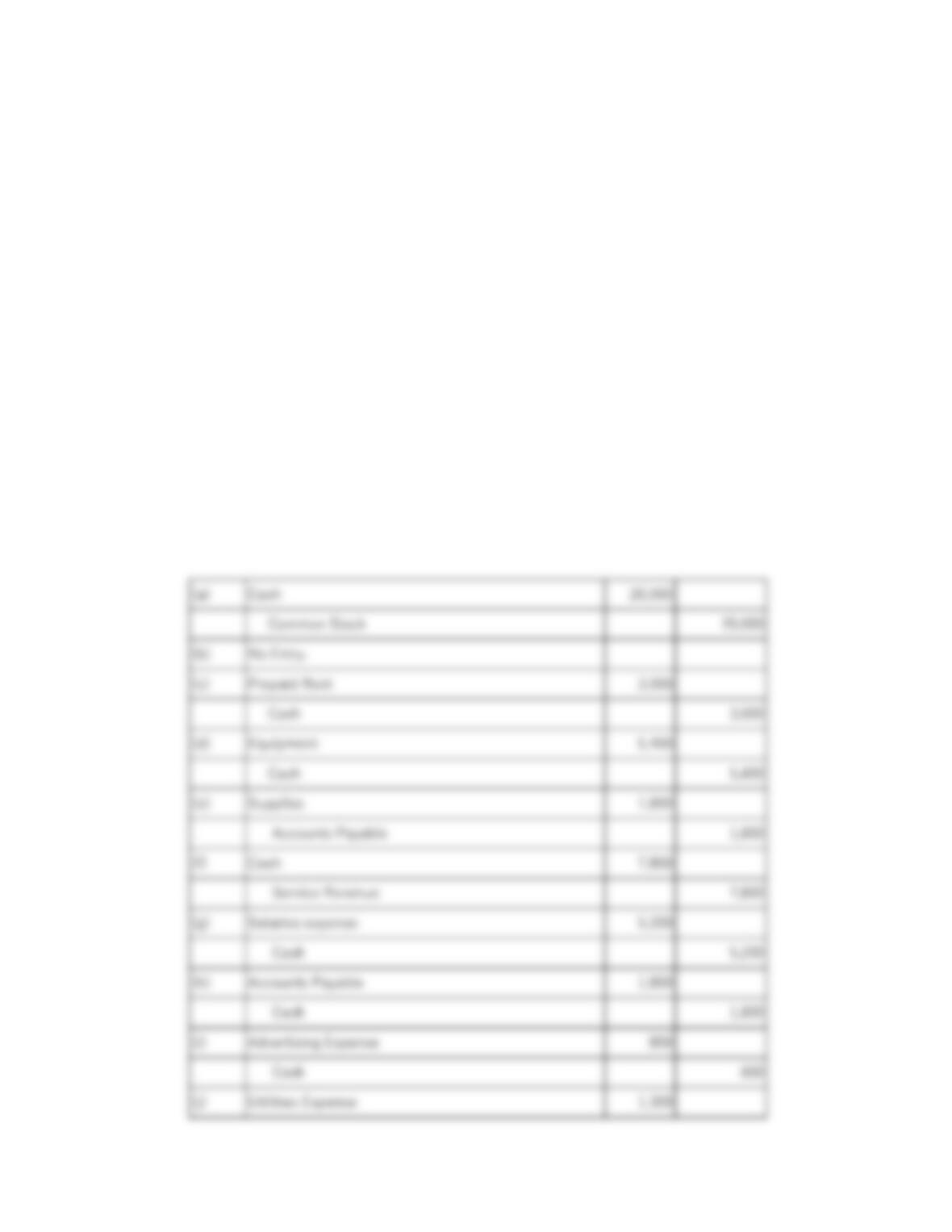
Record the following transactions. If an entry is not required, state “No Entry.”
(a) Started business by issuing 10,000 shares of common stock for $20,000.
(b) Hired Rebecca as an administrative assistant, promising to pay her $2,000 every two
weeks.
(c) Rented a building for three years at $500 per month and paid six months’ rent in
advance.
(d) Purchased equipment for $5,400 cash.
(e) Purchased $1,800 of supplies on account.
(f) Provided services to customers for $7,800 cash.
(g) Paid employees’ salaries, $5,200.
(h) Paid for supplies purchased in item (e).
(i) Paid $800 for current advertising in a local newspaper.
(j) Paid utility bill of $1,300 for the current month.
Cash
187.
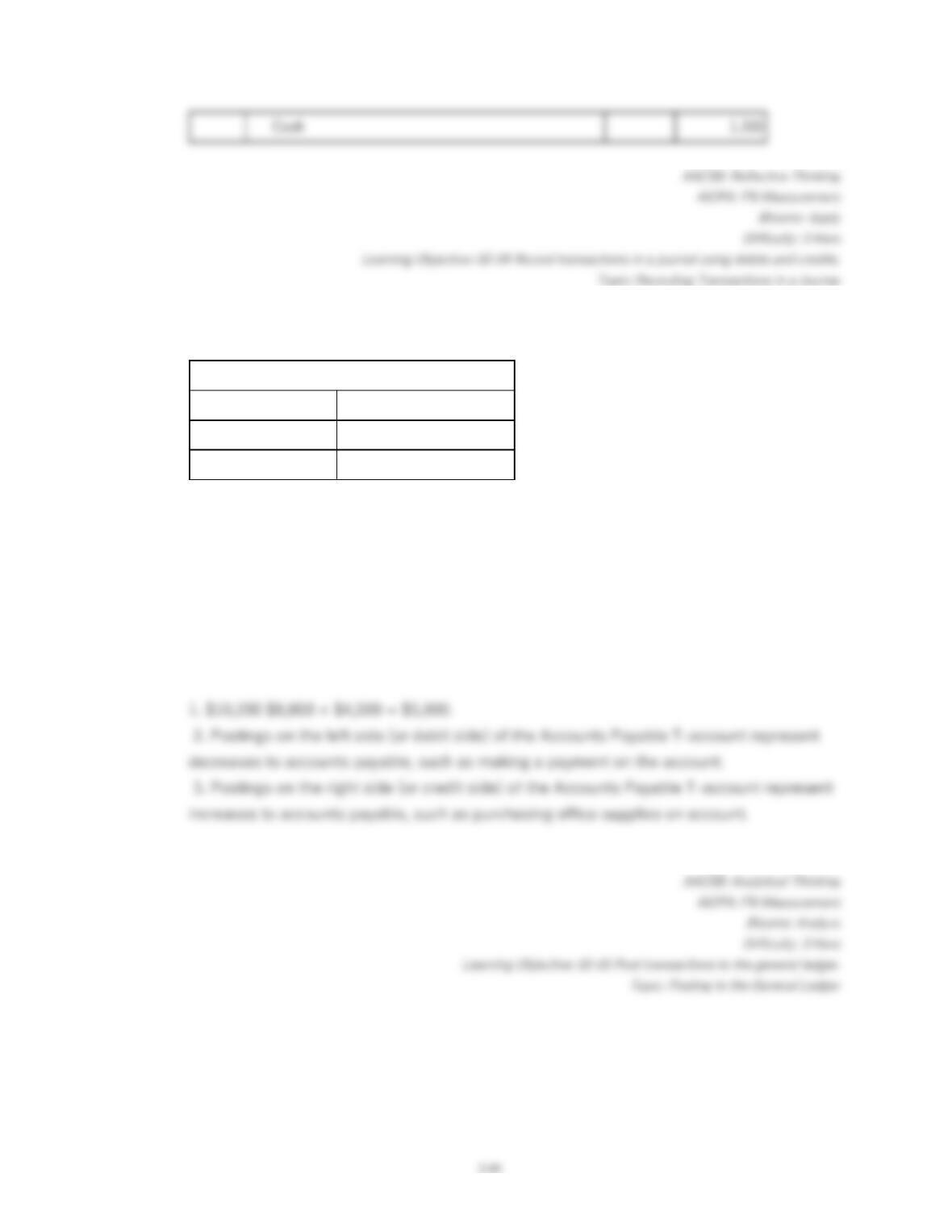
Consider the following T-account for Accounts Payable.
Accounts Payable
10,200
8,800
4,500
1. Compute the balance of the Accounts Payable account.
2. Give an example of a transaction that would have resulted in the $8,800 posting to the
account.
3. Give an example of a transaction that would have resulted in the $4,500 posting to the
account.
188.
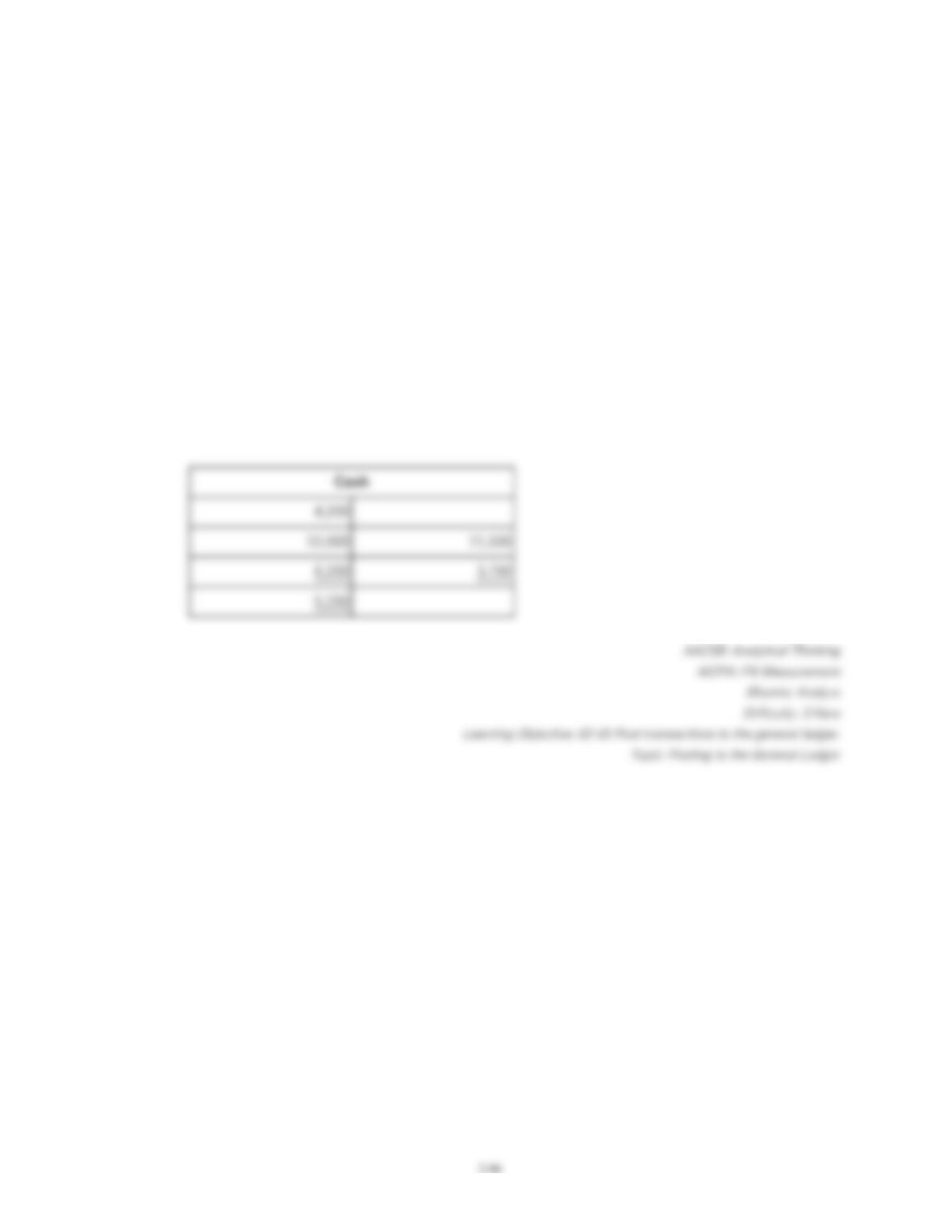
Consider the following transactions for Mittel Corporation:
a. Sell common stock for $10,000.
b. Purchase equipment for $11,500 cash.
c. Pay employees’ salaries of $3,700.
e. Provide services to customers for $6,200 cash.
1. Post these transactions to the Cash T-account. Assume the balance of Cash before
these transactions is $4,200.
2. Calculate the ending balance of the Cash account.
189.
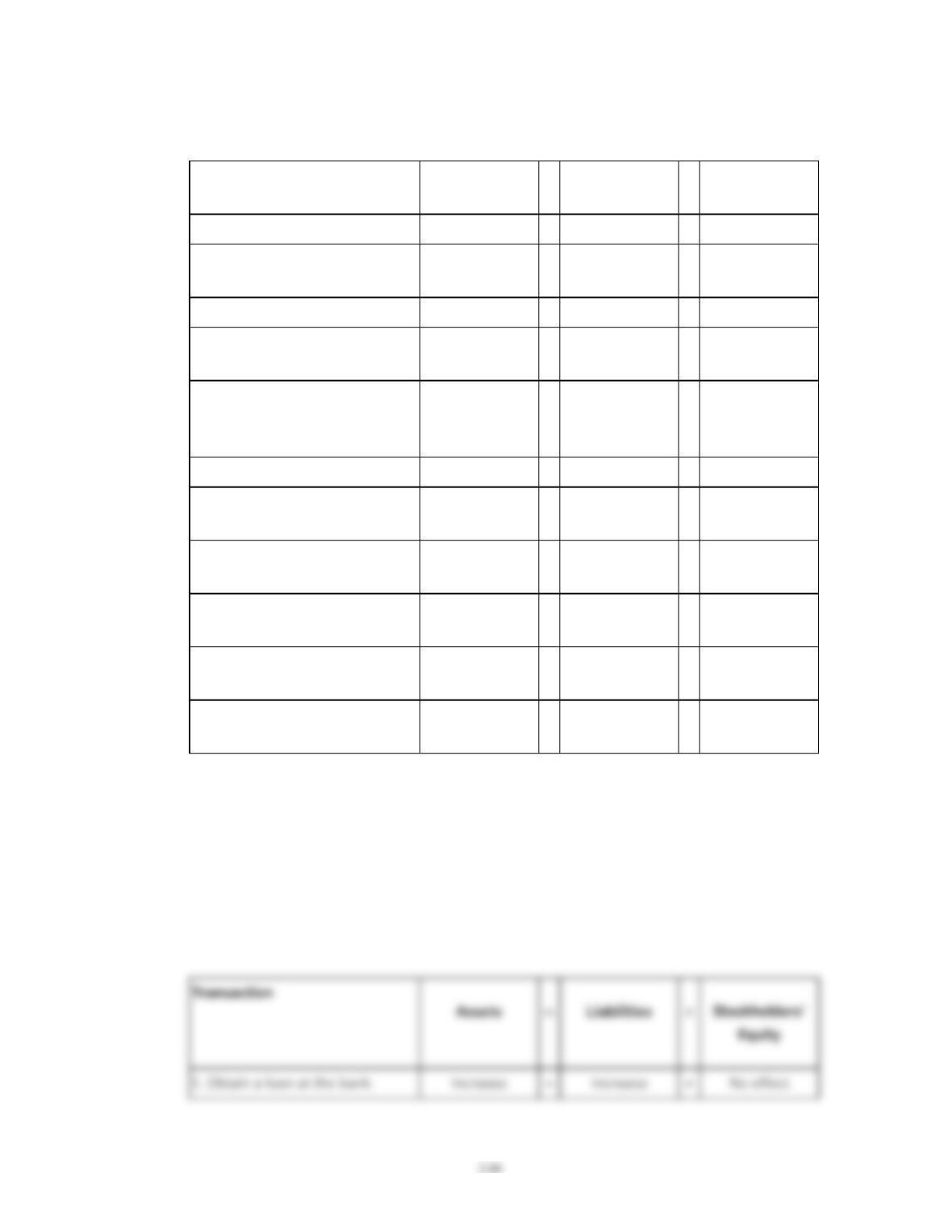
Use the following information to prepare a trial balance.
Cash
$6,200
Dividends
$1,200
Deferred
revenue
1,200
Salaries expense
2,200
Prepaid
insurance
1,200
Accounts
receivable
3,400
Accounts
payable
1,900
Common stock
6,200
Retained
earnings
1,600
Service revenue
7,100
Utilities
expense
3,000
Maintenance
expense
800
Cash
Accounts Receivable
Prepaid insurance
Accounts payable
Deferred revenue
Common stock
Retained earnings
Dividends
Service revenue
Salaries expense
Utilities expense
Maintenance expense
Totals

190.
Below is a list of activities.
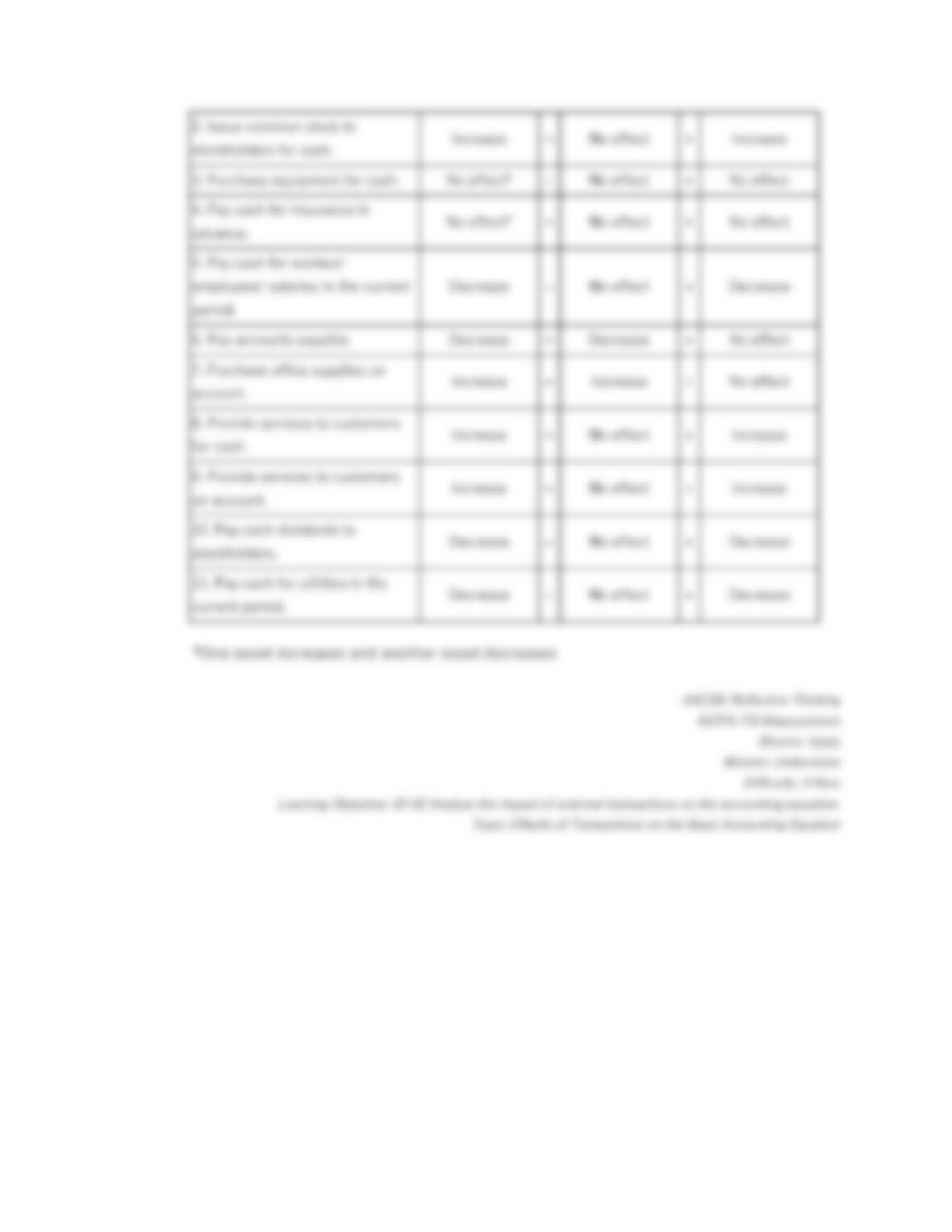
Transaction
Assets
=
Liabilities
+
Stockholders’
Equity
1. Obtain a loan at the bank
Increase
=
Increase
+
No Effect
2. Issue common stock to
stockholders for cash.
3. Purchase equipment for cash.
4. Pay cash for insurance in
advance.
5. Pay cash for workers’
employees’ salaries in the current
period.
6. Pay accounts payable.
7. Purchase office supplies on
account.
8. Provide services to customers
for cash.
9. Provide services to customers
on account.
10. Pay cash dividends to
stockholders.
11. Pay cash for utilities in the
current period.
Required:
For each activity, indicate whether the transaction increases, decreases, or has no effect
on assets, liabilities, and/or stockholders’ equity.
2-100