Chapter 2: Basic Cost Management Concepts
Figure 2-16
A small engine repair shop purchased materials costing $9,000 in July. The beginning inventory of material
parts was $4,500 and the ending inventory of material parts was $4,000. Payments for direct labor for July
totaled $27,000, secretarial costs were $2,000, and overhead of $5,000 was incurred. In addition, $5,000
was spent on advertising and $2,000 for the franchise name. Revenue for July was $50,000.
175. Refer to Figure 2-16. What is the cost of services sold for July?
a. $41,500
b. $43,500
c. $50,500
d. $40,500
176. Refer to Figure 2-16. What is the gross margin
for July?
a. $41,500
b. $43,500
c. $1,500
d. $8,500
177. One or more of the following is (are) a cost accounting system(s) that use(s) only unit-based activity
drivers to assign costs to cost objects.
a. Activity-based management
b. Activity-based costing system
c. Functional-based cost management system
d. Both a and b
178. Which of the following would be associated with a functional-based cost accounting information system?
a. setup costs assigned to products using the number of setups as the driver
b. materials handling costs assigned to products using the number of moves as the activity driver
c. customer service costs assigned to products using the number of complaints as the activity driver
d. purchasing costs assigned to products using number of direct labor hours as the activity driver

Chapter 2: Basic Cost Management Concepts
179. In a functional-based management system, one is NOT likely to find
a. unit– and non–unit-based cost drivers.
b. maximization of individual unit performance.
c. narrow and rigid product costing.
d. allocation intensive cost assignment.
180. In a cost management system, the cost view does NOT include
a. resources.
b. activities.
c. driver analysis.
d. products and customers.
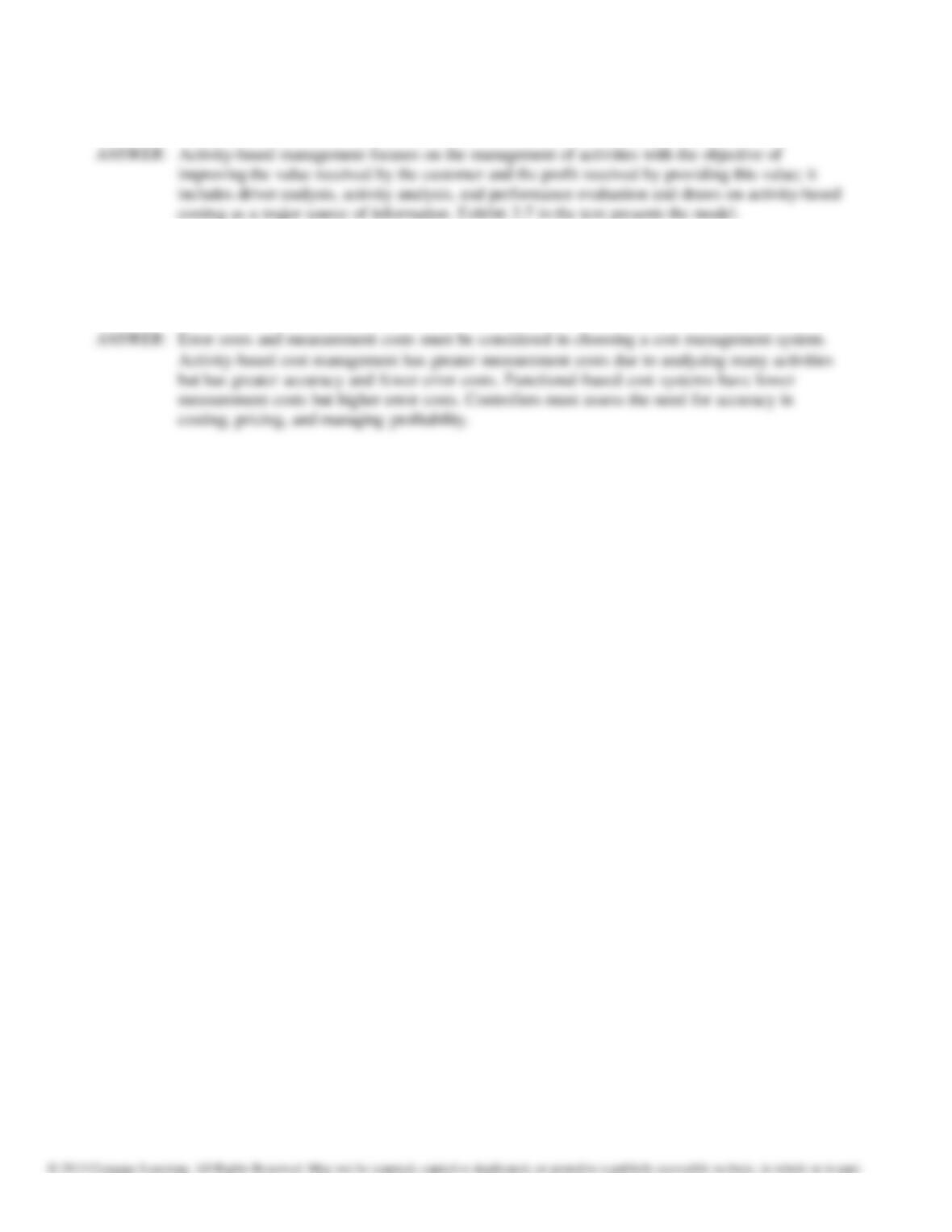
181. The system that focuses on the management of activities with the objective of improving the value
received by the customer and the profit received by providing this value is called.
a. Activity-based management
b. Contemporary cost control
c. Functional-based cost management system
d. JIT
182. Which of the following items would be associated with both a functional-based cost accounting
information system and an activity based cost information system?
a. Overhead is assigned on a plant-wide rate based on direct labor hours.
b. Customer service costs are assigned to products using number of complaints as the activity driver.
c. Direct labor cost is assigned to products using direct tracing.
d. None of these.
183. In a cost management system, the process view does NOT include
a. resources.
b. activities.
c. driver analysis.
d. performance analysis.

Chapter 2: Basic Cost Management Concepts
184. Which is NOT a benefit of an activity-based cost management system?
a. greater product costing accuracy
b. increased cost of implementing the system
c. improved decision making
d. enhanced strategic planning
185. In an activity-based management system, one is NOT likely to find
a. tracing of costs to activities.
b. only unit-based drivers.
c. broad flexible product costing.
d. systemwide performance maximization.
186. Which of the following is a trait of a functional-based cost management system?
a. unit–based drivers
b. tracing intensive
c. use of both financial and nonfinancial measures of performance
d. detailed activity information
187. Which of the following is NOT a trait of a functional-based cost management system?
a. unit–based drivers
b. narrow and rigid product costing
c. allocation–intensive
d. focus on managing activities
188. Which of the following is a trait of an activity-based cost management system?
a. allocation–intensive
b. narrow and rigid product costing
c. non–unit–based drivers
d. focus on managing costs
Chapter 2: Basic Cost Management Concepts
189. The optimal level in the trade-off between measurement and error costs is when
a. measurement costs are greater than error costs.
b. measurement costs and error costs are minimized.
c. measurement costs are less than error costs.
d. the total of measurement costs and error costs are maximized.
190. Error costs can be defined as
a. the costs associated with the measurements required by the cost management system.
b. unit costs assigned based on activities.
c. the costs associated with making poor decisions based on bad cost information.
d. none of these
191. Describe a cost management information system, its objectives, and major subsystems.
Chapter 2: Basic Cost Management Concepts
192. The following items (partial list) are associated with a functional-based cost accounting information
system, an activity-based cost accounting information system, or both:
a. materials purchasing cost incurrence
b. assignment of purchasing cost to products using direct labor hours
c. assignment of purchasing cost using number of purchase orders
d. usage of direct materials
e. direct materials cost assigned to products using direct tracing
f. materials handling cost incurrence
g. materials handling cost assigned using direct labor hours
h. materials handling cost assigned using the number of moves as the driver
i. computer
j. materials handling equipment
k. decision to make a part or buy it from a supplier
l. costing out of products
m. report detailing individual product costs
Required:
1. For an activity–based cost system, classify the items into one of the following categories:
a. interrelated parts
b. processes
c. objectives
d. inputs
e. outputs
f. user actions
2. How would the choices differ between the two systems? What are the costs and
benefits of each?
Chapter 2: Basic Cost Management Concepts
less versatile.
193. Explain the differences between direct tracing, driver tracing, and allocation.
194. Classify the following costs incurred by a step railing manufacturing company as direct materials, direct
labor, factory overhead, or period costs:
a. Wages paid to production workers
b. Utilities in the office
c. Depreciation on machinery in plant
d. Steel
e. Accountant’s salary
f. Rent on factory building
g. Rent on office equipment
h. Maintenance workers’ wages
i. Utilities in the plant
j. Maintenance on office equipment
Chapter 2: Basic Cost Management Concepts
195. Big Foot Athletics designs and manufactures running shoes. A new model of shoes, Fast Track, has
been developed and is ready for production.
Required:
Which costs will the production manager collect from the value chain, and how would these costs be
used in different decisions?
a. traditional product costs
b. operating product costs
c. value-chain product costs
Chapter 2: Basic Cost Management Concepts
196. Information from the records of the Maloney Company for the month of May 2016 is as follows:
Purchases of direct materials
$54,000
Indirect labor
15,000
Direct labor
31,200
Depreciation on factory machinery
9,000
Sales
165,900
Selling and administrative expenses
18,900
Rent on factory building
21,000
Inventories
May 1, 2016
May 31, 2016
Direct materials
$24,000
$26,100
Work in process
6,300
9,600
Finished goods
15,000
17,100
Required:
a. Prepare a statement of cost of goods manufactured for the month of May.
b. Prepare an income statement for the month of May.
c. Determine prime and conversion costs.
Chapter 2: Basic Cost Management Concepts
Chapter 2: Basic Cost Management Concepts
197. The following information pertains to the Montpelier Company:
Direct materials purchases $62,400
Beginning direct materials 10,400
Factory overhead 58,400
Beginning work in process 10,600
Cost of goods manufactured 164,000
Ending finished goods 20,000
Gross margin 21,000
Selling and administrative expenses 7,000
Beginning finished goods 16,000
Ending work in process 8,000
Ending direct materials 12,400
Direct labor ?
Direct materials used ?
Operating income (loss) ?
Total manufacturing costs added ?
Cost of goods sold ?
Sales ?
Required:
Determine the following values:
a. Net income
b. Total manufacturing costs added
c. Cost of goods sold
d. Sales
e. Direct materials used
f. Direct labor
Chapter 2: Basic Cost Management Concepts
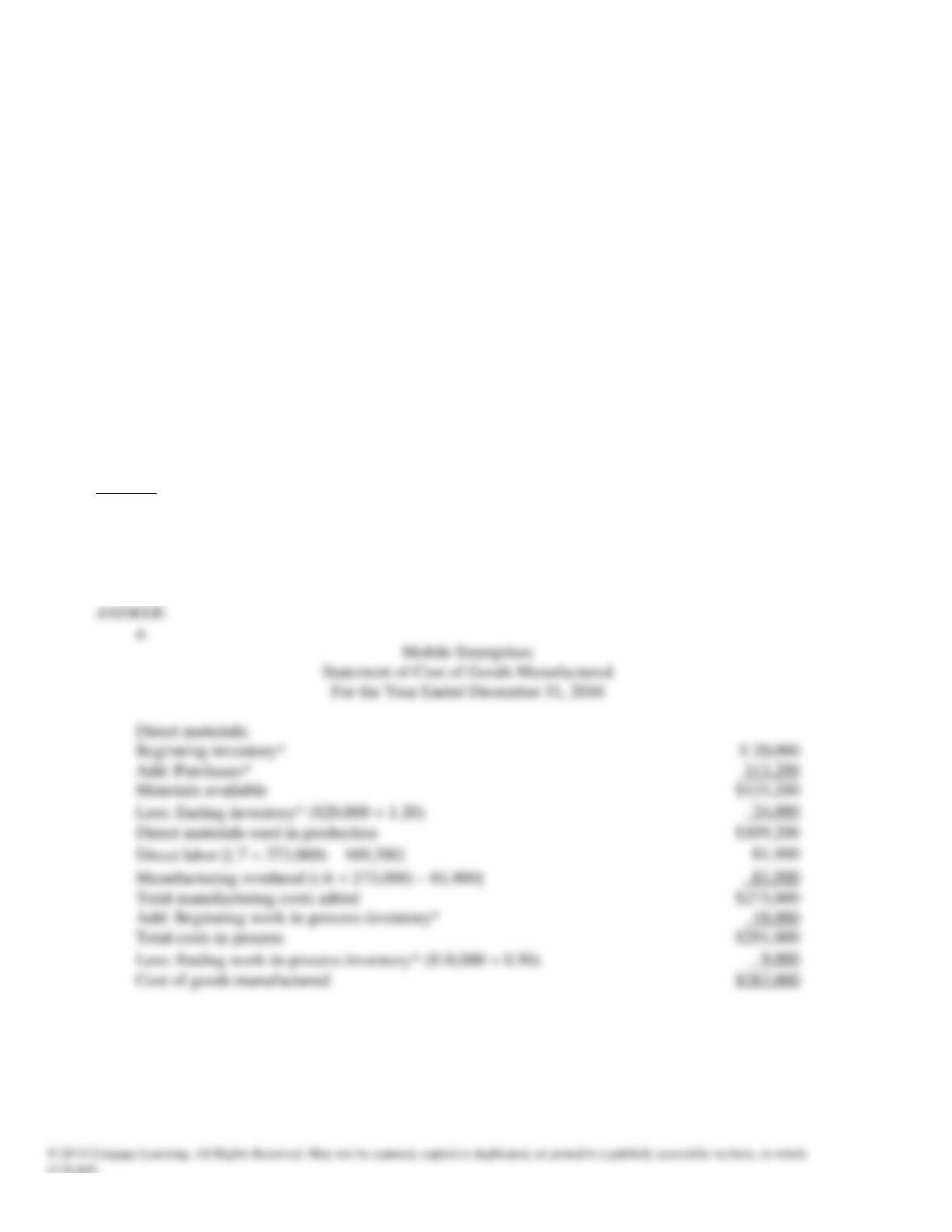
198. Information about Mobile Enterprises for the year ending December 31, 2016, is as follows:
Sales
$300,000
Selling and administrative expenses
18,000
Net income
8,000
Beginning inventories:
Direct materials
20,000
Work in process 18,000
Finished goods 62,000
Ending direct materials is 20 percent larger than beginning direct materials. Ending work in process is
half of the beginning work in process. Ending finished goods increased by $8,000 during the year. Prime
costs and conversion costs are 70 percent and 60 percent of total manufacturing costs added,
respectively. Materials purchases are
$113,200.
Required:
a. Prepare a statement of cost of goods manufactured.
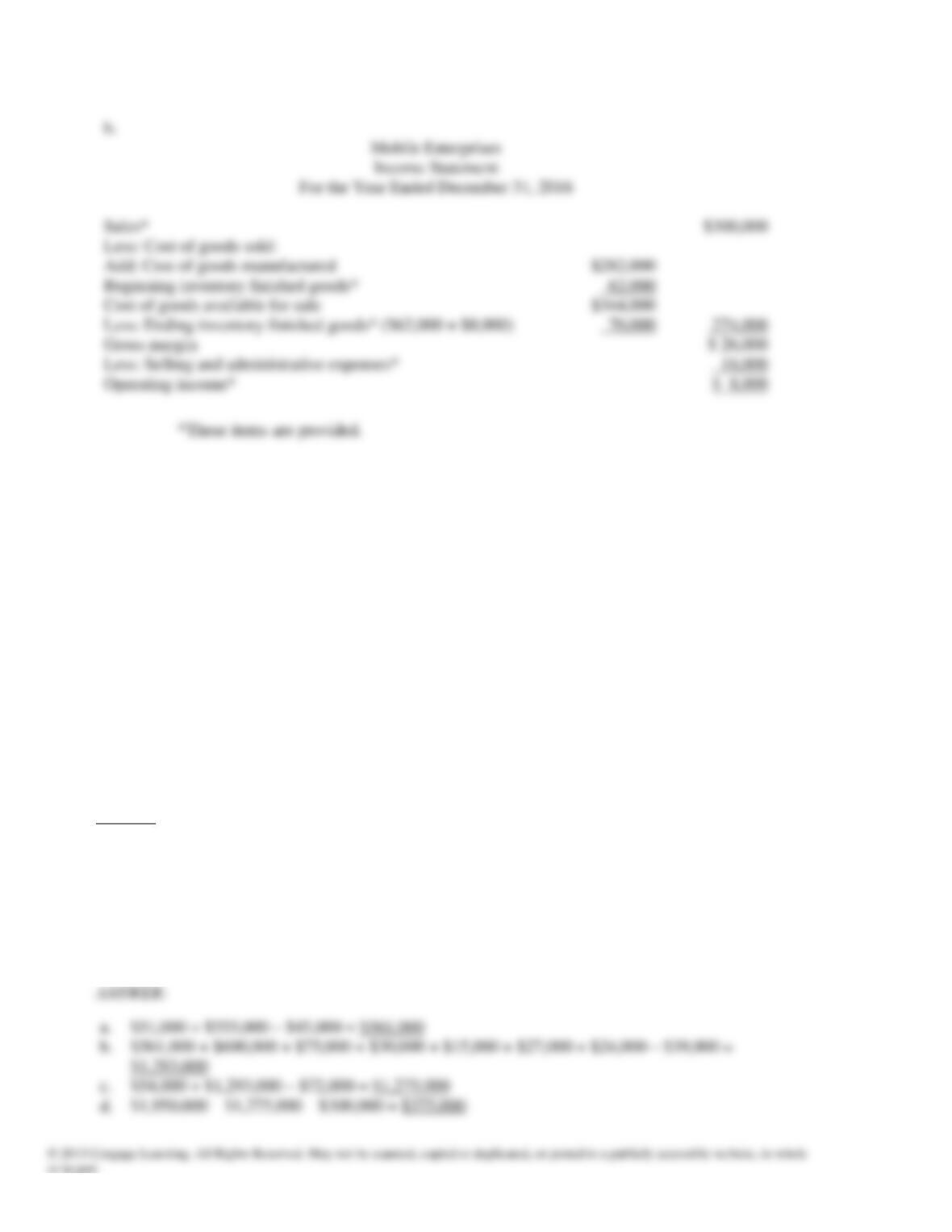
b. Prepare an income statement.
Note: Find the numbers for the income statement first.
Chapter 2: Basic Cost Management Concepts
199. The following costs were incurred by the Awesome Company:
Direct labor
$600,000
Direct material purchases
555,000
Depreciation on plant
30,000
Factory supervisor’s salary
75,000
Plant maintenance
15,000
Plant utilities
27,000
Sales
1,950,000
Selling and administrative expenses
300,000
Beginning direct materials inventory
51,000
Beginning work–in–process inventory
24,000
Beginning finished goods inventory
54,000
Ending direct materials inventory
45,000
Ending work in process
39,000
Ending finished goods
72,000
Required:
Calculate the following values:
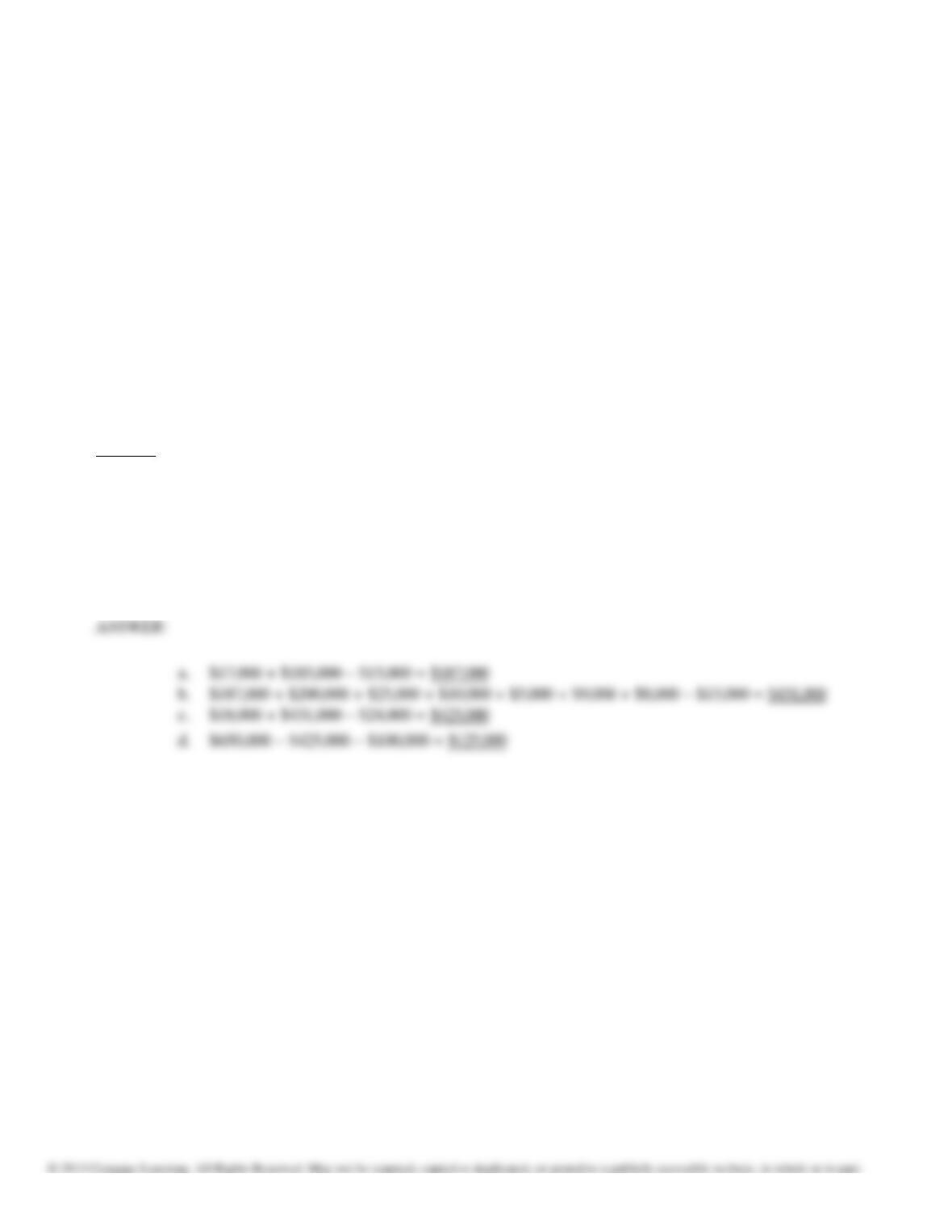
a. Direct materials used
b. Cost of goods manufactured
c. Cost of goods sold
d. Operating income
Chapter 2: Basic Cost Management Concepts
200. Foremost Corporation incurred the following costs:
Beginning direct materials inventory
$17,000
Beginning work–in–process inventory
8,000
Beginning finished goods inventory
18,000
Ending direct materials inventory
15,000
Ending work in process
13,000
Ending finished goods
24,000
Factory supervisor’s salary
25,000
Depreciation on plant
10,000
Sales
650,000
Selling and administrative expenses
100,000
Plant maintenance
5,000
Plant utilities
9,000
Direct material purchases
185,000
Direct labor
200,000
Required:
Calculate the following values:
a. Direct materials used
b. Cost of goods manufactured
c. Cost of goods sold
d. Operating income
Chapter 2: Basic Cost Management Concepts
201. Corlis Custom Builders designs decks, gazebos, and play equipment for residential homes. The following was
provided for the year ended September 30, 2016:
Direct labor
$600,000
Direct material purchases
40,000
Administrative
130,000
Overhead
75,000
Selling
265,000
Beginning direct materials inventory
20,000
Beginning designs in process
14,000
Ending direct materials inventory
10,000
Ending designs in process
39,000
The average design fee is $700. There were 2,000 designs processed during the year.
Required:
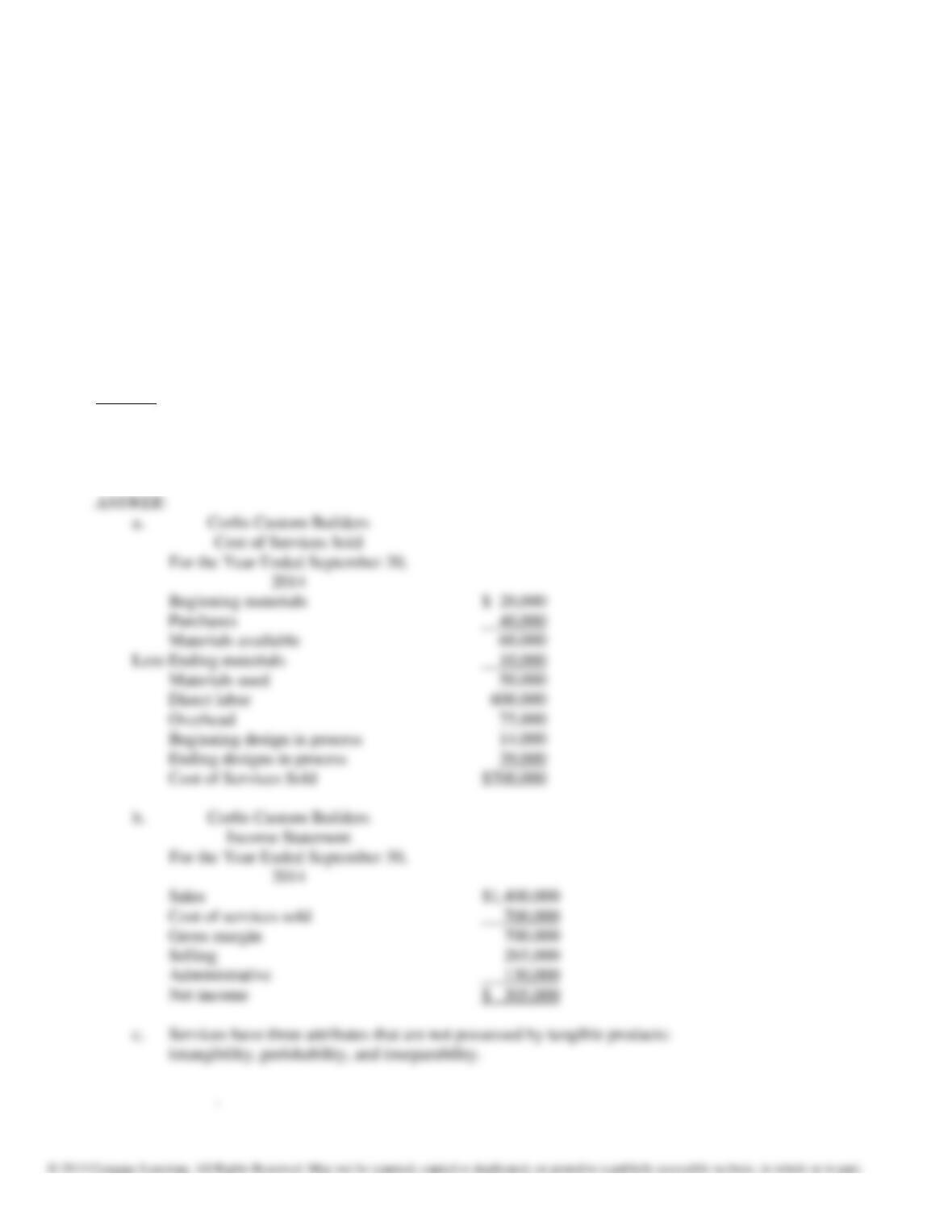
a. Prepare a statement of cost of services sold.
b. Prepare an income statement.
c. Discuss three differences between services and tangible products.
Chapter 2: Basic Cost Management Concepts
202. Define activity-based management. In your answer, present the activity-based management model in good form.
203. In choosing a cost management system, the controller must balance the total costs of implementing
such systems. What costs must be balanced to determine total cost? How do functional-based and activity–
based cost systems balance the trade-offs?
Chapter 2: Basic Cost Management Concepts
Direct materials
$22,200
Work in process
40,000
Finished goods
208,500
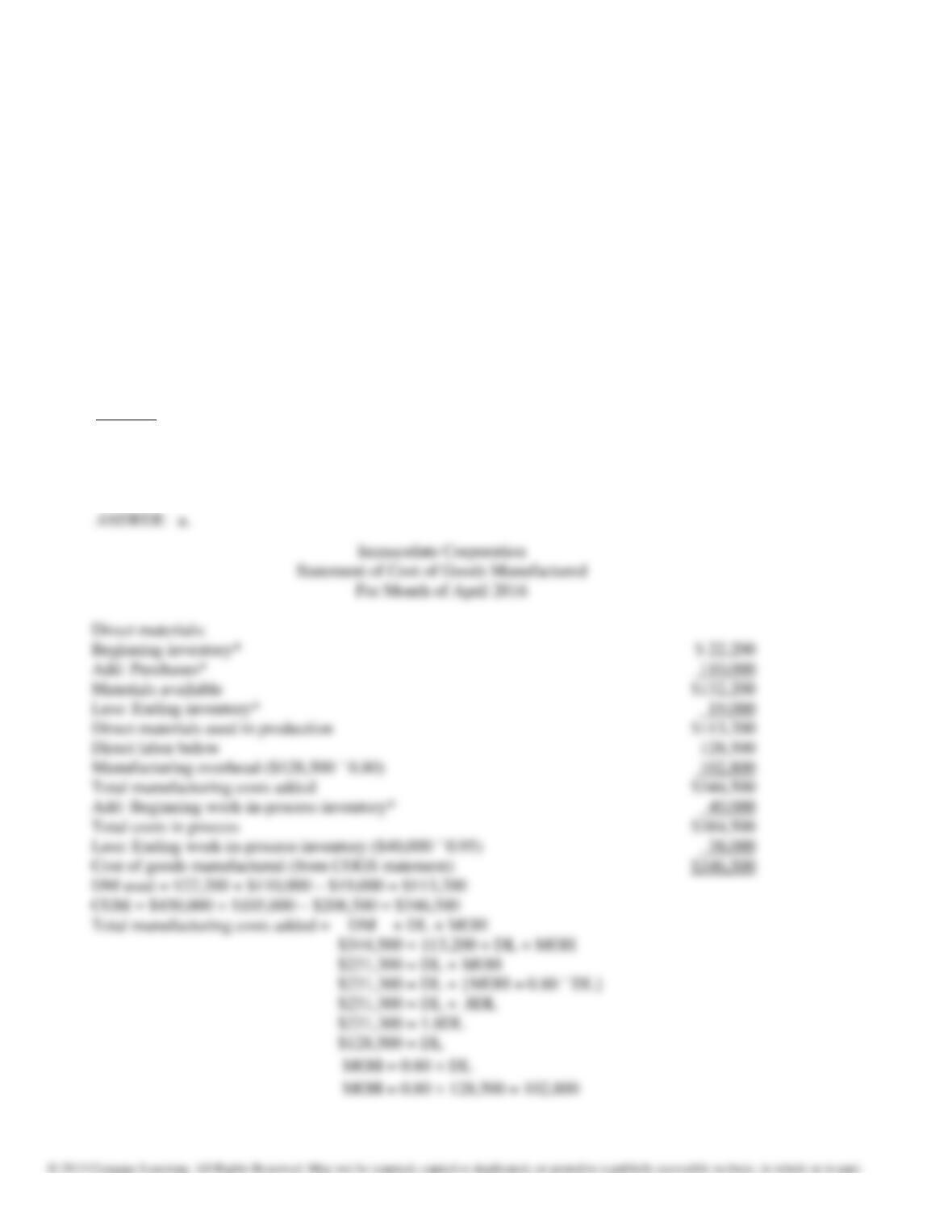
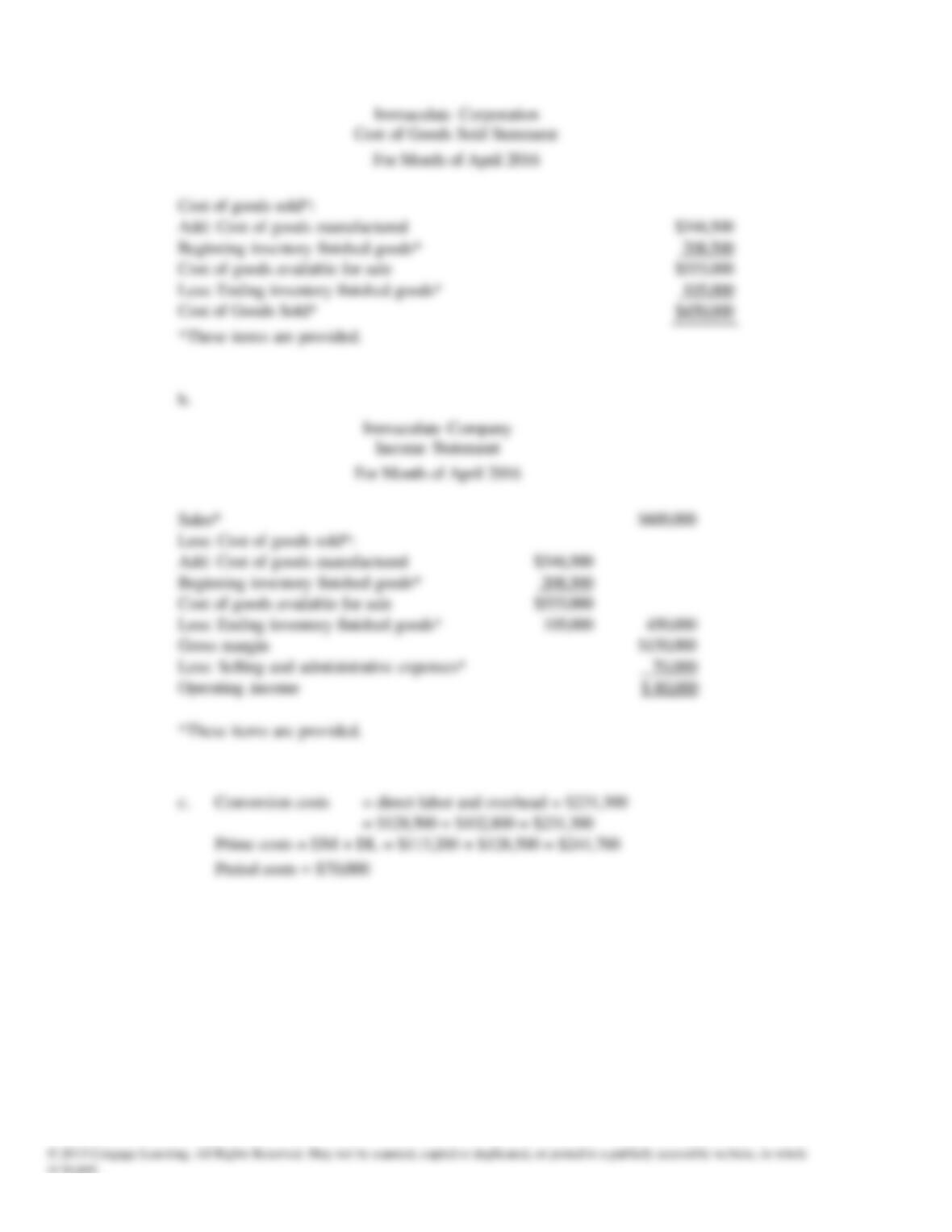
204. The cost of goods sold for the Immaculate Corporation for the month of April 2016 was $450,000. Work–in–
process inventory at the end of April was 95 percent of the work-in–process inventory at the beginning of the
month. Overhead is 80 percent of the direct labor cost. During the month, $110,000 of direct materials were
purchased. Revenues for Immaculate were $600,000, and the selling and administrative costs were $70,000.
Other information about Immaculate’s inventories and production for April was as follows:
Ending inventories-April 30
Direct materials $19,000
Work in process ?
Finished goods 105,000
Beginning inventories-April 1
Required:
a. Prepare a cost of goods manufactured and cost of goods sold statements.
b. Prepare an income statement.
c. What are the prime costs, conversion costs, and period costs?
Chapter 2: Basic Cost Management Concepts
Chapter 2: Basic Cost Management Concepts
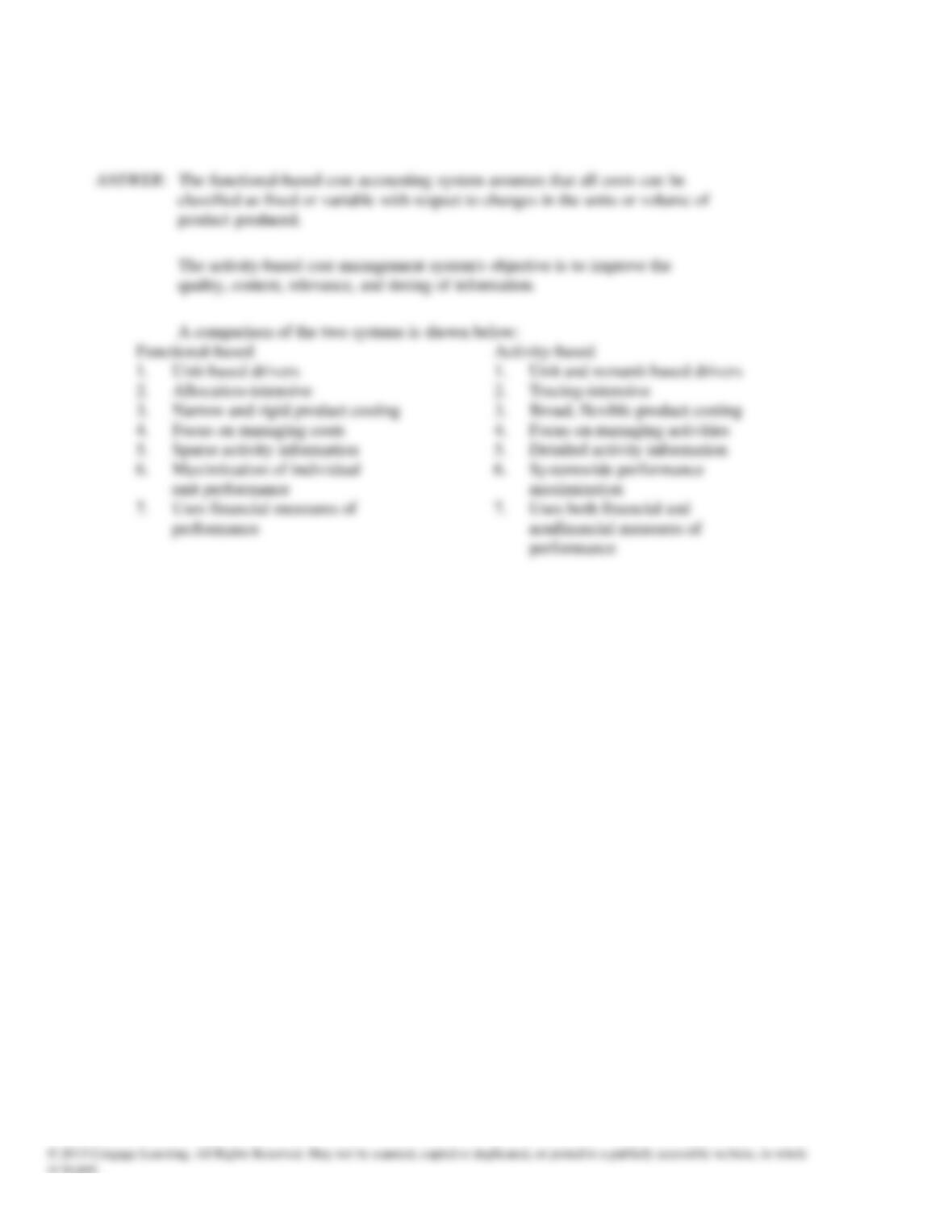
205. Describe several of the major differences between a functional-based cost management system and an
activity-based cost management system.