30. Suppose an individual worker is on the backward–bending portion of her labor supply curve. Then, for a wage
increase, the
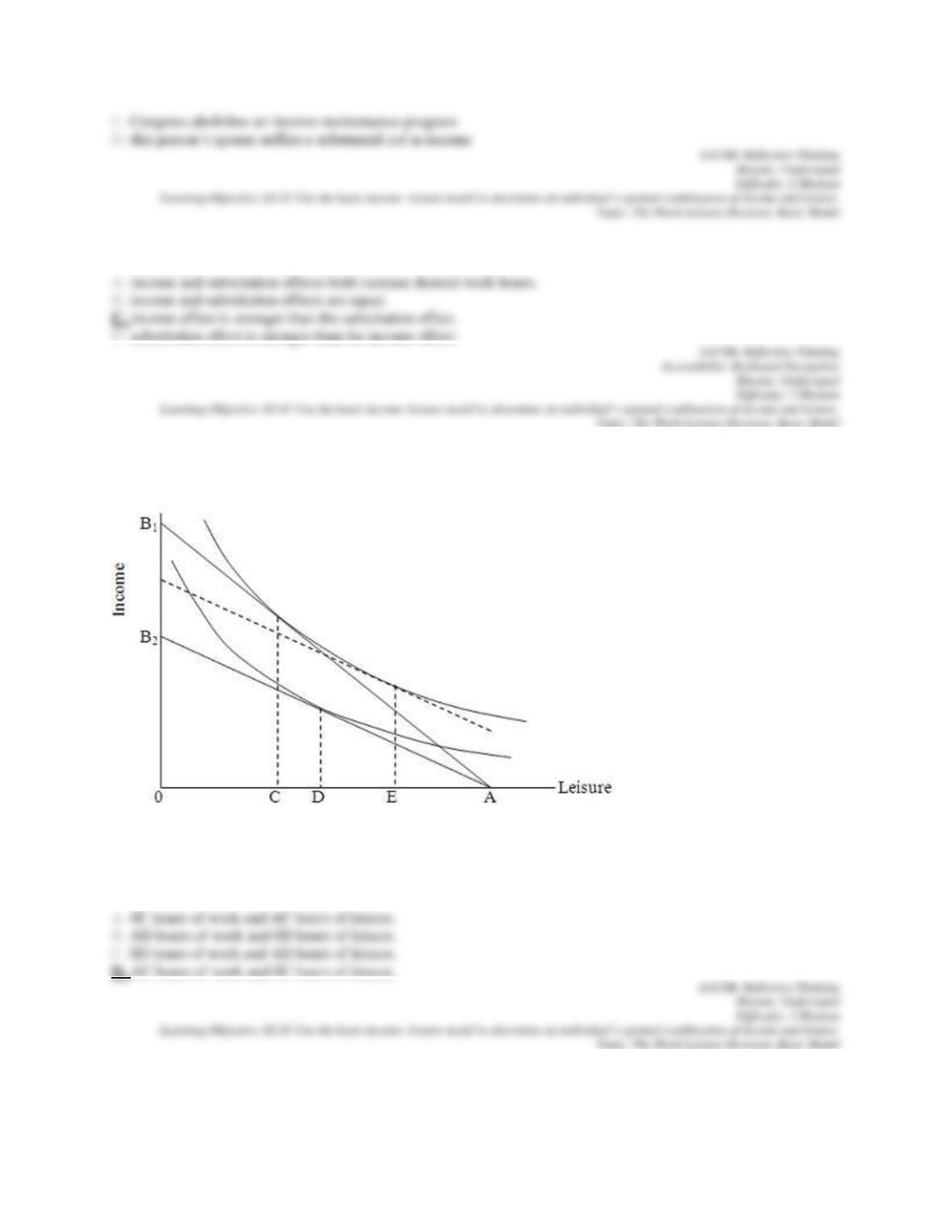
31. Refer to the following diagram.
If the current wage rate results in a budget constraint of AB1, the individual will choose
32. Refer to the following diagram.
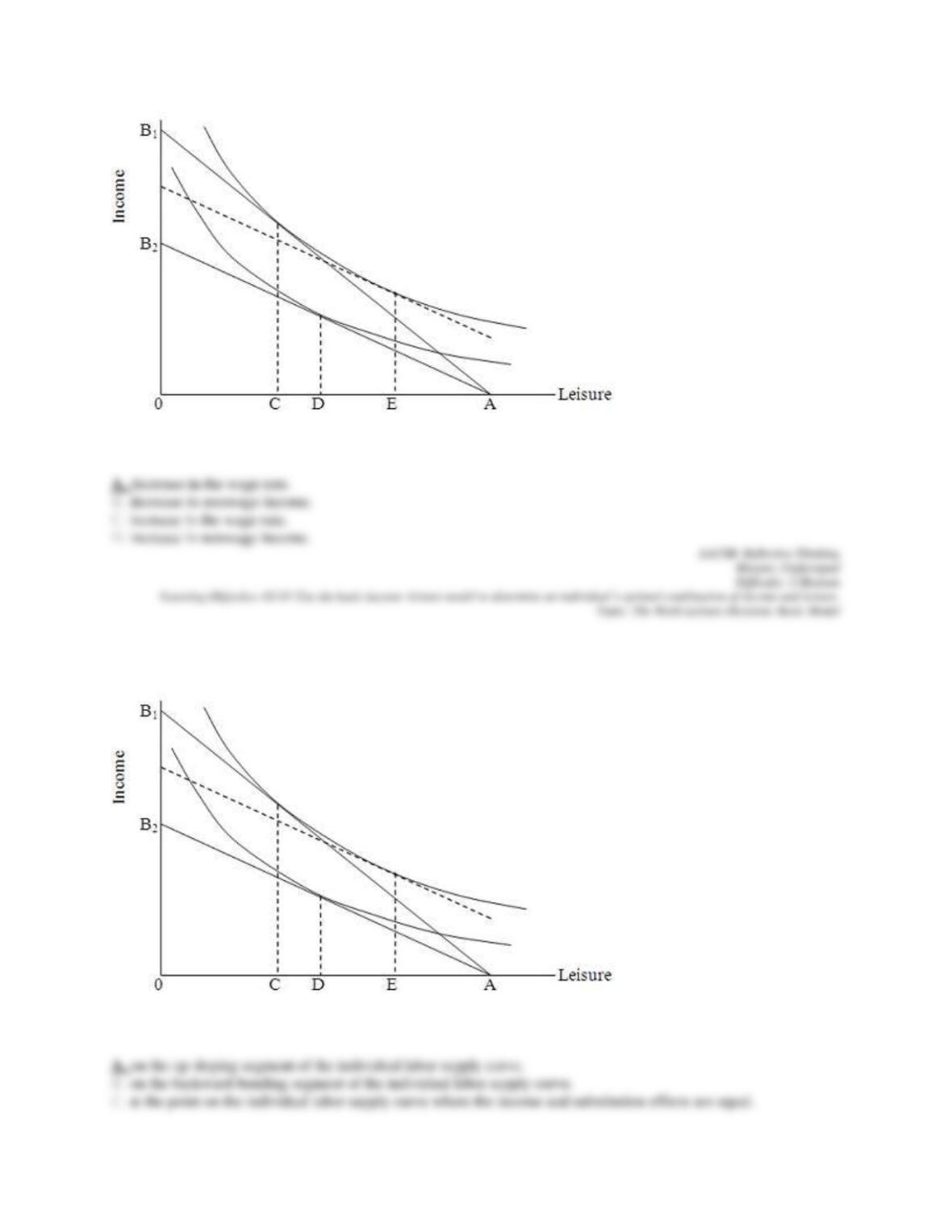
The shift from budget line AB1 to AB2 implies a(n)
33. Refer to the following diagram.
The equilibrium positions shown imply that in the relevant wage range, this person is
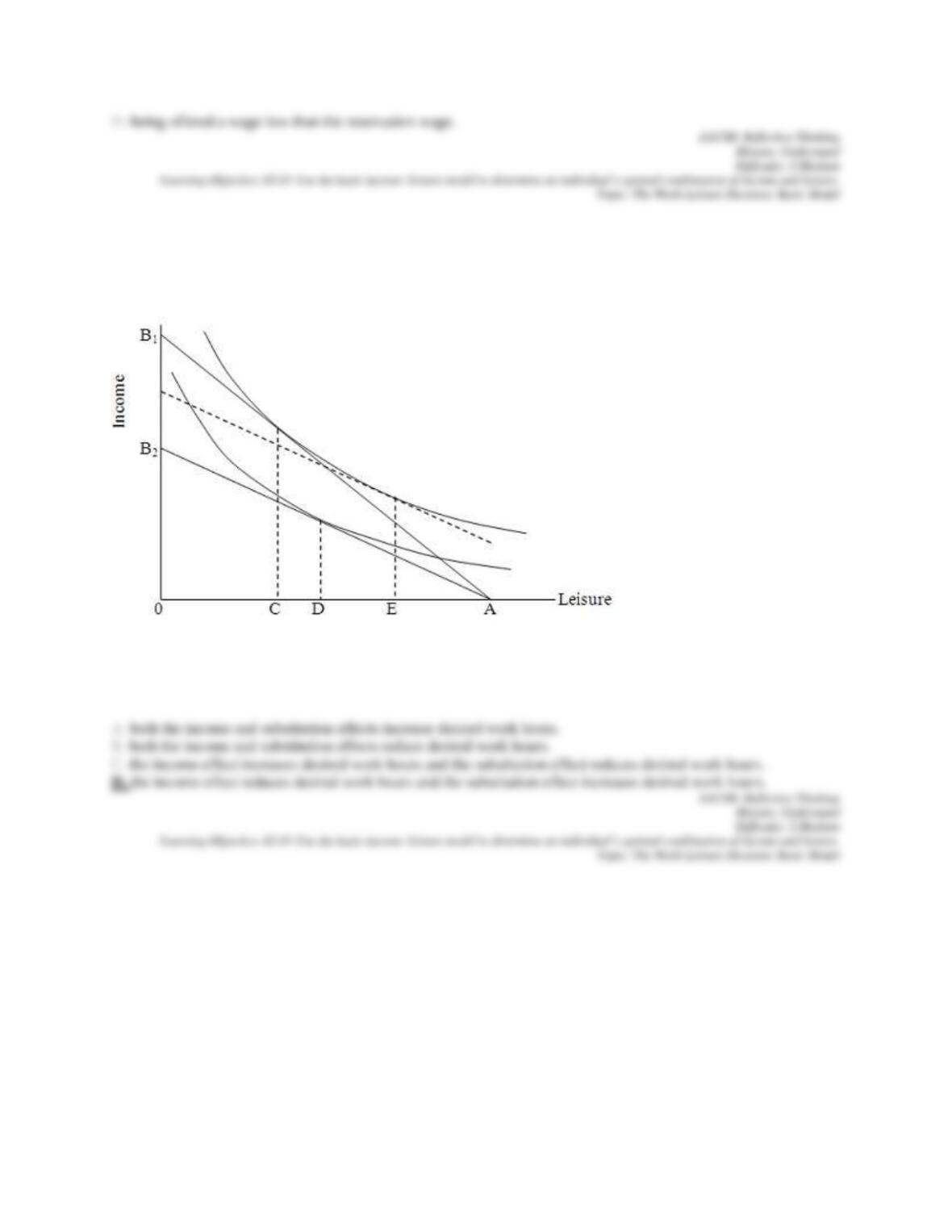
34. Refer to the following diagram.
The equilibrium positions shown in the diagram imply that for a wage increase,
35. Refer to the following diagram.
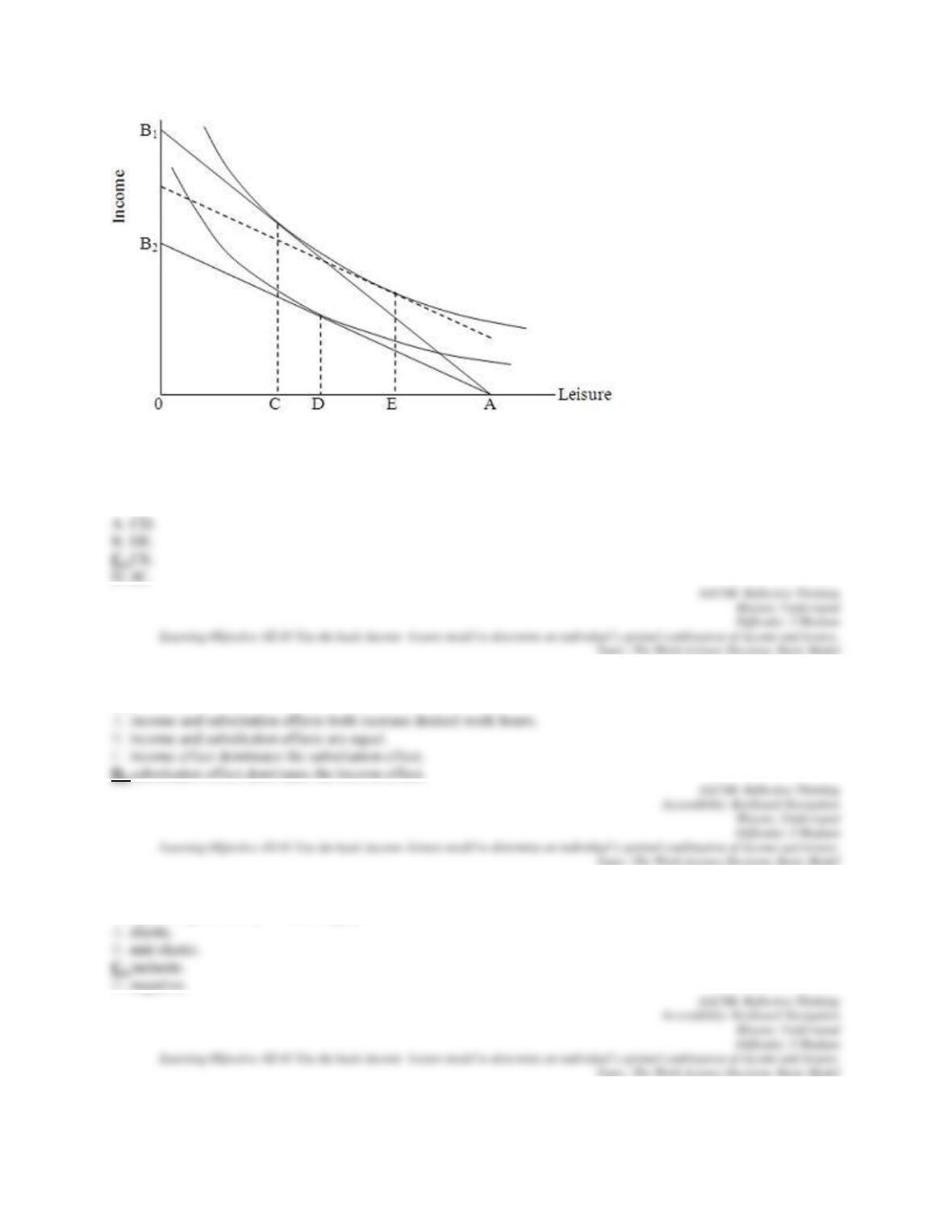
In the diagram, the substitution effect associated with a wage increase is shown by the distance
36. Suppose an individual worker is on the up sloping portion of her labor supply curve. Then, for a wage increase,
the
37. A 10% increase in the wage induces Margy to increase her desired work hours by 2%. Over this range of wages,
Margy?s wage elasticity of labor supply is

38. For Jenny, the income effect of a wage increase dominates the substitution effect. Jenny?s wage elasticity of
labor supply is
39. Which of the following circumstances will increase the likelihood of an individual being a non-participant in the
labor market?
40. Steven’s reservation wage is $12, and his market wage is $11. We can conclude that
41. Shanita is required by her employer to work a standard eight-hour workday. Suppose her marginal rate of
substitution of leisure for income is less than the wage rate at this level of work effort. We can conclude that Shanita
will
42. Sammy is required by her employer to work a standard eight-hour workday. Suppose her marginal rate of
substitution of leisure for income exceeds the wage rate at this level of work effort. We can conclude that Sammy
will
43. Compared to workers with less education, people who have more education tend to earn higher wages and have
higher pensions upon retirement. Given this observation, which of the following statements best explains why those
persons with more education also retire at a later age?
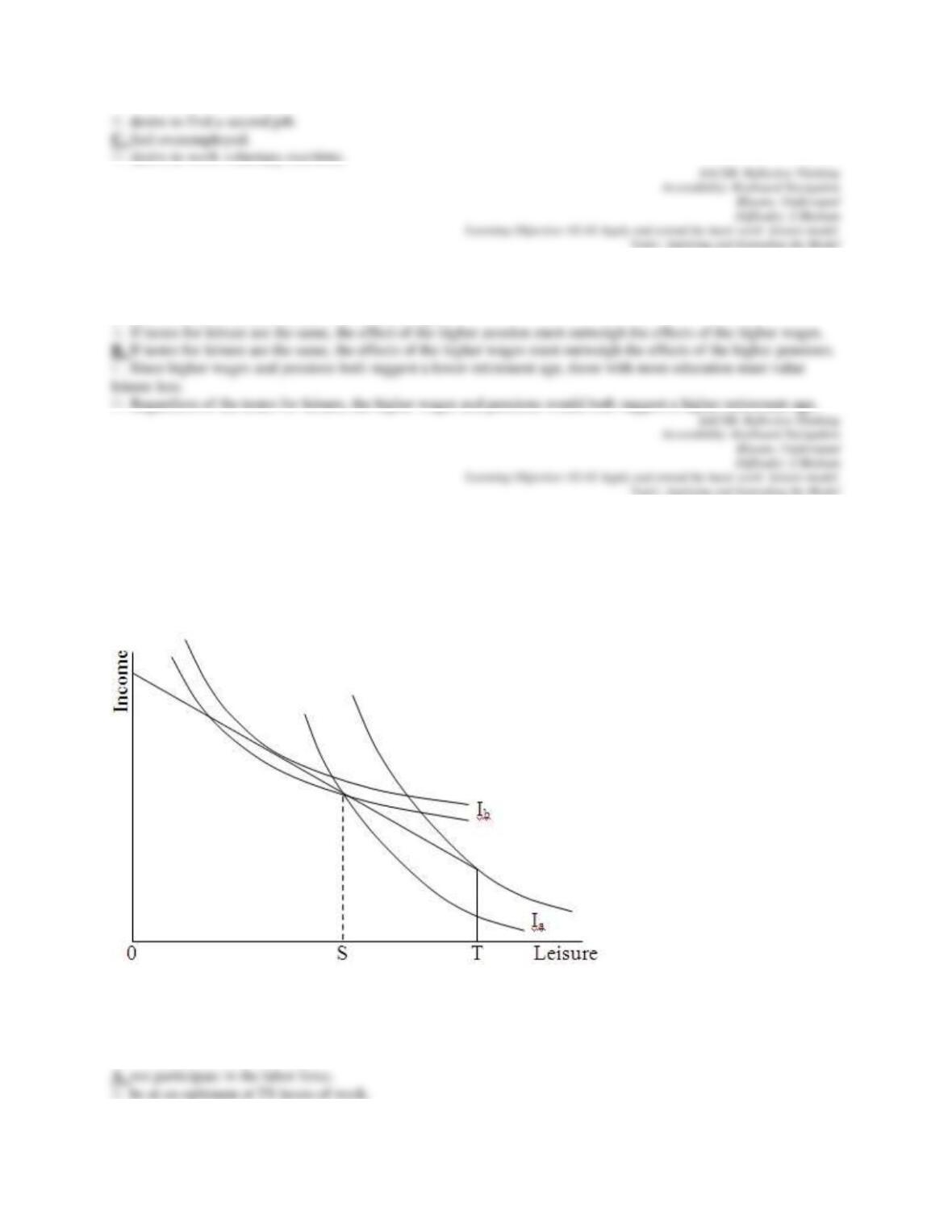
44. Refer to the following diagram. TS represents the standard 40-hour workweek. Indifference curves labeled with
subscripts “a” and “b” are for individuals A and B, respectively.
Assuming workers must work TS hours or not work at all, worker A will
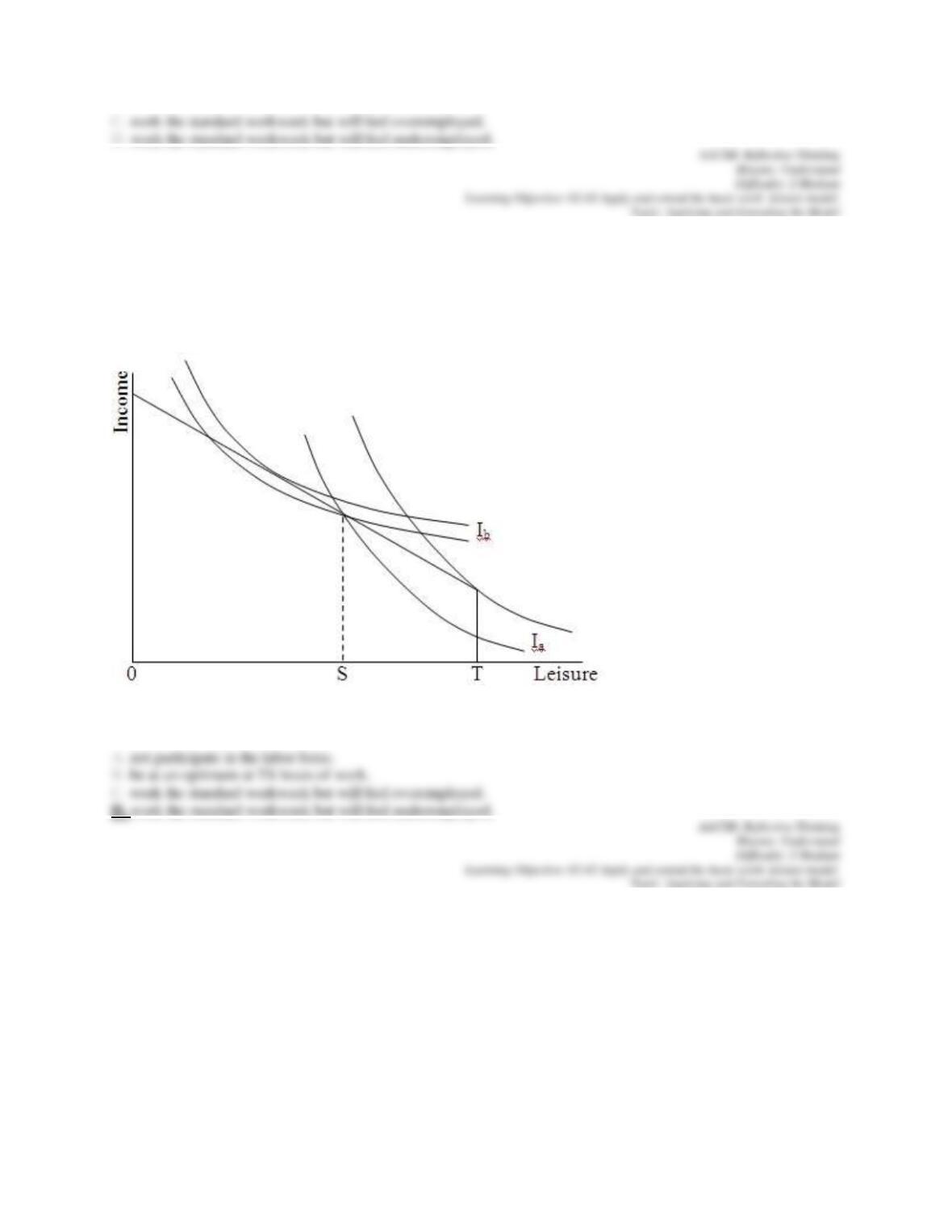
45. Refer to the following diagram. TS represents the standard 40-hour workweek. Indifference curves labeled with
subscripts “a” and “b” are for individuals A and B, respectively.
Assuming workers must work TS hours or not work at all, worker B will
46. Refer to the following diagram.
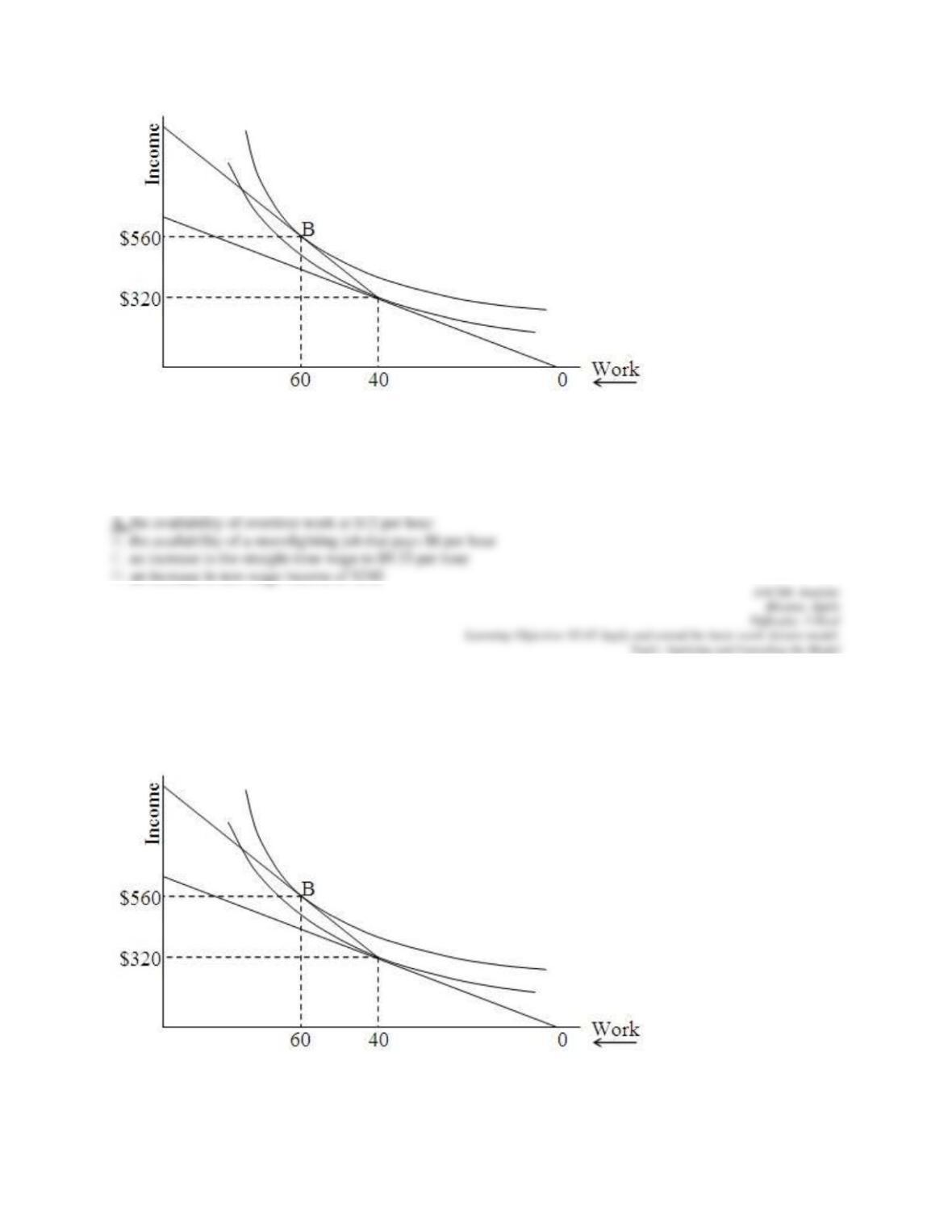
Suppose this worker is currently working 40 hours per week and earning $8 per hour. Which one of the following
would cause a move to point B and the subsequent increase in work hours to 60?
47. Refer to the following diagram.

Suppose this worker’s union negotiates an increase in the straight-time wage from $8 to $9.33 per hour with no
bonus for overtime. This plan would allow earnings of $560 at 60 hours per week. Assuming this worker can freely
choose the number of hours worked, he will choose to work
48. Suppose a working mother is currently ineligible for any government assistance. If she were then to become
eligible for an income maintenance program that incorporates both a basic benefit and a positive benefit-reduction
rate,
49. Assume under an income-maintenance program that the basic benefit (income guarantee) is $9,000 and the
benefit-reduction rate is 50%. If a family has an earned income of $3,000 per year, its subsidy payment will be
50. Assume under an income-maintenance program that the basic benefit (income guarantee) is $9,000 and the
benefit-reduction rate is 50%. The break-even level of income is
51. Suppose an income-maintenance program offers a basic benefit of $7,500 per year and the benefit-reduction rate
is 33 1/3%. The break-even level of income is then

52. The Personal Responsibility and Work Opportunity Act of 1996
53. In the years following enactment of welfare reform in 1996, welfare case loads
54. Empirical evidence indicates that inheritances _____ labor force participation; further, persons receiving
inheritances tend to be _____ likely to work in the years preceding the inheritance.
55. The Earned Income Tax Credit

Chapter 02 Test Bank Summary
Category
# of Questions
AACSB: Analytic
5
AACSB: Reflective Thinking
50
Accessibility: Keyboard Navigation
37
Blooms: Apply
5
Blooms: Remember
19
Blooms: Understand
32
Difficulty: 1 Easy
19
Difficulty: 2 Medium
32
Difficulty: 3 Hard
5
Learning Objective: 02–01 Use the basic income–
leisure model to determine an individual’s optimal combination of income and leisure.
38
Learning Objective: 02–02 Apply and extend the basic work–leisure model.
17
Topic: Applying and Extending the Model
17
Topic: The Work-Leisure Decision: Basic Model
38