1. The mercantilists would have objected to:
a.
Export promotion policies initiated by the government
b.
The use of tariffs or quotas to restrict imports
c.
Trade policies designed to accumulate gold and other precious metals
d.
International trade based on open markets
2. Unlike the mercantilists, Adam Smith maintained that:
a.
Trade benefits one nation only at the expense of another nation
b.
Government control of trade leads to maximum economic welfare
c.
All nations can gain from free international trade
d.
The world’s output of goods must remain constant over time
United States – BPROG: Reflective Thinking – BPROG: Analysis
United States – PA – DISC: International trade and fi – DISC: International trade and finance
Historical Development of Modern Trade Theory
BLOOM’S: Knowledge
3. The trading principle formulated by Adam Smith maintained that:
a.
International prices are determined from the demand side of the market
b.
Differences in resource endowments determine comparative advantage
c.
Differences in income levels govern world trade patterns
d.
Absolute cost differences determine the immediate basis for trade
United States – BPROG: Reflective Thinking – BPROG: Analysis
United States – PA – DISC: International trade and fi – DISC: International trade and finance
Historical Development of Modern Trade Theory
BLOOM’S: Knowledge
4. Unlike Adam Smith, David Ricardo’s trading principle emphasizes the:
a.
Demand side of the market
b.
Supply side of the market
c.
Role of comparative costs
d.
Role of absolute costs
United States – BPROG: Reflective Thinking – BPROG: Analysis
United States – PA – DISC: International trade and fi – DISC: International trade and finance
Historical Development of Modern Trade Theory
BLOOM’S: Knowledge
5. When a nation requires fewer resources than another nation to produce a product, the nation is said to have a:
a.
Absolute advantage in the production of the product
b.
Comparative advantage in the production of the product
c.
Lower marginal rate of transformation for the product
d.
Lower opportunity cost of producing the product
United States – BPROG: Reflective Thinking – BPROG: Analysis
United States – PA – DISC: International trade and fi – DISC: International trade and finance
Historical Development of Modern Trade Theory
BLOOM’S: Comprehension
6. According to the principle of comparative advantage, specialization and trade increase a nation’s total output since:
a.
Resources are directed to their highest productivity
b.
The output of the nation’s trading partner declines
c.
The nation can produce outside of its production possibilities curve
d.
The problem of unemployment is eliminated
United States – BPROG: Reflective Thinking – BPROG: Analysis
United States – PA – DISC: International trade and fi – DISC: International trade and finance
Historical Development of Modern Trade Theory
BLOOM’S: Comprehension
7. In a two-product, two-country world, international trade can lead to increases in:
a.
Consumer welfare only if output of both products is increased
b.
Output of both products and consumer welfare in both countries
c.
Total production of both products, but not consumer welfare in both countries
d.
Consumer welfare in both countries, but not total production of both products
United States – BPROG: Reflective Thinking – BPROG: Analysis
United States – PA – DISC: International trade and fi – DISC: International trade and finance
Historical Development of Modern Trade Theory
BLOOM’S: Comprehension
8. As a result of international trade, specialization in production tends to be:
United States – BPROG: Reflective Thinking – BPROG: Analysis
United States – PA – DISC: International trade and fi – DISC: International trade and finance
Historical Development of Modern Trade Theory
BLOOM’S: Knowledge
a.
Complete with constant costs—complete with increasing costs
b.
Complete with constant costs—incomplete with increasing costs
c.
Incomplete with constant costs—complete with increasing costs
d.
Incomplete with constant costs—incomplete with increasing costs
9. A nation that gains from trade will find its consumption point being located:
a.
Inside its production possibilities curve
b.
Along its production possibilities curve
c.
Outside its production possibilities curve
d.
None of the above
c
Moderate
United States – BPROG: Reflective Thinking – BPROG: Analysis
United States – PA – DISC: International trade and fi – DISC: International trade and finance
Production Possibilities Schedules
BLOOM’S: Application
Table 2.1. Output Possibilities of the U.S. and the U.K.
Output per Worker per day
Country
Tons of Steel
Televisions
United States
5
45
United Kingdom
10
20
10. Referring to Table 2.1, the United States has the absolute advantage in the production of:
a.
Steel
b.
Televisions
c.
Both steel and televisions
d.
Neither steel nor televisions
c
Moderate
United States – BPROG: Analysis
Production Possibilities Schedules
BLOOM’S: Analysis
11. Referring to Table 2.1, the United Kingdom has a comparative advantage in the production of:
Challenging
United States – BPROG: Reflective Thinking – BPROG: Analysis
United States – PA – DISC: International trade and fi – DISC: International trade and finance
Historical Development of Modern Trade Theory
BLOOM’S: Comprehension
a.
Steel
b.
Televisions
c.
Both steel and televisions
d.
Neither steel nor televisions
12. Refer to Table 2.1. If trade opens up between the United States and the United Kingdom, American firms should
specialize in producing:
a.
Steel
b.
Televisions
c.
Both steel and televisions
d.
Neither steel nor televisions
Moderate
United States – BPROG: Analysis
Production Possibilities Schedules
BLOOM’S: Analysis
13. Referring to Table 2.1, the opportunity cost of producing one ton of steel in the United States is:
a.
3 televisions
b.
10 televisions
c.
20 televisions
d.
45 televisions
a
Moderate
United States – BPROG: Analysis
Production Possibilities Schedules
BLOOM’S: Analysis
14. Refer to Table 2.1. Mutually advantageous trade will occur between the United States and the United Kingdom so
long as one ton of steel trades for:
a.
At least 1 television, but no more than 2 televisions
b.
At least 2 televisions, but no more than 3 televisions
c.
At least 3 televisions, but no more than 4 televisions
a
Moderate
United States – BPROG: Analysis
Production Possibilities Schedules
BLOOM’S: Analysis
d.
At least 4 televisions, but no more than 5 televisions
15. Referring to Table 2.1, the United Kingdom gains most from trade if:
a.
1 ton of steel trades for 2 televisions
b.
1 ton of steel trades for 3 televisions
c.
2 tons of steel trade for 4 televisions
d.
2 tons of steel trade for 5 televisions
United States – BPROG: Analysis
Production Possibilities Schedules
BLOOM’S: Analysis
16. Concerning international trade restrictions, which of the following is false? Trade restrictions:
a.
Limit specialization and the division of labor
b.
Reduce the volume of trade and the gains from trade
c.
Cause nations to produce inside their production possibilities curves
d.
May result in a country producing some of the product of its comparative disadvantage
United States – BPROG: Reflective Thinking – BPROG: Analysis
Production Possibilities Schedules
BLOOM’S: Comprehension
17. If a production possibilities curve is bowed out (i.e., concave) in appearance, production occurs under conditions of:
a.
Constant opportunity costs
b.
Increasing opportunity costs
c.
Decreasing opportunity costs
d.
Zero opportunity costs
United States – BPROG: Analysis
Production Possibilities Schedules
BLOOM’S: Analysis
18. Increasing opportunity costs suggest that:
a.
Resources are not perfectly shiftable between the production of two goods
b.
Resources are fully shiftable between the production of two goods
c.
A country’s production possibilities curve appears as a straight line
d.
A country’s production possibilities curve is bowed inward (i.e., convex) in appearance
United States – BPROG: Reflective Thinking – BPROG: Analysis
Production Possibilities Schedules
BLOOM’S: Comprehension
19. The trading-triangle concept is used to indicate a nation’s:
a.
Exports, marginal rate of transformation, terms of trade
b.
Imports, terms of trade, marginal rate of transformation
c.
Marginal rate of transformation, imports, exports
d.
Terms of trade, exports, imports
United States – BPROG: Reflective Thinking – BPROG: Analysis
Production Possibilities Schedules
BLOOM’S: Comprehension
20. Assuming increasing cost conditions, trade between two countries would not be likely if they have:
a.
Identical demand conditions but different supply conditions
b.
Identical supply conditions but different demand conditions
c.
Different supply conditions and different demand conditions
d.
Identical demand conditions and identical supply conditions
United States – BPROG: Reflective Thinking – BPROG: Analysis
specialization and trade
Trading Under Increasing-Cost Conditions
United States – BPROG: Reflective Thinking – BPROG: Analysis
specialization and trade
Production Possibilities Schedules
BLOOM’S: Comprehension
KEYWORDS:
BLOOM’S: Application
Table 2.2. Output possibilities for South Korea and Japan
Output per worker per day
Country
Tons of steel
VCRs
South Korea
80
40
Japan
20
20
21. Referring to Table 2.2, the opportunity cost of one VCR in Japan is:
a.
1 ton of steel
b.
2 tons of steel
c.
3 tons of steel
d.
4 tons of steel
22. Referring to Table 2.2, the opportunity cost of one VCR in South Korea is:
a.
1/2 ton of steel
b.
1 ton of steel
c.
1 1/2 tons of steel
d.
2 tons of steel
ANSWER:
POINTS:
DIFFICULTY:
Easy
United States – BPROG: Reflective Thinking – BPROG: Analysis
specialization and trade
TOPICS:
Production Possibilities Schedules
KEYWORDS:
BLOOM’S: Application
23. Refer to Table 2.2. According to the principle of absolute advantage, Japan should:
a.
Export steel
b.
Export VCRs
c.
Export steel and VCRs
d.
None of the above; there is no basis for gainful trade
ANSWER:
POINTS:
DIFFICULTY:
Moderate
United States – BPROG: Reflective Thinking – BPROG: Analysis
United States – PA – DISC: Gains from trade, speciali – DISC: Gains from trade,
ANSWER:
a
POINTS:
DIFFICULTY:
Easy
United States – BPROG: Reflective Thinking – BPROG: Analysis
TOPICS:
Production Possibilities Schedules
KEYWORDS:
BLOOM’S: Application
24. Refer to Table 2.2. According to the principle of comparative advantage:
a.
South Korea should export steel
b.
South Korea should export steel and VCRs
c.
Japan should export steel
d.
Japan should export steel and VCRs
United States – BPROG: Reflective Thinking – BPROG: Analysis
Production Possibilities Schedules
BLOOM’S: Application
25. Refer to Table 2.2. With international trade, what would be the maximum amount of steel that South Korea would be
willing to export to Japan in exchange for each VCR?
a.
1/2 ton of steel
b.
1 ton of steel
c.
1-1/2 tons of steel
d.
2 tons of steel
United States – BPROG: Reflective Thinking – BPROG: Analysis
Production Possibilities Schedules
BLOOM’S: Application
26. Refer to Table 2.2. With international trade, what would be the maximum number of VCRs that Japan would be
willing to export to South Korea in exchange for each ton of steel?
a.
1 VCR
b.
2 VCRs
c.
3 VCRs
d.
4 VCRs
specialization and trade
Production Possibilities Schedules
BLOOM’S: Application
specialization and trade
Production Possibilities Schedules
BLOOM’S: Application
27. The earliest statement of the principle of comparative advantage is associated with:
a.
Adam Smith
b.
David Ricardo
c.
Eli Heckscher
d.
Bertil Ohlin
28. If Hong Kong and Taiwan had identical labor costs but were subject to increasing costs of production:
a.
Trade would depend on differences in demand conditions
b.
Trade would depend on economies of large-scale production
c.
Trade would depend on the use of different currencies
d.
There would be no basis for gainful trade
1
United States – BPROG: Reflective Thinking – BPROG: Analysis
Production Possibilities Schedules
BLOOM’S: Comprehension
29. If the international terms of trade settle at a level that is between each country’s opportunity cost:
a.
There is no basis for gainful trade for either country
b.
Both countries gain from trade
c.
Only one country gains from trade
d.
One country gains and the other country loses from trade
b
1
United States – BPROG: Reflective Thinking – BPROG: Analysis
Production Possibilities Schedules
BLOOM’S: Comprehension
30. International trade is based on the notion that:
a.
Different currencies are an obstacle to international trade
b.
Goods are more mobile internationally than are resources
b
1
United States – BPROG: Reflective Thinking – BPROG: Analysis
specialization and trade
Production Possibilities Schedules
BLOOM’S: Knowledge
c.
Resources are more mobile internationally than are goods
d.
A country’s exports should always exceed its imports
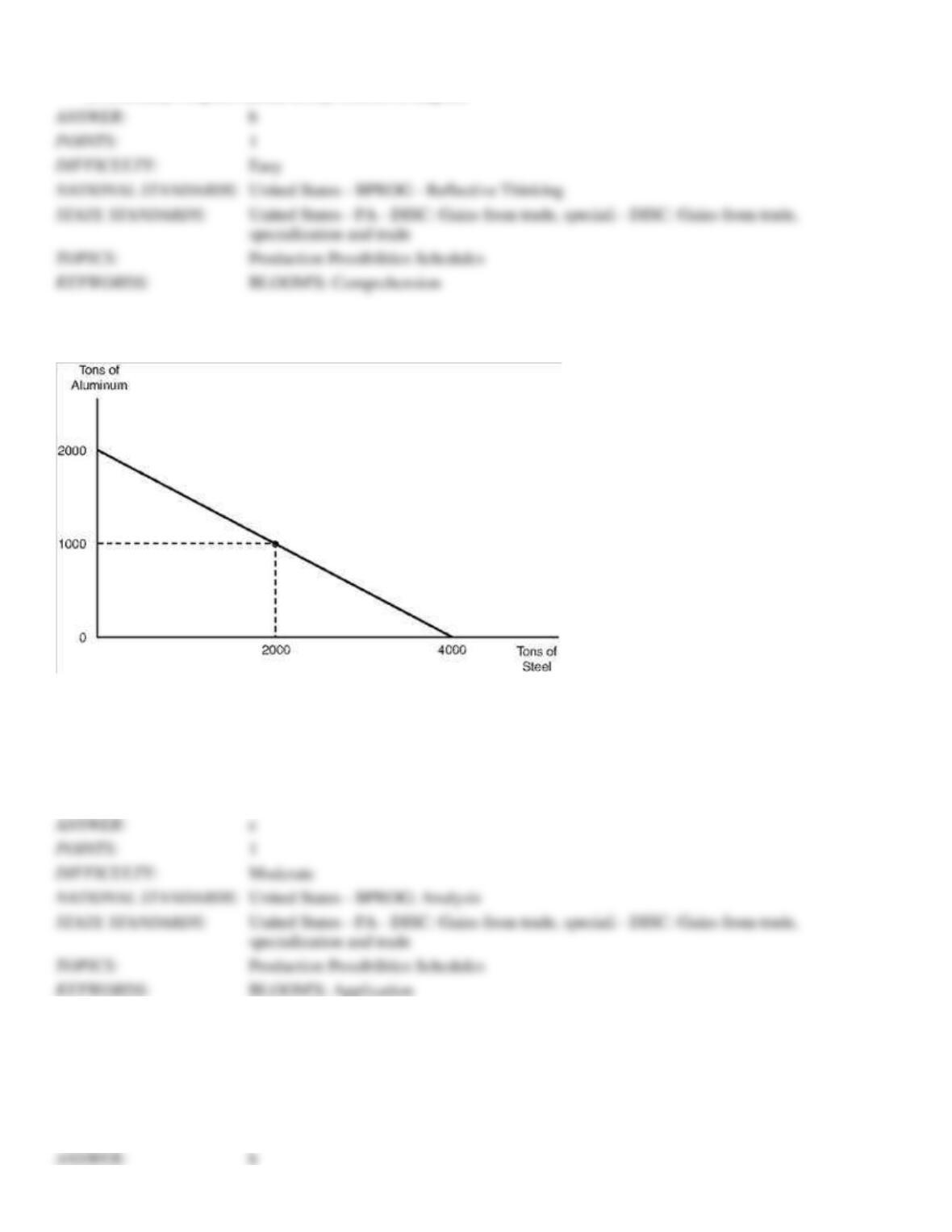
Figure 2.1. Production Possibilities Schedule
31. Referring to Figure 2.1, the relative cost of steel in terms of aluminum is:
a.
4.0 tons
b.
2.0 tons
c.
0.5 tons
d.
0.25 tons
United States – BPROG: Analysis
Production Possibilities Schedules
BLOOM’S: Application
32. Referring to Figure 2.1, the relative cost of aluminum in terms of steel is:
a.
4.0 tons
b.
2.0 tons
c.
0.5 tons
d.
0.25 tons
United States – BPROG – Reflective Thinking
Production Possibilities Schedules
BLOOM’S: Comprehension
33. Refer to Figure 2.1. If the relative cost of steel were to rise, then the production possibilities schedule would:
a.
Become steeper
b.
Become flatter
c.
Shift inward in a parallel manner
d.
Shift outward in a parallel manner
United States – BPROG: Analysis
Production Possibilities Schedules
BLOOM’S: Application
34. Refer to Figure 2.1. If the relative cost of aluminum were to rise, then the production possibilities schedule would:
a.
Become steeper
b.
Become flatter
c.
Shift inward in a parallel manner
d.
Shift outward in a parallel manner
United States – BPROG: Analysis
Production Possibilities Schedules
BLOOM’S: Application
35. When a nation achieves autarky equilibrium:
a.
Input price equals final product price
b.
Labor productivity equals the wage rate
c.
Imports equal exports
d.
Production equals consumption
United States – BPROG: Reflective Thinking – BPROG: Analysis
United States – PA – DISC: Gains from trade, speciali – DISC: Gains from trade,
United States – BPROG: Analysis
Production Possibilities Schedules
36. When a nation is in autarky and maximizes its living standard, its consumption and production points are:
a.
Along the production possibilities schedule
b.
Above the production possibilities schedule
c.
Beneath the production possibilities schedule
d.
Any of the above
a
Moderate
United States – BPROG: Reflective Thinking – BPROG: Analysis
Trading Under Constant-Cost Conditions
BLOOM’S: Comprehension
37. If Canada experiences increasing opportunity costs, its supply schedule of steel will be:
a.
Downward-sloping
b.
Upward-sloping
c.
Horizontal
d.
Vertical
Moderate
United States – BPROG: Reflective Thinking – BPROG: Analysis
Trading Under Increasing-Cost Conditions
BLOOM’S: Comprehension
38. If Canada experiences constant opportunity costs, its supply schedule of steel will be:
a.
Downward-sloping
b.
Upward-sloping
c.
Horizontal
d.
Vertical
c
Easy
United States – BPROG: Reflective Thinking – BPROG: Analysis
specialization and trade
Trading Under Constant-Cost Conditions
BLOOM’S: Comprehension
specialization and trade
Trading Under Constant-Cost Conditions
BLOOM’S: Comprehension
39. The gains from international trade increase as:
a.
A nation consumes inside of its production possibilities schedule
b.
A nation consumes along its production possibilities schedule
c.
The international terms of trade rises above the nation’s autarky price
d.
The international terms of trade approaches the nation’s autarky price
40. In a two-country, two-product world, the statement “Japan enjoys a comparative advantage over France in steel
relative to bicycles” is equivalent to:
a.
France having a comparative advantage over Japan in bicycles relative to steel
b.
France having a comparative disadvantage against Japan in bicycles and steel
c.
Japan having a comparative advantage over France in steel and bicycles
d.
Japan having a comparative disadvantage against Japan in bicycles and steel
United States – BPROG: Reflective Thinking – BPROG: Analysis
Trading Under Constant-Cost Conditions
BLOOM’S: Comprehension
41. Ricardo’s theory of comparative advantage was of limited real-world validity because it was founded on the:
a.
Labor theory of value
b.
Capital theory of value
c.
Land theory of value
d.
Entrepreneur theory of value
United States – BPROG: Reflective Thinking – BPROG: Analysis
Historical Development of Modern Trade Theory
BLOOM’S: Knowledge
42. Assume that labor is the only factor of production and that wages in the United States equal $20 per hour while wages
in the United Kingdom equal $10 per hour. Production costs would be lower in the United States than the United
Kingdom if:
a.
U.S. labor productivity equaled 40 units per hour while U.K. labor productivity equaled 15 units per hour
United States – BPROG: Reflective Thinking – BPROG: Analysis
Trading Under Constant-Cost Conditions
BLOOM’S: Comprehension
b.
U.S. labor productivity equaled 30 units per hour while U.K. labor productivity equaled 20 units per hour
c.
U.S. labor productivity equaled 20 units per hour while U.K. labor productivity equaled 30 units per hour
d.
U.S. labor productivity equaled 15 units per hour while U.K. labor productivity equaled 25 units per hour
43. According to Ricardo, a country will have a comparative advantage in the product in which its:
a.
Labor productivity is relatively low
b.
Labor productivity is relatively high
c.
Labor mobility is relatively low
d.
Labor mobility is relatively high
United States – BPROG: Reflective Thinking – BPROG: Analysis
specialization and trade
Historical Development of Modern Trade Theory
44. The Ricardian model of comparative advantage is based on all of the following assumptions except:
a.
Only two nations and two products
b.
Product quality varies among nations
c.
Labor is the only factor of production
d.
Labor can move freely within a nation
United States – BPROG: Reflective Thinking – BPROG: Analysis
specialization and trade
Historical Development of Modern Trade Theory
BLOOM’S: Comprehension
45. The writings of G. MacDougall emphasized which of the following as an explanation of a country’s competitive
position?
a.
National income levels
b.
Relative endowments of natural resources
c.
Domestic tastes and preferences
d.
Labor compensation and productivity levels
United States – BPROG: Reflective Thinking – BPROG: Analysis
specialization and trade
Productions Gains From Specialization
BLOOM’S: Comprehension
46. The introduction of community indifference curves into our trading example focuses attention on the nation’s:
a.
Income level
b.
Resource prices
c.
Tastes and preferences
d.
Productivity level
United States – BPROG: Reflective Thinking – BPROG: Analysis
Trading Under Increasing-Cost Conditions
BLOOM’S: Comprehension
47. Introducing indifference curves into our trade model permits us to determine:
a.
Where a nation chooses to locate along its production possibilities curve in autarky
b.
The precise location of a nation’s production possibilities curve
c.
Whether absolute cost or comparative cost conditions exist
d.
The currency price of one product in terms of another product
United States – BPROG: Reflective Thinking – BPROG: Analysis
Trading Under Increasing-Cost Conditions
BLOOM’S: Comprehension
48. In the absence of trade, a nation is in equilibrium where a community indifference curve:
a.
Lies above its production possibilities curve
b.
Is tangent to its production possibilities curve
c.
Intersects its production possibilities curve
d.
Lies below its production possibilities curve
United States – BPROG: Reflective Thinking – BPROG: Analysis
United States – BPROG: Reflective Thinking – BPROG: Analysis
BLOOM’S: Knowledge
49. The use of indifference curves helps us determine the point:
a.
Along the terms-of-trade line a country will choose
b.
Where a country maximizes its resource productivity
c.
At which a country ceases to become competitive
d.
Where the marginal rate of transformation approaches zero
United States – BPROG: Reflective Thinking – BPROG: Analysis
Trading Under Increasing-Cost Conditions
BLOOM’S: Application
50. With trade, a country will maximize its satisfaction when it:
a.
Moves to the highest possible indifference curve
b.
Forces the marginal rate of substitution to its lowest possible value
c.
Consumes more of both goods than it does in autarky
d.
Finds its marginal rate of substitution exceeding its marginal rate of transformation
United States – BPROG: Reflective Thinking – BPROG: Analysis
Trading Under Increasing-Cost Conditions
BLOOM’S: Application
51. Trade between two nations would not be possible if they have:
a.
Identical community indifference curves but different production possibilities curves
b.
Identical production possibilities curves but different community indifference curves
c.
Different production possibilities curves and different community indifference curves
d.
Identical production possibilities curves and identical community indifference curves
United States – BPROG: Reflective Thinking – BPROG: Analysis
specialization and trade
Trading Under Increasing-Cost Conditions
BLOOM’S: Application
Trading Under Increasing-Cost Conditions
BLOOM’S: Comprehension
52. Given a two-country and two-product world, the United States would enjoy all the attainable gains from free trade
with Canada if it:
a.
Trades at the U.S. rate of transformation
b.
Trades at the Canadian rate of transformation
c.
Specializes completely in the production of both goods
d.
Specializes partially in the production of both goods
53. John Stuart Mill’s theory of reciprocal demand best applies when trading partners:
a.
Are of equal size and importance in the market
b.
Produce under increasing cost conditions
c.
Partially specialize in the production of commodities
d.
Have similar taste and preference levels
United States – BPROG: Reflective Thinking – BPROG: Analysis
Historical Development of Modern Trade Theory
BLOOM’S: Knowledge
54. The equilibrium prices and quantities established after trade are fully determinate if we know:
a.
The location of all countries’ indifference curves
b.
The shape of each country’s production possibilities curve
c.
The comparative costs of each trading partner
d.
The strength of world supply and demand for each good
United States – BPROG: Reflective Thinking – BPROG: Analysis
Trading under Constant-Cost Conditions
BLOOM’S: Comprehension
55. “The equilibrium relative commodity price at which trade takes place is determined by the conditions of demand and
supply for each commodity in both nations. Other things being equal, the nation with the more intense demand for the
other nation’s exported good will gain less from trade than the nation with the less intense demand.” This statement was
first proposed by:
United States – BPROG: Reflective Thinking – BPROG: Analysis
Equilibrium Terms of Trade
BLOOM’S: Application
a.
Alfred Marshall with offer curve analysis
b.
John Stuart Mill with the theory of reciprocal demand
c.
Adam Smith with the theory of absolute advantage
d.
David Ricardo with the theory of comparative advantage
56. Which of the following terms-of-trade concepts is calculated by dividing the change in a country’s export price index
by the change in its import price index between two points in time, multiplied by 100 to express the terms of trade in
percentages?
a.
Commodity terms of trade
b.
Marginal rate of transformation
c.
Marginal rate of substitution
d.
Autarky price ratio
United States – BPROG: Reflective Thinking – BPROG: Analysis
Equilibrium Terms of Trade
BLOOM’S: Comprehension
57. The best explanation of the gains from trade that David Ricardo could provide was to describe only the outer limits
within which the equilibrium terms of trade would fall. This is because Ricardo‘s theory did not recognize how market
prices are influenced by:
a.
Demand conditions
b.
Supply conditions
c.
Business expectations
d.
Profit patterns
United States – BPROG: Reflective Thinking – BPROG: Analysis
Historical Development of Modern Trade Theory
BLOOM’S: Knowledge
58. Under free trade, Sweden enjoys all of the gains from trade with Holland if Sweden:
a.
Trades at Holland’s rate of transformation
United States – BPROG: Reflective Thinking – BPROG: Analysis
Historical Development of Modern Trade Theory
BLOOM’S: Knowledge
b.
Trades at Sweden’s rate of transformation
c.
Specializes completely in the production of its export good
d.
Specializes partially in the production of its export good
59. Because the Ricardian trade theory recognized only how supply conditions influence international prices, it could
determine:
a.
The equilibrium terms of trade
b.
The outer limits for the terms of trade
c.
Where a country chooses to locate along its production possibilities curve
d.
Where a country chooses to locate along its trade triangle
Easy
United States – BPROG: Reflective Thinking – BPROG: Analysis
Equilibrium Terms of Trade
BLOOM’S: Comprehension
60. The terms of trade is given by the prices:
a.
Paid for all goods imported by the home country
b.
Received for all goods exported by the home country
c.
Received for exports and paid for imports
d.
Of primary products as opposed to manufactured products
c
Moderate
United States – BPROG: Reflective Thinking – BPROG: Analysis
specialization and trade
Equilibrium Terms of Trade
BLOOM’S: Comprehension
Table 2.3. Terms of Trade
Export Price Index Import Price Index
Country
1990
2004
1990
2004
Mexico
100
220
100
200
Sweden
100
160
100
150
Spain
100
155
100
155
a
Moderate
United States – BPROG: Reflective Thinking – BPROG: Analysis
specialization and trade
Equilibrium Terms of Trade
BLOOM’S: Application
France
100
170
100
230
Denmark
100
120
100
125
61. Referring to Table 2.3, which countries’ terms of trade improved between 1990 and 2004?
a.
Mexico and Denmark
b.
Sweden and Denmark
c.
Sweden and Spain
d.
Mexico and Sweden
62. Referring to Table 2.3, which countries’ terms of trade worsened between 1990 and 2004?
a.
Spain and Mexico
b.
Mexico and France
c.
France and Denmark
d.
Denmark and Sweden
c
Moderate
United States – BPROG: Analysis
Equilibrium Terms of Trade
BLOOM’S: Application
63. Referring to Table 2.3, which country’s terms of trade did not change between 1990 and 2004?
a.
Spain
b.
Sweden
c.
France
d.
Denmark
a
Moderate
United States – BPROG: Analysis
Equilibrium Terms of Trade
BLOOM’S: Application
64. Given free trade, small nations tend to benefit the most from trade since they:
a.
Are more productive than their large trading partners
Moderate
United States – BPROG: Analysis
Equilibrium Terms of Trade
BLOOM’S: Application