Chapter 2
True-False
1. The balance sheet shows the financial position of a company n a particular date.
2. Consolidated statements are the combined financial statements of separate legal
entities when the parent controls 100% of the subsidiary.
3. A common size balance sheet expresses each item on the balance sheet as a
percentage of either total assets or total liabilities.
4. Current assets include those assets expected to be converted into cash within
one year or operating cycle.
5. Marketable securities should be valued at fair market value.
6. Marketable securities are also referred to as short-term investments.
7. Accounts receivable are balances owed to suppliers.
8. When analyzing accounts receivable and the allowance for doubtful accounts it
is helpful to assess the relationship between the growth rates of sales, accounts
receivable, and the allowance for doubtful accounts.
9. A decline in accounts receivable when sales are increasing is a red flag that the
firm is not collecting cash from its customers.
10. Inventory valuation is based on an assumption regarding the flow of goods and
has nothing to do with the actual order in which products are sold.
11. Using FIFO during a period of inflation would result in net income being
overstated relative to the LIFO method.
12. The straight-line depreciation method allocates an equal amount of
depreciation expense to each year of the depreciation period.
13. Most manufacturing firms use the accelerated depreciation method while
retailers use the straight-line depreciation method for financial reporting purposes.
14. Goodwill arises when one company acquires another company for a price in
excess of the fair market value of the net identifiable assets acquired.
15. Accounts payable are short-term obligations that arise from credit extended by
suppliers for the purchase of goods and services.
16. Accrued liabilities are a result of paying for an expense prior to the recognition
of the expense.
17. Companies that are paid in advance for services or products record a liability
on the receipt of cash referred to as unearned revenue or deferred credits.
18. Temporary differences are a result of recording revenues or expenses on
financial statements in an accounting period different from when these items are
recorded on the firm’s tax return.
19. A deferred tax asset is recorded when expenses are recorded on the income
statement but not allowed to be deducted for tax purposes until a later accounting
period.
20. A capital lease affects only the income statement.
21. The commitments and contingencies account listed on a balance sheet is meant
to draw attention to the fact that required disclosures can be found in the notes to
the financial statements.
22. Contingencies refer to the amounts owed by companies to settle lawsuits.
23. The retained earnings account is increased (decreased) by net income (loss) and
increased by dividends each year.
24. The retained earnings account is the sum of every dollar a company has earned
since its inception, less any payments made to shareholders in the form of cash or
stock dividends.
25. Items related to the quality of financial reporting on the balance sheet, such as
off-balance-sheet financing, should be assessed when analyzing this financial
statement.
Multiple Choice
1. Which item below does not describe a balance sheet?
a. Assets = Liabilities + Stockholders’ Equity.
b. Financial position at a point in time.
c. Assets – Liabilities = Stockholders’ Equity.
d. Assets + Liabilities = Stockholders’ Equity.
2. Which of the following statements is false?
a. Annual reports must include three-year audited balance sheets and two-
year audited income statements.
b. The balance sheet is prepared on a particular date.
c. Interim statements are generally prepared quarterly.
d. When a parent company owns more than 50% of the voting stock of a
subsidiary, the financial statements are consolidated for both entities.
3. Which of the following statements about a common-size balance sheet is true?
a. Each item on a common-size balance sheet is expressed as a percentage of
sales.
b. The common-size balance sheet reveals the composition of expenses
relative to revenues.
c. The common-size balance sheet reveals the capital and debt structure of
the firm.
d. Each item on a common-size balance sheet is expressed as a percentage of
net income.
4. What are current assets?
a. Assets purchased within the last year.
b. Assets which will be used within the next month.
c. Assets are the net working capital of the firm.
d. Assets expected to be converted into cash within one year or operating
cycle.
5. How are marketable securities valued on the balance sheet?
a. Historical cost.
b. At cost or fair value depending on how the securities are classified.
c. Market value.
d. At fair value with the difference between cost and fair value reported as
revenue.
6. What does the term “net realizable value” mean with regard to the accounts
receivable account?
a. The gross amounts owed by customers for credit purchases.
b. Total accounts receivable plus an amount estimated for bad debts.
c. The allowance for doubtful accounts less bad debt expense.
d. Actual amounts of accounts receivable less an allowance for doubtful
accounts.
7. Which of the following items would not be considered when analyzing accounts
receivable and allowance for doubtful accounts?
a. The relationship among changes in sales, accounts receivable and the
allowance for doubtful accounts.
b. A comparison of actual write-offs relative to amounts recognized as bad
debts.
c. The relationship between accounts receivable, inventory , and accounts
payable.
d. An analysis of the “Valuation and Qualifying Accounts” schedule
required in the Form 10-K.
8. The inventory of a retail company is comparable to which type of inventory of a
manufacturing company?
a. Finished goods.
b. Work in process.
c. Supplies.
d. Raw materials.
9. Which type of firm would carry little or no inventory?
a. A manufacturing firm.
b. A retail firm.
c. A service firm.
d. A wholesale firm.
10. If a company chooses the LIFO method of inventory valuation, which
inventory will appear as ending inventory on the balance sheet?
a. The last inventory purchased.
b. The first inventory purchased.
c. An average of all inventory purchased.
d. The actual inventory which has not been sold.

Assume the following purchases of inventory for ABC Company and use this
information to answer questions 11through 13:
Purchase # Purchase Price
1 $3
2 $4
3 $5
4 $6
5 $7
11. Assume ABC sells two items and uses the FIFO method of inventory valuation.
What amount would appear in ending inventory on the balance sheet?
a. $7
b. $15
c. $18
d. $25
12. Assume ABC sells three items and uses the LIFO method of inventory
valuation. What amount would appear for cost of goods sold on the income
statement?
a. $18
b. $12
c. $15
d. $25
13. Assume ABC uses the average cost method of inventory valuation. What unit
cost would be used to determine the amount in ending inventory or cost of goods
sold?
a. $3
b. $5
c. $7
d. $25
14. Which of the following statements is true?
a. Land should be depreciated over the period of time it benefits the firm.
b. Accelerated depreciation must be used for financial reporting purposes.
c. Fixed assets are reported at historical cost plus accumulated depreciation.
d. The total amount of depreciation over the asset’s life is the same
regardless of depreciation method, although the rate of depreciation varies.
15. Which of the following statements is false?
a. Goodwill arises when one company acquires another company for a price
in excess of the fair market value of the net identifiable assets acquired.
b. Goodwill should be depreciated.
c. Goodwill must be evaluated annually to determine if there has been a loss
of value.
d. If the carrying value of goodwill exceeds the fair value, the excess book
value must be written off as an impairment expense.
16. Which of the following would cause the recognition of a liability?
a. Credit extended by suppliers.
b. Receipt of cash in advance for services.
c. Recognition of expense prior to the actual payment of cash.
d. All of the above.
17. Which items would be classified as liabilities?
a. Accounts payable, unearned revenue, pension liabilities.
b. Common stock, retained earnings, bonds payable.
c. Commitments and contingencies, additional paid-in capital, notes payable.
d. Deferred taxes, accrued expenses, treasury stock.
18. What causes the creation of a deferred tax account on the balance sheet?
a. Permanent differences in income tax accounting.
b. The use of the straight-line method of depreciation for both reporting and
tax purposes.
c. Temporary differences in the recognition of revenue and expense for
taxable income relative to reported income.
d. Municipal bond revenue and life insurance premiums on officers.
19. Which statement best describes the retained earnings account?
a. The retained earnings account is equal to the cash account less dividends
paid.
b. Retained earnings are funds a company has chosen to reinvest in the
operations of a business rather than pay out to stockholders in dividends.
c. Retained earnings represent unused cash of the firm.
d. The retained earnings account is the measurement of all distributed
earnings.
20. Which item would be included in the account “Accumulated other
comprehensive income (expense)”?
a. Treasury stock.
b. Preferred stock.
c. Foreign currency translation adjustments.
d. Additional paid-in capital.
How would each of the following items be classified on the balance sheet?
a. Current assets.
b. Long-term assets.
c. Current liabilities.
d. Long-term liabilities.
e. Stockholders’ equity.
21. Accounts payable.
22. Inventory.
23. Additional paid-in capital.
24. Bonds payable.
25. Equipment.
26. Marketable securities.
27. Current maturities of long-term debt.
28. Retained earnings.
29. Accounts receivable.
30. Accumulated depreciation.
Short Answer/Problem
1. What is the balancing equation? Explain each of the components of the
equation and give examples of each component.
2. Using the following information analyze the accounts receivable and the
allowance for doubtful accounts for this company:
2011 2010
Sales $6,700 $7,500
Accounts receivable, net 202 320
Allowance for doubtful accounts 3 12
3. The following calculations have been made for Coos Company:
Growth Rate
Net sales 10.5%
Total accounts receivable 21.3%
Allowance for doubtful accounts 2.6%
Current Year Prior Year
Allowance for doubtful accounts as a
percentage of total accounts receivable 3.8% 5.4%
a. Analyze the accounts receivable and allowance for doubtful accounts.
b. What other information would be useful for the analysis completed in part a?
4. Using the following excerpts from the most recent annual report of Health
Supplements, Inc., a leading manufacturer of nutritional supplements, analyze the
accounts receivable and allowance for doubtful accounts. Be sure to show all
calculations and write a thorough interpretation of those calculations.
(dollars in thousands)
2011
2010
Net sales
$97,128
$99,612
Accounts receivable – less allowance for doubtful accounts
of $20 at June 30, 2011 and $217 June 30, 2010
$ 5,264
$12,839
Concentrations of Credit Risk
Credit risk with respect to receivables is concentrated with our three largest
customers, whose receivable balances collectively represented 75% of gross
accounts receivable at June 30, 2011 and 79% at June 30, 2010. Concentrations of
credit risk related to the remaining accounts receivable balances are limited due to
the number of customers comprising our remaining customer base.
Health Supplements, Inc.
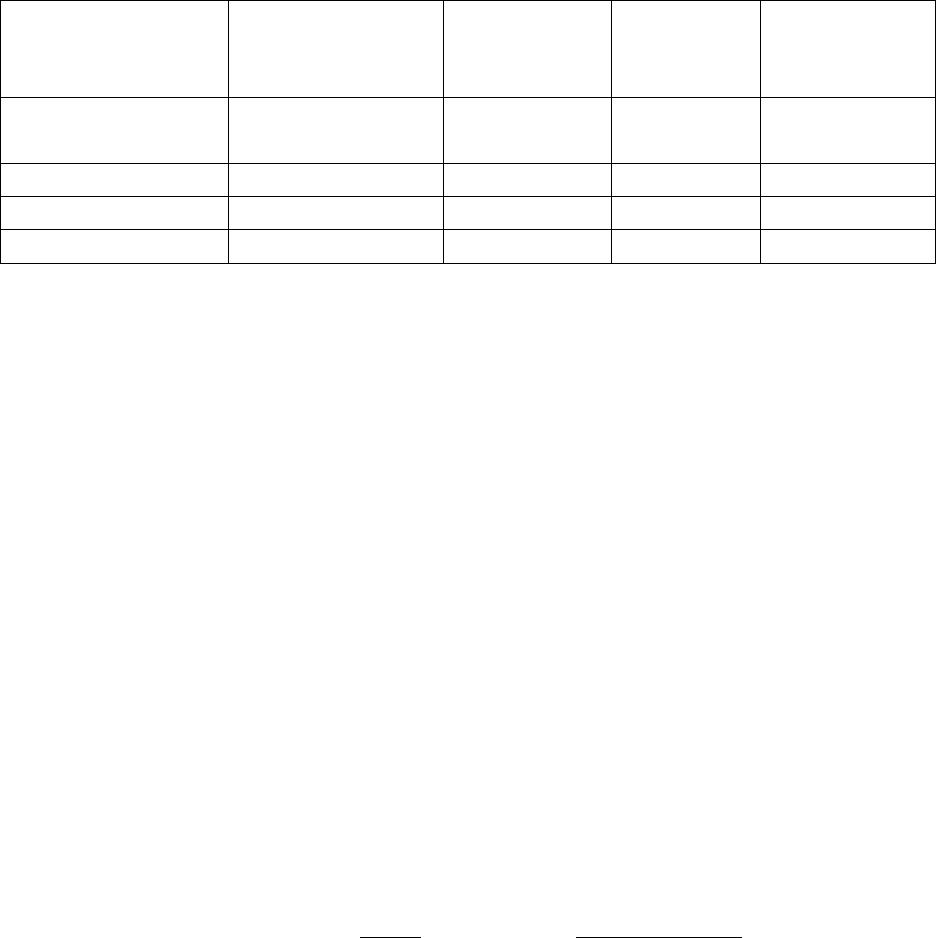
Valuation And Qualifying Accounts
For the Years Ended June 30, 2011, 2010 and 2009
Balance at
beginning of
period
Charged to
expenses
Deductions
Balance at
end of period
Allowance for
doubtful accounts
2011
$217
($41)
($156)
$20
2010
$221
$57
($61)
$217
2009
$132
$101
($12)
$221
5. a. Explain how inventory is valued if the FIFO method is used.
b. Explain how inventory is valued if the LIFO method is used.
c. Why would a manager choose the FIFO method during an inflationary
period?
d. Why would a manager choose the LIFO method during an inflationary period?
6. If a firm chooses to use the FIFO method of inventory valuation instead of the
LIFO method, explain the impact of deflation on the amounts shown on the
balance sheet for inventory and on the income statement for cost of goods sold.
7. Using the following information calculate the ending inventory balance and the
cost of goods sold expense that would be reported at the end of the year if the
following inventory valuation methods are used:
a. FIFO
b. LIFO
c. Average cost
Units Purchase Price
Beginning inventory 8 $5
Purchase #1 10 $6
Purchase #2 14 $7
Purchase #3 12 $6
Sales 40

8. Using the following information calculate the ending inventory balance and the
cost of goods sold expense that would be reported at the end of the year if the
following inventory valuation methods are used:
a. FIFO
b. LIFO
c. Average cost
Units Purchase Price
Beginning inventory 20 $12
Purchase #1 100 $11
Purchase #2 85 $10
Purchase #3 90 $ 9
Sales 235
9. The Presto Company purchases equipment for $20,000. Management estimates
that the equipment will have a useful life of five years and no salvage value.
a. Calculate depreciation expense and the book value of the equipment at the end
of the first year using the straight-line method of depreciation.
b. Calculate depreciation expense and the book value at the end of the first year
using the double-declining balance method of depreciation.
10. Brown Co. purchased a piece of equipment last year for $500,000.
Management estimates that the equipment will have a useful life of five years and
no salvage value. The depreciation expense recorded for tax purposes will be
$120,000 this year (Year 2). The company uses the straight-line method of
depreciation for reporting purposes.
a. Calculate the amount of depreciation expense for reporting purposes this year
(Year 2).
b. What will be the net book value of the equipment reported on the balance sheet
at the end of this year (Year 2)?
c. Will a deferred tax asset or liability be created as a result of the depreciation
recorded for tax and financial reporting purposes?
d. What amount will be added to the deferred tax account as a result of the
depreciation timing difference?
11. InDebt Corporation has a $200,000 note outstanding with a 10% annual rate of
interest due in semiannual installments on March 31 and September 30. What
amount will be shown as accrued interest on a December 31 balance sheet?
12. Hoffman’s Hotel has total revenue of $900,000; expenses other than
depreciation of $400,000; depreciation expense for tax purposes of $250,000; and
depreciation expense of $180,000 for reporting purposes. The tax rate is 35%.
Calculate net income for reporting purposes and tax purposes and also calculate the
deferred tax liability.
13. Write a short essay explaining the difference between an operating and a
capital lease.
14. Explain why the account titles “Commitments and Contingencies” appears on a
balance sheet without a corresponding dollar amount.
15. Brian’s Building Company reported the following amounts on their financial
statements this year:
Total assets $56,000
Total liabilities $32,000
Net income $ 7,500
Beginning retained earnings $ 9,800
Ending retained earnings $10,400
a. Calculate total stockholders’ equity.
b. Calculate the amount of dividends that were most likely paid this year.
16. StoreMart had the following balancing equation at the end of last year:
Assets = Liabilities + Stockholders’ Equity
$100,000=$65,000+ $35,000
During the year StoreMart increased assets by $20,000 and added debt in the
amount of $7,000. The only stockholders’ equity account that changed was
retained earnings. If no dividends were paid, how much net income was generated
this year?

17. Using the information below for Jumbo Corporation, calculate the amount of
dividends Jumbo most likely paid to common stockholders in 2010, 2011, and
2012.
Retained earnings balances
Net income
January 1, 2010
$500
December 31, 2010
$760
2010
$450
December 31, 2011
$875
2011
$325
December 31, 2012
$950
2012
$240
18. Why would a firm repurchase their own shares of common stock?
19. The following list of balance sheet accounts with corresponding amounts is
available for Green Co. at the end of the year. Classify the accounts using the
following headings: current assets, long-term assets, current liabilities, long-term
liabilities, and stockholders’ equity. (Hint: You can check your answer using the
balance sheet equation.)
Accounts payable 29 Cash 25
Short-term investments 22 Common stock 1
Deferred taxes, current 6 Treasury stock (4)
Property & Equip., net 67 Prepaid expenses 3
Accounts receivable 11 Inventories 13
Long-term debt 20 Add’l. paid-in capital 51
Current portion of long-
term debt 5 Retained earnings 45
20. Using the following balance sheet, prepare a common size balance sheet:
Assets Liabilities and stockholders’ equity
Current assets Current liabilities
Cash 5 Accounts payable 29
Short-term investments 15 Current portion of
Accounts receivable 21 long-term debt 9
Inventory 23 Total current liabilities 38
Prepaid expenses 3 Long-term liabilities
Deferred taxes, current 6 Long-term debt 45

Total current assets 73 Total liabilities 83
Long-term assets Stockholders’ equity
Property & equipment 67 Common stock and PIC 52
Goodwill 13 Retained earnings 25
Long-term investments 5
Other assets 2 Total stockholders’ equity 77
Total assets 160 Total liabilities and equity 160
21. Analyze the following common size balance sheet:
2011 2010
Current assets:
Cash 3% 5%
Accounts receivable 20 18
Inventory 35 30
Total current assets 58% 53%
Property, plant and equipment 30 40
Other assets 12 7
Total assets 100% 100%
Current liabilities:
Accounts payable 25% 20%
Short-term debt 38 33
Total current liabilities 63% 53%
Long-term debt 22 17
Total liabilities 85% 70%
Common stock and paid in capital 14 20
Retained earnings 1 10
Total stockholders’ equity 15% 30%
Total liabilities and stockholders’ equity 100% 100%
Solutions – Chapter 2
True-False
Multiple Choice
Short Answer/Problem