101.
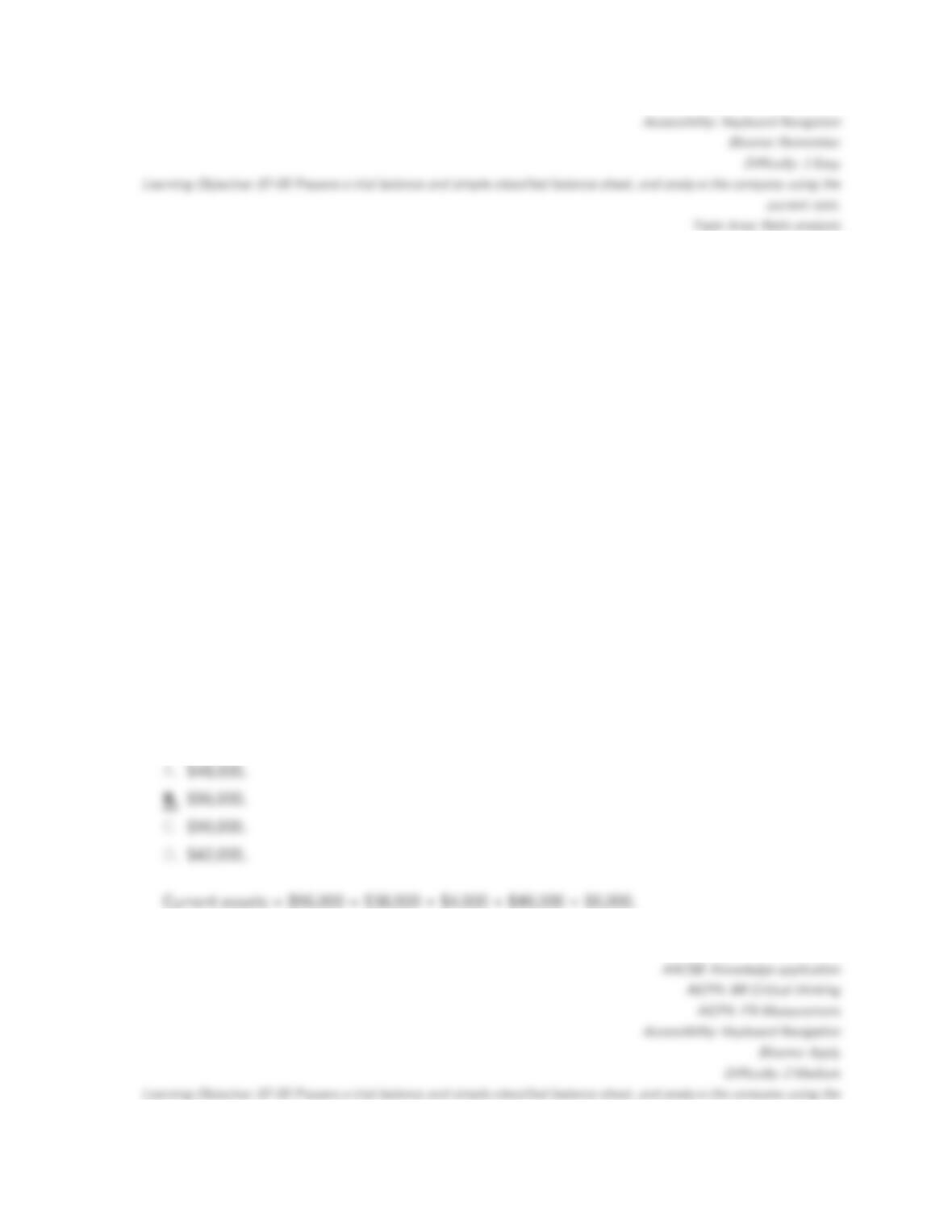
The Pioneer Company has provided the following account balances:
Cash $38,000;
Short-term investments $4,000;
Accounts receivable $48,000;
Supplies $6,000;
Long-term notes receivable $2,000;
Equipment $96,000;
Factory Building $180,000;
Intangible assets $6,000;
Accounts payable $30,000;
Accrued liabilities payable $4,000;
Short-term notes payable $14,000;
Long-term notes payable $92,000;
Common stock $180,000;
Retained earnings $60,000.
What are Pioneer’s total current assets?
102.
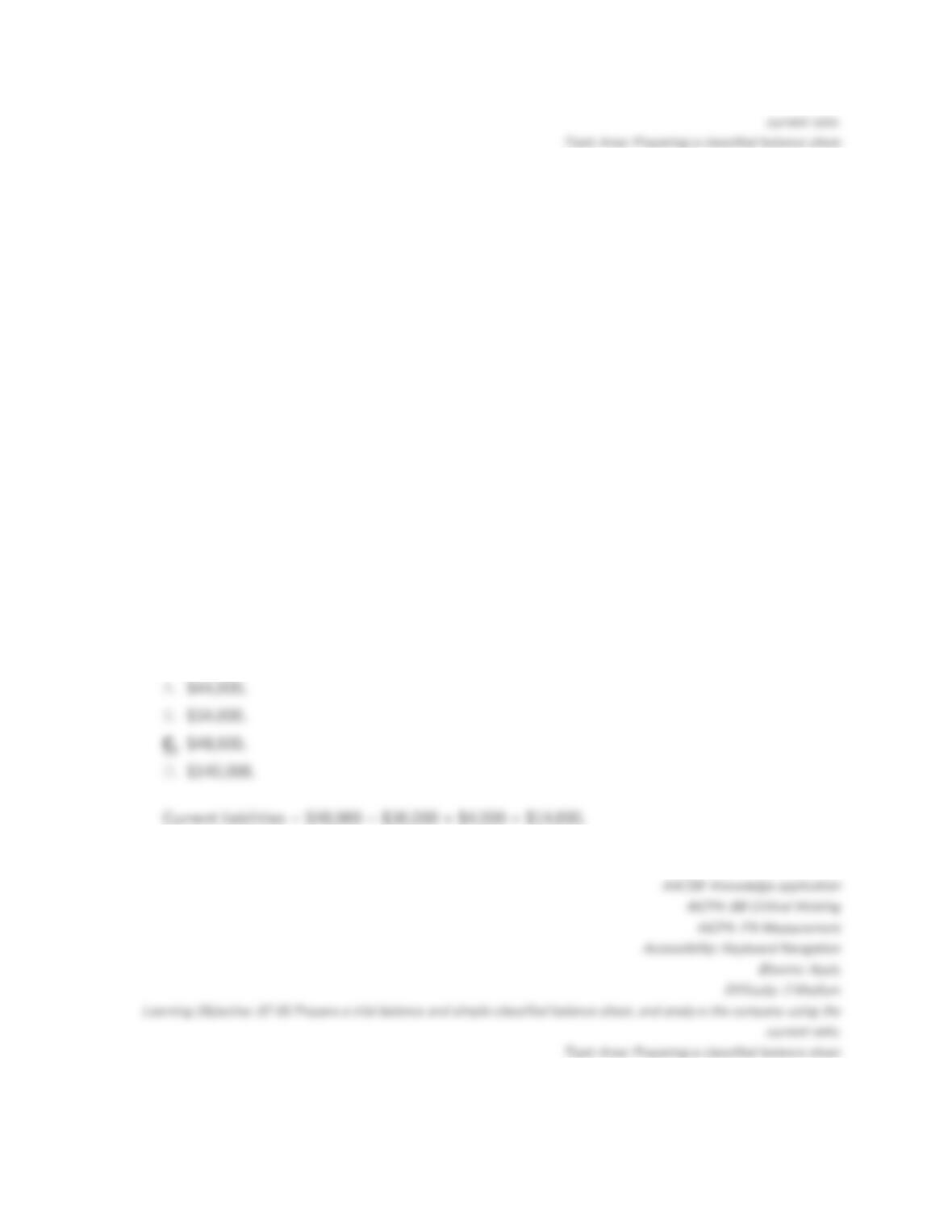
The Pioneer Company has provided the following account balances:
Cash $38,000;
Short-term investments $4,000;
Accounts receivable $48,000;
Supplies $6,000;
Long-term notes receivable $2,000;
Equipment $96,000;
Factory Building $180,000;
Intangible assets $6,000;
Accounts payable $30,000;
Accrued liabilities payable $4,000;
Short-term notes payable $14,000;
Long-term notes payable $92,000;
Common stock $180,000;
Retained earnings $60,000.
What are Pioneer’s total current liabilities?
103.
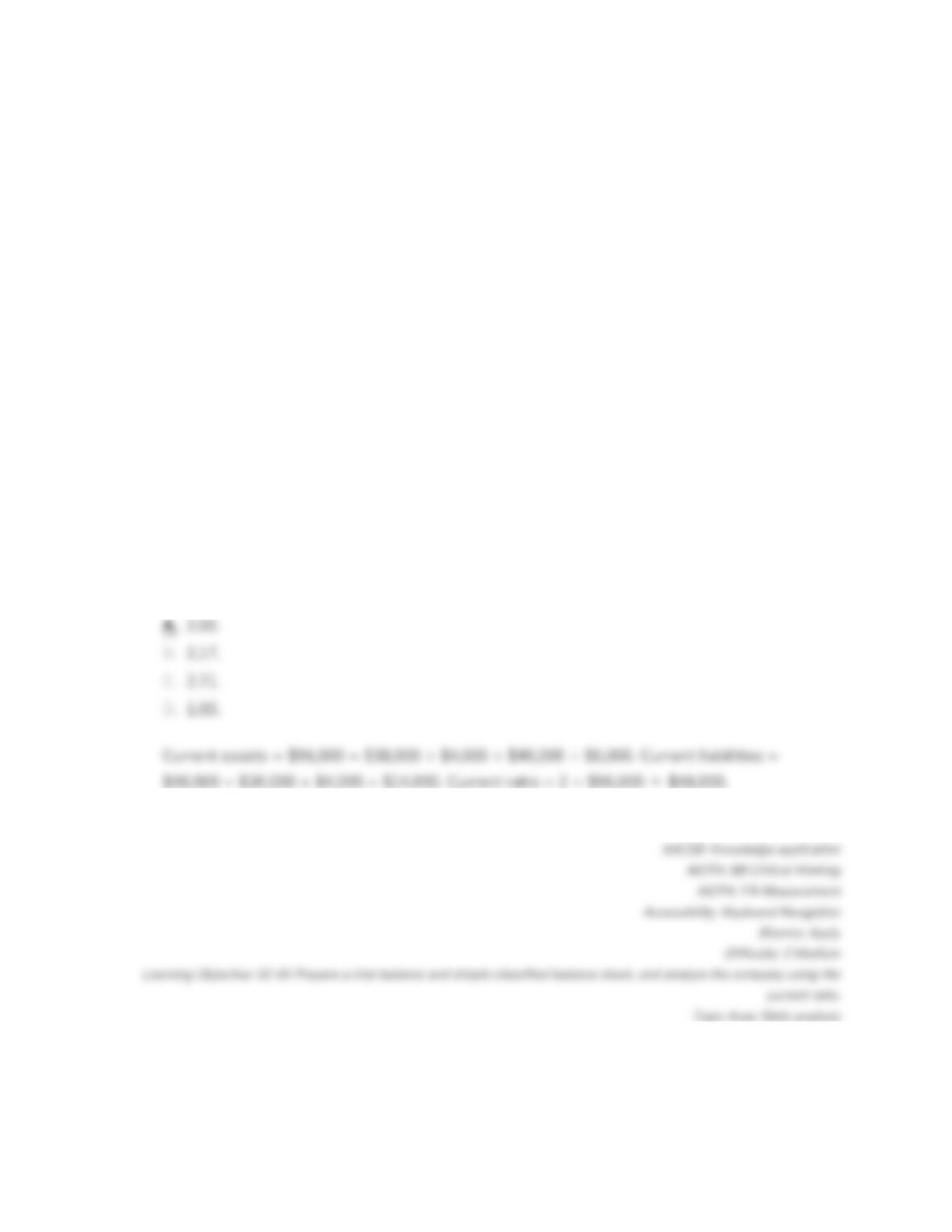
The Pioneer Company has provided the following account balances:
Cash $38,000;
Short-term investments $4,000;
Accounts receivable $48,000;
Supplies $6,000;
Long-term notes receivable $2,000;
Equipment $96,000;
Factory Building $180,000;
Intangible assets $6,000;
Accounts payable $30,000;
Accrued liabilities payable $4,000;
Short-term notes payable $14,000;
Long-term notes payable $92,000;
Common stock $180,000;
Retained earnings $60,000.
What is Pioneer’s current ratio?
104.
At the beginning of April, Warren Corporation’s assets totaled $240,000 and liabilities totaled
$60,000. During April the following summarized transactions occurred:
Additional shares of stock were sold for $20,000 cash.
A building costing $95,000 was purchased using $10,000 cash and by signing an $85,000
long-term note payable.
Short-term investments costing $9,000 were purchased using cash.
$10,000 was paid to an employee as a loan; the employee signed a six-month note in
exchange for the loan.
How much are Warren’s total assets at the end of April?
105.
At the beginning of April, Warren Corporation’s assets totaled $240,000 and liabilities totaled
$60,000. During April the following summarized transactions occurred:
Additional shares of stock were sold for $20,000 cash.
A building costing $95,000 was purchased using $10,000 cash and by signing an $85,000
long-term note payable.
Short-term investments costing $9,000 were purchased using cash.
$10,000 was paid to an employee as a loan; the employee signed a six-month note in
exchange for the loan.
How much are Warren’s total liabilities at the end of April?
106.
Tiger Company’s total stockholders’ equity at the beginning of the year was $175,000. During
the year Tiger reported the following:
Net income of $79,000.
Dividend declarations totaling $17,000.
Issued stock to stockholders in exchange for $42,000 cash.
Borrowed $20,000 from a stockholder.
What is Tiger’s total stockholders’ equity at the end of the year?
107.
ABC Company’s total stockholders’ equity at the beginning of the year was $200,000. During
the year ABC reported the following:
Net loss of $30,000.
Stock issued in exchange for land totaling $80,000.
Collections of accounts receivable $40,000.
Dividends declared and paid totaling $2,000.
What is ABC’s total stockholders’ equity at the end of the year?
108.
Which of the following transactions would create an increase in cash from a financing
activity?
109.
Which of the following best describes financing activities?
110.
Which of the following would cause a decrease in cash from investing activities?
111.
Which of the following would result when a company borrows cash and signs a note payable
that is due in two years?
112.
Which of the following would result when a company sells additional shares of common stock
for cash?
113.
Which of the following would result when a company purchases a factory building using
cash?
114.
Which of the following would result when a company lends cash to a franchisee in exchange
for a ten-month note receivable?
115.
Which of the following would result when a company pays a previously declared cash
dividend?
116.
Which of the following would be classified as financing cash flows on a cash flow statement?
1. Paying cash dividends.
2. Lending cash to others.
3. Issuing stock for cash.
4. Purchasing long-term assets for cash.
117.
Which of the following would be classified as investing cash flows on a cash flow statement?
1. Acquiring a building by signing a long-term mortgage payable.
2. Lending cash to others.
3. Issuing stock for cash.
4. Purchasing long-term assets for cash.
5. Selling stock investments for cash.
118.
Which of the following statements is false?
Essay Questions
119.
Why is the continuity assumption so important for balance sheet reporting?
120.
Why is the separate entity assumption so important for balance sheet reporting?
121.
Why is the historical cost principle so important for balance sheet reporting?

122.
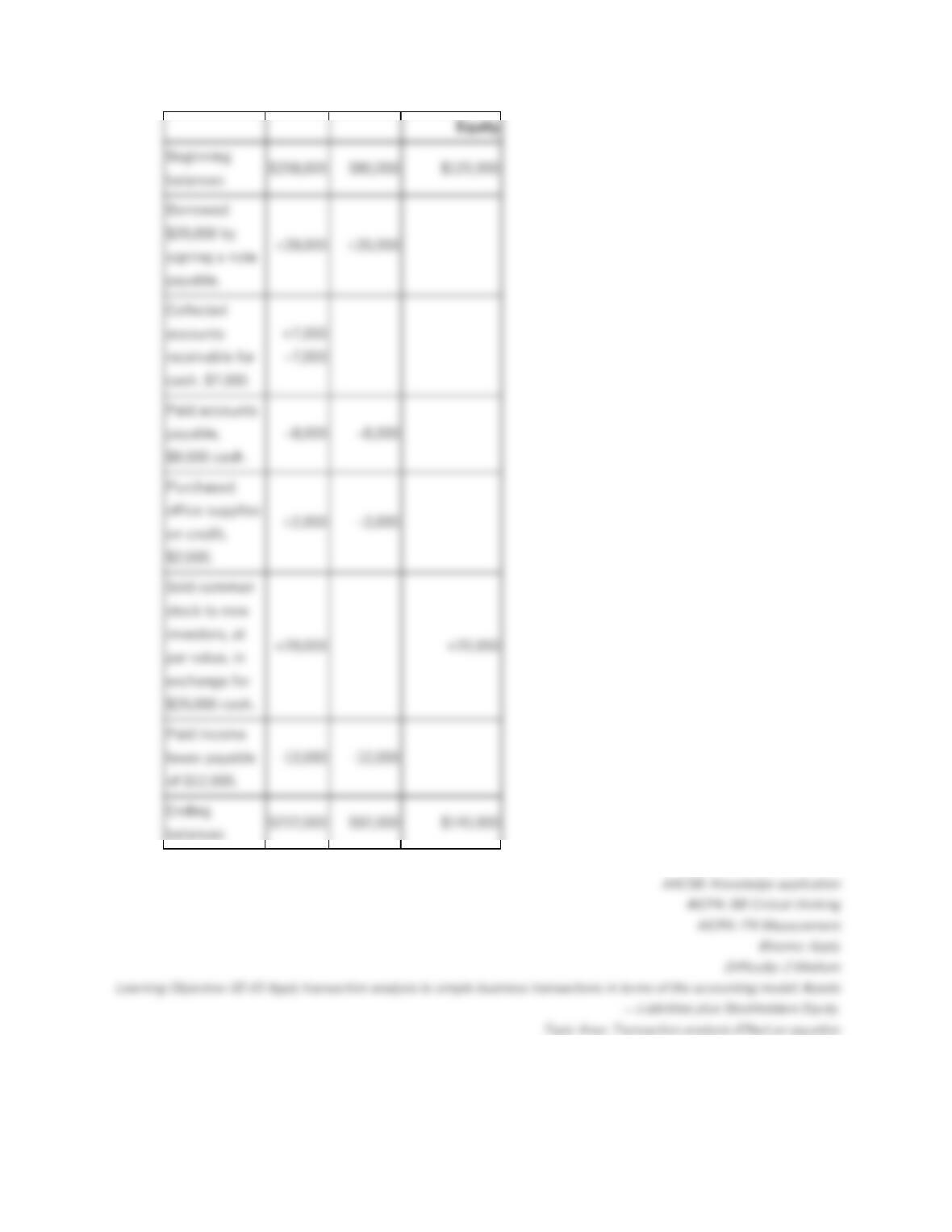
Complete the following schedule for Red Eye Company.
Transaction
Assets
Liabilities
Stockholders’
Equity
Beginning
balances
$200,000
$80,000
$120,000
Borrowed
$20,000 cash
by signing a
note payable
with a bank.
Collected
accounts
receivable for
cash, $7,000.
Paid accounts
payable,
$8,000 cash.
Purchased
office supplies
on credit,
$2,000.
Sold common
stock, at par
value, to new
investors in
exchange for
$20,000 cash.
Paid income
taxes payable
of $12,000.
Ending
balances

123.
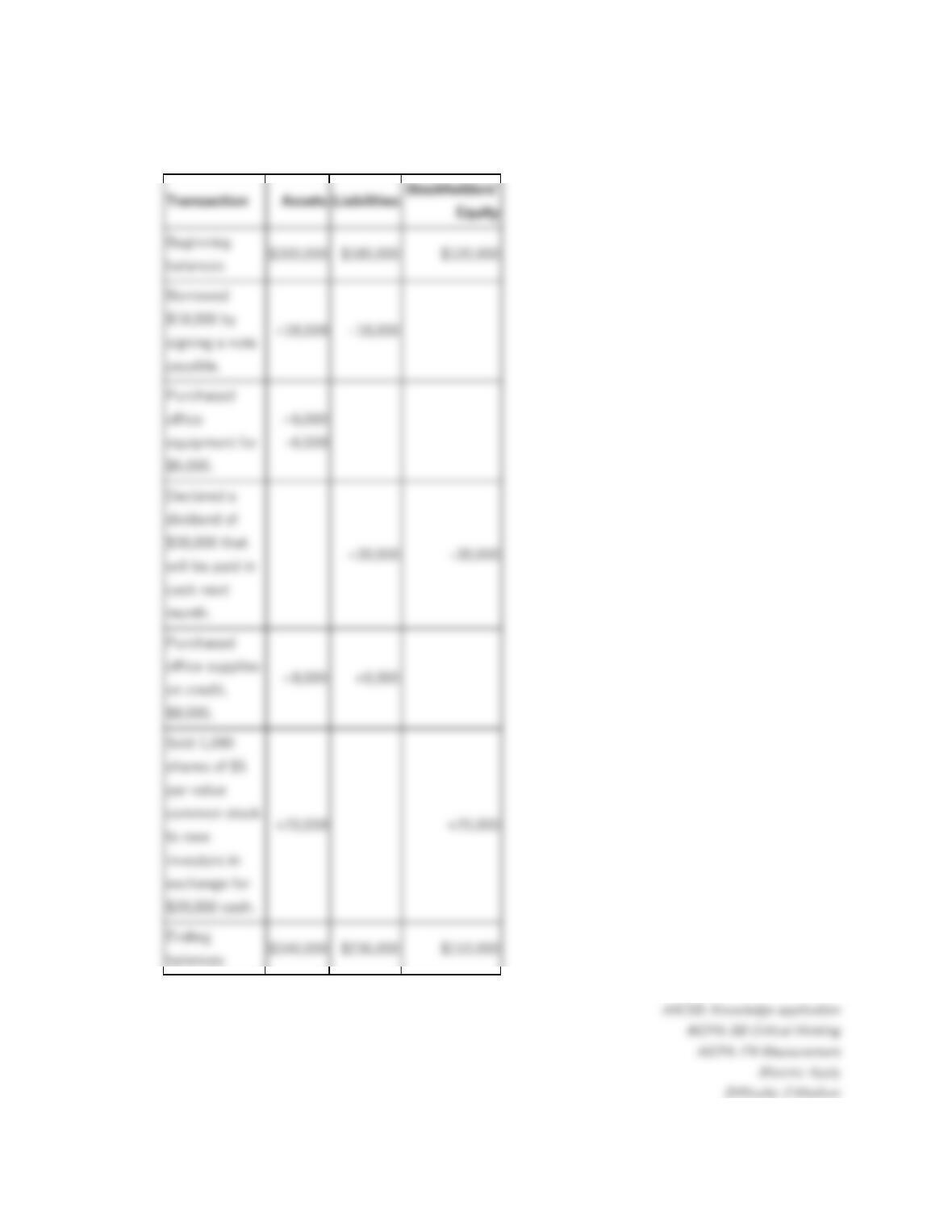
Complete the following schedule for Blue Eye Company.
Transaction
Assets
Liabilities
Stockholders’
Equity
Beginning
balances
$300,000
$180,000
$120,000
Borrowed
$18,000 cash
by signing a
note payable
with a bank.
Purchased
office
equipment for
$6,000.
Declared a
dividend of
$30,000 that
will be paid in
cash next
month.
Purchased
office supplies
on credit,
$8,000.
Sold 1,000
shares of $5
par value
common stock
to new
investors in
exchange for
$20,000 cash.
Ending
balances