
83) A toy rocket is launched vertically from ground level at time t = 0 s. The rocket engine
provides constant upward acceleration during the burn phase. At the instant of engine burnout,
the rocket has risen to 49.0 m and acquired an upward velocity of The rocket continues
to rise with insignificant air resistance in unpowered flight, reaches maximum height, and falls
back to the ground. The maximum height reached by the rocket is closest to
A) 233 m.
B) 221 m.
C) 209 m.
D) 244 m.
E) 256 m.
84) A rock is projected upward from the surface of the Moon, at time t = 0 s, with an upward
velocity of 30.0 m/s. The acceleration due to gravity at the surface of the Moon is 1.62 m/s2, and
the Moon has no atmosphere. The height of the rock when it is descending with a speed of 20.0
m/s is closest to
A) 115 m.
B) 125 m.
C) 135 m.
D) 145 m.
E) 154 m.
85) A ball is thrown straight upward from ground level with a speed of How much time
passes before the ball strikes the ground if we disregard air resistance?
A) 3.7 s
B) 1.8 s
C) 1.1 s
D) 0.6 s
86) A rock is thrown directly upward from the edge of a flat roof of a building that is 56.3 meters
tall. The rock misses the building on its way down, and is observed to strike the ground 4.00
seconds after being thrown. Take the acceleration due to gravity to have magnitude and
neglect any effects of air resistance. With what speed was the rock thrown?
87) A package is dropped from a helicopter that is moving upward at If it takes
before the package strikes the ground, how high above the ground was the package when it was
released? Neglect air resistance.

88) At the same moment, one rock is dropped and one is thrown downward with an initial
velocity of from the top of a building that is tall. How much earlier does the thrown
rock strike the ground? Neglect air resistance.
89) An object is dropped from a bridge. A second object is thrown downwards 1.0 s later. They
both reach the water 20 m below at the same instant. What was the initial speed of the second
object? Neglect air resistance.
A) 4.9 m/s
B) 15 m/s
C) 9.9 m/s
D) 20 m/s
E) 21 m/s
90) To determine the height of a bridge above the water, a person drops a stone and measures the
time it takes for it to hit the water. If the time is 2.3 s, what is the height of the bridge? Neglect
air resistance.
A) 10 m
B) 14 m
C) 26 m
D) 32 m
E) 52 m
91) To determine the height of a bridge above the water, a person drops a stone and measures the
time it takes for it to hit the water. If the height of the bridge is 41 m, how long will it take for the
stone to hit the water? Neglect air resistance.
A) 2.3 s
B) 2.6 s
C) 2.9 s
D) 3.2 s
E) 3.6 s
92) An astronaut stands by the rim of a crater on the Moon, where the acceleration of gravity is
1.62 m/s2 and there is no air. To determine the depth of the crater, she drops a rock and measures
the time it takes for it to hit the bottom. If the time is 6.3 s, what is the depth of the crater?
A) 10 m
B) 14 m
C) 26 m
D) 32 m
E) 38 m
93) An astronaut stands by the rim of a crater on the Moon, where the acceleration of gravity is
1.62 m/s2 and there is no air. To determine the depth of the crater, she drops a rock and measures
the time it takes for it to hit the bottom. If the depth of the crater is 120 m, how long does it take
for the rock to fall to the bottom of the crater?
A) 3.04 s
B) 12.2 s
C) 29.3 s
D) 32.1 s
E) 37.5 s
94) An object is thrown upwards with a speed of 16 m/s. How long does it take it to reach a
height of 7.0 m on the way up? Neglect air resistance.
A) 0.52 s
B) 1.2 s
C) 2.4 s
D) 3.1 s
E) 4.2 s
95) An object is thrown upwards with a speed of 13 m/s. How long does it take to reach a height
of 4.0 m above the projection point while descending? Neglect air resistance.
A) 0.42 s
B) 1.2 s
C) 2.3 s
D) 3.1 s
E) 4.2 s
96) To determine the height of a flagpole, Abby throws a ball straight up and times it. She sees
that the ball goes by the top of the pole after 0.50 s and then reaches the top of the pole again
after a total elapsed time of 4.1 s. How high is the pole above the point where the ball was
launched? Neglect air resistance.
A) 10 m
B) 13 m
C) 16 m
D) 18 m
E) 26 m
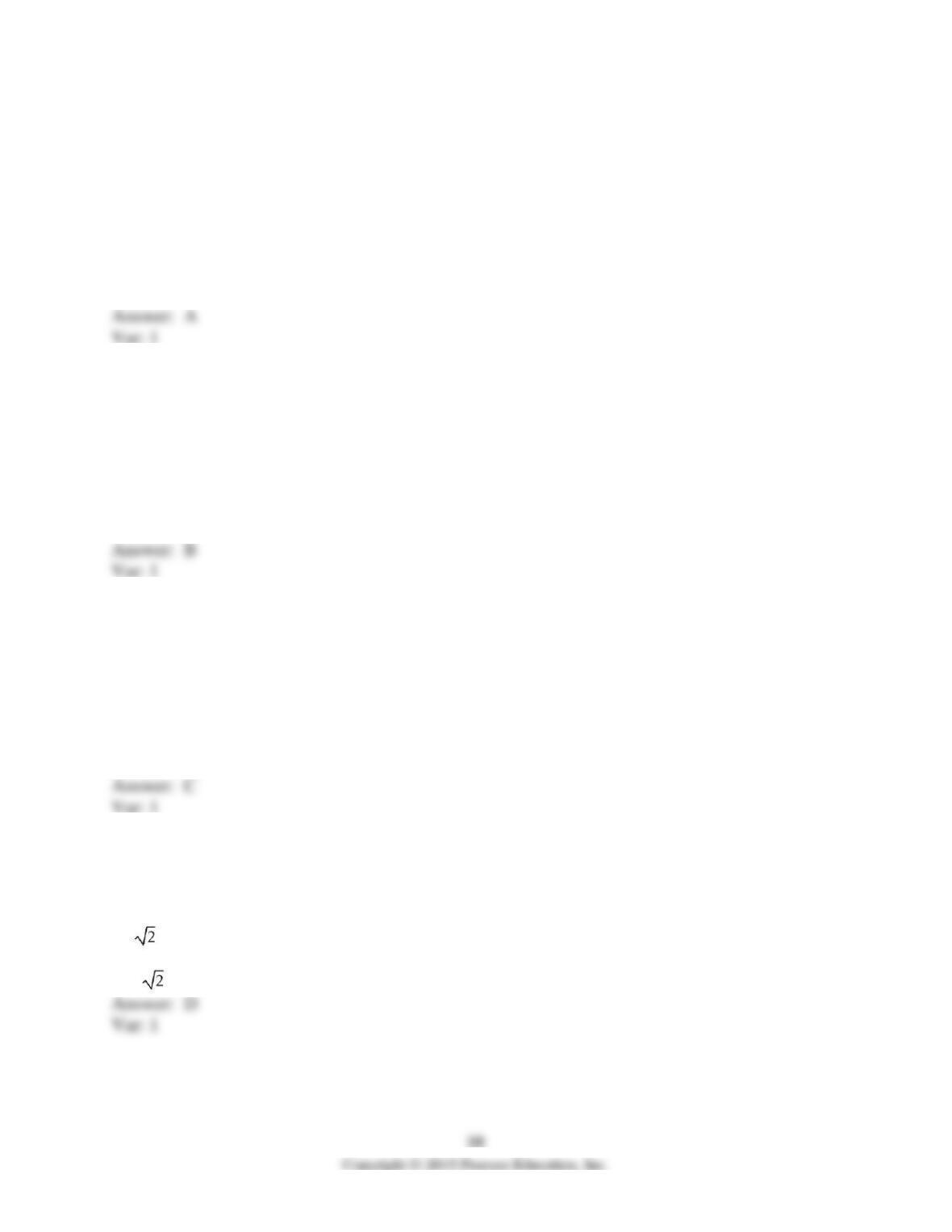
97) Abby throws a ball straight up and times it. She sees that the ball goes by the top of a
flagpole after 0.50 s and reaches the level of the top of the pole after a total elapsed time of 4.1 s.
What was the speed of the ball at launch? Neglect air resistance.
A) 11 m/s
B) 23 m/s
C) 34 m/s
D) 45 m/s
E) 48 m/s
98) Abby throws a ball straight up and times it. She sees that the ball goes by the top of a
flagpole after 0.50 s and reaches the level of the top of the pole after a total elapsed time of 4.1 s.
What was the speed of the ball at as it passed the top of the flagpole? Neglect air resistance.
A) 6.4 m/s
B) 16 m/s
C) 18 m/s
D) 29 m/s
E) 33 m/s
99) A car is able to stop in a distance d. Assuming the same braking force (and therefore the
same acceleration), what distance does this car require to stop when it is traveling twice as fast?
A) d
B) 2d
C) d
D) 4d
E) 2 d
100) Assuming equal rates of acceleration in both cases, how much longer would it take a car to
stop if braking from 56 mi/h than from 28 mi/h?
A) 8 times as long
B) 4 times as long
C) 2 times as long
D) 1.4 times as long
E) the same in both cases
101) Two identical objects A and B fall from rest from different heights to the ground. If object
B takes twice as long as object A to reach the ground, what is the ratio of the heights from which
A and B fell? Neglect air resistance.
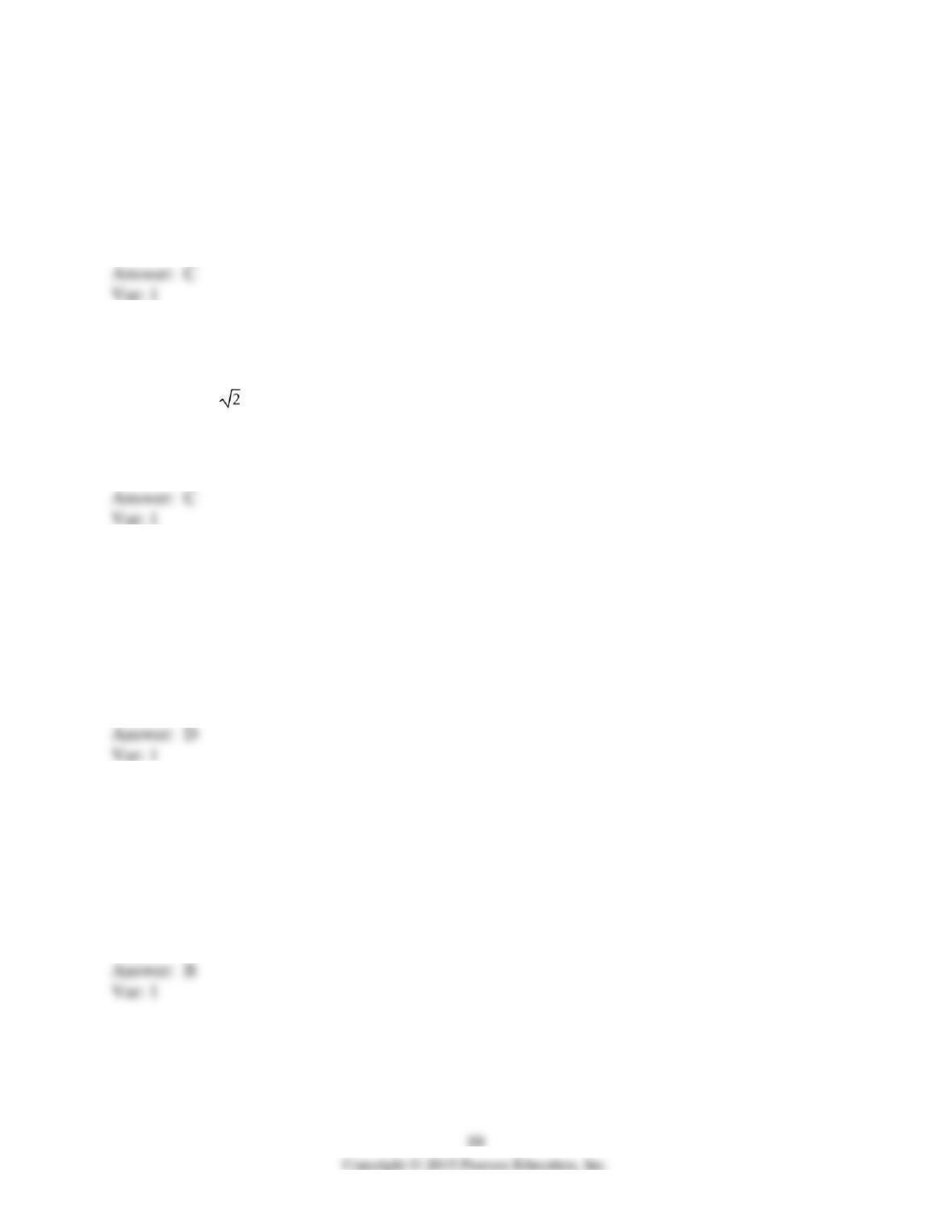
A) hA/hB = 1/
B) hA/hB = 1/2
C) hA/hB = 1/4
D) hA/hB = 1/8
102) Two cars are traveling at the same speed and hit the brakes at the same time. Car A
decelerates (decreases its velocity) at twice the rate of car B. If car B takes time T to stop, how
long does it take car A to stop?
A) 4T
B) 2T
C) T
D) T /2
E) T/4
103) Two cars are traveling at the same speed and hit the brakes at the same time. Car A
decelerates (decreases its velocity) at twice the rate of car B. If car A travels a distance D before
stopping, how far does car B travel before stopping?
A) 4D
B) 2D
C) D
D) D/2
E) D/4
104) Car A is traveling at twice the speed of car B. They both hit the brakes at the same time and
decrease their velocities at the same rate. If car B travels a distance D before stopping, how far
does car A travel before stopping?
A) 4D
B) 2D
C) D
D) D/2
E) D/4
105) A car moving initially with speed v0 slows down with an acceleration of magnitude a and
comes to a full stop after traveling a distance d. What was the speed of the car when it had
traveled half that distance, d/2?
A) v0/2
B) v0/4
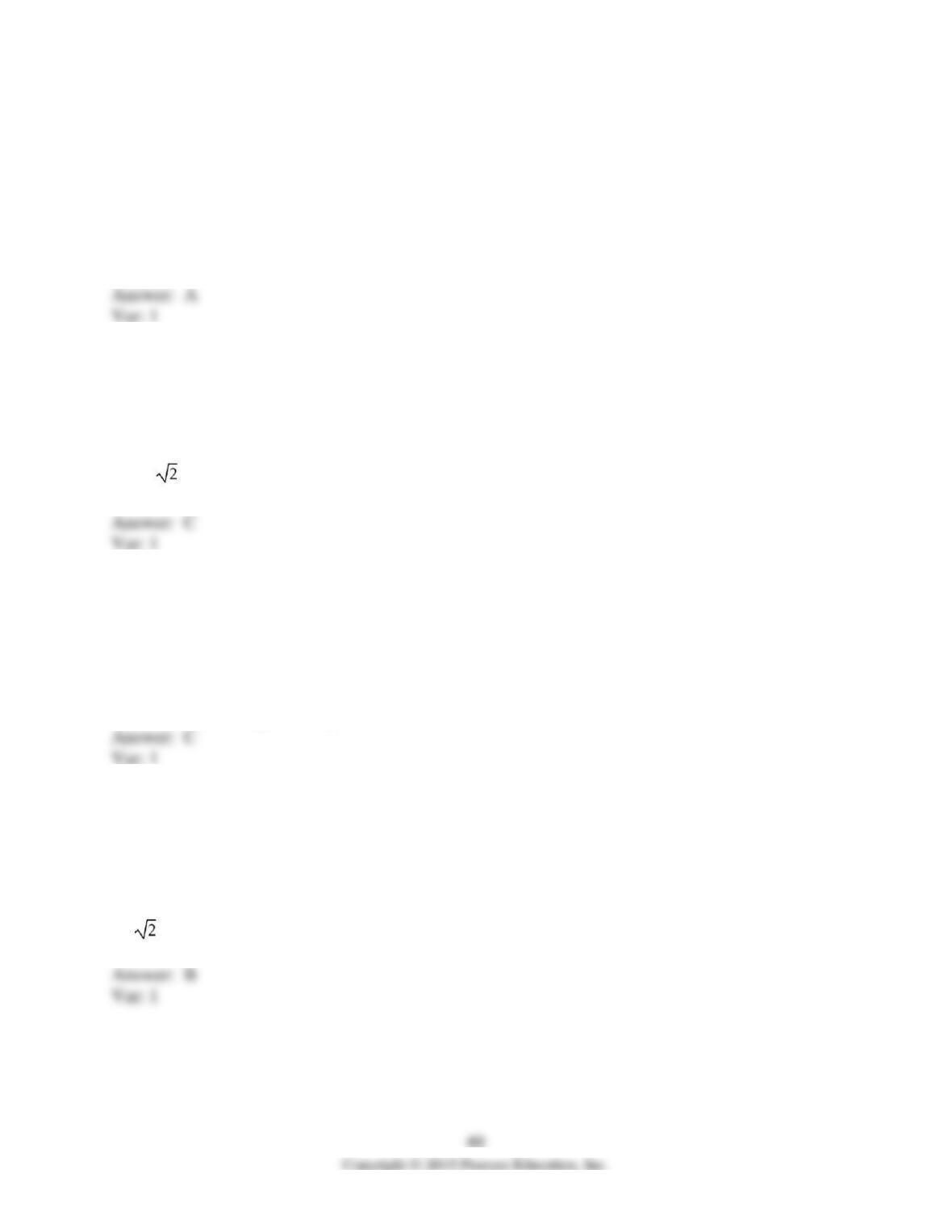
C) v0/
D) v0/8
106) Two athletes jump straight up. John has twice the initial speed of Harry. Compared to
Harry, John stays in the air
A) 0.50 times as long as Harry.
B) the same time as Harry.
C) twice as long as Harry.
D) three times as long as Harry.
E) four times as long as Harry.
107) In the absence of air resistance, a ball is thrown vertically upward with initial speed v. An
identical ball is thrown upward with initial speed 2v. If the first ball reaches a maximum height
h, what maximum height will the second ball reach?
A) 8h
B) 4h
C) 2h
D) h
E) h
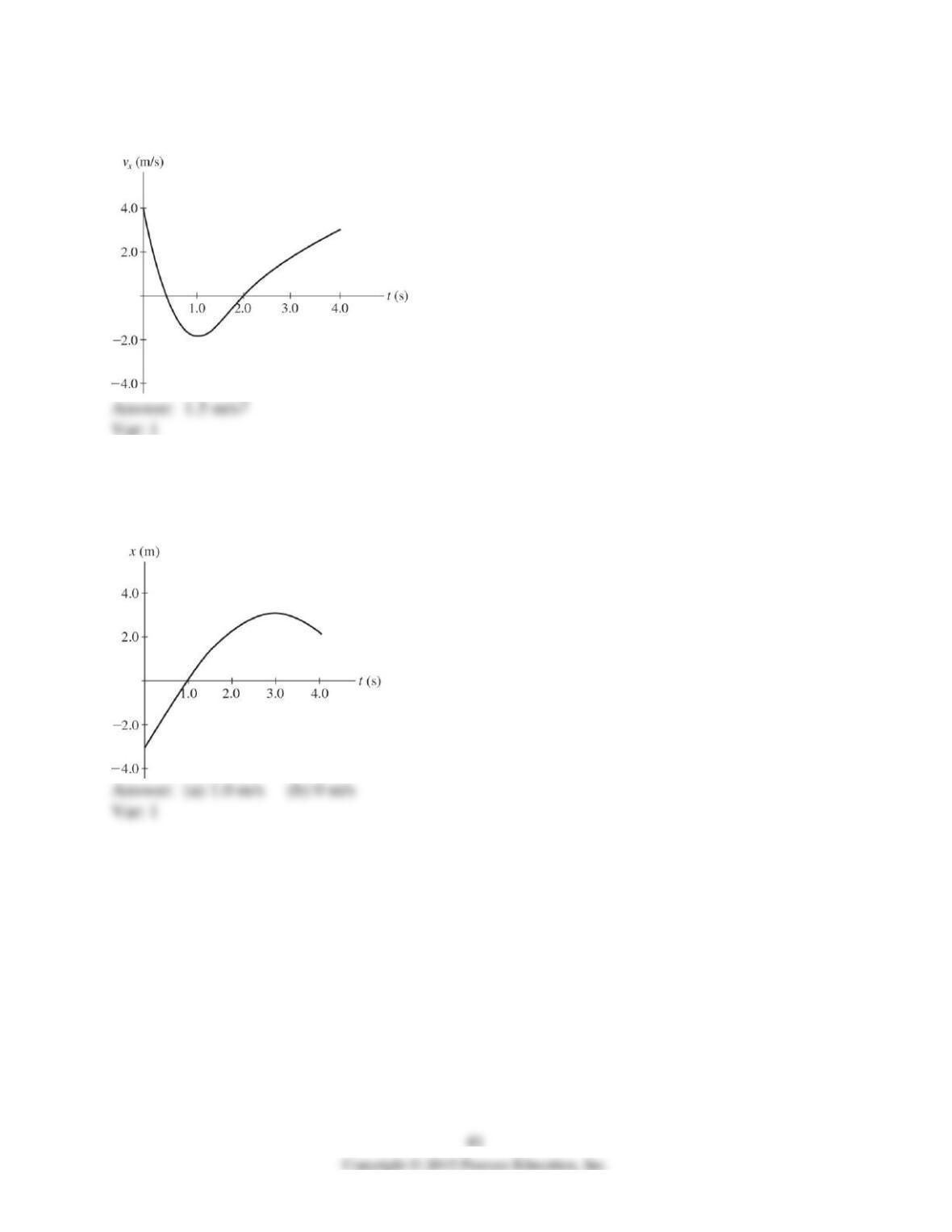
108) The graph in the figure represents the velocity of a particle as it travels along the x-axis.
What is the average acceleration of the particle between t = 2.0 s and t = 4.0 s?
109) The graph in the figure shows the position of a particle as a function of time as it travels
along the x-axis.
(a) What is the average speed of the particle between t = 2.0 s and t = 4.0 s?
(b) What is the average velocity of the particle between t = 2.0 s and t = 4.0 s?
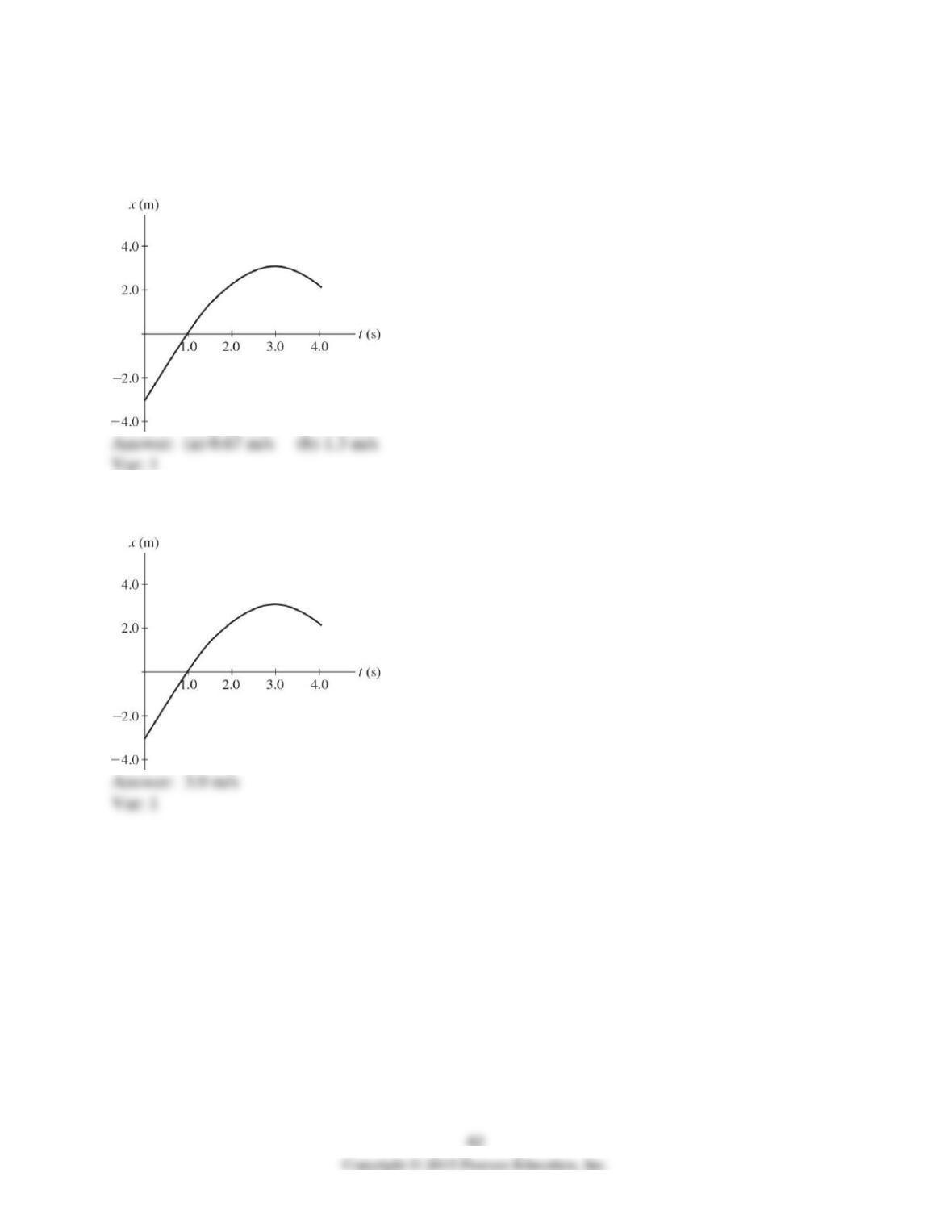
110) The graph in the figure shows the position of a particle as a function of time as it travels
along the x-axis.
(a) What is the magnitude of the average velocity of the particle between t = 1.0 s and t = 4.0 s?
(b) What is the average speed of the particle between t = 1.0 s and t = 4.0 s?
111) The graph in the figure shows the position of a particle as it travels along the x-axis. What is
the magnitude of the instantaneous velocity of the particle when t = 1.0 s?
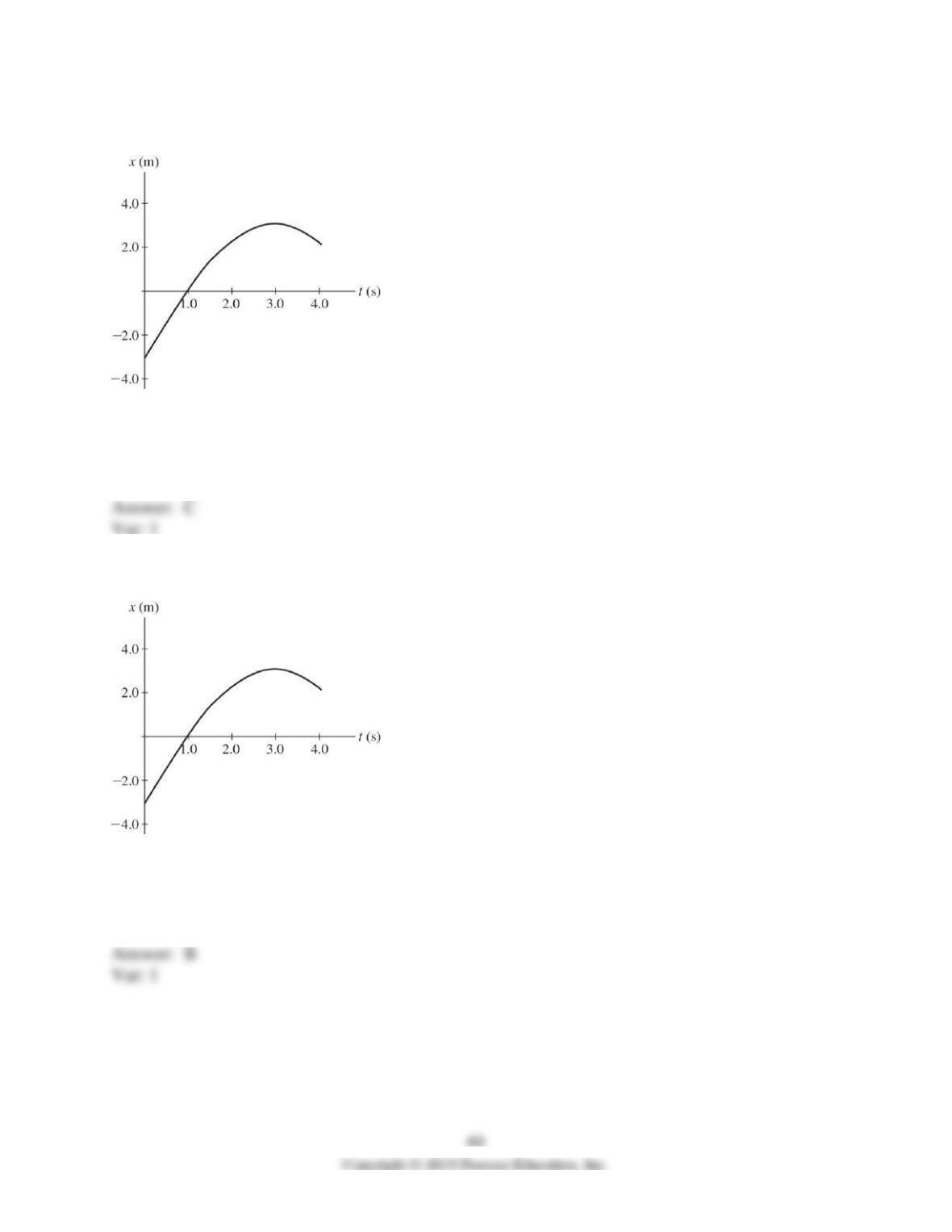
112) The graph in the figure shows the position of a particle as it travels along the x-axis. What is
the magnitude of the average velocity of the particle between t = 1.0 s and t = 4.0 s?
A) 0.25 m/s
B) 0.50 m/s
C) 0.67 m/s
D) 1.0 m/s
E) 1.3 m/s
113) The graph in the figure shows the position of a particle as it travels along the x-axis. What is
the magnitude of the average speed of the particle between t = 1.0 s and t = 4.0 s?
A) 1.0 m/s
B) 1.3 m/s
C) 0.67 m/s
D) 0.50 m/s
E) 0.25 m/s
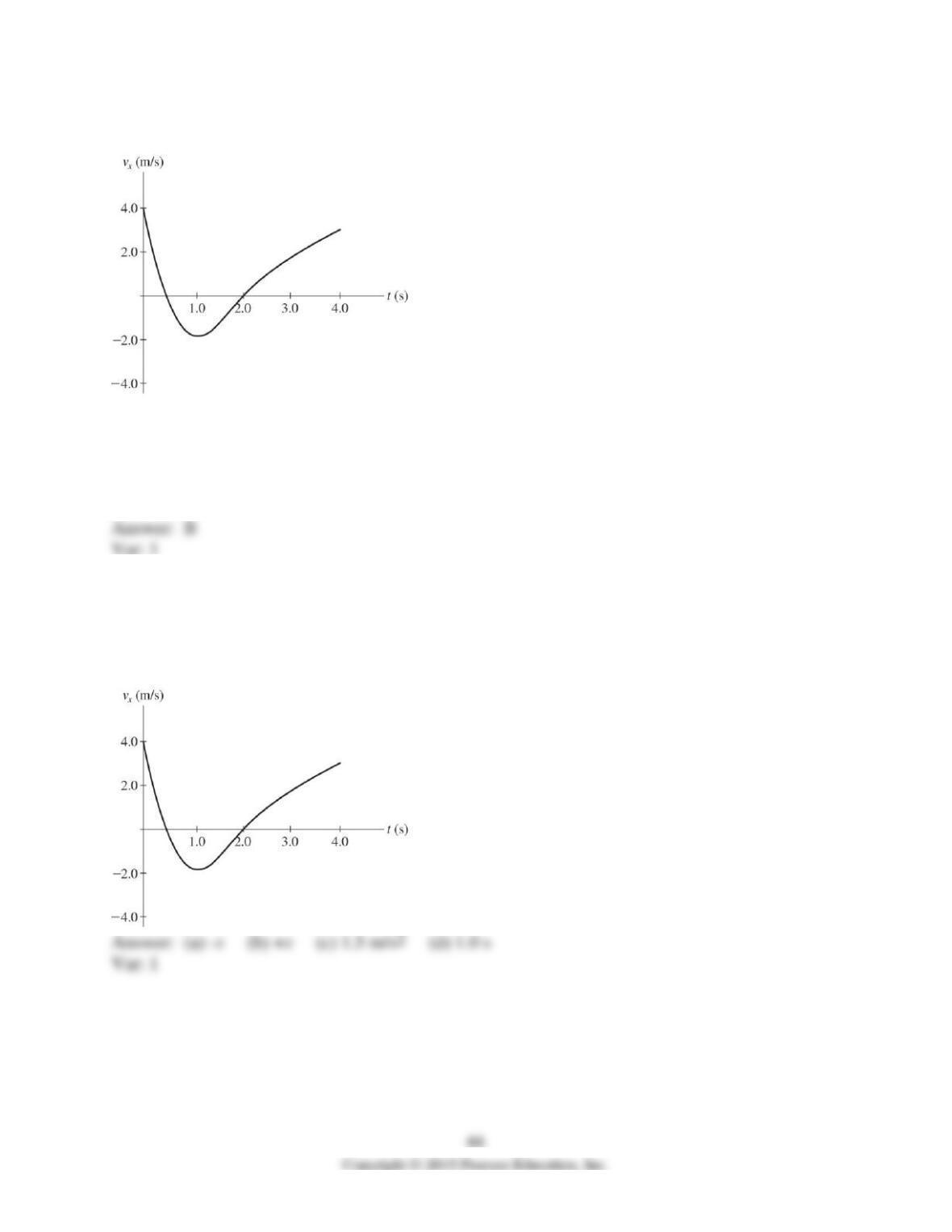
114) The graph in the figure shows the velocity of a particle as it travels along the x-axis. What is
the magnitude of the average acceleration of the particle between t = 1.0 s and t = 4.0 s?
A) 0.33 m/s2
B) 1.7 m/s2
C) 2.0 m/s2
D) 2.5 m/s2
E) 3.0 m/s2
115) The graph in the figure shows the velocity of a particle as it travels along the x-axis. (a) In
what direction (+x or –x) is the acceleration at t = 0.5 s?
(b) In what direction (+x or –x) is the acceleration at t = 3.0 s?
(c) What is the average acceleration of the particle between t = 2.0 s and t = 4.0 s?
(d) At what value of t is the instantaneous acceleration equal to 0 m/s2?
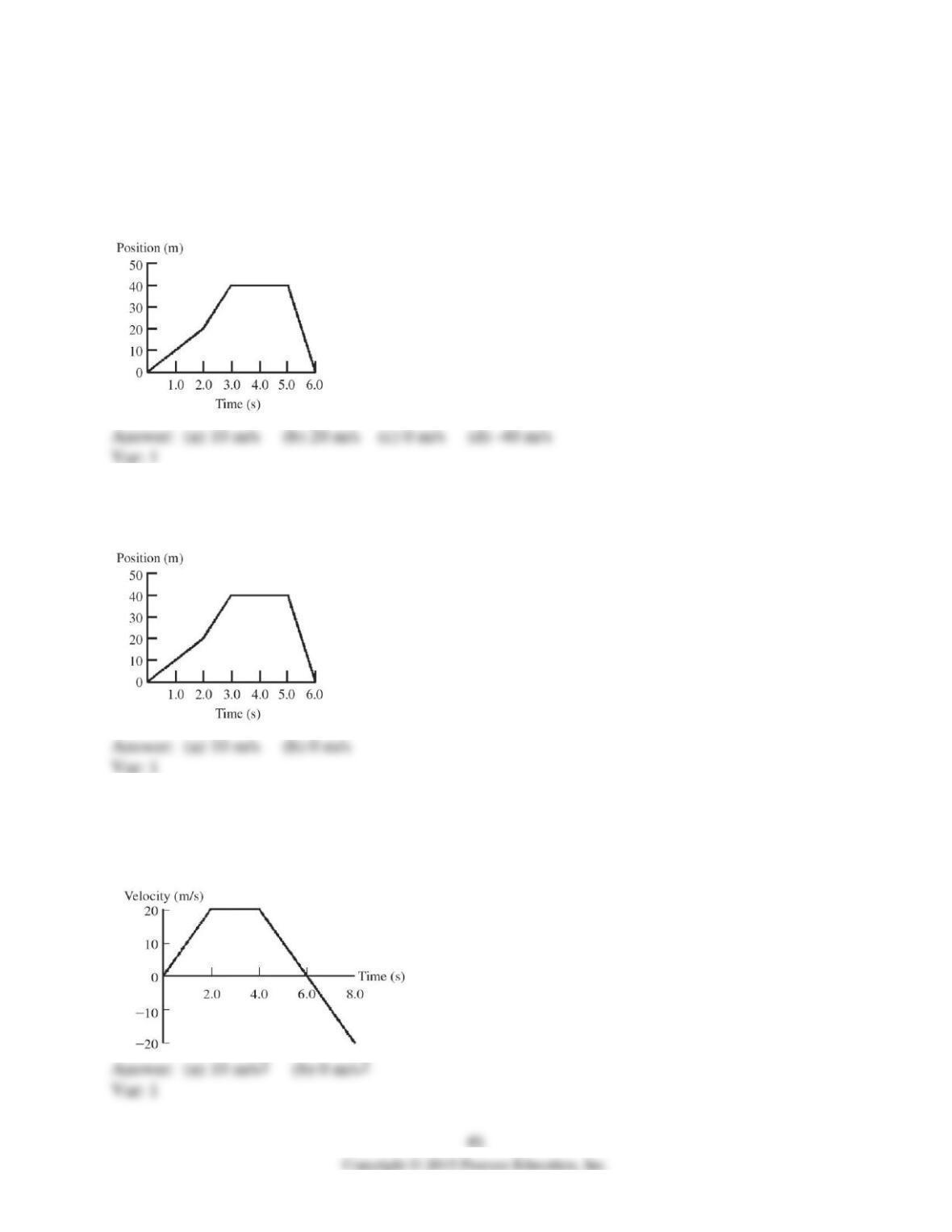
116) The figure shows a graph of the position of a moving object as a function of time. What is
the velocity of the object at each of the following times?
(a) At t = 1.0 s
(b) At t = 2.5 s
(c) At t = 4.0 s
(d) At t = 5.5 s
117) The figure shows a graph of the position of a moving object as a function of time.
(a) What is the average velocity of the object from t = 0 s to t = 4.0 s?
(b) What is the average velocity of the object from t = 0 s to t = 6.0 s?
118) The figure shows a graph of the velocity of an object as a function of time. What is the
acceleration of the object at the following times?
(a) At 1.0 s
(b) At 3.0 s
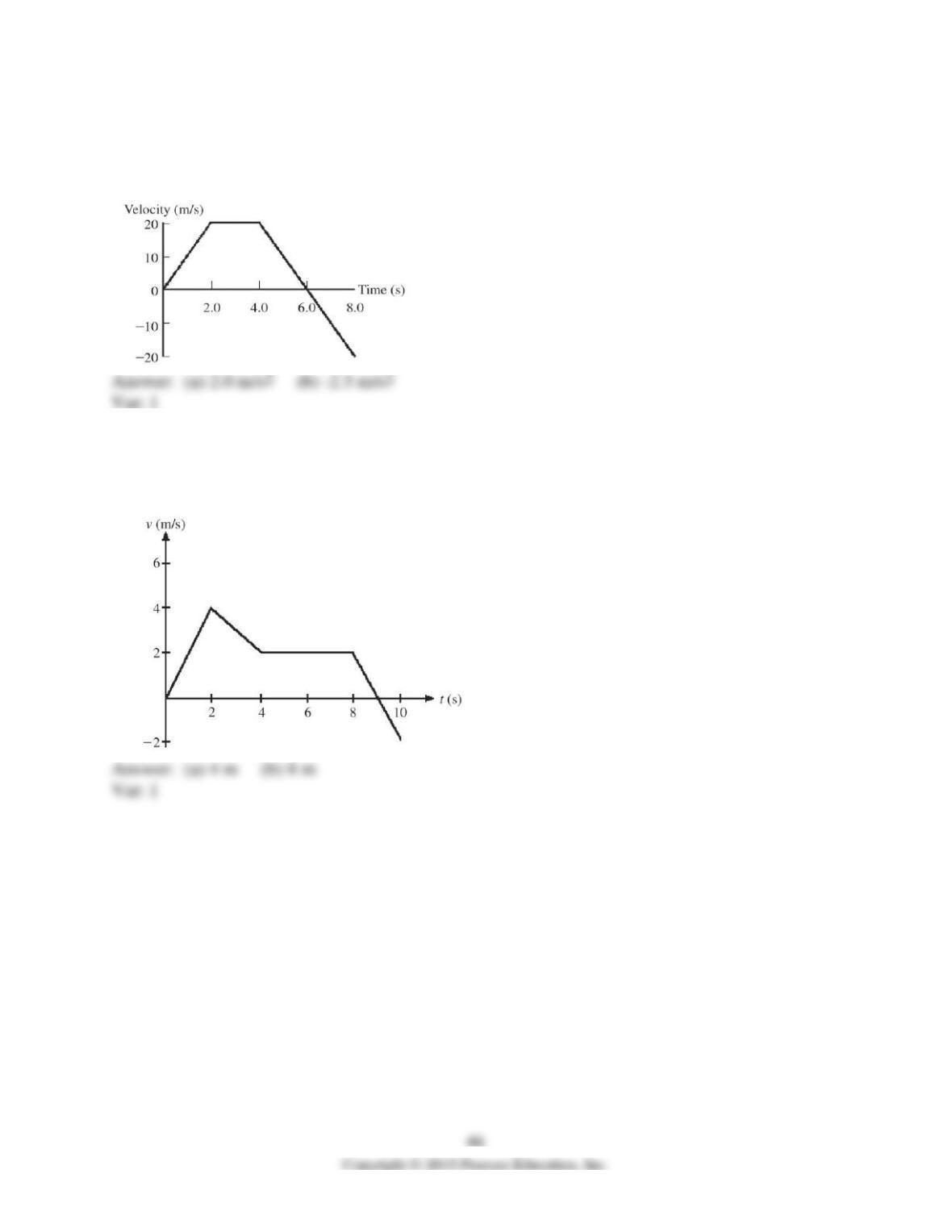
119) The figure shows a graph of the velocity of an object as a function of time. What is the
average acceleration of the object over the following time intervals?
(a) From t = 0 s to t = 5.0 s
(b) From t = 0 s to t = 8.0 s
120) The figure shows the velocity-versus-time graph for a basketball player traveling up and
down the court in a straight-line path. Find the displacement of the player
(a) during the first two seconds.
(b) between t = 4 s and t = 8 s.
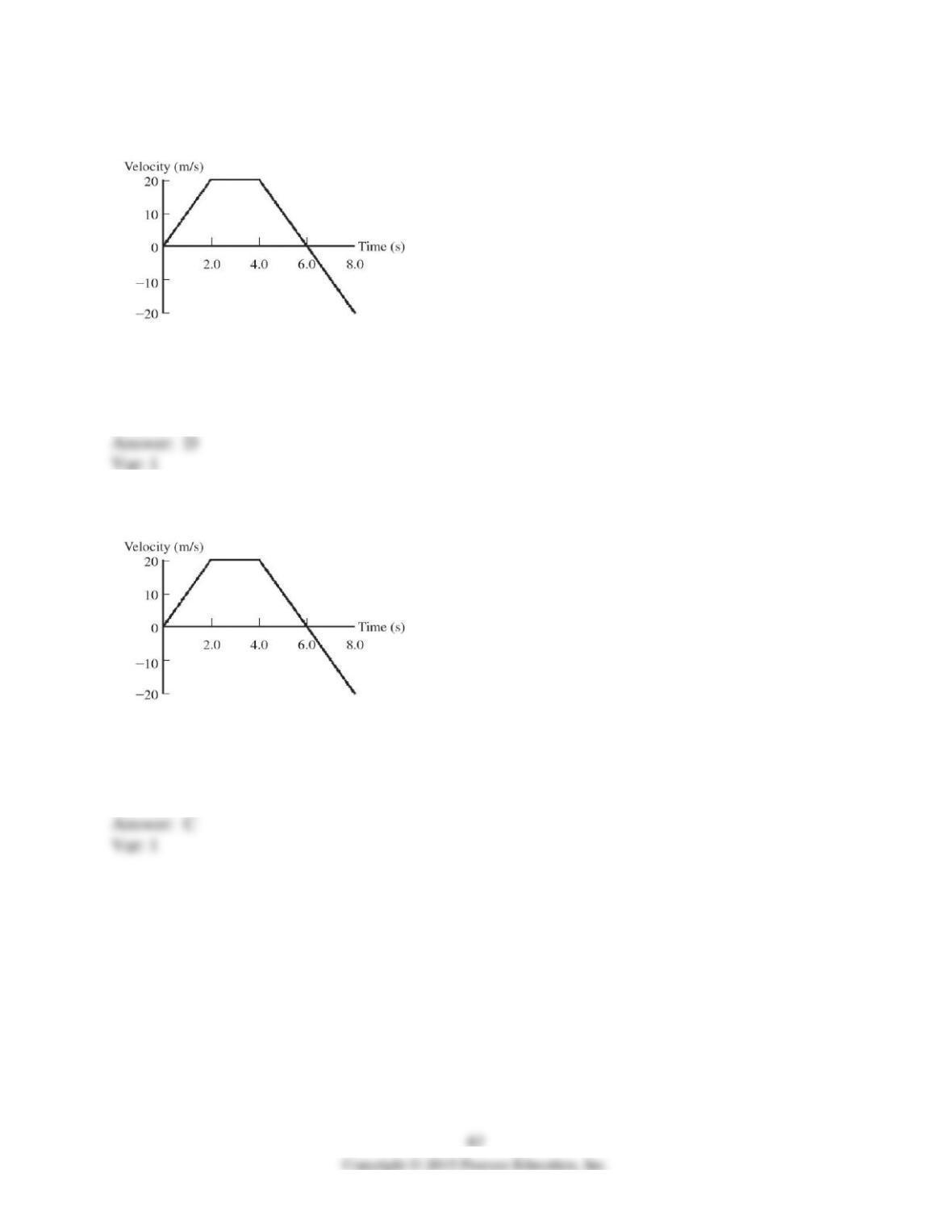
121) The figure shows a graph of the velocity of an object as a function of time. What is the
displacement of the object from 0 s to 6.0 s?
A) 20 m
B) 40 m
C) 60 m
D) 80 m
E) 100 m
122) The figure shows a graph of the velocity of an object as a function of time. What is the
displacement of the object from 0 s to 8.0 s?
A) 20 m
B) 40 m
C) 60 m
D) 80 m
E) 100 m