21
100) What is the most likely charge on an ion of phosphorus, P?
A) 5-
B) 3-
C) 3+
D) 5+
101) Which element can form more than one kind of monatomic ion?
A) Ca
B) Cl
C) Cr
D) Cs
102) Which element can form more than one kind of monatomic ion?
A) S
B) Se
C) Sn
D) Sr
103) What type of bonding is found in the compound PCl5?
A) covalent bonding
B) hydrogen bonding
C) ionic bonding
D) metallic bonding
104) Which one of the following compounds contains ionic bonds?
A) CaO
B) HF
C) NI3
D) SiO2
105) Which of the following is the correct chemical formula for a molecule of bromine?
A) Br
B) Br–
C) Br+
D) Br2
106) Which of the compounds, Li3P, PH3, C2H6, IBr3, are ionic compounds?
A) only C2H6
B) only Li3P
C) Li3P and PH3
D) PH3, C2H6, and IBr3
107) Which of the compounds, C3H8, MgCl2, Zn(NO3)2, OCl2, are expected to exist as molecules?
A) only C3H8
B) C3H8 and OCl2
C) C3H8, Zn(NO3)2, and OCl2
D) MgCl2 and Zn(NO3)2
108) Which of the species below has 28 protons and 26 electrons?
A) Fe2+
B) Ni2+
C)
54Fe
26
D)
54 Ni
28
109) Which of the following elements has the least tendency to form an ion?
A) Ca
B) K
C) Kr
D) Se
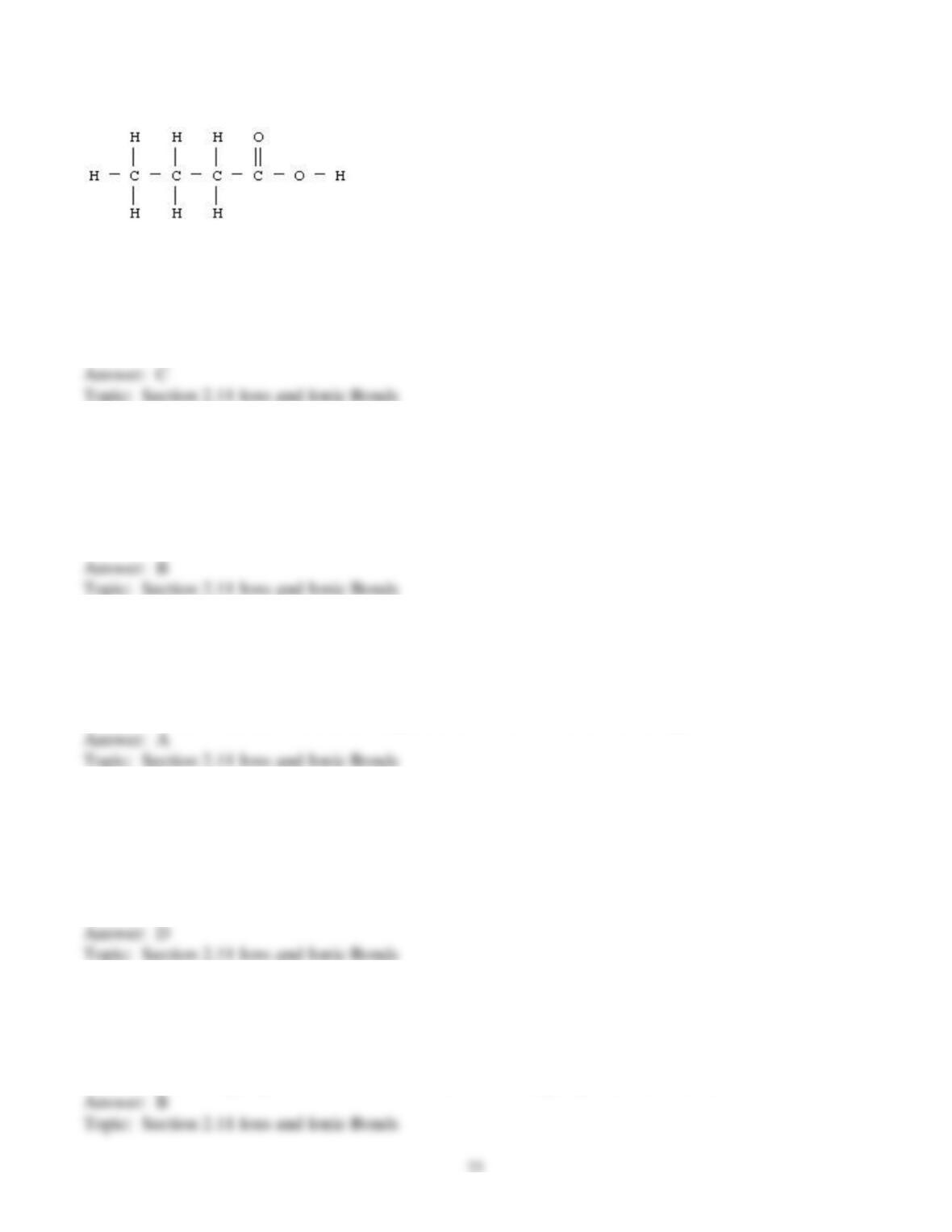
110) Butyric acid has the structural formula given below.
What is the molecular or chemical formula for butyric acid?
A) CHO
B) C2H4O
C) C4H8O2
D) C5H8O3
111) The solid compound, Na2CO3, contains
A) Na+, C4+, and O2- ions.
B) Na+ ions and CO32-ions.
C) Na2+ and CO32- ions.
D) Na2CO3 molecules.
112) Which of the following statements concerning ionic compounds is true?
A) Essentially all ionic compounds are solids at room temperature and pressure.
B) Ionic compounds do not contain any covalent bonds.
C) Ionic compounds contain the same number of positive ions as negative ions.
D) The chemical formula for an ionic compound must show a nonzero net charge.
113) The gas Freon-11, CCl3F, contains
A) C4+, Cl–, and F– ions.
B) C4+, Cl3–, and F– ions.
C) C4+ and Cl3F4- ions.
D) CCl3F molecules.
114) The definitive distinction between ionic bonding and covalent bonding is that
A) ionic bonding involves a sharing of electrons and covalent bonding involves a transfer of electrons.
B) ionic bonding involves a transfer of electrons and covalent bonding involves a sharing of electrons.
C) ionic bonding requires two nonmetals and covalent bonding requires a metal and a nonmetal.
D) covalent bonding requires two nonmetals and ionic bonding requires a metal and a nonmetal.
115) What is the chemical formula for iron(II) phosphate?
A) Fe2P
B) Fe2PO4
C) Fe3P2
D) Fe3(PO4)2
116) What is the charge on the Cr in the ionic compound Cr2O3?
A) 2-
B) 1+
C) 2+
D) 3+
117) Li2S is named
A) lithium disulfide.
B) lithium sulfide.
C) lithium(II) sulfide.
D) lithium sulfur.
118) What is the chemical formula for strontium hydroxide?
A) SrH2
B) SrOH
C) SrOH2
D) Sr(OH)2
119) What is the chemical formula for strontium hydride?
A) SrH2
B) SrOH
C) SrOH2
D) Sr(OH)2
120) The formula for dinitrogen trioxide is
A) N(OH)3.
B) (NO3)2.
C) N2O3.
D) N3O2.
121) The chemical formula for the sulfite ion is
A) S–.
B) S2-.
C) SO32-.
D) SO42-.
122) The chemical formula for potassium peroxide is
A) KOH.
B) KO2.
C) K2O.
D) K2O2.
123) The compound, Cu(ClO3)2, is named
A) copper chlorate(II).
B) copper(I) chlorate.
C) copper(I) chlorate(II).
D) copper(II) chlorate.
124) By analogy with the oxoanions of sulfur, H2TeO3 would be named
A) hydrotellurous acid.
B) pertelluric acid.
C) telluric acid.
D) tellurous acid.
125) The ions ClO4–, ClO3–, ClO2–, and ClO– are named respectively
A) hypochlorate, chlorate, chlorite, perchlorite.
B) hypochlorite, chlorite, chlorate, perchlorate.
C) perchlorate, chlorate, chlorite, hypochlorite.
D) perchlorite, chlorite, chlorate, hypochlorate.
126) The compound, NO2, is named
A) nitrate.
B) nitrite.
C) nitrogen dioxide.
D) nitrogen(IV) oxide.
127) The ion NO2– is named
A) nitrate ion.
B) nitrite ion.
C) nitrogen dioxide ion.
D) nitrogen(II) oxide ion.
128) The chemical formula for calcium nitride is
A) Ca(NO3)2.
B) Ca(NO2)2.
C) Ca3N2.
D) CaN2.
129) The thiosulfate ion is
A) HS–.
B) HSO42-.
C) SO52-.
D) S2O32-.
130) KH2PO4 is
A) hydropotassium phosphate.
B) potassium dihydrogen phosphate.
C) potassium diphosphate.
D) potassium hydrogen(II) phosphate.
131) What are the names of the ions Ba2+, Sn2+, and Se2-?
A) barium, tin, and selenium
B) barium, tin(II), and selenide
C) barium(II), tin(II), and selenium(II-)
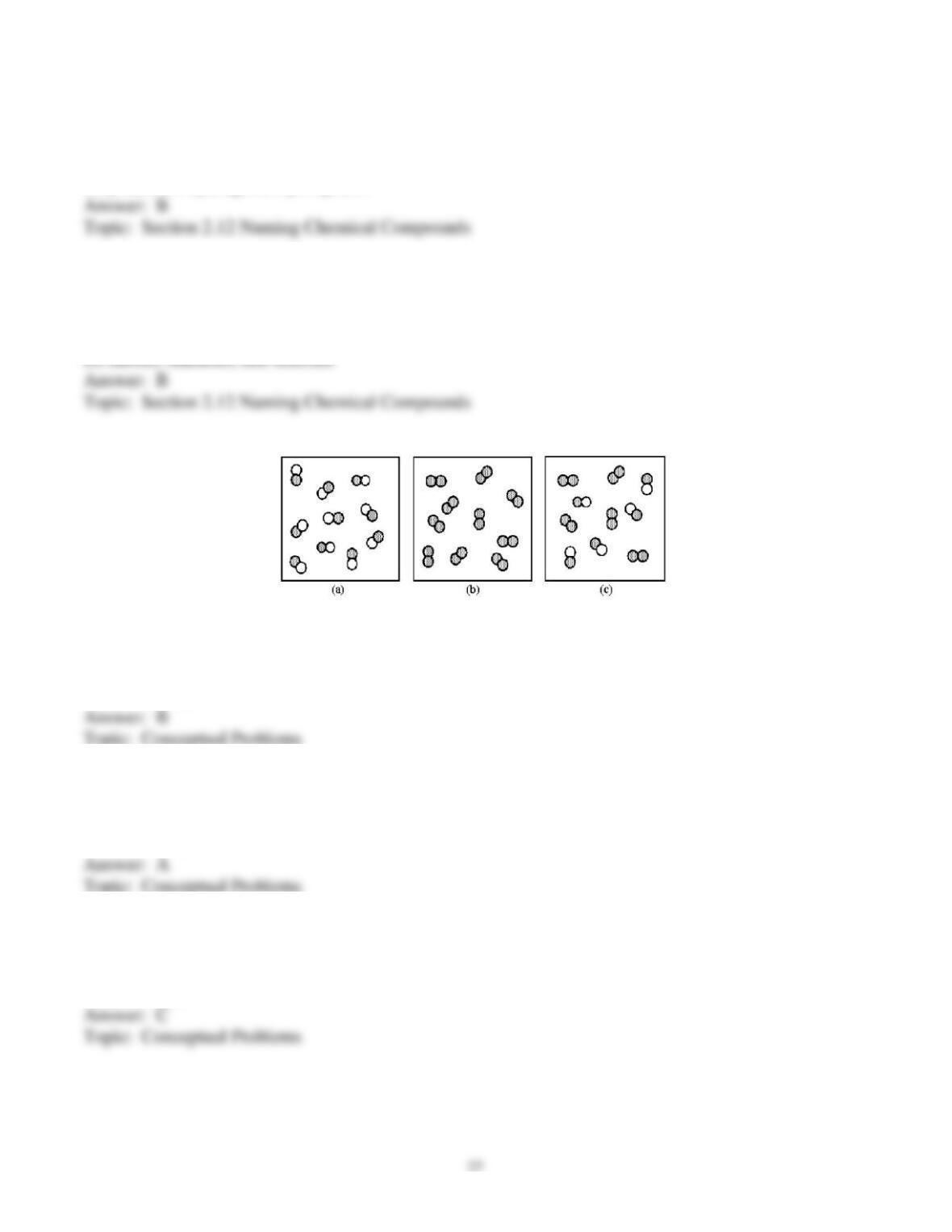
132) Which of the above drawings represents a pure element?
A) drawing (a)
B) drawing (b)
C) drawing (c)
133) Which of the above drawings represents a pure compound?
A) drawing (a)
B) drawing (b)
C) drawing (c)
134) Which of the above drawings represents a mixture?
A) drawing (a)
B) drawing (b)
C) drawing (c)
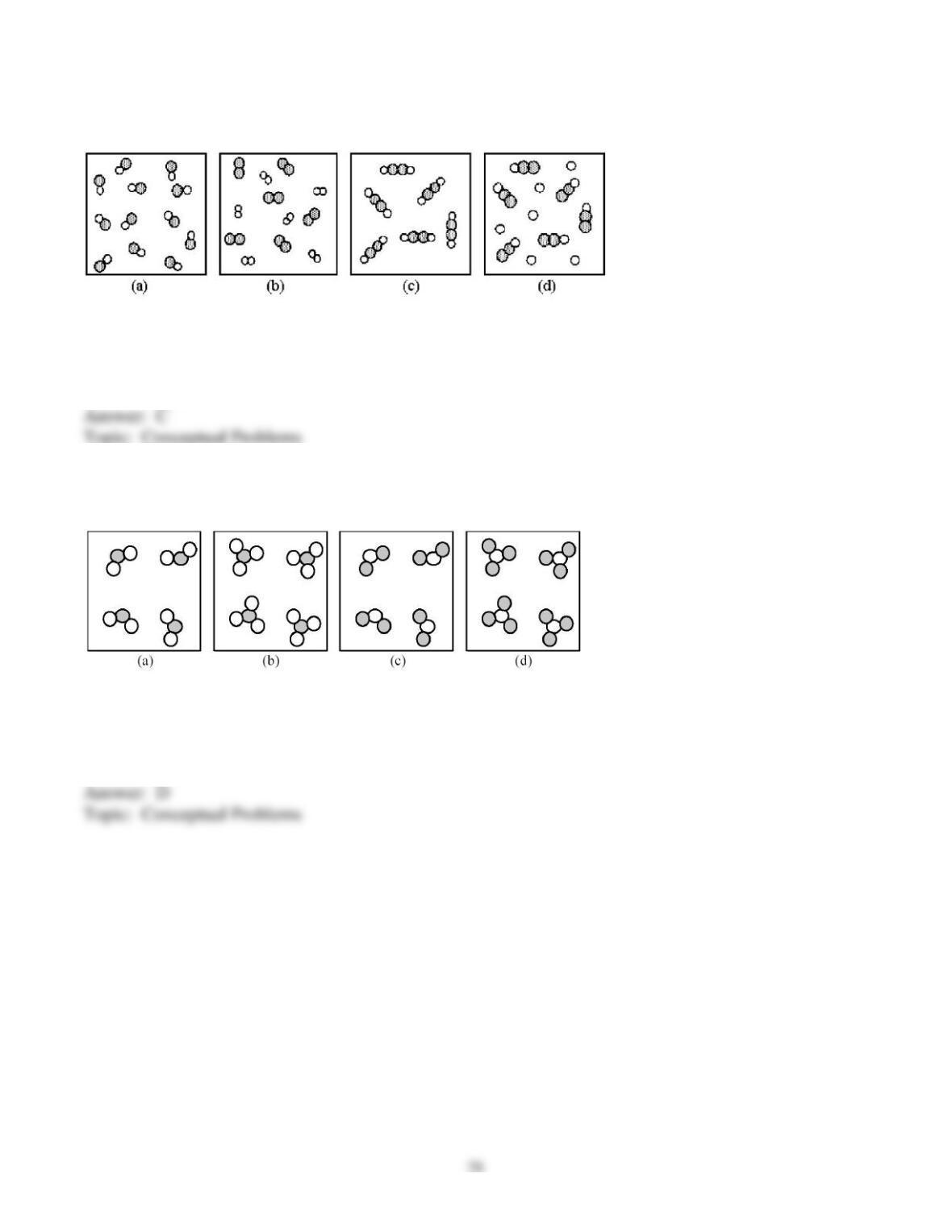
135) Which of the following drawings represents a collection of acetylene (C2H2) molecules? The
shaded spheres represent carbon atoms and the unshaded spheres represent hydrogen atoms.
A) drawing (a)
B) drawing (b)
C) drawing (c)
D) drawing (d)
136) If unshaded spheres represent sulfur atoms and shaded spheres represent oxygen atoms, which of
the following drawings depicts a collection of sulfur trioxide molecules?
A) drawing (a)
B) drawing (b)
C) drawing (c)
D) drawing (d)
29
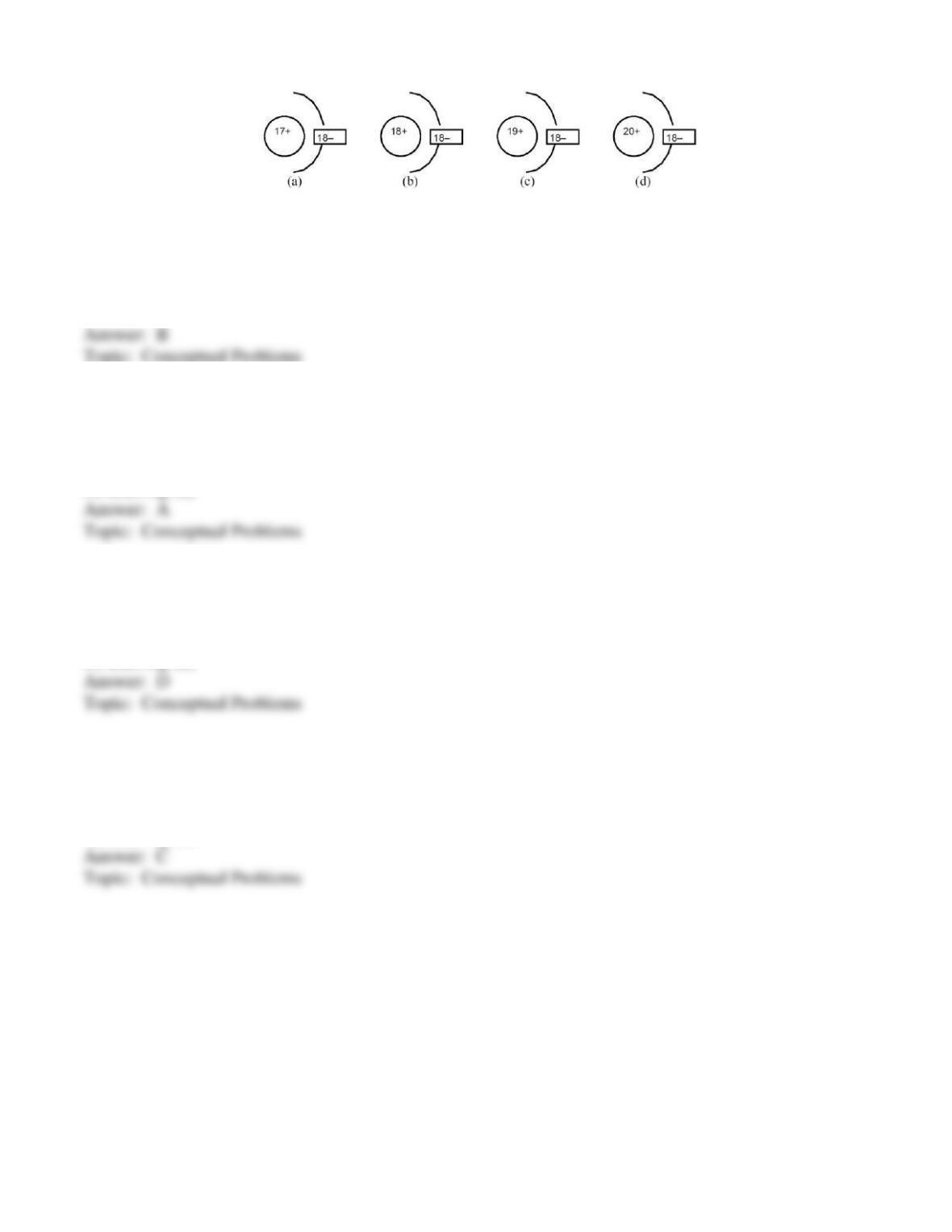
137) Which of the above drawings represents an Ar atom?
A) drawing (a)
B) drawing (b)
C) drawing (c)
D) drawing (d)
138) Which of the above drawings represents a Cl– ion?
A) drawing (a)
B) drawing (b)
C) drawing (c)
D) drawing (d)
139) Which of the above drawings represents a Ca2+ ion?
A) drawing (a)
B) drawing (b)
C) drawing (c)
D) drawing (d)
140) Which of the above drawings represents a K+ ion?
A) drawing (a)
B) drawing (b)
C) drawing (c)
D) drawing (d)
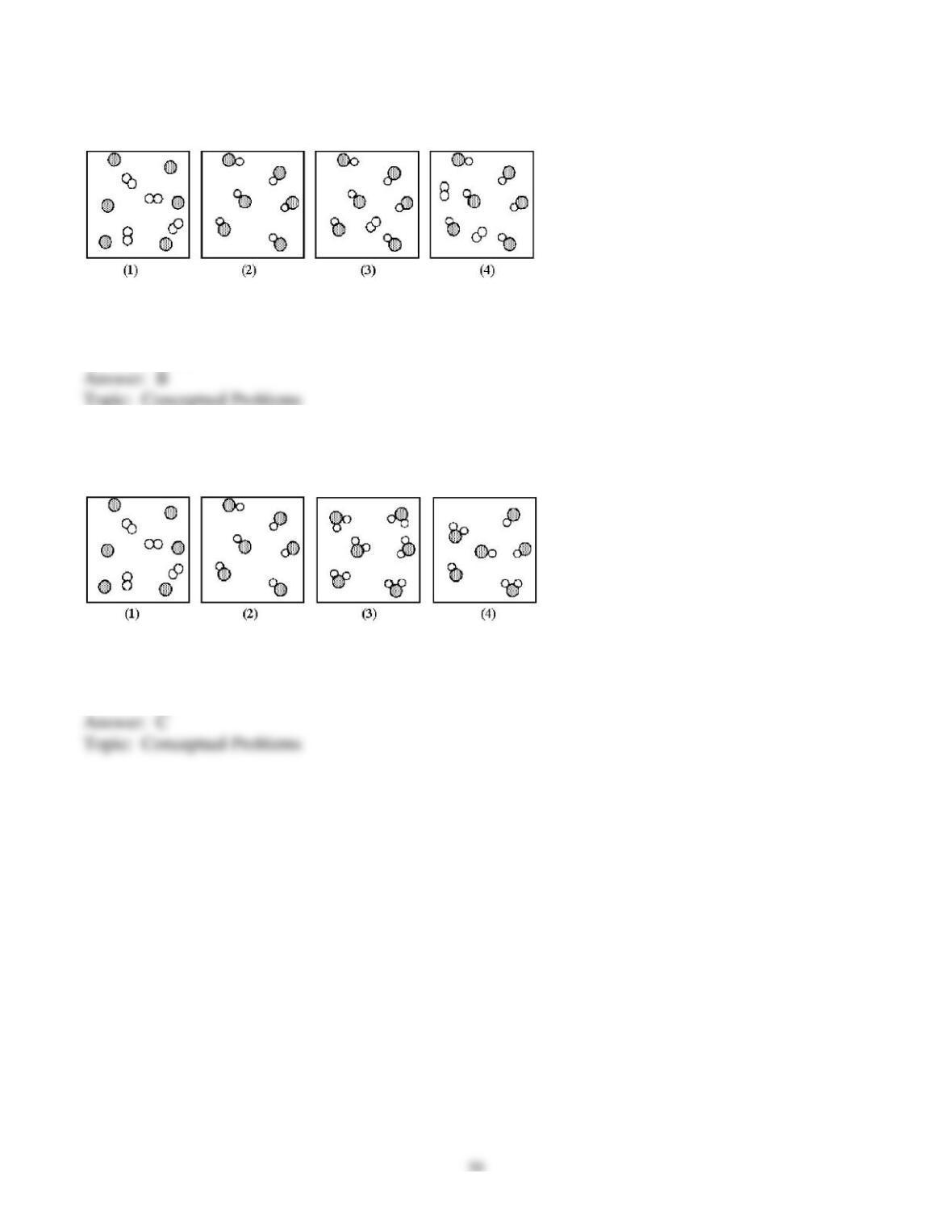
141) Assume that the mixture of substances in drawing (1) undergoes a chemical reaction. Which of the
drawings (2)-(4) represents a product mixture that is consistent with the law of mass conservation?
A) drawing (2)
B) drawing (3)
C) drawing (4)
142) Assume that the mixture of substances in drawing (1) undergoes a chemical reaction. Which of the
drawings (2)-(4) represents a product mixture that is consistent with the law of mass conservation?
A) drawing (2)
B) drawing (3)
C) drawing (4)
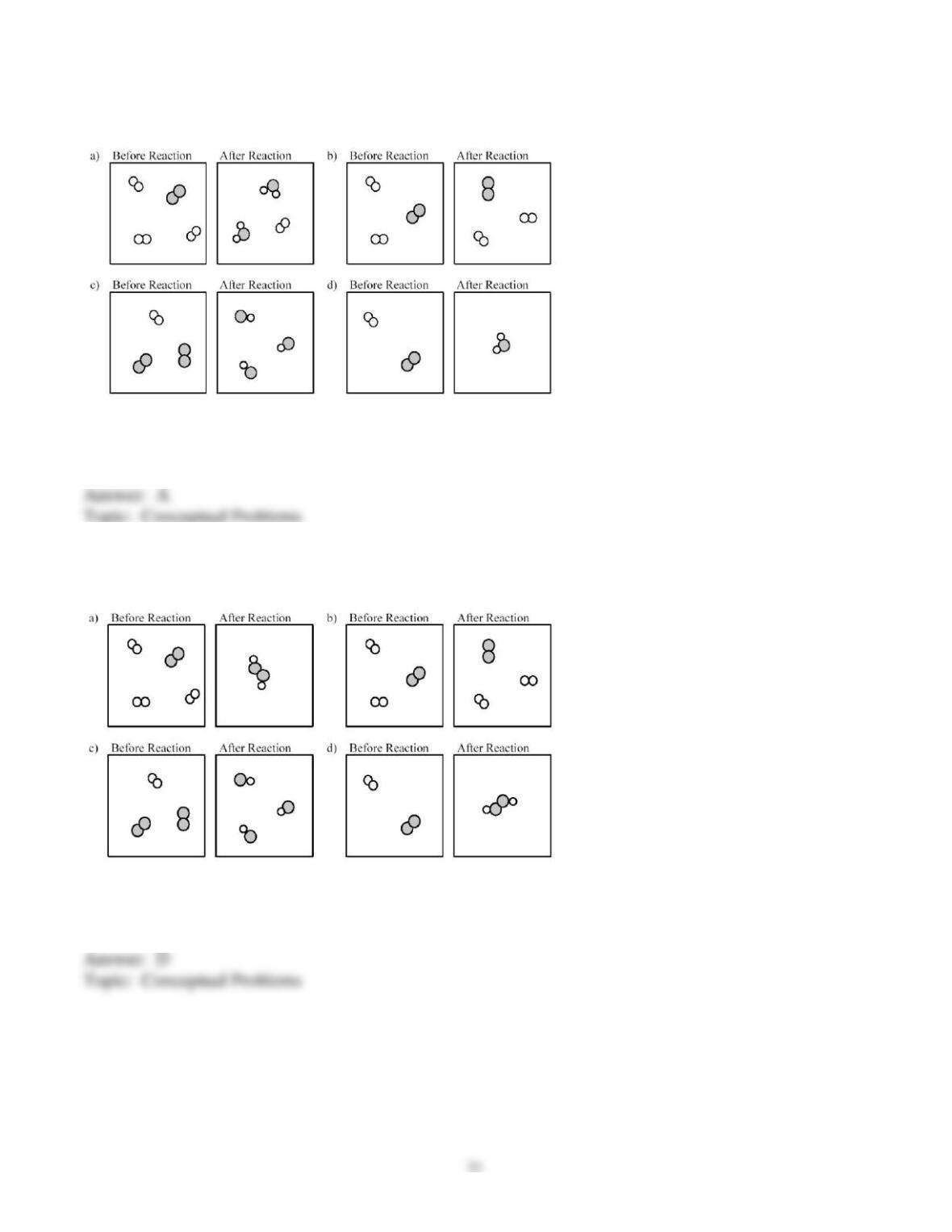
143) Which of the following drawings depicts a chemical reaction consistent with Dalton’s atomic
theory?
A) drawing a)
B) drawing b)
C) drawing c)
D) drawing d)
144) Which of the following drawings depicts a chemical reaction consistent with Dalton’s atomic
theory?
A) drawing a)
B) drawing b)
C) drawing c)
D) drawing d)
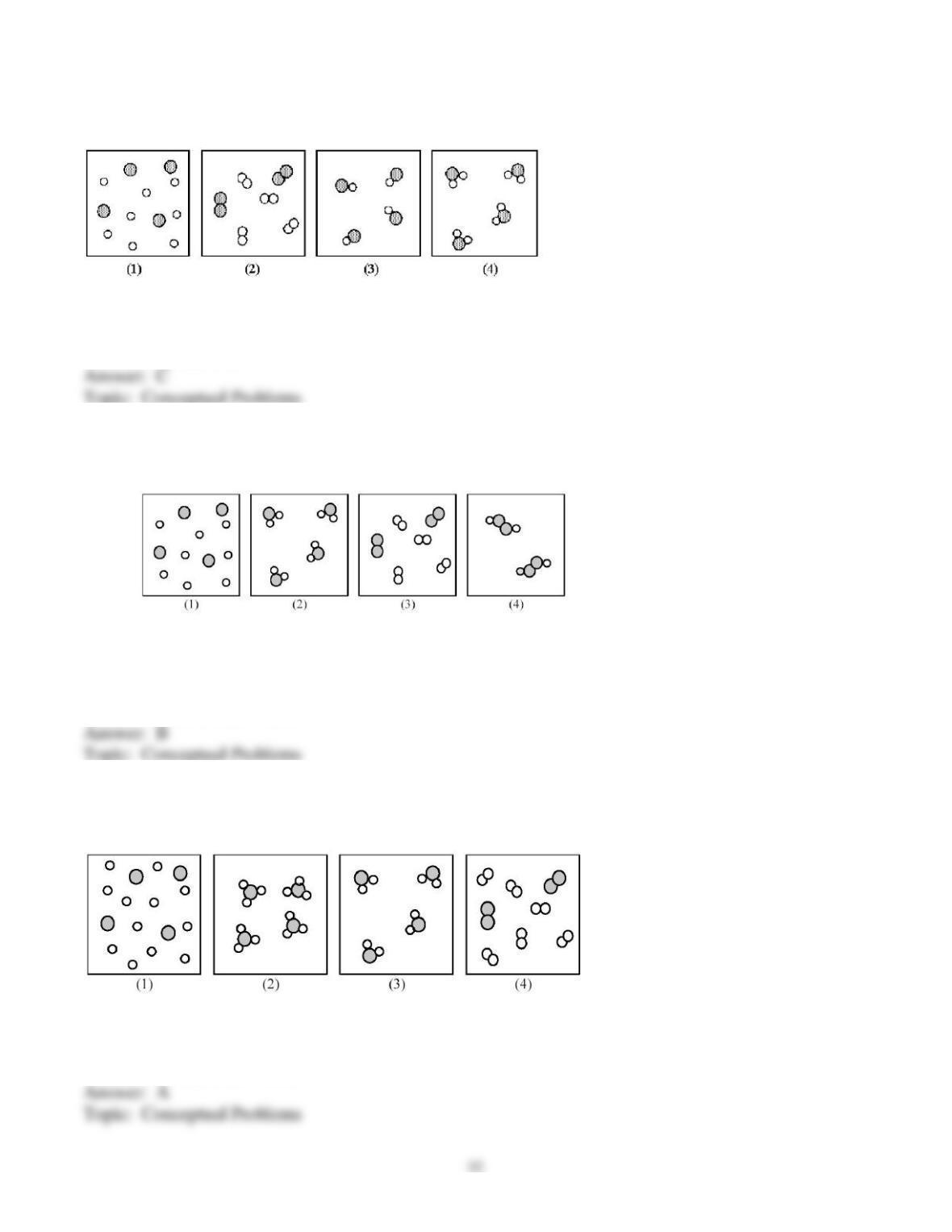
145) If shaded and unshaded spheres represent atoms of different elements, as shown in drawing (1),
which drawings (2)-(4) represent the law of multiple proportions?
A) only drawings (2) and (3)
B) only drawings (2) and (4)
C) only drawings (3) and (4)
D) drawings (2), (3), and (4)
146) If shaded and unshaded spheres represent atoms of different elements, as shown in drawing (1),
which drawings (2)-(4) represent the law of multiple proportions?
A) only drawings (2) and (3)
B) only drawings (2) and (4)
C) only drawings (3) and (4)
D) drawings (2), (3), and (4)
147) If shaded and unshaded spheres represent atoms of different elements, as shown in drawing (1),
which drawings (2)-(4) represent the law of multiple proportions?
A) only drawings (2) and (3)
B) only drawings (2) and (4)
C) only drawings (3) and (4)
D) drawings (2), (3), and (4)
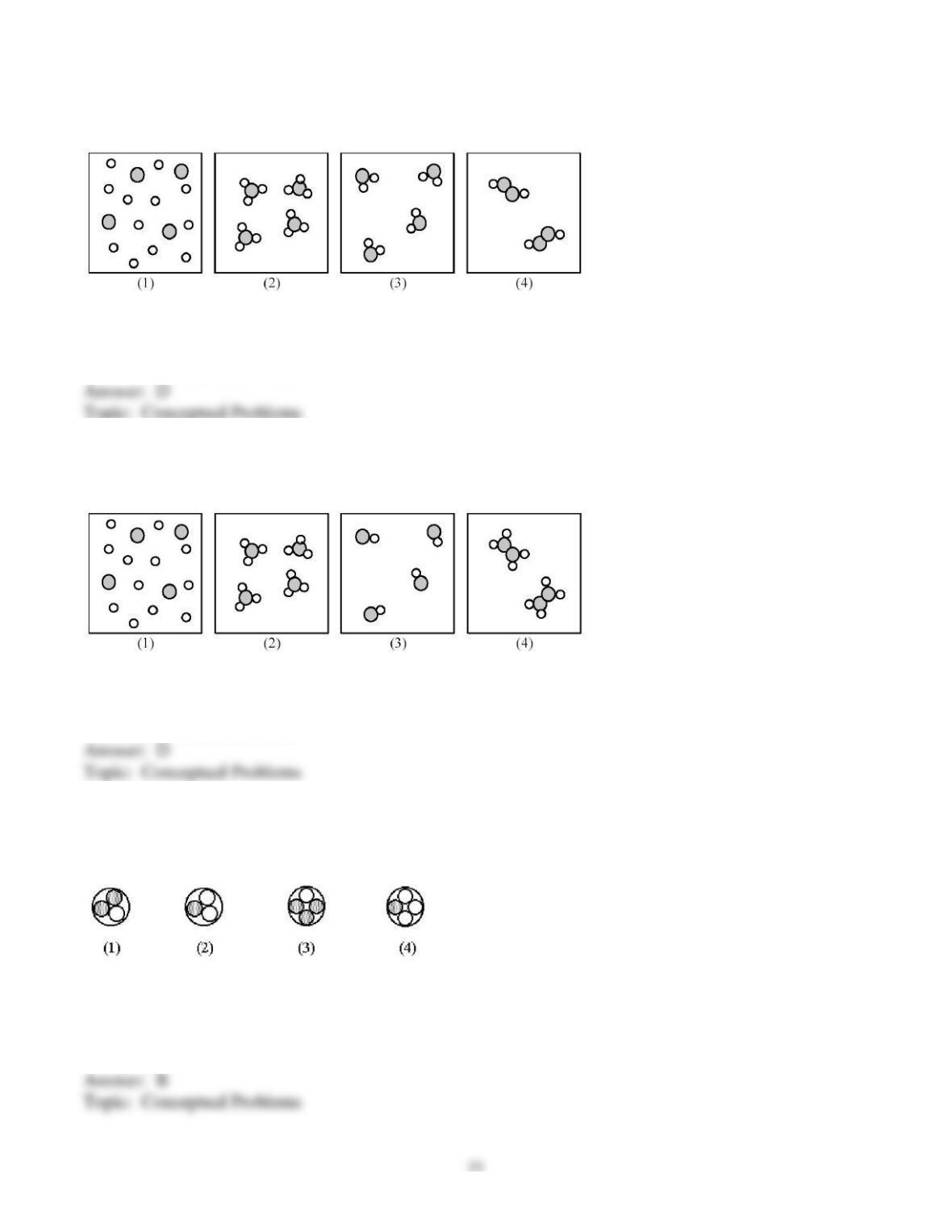
148) If shaded and unshaded spheres represent atoms of different elements, as shown in drawing (1),
which drawings (2)-(4) represent the law of multiple proportions?
A) only drawings (2) and (3)
B) only drawings (2) and (4)
C) only drawings (3) and (4)
D) drawings (2), (3), and (4)
149) If shaded and unshaded spheres represent atoms of different elements, as shown in drawing (1),
which combination of drawings (2)-(4) represent the law of multiple proportions?
A) only drawings (2) and (3)
B) only drawings (2) and (4)
C) only drawings (3) and (4)
D) drawings (2), (3), and (4)
150) Which of the following figures represents
3H
1
? Unshaded spheres represent neutrons and shaded
spheres represent protons.
A) figure (1)
B) figure (2)
C) figure (3)
D) figure (4)
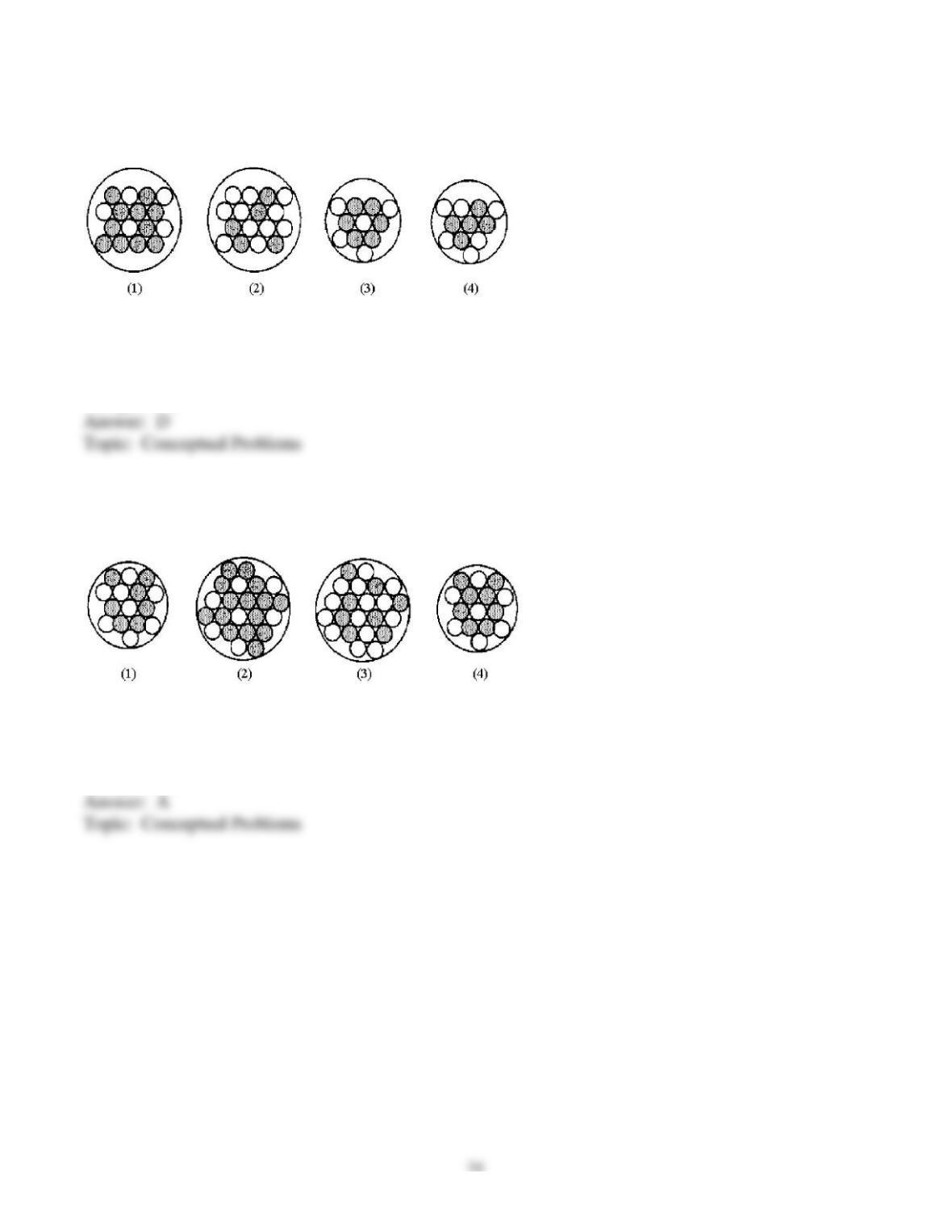
151) Which of the following figures represents
11B
5
? Unshaded spheres represent neutrons and shaded
spheres represent protons.
A) figure (1)
B) figure (2)
C) figure (3)
D) figure (4)
152) Which of the following figures represents
15N
7
? Unshaded spheres represent neutrons and shaded
spheres represent protons.
A) figure (1)
B) figure (2)
C) figure (3)
D) figure (4)
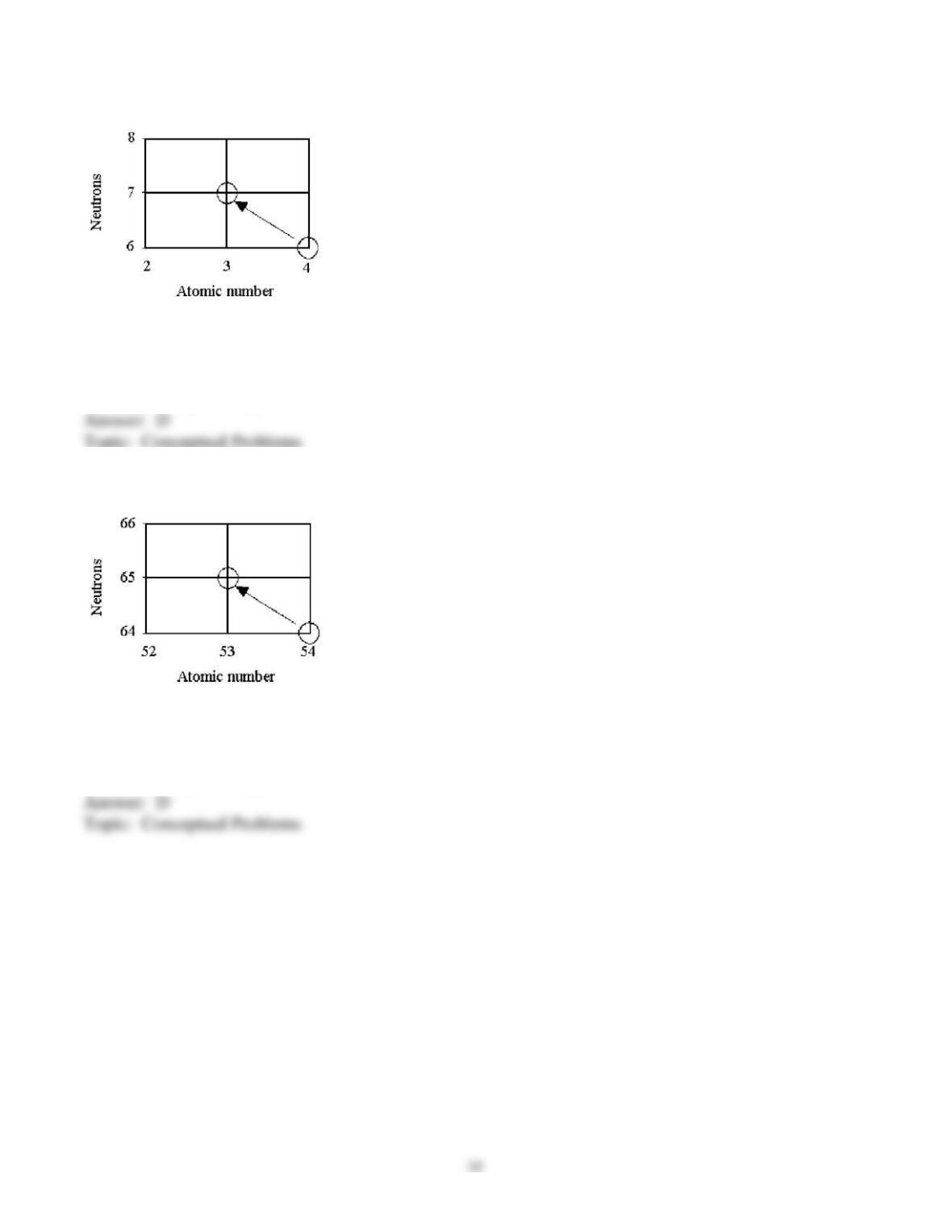
153) Tell the type of decay process occurring in the following nuclear reaction.
A) α emission
B) β emission
C) γ emission
D) electron capture or positron emission
154) Tell the type of decay process occurring in the following nuclear reaction.
A) α emission
B) β emission
C) γ emission
D) electron capture or positron emission
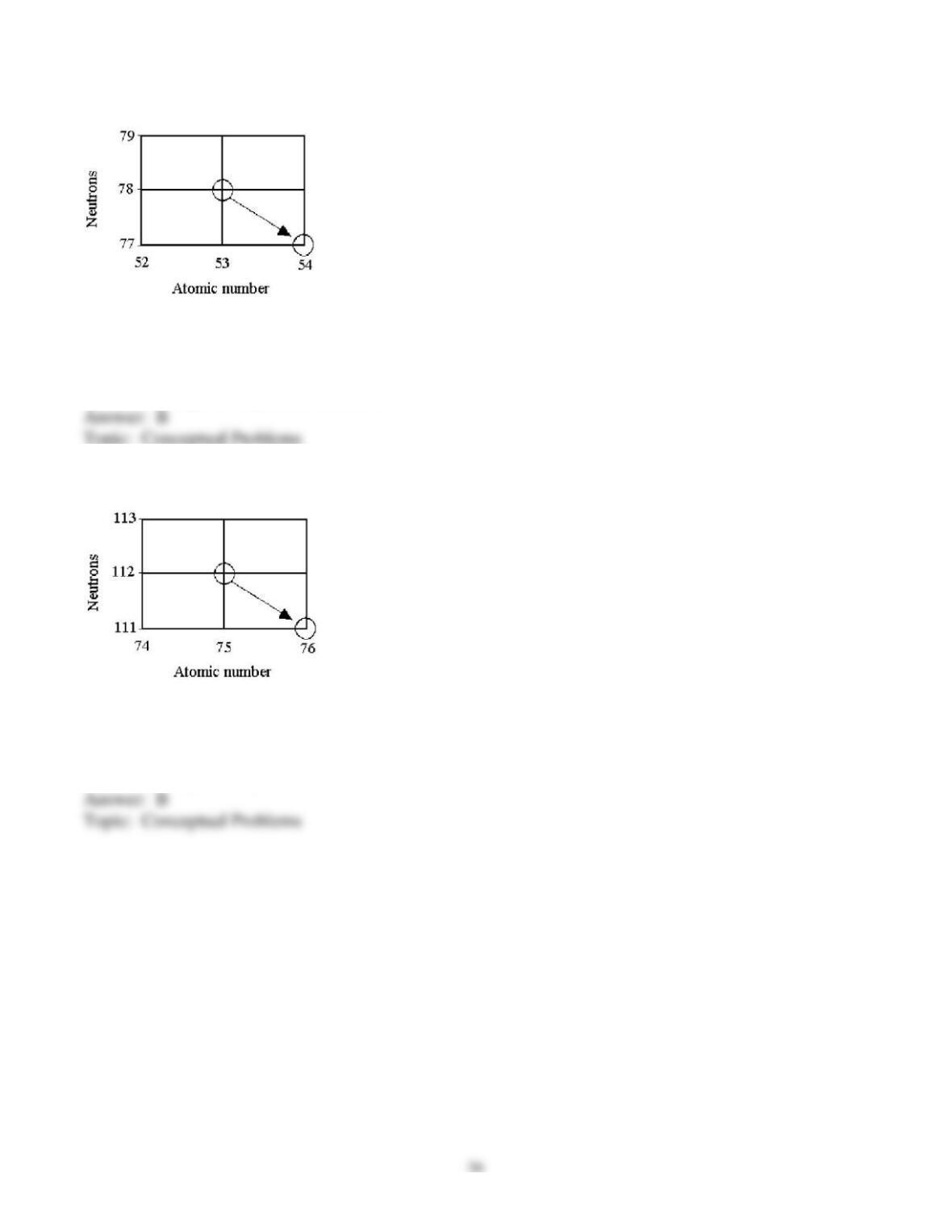
155) Tell the type of decay process occurring in the following nuclear reaction.
A) α emission
B) β emission
C) γ emission
D) electron capture or positron emission
156) Tell the type of decay process occurring in the following nuclear reaction.
A) α emission
B) β emission
C) γ emission
D) electron capture or positron emission
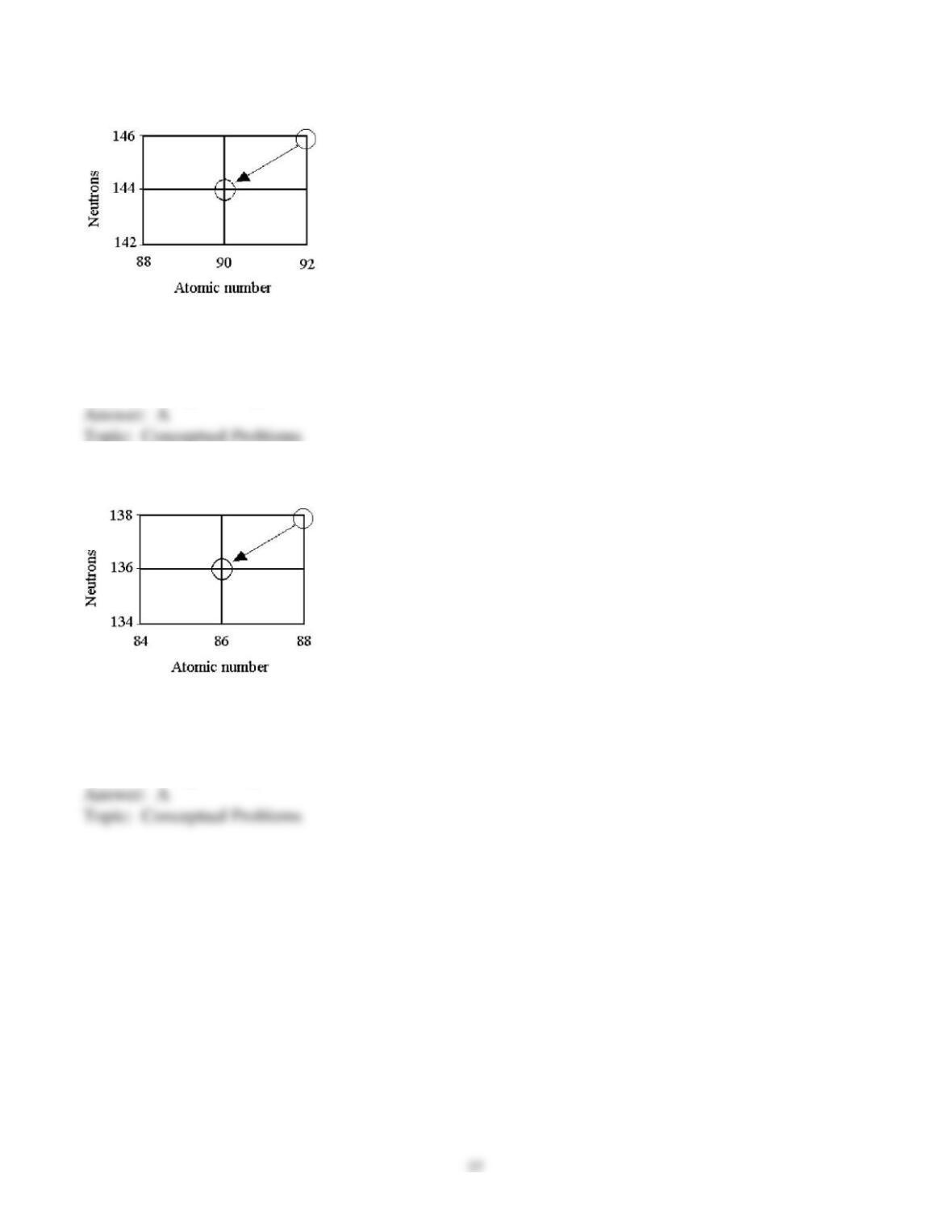
157) Tell the type of decay process occurring in the following nuclear reaction.
A) α emission
B) β emission
C) γ emission
D) electron capture or positron emission
158) Tell the type of decay process occurring in the following nuclear reaction.
A) α emission
B) β emission
C) γ emission
D) electron capture or positron emission
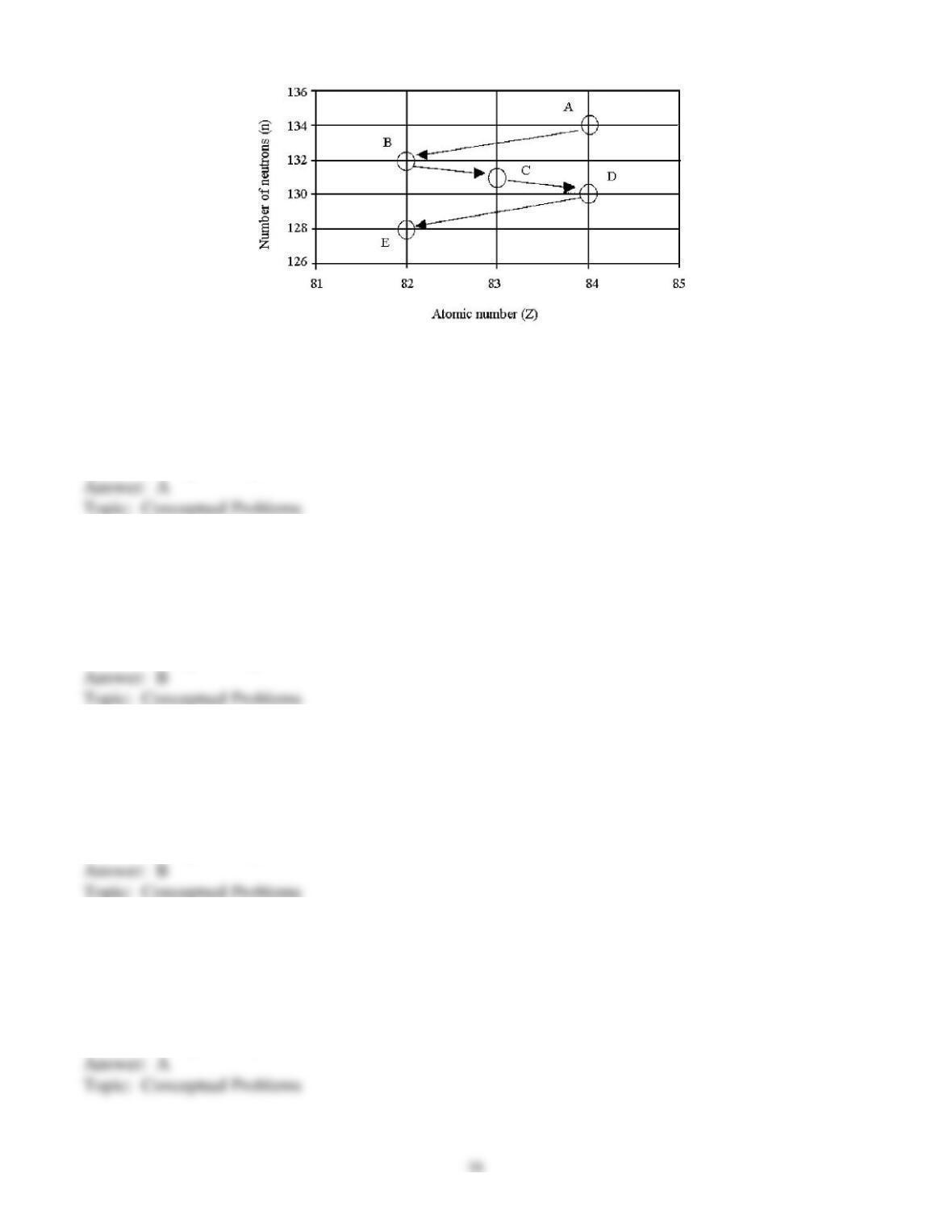
159) What kind of decay process is occurring in the decay of isotope A to isotope B in the figure shown
above?
A) α emission
B) β emission
C) γ emission
D) electron capture or positron emission
160) What kind of decay process is occurring in the decay of isotope B to isotope C in the figure shown
above?
A) α emission
B) β emission
C) γ emission
D) electron capture or positron emission
161) What kind of decay process is occurring in the decay of isotope C to isotope D in the figure shown
above?
A) α emission
B) β emission
C) γ emission
D) electron capture or positron emission
162) What kind of decay process is occurring in the decay of isotope D to isotope E in the figure shown
above?
A) α emission
B) β emission
C) γ emission
D) electron capture or positron emission