1
Chapter 2: Ensuring Progress in the General Education Curriculum Through Universal
Design for Learning and Inclusion
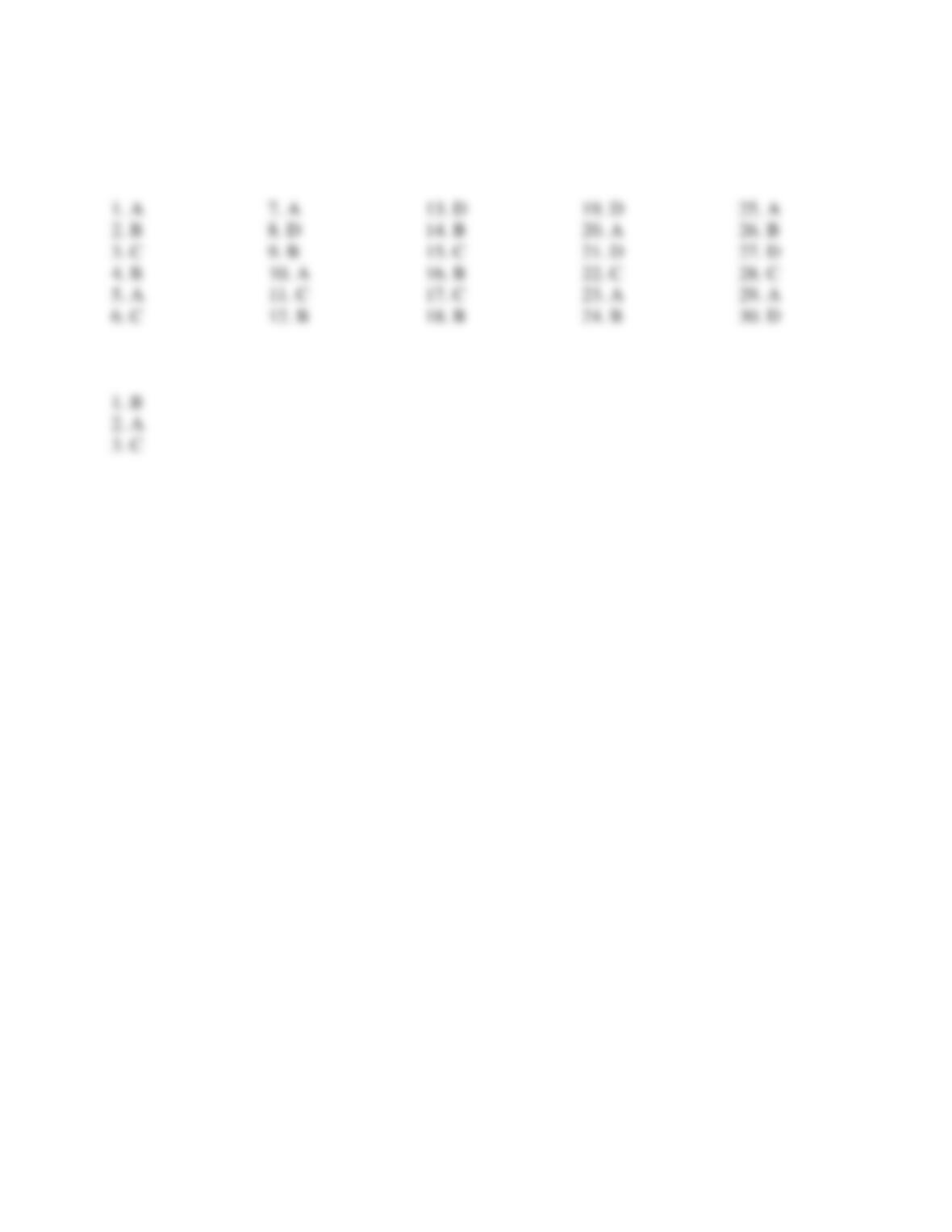
Multiple Choice
1. Which of the following identifies the academic content that students should master, the
standards for the student’s achievement of content proficiency, and assessment of student
progress in meeting the standards?
A. Standards-based reform
B. The general education curriculum
C. Student achievement standards
D. Alternative achievement standards
2. Which of the following defines knowledge, skills, and understanding that students should
attain in academic subjects?
A. Standards-based reform
B. Academic content standards
C. Student achievement standards
D. Alternative achievement standards
3. Which of the following defines the level of achievement that students must meet to
demonstrate proficiency in the subjects?
A. Standards-based reform
B. The general education curriculum
C. Student achievement standards
D. Alternative achievement standards
4. Alternate achievement standards are designed for:
A. Students who don’t pass the state assessments
B. Students with severe cognitive disabilities
C. All special education students
D. They are an option for teachers who don’t like the state assessments
5. Under IDEA, a student who cannot learn the same content as same-age peers who do not
have disabilities, and who cannot take the state assessment even with accommodations, is
required to:
A. Take an alternate assessment
B. Take the standard assessment
C. Be exempt from all assessment
D. Be excused from school
2
6. Accommodations may change each of the following EXCEPT:
A. Teachers ways of presenting information
B. Students ways of responding
C. Content of assessment
D. Timing of assessments
7. ESEA provides a number of alternate assessment options, but all such assessment must be
aligned, in some way, with the:
A. General education curriculum
B. Grade-level achievement standards
C. Academic achievement standards
D. Modified education curriculum
8. Supplementary aids and services include each of the following EXCEPT:
A. Ensuring physical and cognitive access to the environment
B. Seating arrangements
C. Assistive technology
D. Instructional modifications
9. The design of instructional materials and activities that make content information accessible
to all children refers to:
A. Accommodations
B. Universal design for learning
C. Goals and objectives
D. Content standards
10. Universal design for learning promotes multiple means of representing content; multiple
means of action and expression for students to demonstrate knowledge; and:
A. Multiple means of engagement
B. Multiple means of grading
C. Multiple means of questioning
D. Multiple means of assessment
11. Lectures, computerized visual presentations like PowerPoint, role playing, and computer-
mediated instruction are examples of:
A. Multiple means of engagement
B. Multiple means of action and expression
C. Multiple means of representing content
D. Multiple means of questioning
3
12. Writing reports, taking exams, portfolios, drawings, performances, oral reports, and
videotaped reports are examples of:
A. Multiple means of engagement
B. Multiple means of action and expression
C. Multiple means of representing content
D. Multiple means of questioning
13. New regulations by the National Instructional Materials Accessibility Standard require that:
A. All instructional materials be available in large print
B. Computer-mediated instruction be used in every classroom
C. Evidence of student learning includes audio-visual assessments
D. All instructional materials be available in electronic formats
14. Over the last decade, where have students with disabilities been spending more of their
instructional time?
A. In the resource room
B. In the general education classroom
C. In the self-contained special education classroom
D. In special schools for those with disabilities
15. Which of the following students are more likely to attend residential schools?
A. Students with learning disabilities, intellectual disabilities, and physical disabilities
B. Students with autism, traumatic brain injury, and intellectual disabilities
C. Students with hearing impairments, visual impairments, and deaf-blindness
D. Students with autism, visual impairments, and traumatic brain injury
16. Students with which disabilities tend to be served in resource rooms?
A. Students with learning disabilities and intellectual disabilities
B. Students with learning disabilities
C. Students with intellectual disabilities, autism, and emotional disorders
D. Students with hearing impairments, visual impairments, and deaf-blindness
17. Which of the following students are most likely to be educated in special schools?
A. Students with learning disabilities and intellectual disabilities
B. Students with learning disabilities and other health impairments
C. Students with emotional or behavioral disorders, multiple disabilities, and deaf
blindness
D. Students with hearing impairments, visual impairments, and deaf-blindness
4
18. Specialized settings in schools may include resource rooms and which of the following?
A. General education classrooms
B. Self-contained classrooms
C. Least restrictive classrooms
D. Gifted and talented classrooms
19. All of the following are key characteristics of inclusion EXCEPT:
A. Home-school placement
B. Principle of natural proportions
C. Restructuring teaching and learning
D. Alternative assessment
20. Which of the following holds that students with exceptionalities be placed in schools and
classrooms in a similar ratio of the occurrence of exceptionality within the general
population?
A. The principle of natural proportions
B. The principle of natural ratios
C. Age- and grade-appropriate placements
D. The continuum of placements
21. Services that range from the most typical and most inclusive settings to the most atypical and
most segregated settings refers to:
A. The principle of natural proportions
B. Restructuring and teaching and learning
C. Age- and grade-appropriate placements
D. The continuum of services
22. Eliminating the continuum of placement and increasing the amount of time students spend in
the general education classroom are two issues of:
A. No Child Left Behind
B. IDEA
C. Inclusion
D. Special education
23. There is almost universal agreement that students with disabilities gain benefits in which
areas from their involvement in inclusive settings?
A. Social and communication
B. Social and academic
C. Communication and achievement
D. Communication and mathematics
5
24. What is the hallmark of special education?
A. Inclusion
B. Individualization
C. Specialized placements
D. Accommodations
25. The IEP team must consider five “special factors” when developing an IEP, including each
of the following, EXCEPT:
A. Measurable annual goals, including academic and functional goals
B. Strategies to address a student’s behavior that impedes learning
C. Language needs of students with limited English proficiency
D. Instruction in Braille for students who are blind
26. The inclusion movement has tried to limit the need for more restrictive settings by creating
which of the following?
A. Stricter laws limit the restrictive settings
B. New partnerships between special and general educators
C. Director of inclusion positions in each school district
D. More lenient academic standards
27. Which of the following statements correctly reflects the “third generation of inclusion”?
A. Inclusion first focused on the “what” of inclusion and is now focusing on the “where.”
B. Inclusion first focused on the “why” of inclusion and is now focusing on the “what”
and “how.”
C. Inclusion first focused on the “what” and “how” of inclusion and is now focusing on
the “where.”
D. Inclusion first focused on the “where” of inclusion and is now focusing on the “what”
and “how.”
28. Each is a school- or classroom-level action to promote student progress in the general
education curriculum EXCEPT:
A. Create effective learning environments
B. Design effective units and lessons
C. Promote inclusion
D. Implement schoolwide instructional strategies
6
29. Which of the following determines whether any student, with or without a disability, needs
more intensive instruction?
A. Response to intervention
B. Universal Design for Learning
C. Alternative assessment
D. Positive behavior supports
30. A systems-level, problem-solving oriented, data-based approach to reducing problem
behavior, improving appropriate behavior, and achieving important academic, social, and
communication outcomes throughout the school building is:
A. Response to intervention
B. Universal Design for Learning
C. Alternative assessment
D. Positive behavior supports
Praxis style questions
1. Jacqui is a well-behaved ninth grader who is reading four grade levels below the rest of the
ninth-grade class. Mr. Atom, the science teacher, wants to include her with the rest of the
class, but he is unsure how to accommodate Jacqui due to her reading disability. Which of
the following suggests an inappropriate accommodation for Jacqui?
A. Pair Jacqui with a lab partner who can help with reading, but hold Jacqui accountable
for completing the labs and writing up her results.
B. Allow Jacqui to complete easier science labs from the fifth grade science book
because this book is at her reading level.
C. Provide Jacqui with audiotapes of the labs and textbook chapters, so she may listen to
them at her convenience.
D. Allow Jacqui to have her science tests read orally, or allow her to use technologies that
“read” print for her.
2. Anthony is a first grade student who has been struggling in his general education setting. The
parents and teacher have discussed their concerns about Anthony’s lack of progress and
frustration. Using the response to intervention model, what is the likely first step to
implement for Anthony?
A. The teacher should implement high-quality, research-based interventions and monitor
Anthony’s progress.
B. The teacher should request that Anthony be tested for special education services.
C. The parents should have Anthony assessed by his pediatrician.
D. The teacher and parents should wait until Anthony gets a bit older before acting on
their concerns.
7
3. Sheila is a student with a learning disability who receives instruction in the general education
curriculum. Which of the following would be an appropriate accommodation for Sheila when
taking the standardized state test?
A. Not requiring Sheila to take the test.
B. Allow Sheila to take the test home to complete.
C. Allow Sheila extra time to complete the test.
D. Allow Sheila to take an alternative assessment.
Short Answer
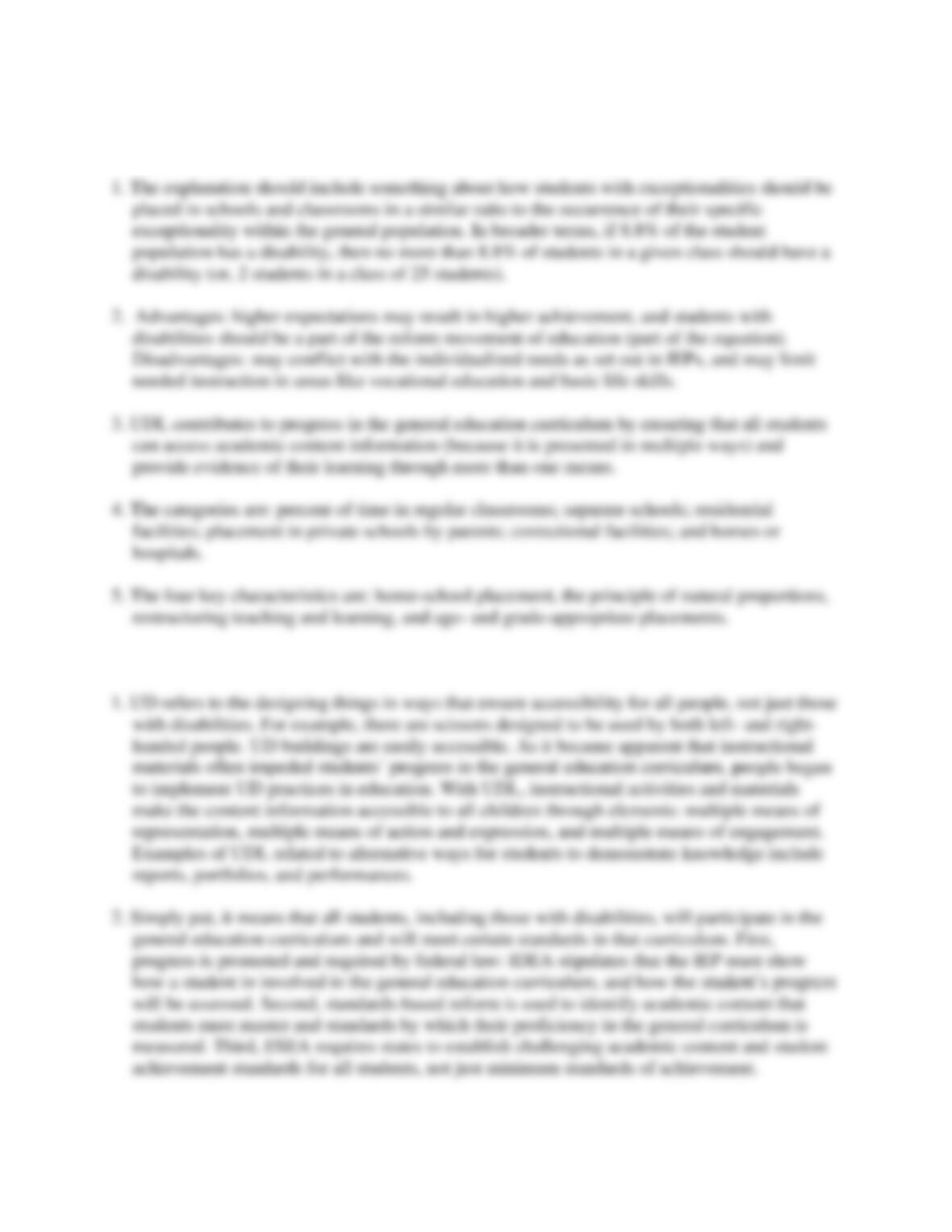
1. In your own words, explain the “principle of natural proportions.”
2. List two possible advantages of and two possible disadvantages of the impact of standards-
based reform for students with disabilities.
3. How does universal design for learning facilitate progress for all students?
4. Identify the six educational placement categories for students with disabilities designated by
the U.S. Department of Education.
5. Identify the four key characteristics of inclusion.
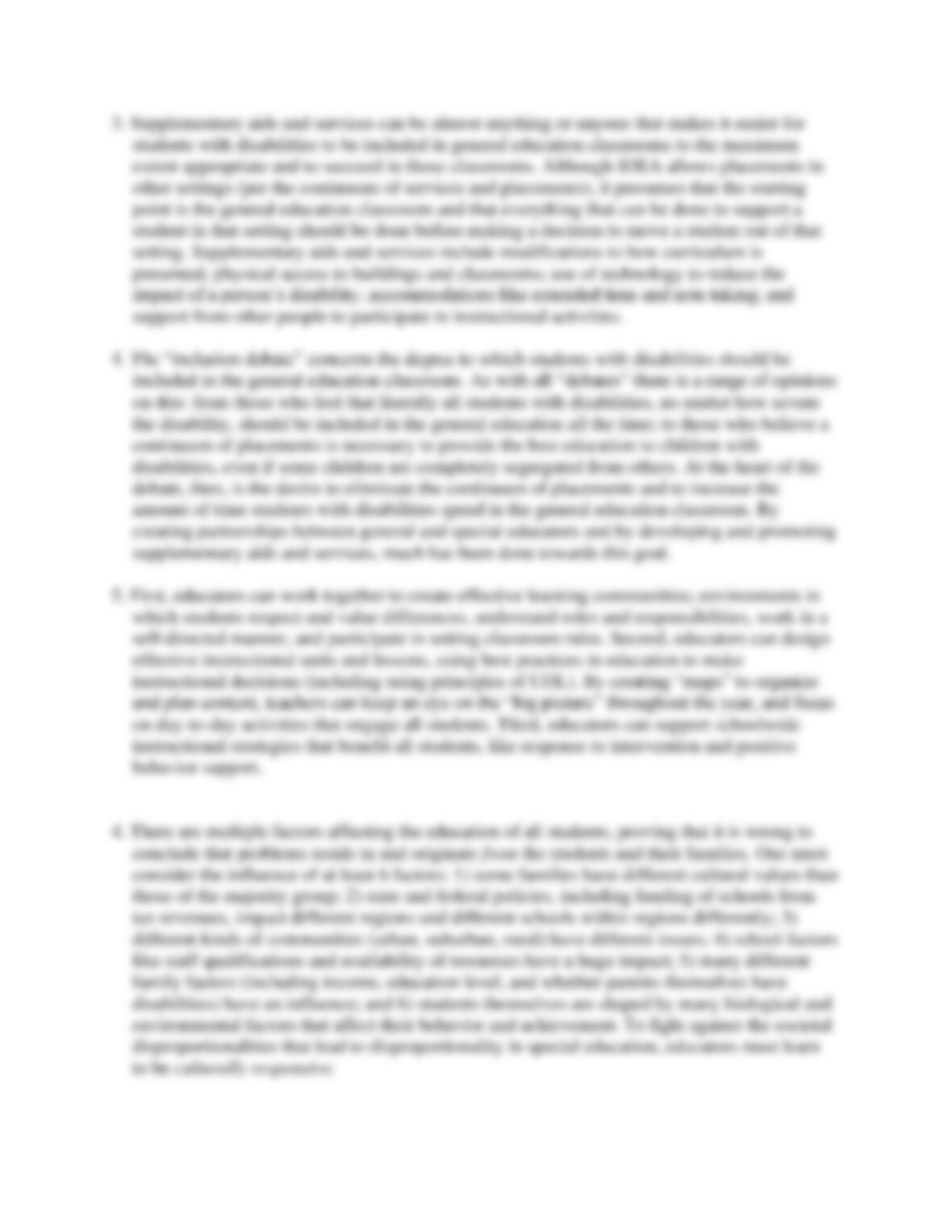
Essay
1. What is the concept of universal design and how does it apply to education (give examples of
UD and of UDL)?
2. What does “progress in the general education curriculum” mean? (Describe three practices or
laws that essentially require that progress.)
3. Describe supplementary aids and services in your own words and explain how they facilitate
inclusion in general education settings.
4. Describe the “inclusion debate” and the two major issues at the heart of the debate.
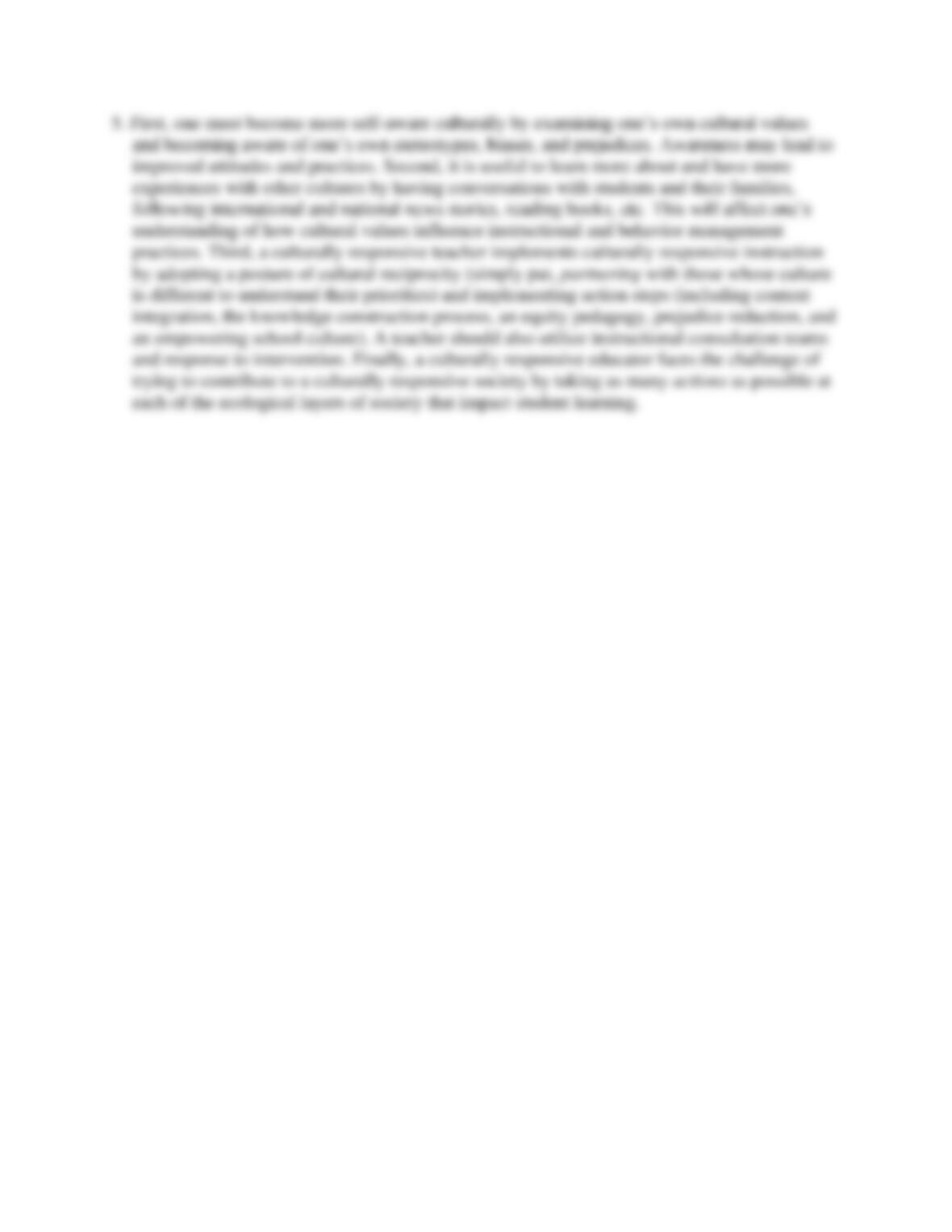
5. Describe three school- and classroom-level actions that teachers can control to promote
student progress in the general education classroom.
8
Chapter 2
Multiple Choice
Praxis
9
Short Answer
Essay
10
11