1
Chemistry: The Central Science, 13e (Brown et al.)
Chapter 2 Atoms, Molecules, and Ions
2.1 Multiple-Choice Questions
1) A molecule of water contains hydrogen and oxygen in a 1:8 ratio by mass. This is a statement of
________.
A) the law of multiple proportions
B) the law of constant composition
C) the law of conservation of mass
D) the law of conservation of energy
E) none of the above
2) Which one of the following is not one of the postulates of Dalton’s atomic theory?
A) Atoms are composed of protons, neutrons, and electrons.
B) All atoms of a given element are identical; the atoms of different elements are different and have
different properties.
C) Atoms of an element are not changed into different types of atoms by chemical reactions: atoms are
neither created nor destroyed in chemical reactions.
D) Compounds are formed when atoms of more than one element combine; a given compound always
has the same relative number and kind of atoms.
E) Each element is composed of extremely small particles called atoms.
3) Consider the following selected postulates of Dalton’s atomic theory:
(i) Each element is composed of extremely small particles called atoms.
(ii) Atoms are indivisible.
(iii) Atoms of a given element are identical.
(iv) Atoms of different elements are different and have different properties.
Which of the postulates is(are) no longer considered valid?
A) (i) and (ii)
B) (ii) only
C) (ii) and (iii)
D) (iii) only
E) (iii) and (iv)
4) Which pair of substances could be used to illustrate the law of multiple proportions?
A) SO2, H2SO4
B) CO, CO2
C) H2O, O2
D) CH4, C6H12O6
E) NaCl, KCl
5) Which statement below correctly describes the responses of alpha, beta, and gamma radiation to an
electric field?
A) Both beta and gamma are deflected in the same direction, while alpha shows no response.
B) Both alpha and gamma are deflected in the same direction, while beta shows no response.
C) Both alpha and beta are deflected in the same direction, while gamma shows no response.
D) Alpha and beta are deflected in opposite directions, while gamma shows no response.
E) Only alpha is deflected, while beta and gamma show no response.
6) Which one of the following is not true concerning cathode rays?
A) They originate from the negative electrode.
B) They travel in straight lines in the absence of electric or magnetic fields.
C) They impart a negative charge to metals exposed to them.
D) They are made up of electrons.
E) The characteristics of cathode rays depend on the material from which they are emitted.
7) The charge on an electron was determined in the ________.
A) cathode ray tube, by J. J. Thomson
B) Rutherford gold foil experiment
C) Millikan oil drop experiment
D) Dalton atomic theory
E) atomic theory of matter
8) ________-rays consist of fast-moving electrons.
A) Alpha
B) Beta
C) Gamma
D) X
E) none of the above
9) The gold foil experiment performed in Rutherford’s lab ________.
A) confirmed the plum-pudding model of the atom
B) led to the discovery of the atomic nucleus
C) was the basis for Thomson’s model of the atom
D) utilized the deflection of beta particles by gold foil
E) proved the law of multiple proportions
10) In the Rutherford nuclear-atom model, ________.
A) the heavy subatomic particles, protons and neutrons, reside in the nucleus
B) the three principal subatomic particles (protons, neutrons, and electrons) all have essentially the same
mass
C) the light subatomic particles, protons and neutrons, reside in the nucleus
D) mass is spread essentially uniformly throughout the atom
E) the three principal subatomic particles (protons, neutrons, and electrons) all have essentially the same
mass and mass is spread essentially uniformly throughout the atom
11) Cathode rays are ________.
A) neutrons
B) X-rays
C) electrons
D) protons
E) atoms
12) Cathode rays are deflected away from a negatively charged plate because ________.
A) they are not particles
B) they are positively charged particles
C) they are neutral particles
D) they are negatively charged particles
E) they are emitted by all matter
13) In the absence of magnetic or electric fields, cathode rays ________.
A) do not exist
B) travel in straight lines
C) cannot be detected
D) become positively charged
E) bend toward a light source
14) Of the three types of radioactivity characterized by Rutherford, which is/are electrically charged?
A) β-rays
B) α–rays and β-rays
C) α–rays, β-rays, and γ-rays
D) α-rays
E) α–rays and γ-rays
15) Of the three types of radioactivity characterized by Rutherford, which is/are not electrically charged?
A) α-rays
B) α–rays, β-rays, and γ–rays
C) γ-rays
D) α–rays and β-rays
E) α–rays and γ-rays
16) Of the three types of radioactivity characterized by Rutherford, which are particles?
A) β-rays
B) α–rays, β-rays, and γ–rays
C) γ-rays
D) α–rays and γ-rays
E) α–rays and β-rays
17) Of the three types of radioactivity characterized by Rutherford, which type does not become deflected
by a magnetic field?
A) β-rays
B) α–rays and β-rays
C) α-rays
D) γ-rays
E) α–rays, β–rays, and γ-rays
18) Of the following, the smallest and lightest subatomic particle is the ________.
A) neutron
B) proton
C) electron
D) nucleus
E) alpha particle
19) All atoms of a given element have the same ________.
A) mass
B) number of protons
C) number of neutrons
D) number of electrons and neutrons
E) density
20) Which atom has the smallest number of neutrons?
A) carbon-14
B) nitrogen-14
C) oxygen-16
D) fluorine-19
E) neon-20
21) Which atom has the largest number of neutrons?
A) phosphorus-30
B) chlorine-37
C) potassium-39
D) argon-40
E) calcium-40
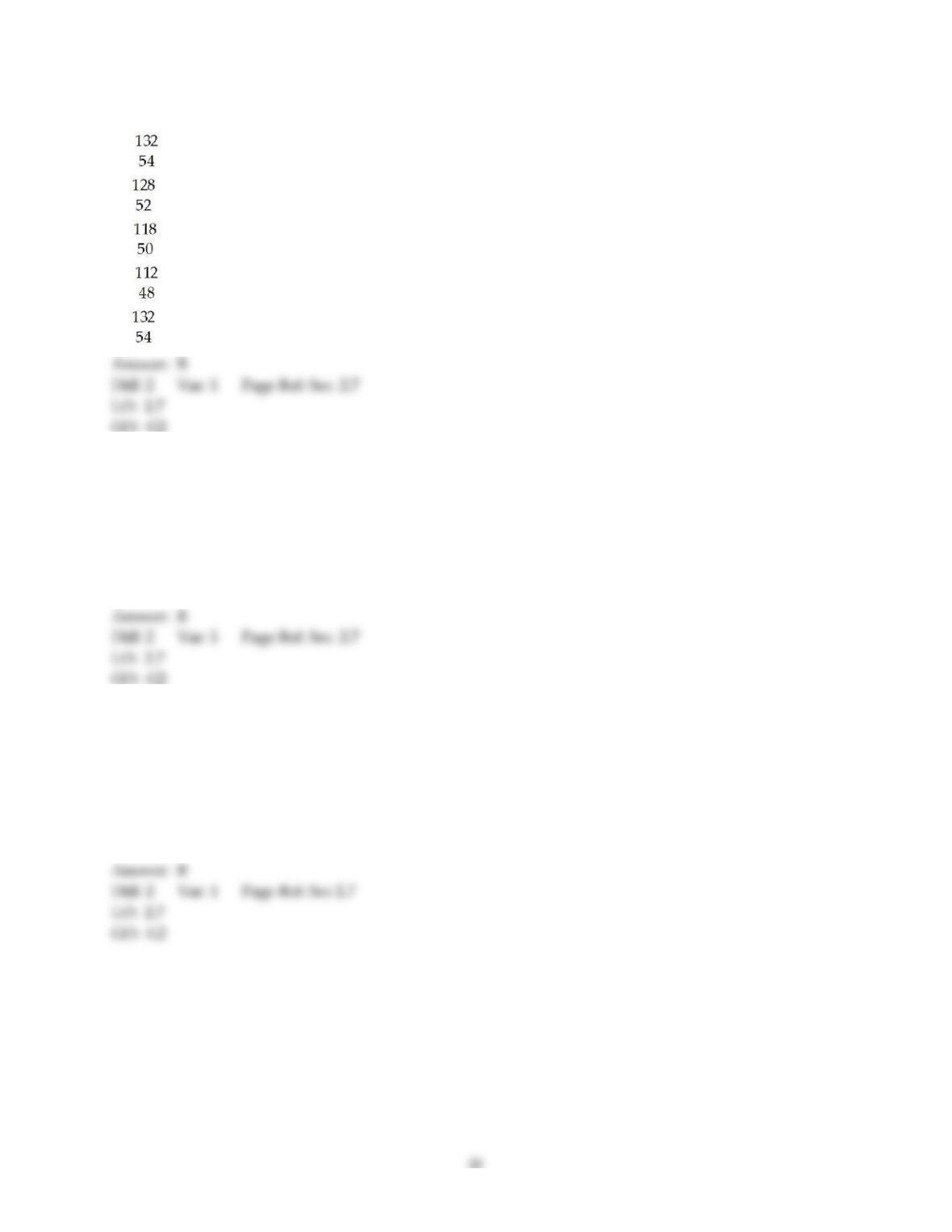
22) There are ________ electrons, ________ protons, and ________ neutrons in an atom of
132
54
Xe.
A) 132, 132, 54
B) 54, 54, 132
C) 78, 78, 54
D) 54, 54, 78
E) 78, 78, 132
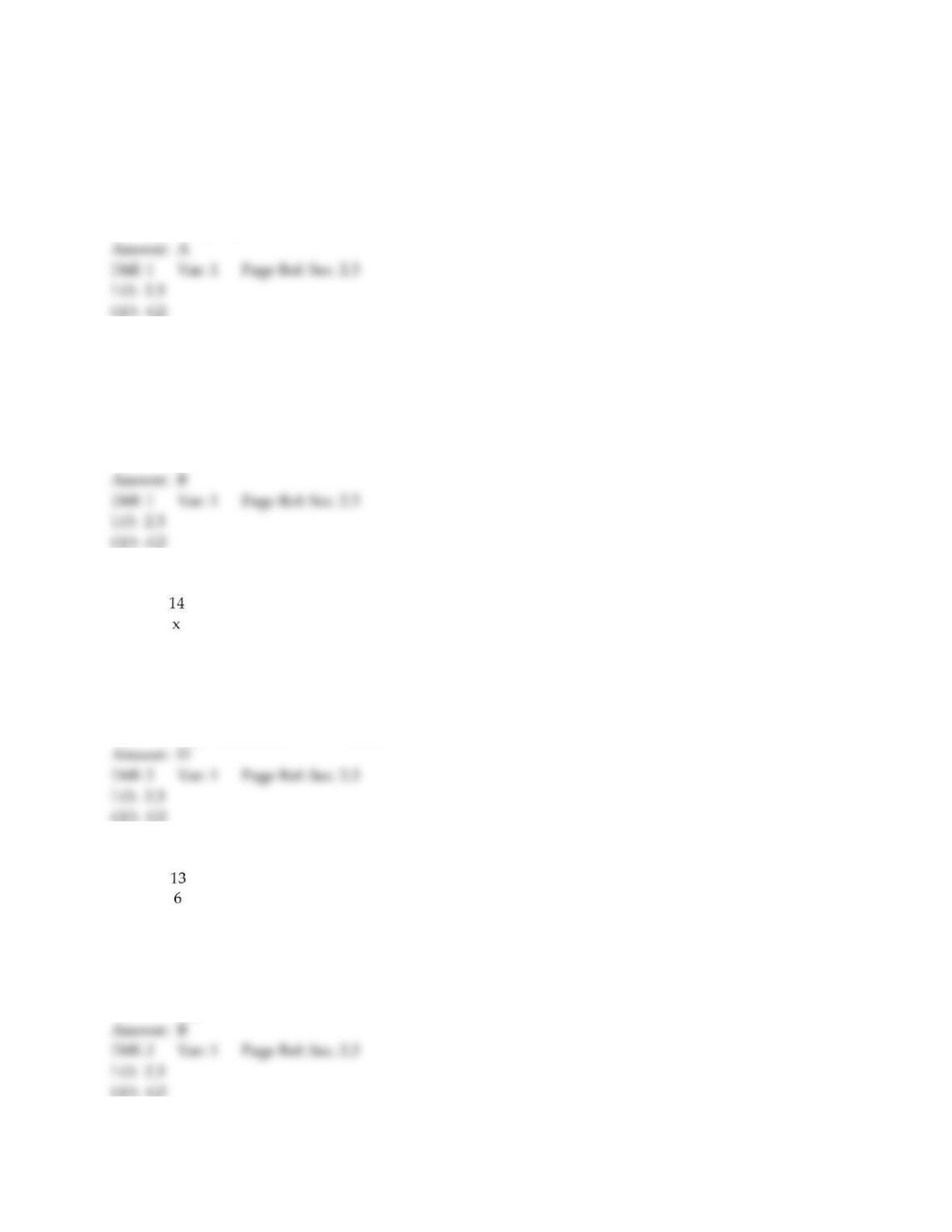
23) An atom of the most common isotope of gold, Au, has ________ protons, ________ neutrons, and
________ electrons.
A) 197, 79, 118
B) 118, 79, 39
C) 79, 197, 197
D) 79, 118, 118
E) 79, 118, 79
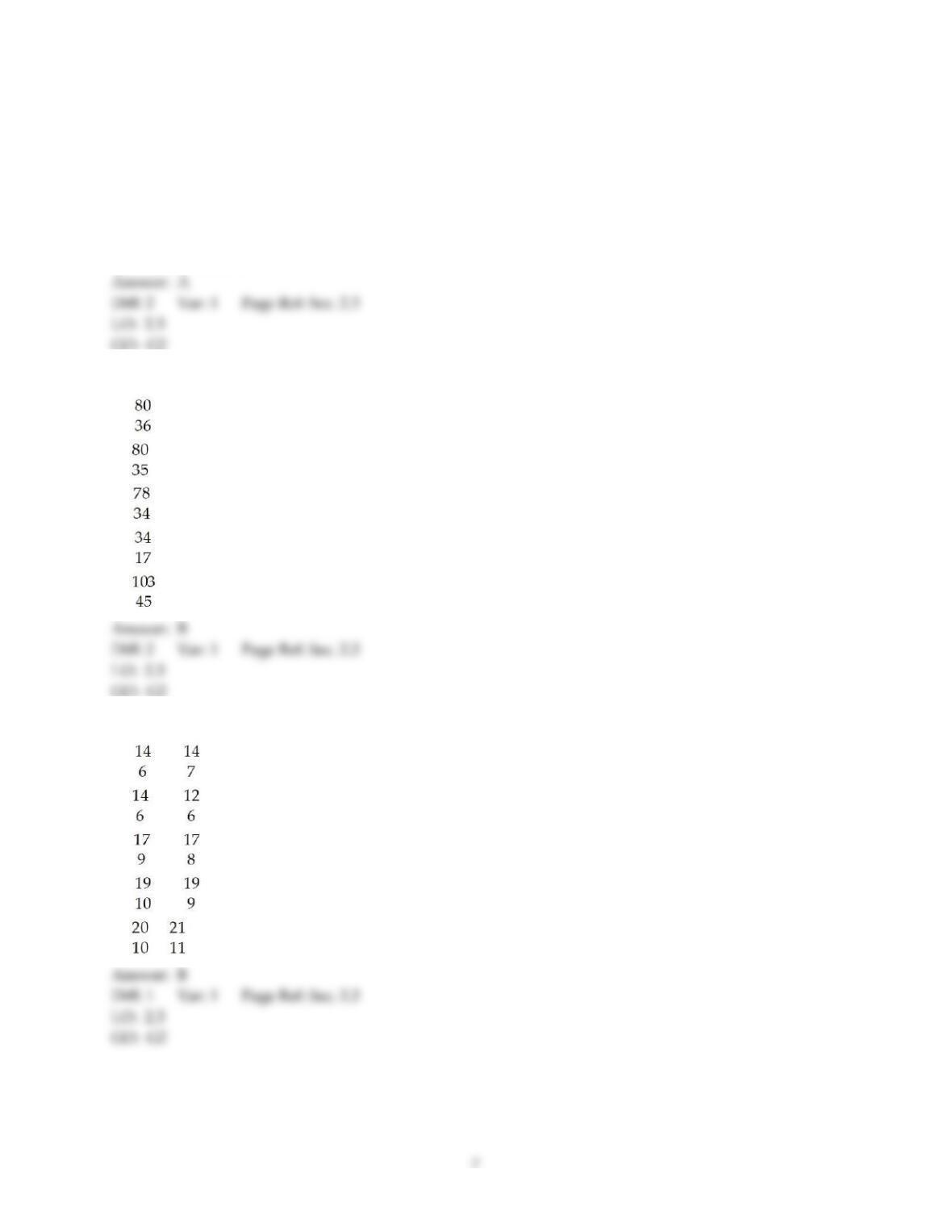
24) Which combination of protons, neutrons, and electrons is correct for the isotope of copper,
63
29
Cu
A) 29 p+, 34 n°, 29 e–
B) 29 p+, 29 n°, 63 e–
C) 63 p+, 29 n°, 63 e–
D) 34 p+, 29 n°, 34 e–
E) 34 p+, 34 n°, 29 e–
25) Which isotope has 45 neutrons?
A) Kr
B) Br
C) Se
D) Cl
E) Rh
26) Which pair of atoms constitutes a pair of isotopes of the same element?
A) X X
B) X X
C) X X
D) X X
E) X X
27) Which isotope has 36 electrons in an atom?
A) Kr
B) Br
C) Se
D) Cl
E) Hg
28) Isotopes are atoms that have the same ________ but differing ________.
A) atomic masses, charges
B) mass numbers, atomic numbers
C) atomic numbers, mass numbers
D) charges, atomic masses
E) mass numbers, charges
29) The nucleus of an atom does not contain ________.
A) protons
B) protons or neutrons
C) neutrons
D) subatomic particles
E) electrons
30) The subatomic particles located in the nucleus with no overall charges are ________.
A) electrons
B) protons
C) neutrons
D) protons and neutrons
E) protons, neutrons, and electrons
9
31) Different isotopes of a particular element contain the same number of ________.
A) protons
B) neutrons
C) protons and neutrons
D) protons, neutrons, and electrons
E) subatomic particles
32) Different isotopes of a particular element contain different numbers of ________.
A) protons
B) neutrons
C) protons and neutrons
D) protons, neutrons, and electrons
E) None of the above is correct.
33) In the symbol shown below, x = ________.
C
A) 7
B) 13
C) 12
D) 6
E) not enough information to determine
34) In the symbol below, X = ________.
X
A) N
B) C
C) Al
D) K
E) not enough information to determine
35) In the symbol below, x = ________.

10
O
A) 17
B) 8
C) 6
D) 7
E) not enough information to determine
36) In the symbol below, x is ________.
C
A) the number of neutrons
B) the atomic number
C) the mass number
D) the isotope number
E) the elemental symbol
37) Which one of the following basic forces is so small that it has no chemical significance?
A) weak nuclear force
B) strong nuclear force
C) electromagnetism
D) gravity
E) Coulomb’s law
38) Gravitational forces act between objects in proportion to their ________.
A) volumes
B) masses
C) charges
D) polarizability
E) densities
39) Silver has two naturally occurring isotopes with the following isotopic masses:
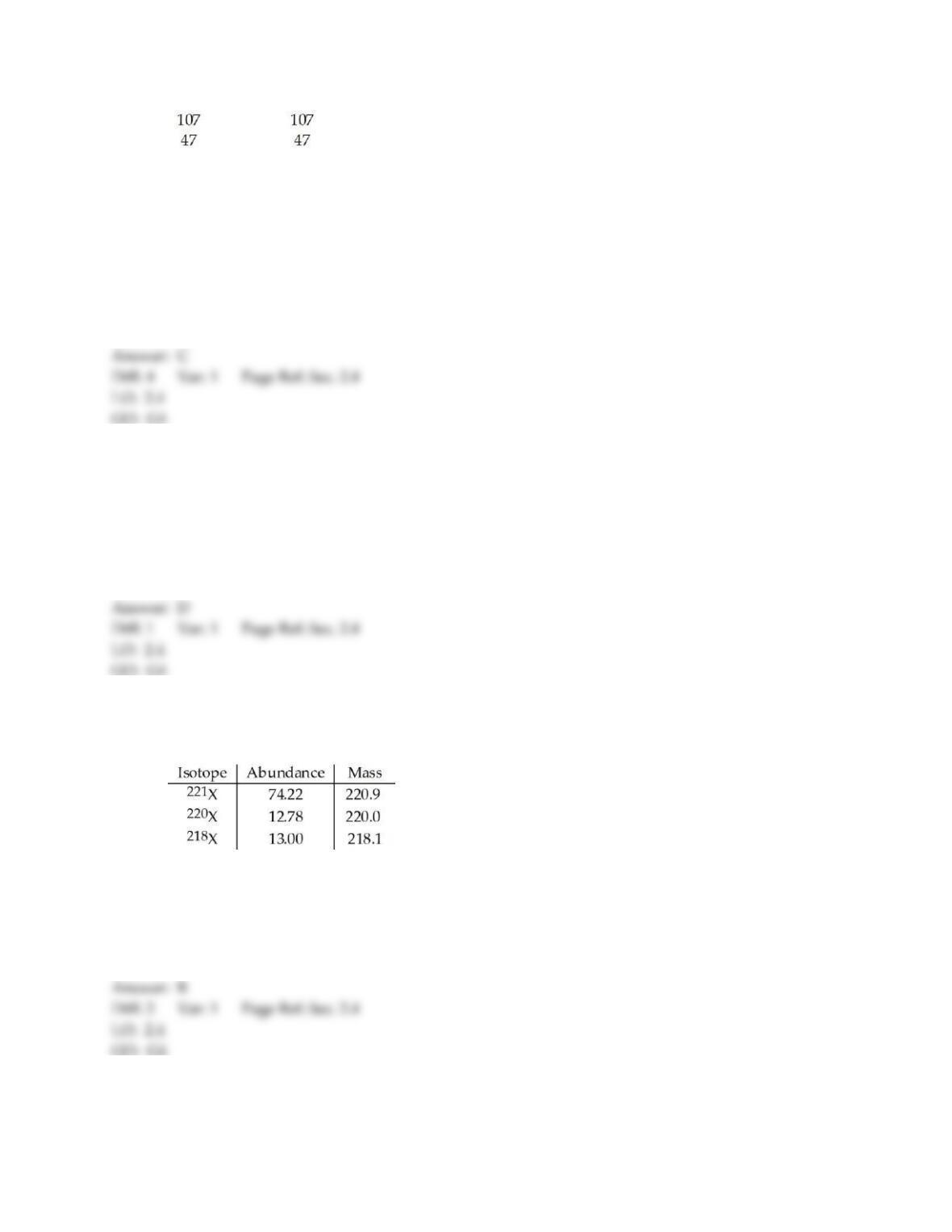
11
Ar Ar
106.90509 108.9047
The average atomic mass of silver is 107.8682 amu. The fractional abundance of the lighter of the two
isotopes is ________.
A) 0.24221
B) 0.48168
C) 0.51835
D) 0.75783
E) 0.90474
40) The atomic mass unit is presently based on assigning an exact integral mass (in amu) to an isotope of
________.
A) hydrogen
B) oxygen
C) sodium
D) carbon
E) helium
41) The element X has three naturally occurring isotopes. The masses (amu) and % abundances of the
isotopes are given in the table below. The average atomic mass of the element is ________ amu.
A) 219.7
B) 220.4
C) 220.42
D) 218.5
E) 221.0
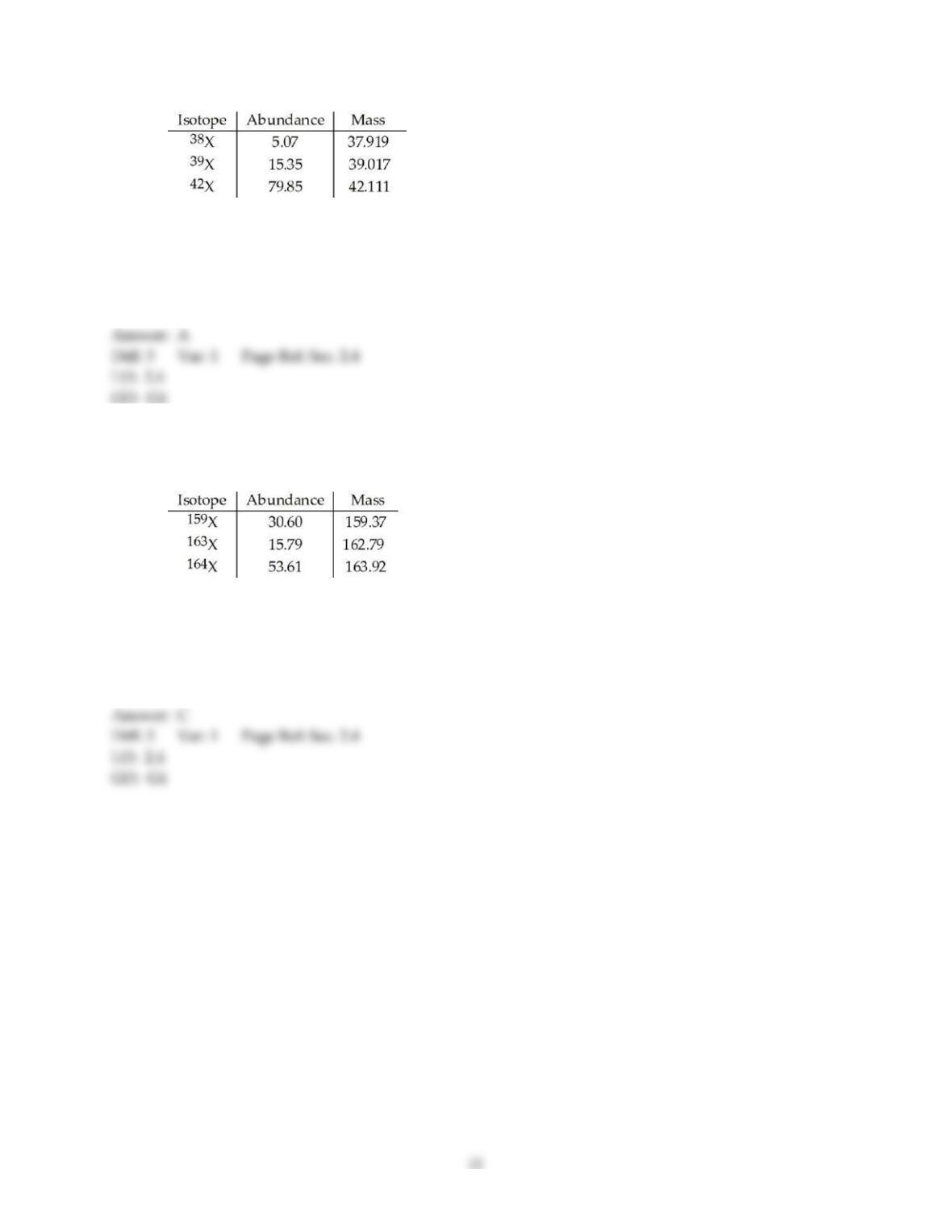
42) Element X has three naturally occurring isotopes. The masses (amu) and % abundances of the isotopes
are given in the table below. The average atomic mass of the element is ________ amu.
A) 41.54
B) 39.68
C) 39.07
D) 38.64
E) 33.33
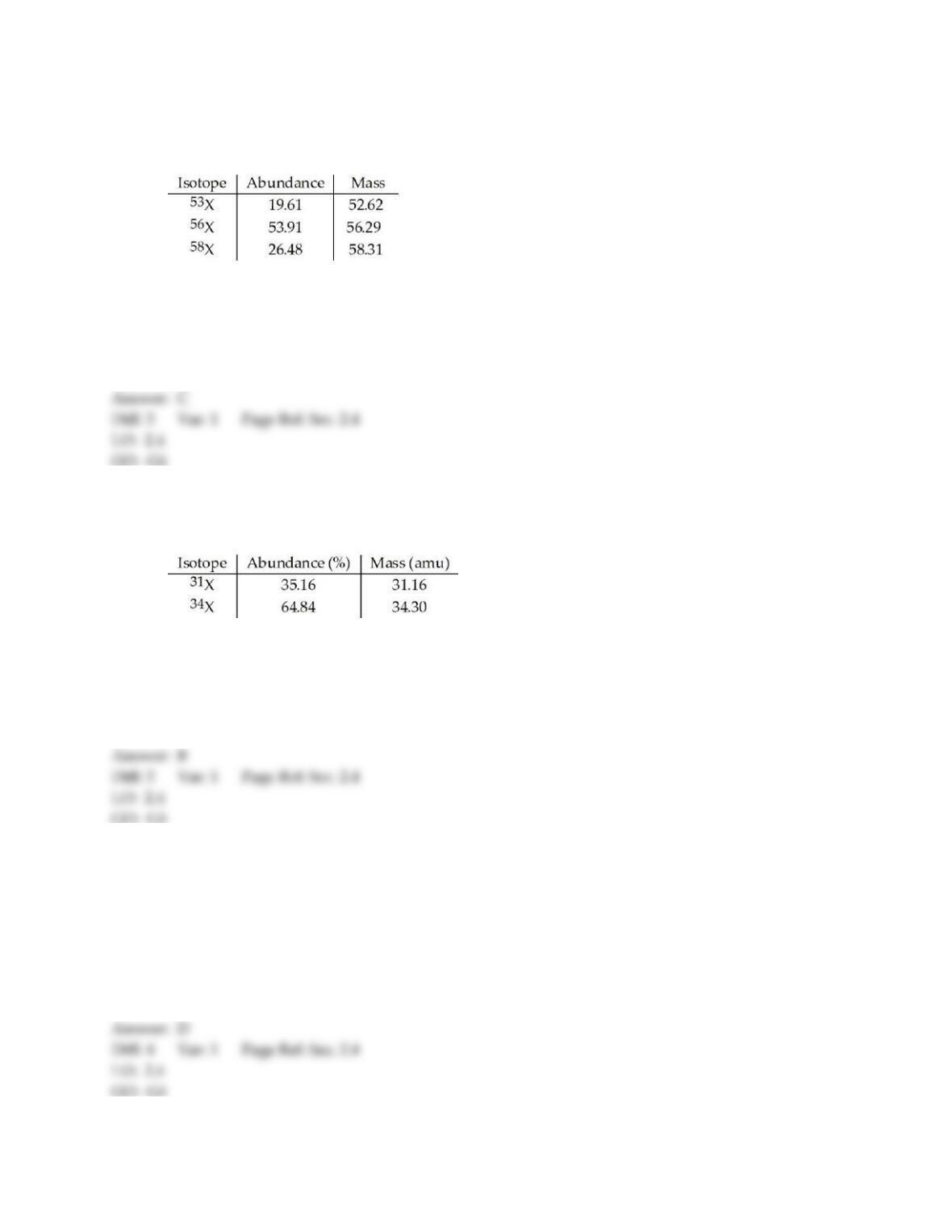
43) The element X has three naturally occurring isotopes. The isotopic masses (amu) and % abundances of
the isotopes are given in the table below. The average atomic mass of the element is ________ amu.
A) 161.75
B) 162.03
C) 162.35
D) 163.15
E) 33.33
13
44) The element X has three naturally occurring isotopes. The isotopic masses (amu) and % abundances of
the isotopes are given in the table below. The average atomic mass of the element is ________ amu.
A) 33.33
B) 55.74
C) 56.11
D) 57.23
E) 56.29
45) The element X has two naturally occurring isotopes. The masses (amu) and % abundances of the
isotopes are given in the table below. The average atomic mass of the element is ________ amu.
A) 30.20
B) 33.20
C) 34.02
D) 35.22
E) 32.73
46) The average atomic weight of copper, which has two naturally occurring isotopes, is 63.5. One of the
isotopes has an atomic weight of 62.9 amu and constitutes 69.1% of the copper isotopes. The other isotope
has an abundance of 30.9%. The atomic weight (amu) of the second isotope is ________ amu.
A) 63.2
B) 63.8
C) 64.1
D) 64.8
E) 28.1
47) The element X has three naturally occurring isotopes. The masses (amu) and % abundances of the
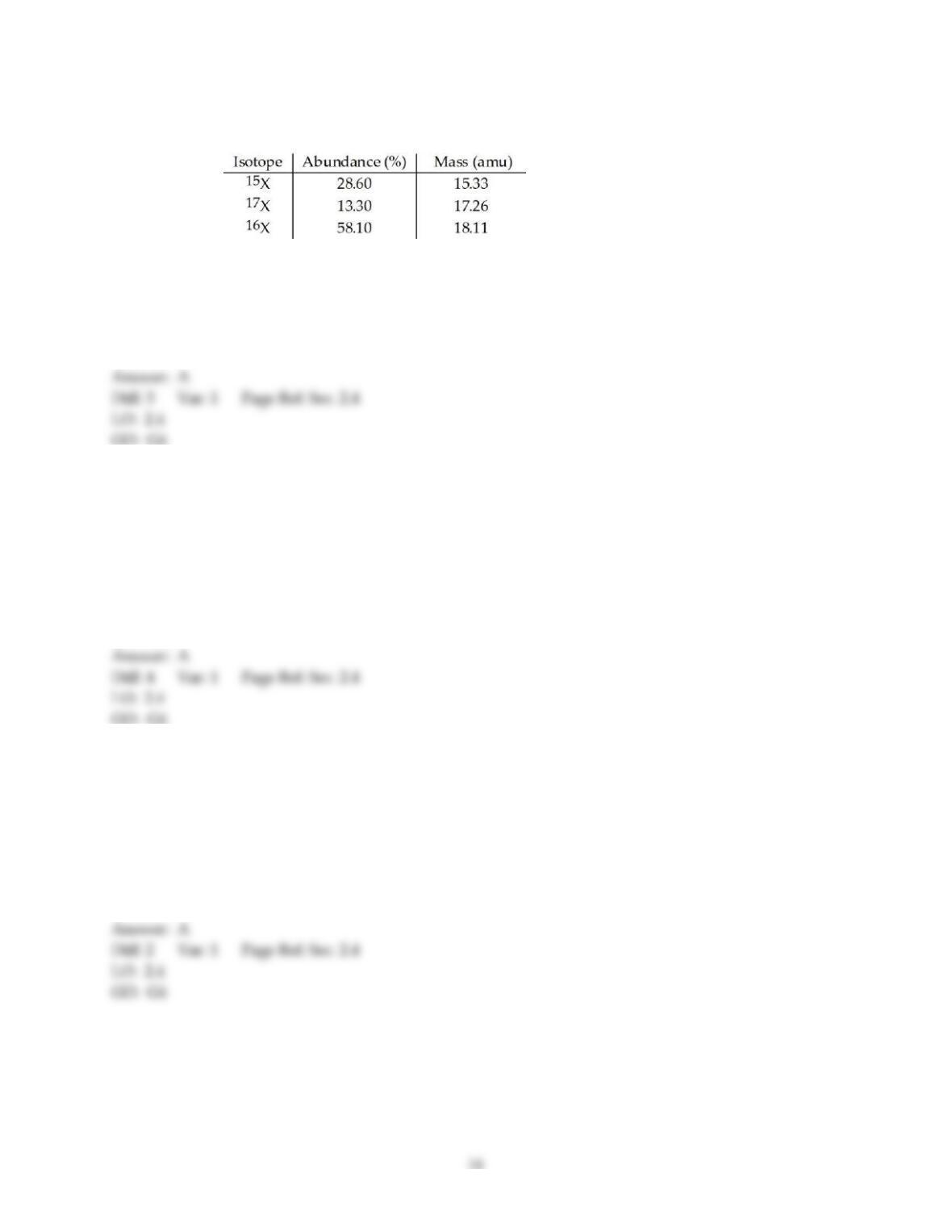
isotopes are given in the table below. The average atomic mass of the element is ________ amu.
A) 17.20
B) 16.90
C) 17.65
D) 17.11
E) 16.90
48) Vanadium has two naturally occurring isotopes, 50V with an atomic mass of 49.9472 amu and 51V
with an atomic mass of 50.9440. The atomic weight of vanadium is 50.9415. The percent abundances of
the vanadium isotopes are ________% 50V and ________% 51V.
A) 0.25, 99.75
B) 99.75, 0.25
C) 49, 51
D) 1.0, 99
E) 99, 1.0
49) An unknown element is found to have three naturally occurring isotopes with atomic masses of
35.9675 (0.337%), 37.9627 (0.063%), and 39.9624 (99.600%). Which of the following is the unknown
element?
A) Ar
B) K
C) Cl
D) Ca
E) None of the above could be the unknown element.
50) In the periodic table, the elements are arranged in ________.
A) alphabetical order
B) order of increasing atomic number
C) order of increasing metallic properties
D) order of increasing neutron content
E) reverse alphabetical order
51) Elements ________ exhibit similar physical and chemical properties.
A) with similar chemical symbols
B) with similar atomic masses
C) in the same period of the periodic table
D) on opposite sides of the periodic table
E) in the same group of the periodic table
52) Which pair of elements would you expect to exhibit the greatest similarity in their physical and
chemical properties?
A) H, Li
B) Cs, Ba
C) Ca, Sr
D) Ga, Ge
E) C, O
53) Which pair of elements would you expect to exhibit the greatest similarity in their physical and
chemical properties?
A) O, S
B) C, N
C) K, Ca
D) H, He
E) Si, P
54) Which pair of elements would you expect to exhibit the greatest similarity in their physical and
chemical properties?
A) As, Br
B) Mg, Al
C) I, At
D) Br, Kr
E) N,O
55) The elements in groups 1A, 6A, and 7A are called ________, respectively.
A) alkaline earth metals, halogens, and chalcogens
B) alkali metals, chalcogens, and halogens
C) alkali metals, halogens, and noble gases
D) alkaline earth metals, transition metals, and halogens
E) halogens, transition metals, and alkali metals
56) Which pair of elements below should be the most similar in chemical properties?
A) C and O
B) B and As
C) I and Br
D) K and Kr
E) Cs and He
57) An element in the upper right corner of the periodic table ________.
A) is either a metal or metalloid
B) is definitely a metal
C) is either a metalloid or a nonmetal
D) is definitely a nonmetal
E) is definitely a metalloid
58) An element that appears in the lower left corner of the periodic table is ________.
A) either a metal or metalloid
B) definitely a metal
C) either a metalloid or a nonmetal
D) definitely a nonmetal
E) definitely a metalloid
59) Elements in the same group of the periodic table typically have ________.
A) similar mass numbers
B) similar physical properties only
C) similar chemical properties only
D) similar atomic masses
E) similar physical and chemical properties
60) Which one of the following molecular formulas is also an empirical formula?
A) C6H6O2
B) C2H6SO
C) H2O2
D) H2P4O6
E) C6H6
61) Which compounds do not have the same empirical formula?
A) C2H2, C6H6
B) CO, CO2
C) C2H4, C3H6
D) C2H4O2, C6H12O6
E) C2H5COOCH3, CH3CHO
62) Of the choices below, which one is not an ionic compound?
A) PCl5
B) MoCl6
C) RbCl
D) PbCl2
E) NaCl
63) Which type of formula provides the most information about a compound?
A) empirical
B) molecular
C) simplest
D) structural
E) chemical
64) A molecular formula always indicates ________.
A) how many of each atom are in a molecule
B) the simplest whole-number ratio of different atoms in a compound
C) which atoms are attached to which in a molecule
D) the isotope of each element in a compound
E) the geometry of a molecule
65) An empirical formula always indicates ________.
A) which atoms are attached to which in a molecule
B) how many of each atom are in a molecule
C) the simplest whole-number ratio of different atoms in a compound
D) the isotope of each element in a compound
E) the geometry of a molecule
66) The molecular formula of a compound is always ________ the empirical formula.
A) more complex than
B) different from
C) an integral multiple of
D) the same as
E) simpler than
67) Formulas that show how atoms are attached in a molecule are called ________.
A) molecular formulas
B) ionic formulas
C) empirical formulas
D) diatomic formulas
E) structural formulas
68) Of the following, ________ contains the greatest number of electrons.
A) P3+
B) P
C) P2-
D) P3-
E) P2+
69) Which species has 54 electrons?
A) Xe+
B) Te2-
C) Sn2+
D) Cd
E) Xe2+
70) Which species has 16 protons?
A) 31P
B) 34S2-
C) 36Cl
D) 80Br–
E) 16O
71) Which species has 18 electrons?
A) 39K
B) 32S2-
C) 35Cl
D) 27Al3+
E) 64Cu2+