General, Organic & Biological Chemistry, 5e (Timberlake)
Chapter 19 Amino Acids and Proteins
19.1 Multiple-Choice Questions
1) Which of the following is NOT a function of proteins?
A) provide structural components
B) stores the genetic information of a living organism
C) movement of muscles
D) catalyze reactions in the cells
E) transport substances through the bloodstream
2) Collagen, a protein found in tendons and cartilage, would be classified as a ________ protein.
A) catalytic
B) structural
C) transport
D) storage
E) hormone
3) Wool is primarily made up of
A) protein.
B) carbohydrate.
C) globin.
D) triacylglycerols.
E) enkephalin.
4) Sucrase, the protein that facilitates the hydrolysis of sucrose, would be classified as a ________ protein.
A) transport
B) hormonal
C) catalytic
D) structural
E) contractile
5) The structural formulas of amino acids are the same EXCEPT for the
A) carboxyl group.
B) alpha carbon.
C) amino group.
D) side (R) group.
E) hydrogen bonding.
6) The following amino acid R group chain is
– C HCH3
|
CH3
A) polar.
B) hydrophobic.
C) hydrophilic.
D) acidic.
E) basic.
7) Which of the following would be most likely to be deficient in at least one essential amino acid?
A) eggs
B) milk
C) beans
D) steak
E) ham
8) Amino acids that are not synthesized in the body and must be obtained from the diet are called
A) essential.
B) polar.
C) nonpolar.
D) complete.
E) incomplete.
3
9) Methionine is an amino acid that contains
A) a sulfur atom.
B) a chlorine atom.
C) a sodium atom.
D) a phenyl ring.
E) a heterocyclic ring.
10) A completely vegetarian diet will contain all the essential amino acids if it includes
A) wheat and rice.
B) rice and beans.
C) almonds and walnuts.
D) corn and beans.
E) wheat and corn.
11) Glycine is the only naturally occurring amino acid that is
A) negatively charged.
B) positively charged.
C) neutral.
D) in the L- form.
E) achiral.
12) The side chain for histidine is classified as a ________ R group.
A) basic
B) neutral
C) acidic
D) nonpolar
E) polar
13) A basic amino acid has an R group that contains
A) an amine group.
B) a carboxyl group.
C) a methyl group.
D) an alcohol group.
E) a thiol group.
14) At a pH > 9, the zwitterion of glycine (pI=6.0) will have
A) a net positive charge.
B) a net negative charge.
C) an overall charge of zero.
D) low solubility in water.
E) a negative charge on the nitrogen.
15) At a pH < 5, the zwitterion for alanine (pI = 6) will have
A) a net positive charge.
B) a net negative charge.
C) an overall charge of zero.
D) low solubility in water.
E) a negative charge on the carboxyl group.
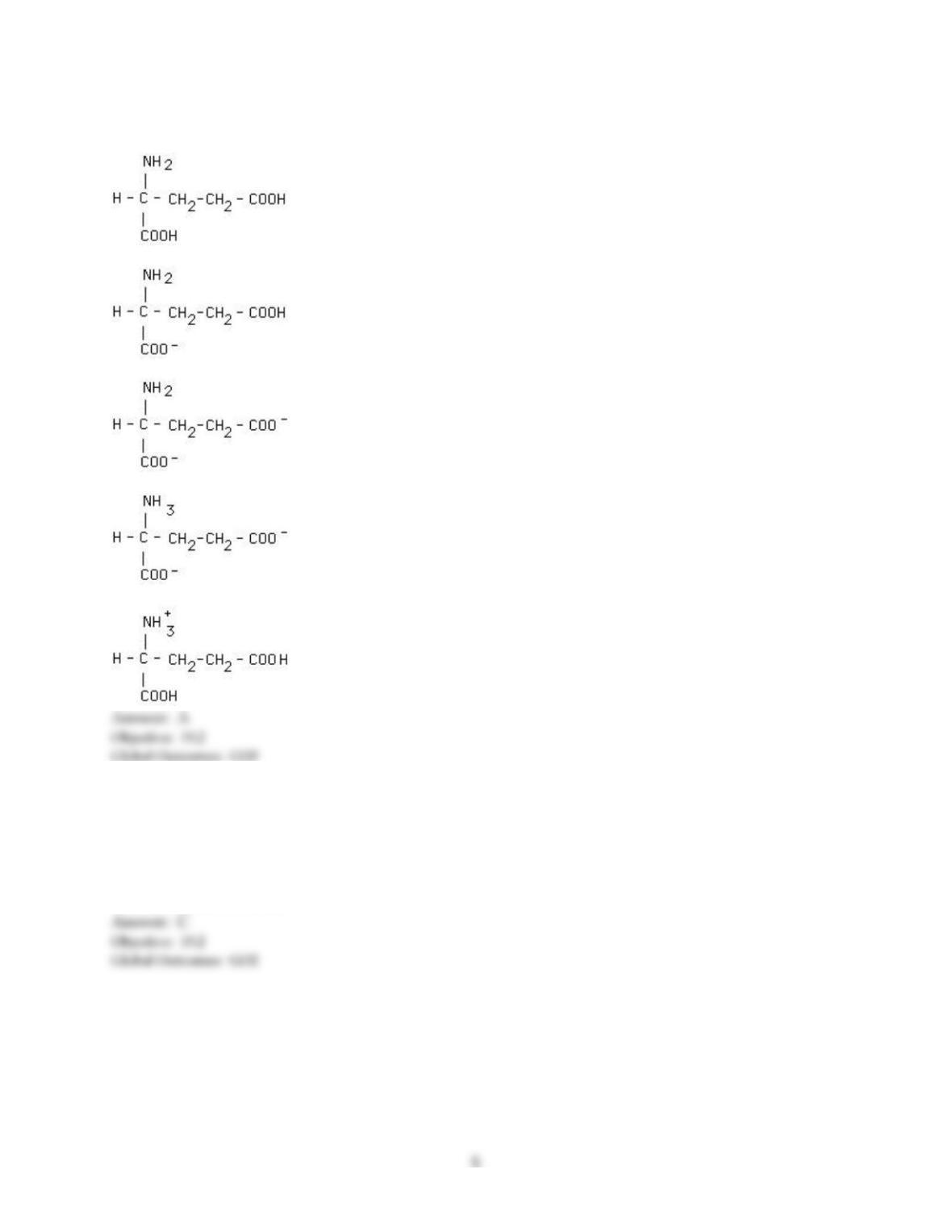
16) What is the structural formula of glutamic acid (pI = 3.2) at pH = 1?
A)
B)
C)
D)
E)
17) Consider a mixture of the amino acids lysine (pI = 9.7), tyrosine (pI = 5.7), and glutamic acid (pI = 3.2)
at a pH 5.7 that is subjected to an electric current. ________ will migrate towards the positive electrode(+).
A) Lysine
B) Tyrosine
C) Glutamic acid
D) All of the amino acids
18) Consider a mixture of the amino acids lysine (pI = 9.7), tyrosine (pI = 5.7), and glutamic acid (pI = 3.2)
at a pH 5.7 that is subjected to an electric current. ________ will remain stationary.
A) Lysine
B) Tyrosine
C) Glutamic acid
D) All of the amino acids
19) In a typical amino acid zwitterion, the carboxylate end is
A) positively charged.
B) negatively charged.
C) neutral.
D) soluble in a nonpolar solvent.
E) attached to an amine.
20) The R group for serine is – CH2OH. As a zwitterion, serine has the structural formula
A) CH2OH
|
NH2 C HCOOH
B) CH2OH
|
NH2 C HCOO–
C) CH2O–
+ |
N H3 C HCOOH
D) CH2OH
+ |
N H3 C HCOOH
E) CH2OH
|
H3 C HCOO–
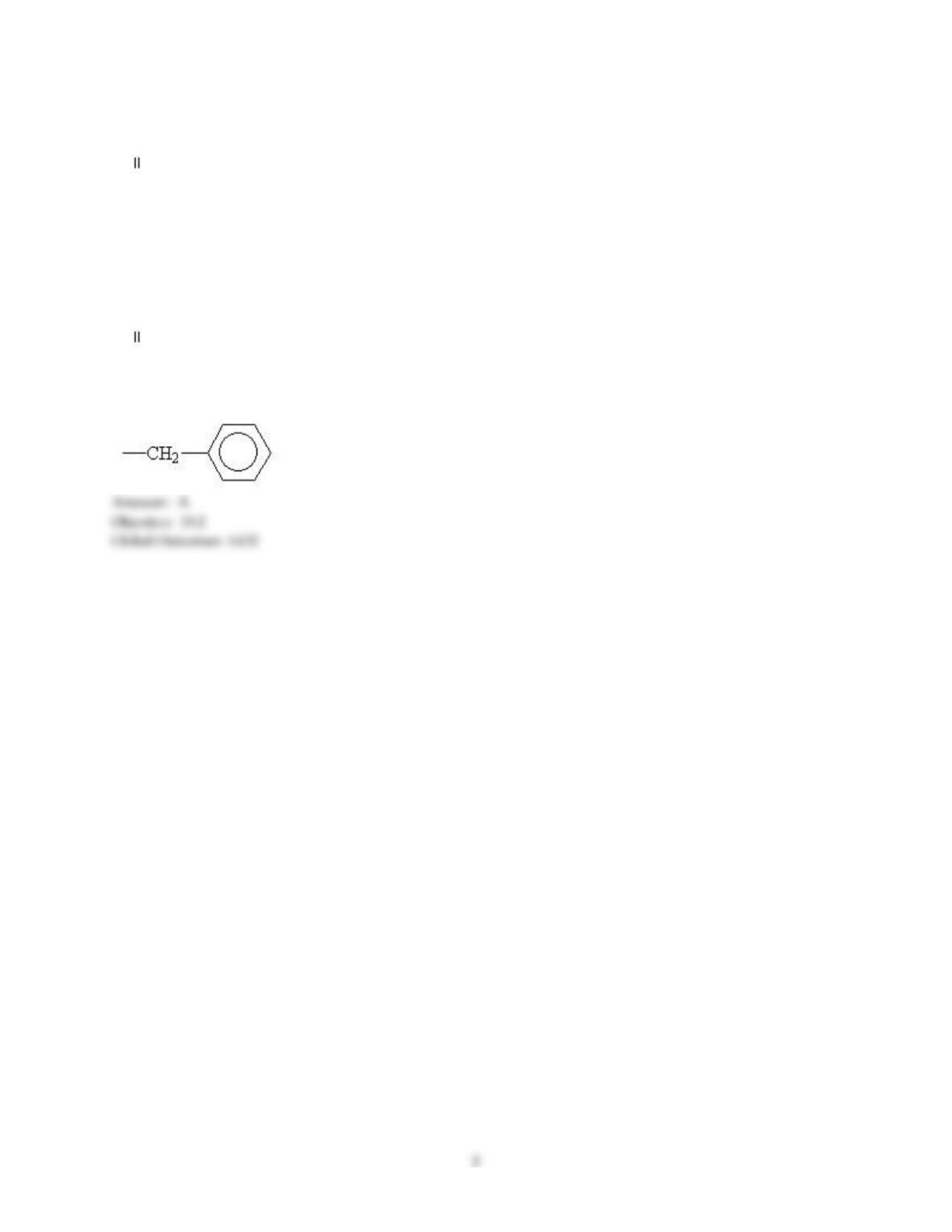
21) Which of the following functional groups of an amino acid would be in the ionized state at high pH?
A) O
-COH
B) –CH2OH
C) –CH3
D) O
-CNH2
E)
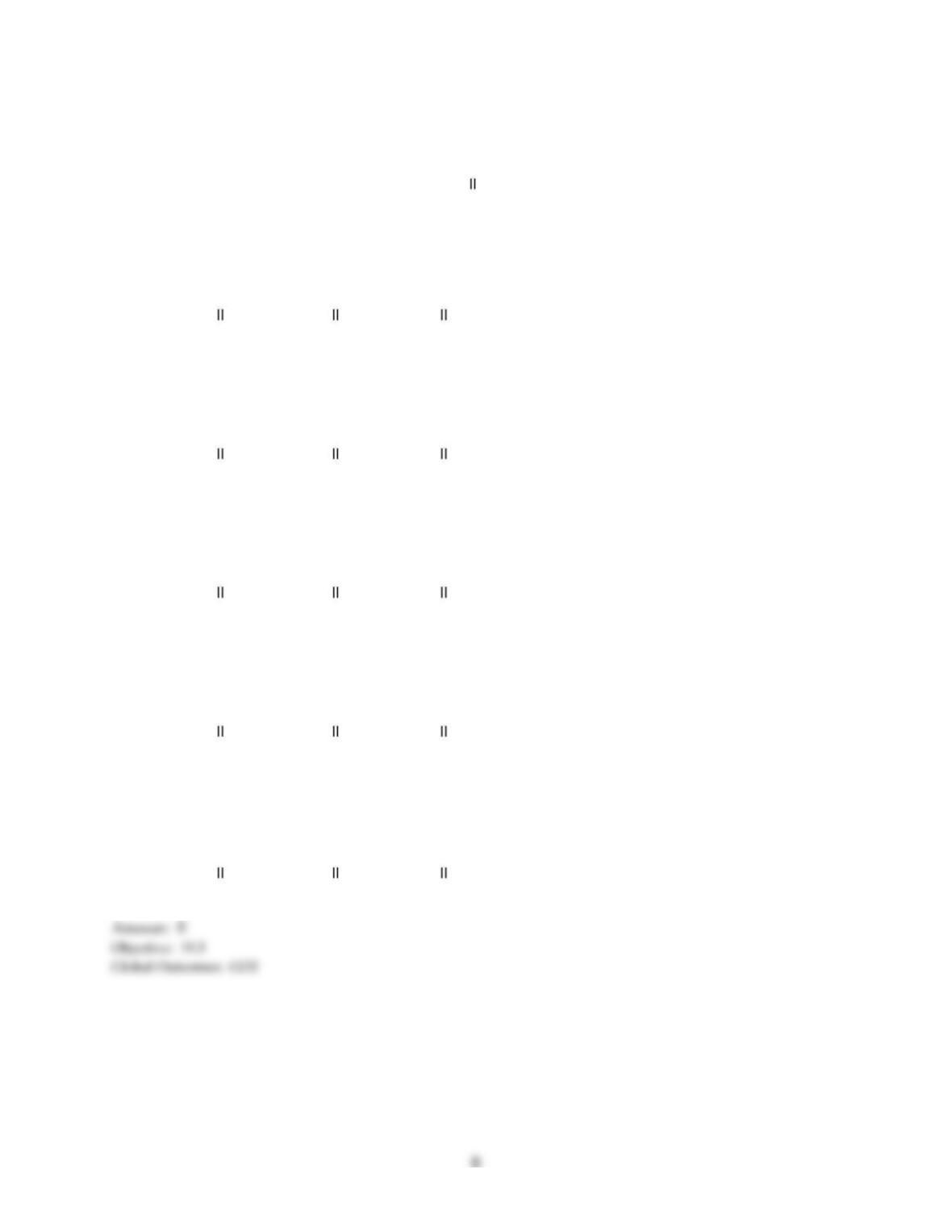
22) Which of the following is the correct structure for Ser-Ala-Asp? The appropriate side chains look like
this.
O
Ala: –CH3; Ser: –CH2OH; Asp: –CH2COH
A) OH COOH
| |
CH3 O CH2 O CH2 O
| | |
H3 N+ C H – C – NH – C H – C – NH – C H – C O–
B) COOH OH
| |
CH2 O CH3 O CH2 O
| | |
H3 N+ C H – C – NH – C H – C – NH – C H – C O–
C) OH COOH
| |
CH2 O CH2 O CH3 O
| | |
H3 N+ C H – C – NH – C H – C – NH – C H – C O–
D) COOH OH
| |
CH2 O CH2 O CH3 O
| | |
H3 N+ C H – C – NH – C H – C – NH – C H – C O–
E) OH COO–
| |
CH2 O CH3 O CH2 O
| | |
H3 N+ C H – C – NH – C H – C – NH – C H – C O–
23) The peptide bonds that combine amino acids in a protein are
A) ester bonds.
B) ether bonds.
C) amide bonds.
D) glycosidic bonds.
E) sulfide bonds.
24) In the peptide Ala-Try-Gly-Phe, the N-terminal amino acid is
A) alanine.
B) phenylalanine.
C) tryptophan.
D) aspartic acid.
E) glycine.
25) In the peptide Ser-Cys-Ala-Gly, the C-terminal end is
A) serine.
B) serotonin.
C) glycine.
D) glycerine.
E) alanine.
26) Which of the following shows all of the tripeptides that can be formed from one molecule each of
glycine (Gly), valine (Val), and leucine (Leu)?
A) Gly-Val-Leu, Gly-Leu-Val, Val-Leu-Gly, Val-Gly-Leu, Leu-Gly-Val, Leu-Val-Gly
B) Gly-Val-Leu, Gly-Leu-Val, Leu-Gly-Val
C) Val-Gly-Leu, Gly-Val-Leu, Gly-Leu-Val, Leu-Gly-Val
D) Val-Gly-Leu, Gly-Leu-Val
E) Gly-Val-Leu
27) Which of the following shows all of the tripeptides that can be formed from one molecule each of
lysine (Lys), threonine (Thr), and histidine (His)?
A) Lys-Thr-His
B) Lys-Thr-His, Lys-His-Thr, His-Thr-Lys, His-Lys-Thr, Thr-Lys-His, Thr-His-Lys
C) Lys-Thr-His, Lys-His-Thr, His-Lys-Thr, Thr-His-Lys
D) Lys-Thr-His, Lys-His-Thr, His-Lys-Thr
E) Lys-Thr-His, Lys-His-Thr
28) A peptide bond contains which kind of functional group?
A) alcohol
B) amine
C) amide
D) carboxylic acid
E) ketone
29) A chain made of more than 50 amino acids is usually referred to as a(n)
A) peptide.
B) protein.
C) enzyme.
D) globulin.
E) hormone.
30) Which of the following is an example of a secondary protein structure?
A) dipeptide
B) triglyceride
C) a helix
D) amino acid
E) fatty acid
31) The α helix of the secondary structure of a protein is held together by ________ between two widely
separated parts of a protein chain.
A) hydrogen bonds
B) disulfide bridges
C) salt bridges
D) hydrophilic interactions
E) hydrophobic interactions
32) In the β-pleated sheet secondary structure of a protein, two or more amino acid sequences in separate
parts of the protein are held together
A) in a coil, by hydrogen bonding.
B) in random order, due to hydrophobic interactions.
C) in a triple helix.
D) in a double helix.
E) in a zig-zag conformation, by hydrogen bonding.
33) Enkephalins are polypeptides that have
A) a sweet taste.
B) a bitter taste.
C) extra caloric value.
D) pain-killing properties.
E) hormone activity.
34) Enkephalins, naturally produced opiates in the body, are found in
A) muscles and bone tissue.
B) brain and kidney tissue.
C) thalamus and spinal cord tissue.
D) heart and lung tissue.
E) pancreas and liver tissue.
12
35) The interactions that are important in the secondary structure of a protein are
A) hydrogen bonds.
B) hydrophobic interactions.
C) disulfide bonds.
D) salt bridges.
E) peptide bonds.
36) Which of the following is a secondary protein structure?
A) α helix
B) Ser-Met-Ala-Gly-Ile
C) disulfide bond
D) salt bridges
E) hydrophobic interactions
37) The secondary structure of collagen is distinguished by
A) single α helix strands.
B) double α helix strands.
C) many α helixes wound into fibrils.
D) a braided triple helix.
E) many glycoside links.
38) In insulin, two peptide chains are held together in a single unit by
A) disulfide bridges.
B) hydrogen bonds.
C) salt bridges.
D) a prosthetic group.
E) a β-pleated sheet.
39) Hemoglobin is an example of a protein with
A) primary structure only.
B) two protein chains held together.
C) a globular structure.
D) primarily a β-pleated sheet structure.
E) primarily an α helix structure.
40) The heme in hemoglobin is a(n)
A) protein chain.
B) small molecule within a protein.
C) helix area in the hemoglobin molecule.
D) pleated sheet area in the hemoglobin molecule.
E) oxygen molecule within the hemoglobin molecule.
41) Within hemoglobin, the heme functions as
A) a disulfide bridge.
B) an oxygen carrier.
C) a reducing agent.
D) an α subunit.
E) one of the four protein subunits.
42) Hemoglobin has a total of ________ protein chains in its quaternary structure.
A) one
B) two
C) three
D) four
E) five
43) The fibrous protein responsible for the structure of hair and wool is
A) keratin.
B) collagen.
C) endorphin.
D) myosin.
E) casein.