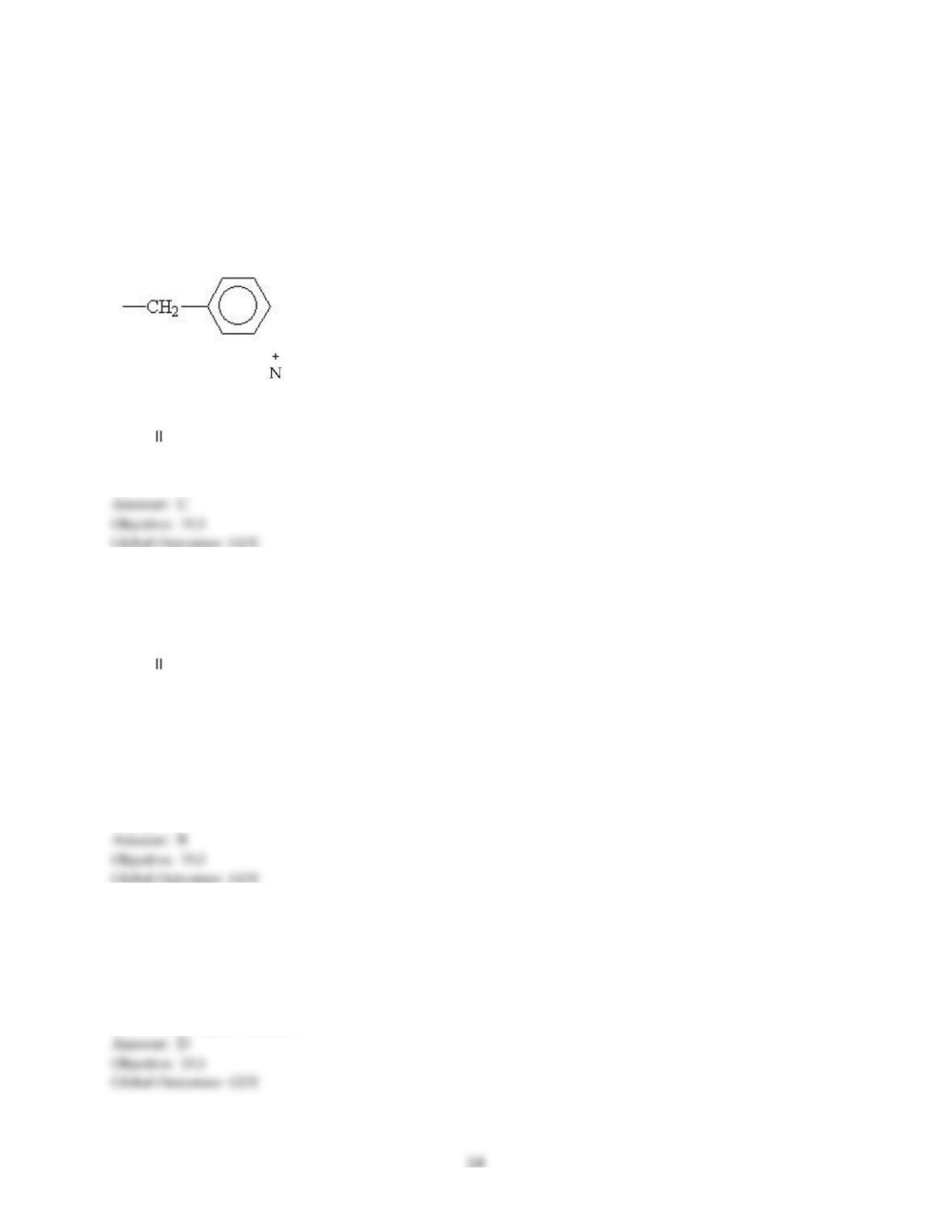
44) Which R group would most likely be found in a hydrophobic area of the tertiary structure of a
globular protein?
A) –CH2OH
B) –CH2COO–
C)
D) –CH2CH2CH2CH2H3
E) O
–CH2 C NH2
45) What type of interaction would you expect between the following R groups in the tertiary structure of
a protein?
O
–CH2 C O- and –CH2CH2CH2CH2NH3+
A) disulfide bonds
B) salt bridges
C) hydrogen bonds
D) hydrophobic interactions
E) peptide bonds
46) Disulfide bonds in a protein chain connect
A) an amine and a carboxylic acid group.
B) an alcohol and a carboxylic acid group.
C) tryptophan and alanine residues.
D) two cysteine residues.
E) two asparagine residues.
15
47) What kinds of interactions are NOT part of tertiary protein structure?
A) peptide bonds
B) disulfide bonds
C) hydrophilic interactions
D) salt bridges
E) hydrophobic interactions
48) The function of myoglobin is to
A) carry vitamins in the blood.
B) carry oxygen in the blood.
C) support the skeletal muscles.
D) carry oxygen in the muscle.
E) provide strength in cartilage.
49) In sickle-cell anemia, the hemoglobin molecules
A) come apart into separate chains.
B) enlarge to twice normal size.
C) clump together into insoluble fibers.
D) dissolve in the plasma.
E) undergo crenation.
50) Acids and bases denature a protein by disrupting
A) peptide bonds and ionic bonds.
B) amide bonds and alkene bonds.
C) hydrophobic interactions and peptide bonds.
D) ionic bonds and hydrophobic interactions.
E) ionic bonds and hydrogen bonds.
51) Heat denatures a protein by disrupting
A) ionic bonds and peptide bonds.
B) hydrophobic bonds and hydrogen bonds.
C) peptide bonds and hydrophobic bonds.
D) disulfide bonds and peptide bonds.
E) hydrogen bonds and disulfide bonds.
52) Denaturation of a protein
A) changes the primary structure of a protein.
B) disrupts the secondary, tertiary, or quaternary structure of a protein.
C) is always irreversible.
D) hydrolyzes peptide bonds.
E) can only occur in a protein with quaternary structure.
53) One heavy metal that can cause denaturation of a protein is
A) silver.
B) sodium.
C) barium.
D) iron.
E) calcium.
54) Heavy metals denature proteins by
A) releasing amino acids.
B) disrupting hydrophobic interactions.
C) changing the pH of the protein solution.
D) changing the temperature of the protein solution.
E) disrupting disulfide bonds.
55) An acid can denature a protein by
A) agitating the protein chains.
B) disrupting hydrogen bonds between R groups chains.
C) disrupting hydrophobic interactions within a protein chain.
D) removing helping molecules such as heme.
E) breaking disulfide bridges.
19.2 Bimodal Questions
1) Immunoglobulin, a protein that stimulates immune responses, would be classified as a ________
protein.
A) transport
B) structural
C) storage
D) protection
E) catalytic
2) What amino acids have polar R groups that are attracted to water?
A) hydrophilic
B) hydrophobic
C) nonpolar
D) aromatic
E) hydrocarbon
3) At what pH would you expect valine, an amino acid with a neutral R group, to be in the zwitterionic
form?
A) 1
B) 4
C) 6
D) 10
E) 14
4) Consider the R groups of the following amino acids:
cysteine: –CH2SH; alanine: –CH3; serine: –CH2OH
The name for the dipeptide shown below is ________.
CH3 O CH2OH
| |
NH2 C H – C – NH C HCOOH
A) alanyl-cysteine
B) alanyl-serine
C) seryl-alanine
D) seryl-cysteine
E) serine-alanine
5) The peptide hormone that regulates uterine contractions during labor is ________.
A) oxytocin
B) vasopressin
C) myoglobin
D) an endorphin
E) an enkephalin
6) In an enzyme, the polypeptide chain folds into a compact shape known as the ________ structure.
A) pleated
B) primary
C) secondary
D) tertiary
E) quaternary
7) When two protein chains combine to form an active protein, the structural level is ________.
A) pleated
B) primary
C) secondary
D) tertiary
E) quaternary
8) Hydrophobic interactions help to stabilize the ________ structure(s) of a protein.
A) primary
B) secondary
C) secondary and tertiary
D) tertiary and quaternary
E) secondary and quaternary
9) What process occurs when heat, acids, bases, and heavy metal ions cause a loss of biological function of
a protein?
A) denaturation
B) saponification
C) hydrogenation
D) amidation
E) esterification
10) In digestion, proteins are broken down into amino acids by a(n) ________ reaction.
A) saponification
B) reduction
C) hydrolysis
D) oxidation
E) denaturation
19.3 Short Answer Questions
1) Collagen can be classified as a ________ protein.
2) The protein that transports oxygen in the blood is ________.
3) Proteins that stimulate immune response are known as ________.
4) Amino acids that are not synthesized in the body but must be ingested with the diet are called
________ amino acids.
5) A zwitterion of any amino acid has a net charge of ________.
6) The isoelectric point for any amino acid is the pH at which the amino acid has a net charge of ________.
7) Electrophoresis is a laboratory technique for separating amino acids using their different ________.
8) Write the zwitterion of glycine.
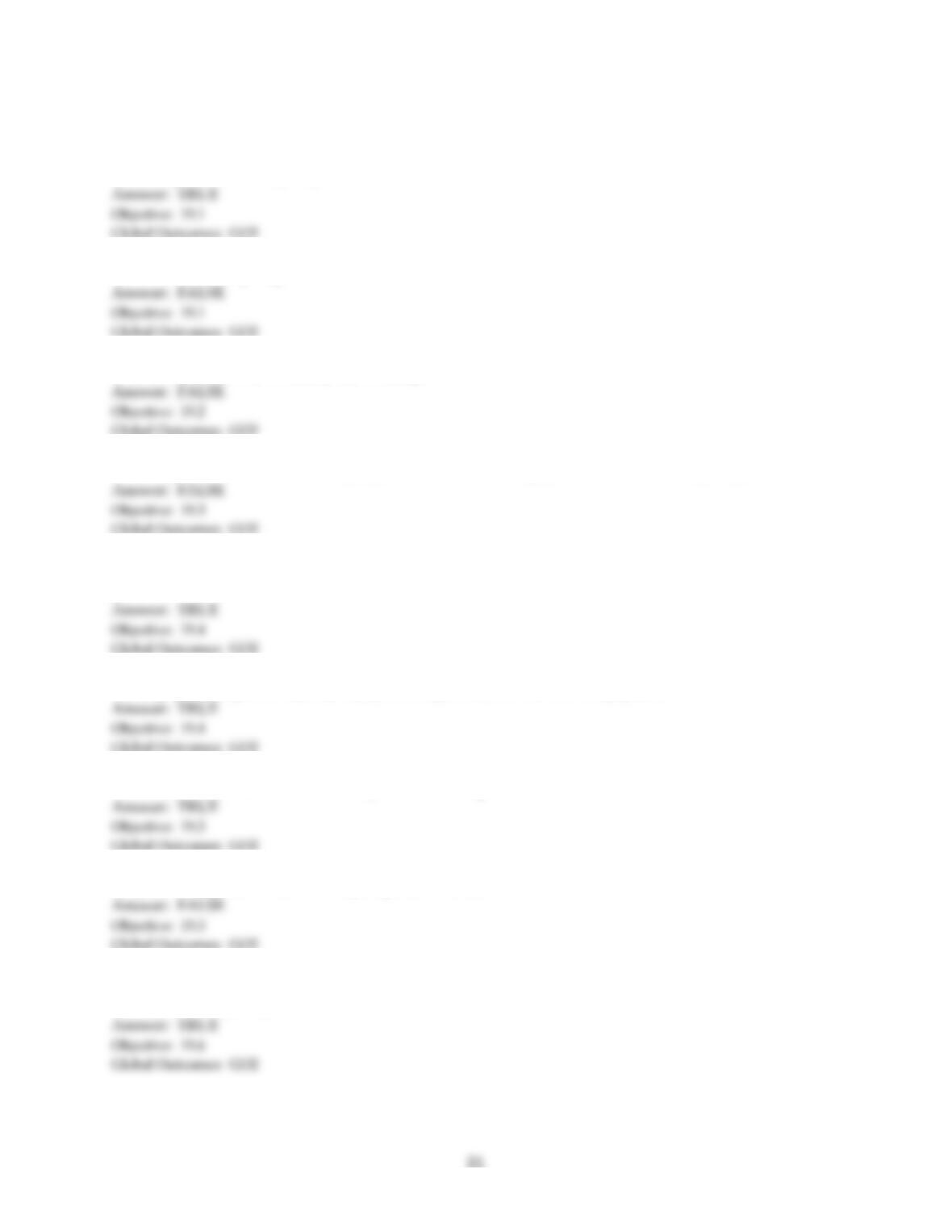
9) Circle the peptide bond in this structure.
19.4 True/False
1) Hemoglobin is a transport protein.
2) Insulin is a transport protein.
3) Zwitterions have an overall positive charge.
4) The dipeptide abbreviated as Gly-Lys is the same as the dipeptide abbreviated as Lys-Gly.
5) Sickle-cell anemia is caused by a change in the primary structure of a subunit of the hemoglobin
protein.
6) The peptide sequence Gly-Gly-Gly gives the primary structure of a tripeptide.
7) Disulfide bonds stabilize the tertiary structure of a protein.
8) Lysine and glutamic acid form hydrophobic interactions.
9) Upon hydrolysis the dipeptide abbreviated as Gly-Lys will yield the same products as the dipeptide
abbreviated as Lys-Gly.

10) Lead ions disrupt hydrophobic interactions.
19.5 Matching Questions
Identify the structural level in each protein.
A) quaternary
B) tertiary
C) secondary structure
D) primary structure
1) The protein folds into a compact structure stabilized by interactions between R groups.
Objective: 19.4, 19.5
Global Outcomes: GO2
2) the combination of two or more protein molecules to form an active protein
Objective: 19.4, 19.5
Global Outcomes: GO2
3) pleated sheet
Objective: 19.4, 19.5
Global Outcomes: GO2
4) the peptide bonds between the amino acids
Objective: 19.4, 19.5
Global Outcomes: GO2
5) the structural level achieved when hydrogen bonds form between the carboxyl group of one amino
acid and the amino group of a different amino acid
Objective: 19.4, 19.5
Global Outcomes: GO2

Classify each protein by function.
A) contractile
B) structural
C) catalytic
D) protection
E) transport
6) trypsin for the hydrolysis of protein
Objective: 19.1
Global Outcomes: GO2
7) lipoproteins in the blood
Objective: 19.1
Global Outcomes: GO2
8) collagen in tendons and cartilage
Objective: 19.1
Global Outcomes: GO2
9) antibodies
Objective: 19.1
Global Outcomes: GO2
10) actin in muscle
Objective: 19.1
Global Outcomes: GO2
24
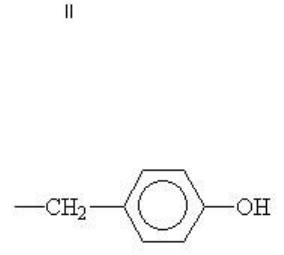
Would an amino acid with the given R group be most likely to be found in the hydrophobic or hydrophilic region of a
protein?
A) both
B) hydrophilic
C) hydrophobic
11) –CH2 – CH – CH3
|
CH3
Objective: 19.5
Global Outcomes: GO2
12) – CH – CH3
|
OH
Objective: 19.5
Global Outcomes: GO2
13) – CH3
Objective: 19.5
Global Outcomes: GO2
14) –CH2CH2SCH3
Objective: 19.5
Global Outcomes: GO2
15) O
–CH2 – C – NH2
Objective: 19.5
Global Outcomes: GO2
16)
Objective: 19.5
Global Outcomes: GO2
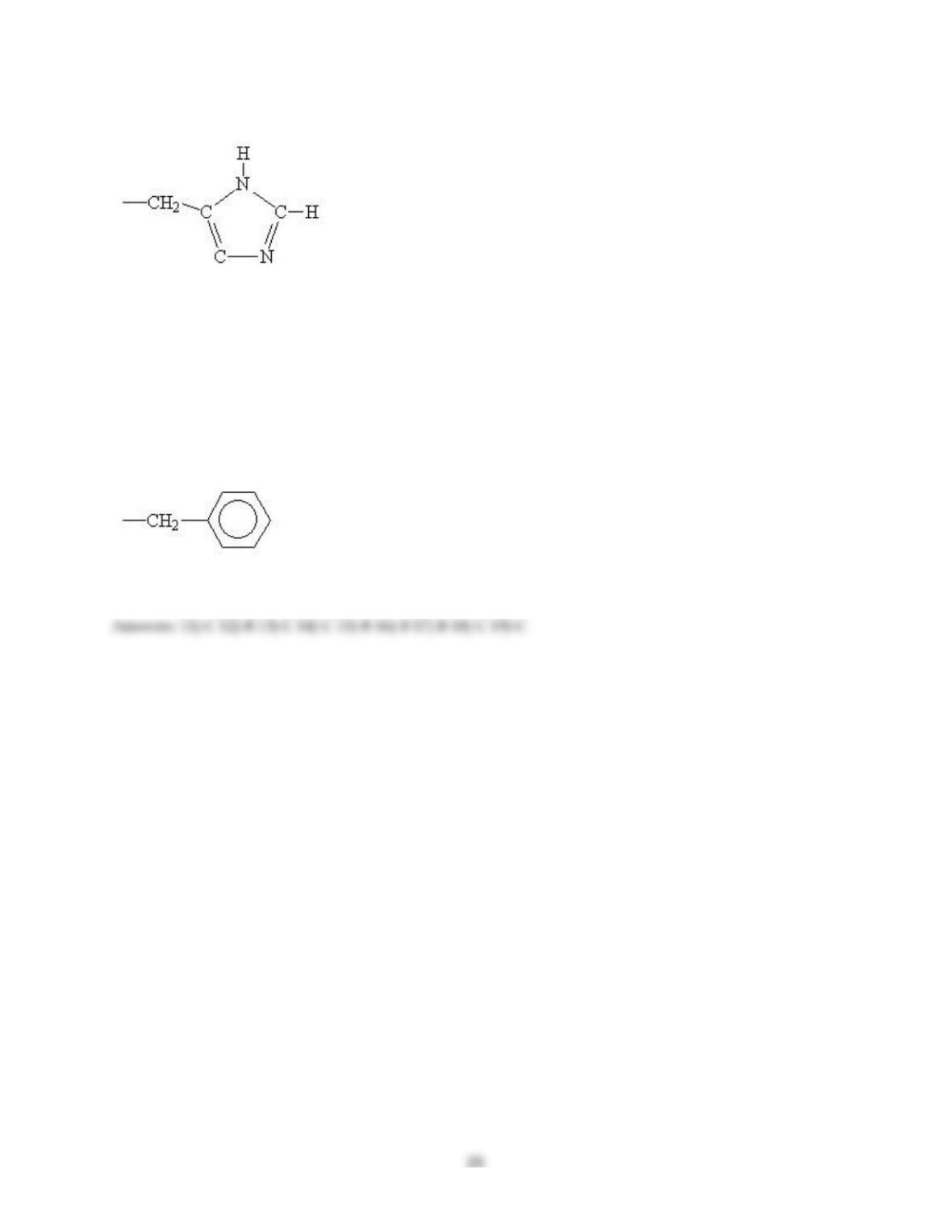
17)
Objective: 19.5
Global Outcomes: GO2
18) -CH – CH2 – CH3
|
CH3
Objective: 19.5
Global Outcomes: GO2
19)
Objective: 19.5
Global Outcomes: GO2