Pounds of Artisan Jars of
Period Income/Week Bread Sold Jam Sold
1 $250 210
2 $500 5 8
78)
Use the above table. Based on the information in the table, jam is a(n)
78)
A)
inferior good.
B)
normal good.
C)
necessary good.
D)
negative good.
79)
If the government places a $0.50 tax on an item for which demand is perfectly elastic
79)
A)
the entire tax will be paid by the consumer.
B)
the tax will be split equally between the consumer and producer, with each paying exactly
$0.25.
C)
the entire tax will be paid by the producer.
D)
most of the tax will be paid by the consumer.
80)
The cross price elasticity of demand is defined as
80)
A)
the percentage change in demand for two different commodities.
B)
the percentage change in price for two different commodities.
C)
the percentage change in the demand for one good (a shift in the demand curve) divided by
the percentage change in price of a related good.
D)
the percentage change in the supply for one good (a shift in the supply curve) divided by the
percentage change in price of a related good.
81)
To say that demand is inelastic means that
81)
A)
quantity demanded not very responsive to price changes.
B)
relatively small changes in quantity demanded lead to relatively small changes in price.
C)
people do not like the good very much.
D)
relatively small changes in price lead to relatively large changes in quantity demanded.
82)
Total revenues reach a maximum when
82)
A)
demand is inelastic.
B)
demand is elastic.
C)
price elasticity is at a minimum.
D)
demand is unit–elastic.
83)
When numerous but imperfect substitutes exist for a good, the demand for the good will tend to be
83)
A)
inelastic.
B)
perfectly elastic.
C)
unitary.
D)
elastic.
84)
Moving down a straight–line demand curve, the absolute price elasticity of demand
84)
A)
increases.
B)
decreases.
C)
varies in uncertain ways.
D)
is constant.
85)
If the absolute price elasticity of demand is 2, a 10 percent increase in the price will cause
85)
A)
the quantity demanded to decrease by 5 percent.
B)
the quantity demanded to decrease by 2 percent.
C)
the quantity demanded to decrease by 0.2 percent.
D)
the quantity demanded to decrease by 20 percent.
86)
Suppose the short–run supply curve is a straight line of slope +1 that intersects the origin. The
long–run supply curve will be
86)
A)
horizontal.
B)
vertical.
C)
steeper.
D)
shallower.
22
87)
For which of the following would the absolute price elasticity of demand be greatest?
87)
A)
gasoline
B)
Pepsi–Cola
C)
tickets to the Super Bowl
D)
salt
88)
Wheat is sold in world markets, usually priced in terms of bushels. In the market for wheat, the
price elasticity of demand for wheat would be expressed as
88)
A)
the number of dollars spent on wheat.
B)
a unitless number.
C)
the number of bushels of wheat sold.
D)
the number of whatever currency is used in purchasing the wheat.
89)
One of the most important determinants of a good’s price elasticity of demand is
89)
A)
the profits of suppliers.
B)
the ease with which consumers can substitute other goods for that product.
C)
the numbers of buyers in the market.
D)
the cost of producing the good.
90)
If total revenues decline when the market clearing price increases, then we know that
90)
A)
demand is elastic.
B)
demand has zero elasticity.
C)
demand is inelastic.
D)
demand is unit–elastic.
91)
If a one percent increase in the price of bananas leads to a one percent decrease in the quantity of
bananas demanded, then the demand for bananas is
91)
A)
unit–elastic.
B)
perfectly inelastic.
C)
inelastic.
D)
elastic.
92)
If the absolute value of the price elasticity of demand for a product is 1.5, and the price of a product
increased 30 percent, then the quantity demanded will decline by
92)
A)
45 percent.
B)
5 percent.
C)
10 percent.
D)
20 percent.
Price Quantity Demanded
Per Unit Per Week
$10.00 25
9.50 30
9.00 35
8.50 40
8.00 45
7.50 50
7.00 55
6.50 60
6.00 65
5.50 70
5.00 75
93)
Refer to the above table. Demand is least price elastic at a price of
93)
A)
$7.50.
B)
$5.00.
C)
$7.00.
D)
$10.00.
94)
Even though price elasticity of demand is always ________, by convention its absolute value is
always discussed as a ________.
94)
A)
negative; prime number
B)
negative; positive number
C)
a fraction; whole number
D)
positive; negative number
95)
When the calculated price elasticity of demand is –0.45, demand is
95)
A)
inelastic.
B)
elastic.
C)
unit–elastic.
D)
perfectly inelastic.
96)
Suppose that the value of the short–run absolute elasticity of demand for a good is 0.3. Then, we
know the long–run absolute price elasticity of demand will be
96)
A)
less than 0.3.
B)
0.
C)
elastic.
D)
greater than 0.3.
Price Quantity Demanded
Per Unit Per Week
$10.00 25
9.50 30
9.00 35
8.50 40
8.00 45
7.50 50
7.00 55
6.50 60
6.00 65
5.50 70
5.00 75
97)
Refer to the above table. At a price below $5, the absolute price elasticity of demand is
97)
A)
greater than 1.
B)
between 0.8 and 1.0.
C)
below 1.
D)
1.0.
98)
The price of X falls by ten percent, and the quantity demanded of X increases by ten percent.
Meanwhile, the quantity demanded of Y increases by ten percent too. We would conclude that
98)
A)
demand for X is unit–elastic, and X and Y are complements.
B)
demand for X is inelastic, and X and Y are unrelated.
C)
demand for X is elastic, and X and Y are substitutes.
D)
demand for X is elastic, and X and Y are complements.
99)
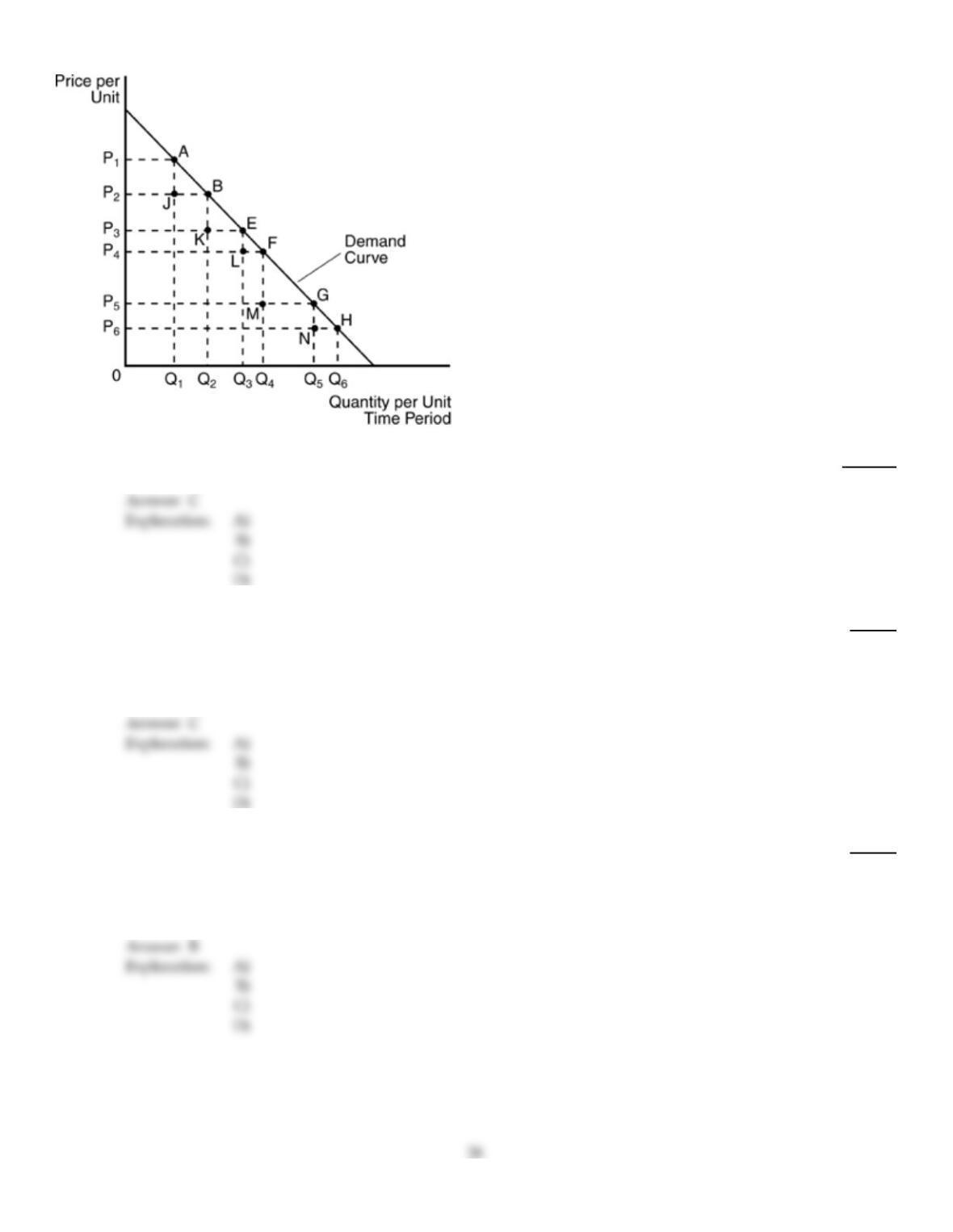
In the above figure, through which range would the demand for this good be most inelastic?
99)
A)
E–F
B)
B–E
C)
G–H
D)
A–B
100)
The price elasticity of demand is measured by the
100)
A)
percentage change in price divided by the percentage change in quantity demanded.
B)
change in quantity demanded divided by the change in price.
C)
percentage change in quantity demanded divided by the percentage change in price.
D)
change in price divided by the change in quantity demanded.
C
101)
Which of the following is NOT a factor that determines the price elasticity of demand?
101)
A)
the length of time allowed for adjustments to change in the price of the commodities
B)
the amount that suppliers have made available
C)
the existence of substitutes
D)
the percentage of a consumer‘s total budget spent on the good
B
C
102)
The price elasticity of demand along a vertical demand curve is
102)
A)
infinite.
B)
one.
C)
zero.
D)
elastic at high prices and inelastic at low prices.
103)
Compared to the short–run price elasticity of demand, the long–run price elasticity of demand is
103)
A)
greater.
B)
smaller.
C)
the same.
D)
either greater than or less, depending on the number of substitutes the good has.
104)
The responsiveness of demand to changes in income holding the good’s relative price constant is
104)
A)
cross price elasticity of demand.
B)
elasticity of supply.
C)
price elasticity of demand.
D)
income elasticity of demand.
105)
Demand is said to be inelastic when
105)
A)
a given percentage change in price will result in a less than proportionate percentage change
in the quantity demanded.
B)
small price increases will lead to zero quantity demanded.
C)
a given percentage change in price will result in a greater than proportionate percentage
change in the quantity demanded.
D)
demand exhibits zero responsiveness to price changes.
106)
If the price of one good increases, and as a result the demand for another good increases, the goods
are
106)
A)
complements.
B)
inferior goods.
C)
substitutes.
D)
normal goods.
107)
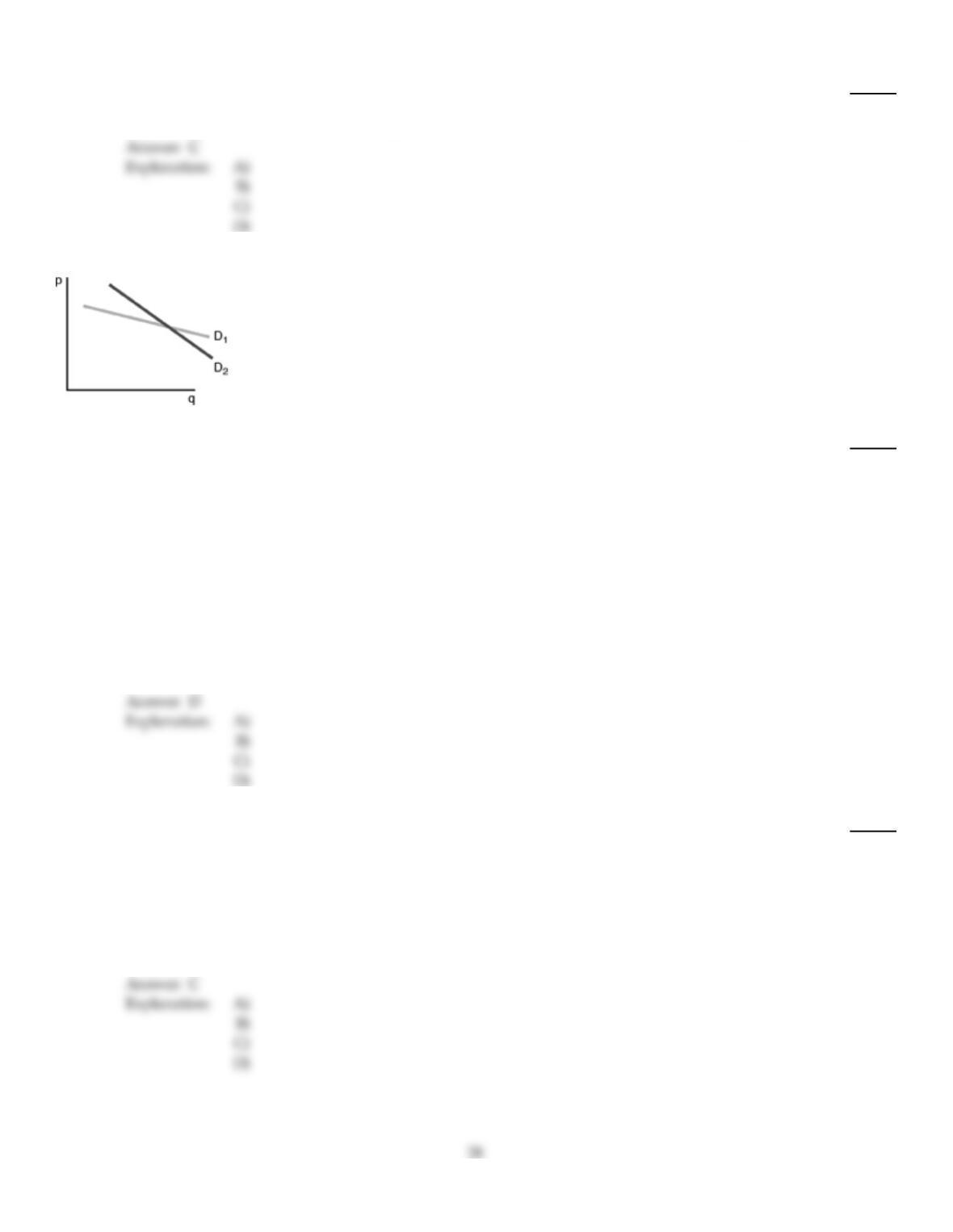
Consider the above figure. Which of the following statements is correct?
107)
A)
In any range of prices encompassing the crossing point of the two demand curves, the price
elasticity of demand is infinite.
B)
In any range of prices encompassing the crossing point of the two demand curves, the price
elasticity of demand associated with demand curve D1 is less than the price elasticity of
demand associated with demand curve D2.
C)
In any range of prices encompassing the crossing point of the two demand curves, the price
elasticity of demand associated with demand curve D1 is equal to the price elasticity of
demand associated with demand curve D2.
D)
In any range of prices encompassing the crossing point of the two demand curves, the price
elasticity of demand associated with demand curve D1 is greater than the price elasticity of
demand associated with demand curve D2.
108)
Suppose 1000 units of a good are sold at $10 a unit. If price increases to $15 and total revenue
increases to $15,000 and increases by $1000 for every dollar increase in price after that, we know
that
108)
A)
the demand curve is a rectangular hyperbola.
B)
the demand curve is downward sloping and the firm is on the inelastic portion of the demand
curve.
C)
the demand curve is vertical.
D)
demand is perfectly elastic.
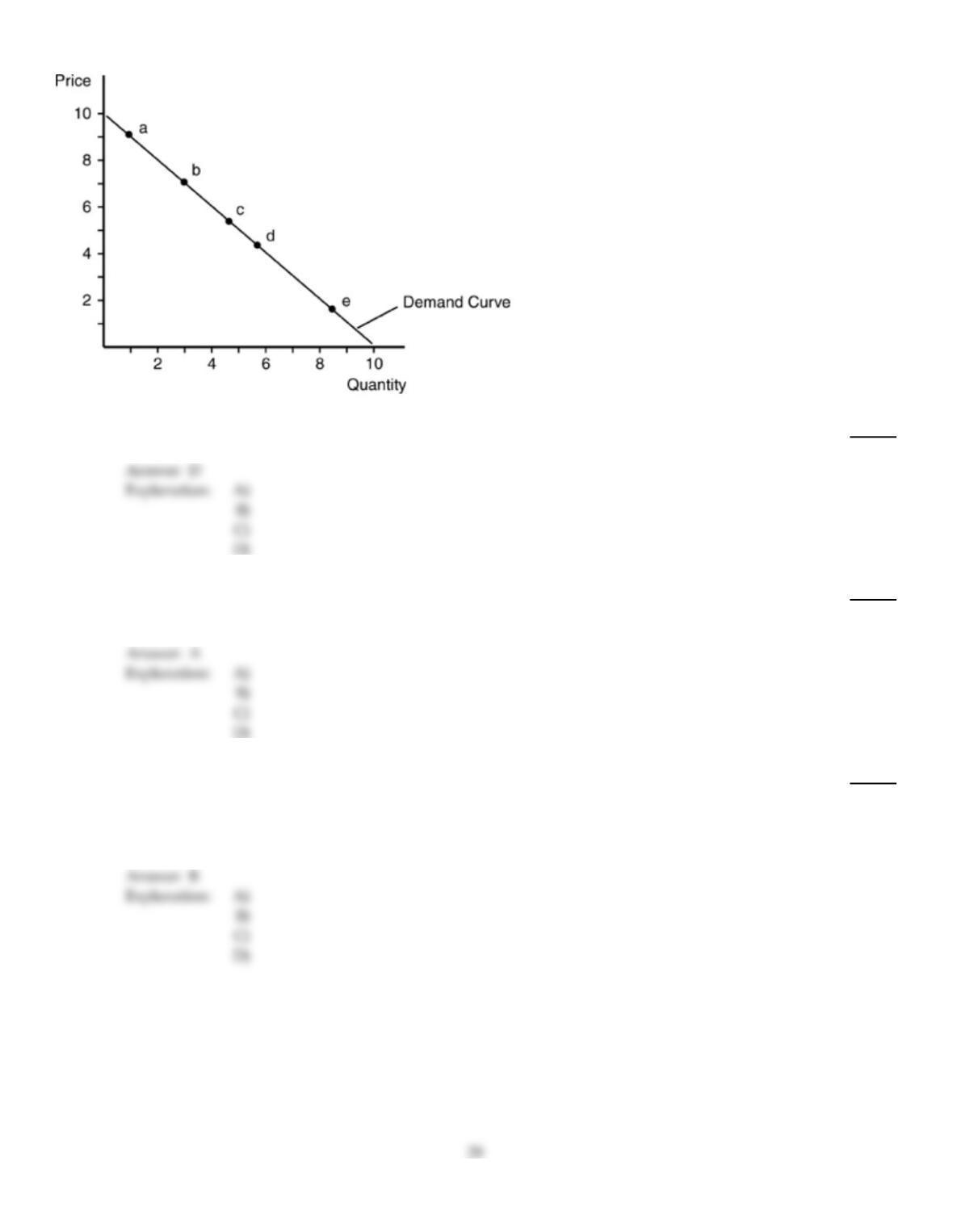
109)
In the above figure, along the section of the demand curve between point a and point b, demand is
109)
A)
unit elastic.
B)
inelastic.
C)
unit inelastic.
D)
elastic.
110)
A demand relationship that is a vertical line up from the quantity axis is
110)
A)
perfectly inelastic.
B)
perfectly elastic.
C)
unit–elastic.
D)
somewhat elastic.
111)
An increase in total revenue will result if
111)
A)
demand is inelastic and price decreases.
B)
demand is inelastic and price increases.
C)
demand is elastic and price increases.
D)
demand is unitary elastic and price decreases.
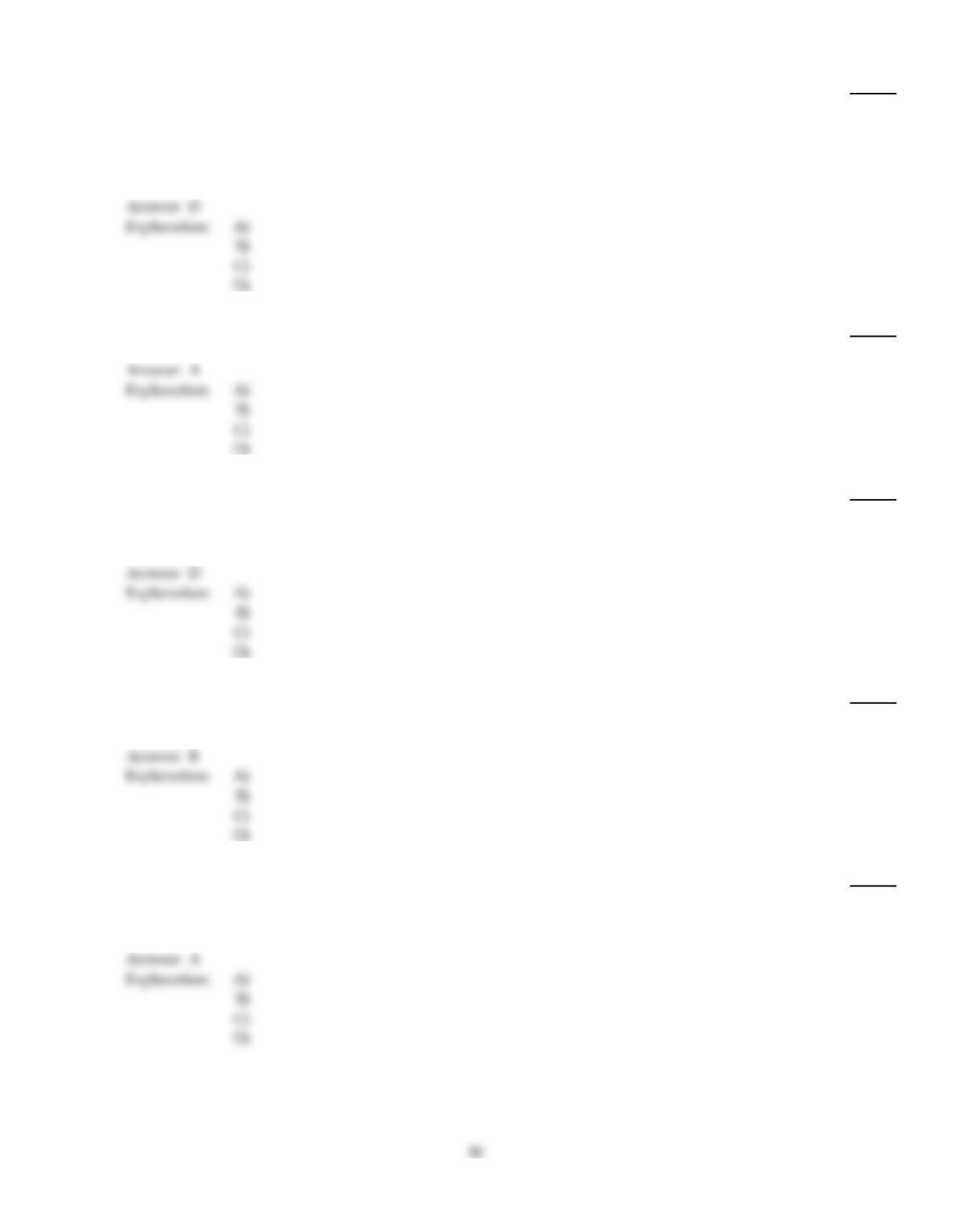
112)
If the market price of a product falls and as a result total revenue of firms falls, we can conclude
that
112)
A)
demand is elastic in this price range.
B)
the product’s price is above the midpoint of its demand curve.
C)
the demand curve is horizontal.
D)
demand is inelastic in this price range.
113)
If a 10 percent increase in price causes a 5 percent increase in quantity supplied, then supply is
113)
A)
inelastic.
B)
elastic.
C)
unit elastic.
D)
infinite.
114)
When the price of a soft drink from the campus vending machine was $0.60 per can, 100 cans were
sold each day. After the price increased to $0.75 per can, sales dropped to 85 cans per day. Over this
range, the absolute price elasticity of demand for soft drinks was approximately equal to
114)
A)
0.60.
B)
1.67.
C)
0.15.
D)
0.73.
115)
Color television prices rise by 10 percent, and in response the quantity of those TVs supplied
increases by 6 percent. The supply elasticity for color television sets in that price range is
115)
A)
–1.66.
B)
0.6.
C)
6.0.
D)
1.66.
116)
If the cross price elasticity of demand between two commodities is positive, then these commodities
are
116)
A)
are substitutes.
B)
are complements.
C)
are inferior.
D)
are superior.
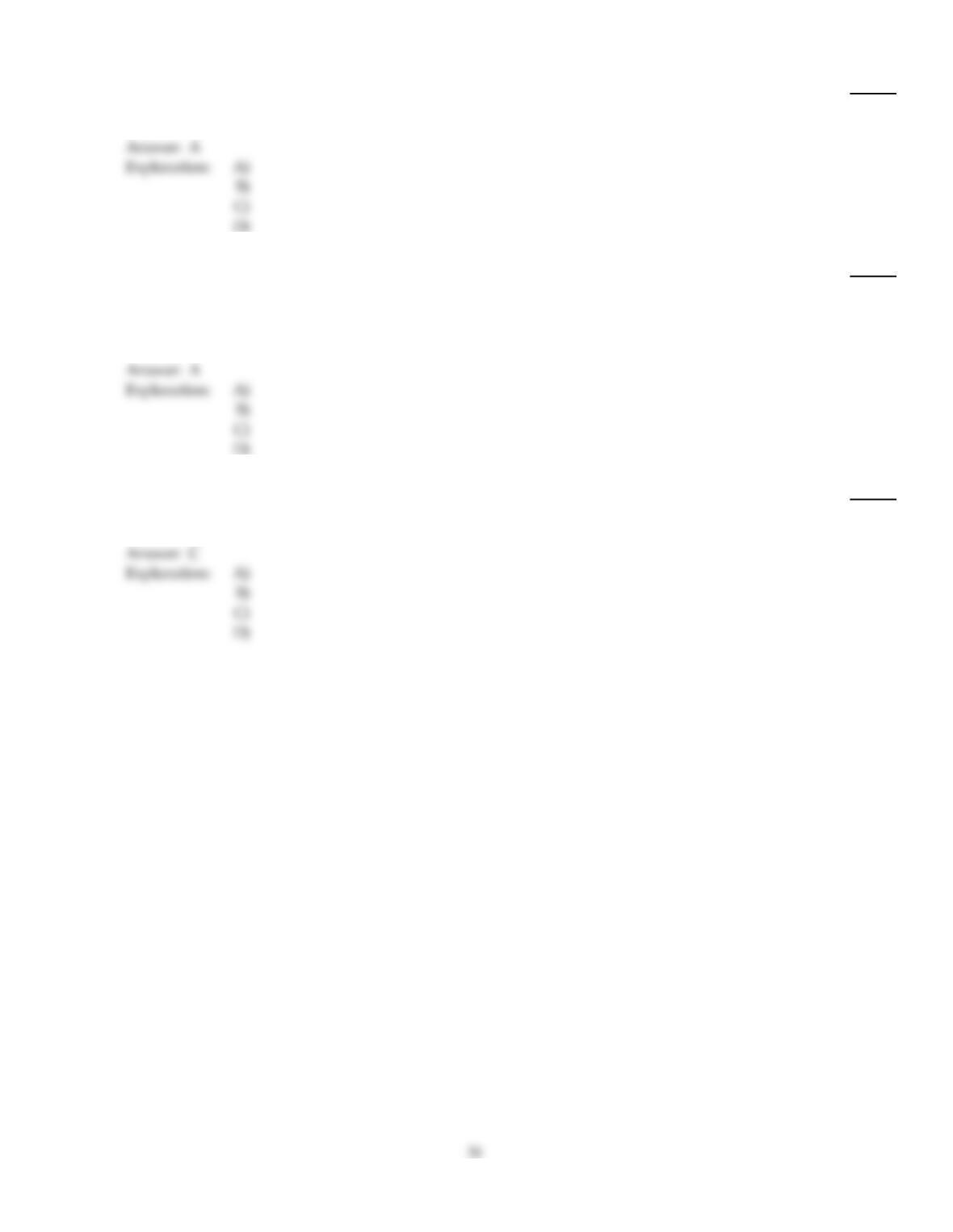
117)
When the absolute price elasticity of demand equals 2.5, demand is
117)
A)
elastic.
B)
unit–elastic.
C)
inelastic.
D)
undetermined without more information.
118)
The demand curve for petroleum should be
118)
A)
more elastic in the long run than in the short run.
B)
more or less elastic in the long run versus the short run depending upon supply conditions.
C)
as elastic in the long run as it is in the short run.
D)
less elastic in the long run than in the short run.
119)
A supply curve that is parallel to the quantity axis is
119)
A)
relatively inelastic.
B)
unitary elastic.
C)
perfectly elastic.
D)
perfectly inelastic.
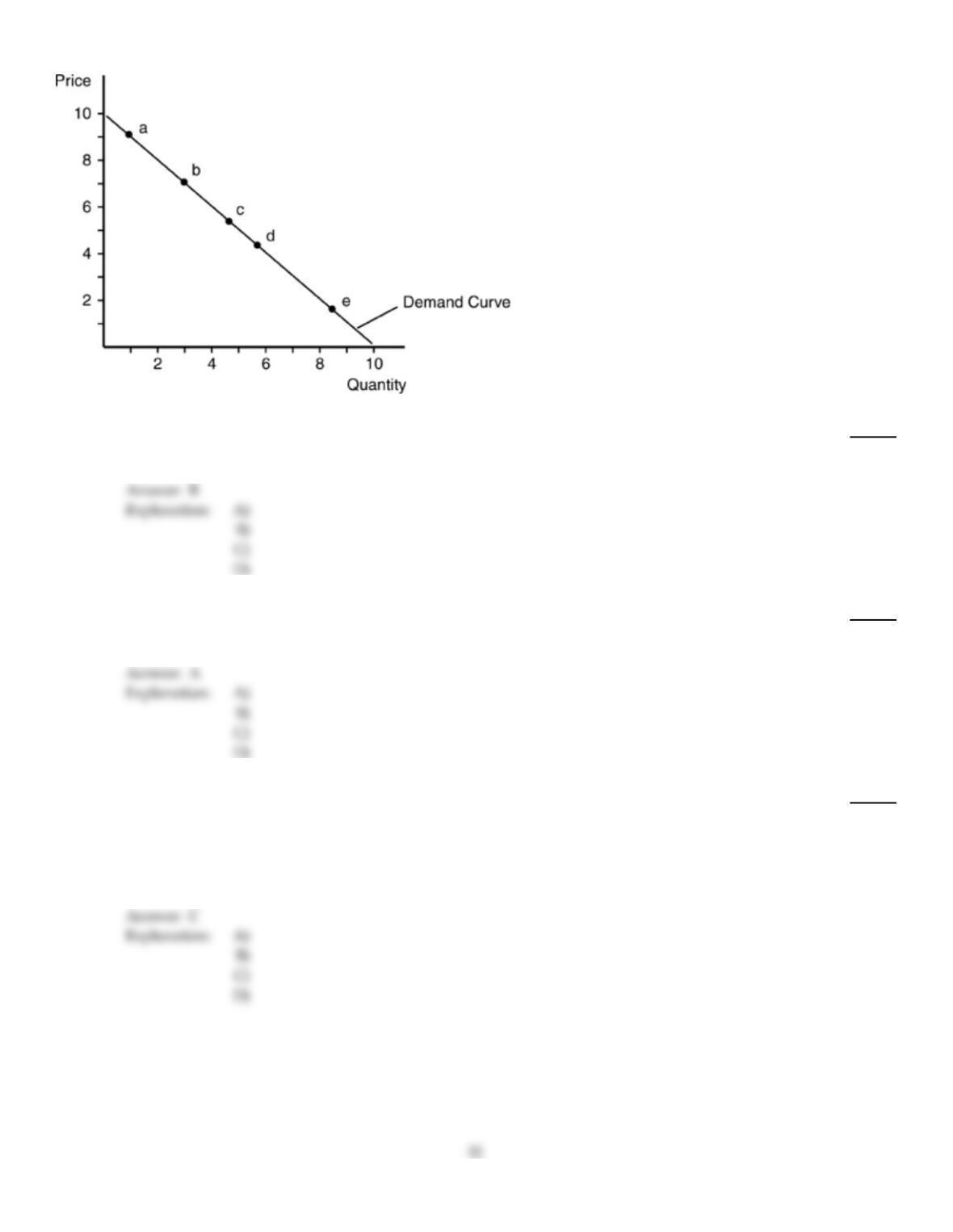
120)
In the above figure, along which range would total revenue remain unchanged by raising prices?
120)
A)
between point d and point e
B)
between point c and point d
C)
between point a and point b
D)
below point e and above point a.
121)
If one’s demand for peanut butter decreases as income rises, the income elasticity of demand for the
product is
121)
A)
negative.
B)
inelastic.
C)
unit elastic.
D)
elastic.
122)
Compared to the long–run absolute elasticity of demand, the short–run absolute elasticity of
demand is
122)
A)
either smaller or larger, depending on other factors.
B)
the same.
C)
smaller.
D)
larger.
123)
A demand relationship in which a given percentage change in price will result in a less than
proportionate percentage change in quantity demanded is
123)
A)
elastic.
B)
unit–elastic.
C)
inelastic.
D)
consistent with zero elasticity.
124)
We say that a good has elastic demand whenever the absolute value of the price elasticity of
demand is greater than 1. A 1 percent change in price therefore causes
124)
A)
a change that cannot be determined based on 1 percent.
B)
exactly a 1 percent change in the quantity demanded.
C)
a change of less than 1 percent in the quantity demanded.
D)
a greater than 1 percent change in quantity demanded.
125)
The price elasticity of demand shows
125)
A)
the proportionate amount by which the quantity demanded changes in response to a
proportionate change in price.
B)
the quantity demanded at a given price.
C)
the proportionate amount by which the price changes in response to a proportionate change
in quantity demanded.
D)
the relationship between market price and household income.
126)
The absolute price elasticity of demand for a product that has many good substitutes is probably
126)
A)
equal to 1.
B)
less than 1.
C)
greater than 1.
D)
infinity.
127)
If the absolute price elasticity of demand is 2.0, a 5 percent decrease in price will increase quantity
demanded by
127)
A)
20 percent.
B)
5 percent.
C)
10 percent.
D)
25 percent.
128)
The price elasticity of supply is higher when
128)
A)
producers have less time to adjust to price changes.
B)
the number of buyers in the market increases.
C)
the product in question is a complementary good.
D)
the number of producers in the market increases over time.
129)
The local baseball stadium’s concession stands previously sold hot dogs for 80 cents apiece. At that
price, when a baseball fan went to watch a baseball game, he bought 2 hotdogs. But now that the
stadium has a “dime–a–dog night,” he has purchased 6 hot dogs. What is the approximate value of
this individual’s absolute price elasticity of demand for hot dogs?
129)
A)
1.00
B)
1.56
C)
0.64
D)
0.80
130)
The cross–price elasticity of demand of products “M” and “N” is zero. This implies that “M” and “N”
are
130)
A)
complementary products.
B)
independent products.
C)
unique goods, as the price elasticity of demand for one of them is zero.
D)
substitute products.
131)
When the absolute price elasticity of demand is greater than 1, demand is
131)
A)
elastic.
B)
unit–elastic.
C)
inelastic.
D)
undetermined without more information.
132)
Tickets for the Super Bowl are an example of supply that is
132)
A)
perfectly inelastic.
B)
unit elastic.
C)
slightly inelastic.
D)
perfectly elastic.
133)
If the price elasticity of supply of television sets is constant and equal to 3, a 10 percent increase in
price will result in a change in quantity supplied equal to
133)
A)
1/3 percent.
B)
30 percent.
C)
–30 percent.
D)
3 1/3 percent.
134)
If the cross price elasticity of demand between Los Angeles Lakers professional basketball tickets
and Los Angeles Dodgers professional baseball tickets is positive, then the two goods are
134)
A)
unrelated.
B)
complements.
C)
not related.
D)
substitutes.
135)
When the absolute price elasticity of demand equals 1, demand is
135)
A)
elastic.
B)
unit–elastic.
C)
inelastic.
D)
undetermined without more information.
136)
Which of the following is a determinant of the price elasticity of demand for an item?
136)
A)
the availability of a close substitute for the item
B)
the amount of time available to adjust to a change in the price of the item
C)
the percentage of a consumers budget allocated to expenditures on the item
D)
All of the above are correct.
137)
Suppose the quantity demanded of ice cream cones increases from 400 to 425 cones a day when the
price is reduced from $1.50 to $1.25. In this situation, the elasticity of demand, calculated using the
average method, is
137)
A)
0.33.
B)
3.
C)
1.33.
D)
1.
138)
Within the range of prices around the midpoint on a straight–line demand curve, demand is
138)
A)
inelastic.
B)
elastic.
C)
unit–elastic.
D)
zero.
139)
A perfectly elastic supply curve is
139)
A)
downward sloping.
B)
an upward sloping straight line that intersects the origin.
C)
vertical.
D)
horizontal.
140)
If the absolute price elasticity of demand for automobiles is equal to 0.75, we say
140)
A)
that there is a strong responsiveness of quantity demanded to automobiles price cuts.
B)
that demand is elastic.
C)
that demand is inelastic.
D)
none of the above is correct.
141)
Price elasticity of supply is always
141)
A)
positive because of diminishing marginal utility.
B)
positive because of the law of supply.
C)
negative because of the law of supply.
D)
negative because percentages can only be negative.
142)
If the absolute price elasticity of demand for concert tickets is 0.75, an increase in ticket prices will
142)
A)
increase total revenue.
B)
decrease total revenue.
C)
not change total revenue.
D)
not change the elasticity of demand.
143)
Relative percentage changes are used in measuring price elasticity of demand, so that
143)
A)
we always obtain a positive number.
B)
it does not matter whether price increases or decreases when calculating the elasticity.
C)
it does not matter what units are used to measure prices or quantities.
D)
larger numbers indicate greater responsiveness.
144)
A perfectly inelastic demand would imply what kind of demand curve?
144)
A)
upward sloping
B)
horizontal
C)
vertical
D)
downward sloping
145)
Suppose that the price of eggs increases from 75 cents to $1.00 per dozen and as a result a typical
farmer experiences a decrease in egg sales from 300 to 200 dozen per week. Using the method of
average values, the absolute price elasticity of demand is
145)
A)
1.4.
B)
1.75.
C)
3.0.
D)
0.8.
146)
Income elasticity of demand is defined as
146)
A)
the change in quantity demanded divided by the change in market price.
B)
the change in quantity demanded divided by the change in income.
C)
the percentage change in demand divided by the percentage change in income.
D)
the percentage change in income divided by the percentage change in quantity demanded.
147)
When discussing the price elasticity of demand we generally refer to the absolute price elasticity of
demand by consumers. This means that we will
147)
A)
disregard the law of demand.
B)
disregard the minus sign.
C)
ignore its relationship to demand.
D)
consider absolute rather than relative changes.
148)
Which of the following is more likely to have perfectly elastic or nearly perfectly elastic demand?
148)
A)
the services offered by the only allergist in the community
B)
milk produced by a Wisconsin dairy farmer
C)
a textbook required for an economics course
D)
the guitar produced by a master craftsman
149)
When the consumer spends less than 3% of his income on a good, demand will be
149)
A)
elastic.
B)
unit–elastic.
C)
inelastic.
D)
elastic, unit–elastic or inelastic depending upon supply.
150)
A cafeteria is willing to produce 100 cups of coffee when the price is $1 and 150 cups of coffee when
the price is $1.30, other things being equal. The price elasticity of supply of coffee is
150)
A)
0.10.
B)
1.53.
C)
0.50.
D)
0.67.
151)
If the quantity demanded of a product is the same for each possible price, demand is
151)
A)
perfectly inelastic.
B)
perfectly elastic.
C)
unit–elastic.
D)
elastic.
152)
If your income rises by 25 percent and, as a result, you buy fewer packages of Ramen Noodles, then
Ramen Noodles are a(n)
152)
A)
substitute.
B)
inferior good.
C)
complement.
D)
normal good.
153)
A value of the absolute price elasticity of demand equal to 0.6 indicates that
153)
A)
a 6 percent increase in price leads to a 10 percent decrease in quantity demanded.
B)
a 0.6 percent increase in price leads to a 1 percent decrease in quantity demanded.
C)
a 1 percent increase in price leads to a 6 percent decrease in quantity demanded.
D)
a 10 percent increase in price leads to a 6 percent decrease in quantity demanded.
D
154)
If total revenues rise when the market price increases, then we know that
154)
A)
demand is elastic.
B)
demand is inelastic.
C)
demand is unit–elastic.
D)
its demand has zero elasticity.
B
155)
Other things being equal, demand is less elastic
155)
A)
the smaller the percentage of a total budget that a family spends on a good.
B)
the longer is the time period for adjustment.
C)
the more substitutes a good has.
D)
the more expensive the good is.
A
156)
If the absolute price elasticity of demand for a product is less than 1, then
156)
A)
consumers are relatively sensitive to price changes.
B)
producers are relatively insensitive to price changes.
C)
there is a positive relationship between price changes and total revenue.
D)
consumers are relatively insensitive to price changes.
D
B
157)
Changes in technology over time will result in
157)
A)
a more inelastic supply curve.
B)
a unitary elastic supply curve.
C)
no change in the elasticity of supply.
D)
a more elastic supply curve.
158)
If the price of corn chips increases from $2.00 per bag to $3.00 per bag and the quantity demanded
goes down from 100 million bags per week to 50 million bags per week, the absolute value of price
elasticity of demand in that price range is
158)
A)
2.33.
B)
0.50.
C)
0.93.
D)
1.67.
Price Quantity Demanded
Per Unit Per Week
$10.00 25
9.50 30
9.00 35
8.50 40
8.00 45
7.50 50
7.00 55
6.50 60
6.00 65
5.50 70
5.00 75
159)
Refer to the above table. Demand is unit elastic between the prices of
159)
A)
$6.00 & $6.50.
B)
$7.00 & $7.50
C)
$6.00 & $7.00.
D)
$5.00 & $10.00.
160)
If a 5 percent change in the price of a good elicited a 5 percent change in the quantity demanded of
the good, we would say that over this range of prices the good has a(n)
160)
A)
inelastic demand.
B)
elastic demand.
C)
perfectly elastic demand.
D)
unit elasticity of demand.