Introduction to General, Organic & Biological Chemistry, 12e (Timberlake)
Chapter 18 Metabolic Pathways and Energy Production
18.1 Multiple-Choice Questions
1) The reactions by which complex molecules are broken down into simpler ones for the body’s
use are ________.
A) transmission reactions
B) catabolic reactions
C) anabolic reactions
D) glucogenesis
E) gluconeogenesis
2) The reactions by which complex molecules are built up for the body’s use are ________.
A) transmission reactions
B) catabolic reactions
C) anabolic reactions
D) glucogenesis
E) gluconeogenesis
3) Overall, catabolic reactions ________.
A) release energy
B) take in energy
C) occur mainly in the liver
D) occur outside the cell membrane
E) take place in the nucleus of the cell
4) Anabolic reactions are reactions that ________.
A) use oxidation but not reduction
B) break down large molecules into smaller ones
C) take place in the mitochondria
D) require energy
E) give off energy
5) How many main stages of catabolism are there?
A) one
B) two
C) three
D) four
E) five
6) The first stage of catabolism is ________.
A) the citric acid cycle
B) production of pyruvate
C) production of acetyl-CoA
D) buildup of macromolecules from monomers
E) digestion of large molecules
7) The middle stage of catabolism is the point at which ________.
A) acetyl-CoA is produced
B) monomers are produced from macromolecules
C) macromolecules are made from monomers
D) glycogen is converted to glucose
E) excess nutrients are stored as fats
8) Protein synthesis takes place ________.
A) in the mitochondria
B) on the endoplasmic reticulum
C) in the nucleus
D) on the ribosomes
E) in the cytosol
9) The main compound used to release energy for metabolism is ________.
A) sucrose
B) glucose phosphate
C) adenosine triphosphate
D) ribonucleic acid
E) NA
10) The components of ATP are ________.
A) adenosine, ribose, and three phosphate groups
B) aniline and three phosphate groups
C) alanine, ribose, and three phosphate groups
D) adenine, ribose, and three phosphate groups
E) adenosine, deoxyribose, and three phosphate groups
11) The hydrolysis of ATP to ADP is ________.
A) endothermic
B) exothermic
C) isothermic
D) an oxidation
E) a reduction
12) The final products of catabolic reactions are ________.
A) carbon dioxide, water, and ammonia
B) glucose, lipids, and glycogen
C) lipids, oxygen, and water
D) RNA and DNA
E) lipids and carbohydrates
13) Which of the three major stages of metabolism includes the citric acid cycle?
A) stage one
B) stage two
C) stage three
14) The citric acid cycle takes place in the ________.
A) mitochondria
B) cytosol
C) cytoplasm
D) Golgi apparatus
E) endoplasmic reticulum
15) Digestion of carbohydrates begins in the ________.
A) mouth
B) stomach
C) pancreas
D) small intestine
E) large intestine
16) An enzyme that can facilitate the breakdown of amylose into smaller units is ________.
A) glucose phosphatase
B) alcohol dehydrogenase
C) amylase
D) lactase
E) maltase
17) The digestion of protein begins in the ________.
A) mouth
B) stomach
C) small intestine
D) large intestine
E) pancreas
18) The initial stage of the digestion of protein is catalyzed by an enzyme called ________.
A) chymotrypsin
B) peptidase
C) pepsin
D) amylase
E) trypsin
19) The digestion of fats begins in the ________.
A) mouth
B) stomach
C) small intestine
D) gall bladder
E) large intestine
20) The digestion of fats begins when the fat globules are ________.
A) emulsified by bile salts
B) attacked by protease enzymes to form smaller fat globules
C) converted to lipoproteins for greater solubility
D) hydrolyzed to glucose and amino acids
E) hydrolyzed to glycerol and fatty acids
21) Fatty acids and glycerol are produced from the metabolism of ________.
A) lipids
B) proteins
C) carbohydrates
D) amino acids
E) glucose
22) The action of pancreatic lipase on triacylglycerols produces ________.
A) emulsions
B) micelles
C) monoacylglycerols and free fatty acids
D) high-density lipoproteins
E) low-density lipoproteins
23) A chylomicron is a ________.
A) lipase
B) digestive enzyme
C) triacylglycerol
D) transport lipoprotein
E) storage protein
24) The enzymes that break down triacylglycerols into fatty acids and glycerol are called
________.
A) lyases
B) aconitases
C) lipases
D) hydrolases
E) oxidoreductases
25) In biochemical systems, the term reduction often refers to ________.
A) a loss of hydrogen or electrons by a compound
B) a gain of hydrogen or electrons by a compound
C) a gain in oxygen
D) a loss of electrons
E) an energy-releasing reaction
26) NA participates in reactions that produce ________.
A) a group
B) a C O bond
C) phosphorylation
D) ADP from ATP
E) a C–C bond
27) FAD is a coenzyme which usually participates in ________.
A) oxidation of alcohols to aldehydes
B) formation of carbon-carbon double bonds
C) decarboxylation reactions
D) phosphorylation reactions
E) β-oxidation reactions
28) Coenzyme A is a molecule whose function is to ________.
A) activate enzyme A
B) undergo phosphorylation
C) provide energy for the citric acid cycle
D) activate acyl groups for reaction
E) help break down macromolecules
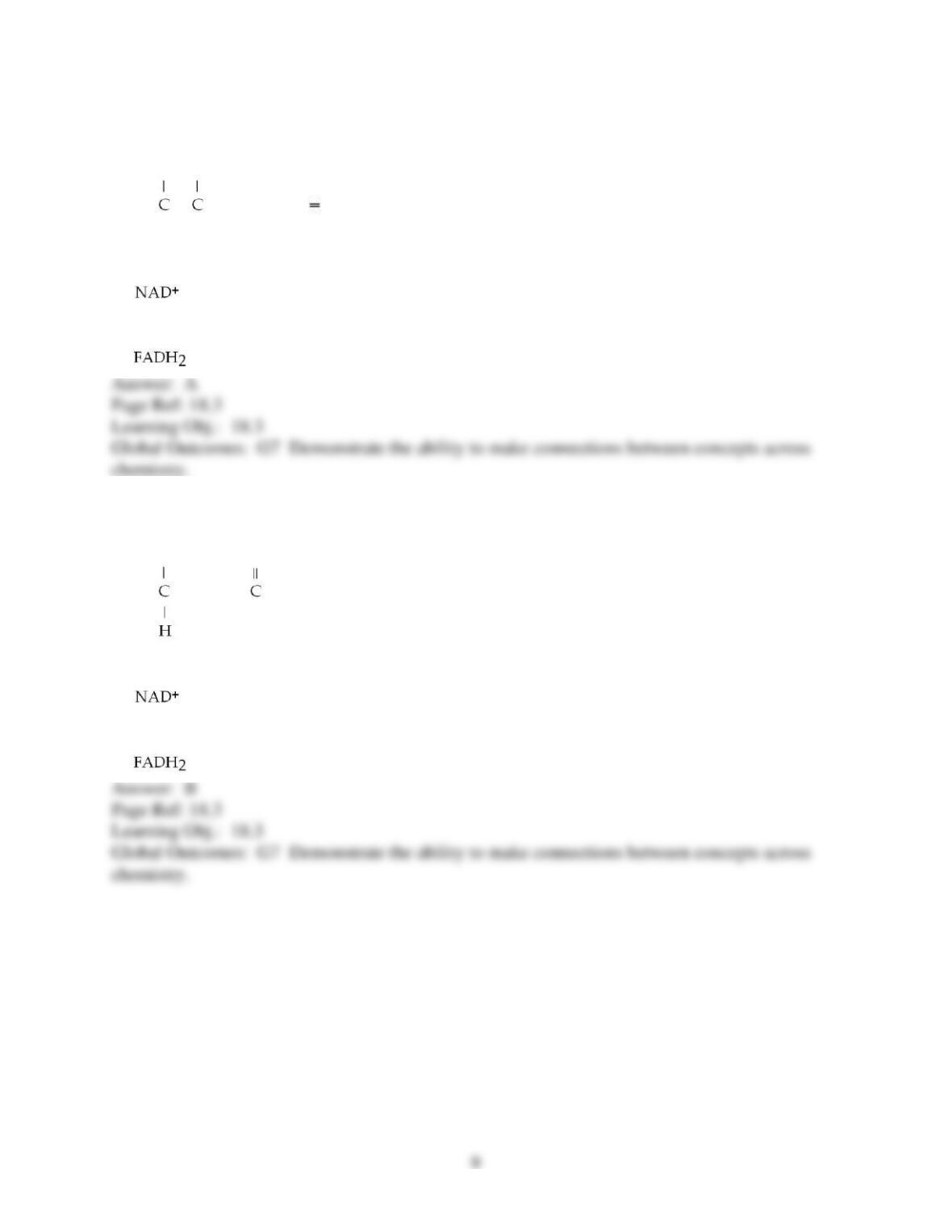
29) Which coenzyme is reduced in the following reaction?
H H
– – – → – C C–
| | | |
A) FAD
B)
C) CoQ
D) NADH
E)
30) Which coenzyme is reduced in the following reaction?
OH O
– – → – –
A) FAD
B)
C) CoQ
D) NADH
E)
10
31) Which of the following metabolic pathways can occur in the absence of oxygen?
A) electron transport
B) oxidative phosphorylation
C) citric acid cycle
D) glycolysis
E) β-oxidation
32) The compounds formed when fructose-1,6-bisphosphate is split are ________.
A) pyruvic acid and lactic acid
B) ethanol and acetyl-CoA
C) dihydroxyacetone phosphate and pyruvic acid
D) dihydroxyacetone phosphate and glyceraldehyde-3-phosphate
E) glyceraldehyde 3-phosphate and pyruvic acid
33) When one glucose molecule undergoes glycolysis it generates ________.
A) 6 ATP
B) 6 ATP and 2 NADH
C) 2 ATP and 2 NADH
D) 2 ATP and 4 NADH
E) 12 ATP
34) Glycolysis is a(n) ________ process.
A) aerobic
B) anaerobic
C) anabolic
D) one-step
E) five-step
35) In the process of glycolysis, glucose is converted to ________.
11
A) pyruvate
B) citrate
C) sucrose
D) oxaloacetate
E) ribose
36) The overall process of glycolysis ________.
A) requires oxygen
B) uses up 4 ATP molecules
C) requires acetyl-CoA
D) is an anabolic pathway
E) produces 2 ATP molecules
37) Under aerobic conditions, pyruvate produced in glycolysis can be converted to ________.
A) glyceraldehyde-3-phosphate
B) lactic acid
C) glucose-6-phosphate
D) fructose-6-phosphate
E) acetyl-CoA
38) Under anaerobic conditions, lactate is produced from ________.
A) acetyl-CoA
B) pyruvate
C) ATP
D) carbon dioxide
E) NA
39) In the absence of oxygen in muscles, pyruvate is converted to ________.
12
A) glycogen
B) glucose
C) ethanol
D) lactate
E) glyceraldehyde-3-phosphate
40) When oxygen is in plentiful supply in the cell, pyruvate is converted to ________.
A) CoA
B) acetyl-CoA
C) glucose
D) lactate
E) fructose
41) The primary fuel for the synthesis of ATP is ________.
A) protein
B) lactate
C) ammonia
D) GTP
E) glucose
42) Under anaerobic conditions, there is a net production of ________ ATP during glycolysis.
A) zero
B) two
C) four
D) six
E) eight
43) In glycolysis, glucose produces 2 pyruvate molecules and a total of ________ ATP
molecules.
A) 2
B) 4
C) 6
D) 8
E) 12
44) In order to enter the citric acid cycle, pyruvate is first converted to ________.
A) lactate
B) acetaldehyde
C) citrate
D) acetyl-CoA
E) ethanol
45) The citric acid cycle is used in the oxidation of ________.
A) glucose only
B) glucose and fatty acids only
C) fatty acids only
D) glucose, fatty acids, and proteins
E) proteins only
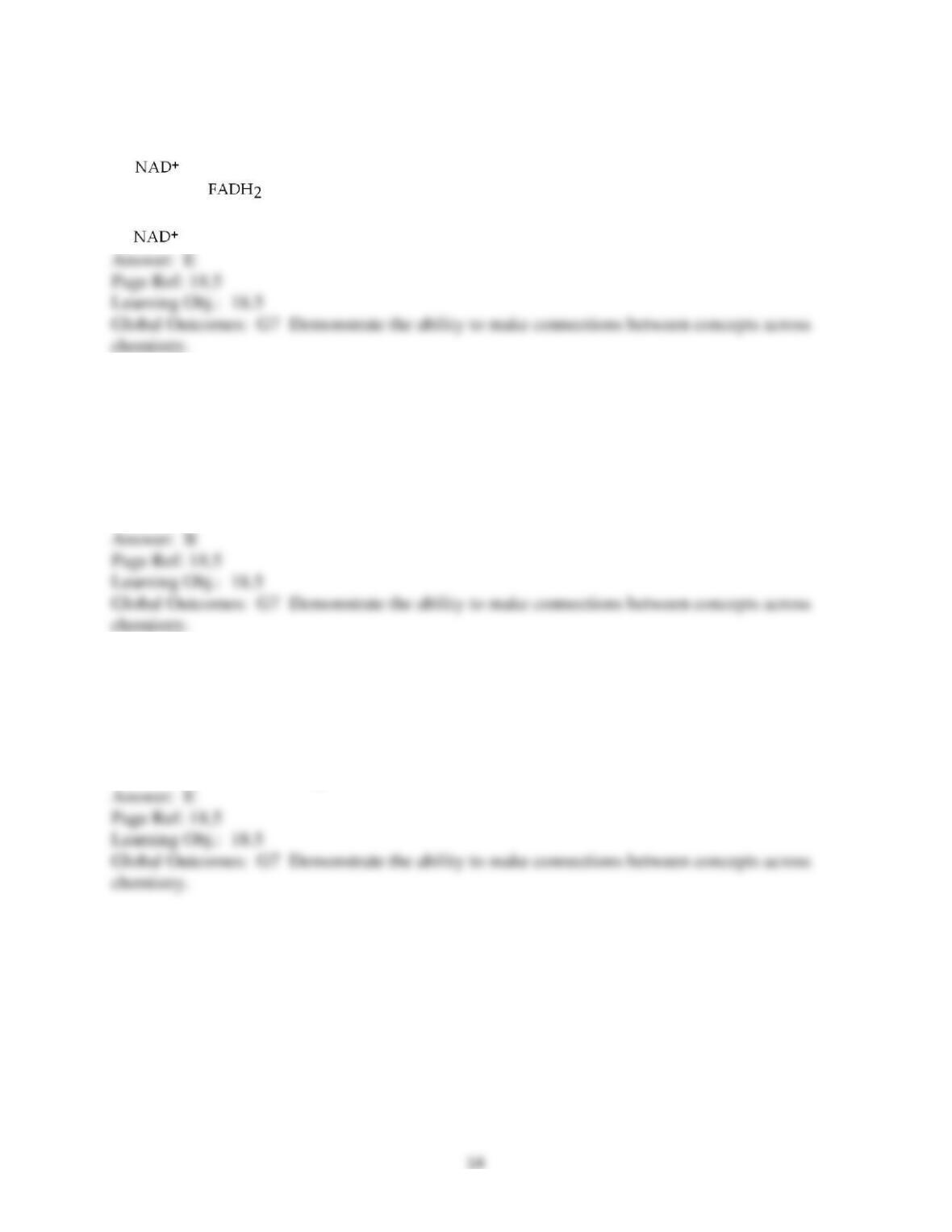
46) What coenzyme(s) is(are) used in the citric acid cycle?
A) FAD only
B) only
C) NADH + + CoA
D) CoQ
E) + FAD
47) Which of the following compounds in the citric acid cycle undergoes oxidation and
decarboxylation?
A) citrate
B) isocitrate
C) succinate
D) fumarate
E) succinyl-CoA
48) In stage three of metabolism, the overall result is to release ________.
A) glucose and water
B) lactate and acetyl-CoA
C) lactate and glucose
D) glycogen and water
E) carbon dioxide and energy
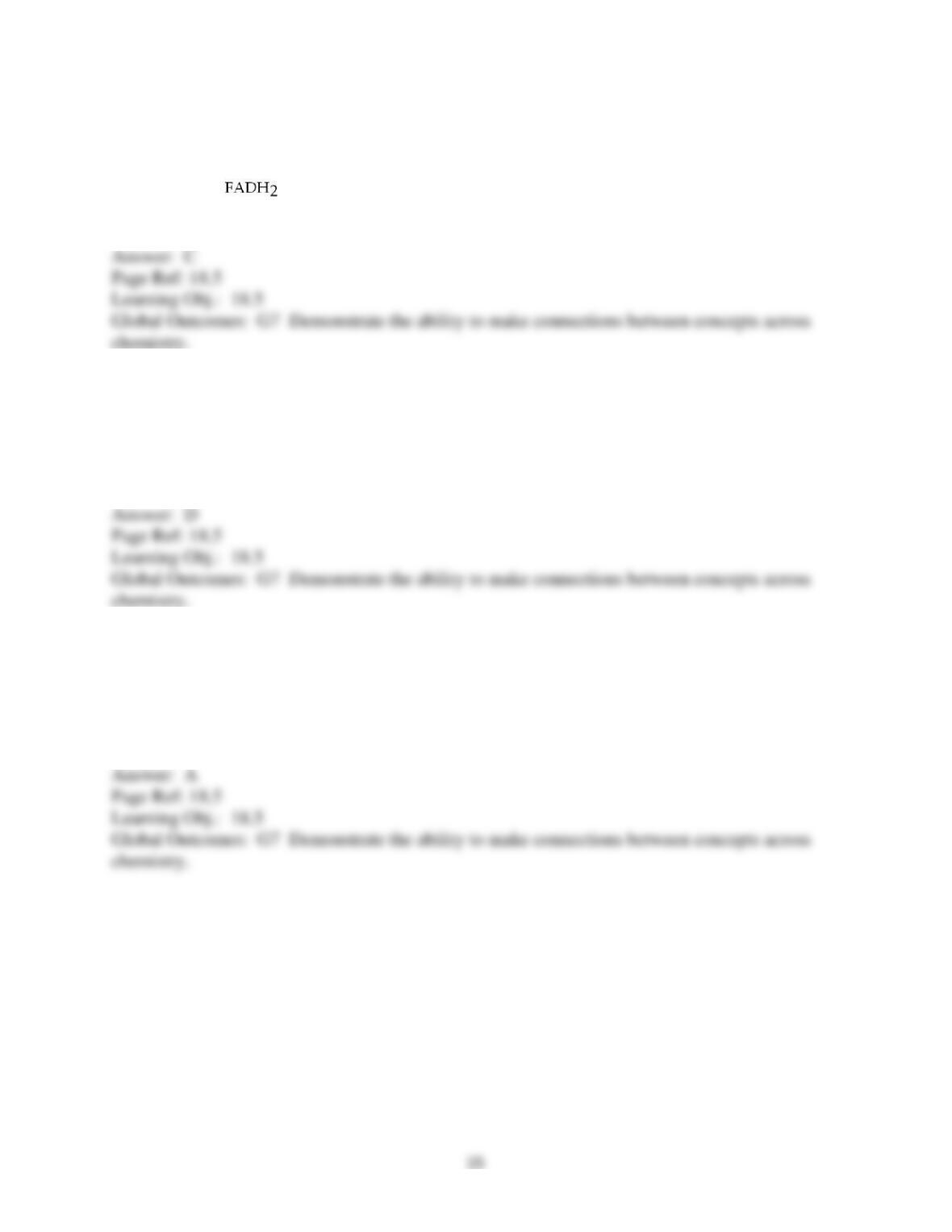
49) Most of the energy released in the citric acid cycle is used to produce ________.
A) glucose
B) acetyl-CoA
C) NADH and
D) carbon dioxide and water
E) citric acid
50) In the first reaction of the citric acid cycle ________.
A) glucose becomes pyruvate
B) ATP is produced
C) NADH is produced
D) acetyl-CoA reacts with oxaloacetate to give citrate
E) pyruvate becomes CO2 and H2O
51) The citric acid cycle reaction that removes the first CO2 molecule is a(n) ________.
A) oxidation and decarboxylation
B) reduction
C) phosphorylation
D) hydrolysis
E) hydration
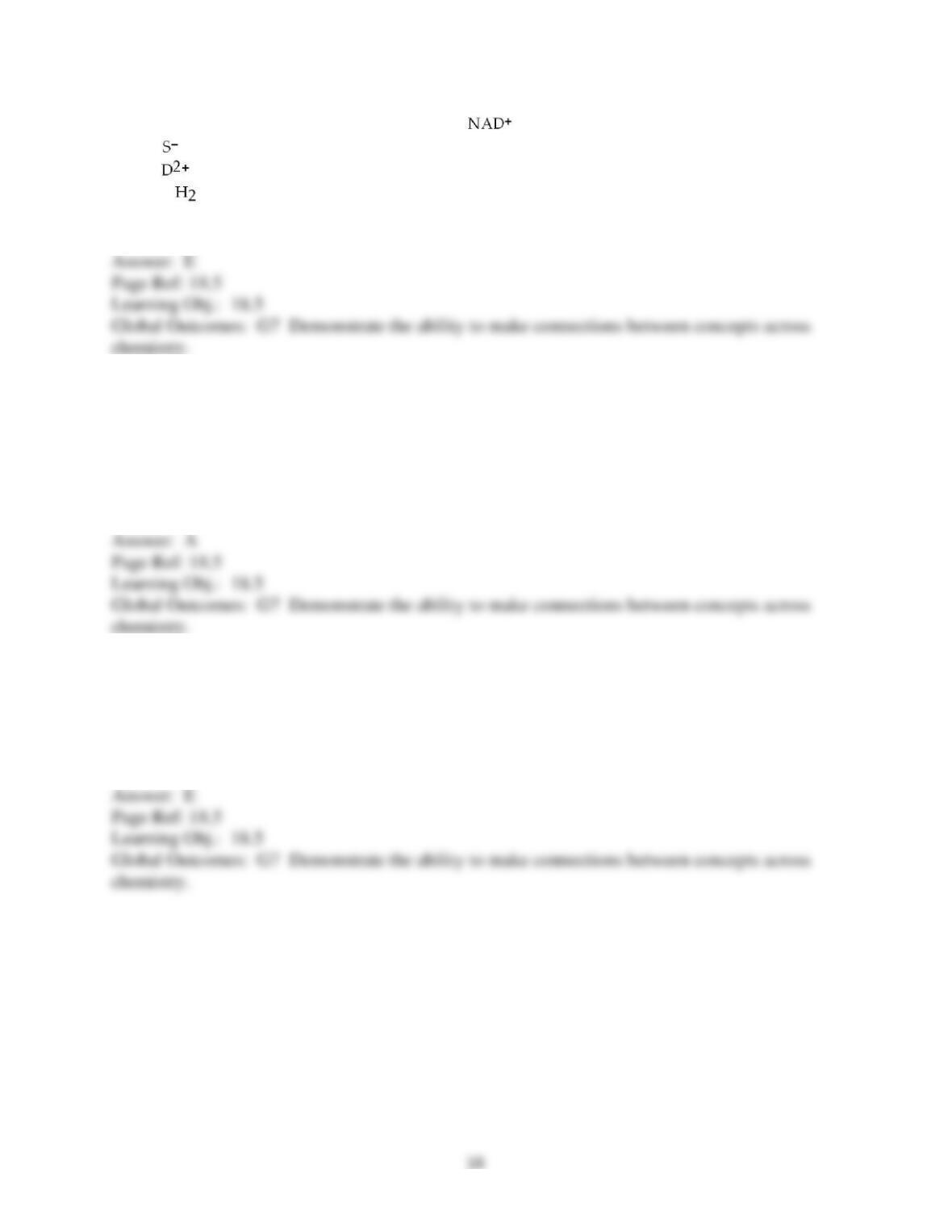
52) In the third reaction of the citric acid cycle, is converted to ________.
A) NA
B) NA
C) NAD
D) NAD
E) NADH
53) Reaction 5 of the citric acid cycle is the hydrolysis of succinyl-CoA. In this reaction,
________.
A) the energy released is used to make GTP
B) the energy released is used to make ATP
C) carbon dioxide is released
D) α-ketoglutarate is released
E) the enzyme aconitase is needed
54) The GTP formed in reaction 5 of the citric acid cycle is used to make ________.
A) carbon dioxide
B) oxygen
C) water
D) CoA
E) ATP
55) In the dehydrogenation of succinate to fumarate in the citric acid cycle, the coenzyme used is
________.
A) CoA
B) acetyl-CoA
C) NA
D) NADH
E) FAD
56) In reaction 7 of the citric acid cycle, fumarate is converted to malate in a ________ reaction.
A) hydrolysis
B) dehydrogenation
C) hydrogenation
D) hydration
E) dehydration
57) The last reaction in the citric acid cycle converts malate to ________.
A) citrate
B) isocitrate
C) succinate
D) fumarate
E) oxaloacetate
58) Overall, one turn of the citric acid cycle produces ________.
A) three molecules
B) three NADH molecules
C) two FAD molecules
D) 6 ATP
E) 2 GTP
59) When combined with electron transport, one turn of the citric acid cycle produces ________
ATP.
A) 24
B) 12
C) 11
D) 14
E) 2
60) Each acetyl-CoA produces a total of ________ ATP.
A) 2
B) 6
C) 10
D) 12
E) 24
61) The complete oxidation of glucose produces ________ ATP molecules.
A) 2
B) 8
C) 12
D) 24
E) 36
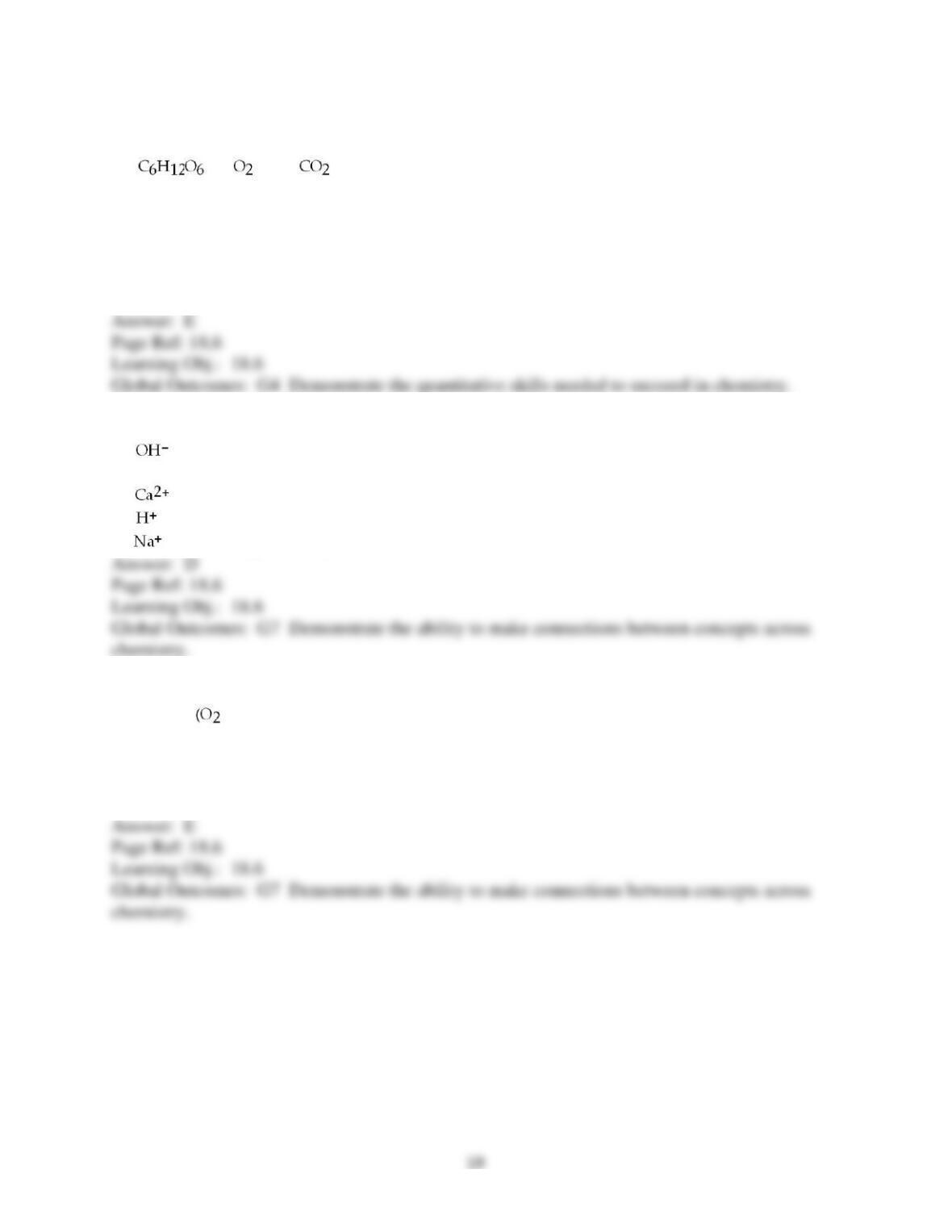
62) What is the correct coefficient for ATP in the complete combustion of glucose?
+ 6 → 6 + ________ ATP + 6H2O
A) 6
B) 12
C) 18
D) 24
E) 36
63) In the chemiosmotic model of oxidative phosphorylation, ATP is synthesized as ________.
A) flows through ATP synthase
B) electrons flow through ATP synthase
C) flows through ATP synthase
D) flows through ATP synthase
E) flows through ATP synthase
64) The components of electron transport do not include ________.
A) oxygen )
B) cytochrome c
C) Complex II
D) CoQ
E) acetyl-CoA
65) In electron transport, the synthesis of ATP from ADP + is called ________.
A) glycolysis
B) acylation
C) oxidative phosphorylation
D) isomerization
E) hydrolysis
66) The reduced coenzyme ________ provides two ATP via electron transport.
A)
B) NADH
C) NADPH
D) CoASH
E)
67) In electron transport, NADH and are used to provide ________.
A) oxygen
B) electrons and hydrogen ions
C) carbon atoms
D) water and carbon dioxide
E) thiol groups
68) The energy released during electron transport is used to produce ________.
A) glucose
B) citric acid
C) carbon dioxide
D) ATP
E) NADH
69) The compounds in electron transport that remove hydrogen ions and electrons from NADH
are classified as ________.
A) oxidative transporters
B) osmotic carriers
C) electron carriers
D) phosphorylators
E) citrates
70) One example of an electron carrier in electron transport is ________.
A) ATP
B) GTP
C) coenzyme Q
D) citrate
E) water
71) In the chemiosmotic model, protons circulate through a protein complex called ________.
A) iron-sulfur clusters
B) FMA
C) CoA
D) CoQ
E) ATP synthase
72) In the activation of a fatty acid, energy from the hydrolysis of ATP is used to ________.
A) form a double bond in an oxidation reaction
B) join the fatty acid to CoA
C) add a molecule of water across a double bond to give a hydroxyl group on the β-carbon
D) oxidize the hydroxyl group on the β-carbon
E) cause a unit of acetyl-CoA to separate from the fatty acid chain
73) The series of reactions that produce energy by hydrolyzing fats to units of acetyl-CoA is
called ________.
A) transamination
B) β-oxidation
C) hydration
D) hydrolysis
E) β-reduction
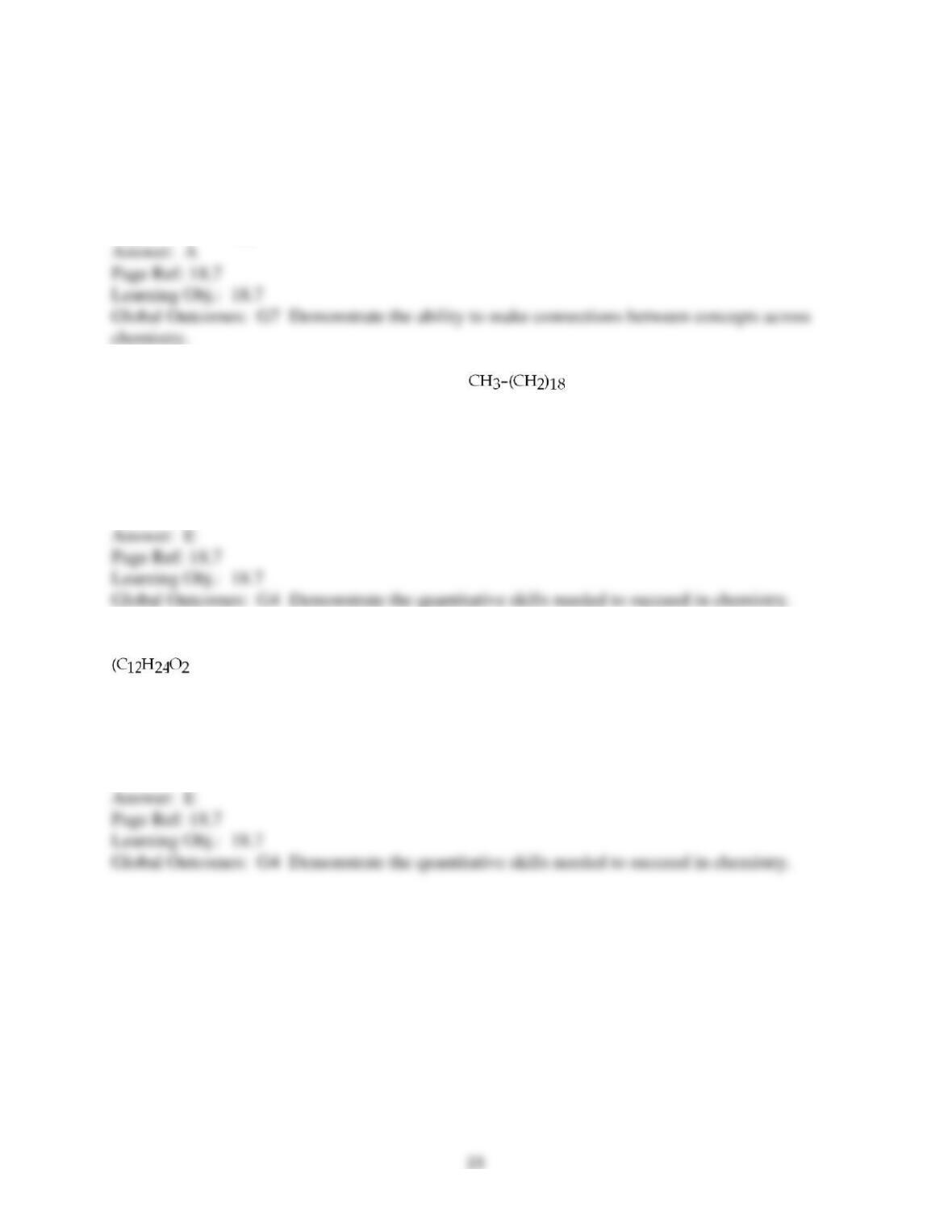
74) Which step is found in the breakdown of a fatty acid?
A) an activation that requires 2 ATP.
B) an oxidation with a cytochrome c.
C) an oxidation with CoQ.
D) direct substrate phosphorylation.
E) production of pyruvate.
75) During complete oxidation of the fatty acid -COOH, ________ molecules of
acetyl-CoA are produced, and the fatty acid goes through the β-oxidation cycle ________ times.
A) ten, ten
B) nine, ten
C) nine, nine
D) nine, eight
E) ten, nine
76) What is the net number of ATP molecules produced from the lauric acid
) found in coconut oil?
A) 72 ATP
B) 90 ATP
C) 100 ATP
D) 97 ATP
E) 95 ATP
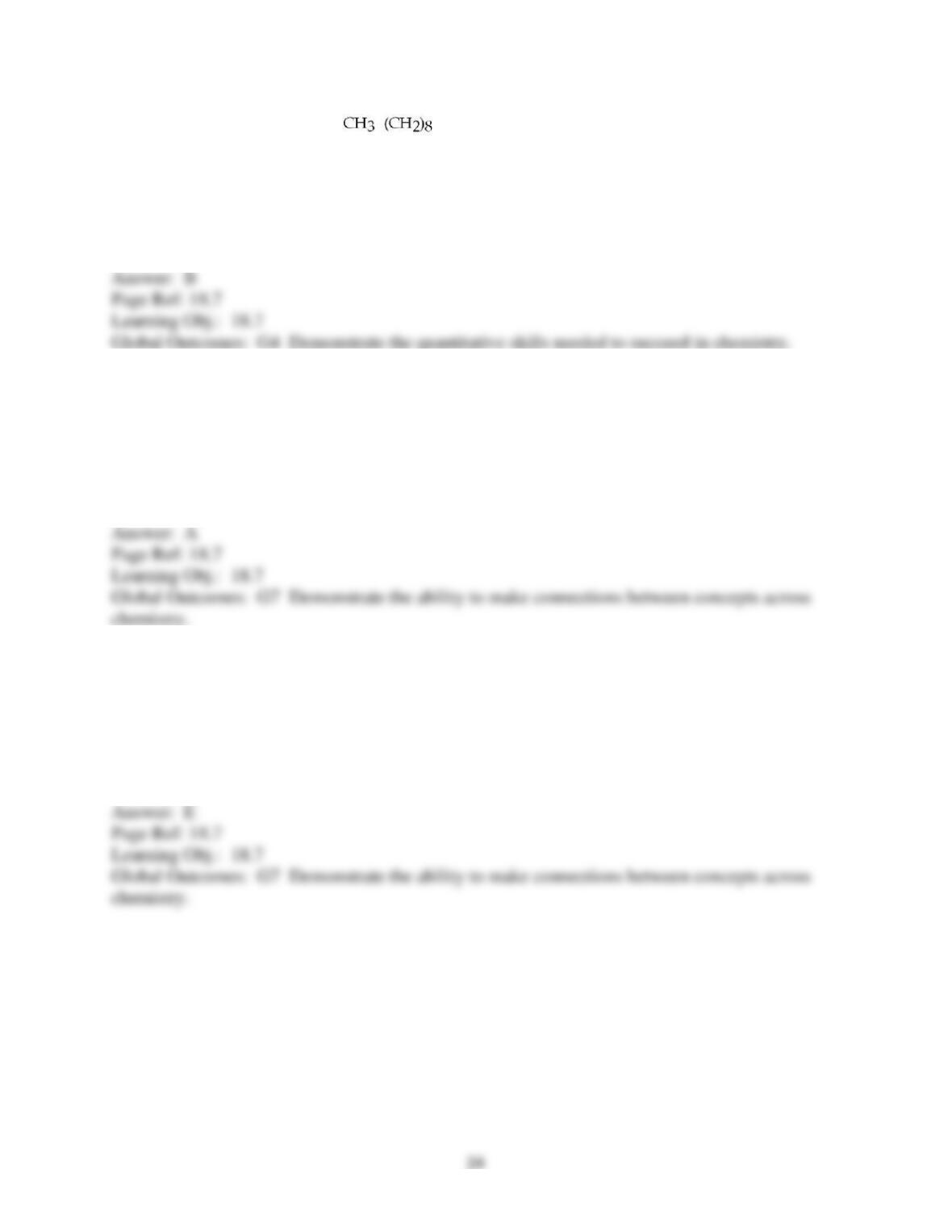
77) The complete oxidation of – –COOH produces a net of ________ molecules of
ATP.
A) 80
B) 78
C) 82
D) 74
E) 76
78) The removal of 2-carbon segments of a fatty acid for further metabolism occurs during
________.
A) β-oxidation
B) transamination
C) deglyceration
D) dehydration
E) decarboxylation
79) The 2-carbon segments removed from a fatty acid during metabolism are used to form
________.
A) glucose
B) pyruvate
C) lactate
D) CoA
E) acetyl-CoA
25
80) The 2-carbon units obtained by degradation of a fatty acid are further metabolized in
________.
A) oxidative deamination
B) the citric acid cycle
C) β-oxidation
D) glycolysis
E) transamination
81) Myristic acid, a fatty acid, produces ________ acetyl-CoA when completely
metabolized.
A) 2
B) 5
C) 7
D) 12
E) 14
82) Myristic acid, a fatty acid, goes through the β-oxidation cycle ________ times.
A) 2
B) 4
C) 6
D) 7
E) 14
83) Ketosis is a condition that can occur if ________.
A) ketone bodies cannot be completely metabolized
B) too many ketones are ingested
C) too much protein is available in the diet
D) the brain is starved of glucose
E) low fat intake occurs
84) Ketosis can lower the blood pH below 7.4, producing the condition ________.
26
A) anemia
B) hyponatremia
C) hypokalemia
D) acidosis
E) alkalosis
85) In a(n) ________ reaction, is produced when glutamate is converted to α-ketoglutarate.
A) dehydrogenation
B) transamination
C) oxidative deamination
D) reduction
E) hydration
86) Which of the following does not require ?
A) glycolysis
B) transamination
C) citric acid cycle
D) β-oxidation
E) oxidative deamination
87) In mammals, the ammonium ion produced in oxidative deamination is ________.
A) excreted in the feces
B) stored in the liver
C) converted to uric acid, which is excreted in the urine
D) converted to urea, which is excreted in the urine
E) converted to uric acid, which is excreted by the liver
18.2 Bimodal Questions
1) The term that refers to all of the chemical reactions in living cells is ________.
A) glycolysis
B) β-oxidation
C) metabolism
D) anabolism
E) catabolism
2) The energy for most energy-requiring reactions in the cells of the body is obtained by the
hydrolysis of ________.
A) ATP
B) ADP
C) AMP
D) cyclic AMP
E) GTP
3) Most of the energy in the typical animal cell is produced in the ________.
A) cytosol
B) nucleus
C) mitochondria
D) lysosomes
E) endoplasmic reticulum
4) Hydrolysis of sucrose takes place primarily in the ________.
A) mouth
B) stomach
C) pancreas
D) small intestine
E) large intestine
5) The net energy production in anaerobic glycolysis is ________.
A) 2 ATP
B) 4 ATP
C) 6 ATP
D) 8 ATP
E) 12 ATP
6) Most of the energy in our bodies is stored in the form of ________.
A) glycogen
B) glucose
C) proteins
D) triacylglycerols
E) cholesterol
18.3 Short Answer Questions
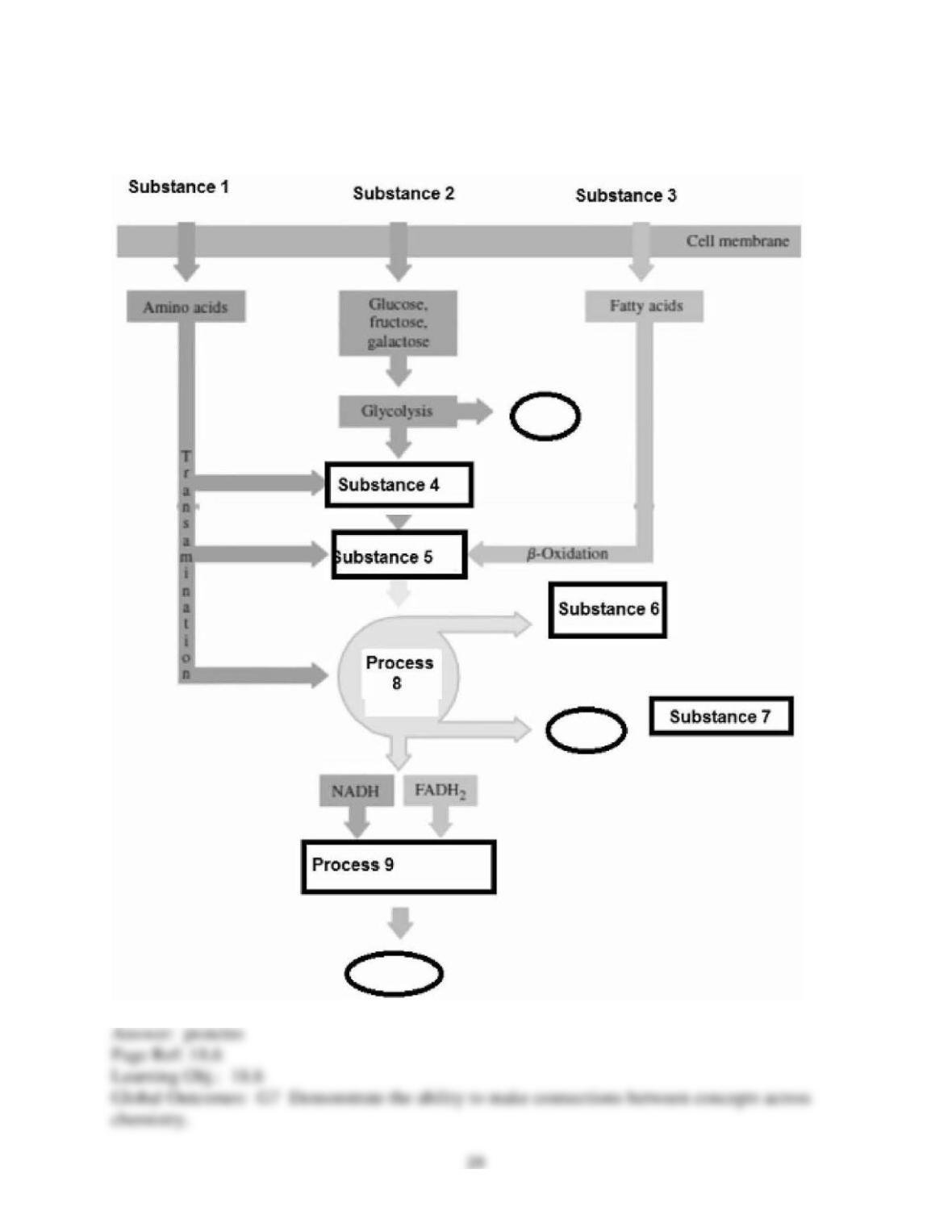
In this figure, identify the metabolic substance numbered.
1) substance 1
2) substance 2
3) substance 3
4) substance 4
5) substance 5
6) substance 6
7) substance 7
8) substance 8
9) process 9
10) process 10
11) process 11
32
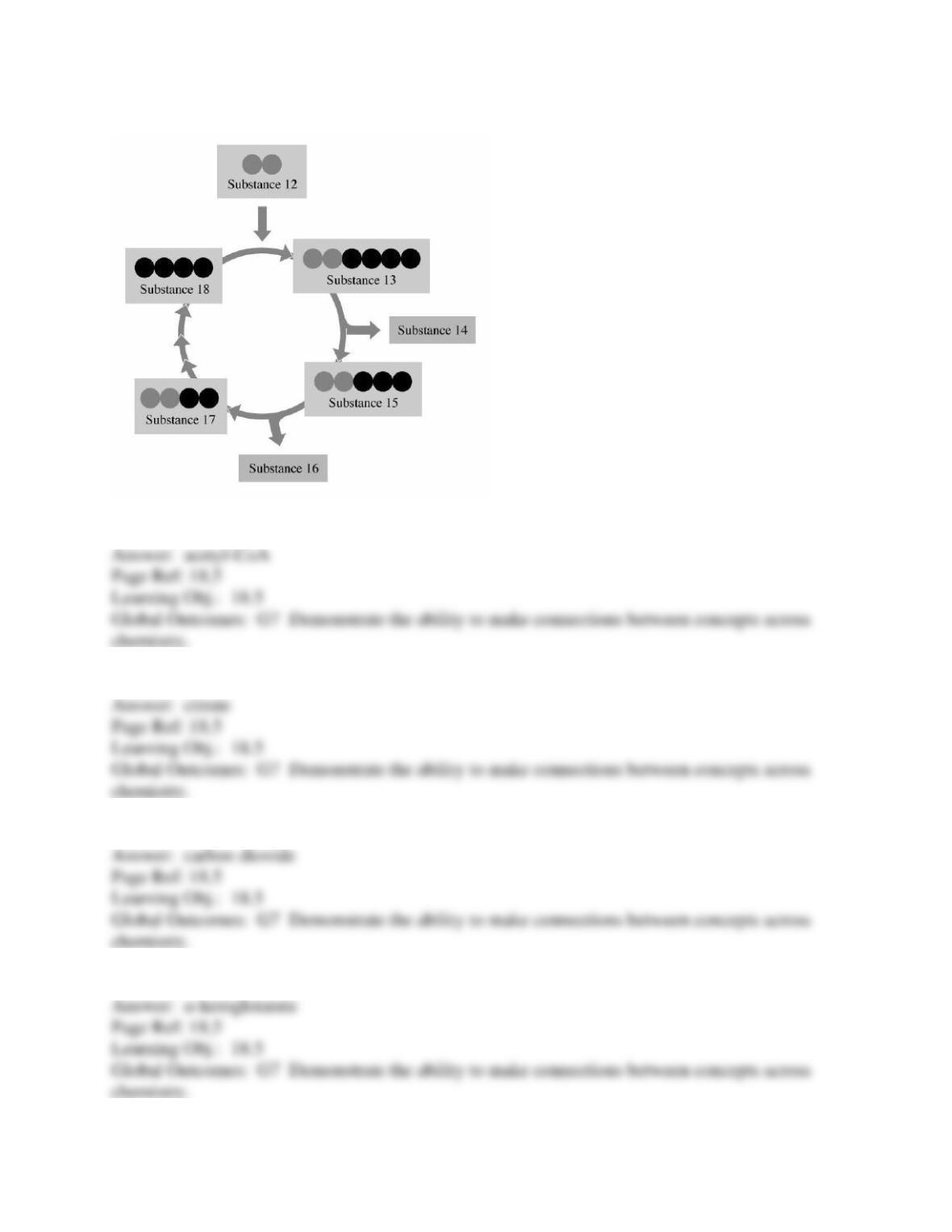
In this figure taken from your text, identify the substances shown.
12) substance 12
13) substance 13
14) substance 14
15) substance 15
16) substance 16
17) substance 17
18) substance 18
1) Energy production in the cell occurs primarily in the nucleus.
2) The cytosol is an aqueous solution of salts and enzymes.
3) Reactions in the mitochondria produce most of the cell’s energy.
4) Digestion of a polysaccharide is an anabolic process.
5) The production of carbon dioxide and water in the body is an anabolic process.
6) ATP is the primary energy source for the cell.
7) Catabolic reactions provide energy to generate ATP in the cell.
8) The conversion of ATP to ADP and inorganic phosphate produces 7.3 kcal/mole of energy.
9) Protein digestion begins in the small intestine.
10) Carbohydrate digestion begins in the mouth.
11) Chylomicrons consist of bile salts and lipids.
12) Oxidation involves the gain of electrons for a substance.
13) NA acts as a hydrogen acceptor in metabolic reactions.
14) FAD is the oxidized form of FAD.
15) The end product of glycolysis is pyruvate.
16) The citric acid cycle involves two decarboxylation reactions.
17) In the chemiosmotic model, protons flow through ATP synthase.
18) The total energy obtained from the degradation of a fatty acid depends on the carbon chain
length.
19) A 10 carbon fatty acid goes through β-oxidation 10 times.
20) Ammonium ions and carbon dioxide combine to produce urea in the urea cycle.
21) The urea cycle is the major pathway for eliminating the excess nitrogen from amino acid
degradation in mammals.
37
18.5 Matching Questions
Match the terms with the following descriptions.
A) coenzyme A
B) oxidative phosphorylation
1) the carrier of acetyl (two-carbon) groups
Page Ref: 18.3
Learning Obj.: 18.3
Global Outcomes: G7 Demonstrate the ability to make connections between concepts across
chemistry.
2) the process that makes ATP using energy from electron transport
Page Ref: 18.6
Learning Obj.: 18.6
Global Outcomes: G7 Demonstrate the ability to make connections between concepts across
chemistry.
Identify each of the following metabolic reactions.
A) electron transport
B) transamination
C) citric acid cycle
D) lipid metabolism
E) β-oxidation
F) breaking down of macromolecules
G) oxidative deamination
H) glycolysis
3) digestion
Page Ref: 18.1
Learning Obj.: 18.1
Global Outcomes: G7 Demonstrate the ability to make connections between concepts across
chemistry.
4) triacylglycerol hydrolysis
Page Ref: 18.1
Learning Obj.: 18.1
Global Outcomes: G7 Demonstrate the ability to make connections between concepts across
chemistry.

38
5) the conversion of glucose to pyruvate
Page Ref: 18.4
Learning Obj.: 18.4
Global Outcomes: G7 Demonstrate the ability to make connections between concepts across
chemistry.
6) the series of reactions that converts acetyl-CoA to carbon dioxide and water
Page Ref: 18.5
Learning Obj.: 18.5
Global Outcomes: G7 Demonstrate the ability to make connections between concepts across
chemistry.
7) the series of reactions that uses electron carriers
Page Ref: 18.6
Learning Obj.: 18.6
Global Outcomes: G7 Demonstrate the ability to make connections between concepts across
chemistry.
8) the conversion of fatty acids to 2-carbon units of acetyl-Coenzyme A
Page Ref: 18.7
Learning Obj.: 18.7
Global Outcomes: G7 Demonstrate the ability to make connections between concepts across
chemistry.
9) the conversion of an amino acid to an α-keto acid
Page Ref: 18.8
Learning Obj.: 18.8
Global Outcomes: G7 Demonstrate the ability to make connections between concepts across
chemistry.
10) the removal of an amino group as from glutamic acid to yield α-ketoglutaric acid
Page Ref: 18.8
Learning Obj.: 18.8
Global Outcomes: G7 Demonstrate the ability to make connections between concepts across
chemistry.
39
Match the following.
A) β-oxidation
B) acidosis
C) ketone bodies
D) chylomicrons
E) GTP
F) alkalosis
G) coenzyme A.
H) FAD
I) ATP
11) the main source of energy in the body
Page Ref: 18.1
Learning Obj.: 18.1
Global Outcomes: G7 Demonstrate the ability to make connections between concepts across
chemistry.
12) lipoproteins formed from triacylglycerols and protein
Page Ref: 18.2
Learning Obj.: 18.2
Global Outcomes: G7 Demonstrate the ability to make connections between concepts across
chemistry.
13) a carrier of electrons to the site of ATP production, from oxidation reactions involving
carbon-carbon double bonds
Page Ref: 18.3
Learning Obj.: 18.3
Global Outcomes: G7 Demonstrate the ability to make connections between concepts across
chemistry.
14) a carrier of 2-carbon units in fatty acid degradation
Page Ref: 18.3
Learning Obj.: 18.3
Global Outcomes: G7 Demonstrate the ability to make connections between concepts across
chemistry.
15) compounds produced when there is little or no carbohydrate metabolism and a subsequent
increase in fat metabolism
Page Ref: 18.7
Learning Obj.: 18.7
Global Outcomes: G7 Demonstrate the ability to make connections between concepts across
chemistry.
16) a major process in fatty acid degradation
Page Ref: 18.7
Learning Obj.: 18.7
Global Outcomes: G7 Demonstrate the ability to make connections between concepts across
chemistry.
17) a condition of low blood pH
Page Ref: 18.7
Learning Obj.: 18.7
Global Outcomes: G7 Demonstrate the ability to make connections between concepts across
chemistry.
Indicate the total amount of ATP produced when each of the following reactions occurs.
A) 6 ATP
B) 3 ATP
C) 36 ATP
D) 12 ATP
E) 2 ATP
18) complete oxidation of glucose
Page Ref: 18.6
Learning Obj.: 18.6
Global Outcomes: G4 Demonstrate the quantitative skills needed to succeed in chemistry.
19) acetyl-CoA → 2
Page Ref: 18.6
Learning Obj.: 18.6
Global Outcomes: G4 Demonstrate the quantitative skills needed to succeed in chemistry.
20) glucose → 2 pyruvate under aerobic conditions
Page Ref: 18.6
Learning Obj.: 18.6
Global Outcomes: G4 Demonstrate the quantitative skills needed to succeed in chemistry.
21) glucose → 2 lactate
Page Ref: 18.6
Learning Obj.: 18.6
Global Outcomes: G4 Demonstrate the quantitative skills needed to succeed in chemistry.
22) pyruvate → acetyl-CoA
Page Ref: 18.6
Learning Obj.: 18.6
Global Outcomes: G4 Demonstrate the quantitative skills needed to succeed in chemistry.