13) The exchange rate between currencies of different countries is controlled primarily by
________ in currency markets.
A) diplomatic relations
B) supply and demand
C) tariff rates
D) the outsourcing agreements
14) Spending on goods from a country will ________ as the value of its currency gets cheaper
against the U.S. dollar.
A) decrease
B) increase
C) reverse
D) go to other countries
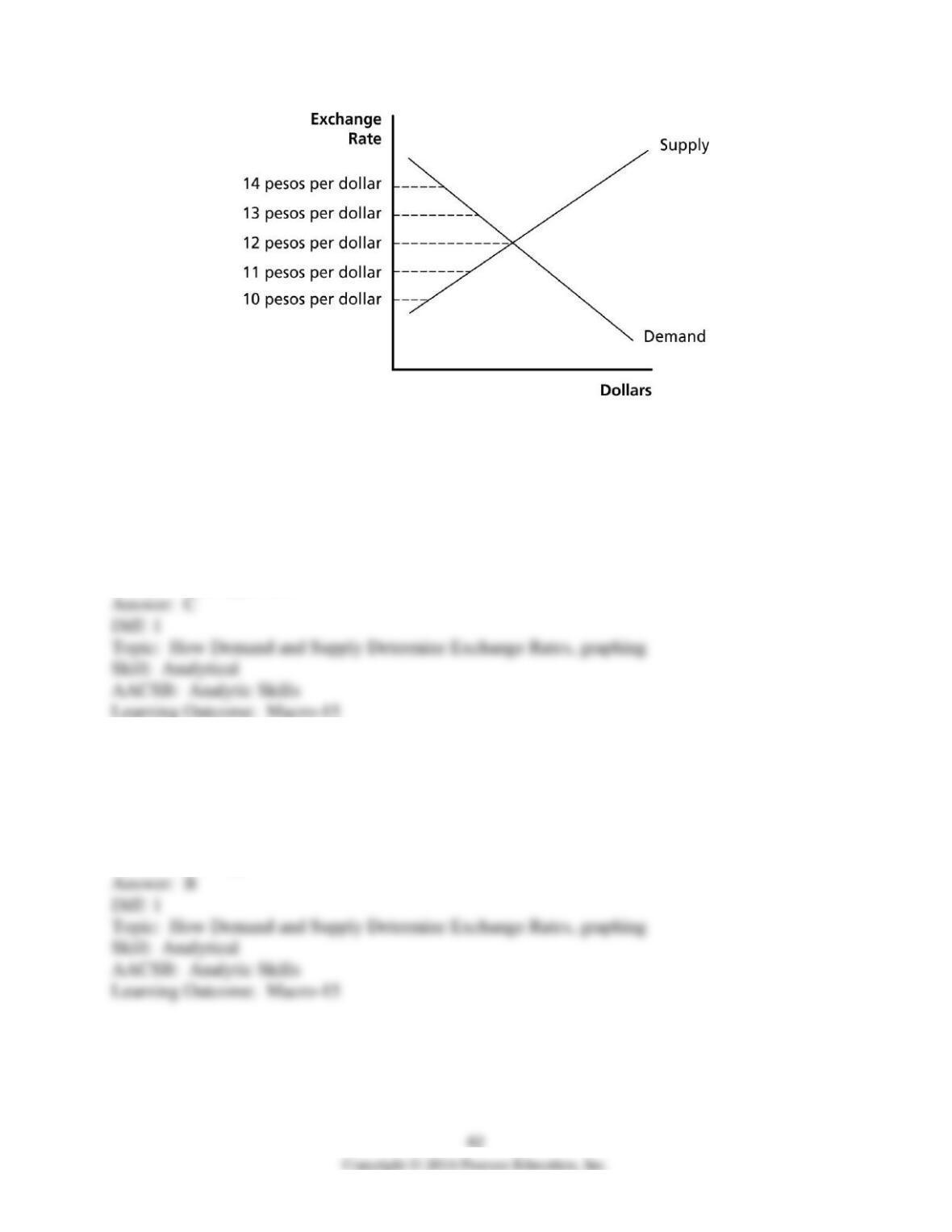
Figure 18.2
15) Referring to Figure 18.2, if the exchange rate is currently 11 pesos per dollar, then we expect
the dollar to ________ and the peso to ________.
A) depreciate; depreciate
B) depreciate; appreciate
C) appreciate; depreciate
D) appreciate; appreciate
16) Referring to Figure 18.2, if the exchange rate is currently 14 pesos per dollar, then we expect
the dollar to ________ and the peso to ________.
A) depreciate; depreciate
B) depreciate; appreciate
C) appreciate; depreciate
D) appreciate; appreciate
17) Referring to Figure 18.2, the dollar is likely to appreciate if the exchange rate is either
________ or ________ pesos to the dollar.
A) 10; 11
B) 11; 12
C) 12; 13
D) 13; 14
18) Referring to Figure 18.2, the dollar is likely to depreciate if the exchange rate is either
________ or ________ pesos to the dollar.
A) 10; 11
B) 11; 12
C) 12; 13
D) 13; 14
19) Referring to Figure 18.2, the peso is likely to appreciate if the exchange rate is either
________ or ________ pesos to the dollar.
A) 10; 11
B) 11; 12
C) 12; 13
D) 13; 14
20) Referring to Figure 18.2, the peso is likely to depreciate if the exchange rate is either
________ or ________ pesos to the dollar.
A) 10; 11
B) 11; 12
C) 12; 13
D) 13; 14
21) Referring to Figure 18.2, U.S. goods will become more expensive in Mexico if the exchange
rate goes from ________ to ________ pesos to the dollar.
A) 12; 11
B) 12; 13
C) 13; 11
D) 14; 10
22) Referring to Figure 18.2, U.S. goods will become cheaper in Mexico if the exchange rate
goes from ________ to ________ pesos to the dollar.
A) 12; 11
B) 12; 13
C) 11; 13
D) 10; 14
23) Referring to Figure 18.2, Mexican goods will become more expensive in the United States if
the exchange rate goes from ________ to ________ pesos to the dollar.
A) 12; 11
B) 12; 13
C) 11; 13
D) 10; 13
24) Referring to Figure 18.2, Mexican goods will become cheaper in the United States if the
exchange rate goes from ________ to ________ pesos to the dollar.
A) 12; 11
B) 12; 13
C) 13; 11
D) 13; 10
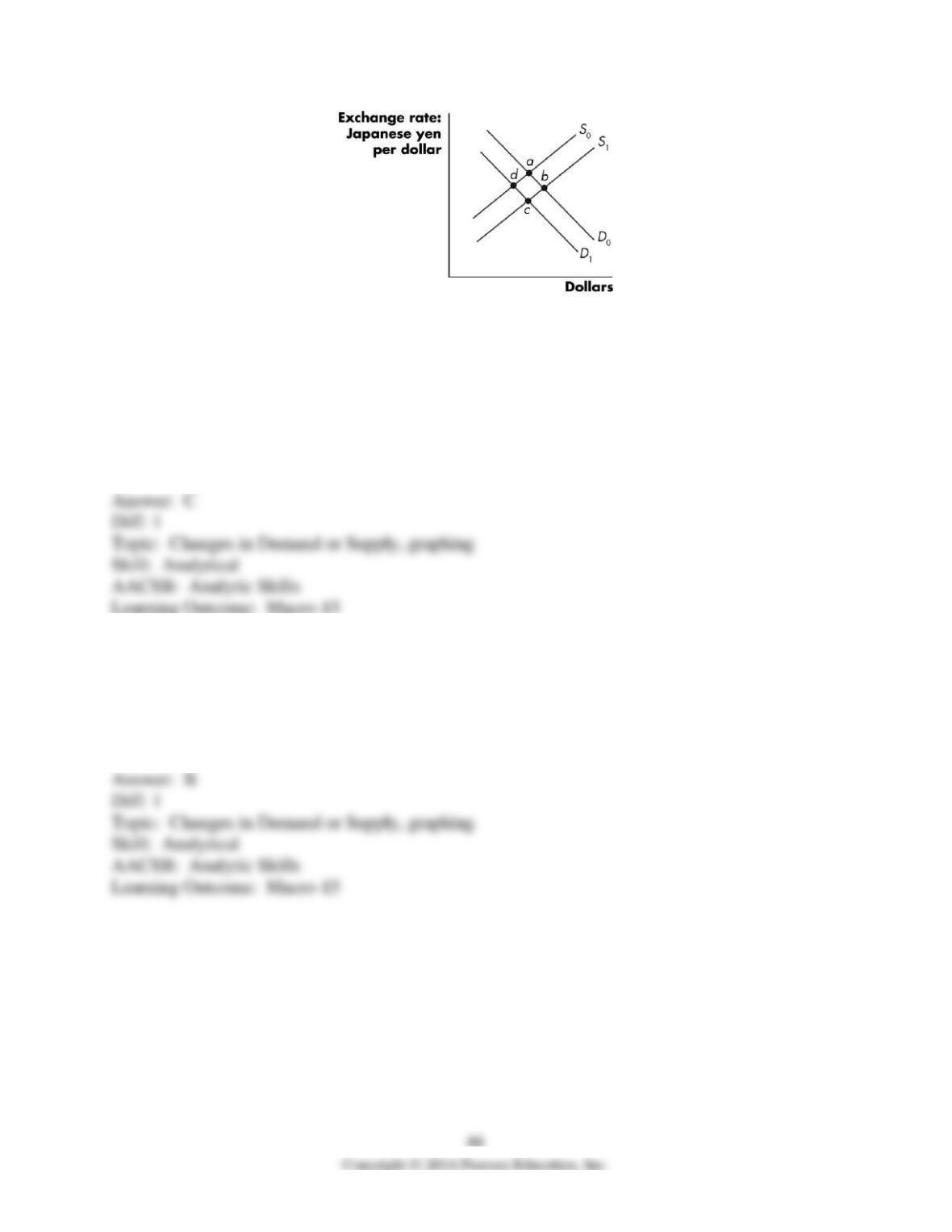
Figure 18.3
25) Referring to Figure 18.3, a depreciation of the dollar is represented by a movement from
point
A) c to d.
B) b to a.
C) a to c.
D) c to a.
26) Referring to Figure 18.3, an appreciation of the dollar is represented by a movement from
point
A) a to d.
B) c to d.
C) a to c.
D) b to c.
27) Referring to Figure 18.3, the effect of an increase in U.S. interest rates is represented by a
movement from point
A) a to d.
B) c to b.
C) a to b.
D) d to c.
28) Referring to Figure 18.3, the effect of a decrease in U.S. prices is represented by a movement
from point
A) d to a.
B) b to c.
C) a to d.
D) a to b.
29) Referring to Figure 18.3, the effect of a decrease in U.S. interest rates is represented by a
movement from point
A) d to a.
B) c to b.
C) c to d.
D) b to c.
30) Referring to Figure 18.3, the effect of an increase in U.S. prices is represented by a
movement from point
A) c to b.
B) b to a.
C) d to a.
D) a to d.
31) Referring to Figure 18.3, the effect of an increase in Japanese interest rates is represented by
a movement from point
A) c to d.
B) b to a.
C) d to c.
D) d to a.
32) Referring to Figure 18.3, the effect of a decrease in Japanese prices is represented by a
movement from point
A) d to a.
B) c to b.
C) c to d.
D) d to c.
33) Referring to Figure 18.3, the effect of a decrease in Japanese interest rates is represented by a
movement from point
A) b to a.
B) a to b.
C) b to c.
D) a to d.
34) Referring to Figure 18.3, the effect of an increase in Japanese prices is represented by a
movement from point
A) d to c.
B) c to d.
C) a to b.
D) a to d.
35) A(n) ________ in U.S. interest rates will cause a decrease in the demand for U.S. dollars and
a(n) ________ in the (per dollar) exchange rate.
A) increase; increase
B) increase; decrease
C) decrease; increase
D) decrease; decrease
36) A(n) ________ in U.S. interest rates will cause an increase in the demand for U.S. dollars
and a(n) ________ in the (per dollar) exchange rate.
A) increase; increase
B) increase; decrease
C) decrease; increase
D) decrease; decrease
37) A(n) ________ in U.S. prices will cause a decrease in the demand for U.S. dollars and a(n)
________ in the (per dollar) exchange rate.
A) increase; increase
B) increase; decrease
C) decrease; increase
D) decrease; decrease
38) A(n) ________ in U.S. prices will cause an increase in the demand for U.S. dollars and a(n)
________ in the (per dollar) exchange rate.
A) increase; increase
B) increase; decrease
C) decrease; increase
D) decrease; decrease
39) An increase in Swiss interest rates will cause
A) an increase in the demand for U.S. dollars and an increase in the exchange rate of Swiss
francs per dollar.
B) a decrease in the demand for U.S. dollars and a decrease in the exchange rate of Swiss francs
per dollar.
C) an increase in the supply of U.S. dollars and a decrease in the exchange rate of Swiss francs
per dollar.
D) a decrease in the supply of U.S. dollars and an increase in the exchange rate of Swiss francs
per dollar.
40) A decrease in Swiss interest rates will cause
A) an increase in the demand for U.S. dollars and an increase in the exchange rate of Swiss
francs per dollar.
B) a decrease in the demand for U.S. dollars and a decrease in the exchange rate of Swiss francs
per dollar.
C) an increase in the supply of U.S. dollars and a decrease in the exchange rate of Swiss francs
per dollar.
D) a decrease in the supply of U.S. dollars and an increase in the exchange rate of Swiss francs
per dollar.
41) An increase in Swiss prices will cause
A) an increase in the demand for U.S. dollars and an increase in the exchange rate of Swiss
francs per dollar.
B) a decrease in the demand for U.S. dollars and a decrease in the exchange rate of Swiss francs
per dollar.
C) an increase in the supply of U.S. dollars and a decrease in the exchange rate of Swiss francs
per dollar.
D) a decrease in the supply of U.S. dollars and an increase in the exchange rate of Swiss francs
per dollar.
42) A decrease in Swiss prices will cause
A) an increase in the demand for U.S. dollars and an increase in the exchange rate of Swiss
francs per dollar.
B) a decrease in the demand for U.S. dollars and a decrease in the exchange rate of Swiss francs
per dollar.
C) an increase in the supply of U.S. dollars and a decrease in the exchange rate of Swiss francs
per dollar.
D) a decrease in the supply of U.S. dollars and an increase in the exchange rate of Swiss francs
per dollar.
43) The exchange rate of currencies between countries affects the prices of the goods purchased
and sold between them.
44) If the dollar appreciates against the peso it means that U.S. goods become more expensive in
Mexico.
45) If the dollar depreciates against the euro it means that French-made goods become more
expensive in the United States.
46) The exchange rate between currencies of different countries is controlled primarily by supply
and demand in currency markets.
47) If the exchange rate is 0.8 euro per dollar, one dollar is equal to 1.25 euros
48) The dollar will depreciate against the euro when the European Central Bank raises interest
rates.
49) The dollar will appreciate if interest rates fall in the United States.
50) Suppose that you are an Israeli citizen and had invested in a one-year U.S. bond that yielded
5%. The bond cost $5,000 and paid $5,250 at the end of the year. At the time you bought the
bond, the exchange rate was 3.8 shekels/dollar. How many shekels did the bond cost? If the
exchange rate fell to 3.5 shekels/dollar over this time period, what would the return on your
investment be?
51) If the current exchange rate is 0.65 British pounds per dollar, what is the dollar price of one
British pound? If the exchange rate changes to 0.70 British pounds per dollar, what is the new
dollar value of one British pound?
52) What will happen to the exchange rate between the euro and the U.S. dollar if U.S. interest
rates increase?
53) What will happen to the exchange rate between the British pound and the U.S. dollar if
British prices increase?