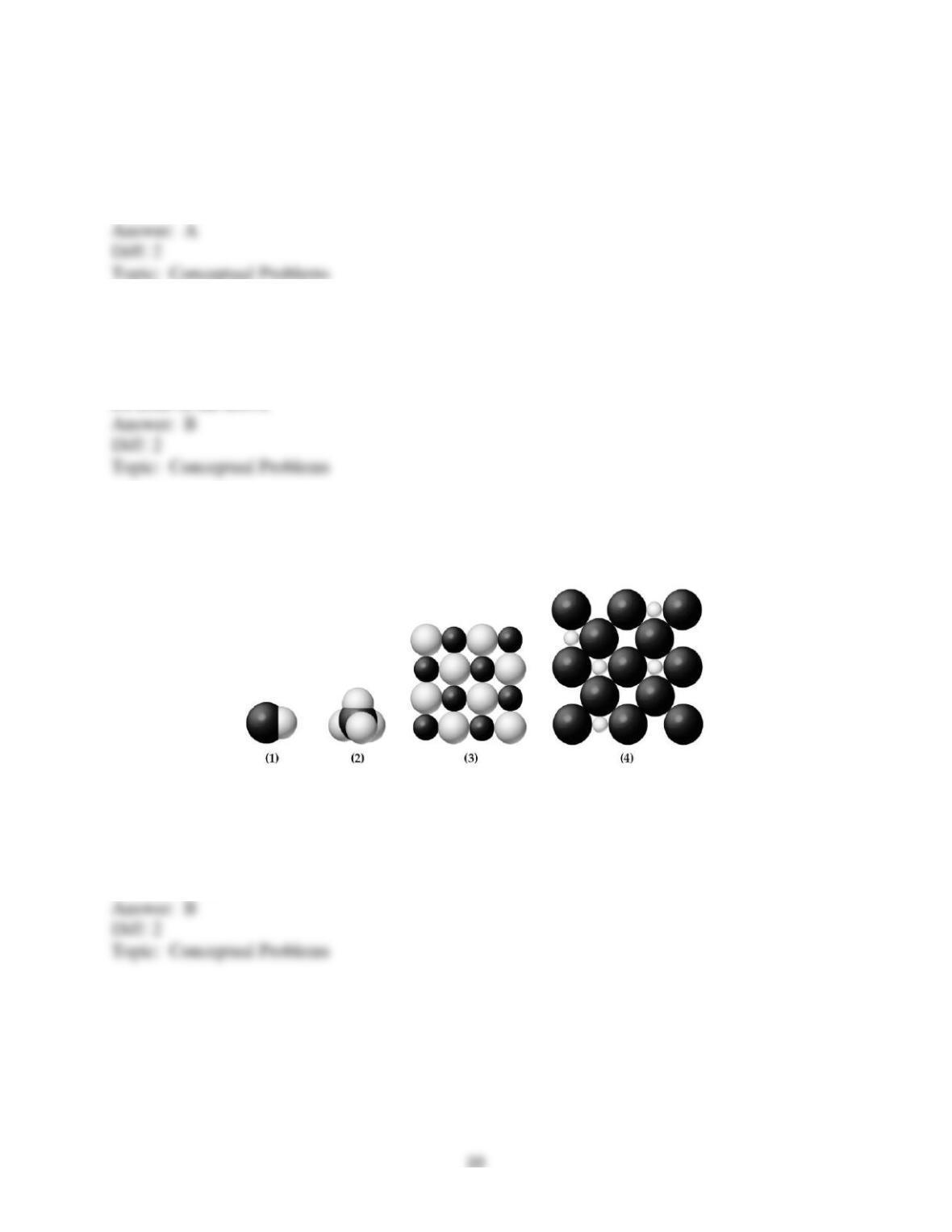
78) The binary hydride shown in picture (3) is classified as
A) covalent.
B) interstitial (metallic).
C) ionic.
D) none of the above
79) The binary hydride shown in picture (4) is classified as
A) covalent.
B) interstitial (metallic).
C) ionic.
D) none of the above
The following pictures represent binary hydrides, AHx, where A = Na, Ti, C, or Cl. Lightly-
shaded spheres represent H atoms or ions and darkly-colored spheres represent atoms or ions of
element A.
80) Which hydride has the lowest melting point?
A) hydride (1)
B) hydride (2)
C) hydride (3)
D) hydride (4)
81) Which hydride reacts with water at 25°C to give H2 gas and forms a basic solution?
A) hydride (1)
B) hydride (2)
C) hydride (3)
D) hydride (4)
82) Which hydride dissolves in water to form an acidic solution?
A) hydride (1)
B) hydride (2)
C) hydride (3)
D) hydride (4)
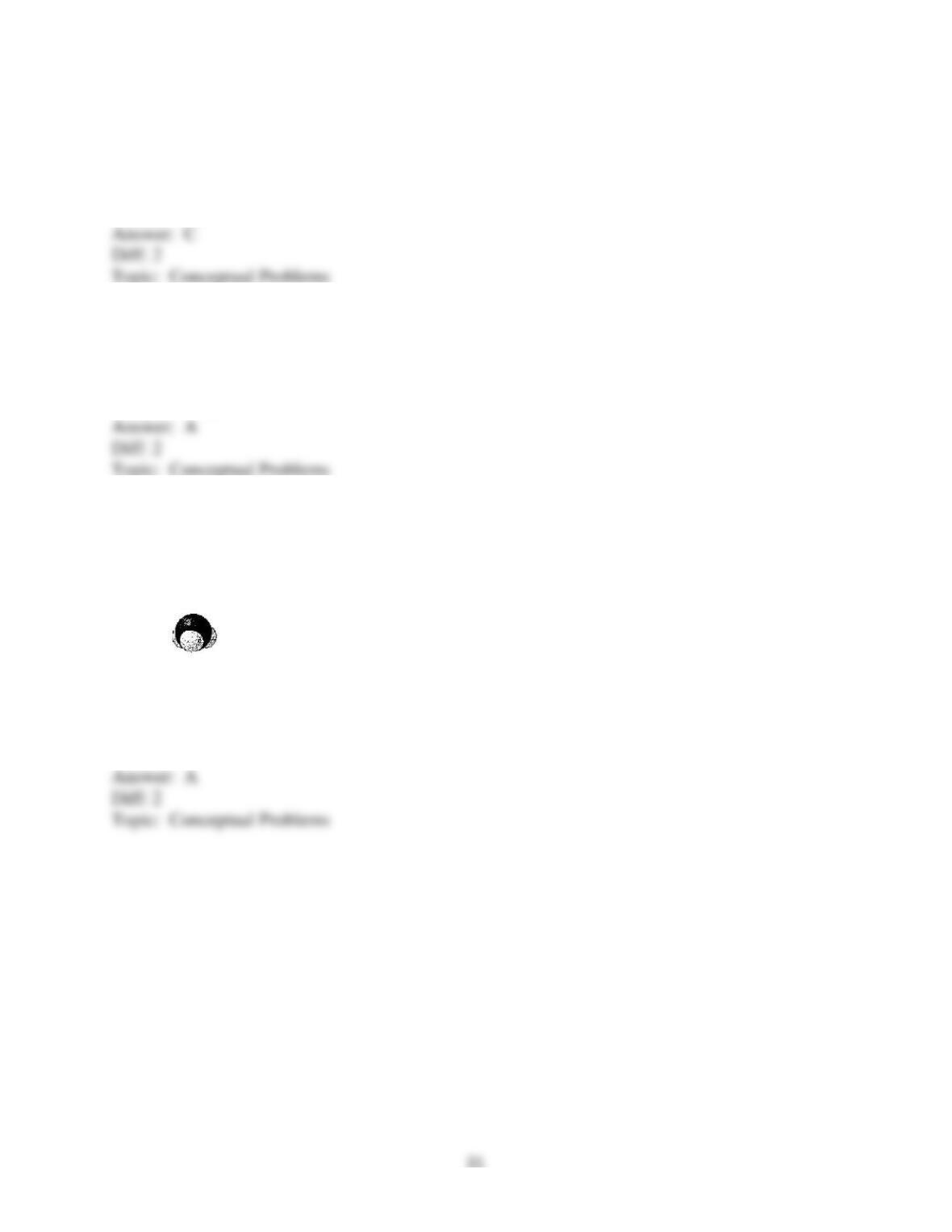
83) In the picture representing binary hydride AHx, lightly-shaded spheres represent H atoms or
ions and darkly-shaded spheres represent atoms or ions of the other element, A. If A is a second-
period element, the oxidation state of hydrogen and the oxidation state of element A in the binary
hydride shown below are
A) +1 and -3.
B) +1 and -1.
C) -1 and +1.
D) -1 and +3.
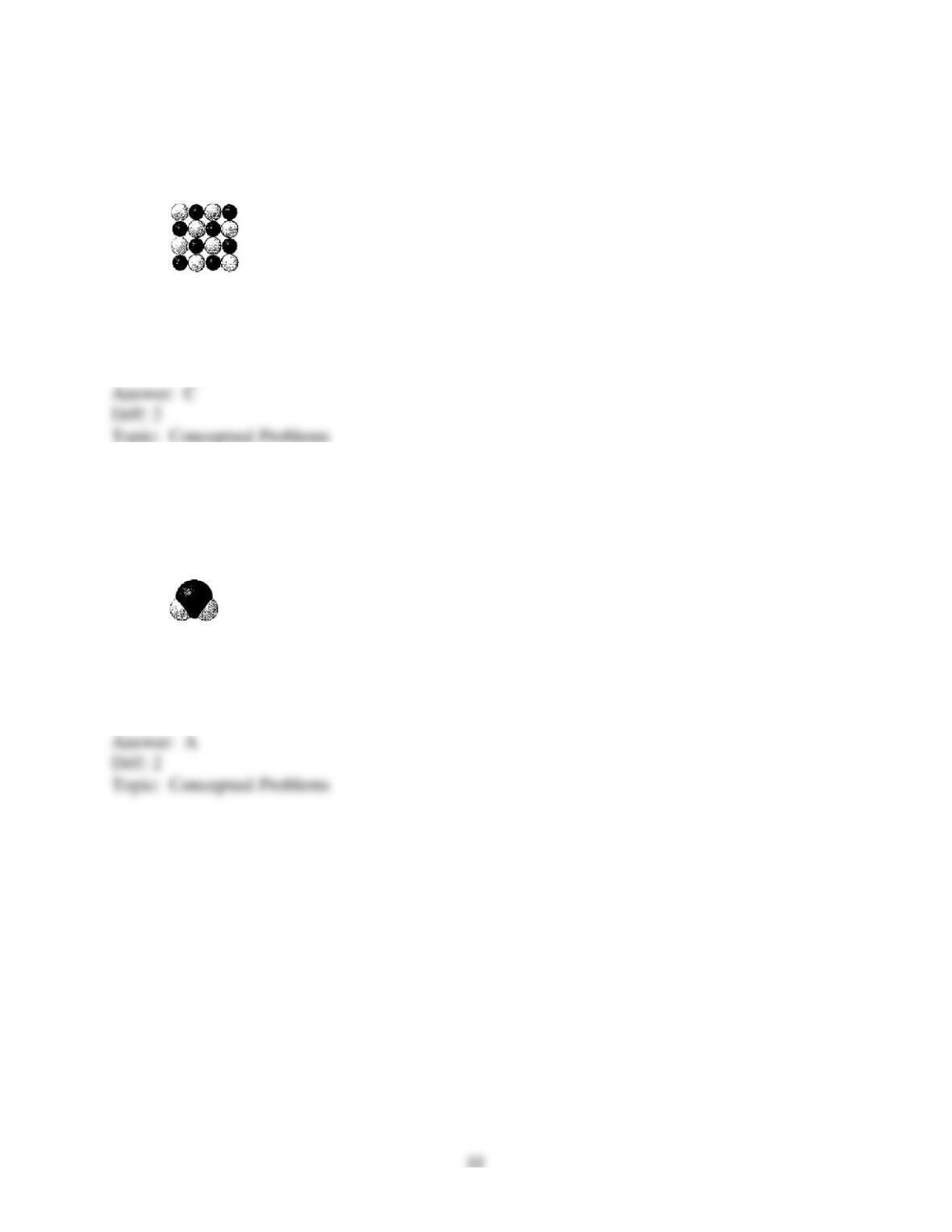
84) In the picture representing binary hydride AHx, lightly-shaded spheres represent H atoms or
ions and darkly-shaded spheres represent atoms or ions of the other element, A. The oxidation
state of hydrogen and the oxidation state of element A in the binary hydride shown below are
A) +1 and -3.
B) +1 and -1.
C) -1 and +1.
D) -1 and +3.
85) In the picture representing binary hydride AHx, lightly-shaded spheres represent H atoms or
ions and darkly-shaded spheres represent atoms or ions of the other element, A. If A is a second-
period element, the oxidation state of hydrogen and the oxidation state of element A in the binary
hydride shown below are
A) +1 and -2.
B) +1 and -1.
C) -1 and +1.
D) -1 and +3.
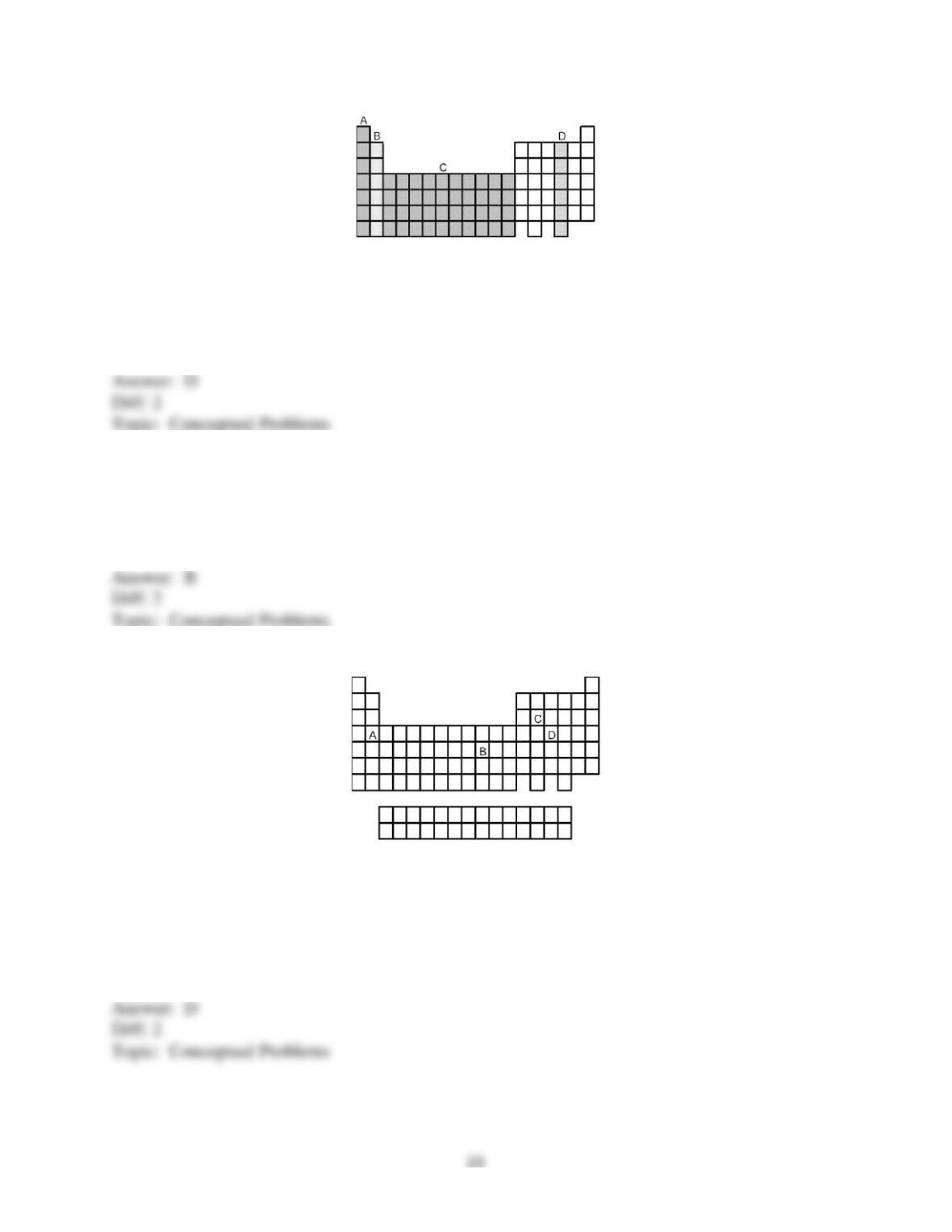
86) What group of elements is most likely to form covalent molecular hydrides?
A) A
B) B
C) C
D) D
87) What group of elements is most likely to from ionic hydrides of the type MH2?
A) A
B) B
C) C
D) D
88) Which element shown on the periodic table above forms a covalent binary hydride with the
formula MX3?
A) element A
B) element B
C) element C
D) element D
89) Which element shown on the periodic table above forms an ionic binary hydride with the
formula MX2?
A) element A
B) element B
C) element C
D) element D
90) Which element shown on the periodic table above forms a covalent binary hydride with the
formula MX4?
A) element A
B) element B
C) element C
D) element D
91) Which element shown on the periodic table above forms an interstitial binary hydride with
the formula MXx?
A) element A
B) element B
C) element C
D) element D
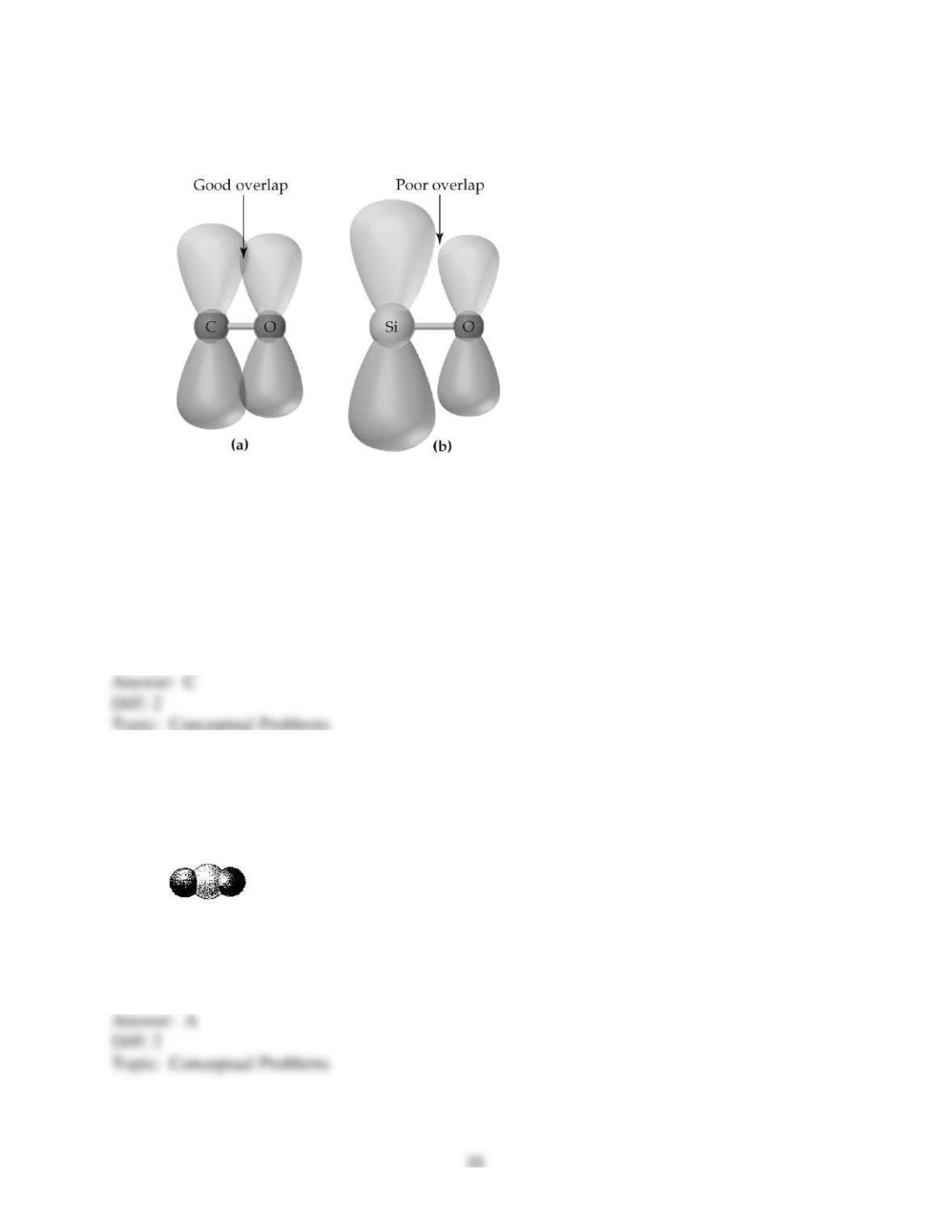
92) Picture (a) shows p-orbital overlap between carbon and oxygen atoms; picture (b) shows p-
orbital overlap between silicon and oxygen atoms.
Based on these pictures, it is expected that
A) carbon and oxygen form better σ bonds than silicon and oxygen, so C-O single bonds are
stronger than Si-O single bonds.
B) silicon and oxygen form better σ bonds than carbon and oxygen, so Si-O single bonds are
stronger than C-O single bonds.
C) carbon and oxygen form better π bonds than silicon and oxygen, so C=O double bonds are
stronger than Si=O double bonds.
D) silicon and oxygen form better π bonds than carbon and oxygen, so Si=O double bonds are
stronger than C=O double bonds.
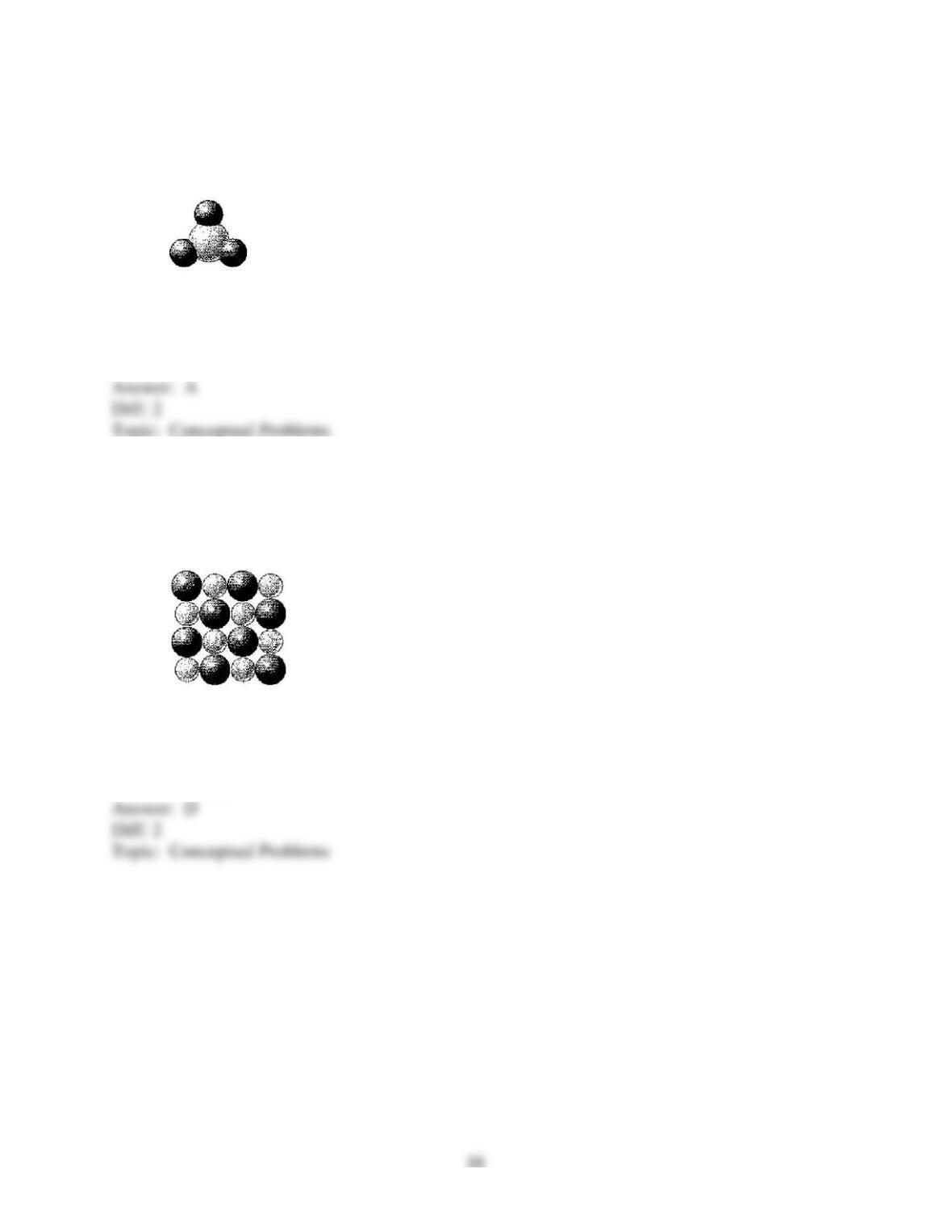
93) In the following picture of an oxide, darkly-shaded spheres represent oxygen atoms or ions
and lightly-shaded spheres represent atoms or ions of a second-row element in its highest
oxidation state. Tell whether the oxide is covalent or ionic and whether the oxide is acidic or
basic.
A) covalent and acidic
B) covalent and basic
C) ionic and acidic
D) ionic and basic
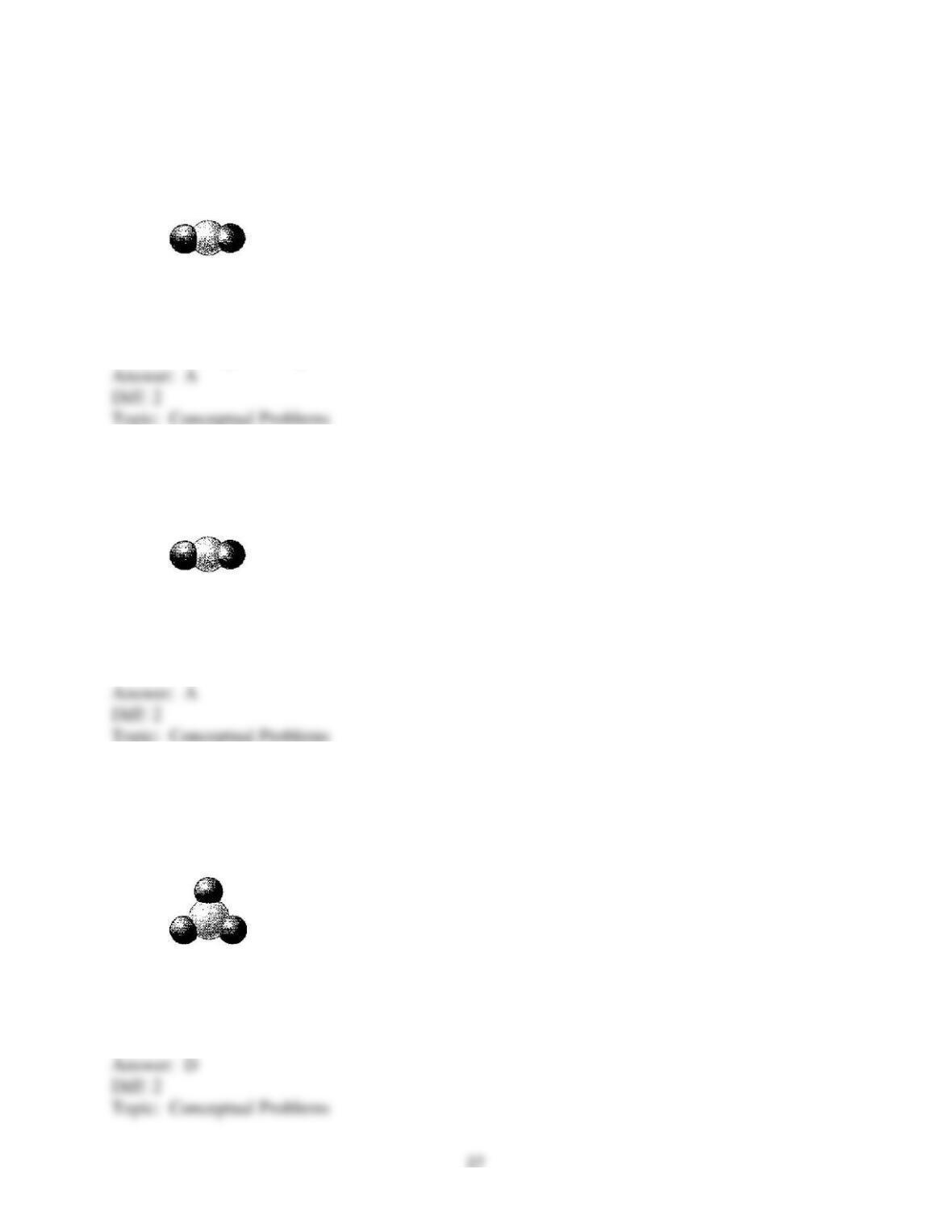
94) In the following picture of an oxide, darkly-shaded spheres represent oxygen atoms or ions
and lightly-shaded spheres represent atoms or ions of a third-row element in its highest oxidation
state. Tell whether the oxide is covalent or ionic and whether the oxide is acidic or basic.
A) covalent and acidic
B) covalent and basic
C) ionic and acidic
D) ionic and basic
95) In the following picture of an oxide, darkly-shaded spheres represent oxygen atoms or ions
and lightly-shaded spheres represent atoms or ions of a second-row element in its highest
oxidation state. Tell whether the oxide is covalent or ionic and whether the oxide is acidic or
basic.
A) covalent and acidic
B) covalent and basic
C) ionic and acidic
D) ionic and basic
96) In the following picture of an oxide, darkly-shaded spheres represent oxygen atoms or ions
and lightly-shaded spheres represent atoms or ions of a second-row element in its highest
oxidation state. Tell whether the oxide is covalent or ionic and whether the oxide is expected to
be a gas (or a liquid) or a high-melting solid.
A) covalent and gas or liquid
B) covalent and high-melting solid
C) ionic and liquid or gas
D) ionic and high-melting solid
97) In the following picture of an oxide, darkly-shaded spheres represent oxygen atoms or ions
and lightly-shaded spheres represent atoms or ions of a second-row element in its highest
oxidation state. Identify the element represented by the lightly-shaded spheres.
A) C
B) N
C) S
D) Si
98) In the following picture of an uncharged oxide, darkly-shaded spheres represent oxygen
atoms or ions and lightly-shaded spheres represent atoms or ions of a second- or third-row
element in its highest oxidation state. Identify the element represented by the lightly-shaded
spheres.
A) Al
B) C
C) N
D) S
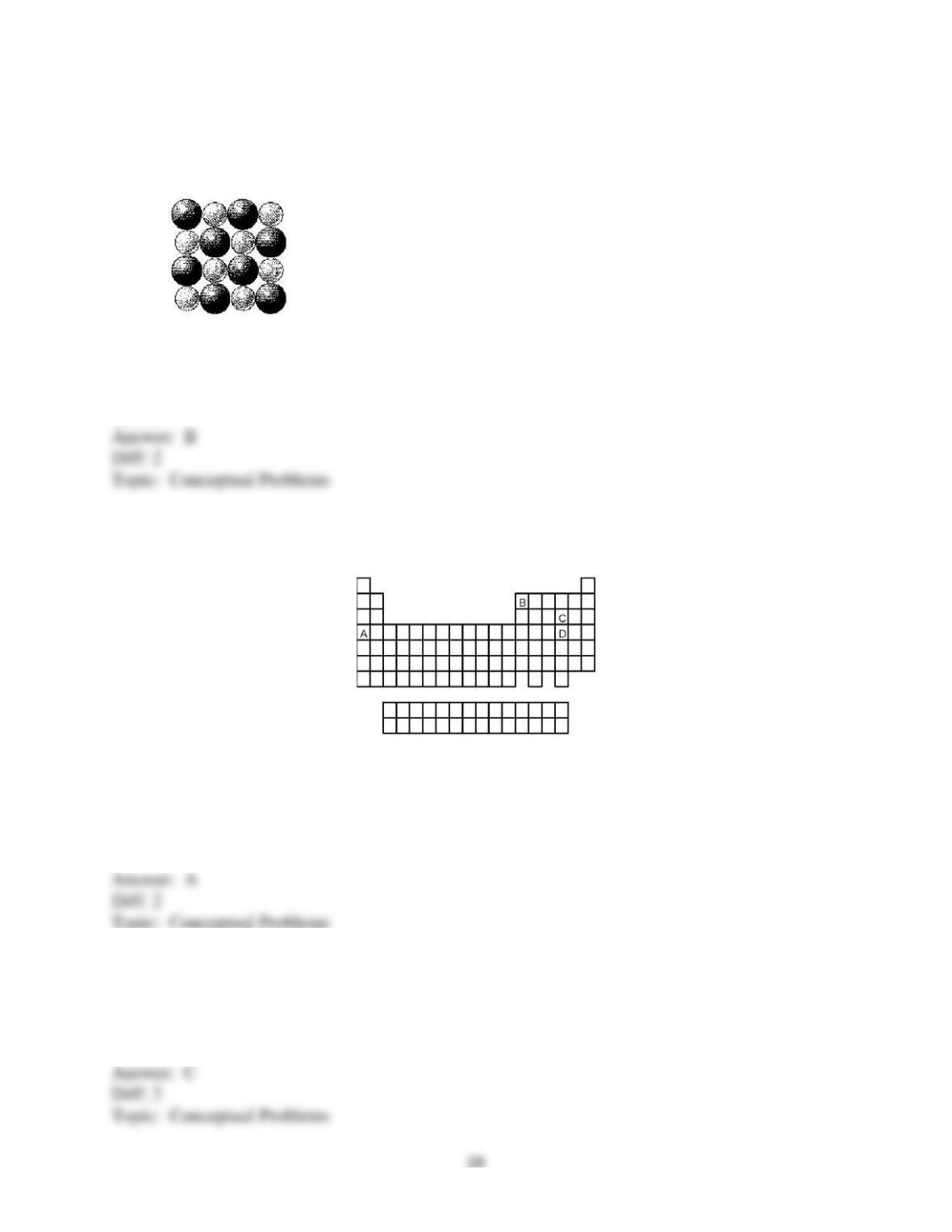
99) In the following picture of an oxide, darkly-shaded spheres represent oxygen atoms or ions
and lightly-shaded spheres represent atoms or ions of a second-row element in its highest
oxidation state. Identify the element represented by the lightly-shaded spheres.
A) C
B) Mg
C) N
D) Na
Look at the location of elements A, B, C, and D in the following periodic table. Consider the
oxides that form when the elements A-D are in their highest oxidation states.
100) Which oxide is the most ionic?
A) A
B) B
C) C
D) D
101) Which oxide is the most covalent?
A) A
B) B
C) C
D) D
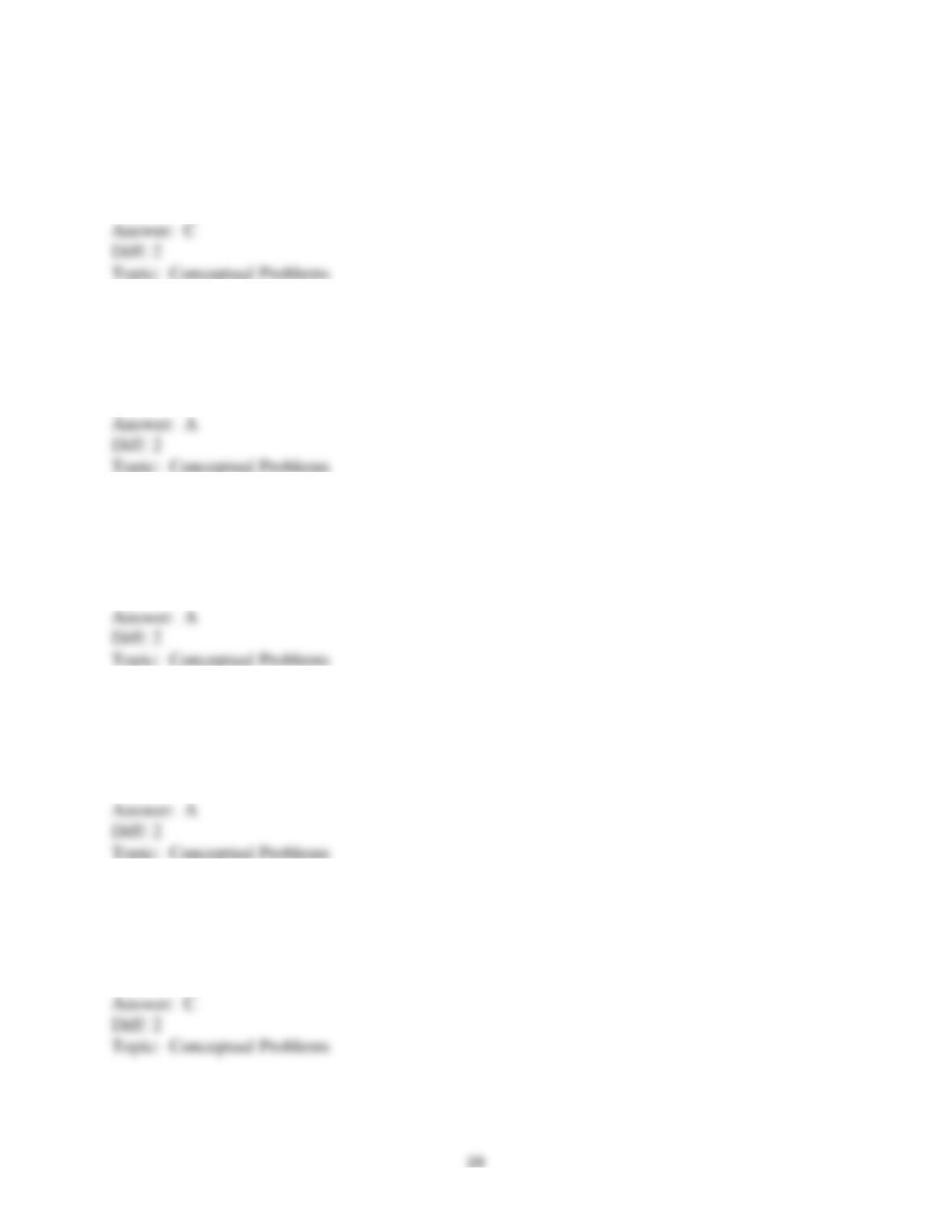
102) Which oxide is the most acidic?
A) A
B) B
C) C
D) D
103) Which oxide is the most basic?
A) A
B) B
C) C
D) D
104) Which oxide is a solid with an infinitely extended three-dimensional crystal structure?
A) A
B) B
C) C
D) D
105) Which oxide has the highest melting point?
A) A
B) B
C) C
D) D
106) Which oxide has the lowest melting point?
A) A
B) B
C) C
D) D
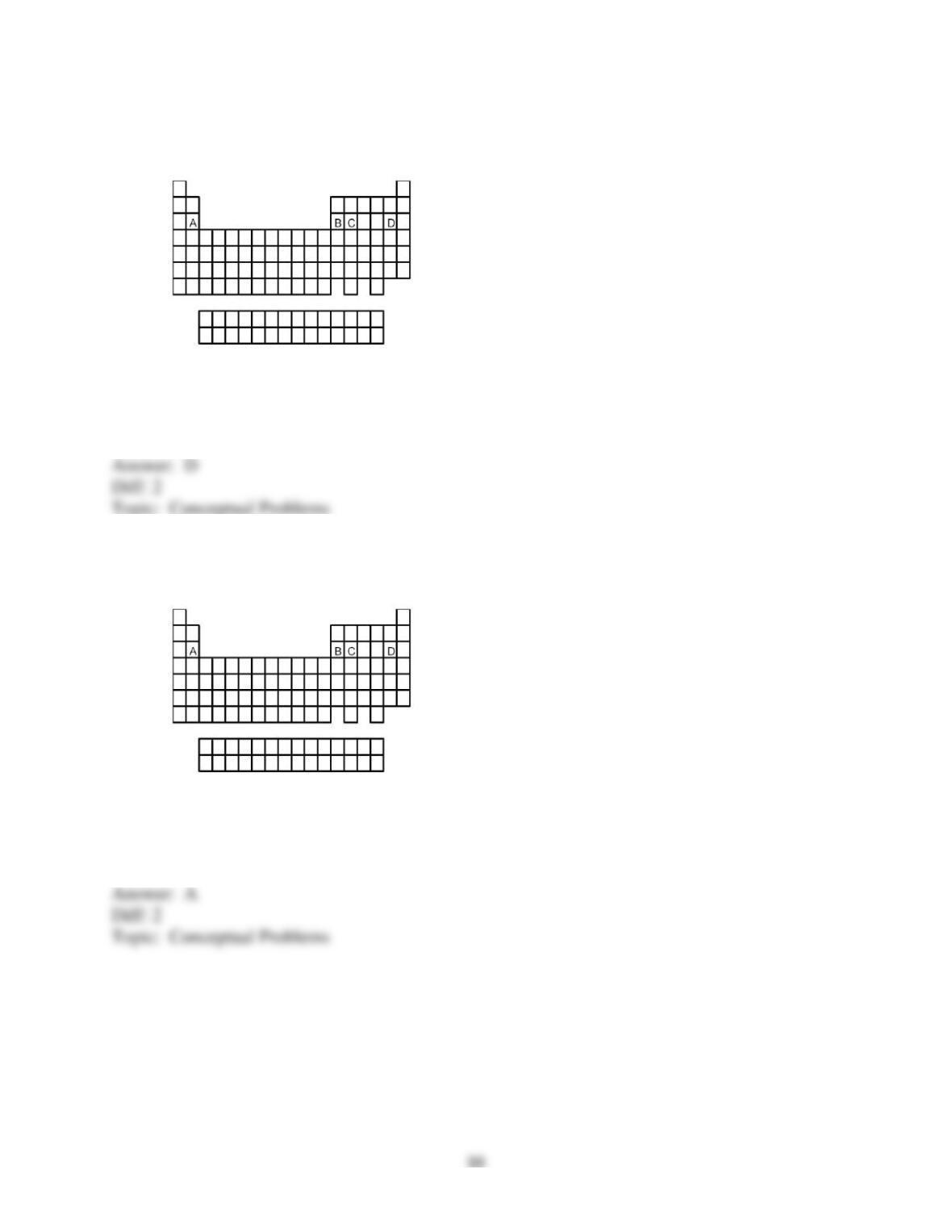
107) The oxide of which element, identified by letters A, B, C, and D in the following periodic
table, is most acidic in its highest oxidation state?
A) A
B) B
C) C
D) D
108) The oxide of which element, identified by letters A, B, C, and D in the following periodic
table, is most basic in its highest oxidation state?
A) A
B) B
C) C
D) D
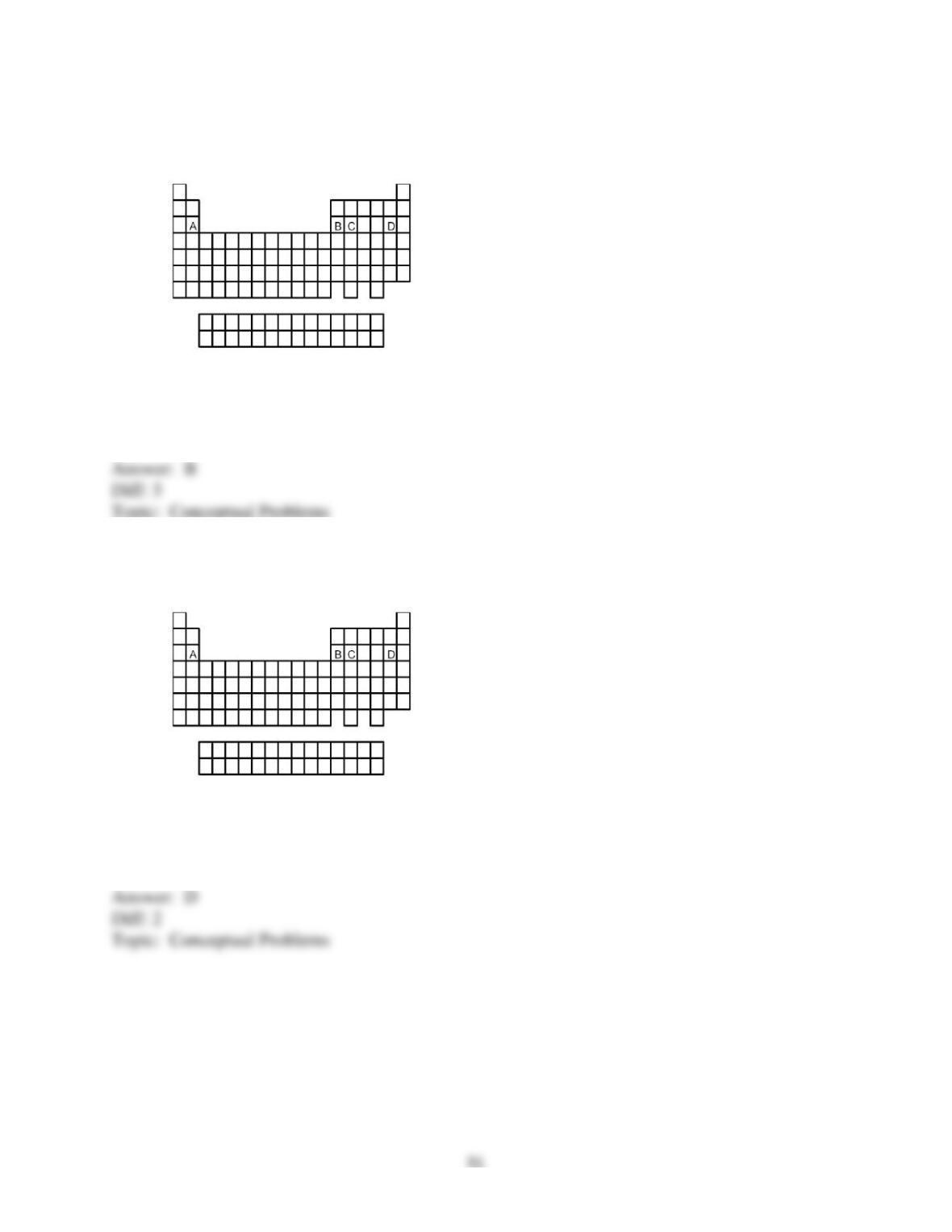
109) Look at the location of elements A, B, C, and D in the following periodic table. The oxide
of which element in its highest oxidation state can react with both H+(aq) and OH–(aq)?
A) A
B) B
C) C
D) D
110) Look at the location of elements A, B, C, and D in the following periodic table. The oxide
of which element in its highest oxidation state is a liquid?
A) A
B) B
C) C
D) D
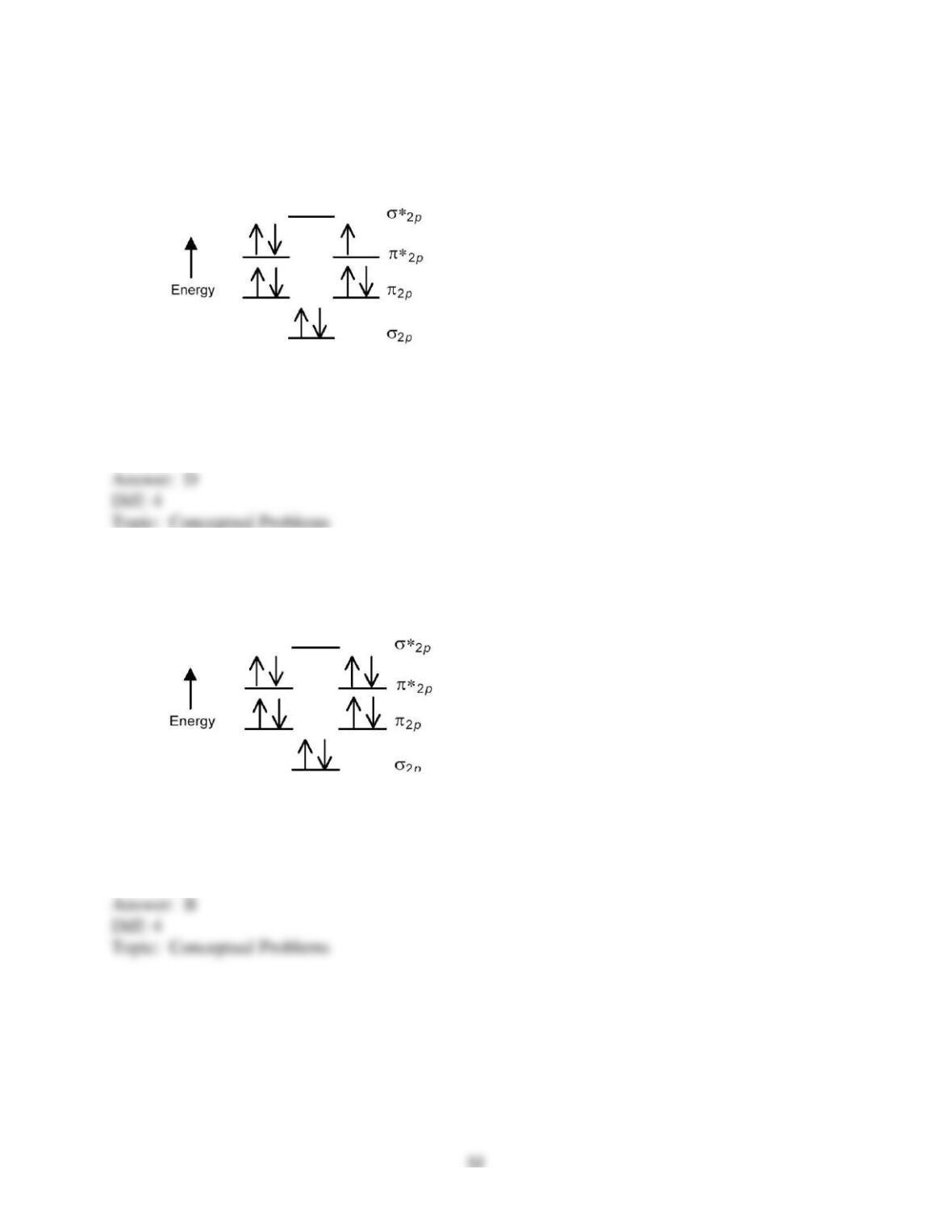
111) The following molecular orbital energy level diagram shows the energies and occupancies
of the MOs derived from the atomic 2p orbitals for an oxygen-containing binary compound of
potassium. This compound is a
A) peroxide having a stronger O-O bond than O2.
B) peroxide having a weaker O-O bond than O2.
C) superoxide having a stronger O-O bond than O2.
D) superoxide having a weaker O-O bond than O2.
112) The following molecular orbital energy level diagram shows the energies and occupancies
of the MOs derived from the atomic 2p orbitals for an oxygen-containing binary compound of
potassium. This compound is a
A) peroxide having a stronger O-O bond than O2.
B) peroxide having a weaker O-O bond than O2.
C) superoxide having a stronger O-O bond than O2.
D) superoxide having a weaker O-O bond than O2.
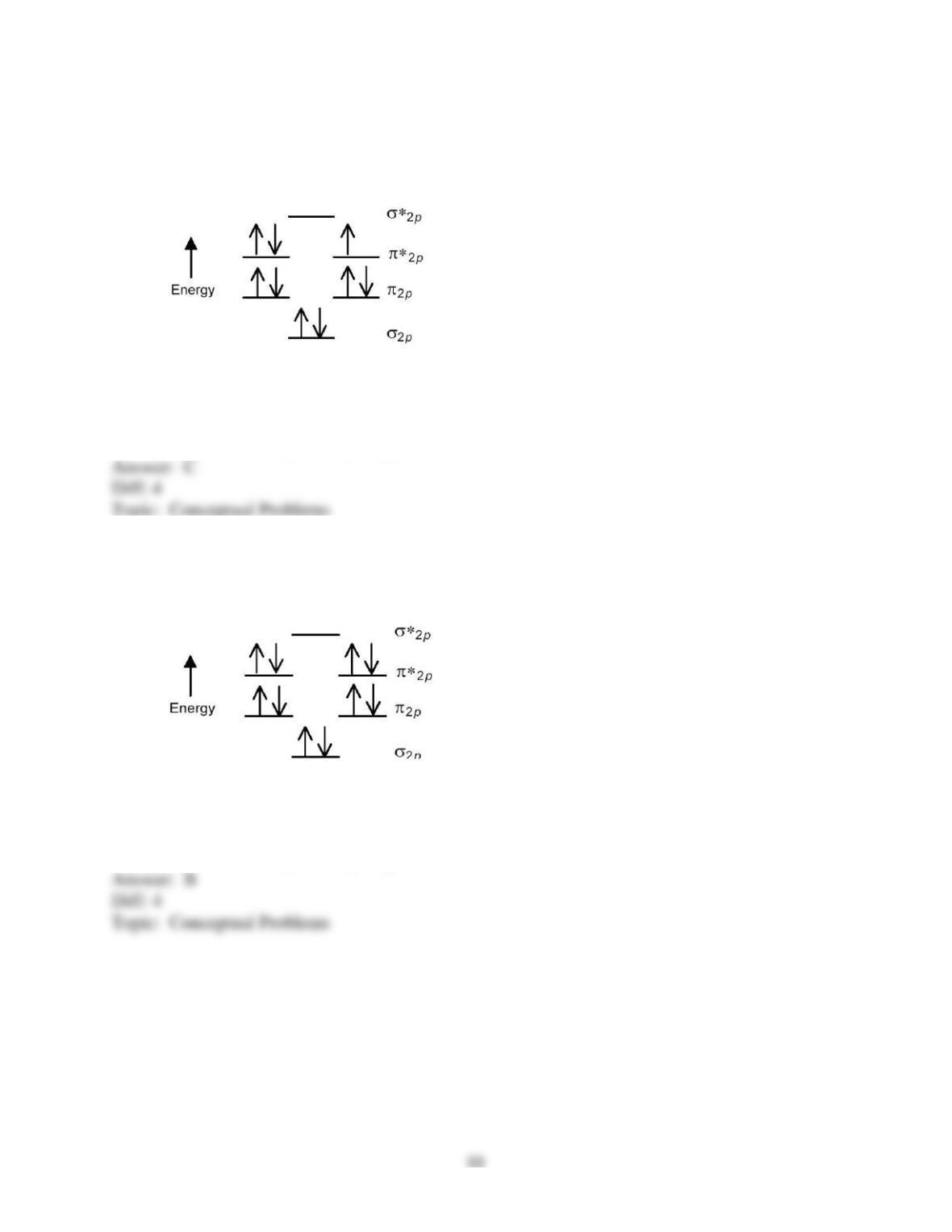
113) The following molecular orbital energy level diagram shows the energies and occupancies
of the MOs derived from the atomic 2p orbitals for an oxygen-containing binary compound of
potassium. This compound is a
A) peroxide that is attracted by magnetic fields.
B) peroxide that is repelled by magnetic fields.
C) superoxide that is attracted by magnetic fields.
D) superoxide that is repelled by magnetic fields.
114) The following molecular orbital energy level diagram shows the energies and occupancies
of the MOs derived from the atomic 2p orbitals for an oxygen-containing binary compound of
potassium. This compound is a
A) peroxide that is attracted by magnetic fields.
B) peroxide that is repelled by magnetic fields.
C) superoxide that is attracted by magnetic fields.
D) superoxide that is repelled by magnetic fields.
18.2 Algorithmic Questions
1) Water accounts for approximately two-thirds of the mass of the adult human body. If an adult
human has a mass of 145 pounds, how many water molecules are there in the adult human’s
body?
A) 96.7 molecules
B) 2.43 × 10³ molecules
C) 1.47 × 1027 molecules
D) 2.20 × 1027 molecules
2) When 1.800 grams of anhydrous magnesium chloride were exposed to moist air, water was
absorbed by the sample. If the resulting hydrated compound has a mass of 2.481 grams, what is
the chemical formula of the hydrate?
A) MgCl2∙ H2O
B) MgCl2∙ 2H2O
C) MgCl2∙ 3H2O
D) MgCl2∙ 4H2O
3) A 0.954-gram sample of hydrated magnesium sulfate, MgSO4∙ xH2O, is heated until all of the
water is driven off. If 0.465 grams of anhydrous MgSO4 is obtained, how many water molecules
combine with each formula unit of magnesium sulfate in the hydrate?
A) 5
B) 6
C) 7
D) 8

4) When 0.350 grams of anhydrous copper(II) sulfate is exposed to moist air , it absorbs water. If
the hydrated copper compound has a mass of 0.508 grams, what is the chemical formula of the
hydrate?
A) CuSO4∙ 2H2O
B) CuSO4∙ 3H2O
C) CuSO4∙ 4H2O
D) CuSO4∙ 5H2O
18.3 Short Answer Questions
1) Hydrogen has three isotopes, H, H, and H, which are called ________, ________, and
________, respectively.
2) An example of an isotope effect is the difference in the dissociation of D2O compared to
H2O, as shown below.
H2O(l) ⇌ H+(aq) + OH–(aq) K =1.0 × 10⁻¹⁴
D2O(l) ⇌ D+(aq) + OD–(aq) K =2.0 × 10⁻¹⁵
A neutral H2O solution has a pH = ________, whereas a neutral D2O solution has a pH = pD =
________.
3) The first step in the steam-hydrocarbon re-forming process for the industrial preparation of
hydrogen is shown below.
H2O(g) + CH4(g) CO(g) + 3 H2(g)
In this reaction the atom that is oxidized is ________, which undergoes an oxidation number
change from ________ to ________.

4) Binary hydrides can be classified as covalent, ionic, or metallic. NaH, HCl, and NH3 are
classified as ________, ________, and ________ binary hydrides, respectively.
5) The preparation of oxygen by the thermal decomposition of potassium chlorate is shown
below.
2 KClO3(s) 2 KCl(s) + 3 O2(g)
In this reaction the atom that is reduced is ________, which undergoes an oxidation number
change from ________ to ________.
6) The carbon atom in CO2 is π-bonded to two oxygen atoms. The silicon atom in SiO2 is
________–bonded to ________ oxygen atoms.
7) Binary oxides can be classified as acidic, amphoteric, or basic. MgO, Al2O3, and SO3 are
classified as ________, ________, and ________ oxides, respectively.
8) Superoxide ion, O2–, peroxide ion, O22–, and oxide ion, O2–, contain ________, ________,
and ________ unpaired electrons, respectively.
9) Hydrogen peroxide can act as an oxidizing agent or a reducing agent. The reaction of
hydrogen peroxide with permanganate ion in acidic solution is shown below.
H2O2(aq) + 2 MnO4–(aq) + 6 H+ → 5 O2(g) + 2 Mn2+(aq) + 8 H2O(l)
In this reaction hydrogen peroxide acts as the ________ agent, and the ________ atom
undergoes a change in oxidation number from ________ to ________.
10) The oxygen-oxygen bond order in ozone, O3, is ________. The oxygen-oxygen bond in O3
is ________ than the oxygen-oxygen bond in O2, so O3 is ________ reactive than O2.