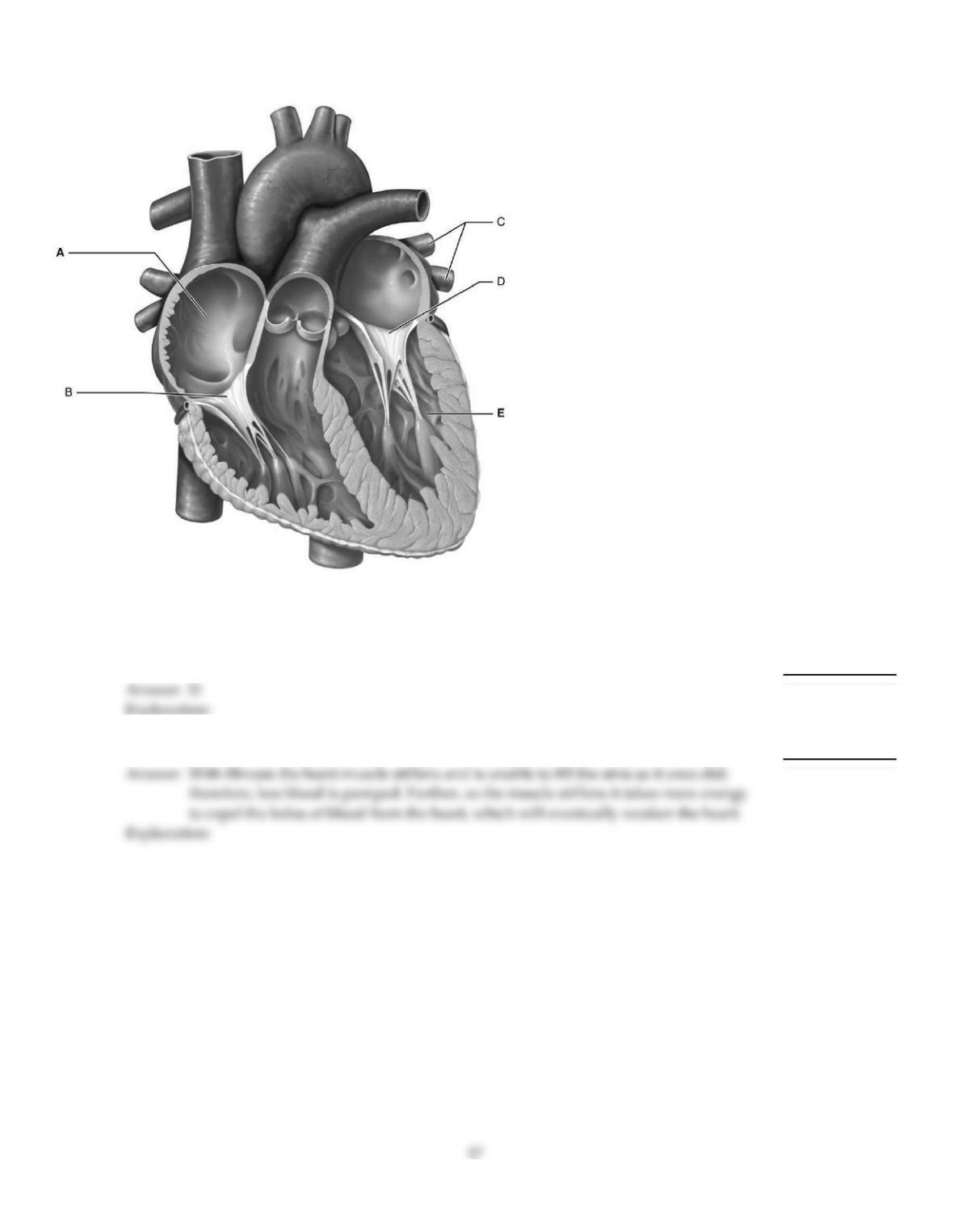
Figure 18.4
Using Figure 18.4, match the following:
54)
Mitral valve.
54)
55)
Why is fibrosis of the cardiac muscle serious?
55)
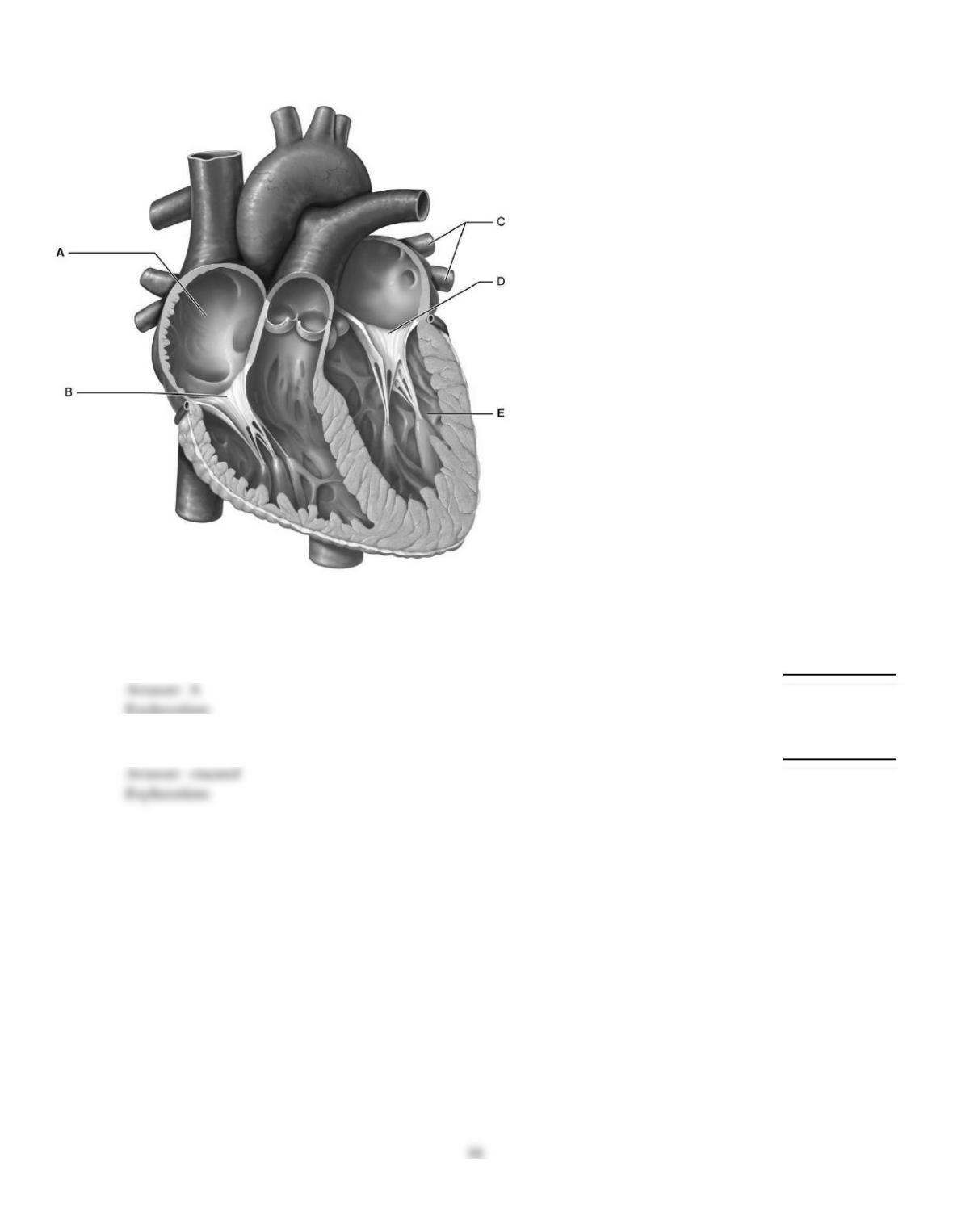
Figure 18.4
Using Figure 18.4, match the following:
56)
Right atrium.
56)
57)
The ________ layer of the serous pericardium covers the heart.
57)
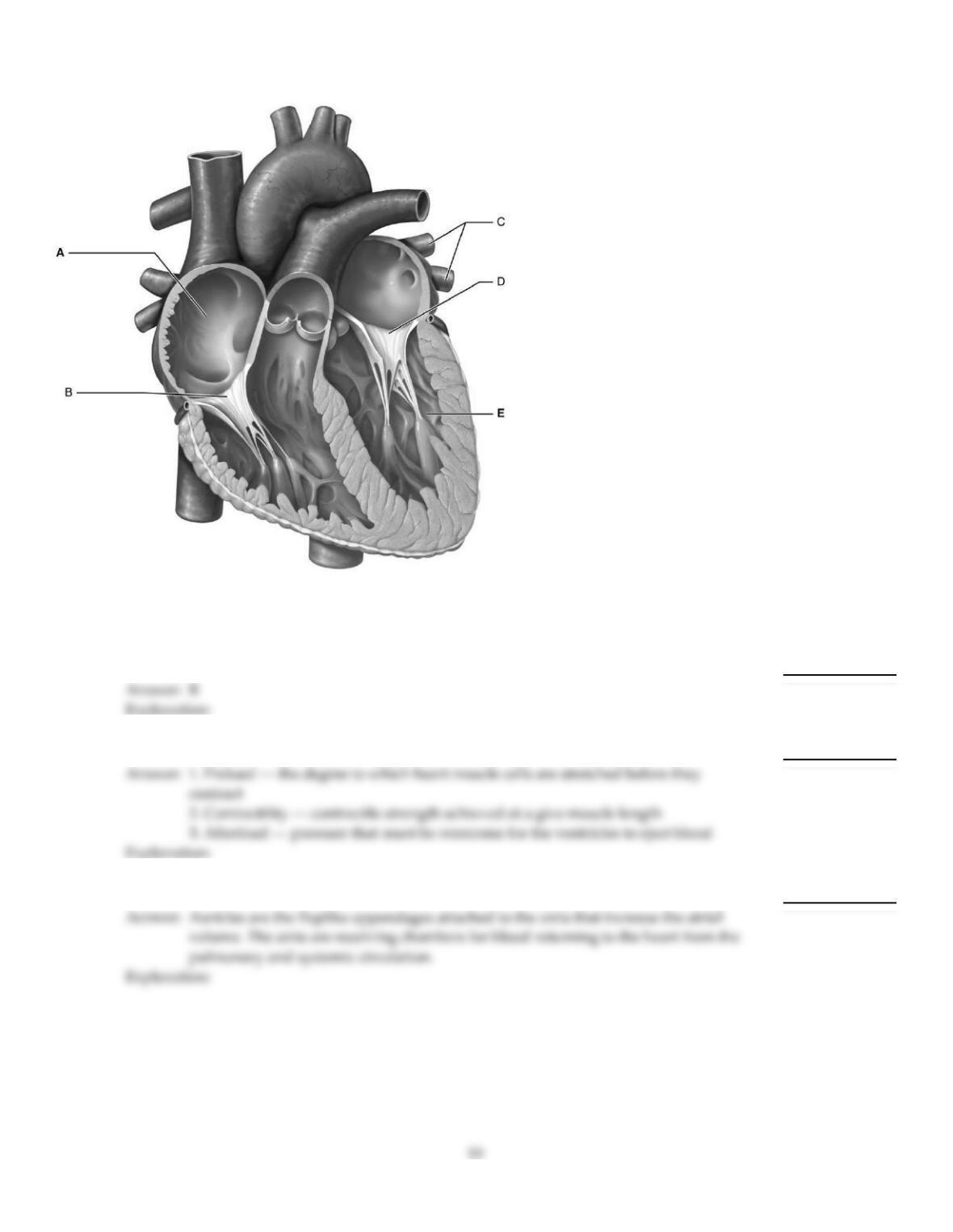
Figure 18.4
Using Figure 18.4, match the following:
58)
Tricuspid valve.
58)
59)
List and define the three most important factors that affect stroke volume.
59)
60)
What is the difference between the auricles and the atria?
60)
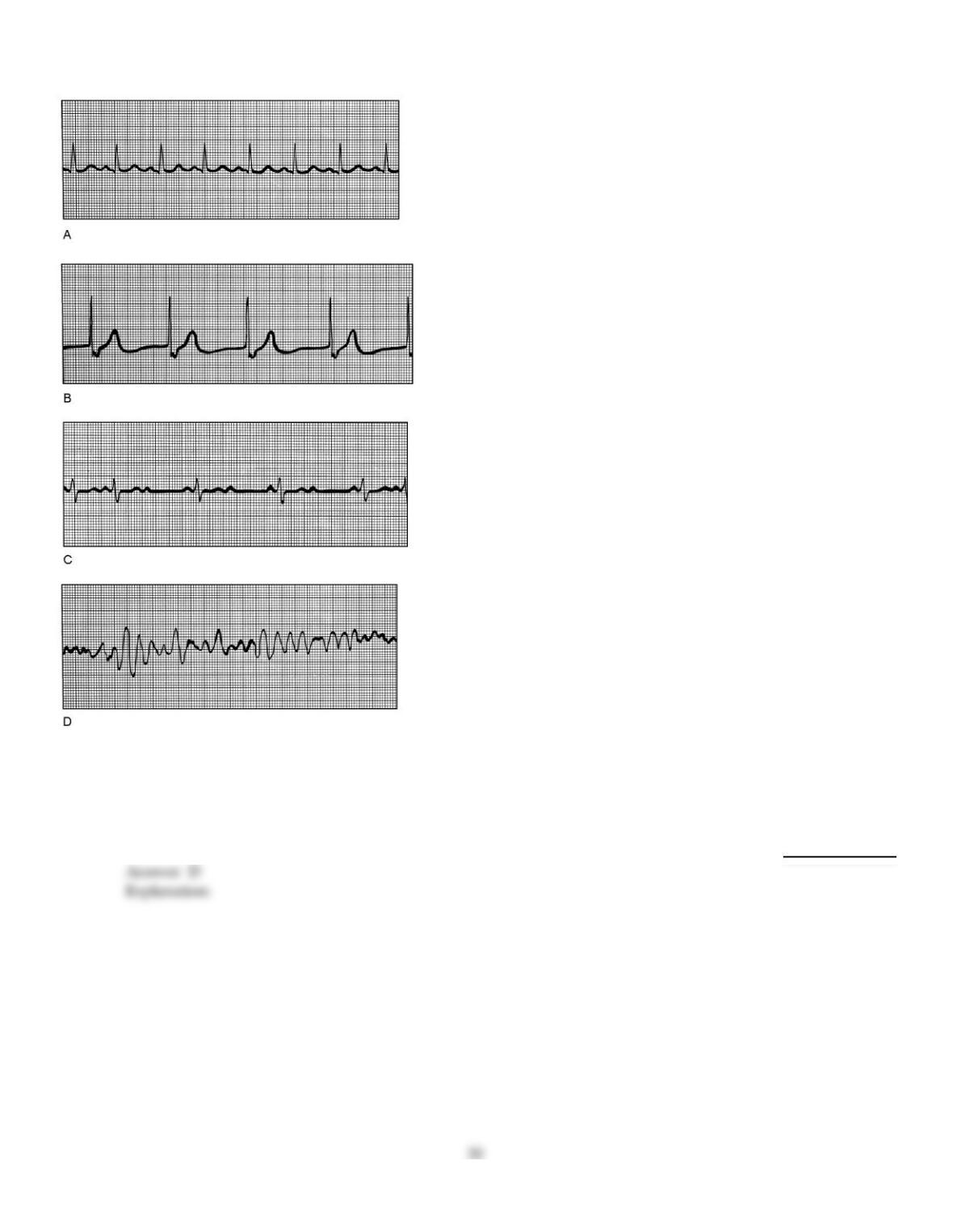
Figure 18.3
Using Figure 18.3, match the following:
61)
Ventricular fibrillation.
61)
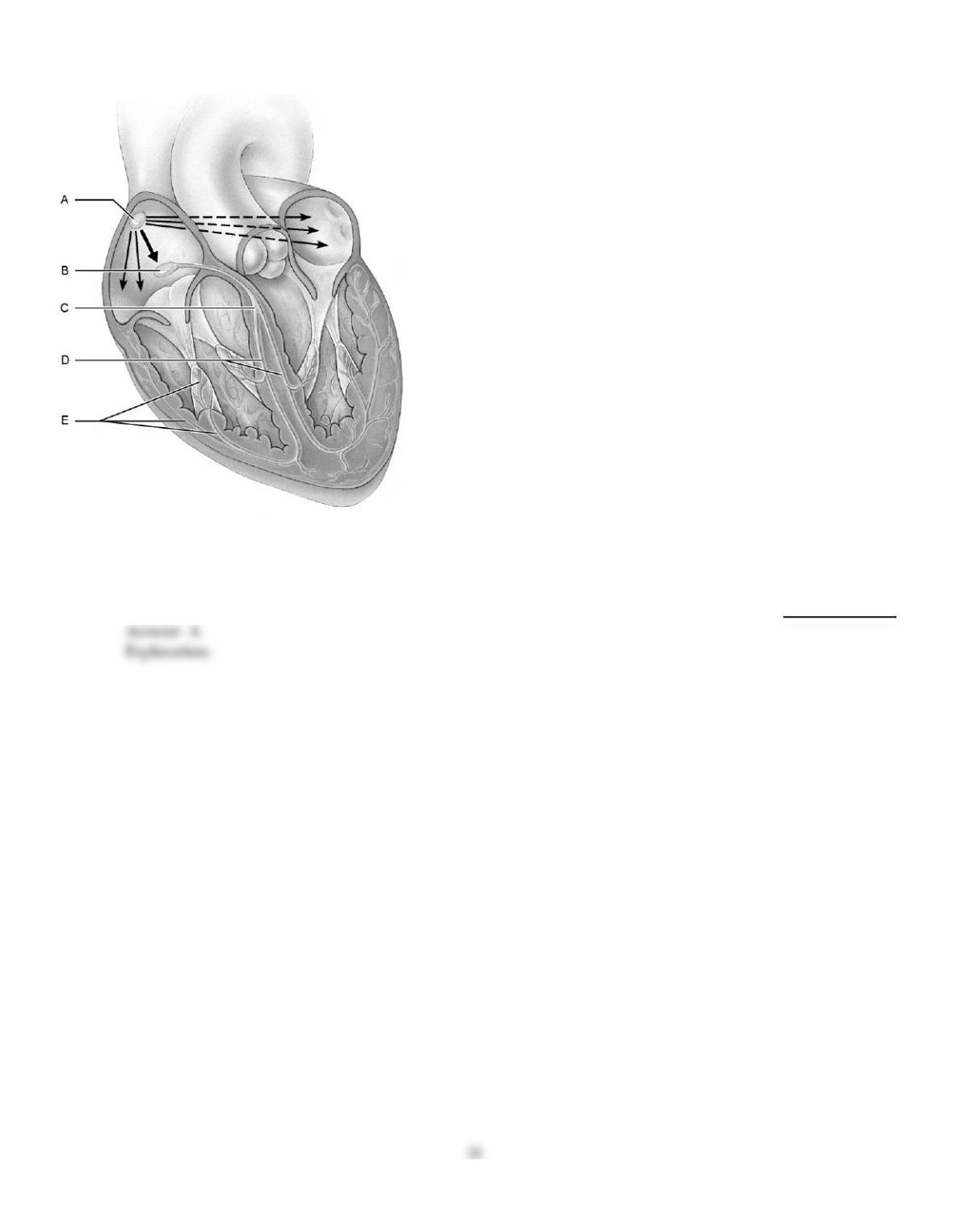
Figure 18.1
Using Figure 18.1, match the following:
62)
SA node.
62)
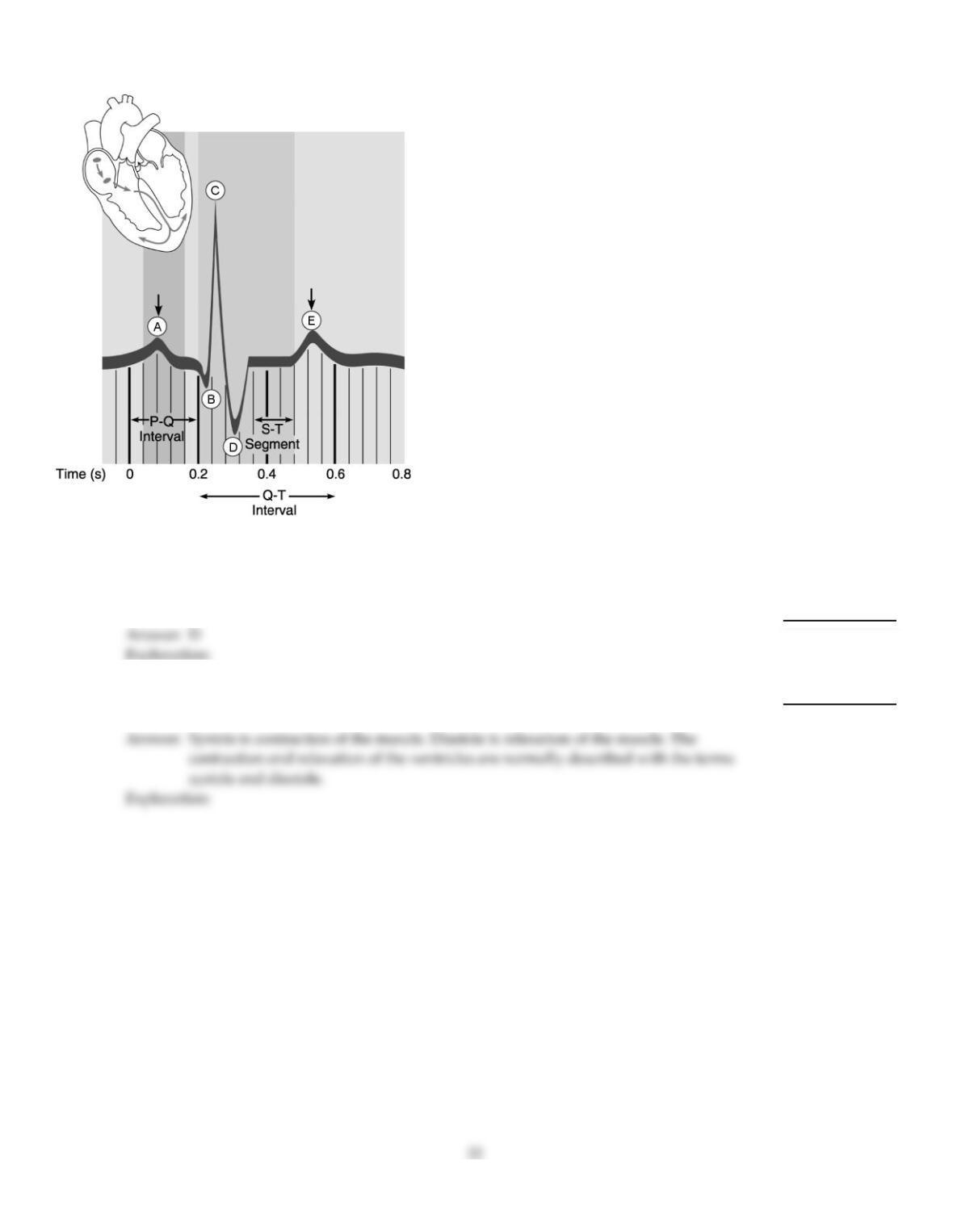
Figure 18.2
Using Figure 18.2, match the following:
63)
Point after which pressure begins to rise in the aorta.
63)
64)
Define systole and diastole. Which heart chambers are usually referenced when these terms
are used?
64)
D
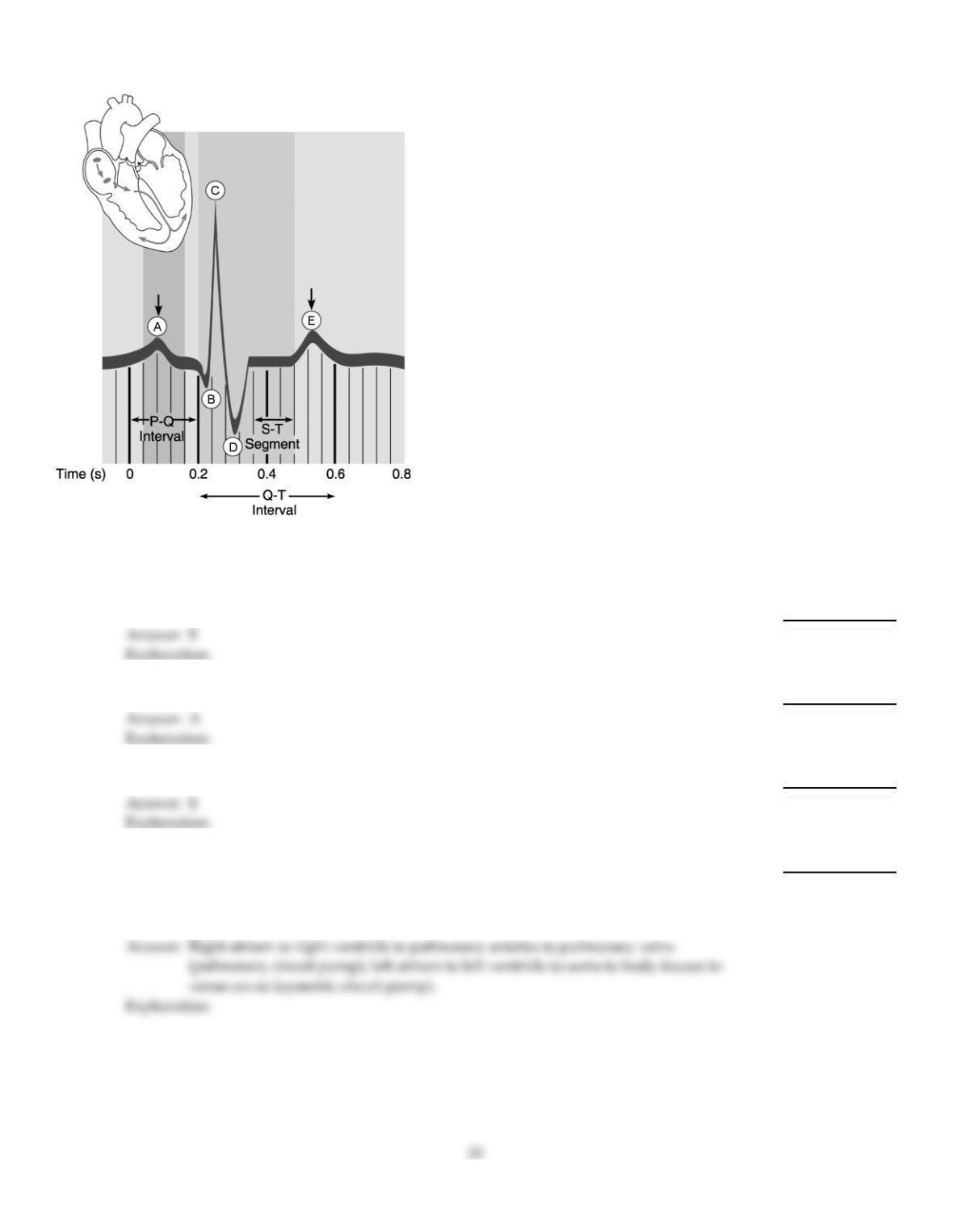
Figure 18.2
Using Figure 18.2, match the following:
65)
Point that represents the “dup” sound made by the heart.
65)
66)
Atrial depolarization.
66)
67)
Ventricular repolarization.
67)
68)
The heart is called a “double pump” because there are two functionally separate
circulations. Trace the pathway of each of these circulations and include the following
information: heart chambers involved, major blood vessels involved, and general areas
through which the blood flows. Begin with the right atrium.
68)
69)
Define the terms end diastolic volume (EDV) and end systolic volume (ESV) and relate them to
the calculation of stroke volume.
69)
TRUE/FALSE. Write ‘T’ if the statement is true and ‘F’ if the statement is false.
70)
Blood in the heart chambers provides some nutrients to the heart muscle cells.
70)
71)
Cardiac muscle has more mitochondria and depends less on a continual supply of oxygen than
does skeletal muscle.
71)
72)
Congestive heart failure means that the pumping efficiency of the heart is depressed so that there is
inadequate delivery of blood to body tissues.
72)
73)
Auricles slightly increase blood volume in the ventricles.
73)
74)
Chronic release of excess thyroxine can cause a sustained increase in heart rate and a weakened
heart.
74)
75)
The left side of the heart pumps the same volume of blood as the right.
75)
76)
Tissues damaged by myocardial infarction are replaced by connective tissue.
76)
77)
As pressure in the aorta rises due to atherosclerosis, more ventricular pressure is required to open
the aortic valve.
77)
78)
The “lub” sounds of the heart are valuable in diagnosis because they provide information about the
function of the heart’s pulmonary and aortic valves.
78)
79)
Paroxysmal atrial tachycardia is characterized by bursts of atrial contractions with little pause
between them.
79)
80)
Arterial blood supply to heart muscle is continuous whether the heart is in systole or diastole.
80)
81)
The papillary muscles contract after the other ventricular muscles so that they can take up the slack
on the chordae tendineae before the full force of ventricular contractions sends blood against the
AV valve flaps.
81)
82)
The myocardium receives its blood supply from the coronary arteries.
82)
83)
Autonomic regulation of heart rate is via two reflex centers found in the pons.
83)
84)
An ECG provides direct information about valve function.
84)
85)
Anastomoses among coronary arterial branches provide collateral routes for blood delivery to the
heart muscle.
85)
MATCHING. Choose the item in column 2 that best matches each item in column 1.
Match the following:
86)
Prevents backflow into the left
ventricle.
A)
Aortic valve
86)
Match the following:
87)
Heart muscle.
A)
Myocardium
87)
Match the following:
88)
An abnormal pacemaker.
88)
A)
Ectopic focus
Match the following:
89)
Prevents backflow into the left atrium.
A)
Mitral valve
89)
Match the following:
90)
The outermost layer of the serous
pericardium.
A)
Parietal layer
90)
Match the following:
91)
Total heart relaxation.
91)
A)
Quiescent period
Match the following:
92)
AV valve with two flaps.
92)
A)
Mitral valve
Match the following:
93)
An abnormally slow heart rate
93)
A)
Bradycardia
Match the following:
94)
Serous layer covering the heart
muscle.
95)
The inner lining of the heart.
A)
Endocardium
94)
95)
Match the following:
96)
An abnormally fast heart rate
96)
A)
Tachycardia
Match the following:
97)
AV valve with three flaps.
97)
A)
Tricuspid valve
Match the following:
98)
Difference between resting and
maximal cardiac output
A)
Cardiac reserve
98)
Match the following:
99)
Prevents backflow into the right
ventricle.
A)
Pulmonary valve
99)
Match the following:
100)
A condition of rapid and irregular or
out–of–phase contraction of heart
muscle cells.
A)
Fibrillation
100)
101)
Death of heart muscle cells.
A)
Infarction
Match the following:
102)
Prevents backflow into the right
atrium.
A
A)
Tricuspid valve
102)
Match the following:
103)
Heart rate at rest under both
autonomic divisions signaling
A
A)
Vagal tone
103)
Match the following:
104)
Heart muscle is deprived of oxygen.
A
104)
A)
Ischemia
ESSAY. Write your answer in the space provided or on a separate sheet of paper.
105)
An older woman complains of shortness of breath and intermittent fainting spells. Her doctor runs various tests
and finds that the AV node is not functioning properly. What is the suggested treatment?
106)
A man enters the hospital complaining of chest pain. His history includes smoking, a stressful job, a diet heavy
in saturated fats, lack of exercise, and high blood pressure. Although he is not suffering from a heart attack, his
doctor explains to him that a heart attack is quite possible. What did the chest pain indicate? Why is this man a
prime candidate for a heart attack?
107)
Asystole is the total absence of ventricular electrical activity. Explain why defibrillation would not be effective
in this situation.
108)
A patient was admitted to the hospital with chest pains. On admission, his pulse was 110 and blood pressure
was 96/64. According to his history, his normal pulse rate is usually between 80 and 88 and his blood pressure
runs from 120/70 to 130/80. Explain why these changes in BP and HR occur.
A
101)
109)
A 55–year–old male was admitted to the hospital with heart failure. He complains of increasing shortness of
breath on exertion and needing to sleep on three pillows at night. On physical assessment, the nurse determines
that his ankles and feet are very swollen. Which of these symptoms reflect left–sided heart failure and which
reflect right–sided heart failure?
110)
A 14–year–old girl undergoing a physical examination prior to being admitted to summer camp was found to
have a loud diastolic murmur at the second intercostal space to the left side of the sternum. Explain the reason
for the loud heart murmur associated with this girl’s condition.
111)
A patient takes a nitroglycerin tablet sublingually for chest pain. Nitroglycerin acts directly on smooth muscle,
producing relaxation and vessel dilation. How would this relieve chest pain?
112)
A patient is prescribed a calcium channel blocker to prevent angina (chest pain), by decreasing the demand for
oxygen. Explain why.
113)
A Doppler ultrasound was performed on an infant who had symptoms of breathlessness and it was found that
he had a patent ductus arteriosus. Discuss the location and function of the ductus arteriosus in the fetus and
relate it to the reason for the infant’s breathlessness.
Answer Key
Testname: C18
29
Answer Key
Testname: C18
30
Answer Key
Testname: C18
31
Answer Key
Testname: C18
32