
Chapter 18 Issuing Capital and the Investment Banking Process
Answer Key
Multiple Choice Questions
1.
Which of the following is the type of financing that includes capital funds borrowed from
personal savings, friends and relatives, financial institutions such as commercial banks, or
venture capitalists?

2.
Which of the following is the type of financing that includes capital funds invested or
venture capitalists?
3.
Which of the following best describes the type of financing provided by government
agencies such as the Small Business Administration?

4.
Which of these is the type of loan where the firm would receive the funds as soon as the
bank approved the loan?
5.
Which of these is the type of loan where the firm borrows against pre-negotiated lines of
credit or loan commitments?
6.
Which of these is a contractual commitment to loan the firm a certain maximum amount at
a given interest rate?
7.
Which of these is the fee charged by a bank for making funds available through a loan
commitment?
8.
Which of these is the fee charged by a bank on any unused balances of a loan
commitment line at the end of the loan commitment period?
9.
Which of these is the type of loan where the firm makes fixed interest payments over the
life of the loan?

10.
Which of these is the type of loan where the interest payments change over the life of the
loan?
11.
Which of these is defined as a professionally managed pool of money used to finance new
and often high-risk firms?
12.
Which of the following describes the type of venture capital firms whose sole purpose is to
find and fund the most promising new firms?
13.
Which of the following describes the type of venture capital firms who are wealthy
individuals who make equity investments?
14.
Which of the following is the firm allowing its equity, some of which was held privately by
managers and venture capital investors, to be publicly traded in stock markets for the first
time?
15.
Which of the following is an unsecured short-term promissory note issued by a public firm
to raise short-term cash, often to finance working capital requirements?
16.
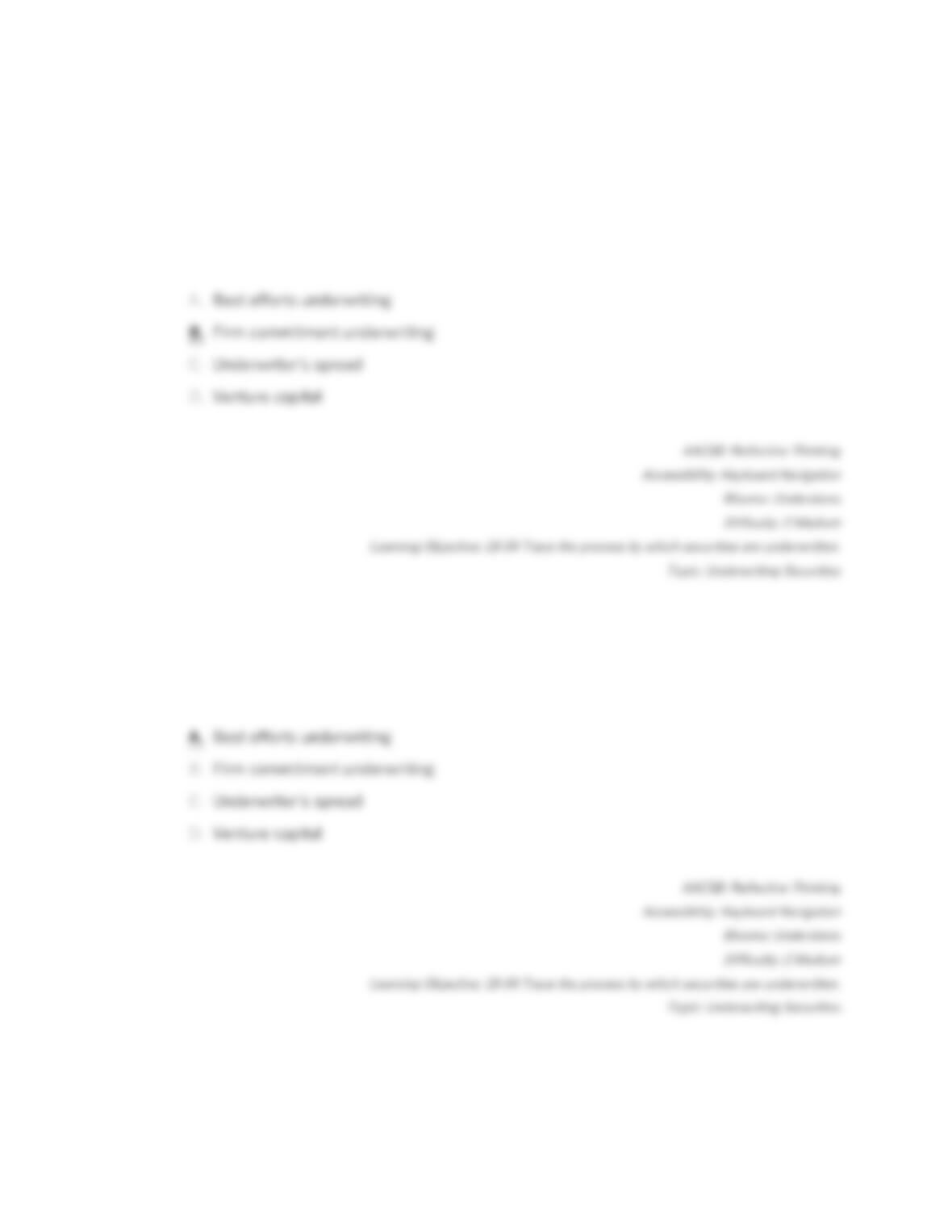
Which of the following is a security issue in which the investment bank guarantees the
issuer a price for newly issued securities by buying the whole issue at a fixed price from
the security issuer, and where the investment bank then seeks to resell the securities to
investors at a higher price?
17.
Which of the following is a security issue in which the underwriter does not guarantee a
firm price to the issuer and acts more as a placing or distribution agent for a fee?

18.
Which of the following refers to when the bond issuing firm invites bids from a number of
underwriters?
19.
Which of the following refers to when a single investment bank obtains the exclusive right
to originate, underwrite, and distribute the new bonds through a one–on-one negotiation
process?

20.
Which of these are the markets in which corporations raise funds through new stock
issues?
21.
Which of these is defined as the compensation for the expenses and risks incurred by the
investment bank to conduct primary sales of stock for a firm?

22.
Which of the following terms is defined as the group of investment banks used to help sell
and distribute a new security issue?
23.
Which of the following terms is defined as the lead bank(s) in a syndicate, who directly
negotiate with the issuing firm on behalf of the syndicate?

24.
The preliminary registration statement filed with the SEC is known as:
25.
A method of registering securities that allows firms that plan to offer multiple issues of the
security over a two-year period to submit one registration statement is known as:
26.
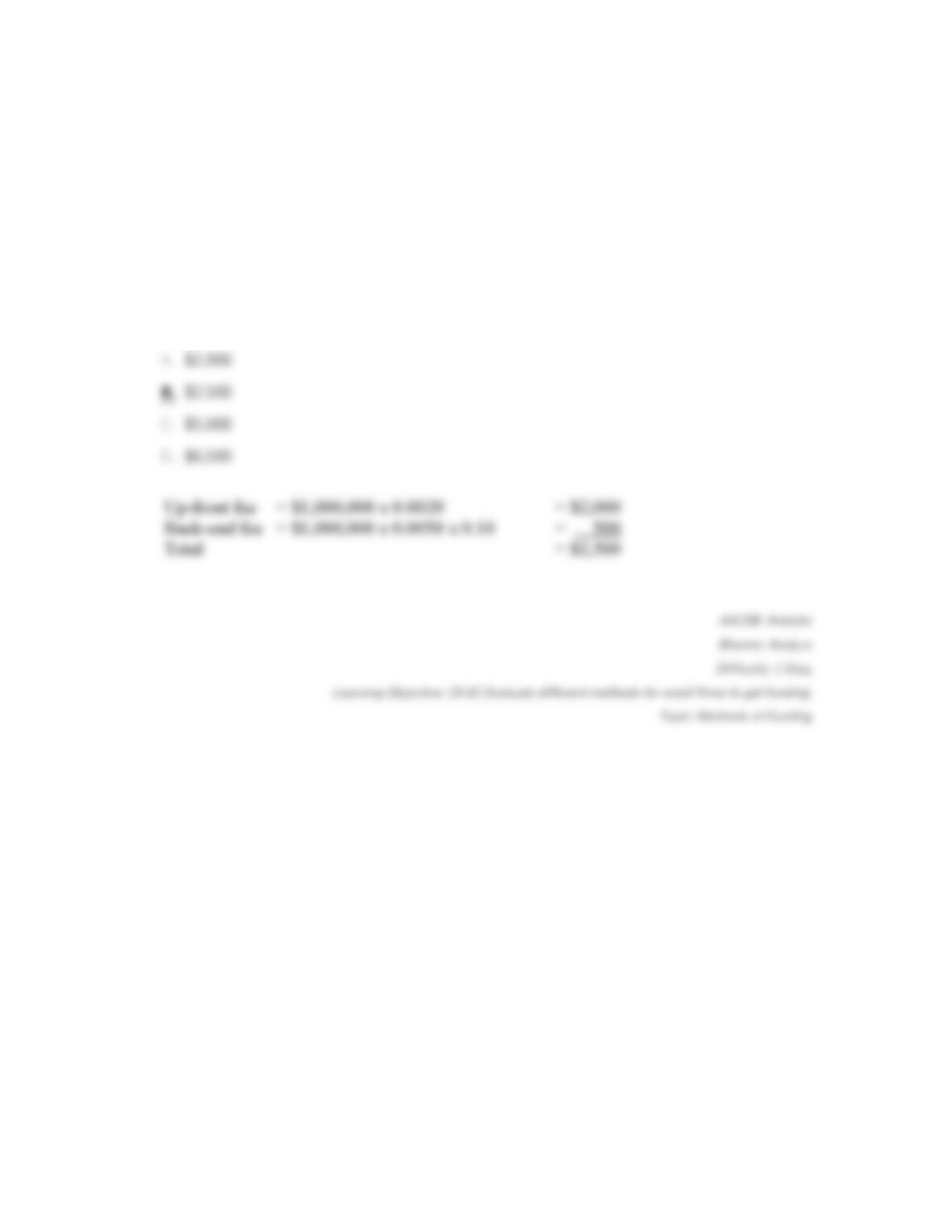
Calculating Fees on a Loan Commitment You have approached your local bank for a
start-up loan commitment for $1,000,000 needed to open an auto repair store. You have
requested that the term of the loan be one year. Your bank has offered you the following
terms: size of loan commitment = $1,000,000, term = one year, up-front fee = 20 basis
points, back-end fee = 50 basis points. If you take down 90 percent of the total loan
commitment, calculate the total fees you have paid on this loan commitment.
27.
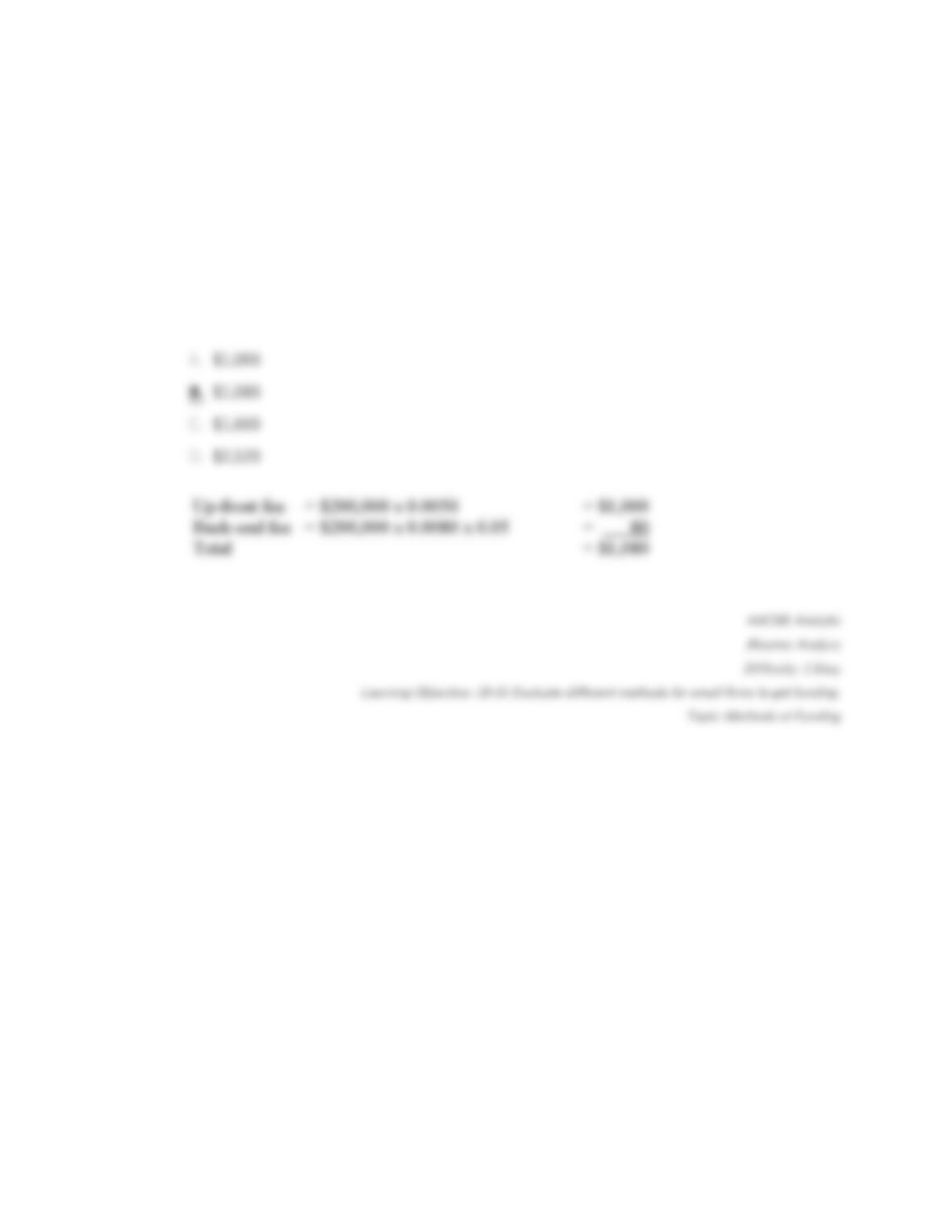
Calculating Fees on a Loan Commitment You have approached your local bank for a
start-up loan commitment for $200,000 needed to open a computer repair store. You have
requested that the term of the loan be one year. Your bank has offered you the following
terms: size of loan commitment = $200,000, term = one year, up-front fee = 50 basis
points, back-end fee = 80 basis points. If you take down 95 percent of the total loan
commitment, calculate the total fees you have paid on this loan commitment.
28.
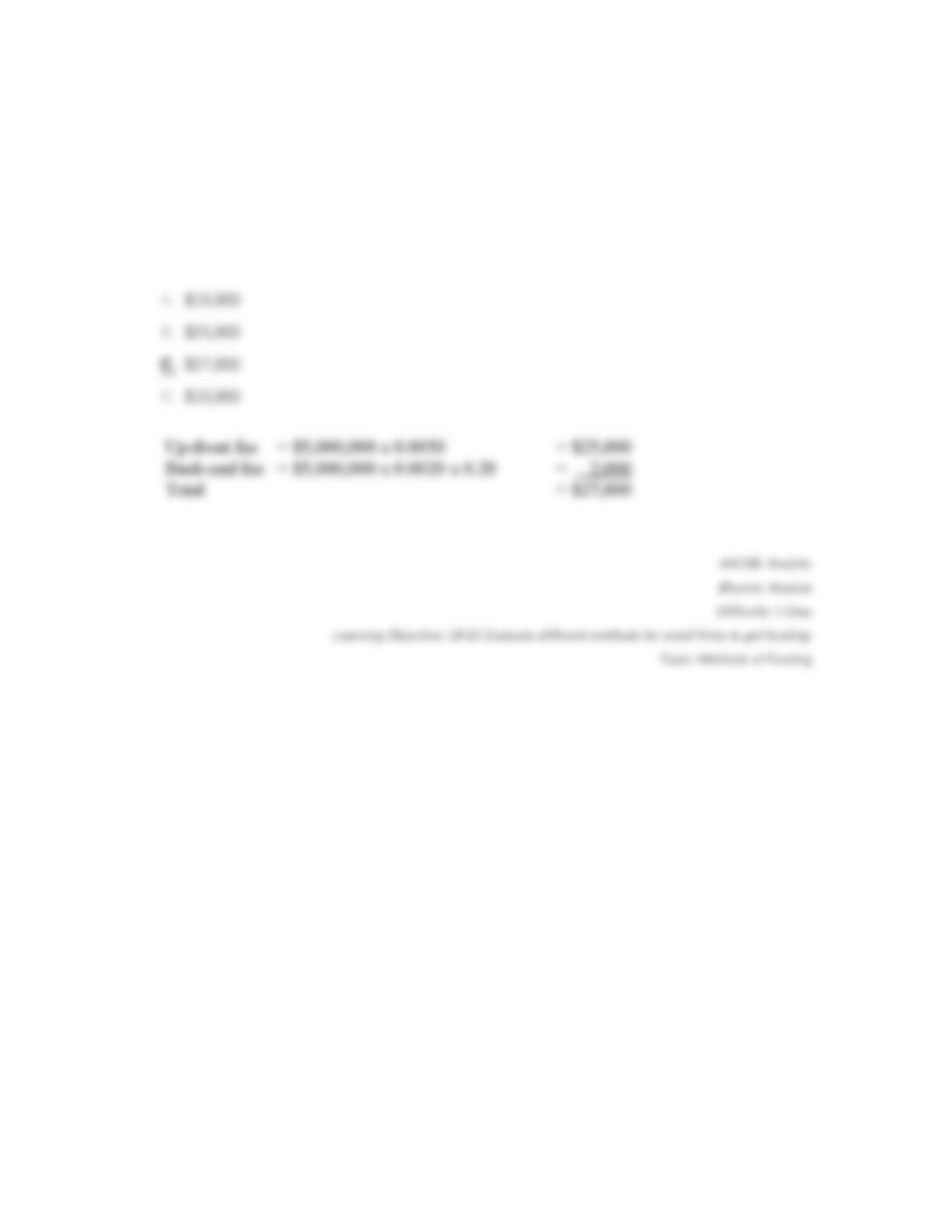
Calculating Fees on a Loan Commitment Calculate the total fees a firm would have to
pay when its bank offers the firm the following loan commitment: A loan commitment of
$5,000,000 with an up-front fee of 50 basis points and a back-end fee of 20 basis points.
The take-down on the loan is 80 percent.
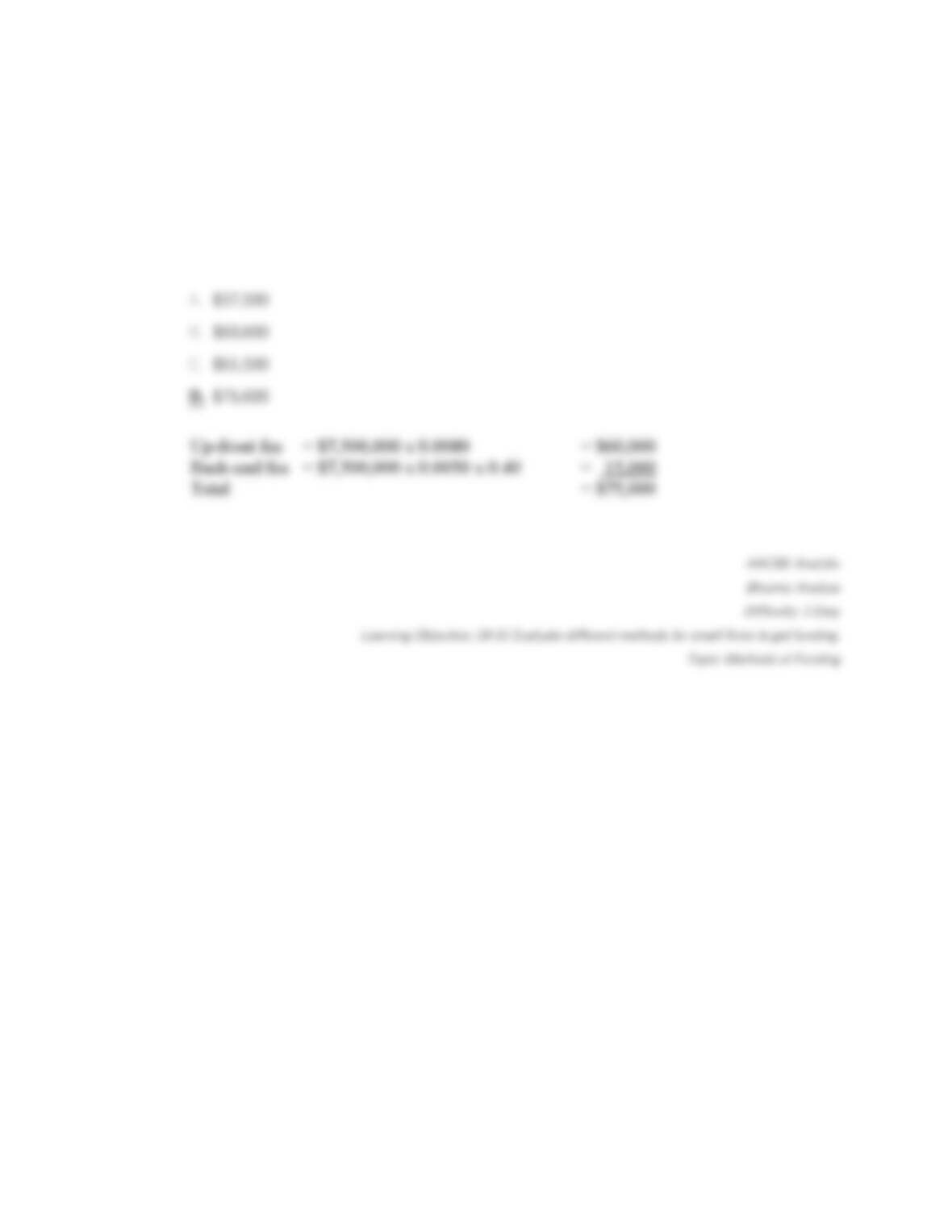
29.
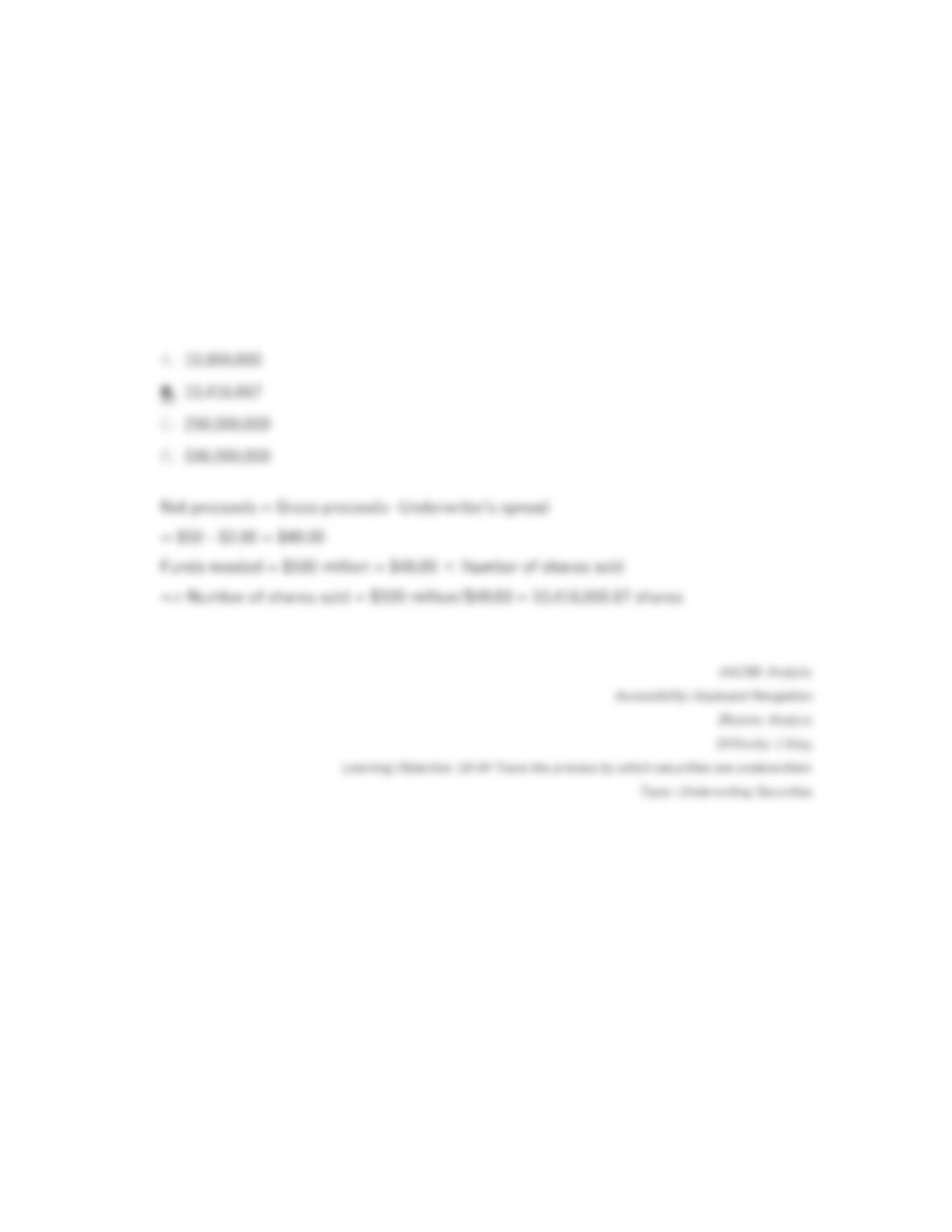
Calculating Fees on a Loan Commitment Calculate the total fees a firm would have to
pay when its bank offers the firm the following loan commitment: A loan commitment of
$7,500,000 with an up-front fee of 80 basis points and a back-end fee of 50 basis points.
The take-down on the loan is 60 percent.
30.
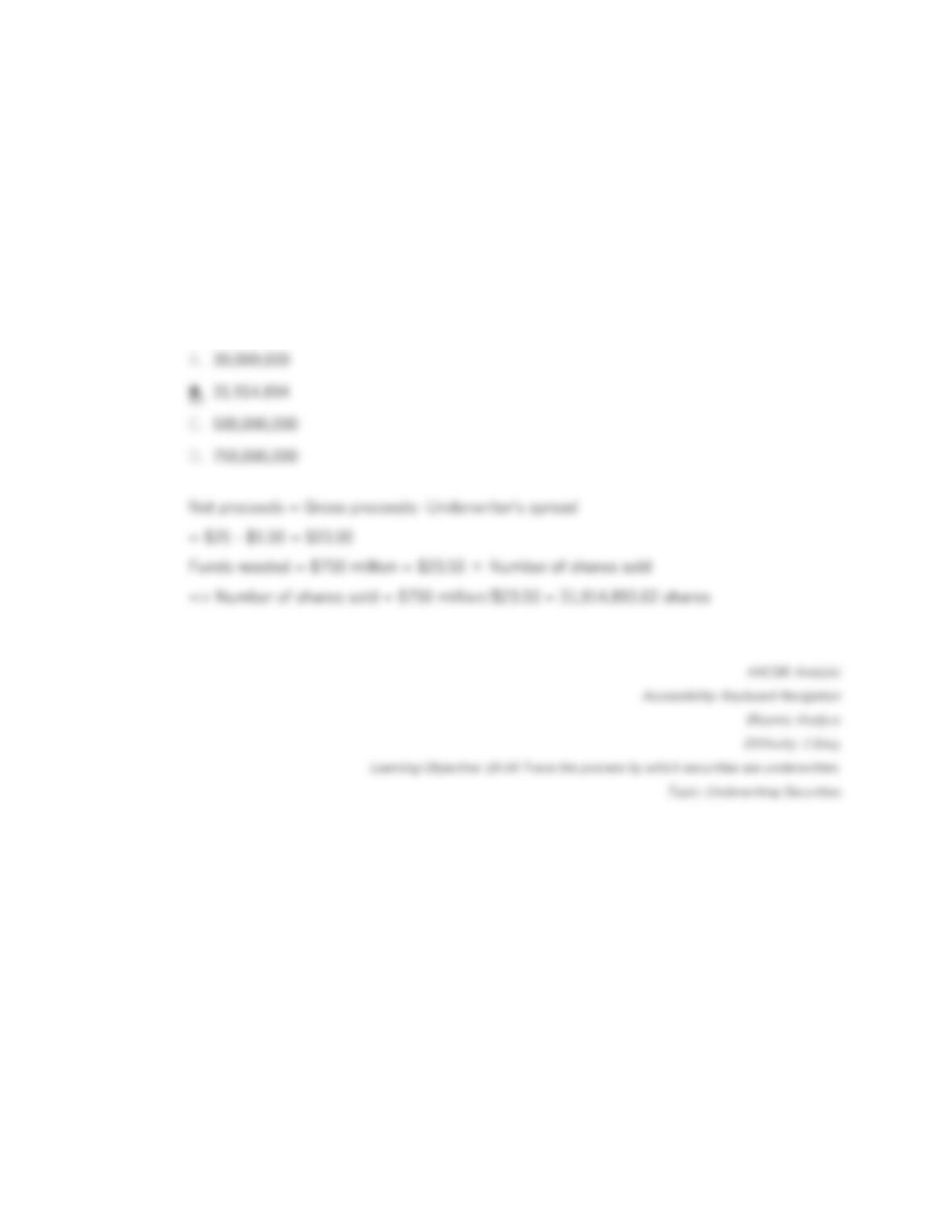
Calculating Costs of Issuing Stock WuShock, Inc., needs to raise $500 million to finance
its plan for nationwide expansion. In discussions with its investment bank, WuShock
learns that the bankers recommend an offer price (or gross price) of $50 per share and
they will charge an underwriter’s spread of $2.00 per share. Calculate the net proceeds to
WuShock from the sale of stock. How many shares of stock will WuShock need to sell in
order to receive the $500 million they need?
31.
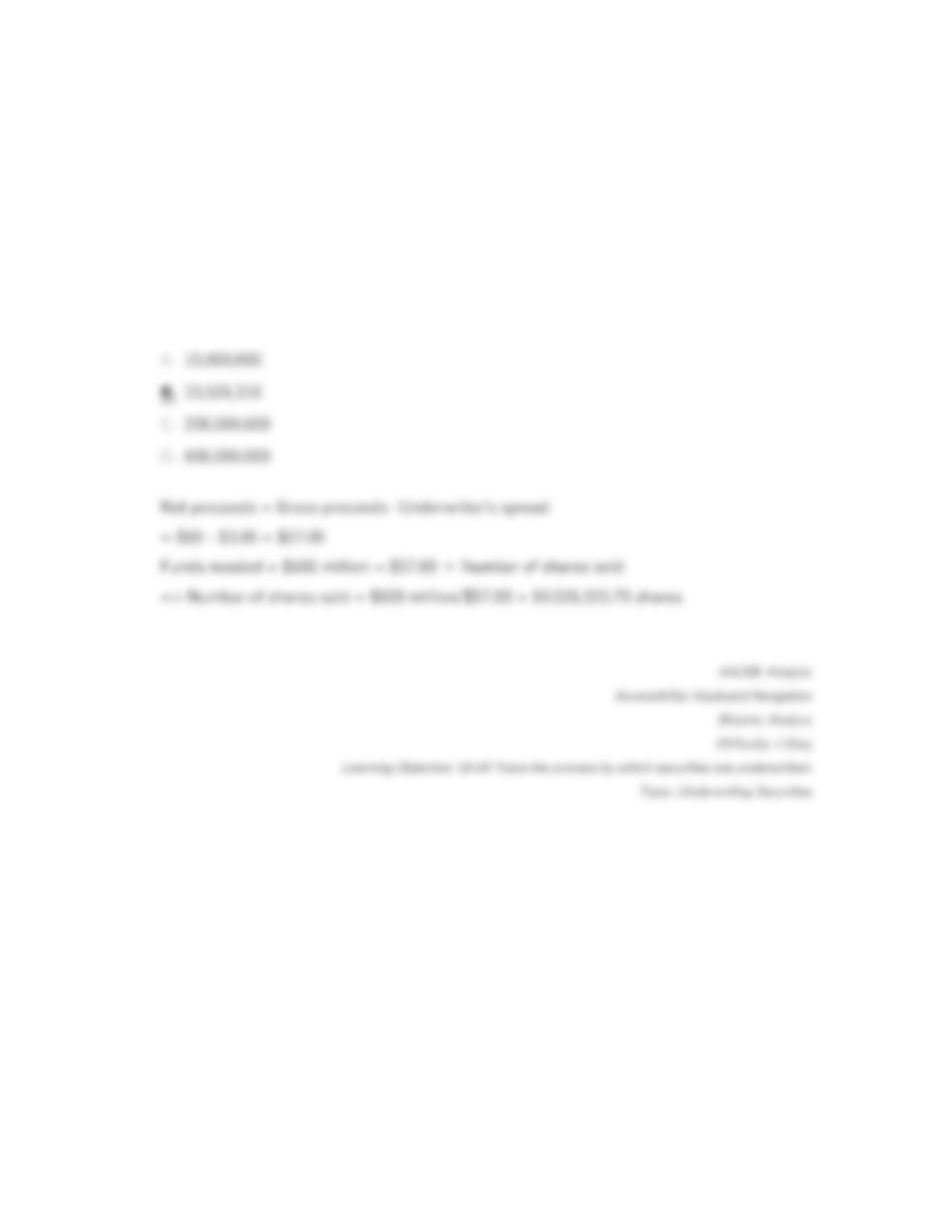
Calculating Costs of Issuing Stock Wildcat, Inc., needs to raise $750 million to finance its
plan for nationwide expansion. In discussions with its investment bank, Wildcat learns that
the bankers recommend an offer price (or gross price) of $25 per share and they will
charge an underwriter’s spread of $1.50 per share. Calculate the net proceeds to Wildcat
from the sale of stock. How many shares of stock will Wildcat need to sell in order to
receive the $750 million they need?
32.
Calculating Costs of Issuing Stock Blue Dragon, Inc., needs to raise $600 million to
finance its plan for nationwide expansion. In discussions with its investment bank, Blue
Dragon learns that the bankers recommend an offer price (or gross price) of $60 per share
and they will charge an underwriter’s spread of $3.00 per share. Calculate the net
proceeds to Blue Dragon from the sale of stock. How many shares of stock will Blue
Dragon need to sell in order to receive the $600 million they need?