CHAPTER 18
REVENUE RECOGNITION
IFRS questions are available at the end of this chapter.
TRUE-FALSE—Conceptual
MULTIPLE CHOICE—Conceptual
Answer No. Description
Test Bank for Intermediate Accounting, Fifteenth Edition
18 – 2
MULTIPLE CHOICE—Conceptual (cont.)
Answer No. Description
P These questions also appear in the Problem-Solving Survival Guide.
S These questions also appear in the Study Guide.
*This topic is dealt with in an Appendix to the chapter.
MULTIPLE CHOICE—Computational
Answer No. Description
Revenue Recognition
18 – 3
MULTIPLE CHOICE—Computational (cont.)
Answer No. Description
MULTIPLE CHOICE—CPA Adapted
Answer No. Description

Test Bank for Intermediate Accounting, Fifteenth Edition
18 – 4
BRIEF EXERCISES
Item Description
BE18-121 Revenue recognition (essay).
BE18-122 Revenue recognition (essay).
BE18-123 Long-term contracts (essay).
EXERCISES
E18-124 Journal entries—percentage-of-completion.
E18-125 Percentage–of-completion method.
E18-126 Percentage–of-completion method.
E18-127 Percentage–of-completion and completed-contract methods.
E18-128 Installment sales.
E18-129 Installment sales.
E18-130 Installment sales.
*E18-131 Franchises.
PROBLEMS
Item Description
P18-132 Long-term construction project accounting.
P18-133 Accounting for long-term construction contracts.
P18-134 Long-term contract accounting—completed-contract.
P18-135 Installment sales.
CHAPTER LEARNING OBJECTIVES
1. Describe and apply the revenue recognition principle.
2. Describe accounting issues for revenue recognition at point of sale.
3. Apply the percentage-of-completion method for long-term contracts.
4. Apply the completed-contract method for long-term contracts.
5. Identify the proper accounting for losses on long-term contracts.
6. Describe the installment-sales method of accounting.
7. Explain the cost-recovery method of accounting.
*8. Explain revenue recognition for franchises.
9. Compare the accounting procedures related to revenue recognition under GAAP and
IFRS.

Revenue Recognition
18 – 5
SUMMARY OF LEARNING OBJECTIVES BY QUESTIONS
Item
Type
Item
Type
Item
Type
Item
Type
Item
Type
Item
Type
Item
Type
Learning Objective 1
1.
TF
21.
MC
23.
MC
P25.
MC
110.
MC
2.
TF
22.
MC
S24.
MC
P26.
MC
121.
BE
Learning Objective 2
3.
TF
5.
TF
27.
MC
29.
MC
31.
MC
122.
BE
4.
TF
6.
TF
28.
MC
30.
MC
64.
MC
Learning Objective 3
7.
TF
35.
MC
67.
MC
73.
MC
82.
MC
124.
E
8.
TF
36.
MC
68.
MC
74.
MC
83.
MC
125.
E
9.
TF
37.
MC
69.
MC
75.
MC
84.
MC
126.
E
32.
MC
S38.
MC
70.
MC
76.
MC
111.
MC
127.
E
33.
MC
65.
MC
71.
MC
78.
MC
112.
MC
132.
P
34.
MC
66.
MC
72.
MC
80.
MC
123.
BE
133.
P
Learning Objective 4
10.
TF
40.
MC
81.
MC
87.
MC
123.
BE
134.
P
11.
TF
77.
MC
85.
MC
88.
MC
127.
E
S39.
MC
79.
MC
86.
MC
113.
MC
133.
P
Learning Objective 5
12.
TF
14.
TF
41.
MC
43.
MC
S45.
MC
114.
MC
133.
P
13.
TF
15.
TF
42.
MC
44.
MC
S46.
MC
132.
P
Learning Objective 6
16.
TF
49.
MC
91.
MC
96.
MC
101.
MC
118.
MC
130.
E
17.
TF
50.
MC
92.
MC
97.
MC
102.
MC
119.
MC
135.
P
18.
TF
S51.
MC
93.
MC
98.
MC
115.
MC
120.
MC
47.
MC
89.
MC
94.
MC
99.
MC
116.
MC
128.
E
48.
MC
90.
MC
95.
MC
100.
MC
117.
MC
129.
E
Learning Objective 7
19.
TF
P52.
MC
54.
MC
56.
MC
58.
MC
104.
MC
20.
TF
53.
MC
55.
MC
57.
MC
103.
MC
105.
MC
Learning Objective 8*
59.
MC
61.
MC
63.
MC
106.
MC
108.
MC
131.
E
60.
MC
62.
MC
64.
MC
107.
MC
109.
MC
Learning Objective 9 – IFRS
1.
TF
3.
TF
5.
TF
7.
MC
9.
MC
11.
SA
2.
TF
4.
TF
6.
MC
8.
10.
MC
12.
SA
Note: TF = True-False
MC = Multiple Choice
BE = Brief Exercise
E = Exercise
P = Problem

Test Bank for Intermediate Accounting, Fifteenth Edition
18 – 6
TRUE-FALSE—Conceptual
1. Companies should recognize revenue when it is realized and when cash is received.
2. Revenues are realized when a company exchanges goods and services for cash or claims
to cash.
3. Trade loading is a practice through which manufacturers try to show sales, profits, and
market share they don’t actually have.
4. If a company sells its product but gives the buyer the right to return it, the company should
not recognize revenue until the sale is collected.
5. Companies can recognize revenue prior to completion and delivery of the product under
certain circumstances.
6. Once the separate units of accounting are determined under multiple-deliverable
arrangement, the amount paid for the arrangement is allocated among the separate units
based on cost of manufacturing the separate unit.
7. The most popular input measure used to determine the progress toward completion in
long-term contracts is the cost-to-cost basis.
8. If the difference between the Construction in Process and the Billings on Construction in
Process account balances is a debit, the difference is reported as a current asset.
9. The Construction in Process account includes only construction costs under the
percentage-of-completion method.
10. Under the completed-contract method, companies recognize costs only when the contract
is completed.
11. The principal advantage of the completed-contract method is that reported revenue reflects
final results rather than estimates.
12. Companies must recognize the entire expected loss on an unprofitable contract in the
current period under the percentage-of-completion method but not the completed-contract
method.
13. A loss in the current period on a profitable contract must be recognized under both the
percentage-of-completion and completed-contract method.
14. Under the completion-of-production basis, companies recognize revenue when agricul-
tural crops are harvested since the sales price is reasonably assured and no significant
costs are involved in product distribution.
15. The provision for a loss on an unprofitable contract may be combined with the Construction
in Process account balance under percentage-of-completion but not completed-contract.
16. Under the installment-sales method, companies defer revenue and income recognition until
the period of cash collection.
Revenue Recognition
18 – 7
17. The installment-sales method defers only the gross profit instead of both the sales price
and cost of goods sold.
18. Deferred gross profit is generally treated as unearned revenue and classified as a current
liability under the installment-sales method.
19. Under the cost-recovery method, a company recognizes no revenue until cash payments
by the buyer exceed the cost of the merchandise sold.
20. Companies recognize profit under the cost-recovery method only when cash collections
exceed the total cost of the goods sold.
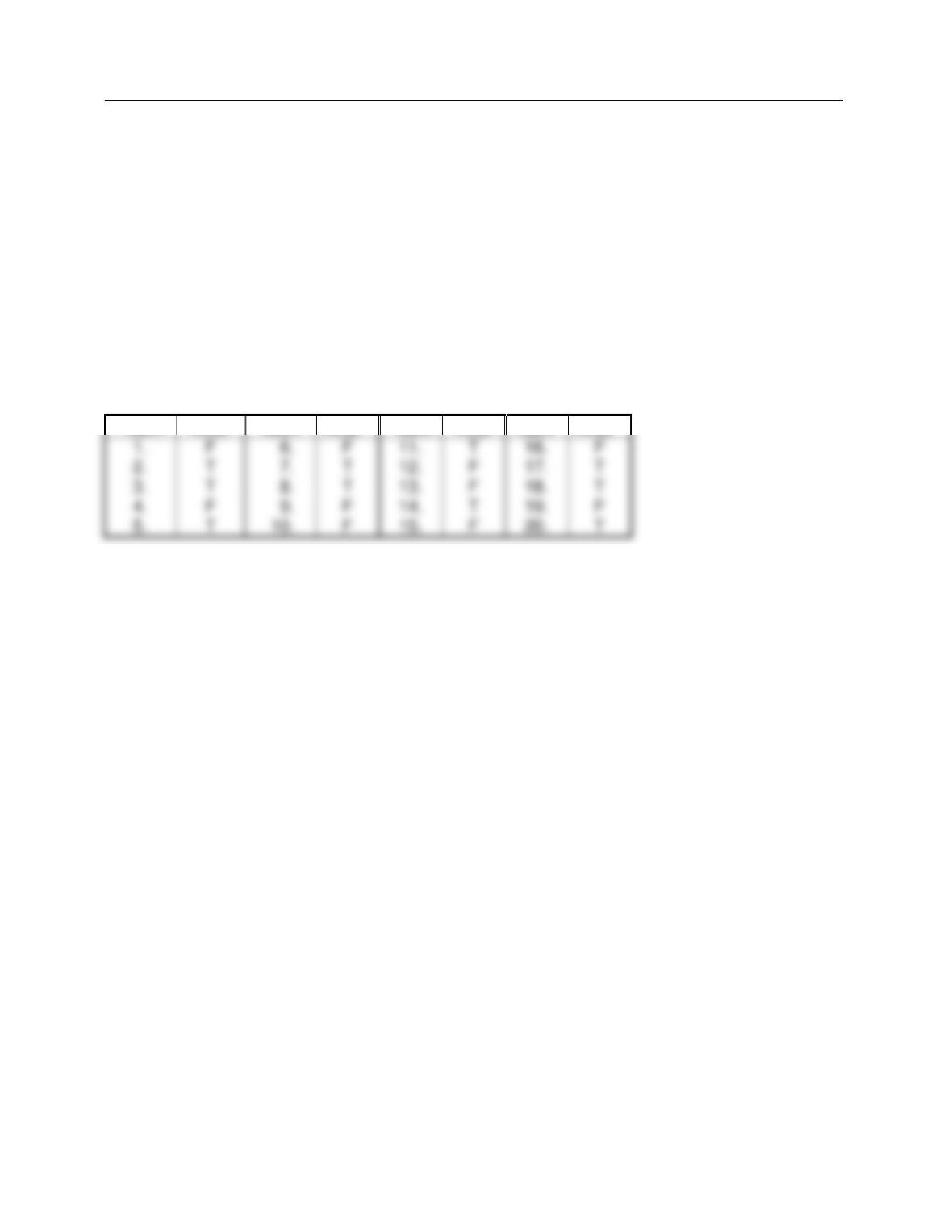
True-False Answers—Conceptual
Item
Ans.
Item
Ans.
Item
Ans.
Item
Ans.
MULTIPLE CHOICE—Conceptual
21. The revenue recognition principle provides that revenue is recognized when
a. it is realized.
b. it is realizable.
c. it is realized or realizable and it is earned.
d. None of these answers are correct.
22. When goods or services are exchanged for cash or claims to cash (receivables), revenues
are considered
a. earned.
b. realized.
c. recognized.
d. All of these answers are correct.
23. When the entity has substantially accomplished what it must do to be entitled to the
benefits represented by the revenues, revenues are considered
a. earned.
b. realized.
c. recognized.
d. All of these answers are correct.

Test Bank for Intermediate Accounting, Fifteenth Edition
18 – 8
S24. Which of the following is not an accurate representation concerning revenue recognition?
a. Revenue from selling products is recognized at the date of sale, usually interpreted to
mean the date of delivery to customers.
b. Revenue from services rendered is recognized when cash is received or when services
have been performed.
c. Revenue from permitting others to use enterprise assets is recognized as time passes
or as the assets are used.
d. Revenue from disposing of assets other than products is recognized at the date of sale.
P25. The process of formally recording or incorporating an item in the financial statements of an
entity is
a. allocation.
b. articulation.
c. realization.
d. recognition.
P26. Dot Point, Inc. is a retailer of washers and dryers and offers a three-year service contract
on each appliance sold. Although Dot Point sells the appliances on an installment basis, all
service contracts are cash sales at the time of purchase by the buyer. Collections received
for service contracts should be recorded as
a. service revenue.
b. deferred service revenue.
c. a reduction in installment accounts receivable.
d. a direct addition to retained earnings.
27. Which of the following is not a reason why revenue is recognized at the time of sale?
a. Realization has occurred.
b. The sale is the critical event.
c. Title legally passes from seller to buyer.
d. All of these are reasons to recognize revenue at the time of sale.
28. An alternative available when the seller is exposed to continued risks of ownership through
return of the product is
a. recording the sale, and accounting for returns as they occur in future periods.
b. not recording a sale until all return privileges have expired.
c. recording the sale, but reducing sales by an estimate of future returns.
d. All of these answers are correct.
29. A sale should not be recognized as revenue by the seller at the time of sale if
a. payment was made by check.
b. the selling price is less than the normal selling price.
c. the buyer has a right to return the product and the amount of future returns cannot be
reasonably estimated.
d. None of these answers are correct.

Revenue Recognition
18 – 9
30. The FASB concluded that if a company sells its product but gives the buyer the right to
return the product, revenue from the sales transaction shall be recognized at the time of
sale only if all of six conditions have been met. Which of the following is not one of these
six conditions?
a. The amount of future returns can be reasonably estimated.
b. The seller’s price is substantially fixed or determinable at time of sale.
c. The buyer’s obligation to the seller would not be changed in the event of theft or
damage of the product.
d. The buyer is obligated to pay the seller upon resale of the product.
31. All units in a multiple-deliverable arrangement are considered separate units of accounting,
provided that:
a. the customer can avail the unit from a third party.
b. the arrangement includes a general right of repurchase relative to the delivered item.
c. the seller is the sole manufacturer of the separate unit.
d. performance of the undelivered item is in the control of the buyer.
32. The percentage-of-completion method must be used when certain conditions exist. Which
of the following is not one of these necessary conditions?
a. Estimates of progress toward completion, revenues, and costs are reasonably
dependable.
b. The contractor can be expected to perform the contractual obligation.
c. The buyer can be expected to satisfy some of the obligations under the contract.
d. The contract clearly specifies the enforceable rights of the parties, the consideration to
be exchanged, and the manner and terms of settlement.
33. In selecting an accounting method for a newly contracted long-term construction project,
the principal factor to be considered should be
a. the terms of payment in the contract.
b. the degree to which a reliable estimate of the costs to complete and extent of progress
toward completion is practicable.
c. the method commonly used by the contractor to account for other long-term
construction contracts.
d. the inherent nature of the contractor’s technical facilities used in construction.
34. How should the balances of progress billings and construction in process be shown at
reporting dates prior to the completion of a long-term contract?
a. Progress billings as deferred income, construction in progress as a deferred expense.
b. Progress billings as income, construction in process as inventory.
c. Net balance, as a current asset if debit balance, and current liability if credit balance.
d. Net balance, as income from construction if credit balance, and loss from construction if
debit balance.
35. In accounting for a long-term construction-type contract using the percentage-of–
completion method, the gross profit recognized during the first year would be the estimated
total gross profit from the contract, multiplied by the percentage of the costs incurred during
the year to the
a. total costs incurred to date.
b. total estimated cost.
c. unbilled portion of the contract price.
d. total contract price.

Test Bank for Intermediate Accounting, Fifteenth Edition
18 – 10
36. How should earned but unbilled revenues at the balance sheet date on a long-term
construction contract be disclosed if the percentage-of-completion method of revenue
recognition is used?
a. As construction in process in the current asset section of the balance sheet.
b. As construction in process in the noncurrent asset section of the balance sheet.
c. As a receivable in the noncurrent asset section of the balance sheet.
d. In a note to the financial statements until the customer is formally billed for the portion
of work completed.
37. The principal disadvantage of using the percentage-of-completion method of recognizing
revenue from long-term contracts is that it
a. is unacceptable for income tax purposes.
b. gives results based upon estimates which may be subject to considerable uncertainty.
c. is likely to assign a small amount of revenue to a period during which much revenue
was actually earned.
d. None of these answers are correct.
S38. One of the more popular input measures used to determine the progress toward
completion in the percentage-of-completion method is the
a. revenue-percentage basis.
b. cost-percentage basis.
c. progress completion basis.
d. cost-to-cost basis.
S39. The principal advantage of the completed-contract method is that
a. reported revenue is based on final results rather than estimates of unperformed work.
b. it reflects current performance when the period of a contract extends into more than
one accounting period.
c. it is not necessary to recognize revenue at the point of sale.
d. a greater amount of gross profit and net income is reported than is the case when the
percentage-of-completion method is used.
40. Under the completed-contract method
a. revenue, cost, and gross profit are recognized during the production cycle.
b. revenue and cost are recognized during the production cycle, but gross profit
recognition is deferred until the contract is completed.
c. revenue, cost, and gross profit are recognized at the time the contract is completed.
d. None of these answers are correct.
41. Cost estimates on a long-term contract may indicate that a loss will result on completion of
the entire contract. In this case, the entire expected loss should be
a. recognized in the current period, regardless of whether the percentage-of-completion or
completed-contract method is employed.
b. recognized in the current period under the percentage–of–completion method, but the
completed-contract method defers recognition of the loss to the time when the contract
is completed.
c. recognized in the current period under the completed-contract method, but the
percentage-of-completion method defers the loss until the contract is completed.
d. deferred and recognized when the contract is completed, regardless of whether the
percentage-of-completion or completed-contract method is employed.

Revenue Recognition
18 – 11
42. Cost estimates at the end of the second year indicate that a loss will result on completion
of the entire contract. Which of the following statements is correct?
a. Under the completed-contract method, the loss is not recognized until the year the
construction is completed.
b. Under the percentage-of-completion method, the gross profit recognized in the first
year must not be changed.
c. Under the completed-contract method, when the billings exceed the accumulated
costs, the amount of the estimated loss is reported as a current liability.
d. Under the completed-contract method, when the Construction in Process balance
exceeds the billings, the estimated loss is added to the accumulated costs.
43. The criteria for recognition of revenue at the completion of production of precious metals
and farm products include
a. an established market with quoted prices.
b. low additional costs of completion and selling.
c. units are interchangeable.
d. All of these answers are correct.
44. In certain cases, revenue is recognized at the completion of production even though no
sale has been made. Which of the following statements is not true?
a. Examples involve precious metals or farm equipment.
b. The products possess immediate marketability at quoted prices.
c. No significant costs are involved in selling the product.
d. All of these statements are true.
S45. For which of the following products is it appropriate to recognize revenue at the completion
of production even though no sale has been made?
a. Automobiles
b. Large appliances
c. Single family residential units
d. Precious metals
S46. When there is a significant increase in the estimated total contract costs but the increase
does not eliminate all profit on the contract, which of the following is correct?
a. Under both the percentage-of-completion and the completed-contract methods, the
estimated cost increase requires a current period adjustment of excess gross profit
recognized on the project in prior periods.
b. Under the percentage-of-completion method only, the estimated cost increase requires
a current period adjustment of excess gross profit recognized on the project in prior
periods.
c. Under the completed-contract method only, the estimated cost increase requires a
current period adjustment of excess gross profit recognized on the project in prior
periods.
d. No current period adjustment is required.
47. Deferred gross profit on installment sales is generally treated as a(n)
a. deduction from installment accounts receivable.
b. deduction from installment sales.
c. unearned revenue and classified as a current liability.
d. deduction from gross profit on sales.

Test Bank for Intermediate Accounting, Fifteenth Edition
18 – 12
48. The installment-sales method of recognizing profit for accounting purposes is acceptable if
a. collections in the year of sale do not exceed 30% of the total sales price.
b. an unrealized profit account is credited.
c. collection of the sales price is not reasonably assured.
d. the method is consistently used for all sales of similar merchandise.
49. The method most commonly used to report defaults and repossessions is
a. provide no basis for the repossessed asset thereby recognizing a loss.
b. record the repossessed merchandise at fair value, recording a gain or loss if appropriate.
c. record the repossessed merchandise at book value, recording no gain or loss.
d. None of these answers are correct.
50. Under the installment-sales method,
a. revenue, costs, and gross profit are recognized proportionate to the cash that is
received from the sale of the product.
b. gross profit is deferred proportionate to cash uncollected from sale of the product, but
total revenues and costs are recognized at the point of sale.
c. gross profit is not recognized until the amount of cash received exceeds the cost of the
item sold.
d. revenues and costs are recognized proportionate to the cash received from the sale of
the product, but gross profit is deferred until all cash is received.
S51. The realization of income on installment sales transactions involves
a. recognition of the difference between the cash collected on installment sales and the
cash expenses incurred.
b. recording the net income related to installment sales and recognizing the income as
cash is collected.
c. deferring gross profit while recognizing operating or financial expenses in the period
incurred.
d. deferring gross profit and all additional expenses related to installment sales until cash
is ultimately collected.
P52. A manufacturer of large equipment sells on an installment basis to customers with
questionable credit ratings. Which of the following methods of revenue recognition is least
likely to overstate the amount of gross profit reported?
a. At the time of completion of the equipment (completion of production method)
b. At the date of delivery (sales method)
c. The installment-sales method
d. The cost–recovery method
53. A seller is using the cost-recovery method for a sale. Interest will be earned on the future
payments. Which of the following statements is not correct?
a. After all costs have been recovered, any additional cash collections are included in
income.
b. Interest revenue may be recognized before all costs have been recovered.
c. The deferred gross profit is offset against the related receivable on the balance sheet.
d. Subsequent income statements report the gross profit as a separate item of revenue
when it is recognized as earned.

Revenue Recognition
18 – 13
54. Under the cost-recovery method of revenue recognition,
a. income is recognized on a proportionate basis as the cash is received on the sale of
the product.
b. income is recognized when the cash received from the sale of the product is greater
than the cost of the product.
c. income is recognized immediately after the sale is made.
d. None of these answers are correct.
55. Under the deposit method
a. the seller recognizes revenue or income on the receipt of cash.
b. a company receives cash from the buyer before it transfers the goods or property.
c. the buyer reports the property as an asset on its balance sheet.
d. the seller has performed on the contract and a legitimate claim exists.
56. The deposit method of revenue recognition is used when
a. the product can be marketed at quoted prices and units are interchangeable.
b. cash is received before the sales transaction is complete.
c. the contract is short-term or the percentage-of–completion method can’t be used.
d. there are no significant costs of distribution.
57. The cost-recovery method
a. is prohibited under current GAAP due to its conservative nature.
b. requires a company to defer profit recognition until all cash payments are received from
the buyer.
c. is used by sellers when there is a reasonable basis for estimating collectibility.
d. recognizes total revenue and total cost of goods sold in the period of sale.
*58. Which of the following methods to account for sales is used when a high degree of
uncertainty exists related to the collection of receivables?
a. Cost-recovery method.
b. Percentage-of-completion method.
c. Deposit method.
d. Completed-contract method.
*59. In consignment sales, the consignee
a. records the merchandise as an asset on its books.
b. records a liability for the merchandise held on consignment.
c. recognizes revenue when it ships merchandise to the consignor.
d. prepares an “account report” for the consignor which shows sales, expenses, and cash
receipts.
*60. Types of franchising arrangements include all of the following except
a. service sponsor-retailer.
b. wholesaler-service sponsor.
c. manufacturer-wholesaler.
d. wholesaler-retailer.
Test Bank for Intermediate Accounting, Fifteenth Edition
18 – 14
*61. Continuing franchise fees should be recorded by the franchisor
a. as revenue when earned and receivable from the franchisee.
b. as revenue when received.
c. in accordance with the accounting procedures specified in the franchise agreement.
d. as revenue only after the balance of the initial franchise fee has been collected.
*62. Occasionally a franchise agreement grants the franchisee the right to make future bargain
purchases of equipment or supplies. When recording the initial franchise fee, the franchisor
should
a. increase revenue recognized from the initial franchise fee by the amount of the
expected future purchases.
b. record a portion of the initial franchise fee as unearned revenue which will increase the
selling price when the franchisee subsequently makes the bargain purchases.
c. defer recognition of any revenue from the initial franchise fee until the bargain
purchases are made.
d. None of these.
*63. A franchise agreement grants the franchisor an option to purchase the franchisee’s
business. It is probable that the option will be exercised. When recording the initial
franchise fee, the franchisor should
a. record the entire initial franchise fee as a deferred credit which will reduce the
franchisor’s investment in the purchased outlet when the option is exercised.
b. record the entire initial franchise fee as unearned revenue which will reduce the amount
of cash paid when the option is exercised.
c. record the portion of the initial franchise fee which is attributable to the bargain
purchase option as a reduction of the future amounts receivable from the franchisee.
d. None of these.
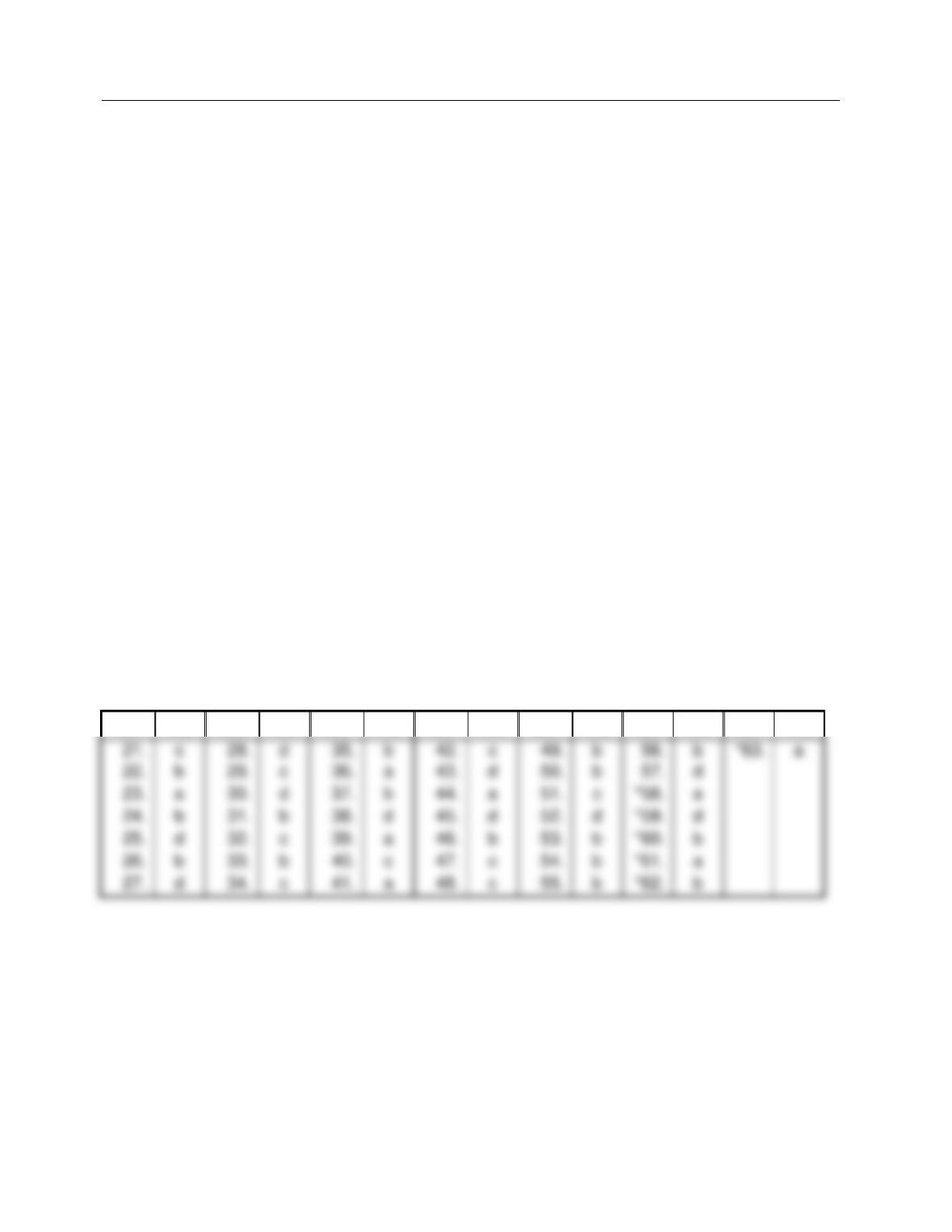
Multiple Choice Answers—Conceptual
Item
Ans.
Item
Ans.
Item
Ans.
Item
Ans.
Item
Ans.
Item
Ans.
Item
Ans.

Revenue Recognition
18 – 15
MULTIPLE CHOICE—Computational
64. Dexter purchases equipment from Ray Company for a price of $5,000,000 and chooses
Ray to do the installation. Ray doesn’t charge for the installation of equipment. The price of
the installation service is estimated to have a fair value of $60,000. Assuming the
transaction to be multiple-deliverable arrangement, compute the amount to be allocated to
installation.
a. $59,289
b. $60,720
c. $60,000
d. $61,457
Use the following information for questions 65-68:
Seasons Construction is constructing an office building under contract for Cannon Company. The
contract calls for progress billings and payments of $1,240,000 each quarter. The total contract
price is $14,880,000 and Seasons estimates total costs of $14,200,000. Seasons estimates that
the building will take 3 years to complete, and commences construction on January 2, 2014.
65. At December 31, 2014, Seasons estimates that it is 30% complete with the construction,
based on costs incurred. What is the total amount of Revenue from Long-Term Contracts
recognized for 2014 and what is the balance in the Accounts Receivable account assuming
Cannon Cafe has not yet made its last quarterly payment?
Revenue Accounts Receivable
a. $4,960,000 $4,960,000
b. $4,260,000 $ 1,240,000
c. $4,464,000 $ 1,240,000
d. $4,260,000 $4,960,000
66. At December 31, 2015, Seasons Construction estimates that it is 75% complete with the
building; however, the estimate of total costs to be incurred has risen to $14,400,000 due
to unanticipated price increases. What is the total amount of Construction Expenses that
Seasons will recognize for the year ended December 31, 2015?
a. $10,800,000
b. $6,300,000
c. $6,390,000
d. $6,540,000
67. At December 31, 2015, Seasons Construction estimates that it is 75% complete with the
building; however, the estimate of total costs to be incurred has risen to $14,400,000 due
to unanticipated price increases. What is reported in the balance sheet at December 31,
2015 for Seasons as the difference between the Construction in Process and the Billings
on Construction in Process accounts, and is it a debit or a credit?
Difference between the accounts Debit/Credit
a. $3,380,000 Credit
b. $1,240,000 Debit
c. $880,000 Debit
d. $1,240,000 Credit
68. Seasons Construction completes the remaining 25% of the building construction on
December 31, 2016, as scheduled. At that time the total costs of construction are

Test Bank for Intermediate Accounting, Fifteenth Edition
18 – 16
$15,000,000. What is the total amount of Revenue from Long-Term Contracts and
Construction Expenses that Seasons will recognize for the year ended December 31,
2016?
Revenue Expenses
a. $14,880,000 $15,000,000
b. $3,720,000 $ 3,750,000
c. $3,720,000 $ 4,200,000
d. $3,750,000 $ 3,750,000

Revenue Recognition
18 – 17
The following information relates to questions 69 and 70.
Cooper Construction Company had a contract starting April 2015, to construct a $18,000,000
building that is expected to be completed in September 2017, at an estimated cost of $16,500,000.
At the end of 2015, the costs to date were $7,590,000 and the estimated total costs to complete
had not changed. The progress billings during 2015 were $3,600,000 and the cash collected
during 2015 was 2,400,000.
69. For the year ended December 31, 2015, Cooper would recognize gross profit on the
building of:
a. $632,500
b. $690,000
c. $810,000
d. $0
70. At December 31, 2015 Cooper would report Construction in Process in the amount of:
a. $690,000
b. $7,590,000
c. $8,280,000
d. $7,080,000
71. Hayes Construction Corporation contracted to construct a building for $4,500,000.
Construction began in 2014 and was completed in 2015. Data relating to the contract are
summarized below:
Year ended
December 31,
2014 2015
Costs incurred $1,800,000 $1,350,000
Estimated costs to complete 1,200,000 —
Hayes uses the percentage-of-completion method as the basis for income recognition. For
the years ended December 31, 2014, and 2015, respectively, Hayes should report gross
profit of
a. $810,000 and $540,000.
b. $2,700,000 and $1,800,000.
c. $900,000 and $450,000.
d. $0 and $1,350,000.
72. Monroe Construction Company uses the percentage-of-completion method of accounting.
In 2015, Monroe began work on a contract it had received which provided for a contract
price of $25,000,000. Other details follow:
2015
Costs incurred during the year $12,000,000
Estimated costs to complete as of December 31 8,000,000
Billings during the year 11,000,000
Collections during the year 6,500,000
What should be the gross profit recognized in 2015?
a. $1,000,000
b. $13,000,000
c. $3,000,000
d. $5,000,000

Test Bank for Intermediate Accounting, Fifteenth Edition
18 – 18
Use the following information for questions 73 and 74.
In 2015, Fargo Corporation began construction work under a three-year contract. The contract
price is $4,800,000. Fargo uses the percentage-of-completion method for financial accounting
purposes. The income to be recognized each year is based on the proportion of costs incurred to
total estimated costs for completing the contract. The financial statement presentations relating to
this contract at December 31, 2015, follow:
Balance Sheet
Accounts receivable—construction contract billings $200,000
Construction in progress $600,000
Less contract billings 480,000
Costs and recognized profit in excess of billings 120,000
Income Statement
Income (before tax) on the contract recognized in 2015 $120,000
73. How much cash was collected in 2015 on this contract?
a. $200,000
b. $280,000
c. $40,000
d. $480,000
74. What was the initial estimated total income before tax on this contract?
a. $600,000
b. $640,000
c. $800,000
d. $960,000
75. Adler Construction Co. uses the percentage-of-completion method. In 2014, Adler began
work on a contract for $6,600,000 and it was completed in 2015. Data on the costs are:
Year Ended December 31
2014 2015
Costs incurred $2,340,000 $1,680,000
Estimated costs to complete 1,560,000 —
For the years 2014 and 2015, Adler should recognize gross profit in 2014 and 2015 of
2014 2015
a. $0 $2,580,000
b. $1,548,000 $1,032,000
c. $1,620,000 $960,000
d. $1,620,000 $2,580,000
Use the following information for questions 76 and 77.
Gomez, Inc. began work in 2014 on contract #3814, which provided for a contract price of
$14,400,000. Other details follow:
2014 2015
Costs incurred during the year $2,400,000 $7,350,000
Estimated costs to complete, as of December 31 7,200,000 0
Billings during the year 2,700,000 10,800,000
Collections during the year 1,800,000 11,700,000

Revenue Recognition
18 – 19
76. Assume that Gomez uses the percentage-of-completion method of accounting. The portion
of the total gross profit to be recognized as income in 2014 is
a. $900,000.
b. $1,200,000.
c. $3,600,000.
d. $4,800,000.
77. Assume that Gomez uses the completed-contract method of accounting. The portion of the
total gross profit to be recognized as income in 2015 is
a. $1,800,000.
b. $2,700,000.
c. $4,650,000.
d. $14,400,000.
Use the following information for questions 78 and 79.
Kiner, Inc. began work in 2014 on a contract for $16,800,000. Other data are as follows:
2014 2015
Costs incurred to date $7,200,000 $11,200,000
Estimated costs to complete 4,800,000 —
Billings to date 5,600,000 16,800,000
Collections to date 4,000,000 14,400,000
78. If Kiner uses the percentage-of-completion method, the gross profit to be recognized in
2014 is
a. $2,880,000.
b. $3,200,000.
c. $4,320,000.
d. $4,800,000.
79. If Kiner uses the completed-contract method, the gross profit to be recognized in 2015 is
a. $2,720,000.
b. $5,600,000.
c. $2,800,000.
d. $11,200,000.
Use the following information for questions 80 and 81.
80. Horner Construction Co. uses the percentage-of-completion method. In 2014, Horner
began work on a contract for $16,500,000; it was completed in 2015. The following cost
data pertain to this contract:
Year Ended December 31
2014 2015
Cost incurred during the year $5,850,000 $4,200,000
Estimated costs to complete at the end of year 3,900,000 —
The amount of gross profit to be recognized on the income statement for the year ended
December 31, 2015 is
a. $2,400,000.
b. $2,580,000.
c. $2,700,000.
d. $6,450,000.

Test Bank for Intermediate Accounting, Fifteenth Edition
18 – 20
81. If the completed-contract method of accounting was used, the amount of gross profit to be
recognized for years 2014 and 2015 would be
2014 2015
a. $6,750,000. $0.
b. $6,450,000. $(300,000).
c. $0. $6,450,000.
d. $0. $6,750,000.
82. Remington Construction Company uses the percentage-of-completion method. During
2014, the company entered into a fixed-price contract to construct a building for Sherman
Company for $24,000,000. The following details pertain to the contract:
At December 31, 2014 At December 31, 2015
Percentage of completion 25% 60%
Estimated total cost of contract $18,000,000 $20,000,000
Gross profit recognized to date 1,500,000 2,400,000
The amount of construction costs incurred during 2015 was
a. $12,000,000.
b. $7,500,000.
c. $4,500,000.
d. $2,000,000.
Use the following information for questions 83 and 84.
Eilert Construction Company had a contract starting April 2015, to construct a $21,000,000
building that is expected to be completed in September 2016, at an estimated cost of $19,250,000.
At the end of 2015, the costs to date were $8,855,000 and the estimated total costs to complete
had not changed. The progress billings during 2015 were $4,200,000 and the cash collected
during 2015 was $2,800,000. Eilert uses the percentage-of–completion method.
83. For the year ended December 31, 2015, Eilert would recognize gross profit on the building
of
a. $0.
b. $737,917.
c. $805,000.
d. $945,000.
84. At December 31, 2015, Eilert would report Construction in Process in the amount of
a. $9,660,000.
b. $8,855,000.
c. $8,260,000.
d. $805,000.