Page 1
1.
Which of the following is an example of a nonexcludable good?
A)
health care
B)
national defense
C)
education
D)
ice cream
2.
Which of the following goods BEST fits the characteristics of a private good?
A)
a professor giving a lecture in a large classroom
B)
an ice-cream cone
C)
fire protection
D)
disease prevention
3.
A(n) _____ is excludable and rival in consumption.
A)
private good
B)
artificially scarce good
C)
public good
D)
common resource
4.
When Joe watched a television movie, his viewing was _____ in consumption because
other people _____ able to view the movie at the same time Joe did.
A)
nonrival; were
B)
rival; were
C)
rival; were not
D)
nonrival; were not
5.
A good is most likely to be artificially scarce if:
A)
it is nonexcludable and nonrival.
B)
the seller is a monopolist.
C)
it is nonexcludable but rival.
D)
it is excludable but nonrival.
6.
Which of the following goods is most likely a common resource?
A)
the Super Bowl
B)
a public park
C)
a pair of pants
D)
the fire department
Page 2
7.
Which of the following goods is most likely an artificially scarce good?
A)
tickets to a boxing match
B)
pay-per-view of a boxing match
C)
health care
D)
the police department
8.
Television programs are nonrival because:
A)
the supplier cannot prevent consumption by people who do not pay for it.
B)
more than one person can consume the same unit of the good at the same time.
C)
individuals ignore the effect of their use on the amount of the resource remaining
for others.
D)
the market suffers from inefficiently low consumption.
9.
Clean water in a river is nonexcludable because:
A)
it is not possible to prevent consumption by people who do not pay for it.
B)
more than one person can consume the same unit of the good at the same time.
C)
individuals ignore the effect their use has on the amount of the resource remaining
for others.
D)
consumption is inefficiently low.
10.
Which of the following goods best fits the characteristics of a private good?
A)
national defense
B)
clean water
C)
a pizza
D)
police protection
11.
A private good is _____ in consumption.
A)
excludable and rival
B)
nonexcludable and nonrival
C)
excludable and nonrival
D)
nonexcludable and rival
12.
Which of the following goods is most likely a public good?
A)
the Internet
B)
a city park
C)
a pair of pants
D)
fire protection
Page 3
13.
A(n) _____ is nonexcludable and nonrival in consumption.
A)
private good
B)
artificially scarce good
C)
public good
D)
common resource
14.
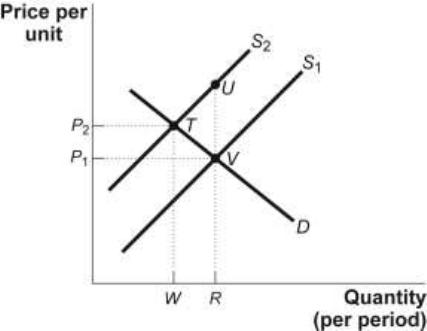
A public good is a good or service for which exclusion is _____ and which is _____ in
consumption.
A)
possible; rival
B)
possible; nonrival
C)
not possible; rival
D)
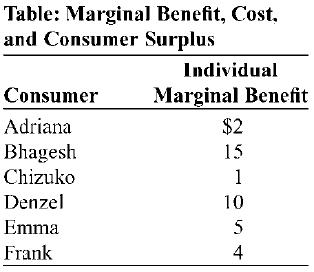
not possible; nonrival
15.
A private good is a good or service for which exclusion is _____ and which is _____ in
consumption.
A)
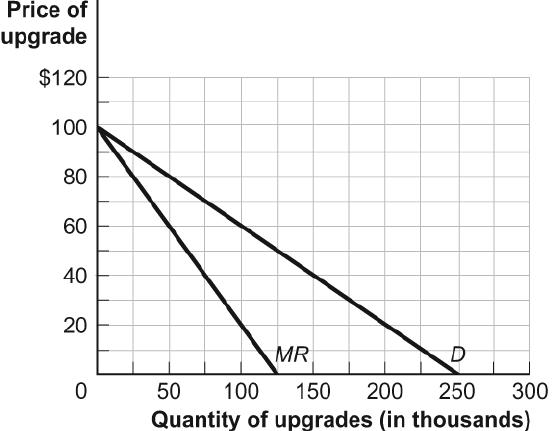
possible; rival
B)
possible; nonrival
C)
not possible; rival
D)
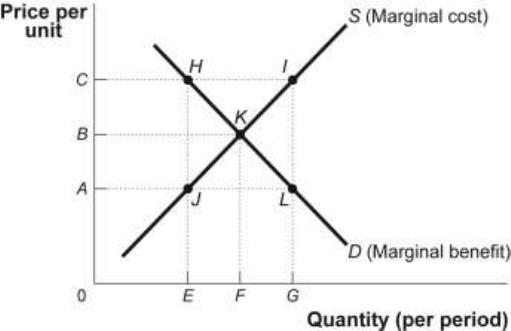
not possible; nonrival
16.
A common resource is a good or service for which exclusion is _____ and which is
_____ in consumption.
A)
possible; rival
B)
possible; nonrival
C)
not possible; rival
D)
not possible; nonrival
17.
An artificially scarce good is a good or service for which exclusion is _____ and which
is _____ in consumption.
A)
possible; rival
B)
possible; nonrival
C)
not possible; rival
D)
not possible; nonrival
18.
Whether or not they pay for them, people cannot be excluded from receiving the
benefits of:
A)
private goods.
B)
public goods.
C)
common resources.
D)
either public goods or common resources.
Page 4
19.
The best example of a public good is:
A)
a court of law.
B)
clothing.
C)
food.
D)
a state university.
20.
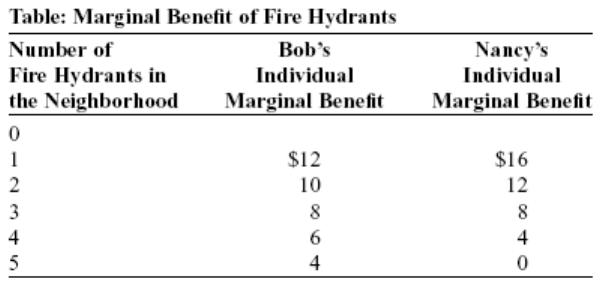
The best example of a private good is:
A)
an automobile.
B)
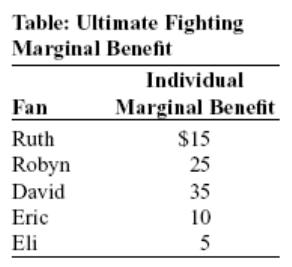
public education.
C)
national defense.
D)
law enforcement.
21.
The best example of a public good is:
A)
legal services.
B)
national defense.
C)
a municipal library.
D)
cable television programming.
22.
The best example of an artificially scarce good is:
A)
legal services.
B)
national defense.
C)
a municipal library.
D)
cable television programming.
23.
The best example of a common resource is:
A)
public education.
B)
a municipal library.
C)
clean water.
D)
cable television programming.
24.
A whale is a common resource because the private market _____ prevent consumption
by people who do not pay for it, and the same whale _____ be consumed more than
once.
A)
can; can
B)
cannot; cannot
C)
can; cannot
D)
cannot; can
Page 5
25.
An electronic book is an artificially scarce good because the private market _____
prevent consumption by people who do not pay for it. Further, the same e-book _____
be consumed by more than one person at the same time.
A)
can; can
B)
cannot; cannot
C)
can; cannot
D)
cannot; can
26.
If a good has a marginal cost of production of zero and an inefficiently low level of
consumption, the good must be a(n):
A)
private good.
B)
public good.
C)
common resource.
D)
artificially scarce good.
27.
If the market produces an efficient level of a good, then we know that the good must be
_____ and _____ in consumption.
A)
nonexcludable; nonrival
B)
nonexcludable; rival
C)
excludable; nonrival
D)
excludable; rival
28.
Although most citizens have access to police protection, they also take measures, such
as putting locks on their doors, to protect themselves. For most citizens police protection
is a(n) _____ good, while self-protection is a(n) _____ good.
A)
public; private
B)
public; artificially scarce good
C)
common resource; private
D)
artificially scarce good; common resource
29.
Which of the following is a private good?
A)
traffic lights
B)
mountain bike trails in a national forest
C)
a fast-food cheeseburger
D)
cell phone service
Page 6
30.
Stephanie stops at a gas station to fill up the tank of her car. The unleaded gasoline in
her tank is best described as a(n):
A)
private good.
B)
public good.
C)
artificially scarce good.
D)
common resource.
31.
DeVonda owns a music store. One night, vandals broke her store’s front window.
DeVonda called the police, and the police investigated the crime. The police services
that DeVonda used are best described as a(n):
A)
private good.
B)
public good.
C)
artificially scarce good.
D)
common resource.
32.
Josh has an iPhone, and he frequently downloads songs from the iTunes website. He
pays a small fee for each download, but downloading a song does not remove it from
the iTunes inventory. Other consumers can also pay the fee and download a song that
Josh might have already accessed. The iTunes service is best described as(n):
A)
private good.
B)
public good.
C)
artificially scarce good.
D)
common resource.
33.
Wenqin lives in a city that has a huge public rose garden. Residents can stroll through
the rose garden, enjoy the scenic vistas, or have a picnic, all without paying a fee. The
public rose garden is best described as:
A)
rival and excludable.
B)
nonrival and excludable.
C)
rival and nonexcludable.
D)
nonrival and nonexcludable.
34.
Bluefin tuna travel in schools throughout the world’s oceans. Fishing boats from many
nations harvest bluefin tuna as the schools migrate through their national waters. The
schools of bluefin tuna are best described as:
A)
a private good.
B)
a public good.
C)
an artificially scarce resource.
D)
a common resource.
Page 7
35.
As a big music fan, you want to attend a weekend blues festival in your town. The
purchase of a wristband gives you and thousands of other fans access to the outdoor
concert pavilion. The blues festival is a good that has the characteristics of being:
A)
rival and excludable.
B)
nonrival and excludable.
C)
rival and nonexcludable.
D)
nonrival and nonexcludable.
36.
Public goods differ from common resources in that both are _____, but public goods are
_____, while common resources are _____.
A)
nonrival in consumption; excludable; nonexcludable
B)
excludable; nonrival in consumption; rival in consumption
C)
nonexcludable; are nonrival in consumption; rival in consumption
D)
rival in consumption; nonexcludable; excludable
37.
The best example of a good that is excludable in consumption is:
A)
a park.
B)
an ocean.
C)
a bicycle.
D)
national defense.
38.
When comparing the characteristics of common resources and artificially scarce goods,
we find that:
A)
they are both nonrival in consumption.
B)
they are both excludable.
C)
common resources are nonrival in consumption (while artificially scarce goods are
not), and artificially scarce goods are nonexcludable (while common resources are
not).
D)
artificially scarce goods are nonrival in consumption (while common resources are
not), and common resources are nonexcludable (while artificially scarce goods are
not).
39.
National defense and clean air are similar in that both are _____, but they differ in that
national defense is _____, while clean air is not.
A)
rival in consumption; excludable
B)
nonrival in consumption; excludable
C)
excludable; rival in consumption
D)
nonexcludable; nonrival in consumption
Page 8
40.
National defense and e-books are similar in that both are _____, but they differ in that
national defense is _____, while e-books are not.
A)
rival in consumption; excludable
B)
nonrival in consumption; nonexcludable
C)
excludable; rival in consumption
D)
nonexcludable; nonrival in consumption
41.
An artificially scarce good is similar to a public good in that it is _____, but it is also
similar to a private good in that it is _____.
A)
nonrival in consumption; nonexcludable
B)
nonrival in consumption; excludable
C)
excludable; nonrival in consumption
D)
nonexcludable; rival in consumption
42.
An e-book is similar to a published book in that it is _____, but it is also similar to
national defense in that it is _____.
A)
rival in consumption; nonexcludable
B)
nonrival in consumption; excludable
C)
excludable; nonrival in consumption
D)
nonexcludable; rival in consumption
43.
A software program is similar to an apple in that it is _____, but it is also similar to
public safety in that it is _____.
A)
rival in consumption; nonexcludable
B)
nonrival in consumption; excludable
C)
excludable; nonrival in consumption
D)
nonexcludable; rival in consumption
44.
If left to the private market, the amount of police protection provided in a city would be
_____ than it is now, and free riders would pay _____ for police protection.
A)
more; more
B)
more; nothing
C)
less; nothing
D)
less; a higher price
45.
For a good to be efficiently provided by the private market, it must be:
A)
rival in consumption.
B)
excludable.
C)
a common resource.
D)
rival in consumption and excludable.
Page 9
46.
An individual is MOST likely to be a free rider when a good is:
A)
private.
B)
nonexcludable.
C)
nonrival.
D)
artificially scarce.
47.
The free-rider problem is a direct result of:
A)
the inability to exclude nonpayers.
B)
marginal-cost pricing.
C)
full-cost pricing.
D)
horizontally summed supply curves.
48.
The tendency of people or firms to consume a public good without paying for it is called
the _____ problem.
A)
free-cost
B)
free-rider
C)
free-goods
D)
free-market
49.
When the market does NOT result in an efficient allocation of scarce resources,
economists say there has been:
A)
market dropout.
B)
normative economics.
C)
market disincentives.
D)
market failure.
50.
An inefficient allocation of resources will occur when:
A)
decision makers are faced with the full costs and benefits of their actions.
B)
there are clearly defined property rights.
C)
no alternative would increase the welfare of society.
D)
decision makers are not faced with the full benefits and costs of their choices.
51.
When the allocation of resources is such that a different allocation would increase
society’s welfare, economists say:
A)
market failure has occurred.
B)
the efficiency condition is met.
C)
decision makers have faced the full marginal benefits and marginal costs of their
decisions.
D)
producers have maximized total cost.
Page 10
52.
If a good is subject to the free-rider problem and an inefficiently low level of production
when left to the private market, the good must be a(n):
A)
private good.
B)
public good.
C)
common resource.
D)
artificially scarce good.
53.
If a good is subject to the free-rider problem and an inefficiently high level of
consumption, the good must be a(n):
A)
private good.
B)
public good.
C)
common resource.
D)
artificially scarce good.
54.
You work in an office and one of your coworkers has announced his retirement. You
have offered to purchase the retirement gift, so you place a collection jar in the lunch
room for anonymous donations to help pay for the gift. After a week you find very little
money in the jar, so you end up paying for a large share of the retirement gift. You are
the victim of the _____ problem.
A)
common resource
B)
private good
C)
overuse of a common resource
D)
free-rider
55.
Most neighborhood streets are illuminated at night by streetlights. The streetlights are
_____ and _____. Therefore, they are likely to be _____ by the competitive market.
A)
nonrival; nonexcludable; underprovided
B)
nonrival; nonexcludable; overprovided
C)
rival; excludable; efficiently provided
D)
nonrival; excludable; underprovided
56.
The tendency of people to avoid paying for a good’s benefits when the benefits can be
obtained for free is called the _____ problem.
A)
free-cost
B)
free-rider
C)
free-goods
D)
free-market
Page 11
57.
The free-rider problem refers to:
A)
the situation in the Old West when land was largely unfenced and riders had
unfettered access to private range land.
B)
qualifications, or riders, that clients do not request, but which lawyers tend to
include in contracts anyway.
C)
a variation on the phrase “There’s no such thing as a free lunch,” which is replaced
by “There’s no such thing as a free ride.”
D)
lack of incentive for consumers to pay for a nonexcludable good.
58.
For a nonrival good like pay-per-view television programs, the private market will lead
to:
A)
production of too much of the good.
B)
consumption of too much of the good.
C)
consumption of too little of the good.
D)
outsourcing its production.
59.
For a nonexcludable good like national defense, the private market will lead to _____ of
the good.
A)
too much production
B)
too much consumption
C)
too little production
D)
the efficient level of consumption
60.
A public good is _____ and _____ in consumption.
A)
excludable; rival
B)
nonexcludable; nonrival
C)
excludable; nonrival
D)
nonexcludable; rival
61.
A key element that a public good displays is:
A)
overproduction.
B)
rival consumption.
C)
payment through charitable contributions.
D)
nonexclusion.
62.
Public goods are NOT sold in efficient quantities in the marketplace because:
A)
once supplied to a buyer, they can be made available at no cost to someone else.
B)
the more one person has, the less another person has.
C)
they are usually so costly that only the wealthy can afford them.
D)
they are usually very poor quality goods.
Page 12
63.
Which of the following activities is a public good?
A)
going to school
B)
voting
C)
smoking
D)
getting a flu shot
64.
A public good is a good:
A)
whose consumption is nonexcludable and nonrival.
B)
for which the marginal cost of adding another consumer is high.
C)
that the market will usually provide efficiently.
D)
whose consumption is rival.
65.
For a public good, nonpayers _____ excluded from obtaining the benefits of the good.
A)
can be
B)
are automatically
C)
usually are
D)
cannot be
66.
The best example of a good whose consumption is NOT excludable is:
A)
a yard.
B)
a house.
C)
a bicycle.
D)
national defense.
67.
Which of the following is the best example of a good whose consumption is NOT
excludable?
A)
clothing
B)
ice cream
C)
a taco
D)
national defense
68.
Which of the following are used to provide public goods?
I. voluntary contributions
II. taxes
III. self-interested business firms
A)
I only.
B)
I and II.
C)
II and III.
D)
I, II, and III.
Page 13
69.
Volunteer fire departments are good examples of the _____ provision of _____.
A)
private; private goods
B)
public; common resources
C)
private; public goods
D)
public; artificially scarce goods
70.
In the United Kingdom, most public television programming is paid for by a yearly
license fee assessed on every household. Television detection vans go through
neighborhoods to detect unlicensed households and keep them from viewing without
paying. This is a good example of the _____ provision of _____.
A)
public; private goods
B)
public; goods that are made artificially excludable in consumption
C)
public; common resources
D)
private; artificially scarce goods
71.
Since the public safety that a police force provides is _____ in consumption, the
efficient price _____.
A)
rival; is zero
B)
nonrival; is zero
C)
rival; equals marginal social benefit
D)
nonrival; equals marginal social benefit
72.
For which of the following goods is the marginal social benefit necessarily greater than
the marginal private benefit?
A)
public goods
B)
common resources
C)
artificially scarce goods
D)
private goods
73.
No individual is willing to pay to provide the efficient level of a public good, since the:
A)
marginal cost of production is zero.
B)
good will be nonrival and thus underconsumed.
C)
individual’s marginal benefit is less than the marginal social benefit.
D)
marginal benefit of allowing one more individual to consume the good is zero.
Page 14
74.
Public goods should be produced up to the point at which the marginal cost of
production equals:
A)
the maximum price any individual is willing to pay for that unit.
B)
the sum of the individual marginal benefits from all consumers of that unit.
C)
zero, which is the marginal cost of allowing another individual to consume the
good.
D)
the highest marginal benefit from any individual consumer of the good.
75.
Suppose the town of Falls Valley has a mosquito problem. After a bad summer, the
town accountants explain that the marginal cost of providing one more treatment for
mosquito control is $100,000. The town should provide the additional mosquito control
only if the marginal:
A)
benefit for any individual citizen is at least $100,000.
B)
benefit for all individual citizens adds up to at least $100,000.
C)
social cost of mosquito control is more than $100,000.
D)
social cost of mosquito control is less than $100,000.
Use the following to answer questions 76-78:
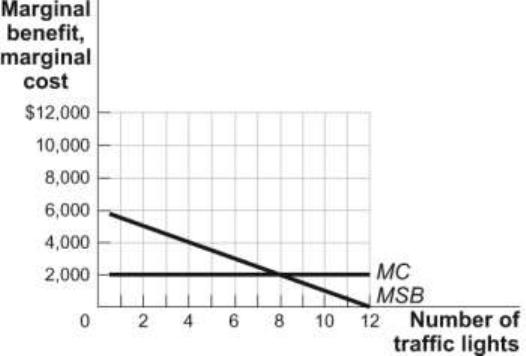
Figure: Traffic Lights in Plymouth
76.
(Figure: Traffic Lights in Plymouth) Look at the figure Traffic Lights in Plymouth.
Plymouth has 1,000 residents. Each of the residents has the same individual marginal
benefit per traffic light. Without government intervention, the town will have _____
traffic lights.
A)
0
B)
4
C)
8
D)
12
Page 15
77.
(Figure: Traffic Lights in Plymouth) Look at the figure Traffic Lights in Plymouth.
Plymouth has 1,000 residents. Each of the residents has the same individual marginal
benefit per traffic light. If the government provides traffic lights, the socially efficient
quantity is:
A)
0.
B)
4.
C)
8.
D)
12.
78.
(Figure: Traffic Lights in Plymouth) Look at the figure Traffic Lights in Plymouth.
Plymouth has 1,000 residents. Each of the residents has the same individual marginal
benefit per traffic light. If the town’s population doubles and the new residents share the
identical individual marginal benefit of the existing residents, the socially efficient
quantity of traffic lights will:
A)
stay the same.
B)
fall.
C)
rise.
D)
fall to zero.
Use the following to answer questions 79-81:
79.
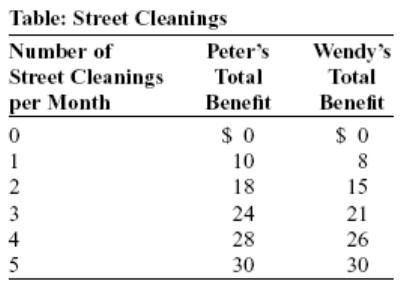
(Table: Street Cleanings) Look at the table Street Cleanings. What is the marginal social
benefit for Peter and Wendy together when the number of street cleanings per month
increases from 4 to 5?
A)
$30
B)
$60
C)
$6
D)
$15
Page 16
80.
(Table: Street Cleanings) Look at the table Street Cleanings. Increasing the number of
street cleanings per month from _____ would yield a marginal social benefit (for Peter
and Wendy together) equal to $12.
A)
one to two
B)
two to three
C)
three to four
D)
four to five
81.
(Table: Street Cleanings) Look at the table Street Cleanings. Suppose that the marginal
cost of each street cleaning is $18. Which statement is TRUE?
A)
If the city decided to clean the streets only once per month, Peter would be willing
to pay the entire cost of the cleaning.
B)
If the city decided to clean the streets only once per month, Wendy would be
willing to pay the entire cost of the cleaning.
C)
If Wendy and Peter were the only people in society, the efficient number of street
cleanings would be one per month.
D)
If Wendy and Peter were the only people in society, the efficient number of street
cleanings would be at least two per month.
82.
Consider an economy with just two citizens. If Sanjay’s marginal benefit from mosquito
control is $10 and Anjuli’s marginal benefit is $25, then the optimal level of a public
good like mosquito control occurs when the marginal cost of mosquito control is:
A)
$25.00.
B)
$17.50.
C)
$10.00.
D)
$35.00.
Use the following to answer questions 83-86:
Page 17
83.
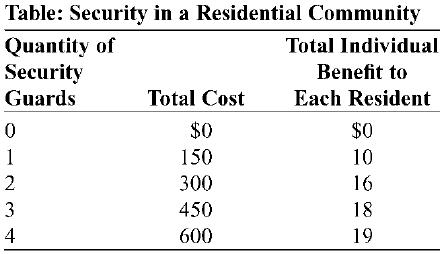
(Table: Security in a Residential Community) Look at the table Security in a Residential
Community. The marginal cost of hiring the second security guard is _____, and the
marginal social benefit is _____.
A)
$150; $200
B)
$450; $1,800
C)
$150; $600
D)
$450; $600
84.
(Table: Security in a Residential Community) Look at the table Security in a Residential
Community. The marginal cost of hiring the third security guard is _____, and the
marginal social benefit is _____.
A)
$150; $200
B)
$450; $1,800
C)
$150; $600
D)
$450; $600
85.
(Table: Security in a Residential Community) Look at the table Security in a Residential
Community. The marginal cost of hiring the fourth security guard is _____, and the
marginal social benefit is _____.
A)
$150; $200
B)
$150; $100
C)
$150; $600
D)
$600; $1,900
86.
(Table: Security in a Residential Community) Look at the table Security in a Residential
Community. The efficient number of security guards is:
A)
0.
B)
2.
C)
3.
D)
4.
Use the following to answer questions 87-90:
Page 18
87.
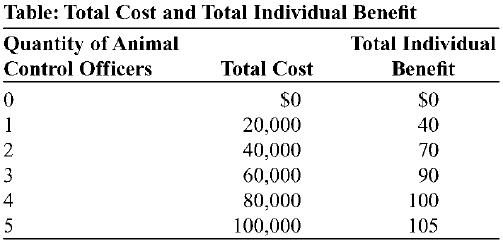
(Table: Total Cost and Total Individual Benefit) Look at the table Total Cost and Total
Individual Benefit. If there are 1,000 residents and they all have the same total
individual benefit, as shown in the table, what is the total social benefit of three animal
control officers?
A)
$10
B)
$9,000
C)
$10,000
D)
$90,000
88.
(Table: Total Cost and Total Individual Benefit) Look at the table Total Cost and Total
Individual Benefit. If there are 1,000 residents and they all have the same total
individual benefit, as shown in the table, what is the marginal social benefit of the fourth
animal control officer?
A)
$10
B)
$9,000
C)
$10,000
D)
$90,000
89.
(Table: Total Cost and Total Individual Benefit) Look at the table Total Cost and Total
Individual Benefit. If an individual resident were to decide about hiring and paying for
animal control officers on his or her own, how many officers would that resident hire?
A)
0
B)
1
C)
3
D)
5
90.
(Table: Total Cost and Total Individual Benefit) Look at the table Total Cost and Total
Individual Benefit. Assume there are 1,000 residents and they all have the same total
individual benefit, as shown in the table. If the residents acted together, how many
officers would they hire?
A)
0
B)
1
C)
3
D)
5
Page 19
91.
A characteristic of public goods is that:
A)
people pay for them in proportion to the benefits received.
B)
the costs of producing them are less than if they were private goods.
C)
their benefits cannot be withheld from anyone, regardless of whether a person pays
for them.
D)
they are produced only by the private sector, not by the public sector.
92.
Some public goods would not be provided without government intervention because:
A)
the marginal cost of the good exceeds an individual’s marginal benefit.
B)
the marginal cost of the good is less than an individual’s marginal benefit.
C)
the socially optimal price of the good would be zero (i.e., there is no chance of
making a profit).
D)
the marginal cost of the good exceeds an individual’s marginal benefit and the
socially optimal price of the good would be zero (i.e., there is no chance of making
a profit).
93.
Public goods should be provided to the point at which the marginal cost of production
equals:
A)
the maximum price any individual is willing to pay for that unit.
B)
the highest marginal benefit from any individual consumer of the good.
C)
zero.
D)
the sum of the individual marginal benefits from all consumers of that unit.
94.
No individual is willing to pay for the efficient quantity of a public good, because the
marginal benefit to an individual _____ the marginal social benefit.
A)
equals
B)
exceeds
C)
is less than
D)
may be equal to or greater than
95.
To maximize society’s welfare, the government should produce a public good up to the
point at which the marginal social benefit _____ the marginal social cost.
A)
equals
B)
exceeds
C)
is less than
D)
is equal to or greater than
Page 20
Use the following to answer questions 96-102:
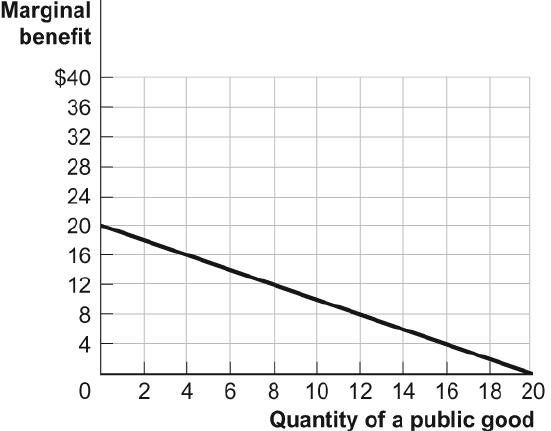
Figure: An Individual’s Marginal Benefit from a Public Good
96.
(Figure: An Individual’s Marginal Benefit from a Public Good) Look at the figure An
Individual’s Marginal Benefit from a Public Good. Assume that two individuals will
share consumption of a public good; each individual has the marginal benefit curve
shown in the figure. What is the marginal social benefit from four units of the public
good?
A)
$0
B)
$8
C)
$16
D)
$32
97.
(Figure: An Individual’s Marginal Benefit from a Public Good) Look at the figure An
Individual’s Marginal Benefit from a Public Good. Assume that two individuals will
share consumption of a public good; each individual has the marginal benefit curve
shown in the figure. What is the total social benefit from four units of the public good?
A)
$16
B)
$60
C)
$144
D)
$200
Page 21
98.
(Figure: An Individual’s Marginal Benefit from a Public Good) Look at the figure An
Individual’s Marginal Benefit from a Public Good. Assume that two individuals will
share consumption of a public good; each individual has the marginal benefit curve
shown in the figure. If the marginal cost of the good is $24, how many units of the
public good will be provided by the private market?
A)
0
B)
8
C)
12
D)
16
99.
(Figure: An Individual’s Marginal Benefit from a Public Good) Look at the figure An
Individual’s Marginal Benefit from a Public Good. Assume that two individuals will
share consumption of a public good; each individual has the marginal benefit curve
shown in the figure. If the marginal cost of the good is $24, how many units of this
public good would maximize society’s welfare?
A)
0
B)
8
C)
12
D)
16
100.
(Figure: An Individual’s Marginal Benefit from a Public Good) Look at the figure An
Individual’s Marginal Benefit from a Public Good. Assume that two individuals will
share consumption of a public good; each individual has the marginal benefit curve
shown in the figure. If the marginal cost of the good is $24, what is the total benefit of
the level of the public good that maximizes society’s welfare?
A)
$0
B)
$24
C)
$124
D)
$256
101.
(Figure: An Individual’s Marginal Benefit from a Public Good) Look at the figure An
Individual’s Marginal Benefit from a Public Good. Assume that two individuals will
share consumption of a public good; each individual has the marginal benefit curve
shown in the figure. If the marginal cost of the good is $8, how many units of the public
good will be provided by the private market?
A)
0
B)
8
C)
12
D)
16
Page 22
102.
(Figure: An Individual’s Marginal Benefit from a Public Good) Look at the figure An
Individual’s Marginal Benefit from a Public Good. Assume that two individuals will
share consumption of a public good; each individual has the marginal benefit curve
shown in the figure. If the marginal cost of the good is $8, how many units of this public
good will maximize society’s welfare?
A)
0
B)
8
C)
12
D)
16
103.
For a public good, the marginal social benefit:
A)
equals the sum of the individual marginal benefits for all of the consumers of that
unit.
B)
equals the sum of each consumer’s willingness to pay for that unit.
C)
is greater than any individual marginal benefit.
D)
equals the sum of the individual marginal benefits of all consumers of that unit, or
the sum of each consumer’s willingness to pay for that unit, and it is greater than
any individual marginal benefit.
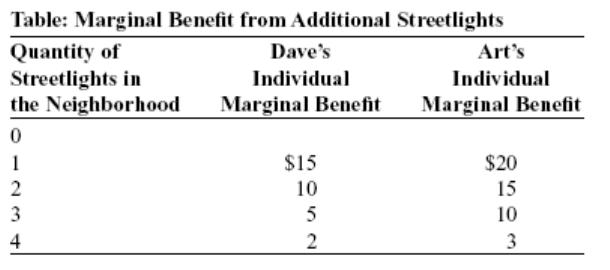
Use the following to answer questions 104-106:
104.
(Table: Marginal Benefit from Additional Streetlights) Look at the table Marginal
Benefit from Additional Streetlights. Suppose that the marginal cost of installing a
streetlight is $6. What is the maximum that Art would be willing to pay to have one
streetlight installed in the neighborhood?
A)
$20
B)
$15
C)
$35
D)
$5
Page 23
105.
(Table: Marginal Benefit from Additional Streetlights) Look at the table Marginal
Benefit from Additional Streetlights. Suppose that the marginal cost of installing a
streetlight is $6. If Dave had to pay for streetlights on his own, how many streetlights
would there be?
A)
0
B)
1
C)
2
D)
3
106.
(Table: Marginal Benefit from Additional Streetlights) Look at the table Marginal
Benefit from Additional Streetlights. Suppose that the marginal cost of installing a
streetlight is $6. What is the socially optimal number of streetlights in the
neighborhood?
A)
1
B)
2
C)
3
D)
4
107.
Which of the following statements is TRUE?
A)
It is possible to observe how much people benefit from consuming an additional
unit of a public good.
B)
It is difficult to get an accurate estimate of the marginal social benefits of public
goods because individuals have an incentive to distort the truth about their
willingness to pay.
C)
Individuals tend to underestimate the amount of a public good that they desire.
D)
It is straightforward to estimate the marginal social benefits of public goods.
108.
What is difficult about using cost-benefit analysis to estimate the level of a public good
that will maximize social welfare?
A)
The government cannot use cost-benefit analysis to estimate this.
B)
It is difficult to estimate the marginal costs of supplying a public good.
C)
It is difficult to estimate the marginal social benefits of supplying a public good.
D)
The costs of using it may make the provision of the public good prohibitive.
109.
Which of the following is a common resource?
A)
a public beach with free access
B)
seats on an airplane
C)
a highway to which access is granted only to those who pay a specified toll
D)
a city sewer system
Page 24
110.
Which of the following is a common resource?
A)
fish
B)
forests
C)
a dorm kitchen
D)
fish, forests, and a dorm kitchen
111.
Common resources tend to be _____ in private markets.
A)
priced too high
B)
efficiently priced
C)
overconsumed
D)
underconsumed
112.
If the marginal social benefit received from a good is equal to the marginal social cost of
production:
A)
an increase in production will improve society’s well-being.
B)
a decrease in production will improve society’s well-being.
C)
no change in production can improve society’s well-being.
D)
the market is producing too much of the good.
113.
If the marginal social benefit received from a good is less than the marginal social cost
of production:
A)
an increase in production will improve society’s well-being.
B)
a decrease in production will improve society’s well-being.
C)
no change in production can improve society’s well-being.
D)
the market is producing too little of the good.
114.
If the marginal social benefit received from a good is greater than the marginal social
cost of production:
A)
an increase in production will improve society’s well-being.
B)
a decrease in production will improve society’s well-being.
C)
no change in production can improve society’s well-being.
D)
the market is producing too much of the good.
115.
If the marginal social benefit received from a good is less than the marginal opportunity
cost of production:
A)
an increase in production will improve society’s well-being.
B)
a decrease in production will improve society’s well-being.
C)
no change in production can improve society’s well-being.
D)
the market is producing too little of the good.
Page 25
116.
If the extent to which common resources (such as fish in the sea) should be used is left
to the private market:
A)
resource use will be efficient and will maximize social welfare.
B)
each individual will use the resource until his or her marginal benefit is equal to the
marginal social cost.
C)
the marginal social cost and each individual’s marginal private cost will be the
same.
D)
the marginal social cost will be greater than the marginal private cost, and the
resource will be overused.
117.
If the use of a common resource is determined in the private market, the resource will be
_____, since the marginal social benefit will be equal to the marginal private cost of
production, which is _____ than the marginal social cost.
A)
underused; greater than
B)
overused; less than
C)
overused; greater than
D)
underused; equal to
118.
Common resources tend to be overused because:
A)
individuals tend to ignore the cost to others of their use of the resource.
B)
the individual marginal cost is greater than the marginal social cost.
C)
common resources are nonrival and nonexcludable.
D)
the marginal cost of allowing one more unit of consumption is zero.
119.
For a common resource, the marginal social benefit at the quantity provided by a private
market is _____ the marginal social cost.
A)
equal to
B)
greater than
C)
less than
D)
irrelevant to
Page 26
Use the following to answer question 120:
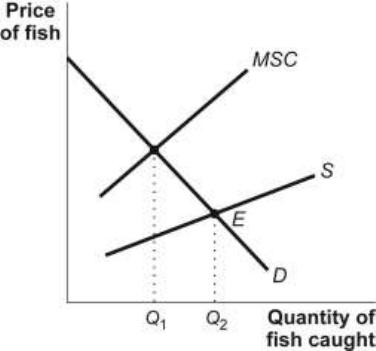
Figure: Marginal Social Cost and Supply
120.
(Figure: Marginal Social Cost and Supply) Look at the figure Marginal Social Cost and
Supply. The marginal social cost curve lies above the supply curve:
A)
because the marginal social benefit is greater for a common resource.
B)
and the efficient quantity of this common resource is point E.
C)
because the marginal social cost includes the cost of depleting this common
resource.
D)
because this is a public good.
121.
Consumption of a common resource is inefficiently too _____ because the marginal
social cost of the resource is _____ than the private marginal cost.
A)
low; higher
B)
low; less
C)
high; higher
D)
high; less
122.
Traffic congestion imposes higher costs and discomfort to residents of a city because the
marginal social cost of any one individual’s use of the roads is _____ the individual
marginal cost.
A)
less than
B)
greater than
C)
equal to
D)
irrelevant to
Page 27
123.
If the market supply and demand curves for a common resource include all costs and
benefits, the common resource will:
A)
be underused.
B)
be overused.
C)
be used at the socially optimal level.
D)
impose an external cost on society.
Use the following to answer question 124:
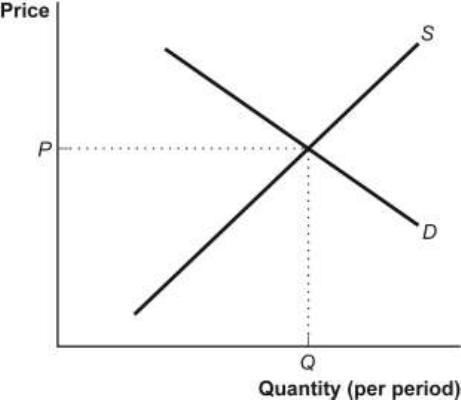
Figure: Model of a Market for a Common Resource
124.
(Figure: Model of a Market for a Common Resource) The figure Model of a Market for
a Common Resource shows the intersection of the private supply and demand curves.
Without any consideration of the marginal social cost of using a common resource, the
quantity of the common resource used at Q will be:
A)
larger than is socially desirable.
B)
smaller than is socially desirable.
C)
efficient.
D)
indeterminate without more information.
125.
An individual will continue to use a common resource until his or her:
A)
marginal benefit is zero.
B)
marginal cost is zero.
C)
marginal benefit exceeds marginal cost.
D)
marginal benefit equals the marginal social cost.
Page 28
126.
The marginal social cost of a common resource is _____ than an individual’s marginal
cost, and without government intervention the market will allow provision of _____ of
the common resource than is socially optimal.
A)
less; more
B)
less; less
C)
greater; more
D)
greater; less
127.
Suppose the Alaskan king crab harvest is unregulated, and any person with a boat can
go offshore, lower a crab pot, and harvest king crab. This common resource will likely
be _____ because the marginal social cost of harvesting crabs _____ the market price of
crab.
A)
overfished; is equal to
B)
overfished; is less than
C)
efficiently fished; is equal to
D)
overfished; exceeds
128.
The problem with common resources is similar to the problem with negative
externalities because:
A)
both issues deal with natural resources.
B)
the marginal social benefit of producing another unit exceeds the individual’s
marginal benefit.
C)
the marginal social cost of producing another unit exceeds the individual’s marginal
cost.
D)
the individual’s marginal cost of producing another unit exceeds the individual’s
marginal benefit.
129.
One way the government of Alaska could prevent an inefficiently large production of
crab fishing would be to:
A)
subsidize fishermen to encourage competition.
B)
sell exclusive licenses for the right to fish.
C)
offer tax breaks for more efficient boats.
D)
allow competition from foreign fishermen.
Page 29
130.
In London, any motorist entering a particular area in the city center during certain
specified times must pay a congestion fee equal to £8, with fines for noncompliance
rising to as high as £120. The congestion fee is:
A)
a Pigouvian tax aimed at regulating the use of city streets, a common resource.
B)
an attempt to internalize the costs of traffic delays and congestion.
C)
the wrong policy tool for solving the problem of congestion; instead, motorists
should be allowed to make deals to determine when and where they are permitted
to drive.
D)
a Pigouvian tax aimed at regulating the use of city streets, a common resource, and
an attempt to internalize the costs of traffic delays and congestion.
131.
A Pigouvian tax can lead to the efficient level of production and consumption of:
A)
a public good.
B)
a common resource.
C)
an artificially scarce good.
D)
no goods, since all taxes cause inefficiency.
132.
Whenever a species is threatened with extinction, it is likely that:
A)
clearly defined property rights exist.
B)
no one has exclusive property rights to it.
C)
greedy folks are winning again.
D)
it is the result of too much government regulation.
133.
The government can intervene to achieve the socially optimal quantity of a common
resource by:
A)
assigning property rights.
B)
imposing a tax on usage.
C)
granting a limited number of tradable permits to use the good.
D)
assigning property rights, imposing a tax on usage, and/or granting a limited
number of tradable permits to use the good.
134.
The government can intervene to avoid overfishing by:
A)
assigning property rights.
B)
imposing a tax on usage.
C)
granting a limited number of tradable fishing permits.
D)
assigning property rights, imposing a tax on usage, and/or granting a limited
number of tradable fishing permits.
Page 30
135.
If policy makers provide only enough tradable permits to provide efficient use of a
common resource, only those who _____ will use the resource.
A)
gain the most
B)
initially obtain the permit
C)
have the largest market share
D)
have monopoly power
136.
Suppose the Alaskan king crab harvest is unregulated and any person with a crab boat
and some diesel fuel can go offshore, lower a crab pot, and harvest king crab. As a
result, this common resource is overused. Which of the following policy choices might
produce the socially optimal king crab harvest?
A)
Alaska subsidizes the purchase of crab boats.
B)
Alaska auctions a limited number of licenses to harvest king crab.
C)
Alaska removes taxes on diesel fuel, which lowers the price of diesel.
D)
The U.S. and Canadian governments remove trade barriers, which allows for more
trade of products like king crab.
Use the following to answer questions 137-140:
Figure: Correcting for Market Failure
137.
(Figure: Correcting for Market Failure) There is an external cost in the market
illustrated in the figure Correcting for Market Failure. Economists argue that in an
unregulated private market, _____ is produced. In the figure, the supply curve (S1)
reflects _____ marginal cost.
A)
too little; private
B)
too much; private
C)
too much; external
D)
too little; external and private
Page 31
138.
(Figure: Correcting for Market Failure) There is an external cost in the market
illustrated in the figure Correcting for Market Failure. If the government forces the
private-sector firms to face the external cost:
A)
the supply curve shifts to the right, from S2 to S1.
B)
the supply curve shifts to the left, from S1 to S2.
C)
the supply curve is unaffected.
D)
price per unit decreases.
139.
(Figure: Correcting for Market Failure) There is an external cost in the market
illustrated in the figure Correcting for Market Failure. If the government intervenes to
correct for the external cost, the new _____ will now reflect _____ costs.
A)
supply curve S1; private and external
B)
supply curve S2; private but not external
C)
supply curve S2; private and external
D)
demand curve (not shown); external but not private
140.
(Figure: Correcting for Market Failure) There is an external cost in the market
illustrated in the figure Correcting for Market Failure. When the government intervenes
to correct for the external cost, the output will _____ from _____ to _____.
A)
fall; W; R
B)
increase; W; R
C)
fall; R; W
D)
fall; W; 0
141.
Which of the following is an example of an artificially scarce good?
A)
a candy bar
B)
a free art exhibit in a city park
C)
a pay-per-view boxing match on cable television
D)
an interstate highway without tolls
142.
Computer software that you can download from the Internet for a price is an artificially
scarce good because it is _____ but _____ in consumption.
A)
nonexcludable; rival
B)
excludable; nonrival
C)
nonexcludable; nonrival
D)
excludable; rival
Page 32
143.
The marginal cost of producing an artificially scarce good is equal to:
A)
zero.
B)
the marginal benefit if consumer surplus equals zero.
C)
the average total cost.
D)
its price.
144.
Which of the following is an example of an artificially scarce good?
A)
diamonds, because their supply is artificially restricted by monopoly producers
B)
music that is downloadable from the Internet for a fee
C)
a daily newspaper
D)
hot dogs in a sports stadium, because the number of suppliers is restricted
145.
The source of the inefficient use of artificially scarce goods is similar to the source of
inefficiencies created by:
A)
externalities.
B)
an oligopoly.
C)
price discrimination.
D)
a natural monopoly.
Use the following to answer questions 146-149:
146.
(Table: Marginal Benefit, Cost, and Consumer Surplus) The table Marginal Benefit,
Cost, and Consumer Surplus shows six consumers’ willingness to pay for one iTunes
download. If the marginal social cost is constant at $0, then the efficient price is _____
and consumer surplus is _____.
A)
$0; $37
B)
$1; $36
C)
$4; $33
D)
$5; $32
Page 33
147.
(Table: Marginal Benefit, Cost, and Consumer Surplus) The table Marginal Benefit,
Cost, and Consumer Surplus shows six consumers’ willingness to pay for one iTunes
download. If the marginal social cost is constant at _____, then _____ consumers will
purchase this good and consumer surplus is _____.
A)
$5; three; $15
B)
$5; three; $30
C)
$5; two; $15
D)
$4; four; $34
148.
(Table: Marginal Benefit, Cost, and Consumer Surplus) The table Marginal Benefit,
Cost, and Consumer Surplus shows six consumers’ willingness to pay for one iTunes
download. If the marginal social cost is constant at _____, then _____ consumers will
purchase this good and consumer surplus is _____.
A)
$5; three; $30
B)
$4; four; $18
C)
$5; two; $37
D)
$4; four; $34
149.
(Table: Marginal Benefit, Cost, and Consumer Surplus) The table Marginal Benefit,
Cost, and Consumer Surplus shows six consumers’ willingness to pay for one iTunes
download. If the marginal social cost is constant at _____, then _____ consumers will
purchase this good and consumer surplus is _____.
A)
$4; four; $34
B)
$2; five; $36
C)
$5; five; $30
D)
$2; five; $26
150.
Producers of artificially scarce goods face _____ that are similar to those of natural
monopolists; they decline over the relevant range of output.
A)
external benefits
B)
external costs
C)
total fixed costs
D)
average total costs
Page 34
Use the following to answer questions 151-154:
Figure: Demand and Marginal Revenue
151.
(Figure: Demand and Marginal Revenue) The figure Demand and Marginal Revenue
refers to a software upgrade. The producer incurred fixed costs of $10 million to
produce the upgrade; the marginal cost of allowing consumers to download the upgrade
is zero. To maximize profit, the producer will set a price of _____ and produce _____
upgrades.
A)
$100; 125,000
B)
$100; 250,000
C)
$50; 125,000
D)
$0; 250,000
152.
(Figure: Demand and Marginal Revenue) The figure Demand and Marginal Revenue
refers to a software upgrade. The producer incurred fixed costs of $10 million to
produce the upgrade; the marginal cost of allowing consumers to download the upgrade
is zero. What is the deadweight loss associated with the profit-maximizing price and
quantity of the upgrade?
A)
$0
B)
$1.25 million
C)
$3.125 million
D)
$6.25 million
Page 35
153.
(Figure: Demand and Marginal Revenue) The figure Demand and Marginal Revenue
refers to a software upgrade. The producer incurred fixed costs of $10 million to
produce the upgrade; the marginal cost of allowing consumers to download the upgrade
is zero. What is the efficient price of the upgrade?
A)
$0
B)
$50
C)
$75
D)
$100
154.
(Figure: Demand and Marginal Revenue) The figure Demand and Marginal Revenue
refers to a software upgrade. The producer incurred fixed costs of $10 million to
produce the upgrade; the marginal cost of allowing consumers to download the upgrade
is zero. What is the efficient level of output for the upgrade?
A)
0
B)
80,000
C)
125,000
D)
250,000
155.
Pharmaceutical companies typically face very high fixed costs when developing new
drugs. The marginal cost of producing a drug after development is very low. When these
companies set price and output to maximize profit, patients pay a _____ price for _____
amounts of the drug than are socially optimal.
A)
lower; lower
B)
higher; higher
C)
lower; higher
D)
higher; lower
156.
A very large museum could accommodate many more visitors than it does without
reducing the enjoyment of the visitors if it did not charge such a high price for
admission. Visits to the museum are a(n):
A)
private good.
B)
public good.
C)
common resource.
D)
artificially scarce good.
Page 36
Use the following to answer questions 157-177:
Figure: Market Failure
157.
(Figure: Market Failure) In the figure Market Failure, where is the equilibrium for a
competitive market?
A)
H
B)
I
C)
J
D)
K
158.
(Figure: Market Failure) In the figure Market Failure, the equilibrium price is _____ and
the equilibrium quantity is _____ for a competitive market.
A)
A; E
B)
A; G
C)
B; F
D)
C; E
159.
(Figure: Market Failure) In the figure Market Failure, if production in this competitive
market is at quantity E:
A)
marginal benefit is equal to marginal cost.
B)
marginal benefit is less than marginal cost.
C)
marginal benefit is greater than marginal cost.
D)
price is equal to marginal cost and greater than marginal benefit.
Page 37
160.
(Figure: Market Failure) In the figure Market Failure, if production in this competitive
market is at quantity F:
A)
marginal benefit is equal to marginal cost.
B)
marginal benefit is less than marginal cost.
C)
marginal benefit is greater than marginal cost.
D)
price is equal to marginal cost and greater than marginal benefit.
161.
(Figure: Market Failure) In the figure Market Failure, if production in this competitive
market is at quantity G:
A)
marginal benefit is less than marginal cost.
B)
marginal benefit is equal to marginal cost.
C)
marginal benefit is greater than marginal cost.
D)
price is equal to marginal cost and less than marginal benefit.
162.
(Figure: Market Failure) Look at the figure Market Failure. Suppose the supply curve
represents the marginal cost of providing streetlights in a neighborhood that is
composed of two people, Ann and Joe. The demand curve represents the marginal
benefit that Ann receives from the streetlights. Suppose that Joe’s marginal benefit from
the streetlights is a constant amount equal to AC. How much is Ann willing to pay for E
streetlights?
A)
0
B)
A
C)
B
D)
C
163.
(Figure: Market Failure) Look at the figure Market Failure. Suppose the supply curve
represents the marginal cost of providing streetlights in a neighborhood that is
composed of two people, Ann and Joe. The demand curve represents the marginal
benefit that Ann receives from the streetlights. Suppose that Joe’s marginal benefit from
the streetlights is a constant amount equal to AC. How much is Ann willing to pay for F
streetlights?
A)
0
B)
A
C)
B
D)
C
Page 38
164.
(Figure: Market Failure) Look at the figure Market Failure. Suppose the supply curve
represents the marginal cost of providing streetlights in a neighborhood that is
composed of two people, Ann and Joe. Suppose the supply curve represents the
marginal cost of providing streetlights in a neighborhood that is composed of two
people, Ann and Joe. The demand curve represents the marginal benefit that Ann
receives from the streetlights. Suppose that Joe’s marginal benefit from the streetlights is
a constant amount equal to AC. How much is Ann willing to pay for G streetlights?
A)
0
B)
A
C)
B
D)
C
165.
(Figure: Market Failure) Look at the figure Market Failure. Suppose the supply curve
represents the marginal cost of providing streetlights in a neighborhood that is
composed of two people, Ann and Joe. The demand curve represents the marginal
benefit that Ann receives from the streetlights. Suppose that Joe’s marginal benefit from
the streetlights is a constant amount equal to AC. If Ann is the only person to pay for the
streetlights, how many lights will be provided?
A)
0
B)
E
C)
F
D)
G
166.
(Figure: Market Failure) Look at the figure Market Failure. Suppose the supply curve
represents the marginal cost of providing streetlights in a neighborhood that is
composed of two people, Ann and Joe. The demand curve represents the marginal
benefit that Ann receives from the streetlights. Suppose that Joe’s marginal benefit from
the streetlights is a constant amount equal to AC. The marginal social benefit of F
streetlights is:
A)
0.
B)
B.
C)
less than B.
D)
greater than B.
Page 39
167.
(Figure: Market Failure) Look at the figure Market Failure. Suppose the supply curve
represents the marginal cost of providing streetlights in a neighborhood that is
composed of two people, Ann and Joe. The demand curve represents the marginal
benefit that Ann receives from the streetlights. Suppose that Joe’s marginal benefit from
the streetlights is a constant amount equal to AC. The marginal social benefit of G
streetlights is:
A)
0.
B)
A.
C)
B.
D)
C.
168.
(Figure: Market Failure) Look at the figure Market Failure. Suppose the supply curve
represents the marginal cost of providing streetlights in a neighborhood that is
composed of two people, Ann and Joe. The demand curve represents the marginal
benefit that Ann receives from the streetlights. Suppose that Joe’s marginal benefit from
the streetlights is a constant amount equal to AC. Providing E streetlights is _____
because the marginal social benefit is _____ the marginal cost.
A)
efficient; equal to
B)
efficient; greater than
C)
inefficient; greater than
D)
inefficient; less than
169.
(Figure: Market Failure) Look at the figure Market Failure. Suppose the supply curve
represents the marginal cost of providing streetlights in a neighborhood that is
composed of two people, Ann and Joe. The demand curve represents the marginal
benefit that Ann receives from the streetlights. Suppose that Joe’s marginal benefit from
the streetlights is a constant amount equal to AC. Providing F streetlights is _____
because the marginal social benefit is _____ the marginal cost.
A)
efficient; equal to
B)
efficient; greater than
C)
inefficient; greater than
D)
inefficient; less than
Page 40
170.
(Figure: Market Failure) Look at the figure Market Failure. Suppose the supply curve
represents the marginal cost of providing streetlights in a neighborhood that is
composed of two people, Ann and Joe. The demand curve represents the marginal
benefit that Ann receives from the streetlights. Suppose that Joe’s marginal benefit from
the streetlights is a constant amount equal to AC. Providing G streetlights is _____
because the marginal social benefit is _____ the marginal cost.
A)
efficient; equal to
B)
efficient; greater than
C)
inefficient; greater than
D)
inefficient; less than
171.
(Figure: Market Failure) Look at the figure Market Failure. Suppose the supply curve
represents the marginal cost of providing streetlights in a neighborhood that is
composed of two people, Ann and Joe. The demand curve represents the marginal
benefit that Ann receives from the streetlights. Suppose that Joe’s marginal benefit from
the streetlights is a constant amount equal to AC. The market would provide _____
streetlights. The efficient quantity of streetlights is _____.
A)
0; F
B)
F; F
C)
E; F
D)
F; G
172.
(Figure: Market Failure) Look at the figure Market Failure. Suppose it represents the
demand for and marginal cost per pound of shrimp in the bay. The additional cost of the
shrimp due to the depletion of the common resource is equal to AC. Without
government intervention, the market will produce _____ pounds of shrimp.
A)
0
B)
E
C)
F
D)
G
173.
(Figure: Market Failure) Look at the figure Market Failure. Suppose it represents the
demand for and marginal cost per pound of shrimp in the bay. The additional cost of the
shrimp due to the depletion of the common resource is equal to AC. Without
government intervention, the price of shrimp will be _____ per pound.
A)
0
B)
A
C)
B
D)
C
Page 41
174.
(Figure: Market Failure) Look at the figure Market Failure. Suppose it represents the
demand for and marginal cost per pound of shrimp in the bay. The additional cost of the
shrimp due to the depletion of the common resource is equal to AC. The output of F is
_____ because the marginal social benefit is _____ the marginal cost.
A)
efficient; equal to
B)
efficient; greater than
C)
inefficient; greater than
D)
inefficient; less than
175.
(Figure: Market Failure) Look at the figure Market Failure. Suppose it represents the
demand for and marginal cost per pound of shrimp in the bay. The additional cost of the
shrimp due to the depletion of the common resource is equal to AC. At output F _____
is being produced.
A)
too much shrimp
B)
not enough shrimp
C)
the efficient amount of shrimp
D)
the socially optimum amount of shrimp
176.
(Figure: Market Failure) Look at the figure Market Failure. Suppose it represents the
demand for and marginal cost per pound of shrimp in the bay. The additional cost of the
shrimp due to the depletion of the common resource is equal to AC. The efficient output
of shrimp is:
A)
0.
B)
E.
C)
F.
D)
G.
177.
(Figure: Market Failure) Look at the figure Market Failure. Suppose it represents the
demand for and marginal cost per pound of shrimp in the bay. The additional cost of the
shrimp due to the depletion of the common resource is equal to AC. The efficient price
of shrimp is:
A)
0.
B)
A.
C)
B.
D)
C.
178.
A concert is excludable if the manager of the concert hall can prevent people who do not
have a ticket from entering.
A)
True
B)
False
Page 42
179.
Airplane seats are rival in consumption.
A)
True
B)
False
180.
A good is excludable if nonpayers can be prevented from consuming it.
A)
True
B)
False
181.
Goods are said to be rival in consumption because they are substitutes in consumption,
such as coffee and tea or road travel and air travel.
A)
True
B)
False
182.
Any road without a toll can be thought of as a common resource, since it is
nonexcludable and rival in consumption.
A)
True
B)
False
183.
In a market economy, goods that are nonexcludable and nonrival will be produced at
inefficiently low levels (if they are produced at all), and goods that are excludable but
nonrival in consumption will be produced at inefficiently low consumption levels.
A)
True
B)
False
184.
In a market economy, goods that are nonrival in consumption are subject to inefficiently
low production.
A)
True
B)
False
185.
A public good is one that is generally available for consumption by the public; that is, a
person does not have to be a member of a special group or a club to be able to consume
it. A good example would be milk for sale in a grocery store that is open to the public.
A)
True
B)
False
Page 43
186.
For a public good, the marginal social benefit will be higher than any individual’s
marginal benefit of consumption.
A)
True
B)
False
187.
The efficient level of provision of a public good is the level at which its marginal social
benefit is equal to the marginal social cost of its production.
A)
True
B)
False
188.
The problem with public goods is similar to the problem with positive externalities: the
marginal social benefit exceeds any individual’s marginal benefit.
A)
True
B)
False
189.
For a public good, the marginal social benefit is the horizontal summation of each
individual’s marginal benefit curve.
A)
True
B)
False
190.
A low voter turnout can be explained by noting that political action is a public good and
people who don’t vote can free-ride on those who do.
A)
True
B)
False
191.
A city government engages in cost-benefit analysis when it estimates the social costs
and social benefits to provide trash collection services.
A)
True
B)
False
192.
Since individuals ignore the effect of their use on the amount of a resource remaining
for others, common resources are subject to overuse when left to the private market.
A)
True
B)
False
Page 44
193.
To ensure efficient use of a common resource, the government could assign property
rights.
A)
True
B)
False
194.
Artificially scarce goods are inefficiently consumed because the market price is zero.
A)
True
B)
False
195.
Pay-per-view movies are an example of a common resource.
A)
True
B)
False
196.
The efficient price for a good that is nonrival in consumption is necessarily greater than
zero.
A)
True
B)
False
197.
When a good is nonrival in consumption, it means the marginal cost of any individual’s
consumption is zero.
A)
True
B)
False
198.
A movie DVD is a private good, but a pay-per-view movie from your cable company is
considered an artificially scarce good. How are they similar, and what makes them
different?
199.
The fish in the local river are considered a common resource, but the city’s sanitation
work, which keeps the river clean enough for people to fish and keep their catch, is
considered a public good. How are they similar and what makes them different?
200.
The federal government provides national defense. Why would it be unlikely for
national defense to be provided by a private entrepreneur?
Page 45
201.
Suppose you live in a community that relies on clean drinking water from a nearby lake.
Lately you have noticed that the quality of the water has deteriorated as pollution
washed into the lake. An editorial in the local newspaper suggests that all residents
donate money to clean up the lake. Why would this suggestion be unlikely to succeed?
202.
Colleges and universities solicit their alumni for donations that go toward the operation
and advancement of the college. How does this present a potential free-rider problem?
How can colleges and universities attempt to lessen the free-rider problem and increase
alumni contributions?
Use the following to answer question 203:
203.
(Table: Marginal Benefit of Fire Hydrants) Look at the table Marginal Benefit of Fire
Hydrants. Suppose that the marginal cost of installing a hydrant is $10.
A) What is the most that Nancy would be willing to pay to have one hydrant installed
in the neighborhood?
B) If Nancy had to pay for fire hydrants on her own, how many hydrants would there
be?
C) What is the optimal number of fire hydrants in the neighborhood?
204.
The North Woods is a public area supporting such a large moose population that the
government sees no reason to regulate or limit the harvest of the moose.
A) From an economic point of view, how is this situation going to lead to market
failure?
B) You are appointed by the governor to regulate the harvest of moose from the North
Woods. How could you use the three tools described in the text to maintain the efficient
level of moose harvest?
Page 46
205.
Many cities have toll booths on busy highways as a way to reduce congestion. To drive
on this toll road, the driver must pay a price at the booth before proceeding. From an
economist’s point of view, why would a toll road be part of the solution to the problem
of traffic congestion?
206.
More and more consumers are watching their favorite network television programs from
their computer. Suppose that a network or cable company begins to charge a small fee to
access and download an episode of a popular program. For a television programming
supplier, the marginal cost of supplying the episode to one more customer is zero.
A) What type of good is this Internet television episode download? Explain.
B) Will the efficient quantity of television downloads be provided? Explain.
Use the following to answer question 207:
207.
(Table: Ultimate Fighting Marginal Benefit) Look at the table Ultimate Fighting
Marginal Benefit. Most bouts are available on a pay-per-view basis from cable
companies. The marginal cost of making the bout available to one additional consumer
is zero.
A) If all five fans could view the upcoming fight without paying, how many would do
so, and what would be the total consumer surplus to those consumers?
B) If the cable company charges $20 to view the championship bout, which consumers
will pay to view it? What is the total consumer surplus for those fans? What is the total
producer surplus for the cable company? How large is the deadweight loss from this
pricing strategy?
208.
Goods that are nonrival in consumption and nonexcludable are _____ goods.
A)
common resource
B)
private
C)
public
D)
normal
Page 47
209.
A good that is nonexcludable but rival in consumption is a _____ good.
A)
common resource
B)
private
C)
public
D)
normal
210.
_____ are a good that is rival in consumption and nonexcludable.
A)
Public parks
B)
Public policy, such as national economic policy,
C)
Private beaches
D)
National defense
211.
Economic policy is _____ in consumption and _____.
A)
rival; nonexcludable
B)
nonrival; nonexcludable
C)
nonrival; excludable
D)
rival; excludable
212.
On hot summer days, beach parking lots are usually full by early morning even though
one must pay to park there. Parking at such lots is _____ in consumption and _____.
A)
rival; nonexcludable
B)
rival; excludable
C)
nonrival; nonexcludable
D)
nonrival; excludable
213.
A small public park in a large town with many other parks often has very few visitors
because of its size. There is no fee to enter the park, but few people visit it, since other
parks have more amenities. This park is _____ in consumption and _____.
A)
rival; excludable
B)
nonrival; excludable
C)
nonrival; nonexcludable
D)
rival; nonexcludable
214.
A market produces too much of a good when the price of the good is:
A)
greater than the marginal social cost of providing it.
B)
equal to the marginal social cost of providing it.
C)
less than the marginal social cost of providing it.
D)
equal to 1.
Page 48
215.
When goods are rival in consumption and excludable, markets:
A)
will not be able to produce the efficient quantity of the good.
B)
will produce an efficient quantity of the good.
C)
will consistently produce less than the efficient quantity of the good.
D)
will find that consumers are unwilling to purchase the good.
216.
Encouragement of voluntary contributions to the provision of goods:
A)
will always lead to the socially optimal provision of public goods.
B)
may lead to the provision of public goods.
C)
will result in too much of the public good being provided.
D)
is required to provide private goods.
217.
Nikos and Camila are working on a team project for a course. They will receive the
same grade for the project. They have done a great job, but they have not kept track of
their bibliography sources very well, although they both have all of the information.
Camila knows that Nikos will eventually do the bibliography, since Nikos does not like
to turn in incomplete work. As a result:
A)
Camila will free-ride on Nikos’s labor.
B)
Nikos will free-ride on Camila’s labor.
C)
neither will free-ride, since they both earn the same grade.
D)
free-riding is not relevant to this issue, since no money is involved.
218.
Every few months, public radio announces a call for pledge support. During this time, it
asks listeners to contribute to their local public radio station. Although they raise money
during this time, it often falls short of the amount they wish to raise because:
A)
they do not make the pledge period long enough.
B)
listeners know they will be able to hear public radio even if they don’t contribute.
C)
public radio free-rides on the listeners.
D)
the marginal social cost equals the marginal social benefit of public radio listening.
219.
When a good is nonexcludable:
A)
consumers will pay the market price for it.
B)
producers will produce too much of it.
C)
a free-rider problem will arise.
D)
production will be efficient.
Page 49
220.
When a good is nonrival in consumption, its most efficient price is:
A)
zero.
B)
determined by producers.
C)
greater than zero.
D)
equal to the market price of a similar rival good.
221.
If a good is nonrival in consumption and a positive price is charged by the supplier:
A)
more people want to use this good at the supplier’s price than at the efficient price.
B)
consumption of it is inefficiently low.
C)
free-riding occurs.
D)
there is a socially optimal level of consumption.
Use the following to answer questions 222-224:
Scenario: Alexander and Vanessa
Alexander and Vanessa benefit from scientific research. Alexander’s marginal private benefit
from such research is given by the equation P = 200 – Q, where Q refers to the amount of
research undertaken and P is the price Alexander is willing to pay for such research. Vanessa’s
marginal private benefit from such research is given by the equation P = 100 – Q. The marginal
social cost of engaging in such research is constant at $100.
222.
(Scenario: Alexander and Vanessa) Refer to the scenario Alexander and Vanessa. If
Alexander and Vanessa are the only two individuals in a society, which of the following
equations correctly represents the marginal social benefit (MSB) of scientific research?
A)
MSB = 300 – 2Q.
B)
MSB = 100 – Q.
C)
MSB = 200 – Q.
D)
MSB = 100.
223.
(Scenario: Alexander and Vanessa) Given the information in the scenario Alexander and
Vanessa, what is the socially optimal amount of scientific research for this economy?
A)
60
B)
300
C)
100
D)
200
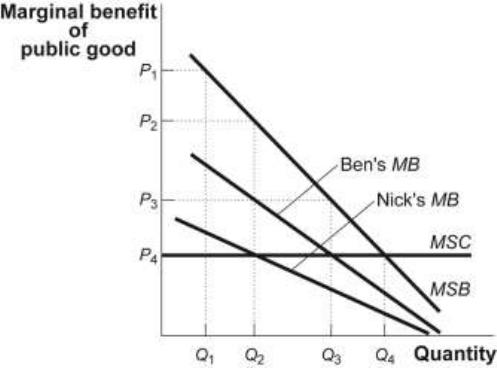
Page 50
224.
(Scenario: Alexander and Vanessa) Refer to the scenario Alexander and Vanessa. If the
socially optimal level of scientific research is produced and if both Vanessa and
Alexander are truthful in disclosing the marginal private benefits they expect to receive
from this research, what is the price per unit of research that Vanessa is willing to pay?
A)
$0
B)
$50
C)
$100
D)
$300
Use the following to answer questions 225-227:
Scenario: Ben and Nick
Ben and Nick are the only members of a community. They have revealed the marginal private
benefits they each receive from a public good whose marginal social benefit is known. In
addition, the marginal social cost (MSC) of the public good is known and is constant.
225.
(Scenario: Ben and Nick) Look at the figure and scenario Ben and Nick. At Q2, the
marginal social benefit from the last unit of the public good:
A)
is equal to the marginal social cost.
B)
is equal to P4 + P3.
C)
is the optimal level of provision of the public good.
D)
does not benefit Nick very much.
Page 51
226.
(Scenario: Ben and Nick) Look at the figure and scenario Ben and Nick. Q4:
A)
is the socially optimal level of provision of the public good.
B)
is equal to P4 + P3 in marginal social benefits.
C)
represents an amount at which the MSB is greater than the MSC.
D)
will not be produced, since neither Ben nor Nick finds any benefit in it at this level.
227.
(Scenario: Ben and Nick) Look at the figure and scenario Ben and Nick. At all levels
of provision of the public good:
A)
Ben places a higher value on the public good than Nick.
B)
the MSC is less than the MSB.
C)
the optimal level is not attained.
D)
the private marginal benefits cannot be determined.
228.
If at the quantity determined by private costs and benefits, the marginal social benefit of
a public good is greater than the marginal social cost of providing the good:
A)
the private market will best determine how much of the good will be provided and
to whom.
B)
a community will best provide the good.
C)
the community will not provide the good.
D)
free riding will not occur, so the private market will provide the socially optimal
amount.
229.
A common resource is _____ in consumption.
A)
excludable and rival
B)
nonexcludable and rival
C)
excludable and nonrival
D)
nonexcludable and nonrival
230.
An example of a common resource is:
A)
coffee sold in coffee shops.
B)
any type of public good.
C)
any private good that is monopolized.
D)
fishing in the ocean.
231.
The private market will lead to _____ of clean air because _____.
A)
too little consumption; it is nonexcludable but rival in consumption
B)
too much consumption; it is nonexcludable but rival in consumption
C)
production of the socially optimal amount; the marginal cost is zero
D)
government provision; it is a public good
Page 52
232.
Common resource goods are similar to:
A)
public goods because they are both nonexcludable and nonrival in consumption.
B)
goods with negative externalities because not all users take into account the
external costs imposed on society.
C)
private goods because they are both excludable and rival.
D)
artificially scarce goods because they are both are excludable and nonrival in
consumption.
233.
After many years, a small community builds a toll road but discovers it is little used. If
it wishes the road to be used at the socially optimal level, the community should:
A)
set the toll higher.
B)
set the toll equal to $1.
C)
set the toll lower.
D)
build another toll road.
234.
Assigning property rights helps to correct the problems associated with common
resources:
A)
because it allows property owners to exclude users and to manage the resource
more efficiently.
B)
because it allows the government to determine the amount that would lead to the
socially optimal amount.
C)
because it makes the good nonrival in consumption.
D)
and therefore allows the market to better assess the marginal social benefits.
235.
Imposing a Pigouvian tax on a good, establishing a system of tradable licenses, and
assigning property rights are methods to alleviate the problems associated with:
A)
private goods.
B)
positive externalities.
C)
public goods.
D)
common resources.

Page 54
Page 55
Page 56
Page 57
Page 58
Page 59