Cost Accounting: A Managerial Emphasis, 6e
Chapter 17 – Process Costing
23) Using standard costs simplifies the calculations for which of the following in process-costing?
A) direct materials
B) conversion costs
C) equivalent units
D) direct materials and conversion costs but standard costs not relevant for equivalent units
E) direct materials and conversion costs and equivalent units
24) Which costing system is well-suited for companies which have infrequent changes in their basic
products?
A) equivalent-average unit costing method
B) first-in, first-out method
C) standard costing
D) weighted-average costing
E) last in first out costing
Cost Accounting: A Managerial Emphasis, 6e
Chapter 17 – Process Costing
Use the information below to answer the following question(s).
Reynold’s Dock Company manufactures boat docks on an assembly line. Its standard costing system
utilizes two cost categories; direct materials and conversion costs. Each product must pass through the
Assembly Department and the Finishing Department. Direct materials are added at the beginning of the
production process. Conversion costs are allocated evenly throughout production. Data for the Assembly
Department for October 20×1 are:
Work in process, beginning inventory:
70 units
Direct materials (100% complete)
Conversion costs (25% complete)
Units started during October
40 units
Work in process, ending inventory:
10 units
Direct materials (100% complete)
Conversion costs (50% complete)
Standard Costs for Assembly:
Direct materials
$4,000 per unit
Conversion costs
$16,000 per unit
Work in process, beginning inventory:
Direct materials
$140,000
Conversion costs
$260,000
25) What is the balance in ending work–in-process inventory?
A) $82,000
B) $120,000
C) $155,000
D) $170,000
E) $174,000
Cost Accounting: A Managerial Emphasis, 6e
Chapter 17 – Process Costing
26) Which of the following journal entries records the actual Assembly Department’s conversion costs for
the month assuming conversion costs are 20 percent higher than expected?
A)
Assembly Department Conversion Cost Control
1,680,000
Various accounts
1,680,000
B)
Materials Inventory
1,680,000
Assembly Department Conversion Cost Control
1,680,000
C)
Assembly Department Conversion Cost Control
1,400,000
Materials Inventory
1,400,000
D)
Materials Inventory
1,680,000
Materials Inventory
1,680,000
E)
Work-in-process Assembly
1,680,000
Materials Inventory
1,680,000
Cost Accounting: A Managerial Emphasis, 6e
Chapter 17 – Process Costing
27) Which of the following journal entries properly records the assignment of conversion costs to work–
in-process inventory, and the conversion-cost variances of the Assembly Department assuming that
conversion costs are 20% higher than expected?
A)
Work in Process – Assembly
1,680,000
Conversion-Cost Variances
280,000
Assembly Department Conversion Cost Control
1,400,000
B)
Work in Process – Assembly
1,680,000
Direct Materials Variances
280,000
Testing Department Conversion Cost Control
1,400,000
C)
Work in Process – Assembly
1,400,000
Conversion-Cost Variances
280,000
Assembly Department Conversion Cost Control
1,680,000
D)
Work in Process – Testing
1,400,000
Assembly Department Conversion Cost Control
$1,400,000
E)
Work-in-process – Assembly
1,680,000
Materials Inventory
1,680,000
Cost Accounting: A Managerial Emphasis, 6e
Chapter 17 – Process Costing
28) Which of the following journal entries properly records direct materials requisitions for the work–in–
process inventory and direct materials variances assuming that the Assembly department used 10 percent
less materials than expected?
A)
Work in Process – Assembly
160,000
Assembly Department Materials Cost Control
160,000
B)
Work in Process – Assembly
160,000
Direct Materials Variances
16,000
Assembly Department Materials Cost Control
144,000
C)
Work in Process – Assembly
144,000
Assembly Department Materials Cost Control
144,000
D)
Work in Process – Assembly
144,000
Direct Materials Variances
16,000
Assembly Department Materials Cost Control
160,000
E)
Work-in-process – Assembly
144,000
Materials Inventory
144,000
Cost Accounting: A Managerial Emphasis, 6e
Chapter 17 – Process Costing
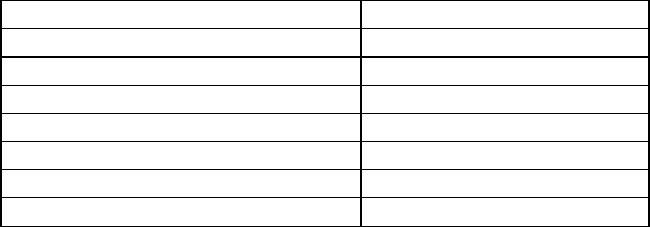
29) Surf Products Company uses an automated process to clean and polish its souvenir items. Direct
materials are placed into production at the beginning of the process and conversion costs are incurred
evenly throughout the process. The following data pertain to March.
Beginning work-in-process inventory 6,000 items, 1/3 complete
Units placed in production 24,000 units
Units completed 18,000 units
Ending work-in-process inventory 12,000 items, 1/2 complete
Cost of beginning work-in-process $5,000
Direct material costs, current $18,000
Conversion costs, current $15,400
Required:
Using the first-in, first-out method determine the assignment of costs to units transferred-out and ending
inventory.
Cost Accounting: A Managerial Emphasis, 6e
Chapter 17 – Process Costing
17–47
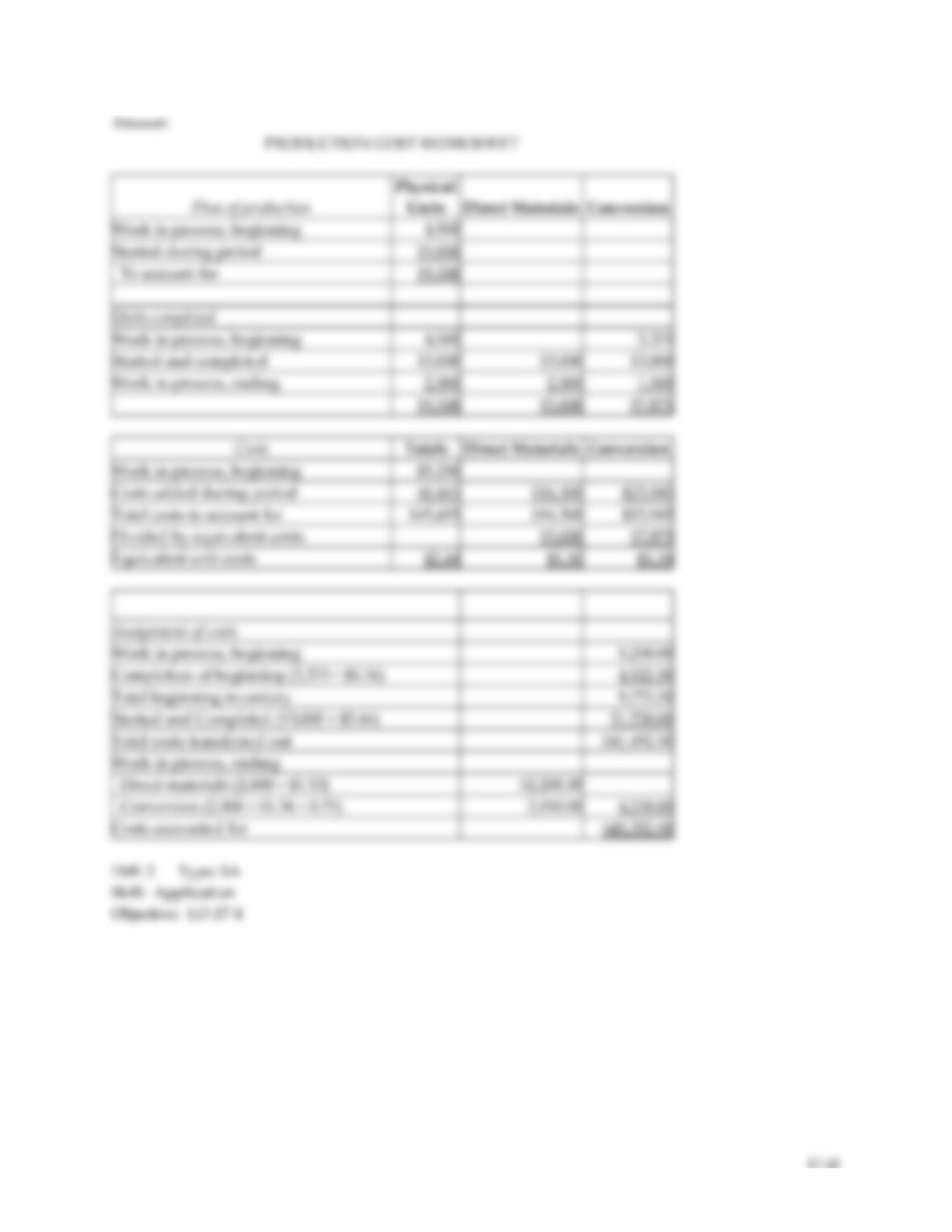
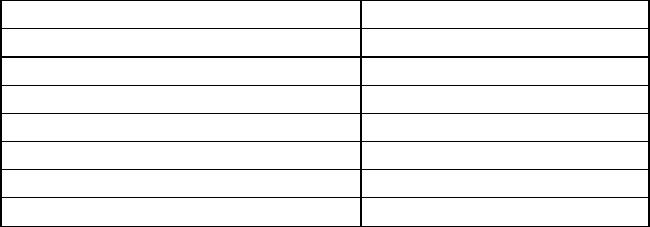
30) Pet Products Company uses an automated process to manufacture its pet replica products. For June,
the company had the following activities:
Beginning work in process inventory
4,500 items, 1/4 complete
Units placed in production
15,000 units
Units completed
17,500 units
Ending work in process inventory
2,000 items, 3/4 complete
Cost of beginning work in process
$5,250
Direct material costs, current
$16,500
Conversion costs, current
$23,945
Direct materials are placed into production at the beginning of the process and conversion costs are
incurred evenly throughout the process.
Required:
Prepare a production cost worksheet using the FIFO method.
Cost Accounting: A Managerial Emphasis, 6e
Chapter 17 – Process Costing
Cost Accounting: A Managerial Emphasis, 6e
Chapter 17 – Process Costing
17–49
31) Brampton Ltd. uses an automated process to manufacture key chains. For September, the company
had the following activities:
Beginning work in process inventory
40,000 unit 30% complete
Units placed in production
140,000 units
Units completed
?
Ending work in process inventory
30,000 items, 60% complete
Cost of beginning work in process
$36,080
Direct material costs, current
$100,800
Conversion costs, current
$101,400
Direct materials are placed into production at the beginning of the process and conversion costs are
incurred evenly throughout the process. There is no spoilage.
Required:
Prepare a production cost worksheet using the FIFO method.
Cost Accounting: A Managerial Emphasis, 6e
Chapter 17 – Process Costing
Cost Accounting: A Managerial Emphasis, 6e
Chapter 17 – Process Costing
32) Smithers Ltd. uses the FIFO method for its production costing. On June 1, it had 35,000 units in
beginning work in process that were 60% complete with respect to conversion costs. During the month it
completed 80,000 units and on June 30, there were 16,000 units in ending work in process. These units
were 35% complete with respect to conversion. Direct materials are added at the beginning of the process
and no units are lost during production. The costs associated with the beginning inventory were $83,300
for direct materials and $66,780 for conversion. During the month, Smithers issued $146,400 of direct
materials and incurred $206,720 of conversion costs.
Required:
Prepare a production cost worksheet using the FIFO method.
Cost Accounting: A Managerial Emphasis, 6e
Chapter 17 – Process Costing
33) Marvin Ltd. uses an automated process in its manufacturing operations. On November 1, the
company had 25,000 units in beginning work in process which were 80% complete with respect to
conversion. During the month of November, it started 120,000 into production. On November 30, there
were 20,000 units in process, which were 40% complete with respect to conversion. Direct materials are
added at the beginning of the process, and no units are spoiled in production.
The beginning inventory had direct materials costs of $105,750 and conversion costs of $45,500. During
the month, the company issues $510,000 of direct materials and incurred $203,400 of conversion costs.
Required:
Prepare a production cost worksheet using the FIFO method.
Cost Accounting: A Managerial Emphasis, 6e
Chapter 17 – Process Costing
34) What is the difference between a weighted-average method of process costing and a first-in, first-out
method of process costing?
35) Universal Industries operates a division in Brazil, a country with very high inflation rates.
Traditionally, the company has used the same costing techniques in all countries so as to facilitate
reporting to corporate headquarters. However, the financial accounting reports from Brazil never seem to
match the actual unit results of the division. Management has studied the problem and it appears that
beginning inventories may be the cause of the unmatched information. The reason is that the inventories
have a different financial base because of the severe inflation.
Required:
How can process costing assist in addressing the problem facing Universal Industries?
Cost Accounting: A Managerial Emphasis, 6e
Chapter 17 – Process Costing
36) BIG Manufacturing Products has been using FIFO process costing for tracking the costs of its
manufacturing activities. However, in recent months the system has become somewhat bogged down
with details. It seems that when the company purchased Brown Electronics last year its product lines
increased sixfold. This has caused both the accountants and the suppliers of the information, the line
managers, great difficulty in keeping the costs of each product line separate. Likewise, the estimation of
the completion of ending work-in-process inventories and the associated costs has become very
cumbersome. The chief financial officer of the company is looking for ways to improve the reporting
system of product costs.
Required:
What can you recommend to improve the situation?
17.5 Apply process-costing methods to report transferred-in costs and operations
costing.
1) Transferred-in costs are an allocated indirect cost in process costing.
2) Transferred in costs are costs which have been incurred in a preceding department.
3) An operation-costing system is a hybrid costing system, applied to batches of similar products.
4) Operation-costing captures the non-financial impact of the control of physical processes.
Cost Accounting: A Managerial Emphasis, 6e
Chapter 17 – Process Costing
5) Operation-costing differs from pure process-costing in that operation-costing charges each work order
separately for direct material cost.
6) It is possible to design a hybrid costing system, to combine elements of both job costing and of process
costing.
7) Transferred-in costs incurred in a previous department and charged to a subsequent department
A) are combined with direct materials costs of the subsequent department for a total direct materials costs
figure.
B) are always from the previous period.
C) become part of Cost of Goods Sold in the current period.
D) are always assigned using the FIFO method.
E) follow the physical movement of the units.
8) Regardless of whether previous departments used the weighted-average or the FIFO method, all
transferred-in costs during a given period are carried at
A) the cost at which it was transferred in.
B) the previous period’s costs.
C) multiple unit-cost figures.
D) the final cost.
E) one average unit-cost.