Stewart – Calculus ET 8e Chapter 17 Form E
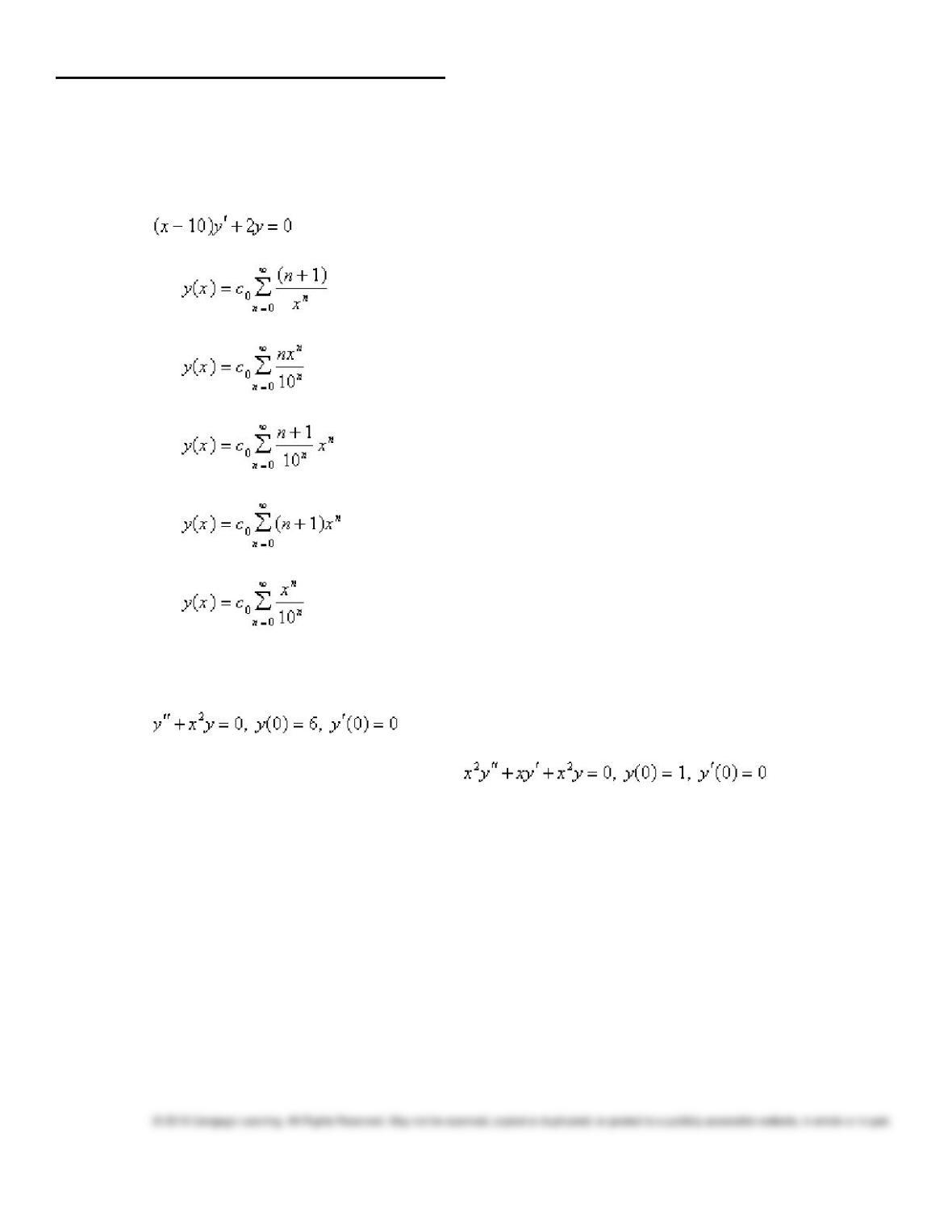
____ 18. Use power series to solve the differential equation. Select the correct answer.
a.
b.
c.
d.
e.
19. Use power series to solve the differential equation.
20. The solution of the initial-value problem is called a
Bessel function of order 0. Solve the initial – value problem to find a power series expansion for
the Bessel function.
Stewart – Calculus ET 8e Chapter 17 Form E
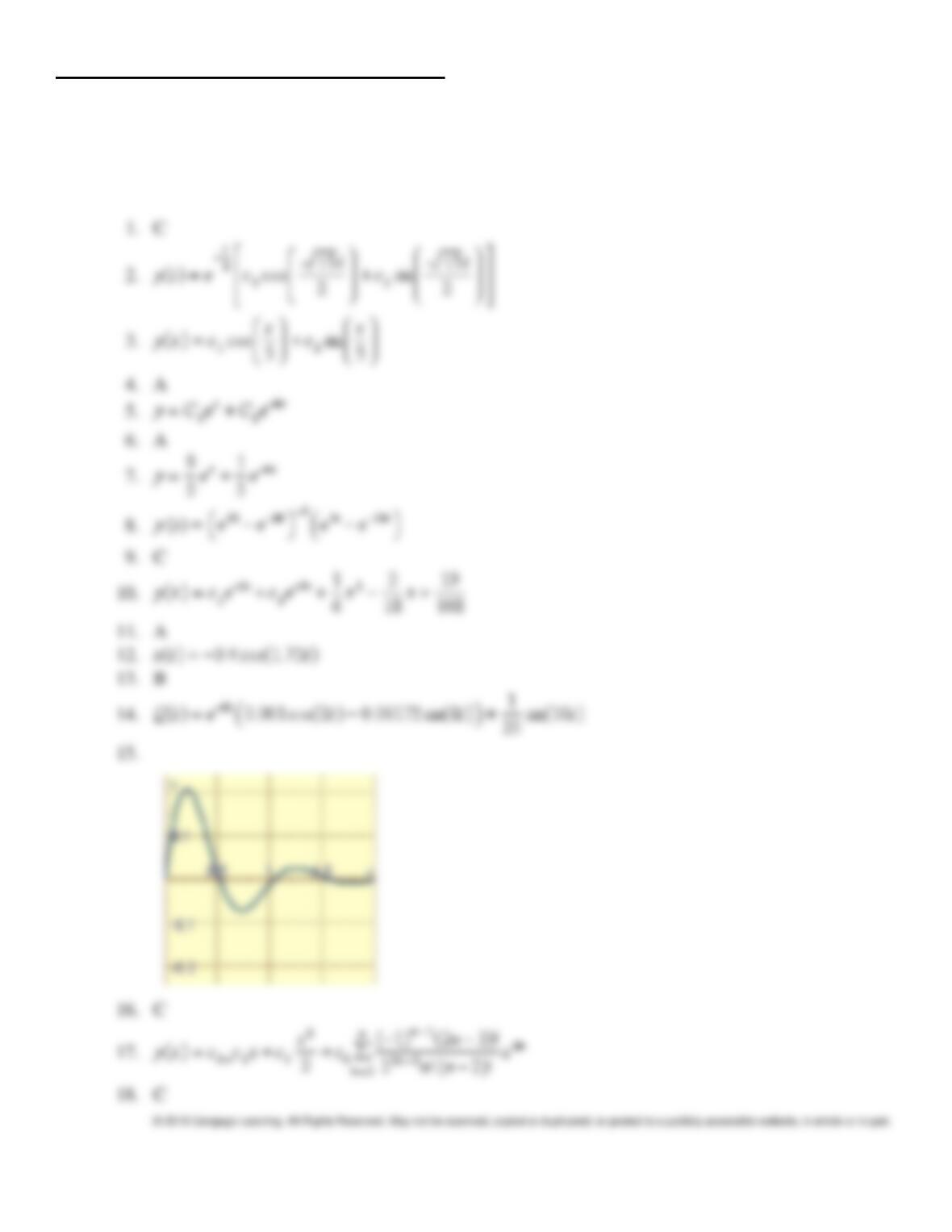
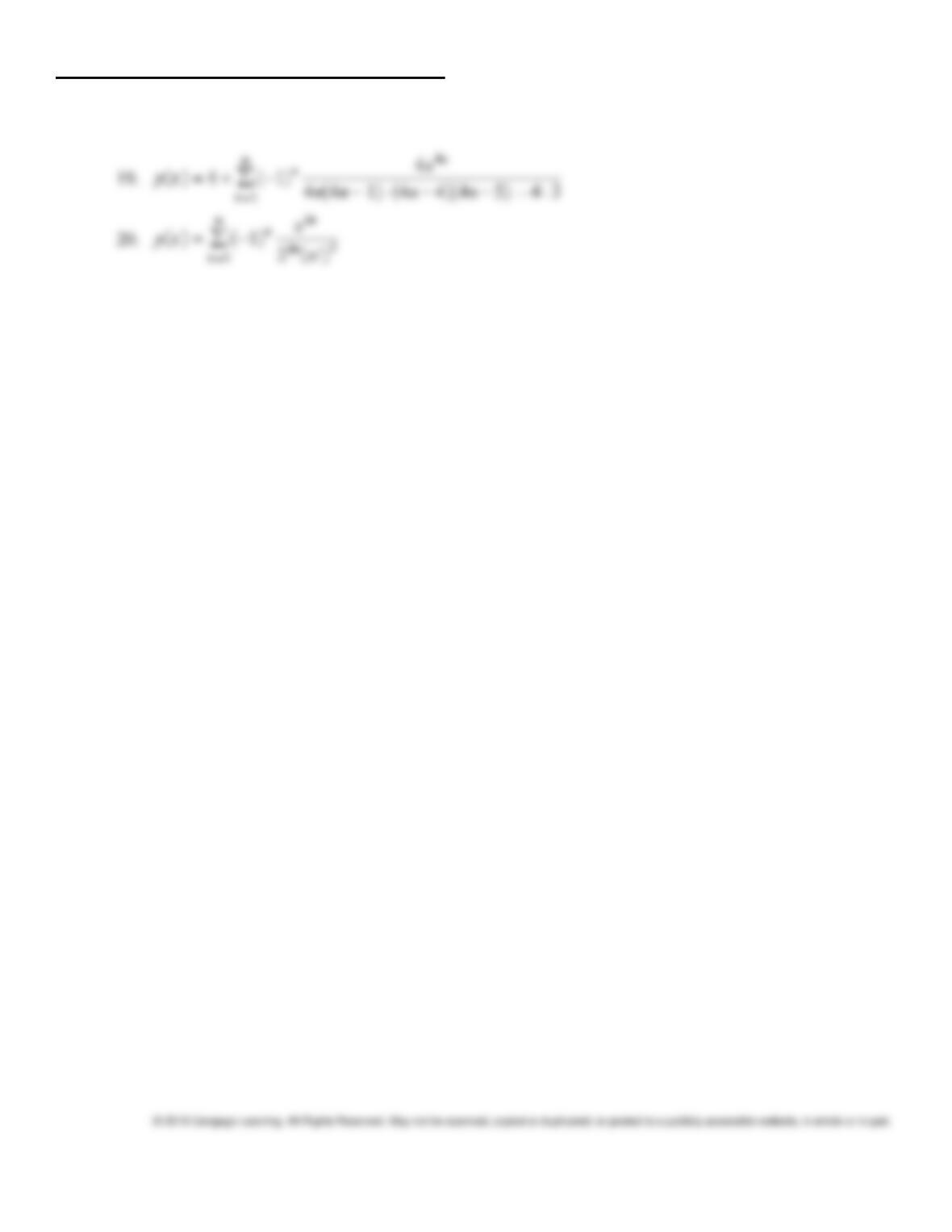
Answer Key
Stewart – Calculus ET 8e Chapter 17 Form E
Stewart – Calculus ET 8e Chapter 17 Form F
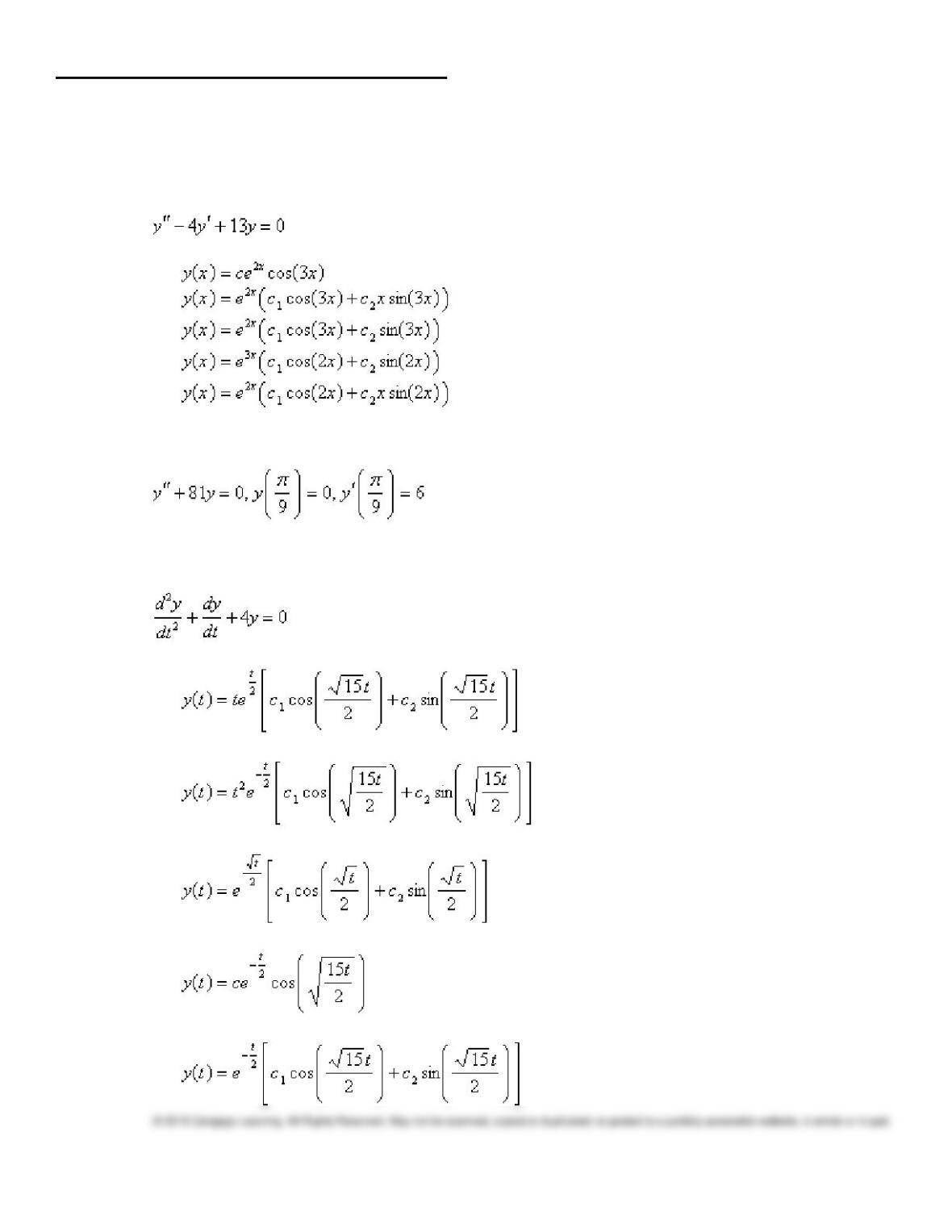
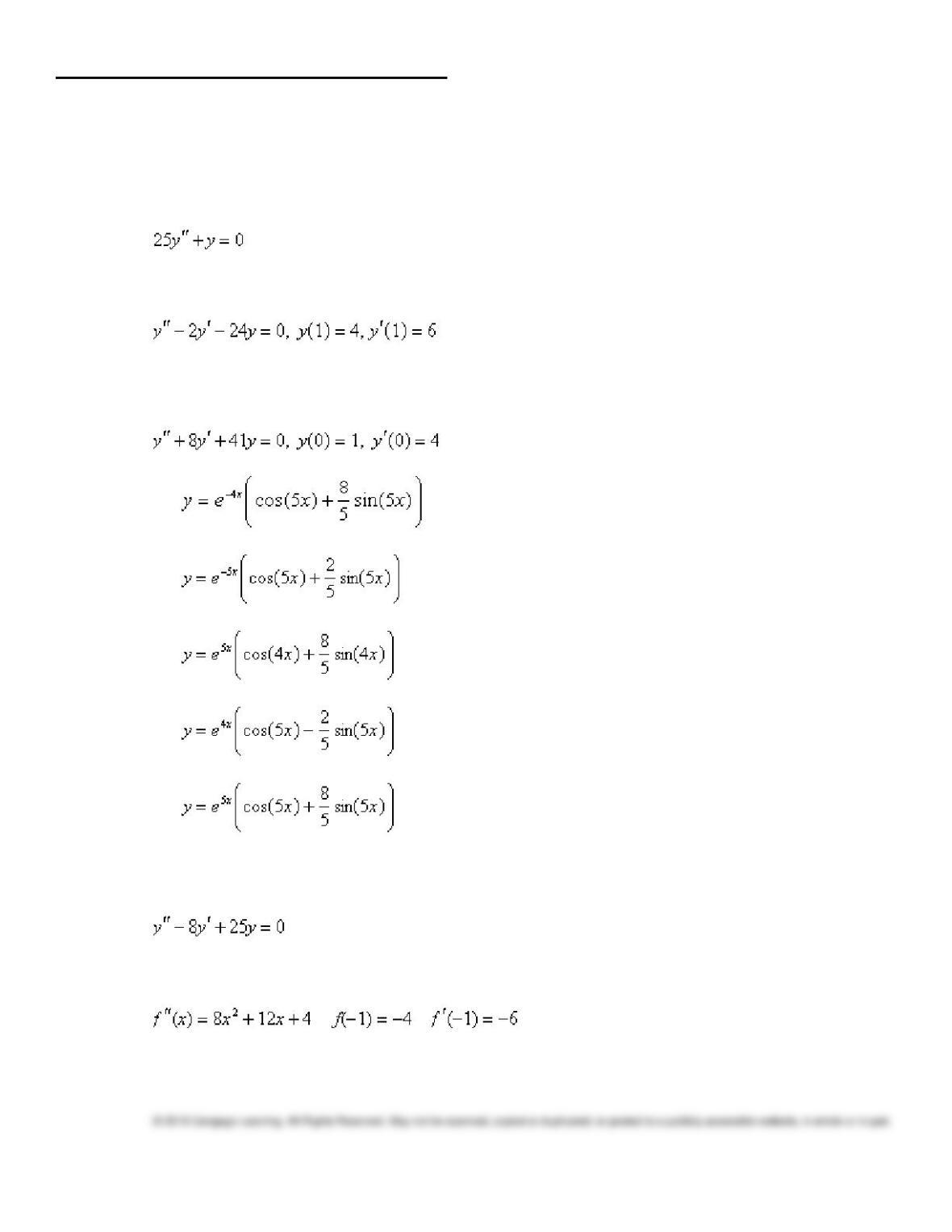
____ 1. Solve the differential equation. Select the correct answer.
a.
b.
c.
d.
e.
2. Solve the initial-value problem.
____ 3. Solve the differential equation. Select the correct answer.
a.
b.
c.
d.
e.
Stewart – Calculus ET 8e Chapter 17 Form F
4. Solve the differential equation.
5. Solve the initial-value problem.
.
____ 6. Solve the initial-value problem. Select the correct answer.
a.
b.
c.
d.
e.
7. Solve the differential equation.
8. Find f by solving the initial value problem.
; ,
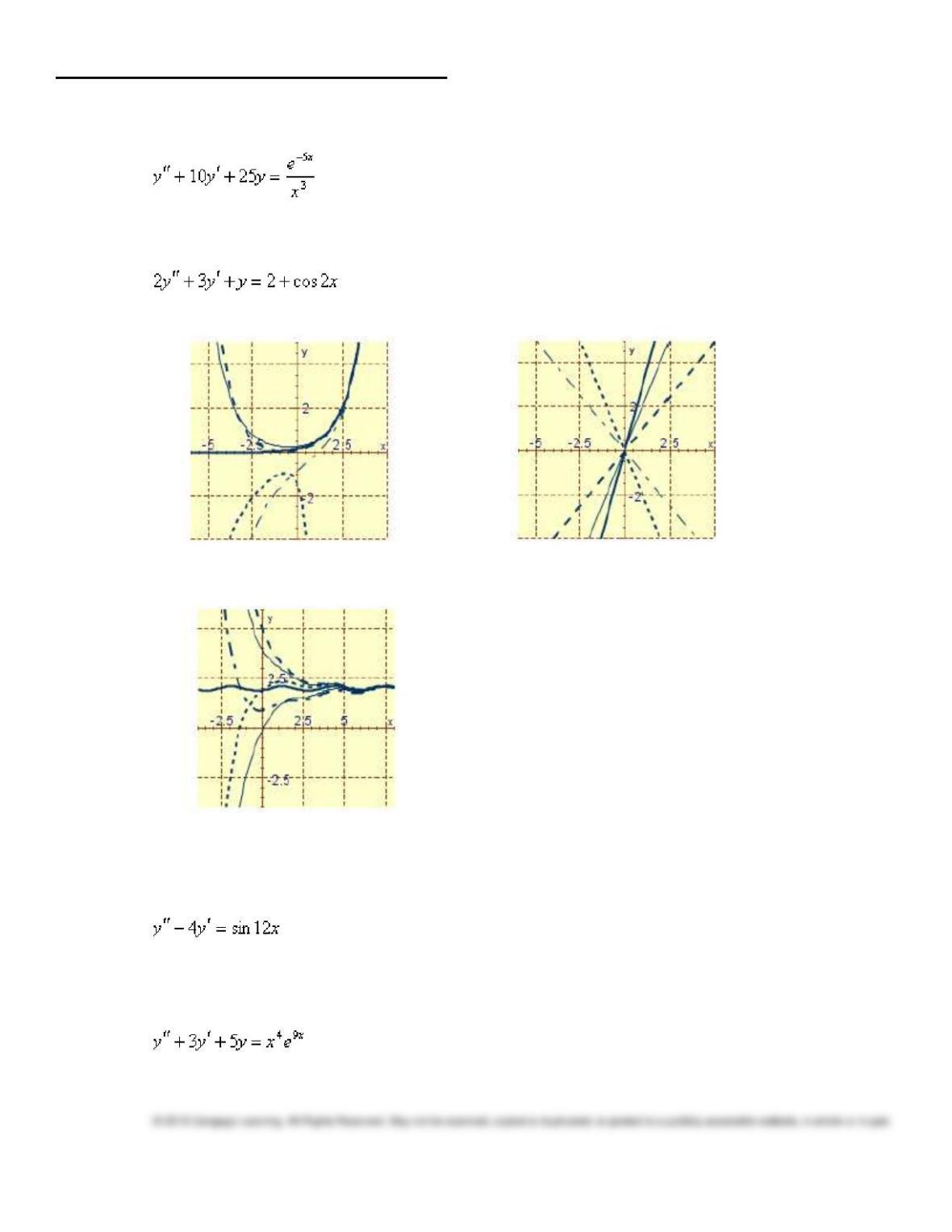
9. Solve the differential equation using the method of variation of parameters.
Stewart – Calculus ET 8e Chapter 17 Form F
____ 10. Graph the particular solution and several other solutions. Select the correct answer.
a.
c.
b.
11. Solve the differential equation using the method of undetermined coefficients.
12. Find a trial solution for the method of undetermined coefficients. Do not determine the
coefficients.
Stewart – Calculus ET 8e Chapter 17 Form F
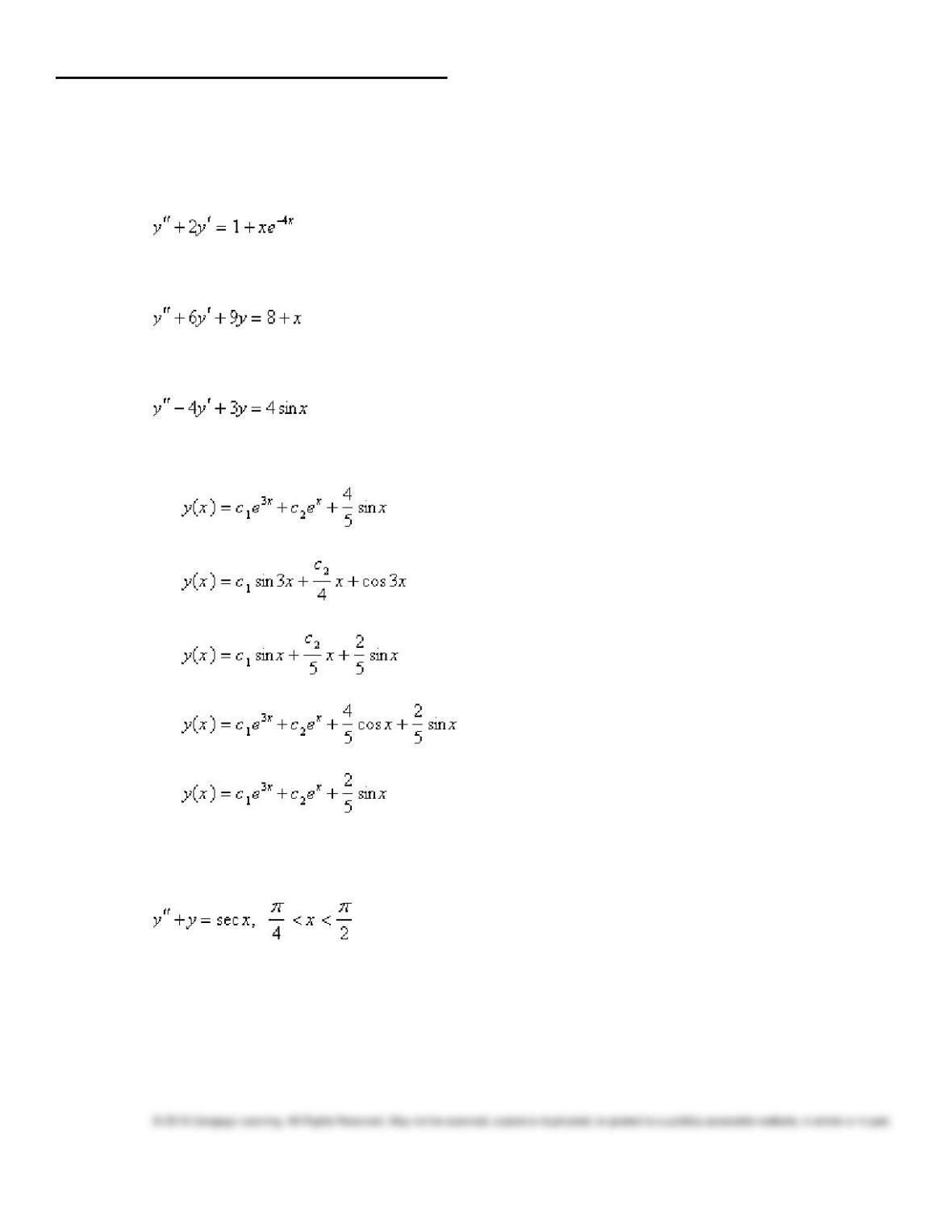
13. Find a trial solution for the method of undetermined coefficients. Do not determine the
coefficients.
14. Solve the differential equation using the method of undetermined coefficients.
____ 15. Solve the differential equation using the method of variation of parameters.
Select the correct answer.
a.
b.
c.
d.
e.
16. Solve the differential equation using the method of variation of parameters.
Stewart – Calculus ET 8e Chapter 17 Form F
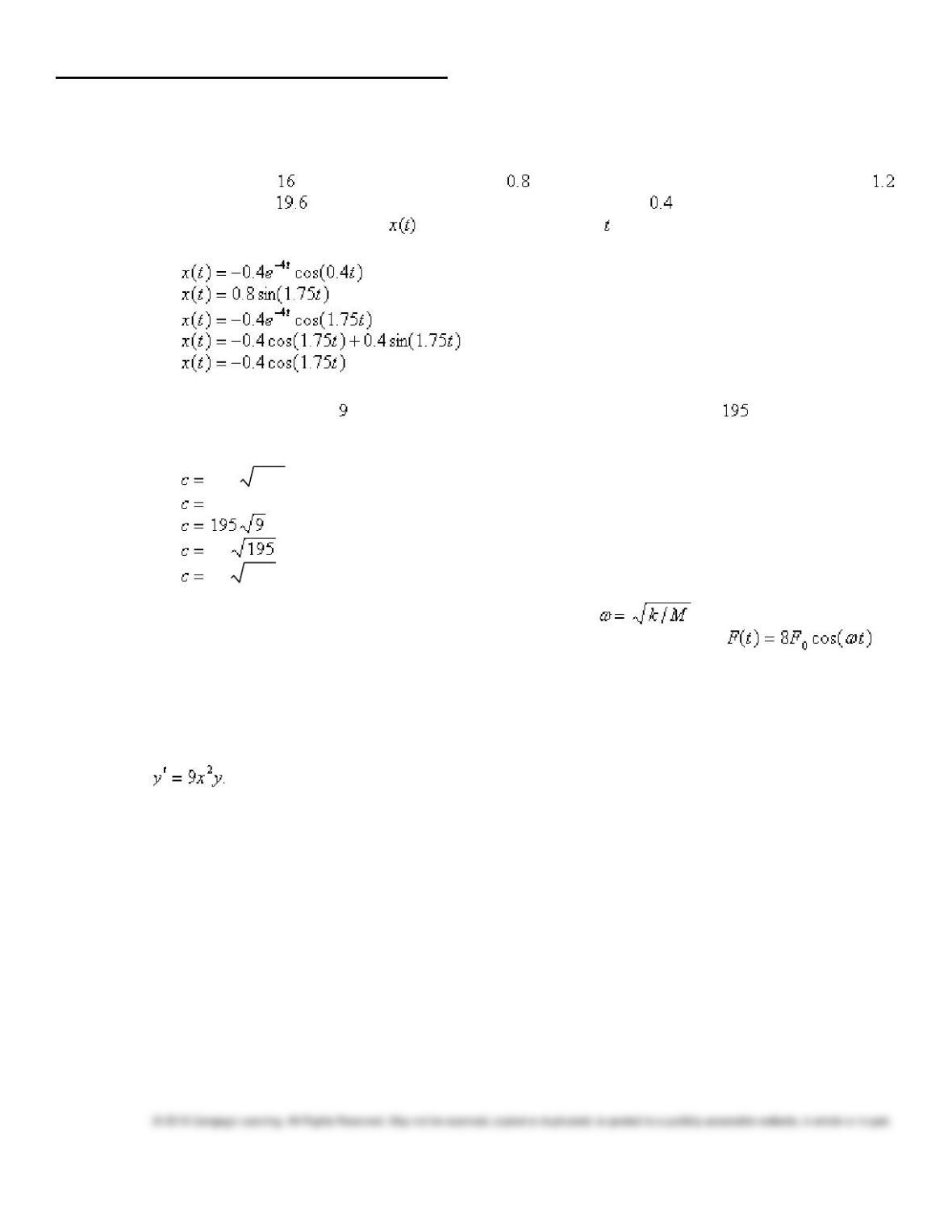
____ 17. A spring with a -kg mass has natural length m and is maintained stretched to a length of
m by a force of N. If the spring is compressed to a length of m and then released with
zero velocity, find the position of the mass at any time . Select the correct answer.
a.
b.
c.
d.
e.
____ 18. A spring with a mass of kg has damping constant 28 and spring constant . Find the damping
constant that would produce critical damping. Select the correct answer.
a.
36 195
b.
2340
c.
d. 9
e.
6 195
19. Suppose a spring has mass M and spring constant k and let . Suppose that the damping
constant is so small that the damping force is negligible. If an external force is
applied (the applied frequency equals the natural frequency), use the method of undetermined
coefficients to find the equation that describes the motion of the mass.
20. Use power series to solve the differential equation.
Stewart – Calculus ET 8e Chapter 17 Form F
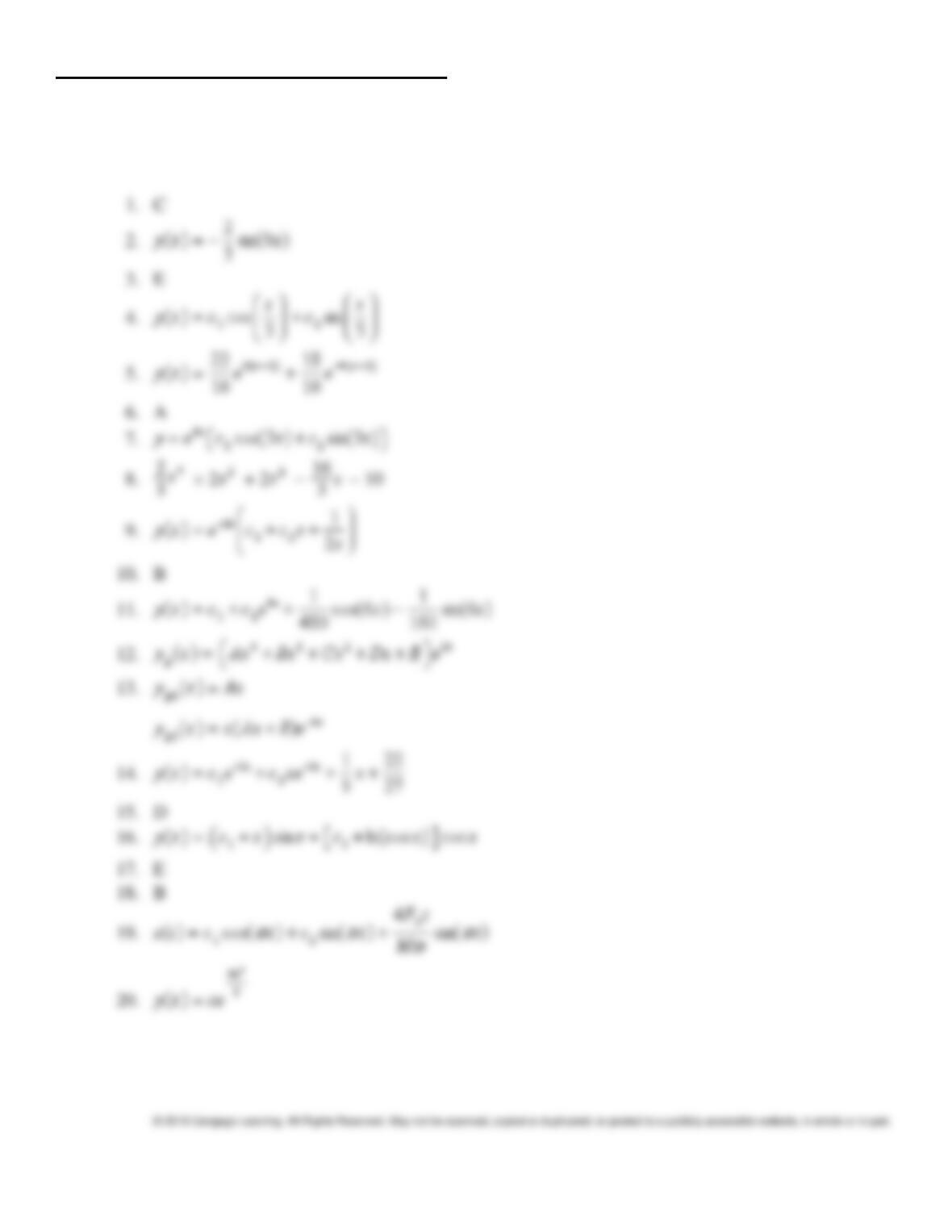
Answer Key
Stewart – Calculus ET 8e Chapter 17 Form G
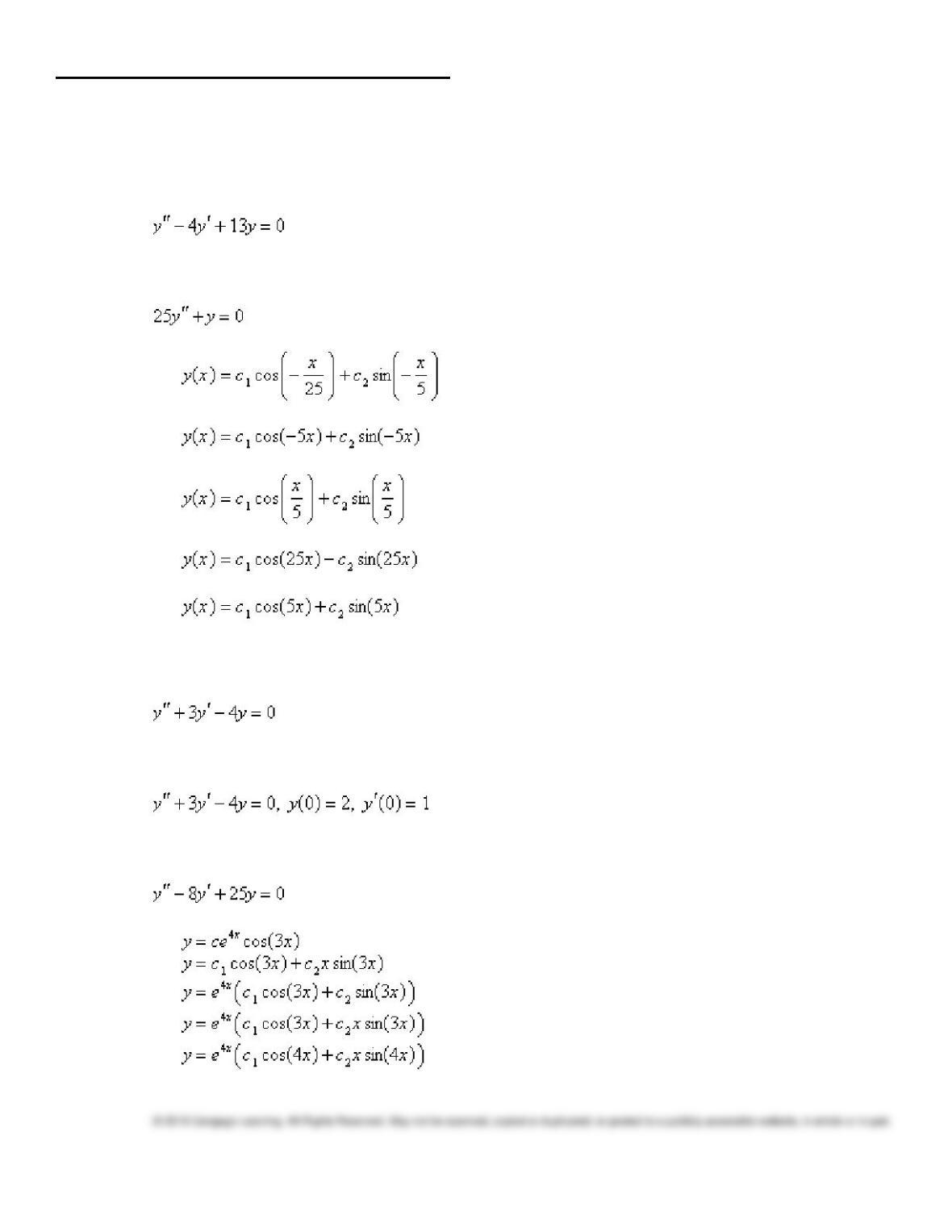
1. Solve the differential equation.
____ 2. Solve the differential equation. Select the correct answer.
a.
b.
c.
d.
e.
3. Solve the differential equation.
4. Solve the initial-value problem.
____ 5. Solve the differential equation. Select the correct answer.
a.
b.
c.
d.
e.
Stewart – Calculus ET 8e Chapter 17 Form G
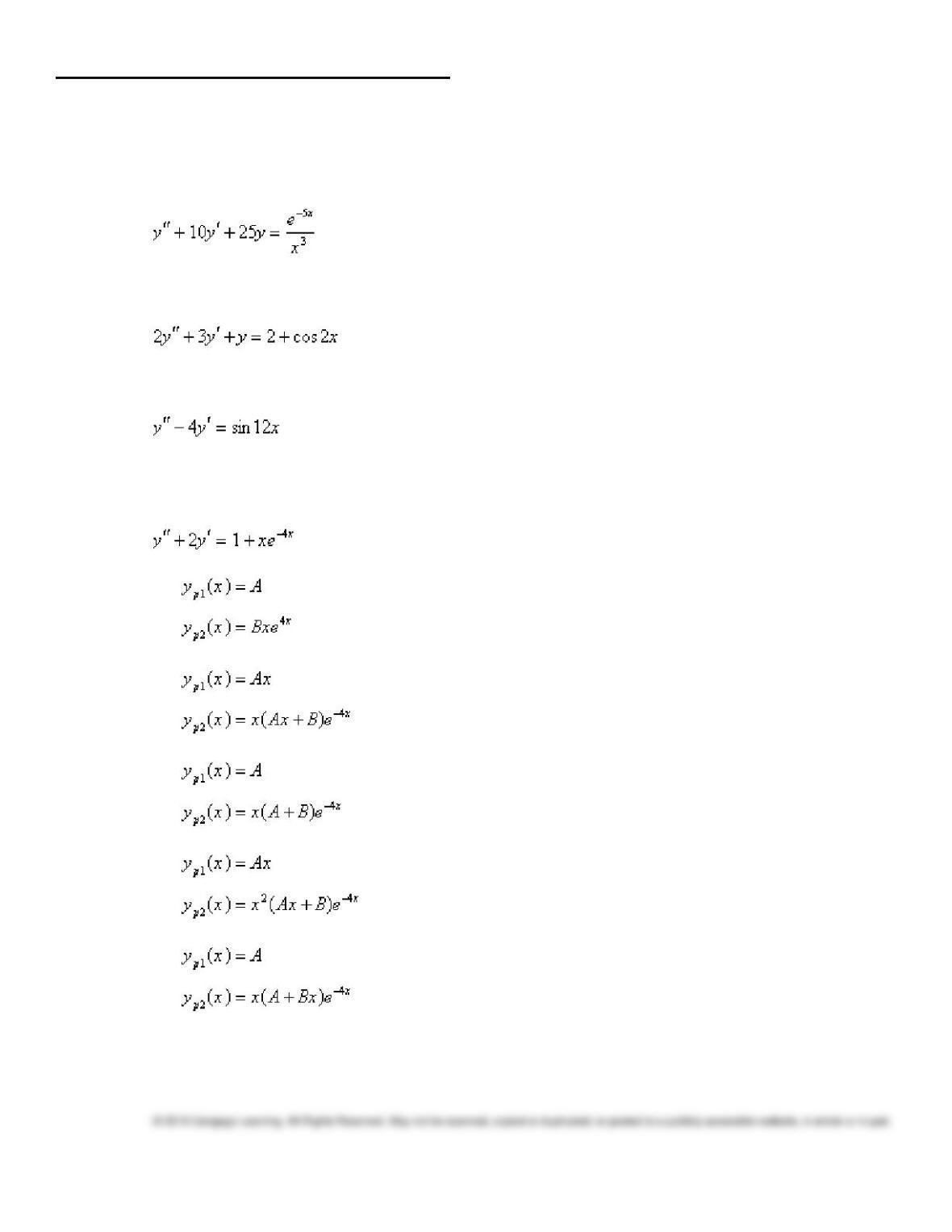
6. Solve the differential equation using the method of variation of parameters.
7. Graph the particular solution and several other solutions.
8. Solve the differential equation using the method of undetermined coefficients.
____ 9. Find a trial solution for the method of undetermined coefficients. Do not determine the
coefficients. Select the correct answer.
a.
b.
c.
d.
e.
Stewart – Calculus ET 8e Chapter 17 Form G
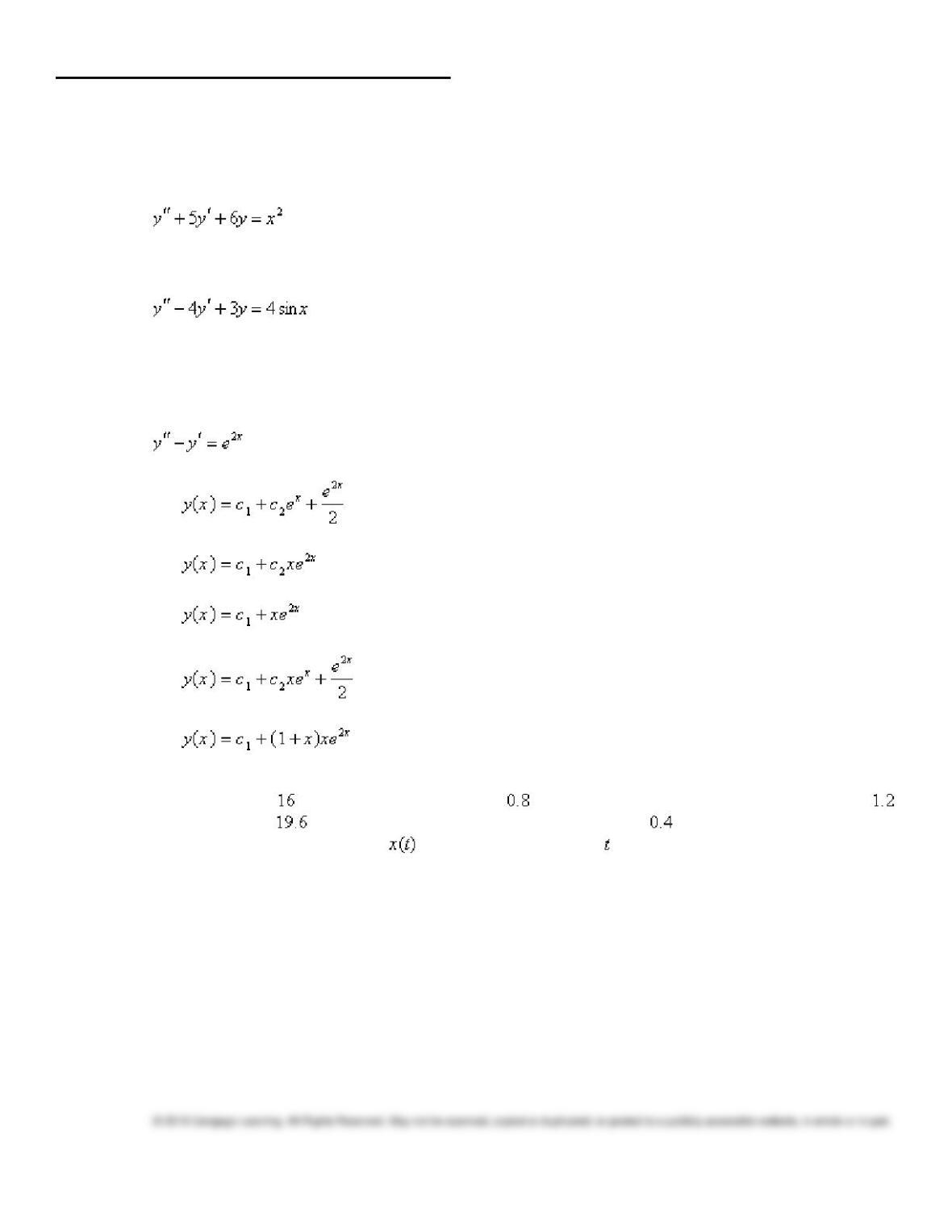
10. Solve the differential equation using the method of undetermined coefficients.
11. Solve the differential equation using the method of variation of parameters.
____ 12. Solve the differential equation using the method of variation of parameters.
Select the correct answer.
a.
b.
c.
d.
e.
13. A spring with a -kg mass has natural length m and is maintained stretched to a length of
m by a force of N. If the spring is compressed to a length of m and then released with
zero velocity, find the position of the mass at any time .